NFLAs ‘shout up’ for National Parks to be spared from nuclear development

Despite our objections and those of many in the antinuclear community, Energy Ministers and departmental civil servants remain intent upon introducing a new National Planning Statement, called the EN-7, which gives considerable latitude to prospective developers to site new nuclear plants more widely, subject to meeting certain criterion (called the ‘criteria-based approach’) and lifts any time limits (called ‘the removal of a deployment deadline’).
10th April 2025, https://www.nuclearpolicy.info/news/nflas-shout-up-for-national-parks-to-be-spared-from-nuclear-development/
NFLAs ‘shout up’ for National Parks to be spared from nuclear development
The Nuclear Free Local Authorities have made an emphatic plea to the government for National Parks to be definitively spared from development and for further ‘specific consideration’ to be given to the challenges attendant to siting so-called Small and Advanced Modular Reactors (SMRs and AMRs).
Despite our objections and those of many in the antinuclear community, Energy Ministers and departmental civil servants remain intent upon introducing a new National Planning Statement, called the EN-7, which gives considerable latitude to prospective developers to site new nuclear plants more widely, subject to meeting certain criterion (called the ‘criteria-based approach’) and lifts any time limits (called ‘the removal of a deployment deadline’).
Interestingly neither of these notions was popular amongst respondents in the initial consultation on the policy with only 47% supporting the first and 50% the second; which begs the NFLAs to ask the question: why change the existing policy which is based on a government led strategic assessment of sites to in effect a ‘free-for-all’?
As we did in response to the first stage consultation, so in the second the NFLAs ‘shout up…against new nuclear in any of our National Parks and on sites adjoining or threatening Sites of Outstanding Natural Beauty or Immense Heritage Value’. The Welsh NFLA affiliates are particularly passionate in seeking to defend Trawsfynydd, which lies at the heart of Eryri, the premier National Park of Wales, from new development. As we point out:
‘The principle that National Parks can be excluded from future nuclear development has already been established by Government diktat. Any part of the Lake District National Park in England has been specifically (and in our view rightly) excluded from any consideration as a prospective site of a future Geological Disposal Facility. Surely then Trawsfynydd being at the heart of the Eryri National Park should enjoy the same protection in law?
In our view, to do otherwise exposes UK Government policy as hypocritical and inconsistent, implying that the premier National Park of Wales is not worthy of the same protection as the premier National Park of England and unfortunately conveys the impression that Wales remains a rank colonial possession, rather than a nation in its own right, whose natural assets are open to exploitation by any major nuclear development of the most egregious kind’.
Only 59% of respondents in phase one backed the inclusion of ‘SMRS and AMRs alongside large-scale GW technologies’ within the policy, with the NGO community calling for a separate policy. Despite this, Ministers intend this policy to be one-size-fits-all. In this second phase consultation, the NFLAs have referenced the lack of ‘specific consideration’ of the ‘additional, and not entirely defined, challenges’ that accompany the inclusion of SMRs and AMRs.
There have been many recent reports of concerns amongst the nuclear industry and the academic community about the radioactive waste produced by smaller reactors and the security implications of a wider rollout of smaller reactors. The NFLAs have therefore requested that final version of EN-7 should require ‘SMR, AMR, Micro reactor developers to submit robust statements about their proposals to address radioactive waste management, safety, security and proliferation concerns’.
1
Raising Funds to Stop Lake District Coast Sub-Sea Nuclear Dump
Radiation Free Lakeland has launched a crowdfund appeal to raise enough
funds to send out a leaflet direct to all 250,000 households explaining the
importance of lobbying Cumberland Council to carry out a full debate and
vote before going any further down the road to delivery of a “geological
disposal facility” (nuclear dump) for hot nuclear wastes. The bare
minimum we would need is £1,800 and with your help we could just do this.
We could stop the nuclear juggernaut in its tracks and protect the Lake
District coast from becoming the world’s biggest, leakiest nuclear
sacrifice zone.
Radiation Free Lakeland 6th April 2025
https://mariannewildart.wordpress.com/2025/04/06/raising-funds-to-stop-lake-district-coast-sub-sea-nuclear-dump/
The great trek for justice
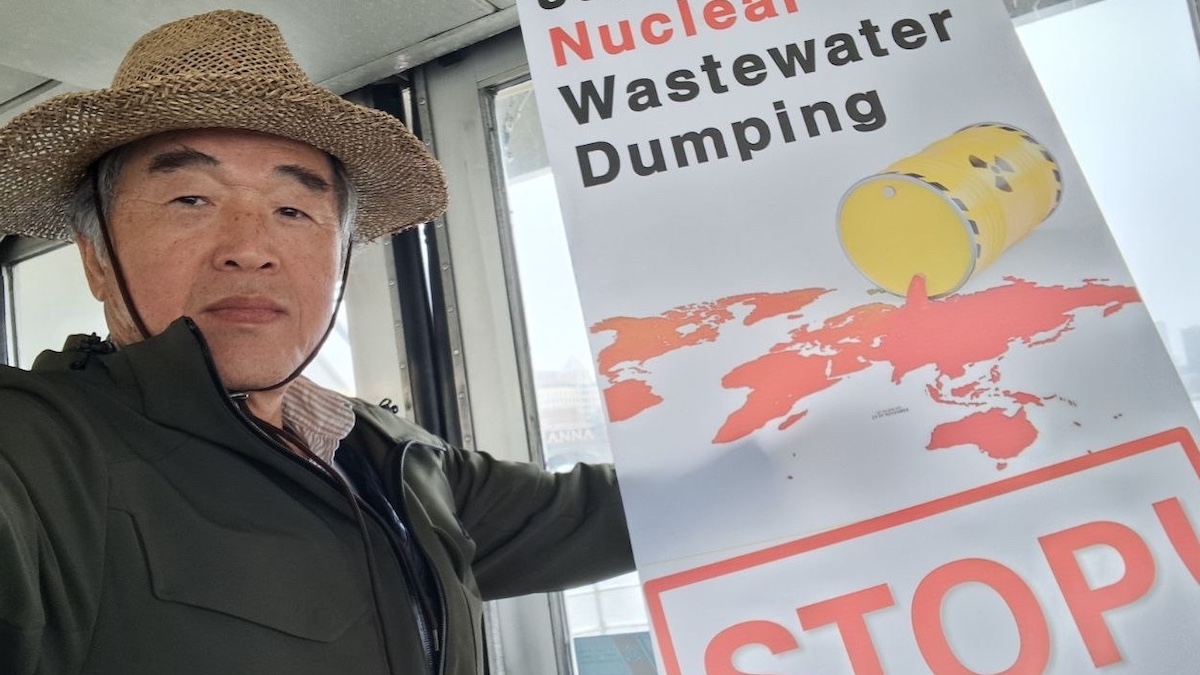
At the heart of the matter for Lee is the devastating and continued destruction of the ecosystems on which all of us — human and animals — depend. The Fukushima radioactive water dump is just one of the most recent examples.
, by beyondnuclearinternational, https://beyondnuclearinternational.org/2025/03/30/the-great-trek-for-justice/
Won-Young Lee has walked from his homeland in South Korea to Tokyo. Now he’s on the march in the US, writes Linda Pentz Gunter
How far would you walk for a cause? In the case of South Korean anti-nuclear activist, Won-Young Lee, that distance has no limit.
Lee, 67, and the director of the Korea Land Future Research Institute and the Public Reporting Center for the Dangers of Nuclear Power Plants (PRCDN), will arrive in Washington, DC on April 8, having walked there from the United Nations in New York City, a journey he began on March 19. The distance is about 260 miles.
His cause this time is to draw attention to the continued dumping of highly radioactive waste water from the stricken Fukushima Daiichi nuclear power plant in Japan into the Pacific Ocean. This is not Mr. Lee’s first walk, but he chose the dates deliberately to span the time between the 2011 Fukushima nuclear disaster that began on March 11 and the April 26, 1986 Chornobyl reactor explosion in Ukraine.
This latest walk falls under the umbrella of what Lee has titled the “New Silk Road for Life and No-Nukes. Walking Planet Earth With Joy.” Together, the walks constitute a marathon that have taken Lee and other walkers through vast areas of the Asian continent, including Vietnam, Laos, Thailand, Malaysia, India and Nepal and on through Uzbekistan, Azerbaijan, and Georgia and through numerous countries in Europe. Lee himself has traversed 6,125 miles on foot.
He has been inspired, he says, by Gandhi’s ‘Salt March’ “that led to India’s independence,” and was also started, Lee says, “by a small number of people,” that grew into ever greater numbers.
That will of the people manifested again in 2023, during a trek of almost 1,000 miles undertaken by South Korean and Japanese citizens from Seoul, South Korea to Tokyo, Japan with stops that included one in Hiroshima.
Currently, as Lee marches resolutely from Manhattan to DC, he has encountered others who are equally inspired, often from Japan. Yoko Akashi, who marched with him in New Jersey, wrote that “even though we’re only two walking highways and shopping streets, people waved, honked cars and wanted to know more because they’re concerned.”
All of this is done with unbounded optimism. The purpose of the current walk is not only to engage with populations along the route but to try, once it reaches its destination in the nation’s capital, to convince members of Congress and even the White House, that the water dumping at Fukushima needs to stop.
“By marching, we can gain the support of citizens, get citizens to join the march, and as the procession gets longer, citizens can pressure politicians,” asserts Lee.
We have published numerous articles on our news site — Beyond Nuclear International — arguing against the dumping of at least 1.3 million tons of radioactive water from Fukushima into the Pacific, a procedure that will go on for years, even decades.
One of the more recent ones, by Tilman Ruff, sums up many of the arguments. Another earlier one from GENSUIKIN, also lays out the specific risks.
Lee’s organization has turned to the cartoon format to produce a booklet telling the story. It’s entitled STOP! Fukushima Nuclear Wastewater Dumping and can be downloaded from the PRCDN website in English here.
I met with Lee and a group of Korean activists on Capitol Hill in February, during a press conference led by Congressman Brad Sherman (CA-32), a senior member of the House Foreign Affairs Committee, to urge for the passage of his bipartisan legislation, the Peace on the Korean Peninsula Act.
The bill calls for swift and substantial diplomatic engagement in order to achieve a formal end to the Korean War – America’s longest war.
During the event, Lee expressed his hopes for a political change of policy over the dumping (I am afraid I did not share his optimism.) In a statement before his New York to Washington march began, Lee expressed the view that stopping the dumping was in the hands of the US president. “He is the only person to whom the Japanese prime minister bows his head,” Lee wrote. “If the US president asks the Japanese prime minister to stop, the dumping can be stopped.”
At the heart of the matter for Lee is the devastating and continued destruction of the ecosystems on which all of us — human and animals — depend. The Fukushima radioactive water dump is just one of the most recent examples.
“Humanity has a responsibility to respect the survival of all living things in the ecosystem as well as its own future generations,” said a declaration put out before the latest walk launched. And yet, “the Japanese government is intentionally dumping potentially fatal nuclear contaminants into the sea.”
Both the International Atomic Energy Agency (IAEA) and the United Nations come in for deservedly harsh criticism as well. In the cartoon booklet, the IAEA is referred to as “Japan’s Brazen Enabler”. The UN, says the declaration, is “ignoring the spirit of the World Charter of Nature (1982), drawn up by themselves and the Earth Charter (2000), made by agreement at the Rio Environmental Conference, and are simply watching the destruction of our ecosystem.” Striking an uncharacteristically pessimistic note, it adds: “All of these things show that our international community is completely broken. At this rate, there is no hope for humanity.”
In conclusion, the march declaration offers the following:
- The Japanese government, which has intentionally put humanity and the Earth’s ecosystem at great risk, must immediately stop dumping nuclear contaminated water and apologize to all living things on Earth.
- The U.S. government and the IAEA, which support Japan’s ocean dumping of nuclear contaminated water, should immediately withdraw their support and seek safe measures for all living things on Earth.
- The UN and the International Community must acknowledge and reflect on dereliction of their duty to stop Japan from dumping nuclear contaminated water into the ocean.
- Global citizens, keep in mind that if we turn a blind eye to these errors, we are committing a crime to our descendants, and let us actively punish any country or power that intentionally commits such crimes.
- Global citizens, let us be aware of our responsibility to protect the dignity of all life in the global village, and set the right guideposts.
Headline photo Won-Young Lee courtesy of the subject.
Linda Pentz Gunter is the international specialist at Beyond Nuclear and writes for and edits Beyond Nuclear International. Her forthcoming book, Hot Stories. Reflections from a Radioactive World, will be published later this year.
Resistance to nuke dump grows in South Copeland
NFLA 31st March 2025
Kirksanton and Bankhead residents in the South Copeland GDF Search Area will be heartened by the support of Millom Town Councillors who approved a motion at their 26 March meeting to ‘reject the area of focus as being beneficial to Bank Head’.
In January, Nuclear Waste Services announced that a site surrounding the prison West of Haverigg was its ‘Area of Focus’, the preferred inland site for a Geological Disposal Facility, a deep repository for Britain’s legacy and future high-level radioactive waste. This site borders the village of Kirksanton and the Bank Head housing estate.
The Council also agreed to a request that a public meeting be held to examine the ‘positives and negatives’ of bringing the GDF to the area. In September 2023, a Community Forum attended by the public and organised by the South Copeland GDF Community Partnership drew up an initial list. In response to this NWS promised to commission an ‘impacts report’ from an independent consultant, but this has never materialised.
Councillors also agreed to send a letter of complaint to NWS about the size of the Area of Focus and how the announcement has impacted house sales and affected residents of the area. At the meeting, the Chair conceded that, after speaking to estate agents, he believed the area to be ‘blighted’. Since the announcement, one house sale in nearby Silecroft has fallen through and a house owner in Bank Head has been forced to significantly reduce their asking price in make a sale.
Jan Bridget, who co-founded Millom and District against the GDF in 2022, was delighted at the level of attendance from the public and at the outcome:
“Well, what can I say, we have won a battle but not the war. And I am thrilled that around 40 people turned up at the Millom Town Council meeting, demonstrating that Bank Head and Kirksanton are not willing communities”.
Millom and District Against the Nuclear Dump organised a meeting of Bank Head residents to meet their local councillors from Cumberland and Millom Town Councils in February. Thirty-nine people attended the meeting, most from the Bank Head estate. Residents asked the councillors for their help after sharing their very moving concerns.
We reported on this meeting:…………………………………..
https://www.nuclearpolicy.info/news/resistance-to-nuke-dump-grows-in-south-copeland/
Leona Morgan – Rally and March to Abolish Nuclear Weapons in front of the UN
27 Mar,25, Leona Morgan
Indigenous activist from Diné (Navajo) in New Mexico, where their lands remain contaminated by uranium activities, radioactive waste, and radioactive fallout from the first atomic bomb test at “Rally and March to Abolish Nuclear Weapons in front of the UN” March 5, 2025
This is a recording of a rally and march to abolish nuclear weapons that was held on March 5, 2025, across the United Nations Headquarters in New York City. 2025 marks the 80th Anniversary of the first atomic bomb test and the bombings of Hiroshima and Nagasaki. At a time when the risk of nuclear use is the highest since the Cold War, a coalition of U.S. groups held a rally and march in the morning on March 5, 2025, across the United Nations to coincide with the Third Meeting of States Parties to the Treaty on the Prohibition of Nuclear Weapons (TPNW). [ Co-organized by ] Manhattan Project for a Nuclear-Free World NYC Metro Raging Grannies NYC War Resisters League Peace Action New York State Pax Christi New York State Brooklyn For Peace
[ List of Speakers ]…………………………………………………https://www.youtube.com/watch?v=6XB-TQWWIi4
Redirect Sizewell C funding to the Warm Homes Plan, say campaigners.

Alison Downes, https://stopsizewellc.org/sizewellcvswarmhomes/
Campaigners call on Rachel Reeves and Ed Miliband to stop Sizewell C, redirect its funding to generate ‘Warm Homes’ jobs in every constituency by the next election.
Building Sizewell C would likely cost around £40bn over the next 15 years. Deducting money already spent, if Sizewell C is cancelled now, the public money saved by 2030 would be £7.1bn.
A paper from Stop Sizewell C and the Green New Deal Group calls for this saving to be added to the £6.6bn the government is committed to spend in the current Parliament on energy efficiency in the nation’s homes. Turbocharging this ‘Warm Homes Plan’ by more than doubling its budget will generate long term, secure jobs, particularly for young people across the UK. It will be quick to implement, so by the next election new jobs and cheaper, warmer, healthier homes will have appeared in every constituency.
Alison Downes of Stop Sizewell C said: “The taxpayers’ money being ploughed into risky, expensive Sizewell C – which will inevitably soar higher due to cost overruns and building delays – would be far better spent improving the lives of households nationwide, bringing down their bills, and helping the UK meet its net zero target”.
Colin Hines of The Green New Deal Group said: “At absolutely no extra cost to the nation’s finances Rachel Reeves and Ed Miliband could stop funding the nuclear white elephant that is Sizewell C and not only improve the living conditions for homes in every constituency, but create jobs in every constituency, thereby improving their chances of winning the next election.”
Nuclear regulators hear concerns about plan to restart Three Mile Island reactor.

The Constellation energy plant will generate elctricity exclusively for a Microsoft artificial intelligence data center
Pennsyvania Capital Star, By: Peter Hall – March 20, 2025
Speakers at a virtual meeting Thursday about Three Mile Island raised concerns about restarting the nuclear plant’s Unit 1 reactor, nearly a half-century after its sister became a national symbol of the fraught promise of nuclear energy.
Members of the federal Nuclear Regulatory Commission (NRC) heard support from nuclear energy advocates and Dauphin County residents for Constellation Energy’s plan to restart the power plant. The Baltimore-based company announced last year it has a contract to supply Microsoft with 835 megawatts of electricity for an artificial intelligence data center.
But skeptics, including longtime Three Mile Island opponent Eric Epstein of Harrisburg, told the commission they have questions about how the 50-year-old plant was mothballed when Constellation shut it down in 2019, how much traffic it would generate, and the storage of radioactive spent fuel.
They also said they’re concerned about how the facility will interact with the Susquehanna River in an age when climate change both makes water an increasingly scarce resource and flooding more violent and unpredictable.
Paul Gunter, director of the reactor oversight project for Beyond Nuclear, noted the Government Accountability Office has advised the NRC to address climate risks to nuclear power plants by using future climate projections to assess safety risks rather than historical data.
“The NRC environmental review process is not unlike driving your car through the rear view mirror,” Gunter said. “The GAO has called attention to the fact that you’re not doing an adequate environmental review, and in particular, that you need to look at the impacts of climate change on the Susquehanna River levels.”
The meeting was an opportunity for NRC members and the Constellation Energy team to discuss an environmental review required under federal law before the agency can approve the plan to restart Three Mile Island Unit 1.
Constellation said in September that it would invest $1.6 billion to overhaul the plant, which it acquired in 1999 and shut down six years ago, citing economic conditions.
Located in Londonderry Township, Dauphin County, the plant is adjacent to but independent from the Unit 2 Three Mile Island reactor, which suffered a partial meltdown in 1979. The incident shook public confidence in nuclear power. Both plants occupy an island in the Susquehanna River about 15 miles south of Harrisburg.
Constellation said it plans to rename the plant the Crane Clean Energy Center after the company’s former CEO Chris Crane. The change must also be approved by the NRC.
Company officials said they plan to submit an environmental report to the NRC in October and hope to obtain final environmental approval and renewed permits by the first quarter of 2027.
In a presentation to the NRC, Constellation said the plant would be restored to its previous operational condition and that no major demolition or construction is planned. The project would include modifications to the base of one of the two cooling towers, reactor building cooling equipment and an underground oil tank that had been used to store fuel for diesel generators……………………………………
Epstein, chairman of the nuclear watchdog group Three Mile Island Alert, said he has questions about the storage of the plant’s used nuclear fuel rods, which according to Constellation’s presentation were removed from the reactor and placed in dry storage casks in a facility adjacent to the plant on the island. Epstein said he has been unable to get answers from Constellation about the plan for storing the spent fuel, noting that the owner of the damaged Unit 2 reactor also operates a fuel storage facility.
He asked a rapid-fire stream of questions about the restart plan.
“Is there a list of things that need to be rebuilt or replaced? … Where are you going to get the parts? You can’t go to Pep Boys and pull it off the shelf,” Epstein said.
He noted the surrounding farmland in Dauphin and Lancaster counties is home to Amish and Mennonite communities, of which many members don’t drive or use modern communication devices.
“I hope you guys will take a look at that in terms of emergency planning,” Epstein said.
Three Mile Island is one of three nuclear power plants that draw water from the Susquehanna River, Epstein said, claiming the demand of just two is equivalent to half the river’s daily flow.
Earlier this month, Houston-based Talen Energy announced a $650 million deal with Amazon Web Services (AWS) for a 1,200-acre property adjacent to the Susquehanna Steam Electric Station nuclear plant near Berwick. AWS expects to build out the site with data centers that would consume as much energy as 900,000 homes and require millions of gallons of cooling water each day.
While it’s unclear whether the Microsoft data centers would be located near Three Mile Island, Epstein said his organization would sue to prevent additional water withdrawals from the Susquehanna..
“Where are we going to use the water? We’re going to use it for farmers? We’re going to use it for cleansing, or use it for hygiene, or are we going to use it for artificial intelligence?” Epstein said. https://penncapital-star.com/uncategorized/nuclear-regulators-hear-concerns-about-plan-to-restart-three-mile-island-reactor/?fbclid=IwY2xjawJMYRdleHRuA2FlbQIxMQABHQib_ldS-ISmA1D6gu47O93dieRbXJuNFU_qcOMN6vmRnGDEpQTFzeaJ_w_aem_Ms6VL_eSAqi2vSoLrWfBLg
Time to take urgent action to help Stop Sizewell C
NFLA 18th March 2025, https://www.nuclearpolicy.info/news/time-to-take-urgent-action-to-help-stop-sizewell-c/
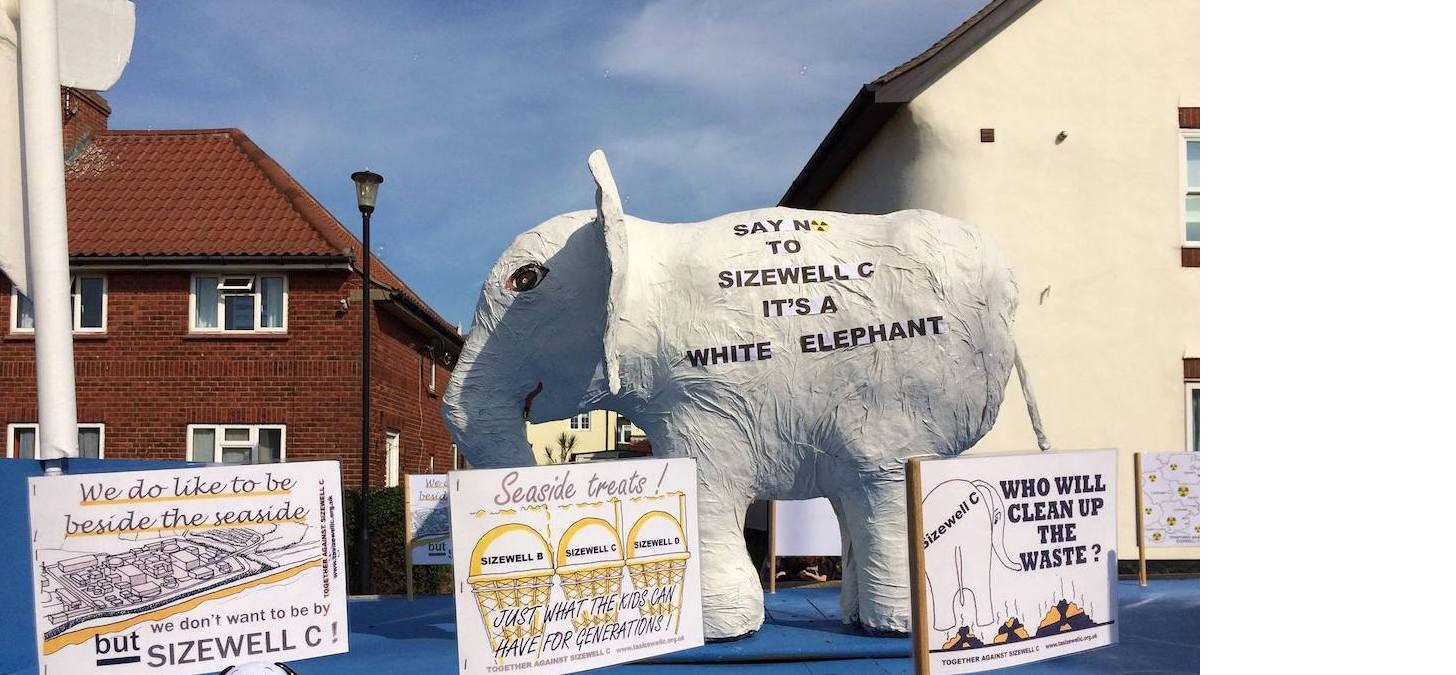
With an ongoing Spending Review which will determine whether Chancellor Rachel Reeves continues to squander yet more public money to feed the ravenous Suffolk ‘White Elephant’ known as the Sizewell C nuclear power plant project, whilst seeking private sector backers to help the unholy beast lumber across the line marked Final Investment Decision, now is the time for all those opposed to the plan to step up and take action to oppose it.
The NFLAs have been consistent in supporting and promoting any initiative by our friends in Stop Sizewell C and Together against Sizewell C that will help stop the beast in its tracks, and with estimated acquisition costs recently doubling to £40 billion at a time of tightening public finances ending the project at this early stage and redirecting the money to invest in energy efficiency measures and renewables would be the wisest move by HM Treasury.
Stop Sizewell C has recently identified four actions that you could take and we urge you to do so:
Write to the Chancellor, Rachel Reeves, urging her to cancel Sizewell C:
Over 1,000 such messages have been sent to the Chancellor during the current Spending Review.
Please add your own via action.stopsizewellc.org/save-billions-cancel-sizewellc
You can either send the standard message (see below for the text) by pressing ‘Send Message Now’ after entering your details or edit/paste in your own text by clicking ‘Personalise this email’.
he standard message:
“As you carry out your multi-year spending review, I am reminded of your statement to Parliament during your mini-budget last year – “If we cannot afford it, we cannot do it”. I appreciate that you face many difficult choices, but with the Financial Times reporting that Sizewell C will cost at least £40 billion, I urge you not to throw more taxpayers’ money at this expensive, risky project that will raise energy bills during its lengthy and unpredictable construction. For alternative strategies that will help meet the UK’s 2030 target and create many thousands of jobs, I urge you to focus on renewables and energy efficiency.”
Sign the Stop Sizewell C petition to David Goldstone, Chair of the new Office of Value for Money:
Stop Sizewell C is seeking at least 5,000 signatories to back a petition to the new Office of Value for Money’s independent Chair David Goldstone to call in the Sizewell C project for urgent scrutiny. To sign the petition please go to action.stopsizewellc.org/valueformoney
Most Scots disagree with Anas Sarwar about building new nuclear plants
The National 16th March 2025 https://www.thenational.scot/politics/25012201.scots-disagree-anas-sarwar-building-new-nuclear-plants/
DOESN’T the government wanting to build new nuclear plants in Scotland (Sunday National, Mar 16) betray why the UK subjugates Scotland as a vassal state to dump the nuclear garbage it doesn’t want polluting England onto we Scots? Like their dangerous weapons of mass destruction that Westminster doesn’t want located adjacent to the cossetted wealthy south-east; let’s just dump it on the Scots.
NO! NO! NO!
Not only don’t we want nuclear plants here in Scotland, we want England to bear the burden and risk of the obscenity that is nuclear weapons.
Anas Sarwar says it’s not the archaic planning rules that restrict development of nuclear plants, but the “intransigence of the ideologically rigid Scottish Government”. Sarwar fails to understand that this policy of the Scottish Government is widely supported by Scots; it is he who is out of step promoting a polluting, dangerous technology that is so 20th century. Here in the 21st century we’re already well served by hydro, wind and solar power with huge potential for further development. And there are hydrogen and tidal technologies among others to be developed, to build the broad mix of green energy without any need for nuclear power.
Isn’t Scottish Labour MPs changing their minds to accord with Starmer and Milliband’s diktat a clear case of them placing their own personal political careers before the wishes of the people they are supposed to represent and take instruction from? How is this democracy?
Who is surprised about anything emanating from this group of shape-shifting Labour MPs who lied to voters to get elected? Scots voted for them in desperation to rid us of the worst Tory government in history, sick fed up of being continually hammered by draconian policies that created financial hardship for those least well-off. Their reward for placing trust in Labour was to get a government that simply picked up the Tories’ baton of austerity hardship and is intent to press on and finish the race to bottom for ordinary folks, pensioners, those on fixed income and benefits, while ensuring that the wealthy who should and can afford to make a just contribution are left unscathed.
This desire of Starmer and his henchmen to dump nuclear plants on Scotland should prove to Scots that Westminster will never willingly allow us to secede from this iniquitous union that values Scotland only as a cash cow, somewhere to dump the dangerous stuff they don’t want in their back yard. If we want to live in a just land, won’t we have to prise ourselves from this UK union? We will have to take back our independence despite Westminster.
At the General Election, Scots voted in a poor electoral system for Labour. We received more tory; this time red-tory Labour.
If we are to benefit from real change, the Scottish Parliament elections in 2026 have got to be used as a concerted effort, with all pro-indy interests working together to demonstrate we’ve had enough of more than 300 years of failure and use the strength of feeling for indy to justify us taking back our independence.
One issue: independence. We vote SNP 1 with no SNP candidates on the list. Other indy-supporting parties under an umbrella group created for the election on the list, position by agreement, to achieve the supermajority that makes the case for indy irresistible.
Rainbow Warrior arrives in Marshall Islands to call for nuclear and climate justice on 40th anniversary of Rongelap evacuation

Greenpeace International, 11 March 2025 ,
https://www.greenpeace.org/international/press-release/73392/rainbow-warrior-arrives-in-marshall-islands-to-call-for-nuclear-and-climate-justice-on-40th-anniversary-of-rongelap-evacuation/
Majuro, Republic of the Marshall Islands – Greenpeace flagship vessel the Rainbow Warrior was welcomed back to the Marshall Islands today, marking the start of a six-week mission around the Pacific nation to elevate calls for nuclear and climate justice; and support independent scientific research into the impacts of decades-long nuclear weapons testing by the US government.[1]
Escorted by traditional canoes, and welcomed by Marshallese singing and dancing, the arrival of the Rainbow Warrior marks a significant moment in the shared history of Greenpeace and the Marshall Islands — 40 years since Greenpeace crew evacuated over 300 people from the Rongelap atoll to Mejatto island, after toxic nuclear fallout from the Castle Bravo test rendered their ancestral lands uninhabitable.[2] The ship was given a blessing by the Council of Iroij, the traditional chiefs of the Islands; with speeches from Senator Hilton Kendall (Rongelap atoll); Honorable Boaz Lamdik on behalf of the Mayor of Majuro; Farrend Zackious, Vice Chairman Council of Iroij; and keynote address from Minister Bremity Lakjohn, Minister Assistant to the President.
Shiva Gounden, Head of Pacific at Greenpeace Australia Pacific, said:
“We’re extremely grateful and humbled to be welcomed back by the Marshallese government and community with such kindness and generosity of spirit. Over the coming weeks, we’ll travel around this beautiful country, bearing witness to the impacts of nuclear weapons testing and the climate crisis, and listening to the lived experiences of Marshallese communities fighting for justice.
“For decades, Marshallese communities have been sacrificing their lands, health, and cultures for the greed of those seeking profits and power. But at the same time, the Marshallese people have been some of the loudest voices calling for justice, accountability, and ambitious solutions to some of the greatest issues facing the world. Greenpeace is proud to stand alongside the Marshallese people in their demands for nuclear justice and reparations, and the fight against colonial exploitation which continues to this day. Justice – Jimwe im Maron“
Over the six-week mission, the Rainbow Warrior will travel to Mejatto, Enewetak, Bikini, Rongelap, and Wotje, undertaking much-needed independent radiation research, and reaffirming its solidarity with the Marshallese people — now facing further harm and displacement from the climate crisis, and the emerging threat of deep sea mining in the Pacific.
Jobod Silk, a climate activist from Jo-Jikum, a youth organisation responding to climate change, said:
“Marshallese culture has endured many hardships over the generations. Colonial powers have each left their mark on our livelihoods – introducing foreign diseases, influencing our language with unfamiliar syllables, and inducing mass displacement “for the good of mankind”. Yet, our people continue to show resilience. Liok tut bok: as the roots of the Pandanus bury deep into the soil, so must we be firm in our love for our culture.
“Today’s generation now battles a new threat. Once our provider, the ocean now knocks at our doors, and once again, displacement is imminent. Our crusade for nuclear justice intertwines with our fight against the tides. We were forced to be refugees, and we refuse to be labeled as such again. As the sea rises, so do the youth. The return of the Rainbow Warrior instills hope for the youth in their quest to secure a safe future.”
Dr Rianne Teule, Senior Radiation Protection Advisor at Greenpeace International, said:
“It is an honour and a privilege to be able to support the Marshallese government and people in conducting independent scientific research to investigate, measure, and document the long term effects of US nuclear testing across the country.
“As a result of the US government’s actions, the Marshallese people have suffered the direct and ongoing effects of nuclear fallout, including on their health, cultures, and lands. We hope that our research will support legal proceedings currently underway and the Marshall Islands government’s ongoing calls for reparations.”
The Rainbow Warrior’s arrival to the Marshall Islands on March 11 also marks the 14th anniversary of the Fukushima nuclear plant disaster. Whilst some residents have returned, there are many areas that remain too contaminated for people to safely live.[3]
Councillors oppose nuclear dump site near Louth
‘Six more communities are now facing this devastation
By Peter Craig, Reporter, 10 Mar 25
Councillors have voted to oppose a nuclear dump site near Louth. East
Lindsey District Council want to persuade Lincolnshire County Council to do
the same and say NO to the proposed 1,000 acre site at Great Carlton.
Grimsby Telegraph 11th March 2025, https://www.grimsbytelegraph.co.uk/news/grimsby-news/councillors-oppose-nuclear-dump-site-10001353
Campaigners attend East Lindsey District Council meeting to call on Lincolnshire County Council to withdraw from Geological Disposal Facility process

By James Turner, Local Democracy Reporter, Lincs Online 6th March 2025, https://www.lincsonline.co.uk/louth/weve-had-enough-now-the-threat-of-this-nuclear-waste-dump-9407343/
Dozens of protesters have called on Lincolnshire County Council to withdraw from the process that could lead to the construction of a nuclear waste site in the county.
Campaigners from across the district gathered outside East Lindsey District Council’s offices in Horncastle ahead of a full council meeting on Wednesday to support a motion from Coun Travis Hesketh (Independent) urging the leader to actively oppose the establishment of a Geological Disposal Facility (GDF) – and calling on the county council to withdraw from the community partnership in the hopes of stopping the plans altogether.
Nuclear Waste Services (NWS) identified three ‘areas of focus’ for its facility in January. These include sites in Mid Copeland and South Copeland in Cumbria, as well as land between Gayton le Marsh and Great Carlton, near Louth.
East Lindsey District Council has pledged to leave the working group it joined with the organisation formerly known as Radioactive Waste Management in 2021, due to the new location being prime agricultural land and completely different from the former gas terminal site in Theddlethorpe, which it had been considering previously.
“I am the district councillor for Withern and Theddlethorpe, I represent the area where the nuclear dump was originally going to be placed, but now it’s moved,” Coun Hesketh told the Local Democracy Reporting Service.
“We’re here today because East Lindsey has said they are going to pull out, which is a terrific thing, but they need to go further. They need to say we oppose this and we want Lincolnshire County Council to do the same.
“We’ve had five years since Lincolnshire County Council met with Radioactive Waste Management – this thing has been going on for so long they’ve changed the name of the company. We’ve had enough now. They have ruined two communities, house values have been decimated – nobody can sell their house in the Carlton or Gayton area, they’re stuck. It’s time to make a decision.”
As councillors began arriving for the meeting, campaigners sang chants such as “We say, we say, no GDF, no GDF,” to the beat of Queen’s We Will Rock You and other lines such as “We are gentle, angry people and we’re singing for our lives.”
Nigel, 64, from Theddlethorpe, was just one of many campaigners and said he had been fighting the plans since ‘day one’.
“Now the area of focus has shifted, I feel I need to support the people affected in that area as well. We’re just trying to force the council’s hand now.”
Opposition to new small nuclear power plants in south Wales

There are plans for four “micro” nuclear reactors in the Llynfi Valley, Bridgend.
WalesLOnline, By Lewis Smith, Local Democracy Reporter, 21 FEB 2025Green Party members in Bridgend have said they are opposed to plans for a nuclear power plant project in the Llynfi Valley describing it as “unnecessary, unwanted and unsafe”.
The multi-million proposals could eventually see the creation of a facility with four micro modular nuclear power plants on the site of the former coal-powered Llynfi Power Station, if given the go-ahead……………
the Bridgend branch of the Green Party have now issued a statement opposing the potential power station, raising concerns over safety with what they say is an “untested” design planned for the site.
……………… Part of the statement added: “This is a new design which if built will be the first of its kind. So the design is untested in the real world. Locals, including local Green Party members have several credible reasons for concern.
“The Green Party questions the need for a nuclear power plant, when Wales has the natural resources required to produce all its energy from a mixture of solar power, onshore and off-shore wind generation.”
“The risk of nuclear leaks, from the on-site nuclear waste storage is not acceptable. Who will pay for future nuclear waste storage? There is a risk that no other region of the UK will be willing to store the nuclear waste, and that this area will become a long term nuclear waste storage site. The consequences of accidental leakage and terrorist targeting has not been fully considered………………… https://www.walesonline.co.uk/news/wales-news/opposition-new-small-nuclear-power-31047639
Opposition mounts to planned nuclear plant as Starmer confirms new policy of ‘Build, baby, build’
Martin Shipton Nation Cymru 9th Feb 2025
Opposition to a proposed nuclear energy plant in Bridgend is mounting, with the local Green Party saying it is “unnecessary, unwanted and unsafe”.
But doubts about the proposal come as Keir Starmer confirmed that the UK Government intends to change the planning system to make it easier for such projects to go ahead.
An American-owned company called Last Energy intends to build the SMR (small modular reactor) plant next to the River Llynfi, just to the north of Bridgend.
The Green Party argues that If the development goes ahead, it will be funded by venture capitalists who are not likely to be citizens of Wales. The nuclear power plant will operate for profit, as a private enterprise.
Untested
A party spokesperson said: “It is based on a new design which if built will be the first of its kind. So the design is untested in the real world. Locals, including Green Party members, have several credible reasons for concern.
“The Green Party questions the need for a nuclear power plant, when Wales has the natural resources required to produce all its energy from a mixture of solar power, onshore and off-shore wind generation.
“It is true that people need secure energy supplies which can be quickly restored, and that Wales needs investment in improving the grid infrastructure. But nuclear power is not the solution to Wales’ energy needs.
“As was proved in the December 2024 storm, we desperately need improvements to our energy resilience – such as the ability to restore power after severe climate events, and this should be the focus of any energy investment.
“Do locals want a nuclear power plant in Bridgend? Last Energy has hosted two community consultations, one in Bettws and one in Pencoed. Debra Cooper, the Green Party Chair for Bridgend, attended both events and asked how the locals had been invited to these meetings, given that many were unaware that they were taking place.
“The speaker gave a vague reply that Facebook had been used, and that Last Energy had outsourced the invitations. More consultation events are planned, and we demand that Last Energy genuinely seeks to invite the community to their consultations.
“Is nuclear power safe? The risk of nuclear leaks from the onsite nuclear waste storage is not acceptable.
“Who will pay for future nuclear waste storage? There is a risk that no other region of the UK will be willing to store the nuclear waste, and that this area will become a long term nuclear waste storage site. The consequences of accidental leakage and terrorist targeting have not been fully considered.”
Nuclear waste
Brian Jones, CND Cymru Vice Chair, said: ““Last Energy, despite having never built a nuclear reactor, is proposing to build four nuclear reactors near Bridgend which, like all nuclear reactors, will produce nuclear waste which needs to be safely contained and monitored for thousands of years. Nuclear power stations have consistently cost more and taken longer to build than originally proposed.”
Tony Cooke, who leads on Wales energy policy development for the Green Party, said: “Green Party policy is clearly opposed to any new nuclear power stations. The developers haven’t actually built any to their proposed design and they don’t have a design licensed by the UK Office for Nuclear Regulation which would be required. Their website claims more than 300 are operating globally – but this is misleading – there are more than 300 pressurised water reactors), but PWR refers to a generic ‘family’ approach to design – not a specific one. Licensing is not likely to be quick. (years not months)
“The developers are presumably targeting an ex coal fired power station site because it has a now unused grid connection. These are valuable, given the time lag in getting new grid connections. The site should be prioritised for battery storage, which is needed and complements renewable generation. Because of the small scale of the proposal it is in the powers of the local authority to reject it. We should lobby for them to do so.”
Planning approvals
Richard Outram, secretary of the Britain / Ireland Nuclear Free Local Authorities group said: “Nuclear energy can never be 100% safe and is never ‘clean’ whatever the industry claims. Last Energy has a long way to go before securing the necessary regulatory or planning approvals to begin its project by 2027. The Office for Nuclear Regulation said this was ‘very ambitious’. And Last Energy does not even appear to have any working reactors – just mock ups! Nuclear at Bridgend would be more Lost Energy – renewables are the future.”
Last Energy says it hopes the pressurised water reactors will supply power to “mid-size manufacturers throughout the region, providing 24/7 baseload power and putting the local economy on a path toward industrial decarbonisation”.
It says the project will not need taxpayer cash, with the company estimating it would be making a £300m investment, £30m of which would benefit the local economy, excluding business rates collected by Bridgend County Borough Council. It also expects to create at least 100 local full-time jobs.
Last Energy UK CEO Michael Jenner said: “Last Energy’s Llynfi project will not only transform a vacant coal site into a hub for clean energy production, it will also create economic opportunity for companies throughout South Wales.
“The benefits of nuclear power speak for themselves, so our focus must be on delivering those benefits on time and on budget. Last Energy’s emphasis on mass-manufacturability allows us to deliver significantly smaller plants in under 24 months with purely private financing.
“We look forward to engaging with the public, meeting local suppliers, and being an active partner in south Wales’ path towards energy security and industrial decarbonisation.”
Nato
In June 2024, Last Energy announced it was working with Nato to research opportunities for the future deployment of micro-nuclear power technologies at military installations.
The partnership between Last Energy and Nato Energy Security Centre of Excellence (Ensec Coe) will see the two parties research military applications for the micro-reactors and look into potential deployment.
In October 2024, independent nuclear experts told New Civil Engineer magazine that SMRs could be used to produce weapons-grade material, but various practical, legal and moral challenges made this unlikely to be done in reality.
On February 6 Prime Minister Keir Starmer pledged to “build baby build”, as he announced plans to make it easier to construct mini nuclear power stations in England and Wales.
He told the BBC the government was going to “take on the blockers” and change planning rules so new reactors could be built in more parts of the country.
Sir Keir said he wanted the country to return to being “one of the world leaders on nuclear”, helping to create thousands of highly skilled jobs and boosting economic growth. https://nation.cymru/news/opposition-mounts-to-planned-nuclear-plant-as-starmer-confirms-new-policy-of-build-baby-build/
CND Cymru warns against Starmer’s ‘anti-democratic’ push for mini-nuclear reactors
Morning Star 7th Feb 2025 https://morningstaronline.co.uk/article/cnd-cymru-warns-against-starmers-anti-democratic-push-mini-nuclear-reactors
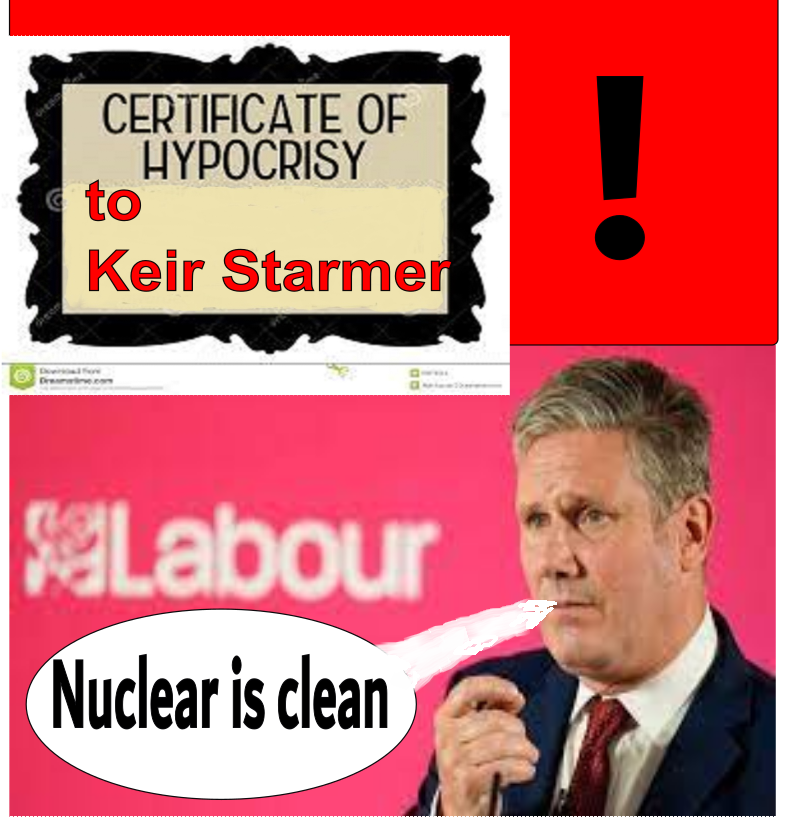
CND CYMRU has blasted Sir Keir Starmer’s “anti-democratic” push to put nuclear reactors in communities without consultation.
The Prime Minister announced planning reforms this week that will see “archaic” rules slashed to allow more power plants approved across England and Wales.
Clearing a path for so-called small modular reactors (SMRs) to be built for the first time, the government said growth will be prioritised ahead of so-called Nimbys.
A set list of eight sites where mini-nuclear power stations can be included in planning rules and the expiry date on nuclear planning rules will be scrapped.
CND Cymru national secretary Dylan Lewis-Rowlands said: “If the proposals from Westminster are to be believed, then not only could plans similar to this pop up anywhere in Wales or England, but could also be pushed through against community will from the UK government.”
CND Cymru vice-chairman Brian Jones added: “This is not just a question of nuclear development, but of democracy.
“The intention of this move by Starmer seems to be something that the nuclear power and weapons industry has only dreamt of before — the ability to ignore communities wishes and focus their vast lobbying budgets on getting central government to allow them to build wherever they want, without opposition.
“It is fundamentally putting profit before people and planet, and turning Britain into a nuclear power test site for SMRs. It is, in one word, anti-democratic.”
Concerns were also raised regarding the intention of these proposals to power AI datacentres, with Mr Lewis-Rowlands warning: “The industry always try and co-opt any reason to push development and secure the lucrative government money that allows them to pay their shareholders.

Prime Minister Keir Starmer (centre) and Energy Security and Net Zero Secretary Ed Miliband (right) meet staff at the new decontamination and decommissioning lab during a visit to Springfields (Preston Lab), National Nuclear Laboratory facility in Preston, Lancashire, as the Government is pledging to create thousands of highly skilled jobs by reforming planning rules to make it easier to build new nuclear reactors. Picture date: Thursday February 6, 2025
1 This Month
23-25 October – on Zoom – World BEYOND War’s annual global conferenc


Shut down the radiation-damaged Heysham nuclear reactors now
To see nuclear-related stories in greater depth and intensity – go to https://nuclearinformation.wordpress.com

Say No to NASA’s Reckless Nuclear Reactor on the Moon
Say No to NASA’s Reckless Nuclear Reactor on the Moon

-
Archives
- October 2026 (247)
- September 2026 (339)
- August 2026 (330)
- July 2026 (355)
- June 2026 (287)
- May 2026 (306)
- April 2026 (356)
- March 2026 (251)
- February 2026 (267)
- January 2026 (308)
- December 2025 (358)
- November 2025 (359)
-
Categories
- 1
- 1 NUCLEAR ISSUES
- business and costs
- climate change
- culture and arts
- ENERGY
- environment
- health
- history
- indigenous issues
- Legal
- marketing of nuclear
- media
- opposition to nuclear
- PERSONAL STORIES
- politics
- politics international
- Religion and ethics
- safety
- secrets,lies and civil liberties
- spinbuster
- technology
- Uranium
- wastes
- weapons and war
- Women
- 2 WORLD
- ACTION
- AFRICA
- Atrocities
- AUSTRALIA
- Christina's notes
- Christina's themes
- culture and arts
- Events
- Fuk 2022
- Fuk 2023
- Fukushima 2017
- Fukushima 2018
- fukushima 2019
- Fukushima 2020
- Fukushima 2021
- general
- global warming
- Humour (God we need it)
- Nuclear
- RARE EARTHS
- Reference
- resources – print
- Resources -audiovicual
- Weekly Newsletter
- World
- World Nuclear
- YouTube
-
RSS
Entries RSS
Comments RSS

