LGBTQ Activists Jump Into the Atlantic to support Treaty banning nuclear weapons
 2012, LGBTQ activists Brendan Fay and Robert Croonquist huddled with other New York-based members of International Campaign to Abolish Nuclear Weapons and ran into the Atlantic Ocean at Far Rockaway on New Year’s Day as part of a public demonstration against nuclear weapons.
The activists, who plunged into the freezing waters at Rockaway Beach and 92nd Street, are pushing the City Council to move forward with a resolution asking the city comptroller to divest pension funds of public employees from sources of nuclear weapons and a bill creating an advisory committee that would evaluate nuclear disarmament and other issues geared towards making New York City a nuclear weapons-free zone. Those bills were proposed by out gay Councilmember Daniel Dromm of Queens, who has welcomed the support of dozens of co-sponsors in both cases.
The activists are asking out gay City Council Speaker Corey Johnson to advance the measures before the Treaty of the Prohibition of Nuclear Weapons becomes international law on January 22. …………
Croonquist, a former public school teacher who is a member of Rise and Resist and the Reclaim Pride Coalition, said he was driven to jump into the ocean when he thought about the high school students he taught at Jamaica High School in Queens.
“This legislation would divert my pension’s investments from weapons of mass destruction and redirect them to things that bring true security — investments in food, housing, climate, infrastructure and healthcare. ………… https://www.gaycitynews.com/lgbtq-activists-jump-into-the-atlantic-to-protest-nuclear-weapons/.
Dr Helen Caldicott as mentor for anti-nuclear activists
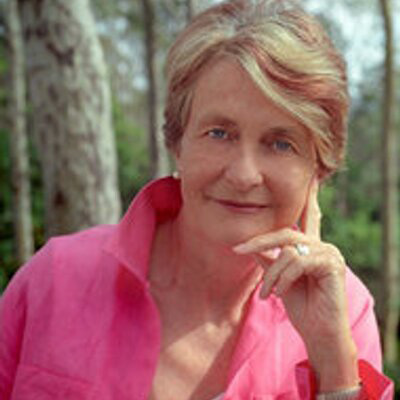 My Six Mentors, “………Helen Caldicott, MD, by Mary Olson, Gender and Radiation Impact Project, 1 January 20121
Helen Caldicott deserves a much greater place in our histories of the Cold War and ending the USA / USSR arms race than she generally gets. This is, perhaps, because she is powerful and a woman. A pediatrician, who in the 1970’s would not tolerate the radioactive fallout she and her patients were suffering from nuclear weapons tests in Australia, Helen and her family came to the USA. She and another physician named Ira Helfand revived what had been a local Boston organization of physicians and created a Nobel Prize winning organization called Physicians for Social Responsibility (PSR), which later participated in the creation of another Nobel Prize winning group, the International Physicians for the Prevention of Nuclear War (IPPNW). These two along with hundreds of other organizations committed to peace and nuclear disarmament formed the International Campaign for the Abolition of Nuclear Weapons (ICAN) which has helped to create the new Treaty on the Prohibition of Nuclear Weapons (see http://icanw.org/the-treaty ) and also won the Nobel Prize (2017).
Helen herself is a powerful communicator and will move audiences at a level that can change the course of someone’s life and work. She followed her own destiny to winning meetings with Mikhail Gorbachev, President of the Soviet Union, where she educated him about Nuclear Winter and the fact that nuclear is not a war that anyone can win. She also met with President Reagan in the era and diagnosing early-stage dementia… Her ability to bring the reality of the world to these men, and reality of these men to the world set her aside, in a class by herself—and was an enormous contribution to us all.
I first met Helen in the body of her Cold War block-buster book “Nuclear Madness.” I was in the midst of an existential crisis that could have become an even bigger health crisis. After college I needed a job (not yet a career) because I was broke, broken up from my first “true” love, and far from home. I got a job as a research assistant in a lab at a prestigious medical school; it was 1984.
Within 2 weeks, I was inadvertently contaminated with radioactivity (without my knowledge) by carelessness of a lab-mate. The radioactive material, Phosphorus-32 is used in research to trace biochemical activity in living organisms. This type of radioactivity is not deeply penetrating, so there was some reason not to panic, however the I was exposed continuously for over a week, and I also found radioactivity at home– my toothbrush was “hot”—so I had also had some level of internal exposure. I was terrified. The lab used concentrations of the tracer thousands of times higher than is typical.
The institution told me there was no danger, but because I was upset, they helped me transfer to a different job. No accident report was filed, and in the midst of transition, my radiation detection badge was never processed. It is not possible to know the dimensions of my exposure—I began having symptoms that were not normal for me. Many people, including some family members told me I was imagining things. No one in my circle understood how terrified I was.
I was fortunate that Helen had already written “Nuclear Madness”—the first edition came out in 1978, just before the March 1979 Three Mile Island nuclear meltdown in Harrisburg PA—an event that propelled the book into multiple printings including a Bantam Paperback edition that I found. It turned out that 7 years later I helped Helen to revise and update the same text for the 1994 WW Norton edition. It was Helen’s deep commitment to truth, to speaking and writing that truth, to empowering people to take action for good. Helen’s words accurately described radiation and its potential for harm, and in my panic about the unknown, this calmed me.
Every other authority I had encountered was trying to tell me there was no problem—when I knew they had no right to dismiss what had happened to me. I am quite certain that had I remained alone with my fear, despair, and confusion my panic would have resulted in behaviors that would have compounded any harm bodily from that radioactive contamination. Reading Helen’s work let me know there was at least one woman walking the Earth who did know what I was going through… it made it possible for me to choose recovery and walk away from a legal battle that would have forced me to maintain, hold and prove a myself a victim. Instead, following in Helen’s wake, I chose Peaceful Warrior. Thank you Helen! : ……….. https://www.genderandradiation.org/blog/2020/12/31/my-six-mentors
This is the sort of letter that citizens need to be writing – in support of the nuclear weapons ban
 Sudbury letter: Council should support banning of nuclear weapons, https://www.thesudburystar.com/opinion/letters/sudbury-letter-council-should-support-banning-of-nuclear-weaponsAuthor of the article:
The United Nations has passed the Treaty on the Prohibition of Nuclear Weapons and it will become international law on Jan. 22, 2021. Some 86 countries have signed this agreement. Unfortunately, Canada is not one of them.
As it is cities that will be targeted by nuclear weapons, Sudbury, a producer of nickel, would likely be a target. The International Campaign Against Nuclear Weapons (ICANw) is asking cities to support the Treaty on the Prohibition of Nuclear Weapons by passing the following motion (many Canadian cities have already passed this motion including Toronto, Halifax, Vancouver and Victoria):
“Our city of Sudbury, Ont., is deeply concerned about the grave threat that nuclear weapons pose to communities throughout the world. We firmly believe that our residents have a right to live in a world free from this threat. Any use of nuclear weapons, whether deliberate or accidental, would have catastrophic, far-reaching and long-lasting consequences for people and the environment. Therefore, we support the Treaty on the Prohibition of Nuclear Weapons and call on our governments to sign and ratify it.”
The world has about 14,000 nuclear weapons with about 1,500 on hair-trigger alert. The firing of these weapons could happen by accident, miscalculation, terrorism or an unstable government. The catastrophe would be immediate.
I would urge Sudbury city council to pass the motion and support the United Nations Treaty on the Prohibition of Nuclear Weapons.
Richard Denton
Sudbury
Non violent anti-nuclear action – the Clamshell Alliance model for success
Know Your Nonviolent History: In 1976 Clamshell Alliance Launches Mass Demonstrations https://www.riverasun.com/know-your-nonviolent-history-in-1976-clamshell-alliance-launches-mass-demonstrations/August 18, 2016, by Rivera Sun On August 1st, 1976, the first nonviolent mass demonstration of the Clamshell Alliance took place at the proposed site of the Seabrook Nuclear Energy Facility in New Hampshire. The Clamshell Alliance was a group of anti-nuclear activists who worked to stop nuclear power plant construction at a time when President Nixon’s “Project Independence” had proposed the construction of over 1,000 nuclear power plants throughout the nation. Although the Clamshell Alliance was only partially successful in halting the Seabrook facility, their mass mobilizations deterred the plans for other plants and changed the landscape of nuclear energy forever. If not for the Clamshell Alliance, it is possible that we would be living in the nuclear nightmare of President Nixon’s vision of a thousand plants by the year 2000.
|
The Clamshell Alliance used a model of affinity groups of 6-20 people, and a spokes council system that functioned on consensus decision-making by all members. In July 1976, the Clamshell Alliance adopted a Declaration of Nuclear Resistance and by August 1st had mobilized their first protest of 200-600 people. Later in August, a second protest and civil disobedience action occupied the Seabrook construction site for 75 minutes, singing songs and planting trees. Nearly all of the 200 participants were arrested. In April of 1977, the Clamshell Alliance mobilized 2,000 people for a demonstration. 1,400 participants were arrested, most refusing to post bail. They were held in jails and National Guard armories for up to two weeks. The activists used this time for training and networking, and subsequently, the detention of the activists was seen as a blunder on the part of Governor Meldrim Thomson. In 1978, the Clamshell Alliance successfully organized another series of mass demonstrations and arrests. From June 23-26th, the alliance accepted an agreement to legally protest on the site for three days. Some sources claim this protest was one of the largest on-site protests in the history of the anti-nuclear movement, citing over 20,000 participants and very few arrests. On March 29th, 1979, the meltdown of the Three Mile Island reactor in Harrisburg, Pennsylvania, propelled the dangers of nuclear power to the forefront of national concern. In collaboration with other groups, a huge anti-nuclear energy rally was organized in Washington, D.C. on May 6, 1979. Between 50,000 and 120,000 people gathered to protest nuclear power and demand safe alternatives. These demonstrations played a major role in slowing and stopping the rush toward nuclear energy. Although Unit 1 of Seabrook Power Plant went online in 1990, Unit 2 was cancelled altogether. The project cost seven times the original billion-dollar estimate and was completed 14 years later than anticipated. In that time, hundreds of other proposals were dropped, due to the high social and fiscal costs encountered by the Seabrook Power Plant. For decades after the inception of the Clamshell Alliance and other similar groups, no new nuclear power facilities were proposed or constructed. The Clamshell Alliance left a lasting legacy in its organizing structure, movement practices, consensus model, and strategies for change. These are all tools and resources that can be used by current movements for change. This article is from Rivera Sun’s book of nonviolent histories that have made our world. Click here for more information. |
|
Plowshare anti nuclear-weapons activists again face prison .
 Longtime Anti-Nuke Activists Face Prison, Again, After Breaking Into Naval Base https://www.npr.org/2020/12/28/948116757/longtime-anti-nuclear-activists-face-prison-again-after-breaking-into-naval-base
December 28, 20205: Heard on Morning Edition
EMMA PEASLEE. Dressed in black, the seven intruders cut through a fence and stole along the perimeter of the naval base, trying to avoid detection from the guard towers, as a loudspeaker overhead blared: “Deadly force is authorized!”
Patrick O’Neill, who had a GoPro strapped to his head, tried to reassure himself by remembering a scene in the Bible where Jesus escapes unscathed from a wrathful mob that wants to throw him off a cliff.
When O’Neill and the others reached their target, they poured their own blood on the shield of the Kings Bay naval base in Georgia and attached a poster of Martin Luther King Jr. to a mock-up of a Trident II D5 ballistic missile at the welcome area.
The anti-nuclear activists — Roman Catholics who call themselves Plowshares, from the Biblical passage about “beating swords into plowshares” — followed the metaphor quite literally and took a hammer to the replica of the warhead.
The break-in on the night of April 4, 2018, ended with the arrest and conviction on charges of trespassing and destruction of property for the seven activists aged 58 to 81.
And in the midst of a pandemic that’s wreaking havoc on prisons and disproportionately affecting older people, six of them have been sentenced to up to 33 months in prison. The seventh is scheduled to be sentenced in February.
The Plowshares activists were seeking to revive the anti-nuclear movement by committing acts of civil disobedience.
They are part of a larger faith-based movement that has been around since the 1980s, when anti-nuclear protests used to draw millions into the streets.
Those days are long gone, but the threat of nuclear warfare isn’t. According to some atomic scientists, the threat may be even greater now, and the activists are frustrated that in their view hardly anyone is paying attention.
Which is one reason why they have broken into military bases and sometimes succeeded in doing damage to actual nuclear armaments. In a highly publicized protest in 1980, Plowshares activists hammered two missile nose cones at a General Electric complex in King of Prussia, Pa., causing tens of thousands of dollars worth of damage. In 2012, another group that included an 82-year-old Catholic nun defaced a bunker holding weapons-grade uranium at the Y-12 National Security Complex in Oak Ridge, Tenn.
People are always astounded that a bunch of old people or unarmed people or whatever people can gain access to these weapons at all,” said O’Neill, 64.
Martha Hennessey, 65, had already been to prison three times before beginning her sentence at a federal prison in Danbury, Conn., on Dec. 14. She is the granddaughter of the journalist-turned-activist Dorothy Day, who founded the pacifist Catholic Worker Movement in the 1930s.
Rather than dwell on her own sentence, she drew attention to the mass incarceration of people who have committed minor offenses.
“I mean, there are people being thrown into prison for years for, you know, things that are not even crimes,” she said in an interview before reporting to prison.
Members of the Plowshares group prefer not to talk about the risks they might face in prison, but their families are worried.
“I’m afraid that my dad might die in prison,” said Maura O’Neill, 26, one of O’Neill’s eight children. “I worry that he might contract COVID and get really sick, and it feels like a real possibility.”
The Mayak nuclear reprocessing plant: Rosatom’s dirty face- and the courageous opposition

 problems, protests, reprisals” Produced by RSEU’s program “Against nuclear and radioaсtive threats”
In the city of Krasnoyarsk, Rosatom plans to build a national repository for high–level radioactive waste. A site has been selected on the banks of Siberia’s largest river, the Yenisei, only 40 km from the city. Environmental activists consider this project, if implemented,to be a crime against future generations and violates numerous Russian laws. Activists are also concerned that waste from Ukraine,Hungary, Bulgaria (and in the future from Belarus, Turkey, Bangladesh, and other countries) could be transported there as well. (47)
Major Japan life insurers shun investing in nuclear weapons-linked firms
 Major Japan life insurers shun investing in nuclear weapons-linked firms, https://www.japantimes.co.jp/news/2020/12/14/national/major-japan-life-insurers-investing-nuclear-weapons-linked-firms/ 14 Dec 20, Four major Japanese life insurers do not invest in or extend loans to producers of nuclear weapons or companies related to them, Kyodo News learned Saturday, as part of their efforts toward socially responsible investing.The revelation comes as various lenders in Japan, Europe and the United States have refrained from investing in companies involved in the nuclear weapons industry.It also precedes the entry into force in January of a United Nations treaty that will ban such weapons. Major Japan life insurers shun investing in nuclear weapons-linked firms, https://www.japantimes.co.jp/news/2020/12/14/national/major-japan-life-insurers-investing-nuclear-weapons-linked-firms/ 14 Dec 20, Four major Japanese life insurers do not invest in or extend loans to producers of nuclear weapons or companies related to them, Kyodo News learned Saturday, as part of their efforts toward socially responsible investing.The revelation comes as various lenders in Japan, Europe and the United States have refrained from investing in companies involved in the nuclear weapons industry.It also precedes the entry into force in January of a United Nations treaty that will ban such weapons.
The four life insurers which managed a combined ¥151 trillion in assets in fiscal 2019 — Nippon Life Insurance Co., Dai-ichi Life Insurance Co., Meiji Yasuda Life Insurance Co. and Fukoku Mutual Life Insurance Co. — did not disclose lists of targeted companies. The restraint shown by the life insurers reflects a growing trend toward valuing environmental, social and governance (ESG) factors in making investment decisions. It is believed that such investing strategies will give a boost to the advancement of green technologies while cutting funding for developing nuclear weapons. Three of the insurers, with Nippon Life being an exception, say they do not invest in companies involved in the maintenance of nuclear warheads or manufacturing of ballistic missiles, in addition to those making nuclear weapons. According to PAX, an international nongovernmental organization for peace, U.S. Lockheed Martin Corp., which develops the long-range Minuteman intercontinental ballistic missile, is among such companies. More than 300 lenders including major Japanese banks invested a total of $748 billion in companies involved in the nuclear weapons industry between January 2017 and January 2019, according to the NGO. In April, Dai-ichi Life published a basic policy that excludes weapons producers from its portfolio. The company told Kyodo News that companies linked to nuclear weapons raise concerns from the viewpoint of ESG. Meiji Yasuda said it does not invest in or extend loans to companies that are found to have links to nuclear and other inhumane weapons based on undisclosed internal rules. Categorizing companies related to nuclear weapons as “socially problematic,” Fukoku has excluded them from its investible universe in line with its own guidelines adopted in February 2019. Nippon Life, meanwhile, said it does not invest in shares or bonds of nuclear weapons producers. The Treaty on the Prohibition of Nuclear Weapons will become the first international pact outlawing the development, testing, possession and use of nuclear weapons, though the world’s major nuclear powers have not joined it. Japan, the only country to have suffered a nuclear attack, has not taken part, to the disappointment of many atomic bomb survivors in Hiroshima and Nagasaki, as it is protected under the U.S. nuclear umbrella. Sumitomo Life Insurance Co., which does not have guidelines on investing in nuclear weapons companies, said it will consider exercising restraint as investing in such companies would hurt its reputation once the nuclear ban treaty takes effect. |
|
Russian environmental defenders under attack
For future updates follow RSEU on facebook.
For more information contact:
Vitaly Servetnik,
Russian Social-Ecological Union / Friends of the Earth Russia
Email: vitservetnik@gmail.com
Program Area: Environmental Human Rights Defenders
Member Group: Russian Social Ecological Union (RSEU)
Growing political opposition in Canada to Small Nuclear Reactors
 Hill Times -Political opposition growing to new nuclear reactors, https://wordpress.com/read/feeds/74740422/posts/3066856410 Hill Times -Political opposition growing to new nuclear reactors, https://wordpress.com/read/feeds/74740422/posts/3066856410By EVA SCHACHERL DECEMBER 9, 2020 The nuclear industry and Liberals have not only been laying the groundwork for government funding. It appears they have been ensuring that the framework for nuclear energy in Canada gets even more accommodating. Natural Resources Minister Seamus O’Regan has been hyping so-called next-generation reactors for months, portraying the industry as a future utopia.
Many Canadians are anxious to see what our energy future will be. Politically, it’s a question that stirs passions from Alberta’s oil patch to Ontario’s cancelled wind farms. But political debate is picking up around our nuclear energy future. And with good reason. Government-funded expansion of the nuclear industry, and a simultaneous watering-down of regulations, could be the Liberal government’s toxic legacy.
Natural Resources Minister Seamus O’Regan has been hyping so-called next-generation reactors for months. A recent nuclear industry summit—hosted with federal funding—portrayed nuclear energy expansion in Canada as a future utopia. The Green Party caucus, the NDP’s natural resources critic Richard Cannings, and the Bloc Québécois’s environment critic Monique Pauzé have all slammed O’Regan’s expected small modular reactor (SMR) “action plan.” They say it does not belong in a plan to reduce greenhouse gas emissions. Energy efficiency, wind, solar, and storage technologies are ready to build, and much cheaper, according to Lazard, a financial advisory and asset management firm. The prototype reactors will take years, if not decades, to develop, and could absorb hundreds of millions, even billions, in taxpayer subsidies, according to Greenpeace Canada.
That would mean opportunities lost for those dollars to build many times the amount of zero-emission energy with renewables and energy-efficiency projects. The latter would not create toxic radioactive waste for future generations to contend with. Independent research says that a nuclear solution for remote communities (as proposed by the government) is likely to cost 10 times more to build and operate than the alternatives. It seems inevitable that the Liberal action plan will soon be launched with generous handouts for the nuclear industry, whose aspiring players in Canada today include SNC-Lavalin and U.S. corporations like Westinghouse and GE-Hitachi Nuclear Energy. Few Canadians are aware that “Canadian” Nuclear Laboratories (CNL) is owned by a consortium of SNC-Lavalin and two U.S. firms, Fluor and Jacobs.
In recent years, the nuclear industry and Liberals have not only been laying the groundwork for government funding. It appears they’ve also been ensuring that the framework for nuclear energy in Canada gets even more accommodating. The biggest step was exempting most new reactors from the Impact Assessment Act, which, in 2019, replaced the Canadian Environmental Assessment Act. This was deemed so important to the nuclear industry’s future that the Canadian Nuclear Safety Commission (CNSC) lobbied the Liberal government to exempt small reactors—and won. So much for the CNSC, the regulator that’s supposed to oversee the industry, being seen as objective and “world class.”
The Impact Assessment Act was intended to create “greater public trust in impact assessment and decision-making.” But there will be no federal assessment of nuclear reactors up to 200 thermal MW in size, nor of new reactors built at existing nuclear plants (up to 900 MWth). Yet new tidal power projects, as well as offshore wind farms with 10 or more turbines, need an assessment under the regulations, as do many new fossil fuel projects.
Also exempted from federal assessment is the “on-site storage of irradiated nuclear fuel or nuclear waste” associated with small modular reactors. This will make it easier for SMRs’ radioactive waste to be potentially left in the northern, remote, and First Nations communities, where they are proposed to be built. The nuclear regulator has also been responsible for introducing a suite of “regulatory documents” on reactor decommissioning and radioactive waste that environmental groups have called “sham regulation.”
Meanwhile, the bureaucrats at the CNSC have been busy signing a memorandum of cooperation with the U.S. Nuclear Regulatory Commission on Small Modular Reactors. This agreement means that Canada can recognize U.S. reviews of reactor designs in order to “streamline the review process.” CNSC has also outlined its plan in a document called Strategy for Readiness to Regulate Advanced Reactor Technologies. In a nutshell, the document says that regulations for new reactor designs will have to be flexible. It notes that CNSC regulated the earlier generation of water-cooled reactors (such as CANDUs) at first based on “objectives” in the 1950s and ‘60s. Then, as experience with these reactors evolved, regulations became more detailed and prescriptive. It says the same may have to happen with the new next-gen reactor designs.
In the 1950s, there were indeed few “prescriptive requirements” for the newfangled reactors. In 1952, the NRX reactor at Chalk River, Ont., had a meltdown. It was the first large-scale nuclear reactor accident in the world and took two years to clean up—which, by 1950s standards, included pumping 10,000 curies of long-lived fission products into a nearby sandy area. Then in 1958, the NRU reactor at Chalk River—a test bed for developing fuels and materials for the CANDU reactor—had a major accident, a fuel-rod fire that contaminated the building and areas downwind. It took 600 workers and military personnel to do the top-secret clean-up. Let’s hope today’s regulators and lawmakers can learn from history. Does Canada really need or want to be the “leading-edge” testing ground for new experimental nuclear reactors? Canadians should have their say in a referendum—or at the ballot box. |
Texas and New Mexico reject interim nuclear waste storage
 Texas, New Mexico resisting interim nuclear waste storage By Gary Martin Las Vegas Review-Journal, 6 Dec 20, WASHINGTON — President Donald Trump and Congress moved this year to develop interim nuclear waste storage sites, a temporary fix until the 30-year stalemate over Yucca Mountain is settled.But locations in New Mexico and Texas that were once embraced for their potential for jobs and economic development now face local opposition similar to that in Nevada that has resulted in the decadeslong delay in building a permanent repository. Texas, New Mexico resisting interim nuclear waste storage By Gary Martin Las Vegas Review-Journal, 6 Dec 20, WASHINGTON — President Donald Trump and Congress moved this year to develop interim nuclear waste storage sites, a temporary fix until the 30-year stalemate over Yucca Mountain is settled.But locations in New Mexico and Texas that were once embraced for their potential for jobs and economic development now face local opposition similar to that in Nevada that has resulted in the decadeslong delay in building a permanent repository.
Governors in New Mexico and Texas have pleaded with the federal government to stop or delay the process that could place tons of spent nuclear fuel rods in their states. Private groups have proposed to take the spent nuclear fuel and temporarily store the waste at locations near Carlsbad, New Mexico, and west of Odessa in Andrews County, Texas. But the welcome has turned to concern by residents who fear the interim storage of nuclear waste will become permanent if the federal government fails to develop the Yucca Mountain nuclear repository north of Las Vegas, as required by law, or find and develop another suitable location. The New Mexico congressional delegation wrote a letter to the Nuclear Regulatory Commission urging the agency to delay the decision-making process and allow more time for public comment on a license sought by Holtec International to build an interim storage facility. “Any proposal to store commercial spent nuclear fuel raises a number of health, safety and environmental issues,” the delegation wrote. Those issues include “potential impacts on local agriculture and industry, issues related to the transportation of nuclear waste, and disproportionate impacts on Native American communities,” the lawmakers warned. New Mexico Gov. Michelle Lujan Grisham, a Democrat, in a letter to President Donald Trump, said she was opposed to interim storage of nuclear waste, citing the safety of residents. Target for terrorists? In Texas, the facility proposed by Interim Storage Partners has drawn opposition from oil and gas producers, the agriculture industry and Gov. Greg Abbott, a Republican, who said placing the waste near oil fields would make an inviting target for terrorists. Shipping nuclear waste also would present a hazard to public health, Abbott said in letters to Trump and the NRC earlier this year. Meanwhile, environmental groups in both states have lodged their opposition to the proposed plants and urged Lujan Grisham to create a state agency to prevent an interim site from becoming a permanent storage facility for nuclear waste…………. https://www.reviewjournal.com/news/politics-and-government/texas-new-mexico-resisting-interim-nuclear-waste-storage-2206303/
|
|
Growing opposition to nuclear power in Rwanda
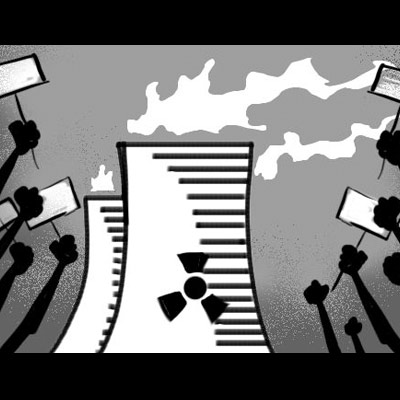 Rwanda: Opposition grows to Russian-backed nuclear plants Rwanda: Opposition grows to Russian-backed nuclear plantsLawmaker voices fears about safety of nuclear plants in densely populated Rwanda, but top official says nuclear is inevitable. KIGALI, Rwanda, 29 Nov 20, Plans by the tiny landlocked African country of Rwanda to build nuclear reactors with Russian help are facing stiff opposition in the country. Frank Habineza, a lawmaker and member of the Democratic Green Party, has warned that nuclear energy could do the country more harm than good. “Living near a nuclear energy plant is like living near a nuclear bomb which can explode and cause destruction of life and property to the nation and its neighboring countries,” he said. He said in light of Rwanda’s high population density, there is no place to set up the plant without compromising the safety of Rwandans and their neighbors. After Russian state-owned nuclear company Rosatom Global reached an agreement last year to set up the plant by 2024, the Rwandan cabinet approved establishment of the Rwanda Atomic Energy Board – an institution to coordinate nuclear science and technology activities in the country. In December 2018, Rwanda and Russia agreed on a roadmap for an inter-governmental agreement on the use of nuclear energy…… After Russian state-owned nuclear company Rosatom Global reached an agreement last year to set up the plant by 2024, the Rwandan cabinet approved establishment of the Rwanda Atomic Energy Board – an institution to coordinate nuclear science and technology activities in the country. In December 2018, Rwanda and Russia agreed on a roadmap for an inter-governmental agreement on the use of nuclear energy. …………. Experts say, however, it takes 10 years and billions of dollars to commission a nuclear power station. They argue that off-grid renewable projects are safer than nuclear energy, as they do not involve environmentally hazardous radioactive waste, and no huge financial costs are incurred in connection to the national grid. Experts raise concerns Lawmaker Habineza said nuclear energy is an old technology with proven risks to the environment. He said many developed nations such as Germany and Sweden are de-nuclearizing due to the dangers involved. “Nuclear waste and water pollution from a nuclear plant would cause serious environmental challenge to the country, its neighbors, and the world at large,” he argued. “More than that, raw materials needed to operate the nuclear center, such as uranium, emit harmful levels of radiation, which pose a great risk to the population and the environment.”….. https://www.aa.com.tr/en/africa/rwanda-opposition-grows-to-russian-backed-nuclear-plants/2059467 |
|
Canada’s environmental groups join to oppose experimental Small Nuclear Reactors (SMRs)
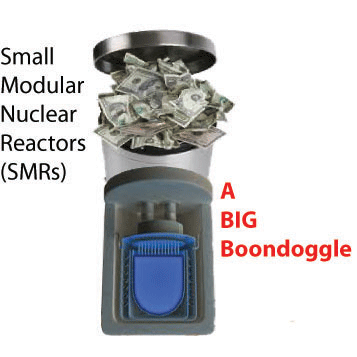 Canadian environmental groups oppose experimental small modular nuclear reactors, https://blackburnnews.com/midwestern-ontario/midwestern-ontario-news/2020/11/24/canadian-environmental-groups-oppose-experimental-small-modular-nuclear-reactors/ By Janice MacKay November 24, 2020 A number of groups have joined together to ask the federal government to halt its plans to fund experimental new small modular nuclear reactors (SMRs).
The Federal Government is preparing to launch the federal government’s SMR ” Action Plan” within weeks.
The SMR Action Plan is expected to include a strategy to fund and support the development of experimental nuclear reactors by private sector companies, the majority based in the US and UK.
In a media release, dozens of organizations from coast to coast have called the proposed new nuclear reactors a dirty, dangerous distraction from tackling climate change. They include Greenpeace Canada, Friends of the Earth Canada, Ralliement contre la pollution radioactive, Équiterre, the Coalition for Responsible Energy Development in New Brunswick, the Canadian Coalition for Nuclear Responsibility and Northwatch..
The Bloc Québécois, the NDP and the Green Party all oppose the government’s “small” modular nuclear reactor plan.
On November 13, Monique Pauze from the Bloc Québécois stated: “The Bloc Québécois denounces the intention of Ottawa to invest in nuclear energy to the benefit, once again, of the Ontario industrial sector, instead of financing the transition towards clean electricity. The Bloc calls for the abandonment of the anticipated deployment of small modular nuclear reactors. The Federal government is leading Canada towards a wall by betting on nuclear energy that is absolutely not clean.”
NDP natural resources critic Richard Cannings said in a statement: “Many Canadians have concerns about impacts of nuclear energy. When it comes to energy generation there are better ways forward. We have options that are cheaper and safer and will be available quicker. I think we should be supporting the development of energy storage solutions to help roll out renewables like solar and wind on a larger scale instead.”
On November 10, all three Green Party of Canada caucus members issued a statement and signed a letter to Minister O’Regan and Minister Navdeep Bains saying that: “Small nuclear reactors (SMRs) have no place in any plan to mitigate climate change when cleaner and cheaper alternatives already exist. The federal government must stop funding the nuclear industry and instead redirect investments towards smarter solutions. Nuclear fails on many grounds, including on the economics.”
Prof. Susan O’Donnell from the Coalition for Responsible Energy Development in New Brunswick said: “Building new nuclear reactors does not belong in a climate action plan. Leading researchers have shown that investing in renewable energy is the best path to net zero and that adding nuclear energy to the mix actually hinders rather than helps.”
Shawn-Patrick Stensil, Director of Programs at Greenpeace Canada, said: “The Liberal government is throwing good money after bad. Hypothetical new nuclear power technologies have been promising to be the next big thing for the last forty years, but in spite of massive public subsidies, that prospect has never panned out.”
The release pointed out the proposed reactors are still on the drawing board and will take a decade or more to develop. If built, their power will cost ten times more than wind or solar energy. The most advanced SMR project to date in the US has already doubled its estimated cost – from $3B to over $6B.
The federal government announced its first SMR grant of $20 million to Terrestrial Energy on October 15.
The environmental groups said they are shocked that the government is funding new nuclear energy development with no parliamentary review, while trying to avoid public scrutiny and debate. They called the consultation process leading to date on the SMR Action Plan a sham. Individuals and groups could only comment on the plan if they first signed on to a statement of principles supporting SMR technologies. They say nuclear power and uranium mining will always be dirty and dangerous. Radioactive waste will have to be kept out of the environment for tens of thousands of years, and there is no known means of achieving that.
Taiwanese protest plan to dump water from Japan nuclear plant into sea
|
Taiwanese protest plan to dump water from Japan nuclear plant into sea,Focus Taiwan 11/19/2020 Taipei, Nov. 19 (CNA) A group of Taiwanese staged a protest in Taipei on Thursday against a plan by the Japanese government to release more than a million tonnes of water into the ocean from the disabled Fukushima nuclear power plant, starting in 2022.
At the rally in front of the Ministry of Foreign Affairs (MOFA), some 20 supporters of the “Nuclear Go Zero” movement called on the ministry to push back, via diplomatic channels, against the Japanese government’s controversial plan. Tsai Ya-ying (蔡雅瀅), a lawyer affiliated with the Wild at Heart Legal Defense Association in Taiwan, said at the rally that releasing “contaminated” water from the disabled Fukushima Daiichi nuclear power would pose a risk to humans who might eat the many marine species that migrate in the warm current between Taiwan and Japan. Another protester, Tsai Chung-yueh (蔡中岳), deputy CEO of the environmental organization Citizen of the Earth, said contamination of the marine ecology could last for 30-40 years, if the water is dumped into the ocean……. At a regular press briefing Thursday, MOFA spokesperson Joanne Ou (歐江安) said the Japanese government has not yet made a final decision on the issue, and MOFA will seek clarification. She said the protesters have submitted a letter that has been passed on to the Taiwan-Japan Relations Association, which will relay their concerns to the Japanese government via Taiwan’s representative office in Tokyo. “MOFA is also concerned about the issue, as the maritime environment, ecological conservation, and health of our citizens may be at risk,” Ou said. (By Chang Hsiung-feng and Emerson Lim) Enditem/pc https://focustaiwan.tw/society/202011190015 |
|
Prison, big fines, for Catholic anti nuclear activists
|
Dorothy Day’s granddaughter sentenced to prison for nuclear base break-in https://www.americamagazine.org/politics-society/2020/11/16/dorothy-day-granddaughter-sentenced-prison-kings-bay-plowshares-7
Yonat Shimron – Religion News Service, November 16, 2020 Martha Hennessy, a granddaughter of Dorothy Day, the founder of the Catholic Worker movement, was sentenced Friday (Nov. 13) to 10 months in prison for breaking into Kings Bay Naval Base in Georgia two years ago to protest its stockpile of nuclear weapons.
Hennessy’s was the lightest sentence given for the break-in at the Navy base 40 miles south of Brunswick, Georgia, on April 4, 2018, in which Hennessy, 65, was joined by six other Catholic pacifists. Together they are known as the Kings Bay Plowshares 7, named after the Plowshares anti-war movement founded 40 years ago by Daniel and Philip Berrigan, both Jesuit priests, and six others. On Thursday, Carmen Trotta, of St. Joseph Catholic Worker in New York City, was sentenced to 14 months in prison, while Clare Grady of the Ithaca Catholic Worker was sentenced to 12 months. Both have spent their lives at Catholic Worker houses in New York state, which house and feed the needy. All were also sentenced to probation and will be required to repay the Navy base a total of $33,500 in damages. |
|
1 This Month


PLEASE OPPOSE HR 8255 AND S.3639 – bills would accelerate satellite deployment, with no environmental review or safeguards – https://ncstd5li.quorum.us/campaign/169331/
To see nuclear-related stories in greater depth and intensity – go to https://nuclearinformation.wordpress.com
-
Archives
- September 2026 (194)
- August 2026 (330)
- July 2026 (355)
- June 2026 (287)
- May 2026 (306)
- April 2026 (356)
- March 2026 (251)
- February 2026 (267)
- January 2026 (308)
- December 2025 (358)
- November 2025 (359)
- October 2025 (375)
-
Categories
- 1
- 1 NUCLEAR ISSUES
- business and costs
- climate change
- culture and arts
- ENERGY
- environment
- health
- history
- indigenous issues
- Legal
- marketing of nuclear
- media
- opposition to nuclear
- PERSONAL STORIES
- politics
- politics international
- Religion and ethics
- safety
- secrets,lies and civil liberties
- spinbuster
- technology
- Uranium
- wastes
- weapons and war
- Women
- 2 WORLD
- ACTION
- AFRICA
- Atrocities
- AUSTRALIA
- Christina's notes
- Christina's themes
- culture and arts
- Events
- Fuk 2022
- Fuk 2023
- Fukushima 2017
- Fukushima 2018
- fukushima 2019
- Fukushima 2020
- Fukushima 2021
- general
- global warming
- Humour (God we need it)
- Nuclear
- RARE EARTHS
- Reference
- resources – print
- Resources -audiovicual
- Weekly Newsletter
- World
- World Nuclear
- YouTube
-
RSS
Entries RSS
Comments RSS
 nuclear-news