Assange extradition case could esrablish a dangerous legal precedent
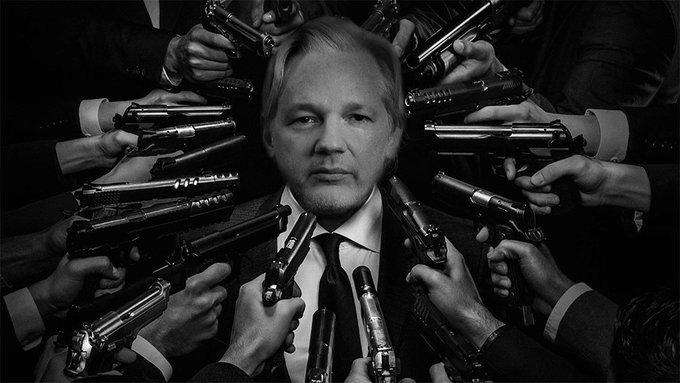 Crumbling Case Against Assange Shows Weakness of “Hacking” Charges Related to Whistleblowing
The charge against Assange is about establishing legal precedent to charge publishers with conspiring with their sources, something that so far the U.S. government has failed to do because of the First Amendment.
Five years later, in 2018, the Trump Administration indicted Assange anyway. But, rather than charging him with espionage for publishing classified information, they charged him with a computer crime, later adding 17 counts of espionage in a superseding May 2019 indictment.
The computer charges claimed that, in 2010, Assange conspired with his source, Chelsea Manning, to crack an account on a Windows computer in her military base, and that the “primary purpose of the conspiracy was to facilitate Manning’s acquisition and transmission of classified information.” The account enabled internet file transfers using a protocol known as FTP.
New testimony from the third week of Assange’s extradition trial makes it increasingly clear that this hacking charge is incredibly flimsy. The alleged hacking not only didn’t happen, according to expert testimony at Manning’s court martial hearing in 2013 and again at Assange’s extradition trial last week, but it also couldn’t have happened.
The new testimony, reported earlier this week by investigative news site Shadowproof, also shows that Manning already had authorized access to, and the ability to exfiltrate, all of the documents that she was accused of leaking — without receiving any technical help from WikiLeaks. …….
the charge is not actually about hacking — it’s about establishing legal precedent to charge publishers with conspiring with their sources, something that so far the U.S. government has failed to do because of the First Amendment………
Whether or not you believe Assange is a journalist is beside the point. The New York Times just published groundbreaking revelations from two decades of Donald Trump’s taxes showing obscene tax avoidance, massive fraud, and hundreds of millions of dollars of debt.
Trump would like nothing more than to charge the New York Times itself, and individual journalists that reported that story, with felonies for conspiring with their source. This is why the precedent in Assange’s case is so important: If Assange loses, the Justice Department will have established new legal tactics with which to go after publishers for conspiring with their sources. https://portside.org/2020-10-10/crumbling-case-against-assange-shows-weakness-hacking-charges-related-whistleblowing
World press freedom endangered, if UK extradites Julian Assange to America
The
|
Assange Faces Extradition for Exposing US War Crimes, BY Marjorie Cohn, Truthout, October 11, 2020 Three weeks of testimony in Julian Assange’s extradition hearing in London underscored WikiLeaks’s extraordinary revelation of U.S. war crimes in Iraq, Afghanistan and Guantánamo Bay. But the Trump administration is seeking to extradite Assange to the United States to stand trial for charges under the Espionage Act that could cause him to spend 175 years in prison. Assange founded WikiLeaks during the Bush administration’s “war on terror,” which was used as a pretext to start two illegal wars and carry out a widespread program of torture and abuse of prisoners at Guantánamo and the CIA black sites. On October 8, 2011, Assange told a Stop the War Coalition rally in London’s Trafalgar Square, “If wars can be started by lies, peace can be started by truth.” In 2010 and 2011, WikiLeaks published classified material that Army intelligence analyst Chelsea Manning had provided to the organization. Manning was prosecuted, convicted and sentenced to 35 years in prison for leaking the documents. As he left office, Barack Obama commuted her sentence to the seven years she had already served. That commutation provoked “tremendous anger” in the Trump administration and drew Trump’s attention to Assange, Eric Lewis testified. Lewis, chairman of the board of Reprieve U.S. and lawyer for Guantánamo and Afghan detainees, called this “a politically motivated prosecution.” The files that WikiLeaks published contained 90,000 reports about the war in Afghanistan, including the Afghan War Logs, which documented a greater number of civilian casualties by coalition forces than the U.S. military had reported. In addition, WikiLeaks published nearly 400,000 field reports about the Iraq War, more than 15,000 unreported deaths of Iraqi civilians, and the systematic murder, torture and rape by the Iraqi army and authorities that were ignored by U.S. forces. WikiLeaks also published the Guantánamo Files, 779 secret reports constituting evidence of the U.S. government’s abuse of approximately 800 men and boys, ages 14 to 89. That abuse violated the Geneva Conventions and the Convention Against Torture and Other Cruel, Inhuman or Degrading Treatment or Punishment. Perhaps the most notorious release by WikiLeaks was the 2007 “Collateral Murder” video, which depicts a U.S. Army Apache helicopter target and fire on unarmed civilians in Baghdad. At least 18 civilians were killed, including two Reuters reporters and a man who came to rescue the wounded. Two children were injured. A U.S. Army tank drove over one of the bodies, cutting it in half. The video contained evidence of three separate war crimes prohibited by the Geneva Conventions and the U.S. Army Field Manual. As they are firing on the civilians, U.S. gunmen can be heard saying, “Look at those dead bastards.” In his written testimony, investigative journalist Nicky Hager drew a parallel between the Collateral Murder video and the television image of George Floyd screaming “I can’t breathe.” Assange Cannot Be Extradited for a Political OffenseThe 2003 U.S.-U.K. Extradition Treaty forbids extradition for a political offense. Although the treaty doesn’t define “political offense,” it generally includes espionage, treason, sedition and crimes against state power. Trump is asking the U.K. to extradite Assange for exposing war crimes. This is a classic political offense. Assange is charged under the Espionage Act and espionage constitutes a political offense as well……….. Assange’s Prosecution Violates Freedom of PressWhile the Obama administration declined to file criminal charges against Assange for fear of setting a dangerous precedent, Team Trump demonstrated no such forbearance. By charging Assange under the Espionage Act, Trump is making him a poster boy for its full court press against the media, which he calls “the enemy of the people.” Assange’s prosecution would send an ominous message to all journalists: report the unvarnished truth at your peril. No media outlet or journalist has ever been prosecuted under the Espionage Act for publishing truthful information, which is protected First Amendment activity. Journalists are permitted to publish material that was illegally obtained by a third person and is a matter of public concern. The U.S. government has never prosecuted a journalist or newspaper for publishing classified information, an essential tool of journalism. Information-gathering, reporting and disclosure fit the classic definition of activity protected by the First Amendment’s guarantee of freedom of the press. There is no distinction between what WikiLeaks did and what The New York Times, Der Spiegel, Le Monde, El País and The Guardian did as well. They all published articles based on documents WikiLeaks released. This is the reason Obama administration — which prosecuted an enormous number of whistleblowers — considered, but refrained from, indicting Assange. ……… WikiLeaks Didn’t Endanger Informants and Saved LivesAlthough the U.S. government claims that Assange endangered informants named in the published documents, John Goetz, an investigative reporter who worked for Germany’s Der Spiegel, testified that Assange took pains to ensure that the names of U.S. informants in Iraq and Afghanistan were redacted to protect their identities. …….. Moreover, WikiLeaks’s revelations actually saved lives. After WikiLeaks published evidence of Iraqi torture centers the U.S. had established, the Iraqi government refused Obama’s request to extend immunity to U.S. soldiers who commit criminal and civil offenses there. As a result, Obama had to withdraw U.S. troops from Iraq. WikiLeaks also revealed evidence of wrongdoing by other countries besides the United States. The organization uncovered Russian surveillance, published exposés of Bashar al-Assad in Syria, and some say WikiLeaks’s exposure of corruption in Tunisia and torture in Egypt helped catalyze the Arab Spring………… Assange’s Prosecution Will Chill JournalismOstensibly to get around allegations that it is prosecuting Assange for conducting journalism, the Trump administration is trying to paint him as a hacker by accusing him of conspiring with Manning to break into a government computer to steal government documents, in violation of the Computer Fraud and Abuse Act. But, as Patrick Eller, a digital forensic expert, testified, the attempted cracking of the password hash was not technologically possible in 2010, when the conversation between Assange and Manning occurred. Even if it were feasible, the purpose would not have been to conceal Manning’s identity and it would not have given Manning any increased access to government databases. The prosecution of Assange would set a disturbing example for journalists and media outlets that publish information critical of the government. Team Trump singled out Assange to deter journalists from publishing material that criticizes U.S. policy. If Assange is extradited to the United States and convicted of the charges against him, it would chill journalists from reporting the facts for fear they could be indicted under the Espionage Act………. When she set the November 16 date for the defense to submit closing arguments, Judge Vanessa Baraitser asked the defense how the U.S. presidential election would affect its case and declared that her decision on extradition would come after that election, stating, “That’s one of the factors going into my decision.” Kristinn Hrafnsson, editor-in-chief of WikiLeaks, said that the judge “acknowledged what has been clear since even before the first indictment against Julian Assange was unsealed — that this is a politically motivated prosecution.” Baraitser, who has granted extradition in 96 percent of the cases that have come before her, plans to issue her ruling on January 4. If she grants extradition, there will be several levels of appeals, including to the European Court of Human Rights. The stakes could not be higher. https://truthout.org/articles/assange-faces-extradition-for-exposing-us-war-crimes/?eType=EmailBlastContent&eId=614ce999-9844-4d61-a600-169db0c99052 |
Murdoch media monopoly – an ‘arrogant cancer on our democracy’
|
The warning comes as former prime minister Kevin Rudd called for a royal commission into media concentration on Saturday, launching a petition to Parliament that amassed thousands of signatures within hours of going live. Australia’s media landscape is dominated by two players – Nine Entertainment, which owns the The Age and The Sydney Morning Herald mastheads among others, and News Corp, owned by former Australian Rupert Murdoch, which controls between 60 and 70 per cent of the metropolitan market. Mr Rudd decried the sheer concentration of the Murdoch empire, and pointed to News Corp mastheads’ support for the Liberal Party in the past 18 elections. Murdoch has become a cancer, an arrogant cancer, on our democracy,” Mr Rudd said. “I’m calling on the Parliament to establish a royal commission into the abuse of media monopoly in Australia, and particularly by the Murdoch media, to make recommendations to maximise media diversity ownership for the future lifeblood of our democratic system.” Mr Rudd has had a long-running feud with News Corp, which used its mastheads to hound him during his tenure as prime minister. A petition to Parliament is essentially a request for action, but it does not mean the sitting government has to implement its requests…….. Mr Murdoch’s influential newspapers and television stations have been widely criticised for spreading misinformation about climate change during Australia’s out-of-control bushfires. The Australian has repeatedly argued that this year’s fires are no worse than those of the past – a claim that scientists have dismissed as untrue…….. “We see story after story in the Murdoch papers saying there is no such thing as climate change, then that arsonists were responsible. “There’s never any apology or correcting the record.” News Corp has also been pursuing Victorian Premier Daniel Andrews over the issue of the state’s coronavirus lockdowns, she said. “Every story in The Australian is about ‘Dictator Dan’, it would be like the NZ publications going after ‘General Jacinda’, but there the coverage has been more considered,” Dr Price said. Her dream royal commission on media ownership would also focus on tabloid commentators and the ways in which they target and bully individuals they dislike. “I want a royal commission into the stream of columnists who should have to make amends for their fact-less columns,” Dr Price said………. Dr Muller said the Murdoch influence was not just apparent in Australia. “If you look at the two democracies in the most trouble, the UK and the US, in both the Murdoch empire is dominant and has been an active player in preferring right-wing governments,” he said. “When you have power like that which is not accountable you impair your democracy.”…….. https://thenewdaily.com.au/news/politics/2020/10/11/kevin-rudd-murdoch-royal-commission/ |
Climate misinformation advertisements on Facebook, seen by millions

Climate denial ads on Facebook seen by millions, report finds
The ads included calling climate change a hoax and were paid for by conservative US groups, Guardian, Damian Carrington 9 Oct 20, Adverts on Facebook denying the reality of the climate crisis or the need for action were viewed at least 8 million times in the US in the first half of 2020, a thinktank has found.The 51 climate disinformation ads identified included ones stating that climate change is a hoax and that fossil fuels are not an existential threat. The ads were paid for by conservative groups whose sources of funding are opaque, according to a report by InfluenceMap.
Last month Facebook said it was “committed to tackling climate misinformation” as it announced a climate science information centre. It said: “Climate change is real. The science is unambiguous and the need to act grows more urgent by the day.”Facebook uses factcheckers and bans false advertising but also says this process “is not meant to interfere with individual expression, opinions and debate”. Some of the ads were still running on 1 October. The ads cost just $42,000 to run and appear to be highly targeted, with men over the age of 55 in rural US states most likely to see them.
Warren and other senators wrote to Facebook in July calling on it to close the loopholes.
Promises, promises — the media keeps buying the tired old nuclear spin marketing small reactors

Promises, promises — Beyond Nuclear International– Sometimes it’s “Promises promises”. On other days it’s “Another one bites the dust”.
Nuclear power is failing. So why does news coverage suggest the opposite?
By Linda Pentz Gunter 5 Oct 20, Sometimes it’s “Promises promises”. On other days it’s “Another one bites the dust”………
the unavoidable story, no matter what myths the pro-nuclear propagandists try to spin. Reality has an annoying habit of grabbing the headlines. And right now, those read:
“Fresh delays at EDF’s Flamanville 3”
“Scottish nuclear power station to shut down early after reactor problems”
“Hitachi ‘withdraws’ from £20bn Wylfa project”
“Olkiluoto-3 nuclear power plant 11 months behind latest schedule”
“Nuclear reactor in France shut down over drought”
“Exelon vows to shut down Byron, Dresden nuclear plants”
And so on.
However, despite this breaking news, you have to sort through a lot of aspirational chaff to find these headlines. The majority of articles about nuclear power are still centered around a rosy future as a climate-busting, jobs-providing cornerstone of any energy policy.
And the majority of politicians in countries where nuclear power still holds sway continue to support it. Why do we let them? Because they think we want them to. As linguistic and messaging guru, George Lakoff, so often repeats: “Voters don’t vote their self-interest. They vote their values.”
So when a nuclear company, or a politician, trumpets instant, well-paying jobs, voters line up to support it too. No matter that nuclear jobs are not likely to be instant, safe or long-lasting, will destroy the environment and do nothing for climate change — and even, in the case of promised new nuclear plants like Summer in South Carolina or Wylfa-B in Wales, may never materialize at all. A boost to the local economy is a good soundbite. Why look behind the arras, only to find nothing there?
But when the media looks behind the nuclear arras they find small modular reactors, micro reactors, “new generation” reactors, and the perpetual promise of fusion. And they interpret this as news, even though none of these reactor designs are new and fusion has been decades away for, well, decades.
These “new” nuclear developments are also often reported on as if they are actually happening. Such overstatements are routinely exposed in the annual World Industry Status Report, (a veritable Bible of empirical data, with the 2020 edition just released last week), which looks into the substance of such breaking news and finds it is almost always aspirational. Take a closer look and it is all about plans, not reality.
The same with alleged turncoats. The media love them.
So we get Zion Lights, a refugee from Extinction Rebellion UK, who is getting plenty of ink and headlines for her new found pro-nuclear delusions. She has positioned herself as an ex-co-leader of XR, a false claim the movement has corrected in a thorough takedown of Lights and her boss, Michael Shellenberger, which we published last week………. https://wordpress.com/read/feeds/72759838/posts/2949326488more https://wordpress.com/read/feeds/72759838/posts/2949326488
Nuclear power and the mainstream media – a convenient advertising platform?
 Google headlines on ”nuclear” today, Noel Wauchope 5 October 20, Google headlines give you some idea on what the media are saying about nuclear issues. If you look up Google News right now ( 6 pm AEST 5 October 20) – you get a total of 93 headlines.
I went through these 93 articles, and found that 54 of them were clearly nuclear promotion articles. 19 were anti nuclear, or critical of nuclear technology, and 20 were neutral – in the sense that they reported events and facts, without opinion or comment.
The media reflects society, in that they separate issues about nuclear weapons, from issues about nuclear power. It looks as if nuclear weapons get a bad press. That’s OK.
But when it comes to nuclear power, it’s a different story: by and large, it looks as if the mainstream media is happy to function pretty much as an advertising platform for the nuclear industry.
In the 54 articles approving of, or supporting nuclear power , these were the themes:
The dominant theme in 20 articles was ‘New nuclear”- especially small nuclear reactors, depicted as essential to combat climate change -clean, sustainable, future depends on them, should be subsidised. Sometimes portrayed as in tandem with renewable energy, or transitional to renewable energy, sometimes subtly or clearly disparaging renewable energy.
Another theme was nuclear fusion, with 9 enthusiastic articles.
6 countries were described in positive terms as going ahead with nuclear power. Other pro nuclear articles claimed – that it’s necessary for the economy and jobs, that ionising radiation is not really dangerous. Claim about ”diamond batteries” from nuclear wastes. Positive stories about fixing corrosion in nuclear reactors, and about robots solving nuclear waste problems. One article enthused about the benefits of nuclear power for women.There were a couple of articles positive about nuclear weapons – had a style of boasting about their development for the countries concerned .
For anti-nuclear articles, well, themes of nuclear disarmament were prominent. Four articles were about costs, 2 articles about Fukushima, 2 criticising small nuclear reactors, Articles warned on Saudi Arabia getting nuclear power, on China’s development. One article refuted the ”diamond battery”plan for nuclear wastes.
Media avoids covering the Assange extradition – despite it being the media “trial of the century”
 Julian Assange: Press Shows Little Interest in Media ‘Trial of Century’ https://fair.org/home/julian-assange-press-shows-little-interest-in-media-trial-of-century/, ALAN MACLEOD 25 Sept 20,
Labeled the media “trial of the century,” WikiLeaks founder Julian Assange’s extradition hearing is currently taking place in London—although you might not have heard if you’re relying solely on corporate media for news. If extradited, Assange faces 175 years in a Colorado supermax prison, often described as a “black site” on US soil.
The United States government is asking Britain to send the Australian publisher to the US to face charges under the 1917 Espionage Act. He is accused of aiding and encouraging Chelsea Manning to hack a US government computer in order to publish hundreds of thousands of documents detailing American war crimes, particularly in Afghanistan and Iraq. The extradition, widely viewed as politically motivated, has profound consequences for journalists worldwide, as the ruling could effectively criminalize the possession of leaked documents, which are an indispensable part of investigative reporting.
WikiLeaks has entered into partnership with five high-profile outlets around the world: the New York Times, Guardian (UK), Le Monde (France), Der Spiegel (Germany) and El País (Spain). Yet those publications have provided relatively little coverage of the hearing.
Since the hearing began on September 7, the Times, for instance, has published only two bland news articles (9/7/20, 9/16/20)—one of them purely about the technical difficulties in the courtroom—along with a short rehosted AP video (9/7/20). There have been no editorials and no commentary on what the case means for journalism. The Times also appears to be distancing itself from Assange, with neither article noting that it was one of WikiLeaks’ five major partners in leaking information that became known as the CableGate scandal.
The Guardian, whose headquarters are less than two miles from the Old Bailey courthouse where Assange’s hearing is being held, fared slightly better in terms of quantity, publishing eight articles since September 7.However, perhaps the most notable content came from columnist Hadley Freedman (9/9/20).
When asked in an advice article: “We live in a time of so much insecurity. But is there anything we can expect from this increasingly ominous-looking winter with any certainty?” she went on a bizarre tangential rant ridiculing the idea that Assange’s trial could possibly be “politicized,” also crassly brushing off the idea that his young children would never see their father again, and never answering anything like the question she was asked. Holding people to account “for a mess they could have avoided,” she notes, “is not ‘weaponizing’ anything — it is just asking them to do their jobs properly.” She also claimed that believing Assange’s trial was politicized was as ridiculous as thinking antisemitism claims were cynically weaponized against Labour leader Jeremy Corbyn, which, she meant to suggest, was a preposterous idea. This was not an off-the-cuff remark transcribed and published, but a written piece that somehow made it past at least one editor.
Like the Times, the Guardian appeared to be hoping to let people forget the fact it built its worldwide brand off its partnership with WikiLeaks; it was only mentioned in a forthright op-ed by former Brazilian president Lula da Silva (9/21/20), an outlier piece.
The Guardian should be taking a particularly keen role in the affair, seeing that two of its journalists are alleged by WikiLeaks to have recklessly and knowingly disclosed the password to an encrypted file containing a quarter-million unredacted WikiLeaks documents, allowing anyone—including every security agency in the world—to see an unredacted iteration of the leak. In 2018, the Guardian also falsely reported that Trump campaign chief Paul Manafort had conducted a meeting with Assange and unnamed “Russians” at the Ecuadorian embassy (FAIR.org, 12/3/18). And, as former employee Jonathan Cook noted, the newspaper is continually being cited by the prosecution inside the courtroom.
There were only two articles in the English or French versions of Le Monde (9/7/20, 9/18/20) and only one in either of Der Spiegel’s English or German websites (9/7/20), although the German paper did at least acknowledge its own partnership with Assange. There was no coverage of the hearings in El País, in English or Spanish, though there was a piece (9/10/20) about the US government thwarting a Spanish investigation into the CIA spying on Assange at the Ecuadorian embassy in London—accompanied by a photo of a protester against his extradition.
The rest of corporate media showed as little interest in covering a defining moment in press freedom. There was nothing at all from CNN. CBS’s two articles (9/7/20, 9/22/20) were copied and pasted from news agencies AP and AFP, respectively. Meanwhile, the entire sum of MSNBC’s coverage amounted to one unclear sentence in a mini news roundup article (9/18/20).
Virtually every relevant human rights and press freedom organization is sounding the alarm about the incendiary precedent this case sets for the media. The Columbia Journalism Review (4/18/19), Human Rights Watch and the Electronic Frontier Foundation note that the government includes in its indictment regular journalistic procedures, such as protecting sources’ names and using encrypted files—meaning that this “hacking” charge could easily be extended to other journalists. Trevor Timm, founder of the Freedom of the Press Foundation, told the court this week that if the US prosecutes Assange, every journalist who has possessed a secret file can be criminalized. Thus, it essentially gives a carte blanche to those in power to prosecute whomever they want, whenever they want, even foreigners living halfway around the world.
The United Nations has condemned his persecution, with Amnesty International describing the case as a “full-scale assault on the right to freedom of expression.” Virtually every story of national significance includes secret or leaked material; they could all be in jeopardy under this new prosecutorial theory.
President Donald Trump has continually fanned the flames, demonizing the media as the “enemy of the people.” Already 26% of the country (including 43% of Republicans) believe the president should have the power to shut down outlets engaging in “bad behavior.” A successful Assange prosecution could be the legal spark for future anti-journalistic actions.
Yet the case has been met with indifference from the corporate press. Even as their house is burning down, media are insisting it is just the Northern Lights.
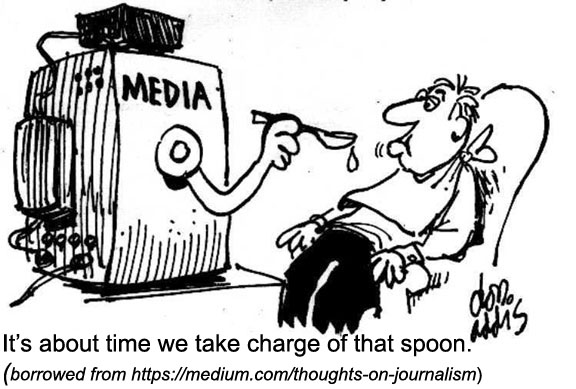
The U.S. media’s resposibility to question Trump and Biden on nuclear arms control and nonproliferation
|
Whether President Trump or one of his challengers is sworn in as president on January 20, 2021, he or she will have the complete and unchecked authority to order the use of the approximately 4,000 nuclear weapons in the active US stockpile. When running for the highest office in the land, each presidential candidate is asking the American public to trust him or her implicitly with this singular responsibility. Given that reality, it is actually quite strange that plans and policies for the management of the most destructive force ever created are rarely discussed on the campaign trail. ………..with the exception of the Nov. 20, 2020 Democratic debate, television network hosts have largely avoided foreign policy questions in multi-candidate forums. Political reporters inside the Beltway and in the field rarely ask candidates about nuclear policy issues, despite the multiple nuclear crises unfolding around us in real time. There does not seem to be any acknowledgement that nuclear issues are inextricably linked to so many of the other issues being discussed. Relations with Russia, currently at a post-Cold War low, could slide from terrible to disastrous in the absence of verifiable, bilateral controls over the US and Russian nuclear arsenals. It is hard to envision a successful economic pivot to Asia that doesn’t involve a long-term solution to the North Korean nuclear crisis and a better strategic stability relationship between the United States and China. Getting the military budget under control is impossible without taking a hard look at the nearly $1.7 trillion (at least) that the United States is planning to spend on modernizing US nuclear forces. There is no “peace in the Middle East” without constraints on weapons of mass destruction in the region. Long-term solutions to climate change are all for naught if we ignore the other existential threat to humanity: nuclear war. The list could go on, but the point is that we ignore nuclear issues at our own peril. The next president will have to deal with many pressing questions on day one (or day 1,461), but few are as consequential as this one: Do we want to live in a world in which the number of nuclear weapons is going up or going down?……….. Despite the stated commitment to arms control and non-proliferation policies in the 2018 Nuclear Posture Reviewi, the Trump administration has mostly dismantled and dismissed standing nuclear agreements…….. No matter who sits behind the Resolute Desk on Jan. 20, 2021, he or she will have to scramble to triage the challenges left to them on the arms control and nonproliferation front. The most pressing challenge will be the possible end of the New Strategic Arms Reduction Treaty (New START), which is set to expire on Feb. 5, 2021. ………. While most Democratic candidates have affirmedv that they would extend the treaty as long as Russia remains in compliance, they should be asked to outline their plans for extension and how they would handle the broader strategic stability dialogue with Russia. ……… Plans to deal with the North Korean nuclear program are inextricably linked to other strategic security issues in the region. ………. The other major nonproliferation challenge for the candidates in 2020 will be the future of the Iranian nuclear program. The Trump administration’s decision to withdraw from the Joint Comprehensive Plan of Action (JCPOA) with Iran will affect the foreign policy landscape in 2021 and beyond. ………. With any of these matters, candidates should not be allowed to speak in bromides about the value of diplomacy. As uninspiring and tedious as the press may find it to focus on technical details, they should not buy into the idea that a quick-fix grand bargain is possible with Russia, Iran, or North Korea. Presidential candidates are asking for the privilege and responsibility of running American foreign policy, so it is completely reasonable to expect them to describe the mechanics of their proposals, even as they acknowledge that those proposals may need to change over time ………. The future president will also need to manage the growing unease between nuclear weapons states and non-nuclear weapons states. In particular, the United States will need to assess how it has related and will relate to signatories of the Treaty on the Prohibition of Nuclear Weapons, often known as the ban treaty, since the treaty will likely enter into force in the coming years. ……… Even with enhanced interest in and knowledge of nuclear policy, it is unlikely that reporters covering the 2020 presidential election will spend a significant amount of time on arms control and nonproliferation agreements. There are simply too many challenges facing the American public to expect hyper focus on any one policy area. That said, it would be extremely unfortunate to see the press ignore the subject of how we reduce nuclear risks—while gladly covering the president’s latest nickname for a rival or his challenger’s most memorable Trump put-down. For the past half-century, American presidents and administrations of both political parties have painstakingly built an intricate collection of arms control and nonproliferation agreements. They have brought the overall number of nuclear weapons in the world from almost 70,000 to around 14,000. They have prevented the mass spread of nuclear weapons, containing nuclear weapons programs to just nine countries. They have kept fear, mistrust, and the impulsive tendencies of fallible humans in check. As we approach the 75th year of the nuclear age, these hard-won agreements are disappearing. Americans will enter the voting booth on November 3, 2020 to select a leader who will either reverse that unfortunate trend or doom us to repeat the folly of the Cold War arms race. Let’s hope those voters they have all the information they need to make the right choice. https://thebulletin.org/premium/2020-01/what-the-presidential-candidates-should-be-asked-about-arms-control-and-nonproliferation/?utm_source=Announcement&utm_medium=Email&utm_campaign=Announcement09232020&utm_content=NuclearRisk_AskCandidates_01132020 |
|

Just like Australia, disinformation is thriving during the US fire crisis- Muroch media and Facebook


With its stranglehold on daily newspapers and online news, News Corp in Australia has created the most rightwing media culture in the English speaking world, and they aren’t really accountable to anyone.
Facebook is also the place where we see the two disinformation crises overlap.
Just like Australia, disinformation is thriving during the US fire crisis https://www.theguardian.com/commentisfree/2020/sep/19/just-like-australia-disinformation-is-thriving-during-the-us-fire-crisis
Jason Wilson 20 Sept 20 In both countries, fake news about arson proliferated while the role of climate change was obscured.
isinformation successfully obscured the real causes of Australia’s catastrophic bushfire season. Now the same thing is happening around me, as I report on a disastrous wildfire season in the American west.
In both countries, the response to a pandemic is also being complicated by disinformation, as conspiracy theorists refuse isolation, refuse masks, and ready themselves to refuse vaccines.
A lot of the fundamental problems are the same, but there are differences in detail.
In the western United States in recent days, backroads vigilantism has seen civilians set up armed road blocks, and journalists held at the point of loaded assault rifles.
Australia does not have the complication of American gun culture, which is itself one marker of the clash of ideologies and identities in a deeply divided nation, and also raises the stakes on every other social conflict.
That may be, but it’s easy to forget that one of the major stumbling blocks to stricter gun laws in the United States is a bill of rights.
We can argue whether the right to bear arms is a sensible thing to constitutionally enshrine, but Australia has no such constitutionally defined individual rights, beyond those that the high court has seen fit to torture from the document.
The absence of such rights also contains the real world effects of conspiracy theories – the people recently arrested for incitement in Victoria over the promotion of Covid conspiracy theories and anti-lockdown protests would likely enjoy first amendment protections in the US. Whether or not people ought to have the liberty to promote ideas which are, frankly, insane, and a threat to public order, is beyond the scope of this article.
In other ways, Australia is worse off. It is easy to make the mistake of thinking that Fox News, or other skewed or tabloid media, is representative of US media as a whole. Continue reading
Decorum be damned. Top science editor spits the dummy with Trump
|
America’s Top Science Journal Has Had It With Trump
The editor of Science has abandoned staid academic-speak to take on falsehoods in the White House—decorum be damned. Wired Adam Rogers, 16 Sep 20, WITH AN ARCHIVE that goes back to 1880 and a reputation for publishing world-changing research, the journal Science is the apex predator of academic publishing. Getting an article past its gatekeepers and peer reviewers can make a researcher’s career; the journal’s news section is a model for high-level reporting on everything from quarks to viruses to blue whales to galactic clusters. Along with its competitors Cell and Nature, the journal represents not just new knowledge but also the cultural mores of the world it covers—innovation, integrity, accuracy, rectitude, fealty to data.
So it’s surprising (but maybe not as much as you think) that Science’s newish editor-in-chief has focused a laser-like stream of neural energy at calling out the crummy pandemic policies of the Trump administration. H. Holden Thorp, a chemist and longtime university administrator, became editor-in-chief of Science and five other journals published by the American Association for the Advancement of Science last October, just two months before Covid-19 started spreading around the world. The hopes of a planet full of humans looking for treatments and vaccines turned quickly to scientists, and Thorp’s journals would have been among the places that the best, most relevant work would appear. It has, of course. But Thorp also started a crusade from Science’s editorial page, calling out the ways Donald
Trump’s administration has ignored, misunderstood, and misused science for political gain. Now Thorp’s editorial page is at the forefront of a movement—with scientists casting aside the old stereotype of apolitical disinterest. On Wednesday, even the venerable magazine Scientific American endorsed a presidential candidate for the first time in its 175-year history. (It was Joe Biden.)
Thorp’s most recent broadside, “Trump Lied About Science,” appeared last week. It was the most vigorous condemnation yet, a lightning siege of criticism over Trump’s admission, to the journalist Bob Woodward, that the president knew Covid-19 was more serious than he acknowledged to the public. “This page has commented on the scientific foibles of US presidents. Inadequate action on climate change and environmental degradation during both Republican and Democratic administrations have been criticized frequently,” Thorp wrote. But this, he added, “may be the most shameful moment in the history of US science policy.”
That’d be tough stuff on any newspaper op-ed page; from a place like Science, which has in the past had a somewhat arid editorial voice, it was fire. Thorp has been activated. I asked him what did it, and how his new approach might change science—and Science. Thorp’s answers are here, edited lightly for length and clarity………………
think about what science has been putting up with. We have people telling us we’re all deep-state liberals who are trying to destroy the planet, that we’re taking away hope for people, that we’re being too melodramatic about how bad this all is. And all of the stuff that Trump and his surrogates have been saying turns out not only to be wrong, but that they knew it all along. All the snark that scientists have been putting up with, from the news and from their family members who are Fox News people—all these things that we were supposedly doing to sabotage the world were all lies and knowingly delivered, planted, by the president of the United States. ………… https://www.wired.com/story/americas-top-science-journal-has-had-it-with-trump/
|
|
Relicensing Turkey Point nuclear station – a striking example of a dangerous action in climate change times

 With climate change, aging nuclear plants need closer scrutiny. Turkey Point shows why. https://thebulletin.org/2020/09/with-climate-change-aging-nuclear-plants-need-closer-scrutiny-turkey-point-shows-why/ By Caroline Reiser , September 14, 2020
Last December, two nuclear reactors at Florida’s Turkey Point Nuclear Generating Station, located 25 miles south of Miami, became the first reactors in the world to receive regulatory approval to remain operational for up to 80 years, meaning reactors that first came online in the 1970s could keep running beyond 2050.
The ages of the Turkey Point reactors are not unusual; of the 95 reactors currently licensed to operate in the United States, only five are less than 30 years old, while more than half are 40 or more years old. The Turkey Point reactors are a bellwether, just the first of possibly many aging nuclear reactors that will seek permission to stay online well into the middle of the century. Not long after the December decision, in March 2020, the US Nuclear Regulatory Commission granted two more reactors, located in Pennsylvania, the same extensions that it gave Turkey Point.
In pursing these extensions, the US commercial nuclear industry and its supporters collide with the realities of the aging US nuclear fleet and climate science projections. Existing safety and environmental requirements fail to provide the oversight necessary to ensure communities and the environment are protected. As nuclear reactors receive permission to operate for twice as long as originally envisaged, and in a world that, because of climate change, is drastically different from the one they were built for, the insufficiency of the existing regulatory framework is daunting.
A 40-year lifespan? At the beginning of its commercial nuclear power program, the United States designed and licensed reactors with a 40-year projected lifetime. Once the 40-year license is set to expire, regulations require the reactor owner to apply for a renewed license in order to continue operating for an additional 20 years. What the regulations don’t make clear, however, is the number of times a reactor license can be renewed. What Turkey Point received last year was not its first, but its second extension—what regulators call a subsequent renewed license. Continue reading
American TV news covers wildfires, but mostly is careful not to mention climate change
Most wildfire coverage on American TV news fails to mention link to climate crisis
A media watchdog analysis found that just 15% of broadcast news segments over a September weekend made the connection to climate breakdown, https://www.theguardian.com/environment/2020/sep/11/american-tv-news-california-oregon-fires-climate-crisis Lois Beckett in Los Angeles and Maanvi Singh in San Francisco
Most news coverage of the wildfires raging in California, Washington and Oregon on American TV channels made no mention of the connection between the historic fires and climate crisis, according to a new analysis from Media Matters
Reviewing coverage aired over the 5-8 September holiday weekend, the progressive media watchdog group found that only 15% of corporate TV news segments on the fires mentioned the climate crisis. A separate analysis found that during the entire month of August only 4% of broadcast news wildfire coverage mentioned climate crisis.
Wildfires are raging in states across the American west, burning record acreage in California, Washington and Oregon. The wave of fires was first sparked and stoked by a spate of unusual weather in August, including rare lightning storms that hit parts of California that were vulnerable to fire because drought and heat had dried out vegetation. The fires came before low-elevation, coastal parts of the state reached peak fire season in the autumn when fierce offshore winds have driven the biggest fires in recent years.
The fires that hit Oregon in recent days were stoked by dry conditions and rare easterly winds.
Although untangling the weather conditions from climate crisis is complicated, it’s clear that overall, in recent years “fire risk is increasing dramatically because of climate change”, said Chris Field, who directs the Stanford Woods Institute for the Environment. Global heating has given rise to drier, hotter conditions and more frequent, extreme droughts that have left the landscape tinder-dry and prone to explosive blazes.
Although California’s landscape has long been prone to fire, climate crisis has “put pressure on the entire system”, Field said, throwing it out of balance and giving rise to more extreme, catastrophic events. The current fires expanding with such explosive force have burned more acreage within a few weeks than what has burned in previous years.
A consensus of research has made clear that extreme heat and drought fueled by global heating has left the American west tinder-dry and especially vulnerable to runaway fires. A 2019 study found that from 1972 to 2018, California saw a five-fold increase in the areas that burned annually. Another study estimates that without human-caused climate crisis, the area that burned between 1984 and 2015 would have been half of what it actually was. And a research paper published last month suggests that the number of autumn days with “extreme fire weather” – when the risk of wildfires is extremely high – has more than doubled over the past two decades. “Our climate model analyses suggest that continued climate change will further amplify the number of days with extreme fire weather by the end of this century,” the researchers write, “though a pathway consistent with the UN Paris commitments would substantially curb that increase.”
Climate crisis is not the only factor driving the barrage of blazes across the region. Ironically, a century of suppressing fires – extinguishing the natural, necessary fires in western forests and other wildlands to protect homes and timber – has led to an accumulation of fire-fueling vegetation. “A deficit of fire, concatenated with the effects of climate change have led us here,” said Don Hankins, a fire ecologist at California State University, Chico.
Media Matters singled out two TV news journalists who are regularly talking about the role of climate crisis: the CBS meteorologist and climate specialist Jeff Berardelli and NBC’s Al Roker.
The Media Matters analysis also noted that so far, 2020 has been the third year in a row during which corporate broadcast TV news discussed the impacts of climate crisis in fewer than 5% of wildfire segments.
Climate protestors stop Rupert Murdoch’s press in Britain
Rupert Murdoch’s British papers delayed as climate protesters stop the presses, SMH 6 Sept, 20, London: Distribution of several British newspapers was disrupted on Saturday after climate change activists blockaded printworks used by Rupert Murdoch’s News UK, publisher of The Times and The Sun, drawing condemnation from Prime Minister Boris Johnson.Extinction Rebellion said nearly 80 people had blocked roads leading to two printworks, at Broxbourne in Hertfordshire, north east of London, and at Knowsley, near Liverpool. Hertfordshire police said they made 42 arrests and Merseyside police made 30.
The Murdoch-owned Newsprinters works also print the Daily Mail, the Daily Telegraph and the Financial Times. Campaigners said they had taken the action to highlight what they regard as the newspapers’ failure to accurately report on climate change. ……….
The blockade was part of more than a week of protests by Extinction Rebellion, which says an emergency response and mass move away from polluting industries and behaviours is needed to avert a looming climate cataclysm.
On Saturday it also protested in central London, including holding a “die-in” in front of Buckingham Palace, where demonstrators lay under white sheets to represent corpses. …….. https://www.smh.com.au/environment/climate-change/rupert-mudoch-s-british-newspapers-delayed-as-extinction-rebellion-protesters-stop-the-presses-20200905-p55sqr.html
The Assange extradition hearing – a continued travesty of justice
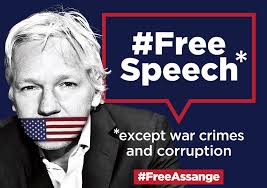
 Assange Travesty Continues https://www.craigmurray.org.uk/archives/2020/08/assange-travesty-continues/?fbclid=IwAR2MvHqWNmC2Z7gpPI3I24-XwXRvFGIUFmxoa5LgBm5vJqgDJ3BxSDexU4U
By 7 September it will be six months since I applied to resume my membership of the National Union of Journalists. I STILL have not the slightest idea who objected, or what the grounds were for objection. I have not heard from the NUJ for months. A senior official of an international journalists’ organisation has told us that he inquired, and learnt that the NUJ national executive has considered my application and set up a sub-committee to report. But if so, why is this secret, why have I not been informed, and why am I not allowed to know what the objection is? I find this all very sinister. At this stage it is not paranoid to wonder whose hand is behind this.
The practical effect of this is that without NUJ membership I cannot access a Press card, and avail myself of whatever media arrangements are in place for the Assange hearing (just as I was kept out of most of the Salmond trial). I have now reached the stage where I would like to take legal action against the NUJ, but the finances are beyond me. I am not going to ask you to donate because we are going to need all our resources for the contempt case against me, which the Crown drags out.
I shall be writing next week about my own case and that hearing earlier this week. I would just note now that the “virtual hearing” is entirely unsatisfactory and unfair on defendants. There was at least one occasion when my QC agreed with a suggestion of the judge when I would have instructed them not to had I been, as I should normally have been, seated near them in court and able to instruct.
Unlike our adversaries including the Integrity Initiative, the 77th Brigade, Bellingcat, the Atlantic Council and hundreds of other warmongering propaganda operations, this blog has no source of state, corporate or institutional finance whatsoever. It runs entirely on voluntary subscriptions from its readers – many of whom do not necessarily agree with the every article, but welcome the alternative voice, insider information and debate.
How Facebook fosters climate denial
 ‘Everybody’s entitled to their opinion – but not their own facts’: The spread of climate denial on Facebook‘The arguments are that people can’t trust scientists, models, climate data. It’s all about building doubt and undermining public trust in climate science’, Independent Louise Boyle, New York @LouiseB_NY, 24 July 20,
An article linking climate change to Earth’s solar orbit went viral last year, racking up 4.2million views on social media and widely shared on Facebook. It was the most-engaged with climate story in 2019, according to Brandwatch.
There was just one problem. It wasn’t true.
Facebook removed the article from Natural News, a far-right conspiracy outlet with 3 million followers, after it was reported.
But the spread of misinformation on the climate crisis by groups who reject climate science continues on Facebook and other social media platforms.
While tech giants have taken steps to remove, or label as false, potentially harmful misinformation on the Covid-19 pandemic, there has been a seeming acceptance of those who spread false theories on the climate crisis.
In August, an op-ed by two members of the CO2 Coalition, a pro-fossil fuel nonprofit with close ties to the Trump administration, was published in the Washington Examiner and subsequently posted to the group’s Facebook page.
The article, which claimed climate models are inaccurate and climate change has been greatly exaggerated, was initially tagged as “false” by five scientists from independent fact-checkers Climate Feedback who said it used “cherry-picked” evidence and deemed its scientific credibility “very low”.
Facebook doesn’t check content but outsources to dozens of third-party groups. A fact-checker’s false designation pushes a story lower in News Feed and significantly reduces the number of people who see it, according to Facebook policies.
The CO2 Coalition did not take the fact-checkers’ decision lying down, branding Climate Feedback “alarmists” and writing an open letter to Facebook CEO Mark Zuckerberg. They succeeded in having the false label removed.
Andy Stone, Facebook’s policy communications director, told the New York Times last week that all opinion content on the platform, including op-eds, has been exempt from fact-checking since 2016…………
1 This Month



26 September – International Day for the Total Elimination of Nuclear Weapons


PLEASE OPPOSE HR 8255 AND S.3639 – bills would accelerate satellite deployment, with no environmental review or safeguards – https://ncstd5li.quorum.us/campaign/169331/
To see nuclear-related stories in greater depth and intensity – go to https://nuclearinformation.wordpress.com
-
Archives
- September 2026 (233)
- August 2026 (330)
- July 2026 (355)
- June 2026 (287)
- May 2026 (306)
- April 2026 (356)
- March 2026 (251)
- February 2026 (267)
- January 2026 (308)
- December 2025 (358)
- November 2025 (359)
- October 2025 (375)
-
Categories
- 1
- 1 NUCLEAR ISSUES
- business and costs
- climate change
- culture and arts
- ENERGY
- environment
- health
- history
- indigenous issues
- Legal
- marketing of nuclear
- media
- opposition to nuclear
- PERSONAL STORIES
- politics
- politics international
- Religion and ethics
- safety
- secrets,lies and civil liberties
- spinbuster
- technology
- Uranium
- wastes
- weapons and war
- Women
- 2 WORLD
- ACTION
- AFRICA
- Atrocities
- AUSTRALIA
- Christina's notes
- Christina's themes
- culture and arts
- Events
- Fuk 2022
- Fuk 2023
- Fukushima 2017
- Fukushima 2018
- fukushima 2019
- Fukushima 2020
- Fukushima 2021
- general
- global warming
- Humour (God we need it)
- Nuclear
- RARE EARTHS
- Reference
- resources – print
- Resources -audiovicual
- Weekly Newsletter
- World
- World Nuclear
- YouTube
-
RSS
Entries RSS
Comments RSS
 nuclear-news