”Fossil Free Media” aims to redress the balance of well-funded press that opposes action on climate change.
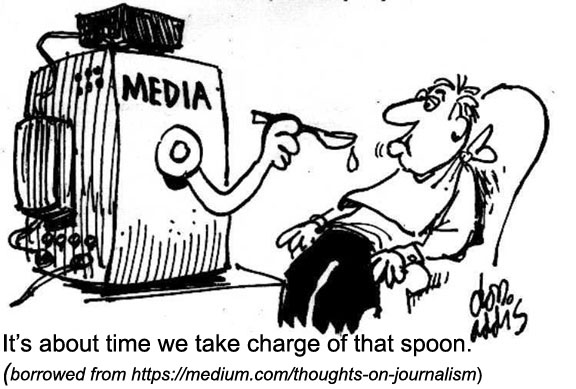
Jamie Henn, a co-founder of the climate group 350.org, had for a long time noticed a gap in climate advocacy that many had overlooked: while the fossil fuel industry pours money into ad campaigns, much of the climate movement simply doesn’t have the resources to do that work.
Inspired to change that, Henn launched Fossil Free Media to give public relations and communications support to grassroots groups taking on the fossil fuel industry and campaigning for climate justice. Fossil Free Media is also
trying to change the wider PR and advertising industry through its Clean Creatives campaign, pressuring agencies to break their ties with the fossil fuel industry.
Guardian 11th Sept 2021
https://www.theguardian.com/environment/2021/sep/11/greenwash-fossil-fuels-ad-agencies
The real-life anti-nuclear peace camp that is the subject of BBC drama ”Vigil”
‘BAN THE BOMB’ Inside real-life anti-nuclear peace camp that inspired Vigil’s Dunloch from mass arrests to blockades BBC drama Vigil has had viewers glued to their screens. https://www.thesun.co.uk/news/16093525/real-nuclear-peace-camp-vigil-faslane/
The series, which pulled in 5.4 million viewers with its second episode, stars Suranne Jones as a detective sent on to a Trident submarine after the death of a sailor.
While Suranne’s character DCI Amy Silva has been trying to uncover who murdered Craig Burke underwater, her colleague and lover DS Kirsten Longacre, played by Rose Leslie, has been visiting the fictional Dunloch camp to probe possible links to a cover-up.
And it turns out that Dunloch was based on the world’s longest-running anti-nuclear peace camp in Scotland, Faslane, set up in 1982.
The camp only has three members left now – but used to have thousands of occupiers.
Faslane was set up in 1982 by anti-nuclear campaigners Margaret and Bobby Harrison, in response to the decision by former Prime Minister Margaret Thatcher to replace the ageing Polaris submarines with Trident – which were even bigger.
It began as just a couple of tents pitched outside the Faslane naval base, then slowly evolved into more permanent shacks, huts and caravans.
Margaret and Bobby eventually left after a few months – but thousands of other activists have held the fort over the years.
Nicola Sturgeon protested
In its four decades, the camp has lived on through the end of the Cold War and changes in government on either side of the Scottish border.
It has been the focus of a great number of protests at the naval base.
First Minister of Scotland Nicola Sturgeon, and her deputy John Swinney are just two of the politicians who’ve joined protests at Faslane
In 2001’s “Big Blockade”, left-wing rebels Tommy Sheridan and George Galloway were among 300 arrested, along with 15 church ministers.
In 1983, an Easter march by 1,500 Campaign for Nuclear Disarmament supporters, all singing and dancing, led to five arrests, including two women dressed as Easter bunnies.
Year-long protest
But the last major event at the camp was Faslane 365 – which was originally meant to be a year-long protest running from 2006 to 2007.
The protest, which was in response to Labour PM Tony Blair ’s decision to replace Trident with more modern nuclear weapons rather than get rid of it, saw police arrest 1,110 people over 190 days.
On 7 January 2007, a group of around 40 world-renowned academics including Sir Richard Jolly and 25 students from Oxford, Cambridge, Sussex and Edinburgh held a seminar discussing the replacement of the Trident missiles at the base.
Protesters subsequently managed to stage the most successful blockade of the campaign, closing the North Gate for six hours.
All those who blockaded were arrested and held overnight.
The vast majority of arrested protesters were released, receiving a letter from the Procurator Fiscal’s office explaining that although “evidence is sufficient to justify my bringing you before the Court on this criminal charge”, the Procurator Fiscal has “decided not to take such proceedings”.
Dwindling members
Since then, the more urgent climate emergency has been a focus for the peace camp, and, by 2017, the camp only had 10 residents.
It now has just three – however just one woman is still permanently living there, Willemein Hoogdendoorn.
She is on remand awaiting trial after refusing bail conditions following her arrest last month at a blockade on the anniversary of the Hiroshima bomb.
Despite the dwindling number of members, Faslane still definitely cares about stopping nuclear weapons.
One banner at the camp reads: “£200billion Trident Renewal. Let’s fund our NHS instead”.
A bus is colourfully graffitied with the words “Ban the bomb”.
‘We don’t want to be misrepresented’
Camp dwellers turned away Vigil producers hoping to film on location at the camp, claiming the plot is “unrealistic”.
Johnny Rodgers, 36, from Bingley, West Yorks, told the Mirror: “The BBC came and offered £500 to film on site.
“When we saw the script we said, ‘No, that’s not realistic. We don’t want to be misrepresented’.”
‘Vigil is unrealistic’
Another protester, Andy – who has lived there on and off for 15 years – claimed Vigil is unrealistic due to the fact that sailor Craig Burke was secretly dating peace camp protester Jade Antoniak.
He added: “We were told one of the women from the camp falls in love with a submariner. That just isn’t realistic.
“Sailors aren’t even allowed to come here any more as far as I’m aware, or they’d get into trouble.
“They stay at the base and we stay here, there’s no fraternisation at all.”
Michael McGuinness, 35, from nearby Helensburgh, agreed.
He said no sailors have visited in more than a decade.
He recalled: “Back in 2006 you’d have all the drunk sailors in. They’d sit and have a laugh with you.”
The remaining Faslane residents may not be onboard with Vigil, but there’s no denying the BBC drama has put it firmly back on the map.
How America’s war machine is bankrupting us, both financially and morally

“Napoleon said that it’s not necessary to censor the news. It’s more efficient to delay it until it no longer matters. In terms of the dead, it no longer matters.”
Norman Solomon on what the media won’t say: “The American people live in a warfare state” by Chauncey DeVaga — Rise Up Times
Author and activist Norman Solomon on how America’s war machine is bankrupting us, both financially and morally, By CHAUNCEY DEVEGA Salon September 8, 2021 ” …………….. America’s 20-year war in Afghanistan is now technically over.
…………………The Afghanistan war cost the American people at least $2 trillion. That amount will increase significantly from the interest paid on the massive debt incurred by the war over the next few decades.
America’s ugly withdrawal from Afghanistan leaves behind many “what ifs” that will haunt the nation’s collective memory for years to come. For example, what if the terrorist attacks of 9/11 had been treated as a law enforcement problem and not a military crisis that led to the invasion of Afghanistan and Iraq? (Especially since the latter nation had no connection to al-Qaida or the 9/11 attacks.)
What role did the War on Terror and its thousands of U.S. casualties (disproportionately concentrated in the Rust Belt and the American South) play in the election of Donald Trump and the rise of American neofascism? Would Trump ever have become president if there had been no endless war in the Middle East?
The withdrawal from Afghanistan also illustrates how poorly America’s collective memory reflects facts and history. Too many members of the media and political classes, still haunted by the ghosts of Vietnam, the Afghan retreat is being invoked as somehow equivalent to the fall of Saigon in 1975. It is not.
………. These first drafts of history about America’s retreat from Afghanistan are very much works in progress.
As writer and cultural critic Gore Vidal once observed, “We are the United States of Amnesia, we learn nothing because we remember nothing.” To that point, the American people will not be asked to make sense of Afghanistan and the War on Terror in the context of a much larger history. (And if they were asked, would not generally be able to answer, or interested in doing so).
Here is the central question that is being avoided: What does all this illustrate or exemplify? The answer: America is addicted to war. Since the end of World War II, the country has been involved in dozens of conflicts and interventions around the world. In that sense, America’s war in Afghanistan is part of a much older and much longer story.
To discuss both that longer story and the one before us now, I recently had a conversation with author, activist and journalist Norman Solomon (a frequent contributor to Salon). He is the author of many books including “War Made Easy: How Presidents and Pundits Keep Spinning Us to Death” and “Made Love, Got War: Close Encounters with America’s Warfare State.” Solomon is the national director and co-founder of the online activist initiative RootsAction.org and executive director of the Institute for Public Accuracy,
In this conversation, Solomon explains how he believes the American people are propagandized into supporting war by political leaders, the mainstream news media and other elites. He also reflects on how Afghanistan, Iraq and the larger War on Terror have been counterproductive on their own terms — leaving the American people less safe and less secure — as well as profoundly immoral and ruinously expensive.
He explains how human rights and justice demand that the American people learn to practice radical empathy for the Afghan people and others around the world who have suffered immeasurably from American military power. Toward the end of this conversation, Solomon explains that the lives of average Americans could be greatly improved if the U.S. did not spend vast sums of money on a military machine used almost entirely for destructive ends.
As a whole, the news media and the pundit class are generalists and professional “smart people.” They have little specific policy expertise on America’s forever wars or the Middle East, yet are presented as authoritative voices on that subject and too many others. How does the business of “expertise” and “punditry” actually work?
The qualification is largely that you have some type of institutional credential or be in a powerful position in Washington. You also have to stay more or less within the parameters of the bipartisan consensus about American politics, especially in terms of foreign policy.
What is verboten in such conversations?
In terms of U.S. foreign and military policy, there is a type of mass media housekeeping seal of approval. It is not completely monolithic. There are cracks in the wall. However, just because there are cracks does not somehow mean that the wall no longer exists.
The essence of propaganda is repetition. I believe there is a paradigm, a rule where there’s terrain that the corporate media tends to be very comfortable having discourse and debate on and within. Essentially, the mass media are part of the war-making apparatus.
How do you make sense of this public rehabilitation project for the likes of George W. Bush and Donald Rumsfeld, two of the most prominent figures who made the decisions that led to these disastrous wars?
Consider all the praise, for example, that was visited on the late Donald Rumsfeld during his obituary period. There were so many members of the mainstream American news media who just basically licked Rumsfeld’s boots when he was giving his daily briefings during the war. Top journalists in the United States, on camera, were saying to Rumsfeld that he was like a “rock star,” that he was a “stud,” because he was articulating U.S. policy so well during those first weeks of the bombing of Afghanistan. I think of that spectacle all the time, where the media bows down to the warmakers in this country………..
The press is supposed to help the public understand current events so they can make better decisions about government, policy and leadership. But relatively few in the mainstream news media gave extensive coverage to the “Afghanistan Papers,” which were leaked not long ago and extensively documented that the war in Afghanistan had been lost for years. There is much fake surprise about the sudden end of the war and the Taliban taking over so quickly. The United States government knew of this highly probable outcome some time ago.
There is tremendous conformity-pressure. Being ahead of the discernment curve is very rarely a career enhancement. Whereas going with the herd, or being a little ahead of the curve but not going too far out on a limb, is a winning strategy for so many people who have risen through the ranks in mass media — and for that matter in government.
Napoleon said that it’s not necessary to censor the news. It’s more efficient to delay it until it no longer matters. In terms of the dead, it no longer matters. The last mistake is chalked up as in fact being just an error. But people who are going deeper in the analysis are saying, “There’s a fundamental dynamic here.”
We, the American people, live in a warfare state. As President Dwight Eisenhower warned as he was leaving office, we have a military-industrial complex. It’s striking how rarely we even hear that term being uttered by a prominent Democratic or Republican leader in Washington. It’s almost verboten………..
How do we better explain to the American people the role of profiteering by private interests and big business in the country’s wars?
When we hear that the war in Afghanistan was a “failure,” it really depends on what vantage point one is talking about. Every war is a colossal success for the military-industrial complex and huge numbers of Pentagon contractors. We call it the “defense industry.” That is a benign term.
I’m not against a defense budget. Too bad we don’t have one! We have a military budget that’s so much larger than a genuine defense budget would be. The profit-taking is enormous.
Where does the $700-something billion a year from the Pentagon go? Add in nuclear weapons and other items that are outside the Pentagon budget, and the number rises to $1 trillion. So much of that money is just going to these huge corporations. How often do we see a serious examination in the mainstream news media of the corporations that are making a killing, literally and figuratively, from the misery and death that’s part of the U.S. warfare state?
How has war been sold to the American people by the country’s leaders? What narratives are used to propagandize them into supporting American empire and war-making?………
Has the mainstream news media ever seen a war they didn’t like?
If there’s a deep division on Capitol Hill within or between the two parties, then the mass media, to some significant extent, might be against it. Again, war is framed around the question, “Is it winnable?”
Ultimately, that is the wrong question. Even now there are critics of the Afghanistan war saying, “It was a terrible idea. It could have never been won.” I can reasonably conclude that the seven-year-old girl I met with one arm didn’t really care if the U.S. won or lost. She didn’t care that Barack Obama was a Democrat overseeing the air war that took one of her arms. https://riseuptimes.org/2021/09/09/norman-solomon-on-what-the-media-wont-say-the-american-people-live-in-a-warfare-state-by-chauncey-devaga/
USA Bill to protect journalists – EXCEPT FOR JULIAN ASSANGE

press freedom advocates, while supportive of the press freedom bill, said that the legislation would yield the biggest impact if the U.S. followed its own policies.
“Anytime we, or the U.S. government, or members of Congress are talking about press freedom internationally, it’s, in my mind, a good thing,” said Trevor Timm, co-founder and executive director of the Freedom of the Press Foundation. “But for any of that advocacy to be remotely effective, it’s important for the U.S. to walk the walk and not just talk the talk.”
PRESS FREEDOM BILL WOULD PROTECT JOURNALISTS FACING PERSECUTION — BUT NOT JULIAN ASSANGE https://theintercept.com/2021/09/08/julian-assange-international-press-freedom-act/ 8 Sept21,
Senators say they want to protect foreign journalists from government aggression. But what happens when the U.S. is the aggressor? Rose Adams
September 8 2021, EARLIER THIS YEAR, just days before World Press Freedom Day, Sens. Tim Kaine, D-Va., and Lindsey Graham, R-S.C., joined forces to introduce the International Press Freedom Act of 2021, a bipartisan bill to protect at-risk journalists working in highly censored countries. The legislation is predicated on the idea that the United States is a uniquely safe place for journalists — but that notion doesn’t always hold up under scrutiny.
Introduced on April 29, the International Press Freedom Act is one of at least three press freedom bills that Congress has considered since Saudi authorities killed journalist Jamal Khashoggi in October 2018. But while other bills have proposed piecemeal protections — such as sanctions on restrictive governments or a government office for threatened journalists — Kaine and Graham’s bill takes a more comprehensive approach. In addition to directing State Department funds toward investigating and prosecuting crimes against journalists abroad, the law would create a new visa category for threatened reporters and open a State Department office with a $30 million annual fund to help journalists report safely or relocate.
Press advocacy groups such as the Committee to Protect Journalists have praised Kaine and Graham’s bill, claiming that the legislation would “bolster U.S. foreign diplomacy on global press freedom.” In a statement, Kaine emphasized the U.S.’s responsibility to spread its free speech ethos.
“Enshrined in both our Constitution and the Universal Declaration of Human Rights, press freedom is a core American value that we must constantly promote around the globe,” he said in a press release. “With this bill, our country will let journalists know that we will protect their right to report and offer safe harbor when they are threatened.”
But that safe harbor doesn’t seem to apply to foreign journalists the U.S. government itself has threatened. For years, the Justice Department has worked to extradite and prosecute WikiLeaks founder Julian Assange for publishing Army war logs provided by Chelsea Manning in 2010, and increased the pressure following his 2016 publication leaked Democratic Party emails that the Justice Department said were hacked by Russia. And though the government’s extradition efforts are inching closer to fruition amid several U.S. appeals, Kaine and Graham have remained silent.
Continue readingMedia Coverage of Fukushima, Ten Years Later.
Abstract: When taking up the unlearned lessons of Fukushima, one of the biggest may have been the need for more robust oversight of the nuclear industry. In Japan, the failure of the major national news media to scrutinize the industry and hold it accountable was particularly glaring. Despite their own claims to serve as watchdogs on officialdom, the major media have instead covered Japan’s powerful nuclear industry with a mix of silent complicity and outright boosterism. This is true both before and after the Fukushima disaster. In the decades after World War II, when the nuclear industry was established, media played an active role in overcoming public resistance to atomic energy and winning at least passive acceptance of it as a science-based means for Japan to secure energy autonomy.
During the Fukushima disaster, the media served government objectives such as preservation of social order by playing down the size of the accident and severity of radiological releases, resulting in widely divergent coverage from serious overseas media. While a short-lived proliferation of more critical and independent coverage followed the disaster, the old patterns returned with a vengeance after the installment of the pro-nuclear administration of Abe Shinzō. This article will examine the roots of the Japanese media’s failure to challenge or scrutinize the nuclear industry, and how this complicity has played out in the post-Fukushima era. It will use a historical analysis to look at how the current patterns of media coverage were actually established in the immediate postwar period, and the formation of public support for civilian nuclear power.
During my 15 years as a foreign correspondent in Tokyo, including a six-year stint as Tokyo bureau chief of The New York Times (2009-2015), I often covered the same news events as Japanese journalists, standing shoulder-to-shoulder at more press conferences than we’d care to count. While I admire many Japanese colleagues individually as journalists, I was frequently struck by the shortcomings of Japan’s big domestic media and Japanese journalism as an institution.
But never did I feel these structural weaknesses as keenly as I did in the tense weeks that followed the triple meltdown at the Fukushima Daiichi Nuclear Power Station.
In Minami-soma, a city 25 kilometers north of the stricken plant, where some 20,000 remaining residents were cut off from supplies of food, fuel and medicines, I discovered that journalists from major Japanese media were nowhere to be seen. They had withdrawn from Minami-soma, forbidden by their editors in Tokyo from approaching within 30 or 40 kilometers of Fukushima Daiichi.
By doing so, they had essentially abandoned the already isolated residents. But you would never know that from the media’s stories, which made no mention of their own pull out or the perceived risks that had prompted this retreat. Instead, the main newspaper articles uniformly repeated official reassurances that there was no cause for alarm because the radiation posed “no immediate danger to human health,” as the chief cabinet secretary at the time, Edano Yukio, so famously put it.1
The mismatch between word and deed—between what the newspapers were telling their audiences and what they were actually doing to protect their own journalists—was glaring. It turned out that this was only the first of several instances during the Fukushima disaster where I witnessed Japan’s major media adhering to the official narrative regardless of the facts on the ground. I refer to this phenomenon as “media capture,” borrowing from the more widely used term “regulatory capture,” which is used to describe a similar failure of government oversight of the nuclear industry.
Over the months and years that followed the meltdowns, I saw numerous instances of national media refusing to take a critical or distanced stance in their coverage of the nuclear industry and its government regulators. Instead, they repeatedly chose to internalize the official narratives and even adhere to the government-approved language. We saw this is the widely diverging narratives that started appearing in the serious foreign press versus the major domestic media as the accident worsened.
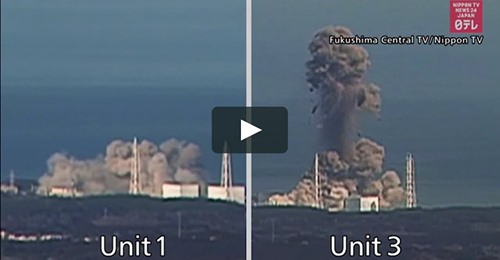
To cite a straightforward example, we started using the word “meltdown” within hours of the first reactor building explosion at the plant, reflecting the almost unanimous view of outside experts that a melting fuel core was the only realistic source of the hydrogen that caused the blast. However, the domestic national dailies and NHK avoided the word “meltdown” (in Japanese, merutodaun) for months, following the insistence of the Ministry of Economics, Trade and Industry (METI), the powerful government agency that both promoted and regulated Japan’s nuclear industry, that a meltdown had not been confirmed. The big Japanese media used other official euphemisms as well, including “explosion-like event” to describe the massive blast at the Unit 3 reactor building, which blew chunks of concrete hundreds of feet into the air.
In fact, I even had Japanese journalists calling me to berate me and my newspaper for using the M-word without METI’s permission. Readers of the Japanese national dailies didn’t see the M-word until mid-May, when METI and the plant’s operator, Tokyo Electric Power Co. or TEPCO, conceded in public that Fukushima Daiichi had indeed suffered a meltdown in mid-March—three meltdowns, in fact.
In the chapter that I wrote for Legacies of Fukushima: 3.11 in Context, I tried to explain some of the reasons why the civilian nuclear power industry could have such a peculiarly strong grip on the media and their narratives. The nuclear industry was a national project that was promoted by the powerful central ministries as a silver bullet for resource-poor Japan’s dependence on imported energy. This gave it an elevated status as the elite bureaucrats guided Japan’s postwar recovery and economic take-off.
I looked at the media’s dependence on Tokyo’s powerful central ministries, which takes its most visible form in the so-called kisha kurabu, or “press clubs.” These are arrangements that allow national media to station their journalists inside the ministries and agencies, where they are given their own room and exclusive access to officials. Much of the reporting by the major Japanese media starts in the kisha kurabu, where journalists gather to wait for the next press conference or off-record briefing from officials. The kisha kurabu system fosters a passive form of journalism, in which reporters become dependent on the ministry within which they are embedded. In pursuit of a scoop that can make or break a career, the journalists compete for handouts from ministry officials. All too often, they enter a Faustian bargain in which the journalists swap narrative control in exchange for exclusive access to information. The result is a passive form of access journalism that ends up repeating spoon-fed official narratives.
I also looked to the past at the emergence of newspapers like the Asahi Shimbun during the early to mid-Meiji era, when the national priority was to protect autonomy by finding a way to catch the industrialized West. I argued that this history baked into the mindset of Japanese journalists a feeling of responsibility for the fate of their nation, including its vital energy needs. It also led to an identification with the government, and particularly the elite officialdom, as protectors of Japan and its people from predatory foreign powers. This inclination to side with the state has continued in the postwar period, when journalists have clearly seen themselves as members of a national elite attached to a broader bureaucratic-led system.
One point that I wanted to underscore was that this media capture was not something so simple or venal as corruption. This is how it is often portrayed by critical Japanese writers, usually freelancers and book authors, who focus on the so-called Nuclear Village, a nexus of business, government, labor unions, academia and news media linked by the cash flowing out of the highly profitable nuclear plants. While money doubtlessly plays a role in many of these relationships, including perhaps the for-profit commercial TV broadcasters, I see no direct evidence that it sways the coverage of the national newspapers. These are privately held companies for whom advertising is a much less important revenue source than subscriptions (or the rent from their valuable real estate holdings in central Tokyo and Osaka).
Regardless of the cause, the result has been generations of postwar journalists who have consistently failed to serve as watchdogs on one of the nation’s most politically powerful industries.2 Starting in the 1990s, public scandals started plaguing the industry, and TEPCO in particular. In 2002, government inspectors announced that TEPCO had been routinely falsifying safety reports to hide minor incidents and equipment problems at reactors including several at Fukushima Daiichi. TEPCO eventually admitted to more than 200 such violations stretching back to 1977. Five years later, TEPCO revealed even more cover-ups of safety issues, which the company had failed to report in the previous inquiry.
Despite what was clearly a chronic and systemic failure of both internal compliance and government oversight, no one was arrested or charged, and the existing regulatory framework left unchanged. The media could have played a role of holding the regulators’ feet to the fire by exposing the structural problems behind this abysmal record of obfuscation and cover-ups. Instead, the watchdogs chose to remain largely silent, reporting on the government’s revelations, but making few efforts at independent investigative reporting.
Of course, such criticisms enjoy the benefits of hindsight, with the accident in 2011 making it easier to see these failures as part of a broader narrative that leads inevitably to Fukushima. But how about after 2011, when the severity of the disaster led to numerous calls for reform? During that time, the national media have also been held up to uncomfortable scrutiny by a jaded and distrustful public, who felt betrayed by their early coverage of the accident.
Unfortunately, ten years later, nothing seems to have changed.
This was apparent in mid-April of 2021, when the Japanese government announced a decision to release into the Pacific Ocean more than 1.2 million tons of radioactive water that has been building up in hundreds of huge metal tanks on the grounds of the Fukushima Daiichi plant. (The accumulation of contaminated water has plagued the plant from the early days of the disaster. TEPCO has resorted to some high-tech solutions with mixed results, including a mile-long “ice wall” of frozen dirt that failed to fully block the water, much of which flows into the plant from underground.)
The water stored in these tanks contains tritium, a radioactive isotope of hydrogen that is best known for its military use as the fuel for thermonuclear warheads (hence the term “hydrogen bomb”). On the spectrum of radioactive substances, tritium emits relatively low levels of radiation in form of beta particles. But it is a radioactive substance nonetheless, a fact that major media played down or even omitted by choosing, once again, to adopt the industry and government’s language to describe the dump. The main news stories in the major national newspapers and TV broadcasts used the official term for this water, which is shorisui, or “treated water.”
While technically correct, this term euphemistically glosses over the fact that this is not the same as, say, treated sewage water. Nor does treated water convey the fact that this water still contains a radionuclide that emits beta radiation.
One result was an interesting battle of words that pitted the mainstream media, which used the approved “treated water,” against journalists who were outside the press club’s inner circle. These publications and web sites chose to use clearer terms such as osensui, or “contaminated water.” The leftist daily Tokyo Shimbun, a smaller regional newspaper that has stood out for its more critical coverage of the nuclear disaster, compromised by calling the water osenshorisui, or “contaminated treated water.”3
More eye-opening was the fact that there were actually efforts to enforce use of the officially approved term. As many journalists discovered, there was an army of social media trolls at ready to pile onto anyone with the temerity to use more critical terminology, and particularly “contaminated water.” TEPCO and the government mobilized university experts and PR professionals to police the public sphere for use of words that were deemed “unscientific” and “ideological.”
Of course, the choice of the word “treated” is itself also highly political. It buttressed the larger message put forth by the government and the plant’s operator that the release of this water was no cause for alarm, but something very common and normal that nuclear plants around the world do all the time. By accepting the official terminology, the media were implicitly adopting this framing of the issue, which focused on the claim that the water could be diluted to the point of being harmless when dumped into the Pacific.
Scientifically, this is a valid claim. My point here is not to take sides. Rather, I am criticizing the large domestic media for failing to do the same: i.e., not take sides. By adopting the official narrative, the media were complicit in the government’s and TEPCO’s exclusion of other, also valid counterarguments. One of the biggest is the fact that this release is anything but normal. No nuclear plant has ever conducted an orchestrated release of such a huge quantity of tritium-laden water. (At the time of writing, the amount, 1.2 million tons, is enough to fill almost 500 Olympic-sized swimming pools.) Worse, the release is to be carried out in the same closed, opaque manner as the rest of Japan’s decade-long response to the disaster. Unless TEPCO and METI break with past precedent to allow full international oversight to verify that the water is as clean as they claim it is, we are left once again to trust actors who have consistently violated public faith.
Just as importantly, there are valid reasons to at least question whether the water is as clean as TEPCO says it is. The company has been telling us for years that it has installed state-of-the-art treatment and filtration technologies that scrub the water of every radioactive particle except tritium. However, in 2018, the plant operator suddenly revealed that 75% of the treated water at the plant still contained excessive amounts of other, more radioactive substances including strontium 90, a dangerous isotope that can embed itself in the living tissue of human bones.4
To be fair, TEPCO may be right in its assessment of the water’s safety. Even so, it is the job of conscientious journalists to take a skeptical attitude toward such claims until they can be independently verified. The media also need to remind why this is necessary, given the company’s and the industry’s history of cover-ups. My goal here is to fault the major domestic media for once again failing to do this, despite the bitter lessons of 2011. Adopting the language of METI and TEPCO privileges the official perspective over others. It shows that the journalists are internalizing the official framing of the event and how it should be discussed and understood.
Officialdom is thus allowed to set the boundaries of public debate, excluding more critical perspectives as “political,” “unscientific” or even “foreign.” The last characterization reflects the fact that the Chinese and South Korean governments raised some of the loudest objections to the release. The media have tended to frame these as the latest in a litany of self-serving complaints by Asian rivals that like to accuse Japan of failing to apologize for World War II-era atrocities. While Beijing and Seoul may have political motives for seizing on the water issue, this shouldn’t be a reason for journalists to avoid taking up more substantive criticisms about the release. Opposition has appeared in many other countries and reflects the failure of Japan to consult with other nations that share the Pacific Ocean, which will be the site of the mass water dump.
This is a failure by media, once again, to inform their readers of the existence of alternative narratives that take a dimmer view of the actions taken by Japan’s officialdom, or that point out where government interests diverge from those of Japan’s public. This is also a failure of a different sort: of media to protect their own intellectual independence. By uncritically adopting the official narratives, the journalists are relinquishing the right to frame in their issues. This surrendering of agency is the central fact of the media capture that I described above.
To be clear, Japan is not unique in suffering from the problem of media capture. The press in other democratic countries face similar challenges. In the United States, we use the term “access journalism” to describe the pitfalls of journalists, often in Washington, who trade autonomy for exclusive access to official sources. However, Japan’s version of access journalism is more extreme, producing a uniformly monolithic coverage closer to that in non-democratic societies. The most apt American equivalent may be the period of extreme patriotic fervor between the September 11, 2001, terrorist attacks and the March 2003 invasion of Iraq, when U.S. media failed to adequately challenge the erroneous claims of the Bush administration that Iraq was in possession of weapons of mass destruction.
In Japan’s ongoing Fukushima disaster, this lack of agency manifests itself as a failure to not only set the narrative, but even to decide what is newsworthy. Most of the coverage is essentially an act of regurgitating the information that was distributed at the ministry’s kisha kurabu. Since the news reports are based on information received from ministry officials, not surprisingly they usually showcase the actions of those officials. Both the pages of Japan’s national dailies and the evening news broadcasts of NHK are filled with stories of Japanese officialdom in action, solving some problem or punishing some wrongdoer. Most news reports are mini-dramas in which officials play the starring role. As such, they serve as demonstrations that agency lies in the elite bureaucracies at the center of the postwar Japanese state, and not the major media, which seems to serve as an appendage.
Even when critical stories appear, they are rarely the work of enterprising reporters unearthing facts that the powerful would rather keep covered. Rather, the revelations tend to come from official actors when they have decided to take action against malfeasance. One example was TEPCO’s cover-ups, mentioned earlier, which were exposed by nuclear regulators, not investigative reporters. A more recent example is revelations that started to become public in March 2021 of years of security lapses at the huge Kashiwazaki-Kariwa nuclear plant in Niigata, facing the Sea of Japan. Over the next two months, news stories dribbled out about workers who were able to access the sensitive areas around the plant’s nuclear reactors without proper ID. In one case in 2015, a man entered the reactor area using the ID of his father, who also worked at the plant. Once again, there lapses were not exposed by intrepid reporters but regulators themselves, who leaked them to prepare the public for their decision to reject TEPCO’s request to restart the plant.5
The lack of media agency is all the more glaring because there have been very notable exceptions. Japan’s journalists have shown that they are capable of true investigative reporting that can define and drive the public narrative. For a brief window of time during the early years of the Fukushima disaster, some major Japanese media experimented with more autonomous journalism. This began in the late summer of 2011, as public disillusionment in the domestic press’s compliant coverage grew. This prompted some media to try to re-engage readers with more hard-hitting reports that challenged the official claims.
The most notable of these efforts was launched by the Asahi Shimbun, Japan’s second-largest daily, which beefed up a new reporting group dedicated to investigative journalism. (By investigative journalism, I mean journalists taking the initiative to pry out hidden truths and assemble these into original, factual narratives that challenge the versions of reality put forth by the powerful.) The Asahi’s investigative division got off to a strong start by winning Japan’s most prestigious press award two years in a row. It scored what it trumpeted as its biggest coup in May 2014, when two of its reporters wrote a front-page story that exposed the dangerously poor crisis management at the plant as it teetered on the brink of catastrophe. The story revealed that the government had hidden testimony by the Fukushima Daiichi plant’s manager during the accident, Yoshida Masao, who later died of cancer. It also recounted what it said was the most explosive revelation of this secret testimony: that hundreds of workers and staff had fled the crippled plant at the most dangerous point in the disaster, despite the fact that Yoshida never gave them the order to leave.
However, the Asahi erred by giving the story a misleading headline, which left readers with the impression that the workers had fled in defiance of Yoshida’s order to stay. (In fact, Yoshida himself says in the testimony that his order didn’t reach these workers—a stunning breakdown in command and control that was lost in the subsequent blow up over the article.) This misstep gave critics the opening that they needed to try to discredit the entire story, and by extension the newspaper’s proactive coverage of the disaster. A host of critics, including the prime minister himself and the rest of the mainstream media, set upon the Asahi with unusual ferocity. After weeks of withering attacks, which essentially accused the newspaper of lacking patriotism and of belittling the heroic plant workers, the Asahi’s president made a dramatic surrender in September 2014, retracting the entire article, gutting the investigative team and resigning his own job to take responsibility for the fiasco.6
Thus marked the end of the Asahi’s short-lived foray into investigative journalism, which I have described in more detail in this journal.7 Suffice it to say here that when forced to make a choice, the Asahi, the nation’s leading liberal voice favored by the intelligentsia, chose to remain on the boat. To preserve the privileged insider status as a member of the kisha kurabu media, the newspaper chose to sacrifice not only its biggest reporting accomplishment of the disaster, but also the journalists who produced it, who were sent into humiliating internal exile. For years afterward, the newspaper shunned proactive reporting on Fukushima, staying within safe confines of the official storyline.
The Asahi’s biggest mistake was its failure to stand behind its journalists. Investigative reporting is by nature a highly risky undertaking, and one that pits a handful of underpaid journalists against some of the most powerful members of society. By not only failing to stand up for its investigative reporters but trying to scapegoat them by punishing them for the mistakes in coverage, the Asahi sent a chilling message to all mainstream journalists: Newspapers don’t have your back. In such an environment, what journalists in their right mind would want to challenge the powers that be?
Admirably, some of the Asahi’s investigative reporters did stand their ground even at the cost of their careers at the newspaper. Soon after the debacle, two of the investigative group’s top reporters quit to launch Japan’s first NGO dedicated to investigative journalism, which in 2021 was renamed Tokyo Investigative Newsroom Tansa.8 Another resigned to join Facta, a Japanese magazine dedicated to investigative coverage (and offering stories that cannot be found in the large national newspapers). These decisions to place principle over company and career underscore my broader point: The sources of Japan’s media capture are bigger than the individual reporters and embedded in the structure of media institutions and the practice in Japan of journalism itself.
The Asahi’s capitulation in 2014 marked the end of not just the Asahi’s but all the mainstream media’s efforts to create new, more critical narratives of the Fukushima disaster. These days, most reporting tends to fall into one of a few prepackaged, safely uncontroversial storylines. There is the Fukushima 50 narrative of successfully overcoming Japan’s biggest trial since World War II. Another is the “baseless rumors” (fuhyō higai) narrative, which casts fears of radiation as over-exaggerated, and usually the creation of women, leftists and foreigners.
Journalists have told me that the Asahi’s surrender created a powerful prohibition on critical coverage. Having seen what happened to Japan’s leading liberal newspaper, and the star reporters there who lost their careers, few journalists have the stomach to challenge the status quo. The result is a grim new conformity.
Adding to the pressure to toe the line has been the appearance post-Fukushima of another new, problem-plagued national project: the Tokyo Summer Olympics, originally scheduled for 2020. Coverage of the Olympics has again tended to adhere to official narratives, even as public misgivings grew in Prime Minister Suga Yoshihide’s decision to go forward with the Games a year later, in 2021, in the midst of the Covid-19 pandemic.
From the start, the government has used the Olympics to divert attention from Fukushima while proclaiming that the disaster is now in the past. While there has been critical coverage, it has been the exception and not the rule. Indeed, the media’s silence was deafening when the previous prime minister, Abe Shinzō, told the International Olympic Committee in Buenos Aires in September 2013 that the plant’s “situation was under control,” even as contaminated water was then still bleeding into the Pacific.
By failing to take the initiative in Fukushima, the media have ended up supporting official efforts to use the Games to put the lid back on the nuclear disaster. The Olympics have become yet one more means for Japan’s elites to regain control of the public sphere, or at least the part of it controlled by the big legacy media. (They have had less success asserting control over the much more anarchic and anonymous world of social media.)
The media’s reluctance to challenge the government has also been apparent during the Covid-19 pandemic. I’m still waiting for the investigative articles that expose the truth behind Tokyo’s biggest failures during the pandemic. The major media emitted barely a peep in response to the government’s blatantly discriminatory decision during the first six months of the pandemic to close Japan’s borders to all foreign nationals, including long-term residents, while allowing Japanese nationals to come and go. More importantly, I would be the first in line to read an investigative exposé into what delayed the roll out of vaccines in Japan.
All too often, coverage of COVID-19 ended up repeating the pattern that we saw in Fukushima. The media once again surrendered their biggest public asset: their power to challenge the official narrative and expose the facts that officials don’t want us to know. Instead, the major domestic media once again show themselves more interested in preserving their privileged insider status. By doing so, they once again do a disservice of their readers.
The need to serve their readers by finding an independent and critical voice should have been the media’s biggest takeaway from Fukushima. Instead, they appear to be merely repeating the mistakes of a decade ago.
References
Brown, A. and Darby, I. (2021) ‘Plan to discharge Fukushima plant water into sea sets a dangerous precedent’, The Japan Times, April 25 [Online]. Accessed: June 25, 2021.
Fackler, M. (2016) ‘Sinking a bold foray into watchdog journalism in Japan’, Columbia Journalism Review [Online]. Accessed: June 25, 2021.
Fackler, M. (2016) ‘The Asahi Shimbun’s failed foray into watchdog journalism’, The Asia Pacific Journal Japan Focus, 14(24) [Online]. Accessed: June 25, 2021.
Jomaru, Y. (2012) Genpatsu to media shinbun jānarizumu ni dome no haiboku [Nuclear Power and the Media: The Second Defeat of Newspaper Journalism]. Tokyo: Asahi Shimbun Shuppan.
Kyodo. (2021) ‘Another security breach at Tepco nuclear plant uncovered’, The Japan Times, May 9 [Online]. Accessed: June 25, 2021.
Ogawa, S. (2021) ‘Fukushima dai ichi genpatsu no osen shorisui, seifu ga kaiyō hōshutsu no hōshin o kettei e 1 3 nichi ni mo kanei kakuryō kaigi [Government Moving Toward Decision to Release the Fukushima Daiichi Nuclear Plant’s Contaminated Treated Water in the Ocean], Tokyo Shimbun, April 9 [Online]. Accessed: June 25, 2021.
Tansa. (2021) Tokyo investigative newsroom Tansa [Online]. Accessed: June 4, 2021.
Notes
SankeiNews (2011). “Edano kanbōchō kankaiken No1 ‘Tadachi ni kenkō shigai wa denai…’” [Chief Cabinet Secretary Press Conference Edano No1 ‘No Immediate Health Damage’]) [Online Video]. Accessed: August 23, 2011.2
Jomaru, 2012.3
Ogawa, 2021.4
Brown and Darby, 2021.5
Kyodo, 2021.6
Fackler, 2016.7
Fackler, 2016.8
Tansa, 2021.
Murdoch’s news media hasn’t seen the light on climate – they’re just updating their tactics —

Is News Corp really seeing the light on climate? More likely it’s pivoting to a modern style of greenwashing and delay, just like Morrison. .
What might reasonably seem like a surprising change of heart in News Corp’s stance on climate is actually a long-term tactical shift that has been occurring for at least a few years. Whatever policies they failed to destroy through their earlier campaigns, they will try and reframe through racist, nationalistic, technocratic and pro-business frames.
Whatever policies they can delay or destroy, they’ll simply keep running scare campaigns about, insisting that ‘the balance isn’t right’, and that the threat of climate action is greater than climate change, as they always have (in Australia, News Corp’s partnerships with Google and Facebook mean these campaigns to destabilise climate action are growing more powerful and more harmful every day). When the next federal election comes around, the “COSTS OF NET ZERO” scare campaigns will ramp up in Australia as they are in the UK, and News Corp will be at the forefront, pleading that acting too fast will cause catastrophe. Absolutely mark my damn words: this is what will happen.
Net zero by 2050 isn’t enough. We’ll know that the denialism has truly ended when organisations like News Corp treat the IPCC’s latest report like it’s real.
Delay is the main game
There are many substantial recent examples of this. A good one was the severe blackouts that spread across Texas in February this year, which were immediately blamed on wind power failures, alongside easily debunked claims that snows and ice were blocking solar panels and freezing up wind turbines in Texas and around the world.
This isn’t climate change denial: it’s “mitigation denial“. That is, a move away from denying the problem exists and towards decrying its solutions as utterly unacceptable. An important part of this performance is pretending to have a moment of having seen the light, but then continuing to commit the same acts of delay as before.
News Corp hasn’t seen the light on climate – they’re just updating their tactics, https://reneweconomy.com.au/news-corp-hasnt-seen-the-light-on-climate-theyre-just-updating-their-tactics/, 5 Sept 21, Have you heard the good news? One of the key institutions holding back climate action in Australia – Rupert Murdoch’s News Corporation – is suddenly on Team Climate Action! Today, the Sydney Morning Herald revealed that the company’s Australian outlets are set to launch a campaign urging “the world’s leading economies” to embrace a target of net zero emissions by 2050; to be fronted by columnist Joe Hildebrand. The details aren’t out yet, but I contend that we can comfortably predict what it will look like.
It will be a centrist, pro-business approach to climate action. It will make a show of dismissing the “hysterics” of climate activists, while urging governments, including Australia’s, to set distant, meaningless and non-binding climate targets. It won’t allow any room for emissions reductions in line with the 1.5C goals or the Paris agreement; no short-term meaningful targets or actions such as those highlighted in the IEA’s recent ‘net zero’ report. It won’t argue for a coal phase-out by 2030, or the end of all new coal, gas and oil mines in Australia, or a ban on combustion engine sales by 2030-2035; all vital actions if Australia is to align with any net zero target.
It’ll champion controversial technologies like CCS and fossil hydrogen. It’ll highlight personal responsibility: tree planting, recycling and electric vehicle purchases. It will not propose or argue in favour of any new policies; at least none that might reduce the burning of fossil fuels.
How can we know all this before we’ve seen the actual campaign? It’s easy – let me explain.
Done with denial
Here’s a remarkable statistic for you. In the month of August this year, global media coverage of climate saw its highest volume since the December 2009 Copenhagen climate meetings. That’s partly down to the release of the IPCC’s AR6 Working Group one report into climate change, six years in the making.
That report reiterated something extremely important: every single tonne of carbon dioxide does damage. Actions must be immediate and aggressive to align with the most ambitious pathways. Delay is deadly.
No media coverage records for Australia: coverage of climate change has dropped almost entirely off the radar relative to the high volumes of late 2019 and early 2020 (partly driven by the Black Summer bushfires).
During the Black summer bushfires of 2019-20, I did a few interviews about Australia with baffled and perplexed international reporters. “What is going on over there? Why did the people elect such a climate laggard?”. A key part of my response was to pin blame on Australia’s media industry. Mostly on News Corp, which dominates the country’s uniquely concentrated media landscape, and which is notorious for its heavily politicised climate views. In fact, a recent study quantified this in historical terms, analysing media coverage within Canada, New Zealand, the United Kingdom, the United States and Australia for its climate science accuracy.
By a comfortable margin, News Corp’s Daily Telegraph and the Courier Mail scored the second and fourth worst among every media outlet analysed between 2005 and 2019 (The Australian wasn’t included in the analysis). Australia has, in general, seen the least accurate climate science coverage from 2013 onwards, despite a general rising trend in scientific accuracy over the past decade. For a decade and a half, News Corp lied about climate science with the blatant aim of protecting the revenue streams of the fossil fuel industry, and protecting its political allies.
This is important as a historical study, but today, it’s increasingly irrelevant. As the study points out, the accuracy of climate science has essentially plateaued in media coverage, with outright denial consigned to the dustbin.
The authors highlights that “the terrain of climate debates has shifted in recent years away from strict denial of the scientific consensus on human causes of climate change toward ‘discourses of delay’ that focus on undermining support for specific policies meant to address climate change”. The fundamental goal is the same – staving off action – but the way it manifests is very different.
Delay is the main game
There are many substantial recent examples of this. A good one was the severe blackouts that spread across Texas in February this year, which were immediately blamed on wind power failures, alongside easily debunked claims that snows and ice were blocking solar panels and freezing up wind turbines in Texas and around the world.
This isn’t climate change denial: it’s “mitigation denial“. That is, a move away from denying the problem exists and towards decrying its solutions as utterly unacceptable. An important part of this performance is pretending to have a moment of having seen the light, but then continuing to commit the same acts of delay as before.
Murdoch’s The Sun, in the UK, did precisely this. In October 2020, The Sun launched a ‘Green Team‘ campaign that focused on ‘individual responsibility’ in the lead-up to COP26, to be held in Glasgow at the end of this year. It wasn’t long until they were celebrating their own victory in freezing fossil fuel taxes.
how it started how it’s going pic.twitter.com/p1ZVOnOKmX— Zach Boren (@zdboren) March 3, 2021
The UK’s Daily Express, another hyper-conservative outlet that ‘saw the light’, continues to publish articles attacking climate activism and, more significantly, framing climate action in an explicitly “eco nationalist” way, as UK writer Sam Knights highlights in this article in Novara media. He says,
“Make no mistake: these newspapers are not your friends. They are not your allies. Their politics are not in any way ecological. They are deeply racist, reactionary, right-wing publications. Their sudden interest in climate change is not to be celebrated – it is a terrifying indication of things to come:”
Last week, @GreenpeaceUK, @WWF, @nationaltrust, and @friends_earth signed up to the “green crusade” of the Daily Express. Just ten days later, the rightwing newspaper has already run two articles attacking Greta Thunberg… Surely these charities will now withdraw their support? pic.twitter.com/Xz5NcjLu8N
— Sam Knights (@samjknights) February 18, 2021
It’s notable that these examples seem to manifest in the UK, and less so in similar anglophone countries like Canada or the US or New Zealand. Those are led by centre-left parties and politicians, but the UK’s conservative embrace of climate action is surely a model that Australia’s PM Scott Morrison pines to replicate. Sure, the UK certainly is miles ahead of Australia in terms of climate action – but there remains a very significant gap between Boris Johnson’s climate policies and where the country actually needs to be to align with the carbon budget that its independent climate advisor body has laid out.
A technocratic, rich white country with a government more concerned with optics than doing what needs to be done to protect people from being hurt by fossil fuels. Morrison’s obviously inspired by the UK, but Australia’s conservative media outlets are increasingly inspired, too.
Net zero by sometime after I retire, please
This is all coming to a head at COP26. George Brandis, Australia’s attorney general, who once declared that “coal is very good for humanity indeed”, is now High Commissioner for Australia to the UK, and has significantly ramped up the broader greenwashing exercise that the government has been enacting over the latter half of last year and most of this one. As I wrote in RenewEconomy, that means creative accounting, dodgy charts and deceptive framing, all designed to paper over Australia’s significant failure to reign in emissions.
Morrison will almost certainly set a net zero by 2050 target before COP26, but it’ll be packaged with a collection of loop holes that allow for rising emissions in the short term. It is dawning on the government just as it is dawning on News Corp: the best way to protect the fossil fuel industry today is not to deny the science, but to pretend to accept it. This is not the end of climate denial. It’s evolution from a common ancestor.
That this effort will be lead by Joe Hildebrand is telling enough. His previous work on climate change does exactly what a centre-right campaign like this would be best at – decrying both sides as ‘hysterical’ while failing to propose anything meaningful or substantial.
This @Joe_Hildebrand piece is a near-perfect example of what I mean when I say that this is more about reassurance and excuses than it is about persuasion.
This is about figuring how to be internally okay with their own antagonism towards climate action.https://t.co/TLiiIVY2ih pic.twitter.com/k1HIoxUFIR
— Ketan Joshi (@KetanJ0) October 6, 2019
We can also see hints of what a conservative climate message looks like in a previous editorial from the more progressive News Corp outlet, NT News, which – of course – continues to host syndicated climate denial from the Sky News Australia channel. Ditto for News dot com.
This is News Corp’s northern territory outlet.
Note the ‘affordable’ – a reference to the conservative meme that decarbonisation is bad because it’s too expensive.
Even in accepting the need for action, they need to throw in messaging from previous fossil fuel advocacy. https://t.co/HifYmyX2R3
— Ketan Joshi (@KetanJ0) January 15, 2020
What might reasonably seem like a surprising change of heart in News Corp’s stance on climate is actually a long-term tactical shift that has been occurring for at least a few years. Whatever policies they failed to destroy through their earlier campaigns, they will try and reframe through racist, nationalistic, technocratic and pro-business frames.
Whatever policies they can delay or destroy, they’ll simply keep running scare campaigns about, insisting that ‘the balance isn’t right’, and that the threat of climate action is greater than the threat of climate change, as they always have (in Australia, News Corp’s partnerships with Google and Facebook mean these campaigns to destabilise climate action are growing more powerful and more harmful every day). When the next federal election comes around, the “COSTS OF NET ZERO” scare campaigns will ramp up in Australia as they are in the UK, and News Corp will be at the forefront, pleading that acting too fast will cause catastrophe. Absolutely mark my damn words: this is what will happen.
Net zero by 2050 isn’t enough. We’ll know that the denialism has truly ended when organisations like News Corp treat the IPCC’s latest report like it’s real. That is, when they acknowledge that every additional unit of greenhouse gases causes harm to life on Earth, and that actions to stop their release must be as fast as possible. That climate change is an emergency that requires rapid action to wind down the fossil fuel industry in a just and equitable way, and that its replacement must be grown to full size with just as much passion and urgency.
This campaign won’t look anything like that. We know what it will look like – and it won’t be anything surprising at all.
The Faslane Peace Camp inspired the BBC drama Vigil
Meanwhile the series recalls the real drama
Sitting on Scotland’s strikingly beautiful west coast, the world’s longest-running anti-nuclear peace camp has been uniting protesters for 39 years. But after dropping out of the headlines as its numbers dwindled from 400 to just three, Faslane Peace Camp has the nation’s attention once more – as the inspiration for gripping BBC drama Vigil.
Mirror 4th Sept 2021
https://www.mirror.co.uk/tv/tv-news/inside-worlds-longest-running-anti-24909945
International Uranium Film Festival free online screenings September 13 – 19
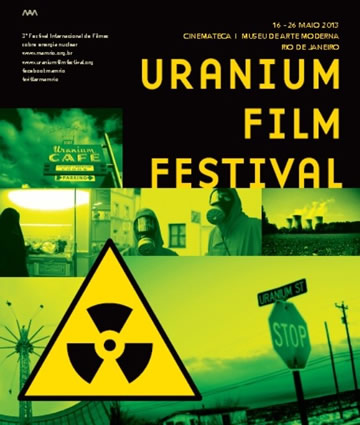
34 YEARS RADIOACTIVE ACCIDENT OF GOIÂNIA FREE ONLINE SCREENING SEPT. 13-19(LINK IS EXTERNAL)
The International Uranium Film Festival in Rio de Janeiro remembers „Brazil’s Chernobyl“, the worst radiological accident in Latin America that took place in September 1987 in the city of Goiânia in central Brazil. From September 13th to 19th, 2021, the festival will show online and free of charge eight documentaries and movies about this accident caused by the release of highly radioactive Cesium-137. An online meeting with one of the surviving victims, Odesson Alves Ferreira, three filmmakers from Goiânia and producer Laura Pires from Bahia marks the opening of this virtual film event that is supported by the Cinematheque of Rio’s Modern Art Museum (MAM Rio).
34 years ago, on September 13, 1987, two young men in search of junk entered the unsecured ruins of the Goiano Radiation Therapy Institute, a former cancer treatment clinic, in the city of Goiânia. They found an abandoned radiation therapy unit with a heavy lead capsule that contained 19 grams of cesium-137. Without knowing the risks of radioactivity or even the name “radioactive”, they took the capsule, dragged it home in a wheelbarrow and sold it to a scrap dealer six days later. The curious scrap dealer breaks open the capsule and discovers the white crystal powder that glows bluish in the dark, cesium-137 chloride – the death glow! It was not until September 29, when dozens of sick people with strange symptoms were already filling the hospitals in Goiânia, that the nuclear authorities became aware of the radioactive accident. At that time the cesium-137-crystals were already spread unknowingly widely over the quarter, hundreds of people became contaminated and thousands were unknowingly exposed to gamma rays. The authorities recognized officially only four deaths caused by radiation. But surveys by unions and surviver associations indicate at least 66 deaths and around 1,400 contaminated victims.
Just 19 grams of cesium-137 not only caused endless suffering to the victims, but also generated in Goiânia more than 6,000 tons of radioactive waste that is dangerous for over 200 years and is stored today in the radioactive waste repository of Abadia de Goiás, a suburb just a few miles outside of the City. Cesium-137 is a highly radioactive and unnatural nuclide with a half-life of 30 years. It is a fission product of uranium-235 and is created by the explosion of atomic bombs or in nuclear power plants as radioactive waste. Instead of storing it, cesium-137 was sold for decades around the globe to irradiate cancer cells. The radiation source of the Goiânia accident was thought to have been made in the U.S. at Oak Ridge National Laboratory. (Top photo: Street 57, Number 60 was in September 1987 one of the two most radioactive places in Goiânia city.)
PROGRAM
September 13th, Monday, 4pm / Opening Live: To not forget An online meeting with one of the victims of cesium-137, former long-standing president of the Association of Cesium Victims of Goiânia (AVCésio) Odesson Alves Ferreira (photo), the filmmakers Angelo Lima, Benedito Ferreira and Michael Valim from Goiânia and Bahian producer Laura Pires. Moderation: Márcia Gomes de Oliveira. (Live in Portuguese on https://www.youtube.com/watch?v=WysMZbmfkzw(link is external)
September 13 -19 / 7 Days 24 Fours Free Online Screening AMARELINHA (HOPSCOTCH)…………………. https://uraniumfilmfestival.org/en/to-not-forget
Oblivion and 9 Other Best Dystopian Films About Nuclear War
Oblivion & 9 Other Best Dystopian Films About Nuclear War
Whether they show the build-up, detonation, or aftermath of a nuclear war, these movies portray those disasters better than others. Screen Rant BY TRICIA MAWIRE, 1 Sept 21, Nothing is more thrilling and simultaneously terrifying like a film about nuclear war. From the build-up to the detonation and aftermath of the attack, every minute is an emotional experience using fiction to show the grim reality of such a disaster. Although not all these movies show a post-apocalyptic dystopian world, those that do paint quite a picture of what life would be like when disaster strikes.
……On The Beach (1959)……………… . With the central theme being the end of the world, there are no happy endings in this one, even for the romance storyline which has a tragic ending.
Dr. Strangelove (1964)………. As one of Stanley Kubrick’s best productions, the film combines humor and the doom and gloom of nuclear warfare to create a feeling of comic dread throughout its run. ……..
Testament (1983)…………. Testament is an emotionally devastating film with an accurate depiction of the fallout of a nuclear war. The factual accuracy of the impact and effects of such a disaster are haunting, leaving a heartwrenching image in the minds of all who watch the movie.
Special Bulletin (1983)………. a group of terrorists threatens to detonate a homemade nuclear device if the U.S. government doesn’t agree to hand over the triggers for their nuclear weapons.
The Day After (1983)……… depicts ordinary people living their lives, the terrifying build-up to the disaster, and the aftermath of the nuclear attack. This approach shows the audience how easily an ordinary day can turn tragic within seconds.
Threads (1984)……….. struggles to survive the post-apocalyptic world where food has become the only thing of value and the cause of many fights…… Most dystopian movies about nuclear war have a grim tone, but Threads takes it a notch higher. It shows the horrifying reality of a nuclear war, highlighting the message that no one wins when it comes to such a tragedy. From the beginning right until the heartbreaking end, Threads is unrelentingly dreadful.
When The Wind Blows (1986)……..Despite the animated nature of the film, it captures the couple’s emotions throughout the attack in a way that’s touching and relatable……Miracle Mile (1988)………. mainly focuses on the leading moments before the attack, capturing Harry’s panic and the doubts of the unconfirmed attack he keeps warning others about….
The Divide (2011) ………. an interesting take on a post-apocalyptic world that captures the sentiment “survival of the fittest” in a brutal way. It holds the audience’s attention but is one of those creepy movies fans wouldn’t watch twice.
Oblivion (2013)…… The post-apocalyptic action flick paints a gruesome picture of a war-torn planet…. https://screenrant.com/oblivion-best-dystopian-films-about-nuclear-war/
Media avoid the truth about nuclear wastes

the hidden message:
scientists and engineers are still bewildered by a mountain of nuclear waste 80-years high. Nobody wants it in their neighborhood. There’s no place to put it
Limp logic of safe nuclear waste storage, https://www.miragenews.com/limp-logic-of-safe-nuclear-waste-storage-621868/ 30 Aug 21, Enriching uranium requires fossil fuels that leave coal ash and/or fracking waste, both of which degrade the quality of soil, water and air. There are tons of containers, gloves, booties, and hazmat suits, etc. that must be discarded as radioactive waste in order to fabricate, use, transport and store the spent fuel generated in service to tens of thousands of electricty-users.
Author, Jan Boudart, Nuclear Energy Information Service1.
The August 19, 2021 Mirage News article “ORNL receives spent fuel canister to support long-term storage studies” has prompted us2 to question the superficiality of ORNL’s analogy to the volume of spent nuclear fuel.
Characterizing spent fuel on less than half of 1000th part of its yearly volume is to ignore, not only the whole story of mining, transporting, milling, transporting, processing, transporting, refueling reactor vessels, storing spent fuel, then more transporting. Spent fuel volume is but a trivial part of how the nuclear fuel cycle impacts humans, animals, plants and the geological earth.
And acres of concrete, whose manufacture is a strong producer of greenhouse gasses, are required for temporary entombment. Fossil fuels are used in trucks and trains to haul radioactive fuel, both new and spent, on water and land. And there are hospital gowns, syringes, and multiple wastes, along with the energy to light, heat and build sophisticated diagnostic and treatment systems to deal with the cancer-stricken victims of the whole fuel cycle of which spent fuel is a small, but important, part.
Relevant metrics easily expose the disconnect between reality and the unsubstantiated and spurious analogy in the article. For example, (i) the hundreds of thousands of tons which will further degrade our fragile roads, rail and bridges in a nuclear-waste transport scheme3, (ii) the hundreds of billions which have been spent worldwide over 70 years trying to find the ever-vanishing ‘solution’ to nuclear waste, and (iii) the hundreds of thousands of years (a million according to the US National Academies) in which spent fuel will remain hazardous and toxic.
Also, a perennial chortle among anti-nuclear activists is the fact that no insurance company in its right mind would consider taking on the risk posed by a nuclear power plant or its waste. In case of an accident, taxpayers will foot most of the bill, per The Price-Anderson Act of 19574. If spent fuel is such a no-big-deal to manage, let the nuclear industry assume full responsibility for paying for and insuring it.
Another egregious statement from the ORNL spokesperson: “The used fuel… can be retrieved at any time for reprocessing and reuse.” BUT, “Incredibly, not a single dry storage cask, once loaded, has ever been unloaded in the U.S.”5 And no one has volunteered to risk their life taking spent nuclear fuel out of a canister. To do so in relative safety would require a “hot cell”6, where workers could be protected from “spent” fuel’s deadly radiation — much more fearsome than when it was “new”.
At present, in the U.S. 95 nuclear reactors are functioning, each producing about 2000 Tons of spent nuclear fuel per year. The inventory of High-Level Nuclear Waste, “Spent” fuel, has exceeded 90,000 tons7. Transporting this monstrous load would be dangerous and very expensive8.
Further, the ORNL speaker implied that spent fuel can be “inertly stored”, saying, “The nuclear energy industry is unique among power generation options in that its used fuel is inertly stored in sealed canisters…”. But it is well-known that the spent fuel, itself, is not inert. It is, in fact, thousands of times more radioactive than the new fuel whose fission produced the heat to run the reactor. It costs about 4 million USD for each cask9 and another half million USD to load each one with fuel. “The concrete pad for casks to sit on costs another 1 million USD. A rough estimated cost to move all of the fuel in the United States that has cooled in pools for at least five years could cost 7 billion USD.”10 You tell me why private power companies are required to spend $4,500,000+ per cask to “inertly store” this dangerous material.
Later the article discusses the foils against criticality that are being tried at ORNL. No concern for “critically” would be necessary if the SNF were “inertly stored” as previously claimed.
The fact of the article in question appearing at this stage— when we are 8 decades (counting from 1942) into the Atomic Age — this immediate and present fact — emphasizes the hidden message: scientists and engineers are still bewildered by a mountain of nuclear waste 80-years high. Nobody wants it in their neighborhood. There’s no place to put it…………..
Continue readingMilitary Contractor CACI Says Afghanistan Withdrawal Is Hurting Its Profits. It’s Funding a Pro-War Think Tank.

But this outcry didn’t materialize out of nowhere. Think tank “experts,” whose organizations are financed by the very companies profiting from the war, play a key part.
They are trotted out in front of cameras and quoted in major media outlets, presented as above-the-fray observers. They are well-financed, polished and groomed precisely for moments like these. And the companies financing them get to launder their own objectives through institutions that are seen as respectable, academic and rigorous. It’s a grotesque system that is functioning as it was designed.
Military Contractor CACI Says Afghanistan Withdrawal Is Hurting Its Profits. It’s Funding a Pro-War Think Tank. https://readersupportednews.org/opinion2/277-75/71175-military-contractor-caci-says-afghanistan-withdrawal-is-hurting-its-profits-its-funding-a-pro-war-think-tank
By Sarah Lazare, In These Times
26 August 21
What CACI reveals about the feedback loop between military contractors and think tanks.
n August 12, the military contractor CACI International Inc. told its investors that the U.S. withdrawal from Afghanistan is hurting its profits. The same contractor is also funding a think tank that is concurrently arguing against the withdrawal. This case is worth examining both because it is routine, and because it highlights the venality of our “expert”-military contractor feedback loop, in which private companies use think tanks to rally support for wars they’ll profit from.
The contractor is notorious to those who have followed the scandal of U.S.-led torture in Iraq. CACI International was sued by three Iraqis formerly detained in Abu Ghraib prison who charge that the company’s employees are responsible for directing their torture, including sexual assault and electric shocks. (The suit was brought in 2008 and the case is still ongoing.)
In 2019, CACI International was awarded a nearly $907 million, five-year contract to provide “intelligence operations and analytic support” for the U.S. Army in Afghanistan.
During an August 12 earnings call, CACI International noted repeatedly that President Biden’s withdrawal from the 20-year Afghanistan War harmed the company’s profits. John Mengucci, president and CEO of CACI International, said, “we have about a 2 percent headwind coming into FY 2022 because of Afghanistan.” A “headwind” refers to negative impacts on profits.
Afghanistan was mentioned 16 times throughout the call — either in reference to the dent in profits, or to assure investors that other areas of growth were offsetting the losses. For example, Mengucci said, “We’re seeing positive growth in technology and expect it to continue to outpace expertise growth, collectively offsetting the impact of the Afghanistan drawdown.”
Similar themes were repeated in an April 22 earnings call, where the company lamented the “headwinds” posed by the Afghanistan withdrawal. (Industry and defense publications have picked up on this them, but framed it in the company’s terms, by emphasizing the offsets to its losses.)
Despite CACI International’s clear economic interest in continuing the war, on the August 12 call, company officials were careful not to editorialize about the Biden administration’s decision. The closest they came was a cautious statement from Mengucci: “At least as of today we’ve watched the administration make the decision to completely exit Afghanistan by 9 – 11 and all I can say is they’re executing on that decision.”
But CACI International does not have to broadcast its positions on the war: Instead, it is funding a think tank that has been actively urging the Biden administration not to leave Afghanistan.
CACI International is listed as a “corporate sponsor” of the Institute for Study of War, which describes itself as a “non-partisan, non-profit, public policy research organization.” Dr. Warren Phillips, lead director of CACI International, is on the board of the think tank. (Other funders include General Dynamics and Microsoft.)
When it comes to the U.S. withdrawal from Afghanistan, however, the think tank is extremely partisan. In an August 20 paper, the think tank argued that “Russia, China, Iran, and Turkey are weighing how to take advantage of the United States’ hurried withdrawal.”
Jack Keane, a retired four star general and board member of the Institute for Study of War, meanwhile, has been on a cable news blitz arguing against the U.S. withdrawal from Afghanistan, as reported by Ryan Grim, Sara Sirota, Lee Fang and Rose Adams for The Intercept.
Kimberly Kagan, founder and president of the Institute for the Study of War, told Fox News on August 17 that the U.S. withdrawal could cause Afghanistan to become the “second school of jihadism.” She warned, “It is not clear that the Taliban, which seeks international recognition and legitimacy, is going to want to tolerate or encourage direct attacks on the U.S. from al Qaeda or other extremist groups based in Afghanistan.”
The think tank’s backing from a military contractor was not discussed in these media appearances.
The case of CACI International is not unique. The Intercept notes, “Among the other talking heads who took to cable news segments or op-ed pages without disclosing their defense industry ties were retired Gen. David Petraeus; Rebecca Grant, a former staffer for the Air Force secretary; Richard Haass, who worked as an adviser to then-Secretary of State Colin Powell; and former Secretary of State Condoleezza Rice.”
This cacophony of voices matters because Biden is facing a media uproar over the withdrawal. Pundits and mainstream press outlets that have been ignoring civilian deaths for years are suddenly expressing moral outrage at their hardships now that the war is ending. While there are legitimate concerns about the fate of Afghans as the Taliban seizes control, the vast majority of the firestorm stems from a reflexively pro-war perspective, in favor of the indefinite extension of an occupation that has proven brutal and lethal for civilians. The overwhelming effect is to send the message to Biden, and any future presidents, that they should think twice before withdrawing from a war, lest they have a media revolt on their hands.
But this outcry didn’t materialize out of nowhere. Think tank “experts,” whose organizations are financed by the very companies profiting from the war, play a key part. They are trotted out in front of cameras and quoted in major media outlets, presented as above-the-fray observers. They are well-financed, polished and groomed precisely for moments like these. And the companies financing them get to launder their own objectives through institutions that are seen as respectable, academic and rigorous. It’s a grotesque system that is functioning as it was designed.
In its August 12 call, CACI International simply acknowledged the company’s economic interests out loud.
Corporate Media Politicize WHO Investigation on Covid Origins to Vilify China
Corporate Media Politicize WHO Investigation on Covid Origins to Vilify China, JOSHUA CHO FAIR (10/6/20, 6/28/21) has previously critiqued Western news media’s credulous coverage of evidence-free “lab leak” speculations. One key factor in spreading suspicion that the coronavirus might have escaped from the Wuhan Institute of Virology (WIV) is media’s early and ongoing politicization of the World Health Organization’s investigation into the pandemic’s origins. Much of this politicization weaponizes Orientalist tropes about China being especially, perhaps genetically, untrustworthy—the sort of people who would unleash Covid-19 on the world.
While no new evidence has emerged suggesting that the virus emerged from the WIV, many more Americans now believe it did. A Politico/Harvard poll in July, following an increase of uncritical Western media coverage on the lab leak theory, found that 52% of US adults now believe Covid-19 leaked from a lab, up from 29% in March 2020. This is contrary to the assessment of most scientists, who believe, based on available evidence, that a natural origin for the virus is more likely………… https://fair.org/home/corporate-media-politicize-who-investigation-on-covid-origins-to-vilify-china/
Nuclear energy is anything but clean, despite the media hype
Nuclear energy is anything but clean https://www.theguardian.com/environment/2021/aug/25/nuclear-energy-is-anything-but-clean
The nuclear power industry has successfully rebranded an appallingly toxic energy industry by never mentioning the terrible legacy of nuclear waste, writes Ann Denise Lanes 26 Aug 21 Re your report (Nuclear storage plans for north of England stir up local opposition, 23 August), it is no surprise that ongoing discussions to choose locations for the dumping of nuclear waste are cloaked in secrecy.
Over the last decade, the nuclear power industry has successfully rebranded an appallingly toxic energy industry as “zero carbon” and even “clean” (Zero-carbon electricity outstrips fossil fuels in Britain across 2019, 1 January 2020) by never mentioning the terrible legacy of nuclear waste. Nuclear energy is neither clean nor zero-carbon when you consider its complete fuel cycle, from uranium mining overseas to the energy-intensive production of fuel rods to the management of highly toxic radioactive waste products such as plutonium.
The nuclear lobby has done a very effective PR job in diverting attention away from everything other than the electricity feed into the National Grid. It knows that there is no safe long-term solution for storing nuclear waste – how could you guarantee safety from the most dangerous chemical element on the planet for 24,000 years (the half-life of plutonium)? The last thing this industry wants is an open discussion. It would reopen the debate on nuclear waste that it has, up to now, successfully buried in millions of pounds’ worth of rebranding. Hence the secrecy.
White Man’s Media: Rupert Murdoch and the US Imperium

White Man’s Media: Rupert Murdoch and the US Imperium,
https://www.michaelwest.com.au/white-mans-media-rupert-murdoch-and-the-us-imperium/ By John Menadue|August 24, 2021, Western media, a tool of the political, military and business establishment, have played a part in the killing of millions in Vietnam, Iraq, Afghanistan, Syria and Libya, writes John Menadue. In turn, Australia’s media is a tool of this “US Imperium”. This is the first in White Man’s Media, a series to be published in Menadue’s Pearls and Irritations.
Australia’s media does not just have a problem being dominated by legacy US and UK media. We have a particular problem. Its name is Rupert Murdoch, an American citizen who owns two-thirds of Australia’s metropolitan dailies, a monopoly Pay TV licence in Foxtel, and more.
News Corp was a key supporter of the unmitigated disaster which was the Iraq War. Of the 173 Murdoch papers worldwide only one, the Hobart Mercury, opposed that war, a war sometimes described as ‘the Murdoch War’.
Murdoch told us in 2003, “I think (George W) Bush acted very morally, very correctly. US troops will soon be welcomed as liberators”.
His Foreign Editor on The Australian Greg Sheridan could not contain himself. “The bold eagle of American power is aloft, high above the humble earth. For as it soars and sweeps it sees victory, power and opportunity”.
Sheridan is still in his job. Murdoch prefers loyalty to competence in all those around him, including his family.
Warmongers and profiteers
In wars, Rupert Murdoch and his News Corporation see “victory, power and opportunity” too. Rupert Murdoch himself is still in his job.
Even some of the legacy media apologised for their support of the illegal war in Iraq. But never Rupert Murdoch or, for that matter, former Australian prime minister John Howard.
News Corp in Australia, for well over a decade, has also led the campaign of denial on climate change. This company has become a key part of a US military/business/security complex which has exercised destructive power for generations, and is now demonising China.
As Alex Lo wrote in August, “It has long been known that the Department of Defense in the US and other governments such as the CIA, not only support film and cable production in Hollywood but also actively intervene and manipulate their content”.
And in June, Lo described how a long list of former US security chiefs such as John Brennan and James Clapper joined US media – NBC, MSNBC and CNN.
Australian security heads have been leading the demonisation of China with help from the Five Eyes. But we get a double-whammy when our derivative media draws heavily on US legacy media that in turn is heavily influenced by former US security chiefs with their ‘expert opinions’.
This legacy media frames our view of the world, a view which we accept as almost god-given, a colonial Western media mindset with racist undertones.
We need to break free of that mindset if we are to build a secure future in our region and avoid being drawn into one folly after another by the US Imperium.
This legacy media frames our view of the world, a view which we accept as almost god-given, a colonial Western media mindset with racist undertones.
We need to break free of that mindset if we are to build a secure future in our region and avoid being drawn into one folly after another by the US Imperium.
John was once the top executive for Rupert Murdoch’s News Corporation in Sydney. He has also served as Ambassador to Japan, chief executive of Qantas and the top political adviser to both Malcolm Fraser and Gough Whitlam.
Japanese Nuclear Drama ‘Gift of Fire’ Heads for U.S Theaters
Japanese Nuclear Drama ‘Gift of Fire’ Heads for U.S Theaters Variety, By Patrick Frater 13 Aug 21,
“Gift of Fire,” a fact-based drama film about Japan’s secret nuclear bomb program, will play in U.S. cinemas from November this year. Produced in 8K digital, it opened in Japanese theaters last week, distributed by Aeon and scored a top ten ranking.
Yagira Yuya, the Japanese actor who won the acting prize in Cannes for his role in Koreeda Hirokazu’s “Nobody Knows,” heads the cast. He plays a nuclear scientist who struggles with his conscience while working Japan’s own nuclear weapon effort, a secret program that remained largely unknown until a decade ago.
The film is directed by Kurosaki Hiroshi, whose past work includes multi award-winning “Goldfish” (aka “Hi No Sakana”) and 2011’s “Second Virgin.” It was produced in partnership between Japanese public broadcaster NHK and Los Angeles-based Eleven Arts
Eleven Arts will now handle the U.S. release and has set a launch date of Nov. 12, 2021.
“When I first read the script for Gift of Fire I didn’t know that during WWII, Japan was developing an atomic bomb alongside the rest of the world,” said producer Mori Ko. “Instead of being a grand WWII film, the story focuses on the intimate details of three youthful characters’ lives. They deal with the same struggles as the rest of us, while also taking part in the life-changing scientific developments of the era and a war of epic proportions.”
………… “On one hand, the story reflects the romanticism present when floating on the surface of the ocean and looking up at the starry skies to imagine the vastness of the universe. On the other hand, the story explores the crimes that can be committed in the name of science and discovery,” said writer-director Kurosaki. https://variety.com/2021/film/asia/gift-of-fire-japan-nuclear-drama-yagira-yuya-1235041233/
1 This Month



26 September – International Day for the Total Elimination of Nuclear Weapons


PLEASE OPPOSE HR 8255 AND S.3639 – bills would accelerate satellite deployment, with no environmental review or safeguards – https://ncstd5li.quorum.us/campaign/169331/
To see nuclear-related stories in greater depth and intensity – go to https://nuclearinformation.wordpress.com
-
Archives
- September 2026 (233)
- August 2026 (330)
- July 2026 (355)
- June 2026 (287)
- May 2026 (306)
- April 2026 (356)
- March 2026 (251)
- February 2026 (267)
- January 2026 (308)
- December 2025 (358)
- November 2025 (359)
- October 2025 (375)
-
Categories
- 1
- 1 NUCLEAR ISSUES
- business and costs
- climate change
- culture and arts
- ENERGY
- environment
- health
- history
- indigenous issues
- Legal
- marketing of nuclear
- media
- opposition to nuclear
- PERSONAL STORIES
- politics
- politics international
- Religion and ethics
- safety
- secrets,lies and civil liberties
- spinbuster
- technology
- Uranium
- wastes
- weapons and war
- Women
- 2 WORLD
- ACTION
- AFRICA
- Atrocities
- AUSTRALIA
- Christina's notes
- Christina's themes
- culture and arts
- Events
- Fuk 2022
- Fuk 2023
- Fukushima 2017
- Fukushima 2018
- fukushima 2019
- Fukushima 2020
- Fukushima 2021
- general
- global warming
- Humour (God we need it)
- Nuclear
- RARE EARTHS
- Reference
- resources – print
- Resources -audiovicual
- Weekly Newsletter
- World
- World Nuclear
- YouTube
-
RSS
Entries RSS
Comments RSS
 nuclear-news