Topics in today’s “Nuclear” headlines on Google News
There were 81 headlines about nuclear issues (plus a few about other topics, but using the word ”nuclear in the articles’ heading). 
The majority (38) of the 55 articles about “peaceful ” nuclear reactors, were supporting nuclear power. The top topics by far were favouring the development of nuclear reactors, and – (surprise surprise) of Small Nuclear Reactors. The top reason given – that nuclear power is essential to combat climate change. In not one of the articles was that assumption challenged or questioned in any way. Lesser arguments – nuclear power for space exploration, some comforting stories about solving the wastes, fusion, hydrogen, and safety.
There were 9 ‘neutral’articles , mainly on developing nuclear power, with some on Fukshima and wastes, carefully factual only.
8 articles basically opposed nuclear power, mainly against the development of Small Nuclear Reactors, a couple discussed safety and radiation hazards.
26 articles concerned nuclear weapons, mostly dealing with policies. These are generally written in an informative and neutral style. There was only one that seemed in favour of weapons, strongly opposing the UN Nuclear Ban Treaty. Despite that general neutral style, there is often a subtle undertone that the weapons of Western countries are OK, but those of Russia, China, North Korea are not acceptable.
In the 10 articles deploring nuclear weapons, there was much feeling, individual stories, and a consideration of the human consequences for weapons workers, ”downwinders”, and victims of nuclear bombing.
Google news headline articles on nuclear search topics today
9 Nov 20, There were 88 articles under the search headline ”nuclear” today. Of these, 31 concerned nuclear weapons. Most of these were articles opposing nuclear weapons. A large number also dealt with international politics, and described events and policies in a factual and neutral way. There were 4 that were pro nuclear in that they stated the need for more nuclear weapons, and/or national pride in having them
Of the 47 pieces about commercial nuclear power, only 6 were clearly factual or neutral.

Most (30) were promoting or enthusing about nuclear power, mainly about ”new nuclear”, which usually means ”small” nuclear reactors. Arguments given were – new nukes will be ‘clean’, ‘fight climate change’ economical’ . Also mentioned – fusion, medical use, hydrogen development, space travel.
The 11 anti nuclear articles dealt mostly with new small nuclear reactors, discussed as expensive, and useless against climate change. Also pieces on toxic wastes.
The Public Relations battle for nuclear power in the UK- editors giving it a free ride?
 A secret military agenda. UK defence policy is driving energy policy – with the public kept in the dark, Beyond Nuclear, By David Thorpe, 8 Nov 20 , “…………The PR battle for nuclear
There is a PR battle in the UK media for new nuclear – and now there are two sides to it.
Editors seem to favour giving pro-nuclear writers a clear ride and rarely question their baseless claims that nuclear is zero carbon. This is misguided and not based on empirical data, says Dr Lowry.
If the carbon footprint of the full uranium life cycle is considered – from uranium mining, milling, enrichment (which is highly energy intensive), fuel fabrication, irradiation, radioactive waste conditioning, storage, packaging to final disposal – nuclear power’s CO2 emissions are between 10 to 18 times greater than those from renewable energy technologies, according to a recent study by Mark Jacobson, professor of civil and environmental engineering at Stanford University, California.
Another recent peer-reviewed article in Nature Energy shows that nations installing nuclear power don’t have lower carbon emissions, but those installing lots of renewables do. Moreover, investment in new nuclear “crowds out” investment in renewables.
Renewables therefore offer a more rapid and cost-effective means to address net zero targets. The opportunity cost of nuclear is severely negative. The 2019 version of the World Nuclear Industry Status Report comprehensively demolishes any evidence-based arguments on the utility of nuclear to help address climate change.
But that’s not the real argument. It’s military. At the very least, we deserve to be told………. https://wordpress.com/read/feeds/72759838/posts/3011373103
David Thorpe is author of books such as Solar Technology and One Planet Cities. He also runs online courses such as Post-Graduate Certificate in One Planet Governance. He is based in the UK. https://wordpress.com/read/feeds/72759838/posts/3011373103
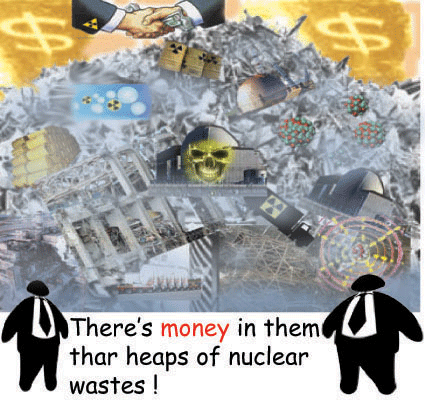
While Canadian authorities fall for “New Small Nuclear” spin, U.S. consortium rips off Canada’s nuclear waste disaster
 U.S. corporations profiting from major Canadian nuclear liability, https://rabble.ca/blogs/bloggers/views-
 expressed/2020/10/us-corporations-profiting-major-canadian-nuclear-liability Ole Hendrickson, October 30, 2020
The nearly 70-year history of the federal crown corporation Atomic Energy of Canada Limited (AECL) has left a $16 billion toxic legacy of shuttered reactors, polluted lakes and groundwater, contaminated soils, and hundreds of thousands of cubic metres of radioactive waste.
AECL’s 2018 annual report estimates its undiscounted waste and decommissioning liability at $15.9 billion as of March 31, 2018. Table 5.7 in Canada’s 2019 public accounts estimates AECL’s environmental liabilities at $1.05 billion and “asset retirement obligations” at $6.6 billion.
This $7.7 billion estimate of AECL’s total nuclear liability is heavily discounted. The accounting firm Deloitte does not recommend discounting for environmental liabilities and asset retirement obligations unless the amount of the liability and the amount and timing of cash payments are “reliably determinable.” As explained in a detailed report, neither is true for AECL’s liability.
Prime Minister Stephen Harper thought that the private sector might do a better job of addressing this massive liability than AECL itself. Just before losing power to the Liberals in the 2015 election, his government contracted an American-controlled consortium (creatively called the “Canadian National Energy Alliance”) to manage federal nuclear facilities and reduce the waste liability quickly and cheaply.
According to the main estimates, AECL’s expenditures grew from $326 million in 2014-15 (before the consortium assumed control) to $491 million in 2015-16, $784 million in 2016-17, $827 million in 2017-18 and $829 million in 2018-19. The 2020-21 main estimates for AECL are $1.2 billion.
AECL hands most of this money over to the consortium, whose current members are Texas-based Fluor and Jacobs, and SNC-Lavalin. AECL retains ownership of the waste. A 2017 special examination report of the Auditor General of Canada to AECL’s board of directors says that “approximately $866 million for contractual expenses was paid or payable by the Corporation in the 2016-17 fiscal year.”
Is this “Government-owned, contractor-operated” (GoCo) arrangement providing value for money?
The GoCo contract was supposed to have been reviewed after an initial six-year period. However, AECL — whose president is an American with past ties to consortium members — extended it to a full 10-year period in April 2020, 18 months before its September 2021 renewal date.
The centrepiece of the consortium’s approach — a million-cubic–metre radioactive waste mound on a hillside draining into the Ottawa River – was revealed in May 2016, shortly after the ink dried on the contract. Neither the public, nor Algonquin peoples on whose unceded territory this facility would be built, were consulted.

Technical problems and public opposition have put the “near surface disposal facility” — to be built at AECL’s Chalk River laboratories — years behind schedule. AECL waste management experts who left when the consortium took over have been highly critical, pointing out that an above-ground mound would not contain and isolate the types of radioactive waste that the consortium planned to put in it.
Chalk River, the focal point of Canadian nuclear research since the late 1940s, is where most of AECL’s radioactive waste legacy is found. But AECL also built reactors at four other sites in Manitoba, Ontario and Quebec. All have been shut down for decades — radioactive hulks, yet to be fully decommissioned.
AECL and its American-led consortium have announced quick and cheap plans for Manitoba and Ontario reactors: fill them up with blast furnace slag and concrete, and abandon them in place. Critics say these proposals are seriously flawed, noting that the International Atomic Energy Agency (IAEA) says that “entombment” should only be considered in the event of a serious reactor accident.
Critics say that these sub-standard schemes would pollute major Canadian waterways and could expose workers and future generations to dangerous radiation levels.
The consortium is trying to salvage its Chalk River mound proposal with a promise to reduce the amount of radiation in the wastes it would house. Less radiation would leak into the Ottawa River.
However, management practices during Chalk River’s early years were poor, accidents were frequent and records were lost in a fire. Trying to separate out lower-activity from higher-activity wastes would involve considerable expense and high worker radiation exposures. And if strict limits on the mound’s radioactivity were adhered to, much of the federal waste liability would likely remain unaddressed.
Management of Canada’s radioactive waste by for-profit corporations, combined with a lack of government oversight, creates risks of delays, excessive radiation exposures to workers and the public, and squandering of tax dollars. Critics of AECL’s GoCo contract are asking the federal government to establish a publicly acceptable strategy for addressing its nuclear liability.
In a mission to Canada in late 2019, IAEA reviewers found virtually “no evidence … of a governmental policy or strategy related to radioactive waste management.” The government agreed to their recommendation that this gap be filled, assigning the task to Natural Resources Canada.
But Natural Resources Minister Seamus O’Regan seems preoccupied with promotion of a new generation of mass-produced, “modular” nuclear reactors. Two consortium members — Fluor and SNC-Lavalin — are heavily invested in their own reactor designs. There are plans to build three new demonstration reactors at Chalk River, and talk of building as many as eight. One proposal has already reached the environmental assessment stage.
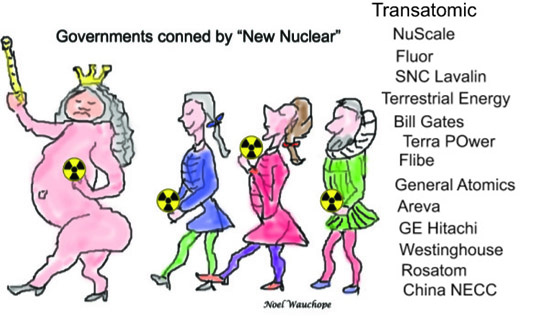
If the Liberal government caves into industry pressure to fund the building of these new reactors — instead of dealing responsibly with its existing waste liability — AECL’s $16 billion radioactive burden on Canadian taxpayers — and risks to workers and the public — will just keep growing.
Ole Hendrickson is a retired forest ecologist and a founding member of the Ottawa River Institute, a non-profit charitable organization based in the Ottawa Valley.
Google headline nuclear articles today – the main topic was the Nuclear Ban Treaty
 26 Oct 20, In the 95 nuclear news items listed as headlines in Google Search today, the most notable recent topic was nuclear weapons, and, significantly, the ratifications of the U.N Treaty on the Prohition of Nuclear Weapons . These now number 50, the required number to bring this Treaty into international law. Generally articles on nuclear weapons were critical of, or opposed to them, with some articles ‘neutral’, simply reporting facts and numbers. A smaller number of articles had the theme of valuing the nuclear weapons industry.
Apart from articles about nuclear weapons and the weapons ban treaty, the majority of articles about the nuclear industry were clearly promotions of that industry. the major theme being that the world ‘needs nuclear power’, especially small nuclear reactors, to provide ‘clean’, climate ‘-friendly’ energy. Another big theme was the development of nuclear fusion. Other articles enthused about space research, nuclear medicine, and safety of ionising radiation.
Roughly half as many articles opposed the nuclear industry. The main themes were waste disposal problems, small reactors costly and useless, and safety issues.
A smaller number again were even-handed or ‘neutral’ articles – the main topic being international diplomacy, then safety concerns, and decommissioning of nuclear stations.
It is not too late for The Guardian to redeem itself, and help Julian Assange
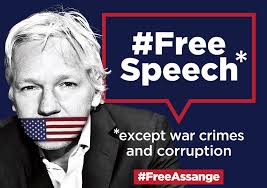 The Guardian’s Silence Let UK Trample on Assange’s Rights in Effective Darkness https://consortiumnews.com/2020/10/21/the-guardians-silence-let-uk-trample-on-assanges-rights-in-effective-darkness/?fbclid=IwAR16w5kNgLGJ3jyFI6QvKZmxJ5tn_LjZcD90a7FOG-ZQ8jaGzUYKlhnRT8M
Jonathan-Cook.net WISE Up, a solidarity group for Julian Assange and whistleblower Chelsea Manning, is due to stage a demonstration outside The Guardian offices on Oct. 22 to protest the paper’s failure to support Assange as the U.S. seeks his extradition in an unprecedented assault on press freedom.
The date chosen for the protest marks the 10th anniversary of The Guardian’s publication of the Iraq war logs, leaked by Manning to Assange and which lie at the heart of the U.S. case to reclassify journalism exposing crimes against humanity as “espionage.”
Here is my full statement, part of which is due to be read out, in support of Assange and castigating The Guardian for its craven failure to speak up in solidarity with its former media partner:
Julian Assange has been hounded out of public life and public view by the U.K. and U.S. governments for the best part of a decade.
Now he languishes in a small, airless cell in Belmarsh high-security prison in London — a victim of arbitrary detention, according to a UN working group, and a victim of psychological torture, according to Nils Melzer, the UN’s expert on torture.
If Judge Vanessa Baraitser, presiding in the Central Criminal Court in London, agrees to extradition, as she gives every appearance of preparing to do, Assange will be the first journalist to face a terrifying new ordeal — a form of extraordinary rendition to the United States for “espionage” — for having the courage to publish documents that exposed U.S. war crimes and crimes against humanity.
The Guardian worked with Assange and WikiLeaks on vitally important documents – now at the heart of the U.S. case against Assange – known as the Afghanistan and Iraq war logs. The latter were published exactly a decade ago today. They were a journalistic coup of global significance, and the paper ought to be profoundly proud of its role in bringing them to public attention.
During Assange’s extradition hearing, however, The Guardian treated the logs and its past association with Assange and WikiLeaks more like a dirty secret it hoped to keep out of sight. Those scoops furnished by Assange and whistleblower Chelsea Manning enriched the paper financially, and bolstered its standing internationally. They also helped to pave its path into the lucrative U.S. market.
Unlike Assange and Manning, The Guardian has suffered no consequences for publishing the logs. Unlike Assange and Manning, the paper has faced no retribution. While it profited, Assange continues to be made an example of — to deter other journalists from contemplating following in his footsteps.
The Guardian owes Assange.
- It owes him a huge debt for allowing it to share in the journalistic glory of WikiLeaks’ revelations.
- It owes him a duty of care as its partner in publishing the logs.
- It owes him its voice loudly denouncing the abuse of a fellow journalist for doing the essence of journalism — holding the powerful to account.
- It owes him and its own staff, and the young journalists who will one day take their place, its muscle in vigorously defending the principle of a strong and free press.
- It owes him, and the rest of us, a clear profession of its outrage as the U.S. conducts an unprecedented assault on free speech, the foundation of a democratic society.
And yet The Guardian has barely raised its voice above a whisper as the noose has tightened around Assange’s — and by extension, our — neck. It has barely bothered to cover the dramatic and deeply disturbing developments of last month’s extradition hearing, or the blatant abuses of legal process overseen by Baraitser.
The Guardian has failed to raise its editorial voice in condemnation either of the patently dishonest U.S. case for extradition or of the undisguised mistreatment of Assange by Britain’s legal and judicial authorities.
The paper’s many columnists ignored the proceedings too, except for those who contributed yet more snide and personal attacks of the kind that have typified The Guardian’s coverage of Assange for many years.
It is not too late for the paper to act in defence of Assange and journalism.
Assange’s rights are being trampled under foot close by The Guardian’s offices in London because the British establishment knows that these abuses are taking place effectively in darkness. It has nothing to fear as long as the media abdicates its responsibility to scrutinize what amounts to the biggest attack on journalism in living memory.
Were The Guardian to shine a light on Assange’s case — as it is morally obligated to do — the pressure would build on other media organizations, not least the BBC, to do their job properly too. The British establishment would finally face a countervailing pressure to the one being exerted so forcefully by the U.S.
The Guardian should have stood up for Assange long ago, when the threats he and investigative journalism faced became unmistakable. It missed that opportunity. But the threats to Assange — and the causes of transparency and accountability he champions — have not gone away. They have only intensified. Assange needs the Guardian’s support more urgently, more desperately than ever before.
Jonathan Cook is a former Guardian journalist (1994-2001) and winner of the Martha Gellhorn Special Prize for Journalism. He is a freelance journalist based in Nazareth. If you appreciate his articles, please consider offering your financial support.
This article is from his blog Jonathan Cook.net.
The attack on journalism – launched with the persecution of Julian Assange

Persecuting Assange Is a Real Blow to Reporting and Human Rights Advocacy’
CounterSpin interview with Chip Gibbons on Assange extradition Fair, 15 Oct 20,
 for the October 9, 2020, episode of CounterSpin. This is a lightly edited transcript.
Janine Jackson: If it were not for a tiny handful of journalists—ShadowProof’s Kevin Gosztola preeminent among them—Americans might be utterly unaware that a London magistrate, for the last month, has been considering nothing less than whether journalists have a right to publish information the US government doesn’t want them to. Not whether outlets can leak classified information, but whether they can publish that information on, as in the case US war crimes and torture and assorted malfeasance to do with, for instance, the war on Afghanistan, which just entered its 19th year, with zero US corporateUS war crimes and torture and assorted malfeasance to do with, for instance, the war on Afghanistan, which just entered its 19th year, with zero US corporate media interest.
Assange’s case, the unprecedented use of the Espionage Act to go after a journalist, has dire implications for all reporters. But this country’s elite press corps have evidently decided they can simply whistle past it, perhaps hoping that if and when the state comes after them, they’ll make a more sympathetic victim.
Joining us now to discuss the case is Chip Gibbons. He’s policy director at Defending Rights & Dissent. He joins us now by phone from Washington, DC………..
CG: Sure. So the US has indicted Julian Assange with 17 counts under the Espionage Act, as well as a count under the Computer Fraud and Abuse Act.
Assange is not a US person; he’s an Australian national. He was inside the Ecuadorian embassy for a number of years, as Ecuador had granted him asylum, and the UK had refused to basically recognize that and let him leave the country, so he was de facto imprisoned inside the embassy. And after the indictment the US issued, the new government of Ecuador—which is much less sympathetic to Assange than the previous Correa government—let the US come in the embassy and seize him.
And the US is seeking Assange’s extradition to the US from the UK. I guess it’s, probably, technically a hearing, but Kevin’s point was that it’s more like what we would think of as a trial, in that there’s different witnesses, there’s expert testimony, there’s different legal arguments at stake.
The defense, the witness portion of it, has closed; it ended last week. And there’s going to be closing arguments submitted in writing, and then the judge will render a decision, and that decision will be appealable by either side. So regardless of the outcome, we can expect appeals. So it does very closely mirror what we would think of more like a trial than a hearing in the US court context.
It’s important to really understand what’s at stake with Assange’s extradition. He is the first person ever indicted by the US government under the Espionage Act for publishing truthful information.
The US government has considered indicting journalists before: They considered indicting Seymour Hersh, a very famous investigative reporter. They considered indicting James Bamford, because he had the audacity to try to write a book on the National Security Agency. But they’ve never done that.
And Obama’s administration looked at the idea of indicting Assange and said, “No, this would violate the First Amendment, and it would open the door to all kinds of other bad things.” But the Trump administration clearly doesn’t have those qualms……..
It is very interesting to see how this plays out in a US court in the current environment. If whoever—Trump or Biden, whoever is president, when this finally comes to the US—actually pursues this, and they actually are allowing the persecution of journalists, that’s going to be a really dark, dark assault on free expression rights.
And it’s worth remembering—and Julian Assange is clearly very reviled in the corporate media and the political establishment right now—but the information he leaked came from Chelsea Manning, it dealt with US war crimes; and he worked with the New York Times, the Guardian, Der Spiegel, Le Monde, Al Jazeera, to publish this information. So if he can go to jail for publishing this, why can’t the New York Times? And is that a door anyone wants to open? There is a big press freedom angle here.
I also want to talk about the facts, though: What did Julian Assange publish, and why did it matter? ………..
Julian Assange is accused of publishing information about war crimes, about human rights abuses and about abuses of power, that have been tremendously important, not just for the public’s right to know, but also have made a real difference in advocacy around those issues. People were able to go and get justice for victims of rendition, or able to go and get court rulings in other countries about US drone strikes, because of this information being in the public domain. So attacking Assange, persecuting Assange, disappearing him into a supermax prison, this is a real blow to reporting and human rights advocacy. ………
JJ: Right. And, finally, the journalists who are holding their nose right now on covering it aren’t offering to give back the awards that they won based on reporting relying on WikiLeaks revelations. And James Risen had an op-ed in the New York Times a while back, in which he was talking about Glenn Greenwald, but also about Julian Assange, and he said that he thought that governments—he was talking about Bolsonaro in Brazil, as well as Donald Trump—that they’re trying out these anti-press measures and, he said, they “seem to have decided to experiment with such draconian anti- press tactics by trying them out first on aggressive and disagreeable figures.”………. https://fair.org/home/persecuting-assange-is-a-real-blow-to-reporting-and-human-rights-advocacy/
Pro nuclear bias in Google headline articles
 On the Google headline list today – there were 95 headings for ”nuclear”. Leaving aside the 22 articles about weapons, there were 13 that were really neutral – no opinion expressed or implied.
- nuclear power portrayed as clean and essential to combat climate change, necessary for national development.
- new technology, especially small nuclear reactors as clean, necessary, economic.
- nuclear fusion power coming along
- other issues – safety, radiation safe, medical value, education, thorium and other new fuel..
- nuclear ineffective against climate change, renewables effective
- nuclear expensive, poor national option.
- safety issues.
Assange extradition case could esrablish a dangerous legal precedent
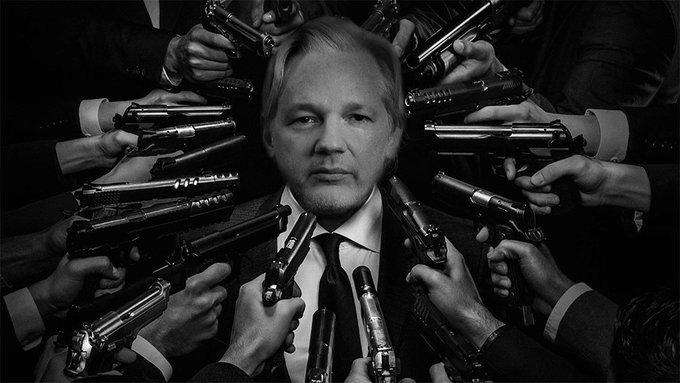 Crumbling Case Against Assange Shows Weakness of “Hacking” Charges Related to Whistleblowing
The charge against Assange is about establishing legal precedent to charge publishers with conspiring with their sources, something that so far the U.S. government has failed to do because of the First Amendment.
Five years later, in 2018, the Trump Administration indicted Assange anyway. But, rather than charging him with espionage for publishing classified information, they charged him with a computer crime, later adding 17 counts of espionage in a superseding May 2019 indictment.
The computer charges claimed that, in 2010, Assange conspired with his source, Chelsea Manning, to crack an account on a Windows computer in her military base, and that the “primary purpose of the conspiracy was to facilitate Manning’s acquisition and transmission of classified information.” The account enabled internet file transfers using a protocol known as FTP.
New testimony from the third week of Assange’s extradition trial makes it increasingly clear that this hacking charge is incredibly flimsy. The alleged hacking not only didn’t happen, according to expert testimony at Manning’s court martial hearing in 2013 and again at Assange’s extradition trial last week, but it also couldn’t have happened.
The new testimony, reported earlier this week by investigative news site Shadowproof, also shows that Manning already had authorized access to, and the ability to exfiltrate, all of the documents that she was accused of leaking — without receiving any technical help from WikiLeaks. …….
the charge is not actually about hacking — it’s about establishing legal precedent to charge publishers with conspiring with their sources, something that so far the U.S. government has failed to do because of the First Amendment………
Whether or not you believe Assange is a journalist is beside the point. The New York Times just published groundbreaking revelations from two decades of Donald Trump’s taxes showing obscene tax avoidance, massive fraud, and hundreds of millions of dollars of debt.
Trump would like nothing more than to charge the New York Times itself, and individual journalists that reported that story, with felonies for conspiring with their source. This is why the precedent in Assange’s case is so important: If Assange loses, the Justice Department will have established new legal tactics with which to go after publishers for conspiring with their sources. https://portside.org/2020-10-10/crumbling-case-against-assange-shows-weakness-hacking-charges-related-whistleblowing
World press freedom endangered, if UK extradites Julian Assange to America
The
|
Assange Faces Extradition for Exposing US War Crimes, BY Marjorie Cohn, Truthout, October 11, 2020 Three weeks of testimony in Julian Assange’s extradition hearing in London underscored WikiLeaks’s extraordinary revelation of U.S. war crimes in Iraq, Afghanistan and Guantánamo Bay. But the Trump administration is seeking to extradite Assange to the United States to stand trial for charges under the Espionage Act that could cause him to spend 175 years in prison. Assange founded WikiLeaks during the Bush administration’s “war on terror,” which was used as a pretext to start two illegal wars and carry out a widespread program of torture and abuse of prisoners at Guantánamo and the CIA black sites. On October 8, 2011, Assange told a Stop the War Coalition rally in London’s Trafalgar Square, “If wars can be started by lies, peace can be started by truth.” In 2010 and 2011, WikiLeaks published classified material that Army intelligence analyst Chelsea Manning had provided to the organization. Manning was prosecuted, convicted and sentenced to 35 years in prison for leaking the documents. As he left office, Barack Obama commuted her sentence to the seven years she had already served. That commutation provoked “tremendous anger” in the Trump administration and drew Trump’s attention to Assange, Eric Lewis testified. Lewis, chairman of the board of Reprieve U.S. and lawyer for Guantánamo and Afghan detainees, called this “a politically motivated prosecution.” The files that WikiLeaks published contained 90,000 reports about the war in Afghanistan, including the Afghan War Logs, which documented a greater number of civilian casualties by coalition forces than the U.S. military had reported. In addition, WikiLeaks published nearly 400,000 field reports about the Iraq War, more than 15,000 unreported deaths of Iraqi civilians, and the systematic murder, torture and rape by the Iraqi army and authorities that were ignored by U.S. forces. WikiLeaks also published the Guantánamo Files, 779 secret reports constituting evidence of the U.S. government’s abuse of approximately 800 men and boys, ages 14 to 89. That abuse violated the Geneva Conventions and the Convention Against Torture and Other Cruel, Inhuman or Degrading Treatment or Punishment. Perhaps the most notorious release by WikiLeaks was the 2007 “Collateral Murder” video, which depicts a U.S. Army Apache helicopter target and fire on unarmed civilians in Baghdad. At least 18 civilians were killed, including two Reuters reporters and a man who came to rescue the wounded. Two children were injured. A U.S. Army tank drove over one of the bodies, cutting it in half. The video contained evidence of three separate war crimes prohibited by the Geneva Conventions and the U.S. Army Field Manual. As they are firing on the civilians, U.S. gunmen can be heard saying, “Look at those dead bastards.” In his written testimony, investigative journalist Nicky Hager drew a parallel between the Collateral Murder video and the television image of George Floyd screaming “I can’t breathe.” Assange Cannot Be Extradited for a Political OffenseThe 2003 U.S.-U.K. Extradition Treaty forbids extradition for a political offense. Although the treaty doesn’t define “political offense,” it generally includes espionage, treason, sedition and crimes against state power. Trump is asking the U.K. to extradite Assange for exposing war crimes. This is a classic political offense. Assange is charged under the Espionage Act and espionage constitutes a political offense as well……….. Assange’s Prosecution Violates Freedom of PressWhile the Obama administration declined to file criminal charges against Assange for fear of setting a dangerous precedent, Team Trump demonstrated no such forbearance. By charging Assange under the Espionage Act, Trump is making him a poster boy for its full court press against the media, which he calls “the enemy of the people.” Assange’s prosecution would send an ominous message to all journalists: report the unvarnished truth at your peril. No media outlet or journalist has ever been prosecuted under the Espionage Act for publishing truthful information, which is protected First Amendment activity. Journalists are permitted to publish material that was illegally obtained by a third person and is a matter of public concern. The U.S. government has never prosecuted a journalist or newspaper for publishing classified information, an essential tool of journalism. Information-gathering, reporting and disclosure fit the classic definition of activity protected by the First Amendment’s guarantee of freedom of the press. There is no distinction between what WikiLeaks did and what The New York Times, Der Spiegel, Le Monde, El País and The Guardian did as well. They all published articles based on documents WikiLeaks released. This is the reason Obama administration — which prosecuted an enormous number of whistleblowers — considered, but refrained from, indicting Assange. ……… WikiLeaks Didn’t Endanger Informants and Saved LivesAlthough the U.S. government claims that Assange endangered informants named in the published documents, John Goetz, an investigative reporter who worked for Germany’s Der Spiegel, testified that Assange took pains to ensure that the names of U.S. informants in Iraq and Afghanistan were redacted to protect their identities. …….. Moreover, WikiLeaks’s revelations actually saved lives. After WikiLeaks published evidence of Iraqi torture centers the U.S. had established, the Iraqi government refused Obama’s request to extend immunity to U.S. soldiers who commit criminal and civil offenses there. As a result, Obama had to withdraw U.S. troops from Iraq. WikiLeaks also revealed evidence of wrongdoing by other countries besides the United States. The organization uncovered Russian surveillance, published exposés of Bashar al-Assad in Syria, and some say WikiLeaks’s exposure of corruption in Tunisia and torture in Egypt helped catalyze the Arab Spring………… Assange’s Prosecution Will Chill JournalismOstensibly to get around allegations that it is prosecuting Assange for conducting journalism, the Trump administration is trying to paint him as a hacker by accusing him of conspiring with Manning to break into a government computer to steal government documents, in violation of the Computer Fraud and Abuse Act. But, as Patrick Eller, a digital forensic expert, testified, the attempted cracking of the password hash was not technologically possible in 2010, when the conversation between Assange and Manning occurred. Even if it were feasible, the purpose would not have been to conceal Manning’s identity and it would not have given Manning any increased access to government databases. The prosecution of Assange would set a disturbing example for journalists and media outlets that publish information critical of the government. Team Trump singled out Assange to deter journalists from publishing material that criticizes U.S. policy. If Assange is extradited to the United States and convicted of the charges against him, it would chill journalists from reporting the facts for fear they could be indicted under the Espionage Act………. When she set the November 16 date for the defense to submit closing arguments, Judge Vanessa Baraitser asked the defense how the U.S. presidential election would affect its case and declared that her decision on extradition would come after that election, stating, “That’s one of the factors going into my decision.” Kristinn Hrafnsson, editor-in-chief of WikiLeaks, said that the judge “acknowledged what has been clear since even before the first indictment against Julian Assange was unsealed — that this is a politically motivated prosecution.” Baraitser, who has granted extradition in 96 percent of the cases that have come before her, plans to issue her ruling on January 4. If she grants extradition, there will be several levels of appeals, including to the European Court of Human Rights. The stakes could not be higher. https://truthout.org/articles/assange-faces-extradition-for-exposing-us-war-crimes/?eType=EmailBlastContent&eId=614ce999-9844-4d61-a600-169db0c99052 |
Murdoch media monopoly – an ‘arrogant cancer on our democracy’
|
The warning comes as former prime minister Kevin Rudd called for a royal commission into media concentration on Saturday, launching a petition to Parliament that amassed thousands of signatures within hours of going live. Australia’s media landscape is dominated by two players – Nine Entertainment, which owns the The Age and The Sydney Morning Herald mastheads among others, and News Corp, owned by former Australian Rupert Murdoch, which controls between 60 and 70 per cent of the metropolitan market. Mr Rudd decried the sheer concentration of the Murdoch empire, and pointed to News Corp mastheads’ support for the Liberal Party in the past 18 elections. Murdoch has become a cancer, an arrogant cancer, on our democracy,” Mr Rudd said. “I’m calling on the Parliament to establish a royal commission into the abuse of media monopoly in Australia, and particularly by the Murdoch media, to make recommendations to maximise media diversity ownership for the future lifeblood of our democratic system.” Mr Rudd has had a long-running feud with News Corp, which used its mastheads to hound him during his tenure as prime minister. A petition to Parliament is essentially a request for action, but it does not mean the sitting government has to implement its requests…….. Mr Murdoch’s influential newspapers and television stations have been widely criticised for spreading misinformation about climate change during Australia’s out-of-control bushfires. The Australian has repeatedly argued that this year’s fires are no worse than those of the past – a claim that scientists have dismissed as untrue…….. “We see story after story in the Murdoch papers saying there is no such thing as climate change, then that arsonists were responsible. “There’s never any apology or correcting the record.” News Corp has also been pursuing Victorian Premier Daniel Andrews over the issue of the state’s coronavirus lockdowns, she said. “Every story in The Australian is about ‘Dictator Dan’, it would be like the NZ publications going after ‘General Jacinda’, but there the coverage has been more considered,” Dr Price said. Her dream royal commission on media ownership would also focus on tabloid commentators and the ways in which they target and bully individuals they dislike. “I want a royal commission into the stream of columnists who should have to make amends for their fact-less columns,” Dr Price said………. Dr Muller said the Murdoch influence was not just apparent in Australia. “If you look at the two democracies in the most trouble, the UK and the US, in both the Murdoch empire is dominant and has been an active player in preferring right-wing governments,” he said. “When you have power like that which is not accountable you impair your democracy.”…….. https://thenewdaily.com.au/news/politics/2020/10/11/kevin-rudd-murdoch-royal-commission/ |

Climate misinformation advertisements on Facebook, seen by millions

Climate denial ads on Facebook seen by millions, report finds
The ads included calling climate change a hoax and were paid for by conservative US groups, Guardian, Damian Carrington 9 Oct 20, Adverts on Facebook denying the reality of the climate crisis or the need for action were viewed at least 8 million times in the US in the first half of 2020, a thinktank has found.The 51 climate disinformation ads identified included ones stating that climate change is a hoax and that fossil fuels are not an existential threat. The ads were paid for by conservative groups whose sources of funding are opaque, according to a report by InfluenceMap.
Last month Facebook said it was “committed to tackling climate misinformation” as it announced a climate science information centre. It said: “Climate change is real. The science is unambiguous and the need to act grows more urgent by the day.”Facebook uses factcheckers and bans false advertising but also says this process “is not meant to interfere with individual expression, opinions and debate”. Some of the ads were still running on 1 October. The ads cost just $42,000 to run and appear to be highly targeted, with men over the age of 55 in rural US states most likely to see them.
Warren and other senators wrote to Facebook in July calling on it to close the loopholes.
Promises, promises — the media keeps buying the tired old nuclear spin marketing small reactors

Promises, promises — Beyond Nuclear International– Sometimes it’s “Promises promises”. On other days it’s “Another one bites the dust”.
Nuclear power is failing. So why does news coverage suggest the opposite?
By Linda Pentz Gunter 5 Oct 20, Sometimes it’s “Promises promises”. On other days it’s “Another one bites the dust”………
the unavoidable story, no matter what myths the pro-nuclear propagandists try to spin. Reality has an annoying habit of grabbing the headlines. And right now, those read:
“Fresh delays at EDF’s Flamanville 3”
“Scottish nuclear power station to shut down early after reactor problems”
“Hitachi ‘withdraws’ from £20bn Wylfa project”
“Olkiluoto-3 nuclear power plant 11 months behind latest schedule”
“Nuclear reactor in France shut down over drought”
“Exelon vows to shut down Byron, Dresden nuclear plants”
And so on.
However, despite this breaking news, you have to sort through a lot of aspirational chaff to find these headlines. The majority of articles about nuclear power are still centered around a rosy future as a climate-busting, jobs-providing cornerstone of any energy policy.
And the majority of politicians in countries where nuclear power still holds sway continue to support it. Why do we let them? Because they think we want them to. As linguistic and messaging guru, George Lakoff, so often repeats: “Voters don’t vote their self-interest. They vote their values.”
So when a nuclear company, or a politician, trumpets instant, well-paying jobs, voters line up to support it too. No matter that nuclear jobs are not likely to be instant, safe or long-lasting, will destroy the environment and do nothing for climate change — and even, in the case of promised new nuclear plants like Summer in South Carolina or Wylfa-B in Wales, may never materialize at all. A boost to the local economy is a good soundbite. Why look behind the arras, only to find nothing there?
But when the media looks behind the nuclear arras they find small modular reactors, micro reactors, “new generation” reactors, and the perpetual promise of fusion. And they interpret this as news, even though none of these reactor designs are new and fusion has been decades away for, well, decades.
These “new” nuclear developments are also often reported on as if they are actually happening. Such overstatements are routinely exposed in the annual World Industry Status Report, (a veritable Bible of empirical data, with the 2020 edition just released last week), which looks into the substance of such breaking news and finds it is almost always aspirational. Take a closer look and it is all about plans, not reality.
The same with alleged turncoats. The media love them.
So we get Zion Lights, a refugee from Extinction Rebellion UK, who is getting plenty of ink and headlines for her new found pro-nuclear delusions. She has positioned herself as an ex-co-leader of XR, a false claim the movement has corrected in a thorough takedown of Lights and her boss, Michael Shellenberger, which we published last week………. https://wordpress.com/read/feeds/72759838/posts/2949326488more https://wordpress.com/read/feeds/72759838/posts/2949326488
Nuclear power and the mainstream media – a convenient advertising platform?
Google headlines on ”nuclear” today, Noel Wauchope 5 October 20, Google headlines give you some idea on what the media are saying about nuclear issues. If you look up Google News right now ( 6 pm AEST 5 October 20) – you get a total of 93 headlines.
I went through these 93 articles, and found that 54 of them were clearly nuclear promotion articles. 19 were anti nuclear, or critical of nuclear technology, and 20 were neutral – in the sense that they reported events and facts, without opinion or comment.
The media reflects society, in that they separate issues about nuclear weapons, from issues about nuclear power. It looks as if nuclear weapons get a bad press. That’s OK.
But when it comes to nuclear power, it’s a different story: by and large, it looks as if the mainstream media is happy to function pretty much as an advertising platform for the nuclear industry.
In the 54 articles approving of, or supporting nuclear power , these were the themes:
The dominant theme in 20 articles was ‘New nuclear”- especially small nuclear reactors, depicted as essential to combat climate change -clean, sustainable, future depends on them, should be subsidised. Sometimes portrayed as in tandem with renewable energy, or transitional to renewable energy, sometimes subtly or clearly disparaging renewable energy.
Another theme was nuclear fusion, with 9 enthusiastic articles.
6 countries were described in positive terms as going ahead with nuclear power. Other pro nuclear articles claimed – that it’s necessary for the economy and jobs, that ionising radiation is not really dangerous. Claim about ”diamond batteries” from nuclear wastes. Positive stories about fixing corrosion in nuclear reactors, and about robots solving nuclear waste problems. One article enthused about the benefits of nuclear power for women.There were a couple of articles positive about nuclear weapons – had a style of boasting about their development for the countries concerned .
For anti-nuclear articles, well, themes of nuclear disarmament were prominent. Four articles were about costs, 2 articles about Fukushima, 2 criticising small nuclear reactors, Articles warned on Saudi Arabia getting nuclear power, on China’s development. One article refuted the ”diamond battery”plan for nuclear wastes.
Media avoids covering the Assange extradition – despite it being the media “trial of the century”
Julian Assange: Press Shows Little Interest in Media ‘Trial of Century’ https://fair.org/home/julian-assange-press-shows-little-interest-in-media-trial-of-century/, ALAN MACLEOD 25 Sept 20,
Labeled the media “trial of the century,” WikiLeaks founder Julian Assange’s extradition hearing is currently taking place in London—although you might not have heard if you’re relying solely on corporate media for news. If extradited, Assange faces 175 years in a Colorado supermax prison, often described as a “black site” on US soil.
The United States government is asking Britain to send the Australian publisher to the US to face charges under the 1917 Espionage Act. He is accused of aiding and encouraging Chelsea Manning to hack a US government computer in order to publish hundreds of thousands of documents detailing American war crimes, particularly in Afghanistan and Iraq. The extradition, widely viewed as politically motivated, has profound consequences for journalists worldwide, as the ruling could effectively criminalize the possession of leaked documents, which are an indispensable part of investigative reporting.
WikiLeaks has entered into partnership with five high-profile outlets around the world: the New York Times, Guardian (UK), Le Monde (France), Der Spiegel (Germany) and El País (Spain). Yet those publications have provided relatively little coverage of the hearing.
Since the hearing began on September 7, the Times, for instance, has published only two bland news articles (9/7/20, 9/16/20)—one of them purely about the technical difficulties in the courtroom—along with a short rehosted AP video (9/7/20). There have been no editorials and no commentary on what the case means for journalism. The Times also appears to be distancing itself from Assange, with neither article noting that it was one of WikiLeaks’ five major partners in leaking information that became known as the CableGate scandal.
The Guardian, whose headquarters are less than two miles from the Old Bailey courthouse where Assange’s hearing is being held, fared slightly better in terms of quantity, publishing eight articles since September 7.However, perhaps the most notable content came from columnist Hadley Freedman (9/9/20).
When asked in an advice article: “We live in a time of so much insecurity. But is there anything we can expect from this increasingly ominous-looking winter with any certainty?” she went on a bizarre tangential rant ridiculing the idea that Assange’s trial could possibly be “politicized,” also crassly brushing off the idea that his young children would never see their father again, and never answering anything like the question she was asked. Holding people to account “for a mess they could have avoided,” she notes, “is not ‘weaponizing’ anything — it is just asking them to do their jobs properly.” She also claimed that believing Assange’s trial was politicized was as ridiculous as thinking antisemitism claims were cynically weaponized against Labour leader Jeremy Corbyn, which, she meant to suggest, was a preposterous idea. This was not an off-the-cuff remark transcribed and published, but a written piece that somehow made it past at least one editor.
Like the Times, the Guardian appeared to be hoping to let people forget the fact it built its worldwide brand off its partnership with WikiLeaks; it was only mentioned in a forthright op-ed by former Brazilian president Lula da Silva (9/21/20), an outlier piece.
The Guardian should be taking a particularly keen role in the affair, seeing that two of its journalists are alleged by WikiLeaks to have recklessly and knowingly disclosed the password to an encrypted file containing a quarter-million unredacted WikiLeaks documents, allowing anyone—including every security agency in the world—to see an unredacted iteration of the leak. In 2018, the Guardian also falsely reported that Trump campaign chief Paul Manafort had conducted a meeting with Assange and unnamed “Russians” at the Ecuadorian embassy (FAIR.org, 12/3/18). And, as former employee Jonathan Cook noted, the newspaper is continually being cited by the prosecution inside the courtroom.
There were only two articles in the English or French versions of Le Monde (9/7/20, 9/18/20) and only one in either of Der Spiegel’s English or German websites (9/7/20), although the German paper did at least acknowledge its own partnership with Assange. There was no coverage of the hearings in El País, in English or Spanish, though there was a piece (9/10/20) about the US government thwarting a Spanish investigation into the CIA spying on Assange at the Ecuadorian embassy in London—accompanied by a photo of a protester against his extradition.
The rest of corporate media showed as little interest in covering a defining moment in press freedom. There was nothing at all from CNN. CBS’s two articles (9/7/20, 9/22/20) were copied and pasted from news agencies AP and AFP, respectively. Meanwhile, the entire sum of MSNBC’s coverage amounted to one unclear sentence in a mini news roundup article (9/18/20).
Virtually every relevant human rights and press freedom organization is sounding the alarm about the incendiary precedent this case sets for the media. The Columbia Journalism Review (4/18/19), Human Rights Watch and the Electronic Frontier Foundation note that the government includes in its indictment regular journalistic procedures, such as protecting sources’ names and using encrypted files—meaning that this “hacking” charge could easily be extended to other journalists. Trevor Timm, founder of the Freedom of the Press Foundation, told the court this week that if the US prosecutes Assange, every journalist who has possessed a secret file can be criminalized. Thus, it essentially gives a carte blanche to those in power to prosecute whomever they want, whenever they want, even foreigners living halfway around the world.
The United Nations has condemned his persecution, with Amnesty International describing the case as a “full-scale assault on the right to freedom of expression.” Virtually every story of national significance includes secret or leaked material; they could all be in jeopardy under this new prosecutorial theory.
President Donald Trump has continually fanned the flames, demonizing the media as the “enemy of the people.” Already 26% of the country (including 43% of Republicans) believe the president should have the power to shut down outlets engaging in “bad behavior.” A successful Assange prosecution could be the legal spark for future anti-journalistic actions.
Yet the case has been met with indifference from the corporate press. Even as their house is burning down, media are insisting it is just the Northern Lights.
1 This Month
19 February – VIRTUAL EVENT-Decision Time: AI and Our Nuclear Arsenal
12:45 p.m. Central / 1:45 p.m. Eastern
To see nuclear-related stories in greater depth and intensity – go to https://nuclearinformation.wordpress.com
-
Archives
- February 2026 (161)
- January 2026 (308)
- December 2025 (358)
- November 2025 (359)
- October 2025 (376)
- September 2025 (258)
- August 2025 (319)
- July 2025 (230)
- June 2025 (348)
- May 2025 (261)
- April 2025 (305)
- March 2025 (319)
-
Categories
- 1
- 1 NUCLEAR ISSUES
- business and costs
- climate change
- culture and arts
- ENERGY
- environment
- health
- history
- indigenous issues
- Legal
- marketing of nuclear
- media
- opposition to nuclear
- PERSONAL STORIES
- politics
- politics international
- Religion and ethics
- safety
- secrets,lies and civil liberties
- spinbuster
- technology
- Uranium
- wastes
- weapons and war
- Women
- 2 WORLD
- ACTION
- AFRICA
- Atrocities
- AUSTRALIA
- Christina's notes
- Christina's themes
- culture and arts
- Events
- Fuk 2022
- Fuk 2023
- Fukushima 2017
- Fukushima 2018
- fukushima 2019
- Fukushima 2020
- Fukushima 2021
- general
- global warming
- Humour (God we need it)
- Nuclear
- RARE EARTHS
- Reference
- resources – print
- Resources -audiovicual
- Weekly Newsletter
- World
- World Nuclear
- YouTube
-
RSS
Entries RSS
Comments RSS
 nuclear-news