Obscene US-Israeli murder of Iranian schoolchildren cannot be whitewashed
Western media is either silent or implicitly blaming Tehran for the strike that killed 168 girl
Eva Karene Bartlett, Substack,, Mar 05, 2026
In Iran, under ongoing US-Israeli attacks, a mass funeral took place today for 168 Iranian schoolgirls aged 7-12, killed by an Israeli airstrike on February 28.
The strike hit the Shajareh Tayyebeh girls’ primary school in Minab, southern Iran, in broad daylight, when the children were at school. Fourteen teachers were also killed in the bombing. The bombing occurred as part of US-Israeli attacks sadistically dubbed ‘Operation Epic Fury’, attacks which have to date targeted schools, hospitals, residential areas and other civilian infrastructure.
It was a scene all too familiar to Palestinians: grief-stricken parents collapsing sobbing at the site of their daughters’ murders, clutching bloodstained backpacks, pulling out schoolbooks and personal items of their slain daughters. Children’s desks covered in debris from the bombing. A child’s shoe in the rubble. Death where life had flourished.
None of this is being conveyed by Western legacy media – only ghoulish gloating over the US-Israeli bombardment of Iran and the murder of Ayatollah Ali Khamenei, Iran’s supreme leader, and his young granddaughter and children.
On March 2, Iranian Foreign Minister Abbas Araghchi posted a photo of the graves being dug on X, noting, “These are graves being dug for more than 160 innocent young girls who were killed in the US-Israeli bombing of a primary school. Their bodies were torn to shreds. This is how “rescue” promised by Mr. Trump looks in reality. From Gaza to Minab, innocents murdered in cold blood.”
At the time of this writing, 69 of the murdered girls remain unidentified.
International media reaction: Silence
If the bombed school had been in Israel or Ukraine, news of it would have been plastered on front pages of Western media for days, with widespread demands for retaliation, or at least for justice and accountability. Back in 2016, Western media alleged Syria or Russian planes had injured Aleppo boy Omran Daqneesh. His photo went viral, for weeks, even years. A CNN news anchor fake-sobbed for the boy.
In 2017, in his Aleppo home, his father told me their home was not hit in an airstrike, but rather terrorists shelled it and used the boy in a cynical, and effective, photo op.
Footage shared on Telegram and on X clearly show horrific scenes of some of the young girls torn apart in the US-Israeli bombing of their school. But just like the untold thousands of Palestinian children killed by Israel, as well as the half a million Iraqi children killed by US sanctions, these Iranian children’s lives don’t merit Western media outrage. Instead, they produce cynical reports that not only lack any semblance of empathy, but suggest that Iran is either lying about or is to blame for the murders.
Take the BBC’s report, which describes the massacre as a “reported” strike on a school, which “Iran has blamed the US and Israel” for. Casting doubt is standard for legacy media whitewashing the US and Israel’s crimes. The US is “looking into reports.” Israel is “not aware.” Just one of those mysterious unknown strikes.
The BBC then overtly blamed the Iranian government as untrustworthy, writing, “Deep mistrust of the Iranian regime, however, makes official reports difficult for many to accept, and some Iranians directly blamed the regime for the attack.”………………………………………….
Most Western media cite The US military’s Central Command (Centcom) as saying it was “looking into reports of the incident,” and the Israeli army as saying it was “not aware of any IDF operations in the area.”Ah yes, the guilty shall investigate themselves. Right.
Even if you set aside the actual culprit of the school bombing, legacy media reports are devoid of any concern for the slaughtered children: no details, no empathy, no mention that they were murdered in the Muslim holy month of Ramadan. The tone would be radically different were the children Israeli, Ukrainian or American. We would see names, ages, stories about them. They would be humanized – if only they were not Iranian (or Palestinian, or Lebanese, or Syrian)………………………………………………… https://evakarenebartlett.substack.com/p/obscene-us-israeli-murder-of-iranian?utm_source=post-email-title&publication_id=3046064&post_id=189965341&utm_campaign=email-post-title&isFreemail=true&r=1ise1&triedRedirect=true&utm_medium=email
US Media Mostly Care for Iranians When They Can Be Used to Justify Bombing

by repeatedly bringing up Iranian state brutality, US corporate media effectively distract from the brutality of the strikes on Iran
the fact that the government “oppresses women”—forever a favorite talking point of the same media outlets that advocated for bombing Afghan women to save them from the Taliban.
the media’s tendency to humanize Iranians only when they can be portrayed as victims of their own government.
Belén Fernández, March 2, 2026, https://fair.org/home/us-media-mostly-care-for-iranians-when-they-can-be-used-to-justify-bombing/
The United States and Israel launched attacks on Iran on February 28, propelling the entire region into a predictable cataclysm of unprecedented proportions.
This puts paid to the alleged “peacemaking” project of US President Donald Trump, who was supposed to be keeping the country out of international wars rather than actively seeking to expedite the end of the world.
The attacks put an abrupt end to the negotiations underway between the US and Iran—to the delight of Israeli Prime Minister Benjamin Netanyahu, who has always viewed as anathema anything remotely resembling diplomacy or the pursuit of peace.
‘Trigger Iran to retaliate’
Three days before the joint strikes, a Politico exclusive (2/25/26) reported that “senior advisers” to Trump “would prefer Israel strike Iran before the United States launches an assault on the country.” As per the report, administration officials were “privately arguing that an Israeli attack would trigger Iran to retaliate, helping muster support from American voters for a US strike.”
So much for subsequent US/Israeli attempts to cast the assault as “preemptive” in nature. Indeed, there is nothing at all “preemptive” about forcing Iran to retaliate; this is instead what you would call a deliberate provocation.
Unfortunately for the “senior advisers,” Trump and Netanyahu ultimately opted to pull the trigger simultaneously, thus depriving the US administration of its fabricated casus belli.
‘A clear explanation of the strategy’
In the aftermath of the strikes, certain US corporate media outlets unleashed ostensible critiques of the war—having apparently spontaneously forgotten their own fundamental role in paving the warpath by devoting the past several decades to demonizing the Iranian government (or “regime,” as we are required to refer to imperial foes).
The New York Times editorial board (2/28/26), for example, immediately penned an intervention titled “Why Have You Started This War, Mr. President?”—the headline of which was later amended to “Trump’s Attack on Iran Is Reckless.”
This is the same New York Times, of course, that has been known to publish such masterpieces as “To Stop Iran’s Bomb, Bomb Iran” (3/25/15), a 2015 call to arms by former US ambassador to the United Nations John Bolton.
Now, after calling out Trump’s “reckless” attack, the Times editorial board proceeds to undertake its own rationalization of war on Iran—provided it is overseen by “a responsible American president” who takes the time to offer “a clear explanation of the strategy, as well as the justification for attacking now, even though Iran does not appear close to having a nuclear weapon.”
Because Trump could give fuck all about being “responsible,” however, the US newspaper of record assumes the duty of laying out the litany of Iranian transgressions for its readers, such as the killing of “hundreds of US service members in the region”—decisive proof that “Iran’s government presents a distinct threat because it combines this murderous ideology with nuclear ambitions.”
Never mind the hundreds of thousands of regional deaths wrought in recent years by the (already nuclear-equipped) US military, including on account of the 2003 US invasion of Iraq, which the Times and like-minded media did their best to shove down the throats of the American public.
‘Few recent parallels’
Following the weekend’s strikes on Iran, many US media were quick to mention the Iranian government’s response to protests that erupted in December against high inflation. The Washington Post (2/28/26), for instance, specified that the “strikes come in the wake of a violent crackdown by Iran’s security forces…on anti-government demonstrations.”
Citing reports of “more than 7,000 people dead,” the Post went on to lament that “the level of violence against protesters has few recent parallels, human rights groups say.”
Not mentioned in such reports is the key role devastating US sanctions on Iran—a form of lethal violence in themselves—played in fomenting the protests in the first place. Ditto for Israel’s own admitted interference; Mossad’s Farsi-language X account urged Iranians to “Go out together into the streets. The time has come.” The Jerusalem Post (12/29/25) reported that the intelligence agency continued: “We are with you. Not only from a distance and verbally. We are with you in the field.”
“Foreign actors are arming the protesters in Iran with live firearms, which is the reason for the hundreds of regime personnel killed,” Tamir Morag of Israel’s right-wing Channel 14 remarked (Times of Israel, 1/16/26). “Everyone is free to guess who is behind it,” he winked.
But by repeatedly bringing up Iranian state brutality, US corporate media effectively distract from the brutality of the strikes on Iran, which happen to be perpetrated by two states that have zero “parallels” in terms of “levels of violence.” The ongoing US-backed Israeli genocide in the Gaza Strip has officially killed more than 72,000 Palestinians since October 2023, though household surveys indicate the true toll could be substantially higher (Lancet, 2/18/26).
In its own antiwar-but-not-really dispatch, the Times editorial board also took care to reference how Iran “massacred” protesters, as well as the fact that the government “oppresses women”—forever a favorite talking point of the same media outlets that advocated for bombing Afghan women to save them from the Taliban.
Unuseful victims
It can be safely filed under the “can’t make this shit up” category that among the first casualties of the current war on Iran were the at least 175 people confirmed dead in a missile strike on a girls’ elementary school in the city of Minab.
While the establishment media initially treated this particular atrocity as a brief aside (Washington Post, 12/28/26; Wall Street Journal, 12/28/26)—leaving the job of actual reporting to independent outlets like Middle East Eye (2/28/26) and Drop Site News (2/28/26)—it eventually became unavoidable. As the corpses of young children are of no use to the imperial narrative when they are killed by the US and Israel rather than by Iran, however, the requisite moral condemnation has been in short supply.
Nor has much attention been paid to the hundreds of other casualties of the US/Israeli strikes, which is unsurprising given the media’s tendency to humanize Iranians only when they can be portrayed as victims of their own government. While the death toll made headlines in outlets like Al Jazeera (3/2/26) and Truthout (3/2/26), in major US media like the New York Times (3/2/26) and Washington Post (3/2/26), it was basically a footnote.
Three US troops killed in Iran’s retaliatory strikes, on the other hand, have received considerable airtime, with the Associated Press (3/1/26) noting that these were “the first American casualties in a major offensive that President Donald Trump said could likely lead to more losses in the coming weeks.”
And as the entire region rapidly goes up in flames, it seems those senior US advisers may have gotten their casus belli, after all.
There Are ‘Questions’ About Trump’s ‘Board of Peace’—But Don’t Expect AP to Answer Them
Janine Jackson, 28 Feb 26, https://fair.org/home/there-are-questions-about-trumps-board-of-peace-but-dont-expect-ap-to-answer-them/
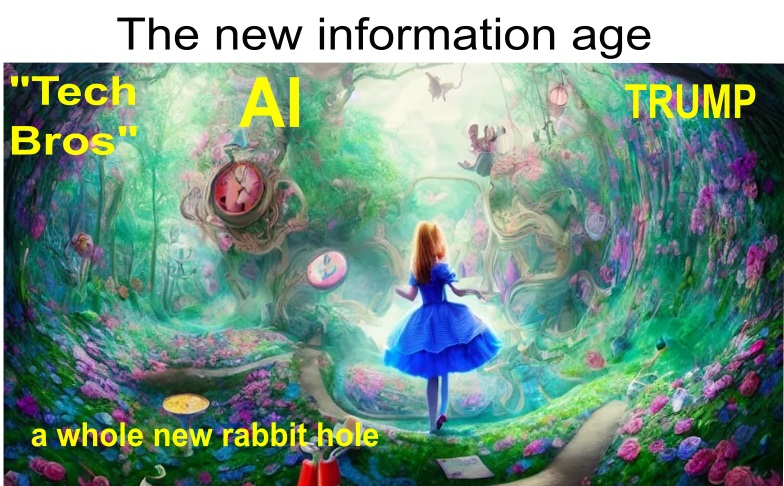
It’s not a failsafe test, but it can be a tip off that a journalistic outlet is off its feet when its language falls apart. I give you the Associated Press (2/19/26), describing the actions of a person who rarely strings a coherent sentence together, to hand over billions of US taxpayer dollars to create a global entity. This is the “Board of Peace,” of which Trump has declared himself “Chairman for Life“—because that’s a normal thing—and which Google’s AI describes as “potentially replac[ing] existing international institutions”:
Trump’s vision for the board has morphed since he initiated the group as part of his 20-point peace plan to end the conflict in Gaza. Since the October ceasefire, Trump wants it to have an even more ambitious remit—one that will not only complete the Herculean task of bringing lasting peace between Israel and Hamas but will also help resolve conflicts around the globe.
If you aren’t staggered by the notion of Donald Trump “resolving conflicts around the globe,” every other word still deserves interrogation: Are completing the genocide and mass dislocation of Palestinian people, and violently converting their historic homeland to a playground resort for wealthy internationals, going to now be labeled by the press as “bringing lasting peace,” and “ending the conflict” in Gaza?
But worry not: AP tells us in bold letters, “There are many questions about how the board will work.” That implies that AP will be asking them, or care about the answers. But given no one who had a real problem with the creation of the board itself is cited in the article on its launch, why would we look to AP for critical eyes going forward?
Israel Responsible for Two-Thirds of Journalist Deaths in 2025: Press Freedom Group

The number of journalists killed by Israel is remarkably high even when compared to the number of journalists killed in other conflict zones.
Brad Reed, Feb 26, 2026, https://www.commondreams.org/news/israel-journalist-deaths-2025
A new report from a major press freedom group has found that a record 129 journalists were killed in 2025, and that Israel was responsible for two-thirds of the worldwide total.
The Tuesday report from the Committee to Protect Journalists says that the Israeli military has cumulatively killed more journalists than any other government since CPJ started tracking reporter deaths in 1992, with the vast majority being Palestinian media workers in Gaza.
The report also finds an increase in the use of drones to attack journalists, with Israel accounting for more than 70% of the 39 documented instances of reporters killed by drone strikes.
The number of journalists killed by Israel is remarkably high even when compared to the number of journalists killed in other conflict zones.
Only nine journalists were killed in Sudan, for example, while just four journalists were killed in Ukraine, despite both countries being in the midst of brutal conflicts that have collectively killed hundreds of thousands of people.
A report issued in December by Reporters Without Borders similarly found that Israel was responsible for the most journalists deaths in 2025, the third consecutive year that the country had held that distinction.
The CPJ report also points the finger at governments for not taking their responsibilities to protect journalists seriously.
“The rising number of journalist deaths globally is fueled by a persistent culture of impunity,” the report states. “Very few transparent investigations have been conducted into the 47 cases of targeted killings (classified as ‘murder’ in CPJ’s longstanding methodology) documented by CPJ in 2025—the highest number of journalists deliberately killed for their work in the past decade—and no one has been held accountable in any of the cases.”
CPJ CEO Jodie Ginsberg said that attacks on the media are “a leading indicator of attacks on other freedoms, and much more needs to be done to prevent these killings and punish the perpetrators,” adding that “we are all at risk when journalists are killed for reporting the news.”
A victory for Independent Journalism -Declassified wins battle over access to Parliament
Officials initially blocked us from holding a press pass, citing the ‘particular standpoint’ of our Gaza investigations
Martin Williams, 24 February 2026, https://www.declassifieduk.org/declassified-wins-battle-over-access-to-parliament/
Declassified has won a seven-month battle to report from Parliament, after officials were accused of a “partisan attempt to suppress investigative journalism”.
Westminster authorities initially rejected our application for a press pass in June, claiming there wasn’t enough space.
But we obtained internal emails showing that the officials considering our application had cited the “particular standpoint” of our coverage.
They flagged an article about pro-Israel bias in Westminster and even claimed that Declassified’s focus on foreign affairs does not count as “politics”.
The revelation sparked widespread criticism and around 5,800 Declassified readers signed an open letter calling on Parliament to review its decision.
The letter was also signed by more than 100 politicians, journalists and campaigners including the MPs Jeremy Corbyn, John McDonnell, Clive Lewis and Liz Saville-Roberts.
Other signatories included journalists Peter Oborne, Ash Sarkar and Owen Jones; comedians Nish Kumar, Josie Long, Fern Brady; as well as the heads of Reporters Without Borders, The Committee to Protect Journalists and The Centre For Investigative Journalism.
In Westminster, 27 MPs from across the political spectrum also signed an Early Day Motion urging authorities to reverse the decision.
Now, more than seven months after our original application, officials have u-turned and granted Declassified access to Parliament.
Changes
Media passes are already held by almost 500 journalists from other news outlets, providing vital access to the corridors of power in Westminster. But the vast majority are from mainstream or right-wing media organisations.
In fact, the system is specifically designed to make access difficult for small, independent newsrooms. Guidelines say that passes will “not normally” be given to freelance journalists, trade press or independent production companies, while other applicants must have a “substantial” audience and be regulated by Ofcom, IPSO or Impress.
However, in response to Declassified’s campaign, authorities have reformed the way journalists apply for media passes. This includes clarifying the criteria, introducing an appeals process, and changing the rules on resubmitting an application.
The initial decision to block Declassified was made by the Sergeant At Arms, but this responsibility has now been given to other officials – although Parliament insists this change was not connected to our campaign.
Officials eventually invited Declassified to submit a fresh application after we submitted a lengthy official complaint in October.
And now, Parliament has finally issued us with a media pass, marking a remarkable victory for press freedom.
It comes after Declassified reporters were also blocked from entering the Labour Party conference and a major London arms fair last year.
Declassified’s co-director Laura Pidcock said: “What should have been a straightforward process to access parliament for journalistic purposes, became an issue of press freedom and fair process. We are pleased the application has now been approved and procedural changes made.
“I have no doubt that the overwhelming support of the public helped us achieve this – huge thanks to everyone who signed the open letter.”
She added: “There is a creeping trend to restrict civil liberties in the UK, and press freedom is crucial. It was therefore important we pushed back on the Parliamentary authorities’ decision and, with your help, won!”
New Book: The Dangers of Ionising Radiation

A Scientific Guide to
Radiation Risks for Government Agencies, Legal Professionals and Medical
Clinicians, by Dr Ian Fairlie.
Ethics Press 25th Feb 2026,
https://ethicspress.com/products/the-dangers-of-ionising-radiation
Ch4 doc shows Starmer’s ban on Palestine Action was done to protect the arms industry
10 February 2026,Jonathon Cook Blog
Channel 4’s documentary last night on Palestine Action’s proscription as a terrorist organisation was a game of two halves. The first half, which built the government’s case for proscription, was presumably the “balance” needed to avoid a pile-on by the rest of the establishment media. The second half then proceeded to tear down the government’s case brick by brick.
Here are the five main takeaways from the second half:
1. The film reminded us that the government’s proscription of Palestine Action as a terrorist organisation was done at the behest of Elbit Systems – the Israeli arms firm making killer drones for use in Gaza that Palestine Action was chiefly targeting.
Government officials regularly met with Elbit. A 2023 internal Home Office email, two years before proscription, states: “Reassure Elbit Systems UK and the wider sector affected by Palestine Action that the government cares about the harm the group is causing the private sector [arms industries].”
2. A senior Home Office official told the film-makers that there was a widespread belief among staff that the government was “wrong” to proscribe Palestine Action, and there was “disquiet” that the government was using Palestine Action as a way to curtail rights to protest and speech more generally.
3. Lord Hain, a former Labour government minister, explained that, when MPs and Lords were presented with an amendment to the Terrorism Act in 2020 under which Palestine Action has now been proscribed, the government had made explicit reassurances that criminal damage to property – Palestine Action’s modus operandi – would not qualify as terrorism.
He also reminded viewers that, had earlier governments adopted the same approach as Sir Keir Starmer’s government, the Suffragette and anti-apartheid movements would also have been declared terrorist organisations……………………………………………………………………………………………………………………………………………………………………………………………. https://www.jonathan-cook.net/blog/2026-02-10/ban-palestine-action-arms-industry/
Fukushima review – a devastating account of disaster and denial in 2011 nuclear catastrophe
A tense return to the disaster foregrounds the heroism of the ‘Fukushima 50’ while raising questions about corporate secrecy and nuclear safety.
Peter Bradshaw, Wed 18 Feb 2026, https://www.theguardian.com/film/2026/feb/18/fukushima-review-2011-nuclear-disaster-japan
The terrifying story of Japan’s Fukushima nuclear accident of 2011, caused by a cataclysmic earthquake and tsunami, is retold by British film-maker James Jones and Japanese co-director Megumi Inman. The natural disaster left 20,000 dead, and 164,000 people were displaced from the area around the nuclear plant, some with no prospect of return. The earthquake damaged the cooling systems that prevent meltdowns and caused three near-apocalyptic explosions, bringing the nation close to a catastrophe that would have threatened its very existence. Incredibly, the ultimate calamity was finally staved off by nothing more hi-tech than a committed fire brigade spraying thousands of tons of water on the exposed fuel rods.
The film plunges us into the awful story moment-by-moment, accompanied by interviews with the chief players of the time – prominently nuclear plant employee Ikuo Izawa, a shift supervisor and de facto leader of the “Fukushima 50” (actually 69 people) who became legendary in Japan and beyond for their self-sacrificial courage, staying in a nightmarish reactor when everyone else had been evacuated.
Perhaps we could have been given more context and less immediate drama, particularly more background about the plant’s dismal corporate owners, the Tokyo Electric Power Company, or Tepco, which had closed a nuclear plant in 2007 after an earthquake, with a resulting loss of profits. But to skimp on the drama might be obtuse, given the pure hair-raising shock of events. The archive footage of the tsunami spreading across the fields and farmland of Japan is deeply disturbing; “nightmare” is a word casually used, but appropriate here.
The Japanese soul had been uniquely traumatised by the nuclear issue in 1945 and Fukushima was the opening of an old wound; Barack Obama’s offers to help were received warily and the film hints that some of a certain age might have even suspected a kind of opportunistic emergency takeover, like the Douglas MacArthur rule that followed the war. There is something chillingly military in the company’s need for volunteers for a so-called “suicide squad” to vent the reactors to forestall a pressure buildup.
And as far as comparisons with the Chornobyl disaster go, that involved a single reactor; Fukushima had six ready to blow. Before I watched this film, I assumed that Japan’s modern democracy would at least have meant more transparency than the sclerotic and malign Soviet apparatchiks. But maybe not. Tepco has still not released a full history of exactly what went wrong and what discussions took place at the time. And in any case, politicians were themselves dismally eager to cover themselves by tentatively blaming Tepco.
The most robust witness here is the New York Times’s Tokyo bureau chief Martin Fackler, who gives us a crisp account of the official chaos and bungling – and the fact that Tepco had already received a report indicating the Fukushima plant was vulnerable to an earthquake and did nothing. He is interesting on corporate obeisance to the “safety myth”, an industry article of faith which does not result in vigilant and innovative efforts to improve safety, but rather icy disapproval of anyone who questions existing safety provisions. Doing so was disloyalty to the industry and could damage your career.
Perhaps inevitably, the larger questions are left open. Fossil fuels cause slow-motion catastrophe to the planet – in fact, not so slow – while nuclear fuel does not cause climate change, but could cause instant calamity. So is the answer simply what the industry says it is? More and better safety? Or can other renewables fill the gap? Either way, this is a gripping film.
Fukushima is out in the UK and US from 20 February.
This article was amended on 19 February 2026 to clarify that the death toll relates to the natural disaster alone.
Whitehaven’s Polluted Harbour is “Riviera of the North” NuSpeak Lives
FEB 10, 2026, Lakes Against Nuclear Dump
This months Cumbria Life has a gushing “People and Places” article “A Day Out in Whitehaven” with the strap line “Cornwall and Cannes eat your heart out- Discover a popular seaside town on the Cumbrian Coast” Words and Photos by Geneve Bartholomew – Brand.
The article makes much of the Sellafield funded Beacon Museum and Edge water sports centre along with the also Sellafield funded new gaming centre called LEVELS “a new digital and gaming hub located at the Grade 11 listed former Whittles building in the heart of the town.” The gaming hub will no doubt be a recruitment source for the next generation of AI robotics operators at Sellafield.
The heart of the town is being bought up by Sellafield with a pithy letter in the 4th February Whitehaven News from former councillor Tim Knowles saying “I was recently concerned that Whitehaven had experienced some kind of emergency. The town seemed full of people wandering around in high visibility clothing but with no apparent purpose. I was later told that this is the latest in Sellafield outfitting…..is the Hi Vis -uniform becoming a rather “in your face” badge of relative wealth around town.” The letter goes on to remark about “the number of sheds and fences painted in the famous “BNFL blue” all around West Cumbria.” (takeaways still happen)
Many £Millions of pounds of taxpayers money are being poured into Whitehaven filtered through the big brother hands of Sellafield. That is not all that is being poured into Whitehaven.
What the “Riviera of the North” article in Cumbria Life fails to mention is the outrageous state of the harbour with water that can no longer be called water in the docks. The ongoing pollution event started in 2022 and has continued ever since with the acid mine pollution from historic mines which includes the sulphur producing Anhydrite Mine at the old Marchon site (now scandalously approved for housing) . The ‘water’ only ran clear for a short time last September when Silt Buster machines were in operation in the rail tunnel which drains to the culvert in Queen’s Dock.
We recently released FOI answers to the authorities and the press. BBC online did cover this albeit not telling the whole story but with much more openness that that previously aired and certainly without the rose tinted specs of the Cumbria Life article. If this ongoing pollution event was happening in Cornwall or Cannes there would be banner headlines worldwide. But here in Whitehaven there are vested interests in keeping schtum about the impacts of deep mining because guess who wants to mine out the biggest void ever on the Lake District coast – yep our generous benefactor Sellafield.
The BBC online article can be read in full here extract below [on original] https://lakesagainstnucleardump.com/2026/02/10/whitehavens-polluted-harbour-is-riviera-of-the-north-nuspeak-lives/?page_id=1772
Leading Papers Call for Destroying Iran to Save It
Gregory Shupak, February 10, 2026, https://fair.org/home/leading-papers-call-for-destroying-iran-to-save-it/
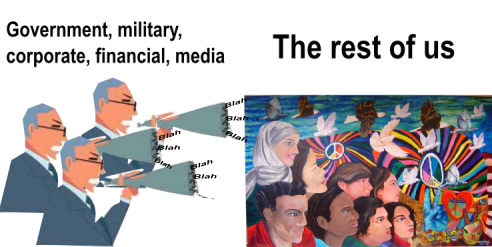
The United States has no right to wage war on Iran, or to have a say who governs the country. The opinion pages of the New York Times and Washington Post, however, are offering facile humanitarian arguments for the US to escalate its attacks on Iran. These are based on the nonsensical assumption that the US wants to help brighten Iranians’ futures.
In two editorials addressing the possibility of the US undertaking a bombing and shooting war on Iran, the Washington Post expressed no opposition to such policies and endorsed economic warfare as well.
Crediting Trump with “the wisdom of distinguishing between an authoritarian regime and the people who suffer under its rule,” the first Post editorial (1/2/26) approvingly quoted Trump’s Truth Social promise (1/2/26) to Iranian protesters that the US “will come to their rescue…. We are locked and loaded and ready to go.”
For the Post, the problem was not that Trump was threatening to bomb a sovereign state, but that “airstrikes are, at best, a temporary solution”:
If the administration wants this time to be different, it will need to oversee a patient, sustained campaign of maximum pressure against the government…. The optimal strategy is to economically squeeze the regime as hard as possible at this moment of maximum vulnerability. More stringent enforcement of existing oil sanctions would go a long way…. Western financial controls are actually working quite well.
Thus, the paper offers advice on how to integrate bombing Iran into a broader effort to overthrow the country’s government in a hybrid war. Central to that project are the sanctions with which the Post is so thoroughly impressed. Such measures have “squeeze[d] the regime” by, for example, decimating “the government’s primary source of revenue, oil exports, limiting the state’s ability to provide for millions of impoverished Iranians through social safety nets” (CNN, 10/19/25).
That the US continues to apply the sanctions, knowing that they have these effects, demonstrates that it has no interest in, as the Post put it, “free[ing]” Iranians “from bondage.”
‘Always more room for sanctions’
The second Washington Post editorial (1/23/26) expressed disappointment that, despite “mass killings” and the “most repressive crackdown in decades,” “Trump has ratcheted back his earlier rhetoric.” It emphasized that “the regime is now mocking Trump for backing down.” The paper offered advice for the president:
Airstrikes alone won’t bring down the regime—or make it behave like a normal country. But Israel and the US have shown in recent years that bombing can cause significant tactical setbacks. And there is always more room for sanctions pressure….
The president cannot maintain effective deterrence by turning the other cheek [in response to Iranians who have taunted him]. How he responds is just as important as how quickly he does it.
The implication is that, to deter Iran’s government from killing Iranians, the US needs to kill Iranians. After all, bombing campaigns come with “mass killings” of their own: The US/Israeli aggression against Iran last June killed more than 1,000 Iranians, most of them civilians.
Meanwhile, those sanctions the paper wants to use to deter the Iranian government from “harm[ing] its own people” do quite a bit of damage in their own right, often causing “low-income citizens’ food consumption” to “deteriorate due to sanctions”—a rather novel approach to harm reduction.
Bombing other countries, depriving them of food—is this what it means to “behave like a normal country”?
‘Too depraved’ for reform
Over its own pro–regime change piece, the New York Times editorial board headline (1/14/26) declared: “Iran’s Murderous Regime Is Irredeemable.”
“The Khamenei regime is too depraved to be reformed,” the editors wrote, spending the majority of the piece building its case to that effect before turning to solutions. For the Times, these start “with a unified expression of solidarity with the protesters,” and quickly move to punitive measures against the Iranian government:
The world can also extend the sanctions it has imposed on Iran. The Trump administration this week announced new tariffs on any countries that do business with Iran, and other democracies should impose their own economic penalties.
For the authors, “deprav[ity]” needs to be resisted by Washington and its partners, who have demonstrated their moral superiority with their presumably depravity-free sanctions. These have, as Germany’s DW (11/23/25) reported, “caused medical shortages that hit [Iran’s] most vulnerable citizens hardest,” preventing the country from being able “to purchase special medicines—like those required by cancer patients.”
The Times also supported US military violence against Iran—if with somewhat more restraint than the Post, asking Trump to “move much more judiciously than he typically does.” The Times wants him to seek “approval from Congress before any military operation,” and make “clear its limitations and goals.” The paper warned Trump not to attack “without adequate preparation and resources”:
Above all, he should avoid the lack of strategic discipline and illegal actions that have defined the Venezuela campaign. He should ask which policies have the best chance of undermining the regime’s violent repression and creating the conditions for a democratic transition.
One glaring problem with suggesting that a US “military operation” should be based on “policies [that] have the best chance of…creating the conditions for a democratic transition” is that very recent precedents show that US wars don’t bring about democracy, and are not intended to do so; instead, such wars bring about social collapse.
Consider, for example, US interventions in Libya and Syria. In both cases, the US backed decidedly nondemocratic forces (Jacobin, 9/2/13; Harper’s, 1/16) and, as one might expect, neither war resulted in democracy. In Libya’s case, the outcome has been slavery and state collapse (In These Times, 8/18/20). In Syria, the new, unelected government is implicated in sectarian mass murder (FAIR.org, 6/2/25).
If DHS killed Pretti, why not bomb Iran?
There are no grounds for believing that the US would chart a different course if it bombs Iran again. But that hasn’t stopped other Times contributors from suggesting that the US should conduct a war in Iran—for the good of Iranians, of course.
Times columnist Bret Stephens (1/27/26) worried about the “risk” posed by “the example of a US president who urged protesters to go in the streets and said help was on the way, only to betray them through inaction.”
Invoking the DHS’s killing of Minneapolis resident Alex Pretti, Stephens urged “thoughtful Americans” to encourage the same administration that killed him to exercise “the military option” in Iran:
But if Pretti’s death is a tragedy, what do we say or do in the face of the murder of thousands of Iranians? Are they, as Stalin might have said, just another statistic?
Stephens is citing people’s outrage against the US government killing a protester as a reason they should support the US government inflicting more violence against Iran. The logical corollary to that would be that if you’re opposed to Iran suppressing anti-government forces, you should therefore be in favor of Tehran launching armed attacks to defend protesters in the US.
Masih Alinejad, a US-government-funded Iranian-American journalist, wrote in the Times (1/27/26) that Trump
encouraged Iranians to intensify their mass protests, writing, “HELP IS ON ITS WAY.” That help never came, and many protesters now feel betrayed. Still, the USS Abraham Lincoln aircraft carrier strike group has recently arrived in the Middle East. Mr. Trump has not said what he plans to do now that it is there, but it does give him the option of striking a blow against government repression.
Policy of pain
Both Stephens and Alinejad present their calls for the US to assault Iran in moral terms, suggesting that the US should demonstrate loyalty to Iranian protestors by “help[ing]” them through an armed attack on the country in which they live. Their premise is that the US is interested in enabling the Iranian population to flourish, an assertion contradicted by more than 70 years of Washington’s policy of inflicting pain on Iranians in an effort to dominate them.
That US policy has included overthrowing Iran’s democratically elected government in 1953 (NPR, 2/7/19), propping up the Shah’s brutal dictatorship for the next 26 years (BBC, 6/3/16; AP, 2/6/19), sponsoring Saddam Hussein’s invasion of the country and use of chemical weapons against it (Foreign Policy, 8/26/13), partnering with Israel in a years-long campaign of murdering Iranian scientists (Responsible Statecraft, 12/21/20), and currently maintaining—along with its allies—a sanctions regime that is associated with a substantial drop in Iranian life expectancy (Al Jazeera, 1/13/26).
If Stephens or Alinejad had evidence that the US is so radically re-orienting its conduct in the international arena, one imagines that they would want to share with their readers the proof that the Trump administration’s magnanimity is so profound that it overrides the UN Charter, and justifies America carrying out a war to “help” a country it has terrorized for decades.
The complex, long-form writers – but is anybody listening?
11 February 2026 Noel Wauchope, https://theaimn.net/the-complex-long-form-writers-but-is-anybody-listening/
I sympathise with readers who have a short attention span. I myself am one of those. And nowadays, well – that’s pretty much everybody.
And yet, people keep writing long, and very long, articles. Are they wasting their time? Who actually reads these articles?
I used to think that long articles were indeed a waste of time. And in a certain sense, I was right. I came from the angle of an antinuclear activist, and for a long time, the “nuclear debate” was run by highly – informed people, who made sure to use the absolutely correct technical language – no weak slips into ordinary talk. The anti-nuclear experts generally showed their opponents that they were right up there with the jargon that only experts understood. So the ordinary peasant, the general public, including many well-educated people, “dazzled by science” couldn’t really understand the long arguments. The result was that most people were intimidated, felt they could not understand it all. which was exactly the situation that the nuclear lobby wanted.
Then along came Dr Helen Caldicott, and mucked it all up. She understood all the technical stuff, and could write about that. But she also used ordinary, understandable language. And worse – heaven forfend – she sometimes was emotional. God, she even described some nuclear propagandists as “wicked”. Personally, I thought that the term was accurate. Anyway, Dr Caldicott copped a lot of flak, including even from the anti-nuclear lobby, with their obsession about being “respectable”. How dare she be so “hysterical”. But then she couldn’t help it, having the disability of being female.
But, Dr Caldicott, with her many books, public speaking, meeting world leaders, even influencing Ronald Reagan, got her message through to people, and the “debate, has never been the same since.
So, I rejoiced at this development, which did help journalists to loosen up, and cover nuclear issues in a more readable and human way. And in shorter articles.
But now the pendulum has swung too far in the direction of being short and easily digestible, especially with the communications monster of social media. It is a sad thing that probably only old people have the time and the inclination to read long articles.
And people are missing out, because often the full story on a subject is really covered only in long articles. I have a collection of these, on a variety of topics, and I had planned to reference a number of them here. Some are very densely written, full of facts, dates, events – and therefore really informative – but still a bit of hard work to read. And some show how very complex a situation can be – how there are two sides, and maybe more than two, to a story.
So, here are examples of very informative ones:
Planet Plastic: How Big Oil and Big Soda kept a global environmental calamity a secret for decades, by Tim Dickinson.
US military action in Iran risks igniting a regional and global nuclear cascade, by Farah N. Jan.
Cumulative effects of radioactivity from Fukushima on the abundance and biodiversity of birds, by Timothy A Mousseau
Securing the nuclear nation, by Kate Brown
Very interesting are the articles which cover something in depth, showing contradictory sides, and how very complex a subject can be:
Some examples-
Betrayed: How Liberals Supported Islamic Revolution in Iran in 1979 and Turned Against the Progressive Shah, by SL Kanthan,
The Long History Of Zionist Proposals To Ethnically Cleanse The Gaza Strip, by Mouin Rabbani.
And these can often be personal articles, about human conditions, character and integrity, leaving politics aside:
The heroes who saved the world from Chernobyl Two, by By Serhii Plokhy – also at The heroes who saved the world from Chernobyl Two.
Elon Musk’s Shadow Rule, by Ronan Farrow. Also at Elon Musk’s Shadow Rule, nuclear-news.
I hope that some people are reading long articles. Well, they must be, because some excellent movie documentaries and TV series often come up, and are derived from the written word. And perhaps many people are thus getting their longform stories in a different form. And perhaps some longform articles have a profound effect, even if it’s only on a relatively few readers.
“Journalism Deserves Better”: Ex-Washington Post Staffers Slam Billionaire Bezos for Gutting Paper
Democracy Now, February 06, 2026
The Washington Post has laid off more than 300 journalists, dismantling its sports, local news and international coverage. “Everybody is grieving, and it’s a loss for our readers,” says Nilo Tabrizy, one of the paper’s recently laid-off staff, who describes a “robotic” meeting announcing the cuts. “They didn’t have the dignity to look us in the eye.” The shocking staff culling has been widely attributed to the paper’s leadership under Amazon founder Jeff Bezos, who bought the nearly 150-year-old institution in 2013. Karen Attiah, the former global opinion editor at the Post, was hired soon after Bezos’s arrival. She recounts how the arrival of a billionaire backer initially revitalized the paper with resources and creative freedom, before souring over the next decade.
“We thought [he] shared the same values that we had,” says Attiah, who was fired from the Post last fall over comments she made about the death of conservative activist Charlie Kirk. “Journalism deserves better than a billionaire owner who decides that partying in Europe is more important than people’s lives.”……………………………………………………………………………………………………………………………………………………https://www.democracynow.org/2026/2/6/karen_altiah_washington_post_layoffs_journalists
The Media is Whitewashing Trump’s Board of Peace.

The depraved Donald Trump and his so-called “Board of Peace” have promoted the idea that Gaza is theirs to conquer. All in the name of “regional stability,” they believe that they can go in, occupy the land, fill it with data centers and waterfront properties for the white wealthy class, and push Palestinians into concentration camps. This is the American occupation of Palestinian land. Yet, for some reason, we have major news outlets giving grace to those who want to do this.
February 7, 2026, By Jenin M for Codepink, https://scheerpost.com/2026/02/07/the-media-is-whitewashing-trumps-board-of-peace/
Imagine telling someone who has experienced the most apocalyptic conditions known to man to give their perpetrators a “chance.” That’s exactly what it felt like when I opened my phone the other day and saw headlines from The Washington Post and Wall Street Journal talking about Trump’s sham “Board of Peace,” which is supposed to govern Gaza.
Not only is it tone deaf, but it’s also downright racist. Palestinians have spent decades being strung along like puppets, being told what’s going to happen to our land instead of letting us have it. We have been raped, maimed, starved, displaced, imprisoned, tortured, and killed by foreigners who come in and think they have the right to take something that’s not theirs.
So to the news outlets who believe it’s their job to control the narrative: there will be no grace, no chances, no benefit of the doubt given to the monsters who’ve allowed hundreds of thousands of men, women, and children to be slaughtered, all while the world watched. Our media should not repeat the same mistakes that manufactured consent for a genocide in Gaza.
It’s despicable, though not surprising, that a board of old white men and their sycophantic stooges have joined forces to colonize more indigenous land for their benefit. At the end of the day, this has been their strategy since the beginning of time. But nowadays, we have a collective voice. We supposedly have a free and independent press that challenges power — a free and independent press that you’d think would call out history repeating itself, not praise it. However, The Washington Post and Wall Street Journal are doing just that: urging their readers to “Give the Board of Peace a chance” and view the board as a “technocratic turn that’s giving hope for Gaza.”
What these outlets are failing to point out is the sheer irony and insanity of a “Board of Peace” run by Trump, who has dubbed himself the “chairman for life.” This is someone who has used his position of power to accelerate the U.S.-Israeli genocide throughout his presidential term. The blood of tens of thousands of Palestinians is on his hands. Here in the U.S., the blood of migrants and protestors is on his hands as he orders their kidnappings and murders of our own in the streets in broad daylight. What sort of precedent does it set if “leaders” who know nothing but capital greed and bloodshed are allowed to position themselves at the forefront of “peace” efforts worldwide? If we accept this obvious scam, there will be no peace. There will be fascist control over everyone and everything, and histories and cultures will be lost, and the people will succumb to the fate of an elite ruling class propped up by our tax dollars and complicit media.
When the most recent ceasefire agreement was announced, I thought about what a true end to the genocide might look like. I imagined Gaza being returned to its rightful owners, the people being given the resources they need to rebuild, and the U.S. and Israel finally leaving them alone. Instead, they are installing a system to create perpetual, coordinated genocide — all while Gaza is becoming an apocalyptic wasteland. The Israeli and U.S. destruction of Gaza has reduced the Strip to rubble, makeshift camps, and starved masses. These are the same people who are vowing to bring peace to Gaza — and more broadly to the whole region.
The depraved Donald Trump and his so-called “Board of Peace” have promoted the idea that Gaza is theirs to conquer. All in the name of “regional stability,” they believe that they can go in, occupy the land, fill it with data centers and waterfront properties for the white wealthy class, and push Palestinians into concentration camps. This is the American occupation of Palestinian land. Yet, for some reason, we have major news outlets giving grace to those who want to do this.
The “Board of Peace” is nothing more than an extension of the colonization that Palestine has faced for decades. But has it worked? Have Palestinians left their houses, abandoned their lands, and given it all up? Has the movement for Palestine been so completely forgotten that we would simply allow these war criminals to go and take Gaza? Absolutely not. I know I speak for all Palestinians when I say I will die trying to save my land from the bloody hands of people like Benjamin Netanyahu, Donald Trump, Jared Kushner, and Tony Blair.
I know deep in my core that Palestine will be free. All those who have been forced to leave the shores of Gaza, all the way to Akka, will return. Those waterfront homes will be ours to pass down to our children and grandchildren. What was once an apocalyptic wasteland will become our homeland reborn, and all the news outlets will report on it as if they weren’t complicit. I do not doubt this, and neither should you. So when you read about the Board of Peace, don’t feel doomed — we the people know the truth, and together we have the power to set the story straight.
Jenin M is CODEPINK’s Palestine campaign organizer and a Palestinian-American organizer, advocate, and storyteller dedicated to justice for Palestine and collective liberation. With over five years in grassroots movement-building, her work focuses on advocacy, digital storytelling, and mobilizing communities against oppression. A graduate in Public Policy from the University of Illinois at Chicago, she bridges policy analysis and on-the-ground organizing
Beware these dangerous writers in the world of journalism
Noel Wauchope, 3 Feb 26
I had in mind to look at Australia’s dangerous writers, in no particular hurry. But that’s changed. You see, the Australian Prime Minister, in his wisdom, decided to invite Isaac Herzog, the President of our great ally, Israel, on a state visit to Australia. After all, Herzog is not the real leader, not the Prime Minister of Israel. A United Nations commission of inquiry found Israel guilty of genocide. The International Criminal Court found Prime Minister Netanyahu guilty of war crimes. But even if you do take any notice of those radical organisations, probably President Isaac Herzog didn’t know anything about the alleged atrocities in Gaza.
Fortunately, the Australian press takes a moderate view of all this. P.M. Albanese’s invitation to Herzog is intended to unite Australians, and give comfort after the massacre of Jews at Bondi Beach. (What? The invitation was sent long before that massacre? There is no need to bring logic into this.)
Note .I wrote that the invitation had come before the Bondi massacre, and I was wrong in this. Nevertheless, it’s a tragic truth that the Bondi massacre has allowed the media to obscure the fact that the Australian government has been under continual pressure from the Zionist lobby.
In the circumstances, it’s important to avoid a trouble-making bunch of Australian writers who are likely to stir up criticism of Isaac Herzog, and let’s all be friends.
Now, you already know that Australia’s Cailtin Johnstone is an evil witch (and terribly rude, too). But there are plenty of other equally dangerous writers. I know, because even some of my family and friends have warned me about them, as have other very “reputable” people. There are so many evil ones like her. I don’t know where to begin.
A new threat is Michael West, and his string of collaborators:
Australians have been pretty well protected. The Adelaide Festival Board cancelled Dr Randa Abdel-Fattah‘s talk, planned for the Adelaide Writers Festival in March. Quite rightly and properly, as Dr Abdel-Fattah, though born in Australia, is of Palestinian heritage, and her books take an extremely pro-Muslim view, and advocate for Palestinian rights and identity.
Indeed, our government is pretty good at saving us from evil writers. And dedicated pressure groups can have a good influence on our media. So, for example, we have been protected from the wicked influence of Chris Hedges. The chief executive of Australia’s National Press Club, Maurice Reilly, cancelled Hedges’ scheduled talk on the Betrayal of Palestinian Journalists. The U.S. Press Club banned him, too. All very proper, as Hedges was insulting our friends, the Israeli government. But that’s not all. Chris Hedges is just so gloomy about everything – especially corporate coup, death of the liberal class, and the rise of fascism. We really should not tolerate such extreme bias and negativity. Why, Hedges even condemns the happiness industries. He’s so awful – hates everything that Western culture holds dear.
Rex Patrick is another Australian writer to be avoided, obviously unpatriotic as he trashes the idea of AUKUS submarines.
Australia’s boast is that “we are young and free”? Well, not exactly free, when it comes to press freedom, as we have no constitutional or explicit legal protection for press freedom. But that’s all to the good – keeping us focussed on our most respected traditional interests – sport, entertainment, celebrities, and food.On the international scene, there’s a spate of writing by extremists.You know straight away to avoid people like Jeffrey Sachs, with his wide-ranging way out views. Ralph Nader – a long time pest, obstructing progress. Eva Bartlett is particularly suspect, as she criticises both Israel and Ukraine. Juan Cole has extremist views on the Middle East. Craig Mokhiber is a complete ratbag, waffling on about human rights. Les Leopold is a ratbag on economics and workers’ rights. Koohan Paik-Mander is exceptionally dangerous, too, being Asian, and female.
Look, there’s lots more of them. I’ve barely scraped the surface. But my advice to you (especially right now, with the imminent arrival of our friend Isaac Herzog), is to be calm, be complacent, stick to the mainstream media, and avoid those awful journalists whose only aim is to upset you.
The BBC pushes the case for an illegal war on Iran with even bigger lies than Trump’s.
Notice too – though the BBC won’t point it out – that the US sanctions are a form of collective punishment on the Iranian population that is in breach of international law and that last year’s strikes on Iran were a clear war of aggression, which is defined as “the supreme international crime”.
29 January 2026, https://www.jonathan-cook.net/blog/2026-01-29/bbc-illegal-war-iran-lies/
The UK state broadcaster streams disinformation into our living rooms – deceptions that not only leave us clueless about important international events but drive us ever closer to global conflagration
Here is another example of utterly irresponsible journalism from the BBC on tonight’s News at Ten.
Diplomatic correspondent Caroline Hawley starts by credulously amplifying a fantastical death toll of “tens of thousands of dead” from recent protests in Iran – figures provided by regime opponents. Contrast that with the BBC’s constant, two years of caution and downplaying of the numbers killed in Gaza by Israel.
The idea that in a few days Iranian security forces managed to kill as many Iranians as Israel has managed to kill Palestinians in Gaza from the prolonged carpet-bombing and levelling of the tiny enclave, as well as the starvation of its population, beggars belief. The figures sound patently ridiculous because they are patently ridiculous.
Either the Iran death toll is massively inflated, or the Gaza death toll is a massive underestimate. Or far more likely, both are intentionally being used to mislead.
Watch Caroline Hawley’s two-minute report here: [on original]
The BBC has a political agenda that says it is fine to headline a made-up, inflated figure of the dead in Iran because our leaders have defined Iran as an Official Enemy. While the BBC has a converse political agenda that says it’s fine to employ endless caveats to minimise a death toll in Gaza that is already certain to be a huge undercount because Israel is an Official Ally.
This isn’t journalism. It’s stenography for western governments that choose enemies and allies not on the basis of whether they adhere to any ethical or legal standards of behaviour but purely on the basis of whether they assist the West in its battle to dominate oil resources in the Middle East.
Notice something else. This news segment – focusing the attention of western publics once again on the presumed wanton slaughter of protesters in Iran earlier this month – is being used by the BBC to advance the case for a war on Iran out of strictly humanitarian concerns that Trump himself doesn’t appear to share.
Trump has sent his armada of war ships to the Gulf not because he says he wants to protect protesters – in fact, missile strikes will undoubtedly kill many more Iranian civilians – but because he says he wishes to force Iran to the negotiating table over its nuclear programme.
There are already deep layers of deceit from western politicians regarding Iran – not least, the years-long premise that Iran is seeking a nuclear bomb, for which there is still no evidence, and that Tehran is responsible for the breakdown of a deal to monitor its civilian nuclear power programme. In fact, it was Trump in his first term as president who tore up that agreement.
Iran responded by enriching uranium above the levels needed for civilian use in a move that was endlessly flagged to Washington by Tehran and was clearly intended to encourage the previous Biden administration to renew the deal Trump had wrecked.
Instead, on his return to power, Trump used that enrichment not as grounds to return to diplomacy but as a pretext, first, to intensify US sanctions that have further crippled Iran’s economy, deepening poverty among ordinary Iranians, and then to launch a strike on Iran last summer that appears to have made little difference to its nuclear programme but served to weaken its air defences, to assassinate some of its leaders and to spread terror among the wider population.
Notice too – though the BBC won’t point it out – that the US sanctions are a form of collective punishment on the Iranian population that is in breach of international law and that last year’s strikes on Iran were a clear war of aggression, which is defined as “the supreme international crime”.
The US President is now posturing as though he is the one who wants to bring Iran to the negotiating table, by sending an armada of war ships, when it was he who overturned that very negotiating table in May 2018 and ripped up what was known as the Joint Comprehensive Plan of Action.
The BBC, of course, makes no mention whatsoever of this critically important context for judging the credibility of Trump’s claims about his intentions towards Iran. Instead its North America editor, Sarah Smith, vacuously regurgitates as fact the White House’s evidence-free claim that Iran has a “nuclear weapons programme” that Trump wants it to “get rid of”.
Watch Sarah Smith’s one-minute report here: [on original]
But on top of all that, media like the BBC are adding their own layers of deceit to sell the case for a US war on Iran.
First, they are doing so by trying to find new angles on old news about the violent repression of protests inside Iran. They are doing so by citing extraordinary, utterly unevidenced death toll figures and then tying them to the reasons for Trump going on the war path. Its reporting is centring once again – after the catastrophes of Afghanistan, Iraq, Libya and elsewhere – bogus humanitarian justifications for war when Trump himself is making no such connection.
And second, the BBC’s reporting by Sarah Smith coolly lays out the US mechanics of attacking Iran – the build-up to war – without ever mentioning that such an attack would be in complete violation of international law. It would again be “the supreme international crime”.
Instead she observes: “Donald Trump senses an opportunity to strike at a weakened leadership in Tehran. But how is actually going to do that? I mean he talked in his message about the successful military actions that have definitely emboldened him after the actions he took in Venezuela and earlier last year in Iran.”
Imagine if you can – and you can’t – the BBC dispassionately outlining Russian President Vladimir Putin’s plans to move on from his invasion of Ukraine into launching military strikes on Poland. Its correspondents note calmly the number of missiles Putin has massed closer to Poland’s borders, the demands made by the Russian leader of Poland if it wishes to avoid attack, and the practical obstacles standing in the way of the attack. One correspondent ends by citing Putin’s earlier, self-proclaimed “successes”, such as the invasion of Ukraine, as a precedent for his new military actions.
It is unthinkable. And yet not a day passes without the BBC broadcasting this kind of blatant warmongering slop dressed up as journalism. The British public have to pay for this endless stream of disinformation pouring into their living rooms – lies that not only leave them clueless about important international events but drive us ever closer to the brink of global conflagration.
1 This Month
10 March A LIVE WEBINAR THE REAL EFFECTS OF NUCLEAR POWER
What the Industry Isn’t Telling Us
1:00 PM Mountain, 2 pm Central, 3 pm Eastern. Live on the Keepers of the Water Facebook page



18 March Webinar @ 1 PM EST: An Assessment of SMR Projects: The Case of Canada
register for the zoom:
https://us02web.zoom.us/webinar/register/WN_o8BIIOUvQ2ONJR1nta65DQ#/registration


of the week – STOP SMALL MODULAR REACTORS IN CANADA
To see nuclear-related stories in greater depth and intensity – go to https://nuclearinformation.wordpress.com
-
Archives
- March 2026 (99)
- February 2026 (268)
- January 2026 (308)
- December 2025 (358)
- November 2025 (359)
- October 2025 (376)
- September 2025 (258)
- August 2025 (319)
- July 2025 (230)
- June 2025 (348)
- May 2025 (261)
- April 2025 (305)
-
Categories
- 1
- 1 NUCLEAR ISSUES
- business and costs
- climate change
- culture and arts
- ENERGY
- environment
- health
- history
- indigenous issues
- Legal
- marketing of nuclear
- media
- opposition to nuclear
- PERSONAL STORIES
- politics
- politics international
- Religion and ethics
- safety
- secrets,lies and civil liberties
- spinbuster
- technology
- Uranium
- wastes
- weapons and war
- Women
- 2 WORLD
- ACTION
- AFRICA
- Atrocities
- AUSTRALIA
- Christina's notes
- Christina's themes
- culture and arts
- Events
- Fuk 2022
- Fuk 2023
- Fukushima 2017
- Fukushima 2018
- fukushima 2019
- Fukushima 2020
- Fukushima 2021
- general
- global warming
- Humour (God we need it)
- Nuclear
- RARE EARTHS
- Reference
- resources – print
- Resources -audiovicual
- Weekly Newsletter
- World
- World Nuclear
- YouTube
-
RSS
Entries RSS
Comments RSS
 nuclear-news