Kentucky man indicted after illegally dumping nuclear waste at landfill.
Associated Press 19 Jul 29, LEXINGTON, Ky. (AP) — A federal grand jury has indicted a Kentucky man with illegally dumping low-level nuclear waste at an Estill County landfill.The Lexington Herald-Leader reports that Cory David Hoskins was indicted Thursday on multiple charges earlier this week, including violating safety regulations and mail fraud due to checks as part of the alleged crimes.
In 2016, Hoskins and his company TENORM were each fined $2.65 million by the Kentucky Cabinet for Health and Family Services after officials said Advanced TENORM was responsible for dumping of out-of-state radioactive waste in landfills in Estill and Greenup counties.
Officials say the waste was a byproduct of fracking and had been transported from Ohio, West Virginia and Pennsylvania in 2015…….. https://www.courier-journal.com/story/news/crime/2020/07/18/kentucky-man-indicted-illegally-dumping-nuclear-waste-landfill/5465037002/
Julian Assange’s father calls on Australia’s Prime Minister Scott Morrison to help this Australian citizen
 Assange’s father calls extradition process ‘disgrace’ https://telanganatoday.com/assanges-father-calls-extradition-process-disgrace?fbclid=IwAR1a7bQ0W_Xcgc9EIeGaAHVP7Zmm2cM6nNV65ZXtkhCwNUlarqIYTJVw6xo1 July 20, The 80-year-old is organizing public events in Australia despite the ongoing coronavirus pandemic and hopes to travel to London in August to support Assange during his extradition trial.
Sydney: WikiLeaks founder Julian Assange’s father, John Shipton, is fighting tirelessly for the release and return of his son, who is facing an extradition trial in London for publishing classified information, a process he described as abuse.
“We maintain that the extradition request is a fraud in the English court… It’s a fraud in the English legal system, it’s a case of abuse of process, it is a disgrace,” Shipton, who travelled from Melbourne to Sydney to campaign for his son’s release, told Efe news in an interview.
The 80-year-old is organizing public events in Australia despite the ongoing coronavirus pandemic and hopes to travel to London in August to support Assange during his extradition trial which, he says, is being carried out under “dire” circumstances.
In May 2019, the UN Special Rapporteur on Torture, Nils Melzer, said, after visiting Assange in the Belmarsh prison along with two medical experts, that he showed “all symptoms typical for prolonged exposure to psychological torture, including extreme stress, chronic anxiety and intense psychological trauma”.
Assange has spent almost a decade in confinement, first under house arrest in a British town and then at the Ecuadorian embassy in London between 2012 until 2019, when Ecuador withdrew his political asylum status.
Shipton has urged the Australian government to mediate with the UK administration for the release of his son, who is wanted in the US on 18 charges of espionage and computer intrusion, for which he could be sentenced to prison for up to 175 years.
“I believe the government can, if it wishes to, assist us in bringing Julian home. I believe that (it) is very simple for the Prime Minister (Scott Morrison) to pick up the phone and ring (his UK counterpart) Boris Johnson and say Julian Assange is an Australian citizen in dire circumstances.
“This will resolve this immediately and that’s easily possible,” he told Efe news during the interview.
Temporary Injunction Slows Holtec’s Work at Closed Nuclear Plant
Temporary Injunction Slows Holtec’s Work at Closed Nuclear Plant, By STEPHANIE A. FAUGHNAN, June 29, 2020 LACEY, NJ – Holtec’s decommissioning work of the former Oyster Creek Nuclear Plant has slowed down since the beginning of this month in compliance with a court-ordered mandate. Ocean County Superior Court Judge Francis R. Hodgson, Jr.’s imposition of temporary restraints on Holtec, puts a temporary hold on work – other than that permitted by the Nuclear Regulatory Commission.
Attorneys for the Township of Lacey filed the court application requesting judicial intervention, citing what it calls Holtec’s refusal to obtain necessary permits or approvals from the municipality.
The Verified Complaint filed by Jerry J. Dasti, of Dasti, Murphy. McGucklin, Ulaky, Koutsouris & Murphy incorporated a letter the firm sent to Holtec’s legal counsel. An excerpt accuses Holtec of already initiating the process of “building structures into the ground, by excavating a substantial area, which presumably will thereafter house the spent fuel rods.”…….
LACEY, NJ – Holtec’s decommissioning work of the former Oyster Creek Nuclear Plant has slowed down since the beginning of this month in compliance with a court-ordered mandate. Ocean County Superior Court Judge Francis R. Hodgson, Jr.’s imposition of temporary restraints on Holtec, puts a temporary hold on work – other than that permitted by the Nuclear Regulatory Commission.
Attorneys for the Township of Lacey filed the court application requesting judicial intervention, citing what it calls Holtec’s refusal to obtain necessary permits or approvals from the municipality.
The Verified Complaint filed by Jerry J. Dasti, of Dasti, Murphy. McGucklin, Ulaky, Koutsouris & Murphy incorporated a letter the firm sent to Holtec’s legal counsel. An excerpt accuses Holtec of already initiating the process of “building structures into the ground, by excavating a substantial area, which presumably will thereafter house the spent fuel rods.”…….. https://www.tapinto.net/towns/barnegat-slash-waretown/sections/government/articles/temporary-injunction-slows-holtec-s-work-at-closed-nuclear-plant
USA adds a new indictment to its charges against Julian Assange
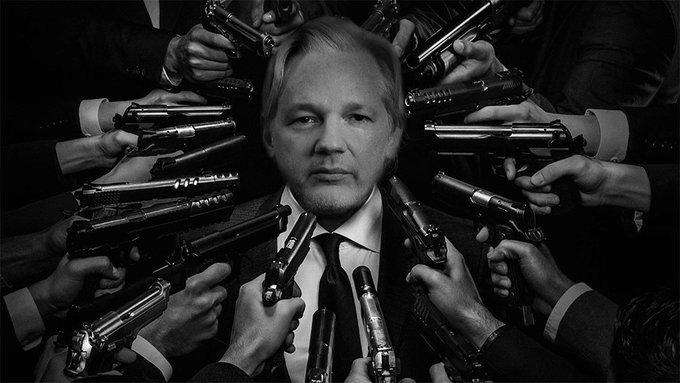 WikiLeaks founder Assange faces new indictment in US, By ERIC TUCKER, 29 June 20, WASHINGTON (AP) — WikiLeaks founder Julian Assange sought to recruit hackers at conferences in Europe and Asia who could provide his anti-secrecy website with classified information, and conspired with members of hacking organizations, according to a new Justice Department indictment announced Wednesday.
The superseding indictment does not contain additional charges beyond the 18 counts the Justice Department unsealed last year. But prosecutors say it underscores Assange’s efforts to procure and release classified information, allegations that form the basis of criminal charges he already faces.
Beyond recruiting hackers at conferences, the indictment accuses Assange of conspiring with members of hacking groups known as LulzSec and Anonymous. He also worked with a 17-year-old hacker who gave him information stolen from a bank and directed the teenager to steal additional material, including audio recordings of high-ranking government officials, prosecutors say.
Assange’s lawyer, Barry Pollack, said in a statement that “the government’s relentless pursuit of Julian Assange poses a grave threat to journalists everywhere and to the public’s right to know.”
“While today’s superseding indictment is yet another chapter in the U.S. Government’s effort to persuade the public that its pursuit of Julian Assange is based on something other than his publication of newsworthy truthful information,” he added, “the indictment continues to charge him with violating the Espionage Act based on WikiLeaks publications exposing war crimes committed by the U.S. Government.”
Assange was arrested last year after being evicted from the Ecuadorian Embassy in London, where he had sought refuge to avoid being sent to Sweden over allegations of rape and sexual assault, and is at the center of an extradition tussle over whether he should be sent to the United States.
The Justice Department has already charged him with conspiring with former U.S. Army intelligence analyst Chelsea Manning in one of the largest compromises of classified information in U.S. history by working together to crack a password to a government computer.
Prosecutors say the WikiLeaks founder damaged national security by publishing hundreds of thousands of classified documents, including diplomatic cables and military files on the wars in Iraq and Afghanistan, that harmed the U.S. and its allies and aided its adversaries.
Assange maintains he was acting as a journalist entitled to First Amendment protection. His lawyers have argued the U.S. charges of espionage and computer misuse were politically motivated and an abuse of power.
Assange generated substantial attention during the 2016 presidential election, and in investigations that followed, after WikiLeaks published stolen Democratic emails that U.S. authorities say were hacked by Russian military intelligence officials. An investigation by special counsel Robert Mueller revealed how Trump campaign associates eagerly anticipated the email disclosures. One Trump ally, Roger Stone, was found guilty last year of lying about his efforts to gain inside information about the emails. Assange, however, was never charged in Mueller’s Russia investigation.
The allegations in the new indictment center on conferences, in locations including the Netherlands and Malaysia in 2009, at which prosecutors say he and a WikiLeaks associate sought to recruit hackers who could locate classified information, including material on a “Most Wanted Leaks” list posted on WikiLeaks’ website.
According to the new indictment, he told would-be recruits that unless they were a member of the U.S. military, they faced no legal liability for stealing classified information and giving it to WikiLeaks “because ‘TOP SECRET’ meant nothing as a matter of law.”
At one conference in Malaysia, called the “Hack in the Box Security Conference,” Assange told the audience, “I was a famous teenage hacker in Australia, and I’ve been reading generals’ emails since I was 17.”
Judge orders temporary stop to decommissioning Oyster Creek Nuclear Generating Station
Judge Orders Decommissioning Temporarily Halted at Former Nuclear Plant
Lacey Officials, Oyster Creek Generating Station Owners Disagree on Land Use Oversight, The Sandpaper, June 24, 2020, By Gina G. Scala Ocean County Superior Court Judge Francis R. Hodgson issued an order of temporary restraint to the owners of the shuttered Oyster Creek Nuclear Generating Station on June 2, stopping all decommissioning activities unrelated to site security and maintaining the dry cask storage of spent nuclear fuel.
Hodgson’s order came after counsel for Lacey Township filed a complaint against Holtec International and Holtec Decommissioning International in late May.
Holtec is a Camden-based global energy technology company that assumed ownership and licensee status of Oyster Creek in June 2019 after a near 10-month application review by the Nuclear Regulatory Commission. The plant had previously been owned by Exelon Generation, part of the Exelon Corp. nuclear fleet. Lacey Township is the host community of the shuttered nuclear plant, which went online in December 1969 and sits on 779 acres of land in the Forked River section of the township.
In his finding, Hodgson ordered that pending a future court date, Holtec is temporarily prohibited and restrained from continuing any and all work at the facility unless or until permits are provided to plaintiff’s attorney documenting that the work being undertaken is permitted by the appropriate regulatory authority.
At issue is whether the Atomic Energy Act of 1954 and other federal law supersedes the uniform construction code and municipal oversight from mandating a building permit, local planning board approval and site plan approval, among other approvals, prior to construction beginning, according to Jerry J. Dasti, head counsel for Lacey Township, writing in a June 11 supplemental memorandum of law argument filed with Hodgson.
Citing the U.S. Constitution and numerous state and federal Supreme Court cases, Dasti argued determining preemptive status of state laws is well established and Holetc’s argument doesn’t meet the criteria. ……..
Holtec has until June 24 to respond, in writing, to Hodgson’s order, including a request for relief from his determination. The township has until June 29 to file its written response in opposition, according to the June 2 order of temporary restraint.
In the meantime, Holtec officials have come to an agreement with the state of Massachusetts on key issues related to the safe decommissioning of the Pilgrim Nuclear Station, located on Cape Cod Bay in Plymouth. ……
Both Oyster Creek and Pilgrim were boiling water reactors powered by General Electric. The nuclear power plants both used local water sources as their cooling method, as opposed to cooling towers. Oyster Creek permanently ceased operations on Sept. 17, 2018. Pilgrim was shuttered on May 31, 2019. https://www.thesandpaper.net/articles/judge-orders-decommissioning-temporarily-halted-at-former-nuclear-plant/
Trump’s Justice Department drumming up new allegations against Julian Assange
ASSANGE EXTRADITION: Assange Hit With New Superseding Indictment, Reflecting Possible FBI Sting Operation The U.S. Justice Department on Wednesday unveiled the new superseding indictment against the WikiLeaks publisher, adding to existing computer intrusion charges. By Joe Lauria, Consortium News June 24, 2020 The Justice Department on Wednesday said it had filed a second superseding indictment against imprisoned WikiLeaks publisher Julian Assange, adding to existing computer intrusion charges.“The new indictment does not add additional counts to the prior 18-count superseding indictment returned against Assange in May 2019,” the DOJ said in a press release.
“It does, however, broaden the scope of the conspiracy surrounding alleged computer intrusions with which Assange was previously charged,” the release said. “According to the charging document, Assange and others at WikiLeaks recruited and agreed with hackers to commit computer intrusions to benefit WikiLeaks.”…….
The indictment quotes Assange at hacking conferences encouraging hackers to obtain a “Most Wanted Leaks” list of classified materials that WikiLeaks sought to publish.
It provides new allegations that Assange instructed a “teenager” from an unnamed NATO country to conduct various hacks “including audio recordings of phone conversations between high-ranking officials” of the NATO nation as well as members of parliament from that country. The indictment claims Manning “downloaded classified State Department materials” about this country.
WikiLeaks has identified the “teenager” as Sigurdur Thordarson, “a diagnosed sociopath, a convicted conman, and sex criminal” who had impersonated Assange to embezzle money from WikiLeaks………..
Thordarson, an Icelander, became an FBI informant, and was flown to Washington in May 2019 for an interview with the FBI.
The superseding indictment says Assange was allegedly able to learn from “unauthorized access” to a website of this government that police from that country were monitoring him. The indictment says the source of this information was a former member of Anonymous who worked with WikiLeaks named Sabu, identified in the press as Hector Monsegur, who became an FBI informant after being arrested in June 2011.
In the same month, Iceland’s Interior Minister Ögmundur Jonasson prevented FBI agents from entering Iceland, testifying that “FBI dirty-tricks operations were afoot against WikiLeaks.” He said the agents had been sent to seek “our cooperation in what I understood as an operation to set up, to frame Julian Assange and WikiLeaks.” The possibility remains that the new evidence against Assange was obtained in an FBI sting operation.
Jeremy Hammond, a hacker arrested for obtaining the Stratfor files, is named in the new indictment has having revealed information about his activities with Assange to Sabu in December 2011. Last September, Hammond, who was serving a 10-year sentence in Memphis, TN, was brought by prosecutors investigating Assange to Alexandria, VA to compel him to give testimony against Assange. Hammond has refused.
Reiterates Original Charges
The new indictment repeats the existing espionage and computer intrusion charges………
In 2010, Robert Parry, one of the best investigative reporters of his era, and the founder of this website, wrote that the then pending plans of the Obama administration to indict Assange “for conspiring with Army Pvt. Bradley Manning to obtain U.S. secrets strikes at the heart of investigative journalism on national security scandals.”
Parry added:
“That’s because the process for reporters obtaining classified information about crimes of state most often involves a journalist persuading some government official to break the law either by turning over classified documents or at least by talking about the secret information. There is almost always some level of ‘conspiracy’ between reporter and source.” [Emphasis added.]
Parry thus admitted to encouraging his sources to turn over classified information even if it meant committing the lesser crime of leaking classified information if it could help prevent a larger crime from being committed. In this way Assange encouraged Manning to turn over material such as the “Collateral Murder” video in the hope that it could end the illegal war in Iraq…….
The New York Times reported at the time that “federal prosecutors were reviewing the possibility of indicting Assange on conspiracy charges for allegedly encouraging or assisting Manning in extracting ‘classified military and State Department files from a government computer system,’” Parry wrote.
“The Times article by Charlie Savage notes that if prosecutors determine that Assange provided some help in the process, ‘they believe they could charge him as a conspirator in the leak, not just as a passive recipient of the documents who then published them,” wrote Parry.
This is precisely what the Trump Justice Department has done in the first computer intrusion indictment against Assange and now with this superseding one. https://consortiumnews.com/2020/06/24/assange-extradition-assange-hit-with-new-superseding-indictment-broadening-computer-intrusion-charges/?fbclid=IwAR3uZdqQkMLxeheGyUVLpkUYPIo0ywUZwFiQcu6pD9woYSYyPhZtyh3kiw4
USA adds new indictment to charges against Julian Assange
WASHINGTON (AP) — WikiLeaks founder Julian Assange sought to recruit hackers at conferences in Europe and Asia who could provide his anti-secrecy website with classified information, and conspired with members of hacking organizations, according to a new Justice Department indictment announced Wednesday.
The superseding indictment does not contain additional charges beyond the 18 counts the Justice Department unsealed last year. But prosecutors say it underscores Assange’s efforts to procure and release classified information, allegations that form the basis of criminal charges he already faces.
Beyond recruiting hackers at conferences, the indictment accuses Assange of conspiring with members of hacking groups known as LulzSec and Anonymous. He also worked with a 17-year-old hacker who gave him information stolen from a bank and directed the teenager to steal additional material, including audio recordings of high-ranking government officials, prosecutors say.
Assange’s lawyer, Barry Pollack, said in a statement that “the government’s relentless pursuit of Julian Assange poses a grave threat to journalists everywhere and to the public’s right to know.”
“While today’s superseding indictment is yet another chapter in the U.S. Government’s effort to persuade the public that its pursuit of Julian Assange is based on something other than his publication of newsworthy truthful information,” he added, “the indictment continues to charge him with violating the Espionage Act based on WikiLeaks publications exposing war crimes committed by the U.S. Government.”
Assange was arrested last year after being evicted from the Ecuadorian Embassy in London, where he had sought refuge to avoid being sent to Sweden over allegations of rape and sexual assault, and is at the center of an extradition tussle over whether he should be sent to the United States.
The Justice Department has already charged him with conspiring with former U.S. Army intelligence analyst Chelsea Manning in one of the largest compromises of classified information in U.S. history by working together to crack a password to a government computer.
Prosecutors say the WikiLeaks founder damaged national security by publishing hundreds of thousands of classified documents, including diplomatic cables and military files on the wars in Iraq and Afghanistan, that harmed the U.S. and its allies and aided its adversaries.
Assange maintains he was acting as a journalist entitled to First Amendment protection. His lawyers have argued the U.S. charges of espionage and computer misuse were politically motivated and an abuse of power.
Assange generated substantial attention during the 2016 presidential election, and in investigations that followed, after WikiLeaks published stolen Democratic emails that U.S. authorities say were hacked by Russian military intelligence officials. An investigation by special counsel Robert Mueller revealed how Trump campaign associates eagerly anticipated the email disclosures. One Trump ally, Roger Stone, was found guilty last year of lying about his efforts to gain inside information about the emails. Assange, however, was never charged in Mueller’s Russia investigation.
The allegations in the new indictment center on conferences, in locations including the Netherlands and Malaysia in 2009, at which prosecutors say he and a WikiLeaks associate sought to recruit hackers who could locate classified information, including material on a “Most Wanted Leaks” list posted on WikiLeaks’ website.
According to the new indictment, he told would-be recruits that unless they were a member of the U.S. military, they faced no legal liability for stealing classified information and giving it to WikiLeaks “because ‘TOP SECRET’ meant nothing as a matter of law.”
At one conference in Malaysia, called the “Hack in the Box Security Conference,” Assange told the audience, “I was a famous teenage hacker in Australia, and I’ve been reading generals’ emails since I was 17.”
Holtec International Under Criminal Investigation
Holtec International, a subsidiary of which owns and is decommissioning the inactive nuclear plant in Plymouth, is under criminal investigation, Politico New Jersey reported based on a legal brief filed by the New Jersey Economic Development Authority.
According to the report, New Jersey-based Holtec International sued the NJ EDA in March over the payment of $26 million of a $260 million New Jersey tax incentive, which the agency held up because Holtec allegedy gave a false answer on its 2014 tax credit application.
“Holtec’s misrepresentations — which include its failure to disclose a prior government debarment by the Tennessee Valley Authority (the ‘TVA’) for bribing an official of that agency — first came to light during an investigation conducted by the Governor’s Task Force on the Economic Development Authority’s Tax Incentive Program, and they are now the subject of an ongoing criminal investigation,” the brief read, according to Politico.
A spokesperson and a lawyer for Holtec did not respond to Politico New Jersey, and the company did not immediately return a News Service email seeking a response.
Last week, two Holtec subsidiaries — Holtec Decommissioning International and Holtec Pilgrim LLC — agreed to a settlement with Attorney General Maura Healey and the Baker administration that requires the company to maintain a decommissioning trust fund at a minimum balance and puts other guardrails on the decommissioning of Pilgrim Nuclear Power Station.
Last September, Healey and Baker’s Executive Office of Energy and Environmental Affairs sued the U.S. Nuclear Regulatory Commission over the agency’s decision to approve the transfer of Pilgrim’s license from Entergy to Holtec.
The attorney general, Baker’s administration and members of the state’s Congressional delegation mounted an effort to block the transfer unless the NRC held a full hearing on concerns over Holtec’s ability to safely decommission the nuclear plant, the company’s financial stability and its alleged involvement in a kickback scheme. No hearing was held before the NRC approved the transfer.
Holtec has said that it can complete decommissioning work in Plymouth by the end of 2027 and is in the process of removing all spent nuclear fuel from the plant’s spent fuel pool and placing it on a newly constructed Independent Spent Fuel Storage Installation by early 2022. AT TOP https://www.wbur.org/earthwhile/2020/06/25/plymouth-nuclear-plant-decommissioning-company-criminal-investigation
LAWSUIT ALLEGES COVERUP AT US NUCLEAR WEAPON FACILITY
Nuclear Coverup
A physicist who was fired by the Lawrence Livermore National Laboratory is suing over an alleged coverup that he claims could have compromised the U.S.’s ability to predict the behavior of nuclear weapons.
Peter Williams, the plaintiff, claims in the lawsuit that he was terminated in retaliation after complaining that his superiors tinkered with his models of nuclear weapon explosions, Science Magazine reports. In doing so, Williams alleges, his superiors were trying to make data align with the models rather than improving their accuracy — leaving the U.S. clueless as to how the weapons would actually behave when actually detonated.
Difficult Math
While he was at Livermore, Williams modeled the behavior of an explosive called a PBX 9502. When equipped to a nuclear warhead, the explosive first triggers a nuclear fission explosion that, in turn, sets off an even more powerful fusion blast, Science reports.
It’s a particularly-difficult dynamic to model, especially because the PBX 9502 is relatively slow-burning, and models also need to account for how the explosion travels through the sample of PBX.
Routine Maintenance
Williams’ central allegation, Science reports, is that supervisors would adjust the parameters of tests after the fact to make the models seem more accurate than they were — rendering them incapable of making meaningful predictions.
But astrophysicist Robert Rosner, a Livermore board member, told Science that modeling adjustments of that sort are commonplace and an expected part of improving them. Still, Williams sees his lawsuit as a matter of duty.
“I couldn’t look myself in the mirror if I didn’t do it,” he told Science.
Lawsuit alleges scientific misconduct at U.S. nuclear weapons lab
Researchers familiar with the labs say Williams’s allegations should be taken seriously. ……https://www.sciencemag.org/news/2020/06/lawsuit-alleges-scientific-misconduct-us-nuclear-weapons-lab
Environmental problems, and legal holdup for Russia’s $20 billion nuclear power project in Turkey
Russia’s $20 billion nuclear power project located in Mersin on Turkey’s Mediterranean coast has long come under fire over safety and environmental concerns, including claims of large cracks in the concrete foundations due to loose and unstable ground in the area.
Officials broke ground on the Akkuyu power plant in 2018, which is set to be Turkey’s first nuclear power station and is due to come online in 2023 – the 100th anniversary of the Republic of Turkey.
But engineers and workers began ringing alarm bells over a potential nuclear disaster soon after its inception, and a group of NGOs filed a lawsuit with a Turkish court demanding for construction to be halted…….
A Turkish court in the southern province of Mersin ruled on Friday to accept a request by the NGOs for relevant ministries and the National Security Council (MGK) to be able to intervene in the project, Cumhuriyet newspaper reported.
The court said the case would be reported to the MGK, which has no obligation to intervene in construction, but may now choose to do so. Lawyers involved in the case hd also said that the Russian power power plant could pose a national security threat to Turkey.
The court also gave the green light to a request by the NGOs for the involvement of a number of Turkish ministries in the case, including the Health Ministry, the Treasury and Finance Ministry, as well as the Food, Agriculture and Livestock Ministry.
How this latest development will play out in the ambitious Russian-Turkish joint-venture remains to be seen. But it arrives at a time of ongoing tensions between Ankara and Moscow over Idlib province in northwest Syria, where the two countries back opposing sides……https://ahvalnews.com/nuclear-energy/turkeys-russian-nuclear-power-project-hits-legal-hurdle
Covid-19 pandemic being used to prevent proper public consultation on Bradwell nuclear project
 Ecologist 17th June 2020, Bradwell B, a proposed nuclear power plant, appears to be moving forward to its construction phase during the Covid-19 pandemic without proper public consultation.
China General Nuclear Power Group (CGN), a Chinese state-owned energy corporation, and Électricité de France (EDF), are seeking to build a new nuclear power plant in Bradwell-on-Sea, opposite Blackwater Estuary Natural Nature Reserve on the Essex coast. A statement released by JAN (Japanese Against Nuclear) UK stated: “The companies cancelled two-thirds of the planned public consultation events due to the Covid-19 pandemic. But the pandemic should not be used to avoid the legal requirement of public engagement.
Massachusetts officials have dropped a lawsuit against Holtec over $1B Nuclear cleanup
 Holtec Settles Legal Battle with Massachusetts Over $1B Nuclear Plant Cleanup, ENR, 19 June 20, Massachusetts officials have dropped a lawsuit against Holtec International, now site owner and intended cleanup manager of the closed Pilgrim Nuclear Plant near Plymouth that allows the $1.13 billion-decontamination and decommissioning of the 670-MW site to move forward to be completed in 2027.
The state also dropped its challenge to the U.S. Nuclear Regulatory Commission’s transfer of the site operating license from Entergy Nuclear to Holtec.
Under the agreement reached June 16, Holtec will set aside $193 million of the plant’s decommission trust fund to pay for cost increases, project delays and possible hidden contamination.
Once cleanup is competed, $38.8 million will be set aside to cover the cost to transport spent nuclear fuel stored at the site to out-of-state storage. ….. https://www.enr.com/articles/49588-holtec-settles-legal-battle-with-massachusetts-over-1b-nuclear-plant-cleanup
South Carolina Electric and Gas lawyers and executives could face gaol for fraud
 SCE&G LAWYERS MAY BE CHARGED IN NUCLEAR FRAUD, https://www.lexingtonchronicle.com/news/sceg-lawyers-may-be-charged-nuclear-fraud More utility executives may face prison time, too
By Jerry Bellune
JerryBellune@yahoo.com
Former SC Electric & Gas executive Steve Byrne may have company.
His plea agreement on fraud charges reveals that other executives and lawyers for SCANA, the owner of SCE&G, are at risk of being charged,.
Federal officials believe a conspiracy of executives and their lawyers hid a $9 billion nuclear failure from state officials, investors and the public for years.
An official federal document filed in US District Court in Columbia revealed:
• Byrne and unidentified “others” orchestrated a cover-up of costly errors at the nuclear construction site.
• They “deceived regulators and customers to maintain financing for the project and to financially benefit SCANA” and themselves.
• “As construction problems mounted, costs rose and schedules slipped,” Byrne and others hid the truth.
For the rest of what the federal documents reveal, see Thursday’s Lexington County Chronicle.
South African activists threaten to sue over nuclear plan
 South African activists threaten to sue over nuclear plan JOHANNESBURG, June 11 (Reuters) – South African activists have written to the energy minister threatening to take legal action if he moves to build new nuclear power plants without proper consultation.The letter to Gwede Mantashe from Earthlife Africa Johannesburg and the Southern African Faith Communities’ Environment Institute (SAFCEI) comes after energy officials said last month they planned to procure 2,500 megawatts (MW) of new nuclear capacity by 2024. South African activists threaten to sue over nuclear plan JOHANNESBURG, June 11 (Reuters) – South African activists have written to the energy minister threatening to take legal action if he moves to build new nuclear power plants without proper consultation.The letter to Gwede Mantashe from Earthlife Africa Johannesburg and the Southern African Faith Communities’ Environment Institute (SAFCEI) comes after energy officials said last month they planned to procure 2,500 megawatts (MW) of new nuclear capacity by 2024.
The activists said they would go to court if Mantashe tried to procure nuclear power, or seek information about it from vendors, without following proper regulatory processes and seeking public input. Three years ago, the same groups succeeded in persuading a court to block a nuclear power agreement with Russia, signed under then-president Jacob Zuma……. https://www.reuters.com/article/safrica-nuclear/update-1-south-african-activists-threaten-to-sue-over-nuclear-plan-idUSL8N2DO5SN |
|
1 This Month


Tell the Ukrainian Government to Drop Prosecution of Peace Activist Yurii Sheliazhenko

Petition to revoke the licensing of the Near Surface Nuclear Disposal Facility (NSDF) at Chalk River. https://www.ourcommons.ca/petitions/en/Petition/Details?Petition=e-7247


of the week – STOP SMALL MODULAR REACTORS IN CANADA
To see nuclear-related stories in greater depth and intensity – go to https://nuclearinformation.wordpress.com
-
Archives
- March 2026 (212)
- February 2026 (268)
- January 2026 (308)
- December 2025 (358)
- November 2025 (359)
- October 2025 (376)
- September 2025 (258)
- August 2025 (319)
- July 2025 (230)
- June 2025 (348)
- May 2025 (261)
- April 2025 (305)
-
Categories
- 1
- 1 NUCLEAR ISSUES
- business and costs
- climate change
- culture and arts
- ENERGY
- environment
- health
- history
- indigenous issues
- Legal
- marketing of nuclear
- media
- opposition to nuclear
- PERSONAL STORIES
- politics
- politics international
- Religion and ethics
- safety
- secrets,lies and civil liberties
- spinbuster
- technology
- Uranium
- wastes
- weapons and war
- Women
- 2 WORLD
- ACTION
- AFRICA
- Atrocities
- AUSTRALIA
- Christina's notes
- Christina's themes
- culture and arts
- Events
- Fuk 2022
- Fuk 2023
- Fukushima 2017
- Fukushima 2018
- fukushima 2019
- Fukushima 2020
- Fukushima 2021
- general
- global warming
- Humour (God we need it)
- Nuclear
- RARE EARTHS
- Reference
- resources – print
- Resources -audiovicual
- Weekly Newsletter
- World
- World Nuclear
- YouTube
-
RSS
Entries RSS
Comments RSS
 nuclear-news