Julian Assange’s extradition hearing in London. What can we expect?
 What’s at stake at Julian Assange’s long-awaited extradition hearing?, ABC 8 Sept 20, Julian Assange is fighting an attempt by the United States to extradite him to face charges on what it says was “one of the largest compromises of classified information in the history of the United States”.
It marks the culmination of a nearly decade-long pursuit by US authorities of the Australian-born WikiLeaks founder over the publication of secret documents and files in 2010 and 2011.
Assange’s extradition hearing had initially begun in February but was delayed for several months, and the coronavirus pandemic added additional delays, meaning Assange has been kept on remand in Belmarsh prison in south-east London since last September.
As reported by Background Briefing, Assange’s defence team will attempt to persuade the court he is unfit to travel to the US to face trial, and that the attempt to send him there is essentially an abuse of process.
How did he get to this point?
WikiLeaks made international headlines in April 2010 when it published a classified US military video showing an Apache attack helicopter gunning down 11 civilians, including two Reuters journalists, on a street in Baghdad in 2007.
Later that year, WikiLeaks released hundreds of thousands of US military messages and cables, a leak that saw former US Army intelligence analyst Chelsea Manning jailed……..
Assange, 49, has always denied the allegations, saying they were part of a US plot to discredit him and eventually extradite him to the US, and the investigation was eventually dropped in 2017.
He remained holed up in the embassy for seven years until April 2019, when the Ecuadorian government withdrew his asylum and Metropolitan Police officers arrested him for failing to surrender to the court over an arrest warrant issued in 2012……..
In May 2019, Assange was sentenced to 50 weeks in jail for breaching bail conditions, and during that time the US Justice Department brought 18 charges against him.
What is Assange accused of?
Assange is facing 17 charges relating to obtaining and disclosing classified information, and one charge concerning an alleged conspiracy to crack passwords on government servers.
The US alleges he conspired with Chelsea Manning to hack into US military computers to acquire the classified information published by WikiLeaks.
What can we expect from this hearing?
The court must examine a series of factors before any extradition can be granted, such as if the alleged crimes have equivalent offences in the UK and could lead to trial.
“It’s what’s called double criminality, in other words, whether the offences for which Assange is being sought in under US law are broadly being recognised under UK law,” Professor Don Rothwell, from the Australian National University, told Background Briefing.
Prosecutors have argued there is no doubt his actions would amount to offences under the UK’s Official Secrets Act.
If the court agrees, it must then consider how extradition would affect Assange’s health.
Previous court appearances this year have been delayed due to health issues, and his lawyers say his efforts to protect himself from US extradition and being stuck inside the Ecuadorian embassy for seven years had taken its toll.
If the court accepted it would be detrimental to his health, it could open up the possibility of protecting Assange in the UK under European human rights law.
The magistrate may also take issue with how the prosecutors are seeking to impose American law on what Mr Assange is alleged to have done outside of US territory.
“In this matter, US law is seeking to extend all the way, not only from the United States, but into the United Kingdom and into parts of Europe and basically impact upon the activities that Assange has undertaken associated with WikiLeaks over 10 years ago,” Professor Rothwell said…….
Assange’s legal team contends the US is seeking to prosecute Assange for political offences and that he is thereby exempt from extradition under the terms of the UK-US extradition treaty…….
What happens next?
The hearing is expected to last between three and four weeks, with any decision made likely to be appealed and go to a higher court, meaning the legal battle would likely drag into next year and possibly beyond that.
If Assange is eventually extradited to the United States and found guilty, he faces a maximum 175 years imprisonment for the 18 offences listed in the indictment. https://www.abc.net.au/news/2020-09-09/julian-assange-what-does-extradition-hearing-mean/12642972
Australian government’s cowardly double standards: saves its citizens from Chines oppression, but not Assange from American oppression

DOUBLE STANDARDS! What a glaring example of kowtowing to USA!
The Australian government has just deftly extricated two journalists from probably gaol in China. But what about Australian citizen Julian Assange. As usual, Australia kowtows to the mighty USA.
Julian Assange is not getting fair treatment at the Old Bailey (London) hearing about whether or not he should be extradited to the USA, to face 175 years of gaol, on “espionage” charges. Independent journalists, people from Amnesty, or anyone else likely to give Assange’s side of the story, in reporting this bizarre hearing, is excluded from the courtroom. That’s despite the Old Bailey’s tradition of an open courtroom.
As far as I can ascertain, they’re now charging Julian with publicising the names of USA agents. But in fact, Assange gave the documents to newspapers, I think it was the Guardian and the New York Times, with an express request to NOT publish those names. And the papers went ahead and published them. Julian didn’t. I also understand that, even then no harm came to any of those agents.
It’s all a trumped up thing. Julian being oppressed because he revealed evidence of USA military atrocities. So, like Wilfred Burchett, decades ago, he must be punished by almighty America, and Australia must dutifully follow suit.
INJUSTICE in the court? The extradition trial of Julian Assange
UK: Assange extradition hearing will be a key test for UK and US justice https://www.amnesty.org/en/latest/news/2020/09/uk-assange-extradition-hearing-will-be-a-key-test-for-uk-and-us-justice/?fbclid=IwAR2HY0lPIxV4m0h3u7ikxEmtaJ0m5YxUITtTgqmVViX03L6qsd40vHEwq2Y 4 September 2020,
US authorities must drop all charges against Julian Assange relating to his publishing activities, and UK authorities must reject the related US extradition request, said Amnesty International ahead of Julian Assange’s extradition hearing which resumes on Monday and is expected to last several weeks.
The hearing will decide on the Trump administration’s request for Julian Assange’s extradition to the US, where he faces a sentence of up to 175 years for publishing materials that document possible war crimes committed by the US military.
“This hearing is the latest worrying salvo in a full-scale assault on the right to freedom of expression. If Julian Assange is prosecuted it could have a chilling effect on media freedom, leading publishers and journalists to self-censor in fear of retaliation,” said Amnesty International’s Europe Director, Nils Muižnieks.
“If Julian Assange is extradited it will have far reaching human rights implications, setting a chilling precedent for the protection of those who publish classified information in the public interest.”
The US extradition request is based on charges that stem directly from the publication of classified documents as part of Assange’s journalistic work with Wikileaks. Publishing such information is a cornerstone of media freedom and the public’s right to access public interest information, and must be protected rather than criminalized.
n the US, Julian Assange could face trial on 18 charges, 17 of them under the Espionage Act; and one under the Computer Fraud and Abuse Act. He would also face a real risk of serious human rights violations including detention conditions that could amount to torture or other ill-treatment, including prolonged solitary confinement. Julian Assange is the first publisher to face charges under the Espionage Act.
The fact that Assange was the target of a negative public campaign by US officials at the highest levels undermines his right to be presumed innocent and puts him at risk of an unfair trial.
“The UK must abide by its obligations under international human rights law, which forbid the transfer of individuals to another country where they would face serious human rights violations,” said Nils Muižnieks.
The case will begin at the Old Bailey, London, on the morning (9.30am UK time) of 7 September. Stefan Simanowitz will be outside the court with an Amnesty International spokesperson. Follow @StefSimanowitz for updates and analysis
Amnesty will have trial observers monitoring remotely the entire series of hearings. During the first week, Sebastian Elgueta (@sebelgueta), a UK based barrister, will be monitoring.
Background:
Amnesty International also has concerns with regard to Julian Assange’s physical and mental well-being, particularly with the spread of COVID-19.
Conditions in UK prisons and detention centres are substandard. It is imperative that health and safety protocols are put in place to reduce the risk of COVID-19 infection, while ensuring that prisoners’ and detainees’ rights are protected. Bail or release should be considered for any detainee or prisoner who has serious underlying health conditions and is particularly at risk of infection.
See Amnesty International’s statement on prison conditions for Assange here
Workers and families sue U.S. Department of Energy contractors over illnesses from work at Piketon-area nuclear plant

 Former employees, families sue companies working on Piketon-area nuclear plant, https://www.dispatch.com/news/20200906/former-employees-families-sue-companies-working-on-piketon-area-nuclear-plant By Beth Burger
The Columbus DispatchThe lawsuit, filed last week, alleges workers and their families became ill due to the actions of U.S. Department of Energy contractors. The suit seeks a medical monitoring program to evaluate the multi-generational impact of radioactive contamination.
A lawsuit filed on behalf of former nuclear employees and their families accuses U.S. Department of Energy contractors of “poisoning workers and the people, land, air and water for miles” around the former Portsmouth Gaseous Diffusion Plant that was in southern Ohio.
The actions of DOE’s contractors released radioactive isotopes that “have created a situation akin to a creeping Chernobyl” and resulted in “injuries, sickness, disease, including cancers, damage to DNA, death, loss of and damages to property, and reduction in property values,” according to the lawsuit filed Thursday in U.S. District Court in Columbus.
The contamination likely spread in Pike, Scioto, Lawrence, Vinton and Adams counties in Ohio, according to the lawsuit.
Though the DOE is not named as a defendant in the case, its contractors are, including: Centrus Energy Corp., the United States Enrichment Corp., Lockheed Martin Corp., Uranium Disposition Services, BWXT Conversion Services, Mid-America Conversion Services, Bechtel Jacobs Co., Lata/Parallax Portsmouth LLC, FLUOR-BWXT Portsmouth LLC, Goodyear Tire and Rubber Co. and Martin Marietta Inc.
DOE spokeswoman Jessica Szymanski said Friday that the department does not comment on pending litigation.
The lawsuit is requesting a medical monitoring program that would evaluate the multi-generational impact of radioactive contamination.
“That is a major component of our request for relief,” said Nathan Hunter, one of the attorneys representing the plaintiffs, who noted that DNA damage could be transferred through generations.
There’s a workers’ compensation fund for nuclear workers, but that has failed the plaintiffs because of a host of issues, including falsified records, Hunter said.
The accusations are serious, and allege that DOE and the companies “actively deceived workers, the general public and regulators,” by suppressing critical information, including the release and spreading of nuclear poison, safety violations, arson, workplace exposures, and illegally transporting highly radioactive materials, as well as conspiring to destroy and falsify records.
Jeff Walburn worked in security at the plant for 31 years, and was hospitalized in 1994 because of damage to his lungs. He’s listed as a plaintiff.
“My life and family have been decimated by the nuclear scourge unleashed into the environment by these companies. These radioactive isotopes go into our bodies, creating cancers and genetic defects for generations,” he said in a released statement.
Charles “Chick” Lawson, a resident of Lucasville who was employed for 15 years in security and was the union safety representative and OHSHA investigator at the Portsmouth Gaseous Diffusion Plant, also is a plaintiff.
We are filing this lawsuit to expose the heinous actions and extensive cover-up by companies paid over a billion dollars to protect us,” he said in a released statement.
The lawsuit says that cancer rates in some affected areas are 700% greater than the national average. Scioto, Pike, Lawrence Vinton and Adams counties have the highest cancer rates in the state of Ohio, according to the lawsuit.
Pike County’s cancer rate was the second-highest in Ohio in 2019, according to the Ohio Department of Health. Vinton County had the highest rate of cancer, records show.
The lawsuit filed Thursday is the latest filed in connection to health issues associated with the former plant.
U.S. Court fins that mass surveillance program exposed by Snowden was illegal
 U.S. court: Mass surveillance program exposed by Snowden was illegal, Raphael Satter, (Reuters) 4 Sept 20, – Seven years after former National Security Agency contractor Edward Snowden blew the whistle on the mass surveillance of Americans’ telephone records, an appeals court has found the program was unlawful – and that the U.S. intelligence leaders who publicly defended it were not telling the truth.In a ruling handed down on Wednesday, the U.S. Court of Appeals for the Ninth Circuit said the warrantless telephone dragnet that secretly collected millions of Americans’ telephone records violated the Foreign Intelligence Surveillance Act and may well have been unconstitutional.
Snowden, who fled to Russia in the aftermath of the 2013 disclosures and still faces U.S. espionage charges, said on Twitter that the ruling was a vindication of his decision to go public with evidence of the National Security Agency’s domestic eavesdropping operation. …….
“Today’s ruling is a victory for our privacy rights,” the ACLU said in a statement, saying it “makes plain that the NSA’s bulk collection of Americans’ phone records violated the Constitution.”
Reporting by Raphael Satter; Editing by Tom Brown https://www.reuters.com/article/us-usa-nsa-spying-idUSKBN25T3CK?fbclid=IwAR3sRR-njWN8HPgtFcejytlwQP7TV5Ca0HqxOYy-PhSL-AnnEE5fL3krU5w
Six Portuguese youth file ‘unprecedented’ climate lawsuit against 33 countries
Six Portuguese youth file ‘unprecedented’ climate lawsuit against 33 countries Climate Home News, first climate case to be filed with the European Court of Human Rights, six Portuguese youth argue inadequate emissions cuts violate their human rights t
This is the first climate change case to be filed with the European Court of Human Rights (ECHR) in Strasbourg, France. If admissible, it could set an important precedent, showing the way for other climate lawsuits based on human rights arguments.
Cláudia Agostinho (21), Catarina Mota (20), Martim Agostinho (17), Sofia Oliveira (15), André Oliveira (12) and Mariana Agostinho (8) are suing the 27 European member states, as well as the UK, Switzerland, Norway, Russia, Turkey and Ukraine for failing to make deep and urgent emissions cuts to safeguard their future.
Their complaint comes after lethal wildfires in Portugal in 2017 killed more than 120 people. Researchers have linked the intensity of the 2017 blaze to global warming. The case is being filed after Portugal recorded its hottest July in the last 90 years……….. https://www.climatechangenews.com/2020/09/03/six-portuguese-youth-file-unprecedented-climate-lawsuit-33-countries/
Nuclear Workers Sue Over ‘Creeping Chernobyl’ in Ohio
Nuclear Workers Sue Over ‘Creeping Chernobyl’ in Ohio (1) Maya Earls, Legal Reporter, Sept. 5, 2020,
- COURT: S.D. Ohio
- TRACK DOCKET: No. 2:20-cv-04621 (Bloomberg Law Subscription)
- JUDGE: Edmund A. Sargas Jr. (Bloomberg Law Subscription)
- DEFENDANTS: Goodyear Tire & Rubber Co., Lockheed Martin Corp.
Companies including Lockheed Martin Corp. and Goodyear Tire & Rubber Co. recklessly and negligently operated a nuclear site in Ohio that poisoned nuclear workers and contaminated the environment, according to a class complaint filed in an Ohio federal court.
The defendants not only showed a lack of concern for safety, but they tried to hide information about criminal operations at the site in violation of the Racketeer Influenced and Corrupt Organizations Act, according to the lawsuit filed Thursday in the U.S. District Court for the Southern District of Ohio.
The lawsuit’s claims stem from operations at the Portsmouth Gaseous Diffusion… (subscribers only) https://news.bloomberglaw.com/environment-and-energy/nuclear-workers-sue-over-creeping-chernobyl-in-ohio
Small nuclear reactor NuScam’s parent company Fluor sued over allegations of insider trading and deception
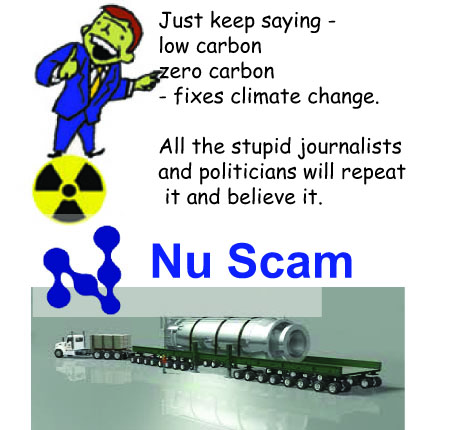 Fluor Board Sued Over Insider Trading, Accounting Allegations, Mike Leonard, Legal Reporter, Aug. 14, 2020, COURT: Del. Ch., TRACK DOCKET: No. 2020-0655 (Bloomberg Law Subscription, JUDGE: J. Travis Laster (Bloomberg Law Subscription), COMPANY INFO: Fluor Corp. (Bloomberg Law Subscripti
The board of Fluor Corp., a leading engineering and construction conglomerate that does significant business with the federal government, has been hit with a Delaware lawsuit claiming several of its members sold stock at inflated prices while conspiring to mask the company’s deteriorating finances.
“At the same time,” Fluor’s board and top executives “engaged in a pattern” of having the company “repurchase its own shares at over-inflated prices,” the 98-page Chancery Court complaint says. “This repurchase of inflated stock cost the company over $1.6 billion.”
The heavily redacted derivative suit, made public Wednesday, comes about three months after Fluor……….(subscribers only) https://news.bloomberglaw.com/mergers-and-antitrust/fluor-board-sued-over-insider-trading-accounting-allegations
Nuclear Regulatory Commission bans TVA executive over whistleblower retaliation
Nuclear Regulatory Commission bans TVA executive over whistleblower retaliation, Jamie Satterfield, Knoxville News Sentinel, 31 Aug 20
The nation’s nuclear power watchdog says a Tennessee Valley Authority executive’s retaliation against a safety whistleblower was so egregious he is banned from the industry for five years.
TVA Vice President Joseph Shea is barred from working for five years in any activities that require licensing by the U.S. Nuclear Regulatory Commission, the agency said in a news release. The agency said the penalty is warranted to protect the public.
Shea, the regulatory agency concluded, “played a significant role” in the 2018 firing of nuclear engineer Beth Wetzel after she repeatedly raised safety concerns about TVA’s nuclear power program.
The U.S. Department of Labor last year ruled TVA executives, including its corporate attorney, cooked up a fake reason to fire Wetzel after she criticized one of her bosses. TVA later brokered a secret settlement with her……….. https://www.knoxnews.com/story/news/crime/2020/08/31/nuclear-regulatory-commission-bans-tva-executive-joseph-shea-over-whistleblower-retaliation/3442778001/
Santee Cooper finalizes settlement over leftover material at failed SC nuclear project
Santee Cooper finalizes settlement over leftover material at failed SC nuclear project, Post and Courier, By Andrew Brown abrown@postandcourier.com, Aug 31, 2020
Santee Cooper may finally be able to recover some of the money it dumped into two unfinished nuclear reactors in South Carolina.
The board of the Moncks Corner power provider finalized a settlement this weekend with Westinghouse Electric that will enable the state-run utility to sell off leftover parts and materials from the failed expansion of the V.C. Summer project.
The settlement, which has been in the works for months, requires Santee Cooper and Westinghouse to split the profits from any remaining equipment that could be used on another site. …….
The V.C. Summer project is widely considered one of the worst business failures in South Carolina history.
Santee Cooper was the minority owner of the project. It partnered on the unfinished reactors with Cayce-based South Carolina Electric & Gas, which was sold to Dominion Energy after construction was halted in mid-2017 after years of delays and cost overruns.
The two South Carolina utilities spent more than $9 billion on construction before the reactors were abandoned in July 2017.
By that time, Westinghouse had filed for bankruptcy and left the struggling project in the laps of SCE&G and Santee Cooper. As a result, electric customers for both utilities are still paying off debt tied to the abandoned project.
The amount of material left over from the two unfinished nuclear reactors is vast, and there’s one big reason for that. By the time SCE&G and Santee Cooper pulled the plug on the project, they had already purchased more than 90 percent of the parts. Yet only a third of the reactors were actually built. ………….https://www.postandcourier.com/business/santee-cooper-reaches-settlement-over-leftover-material-at-failed-sc-nuclear-project/article_8d01c2e4-eba1-11ea-a8d5-5fad5583ac38.html…..
A string of USA nuclear scandals: bribes, corrupt politics and lies, in effort to keep the industry alive

|
Nuclear Industry Politics: Bribes, Corruption and Lies https://www.ewg.org/energy/23289/nuclear-industry-politics-bribes-corruption-and-lies?utm_campaign=EWG+Content&utm_content=1598472836&utm_medium=Social&utm_source=facebook&fbclid=IwAR1paLNGDeZaXdPj0OfluAkJC31n5WWzJdlOTUamCB5IA5The U.S. nuclear industry knows it can’t compete fairly on the open market with safe, clean, cost-effective renewable energy sources like solar, wind and storage batteries, so it’s turning to illegal and unsavory tactics. This year, a string of scandals has exposed how some utilities are willing to use bribes, corrupt politics and lies to keep aging reactors online and planned new plants alive.
|
|
The Assange extradition hearing – a continued travesty of justice
 Assange Travesty Continues https://www.craigmurray.org.uk/archives/2020/08/assange-travesty-continues/?fbclid=IwAR2MvHqWNmC2Z7gpPI3I24-XwXRvFGIUFmxoa5LgBm5vJqgDJ3BxSDexU4U
By 7 September it will be six months since I applied to resume my membership of the National Union of Journalists. I STILL have not the slightest idea who objected, or what the grounds were for objection. I have not heard from the NUJ for months. A senior official of an international journalists’ organisation has told us that he inquired, and learnt that the NUJ national executive has considered my application and set up a sub-committee to report. But if so, why is this secret, why have I not been informed, and why am I not allowed to know what the objection is? I find this all very sinister. At this stage it is not paranoid to wonder whose hand is behind this.
The practical effect of this is that without NUJ membership I cannot access a Press card, and avail myself of whatever media arrangements are in place for the Assange hearing (just as I was kept out of most of the Salmond trial). I have now reached the stage where I would like to take legal action against the NUJ, but the finances are beyond me. I am not going to ask you to donate because we are going to need all our resources for the contempt case against me, which the Crown drags out.
I shall be writing next week about my own case and that hearing earlier this week. I would just note now that the “virtual hearing” is entirely unsatisfactory and unfair on defendants. There was at least one occasion when my QC agreed with a suggestion of the judge when I would have instructed them not to had I been, as I should normally have been, seated near them in court and able to instruct.
Unlike our adversaries including the Integrity Initiative, the 77th Brigade, Bellingcat, the Atlantic Council and hundreds of other warmongering propaganda operations, this blog has no source of state, corporate or institutional finance whatsoever. It runs entirely on voluntary subscriptions from its readers – many of whom do not necessarily agree with the every article, but welcome the alternative voice, insider information and debate.
Ohio Attorney General Dave Yost considers legal action over corruption tainted nuclear bailout law
Ohio Attorney General Considering Legal Action To Stall Nuclear Bailout Rate 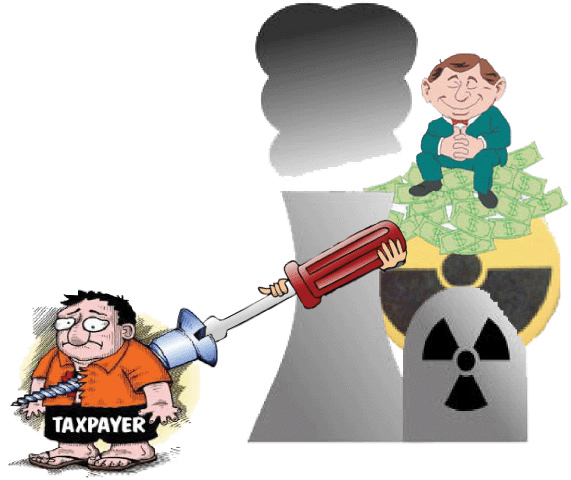 Hikes https://www.wvxu.org/post/ohio-attorney-general-considering-legal-action-stall-nuclear-bailout-rate-hikes#stream/0, By ANDY CHOW August 28, 2020
Ohio Attorney General Dave Yost says he’s considering taking legal action to stall the billion-dollar nuclear power plant bailout as legislators consider a possible repeal to the law that created the subsidies.
The Public Utilities Commission of Ohio have approved the mechanism to be used to increase nearly every ratepayer’s electric bills next year. The increase is part of HB6, a law that creates $150 million in annual subsides to two nuclear power plants.
Yost’s discussion of a possible injunction is the latest action from leaders, advocates and interest groups fighting to repeal HB6, which is said to be the catalyst for a $60 million racketeering scheme.
Michael Hartley with the Coalition to Restore Public Trust says legislators must toss out the law.
“Every single word of it is corrupt, and every single word of it is tainted. That is why, to restore the public trust in Ohio’s government and political system, that’s why the legislature needs to repeal HB6 in its entirety,” Hartley says. “The citizens of Ohio feel duped. They feel that their government duped them on this bill. And therefore, they’re mad, they’re very mad. And they want this repealed.”
Federal investigators say a utility company believed to be FirstEnergy and its subsidiaries funneled millions of dollars to personally and politically benefit former House Speaker Larry Householder (R-Glenford) in exchange for the bailout.
HB6 allowed an increase of $0.85 for everyone’s monthly electric bills. That increase would generate $170 million in annual subsidies, $150 million for nuclear power plants, and $20 million for solar farms.
The bill also created an increase of up to $1.50 a month on electric bills to subsidize two coal plants, Kyger Creek in Gallia County and Clifty Creek in Madison, Indiana.
Several measures in HB6 were priorities for FirstEnergy and its former subsidiary FirstEnergy Solutions, now called Energy Harbor. FirstEnergy CEO Chuck Jones has said he believes the company acted properly in the matter and intends to fully cooperate with investigators.
Ohio Attorney General could seek injunction to stop nuclear plant surcharge
Ohio AG Yost considering lawsuit to halt nuclear plant surcharge, LIZ SKALKA. The Blade. lskalka@theblade.com–26 Aug 20, COLUMBUS — Ohio Attorney General Dave Yost on Wednesday said he’s prepared to seek an injunction that would stop the imposition of a ratepayer surcharge flowing to two northern Ohio nuclear power plants at the center of the $61-million statehouse corruption scandal.Mr. Yost, a Republican, indicated he’s considering moving ahead with a lawsuit as the Ohio Senate prepares to return to Columbus next week to discuss repealing or replacing the energy law, House Bill 6, at the heart of the scandal.
Pressuring lawmakers to act quickly on what will be a complex process, Mr. Yost said he could file a lawsuit as soon as September if the legislature doesn’t move swiftly to repeal the law. He declined to set a deadline or elaborate on what might trigger him to file, except to say he supports a repeal……..
 Lawmakers have debated how to handle the controversial law since former House Speaker Larry Householder (R., Glenford) and four others were charged in July with conspiring to funnel $61 million from FirstEnergy and related interests to help elect Mr. Householder’s allies who would then elevate him to speaker. The political power he gained was used to pass the energy law.
Its key feature is a new surcharge to FirstEnergy Solutions’ customers monthly bills beginning in 2021 to generate $150 million a year to support the struggling nuclear plants and $20 million a year for solar projects.
House Republicans and Democrats have introduced separate repeal bills that would block the new subsidies while restoring mandates that utilities obtain more of their power from renewable sources.
A bipartisan measure doing the same thing has been introduced in the Senate.
Mr. Yost said a lawsuit would stop a billion-dollar revenue stream from flowing to the nuclear plants while lawmakers deal with the fallout from the corruption scandal. ……
The Coalition to Restore Public Trust, a pro-repeal group, applauded Mr. Yost.
“The potential injunction sought by AG Yost should serve as further notice to Ohio’s legislature that they must move expeditiously to remove this tainted legislation from Ohio law,” executive director Michael Hartley said in a statement. https://www.toledoblade.com/business/energy/2020/08/26/ohio-ag-yost-considering-lawsuit-to-halt-nuclear-plant-charge/stories/20200826129
1 This Month

To see nuclear-related stories in greater depth and intensity – go to https://nuclearinformation.wordpress.com
-
Archives
- September 2026 (194)
- August 2026 (330)
- July 2026 (355)
- June 2026 (287)
- May 2026 (306)
- April 2026 (356)
- March 2026 (251)
- February 2026 (267)
- January 2026 (308)
- December 2025 (358)
- November 2025 (359)
- October 2025 (375)
-
Categories
- 1
- 1 NUCLEAR ISSUES
- business and costs
- climate change
- culture and arts
- ENERGY
- environment
- health
- history
- indigenous issues
- Legal
- marketing of nuclear
- media
- opposition to nuclear
- PERSONAL STORIES
- politics
- politics international
- Religion and ethics
- safety
- secrets,lies and civil liberties
- spinbuster
- technology
- Uranium
- wastes
- weapons and war
- Women
- 2 WORLD
- ACTION
- AFRICA
- Atrocities
- AUSTRALIA
- Christina's notes
- Christina's themes
- culture and arts
- Events
- Fuk 2022
- Fuk 2023
- Fukushima 2017
- Fukushima 2018
- fukushima 2019
- Fukushima 2020
- Fukushima 2021
- general
- global warming
- Humour (God we need it)
- Nuclear
- RARE EARTHS
- Reference
- resources – print
- Resources -audiovicual
- Weekly Newsletter
- World
- World Nuclear
- YouTube
-
RSS
Entries RSS
Comments RSS
 nuclear-news