Ohio Nuclear-Plant Owner’s Bankruptcy Plan Upheld by Appeals Court
|
Ohio Nuclear-Plant Owner’s Bankruptcy Plan Upheld by Appeals Court, Environmental groups and consumer advocates had asked court to reconsider Energy Harbor’s chapter 11 plan, WSJ, By Andrew Scurria Nov. 3, 2020
Monday’s decision by the U.S. Court of Appeals for the Sixth Circuit in Cincinnati affirmed the chapter 11 restructuring of Energy Harbor, which filed for bankruptcy in 2018 as a subsidiary of FirstEnergy and emerged in February owned by investors. Environmental… (Subscribers only) https://www.wsj.com/articles/ohio-nuclear-plant-owners-bankruptcy-plan-upheld-by-appeals-court-11604434946 |
|
Two politicians to plead guilty in Ohio nuclear corruption case

The five are accused of shepherding $60 million in energy company money for personal and political use. Manufacturing, Oct 29th, 2020 Andrew Welsh-Huggins COLUMBUS, Ohio (AP) — Two Ohio political operatives plan to plead guilty to charges that they conspired as part of what another defendant called an “unholy alliance” aimed at bailing out two aging Ohio nuclear power plants, court documents show.
Former Republican House Speaker Larry Householder and four others are charged with racketeering for their roles in the alleged scheme, under a law federal prosecutors typically use to charge gang members.
The five are accused of shepherding $60 million in energy company money for personal and political use in exchange for passing a legislative bailout of two aging nuclear plants and then derailing an attempt to place a rejection of the bailout on the ballot.
A federal court docket showed that “plea agreements” were filed Thursday for defendants Jeffrey Longstreth, a longtime Householder political adviser, and Juan Cespedes, a lobbyist described by investigators as a “key middleman.”
In a recorded conversation in September 2019, Borges described the relationship between Householder and the energy company as “this unholy alliance,” according to the July 21 complaint that lays out the details of the alleged scheme.
Lawmakers from both parties have pledged to repeal the bailout and to pass legislation requiring disclosure of money contributed to and spent by dark money groups. However, hearings to repeal the bailout ended this fall without resolution.
As recently as Wednesday, Republican Gov. Mike DeWine called on lawmakers to repeal the bailout during the Legislature’s lame duck session following next month’s election.
On Tuesday, two Ohio cities sued to block the bailout law from taking effect in January. https://www.manufacturing.net/energy/news/21200589/ohio-political-operatives-to-plead-guilty-in-nuclear-plant-bribery-case
Columbus, Cincinnati, take legal action to block Ohio’s nuclear power plant bailout law
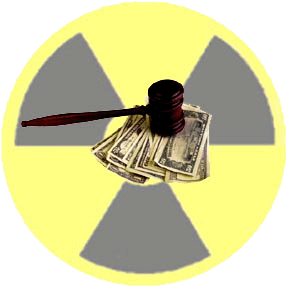 Columbus, Cincinnati Suing To Block Rate Hike In Nuclear Power Plant Bailout Law https://www.wcbe.org/post/columbus-cincinnati-suing-block-rate-hike-nuclear-power-plant-bailout-law Columbus, Cincinnati Suing To Block Rate Hike In Nuclear Power Plant Bailout Law https://www.wcbe.org/post/columbus-cincinnati-suing-block-rate-hike-nuclear-power-plant-bailout-law
By JIM LETIZIA & ASSOCIATED PRESS 28 Oct 20, •The Cities of Columbus and Cincinnati are suing to block the state’s nuclear power plant bailout law at the center of a 60 million federal bribery probe from taking effect January 1st.
They cite the need to save consumers from higher bills the tainted legislation would impose. The suit claims the charge is an unconstitutional tax. Last year, opponents of the law argued the charge is not a tax when they attempted to put a repeal on the ballot. The cities are suing the state treasurer, the Public Utilities Commission Of Ohio chair and Akron-based FirstEnergy, the company behind the bribery scheme. Republican former Ohio House Speaker Larry Householder and four others have been indicted in the scandal. |
|
Jesuit priest sentenced for peacful civil disbedience in protest against nuclear weapons
 JESUIT FR. STEVE KELLY SENTENCED FOR NONVIOLENT CIVIL DISOBEDIENCE AT U.S. NUCLEAR WEAPON FACILITY JESUIT FR. STEVE KELLY SENTENCED FOR NONVIOLENT CIVIL DISOBEDIENCE AT U.S. NUCLEAR WEAPON FACILITY
Ignation Solidarity Network, BY ISN STAFF | October 22, 2020 Father Steve Kelly, S.J., a 71-year-old Jesuit priest and member of the nonviolent civil disobedience group that came to be known as the “Kings Bay Plowshares 7,” was sentenced by a U.S. District Court judge to 33 months in jail, three years’ probation and restitution fees on October 15. Due to the fact that Fr. Kelly already served 30 months and under federal law is owed 54 days a year of “good time credit,” his sentencing, in essence, discontinued his incarceration in a federal prison facility. The sentence stems from April 4, 2018, the 50th anniversary of the assassination of Dr. Martin Luther King, Jr., when Fr. Kelly and six other Catholic activists, all lay people—Mark Colville, Clare Grady, Martha Hennessy, Elizabeth McAlister, Patrick O’Neill, and Carmen Trotta—set out late at night to practice their faith and witness for peace among the people working with nuclear weapons inside the U.S. Navy Kings Bay nuclear submarine base on the south Georgia coast. Once inside, they split into three groups to hang banners, pour blood, spraypaint religious sayings, block off an administrative building with crime scene tape, and hammer on replicas of the nuclear missiles deployed on the Trident submarines based at Kings Bay. The declaration of a National Emergency in mid-March led federal courts around the country to curtail business and restrict access. In southeast Georgia, the federal court put most proceedings on hold, first until April 17 and later through the end of May, further delaying the sentencing of the seven. Following a three-day jury trial in October 2019, the seven were convicted of misdemeanor trespass and three felonies: the destruction of government property, depredation of government property on a military installation, and a conspiracy to do these things. Fr. Kelly was returned to the Glynn County Detention Center following the trial. Release on bail was unavailable to Fr. Kelly due to his unresolved federal probation violation from an earlier disarmament action in Washington state. When the group was convicted, the court had set forth a clear timeline for the completion of pre-sentencing reports in anticipation of sentencing last winter. Those deadlines slipped by as draft reports for each of the defendants were prepared…………. In reflecting on the April 4, 2018, action, Fr. Kelly said: “In order to use my limited time, I will, along with others, try to embody the vision given to us through the prophet Isaiah. It is a conversion of weapons to devices for human production. The gift of Isaiah 2:4 is an economic, political, and moral conversion of the violence of nuclear annihilation. With others, I hope to be instruments in God’s hands for showing a way out of the escalation, the proliferation of this scourge of humanity. I feel strongly that Martin Luther King, Jr., would agree with the principle I attribute to Gandhi that we cannot be fully human while one nuclear weapon exists.” [Kings Bay Plowshares 7, Religion News Service] https://ignatiansolidarity.net/blog/2020/10/22/jesuit-fr-steve-kelly-sentenced-for-nonviolent-civil-disobedience-at-u-s-nuclear-weapon-facility/ |
|
EDF facing legal action over planned dumping of radioactive mud, and over fish safety problems
 Campaigners attempting to stop mud from the construction of Hinkley Point
Nuclear Power Station, Somerset, being dumped into Welsh waters, have
announced they are working with leading environmental lawyers Leigh Day to
block the proposals.
Wales for a licence to dump 800,0000 tonnes of mud dredged as part of
building work for the new plant that is being built on the site of the
disused Hinkley Point A facility. Two years ago, EDF were given permission
to dump 300,000 tonnes of mud from the site off the Cardiff coast, despite
protests and following a Senedd debate.
proposals received over 10,000 signatures and has triggered a debate in the
Senedd tomorrow. Earlier this month EDF Energy confirmed it will carry out
an Environmental Impact Assessment as part of its licence application. This
agreement reverses NRW and Welsh Government’s previous position that an
EIA was not needed for the dumping they permitted in 2018 just 2.1 miles
off the South Wales coast and 2.5 miles from Cardiff.
written to Natural Resources Wales (NRW) requesting full disclosure of
documents on the Environmental Impact Assessment (EIA)-screening
application from EDF and the agreement with NRW that “environmental
impact assessment is required”.
a controversial fish management system that is being installed at the site
of the new facility. The Environment Agency granted a licence to EDF in
2013 that permitted sea water to be used for the nuclear power station’s
cooling system but required the deployment of a fish deterrent system on
the site to protect marine life in the estuary.
 proposed the use of an acoustic deterrent system to reduce the number of
fish being killed by the cooling system but in 2017 abandoned the plans
without suggesting any alternative. Currently the plant’s proposed Fish
Recovery and Return System will consist of a 5mm mesh barrier set up in the
water intake tunnel to stop large fish from being sucked in while another
channel will divert fish, dead or alive, back out to sea. Last year the
Sunday Times reported that marine and conservation groups estimated that
this system will kill 250,000 fish a day and called for it to be altered or
scrapped. EDF said the FRR will kills an estimated 650,00 fish a year.https://nation.cymru/news/senedd-roundup-leading-environmental-lawyers-join-battle-to-block-mud-dump/
The attack on journalism – launched with the persecution of Julian Assange

Persecuting Assange Is a Real Blow to Reporting and Human Rights Advocacy’
CounterSpin interview with Chip Gibbons on Assange extradition Fair, 15 Oct 20,
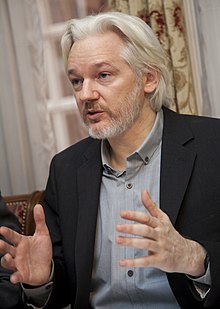 for the October 9, 2020, episode of CounterSpin. This is a lightly edited transcript.
Janine Jackson: If it were not for a tiny handful of journalists—ShadowProof’s Kevin Gosztola preeminent among them—Americans might be utterly unaware that a London magistrate, for the last month, has been considering nothing less than whether journalists have a right to publish information the US government doesn’t want them to. Not whether outlets can leak classified information, but whether they can publish that information on, as in the case US war crimes and torture and assorted malfeasance to do with, for instance, the war on Afghanistan, which just entered its 19th year, with zero US corporateUS war crimes and torture and assorted malfeasance to do with, for instance, the war on Afghanistan, which just entered its 19th year, with zero US corporate media interest.
Assange’s case, the unprecedented use of the Espionage Act to go after a journalist, has dire implications for all reporters. But this country’s elite press corps have evidently decided they can simply whistle past it, perhaps hoping that if and when the state comes after them, they’ll make a more sympathetic victim.
Joining us now to discuss the case is Chip Gibbons. He’s policy director at Defending Rights & Dissent. He joins us now by phone from Washington, DC………..
CG: Sure. So the US has indicted Julian Assange with 17 counts under the Espionage Act, as well as a count under the Computer Fraud and Abuse Act.
Assange is not a US person; he’s an Australian national. He was inside the Ecuadorian embassy for a number of years, as Ecuador had granted him asylum, and the UK had refused to basically recognize that and let him leave the country, so he was de facto imprisoned inside the embassy. And after the indictment the US issued, the new government of Ecuador—which is much less sympathetic to Assange than the previous Correa government—let the US come in the embassy and seize him.
And the US is seeking Assange’s extradition to the US from the UK. I guess it’s, probably, technically a hearing, but Kevin’s point was that it’s more like what we would think of as a trial, in that there’s different witnesses, there’s expert testimony, there’s different legal arguments at stake.
The defense, the witness portion of it, has closed; it ended last week. And there’s going to be closing arguments submitted in writing, and then the judge will render a decision, and that decision will be appealable by either side. So regardless of the outcome, we can expect appeals. So it does very closely mirror what we would think of more like a trial than a hearing in the US court context.
It’s important to really understand what’s at stake with Assange’s extradition. He is the first person ever indicted by the US government under the Espionage Act for publishing truthful information.
The US government has considered indicting journalists before: They considered indicting Seymour Hersh, a very famous investigative reporter. They considered indicting James Bamford, because he had the audacity to try to write a book on the National Security Agency. But they’ve never done that.
And Obama’s administration looked at the idea of indicting Assange and said, “No, this would violate the First Amendment, and it would open the door to all kinds of other bad things.” But the Trump administration clearly doesn’t have those qualms……..
It is very interesting to see how this plays out in a US court in the current environment. If whoever—Trump or Biden, whoever is president, when this finally comes to the US—actually pursues this, and they actually are allowing the persecution of journalists, that’s going to be a really dark, dark assault on free expression rights.
And it’s worth remembering—and Julian Assange is clearly very reviled in the corporate media and the political establishment right now—but the information he leaked came from Chelsea Manning, it dealt with US war crimes; and he worked with the New York Times, the Guardian, Der Spiegel, Le Monde, Al Jazeera, to publish this information. So if he can go to jail for publishing this, why can’t the New York Times? And is that a door anyone wants to open? There is a big press freedom angle here.
I also want to talk about the facts, though: What did Julian Assange publish, and why did it matter? ………..
Julian Assange is accused of publishing information about war crimes, about human rights abuses and about abuses of power, that have been tremendously important, not just for the public’s right to know, but also have made a real difference in advocacy around those issues. People were able to go and get justice for victims of rendition, or able to go and get court rulings in other countries about US drone strikes, because of this information being in the public domain. So attacking Assange, persecuting Assange, disappearing him into a supermax prison, this is a real blow to reporting and human rights advocacy. ………
JJ: Right. And, finally, the journalists who are holding their nose right now on covering it aren’t offering to give back the awards that they won based on reporting relying on WikiLeaks revelations. And James Risen had an op-ed in the New York Times a while back, in which he was talking about Glenn Greenwald, but also about Julian Assange, and he said that he thought that governments—he was talking about Bolsonaro in Brazil, as well as Donald Trump—that they’re trying out these anti-press measures and, he said, they “seem to have decided to experiment with such draconian anti- press tactics by trying them out first on aggressive and disagreeable figures.”………. https://fair.org/home/persecuting-assange-is-a-real-blow-to-reporting-and-human-rights-advocacy/
Japan’s government is appealing the landmark ruling about its responsibility for Fukushima nuclear accident
Landmark Court Ruling In Japan Holds Government Accountable For 2011 Nuclear Meltdown https://www.npr.org/2020/10/15/924150284/landmark-court-ruling-in-japan-holds-government-accountable-for-2011-nuclear-mel
|
Heard on All Things Considered, ANTHONY KUHN, 15 Oct 20, Japan’s government is appealing a landmark court ruling that holds it responsible for failing to prevent the worst nuclear accident in the country’s history and orders it to pay damages to victims. AILSA CHANG, HOST: The Japanese government and a nuclear power plant operator have appealed a landmark court ruling. The ruling holds them responsible for the country’s worst ever nuclear accident. The 2011 Fukushima meltdown was triggered by a huge earthquake and tsunami. But as NPR’s Anthony Kuhn reports from Seoul, plaintiffs are concerned that justice is being delayed once again. (CHEERING) ANTHONY KUHN, BYLINE: Cheering broke out outside the high court in the city of Sendai, about 60 miles north of the crippled Fukushima nuclear plant last month. To many people’s surprise, the court’s ruling held the central government and the Tokyo Electric Power Company – or TEPCO, which runs the plant – equally responsible for the accident. Plaintiffs argued that scientists had warned the government in 2002 that a major tsunami could hit the area. The court said in its scathing verdict that the government failed to take action. TAKASHI NAKAJIMA: (Speaking Japanese).KUHN: “The government, despite its position as regulator, just let TEPCO do as it pleased and let it put off safety measures. It was gross negligence, and it was an attitude unbefitting a regulatory agency.” That was Takashi Nakajima paraphrasing the court’s verdict. He’s a leader among the nearly 3,600 plaintiffs in the case. The Sendai court ordered the government and TEPCO to pay them $9.6 million in compensation, double what a lower court had ruled three years ago. Many people in Nakajima’s community near Fukushima fled their homes. He says he filed the lawsuit basically just to say, give me back my former life. NAKAJIMA: (Speaking Japanese). KUHN: “Imagine how you would feel,” he says, “if suddenly you get into a situation where you can never go back to your hometown because there’s a risk of radiation.” Nakajima runs a supermarket, but he says that fears about radiation in waters near Fukushima make it impossible to sell the local fish in which he used to take such pride. NAKAJIMA: (Speaking Japanese). KUHN: “The fishermen eat them because they’ve been eating them for a long time,” he says, “and they’re tasty. But their sons and daughters-in-law tell them that their grandchildren should not eat them. This is a situation which divides many families.” Judges in the Sendai verdict appear to have been especially sympathetic to such hardships. Eri Osaka, a law professor at Toyo University in Tokyo, explains. ERI OSAKA: (Through translator) The Sendai High Court judges actually visited the area at issue in the trial before the decision was made. It’s very unusual that judges truly understand what hardships the victims are experiencing. KUHN: Some plaintiffs in similar lawsuits have not been as fortunate as Nakajima and have lost. Professor Masafumi Yokemoto, a professor of environmental policy at Osaka City University, says the Sendai verdict could change that. MASAFUMI YOKEMOTO: (Speaking Japanese). KUHN: “This is the first time a decision recognizing the government’s full responsibility has been made at the high court level,” he says, “although it was partly recognized by a lower court. It’s very significant, and it’ll clearly influence future decisions.” That’s why many observers were not surprised when the government and TEPCO appealed the verdict on Tuesday. Plaintiff Takashi Nakajima hopes that the Sendai court ruling will eventually pave the way for the shutdown of all dangerous nuclear power plants in Japan. But whether or not the ruling stands will now be up to Japan’s Supreme Court to decide. Anthony Kuhn, NPR News, Seoul. |
|
Bankrupt Mallinckrodt company faces large liabilities in radioactive trash cleanup
 Bankrupt Mallinckrodt may still be expected to help shoulder nuclear cleanup costs, St Louis Post
  Dispatch, Bryce Gray, 17 Oct 20
- ST. LOUIS — Two sets of nuclear waste complaints against Mallinckrodt have been thrown into question in a two-week span, while the company restructures in bankruptcy court.
Facing a wave of lawsuits and a $1.6 billion settlement stemming from its role in the national opioid crisis, the company with deep St. Louis roots filed for protection from creditors on Monday.
While industry analysts have focused on Mallinckrodt’s future as a drugmaker, the company also faces potential liabilities for work a predecessor company, St. Louis-based Mallinckrodt Chemical Works, performed decades ago, when it processed uranium for the U.S. government. Radioactive waste left over from Mallinckrodt’s uranium production is buried today in the West Lake Landfill Superfund site in Bridgeton and also along sections of Coldwater Creek, which runs from St. Ann to the Missouri River.
On Sept. 30, a two-year-old lawsuit aimed at getting Mallinckrodt to help shoulder the looming $205 million cleanup at West Lake was dismissed, but appears to be in mediation. Lawyers involved with the case warn that, despite the dismissal, the matters at hand remain unresolved and under discussion. ……
The dispute arose in 2018, when — after decades of inaction — a plan to soon excavate the bulk of West Lake’s radioactivity was finally announced. In the months that followed, Republic Services — the waste hauling company whose subsidiary, Bridgeton Landfill LLC, is the legal owner of the Superfund site — initiated a chain of legal actions against Mallinckrodt and other entities in an apparent strategy to spread out the nine-figure cost of the site’s long-awaited cleanup.
Allegations in the ensuing lawsuits focused on the histories of Mallinckrodt and other parties that Republic said belong at “the table,” regarding work at West Lake.
Mallinckrodt was the first to be roped into the litigation. During the development of the atomic bomb in World War II, the company “purified and provided all of the uranium oxide used by the Manhattan Project,” according to its website. Some of the radioactive waste from the company’s St. Louis operations eventually made it to West Lake Landfill, where it was illegally dumped in the 1970s…….….
West Lake’s cleanup is not the only matter involving radioactive waste that could affect Mallinckrodt.
For almost a decade, the company has confronted personal injury lawsuits alleging that residents of surrounding communities have faced cancers and other health issues caused by the legacy of radioactive contamination along Coldwater Creek, after waste from Mallinckrodt was stored and buried at an upstream site near the airport.
Some of the cases — which originated in 2012 — have already been settled, and lawyers said in a hearing Wednesday that settlements that were verbally approved would not likely be affected by Mallinckrodt’s bankruptcy case. Outstanding cases will likely be stayed while bankruptcy proceedings take place, though it’s not clear what may happen next.
Back at West Lake, cleanup costs are currently set to be divided among Republic and two other parties deemed liable at the site: the U.S. Department of Energy and Exelon, the Chicago energy company that formerly owned the uranium processor, Cotter Corp., through a subsidiary….. https://www.stltoday.com/business/local/bankrupt-mallinckrodt-may-still-be-expected-to-help-shoulder-nuclear-cleanup-costs/article_dc7643f9-fc32-53e4-9a98-d1bcafdcdcc8.html
Assange extradition case could esrablish a dangerous legal precedent
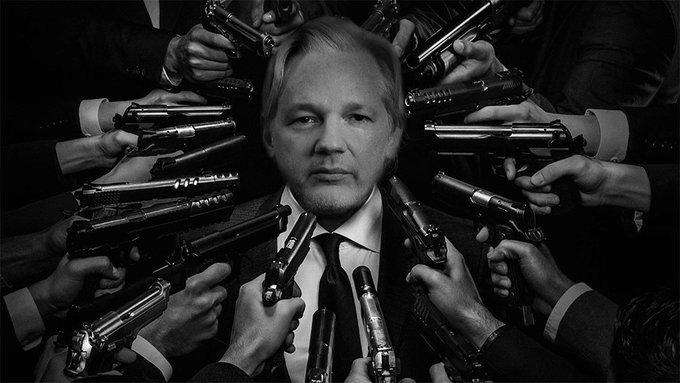 Crumbling Case Against Assange Shows Weakness of “Hacking” Charges Related to Whistleblowing
The charge against Assange is about establishing legal precedent to charge publishers with conspiring with their sources, something that so far the U.S. government has failed to do because of the First Amendment.
Five years later, in 2018, the Trump Administration indicted Assange anyway. But, rather than charging him with espionage for publishing classified information, they charged him with a computer crime, later adding 17 counts of espionage in a superseding May 2019 indictment.
The computer charges claimed that, in 2010, Assange conspired with his source, Chelsea Manning, to crack an account on a Windows computer in her military base, and that the “primary purpose of the conspiracy was to facilitate Manning’s acquisition and transmission of classified information.” The account enabled internet file transfers using a protocol known as FTP.
New testimony from the third week of Assange’s extradition trial makes it increasingly clear that this hacking charge is incredibly flimsy. The alleged hacking not only didn’t happen, according to expert testimony at Manning’s court martial hearing in 2013 and again at Assange’s extradition trial last week, but it also couldn’t have happened.
The new testimony, reported earlier this week by investigative news site Shadowproof, also shows that Manning already had authorized access to, and the ability to exfiltrate, all of the documents that she was accused of leaking — without receiving any technical help from WikiLeaks. …….
the charge is not actually about hacking — it’s about establishing legal precedent to charge publishers with conspiring with their sources, something that so far the U.S. government has failed to do because of the First Amendment………
Whether or not you believe Assange is a journalist is beside the point. The New York Times just published groundbreaking revelations from two decades of Donald Trump’s taxes showing obscene tax avoidance, massive fraud, and hundreds of millions of dollars of debt.
Trump would like nothing more than to charge the New York Times itself, and individual journalists that reported that story, with felonies for conspiring with their source. This is why the precedent in Assange’s case is so important: If Assange loses, the Justice Department will have established new legal tactics with which to go after publishers for conspiring with their sources. https://portside.org/2020-10-10/crumbling-case-against-assange-shows-weakness-hacking-charges-related-whistleblowing
World press freedom endangered, if UK extradites Julian Assange to America
The
|
Assange Faces Extradition for Exposing US War Crimes, BY Marjorie Cohn, Truthout, October 11, 2020 Three weeks of testimony in Julian Assange’s extradition hearing in London underscored WikiLeaks’s extraordinary revelation of U.S. war crimes in Iraq, Afghanistan and Guantánamo Bay. But the Trump administration is seeking to extradite Assange to the United States to stand trial for charges under the Espionage Act that could cause him to spend 175 years in prison. Assange founded WikiLeaks during the Bush administration’s “war on terror,” which was used as a pretext to start two illegal wars and carry out a widespread program of torture and abuse of prisoners at Guantánamo and the CIA black sites. On October 8, 2011, Assange told a Stop the War Coalition rally in London’s Trafalgar Square, “If wars can be started by lies, peace can be started by truth.” In 2010 and 2011, WikiLeaks published classified material that Army intelligence analyst Chelsea Manning had provided to the organization. Manning was prosecuted, convicted and sentenced to 35 years in prison for leaking the documents. As he left office, Barack Obama commuted her sentence to the seven years she had already served. That commutation provoked “tremendous anger” in the Trump administration and drew Trump’s attention to Assange, Eric Lewis testified. Lewis, chairman of the board of Reprieve U.S. and lawyer for Guantánamo and Afghan detainees, called this “a politically motivated prosecution.” The files that WikiLeaks published contained 90,000 reports about the war in Afghanistan, including the Afghan War Logs, which documented a greater number of civilian casualties by coalition forces than the U.S. military had reported. In addition, WikiLeaks published nearly 400,000 field reports about the Iraq War, more than 15,000 unreported deaths of Iraqi civilians, and the systematic murder, torture and rape by the Iraqi army and authorities that were ignored by U.S. forces. WikiLeaks also published the Guantánamo Files, 779 secret reports constituting evidence of the U.S. government’s abuse of approximately 800 men and boys, ages 14 to 89. That abuse violated the Geneva Conventions and the Convention Against Torture and Other Cruel, Inhuman or Degrading Treatment or Punishment. Perhaps the most notorious release by WikiLeaks was the 2007 “Collateral Murder” video, which depicts a U.S. Army Apache helicopter target and fire on unarmed civilians in Baghdad. At least 18 civilians were killed, including two Reuters reporters and a man who came to rescue the wounded. Two children were injured. A U.S. Army tank drove over one of the bodies, cutting it in half. The video contained evidence of three separate war crimes prohibited by the Geneva Conventions and the U.S. Army Field Manual. As they are firing on the civilians, U.S. gunmen can be heard saying, “Look at those dead bastards.” In his written testimony, investigative journalist Nicky Hager drew a parallel between the Collateral Murder video and the television image of George Floyd screaming “I can’t breathe.” Assange Cannot Be Extradited for a Political OffenseThe 2003 U.S.-U.K. Extradition Treaty forbids extradition for a political offense. Although the treaty doesn’t define “political offense,” it generally includes espionage, treason, sedition and crimes against state power. Trump is asking the U.K. to extradite Assange for exposing war crimes. This is a classic political offense. Assange is charged under the Espionage Act and espionage constitutes a political offense as well……….. Assange’s Prosecution Violates Freedom of PressWhile the Obama administration declined to file criminal charges against Assange for fear of setting a dangerous precedent, Team Trump demonstrated no such forbearance. By charging Assange under the Espionage Act, Trump is making him a poster boy for its full court press against the media, which he calls “the enemy of the people.” Assange’s prosecution would send an ominous message to all journalists: report the unvarnished truth at your peril. No media outlet or journalist has ever been prosecuted under the Espionage Act for publishing truthful information, which is protected First Amendment activity. Journalists are permitted to publish material that was illegally obtained by a third person and is a matter of public concern. The U.S. government has never prosecuted a journalist or newspaper for publishing classified information, an essential tool of journalism. Information-gathering, reporting and disclosure fit the classic definition of activity protected by the First Amendment’s guarantee of freedom of the press. There is no distinction between what WikiLeaks did and what The New York Times, Der Spiegel, Le Monde, El País and The Guardian did as well. They all published articles based on documents WikiLeaks released. This is the reason Obama administration — which prosecuted an enormous number of whistleblowers — considered, but refrained from, indicting Assange. ……… WikiLeaks Didn’t Endanger Informants and Saved LivesAlthough the U.S. government claims that Assange endangered informants named in the published documents, John Goetz, an investigative reporter who worked for Germany’s Der Spiegel, testified that Assange took pains to ensure that the names of U.S. informants in Iraq and Afghanistan were redacted to protect their identities. …….. Moreover, WikiLeaks’s revelations actually saved lives. After WikiLeaks published evidence of Iraqi torture centers the U.S. had established, the Iraqi government refused Obama’s request to extend immunity to U.S. soldiers who commit criminal and civil offenses there. As a result, Obama had to withdraw U.S. troops from Iraq. WikiLeaks also revealed evidence of wrongdoing by other countries besides the United States. The organization uncovered Russian surveillance, published exposés of Bashar al-Assad in Syria, and some say WikiLeaks’s exposure of corruption in Tunisia and torture in Egypt helped catalyze the Arab Spring………… Assange’s Prosecution Will Chill JournalismOstensibly to get around allegations that it is prosecuting Assange for conducting journalism, the Trump administration is trying to paint him as a hacker by accusing him of conspiring with Manning to break into a government computer to steal government documents, in violation of the Computer Fraud and Abuse Act. But, as Patrick Eller, a digital forensic expert, testified, the attempted cracking of the password hash was not technologically possible in 2010, when the conversation between Assange and Manning occurred. Even if it were feasible, the purpose would not have been to conceal Manning’s identity and it would not have given Manning any increased access to government databases. The prosecution of Assange would set a disturbing example for journalists and media outlets that publish information critical of the government. Team Trump singled out Assange to deter journalists from publishing material that criticizes U.S. policy. If Assange is extradited to the United States and convicted of the charges against him, it would chill journalists from reporting the facts for fear they could be indicted under the Espionage Act………. When she set the November 16 date for the defense to submit closing arguments, Judge Vanessa Baraitser asked the defense how the U.S. presidential election would affect its case and declared that her decision on extradition would come after that election, stating, “That’s one of the factors going into my decision.” Kristinn Hrafnsson, editor-in-chief of WikiLeaks, said that the judge “acknowledged what has been clear since even before the first indictment against Julian Assange was unsealed — that this is a politically motivated prosecution.” Baraitser, who has granted extradition in 96 percent of the cases that have come before her, plans to issue her ruling on January 4. If she grants extradition, there will be several levels of appeals, including to the European Court of Human Rights. The stakes could not be higher. https://truthout.org/articles/assange-faces-extradition-for-exposing-us-war-crimes/?eType=EmailBlastContent&eId=614ce999-9844-4d61-a600-169db0c99052 |
New Zoom link for Oct 11 Festival of Hope, Two to be Sentenced Oct 15, Four Others Continued Until Nov 12 & 13
 New Zoom link for Oct 11 Festival of Hope, Two to be Sentenced Oct 15, Four Others Continued Until Nov 12 & 13 Bill Ofenloch, October 9, 2020/, Kings Bay Plowshares 7, Father Steve Kelly and Patrick O’Neill are scheduled to be sentenced in Brunswick, GA on October 15 & 16 in the early afternoon. It is expected that the two will be combined on October 15. The remaining four defendants, Carmen Trotta, Martha Hennessy, Mark Colville, and Clare Grady, were granted continuances yesterday by Judge Wood to Nov. 12 & 13 because of COVID-19.
The defendants ask, “In the interest of public safety, and out of love for our supporters during this Covid 19 pandemic, the seven Kings Bay Plowshares members request that no one come to Brunswick for the sentencing hearings scheduled for Oct. 15-16. We do, however, encourage you all to join the Oct. 11 pre-sentencing Zoom meeting. Thank you all for your love and support, which sustains us.”
There is expected to be an audio link from the court to listen to the proceedings as was done with Liz McAlister in June. The call-in number and times will be posted on the website when we get them.
A virtual Festival of Hope is planned for Sunday, October 11, at 5pm EDT prior to the sentencing of Fr. Steve Kelly and Patrick O’Neill. It will now be hosted on the Code Pink Zoom channel. It will also be on the Code Pink YouTube channel and on the KBP Facebook page. Patrick and several of the defendants will appear. Fr. Steve Kelly will send a message from jail. Marcia Timmel, Susan Crane and Steve Baggarly, plowshares activists, will speak. There will also be a slideshow and music and a blessing.
The new Zoom link:
USA ‘s Environment and climate cases face a bleak future with a Republican dominated Supreme Court
 HOW WILL CLIMATE AND ENVIRONMENTAL CASES FARE ON A 6-3 CONSERVATIVE SUPREME COURT? THE ALLEGHENY FRONT, REID FRAZIER, OCTOBER 2, 2020
It appears that President Trump has enough votes in the Senate to confirm Supreme Court nominee Amy Coney Barrett before Election Day. That means the court’s balance would tip from a 5 to 4 advantage for conservatives to 6 to 3. What would this majority mean for the environment?
For our podcast, Trump on Earth, Reid Frazier examines what the loss of RBG could mean for the environment with Ellen Gilmer, senior legal reporter for Bloomberg Law.
But first, we take a look back at Ginsburg’s environmental legacy with Pam King and Jeremy Jacobs, reporters for E&E News who wrote in a recent article, “The passing of Supreme Court Justice Ruth Bader Ginsburg could shake the foundation of America’s bedrock environmental laws, leaving a chasm on the bench where once sat an environmental champion.” (Read the transcript to that interview HERE.)
(The interviews were conducted before Amy Coney Barrett was nominated to fill Justice Ruth Bader Ginsburg’s seat on the Supreme Court.)
Listen to the full episode or read the transcript below:
Ohio’s nuclear bailout law caused dissent and trouble for renewables industries
Revival of renewables sought in debate over nuclear bailout, imaohio.com, By Jim Provance – The (Toledo) Blade, 4 Oct 20, COLUMBUS — EDP Renewables North America, the world’s fourth-largest wind developer, invested more than $700 million into projects in Paulding and Hardin counties when Ohio first rolled out the red carpet.
But more recent signals from the state — including last year’s passage of the $1 billion bailout of two nuclear plants — have convinced the company to look elsewhere for its future investments.
“HB 6 created a false dichotomy — that Ohio must sacrifice a clean-energy future at the expense of its energy past,” Erin Bowser, EDP’s director of project management, on Wednesday told a House of Representatives select committee now considering repealing House Bill 6.
“But rather than pit technologies against each other, we encourage the state to leverage the strengths of each and maximize the contributions that can come from various energy sectors,” she said.
Most of the effects of the law at the heart of a $60 million Statehouse bribery scandal are set to take effect Jan. 1. The law generally creates or expands consumer-fueled subsidies for legacy nuclear and coal-fired power plants in Ohio and offsets those costs by rolling back and eliminating existing surcharges designed to create markets for renewable sources like wind and solar and reduce energy consumption overall.
House Bill 6 — and stricter property-line setback requirements separately enacted several years ago — have rolled up that red carpet first extended in 2008, Bowser said.
The House Select Committee on Energy Policy and Oversight, chaired by state Rep. Jim Hoops, R-Napoleon, whose district includes Putnam County, is considering two bills — separately introduced by Republicans and Democrats — that would outright repeal House Bill 6.
But the committee is also considering whether to replace the law, which has many moving parts that go well beyond the $1 billion, seven-year bailout of the Davis-Besse nuclear power plant near Oak Harbor and its sister Perry plant east of Cleveland.
The law also contains expanded customer subsidies through 2030 for two 1950s-era, coal-fired power plants in southern Ohio and across the border in Indiana that are owned by a consortium of utilities. American Electric Power holds the biggest share.
It also holds $20 million a year for five specific utility-scale solar projects in Hardin County and southern Ohio
The latter provision has caused a split within the Utility Scale Solar Energy Coalition of Ohio, an 18-member trade association for developers, manufacturers, and industry leaders.
“Some of our members benefited from the solar language in current law while others took a loss with the reduction in (the renewable power mandates),” said Jason Rafield, the group’s executive director. “Our members would support a return to the previous (renewable standards) because it’s good for the industry.”
But the projects that have received or been promised a piece of the $20 million solar pie under House Bill 6 don’t want to see that disappear.
Former Ohio House Speaker Larry Householder, R-Glenford, and four of his allies face federal racketeering charges for allegedly using a non-profit corporation to launder some $60 million in “dark money” from FirstEnergy Corp. and related entities.
The money was used to help elect state representatives loyal to Householder, who then helped to elect him speaker in 2019. The new speaker then used his power to push through the law that would provide $150 million a year to support the two nuclear plants owned by a former FirstEnergy subsidiary now called Energy Harbor.
Once it became law, the funding scheme allegedly continued to fight successfully an effort to ask voters to repeal the law on this fall’s ballot. All of the defendants have been accused of diverting some of the money for their personal use……… https://www.limaohio.com/news/430030/revival-of-renewables-sought-in-debate-over-nuclear-bailout
Julian Assange could face life in America’s most dreaded ‘Supermax’ prison
|
Julian Assange ‘faces a fate worse than death’ in a lifetime of isolation at the ‘Supermax’ prison currently home to America’s most violent terrorists and drug lords if he is extradited, a court has heard. The Wikileaks founder, 49, could live out his years alone at maximum security ADX Colorado jail where he would spend 23 hours in a cell if he is convicted of espionage offences in the US. Assange is wanted in the US for allegedly conspiring with army intelligence analyst Chelsea Manning to expose military secrets between January and May 2010 Prison expert Joel Sickler said the US government had ‘raised the possibility of sending Mr Assange to ADX’. ……… I believe, based on my understanding of the case, that this is a not unlikely proposition.’ He said Supermax was the only prison criticised as inhumane by its own staff, adding: ‘Robert Hood, the Warden says, “this is not built for humanity. I think that being there day by day, it’s worse than death”.’…….. The WikiLeaks founder could be placed on a prison regime called Special Administrative Measures (SAMS). This means he could be deprived of meals, phone calls, visits or interaction with other inmates. Mr Sickler, who advises federal prison defence attorneys, said: ‘Based on decades of experience, over a dozen of my clients committed suicide, it can be done. ‘I think he is only going to go there if he is a SAMS inmate. There is an outside chance he will go there on other grounds. ‘SAMS will seal his fate. If he is given a life sentence he must start at a United State Penitentiary. ‘He is someone our government alleges has knowledge of certain highly qualified information.’……… ‘Officially known as Administrative Maximum-Security United States Penitentiary (“ADX”); it is most known by its shorthand name, “Supermax”,’ Mr Sickler added. ‘This is a facility is the most feared by inmates and is where the most violent offenders in the nation are sent. ‘And this is where the Government, according to its own affidavit, sees as a potential prison placement for Mr Assange. He said it was the solitary nature of the ADX that made it so difficult for its inmates to bear. ‘Should Mr Assange be sent to ADX he will almost certainly spend all his time in ADX in solitary,’ he added……….. https://www.dailymail.co.uk/news/article-8781275/Julian-Assange-faces-fate-worse-death-WikiLeaks-founder-serve-life-isolation.html?fbclid=IwAR21x4PeHIIn2pjMDgqjBSqfqA2pK5YPTZ9Q4q4SOG066tGN_aKkZj91ROE |
|
After 4 decades of Plowshares Actions, It’s Nuclear Warfare that Should Be on Trial — Not Activists
 Most of the Kings Bay Plowshares still await sentencing. Mom was sentenced to time served by video conference in June — a surreal and dislocating experience that is now more and more common in our criminal justice system. Her co-defendants opted to postpone sentencing in hopes that it could be in person, but it is unclear if that will happen.
After 4 decades of Plowshares Actions, It’s Nuclear Warfare that Should Be on Trial — Not Activists, Forty years ago, the Plowshares Eight sparked a movement of nuclear disarmers that continues to take responsibility for weapons of mass destruction.
Before him were eight activists, including two priests and a nun. As Judge Salus tried to preside over the government’s prosecution of them for their trespass onto — and destruction of — private property, the eight were trying to put nuclear warfare, nuclear weapons, nuclear policy and U.S. exceptionalism on trial.
That was 40 years ago this week — ancient history by some measures. And no one reading this will be surprised to find that the eight were found guilty and the human family is still threatened by almost 15,000 nuclear warheads. So, four decades later, why isn’t nuclear warfare on trial?
They are the crime responsible for the deaths of hundreds of thousands of Japanese civilians 75 years ago. They have littered the landscape with radioactive waste. They have cost the United States more than $5 trillion from the public coffers. They are the apocalyptic nightmare on hair-trigger alert that haunt our children’s dreams.
On September 9, 1980, my father, Philip Berrigan, along with his brother Daniel, John Schuchardt, Dean Hammer, Elmer Maas, Molly Rush, Sister Anne Montgomery, and Father Carl Kabat, gained entry into the General Electric plant in King of Prussia, Pennsylvania. Once inside the complex, they poured blood over two nuclear weapons’ nose cones, and used household hammers to dent the metal. They came to be known as The Plowshares Eight. Continue reading
1 This Month

To see nuclear-related stories in greater depth and intensity – go to https://nuclearinformation.wordpress.com
-
Archives
- September 2026 (194)
- August 2026 (330)
- July 2026 (355)
- June 2026 (287)
- May 2026 (306)
- April 2026 (356)
- March 2026 (251)
- February 2026 (267)
- January 2026 (308)
- December 2025 (358)
- November 2025 (359)
- October 2025 (375)
-
Categories
- 1
- 1 NUCLEAR ISSUES
- business and costs
- climate change
- culture and arts
- ENERGY
- environment
- health
- history
- indigenous issues
- Legal
- marketing of nuclear
- media
- opposition to nuclear
- PERSONAL STORIES
- politics
- politics international
- Religion and ethics
- safety
- secrets,lies and civil liberties
- spinbuster
- technology
- Uranium
- wastes
- weapons and war
- Women
- 2 WORLD
- ACTION
- AFRICA
- Atrocities
- AUSTRALIA
- Christina's notes
- Christina's themes
- culture and arts
- Events
- Fuk 2022
- Fuk 2023
- Fukushima 2017
- Fukushima 2018
- fukushima 2019
- Fukushima 2020
- Fukushima 2021
- general
- global warming
- Humour (God we need it)
- Nuclear
- RARE EARTHS
- Reference
- resources – print
- Resources -audiovicual
- Weekly Newsletter
- World
- World Nuclear
- YouTube
-
RSS
Entries RSS
Comments RSS
 nuclear-news