International Court of Justice Rules Against Ukraine on Terrorism, MH17

In a blow to Ukraine, the World Court ruled Russia didn’t finance terrorism in Donbass and the court refused to blame Moscow for the downing of Flight MH17.2
Joe Lauria, in The Hague, Netherlands, Consortium News, https://consortiumnews.com/2024/02/01/icj-rules-against-ukraine-v-russia-on-terrorism-mh17/
The World Court ruled on Wednesday that Russia did not finance terrorism in its defense of separatists in Ukraine and the court refused to find Russia guilty of downing Malaysian Airlines Flight 17 as Ukraine had asked.
The case was brought to the ICJ by Ukraine in 2017, three years after the U.S.-backed coup in Kiev overthrew the democratically-elected President Viktor Yanukovych.
When Russian speakers in Donbass rebelled against the unconstitutional change in government that they had voted for, the coup leaders in 2014 launched what it called an “anti-terrorist” military operation to put down the rebellion.
Russia responded by helping ethnic Russians with arms and other military equipment. Ukraine claimed to the court that that was in breach of a treaty barring terrorism financing.
But the ICJ ruled on Wednesday that the treaty only covered cash transfers made to alleged terrorist groups. This “does not include the means used to commit acts of terrorism, including weapons or training camps,” the Court said in its judgement.
“Consequently, the alleged supply of weapons to various armed groups operating in Ukraine… fall outside the material scope” of the anti-terrorism financing convention, the Court ruled. The Court also said it had no evidence to show that any of the armed militias in Donbass fighting against the government could be characterized as terrorist groups.
The ICJ found only that Russia was, “failing to take measures to investigate facts… regarding persons who have allegedly committed an offense.” It added that the court “rejects all other submissions made by the Ukraine.”
The ruling is highly significant in undermining Kiev’s claim to be fighting a war against terrorists in Donbass, an essential part of the Ukraine’s and the West’s narrative in justifying its brutal operation that left more than 10,000 civilians dead.
Russia invaded Ukraine in February 2022 amid indications that Kiev was beginning a new offensive against Donbass. Ukraine and the West had failed to implement two peace agreements negotiated in Minsk and endorsed by the U.N. Security Council.
Western and Ukrainian officials later admitted they never had any intention of implementing the deal and pretended to to buy time to build up its forces against Russia.
Rejected MH17 Claim
In its complaint to the Court, Ukraine had also claimed that Russia was responsible for the downing of Malaysia Airlines flight MH17 in 2014, killing all 298 civilian passengers and crew on board. Kiev wanted Russia to pay compensation to the victims.
But the court refused to rule whether Russia was responsible and to order compensation. This ruling appears to contradict the results of the official investigation into the incident.
The Dutch Safety Board (DSB) and a Dutch-led joint investigation team (JIT) concluded in 2016 that the plane was shot down by ethnic Russian separatists using a missile supplied by Russia. Moscow has denied involvement in the incident.
The ruling on MH17 came two weeks after the European Court of Justice decided that the Dutch government was not required to release information it has about the incident. The Dutch news outlet RTL Nieuws had brought the case before the ICJ.
It wanted to know what reports the Dutch government had received about Ukrainian airspace before the plane was shot down. The government refused to release that data and the European court ruled it did not have to divulge information regarding aviation safety.
No Discrimination
Ukraine was also denied compensation for what it said was discrimination against ethnic Tatars and Ukrainians in Crimea after Russia annexed the peninsula in 2014.
The court only agreed that Russia failed to adequately protect Ukrainian language education in Crimea. This complaint came as Ukraine passed laws discriminating against the Russian language in the country.
US Judge Votes Against Russia
Joan Donoghue, the American judge who is president of the Court, voted to protect Ukraine against several of the measures of the judgement.
For instance, she voted (in a 10-5 vote) against rejecting “all other submissions made by Ukraine with respect to the International Convention for the Suppression of the Financing of Terrorism.” She only voted for the point criticizing Russia for not properly investigating the charge and against rejecting Ukraine’s demands for compensation.
Donoghue also voted (in another 10-5 vote) against rejecting Ukraine’s charge regarding discrimination against Ukrainians and Tartars in Crimea.
U.S. Court Concludes Israel’s Assault on Gaza Is Plausible Case of Genocide
Center for Constitutional Rights, February 1, 2024
While Dismissing Case on Jurisdictional Grounds, U.S. Judge “Implores” Biden Administration to Stop its “Unflagging Support” for Israel’s Ongoing Siege of the Palestinian People in Gaza
January 31, 2024, Oakland, CA – After a federal court heard arguments and testimony in the case Defense for Children International – Palestine v. Biden on Friday, January 26, charging the Biden administration with failing in its duty to prevent, and otherwise aiding and abetting, the unfolding genocide in Gaza, a federal judge found that Israel is plausibly engaging in genocide of the Palestinian people in Gaza and that the United States is providing “unflagging support” for the massive attacks on Palestinian civilians in contravention of international law. The court’s decision follows a historic ruling by the International Court of Justice last Friday, which also found the Israeli government was plausibly engaged in a genocide of the Palestinian people in Gaza, and which issued a series of emergency measures Israel must take to end its genocidal campaign.
The U.S. court based its assessment on the “uncontroverted” live testimony of seven Palestinian witnesses, including one from Gaza and one from Ramallah, who testified firsthand to Israel’s killing of their nieces, cousins, aunts, uncles, elders, and members of their community, to the mass displacement of their families reminiscent of the 1948 Nakba, and to the devastating conditions of life in their homeland as the siege leads to mass starvation. The court also relied on the expert opinion of genocide and Holocaust scholars who confirmed that Israel’s military assault and totalizing humanitarian destruction bears the hallmarks of a genocide based on legal and historical precedent. Nevertheless, the court reluctantly dismissed the case on jurisdictional grounds. While the court recognized that the prohibitions on genocide are fundamental and binding international law, this was a “rare” instance where “the preferred outcome is inaccessible to the Court” and it found it lacked power to resolve the case because it implicated executive decision-making in the area of foreign policy.
Delivering a historic rebuke of Israel and the United States for its flouting of the Genocide Convention, the court wrote:
Both the uncontroverted testimony of the Plaintiffs and the expert opinion proffered at the hearing on these motions as well as statements made by various officers of the Israeli government indicate that the ongoing military siege in Gaza is intended to eradicate a whole people and therefore plausibly falls within the international prohibition against genocide.
The court recognized the substantial role of the United States in furthering the genocide and noted that “as the ICJ has found, it is plausible that Israel’s conduct amounts to genocide” and, therefore, the “Court implores Defendants to examine the results of their unflagging support of the military siege against the Palestinians in Gaza.”
The court stated, “It is every individual’s obligation to confront the current siege in Gaza.” ……………………………………………………………………………………………………………………………….
To watch a recording of the hearing, visit the court’s website.
To watch a recording of the plaintiffs’ press conference following the hearing, visit the Center for Constitutional Rights YouTube page.
For more information, see the Center for Constitutional Rights’ case page.
The Center for Constitutional Rights works with communities under threat to fight for justice and liberation through litigation, advocacy, and strategic communications. Since 1966, the Center for Constitutional Rights has taken on oppressive systems of power, including structural racism, gender oppression, economic inequity, and governmental overreach. Learn more at ccrjustice.org. https://ccrjustice.org/home/press-center/press-releases/us-court-concludes-israel-s-assault-gaza-plausible-case-genocide
2
Greta Thunberg was given ‘final warning’ before London arrest
Activist says ‘history’s judgment will not be gentle’ for those behind climate crisis after day in court on public order charges
Telegraph Reporters1 February 2024 •
Greta Thunberg was given a “final warning” before her arrest in London
during a climate demonstration last year, a court has heard. The
21-year-old from Sweden was arrested near the InterContinental Hotel in
Mayfair on Oct 17 last year as oil executives met inside for the Energy
Intelligence Forum. Thunberg, two Fossil Free London protesters and two
Greenpeace activists appeared at Westminster Magistrates’ Court on
Thursday for their trial after each pleading not guilty in November to
breaching Section 14 of the Public Order Act 1986. The court heard that
protesters started to gather near the hotel at around 7.30am and police
engaged with them about improving access for members of the public, which
had been made “impossible”.
Telegraph 1st Feb 2024
https://www.telegraph.co.uk/news/2024/02/01/greta-thunberg-given-final-warning-before-london-arrest
The provisional measures of the International Court of Justice

by Thierry Meyssan, VOLTAIRE NETWORK | PARIS (FRANCE) | 30 JANUARY 2024, Translation
Roger Lagassé
The International Court of Justice has just taken provisional measures to protect the Gazan population from possible genocide. This decision is nothing new, but provides legal support for the political position of the United States. This decision in no way prejudges the judgment on the merits, which would condemn Israel if it were made, but probably never will be. International justice is still in its infancy, and is still struggling to apply the law.
The International Court of Justice, presided over by former U.S. State Department official Joan Donoghue, has issued a protective order in the case between South Africa and Israel. Unsurprisingly, the Court took exactly the same decision as the United States: Israel must do everything in its power to prevent genocide, while continuing its war against Hamas.
INTERNATIONAL JUSTICE IS STILL IN ITS INFANCY
The Court is an embryo of international justice within the United Nations. It replaces the Permanent Court of International Justice, which was created in 1922 within the League of Nations. The system is only a century old. Its aim is to ensure that each State applies the commitments it has entered into. However, since 1942, the Anglo-Saxons, who accepted this court in 1945, have been seeking not to apply international law, but to establish their governance over the world. When they signed the Atlantic Charter, British Prime Minister Winston Churchill and US President Franklin D. Roosevelt asserted, in the name of their states, that they alone should decide disputes between states in the post-war world. This was the original cause of the Cold War and today’s conflicts.
Consequently, contrary to the image we have of it, the International Court of Justice is not a finished court, but a battlefield where the Anglo-Saxon unipolar project of the world confronts the multipolar project of most other states. This is how we should interpret the Gaza massacre order.
The only means of pressure on governments available to the Court is not an army, but public opinion in each country. No government accepts the idea of being presented to its people as a criminal. It is therefore particularly important to understand the Court’s decisions.
MAGISTRATES HAVE TO SAY WHAT’S RIGHT, BUT THEY’RE NOT ALL THAT INDEPENDENT
The Court’s fifteen permanent magistrates are nominated by their own governments and elected by all. They must use legal reasoning to justify their decisions. However, their decisions generally reflect their national prejudices. It is very rare for judges chosen by their own government to rule against it. Two additional magistrates are appointed by the two parties to the conflict. They come to defend their country and look for legal arguments to back up their case……………………………………………………………………………………………………….
First of all, no one has asked the Court to judge the Israeli-Palestinian conflict, and international law has nothing to do with politics. Secondly, South Africa was careful not to accuse Israel of genocidal intent, but it did cite enough genocidal statements by Israeli leaders to call for provisional measures, an argument which the Israeli judge considered valid. Finally, let’s come to the last point: the absence of Hamas from the proceedings cannot authorize Israel to allow genocide to be perpetrated…………………………………………………….
The Court did not rule on South Africa’s other demands, which could not be dealt with as a matter of urgency, but exclusively on the merits: reparation measures for Palestinian victims and the condemnation by Israel of individuals guilty of genocide. Above all, it did not say that “the Israeli State must immediately suspend its military operations in and against Gaza”……………………………………………………………
PROVISIONAL ORDER DOES NOT PREJUDGE JUDGMENT ON THE MERITS
The Court’s order is binding not only on Israel and South Africa, but also on the 151 other States that have signed the Convention on the Prevention and Punishment of the Crime of Genocide. Depending on their situation, each of them is obliged to associate itself with the provisional measures. Some could interpret this as justifying an embargo on all armaments, or prohibiting their dual nationals from taking part in this potentially genocidal war.
………………………………………… there is already a case in the Northern California District Court between Defense for Children International and Joe Biden, Antony Blinken and Lloyd Austin, and another in London between Global Legal Action Network and the British government. Both are based on the premise that supplying arms to Israel at this time is participation in the massacre in Gaza. They now have a chance to succeed.
It could also be brought before the International Criminal Court, which could be called upon to judge certain Israeli leaders. Several countries have already referred the case to the Court.
Moreover, this order is only precautionary until the Court has ruled on the merits of the case. However, we must not dream: the Court may shy away and declare itself incompetent. In that case, there will never be a ruling on the merits of the case, and the protective measures will lapse.
This is the most likely outcome. Yet the Court itself has already dismissed the argument that South Africa’s previous approaches to Israel would not have given it time to respond. It could still nitpick over “genocidal intent”. In the event of the complaint being deemed inadmissible. The massacre could resume.
We must not delude ourselves about the International Court of Justice. It represents a major step towards international law, but is still a long way off. https://www.voltairenet.org/article220359.html
States defunding UNRWA may be violating genocide convention: expert
https://www.newarab.com/news/gaza-defunding-unrwa-may-be-violating-genocide-convention 31 Jan 24
A number of countries – including Australia, Britain, Finland, Germany and Italy – on Saturday followed the lead of the United States in pausing UNRWA funding.
A UN expert warned Sunday that countries defunding the UN agency for Palestinian refugees were breaching a court order to provide effective aid inGazaand could be violating the international genocide convention.
A number of donor countries – including Australia, Britain, Finland, Germany and Italy – on Saturday followed the lead of the United Statesinsuspending additional funding toUNRWA (UN Relief & Works Agency).
That came after Israel alleged that several of the UN agency’s staff members were involved in Hamas’s 7 October attack. The Israeli allegations were based on confessions obtained in interrogations and have not been independently investigated. Israel has killed more than 150 UNRWA staff in Gaza since the start of its latest offensive on Gaza.
Francesca Albanese, the UN special rapporteur for the occupied Palestinian territories, warned that the decision topause funding to UNRWA “overtly defies” the order by the International Court of Justice to allow effective humanitarian assistance” to reach Gazans.
“This will entail legal responsibilities – or the demise of the (international) legal system,” she wrote on X, formerly Twitter.
UNRWA reacted to the allegations by firing several staff and promising a thorough investigation into the unspecified claims, but Israel has nonetheless vowed to stop the agency’s work in Gaza after the war.
The row between Israel and UNRWA follows the UN’s International Court of Justice ruling on Friday that Israel must prevent possible acts of genocide in the conflict and allow more aid into Gaza.
Albanese, who is an independent expert appointed by the UN Human Rights Council, but who does not speak on behalf of the United Nations, highlighted the timing of the defunding decisions in a separate post on X:
“The day after ICJ concluded that Israel is plausibly committing genocide in Gaza, some states decided to defund UNRWA. By doing so, countries are collectively punishing millions of Palestinians at the most critical time, and most likely violating their obligations under the Genocide Convention.”
Hamas’s 7 October attack on Israel resulted in about 1,140 deaths, according to an AFP tally of official figures. Emerging evidence indicates that both Palestinian militants and Israel were responsible for civilian deaths.
Militants also seized about 250 hostages and Israel says around 132 of them remain in Gaza, including the bodies of at least 28 dead captives.
Israel’s ensuing military offensive has killed at least 26,422 people, most of them women and children, in Gaza, according to the health ministry in the coastal enclave.
What Happens Now That the ICJ Has Ordered Israel Not to Engage in Genocide?
The ICJ ruling was a victory for Palestinians and for international law. Here are possible avenues for enforcement.
By Marjorie Cohn , TRUTHOUT, January 29, 2024
What comes next, now that the International Court of Justice (ICJ), also known as the World Court, has handed down its near unanimous ruling that South Africa presented a “plausible” case that Israel was violating the Genocide Convention?
The January 26 provisional ruling – which was a landmark victory for the Palestinian people, and indeed, for international law itself — now goes to the United Nations Security Council for enforcement. It would be within the Security Council’s purview to order economic or trade sanctions, arms embargoes, travel bans or even military force.
But in the likely event that the United States vetoes enforcement measures from the Security Council, the UN General Assembly can still act independently in materially significant ways.
The ICJ’s final decision in this case could take several years. But given the urgency of the mass death and humanitarian crisis currently unfolding, the court has in the meantime ordered six “provisional measures” to protect the Palestinians in Gaza from genocidal acts while the court finishes considering the merits of the case.
In its ruling, the court said it is “acutely aware of the extent of the human tragedy that is unfolding in the region and is deeply concerned about the continuing loss of life and human suffering.” It described the civilian population in Gaza as “extremely vulnerable,” noting “tens of thousands of deaths and injuries and the destruction of homes, schools, medical facilities and other vital infrastructure, as well as displacement on a massive scale.” The court added that the “operation is ongoing” and that Israeli Prime Minister Benjamin Netanyahu had stated it “will take many more long months.” The court noted, “At present, many Palestinians in the Gaza Strip have no access to the most basic foodstuffs, potable water, electricity, essential medicines or heating.”
Provisional Measures the ICJ Has Ordered Israel to Immediately Implement
The ICJ ordered Israel not to commit genocidal acts against Palestinians in Gaza immediately, even as the ICJ continues its slow process of officially considering the merits of the genocide case.
The court concluded that “the catastrophic humanitarian situation” in Gaza “is at serious risk of deteriorating further before the Court renders its final judgment.” Moreover, the court said that the right of the Palestinians to be protected against genocidal acts and South Africa’s right (as a party to the Genocide Convention) to ensure Israel’s compliance with the convention could be safeguarded by provisional measures.
The ICJ found “a real and imminent risk that irreparable prejudice will be caused to the rights found by the Court to be plausible.” The court wrote, “It is therefore necessary, pending its final decision, for the Court to indicate certain measures in order to protect the rights claimed by South Africa that the Court has found to be plausible.” They are:
- Israel shall take all measures within its power to prevent the commission of all genocidal acts, particularly (a) killing members of the group; (b) causing serious bodily or mental harm to members of the group; (c) deliberately inflicting on the group conditions of life calculated to bring about its physical destruction in whole or in part; and (d) imposing measures intended to prevent births within the group.
- Israel shall ensure with immediate effect that its military does not commit any acts described in point 1 above.
- Israel shall take all measures within its power to prevent and punish the direct and public incitement to commit genocide.
- Israel shall take immediate and effective measures to enable the provision of urgently needed basic services and humanitarian assistance to address the adverse conditions of life faced by Palestinians in Gaza.
- Israel shall take effective measures to prevent the destruction and ensure the preservation of evidence.
- Israel shall submit a report to the Court on all measures taken to give effect to this Order within one month from the date of this Order.
The court affirmed that “all parties to the conflict in the Gaza Strip are bound by international humanitarian law.” It said it is “gravely concerned about the fate of the hostages abducted during the attack in Israel on 7 October 2023 and held since then by Hamas and other armed groups” and called for “their immediate and unconditional release.”
Votes on the provisional measures were 15-2 or 16-1. Ugandan Judge Julia Sebutinde dissented from all of them. Israeli ad hoc Judge Aharon Barak dissented from all except the measures requiring Israel to prevent and punish incitement to commit genocide and to allow humanitarian aid into Gaza.
Now that the ICJ has ordered provisional measures, how will its order be enforced?
Actions the UN General Assembly Can Take If US Vetoes Enforcement by Security Council
If the U.S. vetoes enforcement actions via the Security Council, the General Assembly can convene under Uniting for Peace, a resolution passed by the General Assembly to bypass the Soviet Union’s veto during the Korean War. The General Assembly can recommend that its member states impose arms and trade embargoes on Israel and organize a military force to intervene in Gaza. The General Assembly could also suspend Israel from its ranks. These decisions would require a vote of two-thirds of the 193 member states of the General Assembly…………………………………………………………………………………………………………………………………more https://truthout.org/articles/what-happens-now-that-the-icj-has-ordered-israel-not-to-engage-in-genocide/#:~:text=The%20General%20Assembly%20can%20recommend,states%20of%20the%20General%20Assembly.
US Court Hears Case Alleging Biden Complicit in Israel’s Genocide in Gaza
“We are watching a genocide unfold in Gaza in real time and, despite the government’s view that a U.S. court can do nothing about it, CCR and our clients argue that it certainly can and it absolutely must!” said one advocate.
JULIA CONLEY. Jan 26, 2024, https://www.commondreams.org/news/us-complicity-genocide
Calling for an emergency injunction to stop the Biden administration from aiding Israel in its bombardment of Gaza, which has so far killed more than 26,000 people and pushed roughly 2 million more to the point of starvation, human rights organizations and Palestinians in the U.S. on Friday took federal leaders to court to stop U.S. “complicity in the Israeli government’s unfolding genocide.”
The U.S. District Court for the Northern District of California in Oakland held a hearing on the case, in which the Center for Constitutional Rights (CCR) is representing groups including Defense for Children International – Palestine (DCIP) and Al-Haq in suing President Joe Biden, Secretary of State Antony Blinken, and Secretary of Defense Lloyd Austin.
The groups, joined by individual plaintiffs whose families in Gaza have been subjected to Israel’s assault and decades of occupation, argue that the U.S. is violating domestic and international law and breaching the Genocide Convention, of which it is a a signatory.
The hearing was held hours after the International Court of Justice (ICJ) released its initial ruling in South Africa’s case accusing Israel of genocide in Gaza. The ICJ found that Israel must “take all measures within its power” to prevent genocide.
Laila El-Haddad, one of the plaintiffs in the U.S. case, said the group entered the courtroom “proud and hopeful” on the heels of the ICJ ruling.
The CCR reported that the court’s livestream was at capacity during the hearing, while outside the courtroom, supporters painted, “Biden complicit in genocide,” and, “No bombs to Israel” on the street.
“A recording of the hearing will be made available by the court in due course,” said CCR.
Dena Takruri of AJ+reported that in the “unprecedented” hearing, a doctor testifying remotely from Rafah, Gaza told the court that “cases of childbirth in the streets are widespread at this time.”
Along with relentless air and ground attacks by Israeli forces, Gazans have for nearly four months faced a near-total blockade on Gaza, with aid deliveries severely curtailed by Israel. Roughly 90% of Gaza residents are now frequently going without any meals for at least a full day.
South Africa’s case at the ICJ outlined numerous statements of genocidal intent by top Israeli officials.
Despite the mounting evidence of ethnic cleansing, the Biden administration has called South Africa’s accusations “meritless” and has continued to arm Israel without congressional approval.
“Our community mobilized to put Biden in power after [former President Donald Trump,” Basim Elkarra, executive director of the Council on American-Islamic Relations (CAIR) in the Sacramento Valley and another Palestinian American plaintiff, testified at the hearing. “It hurts. It hurts deeply.”
The plaintiffs planned to hold a post-hearing press conference.
“The takeaway from today’s court hearing,” said CCR executive director Vince Warren, “is that we are watching a genocide unfold in Gaza in real time and, despite the government’s view that a U.S. court can do nothing about it, CCR and our clients argue that it certainly can and it absolutely must!”
Dutch gov’t asks its legal dept: “What can we say so that it appears as if Israel is not committing war crimes.”
Outgoing Prime Minister Mark Rutte denies that his Ministry interfered at the Ministry of Foreign Affairs to hide or change unwelcome information about Israel. “That simply did not happen,” the outgoing government leader said in a letter to parliament on Thursday. On Friday, the International Court of Justice in The Hague will make an interim ruling on the genocide case South Africa filed against Israel over its incessant bombings of the Gaza Strip in the war against Hamas.
Last week, NRC reported that Rutte’s Ministry of General Affairs asked the Legal Affairs Directorate at Foreign Affairs: “What can we say so that it appears as if Israel is not committing war crimes.” According to Rutte, there is a lot of discussion between Ministries about advice on how to weigh in. “That is normal.”
The Ministry of Foreign Affairs previously denied that General Affairs had tried to sweep matters under the rug. The criticism to that effect came from a letter written by about 20 anonymous civil servants. The piece was used in an appeal by three civil society organizations against the Dutch State to stop the delivery of F-35 parts to Israel.
The officials also said that Rutte had interfered at the last minute to prevent the Netherlands from voting in favor of a UN resolution in December that called for “creating the conditions for a long-term cessation of hostilities” in the Gaza Strip.
The Prime Minister did not say who ultimately decided on the vote. That would affect the unity of Cabinet policy, according to Rutte. According to the anonymous officials, Minister Hanke Bruins Slot (Foreign Affairs) actually wanted to support the resolution. “I don’t even have the position to overrule anyone,” Rutte said.
He added that the anonymous civil servants shouldn’t be judged too harshly. The Prime Minister thinks the practice is a shame, but “let’s be a little more relaxed about it.” According to him, there is “no problem” at Foreign Affairs with officials leaking information, and there is room in the department to have a different opinion.
Comment: If that was true, why did they feel compelled to leak the statement? Why was the government asking solely for reasons to support their argument, rather than for the legal view, or the range of views, present in that department?
The war in Gaza is causing a lot of discussion within, among others, the Ministry of Foreign Affairs. A few hundred civil servants also signed a letter last year stating that they believe the government is siding too much with Israelin the conflict. Officials at the Ministry of Foreign Affairs have already demonstrated six times against the Cabinet’s attitude.
Genocide ruling
The International Court of Justice in The Hague will rule on emergency measures against the war in Gaza on Friday in the genocide case South Africa filed against Israel. Whether the court considers Israel’s actions genocide will likely only become clear in years to come. But it could order a stop to the fighting on Friday.
At the end of last year, South Africa filed a case with the International Court of Justice for violations of the Genocide Convention. If the court finds Israel guilty of this, it would be a particularly severe conviction. That ruling won’t be made today. Such cases typically take years. Today’s ruling only concerns “provisional measures.”
The court could order Israel to stop the fighting. Such a ruling cannot be appealed against and is legally binding. But as the court cannot enforce the ruling, it would likely remain without consequences. Israel has already said that it intends to keep its war going.
Comment: Indeed, Israel has killed over 100 Gazans a day since the verdict.
Since October 7th, Israel has killed over 25,000 Palestinians in Gaza, including over 10,000 children. The Palestinian Ministry of Health announced that the death toll reached 25,105 on Sunday, Al Jazeera reported.
The International Court of Justice is the principal judicial organ of the United Nations. All 193 countries that are members of the UN can file a case there. In addition to the court’s 15 judges, two judges from the two countries involved will also join: Dikgang Moseneke from South Africa and Aharon Barak from Israel.
The court’s seat is in the Peace Palace in The Hague. Demonstrations are planned there on Friday, both by supporters and opponents of the Israeli war. There were also demonstrations and counter-demonstrations at the hearings two weeks ago.
ICJ Ruling on Israel Crimes “Poses the Greatest Political Dilemma for the Biden Presidency”
“I only hope that Biden will, on this occasion, stand up for justice.”
SCHEERPOST, By Phyllis Bennis / In These Times, 28 Jan 24
Friday morning’s much-anticipated decision by the International Court of Justice “marks the greatest moment in the history of the [court],” says Richard Falk, a noted international law professor and former United Nations Special Rapporteur on Human Rights in the Occupied Palestinian Territory.
“The decision is a momentous one,” says the foreign ministry, noting how important the determination is for the implementation of the international rule of law. “South Africa thanks the Court for its swift ruling.”
“It strengthens the claims of international law to be respected by all sovereign states — not just some,” Falk says about the ICJ’s ruling that South Africa’s magisterial presentation of evidence “was sufficient to conclude” Israel may be committing, conspiring to commit, or publicly inciting the commission of genocide against Palestinians in Gaza.
The ICJ decision gave new strength to South Africa’s groundbreaking accomplishment — demolishing the taboo against holding Israel accountable for its crimes. As South Africa’s foreign ministry put it, “Today marks a decisive victory for the international rule of law and a significant milestone in the search for justice for the Palestinian people.”
“The decision is a momentous one,” says the foreign ministry, noting how important the determination is for the implementation of the international rule of law. “South Africa thanks the Court for its swift ruling.”
Friday’s decision was a significant victory beyond what most observers hoped for — not only the recognition that Israel’s actions are plausibly genocidal, but because of the imposition of provisional measures based on measures South Africa requested in order to stop Israel’s actions that are continuing to kill and put Palestinians at risk.
The ruling was also particularly important because of the overwhelming majority of judges who supported it, including the sole U.S. judge on the court. When the president of the court, Judge Joan Donoghue, who was a longtime State Department lawyer before being elected to the ICJ, read out the provisional measures, she included the line-up of how judges voted on each one. And she was among the 15 or 16 out of 17 judges who supported every one.
It should not have been a surprise that this preliminary finding recognized that Israel’s war against the entire population of Gaza may well constitute genocide……………………………………………………………
This decision fundamentally, even if preliminary, provides a vital new tool for mobilization and campaigns to force governments to escalate their pressure to stop Israel’s genocide. It’s a tool in the campaigns for cease-fire now underway around the world. In the United States it will likely be a persuasive tool for congresspeople, city councils, universities and other institutions — as well as the Biden administration — to support a cease-fire. Because now it’s not only a question of moral obligation to stop the slaughter of tens of thousands of innocents, it’s also about abiding by the requirements of international law. And for some people, that may make all the difference.
With this new tool in hand, a U.S. shift towards supporting — and demanding — a cease-fire may be possible much sooner. https://scheerpost.com/2024/01/28/icj-ruling-on-israel-crimes-poses-the-greatest-political-dilemma-for-the-biden-presidency/
International Court of Justice Rules That Israel Must Stop Killing Palestinians
By David Swanson, World BEYOND War, January 26, 2024
The International Court of Justice has ruled that Israel must cease its warmaking in Gaza — cease committing and inciting genocidal acts — and that the case charging Israel with genocide must proceed.
DETAILS OF THE RULING:
- By 15-2: Israel shall take all measures within its power to prevent all acts within the scope of Genocide Convention article 2
- 15-2: Israel must immediately ensure that its military does not commit acts within the scope of GC.2
- 16-1: Direct and punish all members of the public who engage in the incitement of genocide against Palestinians
- 16-1: Ensure provision of urgently needed basic services, humanitarian aid
- 15-2: Prevent the destruction of and ensure the preservation of evidence to allegation of acts of GC.2
- 15-2: Israel will submit report as to how they’re adhering to these orders to the ICJ within 1 month
This is Article 2 of the Genocide Convention:
In the present Convention, genocide means any of the following acts committed with intent to destroy, in whole or in part, a national, ethnical, racial or religious group, as such:
(a) Killing members of the group;
(b) Causing serious bodily or mental harm to members of the group;
(c) Deliberately inflicting on the group conditions of life calculated to bring about its physical destruction in whole or in part;
(d) Imposing measures intended to prevent births within the group;
(e) Forcibly transferring children of the group to another group.
Therefore, Israel must cease killing Palestinians.
This was a make or break moment for international law, or rather a break or make-a-first-step moment. There is hope for the idea and reality of international law, but this is only a beginning.
The president of the International Court of Justice, who read the ruling, is Judge Joan Donoghue, former top legal advisor under Hillary Clinton at the U.S. State Department during the Obama Administration. She previously was the lawyer for the United States in its unsuccessful defense before the ICJ against charges by Nicaragua of minining its harbor.
The court voted for portions of this decision by 15-2 and 16-1. The “No” votes came from Judge Julia Sebutinde of Uganda and Ad Hoc Judge Aharon Barak of Israel.
The case presented by South Africa was overwhelming (read it or watch a key part of it), and Israel’s defense paper-thin. And the case just grew more overwhelming during the bizarre delay (yes, courts are slow, but this genocide is swift).
People all over the world built the pressure to move South Africa to act and other nations to add their support. Over 1,500 organizations signed a statement. Individuals signed a petition by CODEPINK, and sent almost 500,000 emails to key governments’ United Nations consulates through World BEYOND War and RootsAction.org. Click those links because more emails are needed now. While several nations have made public statements in support of South Africa’s case, we need them to file papers officially with the International Court of Justice. To reach out to additional national governments, go here.
Governments that have made statement in support of the case against genocide include Malaysia, Turkey, Jordan, Bolivia, the 57 nations of the Organization of Islamic Countries, Nicaragua, Venezuela, Maldives, Namibia, and Pakistan, Colombia, Brazil, and Cuba.
Germany has backed Israel’s defense against the charge of genocide, which has been denounced by Namibia, victimn of a German genocide. Prominent Jews have denounced Germany’s shameful action.
Mass demonstrations in the streets of the world have continued in support of peace and justice, and to a far greater extent than major media outlets have reported.
Here’s a discussion of this campaign for justice with Sam Husseini on Talk World Radio.
Prior to today’s ruling from the International Court of Justice, the U.S. government pointedly refused to say whether it would comply with ruling, despite insisting that other nations comply with rulings by the ICJ.
Hamas said that it would cease fire if Israel does, and release all prisoners if Israel does
Germany, to its credit, reportedly said that it would comply……………………………………………………………………………………………………………………………….. https://worldbeyondwar.org/international-court-of-justice-rules-that-israel-must-cease-fire/
The War On Journalism In Belmarsh, The War On Journalism In Gaza
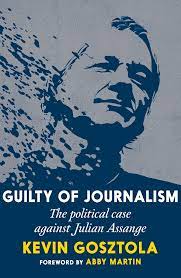
CAITLIN JOHNSTONE, JAN 26, 2024, https://www.caitlinjohnst.one/p/the-war-on-journalism-in-belmarsh?utm_source=post-email-title&publication_id=82124&post_id=141058691&utm_campaign=email-post-title&isFreemail=true&r=1ise1&utm_medium=email—
I haven’t written much about Julian Assange lately because I’ve been so fixated on what’s been happening in Gaza, but we should all be acutely aware that the 20th and 21st of February may be the WikiLeaks founder’s final chance to avoid extradition to the United States to face persecution for the crime of good journalism.
Assange and his legal team will face two High Court judges during the two-day hearing in London, who will then determine whether or not the UK will allow the Australian journalist to be dragged to the US in chains for a crooked show trial and cast into one of the world’s most draconian prison systems for exposing the war crimes of the world’s most powerful government.
Some US lawmakers are attempting to block the extradition from the other end with House Resolution 934, which asserts that “regular journalistic activities are protected under the First Amendment, and that the United States ought to drop all charges against and attempts to extradite Julian Assange.” If charges were dropped it would not only prevent the extradition but allow for Assange to be freed from the Belmarsh maximum security prison, where he has been jailed by the British government since 2019.
The fight to free Assange is a fight to protect press freedoms around the world, since the US is using the case in an attempt to set a legal precedent for extraditing and imprisoning any journalist or publisher anywhere in the world who shares information with the public that the US doesn’t want shared.
And it’s worth mentioning that this fight is not actually separate from the fight against Israel’s efforts to keep journalism out of Gaza by assassinating reporters and blocking the press from entering the enclave. It’s also not separate from humanity’s overall struggle to build a truth-based civilization, nor ultimately from our greater struggle to become a conscious species.
All throughout humanity there are pushes toward truth and seeing and pushes toward secrecy and darkness. In the press we see both: the authentic journalists like Assange who want all that is hidden to be made transparent, and the propagandists of the mainstream media who work to obfuscate and distort the truth. Those who seek the emergence of a harmonious and truth-based society want as much visibility into what’s really happening as possible, while tyrannical power structures like the US empire and Israel are constantly working to dim the lights.
Wherever you see domination and abuse, you see efforts to limit perception and keep human minds from seeing and understanding what’s going on. It’s true of empires, it’s true of governments, it’s true of cult leaders, it’s true of abusive spouses, and it’s true of the unpleasant dynamics within our own psyches that we would rather not look at. The less seeing there is, the more abusiveness is possible; the more seen things become, the closer we get to freedom.
I’m no prophet, but I strongly suspect that our future as a species will be determined by the outcome of this struggle. If the impulse toward truth and seeing wins out, we are probably headed toward a world of health and harmony. If the impulse to keep everything confused and hidden and unconscious wins, we are probably headed for dystopia and extinction.
In any case, all we can do is fight to make things more visible so that health and harmony become possible. Fight to make things conscious within ourselves. Fight to keep journalism legal in the shadow of the empire. Fight to spotlight Israel’s atrocities in Gaza. Fight to make the unseen seen. Fight to bring humanity into the light of consciousness.
The ICJ’s Provisional Orders: The Genocide Convention Applies to Gaza
January 27, 2024, Dr Binoy Kampmark, https://theaimn.com/the-icjs-provisional-orders-the-genocide-convention-applies-to-gaza/—
On January 26, legal experts, policy wonks, activists and the plain curious waited for the order of the International Court of Justice, sitting in The Hague. The topic was that gravest of crimes, considered most reprehensible in the canon of international law: genocide. The main participants: the accused party, the State of Israel, and the accuser, the Republic of South Africa.
Filed on December 29 last year, the South African case focused on its obligations arising under the Convention on the Prevention and Punishment of the Crime of Genocide and those of Israel. Pretoria, in its case, wished that the ICJ adjudicate and declare that Israel had breached its obligations under the Convention, and “cease forthwith any acts and measures in breach of those obligations, including such acts or measures which would be capable of killing or continuing to kill Palestinians, or causing or continuing to cause serious bodily or mental harm to Palestinians or deliberately inflicting on their group, or continuing to inflict on their group, conditions of life calculated to bring out its physical destruction in whole or in part, and fully respect its obligations under the Genocide Convention.”
The latter words derive from Article II of the Convention, which stipulate four genocidal actions: the killing of the group’s members; the causing of serious bodily or mental harm to those group’s members; the deliberate infliction of conditions calculated to bring about the physical destruction, in whole or in part, of that group and imposing measures to prevent births within the group.
The sheer extent of devastation being wrought by Israeli Defence Forces in Gaza, justified by the Netanyahu government as necessary self-defence in the aftermath of the Hamas attacks of October 7, led the South African team to also seek immediate provisional measures under Article 41 of the Court’s statute. (The review on the case’s merits promises to take much longer.) They included the immediate suspension of the IDF’s military operations in and against Gaza, the taking of all reasonable measures to prevent genocide, and desisting from committing acts within Article II of the Convention. The expulsion and forced displacement of Palestinians should also stop, likewise the deprivation of adequate food, water and access to humanitarian assistance and medical supplies and “the destruction of Palestinian life in Gaza.”
By 15-2, the court accepted that “the catastrophic humanitarian situation in the Gaza Strip is at serious risk of deteriorating further before the Court renders its final judgment.” (Over 26,000 Palestinians have been killed, extensive tracts of land in Gaza pummelled into oblivion, and 85% of its 2.3 million residents expelled from their homes.) Measures were therefore required to prevent “real and imminent risk that irreparable prejudice will be caused to the rights found by the Court to be plausible, before it gives its final decision.”
The grant of provisional measures was, however, more conservative than that sought by Pretoria. Conspicuously missing was any explicit demand that Israel pause its military operations. That said, the judgment did little to afford Israel’s leaders and the IDF comfort from the obligatory reach of the Genocide Convention, an instrument they had argued was irrelevant and inapplicable to the conduct of “innovative” military operations.
To that end, Israel was obligated to take all possible measures to prevent the commission of acts under Article II of the Genocide Convention, including by its military; prevent and punish “the direct and public incitement to genocide” against the Palestinian populace in Gaza; permit basic services and humanitarian assistance to the Gaza Strip; ensure the preservation of, and prevent destruction of, evidence related to acts committed against Gaza’s Palestinians within Articles II and III of the Convention; and submit a report to the ICJ on how Israel was abiding by such provisional measures within one month.
As is very much the form, the justice from the country in the dock, in this case, Israel’s Aharon Barak, could see nothing inferentially genocidal in his country’s campaign. South Africa, he insisted, had intentionally ignored the role played by Hamas in its October 7 attacks, and “wrongly sought to impute the crime of Cain to Abel.”
-ADVERTISEMENT-
Inevitably, the singular experience of the Holocaust survivor, the sui generis Jewish view of trauma, used as solid armour against any possibility that Israel might ever commit genocide, became a point of contention. Genocide “is the gravest possible accusation and is deeply intertwined with my personal life experience.” Israel had a firm commitment to the rule of law, and to accept that it was committing genocide “is very hard for me personally”. Tellingly, he suggested that Israel’s campaign in Gaza be examined, not from the viewpoint of the Genocide Convention but international humanitarian law.
With classic casuistry, Barak did vote for the measure requiring Israel to do everything “within its power to prevent and punish the direct and public incitement to commit genocide in relation to members of the Palestinian group in the Gaza strip.” But having identified nothing in the way of such intent, the issue became a moot one. With some relief, Barak could state that certain measures sought by South Africa, including an immediate suspension of military operations, were rejected by the ICJ, which preferred “a significantly narrower scope”.
From the other side of the legal aisle, the South African foreign minister, Naledi Pandor, wished that the ICJ had grasped the nettle to order a halt in military operations. But, with some deft reasoning, she was satisfied that the only way Israel could implement the provisional measures would be through a ceasefire. Much the same view was expressed by the Associated Press: “The court’s half-dozen orders will be difficult to achieve without some sort of cease-fire or pause in the fighting.” That logic is clear enough, but the actions, given the various statements from Prime Minister Benjamin Netanyahu and his officials alleging slander and a blood libel against their country, are unlikely to follow.
Israel Accuses The International Court of Justice Of (You Guessed It) Antisemitism
CAITLIN JOHNSTONE, JAN 27, 2024, https://www.caitlinjohnst.one/p/israel-accuses-the-icj-of-you-guessed?utm_source=post-email-title&publication_id=82124&post_id=141088641&utm_campaign=email-post-title&isFreemail=true&r=1ise1&utm_medium=email—
The International Court of Justice rejected Israel’s request to dismiss the genocide case brought against it by South Africa on Friday, ruling by a massive majority that the case shall proceed and instructing Israel to refrain from killing and harming Palestinians in the interim.
Many Palestine supporters have expressed dismay that the ICJ did not explicitly order a ceasefire, while many others (including South African officials) argue that the ruling is very positive and tantamount to a ceasefire order because it demands the end of harm to members of the protected group.
Imperial media are aggressively emphasising the absence of a ceasefire order in their headlines and many Israel apologists are framing that absence as a victory for their favorite ethnostate, but such performative chest-thumping is severely undercut by the way high-level Israeli officials are currently accusing the ICJ of antisemitism and saying Israel should ignore its rulings.
“The international court of justice went above and beyond when it granted South Africa’s antisemitic request to discuss the claim of genocide in Gaza, and now refuses to reject the petition outright,” complained Israeli defense minister Yoav Gallant in response to the ruling.
“The decision of the antisemitic court in The Hague proves what was already known: This court does not seek justice, but rather the persecution of Jewish people,” said Israeli national security minister Itamar Ben Gvir.
Ben Gvir also tweeted “Hague Schmague” immediately after the ruling was issued, which will probably go down in history as the most Israeli tweet of all time.
Everyone’s arguing about whether or not the ICJ’s ruling is helpful, and I don’t know enough one way or the other to be sure either way, but from where things stand right now it does seem unlikely to me that managers of the Israeli war machine would be getting this freaked out and whipping out their tired old “antisemitism” song and dance if there wasn’t something of substance to it.
International lawyer Francis Boyle, who won provisional measures against Yugoslavia at the ICJ in 1993, said the following of the ruling:
“This is a massive, overwhelming legal victory for the Republic of South Africa against Israel on behalf of the Palestinians. The U.N. General Assembly now can suspend Israel from participation in its activities as it did for South Africa and Yugoslavia. It can admit Palestine as a full member. And — especially since the International Criminal Court has been a farce — it can establish a tribunal to prosecute the highest level officials of the Israeli government, both civilian and military.”
So take that for whatever that’s worth to you. In any case the butchery in Gaza still urgently needs to be ended, and only time will tell whether Friday’s development had any major effect on the outcome of this horror.
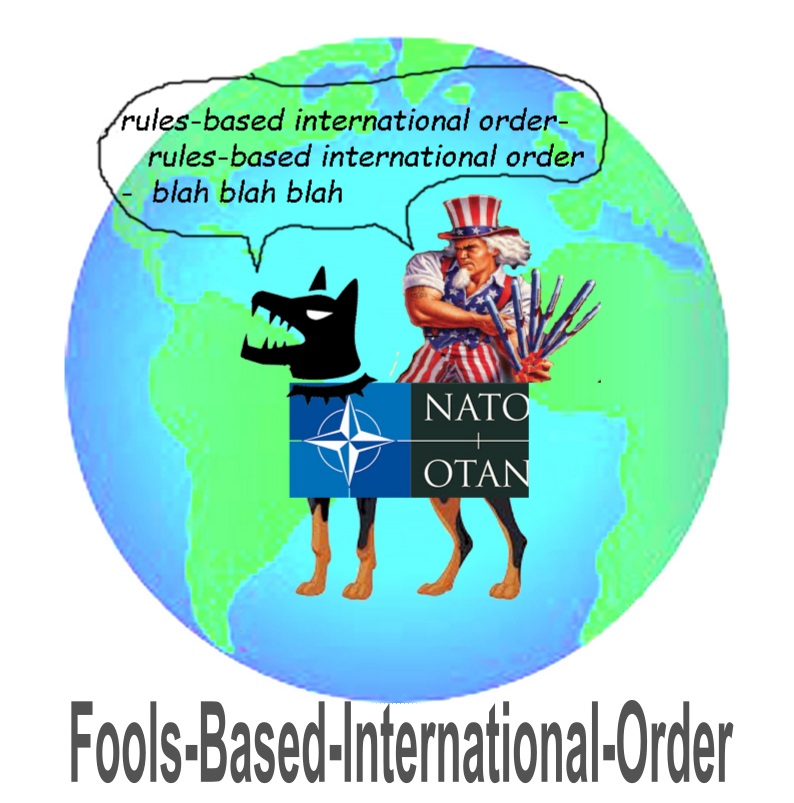
But man what I wouldn’t have given to be a fly on the wall at the meetings they were having at the US State Department on Friday. It’s days like this that remind you why empire managers switched from talking about “international law” to using the meaningless phrase “rules-based international order”.
Fukushima Nuclear Waste Water Disputes Continued: International Law in Japanese Court?
Written by Grace Nishikawa and Dr. Marlies Hesselman, https://www.ejiltalk.org/fukushima-nuclear-waste-water-disputes-continued-international-law-in-japanese-court/ 16 Feb 24
On 24th August 2023, Tokyo Electric Power Company (TEPCO) started releasing the ALPS-treated waste water from the Fukushima nuclear power plant into the Pacific Ocean over a period of 30 years. As discussed on this blog before, here and here, the decision led to strong international responses from neighbouring States, such as China and South Korea, as well as reactions by several UN human rights bodies. One legal question currently attracting attention in several fora, is whether Article 4 of the Protocol to the London Convention on the Prevention of Marine Pollution by Dumping of Wastes and Other Matters forbids the ‘dumping’ of the waste water into the sea, because it still contains radioactive matter, such as tritium.
This blog post draws attention to the interpretative controversy under the Londen Protocol by noting that the question is not only on the agenda of the Governing Bodies of the London Convention (LC) and its Protocol (LP), but also of the Fukushima District Court. In September, a group of Japanese citizens initiated a domestic lawsuit calling for an injunction to stop the release of the waste water. Their complaint is in large part based on personal rights under the constitution, but also invokes various international environmental law provisions, including Article 4 LC/LP. This post considers the interpretative controversy at hand, including whether the Japanese courts could play a role in addressing it.
Continue readingSouth Africa has made its genocide case against Israel in court. Here’s what both sides said and what happens next
Paul Taucher, Lecturer in History, Murdoch University, Dean Aszkielowicz, Senior Lecturer in History and Politics, Murdoch University, January 16, 2024 https://theconversation.com/south-africa-has-made-its-genocide-case-against-israel-in-court-heres-what-both-sides-said-and-what-happens-next-221017
Following the October 7 attack by Hamas, Israeli forces have carried out sustained attacks on the Palestinian controlled territory, dividing the international community.
Last week, the South African government presented a case to the International Court of Justice. They argued the Israeli government’s attack on Gaza, and especially the actions of its forces within Gaza since early October, could amount to genocide.
Few cases that have gone before the court are as explosive and potentially significant as this one.
Here’s how the hearings unfolded and what happens now.
Defining genocide
The crime of genocide is covered in the 1948 United Nations Convention for the Prevention and Punishment of the Crime of Genocide.
It is defined as acts committed with intent to destroy, either in part or in whole, a national, ethnical, racial or religious group, including:
- killing members of the group
- causing serious bodily or mental harm to members of the group
- deliberately inflicting conditions of life calculated to bring about a groups physical destruction, in whole or in part
- imposing measures to prevent births
- forcibly transferring children.
The Genocide Convention is designed to not only prosecute individuals and governments who committed genocide, but to prevent it from occurring.
Therefore, the Convention states that while genocidal acts are punishable, so too are attempts and incitement to commit genocide, regardless of whether they are successful or not.
The South African case
The South African government argued that Israeli forces had killed 23,210 Palestinians. Approximately 70% were believed to be women and children.
Crucially for the court, South Africa argued Israeli forces were often aware that the bombings would cause significant civilian casualties. It said many of the Palestinians were killed in Israeli declared safe zones, mosques, hospitals, schools and refugee camps.
Beyond the death toll, South Africa argued that there were 60,000 wounded and maimed Palestinians. The separation of families through arrest and displacement has caused large scale and likely enduring harm to civilians. South Africa highlighted the displacement of 85% of Palestinians, particularly the October 13 evacuation order which displaced over one million people in 24 hours.
The South African government also alleged the Israeli attacks and the actions of its forces were preventing the humanitarian needs of the Palestinian people being met. It particularly emphasised the Israeli decision to cut off water supply to Gaza. The distribution of food, medicine and fuel were also hampered. Israeli attacks on hospitals were also highlighted.
South Africa alleged the denial of adequate humanitarian assistance, especially medical supplies and care, amounts to the imposing of measures to prevent births.
Finally, South Africa focused on speeches by Israeli political leaders and soldiers advocating for the erasure of Gaza. This included Prime Minister Benjamin Netanyahu’s reference to the biblical destruction of enemies of ancient Israel and military commanders’ reference to Palestinians as “human animals” that need to be eliminated. These were used as evidence of incitement to genocide.
If the International Court of Justice doesn’t find that Israel is committing genocidal acts, South Africa has argued the Israeli forces have demonstrated an intent to commit genocide, and that there should be an interim order made to stop it.
The Israeli response
The Israeli government rejects all of the allegations by South Africa. Israel presented its arguments on January 12.
Israel’s overall argument is that the attacks on Gaza have been directed at Hamas soldiers. It says the civilian casualties have been an unfortunate consequence of carrying out military operations in an urban environment. Accordingly, the deaths, injuries and damage are not genocidal in nature, but instead, are incidental to military action.
Israel has presented evidence that it is delivering food, water, medical supplies and fuel to Gaza, demonstrating the opposite of genocidal intent. The Israeli Defence Force also runs a Civilian Harm Mitigation Unit.
These actions, according to Israel, are “concrete measures aimed specifically at recognising the rights of the Palestinian civilians in Gaza to exist”.
Finally, Israel has argued that the quotes South Africa have argued display incitement to commit genocide have been taken out of context. According to Israel, the court has no grounds to find that there are acts of genocide taking place, or that there is genocidal intent.
At this point, the court will not decide whether Israel has committed genocide or not. Determining that will likely take several years. Instead, the court will decide whether the allegations are at the least plausible, and if so, likely order that Israel and Palestine reach an interim ceasefire, and for Israeli forces to take all necessary steps to prevent genocide.
How significant is it?
If the court rules in favour of South Africa, a major world power – supported by the US and much of the Western world – will have been found to have committed what has, historically, been the most notorious of crimes.
That said, the prospect of any ruling by the International Court of Justice having a meaningful impact on the conflict in Gaza is remote.
The UN and its legal institutions are powered solely by a belief the international community is respectful of international institutions and international law. The problem is when a powerful country does not believe a ruling by a United Nations body applies to them, little can be done to enforce it.
1 This Month
29 Jan. Thursday 7-8 p.m. Webinar – World’s Largest Nuclear Station in Port Hope, ON?

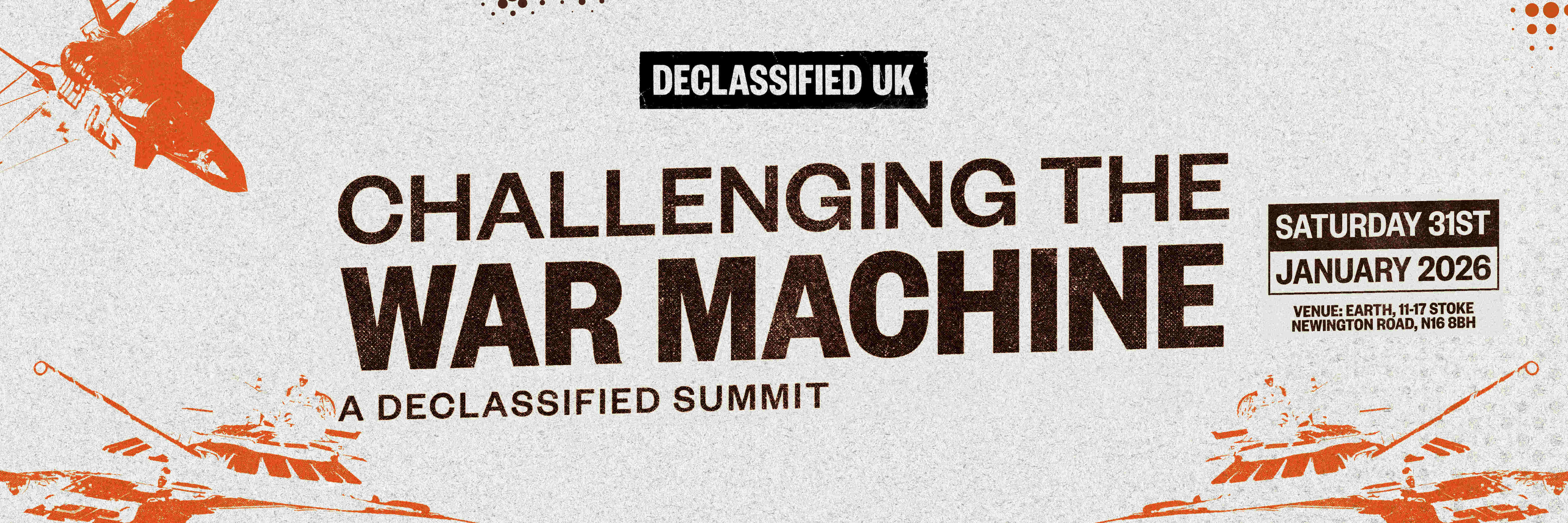
31st January – Challenging the War Machine – a DECLASSIFIED UK SUMMIT
Website of the Week
Now until to February 10, 2026 Radioactive waste storage in France: the debate is finally open! How to participate?
-
Archives
- January 2026 (246)
- December 2025 (358)
- November 2025 (359)
- October 2025 (376)
- September 2025 (258)
- August 2025 (319)
- July 2025 (230)
- June 2025 (348)
- May 2025 (261)
- April 2025 (305)
- March 2025 (319)
- February 2025 (234)
-
Categories
- 1
- 1 NUCLEAR ISSUES
- business and costs
- climate change
- culture and arts
- ENERGY
- environment
- health
- history
- indigenous issues
- Legal
- marketing of nuclear
- media
- opposition to nuclear
- PERSONAL STORIES
- politics
- politics international
- Religion and ethics
- safety
- secrets,lies and civil liberties
- spinbuster
- technology
- Uranium
- wastes
- weapons and war
- Women
- 2 WORLD
- ACTION
- AFRICA
- Atrocities
- AUSTRALIA
- Christina's notes
- Christina's themes
- culture and arts
- Events
- Fuk 2022
- Fuk 2023
- Fukushima 2017
- Fukushima 2018
- fukushima 2019
- Fukushima 2020
- Fukushima 2021
- general
- global warming
- Humour (God we need it)
- Nuclear
- RARE EARTHS
- Reference
- resources – print
- Resources -audiovicual
- Weekly Newsletter
- World
- World Nuclear
- YouTube
-
RSS
Entries RSS
Comments RSS
 nuclear-news
