Sellafield nuclear waste dump to be prosecuted for alleged cybersecurity offences

Charges relate to four-year period between 2019 and early 2023, and follow Guardian investigation
Alex Lawson and Anna Isaac, Fri 29 Mar 2024 , https://www.theguardian.com/business/2024/mar/28/sellafield-nuclear-waste-dump-to-be-prosecuted-for-alleged-it-security-offences
The Sellafield nuclear waste dump is to be prosecuted for alleged information technology security offences, the industry watchdog has said.
The Office for Nuclear Regulation (ONR) said on Thursday that it had notified the state-owned Cumbrian nuclear company that it would be prosecuted under industry security regulations.
The prosecution follows the Guardian’s revelations last year of multiple cyber failings at the vast site, part of a year-long investigation into cyber hacking, radioactive contamination and an unhealthy workplace culture at Sellafield.
The ONR said: “These charges relate to alleged information technology security offences during a four-year period between 2019 and early 2023. There is no suggestion that public safety has been compromised as a result of these issues. The decision to begin legal proceedings follows an investigation by ONR, the UK’s independent nuclear regulator.”
Sellafield, which has more than 11,000 staff, was placed into a form of “special measures” for consistent failings on cybersecurity in 2022, according to sources at the ONR and the security services.
Among the Guardian’s revelations in December were that groups linked to Russia and China had penetrated its computer networks, embedding sleeper malware that could lurk and be used to spy or attack systems. At the time Sellafield said it did not have evidence of a successful cyber-attack.
The site has the largest store of plutonium in the world and is a sprawling rubbish dump for nuclear waste from weapons programmes and decades of atomic power generation.
Other findings in the Guardian’s Nuclear Leaks investigation included concerns about external contractors being able to plug memory sticks into its computer system while unsupervised.
The Guardian also revealed that cyber problems have been known by senior figures at the nuclear site for at least a decade, according to a report dated from 2012, which warned there were “critical security vulnerabilities” that needed to be addressed urgently.
Sellafield’s computer servers were deemed so insecure that the problem was nicknamed Voldemort after the Harry Potter villain, according to a government official familiar with the ONR investigation and IT failings at the site, because it was so sensitive and dangerous.
At the time, Sellafield said that “all of our systems and servers have multiple layers of protection”. “Critical networks that enable us to operate safely are isolated from our general IT network, meaning an attack on our IT system would not penetrate these,” it said.
This week, the Guardian revealed that Richard Meal, Sellafield’s chief information security officer, is to leave the site after more than a decade. He will be the second senior leader to leave this year, after the top director responsible for safety and security, Mark Neate, announced in January that he planned to leave.
In January, Sellafield appointed Graeme Slater as its chief digital information officer, responsible for cybersecurity.
The ONR said details of the first court hearing would be announced “when available”.
Britain’s public spending watchdog, the National Audit Office, last month launched an investigation into risks and costs at Sellafield.
A spokesperson at the Department for Energy Security and Net Zero, which funds Sellafield, said: “Safety and security at our former nuclear sites is paramount and we fully support the Office for Nuclear Regulation in its independent role as regulator.
“The regulator has made clear that there is no suggestion that public safety has been compromised at Sellafield. Since the period of this prosecution, we have seen a change of leadership at Sellafield and the ONR has noted a clear commitment to address its concerns.”
Sellafield said: “The Office for Nuclear Regulation’s Civil Nuclear Security and Safeguards has notified us of its intention to prosecute the company relating to alleged past nuclear industry security regulations compliance.
“As the issue is now the subject of active court proceedings, we are unable to comment further.”
Court Allows Ageing Japanese Nuclear Plants to Continue Operations
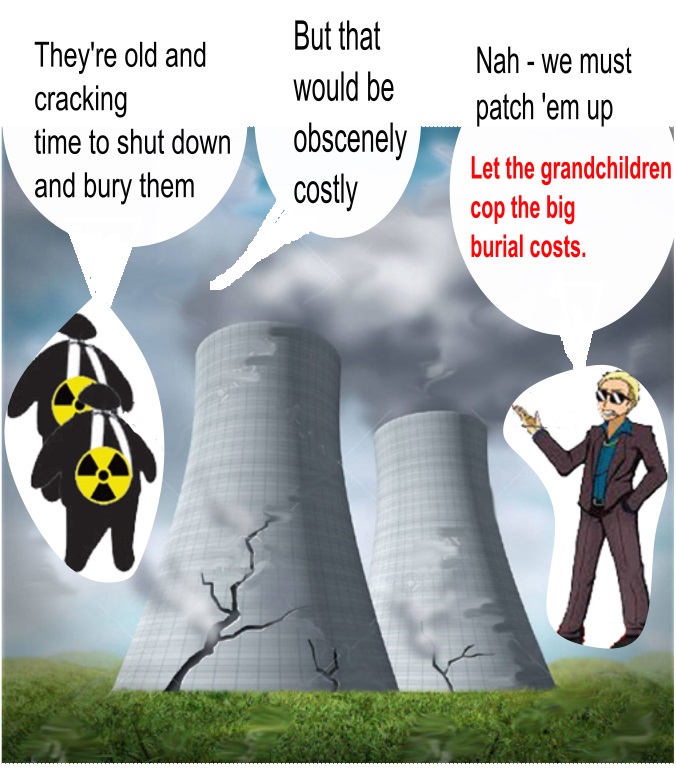
By Tsvetana Paraskova – Mar 29, 2024, https://oilprice.com/Latest-Energy-News/World-News/Court-Allows-Ageing-Japanese-Nuclear-Plants-to-Continue-Operations.html
A Japanese district court on Friday rejected petitions from residents and allowed five ageing nuclear reactors in central Japan to continue operations.
The five reactors at the plants, operated by Kansai Electric Power Co in the Fukui Prefecture on the Sea of Japan coast, began commercial operations between the mid-1970s and mid-1980s.
Local residents had asked the Fukui District Court to grant injunctions for the operations of one reactor at the Mihama nuclear plant and four reactors at the Takahama power plant, citing inadequate safety measures.
The court, however, denied the injunctions, thus allowing the five reactors to continue operations.
More than a decade after the Fukushima disaster, public opinion continues to be generally negative toward an en masse return to nuclear power, but Japanese authorities are keen to avoid energy crises and are betting on re-opening more nuclear power plants.
Following the Fukushima disaster in 2011, Japan closed all of its nuclear power plants for rigorous safety checks and inspections. The country has been returning reactors in service in recent years.
Japan is bringing back nuclear power as a key energy source, looking to protect its energy security in the wake of the energy crisis that led to surging fossil fuel prices. The resource-poor country which needs to import about 90% of its energy requirements, made a U-turn in its nuclear energy policy at the end of 2022, as its energy import bill soared amid the energy crisis and surging costs to import LNG at record-high prices.
The Japanese government confirmed in December 2022 a new policy for nuclear energy, which the country had mostly abandoned since the Fukushima disaster. A panel of experts under the Japanese Ministry of Industry has also decided that Japan would allow the development of new nuclear reactors and allow available reactors to operate after the current limit of 60 years.
Assange Extradition Delayed Unless US Provides ‘Assurances’ He Won’t Be Executed for Revealing the Truth
By Diego Ramos ScheerPost, March 26, 2024, https://scheerpost.com/2024/03/26/assange-extradition-delayed-unless-us-provides-assurances/
If the U.S. fails to file assurances in three weeks, Assange will be granted permission to appeal.
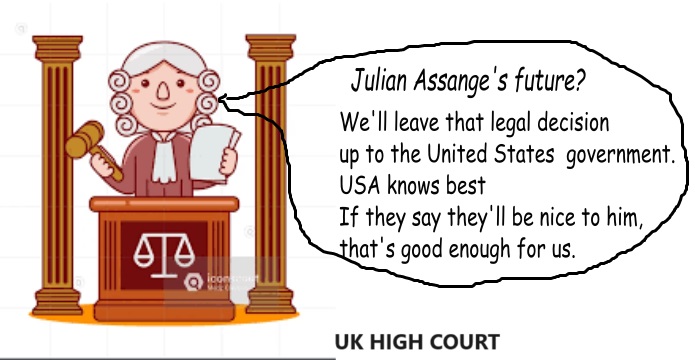
The British High Court has accepted three elements of Julian Assange’s appeal against his extradition to the U.S., delaying the process for some time. Unless the U.S. provides “assurances” for Assange’s appeals, including protection against the death penalty, the WikiLeaks founder will be granted a new appeal.
Despite U.S. officials promising Assange would not be subject to capital punishment, the court ruled “nothing in the existing assurance explicitly prevents the imposition of the death penalty.”
The U.S. government has until April 16 to file these assurances and if done so, Assange will have until April 30 to respond and the U.S. is to answer back by May 14, with a hearing considering the leave to appeal on May 20. If the U.S. fails to file assurances in three weeks, Assange will be granted permission to appeal.
Judges Victoria Sharp and Jeremy Johnson of the British High Court agreed with the following points in Assange’s appeal:
- a) if extradited, the applicant might be prejudiced at his trial by reason of his nationality (contrary to section 81(b) of the 2003 Act), and
- b) as a consequence of a), but only as a consequence of a), extradition is incompatible with article 10 of the Convention. [In the European Convention on Human Rights (ECHR), article 10 protects the right to freedom of expression.]
- The applicant has established an arguable case that the Secretary of State’s decision was wrong because extradition is barred by inadequate specialty/death penalty protection.
The judges dismissed appeal of Assange’s other points including:
- The UK-US Extradition treaty (the Treaty) prohibits extradition for a political [offense] (and the [offenses] with which the applicant is charged fall within that category).
- The extradition request was made for the purpose of prosecuting the applicant on account of his political opinions (contrary to section 81(a) of the 2003 Act).
- Extradition is incompatible with article 7 of the European Convention on Human Rights (the Convention) (which provides there should be no punishment without law).
- Extradition is incompatible with article 6 of the Convention (right to a fair trial).
- Extradition is incompatible with articles 2 and 3 of the Convention (right to life, and prohibition of inhuman and degrading treatment).
The judges acknowledged that extradition for “political opinions” has been barred in English law, citing the Extradition Act 1870 and 1989. However, in examining the Extradition Act 2003, the judges separate “political [offense]” from “political opinions,” stating “[The Extradition Act 2003] says nothing, however, about preventing extradition for a political [offense]. Although there may be a degree of overlap, the two are separate concepts.”
Stella Assange, Julian Assange’s wife, spoke outside the court stating, “The Biden administration should not issue assurances. They should drop this shameful case, which should never have been brought.”
Significantly, the court also rejected “fresh evidence” from the Assange team with regards to the Yahoo News article written by Zach Dorfman, Sean D Naylor and Michael Isikoff that exposed a plot by former CIA Director Mike Pompeo and others to kidnap or assassinate Assange during his time at the Ecuadorian embassy in London.
Despite the evidence exposed by the article, the judges ruled, “Extradition would result in him being lawfully in the custody of the United States authorities, and the reasons (if they can be called that) for rendition or kidnap or assassination then fall away.”
Assange enters his fifth year of imprisonment inside Belmarsh Prison, where his physical and mental health has significantly deteriorated.
The Empire Slowly Suffocates Assange Like It Slowly Suffocates All Its Enemies
CAITLIN JOHNSTONE, MAR 27, 2024, https://www.caitlinjohnst.one/p/the-empire-slowly-suffocates-assange?utm_source=post-email-title&publication_id=82124&post_id=142993532&utm_campaign=email-post-title&isFreemail=true&r=1ise1&triedRedirect=true&utm_medium=email
The British High Court has ruled that WikiLeaks founder Julian Assange may potentially get a final appeal against extradition to the United States, but only within a very limited scope and only if specific conditions are met.
The court ruled that Assange may appeal only on the grounds that his freedom of speech might be restricted in the US, and that there is a possibility he could receive the death penalty. If the US provides “assurances” that neither of these things will happen, then the trial moves to another phase where Assange’s legal team may debate the merits of those assurances. If the US does not provide those assurances, then the limited appeal will move forward.
Absurdly, the court determined that Assange’s lawyers may not argue against extradition on matters as self-evidently critical as the fact that the CIA plotted to assassinate him, or on the basis that he is being politically persecuted for the crime of inconvenient journalism.
The mass media are calling this a “reprieve”, even “wonderful news”, but as Jonathan Cook explains in his latest article “Assange’s ‘reprieve’ is another lie, hiding the real goal of keeping him endlessly locked up,” that’s all a bunch of crap.
“The word ‘reprieve’ is there — just as the judges’ headline ruling that some of the grounds of his appeal have been ‘granted’ — to conceal the fact that he is prisoner to an endless legal charade every bit as much as he is a prisoner in a Belmarsh cell,” writes Cook. “In fact, today’s ruling is yet further evidence that Assange is being denied due process and his most basic legal rights — as he has been for a decade or more.”
Cook writes the following:
“The case has always been about buying time. To disappear Assange from public view. To vilify him. To smash the revolutionary publishing platform he founded to help whistleblowers expose state crimes. To send a message to other journalists that the US can reach them wherever they live should they try to hold Washington to account for its criminality.
“And worst of all, to provide a final solution for the nuisance Assange had become for the global superpower by trapping him in an endless process of incarceration and trial that, if it is allowed to drag on long enough, will most likely kill him.”
This kind of slow motion strangulation is how the empire operates all the time these days, across all spheres. Helping Israel starve Gaza while slowly pretending to work toward solutions. Drawing out a proxy war in Ukraine for as long as possible to bleed Russia. Slowly killing Assange in prison without trial under the pretense of judicial proceedings.
The US-centralized empire hunts not like a tiger, killing its prey with one fatal bite to the jugular, but more like a python: slowly suffocating the life out of its prey until it perishes. It favors the long, drawn-out, confusing strangulation of inconvenient populations and individuals, carried out under the cover of bureaucracy and propaganda spin. In today’s world it prefers sanctions, blockades and long proxy conflicts over the big Hulk-smash ground invasions we saw it carry out in places like Iraq and Vietnam.
These slow suffocations can take more time, but what they lack in efficiency they make up for in the quality of perception management. It’s bad PR to just openly invade countries and murder people, which is why the leaders of the western empire have been able to wag their fingers at Putin despite their being quantifiably far more murderous than Russia. People start snapping out of the propaganda matrix you spent so much time building for them and begin organizing against the political status quo your power is premised on.
So they opt for slow strangulation strategies where they can confuse the public about what’s happening and who’s responsible, outsourcing the blame to other parties while posing as the good guy who’s trying to bring peace and stability. It takes time, but the empire has time to burn. That’s what happens when you’re the most powerful empire in the history of civilization; you have the luxury of biding your time while orchestrating large-scale, long-term operations to advance your power agendas.
Meanwhile Gaza starves, Ukraine bleeds, and Assange languishes in prison, each needing this to end with more urgency every day.
Chris Hedges: The Crucifixion of Julian Assange
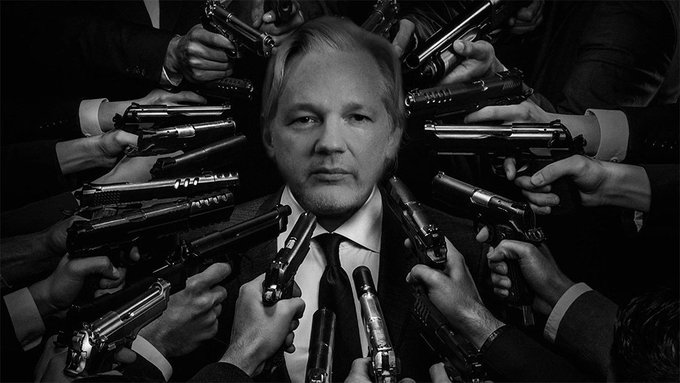
No new hearing will allow his lawyers to focus on the war crimes and corruption that WikiLeaks exposed. No new hearing will permit Julian to mount a public-interest defense. No new hearing will discuss the political persecution of a publisher who has not committed a crime.
The court……… offered the U.S. an easy out — give the guarantees and the appeal is rejected.
If the assurances are provided, lawyers for both sides have until April 30th to make new written submissions to the court. At that point, the court will convene again on May 20 to decide if the appeal can go forward.
British courts for five years have dragged out Julian Assange’s show trial. He continues to be denied due process as his physical and mental health deteriorates. This is the point.
By Chris Hedges ScheerPost, https://scheerpost.com/2024/03/27/chris-hedges-the-crucifixion-of-julian-assange-2/
Prosecutors representing the United States, whether by design or incompetence, refused — in the two-day hearing I attended in London in February — to provide guarantees that Julian Assange would be afforded First Amendment rights and would be spared the death penalty if extradited to the U.S.
The inability to give these assurances all but guaranteed that the High Court — as it did on Tuesday — would allow Julian’s lawyers to appeal. Was this done to stall for time so that Julian would not be extradited until after the U.S. presidential election? Was it a delaying tactic to work out a plea deal? Julian’s lawyers and U.S. prosecutors are discussing this possibility. Was it careless legal work? Or was it to keep Julian locked in a high security prison until he collapses mentally and physically?
If Julian is extradited, he will stand trial for allegedly violating 17 counts of the 1917 Espionage Act, with a potential sentence of 170 years, along with another charge for “conspiracy to commit computer intrusion” carrying an additional five years.
The court will permit Julian to appeal minor technical points — his basic free speech rights must be honored, he cannot be discriminated against on the basis of his nationality and he cannot be under threat of the death penalty.
No new hearing will allow his lawyers to focus on the war crimes and corruption that WikiLeaks exposed. No new hearing will permit Julian to mount a public-interest defense. No new hearing will discuss the political persecution of a publisher who has not committed a crime.
The court, by asking the U.S. for assurances that Julian would be granted First Amendment rights in the U.S. courts and not be subject to the death penalty, offered the U.S. an easy out — give the guarantees and the appeal is rejected.
It is hard to see how the U.S. can refuse the two-judge panel, composed of Dame Victoria Sharp and Justice Jeremy Johnson, which issued on Tuesday a 66-page judgment accompanied by a three-page court order and a four-page media briefing.
The hearing in February was Julian’s last chance to request an appeal of the extradition decision made in 2022 by the then British home secretary, Priti Patel, and many of the rulings of District Judge Vanessa Baraitser in 2021.
If Julian is denied an appeal, he can request an emergency stay of execution from the European Court of Human Rights (ECtHR) under Rule 39, which is given in “exceptional circumstances” and “only where there is an imminent risk of irreparable harm.” But it is possible the British court could order Julian’s immediate extradition prior to a Rule 39 instruction, or decide to ignore a request from the ECtHR to allow Julian to have his case heard there.
Julian has been engaged in a legal battle for 15 years. It began in 2010 when WikiLeaks published classified military files from the wars in Iraq and Afghanistan — including footage showing a U.S. helicopter gunning down civilians, including two Reuters journalists, in Baghdad.
Julian took refuge in the Embassy of Ecuador in London for seven years, fearing extradition to the U.S. He was arrested in April 2019 by the Metropolitan Police, who were permitted by the Embassy to enter and seize him. He has been held for nearly five years in HM Prison Belmarsh, a high-security prison in southeast London.
The case against Julian has made a mockery of the British justice system and international law. While in the embassy, the Spanish security firm UC Global provided video recordings of meetings between Julian and his lawyers to the CIA, eviscerating attorney-client privilege.
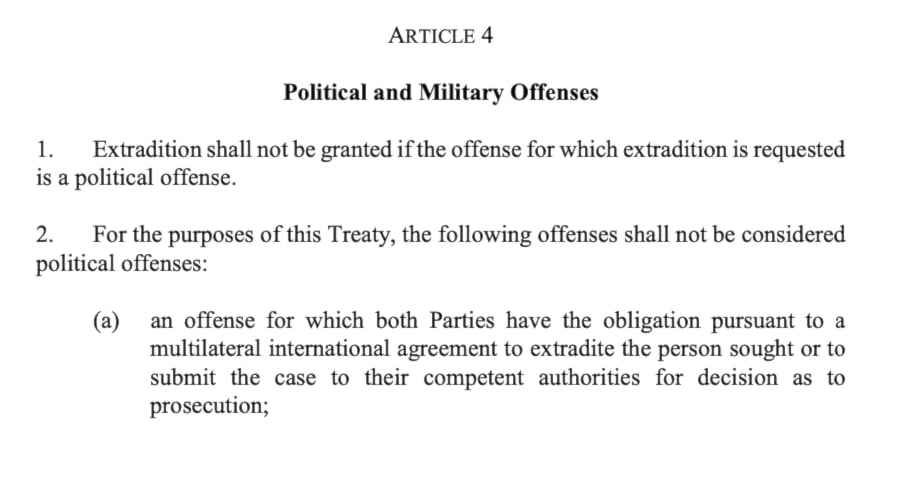
The Ecuadorian government — led by Lenin Moreno — violated international law by rescinding Julian’s asylum status and permitting police into their embassy to carry Julian into a waiting van. The courts have denied Julian’s status as a legitimate journalist and publisher. The U.S. and Britain have ignored Article 4 of their Extradition Treaty that prohibits extradition for political offenses. The key witness for the U.S., Sigurdur Thordarson — a convicted fraudster and pedophile — admitted to fabricating the accusations he made against Julian for money.
Julian, an Australian citizen, is being charged under the U.S. Espionage Act although he did not engage in espionage and was not based in the U.S when he was sent the leaked documents.
Continue readingThe Decision That Wasn’t A Decision
Extradition has been delayed as UK High Court of Justice urges US government to submit “assurances” or face an appeal
| STELLA ASSANGE, MAR 27. 2024 |
Yesterday, the UK High Court ruled on Julian’s request to appeal extradition to the United States. The result? The decision has effectively been put on hold until the U.S. submits assurances – previously deemed by Amnesty as “inherently unreliable” – including that he will not be prejudiced at trial by reason of his nationality and not receive the death penalty.
In a statement outside the Royal Courts of Justice, Stella said: “The UK High Court recognise that Julian is exposed to a flagrant denial of his freedom of expression rights, that he is being discriminated against on the basis of his nationality and that he remains exposed to the death penalty. And yet, what they have done is to invite a political intervention from the United States to send a letter saying ‘it’s all okay’…” https://stellaassangeofficial.substack.com/p/the-decision-that-wasnt-a-decision?utm_source=post-email-title&publication_id=800783&post_id=142999556&utm_campaign=email-post-title&isFreemail=true&r=ln98x&triedRedirect=true&utm_medium=email
Now there are three court challenges against Ontario nuclear waste disposal facility

National Observer, By Matteo Cimellaro | News, Urban Indigenous Communities in Ottawa | March 27th 2024
Legal challenges against a nuclear waste facility slated for construction near the Ottawa River continue to rise.
On Wednesday, a coalition made up of a First Nation and environmental groups launched a legal challenge against the federal government and Canadian Nuclear Laboratories (CNL) over the issuing of Species at Risk Act (SARA) permits to the company.
The court application argues that Ottawa’s granting of the SARA permits is unreasonable. It disputes CNL’s assertion that it chose the facility location to have the least impact on species at risk and has adopted the best mitigation measures.
The court documents also state the federal government did not adequately address Kebaowek First Nation’s submissions and evidence on the project and failed to include other species at risk, like the monarch butterfly, songbirds and the eastern wolf.
This most recent court challenge follows two others filed since the waste facility was approved by the Canadian nuclear regulator on Jan. 8.
The SARA permits allow for the deforestation and pre-construction work to begin on the facility with some mitigation measures for endangered Blanding’s turtles and two bat species named in the permits. The near-surface disposal facility is designed as a large earthen mound and will have a lifespan of at least 550 years. It will primarily house low-level nuclear waste, such as contaminated mops and protective equipment.
Approval for the preliminary work at the site was granted by the Canadian Wildlife Service, which said CNL successfully demonstrated feasible measures will be taken to minimize the impact of construction on the three species and that construction will not jeopardize their recovery.
Some measures will include identifying turtle and bat hot spots, “creation of turtle-crossing systems,” installation of temporary fencing around construction areas and permanent fencing along roadways, the decision stated.
After the SARA permits were awarded on March 18, Kebaowek Chief Lance Haymond told Canada’s National Observer in an interview the permits amounted to a “kill order.” Kebaowek launched the most recent legal challenge alongside Sierra Club, the Canadian Coalition for Nuclear Responsibility and a local citizens’ group.
Previously, Haymond sent a letter to Environment and Climate Change Minister Steven Guilbeault asking him to withhold the permits……………………………………………………………………
Kebaowek will likely seek an injunction against CNL, Haymond said.
Other legal battles include Kebaowek’s challenge over the United Nations Declaration Act (UNDA), which enshrined the United Nations Declaration on the Rights of Indigenous Peoples (UNDRIP) into Canadian law. In the judicial review, Kebaowek argues that the Canadian Nuclear Safety Commission (CNSC) did not secure the First Nation’s free, prior and informed consent during the licensing process, as mandated under UNDA.
Around the same time, a separate legal challenge launched by three citizens’ groups on Wednesday challenged the recent decision by the CNSC to approve the nuclear waste facility. The groups asked the Federal Court to review the commission’s failure to consider evidence around radiation dose limits, the types of waste entering the facility and other regulatory exemptions that were granted by the commission.
— With files from Natasha Bulowski https://www.nationalobserver.com/2024/03/27/news/three-court-challenges-against-ontario-nuclear-waste-disposal-site
UK court orders delay to extradition of WikiLeaks founder Julian Assange to US on espionage charges
By Associated Press, By OLIVER PRICE , 27 March 2024 https://www.dailymail.co.uk/news/article-13239885/Julian-Assange-appeal-against-extradition-court-rules.html?fbclid=IwAR05bAhgRzHKwygiC0ljNnPEU_bL1uwPz2mIRy7vU9RzSU0J_Qbi4aOpK_M_aem_AahKjiDK6G3wRltDvIaC_MtPOcRzYRMwUFpdRPeR7yiJcdMyJyjQi03SWVMX6MWQenTiiAm9LmgWVamqopIy9ZT_
The United States must give assurances that Julian Assange will not face the death penalty before judges will consider dismissing the WikiLeaks founder’s bid to bring an extradition appeal, the High Court has ruled.
Assange, 52, faces prosecution in the US over an alleged conspiracy to obtain and disclose national defence information following the publication of hundreds of thousands of leaked documents relating to the Afghanistan and Iraq wars.
In a 66-page ruling, Dame Victoria Sharp said: ‘Before making a final decision on the application for leave to appeal, we will give the respondent an opportunity to give assurances.
‘If assurances are not given then we will grant leave to appeal without a further hearing.
‘If assurances are given then we will give the parties an opportunity to make further submissions before we make a final decision on the application for leave to appeal.’
These assurances are that Assange would be protected by and allowed to rely on the First Amendment – which protects freedom of speech in the US, that he is not ‘prejudiced at trial’ due to his nationality, and that the death penalty is not imposed.
The judges said the US authorities had three weeks to give those assurances, with a final hearing potentially taking place in late May.
In her ruling, Dame Sharp said any assurances from the United States would need to include ‘that the applicant (Julian Assange) is permitted to rely on the First Amendment, that the applicant is not prejudiced at trial, including sentence, by reason of his nationality, that he is afforded the same First Amendment protections as a United States citizen, and that the death penalty is not imposed’.
Speaking after the judgment, the Australian’s wife Stella Assange described the ruling as ‘astounding’.
She said: ‘What the courts have done has been to invite a political intervention from the United States… send a letter saying ‘its all ok’. I find this astounding.
‘This case is a retribution. It is a signal to all of you that if you expose the interests that are driving war they will come after you, they will put you in prison and will try to kill you.
‘The Biden administration should not issue assurances. They should drop this shameful case that should never have been brought.’
Addressing Julian Assange’s legal ground about freedom of speech guarantees in the US, Dame Victoria Sharp said: ‘The applicant wishes to argue, at any trial in the United States, that his actions were protected by the First Amendment.
‘He contends that if he is given First Amendment rights, the prosecution will be stopped. The First Amendment is therefore of central importance to his defence to the extradition charge.’
She continued: ‘If he is not permitted to rely on the First Amendment because of his status as a foreign national, he will thereby be prejudiced, potentially very greatly prejudiced, by reason of his nationality.’
Dame Victoria concluded: ‘It follows that it is arguable that the applicant might be treated differently at trial on the grounds of his nationality.
‘Subject to the question of whether this could be addressed by means of an assurance from the respondent, we would grant leave to appeal.’
WikiLeaks initially reacted positively to the news, saying Assange had been granted ‘leave to appeal’ his extradition, but he will only be allowed to do so if ‘assurances’ are not met.
Reacting to the ruling on X, formerly Twitter, this morning, WikiLeaks posted: ‘Julian Assange has been granted leave to appeal extradition to the US.
‘Having spent almost five years detained at the UK’s most secure prison the publisher will continue his long detention separated from his young family for revealing war crimes. #FreeAssangeNOW.’
WikiLeaks has now deleted this tweet.
WikiLeaks later added: ‘The court has given US Gov 3 weeks to give satisfactory assurances: That Mr. Assange is permitted to rely on the First Amendment to the US constitution; not prejudiced at trial by reason of his nationality; and that the death penalty is not imposed. #FreeAssange.’
The hearing at the Royal Courts of Justice today was attended by Assange’s wife Stella, dozens of journalists and members of the public, with hundreds observing remotely.
Dozens of people stood outside the central London courthouse to await the judgment, holding placards bearing the message ‘Free Julian Assange’ and chanting ‘There is only one decision, no extradition’.
Speaking at a press conference after Julian Assange’s bid to appeal against extradition to the US was delayed, Jennifer Robinson, WikiLeaks legal counsel, said the decision raised ‘fundamental concerns about free speech’.
She added: ‘It is absurd that we are five years into this case and the US has not offered assurance to protect him from (the death penalty).’
Ms Robinson added: ‘The judgment today demonstrates that if Julian was extradited to the United States there is a real risk and concern that he would not be afforded free speech protections.
‘We say the US should not be offering assurance in response to this judgment, they should be dropping the case and it is a case that should never have been brought in the first place.’
Speaking after the latest Julian Assange ruling, Michelle Stanistreet, general secretary of the National Union of Journalists, said: ‘A temporary reprieve is clearly preferable to an extradition that would have taken place in the coming days.
‘However, the conditionality around the grounds of appeal, which are contingent on the examination of US government assurances that he will not face the death penalty and has the right to free speech, mean the risks to Assange and press freedom remain stark.
‘Assange’s prosecution by the US is for activities that are daily work for investigative journalists – finding sources with evidence of criminality and helping them to get their stories out into the world.
‘If Assange is prosecuted, free expression the world over will be damaged.’
She added: ‘The nuanced nature of this appeal judgment makes an alternative ending to this situation even more pressing.
‘In recent months there has been increasing speculation about some kind of plea deal, to bring this saga to a swift and straightforward conclusion. I urge the US to return to these options.
‘Media freedom is under threat all over the world, compassion and common sense from the US Department of Justice would do much to restore Washington’s reputation as a bastion of free expression.’
Former Labour leader Jeremy Corbyn has called for the US to drop the charges against Julian Assange.
Speaking outside the Royal Courts of Justice, Mr Corbyn said Tuesday’s decision was ‘big step forward’ for Assange’s case but that it is ‘not the victory’ his supporters are looking for.
Mr Corbyn said: ‘Above all, the pressure has to be on the US administration to drop the charges against Julian Assange.
‘He’s a brave journalist who tells the truth.’
When asked why Assange’s case was important to him, the Corbyn said: ‘Because he’s told some very uncomfortable truths about the military activities in Iraq and Afghanistan and other places around the world, but also the effects of corporate greed on the natural world and environment.
‘If Julian goes down for that, then every serious journalist around the world is going to be feel a bit constrained, and that’s dangerous.’
n a January 2021 ruling, then-district judge Vanessa Baraitser said that Assange should not be sent to the US, citing a real and ‘oppressive’ risk of suicide, while ruling against him on all other issues.
But later that year, US authorities won their High Court bid to overturn this block, paving the way towards Assange’s extradition.
During a two-day hearing in February, lawyers for the 52-year-old asked for the go-ahead to challenge the original judge’s dismissal of other parts of his case to prevent his extradition.
And in a judgment today, Dame Victoria Sharp and Mr Justice Johnson dismissed most of Assange’s legal arguments but said that unless assurances were given by the United States, he would be able to bring an appeal on three grounds.
The judges said the US authorities had three weeks to give those assurances, with a final decision to be made in late May.
At the start of Assange’s bid last month, Mark Summers KC argued the US’s prosecution would be retribution for his political opinions, meaning it would be unlawful to extradite him under UK law.
However the two judges rejected this argument.
Dame Victoria said: ‘The applicant’s case before us amounts simply to a reassertion of his case on this issue, and a disagreement with the (district) judge’s conclusion.
‘It does not engage with the judge’s reasoning. Far less does it identify any flaw in her factual conclusions.’
UK Court to Decide Tuesday If Julian Assange Can Appeal Extradition

The decision will be issued at 10:30 am London time
by Dave DeCamp March 25, 2024, https://news.antiwar.com/2024/03/25/uk-court-to-decide-if-julian-assange-can-appeal-extradition/
London’s High Court will rule on Tuesday whether WikiLeaks founder Julian Assange can appeal his extradition to the United States, where he would face trial for exposing US war crimes.
According to WikiLeaks, the written ruling is due to be delivered by 10:30 am London time.
Last month, Assange’s legal team presented its case for the appeal. His lawyers also introduced new evidence, including a bombshell report from Yahoo News that revealed the CIA in 2017, under Mike Pompeo at the time, considered kidnapping and even discussed assassinating Assange over WikiLeaks publishing detailed the CIA’s hacking tools, known as Vault 7.
Assange did not attend the two-day hearing due to his poor health, and he remains in London’s Belmarsh Prison, where he’s been held since 2019. Assange’s family and legal team believe he will die if extradited to the US.
The news of the High Court’s impending decision comes after The Wall Street Journal reported that the US was considering offering a plea deal to Assange and that Justice Department officials had preliminary talks with his legal team. However, Assange’s lawyer, Barry Pollack, said in response to the report that the US has “given no indication” that the US will take a deal.
Assange faces 17 counts under the Espionage Act and one charge for conspiracy to commit a computer intrusion for obtaining and publishing documents from a source, a standard journalistic practice. If Assange is convicted, it would set a grave precedent for press freedom in the US and around the world. A plea deal that criminalizes the journalist-source relationship could also set a dangerous precedent.
WikiLeaks has been asking Americans to put pressure on the Biden administration to stop its pursuit of Assange by contacting their House representatives and telling them to support H.Res.934, a bill introduced by Rep. Paul Gosar (R-AZ) that calls for the US to drop the charges against Assange.
Report: Justice Department Considering Plea Deal for Assange
While such a deal could potentially secure Assange’s freedom, it could still set a dangerous precedent since it would criminalize the relationship between a journalist and his source.
the US could have leaked the talk of a plea deal to the press to portray Assange as unreasonable if he didn’t take it.
A plea deal could free Assange from prison
by Dave DeCamp March 20, 2024 https://news.antiwar.com/2024/03/20/report-justice-department-considering-plea-deal-for-assange/
The Justice Department is considering whether to offer WikiLeaks founder Julian Assange the opportunity to plead guilty to a reduced charge of mishandling classified information, The Wall Street Journal reported on Wednesday, citing people familiar with the matter.
The report said DOJ officials and Assange’s legal team have already had preliminary talks on what a plea deal might look like. However, Barry Pollack, a lawyer for Assange, said he has been given no indication that the department will take a deal.
“It is inappropriate for Mr. Assange’s lawyers to comment while his case is before the UK High Court other than to say we have been given no indication that the Department of Justice intends to resolve the case and the United States is continuing with as much determination as ever to seek his extradition on all 18 charges, exposing him to 175 years in prison,” Pollack said in a statement.
Consortium News reported later in the day that it had previously learned of the talks between the US and Assange’s legal team on a potential deal, but the information was given off the record, so the outlet did not publicize it.
Under the DOJ’s indictment against Assange, he could face up to 175 years in prison under the Espionage Act for exposing US war crimes by publishing classified documents leaked to WikiLeaks by former Army Private Chelsea Manning in 2010.
If Assange is convicted, it would set a dangerous precedent for press freedom since publishing information obtained by a source is a standard journalistic practice, whether classified or not.
The Journal report said that if the DOJ offers a deal for Assange to plead guilty to a lesser charge of mishandling classified information, it would be a misdemeanor, and he could potentially enter the plea remotely without going to the US. His time in London’s Belmarsh Prison, where he’s been held since April 2019, would count toward his sentence, and Assange could be free shortly after reaching the deal.
While such a deal could potentially secure Assange’s freedom, it could still set a dangerous precedent since it would criminalize the relationship between a journalist and his source.
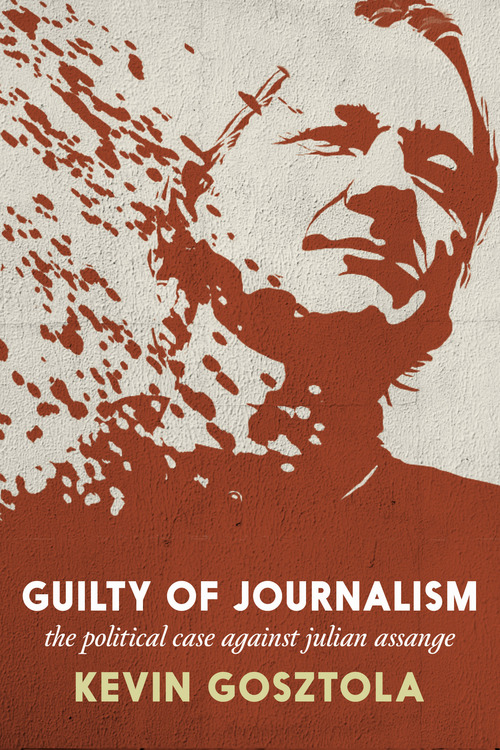
Kevin Gostzola, author of the book “Guilty of Journalism: The Political Case Against Julian Assange,” suggested the US could have leaked the talk of a plea deal to the press to portray Assange as unreasonable if he didn’t take it.
“Basically, US officials chat to the press about some possible plea deal for Assange when he isn’t guilty of any crime. If Assange’s team signals it would never be acceptable, then it is Assange’s fault that he remains in prison. Officials can say he wants to martyr himself,” Gostzola wrote on X.
Last month, Assange’s legal team presented its case for an appeal to the UK home secretary’s decision to extradite Assange to the US, and a decision on whether or not he can appeal is expected to happen soon.
The Australian government has been calling on President Biden to drop the charges against Assange, who is an Australian citizen. Some members of Congress have also been calling for an end to the persecution of the WikiLeaks founder, including Rep. Thomas Massie (R-KY), who brought Assange’s brother, Gabriel Shipton, to President Biden’s State of the Union.
WikiLeaks and Assange supporters are asking Americans to add to the pressure by contacting Congress. Americans can call their House representatives to support H.Res.934, a bill introduced by Rep. Paul Gosar (R-AZ) that calls for the US to drop the charges against Assange.
Click here to find your representative, or call the House switchboard operator at (202) 224-3121. Tell them to support the resolution to protect the First Amendment and press freedom.
Halting Biden’s Weapon Shipments to Israel
byEDITORMarch 22, 2024
The Chris Hedges Report with attorney Katherine Gallagher and Palestinian plaintiff Ayman Nijim on their lawsuit demanding the Biden administration halt weapons shipments to Israel.
By Chris Hedges / The Real News Network
The Center for Constitutional Rights has filed the lawsuit on behalf of the human rights organization, Defense for Children – Palestine; Al-Haq, a Palestinian human rights group based in the occupied West Bank; and eight Palestinians and US citizens with relatives in Gaza accusing President Joe Biden and other senior officials of being complicit in Israel’s “genocide” in Gaza. The case is being heard in a federal court in California.
Lawyers representing Biden, Secretary of State Antony Blinken and Secretary of Defense Lloyd Austin, have attended the proceedings along with the plaintiffs who accuse them of “failure to prevent and complicity in the Israeli government’s unfolding genocide.”
Since the October 7 incusrion by Hamas and other resistance groups, which left some 1,200 people dead, more than 30,000 Palestinians have been killed, thousands are missing, some 60,000 have been injured and nearly all of the Gaza Strip’s 2.3 million people have been displaced. Israel’s blocage of humanitarian supplies and food have cause a widespread famine and many are dying of starvation and infectious diseases.
The CCR complaint was filed in November last year. It charges that Biden, Blinken and Austin “have not only been failing to uphold the country’s obligation to prevent a genocide but have enabled the conditions for its development by providing unconditional military and diplomatic support [to Israel].”The CCR is asking the court to “declare that defendants have violated their duty under customary international law, as part of federal common law, to take all measures within their power to prevent Israel from committing genocide against the Palestinian people of Gaza”. The group is also calling for the US to use its influence over Israel to end the hostilities against Palestinians in Gaza. Joining me to discuss the case is Katherine Gallagher, a Senior Staff Attorney at the Center for Constitutional Rights, and plaintiff Ayman Nijim……………………………Transcript………………. https://scheerpost.com/2024/03/22/the-chris-hedges-report-halting-bidens-weapon-shipments-to-israel/
Julian Assange and the Plea Nibble
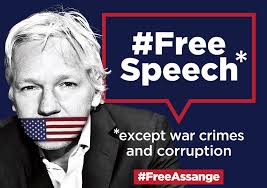
Barry Pollack, one of Assange’s legal representatives, has not been given any indication that the department would, as such, accept the deal, a point he reiterated to Consortium News: “[W]e have been given no indication that the Department of Justice intends to resolve the case.”
March 23, 2024 by: Dr Binoy Kampmark https://theaimn.com/julian-assange-and-the-plea-nibble/
Be wary of what Washington offers in negotiations at the best of times. The empire gives and takes when it can; the hegemon proffers and in equal measure and withdraws offers it deems fit. This is all well known to the legal team of WikiLeaks’ founder Julian Assange, who, the Wall Street Journal “exclusively” reveals, is in ongoing negotiations with US Justice Department officials on a possible plea deal.
As things stand, the US Department of Justice is determined to get its mitts on Assange on the dubious strength of 18 charges, 17 confected from the brutal Espionage Act of 1917. Any conviction from these charges risks a 175-year jail term, effectively constituting a death sentence for the Australian publisher.
The war time statute, which was intended to curb free speech and muzzle the press for the duration of the First World War, was assailed by Wisconsin Republican Senator Robert La Follette as a rotten device that impaired “the right of the people to discuss the war in all its phases.” It was exactly in time of war that the citizen “be more alert to the preservation of his right to control his government. He must be most watchful of the encroachment of the military upon the civil power.” And that encroachment is all the more pressing, given the Act’s repurposing as a weapon against leakers and publishers of national security material. In its most obscene incarnation, it has become the US government’s political spear against a non-US national who published US classified documents outside the United States.
The plea deal idea is not new. In August last year, the Sydney Morning Herald pounced upon comments from US Ambassador to Australia Caroline Kennedy that a “resolution” to the Assange imbroglio might be on the table. “There is a way to resolve it,” the ambassador suggested at the time. Any such resolution could involve a reduction of any charges in favour of a guilty plea, subject to finalisation by the Department of Justice. Her remarks were heavily caveated: this was more a matter for the DOJ than the State Department or any other agency. “So it’s not really a diplomatic issue, but I think there absolutely could be a resolution.”
The WSJ now reports that officials from the DOJ and Assange’s legal team “have had preliminary discussions in recent months about what a plea deal could look like to end the lengthy legal drama.” These talks “remain in flux” and “could fizzle.” Redundantly, the Journal reports that any such agreement “would require approval at the highest levels of the Justice Department.”
Barry Pollack, one of Assange’s legal representatives, has not been given any indication that the department would, as such, accept the deal, a point he reiterated to Consortium News: “[W]e have been given no indication that the Department of Justice intends to resolve the case.”
One floated possibility would be a guilty plea on a charge of mishandling classified documents, which would be classed as a misdemeanour. Doing so would take some of the sting out of the indictment, which is currently thick with felonies and one conspiracy charge of computer intrusion. “Under the deal, Assange could potentially enter that plea remotely, without setting foot in the US.” Speculation from the paper follows. “The time he has spent behind bars in London would count toward any US sentence, and he would be likely to be free to leave prison shortly after any deal has concluded.”
With little basis for the claim, the report lightly declares that the failure of plea talks would not necessarily be a bad thing for Assange. He could still “be sent to the US for trial”, where “he may not stay for long, given the Australia pledge.” The pledge in question is part of a series of highly questionable assurances given to the UK government that Assange’s carceral conditions would not include detention in the supermax ADX Florence facility, the imposition of notorious Special Administrative Measures, and the provision of appropriate healthcare. Were he to receive a sentence, it would be open to him to apply and serve its balance in Australia. But all such undertakings have been given on condition that they can be broken, and transfer deals between the US and other countries have been plagued by delays, inconsistencies, and bad faith.
-ADVERTISEMENT-
The dangers and opportunities to Assange have been bundled together, a sniff of an idea rather than a formulation of a concrete deal. And deals can be broken. It is hard to imagine that Assange would not be expected to board a flight bound for the United States, even if he could make his plea remotely. Constitutional attorney Bruce Afran, in an interview with CN Live! last August, suggested that a plea, taken internationally, was “not barred by any laws. If all parties consent to it, then the court has jurisdiction.” Yes, but what then?
In any event, once on US soil, there is nothing stopping a grand volte face, that nasty legal practice of tagging on new charges that would carry even more onerous penalties. It should be never forgotten that Assange would be delivered up to a country whose authorities had contemplated, at points, abduction, illegal rendition, and assassination.
Either way, the current process is one of gradual judicial and penal assassination, conducted through prolonged proceedings that continue to assail the publisher’s health even as he stays confined to Belmarsh Prison. (Assange awaits the UK High Court’s decision on whether he will be granted leave to appeal the extradition order from the Home Office.) The concerns will be how to spare WikiLeaks founder further punishment while still forcing Washington to concede defeat in its quest to jail a publisher. That quest, unfortunately, remains an ongoing one.
Failed ICJ Case Against Russia Backfires, Paves Way for Genocide Charges Against Ukraine

MintPress News KIT KLARENBERG 13 Mar 2
As January became February, the International Court of Justice (ICJ) delivered a pair of legal body blows to Ukraine and its Western backers. First, on January 31, it ruled on a case brought by Kiev against Russia in 2017, which accused Moscow of presiding over a campaign of “terrorism” in Donbas, including the July 2014 downing of MH17. It also charged that Russia racially discriminated against Ukrainian and Tatar residents of Crimea following its reunification with Moscow.
The ICJ summarily rejected most charges. Then, on February 2, the Court made a preliminary judgment in a case where Kiev accused Moscow of exploiting false claims of an ongoing genocide of Russians and Russian speakers in Donbas to justify its invasion. Ukraine further charged the Special Military Operation breached the Genocide Convention despite not itself constituting genocide. Almost unanimously, ICJ judges rejected these arguments.
Western media universally ignored or distorted the substance of the ICJ rulings. When outlets did acknowledge the judgments, they misrepresented the first by focusing prominently on the accepted charges while downplaying all dismissed allegations. The second was wildly spun as a significant loss for Moscow. The BBC and others focused on how the Court agreed that “part” of Ukraine’s case could proceed. That this “part” is the question of whether Kiev itself committed genocide in Donbas post-2014 was unmentioned.
Ukraine’s failed lawfare effort was backed by 47 EU and NATO member states, leading to the farce of 32 separate international legal teams submitting representations to The Hague in September 2023. Among other things, they supported Kiev’s bizarre contention that the Donetsk and Lugansk People’s Republics were comparable to Al-Qaeda. Judges comprehensively rejected that assertion. Markedly, in its submitted arguments, Russia drew attention to how the same countries backing Kiev justified their illegal, unilateral destruction of Yugoslavia under the “responsibility to protect” doctrine.
This may not be the only area where Ukraine and its overseas sponsors are in trouble moving forward. A closer inspection of the Court’s rulings comprehensively discredits the established mainstream narrative of what transpired in Crimea and Donbas following the Western-orchestrated Maidan coup in February 2014.
In sum, the judgments raise serious questions about Kiev’s eight-year-long “anti-terrorist operation” against “pro-Russian separatists,” following months of vast protests and violent clashes throughout eastern Ukraine between Russian-speaking pro-federal activists and authorities.
DAMNING FINDING AFTER DAMNING FINDING
In its first judgment, the ICJ ruled the Donbas and Lugansk People’s Republics were not “terrorist” entities, as “[neither] group has previously been characterized as being terrorist in nature by an organ of the United Nations” and could not be branded such simply because Kiev labeled them so. This gravely undermined Ukraine’s allegations of Russia “funding…terrorist groups” in Donbas, let alone committing “terrorist” acts there itself.
Other revelatory findings reinforced this bombshell. The ICJ held that Moscow wasn’t liable for committing or even failing to prevent terrorism, as the Kremlin had no “reasonable grounds to suspect” material provided by Ukraine, including details of “accounts, bank cards and other financial instruments” allegedly used by accused “terrorists” in Donbas, were used for such purposes. Moscow was also ruled to have launched investigations into “alleged offenders” but concluded they “d[id] not exist… or their location could not be identified”.
DAMNING FINDING AFTER DAMNING FINDING
In its first judgment, the ICJ ruled the Donbas and Lugansk People’s Republics were not “terrorist” entities, as “[neither] group has previously been characterized as being terrorist in nature by an organ of the United Nations” and could not be branded such simply because Kiev labeled them so. This gravely undermined Ukraine’s allegations of Russia “funding…terrorist groups” in Donbas, let alone committing “terrorist” acts there itself.
Other revelatory findings reinforced this bombshell…………………………………………………………………………………..
KIEV GOES IN FOR THE KILL
The ICJ has now effectively confirmed that the entire mainstream narrative of what happened in Crimea and Donbas over the previous decade was fraudulent. Some legal scholars have argued Ukraine’s acquittal on charges of genocide to be inevitable. Yet, many statements made by Ukrainian nationalists since Maidan unambiguously indicate such an intent.
Moreover, in June 2020, a British immigration court granted asylum to Ukrainian citizens who fled the country to avoid conscription. They successfully argued that military service in Donbas would necessarily entail perpetrating and being implicated in “acts contrary to the basic rules of human conduct” – in other words, war crimes – against the civilian population.
The Court’s ruling noted the Ukrainian military routinely engaged in “unlawful capture and detention of civilians with no legal or military justification…motivated by the need for ‘currency’ for prisoner exchanges.” It added there was “systemic mistreatment” of detainees during the “anti-terrorist operation” in Donbas. This included “torture and other conduct that is cruel, inhumane and degrading treatment.” An “attitude and atmosphere of impunity for those involved in mistreating detainees” was observed.
The judgment also recorded “widespread civilian loss of life and the extensive destruction of residential property” in Donbas, “attributable to poorly targeted and disproportionate attacks carried out by the Ukrainian military.” Water installations, it recorded, “have been a particular and repeated target by Ukrainian armed forces, despite civilian maintenance and transport vehicles being clearly marked…and despite the protected status such installations enjoy” under international law.
All of this could quite reasonably be argued to constitute genocide. Regardless, the British asylum judgment amply underlines who Ukraine was truly fighting all along – its own citizens. Moscow could furthermore reasonably cite recent disclosures from Angela Merkel and Francois Hollande that the 2014-15 Minsk Accords were, in fact, a con, never intended to be implemented, buying Kiev time to bolster its stockpiles of Western weapons, vehicles, and ammunition, as yet further proof of Ukraine’s malign intentions in Donbas………………………………………………………………………………………………………………………………………………..more https://www.mintpressnews.com/failed-icj-case-against-russia-backfires-paves-way-for-genocide-charges-against-ukraine/287028/
Israel government continues to block aid response despite ICJ genocide court ruling, says Oxfam
March 18, 2024, by: The AIM Network
Oxfam Australia Media Release
International community resorts to sea routes and air drops rather than challenge Israel for systemically undermining unfettered access of relief
Israeli authorities have rejected a warehouse full of international aid including oxygen, incubators and Oxfam water and sanitation gear all of which is now stockpiled at Al Arish just 40 km away from the border of 2.3 million desperate Palestinians in Gaza.
The aid originates from many humanitarian organisations around the world and has been rejected over weeks and months as result of an unpredictable and chaotic regime of approval, scanning and inspection, ultimately controlled by Israeli authorities. The reasons for rejection are not clear, says Oxfam.
In a new report today, Oxfam said this rejected aid was just one example of an overall humanitarian response that Israel has made so dangerous and dysfunctional as to be impossible for aid agencies to work at the speed and scale necessary to save lives, despite best efforts.
Oxfam says that Israel’s government ultimately bears accountability for the breakdown of the international response to the crisis in Gaza. It is failing in its legal responsibilities to the people whose land it occupies and breaking one of the key provisions demanded by the International Court of Justice (ICJ) – to boost humanitarian aid in light of the risk of genocide in Gaza.
Oxfam believes that people living in Gaza will suffer mass death from disease and starvation far beyond the current 31,000 Palestinian war casualties unless Israel takes immediate steps to end its violations………………………………………………………………………………………………………………………… more https://theaimn.com/israel-government-continues-to-block-aid-response-despite-icj-genocide-court-ruling-says-oxfam/
Why the US is trying to imprison Assange: Report from inside the Court
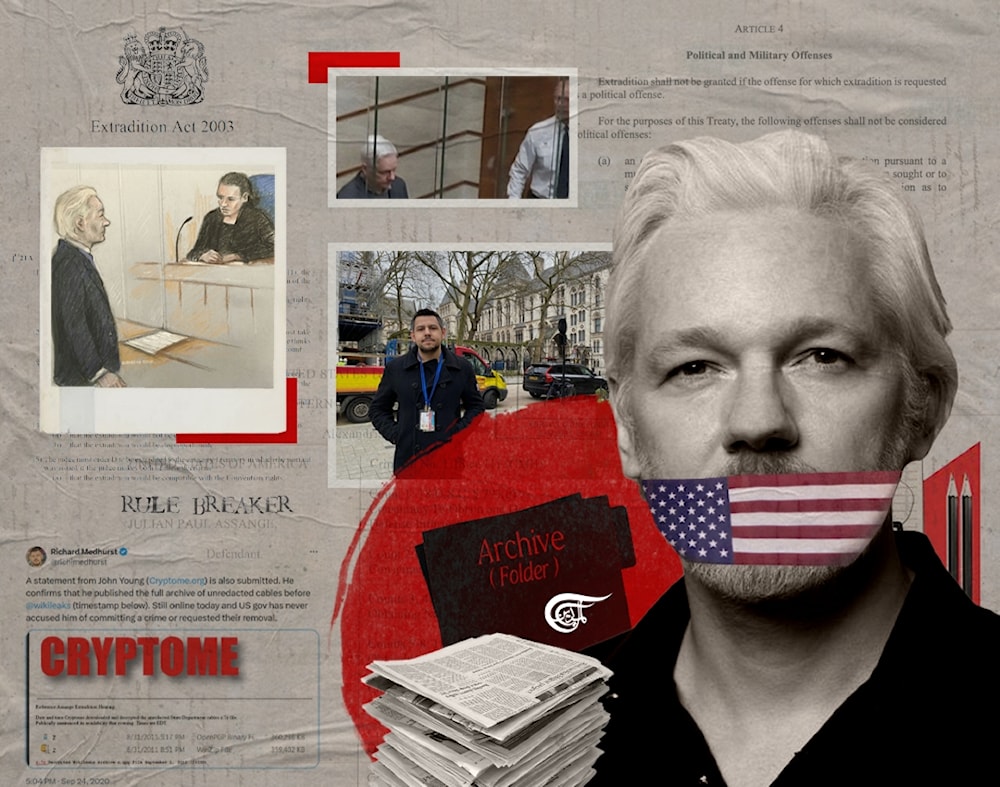
But even if what the United States is saying were true, these documents were not published first by Assange. John Young, the owner of a website called cryptome.org testified to the court that he was the one who published the documents first, and the United States never prosecuted him or asked him to take them down.
Extraditions for political offenses are forbidden under Article 4 of the US-UK Extradition Treaty 2003
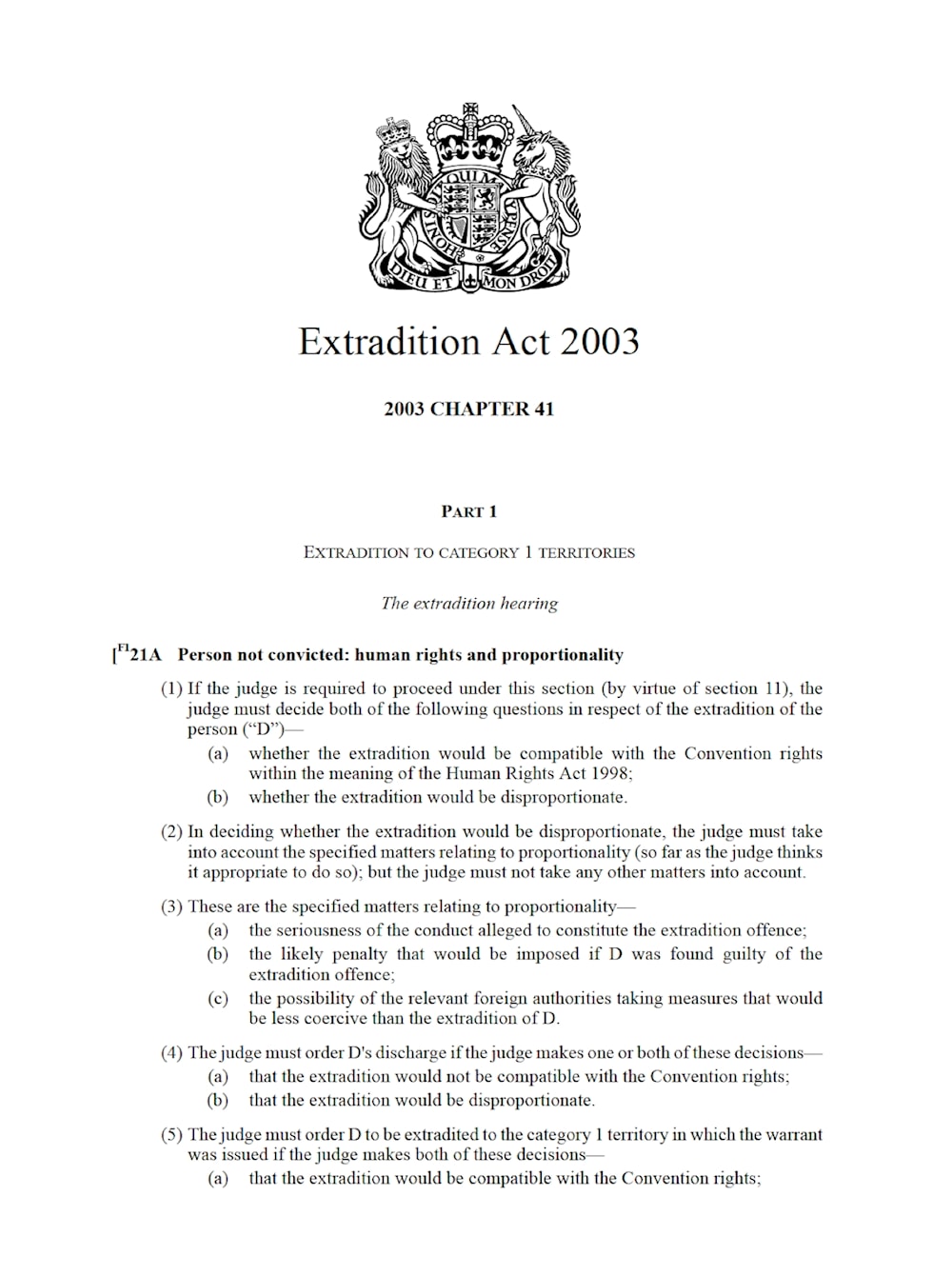
The Extradition Act, which is the implementation of the US-UK treaty inside British law, is missing this section. This is likely due to the fact it was passed at the height of the “War on Terror” in 2003, giving the Americans carte blanche to snatch people, drag them to the US and throw them in dungeons
Richard Medhurst Al Mayadeen English, 7 Mar 2024, https://english.almayadeen.net/articles/analysis/why-the-us-is-trying-to-imprison-assange–report-from-inside
Richard Medhurst is a British journalist who has covered Julian Assange’s extradition case from inside the court since 2020. In this article, he explains what took place in the latest hearings, why the United States is trying to extradite the WikiLeaks founder, and why everyone should care.
Julian Assange is an Australian journalist in the United Kingdom, and the founder of WikiLeaks. He published documents that were given to him by a US soldier called Chelsea Manning, which showed US war crimes in Iraq, Afghanistan, and much more.
The United States want to extradite Assange from the UK to America, and put him on trial for publishing these classified documents. They are threatening him with 175 years in prison.
The reason this case is so serious is because it essentially makes journalism illegal.
The United States claims Assange asked Manning for classified documents and that this is a crime. It’s not.
The US alleges that Assange having classified documents in his possession and publishing them is a crime. It’s not.
Asking for classified documents; protecting sources, these are things journalists do every single day around the world.
But because these files were so embarrassing to the United States and exposed the brutality of their war crimes, they are threatening Assange with almost two centuries in prison; and to do it, they are accusing him of being a “spy” and a “hacker”, charging him with 17 counts under the “Espionage Act”, and with one count of “Conspiracy to Commit Computer Intrusion”.
The goal of this indictment is to make an example out of Assange, and make other journalists afraid to publish things that the public has a right to know.
If extradited, Assange would be placed in the worst prison conditions imaginable, “Special Administrative Measures” (or SAMs): A strict regime of solitary confinement, no contact with other prisoners allowed, and barely any contact with your family. SAMs are internationally recognized as torture. Julian would be sent to the worst prison in America, ADX Florence, a super-maximum security facility in Colorado.
On January 4, 2021, British judge Vanessa Baraitser blocked Assange’s extradition because US prison conditions would be so oppressive in his current state as to drive him to suicide.
Nevertheless, despite blocking the extradition on health grounds, she agreed with all the political and trumped-up charges.
I have attended all of Assange’s court hearings and saw the smears against him debunked by dozens of expert witnesses. But the judge still chose to side with the United States. She chose to essentially criminalize journalism, even drawing dangerous equivalences between the US Espionage Act and Britain’s Official Secrets Act (OSA).
After this, the United States went to the English High Court to appeal her ruling and won by providing empty promises that they would supposedly treat Assange well– even though the United States has a history of violating extradition assurances. I exposed this when I published classified documents from David Mendoza’s extradition from Spain to the US, a case previously cited in court by Julian’s lawyers.
After the US succeeded in overturning the lower court’s ruling in Dec 2021, there was only one thing left: A signature from the Home Secretary, who allowed the extradition to go ahead.
The above is everything that took place between 2020 and 2024, which brings us to the latest hearings at the Royal Courts of Justice in February 2024.
Point 1: To appeal the ruling of the lower court from Jan 4, 2021.
Assange’s lawyers argued that the judge was correct to block Assange’s extradition on health grounds, but she was wrong to agree with all the political charges (equating him with a “hacker” and a “spy”).
They’re saying very plainly: This case is undemocratic, it criminalizes journalism, and doesn’t take into account the fact that the documents Assange published expose enormous US war crimes that the public had the right to know about.
(See for example the “Collateral Murder” video published by Julian Assange’s WikiLeaks: Footage from a US gunship crew laughing as they slaughter Iraqi civilians, among them children and reporters).
Another claim made by the United States is that Assange “harmed informants” by publishing unredacted cables. Ironically, this was proven false by the United States’ own military when they court-martialed Chelsea Manning (the soldier that gave the files to Assange). The US military couldn’t find a single example of anyone having been harmed by the disclosures.
The assertion by the United States that Julian Assange simply published all these documents without censoring or redacting names simply isn’t true: I listened to many journalists tell the court how they spent countless hours meticulously redacting names with Assange.
Assange’s lawyers are also arguing that the judge in the lower court failed to undertake a balancing act. She blindly accepted the United States’ premise that the lives of informants– who weren’t even harmed– are more important than the people killed and tortured by the United States. This is tantamount to saying: The United States should be allowed to continue committing these war crimes in secret; that it’s somehow okay for them to butcher people in Iraq and Afghanistan, and the public have no right to know.
But even if what the United States is saying were true, these documents were not published first by Assange. John Young, the owner of a website called cryptome.org testified to the court that he was the one who published the documents first, and the United States never prosecuted him or asked him to take them down.
This demonstrates that the whole case against Assange is selective, political, and has nothing to do with the law.
Assange’s lawyers are also arguing that the judge in the lower court failed to undertake a balancing act. She blindly accepted the United States’ premise that the lives of informants– who weren’t even harmed– are more important than the people killed and tortured by the United States. This is tantamount to saying: The United States should be allowed to continue committing these war crimes in secret; that it’s somehow okay for them to butcher people in Iraq and Afghanistan, and the public have no right to know.
But even if what the United States is saying were true, these documents were not published first by Assange. John Young, the owner of a website called cryptome.org testified to the court that he was the one who published the documents first, and the United States never prosecuted him or asked him to take them down.
This demonstrates that the whole case against Assange is selective, political, and has nothing to do with the law.
The Espionage Act that Assange is being charged under was created during World War I, in 1917. It has always been used as a political tool against dissidents such as Eugene Debs, or whistleblowers like Daniel Ellsberg and Edward Snowden, who exposed the true extent of the US war in Vietnam, and NSA mass surveillance.
If you’re charged under the Espionage Act, you’re also forbidden from arguing a public interest defense. This means that even if you expose colossal government crimes, you still go to prison.
Point 2: The Home Secretary was wrong to allow the extradition
This constitutes the second part of Assange’s appeal: It is illegal in Britain to extradite someone to another country, knowing they could face the death penalty.
If the Home Secretary, who has the final say on extraditions, is aware of such a risk, they are compelled to bar the extradition.
It is inconceivable that Priti Patel was unaware of who Julian Assange is, and the likelihood he would be killed in the United States. Once in US jurisdiction, the US could pile on additional charges, or simply execute him, as espionage is a capital offense.
Even without a specific death sentence, at 52 years old, even a 30-year bid is akin to a death sentence.
The hollow assurances given by the United States do not preclude the death penalty. And on top of that, the Home Secretary didn’t even bother asking for assurances that would.
So how could the Home Secretary agree to send Assange to a foreign country that so clearly wants to see him dead?
Mike Pompeo, who back then was head of the CIA, and then-president Donald Trump, launched this legal case against Julian Assange. In the past, Donald Trump had called for Assange to be given the death penalty, while Mike Pompeo proclaimed Assange “has no First Amendment rights”. After WikiLeaks published a trove of CIA documents, dubbed the Vault 7 files, Mike Pompeo declared war on WikiLeaks by publicly labeling it a “non-state hostile intelligence service”
All these political denunciations of WikiLeaks and Assange were then followed up with threats against him and his family. As we heard in court in 2020 from protected witnesses, the CIA had drawn up plans to potentially kidnap or assassinate Julian.
The United States is accusing Julian Assange of “espionage”. Normally, this is where the case should be thrown out, because espionage is considered a textbook political offense. And it is forbidden to extradite someone for a political offense under the US-UK Extradition Treaty, Art 4.
Customary extradition treaties have always forbidden extradition for political offenses such as “espionage” and “treason”. And this line of defense has been used before in court to successfully block extraditions.
- Extraditions for political offenses are forbidden under Article 4 of the US-UK Extradition Treaty 2003
Here is where the problem arises:
The Extradition Act, which is the implementation of the US-UK treaty inside British law, is missing this section. This is likely due to the fact it was passed at the height of the “War on Terror” in 2003, giving the Americans carte blanche to snatch people, drag them to the US and throw them in dungeons.
At the time of its passage, many criticized the Extradition Treaty as being extremely one-sided in favor of the United States.
No matter how you look at Assange’s case, it is unfair and illegal.
The United States wants to prosecute Julian Assange under US law, but at the same time deny him any protections under US law, such as free speech. If Assange has no First Amendment rights as a foreign national, then how can he be punished as a foreign national – who is not even in the US? This is such a flagrant double standard, and selective application of the law.
The European Convention on Human Rights (ECHR) is incorporated into British law through the Human Rights Act. Upon examination, it is clear that Julian’s rights are being flagrantly violated
Article 5 protects one from arbitrary detention.
Because this is a political case, it would be a violation of the Extradition Treaty to send Julian to America. Therefore, he has no reason to be in prison right now, and is therefore being arbitrarily detained in violation of his Article 5 rights.
Article 6 guarantees the right to a fair trial.
We know the United States spied on Assange’s conversations with his lawyers when he was inside the Ecuadorian embassy; stole his electronic devices; and collected medical and legal records.
In 2020, I sat in court with Fidel Narvaez, the former Consul to the Ecuadorian embassy in London. We listened to the submissions of two protected witnesses who confirmed they had spied on Assange because the security company they worked for, UC Global, had been contracted by the CIA to do so. They also discussed plans to potentially kidnap and poison Julian Assange and harvest DNA from his baby.
To spy on someone’s privileged conversations with their lawyers, and to use tainted evidence in court is scandalous beyond words, and violates the fundamentals of due process in any jurisdiction. Any judge would have thrown this case out from day one.
We also know Assange will not get a fair trial in America because the jury will be selected from a pool of people who work for the CIA, NSA, or have friends and family working in the intelligence community. These are the very same people whose crimes Julian Assange exposed.
The court in Virginia that issued the charges and would hold this trial is used specifically for this reason; because the jury is biased and the government knows it can’t lose. It is already 100% guaranteed that he will get convicted and go to prison.
Additionally, the United States could use secret evidence against Julian Assange, that he wouldn’t even be allowed to view due to it being “classified”.
Article 7 protects one from being punished retroactively. The case against Julian Assange is unprecedented: No publisher in America has ever been prosecuted, let alone convicted for publishing classified documents.
This case criminalizes journalism, and therefore violates Article 10, which guarantees freedom of expression.
Assange’s lawyers went over the ECHR repeatedly because it is incorporated into British law, meaning the court is obliged to follow it. Not only that, but this was their way of hinting to the judges: If you don’t give us permission to appeal, we will go to the European Court of Human Rights (ECtHR) in Strasbourg, and that court will look upon your decision unfavorably.
(The United Kingdom is a founding and current member of the European Council, which is separate from the European Union).
Assange’s lawyer, Mark Summers, argued very clearly: The Strasbourg court will see that a) these US war crimes were real; b) they were happening on the ground at the time, and; c) by publishing these documents Assange altered the United States’ behavior: The helicopter massacres like in the “Collateral Murder” video stopped, and the Iraq war came to an end.
Assange’s team put together a very compelling defense during this week’s hearing.
Continue reading1 This Month
23-25 October – on Zoom – World BEYOND War’s annual global conferenc


Shut down the radiation-damaged Heysham nuclear reactors now
To see nuclear-related stories in greater depth and intensity – go to https://nuclearinformation.wordpress.com

Say No to NASA’s Reckless Nuclear Reactor on the Moon
Say No to NASA’s Reckless Nuclear Reactor on the Moon

-
Archives
- October 2026 (245)
- September 2026 (339)
- August 2026 (330)
- July 2026 (355)
- June 2026 (287)
- May 2026 (306)
- April 2026 (356)
- March 2026 (251)
- February 2026 (267)
- January 2026 (308)
- December 2025 (358)
- November 2025 (359)
-
Categories
- 1
- 1 NUCLEAR ISSUES
- business and costs
- climate change
- culture and arts
- ENERGY
- environment
- health
- history
- indigenous issues
- Legal
- marketing of nuclear
- media
- opposition to nuclear
- PERSONAL STORIES
- politics
- politics international
- Religion and ethics
- safety
- secrets,lies and civil liberties
- spinbuster
- technology
- Uranium
- wastes
- weapons and war
- Women
- 2 WORLD
- ACTION
- AFRICA
- Atrocities
- AUSTRALIA
- Christina's notes
- Christina's themes
- culture and arts
- Events
- Fuk 2022
- Fuk 2023
- Fukushima 2017
- Fukushima 2018
- fukushima 2019
- Fukushima 2020
- Fukushima 2021
- general
- global warming
- Humour (God we need it)
- Nuclear
- RARE EARTHS
- Reference
- resources – print
- Resources -audiovicual
- Weekly Newsletter
- World
- World Nuclear
- YouTube
-
RSS
Entries RSS
Comments RSS