Israel Didn’t Even Try to Defend the Legality of Its Occupation to World Court

Israel’s system is “an even more extreme form of the apartheid” than South Africa’s was, South African ambassador said.
By Marjorie Cohn , TRUTHOUT, March 6, 2024
or six days, more than 50 countries, the League of Arab States, the African Union and the Organisation of Islamic Cooperation presented testimony to the International Court of Justice (ICJ, or World Court) about the legality of Israel’s occupation of Palestinian territory. The overwhelming majority of them, largely from the Global South, told the court that the occupation was illegal.
The historic hearing, which took place February 19-26, was held in response to the United Nations General Assembly’s December 30, 2022, request for an advisory opinion on the following questions:
(a) What are the legal consequences arising from the ongoing violation by Israel of the right of the Palestinian people to self-determination, from its prolonged occupation, settlement and annexation of the Palestinian territory occupied since 1967, including measures aimed at altering the demographic composition, character and status of the Holy City of Jerusalem, and from its adoption of related discriminatory legislation and measures?
(b) How do the policies and practices of Israel … affect the legal status of the occupation, and what are the legal consequences that arise for all States and the United Nations from this status?
The General Assembly asked the ICJ to discuss these issues with reference to international law, including the UN Charter; international humanitarian law; international human rights law; resolutions of the Security Council, General Assembly and Human Rights Council; and the 2004 advisory opinion of the ICJ finding that Israel’s wall on Palestinian land violated international law.
Israel regularly thumbs its nose at the World Court. It ignored the court’s ruling that the wall was illegal and refuses to implement the ICJ’s provisional order to refrain from committing genocidal acts and ensure humanitarian aid to Gaza.
Before the hearing, Israeli Prime Minister Benjamin Netanyahu blasted the court: “Israel does not recognize the legitimacy of the proceedings of the international court in The Hague regarding ‘the legality of the occupation’ — which are an effort designed to infringe on Israel’s right to defend itself against existential threats,” he said. “The proceedings in The Hague are part of the Palestinian attempt to dictate the results of the diplomatic settlement without negotiations.”
Although Israel didn’t appear at the hearing, it submitted a five-page statement which called the General Assembly’s questions “a clear distortion of the history and present reality of the Israeli-Palestinian conflict.” Israel didn’t even attempt to defend the legality of the occupation, focusing instead on why the ICJ should not issue an advisory opinion.
Israel complained that the ICJ “is asked simply to presume Israeli violations of international law — to accept, as given, plainly biased and flawed assertions directed against Israel alone.” Although consent of the parties is not required for the ICJ to render advisory opinions, Israel protested that it had “not given its consent to judicial settlement of its dispute with the Palestinian side.”
A handful of countries — including the U.S., Canada, U.K., Fiji, Hungary, Italy and Zambia — sided with Israel. Only Fiji argued that the occupation was lawful. The U.S. contended that an occupation can be neither lawful nor unlawful; it is rather governed exclusively by international humanitarian law, which only deals with acts by the occupying power, and doesn’t examine the legality of the occupation itself.
“The court should not find that Israel is legally obligated to immediately and unconditionally withdraw from occupied territory,” said Richard Visek from the U.S. State Department, urging the court to consider Israel’s “legitimate security needs.” Visek defended Israel in the ICJ the day after the U.S. vetoed a Security Council resolution demanding an immediate ceasefire in Gaza for the fourth time.
Israeli Genocide Is “Result of Decades of Impunity”
“The genocide underway in Gaza is the result of decades of impunity and inaction. Ending Israel’s impunity is a moral, political and legal imperative,” Palestine’s Foreign Minister Riyad al-Maliki told the court……………………………………………………………………………………………
Israel’s Occupation of Palestinian Territory Is Illegal
It is a peremptory norm of international law that territory cannot be acquired by force. In 1967, Israel launched a “preemptive” war against Egypt, Jordan and Syria, and seized the West Bank, Gaza, Jerusalem, the Golan Heights and the Sinai Peninsula. Israel has occupied those Palestinian territories ever since.
Visek from the U.S. State Department told the ICJ that Israel was defending itself in the 1967 war. But it was Israel that initiated the war. Rossa Fanning, Ireland’s attorney general, called it “the war [Israel] launched,” thus, an act of aggression. Wilde noted that Israel “claimed to be acting in self-defence, anticipating a non-immediately imminent attack,” but “even assuming, arguendo, its claim of a feared attack, States cannot lawfully use force in non-immediately imminent anticipatory self-defence.” Article 51 of the UN Charter forbids a state from using military force except in self-defense after an armed attack by another state.
…………………………………………………………….Israel asserts that it has not occupied the Gaza Strip since 2005, when it withdrew its military forces and settlements. But it continues to exercise military control over Gaza by continuous military operations in and against Gaza.
……………………….Gaza and its population remain under effective Israeli control and are, therefore, occupied. ………………………………………………………………………………………………………………………………
Apartheid “Goes Hand-in-Hand” With Violation of Right to Self-Determination
Israel maintains a system of apartheid in the occupied Palestinian territory, as confirmed by Amnesty International, Human Rights Watch and Israeli human rights group B’Tselem. Vusimuzi Madonsela, South Africa’s ambassador to the Netherlands, called Israel’s apartheid system “an even more extreme form of the apartheid that was institutionalized against Black people in my country.”
In the West Bank, Israel preserves its separation wall, segregated roads, checkpoints and restrictive permit requirements. While Israelis are subject to a civil legal system, Palestinians are controlled by a military system. They can be held indefinitely with no charges or due process in administrative detention and can be convicted based on secret evidence………………………………………………….
Israeli Settlements Constitute Illegal Annexation
More than 700,000 Israeli settlers — 10 percent of the nearly 7 million people in Israel — have been transferred into the occupied Palestinian territories, “continuously terrorizing and forcibly displacing Palestinians from even more of their territory and engaging in pogroms against them,” Shoman from Belize stated.
This constitutes a “disguised form of annexation,” Ireland’s Fanning said. “The prohibition on the acquisition of territory by force is firmly established in customary international law. Using force to occupy and maintain such occupation for the purposes of territorial acquisition or annexing an occupied territory by force in whole or in part, is each illegal.”
Israel’s policy of settling its civilians in occupied Palestinian territory and displacing the local population violates international humanitarian law, as the ICJ has ruled. Article 49 of the Fourth Geneva Convention says: “The Occupying Power shall not deport or transfer parts of its own civilian population into the territory it occupies.”
Legal Consequences for All States and the UN
“Israel must dismantle the physical, legal and policy regime of discrimination and oppression … evacuate Israeli settlers from Palestinian territories, permit Palestinians to return to their country and property, and lift the siege and blockade of Gaza,” Webb from Belize told the ICJ. “These consequences, taken collectively, mean that Israel must immediately, unconditionally, and totally withdraw from the entire Palestinian territory.”
…………………………………………………………………………………… The ICJ will likely issue its advisory opinion in about six months. https://truthout.org/articles/israel-didnt-even-try-to-defend-the-legality-of-its-occupation-to-world-court/
Prime Minister of Australia, and Henchmen, Referred to International Criminal Court for Support of Gaza Genocide

By Birchgrove Legal, March 5, 2024, https://worldbeyondwar.org/prime-minister-of-australia-and-henchmen-referred-to-international-criminal-court-for-support-of-gaza-genocide/
Australian Prime Minister Anthony Albanese has been referred to the International Criminal Court as an accessory to genocide in Gaza, making him the first leader of a Western [Western?] nation to be referred to the ICC under Article 15 of the Rome Statute.
A team of Australian lawyers from Birchgrove Legal, led by King’s Counsel Sheryn Omeri, have spent months documenting the alleged complicity and outlining the individual criminal responsibility of Mr Albanese in respect to the situation in Palestine.
The 92-page document, which has been endorsed by more than one hundred Australian lawyers and barristers, was yesterday submitted to the Office of ICC Prosecutor, Karim Khan KC.
The document sets out a number of actions taken by the PM and other ministers and members of parliament, including Foreign Minister Wong and the Leader of the Opposition, for the Prosecutor to consider and investigate. These include:
- Freezing $6 million in funding to the primary aid agency operating in Gaza – UNRWA – amid a humanitarian crisis based on unsubstantiated claims by Israel after the International Court of Justice had found it plausibly to be committing genocide in Gaza.
- Providing military aid and approving defence exports to Israel, which could be used by the IDF in the course of the prima facie commission of genocide and crimes against humanity.
- Ambiguously deploying an Australian military contingent to the region, where its location and exact role have not been disclosed.
- Permitting Australians, either explicitly or implicitly, to travel to Israel to join the IDF and take part in its attacks on Gaza.
- Providing unequivocal political support for Israel’s actions, as evidenced by the political statements of the PM and other members of Parliament, including the Leader of the Opposition.
Ms Omeri KC said the case was legally significant because it focused exclusively on two modes of accessorial liability.
“The Rome Statute provides four modes of individual criminal responsibility, two of which are accessorial,” Omeri said.
“In relation to accessorial liability, a person may be criminally responsible for a crime set out in the Rome Statute if, for the purpose of facilitating the commission of that crime, that person aids, abets or otherwise assists in the commission of the crime, or its attempted commission, including by providing the means for its commission.
“Secondly, if that person in any other way contributes to the commission of the crime or its attempted commission by a group, knowing that the group intends to commit the crime.”
Ms Omeri KC said the Article 15 communication had been carefully drafted by those instructing her and was now a matter for the Prosecutor to consider.
“The Office of the Prosecutor of the ICC is already pursuing an ongoing investigation into the situation in the State of Palestine, which it has been conducting since March 2021,” Omeri said.
“That includes investigating events which have occurred since 7 October 2023. This Article 15 communication will add to the evidence available to the Prosecutor in relation to that situation.
“The Article 15 communication is of a piece with recent domestic legal cases brought against Western leaders in a number of countries such as in the US, against President Biden, and most recently, in Germany, against, among other senior government ministers, Chancellor Scholz.
“These cases demonstrate a growing desire on the part of civil society and ordinary citizens of Western countries to ensure that their governments do not assist in the perpetration of international crimes, especially in circumstances where the ICJ has found a plausible case of genocide in Gaza.”
Principal solicitor at Birchgrove Legal, Moustafa Kheir, said his team had twice written to Mr Albanese, putting him on notice and seeking a response on behalf of the applicants who make up a large consortium of concerned Australian citizens, including those of Palestinian ethnicity.
Mr Kheir said communications were ignored on both occasions.
“Since October we have attempted communications with our Prime Minister as we reasonably believe that he and members of his cabinet are encouraging and supporting war crimes committed by Israel against Palestinian civilians through their political and military assistance,” Kheir said.
“The Prime Minister has ignored our concerns and given the limited avenues we have for recourse under national law, we have been left with little option but to pursue this Article 15 communication to the International Criminal Court.
“Our communication has been endorsed by King’s Counsel Greg James AM and well over 100 senior counsel and barristers, retired judges, law professors and academics from around Australia who wish to test the strength of international law to hold their own democratic leaders accountable given the barriers we face to do it nationally.
“As lawyers and barristers, it is impossible to sit back and watch sustained breaches of international law while Albanese continues to refer to the perpetrator as “a dear friend.”
A copy of the application can be viewed here: ICC-Referral-Australian-Government-Ministers-and-Opposition-Leader-04032024_BLG.pdf
Or here.
US Refuses to Assure UK Judges That Assange Won’t Be Executed If He’s Extradited

UK law prohibits extradition to a country that may impose capital punishment.
By Marjorie Cohn , TRUTHOUT, February 27, 2024
n February 20 and 21, as nearly 1,000 supporters of Julian Assange gathered outside the London courthouse, a two-judge panel of the High Court of Justice presided over a “permission hearing.” Assange’s lawyers asked the judges to allow them to appeal the home secretary’s extradition order and raise issues that the district court judge had rejected without full consideration.
The High Court panel, Dame Victoria Sharp and Justice Jeremy Johnson, were concerned that the U.S. government could execute Assange if he is extradited to the United States, a penalty outlawed in the U.K. Although Assange faces 175 years in prison for the charges alleged in the indictment, there is nothing to prevent the U.S. from adding additional offenses which would carry the death penalty.
The Trump Administration Indicted Assange for Exposing U.S. War Crimes
Assange is charged with 17 counts of alleged violations of the Espionage Act, based on obtaining, receiving, possessing and publishing national defense information. He is accused of “recruit[ing] sources” and “soliciting” confidential documents just by maintaining the WikiLeaks website that stated it accepted such materials. Assange is also charged with one count of “conspiracy to commit computer intrusion” with intent to “facilitate [whistleblower Chelsea] Manning’s acquisition and transmission of classified information related to the national defence of the United States.”
The basis for the indictment, Assange’s lawyers told the panel, is WikiLeaks’s “exposure of criminality on the part of the U.S. government on an unprecedented scale.” Assange is charged for revealing war crimes committed by the United States in Iraq, Afghanistan and Guantánamo Bay. The indictment has nothing to do with Hillary Clinton and the 2016 election or Swedish allegations of sexual misconduct, which have been dropped.
WikiLeaks revealed the “Iraq War Logs” — 400,000 field reports including 15,000 unreported deaths of Iraqi civilians, as well the as systematic rape, torture and murder after U.S. forces handed over detainees to a notorious Iraqi torture squad. The revelations also included the “Afghan War Diary” — 90,000 reports of more civilian casualties by coalition forces than the U.S. military had reported.
In addition, WikiLeaks revealed the “Guantánamo Files,” 779 secret reports with evidence that 150 innocent people had been held at Guantánamo Bay for years, and 800 men and boys had been tortured and abused, in violation of the Geneva Conventions and the Convention Against Torture and Other Cruel, Inhuman or Degrading Treatment or Punishment.
WikiLeaks also revealed the notorious 2007 “Collateral Murder Video,” in which a U.S. Army Apache attack helicopter targeted and killed 11 unarmed civilians in Baghdad, including two Reuters journalists and a man who came to rescue the wounded. Two children were injured. The video contains evidence of war crimes prohibited by the Geneva Conventions.
And WikiLeaks exposed “Cablegate” — 251,000 confidential U.S. State Department cables that “disclosed corruption, diplomatic scandals and spy affairs on an international scale.” According to The New York Times, they told “the unvarnished story of how the government makes its biggest decisions, the decisions that cost the country most heavily in lives and money.”
“These were the most important revelations of criminal U.S. state behavior in history,” Assange attorney Mark Summers argued to the High Court panel.
Assange’s Appellate Issues
Assange is asking the U.K. High Court to review issues of treaty obligations, human rights violations and political persecution.
The U.S.-U.K. Extradition Treaty would allow the U.S. to amend or add charges which could expose Assange to the death penalty, a punishment prohibited in the U.K. In response to questioning by one of the judges, the prosecutor admitted that the U.S. had not provided assurances that Assange would not be subject to the death penalty if extradited.
Article 4(1) of the extradition treaty does not allow extradition for political offenses. Espionage is the “quintessential” political offense, Assange attorney Edward Fitzgerald told the panel. “The gravamen (and defining legal characteristic) of each of the charges is thus an alleged intention to obtain or disclose US state secrets in a manner that was damaging to the security of the US state,” which makes them political offenses, Assange’s lawyers wrote. The defense claimed it was an abuse of process for the United States to pursue extradition of Assange for a political offense……………………………………………………………………………….
“The Most Important Revelation Since Abu Ghraib”
The Collateral Murder video is “the most important revelation since Abu Ghraib,” Summers told the panel. “The cables Assange published disclosed extrajudicial assassinations, rendition, torture, dark prisons and drone killings.” Summers said the Guantánamo Files revealed a “colossal criminal act.” The defense pointed out that WikiLeaks’s revelations actually saved lives. After WikiLeaks published evidence of Iraqi torture centers established by the U.S., the Iraqi government refused President Barack Obama’s request to grant immunity to U.S. troops who committed criminal and civil offenses there. As a result, Obama had to withdraw U.S. forces from Iraq.
The Obama administration, which prosecuted more whistleblowers under the Espionage Act than all prior U.S. administrations combined, considered prosecuting Assange, but feared it would violate the First Amendment. The administration was unable to distinguish what WikiLeaks did from what The New York Times and The Guardian did since they also published documents that Chelsea Manning had leaked.
But the Trump administration did indict Julian Assange. The U.K. arrested Assange and has held him in Belmarsh Prison for nearly five years pending a decision on whether he should be extradited to the U.S. to stand trial.
In January 2021, following a three-week hearing, Baraitser denied extradition after finding that Assange’s mental health was so frail there was a “substantial risk” of suicide if he was extradited to the U.S. because of the harsh conditions of confinement in which he would be held. But she rejected all other legal objections to extradition that Assange had raised.
U.S. “Assurances” That Assange Will Be Treated Humanely
After Baraitser had already ruled, the U.S. came forward with diplomatic “assurances” that Assange would be treated humanely if extradited to the United States. The Biden administration assured the court that Assange: (1) would not be subject to onerous Special Administrative Measures (SAMs) that would keep him in extreme isolation and monitor his confidential communications with his attorneys; (2) would not be housed at the notorious ADX Florence maximum security prison in Colorado; (3) would receive psychological and clinical treatment in custody; and (4) could serve any custodial sentence in Australia.
But the U.S. said the assurances wouldn’t apply if Assange committed a “future act” that “met the test” for the SAMs. That unspecified contingency would be based on a subjective determination of prison authorities with no judicial review.
Although the United States has reneged on nearly identical assurances in the past, the High Court accepted them at face value, saying it was satisfied that the U.S. was acting in good faith, and in December 2021, the High Court reversed Baraitser’s denial of extradition.
However, in a 2023 decision, the U.K. Supreme Court unanimously held that the court has an independent duty to determine the validity of assurances,
writing, “The government’s assessment of whether there is such a risk is an important element of that evidence, but the court is bound to consider the question in the light of the evidence as a whole and to reach its own conclusion.”
In June 2023, a single High Court judge, Jonathan Swift, refused Assange permission to appeal in a cursory three-page ruling. The hearing on February 20 and 21 was an effort by Assange’s legal team to reverse that decision so that the High Court will entertain his appeal.
Assange Redacted Names of Informants to Protect Them
…………………… Several witnesses testified at the 2020 extradition hearing that Assange took great care to ensure that the names were redacted. Other outlets published the unredacted cables before WikiLeaks with no adverse consequences.
………………….Moreover, Brig. Gen. Robert Carr testified at Manning’s court martial that no one was harmed by the WikiLeaks releases. Summers told the panel that Baraitser never balanced the public interest in the disclosures against the fact that no harm came from them.
Conviction of Assange Would Chill Investigate Journalists From Exposing Government Secrets
In November 2022, The New York Times, The Guardian, Le Monde, DER SPIEGEL and El País signed a joint open letter calling on the Biden administration to drop the Espionage Act charges against Assange. They wrote, “Publishing is not a crime,” noting that Assange is the first publisher to be charged under the Espionage Act for revealing government secrets.
The indictment would punish conduct that national security journalists routinely engage in, including cultivating and communicating confidentially with sources and soliciting information from them, shielding their identities from disclosure, and publishing classified information. If Assange is prosecuted and convicted, it will discourage journalists both in the U.S. and abroad from publishing evidence of government wrongdoing.
No publisher has ever been prosecuted under the Espionage Act for disclosing government secrets. The U.S. government has never prosecuted a publisher for publishing classified information, which constitutes an essential tool of investigative journalism.
But rather than dropping Trump’s prosecution of Assange consistent with the position of the Obama-Biden administration, Joe Biden has zealously pursued extradition and prosecution.
Pending House Resolution Would Call for Dismissal of All Charges Against Assange.
On December 13, 2023, House Resolution 934 was introduced in the U.S. House of Representatives by Rep. Paul A. Gosar (R-Arizona), with cosponsors from both political parties. It would express “the sense of the House of Representatives that regular journalistic activities are protected under the First Amendment, and that the United States ought to drop all charges against and attempts to extradite Julian Assange.” The resolution states that the WikiLeaks disclosures “promoted public transparency through the exposure of the hiring of child prostitutes by Defence Department contractors, friendly fire incidents, human rights abuses, civilian killings, and United States use of psychological warfare.”
…………… The conviction of Assange under the Espionage Act, the resolution continues, “would set a precedent allowing the United States to prosecute and imprison journalists for First Amendment protected activities, including the obtainment and publication of information, something that occurs on a regular basis.”
…………..
At the conclusion of the two-day hearing, the High Court panel set a due date of March 4 for further written submissions from the parties. If the court agrees to review at least one of Assange’s appellate issues, there will be a full hearing. Meanwhile, Assange, who is in poor physical and emotional health, remains in prison.
If the High Court denies his right to appeal, Assange can ask the European Court of Human Rights to hear his case. If that court finds “exceptional circumstances” and an “imminent risk of irreparable harm,” it can order provisional measures, including a stay of execution while the case is pending in the European court. But there is a danger that the U.K. could immediately extradite Assange to the United States before the European Court of Human Rights has a chance to consider Assange’s petition.
More indictments for Ohio nuclear crimes

The mainstream national press has scarcely reported any of this. Maybe they view it as a local story. But this kind of nuclear corruption has also occurred in South Carolina and Illinois, culminating in multiple indictments and prison sentence
Why does the nuclear industry find itself mired in these kinds of criminal conspiracies? Because it has no chance of standing on its own financial feet.
Former executives face a judge — in their ankle monitors
By Linda Pentz Gunter, , beyondnuclearinternational
It was called “likely the largest bribery money-laundering scheme ever perpetrated against the people of the state of Ohio.” And the shoes are still dropping. Or should that be ankle monitors? Because these latter belong to the three latest criminals indicted for their roles in a scheme that saw FirstEnergy hand over $61 million in bribes to Ohio politicians and their co-conspirators to secure favorable legislation.
That bill, known as HB6, guaranteed a $1.3 billion bailout to FirstEnergy in order to keep open its two failing Ohio nuclear power plants, Davis-Besse and Perry, as well as struggling coal plants. The nuclear portion of the bill has since been rescinded, but Ohio consumers are still paying to prop up two aging coal plants, to the tune of half a million dollars a day, amounting to an extra $1.50 a month on every ratepayer’s electric bill.
The $61 million bribery plot was the mastermind of then speaker of the Ohio House, Larry Householder, who is now a household name in Ohio for all the wrong reasons. He was sentenced last June to 20 years in prison for his part in the conspiracy. GOP Chairman Matt Borges, was also found guilty of racketeering conspiracy and sentenced to five years in federal prison. Both men say they will appeal.
Householder may have been the instigator, but in those earlier trials, FirstEnergy was described as a company that went “looking for someone to bribe them”. They found willing accomplices among politicians but also in the person of then Ohio Public Utilities Commission chairman, Samuel Randazzo.
So on February 12, yet more indictments were handed down, this time to Randazzo and the two FirstEnergy executives who corrupted him — former CEO Charles Jones, and former senior vice president of external affairs, Michael Dowling.
Their list of crimes, including a collective 27 felonies, was announced at a press conference by Ohio Attorney General Dave Yost. But although the presence of their company had been requested, the accused were not there. ……………………………………………………………
The mainstream national press has scarcely reported any of this. Maybe they view it as a local story. But this kind of nuclear corruption has also occurred in South Carolina and Illinois, culminating in multiple indictments and prison sentences. It’s possible we could yet see something similar go down in Georgia as electricity rates there soar to pay for the two late-arriving and over-budget Vogtle reactors, the second of which just started fissioning earlier this month.
Why does the nuclear industry find itself mired in these kinds of criminal conspiracies? Because it has no chance of standing on its own financial feet. Meanwhile, cheaper, faster, more job-friendly renewable energy industry options are leaving nuclear power behind in a cloud of radioactive dust.
This economic collapse has, in turn, put pressure on politicians to make things right for their corporate nuclear friends, something Senator Joe Manchin and others are currently working hard to do on Capitol Hill.
So there may yet be more shoes (and ankle monitors) to drop and it’s going to be very interesting to see who’s wearing them.
Linda Pentz Gunter is the international specialist at Beyond Nuclear and writes for and edits Beyond Nuclear International. https://beyondnuclearinternational.org/2024/02/25/more-indictments-for-ohio-nuclear-crimes/
Fish v. electricity: Could Salem nuclear plant be shut down?

Delaware Live KARL BAKER FEBRUARY 16, 2024
A judge in an obscure administrative court in Trenton, N.J., is set to hand down a ruling that could end a challenge to the Salem nuclear plant’s ability to pump billions of gallons of water out of the Delaware River each day.
The case, which strikes at the heart of the mid-Atlantic electricity ecosystem, pits a tenacious environmental group against one of the region’s largest energy companies, and its ultimate resolution could impact electricity prices for Delawareans, the health of birds and fish in the Delaware estuary, and President Joe Biden’s most ambitious energy initiative to date.
In short, it’s the region’s biggest environmental battle that you’ve probably never heard of.
At issue is the way in which the Salem Nuclear Generating Station’s two reactors cool steam created by the heat of nuclear fission. Currently, the plant pumps cold water from the Delaware River through a system of pipes that lead it to the steam, which is then cooled back to a liquid form.
The river water then returns to the estuary, but at far higher temperatures than when it was pumped in.
In all, the process kills large numbers of fish and fish larvae, though the exact amounts are disputed.
In late 2016, the Delaware Riverkeeper Network , an environment group and active critic of heavy industry in the region – petitioned New Jersey to rescind a permit that allows the plant to pump water out of the river.
When filed, the challenge was the latest of more than a decade of petitions, disputes and complaints brought against the Salem facility by the environmental group and its outspoken leader Maya van Rossum, who calls the power plant the largest “predator” in the Delaware estuary.
Van Rossum claims that 3 billion adult fish are killed on average each year by the plant’s cooling operations, plus billions more eggs and larvae. Those include the bay anchovy, a species that has suffered a declining local population even as larger fish, eagles, herons, and even whales rely on it for food.
“The cause of the problem for the fish is that the Salem Nuclear Generating Station is sucking them in, cooking them, ripping them apart, destroying them,” she said.
The New Jersey Department of Environmental Protection, which declined to comment for this story, suggested in their permit issued to Salem that the mortality figures cited by van Rossum and other critics are overstated.
Still, they do not appear to have presented current, counter estimate
During the early 2000s, the U.S. Environmental Protection Agency issued new rules mandating that new large power plants use closed-cycle cooling…………………………………………………………………………………………………………………………. more https://delawarelive.com/fish-v-electricity-could-salem-be-shut-down/
More indictments for Ohio nuclear crimes

Why does the nuclear industry find itself mired in these kinds of criminal conspiracies? Because it has no chance of standing on its own financial feet.
by beyondnuclearinternational, By Linda Pentz Gunter
Former executives face a judge — in their ankle monitors
It was called “likely the largest bribery money-laundering scheme ever perpetrated against the people of the state of Ohio.” And the shoes are still dropping. Or should that be ankle monitors? Because these latter belong to the three latest criminals indicted for their roles in a scheme that saw FirstEnergy hand over $61 million in bribes to Ohio politicians and their co-conspirators to secure favorable legislation.
That bill, known as HB6, guaranteed a $1.3 billion bailout to FirstEnergy in order to keep open its two failing Ohio nuclear power plants, Davis-Besse and Perry, as well as struggling coal plants. The nuclear portion of the bill has since been rescinded, but Ohio consumers are still paying to prop up two aging coal plants, to the tune of half a million dollars a day, amounting to an extra $1.50 a month on every ratepayer’s electric bill.
The $61 million bribery plot was the mastermind of then speaker of the Ohio House, Larry Householder, who is now a household name in Ohio for all the wrong reasons. He was sentenced last June to 20 years in prison for his part in the conspiracy. GOP Chairman Matt Borges, was also found guilty of racketeering conspiracy and sentenced to five years in federal prison. Both men say they will appeal.
Householder may have been the instigator, but in those earlier trials, FirstEnergy was described as a company that went “looking for someone to bribe them”. They found willing accomplices among politicians but also in the person of then Ohio Public Utilities Commission chairman, Samuel Randazzo.
So on February 12, yet more indictments were handed down, this time to Randazzo and the two FirstEnergy executives who corrupted him — former CEO Charles Jones, and former senior vice president of external affairs, Michael Dowling.
Their list of crimes, including a collective 27 felonies, was announced at a press conference by Ohio Attorney General Dave Yost. But although the presence of their company had been requested, the accused were not there. ………………………………………………………..
Householder, somewhat of a gangster lookalike himself, was described during his earlier trial as “the quintessential mob boss, directing the criminal enterprise from the shadows and using his casket carriers to execute the scheme.”
The mainstream national press has scarcely reported any of this. Maybe they view it as a local story. But this kind of nuclear corruption has also occurred in South Carolina and Illinois, culminating in multiple indictments and prison sentences. It’s possible we could yet see something similar go down in Georgia as electricity rates there soar to pay for the two late-arriving and over-budget Vogtle reactors, the second of which just started fissioning earlier this month.
Why does the nuclear industry find itself mired in these kinds of criminal conspiracies? Because it has no chance of standing on its own financial feet. Meanwhile, cheaper, faster, more job-friendly renewable energy industry options are leaving nuclear power behind in a cloud of radioactive dust.
This economic collapse has, in turn, put pressure on politicians to make things right for their corporate nuclear friends, something Senator Joe Manchin and others are currently working hard to do on Capitol Hill.
So there may yet be more shoes (and ankle monitors) to drop and it’s going to be very interesting to see who’s wearing them.
Linda Pentz Gunter is the international specialist at Beyond Nuclear and writes for and edits Beyond Nuclear International. https://beyondnuclearinternational.org/2024/02/25/more-indictments-for-ohio-nuclear-crimes/—
The Show Trial against Julian Assange

If the US authorities succeed in convicting a journalist for exposing war crimes, this would have another serious consequence. In the future, it would become even more difficult and dangerous to expose the sordid reality of wars,
How US and British authorities are bending the law and undermining press freedom
FABIAN SCHEIDLER, FEB 24, 2024 ore https://fabianscheidler.substack.com/p/the-show-trial-against-julian-assange
“Those who tell the truth need a fast horse,” says an Armenian proverb. Or they need a society that protects the truth and its messengers. But this protection, which our democracies claim to offer, is in danger. As a journalist, Julian Assange has published hundreds of thousands of files documenting war crimes committed by the USA and its allies in Afghanistan, Iraq, Guantanamo and elsewhere. The authenticity of the documents is beyond question. However, none of the perpetrators have been brought to justice or convicted. In contrast, the messenger has been incarcerated in a high-security prison in London for five years with life-threatening health problems, having previously spent seven years locked up in the Ecuadorian embassy. He has been charged with no crime in the UK, in any EU country or in his home country of Australia. The only reason for his grueling deprivation of liberty is that the US government has initiated extradition proceedings accusing the journalist Assange of espionage, invoking a law dating back more than a hundred years to the First World War: the Espionage Act.
Never before has a journalist been charged under this law. The extradition process therefore sets a dangerous precedent. If it is successful, every journalist on Earth who exposes US war crimes would have to fear suffering the same fate as Assange. That would be the end of freedom of the press as we know it. Because it is based on the capacity to bring to light the dark sides of power without fear of punishment. Where this freedom is extinguished, it is not only the freedom of journalists that dies, but the freedom of us all: the freedom from the arbitrariness of power.
For this reason alone, this extradition process should never have been accepted by the courts in a functioning legal system. Julian Assange did not act as a spy in any way, but as a journalist and as such is subject to special protection. Incidentally, the key witness for the espionage charge was the notorious fraudster and convicted paedophile Sigurdur Ingi Thordarson, who admitted in 2021 that he had lied on behalf of the FBI and had been granted immunity from prosecution.
Let us imagine the case with reversed roles: Suppose an Australian journalist had published war crimes committed by the Russian military and intelligence services and sought protection in a Western European country. Would the courts seriously consider extradition proceedings to Moscow for espionage, especially if the key witness is a convicted criminal?
Assange is facing the absurd sentence of 175 years in the USA. It is to be feared that he will not survive the extremely harsh conditions in the notorious US prison system. For this reason, the London Magistrates’ Court initially halted his extradition in 2021. The US government then published a paper stating that Assange would not face solitary confinement. However, according to Amnesty International, this declaration is “not worth the paper it is written on”, as the non-binding diplomatic note reserves the right for the US government to change its position at any time. The Court of Appeal, however, found this paper sufficient to clear the way for extradition – a travesty of justice, as Amnesty noted.
The hearings, which took place on February 20 and 21 at the High Court in London and whose verdict is expected in March, are the last opportunity for Assange to obtain an appeal against this extradition decision. However, there is a high risk that the law will once again be turned on its head. As the investigative platform Declassified UK reports, one of the two judges, Jeremy Johnson, previously worked for the British secret service MI6, which is closely intertwined with the CIA and whose illegal activities came to public attention through the work of Julian Assange.
For Julian Assange, the trial itself has already become a punishment. Nils Melzer, the UN Special Rapporteur on Torture, concluded after detailed investigations that Assange had been subjected to systematic psychological torture for years. The fact that the US was prepared to go even further came to light in September of the same year: according to reports in the Guardian, senior intelligence officials, including the then head of the CIA and later Secretary of State Mike Pompeo, planned to kidnap and murder Assange in 2017.[v]
The background:
Wikileaks had published documents that year that became known as “Vault 7”. They show the CIA’s massive activities in the field of cyber warfare and prove how the secret service systematically and comprehensively intervenes in web browsers, IT systems in cars, smart TVs and smartphones, even when they are switched off. This was one of the most sensational revelations by Wikileaks since the leaks by Edward Snowden, who uncovered the massive illegal surveillance by the NSA. The CIA was not to forgive Assange for this coup and subsequently classified Wikileaks as a “non-state hostile intelligence service” – a momentous neologism that allowed journalists to be declared enemies of the state. After Pompeo became Secretary of State in 2018, the US government initiated the extradition proceedings. This move replaced Pompeo’s original kidnapping and killing plan, with the goal remaining the same: the destruction of an inconvenient journalist.
The revelations of whistleblowers such as Edward Snowden and Chelsea Manning and journalists such as Julian Assange have shown that in the shadow of the so-called war on terror, a vast parallel universe has emerged in recent decades that is obsessed with the illegal spying on its own citizens and the arbitrary imprisonment, torture and killing of political opponents. This world is largely beyond democratic control, indeed it is undermining the democratic order from within.
However, this development is not entirely new. In 1971, leaks revealed a secret FBI program for spying on, infiltrating and disrupting civil rights and anti-war movements, which became known as COINTELPRO. In the same year, the New York Times published the Pentagon Papers leaked by whistleblower Daniel Ellsberg, which showed that four successive US administrations had systematically lied to their citizens about the extent and motives of the Vietnam War and the massive war crimes committed by the US military. In 1974, Seymour Hersh revealed the CIA’s secret programs to assassinate foreign heads of state and the covert operation to spy on hundreds of thousands of opponents of the war, which ran under the code name “Operation CHAOS”. Driven by these reports, the US Congress convened in 1975 the Church Committee, which carried out a comprehensive review of the secret operations and led to greater parliamentary control of the services.
Julian Assange is part of this venerable journalistic tradition and has made a decisive contribution to its renewed flourishing. However, there is one important difference to the 1970s: Today, the most important investigative journalist of his generation is openly persecuted, criminalized and deprived of his freedom. When states declare the investigation of crimes to be a crime itself, society enters a dangerous downward spiral, at the end of which new forms of totalitarian rule can emerge. As early as 2012, Assange remarked, at the time with regard to the increasingly comprehensive surveillance technologies: “We have all the ingredients for a turnkey totalitarian state”.
If the US authorities succeed in convicting a journalist for exposing war crimes, this would have another serious consequence. In the future, it would become even more difficult and dangerous to expose the sordid reality of wars, especially those wars that Western governments like to sell as civilizing missions with the help of embedded journalists. If we do not learn the truth about these wars, it becomes much easier to wage them. Truth is the most important instrument of peace.
Julian Assange has not yet been extradited and sentenced. Over the years, a remarkable international movement has formed for his release and the defense of press freedom. Many parliamentarians around the world are also raising their voices. The Australian parliament, for example, supported by Prime Minister Anthony Albanese, passed a resolution by a large majority calling for Assange’s release. A group of over 80 members of the German parliament have joined in. However, the German government is still refusing to exert any serious pressure on Joe Biden’s government, which continues to persecute Assange. German Foreign Minister Annalena Baerbock, who as the Green Party’s candidate for chancellor had spoken out in favor of freeing Assange, has persistently avoided questions on the subject since joining the government. Her ministry has left questions from MPs about the case unanswered for months, only to then make elusive rhetorical excuses. The leading politicians of the governing German coalition, who like to loudly present themselves as the guardians of democracy and the rule of law, must finally take action in this case of political justice and unequivocally demand the release of Julian Assange before it is too late. However, this would require overcoming the cowering attitude towards the godfather in Washington and actually standing up for the much-vaunted values of democracy.
Justice Department Announces Nuclear Materials Trafficking Charges Against Japanese Yakuza Leader
Takeshi Ebisawa, Leader within the Yakuza Transnational Organized Crime Syndicate, Allegedly Trafficked Nuclear Materials, Including Uranium and Weapons-Grade Plutonium
A superseding indictment was unsealed in Manhattan today charging a Japanese national with conspiring with a network of associates to traffic nuclear materials from Burma to other countries.
According to court documents, Takeshi Ebisawa, 60, and co-defendant Somphop Singhasiri, 61, were previously charged in April 2022 with international narcotics trafficking and firearms offenses, and both have been ordered detained.
“The defendant stands accused of conspiring to sell weapons grade nuclear material and lethal narcotics from Burma, and to purchase military weaponry on behalf of an armed insurgent group,” said Assistant Attorney General Matthew G. Olsen of the Justice Department’s National Security Division. “It is chilling to imagine the consequences had these efforts succeeded and the Justice Department will hold accountable those who traffic in these materials and threaten U.S. national security and international stability.”
“As alleged, the defendant brazenly trafficked material containing uranium and weapons-grade plutonium from Burma to other countries,” said U.S. Attorney Damian Williams for the Southern District of New York. “He did so while believing that the material was going to be used in the development of a nuclear weapons program, and while also negotiating for the purchase of deadly weapons. It is impossible to overstate the seriousness of this conduct. I want to thank the career prosecutors of my office and our law enforcement partners for ensuring that the defendant will now face justice in an American court.” …………………………………………………………………………………………………………………………………………………………………………………………………. more https://www.justice.gov/opa/pr/justice-department-announces-nuclear-materials-trafficking-charges-against-japanese-yakuza
Assange’s final appeal – Your man in the public gallery, part 2
Craig Murray, Sott.net, Wed, 21 Feb 2024
Comment: This is the continuation of Craig Murray’s coverage of Julian Assange’s final extradition hearing in the UK Royal Court on February 21, 2024. Read the first part here.
Julian Assange is a person in political conflict with the view of the United States, who seeks to affect the policies and operations of the US government.
Section 87 of the Extradition Act 2003 provides that a court must interpret it in the light of the defendant’s human rights as enshrined in the European Convention of Human Rights. This definitely brings in the jurisdiction of the court. It means all the issues raised must be viewed through the prism of the ECHR and from not other angle.
To depend on the treaty yet ignore its terms is abuse of process and contrary to the ECHR. The obligation in UK law to respect the terms of the extradition treaty with the USA while administering an extradition under it, was comparable to the obligation courts had found to follow the Modern Slavery Convention and Refugee Convention
(quotes given here)
Mark Summers KC then arose to continue the case for Assange. A dark and pugnacious character, he could be well cast as Heathcliff. Summers is as blunt and direct as Fitzgerald is courteous. His points are not so much hammered home, as pile-driven.
This persecution, Summers began, was “intended to prohibit and punish the exposure of state level crime”. The extradition hearing had heard unchallenged evidence of this from many witnesses. The speech in question was thus protected speech. This extradition was not only contrary to the US/UK Extradition Treaty of 2007, it was also plainly contrary to Section 81 of the Extradition Act of 2003.
(quotes given here)
This prosecution was motivated by a desire to punish and suppress political opinion, contrary to the Act. It could be shown plainly to be a political prosecution. It had not been brought until years after the proposed offence; the initiation of the charges had been motivated by the International Criminal Court stating that they were asking the Wikileaks publications as evidence of war crimes. That had been immediately followed by US government denunciation of Wikileaks and Assange, by the designation as a non-state hostile intelligence agency, and even by the official plot to kidnap, poison, rendition or assassinate Assange. That had all been sanctioned by President Trump.
This prosecution therefore plainly bore all of the hallmarks of political persecution.
The magistrates’ court had head unchallenged evidence that the Wikileaks material from Chelsea Manning contained evidence of assassination, rendition, torture, dark prisons and drone killings by the United States. The leaked material had in fact been relied on with success in legal actions in many foreign courts and in Strasbourg itself.
The disclosures were political because the avowed intention was to affect political change. Indeed they had caused political change, for example in the Rules of Engagement for forces in Iraq and Afghanistan and in ending drone killings in Pakistan. Assange had been highly politically acclaimed at the time of the publications. He had been invited to address both the EU and the UN.
The US government had made no response to any of the extensive evidence of United States state level criminality given in the hearing. Yet Judge Baraitser had totally ignored all of it in her ruling. She had not referred to United States criminality at all.
At this point Judge Sharp interrupted to ask where they would find references to these acts of criminality in the evidence, and Summers gave some very terse pointers, through clenched teeth.
Summers continued that in law it is axiomatic that the exposure of state level criminality is a political act. This was protected speech. There were an enormous number of cases across many jurisdictions which indicate this. The criminality presented in this appeal was tolerated and even approved by the very highest levels of the United States government. Publication of this evidence by Mr Assange, absent any financial motive for him to do so, was the very definition of a political act. He was involved, beyond dispute, in opposition to the machinery of government of the United States.
This extradition had to be barred under Section 81 of the Extradition Act because its entire purpose was to silence those political opinions. Again, there were numerous cases on record of how courts should deal, under the European Convention, with states reacting to people who had revealed official criminality.
In the judgment being appealed Judge Baraitser did not address the protected nature of speech exposing state criminality at all. That was plainly an error in law.
Baraitser had also been in error of fact in stating that it was “Purely conjecture and speculation” that the revelation of US war crimes had led to this prosecution. This ignored almost all of the evidence before the court.
The court had been given evidence of United States interference with judicial procedure over US war crimes in Spain, Poland, Germany and Italy. The United States had insulated its own officials from ICC jurisdiction. It had actively threatened both the institutions and employees, of the ICC and of official bodies of other states. All of this had been explained in detail in expert evidence and had been unchallenged. All of it had been ignored by Baraitser.…………………………………………………………………………………………………………………………………………
Political persecution was also apparent in the highly selective prosecution of the appellant. Numerous newspapers had also published the exact same information, as had other websites. Yet only Assange was being prosecuted. Baraitser had simply ignored numerous facts which were key to the case, and therefore her judgment was plainly wrong.
……………………………………………………………………………………………………………………………………………………………………………………………………………… Separately, the Secretary of State had failed in her specific duty to obtain assurances that the death penalty would not be implemented, before agreeing an extradition. The United States could add further charges at any time were Assange in the US, including aiding and abetting treason or other Espionage Act charges which attract the death penalty. It was routine in these circumstances to obtain assurances against the death penalty, and it was sinister they had not been obtained.
The law on this point was very clear; in the absence of assurances against the death penalty, the extradition must be stopped by the Home Secretary and the defendant discharged.
On this rather sombre point, Judge Sharp called the end of the day, and we staggered out into a wet London evening. It was a huge amount to pack into our heads in a day for those of us with brains smaller than Mr Fitzgerald, and the large crowd that roared its approval as we emerged hardly registered with me at all.
It had gone better than I expected……………………………………………. https://www.sott.net/article/489199-Assanges-final-appeal-Your-man-in-the-public-gallery-part-2
DAY ONE: Assange Timeline Exposes US Motives
February 20, 2024
Julian Assange’s lawyers on Tuesday argued before the High Court about why the imprisoned publisher must be allowed to appeal against his extradition order, reports Joe Lauria.
By Joe Lauria, in London, Consortium News
On Day One of Julian Assange’s attempt to appeal Britain’s order to extradite him to the United States, his lawyers laid out a timeline that exposed U.S. motives to destroy the journalist who revealed their high-level state crimes.
Before two High Court judges in the cramped, wood-paneled Courtroom 5 at the Royal Courts of Justice, Assange’s lawyers argued on Tuesday that two judges had seriously erred in the case on a number of grounds necessitating an appeal of the home secretary’s decision to extradite Assange to the United States.
High to the left of the court, next to oak shelves with neat rows of law books, was an empty iron cage. The court said it had invited Assange to either attend in person or via video link from Belmarsh Prison, where he has been locked up on remand for nearly five years. But Assange said he was too ill take part in any capacity, his lawyers confirmed.
Vanessa Baraitser, the district judge who presided over Assange’s 2020 extradition hearing, and Jonathan Swift, a High Court judge, came in for heavy criticism from Assange’s lawyers. Baraitser in January 2021 ordered Assange released on health grounds.
But she refused him bail while the U.S. appealed. On the basis of assurances that it would not mistreat Assange in the United States, the High Court reversed Baraitser’s decision. The U.K. Supreme Court then refused to take Assange’s challenge of the legality of these assurance and the home secretary signed the extradition order.
Assange’s last avenue of appeal is of the home secretary’s order as well as Baraitser’s 2021 decision, in which, on every point of law and many of fact, she sided with the United States. The application to pursue this appeal was rejected by a single High Court judge, Swift, last June.
He permitted his rejection of the application to itself be appealed. That two-day hearing began Tuesday before Justice Jeremy Johnson and Dame Victoria Sharp.
The Timeline
Assange lawyer Mark Summers made a forceful argument that the United States in essence is treating Assange no differently than any authoritarian regime would deal with a dissident journalist who revealed its secret crimes.
“There was evidence before the district judge that this prosecution was motivated to punish and inhibit the exposure of American state-level crimes,” Summers told the court. “There was unchallenged evidence” during Baraitser’s 2020 extradition hearing “of crimes that sit at the apex of criminality,” he said.
He said there was a direct nexus between Assange’s work to expose U.S. crimes and the U.S. pursuing him. “This is a prosecution for those disclosures,” he said. “There is a straight-line correlation between those disclosures and the prosecution, but the district judge (Baraitser) addressed none of this and neither did Swift.”
Summers then sketched out a timeline of events showing successive stages of motivation for the United States to go after Assange. “There was compelling circumstantial evidence why the U.S. brought this case,” he said.
First, he said, there was no prosecution of Assange (despite the Obama administration empaneling a grand jury) until 2016, when the International Criminal Court announced it would look into possible U.S. crimes in Afghanistan, following Assange’s disclosures. The U.S. then denounced him as a political actor.
Summers said “that morphed into plans to kill or rendition Assange” from the Ecuadorian embassy, where he had asylum, following the Vault 7 release of C.I.A. spying tools in 2017.
The then new C.I.A. Director Mike Pompeo, in his first public appearance in that position, denounced WikiLeaks as a hostile, non-state intelligence service, a carefully chosen legal term, Summers said, that permitted taking covert action against a target without Congressional knowledge.
Because these plans to kill or rendition Assange, asked for by President Donald Trump, raised alarms with White House lawyers, a legal prosecution was pursued as a way to determine where to put Assange if he were renditioned to the U.S., Summers said.
“This prosecution only emerged because of that rendition plan,” he said. “And the prosecution that emerged is selective and it is persecution.” It was selective because even though other outlets, such as Freitag and cryptome.org,, had published the unredacted diplomatic cables first, Assange was the only one charged.
“This is not a government acting on good faith pursuing a legal” path, he said……………………………………
Assange lawyer Edward Fitzgerald called espionage, with which Assange is charged, a “pure political offense.” The issue is crucial to Assange’s defense because the U.S.-U.K. Extradition Treaty bars extraditions for political offenses.
However, the Extradition Act, Parliament’s implementing legislation of the Treaty, does not mention political offenses. Baraitser ruled that the Act and not the Treaty should take precedence.
Assange’s team has been arguing that he is wanted for a political crime and therefore the extradition should not proceed. They argued that the Act bars extradition for “political opinion,” which they equate with “political offense.
A considerable amount of time in the five-hour hearing was thus spent by Assange’s lawyers making the point that Assange’s charges are political. Fitzgerald argued that Britain has extradition treaties with 158 nations and in all but two (Kuwait and the UAE), political offenses are barred.
Assange’s work was to influence and change U.S. policy, Fitzgerald said, therefore his work was political and he could not be extradited for his political views or opinions.
Informants!
Justices Johnson and Sharp appeared to be not extremely well-versed in the Assange case and seemed at times surprised by what they were hearing from Assange’s lawyers. But they had been prepared on the U.S. view of Assange allegedly harming U.S. informants.
What they didn’t know is that Assange had actually spent time redacting the names of U.S. informants from the Diplomatic Cables, while WikiLeaks‘ mainstream partners in 2010 did not.
Justice Johnson asked before lunch whether there were cases where someone had published the names of informants and were not prosecuted. After the break, Summers offered the example of Philip Agee, the ex-C.I.A. agent who revealed undercover agents’ names, some of whom were harmed, but he was never indicted for it.
Summers also mentioned The New York Times publishing names of informants in the Pentagon Papers. “The New York Times was never prosecuted,” Summers said. However, Richard Nixon indeed empaneled a grand jury in Boston to indict Times reporters but after it was revealed the government tapped whistleblower Daniel Ellsberg’s phone — and thus also the reporters’ — the case was dropped.
Despite their apparent unfamiliarity with the Assange case both judges seemed intrigued by its serious political, legal and press freedom issues. They are senior judges who might be less susceptible to political pressure.
The Death Penalty
The judges may also have been surprised to learn that under U.S. law and practice, (in this case with agreement from the British government), new charges could be added to Assange’s indictment after he would arrive in America. The Espionage Act, for instance, carries a provision for the death penalty if committed during wartime.
Britain does not have the death penalty and cannot extradite someone who could face capital punishment. Though the U.S. could offer Britain diplomatic assurances that it would not seek the death penalty against Assange, so far it has refused.
Fitzgerald also seemed to shock the courtroom by speaking of instances in U.S. courts where someone convicted for one crime could at sentencing receive time for another offense he or she was never tried for.
He expressed concern that though Assange was never charged with the Vault 7 C.I.A. leak, he might still be sentenced for it. He also said that at sentencing the rules of admissibility could be discarded, for example to consider evidence that was obtained through surveillance.
First Amendment
The judges may have been surprised to hear that the U.S. prosecutor in Virginia has said he may deny Assange his First Amendment rights during trial on U.S. soil because he is not a U.S. citizen. Pompeo stated more categorically that Assange would be without First Amendment protection.
Stripping the right of free speech is a violation of Article 10 of the European Court of Human Rights, Assange’s lawyers argued.
What Strasbourg Would Do
Summers brought the court through a scenario in which the European Court of Human Rights had tried Chelsea Manning, instead of a U.S. military court. He said whistleblower protection laws in Europe had advanced to the point where he believed the court would have weighed the harm done by breaking a confidentiality agreement and the harm prevented by blowing the whistle…….
The overall strategy of Assange’s lawyers appeared to be to make it obvious to these judges that there are vast grounds for appeal as well as arguments to toss the case (such as evidence of C.I.A. spying on Assange’s privileged conversations with his lawyers)
Forseeable
Assange’s lawyers also argued that Article 7 of the European Convention on Human Rights says someone must foresee that their behavior is a crime before he or she could be charged with it.
They said Assange could not have known that publishing his classified disclosures could have led to prosecution under the Espionage Act because no journalist or publisher had ever been charged under it for possession and publication of classified material. Therefore a violation of Article 7 should bar extradition, they say……………………
The hearing continues on Wednesday with lawyers representing the United States presenting their arguments about why Assange should not be allowed to appeal. https://consortiumnews.com/2024/02/20/day-one-assange-timeline-exposes-us-motives/
—
Chris Hedges: Julian Assange’s Day in Court

The defense must convince the two judges that the District Judge made serious legal errors to see an appeal granted.
They argued that espionage is, as a matter of law, a political offense and that the extradition treaty with the U.S. prohibits extradition for political offenses. They focused on the extensive UK law, common law and international law that defines espionage as a “pure political offense” because e it is directed against a state apparatus. For this reason, those charged with espionage should be protected from extradition.
The hearing was, after those in 2020 that focused on Julian’s mental and psychological health, refreshing in that it discussed the crimes committed by the U.S. and the importance of making them public.
Julian Assange’s lawyers — in a final bid on Tuesday to stop his extradition — fought valiantly to poke holes in the case of the prosecution to obtain an appeal.
By Chris Hedges https://scheerpost.com/2024/02/21/chris-hedges-julian-assanges-day-in-court/
LONDON — By the afternoon the video link, which would have allowed Julian Assange to follow his final U.K. appeal to prevent his extradition, had been turned off. Julian, his attorneys said, was too ill to attend, too ill even to follow the court proceedings on a link, although it was possible he was no longer interested in sitting through another judicial lynching. The rectangular screen, tucked under the black wrought iron bars that enclosed the upper left hand corner balcony of the courtroom where Julian would have been caged as a defendant, was perhaps a metaphor for the emptiness of this long and convoluted judicial pantomime.
he arcane procedural rules — the lawyers in their curled blonde wigs and robes, the spectral figure of the two judges looking down on the court from their raised dais in their gray wigs and forked white collars, the burnished walnut paneled walls, the rows of lancet windows, the shelves on either side filled with law books in brown, green, red, crimson, blue and beige leather bindings, the defense lawyers, Edward Fitzgerald KC and Mark Summers KC, addressing the two judges, Dame Victoria Sharp and Justice Johnson, as “your lady” and “my lord” — were all dusty Victorian props employed in a modern Anglo-American show trial. It was a harbinger of a decrepit justice system that, subservient to state and corporate power, is designed to strip us of our rights by judicial fiat.
The physical and psychological disintegration of Julian, seven years trapped in the Ecuadorian Embassy in London and nearly five years held on remand in the high-security HM Prison Belmarsh, was always the point, what Nils Melzer the former U.N. Special Rapporteur on torture calls his “slow-motion execution.” Political leaders, and their echo chambers in the media, fall all over themselves to denounce the treatment of Alexei Navalny but say little when we do the same to Julian. The legal farce grinds forward like the interminable case of Jarndyce and Jarndyce in Charles Dickens’ novel Bleak House. It will probably grind on for a few more months — one can’t expect the Biden administration to add the extradition of Julian to all its other political woes. It may take months to issue a ruling, or grant one or two appeal requests, as Julian continues to waste away in HM Prison Belmarsh.
Julian’s nearly 15-year legal battle began in 2010 when WikiLeaks published classified military files from the wars in Iraq and Afghanistan — including footage showing a U.S. helicopter gunning down civilians, including two Reuters journalists in Baghdad. He took refuge in London’s Ecuadorian embassy, before being arrested by the Metropolitan Police in 2019 who were permitted by the Ecuadorian embassy to enter and seize him. He has been held for nearly five years in HM Prison Belmarsh.
Julian did not commit a crime. He is not a spy. He did not purloin classified documents. He did what we all do, although he did it in a far more important way. He published voluminous material, leaked to him by Chelsea Manning, which exposed U.S. war crimes, lies, corruption, torture and assassinations. He ripped back the veil to expose the murderous machinery of the U.S. empire.
The two-day hearing is Julian’s last chance to appeal the extradition decision made in 2022 by the then British home secretary, Priti Patel. On Wednesday the prosecution will make its arguments. If he is denied an appeal he can request the European Court of Human Rights (ECtHR) for a stay of execution under Rule 39, which is given in “exceptional circumstances” and “only where there is an imminent risk of irreparable harm.” But the British court may order Julian’s immediate extradition prior to a Rule 39 instruction or may decide to ignore a request from the ECtHR to allow Julian to have his case heard by the court.
District Judge Vanessa Baraitser in January 2021, at Westminster Magistrates’ Court, refused to authorize the extradition request. In her 132-page ruling, she found that there was a “substantial risk” Julian would commit suicide due to the severity of the conditions he would endure in the U.S. prison system. At the same time, she accepted all the charges leveled by the U.S. against Julian as being filed in good faith. She rejected the arguments that his case was politically motivated, that he would not get a fair trial in the U.S. and that his prosecution is an assault on the freedom of the press.
Baraitser’s decision was overturned after the U.S. government appealed to the High Court in London. Although the High Court accepted Baraitser’s conclusions about Julian’s “substantial risk” of suicide if he was subjected to certain conditions within a U.S. prison, it also accepted four assurances in U.S. Diplomatic Note no. 74, given to the court in February 2021, which promised Julian would be treated well. The “assurances” state that Julian will not be subject to Special Administrative Measure. They promise that Julian, an Australian citizen, can serve his sentence in Australia if the Australian government requests his extradition. They promise he will receive adequate clinical and psychological care. They promise that, pre-trial and post-trial, Julian will not be held in the Administrative Maximum Facility in Florence, Colorado.
Continue readingJapanese mafia boss conspired to traffic nuclear materials, says US
By Bernd Debusmann Jr, BBC News, Washington, 22 Feb 24
US prosecutors have charged an alleged member of the Japanese mafia with conspiring to traffic nuclear materials.
Takeshi Ebisawa, 60, tried to sell uranium and plutonium that he believed would be transferred to Iran to build a nuclear bomb, it is alleged.
Mr Ebisawa and a Thai co-defendant were previously hit with weapons and drug charges in April 2022.
He faces life imprisonment if convicted of the latest charges.
US authorities say Mr Ebisawa – who is being held in a Brooklyn jail – is a senior figure in the Japanese organised crime syndicate, known as the Yakuza, with operations in Sri Lanka, Myanmar, Thailand and the US.
The US Department of Justice said Mr Ebisawa and his “confederates showed samples of nuclear materials in Thailand” to an undercover agent from the US Drug Enforcement Agency (DEA)……………………………………………………………………………
Mr Ebisawa faces charges including conspiracy to commit international trafficking of nuclear materials, narcotics importation conspiracy, conspiracy to acquire, transfer and possess anti-aircraft missiles and money laundering.
His co-conspirator in the case – 61-year-old Thai national Somphop Singhasiri – is facing drugs and weapons charges.
Both are facing life in prison if convicted.
The pair will be arraigned in a New York federal courtroom on Thursday.
https://www.bbc.com/news/world-us-canada-68365597
Julian Assange judge previously acted for MI6
The judge set to rule on the Assange extradition case was previously paid to represent the interests of MI6 and the Ministry of Defence – whose activities WikiLeaks has exposed.
MARK CURTIS AND JOHN MCEVOY, 19 FEBRUARY 2024
One of the two High Court judges who will rule on Julian Assange’s bid to stop his extradition to the US represented the UK’s Secret Intelligence Service (MI6) and the Ministry of Defence, Declassified has found.
Justice Jeremy Johnson has also been a specially vetted barrister, cleared by the UK authorities to access top secret information.
Johnson will sit with Dame Victoria Sharp, his senior judge, to decide the fate of the WikiLeaks co-founder. If extradited, Assange faces a maximum sentence of 175 years.
His persecution by the US authorities has been at the behest of Washington’s intelligence and security services, with whom the UK has deep relations.
His persecution by the US authorities has been at the behest of Washington’s intelligence and security services, with whom the UK has deep relations.
Assange’s journalistic career has been marked by exposing the dirty secrets of the US and UK national security establishments. He now faces a judge who has acted for, and received security clearance from, some of those same state agencies.
As with previous judges who have ruled on Assange’s case, this raises concerns about institutional conflicts of interest.
Exactly how much Johnson has been paid for his work for government departments is not clear. Records show he was paid twice by the Government Legal Department for his services in 2018. The sum was over £55,000.
Briefed by MI6
Justice Johnson became a deputy High Court judge in 2016 and a full judge in 2019. His biography states he has been “often acting in cases involving the police and government departments”.
As a barrister, in 2007 he represented MI6 as an observer during the inquests into the deaths of Princess Diana and Dodi Al Fayed.
Johnson worked alongside Robin Tam QC, previously described by legal directories as a barrister who “does an enormous amount of often sensitive work” for the UK government…………………………………………………….
Defending the ministry
Johnson has also represented the UK Ministry of Defence (MoD) on at least two occasions.
In 2013, he acted for the department during the high-profile Al-Sweady inquiry, which looked into allegations that “British soldiers torture and unlawfully killed Iraqi prisoners” in 2004.
The MoD’s lawyers said the Iraqi allegations were a “product of lies” and that those making the claims “were guilty of a criminal conspiracy”.
Johnson argued there was “compelling and extensive and independent forensic evidence” to refute the case. The five-year inquiry, which cost around £25m, exonerated the British troops.
Johnson also acted for the MoD in 2011, in an appeal case against Shaun Wood, a Royal Air Force (RAF) serviceman. ………………………….
‘Highest security clearance’
Johnson was appointed by the Attorney General to be a “special advocate” in around 2007, Declassified understands. These are specially vetted barristers who act for the purpose of hearing secret evidence in a closed court.
Special advocates “must undergo and obtain Developed Vetting (the highest level of HM Government security clearance) prior to their appointment”, government guidance states.
Developed Vetting is required for individuals having “frequent and uncontrolled access to TOP SECRET assets or require any access to TOP SECRET codeword material”. ………………………………………………………………………………………………………………………….. https://www.declassifieduk.org/julian-assange-judge-previously-acted-for-mi6/
After years of avoiding extradition, Julian Assange’s appeal is likely his last chance. Here’s how it might unfold (and how we got here)
On February 20 and 21, Julian Assange will ask the High Court of England and Wales to reverse a decision from June last year allowing the United Kingdom to extradite him to the United States.
There he faces multiple counts of computer misuse and espionage stemming from his work with WikiLeaks, publishing sensitive US government documents provided by Chelsea Manning. The US government has repeatedly claimed that Assange’s actions risked its national security.
This is the final avenue of appeal in the UK, although Stella Assange, Julian’s wife, has indicated he would seek an order from the European Court of Human Rights if he loses the application for appeal. The European Court, an international court that hears cases under the European Convention on Human Rights, can issue orders that are binding on convention member states. In 2022, an order from the court stopped the UK sending asylum seekers to Rwanda pending a full review of the relevant legislation.
The extradition process has been running for nearly five years. Over such a long time, it’s easy to lose track of the sequence of events that led to this. Here’s how we got here, and what might happen next.
Years-long extradition attempt
From 2012 until May 2019, Assange resided in the Ecuadorian embassy in London after breaching bail on unrelated charges. While he remained in the embassy, the police could not arrest him without the permission of the Ecuadorian government.
In 2019, Ecuador allowed Assange’s arrest. He was then convicted of breaching bail conditions, and imprisoned in Belmarsh Prison, where he’s remained during the extradition proceedings. Shortly after his arrest, the United States laid charges against Assange and requested his extradition from the United Kingdom.
Assange immediately challenged the extradition request. After delays due to COVID, in January 2021, the District Court decided the extradition could not proceed because it would be “oppressive” to Assange.
The ruling was based on the likely conditions that Assange would face in an American prison and the high risk that he would attempt suicide. The court rejected all other arguments against extradition.
The American government appealed the District Court decision. It provided assurances on prison conditions for Assange to overcome the finding that the extradition would be oppressive. Those assurances led to the High Court overturning the order stopping extradition. Then the Supreme Court (the UK’s top court) refused Assange’s request to appeal that ruling.
The extradition request then passed to the home secretary, who approved it. Assange appealed the home secretary’s decision, which a single judge of the High Court rejected in June 2023.
This appeal is against that most recent ruling and will be heard by a two-judge bench. These judges will only decide whether Assange has grounds for appeal. If they decide in his favour, the court will schedule a full hearing of the merits of the appeal. That hearing would come at the cost of further delay in the resolution of his case.
Growing political support
Parallel to the legal challenges, Assange’s supporters have led a political campaign to stop the prosecution and the extradition. One goal of the campaign has been to persuade the Australian government to argue Assange’s case with the American government.
Cross-party support from individual parliamentarians has steadily grown, led by independent MP Andrew Wilkie. Over the past two years, the government, including the foreign minister and the prime minister, have made stronger and clearer statements that the prosecution should end.
On February 14, Wilkie proposed a motion in support of Assange, seconded by Labor MP Josh Wilson. The house was asked to “underline the importance of the UK and USA bringing the matter to a close so that Mr Assange can return home to his family in Australia.” It was passed.
In addition, Attorney-General Mark Dreyfus confirmed he had recently raised the Assange prosecution with his American counterpart, who has the authority to end it.
What will Assange’s team argue?
For the High Court appeal, it is expected Assange’s legal team will once again argue the extradition would be oppressive and that the American assurances are inadequate. A recent statement by Alice Edwards, the United Nations Special Rapporteur on Torture, supports their argument that extradition could lead to treatment “amounting to torture or other forms of ill-treatment or punishment”. She rejected the adequacy of American assurances, saying:
They are not legally binding, are limited in their scope, and the person the assurances aim to protect may have no recourse if they are violated.
The argument that extradition would be oppressive remains the strongest ground for appeal. However, it is likely Assange’s lawyers will also repeat some of the arguments which were unsuccessful in the District Court proceedings.
One argument is that the charges against Assange, particularly the espionage charges, are political offences. The United States–United Kingdom extradition treaty does not allow either state to extradite for political offences.
Assange is also likely to re-run the argument that his leaks of classified documents were exercises of his right to freedom of expression under the European Convention on Human Rights. To date, the European Court of Human Rights has never found that an extradition request violates freedom of expression. For the High Court to do so would be an innovative ruling.
The High Court will hear two days of legal argument and might not give its judgement immediately, but it will probably be delivered soon after the hearing. Whatever the decision, Assange’s supporters will continue their political campaign, supported by the Australian government, to stop the prosecution.
1 This Month
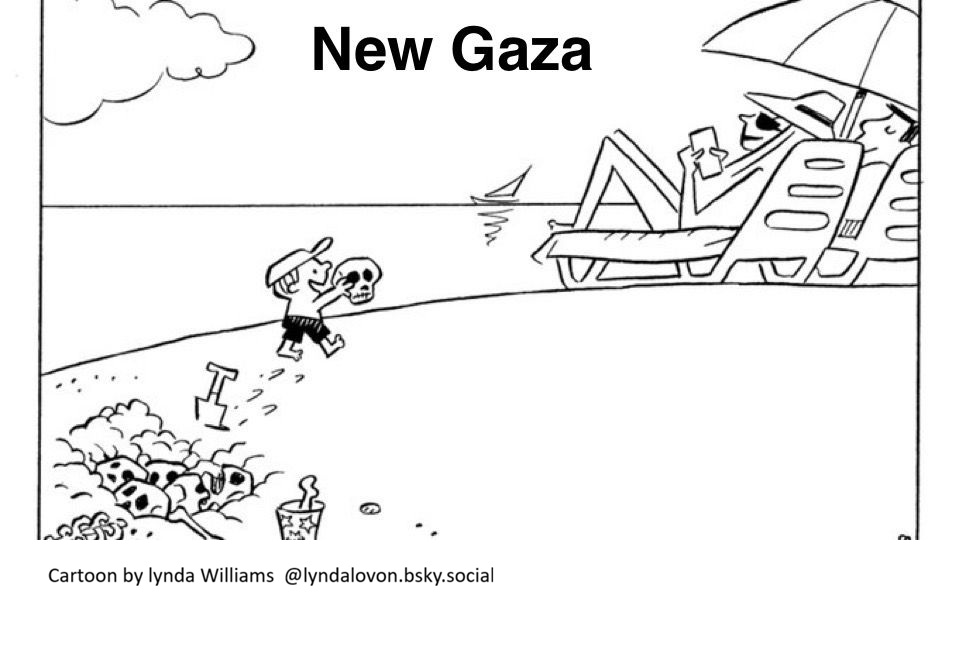
29 Jan. Thursday 7-8 p.m. Webinar – World’s Largest Nuclear Station in Port Hope, ON?

31st January – Challenging the War Machine – a DECLASSIFIED UK SUMMIT
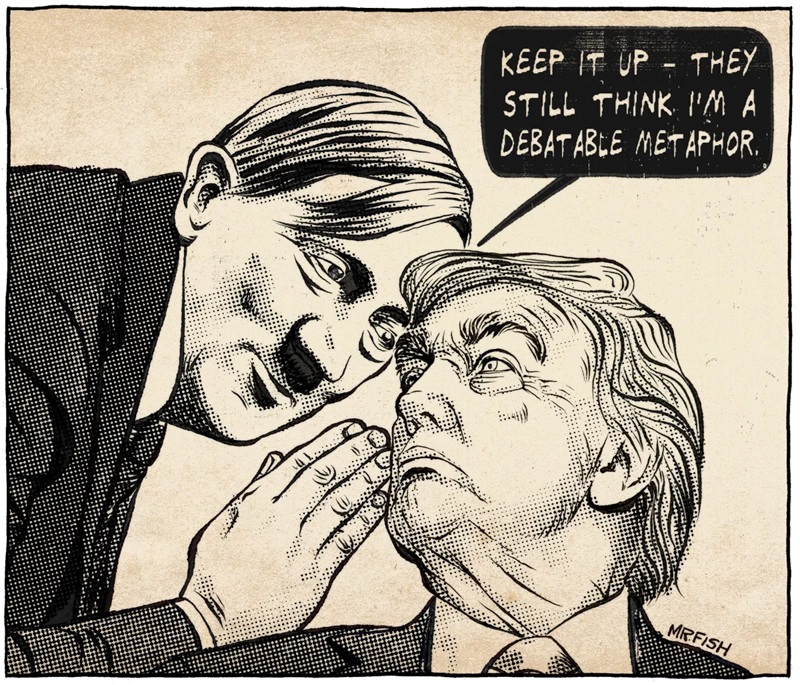

Website of the Week
Now until to February 10, 2026 Radioactive waste storage in France: the debate is finally open! How to participate?
-
Archives
- January 2026 (243)
- December 2025 (358)
- November 2025 (359)
- October 2025 (376)
- September 2025 (258)
- August 2025 (319)
- July 2025 (230)
- June 2025 (348)
- May 2025 (261)
- April 2025 (305)
- March 2025 (319)
- February 2025 (234)
-
Categories
- 1
- 1 NUCLEAR ISSUES
- business and costs
- climate change
- culture and arts
- ENERGY
- environment
- health
- history
- indigenous issues
- Legal
- marketing of nuclear
- media
- opposition to nuclear
- PERSONAL STORIES
- politics
- politics international
- Religion and ethics
- safety
- secrets,lies and civil liberties
- spinbuster
- technology
- Uranium
- wastes
- weapons and war
- Women
- 2 WORLD
- ACTION
- AFRICA
- Atrocities
- AUSTRALIA
- Christina's notes
- Christina's themes
- culture and arts
- Events
- Fuk 2022
- Fuk 2023
- Fukushima 2017
- Fukushima 2018
- fukushima 2019
- Fukushima 2020
- Fukushima 2021
- general
- global warming
- Humour (God we need it)
- Nuclear
- RARE EARTHS
- Reference
- resources – print
- Resources -audiovicual
- Weekly Newsletter
- World
- World Nuclear
- YouTube
-
RSS
Entries RSS
Comments RSS
 nuclear-news