Ionising radiation is dangerous -that doesn’t prove that electromagnetic radiation is safe!
Doctors weigh in on dangers of Wi-Fi signal exposure http://www.fox5vegas.com/story/23465182/doctors-weigh-in-on-the-dangers-of-radiation-exposure Sep 18, 2013
Doctor Harold Naiman of Healthcare Partners Nevada said there are several potential dangers when it comes to using your laptop, iPad, tablet or other handheld devices like smart phones, explaining how these devices emit microwave radiation.
“This exposure is especially threatening to our children because of their developing brains and thinner skulls,” Naiman said. “We know that their heads are bigger than adults, relatively speaking, and are less dense so transmission can be increased, plus there’s a lot of brain marrow there.”
Naiman said studies have shown exposure can interfere with development, cause infertility in males and even contribute to memory loss and degenerative diseases like cancer. Continue reading
Call on America’s EPA to withdraw its weakened guidelines on ionising radiation
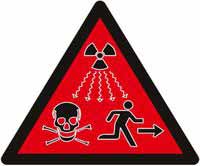 More than 100 Groups Call on EPA to Withdraw Dramatically Weakened Radiation Guides http://www.enewspf.com/latest-news/science/science-a-environmental/46251-more-than-100-groups-call-on-epa-to-withdraw-dramatically-weakened-radiation-guides.html 2013 WASHINGTON–(ENEWSPF)–September 16 – Over 100 environmental organizations today called on U.S. Environmental Protection Agency (EPA) Administrator Gina McCarthy to withdraw EPA’s controversial new Protective Action Guides (PAGs), which would allow exposure to very high doses from radiation releases before government would take action to protect the public. The PAGs are intended to guide the response to nuclear power reactor accidents (like Fukushima in Japan, Chernobyl in Ukraine and Three Mile Island in the U.S.), “dirty bomb” explosions, radioactive releases from nuclear fuel and weapons facilities, nuclear transportation accidents, and other radioactive releases.
Although official estimates of health risks from radiation have gone up substantially (even higher for women) since promulgation of the old PAGs, the new EPA guidance contemplates radically increased “allowable” exposures in the intermediate and long-term periods after radiation releases.
The new PAGs
- propose five options for drinking water which would dramatically increase the permitted concentrations of radioactivity in drinking water, by as much as 27,000 times, compared to EPA’s current Safe Drinking Water Act limits;
- suggest markedly relaxing long-term cleanup standards;
- incorporate very high and outdated allowable food contamination levels;
- eliminate requirements to evacuate people threatened with high projected radiation doses to the thyroid and skin;
- eliminate limits on lifetime whole body doses; and
- recommend dumping radioactive waste in municipal garbage dumps not designed for such waste.
“Rather than requiring protective actions to limit public radiation exposures, EPA is now saying it would allow the public to be exposed to doses far higher than ever before considered acceptable,” said Daniel Hirsch, president of Committee to Bridge the Gap.
“Even though EPA now admits radiation is more harmful than previously thought, it is weakening rather than tightening radiation protections,” said Diane D’Arrigo of the Nuclear Information and Resource Service.
The full letter is at http://committeetobridgethegap.org/GroupPAGltr9-16-13.pdf
###NIRS/WISE is the information and networking center for people and organizations concerned about nuclear power, radioactive waste, radiation, and sustainable energy issues.Source: commondreams.org
Ionising radiation causes a particularly aggressive form of breast cancer
 Exposing young girls to ionizing radiation can raise risk of breast cancer later in life http://www.news-medical.net/news/20130912/Exposing-young-girls-to-ionizing-radiation-can-raise-risk-of-breast-cancer-later-in-life.aspx 12 Sept 13, Exposing young women and girls under the age of 20 to ionizing radiation can substantially raise the risk of their developing breast cancer later in life. Scientists may now know why. A collaborative study, in which Berkeley Lab researchers played a pivotal role, points to increased stem cell self-renewal and subsequent mammary stem cell enrichment as the culprits. Breasts enriched with mammary stem cells as a result of ionizing irradiation during puberty show a later-in-life propensity for developing ER negative tumors – cells that do not have the estrogen receptor. Estrogen receptors – proteins activated by the estrogen hormone – are critical to the normal development of the breast and other female sexual characteristics during puberty.
“Our results are in agreement with epidemiology studies showing that radiation-induced human breast cancers are more likely to be ER negative than are spontaneous breast cancers,” says Sylvain Costes, a biophysicist with Lawrence Berkeley National Laboratory (Berkeley Lab). “This is important because ER negative breast cancers are less differentiated, more aggressive, and often have a poor prognosis compared to the other breast cancer subtypes.” Continue reading
Radiation protection measures for female astronauts seen as DISCRIMINATION !!

 Space radiation concerns holding back female astronauts, they say NBC News, Miriam Kramer, 31 Aug 13, “……….Depending on when you fly a space mission, a female will fly only 45 to 50 percent of the missions that a male can fly,” Peggy Whitson, the former chief of NASA’s Astronaut Corps, said. “That’s a pretty confining limit in terms of opportunity. I know that they are scaling the risk to be the same, but the opportunities end up causing gender discrimination based on just the total number of options available for females to fly. (That’s) my perspective.” [Radiation Threat for Mars-Bound Astronauts (Video)]……..
“I think that the current standards are too confining for exposure limits based on my personal experience and because I think it limits careers more than it is necessary,” Whitson said during an Institute of Medicine Workshop on Ethics Principles and Guidelines for Health Standards for Long Duration and Exploration Class Spaceflights requested by NASA on July 25.
“In my case, if I had a Y chromosome, I would be qualified,” Whitson added. “Because I have two X’s, I’m not.”…. http://www.nbcnews.com/science/space-radiation-concerns-holding-back-female-astronauts-8C11043076
low-dose ionizing radiation’s higher cancer risk for women
Cancer risk found higher in women exposed to low-dose ionizing radiation than men, Healio.com, Lawler PR. Am J Cardiol. 2013;doi:10/1016/j.amjcard.2013.07.009. August 29, 2013 Women exposed to low-dose ionizing radiation after an acute MI were more susceptible to cancer than men, according to new study data. Patrick R. Lawler, MD, of McGill University Health Center and the Jewish General Hospital, Montreal, Quebec, and colleagues previously found a linkage between the low-dose ionizing radiation from cardiac imaging and therapeutic procedures and an increased risk for cancer. They sought to further this linkage by identifying the specific risks for women and younger patients……..
after adjusting for age and noncardiac radiation, women were more likely to develop cancer for each mSv of exposure (HR=1.005; 95% CI, 1.002-1.008) than men (HR=1.002; 95% CI, 1.001-1.004; P=.014). Women were more likely to have cancer of the thorax, whereas hematologic cancer rates were higher in men.
The increased incidence of cancer found in women “may relate to relatively smaller body sizes for the same amount of radiation,” the researchers wrote.
Despite these findings, the researchers noted that the RRs for cancer incidence were small.
“We and others have shown that [low-dose radiation ionizing radiation] incurred after MI is primarily comprised of therapeutic procedures with known clinical benefit,” the researchers wrote. “Indeed, the benefits of many medical procedures likely outweigh the potential risks, and clinicians should be very wary of deferring useful interventions for the fear of [low-dose radiation ionizing radiation] risk, doing so only when procedures are truly unnecessary or when alternative non-[low-dose radiation ionizing radiation]-emitting technology is available.”http://www.healio.com/cardiology/intervention/news/online/%7Ba76cf3db-a740-44e5-af92-c68086348df5%7D/cancer-risk-found-higher-in-women-exposed-to-low-dose-ionizing-radiation-than-men
Strontium 90, another radioactive element discharging from Fukushima nuclear mess
Since June 2011 there have been further large discharges of strontium from Fukushima that have not been measured with precision.
Along with caesium-137, Sr-90 is one of the most important artificial radioactive isotopes released into the environment, with a half-life of 30 years. Strontium’s chemical behaviour is similar to that of calcium, and it can accumulate in organisms, especially in bone.
Fukushima accident raised levels of radioactive strontium off the east coast of Japan by up to a hundred times : http://phys.org/news/2013-06-fukushima-accident-radioactive-strontium-east.html#jCp Researchers from the Institute for Environmental Science and Technology (ICTA) and the Department of Physics of the Universitat Autònoma de Barcelona (UAB) have studied the spread of radioactive strontium in the coastal waters of eastern Japan during the three months following the Fukushima nuclear accident, which happened in March, 2011. The samples analysed show the impact of the direct release of radioactive materials into the Pacific Ocean, and indicate that the amount of strontium-90 discharged into the sea during those three months was between 90 and 900 Tbq (terabecquerels), raising levels by up to two orders of magnitude. The highest concentrations were found to the north of the Kuroshio current, which acts as a barrier preventing radioactive material from being carried to lower latitudes. Continue reading
Huge radiation: Estimated 276 quadrillion Bq of Cs-137 entered Fukushima basements
Water with nuclear fuel coming up from ocean floor off Fukushima coast? Tokyo Professor: 156 quadrillion Bq of Cs-137 once in basements — Double Chernobyl; Getting close to total fallout from every atomic bomb test in history — May be outputting from seeps in seafloor, I don’t know (VIDEO) http://enenews.com/water-with-pieces-of-nuclear-fuel-coming-up-from-ocean-floor-off-fukushima-coast-tokyo-professor-156-quadrillion-bq-of-cs-137-in-basements-getting-close-to-fallout-total-from-every-atomic-bombs-t
Title: Long-term Sources: To what extent are marine sediments, coastal groundwater, and rivers a source of ongoing contamination?
Source: Science Symposium at University of Tokyo
Date: Nov. 13, 2012
Professor Jota Kanda, Tokyo University of Marine Science and Technology:
Jota Kanda Highlight – Science Symposium at University of Tokyo
In the basement of the reactor housings […] they used to have 156 petabecquerels of Cs-137 […]
156 is a huge amount. Double the amount released from Chernobyl, even getting close to the value released from global fallout from bomb testing. […
The volume remains about the same, presumably because of the inflow of groundwater into the basement.
If there is inputting of groundwater, there might be outputting of groundwater, I don’t know.
The possible groundwater seepage from near by seafloor — that’s something I think. However we have no data indicative of this seep from the seafloor.
Watch Kanda’s presentation here
See also:
- Kanda: There may be other sources of contamination stored up inside Fukushima plant’s infrastructure — If it gets into the ocean it will have “devastating impact“
- Tokyo Professor: Cesium hot spots almost 100 times greater than surrounding area in seabed soil a mile offshore Fukushima plant
- Japan Expert: Contamination from Fukushima flowing beneath seafloor? “Could spring up outside the port“
- Nuclear Expert: Fukushima melted fuel is drifting in ocean and onto land, lacking any containment — It ends up on coastline and blows into communities — People get an exceptional dose — Health harm will go on for thousands, if not tens of thousands of years (AUDIO)
- Nuclear Engineer: Estimated 276 quadrillion Bq of Cs-137 entered Fukushima basements — Triple Chernobyl total release — A portion “has already made its way to aquifer, whence it can easily flow into sea”
Radiation cancer danger greater for female astronauts than for men
The exposure limits for women are about 20 percent lower compared to men “largely due to additional cancer risk for woman from breast, ovarian, and uterine cancers,
Female Astronauts Face Discrimination from Space Radiation Concerns, Astronauts Say, Space.com by Miriam Kramer, Staff Writer | August 27, 2013 Female astronauts have fewer opportunities to fly in space than men partially because of strict lifetime radiation exposure restrictions, astronauts say.
Both male and female astronauts are not allowed to accumulate a radiation dose that would increase their lifetime risk of developing fatal cancer by more than 3 percent. A six-month mission on the International Space Station exposes astronauts to about 40 times the average yearly dose of background radiation that a person would receive living on Earth, NASA spokesman William Jeffs said in an email .
.
While the level of risk allowed for both men and women in space is the same, women have a lower threshold for space radiation exposure than men, according to physiological models used by NASA. “Depending on when you fly a space mission, a female will fly only 45 to 50 percent of the missions that a male can fly,” Peggy Whitson, the former chief of NASA’s Astronaut Corps, said. “That’s a pretty confining limit in terms of opportunity. I know that they are scaling the risk to be the same, but the opportunities end up causing gender discrimination based on just the total number of options available for females to fly. [That’s] my perspective.” [Radiation Threat for Mars-Bound Astronauts (Video)]
NASA follows radiation exposure recommendations established by the National Council of Radiation Protection and Measurements. The exposure limits for women are about 20 percent lower compared to men “largely due to additional cancer risk for woman from breast, ovarian, and uterine cancers,” Jeffs told SPACE.com……..
“Depending on when you fly a space mission, a female will fly only 45 to 50 percent of the missions that a male can fly,” Peggy Whitson, the former chief of NASA’s Astronaut Corps, said. “That’s a pretty confining limit in terms of opportunity. I know that they are scaling the risk to be the same, but the opportunities end up causing gender discrimination based on just the total number of options available for females to fly. [That’s] my perspective.” [Radiation Threat for Mars-Bound Astronauts (Video)]
NASA follows radiation exposure recommendations established by the National Council of Radiation Protection and Measurements. The exposure limits for women are about 20 percent lower compared to men “largely due to additional cancer risk for woman from breast, ovarian, and uterine cancers,” Jeffs told SPACE.com…… http://www.space.com/22252-women-astronauts-radiation-risk.html
USA West Coast Tuna, Salmon and Herring contaminated by radiation?
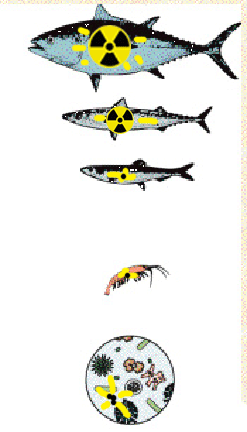 The bottom line – as nuclear experts said 4 days after the Japanese earthquake and tsunami – is that we all need to demand that fish be tested for radiation.
Is Fukushima Radiation Contaminating Tuna, Salmon and Herring On the West Coast of North America?
By Washington’s Blog Global Research, August 26, 2013 Demand that Fish Be Tested for Radiation
We’ve extensively documented that radioactivity from Fukushima is spreading to North America.
More than a year ago, 15 out of 15 bluefin tuna tested in California waters were contaminated with radioactive cesium from Fukushima.
Bluefin tuna are a wide-ranging fish, which can swim back and forth between Japan and North America in a year. But what about other types of fish?
Sockeye salmon also have a range spanning all of the way from Japan to Alaska, Canada, Washington and Oregon: Associated Press reports that both scientists and native elders in British Columbia say that sockeye numbers have plummeted:…….
Another example – pacific herring – is even more dramatic. Pacific herring is wide-ranging fish, spanning all the way from Japan to Southern California:
Every single pacific herring examined by a biologist in Canada was found to be hemorrhaging blood. As Ene News reports:
See also: Alexandra Morton via Vancouver 24 hrs, Vancouver 24 hrs, Alexandra Morton)
The Globe and Mail, Aug 13, 2013 (Emphasis Added):
Independent fisheries scientist Alexandra Morton is raising concerns about a disease she says is spreading through Pacific herring causing fish to hemorrhage. […] “Two days ago I did a beach seine on Malcolm Island [near Port McNeill on northern Vancouver Island] and I got approximately 100 of these little herring and they were not only bleeding from their fins, but their bellies, their chins, their eyeballs. […] “It was 100 per cent … I couldn’t find any that weren’t bleeding to some degree. And they were schooling with young sockeye [salmon]”
Sun News, Aug 12, 2013: Continue reading
Bananas and radiation – the nuclear lobby’s favourite lie
When you eat a banana, your body’s level of Potassium-40 doesn’t increase. You just get rid of some excess Potassium-40. The net dose of a banana is zero.
Bananas aren’t really going to give anyone “a more realistic assessment of actual risk”, they’re just going to further distort the picture.
 Fukushima: Think Low Level Radiation Is Harmless? Think Again… UKIAH BLOG In Around the web on August 25, 2013Time to combat radiation threat From WASHINGTON’S BLOG
”…………Nuclear apologists pretend that people are exposed to more radiation from bananas than from Fukushima.
But unlike low-levels of radioactive potassium found in bananas – which our bodies have adapted to over many years – cesium-137 and iodine 131 are brand new, extremely dangerous substances.
The EPA explains:
The human body is born with potassium-40 [the type of radiation found in bananas] in its tissues and it is the most common radionuclide in human tissues and in food. We evolved in the presence of potassium-40 and our bodies have well-developed repair mechanisms to respond to its effects. The concentration of potassium-40 in the human body is constant and not affected by concentrations in the environment.
Wikipedia notes:
The amount of potassium (and therefore of 40K) in the human body is fairly constant because of homeostatsis, so that any excess absorbed from food is quickly compensated by the elimination of an equal amount.
It follows that the additional radiation exposure due to eating a banana lasts only for a few hours after ingestion, namely the time it takes for the normal potassium contents of the body to be restored by the kidneys. Continue reading
Even Miniscule Amounts of Radiation Can Be Dangerous
Fukushima: Think Low Level Radiation Is Harmless? Think Again… UKIAH BLOG In Around the web on August 25, 2013Time to combat radiation threat From WASHINGTON’S BLOG Cutting through the Misinformation
In response to the news that mass quantities of highly-radioactive water are flowing from Fukushima into the Pacific Ocean – and that the radioactivity is spreading to North America – the usual suspects are saying that that low-level radiation won’t hurt anyone.
Indeed, some advocate intentionally dumping all of Fukushima’s radiation into the sea as a “safe” solution.
(And some folks are pretending that a little radiation is good for you.)
The truth is quite different.
Even Miniscule Amounts of Radiation Can Be Dangerous
A major 2012 scientific study proves that low-level radiation can cause huge health problems. Science Daily reports:
Even the very lowest levels of radiation are harmful to life, scientists have concluded in the Cambridge Philosophical Society’s journal Biological Reviews. Reporting the results of a wide-ranging analysis of 46 peer-reviewed studies published over the past 40 years, researchers from the University of South Carolina and the University of Paris-Sud found that variation in low-level, natural background radiation was found to have small, but highly statistically significant, negative effects on DNA as well as several measures of health.
The review is a meta-analysis of studies of locations around the globe …. “Pooling across multiple studies, in multiple areas, and in a rigorous statistical manner provides a tool to really get at these questions about low-level radiation.”
Mousseau and co-author Anders Møller of the University of Paris-Sud combed the scientific literature, examining more than 5,000 papers involving natural background radiation that were narrowed to 46 for quantitative comparison. The selected studies all examined both a control group and a more highly irradiated population and quantified the size of the radiation levels for each. Each paper also reported test statistics that allowed direct comparison between the studies.
The organisms studied included plants and animals, but had a large preponderance of human subjects. Each study examined one or more possible effects of radiation, such as DNA damage measured in the lab, prevalence of a disease such as Down’s Syndrome, or the sex ratio produced in offspring. For each effect, a statistical algorithm was used to generate a single value, the effect size, which could be compared across all the studies.
The scientists reported significant negative effects in a range of categories, including immunology, physiology, mutation and disease occurrence. The frequency of negative effects was beyond that of random chance…….
So-called “background radiation” – most of it created by the nuclear industry
Fukushima: Think Low Level Radiation Is Harmless? Think Again… UKIAH BLOG In Around the web on August 25, 2013Time to combat radiation threat From WASHINGTON’S BLOG
“……..Most “Background Radiation” Didn’t Exist Before Nuclear Weapons Testing and Nuclear Reactors Nuclear apologists pretend that we get a higher exposure from background radiation (when we fly, for example) or x-rays then we get from nuclear accidents.
 In fact, there was exactly zero background radioactive cesium or iodine before above-ground nuclear testing and nuclear accidents started.
Wikipedia provides some details on the distribution of cesium-137 due to human activities:
Small amounts of caesium-134 and caesium-137 were released into the environment during nearly all nuclear weapon tests and some nuclear accidents, most notably the Chernobyl disaster.
Caesium-137 is unique in that it is totally anthropogenic. Unlike most other radioisotopes, caesium-137 is not produced from its non-radioactive isotope, but from uranium. It did not occur in nature before nuclear weapons testing began. By observing the characteristic gamma rays emitted by this isotope, it is possible to determine whether the contents of a given sealed container were made before or after the advent of atomic bomb explosions. This procedure has been used by researchers to check the authenticity of certain rare wines, most notably the purported “Jefferson bottles”.
As the EPA notes:
Cesium-133 is the only naturally occurring isotope and is non-radioactive; all other isotopes, including cesium-137, are produced by human activity. Continue reading
Radiation emitters Mixing Apples (External) and Oranges (Internal)
Fukushima: Think Low Level Radiation Is Harmless? Think Again… UKIAH BLOG In Around the web on August 25, 2013Time to combat radiation threat From WASHINGTON’S BLOG “…..Moreover, radioactive particles which end up inside of our lungs or gastrointestinal track, as opposed to radiation which comes to us from outside of our skin are much more dangerous than general exposures to radiation.
The National Research Council’s Committee to Assess the Scientific Information for the Radiation Exposure Screening and Education Program explains:
Radioactivity generates radiation by emitting particles. Radioactive materials outside the the body are called external emitters, and radioactive materials located within the body are called internal emitters.
Internal emitters are much more dangerous than external emitters. Specifically, one is only exposed to radiation as long as he or she is near the external emitter.
For example, when you get an x-ray, an external emitter is turned on for an instant, and then switched back off.
But internal emitters steadily and continuously emit radiation for as long as the particle remains radioactive, or until the person dies – whichever occurs first. As such, they are much more dangerous.
As the head of a Tokyo-area medical clinic – Dr. Junro Fuse, Internist and head of Kosugi Medical Clinic – said:
Risk from internal exposure is 200-600 times greater than risk from external exposure.
See this, this, this and this.
By way of analogy, external emitters are like dodgeballs being thrown at you. If you get hit, it might hurt. But it’s unlikely you’ll get hit again in the same spot.
Internal emitters – on the other hand – are like a black belt martial artist moving in really close and hammering you again and again and again in the exact same spot. That can do realdamage.
There are few natural high-dose internal emitters. Bananas, brazil nuts and some other foods contain radioactive potassium-40, but in extremely low doses. And – as explained above – our bodies have adapted to handle this type of radiation.
True, some parts of the country are at higher risk of exposure to naturally-occurring radium than others.
But the cesium which was scattered all over the place by above-ground nuclear tests and the Chernobyl and Fukushima accidents has a much longer half life, and can easily contaminate food and water supplies. As the New York Times notes:
Over the long term, the big threat to human health is cesium-137, which has a half-life of 30 years.
At that rate of disintegration, John Emsley wrote in “Nature’s Building Blocks” (Oxford, 2001), “it takes over 200 years to reduce it to 1 percent of its former level.”
It is cesium-137 that still contaminates much of the land in Ukraine around the Chernobyl reactor.
***
Cesium-137 mixes easily with water and is chemically similar to potassium. It thus mimics how potassium gets metabolized in the body and can enter through many foods, including milk.
As the EPA notes in a discussion entitled ” What can I do to protect myself and my family from cesium-137?”:
Cesium-137 that is dispersed in the environment, like that from atmospheric testing, is impossible to avoid.
Radioactive iodine can also become a potent internal emitter. As the Times notes:
Iodine-131 has a half-life of eight days and is quite dangerous to human health. If absorbed through contaminated food, especially milk and milk products, it will accumulate in the thyroid and cause cancer.
(In addition to spewing massive amounts of radioactive iodine 131, Fukushima also pumped out huge amounts of radioactive iodine 129 – which has a half-life of 15.7 million years. Fukushima has also dumped up to 900 trillion becquerels of radioactive strontium-90 – which is a powerful internal emitter which mimics calcium and collects in our bones – into the ocean.).
The bottom line is that there is some naturally-occurring background radiation, which can – at times – pose a health hazard (especially in parts of the country with high levels of radioactive radon or radium).
But cesium-137 and radioactive iodine – the two main radioactive substances being spewed by the leaking Japanese nuclear plants – are not naturally-occurring substances, and can become powerful internal emitters which can cause tremendous damage to the health of people who are unfortunate enough to breathe in even a particle of the substances, or ingest them in food or water.
Unlike low-levels of radioactive potassium found in bananas – which our bodies have adapted to over many years – cesium-137 and iodine 131 are brand new, extremely dangerous substances.
And unlike naturally-occurring internal emitters like radon and radium – whose distribution is largely concentrated in certain areas of the country – radioactive cesium and iodine, as well as strontium and other dangerous radionuclides, are being distributed globally through weapons testing and nuclear accidents.
US doctors owning radiation facilities: conflict of interest
Gov’t report: Doctors with financial interests order more radiation Doctors who invest in radiation treatments and centers are more likely to prescribe it to their prostate cancer patients, a government report finds. CBS NEWS/ MICHELLE CASTILLO / August 19, 2013,
The U.S. Government Accountability Office said that most Medicare patients with prostate cancer who went to doctors with a vested interest were not made privy to the fact that there were alternative options to radiation therapy. Many of these other treatments were less expensive and may have been just as effective.
“We are extremely concerned that many older male patients are receiving such vigorous, possibly unnecessary treatment by urology groups,” Dr. Michael L. Steinberg, the chairman of the American Society for Radiation Oncology, said in astatement. “Clearly, these self-referring urology groups are steering patients to the most lucrative treatment they offer, depriving them of their full range of treatment choices, including potentially no treatment at all.”
Doctors who had a monetary stake in radiation treatment included those who invested in a treatment center or doctors who owned radiation therapy equipment that they shared with others in a medical group.
Between 2006 and 2010 the number of intensity-modulated radiation therapy (IMRT) procedures billed by self-referring medical organizations rose from 80,000 to 366,000 — an increase of 456 percent. IMRT involves using radiation beams to reshape a tumor in order to avoid touching healthy areas and to limit side effects, the Mayo Clinic explained. In contrast, the number of IMRT procedures billed by non-self-referring medical professionals went down 5 percent in the same time period.
IMRT spending by doctors who referred patients to their own centers or used their own equipment went up $138 million, compared to non-self-referral groups which just increased their spending by $91 million.
Urologists who were financially involved in radiation treatments advised 38 percent of their patients in 2007 to undergo the treatments. By 2008 to 2009, that number was as high as 54 percent.
In 2009, doctors with a vested interest were more 53 percent more likely to refer their patients to undergo radiation compared to other procedures like radical prostatectomy (removal of the prostate) or brachytherapy (radiotherapy where radiation is placed inside or next to the treatment area). Brachytherapy typically causes fewer side effects and has shorter overall treatment time compared to IMRT because it allows doctors to deliver more specific, higher doses of radiation to affected areas, the Mayo Clinic pointed out…….
“Unfortunately, when you look at the numbers in this report, you start to wonder where health care stops and where profiteering begins,” said Senate Finance Committee Chairman Max Baucus, D-Mont., in a statement. “Enough is enough. Congress needs to close this loophole and fix the problem.”……http://www.cbsnews.com/8301-204_162-57599131/govt-report-doctors-with-financial-interests-order-more-radiation/
Dental X rays a serious public health cancer risk
 Radiation safety of dental X-rays questioned Straight.com, by ALEX ROSLIN on AUG 14, 2013“………..In a study in the journal Cancer last year, 1,433 people with meningioma were found to be two times more likely to have had a “bitewing” dental X-ray as those without the illness. Those who reported having a panorex scanning dental X-ray (which gives a two-dimensional panoramic view of the mouth) before age 10 were 4.9 times more likely to have meningioma.
Meningioma is the most common form of primary brain tumour (tumours that start in the brain). Women get it more than twice as often as men.
Other studies have linked dental X-rays to thyroid cancer, breast cancer (in women who hadn’t worn a shielded apron), saliva-gland tumours, and glioma (a cancerous type of brain and spinal tumour).
Pregnant women who got a dental X-ray were three times more likely to deliver a low-birth-weight baby (weighing less than 2.5 kilograms), according to a 2004 study in the Journal of the American Medical Association.
Dental X-rays are the most common way Americans are exposed to human-made radiation, the 2012 Cancer study said. Continue reading
1 This Month

of the week – Shut Down Drone Warfare!


Tell the Ukrainian Government to Drop Prosecution of Peace Activist Yurii Sheliazhenko

Petition to revoke the licensing of the Near Surface Nuclear Disposal Facility (NSDF) at Chalk River. https://www.ourcommons.ca/petitions/en/Petition/Details?Petition=e-7247
To see nuclear-related stories in greater depth and intensity – go to https://nuclearinformation.wordpress.com
-
Archives
- April 2026 (103)
- March 2026 (251)
- February 2026 (268)
- January 2026 (308)
- December 2025 (358)
- November 2025 (359)
- October 2025 (376)
- September 2025 (257)
- August 2025 (319)
- July 2025 (230)
- June 2025 (348)
- May 2025 (261)
-
Categories
- 1
- 1 NUCLEAR ISSUES
- business and costs
- climate change
- culture and arts
- ENERGY
- environment
- health
- history
- indigenous issues
- Legal
- marketing of nuclear
- media
- opposition to nuclear
- PERSONAL STORIES
- politics
- politics international
- Religion and ethics
- safety
- secrets,lies and civil liberties
- spinbuster
- technology
- Uranium
- wastes
- weapons and war
- Women
- 2 WORLD
- ACTION
- AFRICA
- Atrocities
- AUSTRALIA
- Christina's notes
- Christina's themes
- culture and arts
- Events
- Fuk 2022
- Fuk 2023
- Fukushima 2017
- Fukushima 2018
- fukushima 2019
- Fukushima 2020
- Fukushima 2021
- general
- global warming
- Humour (God we need it)
- Nuclear
- RARE EARTHS
- Reference
- resources – print
- Resources -audiovicual
- Weekly Newsletter
- World
- World Nuclear
- YouTube
-
RSS
Entries RSS
Comments RSS
 nuclear-news