Ionising radiation – the tragedy of the ”radium girls”.

They weren’t just making paints, they were doing the painting, too. According to NPR, US Radium hired scores of girls and young women — as young as just 11-years-old — to paint watch dials with the glow-in-the-dark, radium-based paint. As if just working with the paint wasn’t bad enough, they were also encouraged to put the brush between their lips and twirl it into a point. It was the best way to get truly precise numbers and brush strokes, but with each lick of the brush, they were swallowing radium.
the human body isn’t great at telling the difference between radium and calcium. Radium gets absorbed into the bones just like calcium does, and when that happens, the rot starts.
Writer and historian Kate Moore documented the cases of the Radium Girls (via The Spectator) and found that there were a whole host of symptoms. Some started suffering from chronic exhaustion. For many, it started with their teeth — one by one, those teeth would start to decay and rot. When they were removed, their gums wouldn’t heal. In some cases, the jaw would just simply disintegrate at the dentist’s touch. Bad breath was common. Skin became so delicate that the slightest touch would tear open wounds. Ulcers formed for some, and those that were pregnant bore stillborn babies.
THE RADIUM GIRLS HAD TO BE BURIED IN LEAD-LINED COFFINS
The Radium Girls weren’t just sick, they were very literally radioactive. Mollie Maggia was exhumed in 1927, in the hopes that her bones would give still-living Radium Girls the evidence they needed to win in court. According to Popular Science, her coffin was lifted out of the ground, and her body? It glowed. That wasn’t entirely surprising, considering her bones were found to be highly radioactive — and considering radium’s half-life is 1,600 years, they’re not going to stop glowing any time soon.
Eventually, 16 separate sites around Ottawa would be classified as Superfund sites.
NPR Illinois says that many have been cleaned up, but as of 2018, there was at least one site — a 17-acre plot of land on the Fox River — that still remained a highly radioactive and terrifying legacy of the Radium Girls.
THE MESSED UP TRUTH ABOUT THE RADIUM GIRLS https://www.grunge.com/181092/the-messed-up-truth-about-the-radium-girls/ BY DEBRA KELLY/DEC. JULY 14, 2020
History is filled with episodes that prove mankind is just sort of making everything up as it goes. There’s no shortage of things that can kill us or do horrible, terrible things to our soft and squishy bodies, and every time we think we know about them all, it turns out there’s something else lurking around the corner.
And sometimes, it’s disguised as something awesome. Need proof? Look no further than the Radium Girls.
Yes, that radium. Today, the Royal Society of Chemistry says there’s really only one use for radium — targeted cancer treatments, because it’s so good at killing cells. It was first discovered in 1898 by Marie and Pierre Curie, after they extracted a single milligram from ten tons of a uranium ore called pitchblende. And it was pretty darn cool. It glowed, and seriously, how exciting is that? Unfortunately, it was also deadly — as the so-called Radium Girls would find out.
On the moon ”normal” humans (i.e males) will get 200 Times the Radiation Experienced on Earth, (what about females?)

Christina Macpherson’s websites & blogs
It is amazing that in all this propaganda for putting a woman on the moon, – no mention is ever made, of the fact that women are much more susceptible to the effects of ionising radiation, meaning that their risk of developing cancer and other illnesses is greater than it is for men. Apparently the space enthusiasts are still buying into that traditional view that the ”normal” human being is male.

The 12 human beings who have walked on the moon were all bombarded by radiation roughly 200 times what we experience here on Earth, reports Adam Mann for Science. That’s two to three times what astronauts experience aboard the International Space Station, explains Marcia Dunn for the Associated Press (AP), suggesting that any long term human presence on the moon will require shelters with thick walls capable of blocking the radiation.
Despite the fact that the measurements, which come courtesy of China’s Chang’e-4 lunar lander, are quite high compared to what we experience on Earth, the data is quite useful for protecting future moonwalkers. According to Science, the levels of radiation at the lunar surface wouldn’t be expected to increase the risk of NASA astronauts developing cancer by more than 3 percent—a risk threshold the agency is legally required to keep its astronauts’ activities safely below.
Despite the fact that the measurements, which come courtesy of China’s Chang’e-4 lunar lander, are quite high compared to what we experience on Earth, the data is quite useful for protecting future moonwalkers. According to Science, the levels of radiation at the lunar surface wouldn’t be expected to increase the risk of NASA astronauts developing cancer by more than 3 percent—a risk threshold the agency is legally required to keep its astronauts’ activities safely below……
Some forms of radiation, which is electromagnetic energy emitted in forms like heat, visible light, X-rays and radio waves, can mess with the cells inside the human body by breaking up the atoms and molecules they’re made of. On Earth, most people are familiar with ultraviolet radiation’s harmful effects on our skin, but in space, astronauts are also subjected to galactic cosmic rays, accelerated solar particles, neutrons and gamma rays, according to the research published this week in the journal Science Advances. This material can damage our DNA and lead to increased incidences of cancer or contribute to other health problems such as cataracts and degenerative diseases of the central nervous system or other organ systems.
Humanity measured the radiation astronauts on the Apollo missions experienced on their journeys to the moon, but those measurements were cumulative for each astronaut’s entire journey, per Science. To figure out the daily dose of radiation exclusively on the surface of the moon, the robotic Chang’e-4 lander used a stack of ten silicon solid-state detectors.
The renewed interest in collecting such measurements is partly because NASA has plans to send more people to the moon. The Artemis moon mission, scheduled for 2024, will feature the first woman ever to walk on the moon as well as a week-long expedition to the lunar surface and a minimum of two moonwalks, reports Katie Hunt for CNN.
Berger tells the AP that these new findings suggest the shelters needed to protect Artemis’ astronauts during such a long stay on the moon should have walls made of moon dirt that are some two and a half feet thick. Science notes that the shelter would also need an even more heavily shielded inner sanctum to protect astronauts in the event of a solar storm. Adequate shielding for this inner chamber would be roughly 30 feet of water, and would also need to be reachable within 30 minutes—the current limit of satellites’ abilities to provide astronauts with advanced warning of such hazards.
The findings aren’t exactly suprising: they are in line with calculations made using existing measurements. But they’re a crucial step towards putting people on the surface of the moon for extended periods of time. According to Science, the results confirm that with proper shielding astronauts could spend as long as six months on the moon. https://www.smithsonianmag.com/smart-news/moonwalking-humans-get-blasted-200-times-radiation-experienced-earth-180975926/
Radiation exposure on the moon is nearly three times that on the International Space Station
 Radiation exposure on the moon is nearly three times that on the ISS, 25 September 2020
By Layal Liverpool Astronauts on the moon would face nearly three times more radiation exposure than those aboard the International Space Station, which could make long-term missions riskier than thought.
“Once you’ve survived being on the moon and come back to Earth, radiation damage is what stays with you for the rest of your life and that’s why this is a critical measurement,” says Robert Wimmer-Schweingruber at the University of Kiel in Germany.
Wimmer-Schweingruber and his team analysed several weeks of data acquired by China’s Chang’e … (subscribers only) https://www.newscientist.com/article/2255545-radiation-exposure-on-the-moon-is-nearly-three-times-that-on-the-iss/#ixzz6Z61souv7
Fukushima’s citizen radiation testers still on the job.
Fukushima Has Turned These Grandparents Into Avid Radiation Testers, NPR, Kat Lonsdorf (@lilkat_bigworld) September 11, 2020 Takenori Kobayashi lugs a garbage bag full of soil across a parking lot to an unmarked office. His wife, Tomoko, holds the door to a tiny work space with lab equipment and computers set up. On the edge of Fukushima’s former nuclear exclusion zone, this is the place the couple likes to call their “grandma and grandpa lab.”
A handful of other residents help run the lab, and throughout the years, experts from nearby universities have come to teach them all about the different equipment and radiation science.
“All the grandparents here are radiation professionals now,” Takenori, 71, says with a smile……..
Low Dose Ionizing Radiation Shown to Cause Cancer in Review of 26 Studies
These results contradict the claims of the Japanese authorities who keep repeating that there is no impact observed below a dose of 100 mSv.
The US National Cancer Institute has dedicated an entire volume of its scientific journal, Journal of the National Cancer Institute Monographs, to the impact of low doses of radiation on cancers. The articles are open access.
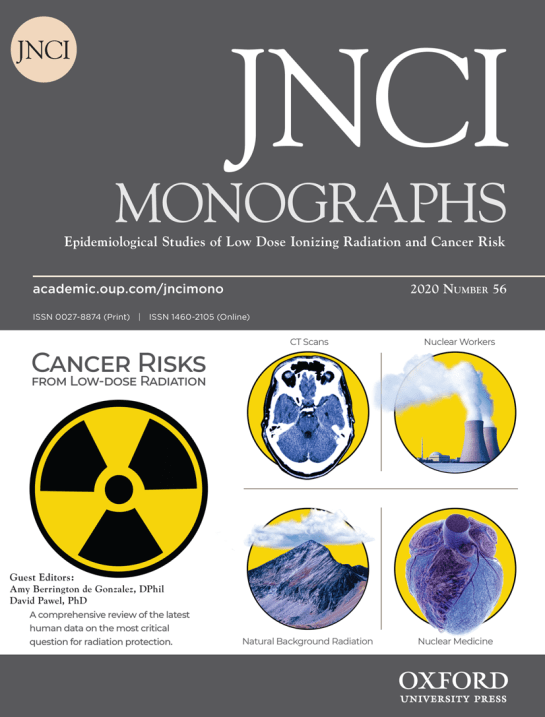
July 13, 2020
An international team of experts in the study of cancer risks associated with low-dose ionizing radiation published the monograph, “Epidemiological studies of low-dose ionizing radiation and cancer: Summary bias assessment and meta-analysis,” in the Journal of the National Cancer Institute on July 13, 2020.
It is well established that ionizing radiation causes cancer through direct DNA damage. The general public are exposed to low doses of ionizing radiation from medical exposures like computed tomography (CT) scans, naturally occurring radiation (emitted from bedrock with the earth’s crust and cosmic rays emitted by the sun), and occupational exposures to medical, aircrew and nuclear workers. A key question for low-dose exposures is how much of the damage can be repaired and whether other mechanisms, including inflammation, also play a role. This critical question has been long debated for radiation protection standards.
After combing data from 26 epidemiological studies the authors found clear evidence of excess cancer risk from low dose ionizing radiation: 17 of 22 studies showed risk for solid cancers and 17 of 20 studies showed risk for leukemia. The summary risk estimates were statistically significant and the magnitude of risk (per unit dose) was consistent with studies of populations exposed to higher doses.
A novel feature of the research effort was the investigators’ use of epidemiological and statistical techniques to identify and evaluate possible sources of bias in the observational data, for example confounding, errors in doses, and misclassification of outcomes. After a thorough and systematic review, they concluded that most did not suffer from major biases.
The authors concluded that although for the most part, absolute risk of cancer will be small, the data reinforce the radiation safety principle to ensure that doses are “as low as reasonably achievable” (ALARA).
Additional research is needed to explore risks for cardiovascular disease (CVD) at low doses. Because CVD is a very common disease, even small risks at low doses could have important implications for radiation protection and public health.
The 26 epidemiological studies were published between 2006 and 2017 and included a total of 91,000 solid cancers and 13,000 leukemias. Studies were eligible if the mean dose was <100 mGy. The study populations had environmental radiation exposure from accidents, like Chernobyl, and natural background radiation, medical radiation exposure like CT scans and occupational exposure including nuclear workers and medical radiation workers.
Reference:
“Epidemiological studies of low-dose ionizing radiation and cancer: Summary bias assessment and meta-analysisExit Disclaimer,” JNCI Monographs. Volume 2020. Issue 56. July 2020.
https://academic.oup.com/jncimono/issue/2020/56
https://dceg.cancer.gov/news-events/news/2020/low-dose-monograph
Radiation hazard at Dead Horse Bay, Brooklyn
 Scavengers Unearth Buried History — and Maybe Radiation — at Dead Horse Bay“It’s the closest you can come to time travel.” Cured, New York, By Caroline Spivack Aug 25, 2020, “It’s pretty devastating,” said Vanessa Dudley of the radiation recently discovered at Dead Horse Bay, a cove in southeastern Brooklyn that was once, many years ago, home to a landfill. For decades, the bay and its surrounding area have been burping up intriguing early-20th-century detritus onto the beach. Dudley, an administrator at Weill Cornell Medicine, is one of many treasure hunters and artists who regularly visited the beach to pick through mud-flecked glass bottles, ceramic shards, and rusted bits of metal. “You can see the lives of people through these objects. It’s like their memory lives on through them.” Scavengers Unearth Buried History — and Maybe Radiation — at Dead Horse Bay“It’s the closest you can come to time travel.” Cured, New York, By Caroline Spivack Aug 25, 2020, “It’s pretty devastating,” said Vanessa Dudley of the radiation recently discovered at Dead Horse Bay, a cove in southeastern Brooklyn that was once, many years ago, home to a landfill. For decades, the bay and its surrounding area have been burping up intriguing early-20th-century detritus onto the beach. Dudley, an administrator at Weill Cornell Medicine, is one of many treasure hunters and artists who regularly visited the beach to pick through mud-flecked glass bottles, ceramic shards, and rusted bits of metal. “You can see the lives of people through these objects. It’s like their memory lives on through them.”
But earlier this month, the three footpaths that snake from Flatbush Avenue through thick brush to the beach were marked with canary-yellow signs warning: “Danger Area Closed. Potential Hazardous Material.” Authorities had closed the southern half of the bay (near Floyd Bennett Field) following the discovery of radioactive material on the beach and near one of the paths. The radiation was first noticed during an environmental survey in 2019, when the National Park Service (which manages the bay as part of the Gateway National Recreation Area) discovered 31 locations along the shore and nearby trails with excessive levels of gamma radiation. At two of those sites, the culprits turned out to be old deck markers — small, glowing disks that were once used on Navy ships — that were leaking radium-226. These were recently removed, and the possibility of a more extensive cleanup is now being considered…….. In 1926, after many of the factories had moved elsewhere, Barren Island was connected via landfill to the mainland. In the 1950s, Robert Moses further expanded the area’s land mass by building landfills. Moses flooded the area with the city’s garbage — much of which was likely the rubble of other neighborhoods Moses himself destroyed as he reshaped New York — and then covered it with a layer of topsoil. Erosion has since released much of that debris, which collects at the bay’s eastern shore, providing New Yorkers with an eclectic compendium of 20th-century trash. But in light of new knowledge about the radiation there, exploring that garbage — and discovering the clues it holds about the city’s history — comes at a risk. ……… https://ny.curbed.com/2020/8/25/21398976/dead-horse-bay-beach-brooklyn-radiation-scavengers |
|
Analysing the evidence on effects of ionising radiation on wildlife
Nature 21st Aug 2020, Tim Mousseau et al: We re-analyzed field data concerning potential effects
of ionizing radiation on the abundance of mammals collected in the
Chernobyl Exclusion Zone (CEZ) to interpret these findings from current
knowledge of radiological dose–response relationships, here mammal
response in terms of abundance.
In line with recent work at Fukushima, and
exploiting a census conducted in February 2009 in the CEZ, we reconstructed
the radiological dose for 12 species of mammals observed at 161 sites. We
used this new information rather than the measured ambient dose rate (from
0.0146 to 225 µGy h−1) to statistically analyze the variation in
abundance for all observed species as established from tracks in the snow
in previous field studies.
All available knowledge related to relevant
confounding factors was considered in this re-analysis. This more realistic
approach led us to establish a correlation between changes in mammal
abundance with both the time elapsed since the last snowfall and the dose
rate to which they were exposed. This relationship was also observed when
distinguishing prey from predators.
The dose rates resulting from our
re-analysis are in agreement with exposure levels reported in the
literature as likely to induce physiological disorders in mammals that
could explain the decrease in their abundance in the CEZ. Our results
contribute to informing the Weight of Evidence approach to demonstrate
effects on wildlife resulting from its field exposure to ionizing
radiation.
Cumulative exposure to ionising radiation from diagnostic imaging tests
|
Cumulative exposure to ionising radiation from diagnostic imaging tests: a 12-year follow-up population-based analysis in Spain. https://www.docwirenews.com/abstracts/cumulative-exposure-to-ionising-radiation-from-diagnostic-imaging-tests-a-12-year-follow-up-population-based-analysis-in-spain/ August 22, 2020 Cumulative exposure to ionising radiation from diagnostic imaging tests: a 12-year follow-up population-based analysis in Spain.BMJ Open. 2019 09 18;9(9):e030905
Authors: Lumbreras B, Salinas JM, Gonzalez-Alvarez I Abstract |
|
Northern Europe: detecting radiation and where it comes from
|
Radiation detections in northern Europe: what we do and don’t know https://thebulletin.org/2020/08/radiation-detections-in-northern-europe-what-we-do-and-dont-know/# By Cheryl Rofer, August 21, 2020 Alarming events may not be what they initially seem. When an enormous explosion created a mushroom cloud over Beirut on August 4, some people immediately jumped to the wrong conclusion, spreading rumors on social media that a nuclear bomb had gone off. It hadn’t.
Eventually it became clear that the explosion was caused by chemicals stored improperly in warehouses at Beirut’s port. But weapons experts knew from the start that the powerful explosion was not nuclear, because it did not produce a blinding flash of light, or a blast of heat intense enough to set a city on fire. In the hours that followed the explosion, the Comprehensive Test Ban Treaty Organization (CTBTO), which operates a network of monitoring stations around the world, did not detect a telltale spike in atmospheric radiation. That last clue is how experts are able to narrow down the location of nuclear events, from the smallest accidents to major disasters like Chernobyl, and to make educated guesses about what happened. A release of nuclear material spreads its signature on the wind. But that signature is often incomplete or garbled. Nuclear experts are still puzzling over a mysterious event that happened in June, when several monitoring stations in northern Europe detected extremely small quantities of radionuclides in the atmosphere. That event was not a nuclear weapons test, because the CTBTO stations did not detect any seismic activity. So what was it? Experts have scrutinized the radiation signature and narrowed down the possibilities. The finger points to Russia. Radiation alerts. Radioisotope monitoring stations cover most of the globe. The CTBTO runs the biggest network. National radiation safety agencies—for example, in Finland and Sweden—operate other stations. Universities also operate monitoring stations, often in cooperation with the CTBTO or national agencies. Independent monitoring organizations, like the volunteer-driven Safecast, also report radiation measurements. In early June, Norwegian monitoring stations and a CTBTO station detected iodine 131 in far northern Norway. On June 16 and 17, Finland’s Radiation and Nuclear Safety Authority (STUK) detected cobalt 60, ruthenium 103, cesium 134, and cesium 137 in Helsinki. On June 22 and 23, a CTBTO station in Sweden detected ruthenium 103, cesium 134, and cesium 137. Radiation is easy to detect at low levels. The iodine 131 readings were around 1 microbecquerel per cubic meter of air. (A microbecquerel is one atomic disintegration per second in one million cubic meters of air.) But our knowledge of the Chernobyl explosion began with measuring small amounts of radionuclides, so any detection raises an alert. Interpreting the detections. The types of radionuclides detected also provide information. The radionuclides detected in June, except cobalt 60, are produced by nuclear fission. The half-lives of iodine 131 and ruthenium 103 are 8 days and 39 days, respectively, so they must be from recent fission events. These are common fission products from a nuclear reactor. A wider suite of radionuclides would help to pin down what kind of reactor. The iodine 131 detection is ambiguous, though. It is produced by fission, but it is also used fairly commonly to treat hyperthyroidism, in pet cats as well as people. It is easily sent into the air. So it may come from sewage plants or other sources. The fact that it showed up without the other fission products means that its source may be something other than a nuclear accident. Cobalt 60 is not a fission product, but rather an activation product of steel that has been in or very close to a nuclear reactor. It doesn’t usually show up with fission products. It could mean that something was broken in the reactor that released the fission products, or it could be that the Finnish reading was in error. Narrowing down the location. Airborne radionuclides by themselves cannot tell us how or precisely where they were released. The CTBTO tweeted a map indicating the region in northern Europe where the June release may have occurred. This map was probably constructed by tracing the winds during the period just before the radionuclides were detected. A couple of Russian nuclear power plants are located in the area identified, which also covers the location where the United States believes a Russian experimental reactor exploded last summer while it was being raised from the seabed. Last month’s release was probably a minor incident, like a breach in a filter at a nuclear power plant. But Russia has said that there were no incidents at its nuclear power plants. The presence of cobalt 60 and the location have led some to suggest that the release may have been from a new attempt to raise that experimental reactor. It’s not possible, with the limited additional data available so far, to do more than guess the origin of the June radionuclides. The source of a similarly ambiguous release of ruthenium 106 in 2017 took two years to identify. In that case, the release of a single fission product suggested a processing facility, and the wind patterns suggested the Mayak facility in Russia. A detailed study of the stable ruthenium isotopes collected with the ruthenium 106 confirmed those early provisional conclusions. Pinning down the source. Last year’s deadly accident seems to have occurred when a reactor for an experimental nuclear-powered cruise missile was being lifted from the seabed. Again, radionuclide readings from monitoring stations some distance from the source gave early warning to the rest of the world. The amounts and numbers of radionuclides were larger than in the recent release, and reporting on the accident, as people were brought to hospitals, provided more information, including radioisotope detection closer to the site, along with satellite photos and, later, photos of the damaged barge. The radioisotopes indicated that a fission source was involved, although early reports from Russia described an “isotopic source,” a phrase usually reserved for single-isotope heat sources, which would be unsuitable for propulsion. In all three of these cases over the past three years, the radionuclides initially detected by air sampling were ambiguous. Additional information was needed to pin down a source. The best information would come from the country responsible for the release – in all three cases, Russia, which is a signatory to the Convention on Early Notification of a Nuclear Accident. Somebody knows what happened in these cases. We need to hear from them. |
|
Bikini Atoll – food grown there is radioactive – but, it’s “technically habitable”!

Technically Habitable The background radiation of the island has been found to be at normal levels, and even lower than that of some major US cities. While you could walk around on the island and suffer no real ill effects, living there is an entirely different story because of the aforementioned soil and subsequent food contamination.
Ironically for the islanders of Bikini Atoll, the word ‘bikini’ likely comes from ‘pikinni’ which, in the Marshallese language means ‘coconut place
The Radioactive Coconuts of Bikini Atoll, Beginning in 1946, a series of Atomic bombs were tested on and around the Marshall islands, of which Bikini Atoll is one, as both a means of testing and refining the incredibly destructive power demonstrated at Hiroshima and Nagasaki just a year earlier, as well as making a clear statement of US atomic superiority over the Russians. Medium 21 Aug 20, Danny Kane
For those that don’t know, Bikini Atoll was the US’ test site during the 1940s and 1950s for 23 separate Nuclear bombs.
Beginning in 1946, a series of Atomic bombs were tested on and around the Marshall islands, of which Bikini Atoll is one, as both a means of testing and refining the incredibly destructive power demonstrated at Hiroshima and Nagasaki just a year earlier, as well as making a clear statement of US atomic superiority over the Soviet Union.
The Micronesian inhabitants of Bikini Atoll were approached in 1946 by the US government and asked to re-locate while the tests were being carried out. They would be transported to Rongerik Atoll, which is about 6 times smaller than Bikini Atoll — it also has insufficient food and water supplies and was uninhabited at the time………..
The islanders on Rongerik Atoll were starving, the land their being far less fertile than their native Bikini. They were then moved to Kili Island. It was little improvement for the islanders. Relying on fishing for a large part of their diet, they found Kili, which has no lagoons and rough seas most of the year particularly difficult to survive on.
But on March 1st, 1954, the fate of Bikini Atoll was about to take a destructive turn. Ironically, the bomb that was detonated was one of the few not detonated on the Atoll, instead it was detonated on an artificial island 900m from Namu island. This was the infamous Castle Bravo hydrogen bomb. It exploded that day with the force of 15mt , far more than the 6mt that was expected. It was 750 times more powerful that the Fat Man bomb that levelled Nagasaki. It denoted with 2.5 times the expected yield and remains the largest nuclear bomb ever detonated by the US, equivalent to 15 million tonnes of TNT.
Appropriate precautions hadn’t been taken for such a large detonation, and so nuclear fallout rained down on Bikini Atoll, Rongelap Atoll and Rongerik Atoll. 20,000 people were affected by the Castle Bravo detonation and 15 islands and atolls were contaminated. People showed signs of acute radiation sickness, and, on Rongelap, 2 cm of nuclear ash blanketed the entire island. Children, unaware of the fallouts affects, began playing with the falling ash like snow.
Returning Home
Another 19 atomic bombs would be detonated on and around Bikini Atoll, the last one Juniper on July 22nd, 1954, almost 12 years to the day since the Baker detonation. Now, the fight to return to Bikini Atoll really began. Struggling to survive on Kili Island, the islanders were eager to return home.
In spite of all we’d put it through Bikini Atoll had recovered from its years of abuse at the hands of the US. Having been bounced between various islands and atolls since the testing began, Kili had become their permeant home since 1948, but the islands desperately wanted to return home. It wouldn’t be until 1968 until they got the chance. President Lyndon B Johnson promised that the islanders could return, but an investigation by the Atomic Energy Commission found that the radiation levels in the coconut crab, an essential food source for the islanders, were far above normal and acceptable limits. As such, the islanders were forced to remain on Kili island.
Three families did move back in 1972, followed by others in 1987 despite later advice. Issues continued to plague the islanders though, with a boy who’d been born on Bikini Atoll dying from cancer caused by the radiation. In 1982, those that had returned would be evacuated for a second time when it was found that the top 15 inches of soil contained high concentrations of Caesium 137, which would then make its way into the various plants and fruits the islanders ate — and yes, even the coconuts were affected. This resulted in a high number of stillbirths, miscarriages and genetic abnormalities in the children born from those affected by the atomic tests conducted in and around Bikini Atoll. What’s more men were four times as likely to develop lung cancer on the island, women 60 times more likely develop cervical cancer
Over $150 million has been paid to the Bikini islanders as compensation and to reconstruct homes, facilities and institutions for the islanders, many of whom now live on Kili Island. The call to return to Bikini Atoll is still strong though and many point to the fact that the island is still technically habitable.
Technically Habitable
The background radiation of the island has been found to be at normal levels, and even lower than that of some major US cities. While you could walk around on the island and suffer no real ill effects, living there is an entirely different story because of the aforementioned soil and subsequent food contamination.
One proposed solution, and the one favoured by the islanders themselves, is to scrap the topsoil. The top 15 inches of Caesium 137 contaminated soil would be removed and replaced with potassium rich soil. The plants, preferring the potassium over the caesium, would quickly switch to that. While Caesium 137 would still be present in the earth, it would be absent from the food.
There are unfortunately a number of issues with this. Removing the topsoil would have a devasting effect on the ecology of the island and scientists have argued that it would effectively turn Bikini Atoll into a wasteland. This is to say nothing of the expense and the fact that the scraping of the topsoil would likely have to be repeated on occasion to ensure that Caesium 137 didn’t return to the food supply.
Right now, the islanders live on a majority imported food supply and it’s likely that they could continue to do this on Bikini Atoll. It is hardly a return to normal life on the home island though and if the islanders are forced into the same food import practices they’ve had since the 40s, many argue why return to the island at all. Many islanders seem willing to take the risk of destroying the island if it means that they can return their a potentially grow food once more like their ancestors of old.
And so, it remains to this day. The Bikini islanders have never returned home, instead being forced into limbo. Most live on Kili Island today and there are as many as 2,400 Bikini islanders, with fewer than 40 of them having been alive to witness the fires of nuclear fission all those years ago. A great many of them have never even visited their home island, which in recent years has become a tourist attraction. A great many diving tours are offered, especially of the sunken USS Arkansas and the USS Saratoga aircraft carrier, two of the many ships sunk in the testing, as well as the colossal crater left by Castle Bravo…………..
Ironically for the islanders of Bikini Atoll, the word ‘bikini’ likely comes from ‘pikinni’ which, in the Marshallese language means ‘coconut place’………https://medium.com/@dannykane97/the-radioactive-coconuts-of-bikini-atoll-9bfb568b8b07
Hiroshima survivor explains why 75 years of radiation research is so important
Watch: Hiroshima survivor explains why 75 years of radiation research is so important https://www.sciencemag.org/news/2020/08/watch-hiroshima-survivor-explains-why-75-years-radiation-research-so-important By Joel GoldbergAug. 3, 2020 ,
Seventy-five years ago on 6 August, the United States dropped a nuclear bomb on Hiroshima, Japan. Up to 120,000 people died in the bombing and its aftermath. Some of the survivors, known as hibakusha, would eventually enroll in the Radiation Effects Research Foundation’s Life Span Study, which continues to examine the effects of atomic radiation on the human body. The study’s findings have been the basis for radiation safety standards around the world, ranging from power plants to hospitals. Decades of archival footage and images, survivor drawings, and the testimony of research participant Kunihiko Iida convey the kind of misery that results from an atomic bombing—as well as the message of peace and humanity that can result from scientific research.
“..clear evidence of excess cancer risk from low dose ionizing radiation…..”
DCEG 13th July 2020, An international team of experts in the study of cancer risks associated with low-dose ionizing radiation published the monograph, “Epidemiological studies of low-dose ionizing radiation and cancer: Summary bias assessment and meta-analysis,” in the Journal of the National Cancer Institute on July 13, 2020. It is well established that ionizing radiation causes cancer through direct DNA damage. The general public are exposed to low doses of ionizing radiation from medical exposures like computed tomography (CT) scans, naturally occurring radiation (emitted from bedrock with the earth’s crust and cosmic rays emitted by the sun), and occupational exposures to medical, aircrew and nuclear workers.
A key question for low-dose exposures is how much of the damage can be repaired and whether other mechanisms, including inflammation, also play a role. This critical question has been long debated for radiation protection standards. After combing data from 26 epidemiological studies the authors found clear evidence of excess cancer
risk from low dose ionizing radiation: 17 of 22 studies showed risk for solid cancers and 17 of 20 studies showed risk for leukemia. The summary risk estimates were statistically significant and the magnitude of risk(per unit dose) was consistent with studies of populations exposed to higher doses. https://dceg.cancer.gov/news-events/news/2020/low-dose-monograph?s=09
New CT scan method lowers radiation exposure
New CT scan method lowers radiation exposure, Science Daily
- Date: July 23, 2020
- Source: University College London
- Summary:
- A CT scan technique that splits a full X-ray beam into thin beamlets can deliver the same quality of image at a much reduced radiation dose, according to a new study. The technique, demonstrated on a small sample in a micro CT scanner, could potentially be adapted for medical scanners and used to reduce the amount of radiation millions of people are exposed to each year.
-
A CT scan technique that splits a full X-ray beam into thin beamlets can deliver the same quality of image at a much reduced radiation dose, according to a new UCL study.
The technique, demonstrated on a small sample in a micro CT scanner, could potentially be adapted for medical scanners and used to reduce the amount of radiation millions of people are exposed to each year.
A computerised tomography (CT) scan is a form of X-ray that creates very accurate cross-sectional views of the inside of the body. It is used to guide treatments and diagnose cancers and other diseases.
Past studies have suggested CT scans may cause a small increase in lifelong cancer risk because their high-energy wavelengths can damage DNA. Although cells repair this damage, sometimes these repairs are imperfect, leading to DNA mutations in later years……… https://www.sciencedaily.com/
Plutonium particles from Fukushima a bigger problem than previously thought
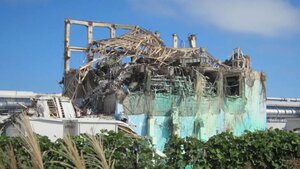
 Plutonium Particles Scattered 200km From Fukushima Nuclear Disaster Site, Scientists Say https://theswaddle.com/plutonium-particles-scattered-200km-from-fukushima-nuclear-disaster-site-scientists-say/, By Aditi Murti, Jul 22, 2020 Plutonium fragments may have spread more than 200km via caesium microparticle compounds released during the 2011 Fukushima Daiichi nuclear power plant disaster in Japan. These findings are according to research done on the region’s soil samples, published in Science of The Total Environment, by an international group of scientists.
1 This Month

of the week – Shut Down Drone Warfare!


Tell the Ukrainian Government to Drop Prosecution of Peace Activist Yurii Sheliazhenko

Petition to revoke the licensing of the Near Surface Nuclear Disposal Facility (NSDF) at Chalk River. https://www.ourcommons.ca/petitions/en/Petition/Details?Petition=e-7247
To see nuclear-related stories in greater depth and intensity – go to https://nuclearinformation.wordpress.com
-
Archives
- March 2026 (244)
- February 2026 (268)
- January 2026 (308)
- December 2025 (358)
- November 2025 (359)
- October 2025 (376)
- September 2025 (257)
- August 2025 (319)
- July 2025 (230)
- June 2025 (348)
- May 2025 (261)
- April 2025 (305)
-
Categories
- 1
- 1 NUCLEAR ISSUES
- business and costs
- climate change
- culture and arts
- ENERGY
- environment
- health
- history
- indigenous issues
- Legal
- marketing of nuclear
- media
- opposition to nuclear
- PERSONAL STORIES
- politics
- politics international
- Religion and ethics
- safety
- secrets,lies and civil liberties
- spinbuster
- technology
- Uranium
- wastes
- weapons and war
- Women
- 2 WORLD
- ACTION
- AFRICA
- Atrocities
- AUSTRALIA
- Christina's notes
- Christina's themes
- culture and arts
- Events
- Fuk 2022
- Fuk 2023
- Fukushima 2017
- Fukushima 2018
- fukushima 2019
- Fukushima 2020
- Fukushima 2021
- general
- global warming
- Humour (God we need it)
- Nuclear
- RARE EARTHS
- Reference
- resources – print
- Resources -audiovicual
- Weekly Newsletter
- World
- World Nuclear
- YouTube
-
RSS
Entries RSS
Comments RSS
 nuclear-news