NASA wants to increase allowable radiation exposure for astronauts – women affected most.
“As missions go deeper into space, we need to communicate why astronauts are being asked to take on that risk and offer explicit ethical justifications. This report offers a framework for accomplishing that,”

Report backs NASA proposal to change astronaut radiation exposure limits, Space News, by Jeff Foust — June 25, 2021 WASHINGTON — A National Academies committee has endorsed a NASA proposal to change the radiation exposure limits the agency sets for its astronauts but cautioned that the revised limit is still insufficient for human Mars missions.
The June 24 report by a committee established by the National Academies and sponsored by NASA backs the agency’s proposal to set a single lifetime radiation exposure limit for astronauts, rather than different limits based on age and gender.
Currently, lifetime exposure limits range from 180 millisieverts for a 30-year-old woman to 700 millisieverts for a 60-year-old man. Those limits are based on models intended to set a limit of no more than a 3% risk of radiation exposure-induced death (REID) at the 95% confidence level.
NASA proposed changing that to a limit of about 600 millisieverts, regardless of age or gender. That limit is based on the mean 3% risk of REID for a 35-year-old woman, the most conservative case but measured to a different standard than the earlier calculation.
The change, the committee noted, will allow more opportunities for female astronauts given the higher radiation limits. “Taken together, the proposed standard creates equality of opportunity for spaceflight with the trade-offs of somewhat higher allowable exposure to radiation for a subset of astronauts (primarily women) and limiting exposures below otherwise acceptable doses for others (primarily older men),” the committee’s report stated………
While the revised levels will increase flight opportunities for many NASA astronauts, the levels are still more conservative than many other space agencies. Roscosmos, the European Space Agency and the Canadian Space Agency all set lifetime exposure limits of 1,000 millisieverts for their astronauts and cosmonauts, without any age or gender differences. The Japanese space agency JAXA does have age and gender differences, varying between 500 and 1,000 millisieverts.
Even those higher levels fall short of projected radiation exposures for round-trip Mars missions, which the report noted would exceed 1,000 millisieverts. Any astronauts who fly on a Mars mission would need a waiver to NASA’s radiation exposure limits, which raises ethical questions. “NASA should develop a protocol for waiver of the proposed space radiation standard that is judicious, transparent, and informed by ethics,” the committee recommended.
“As missions go deeper into space, we need to communicate why astronauts are being asked to take on that risk and offer explicit ethical justifications. This report offers a framework for accomplishing that,” said Julian Preston of the U.S. Environmental Protection Agency, vice-chair of the committee, in a statement.https://spacenews.com/report-backs-nasa-proposal-to-change-astronaut-radiation-exposure-limits/
Ionising radiation the big danger to astronauts

NASA says that not only does space radiation potentially put astronauts at greater risk of radiation sickness, but an “increased lifetime risk for cancer, central nervous system effects, and degenerative diseases.”
Astronauts in space are exposed to the radiation equivalent of 150 to 6,000 chest x-rays https://www.revelstokereview.com/news/morning-start-astronauts-in-space-are-exposed-to-the-radiation-equivalent-of-150-to-6000-chest-x-rays/ May 28, 2021
As noted by NASA, radiation is a type of energy that is emitted in the form of rays, electromagnetic waves and/or particles. Radiation can be seen as visible light or felt as infrared radiation. However, some forms of radiation, like x-rays and gamma rays, are not visible.
Space radiation differs from the type of radiation experienced on Earth because intergalactic radiation “is comprised of atoms in which electrons have been stripped away as the atom accelerated in interstellar space to speeds approaching the speed of light – eventually, only the nucleus of the atom remains.”
So how much space radiation are astronauts exposed to? They’re exposed to “ionizing radiation with effective doses in the range from 50 to 2,000 mSv. 1 mSv of ionizing radiation is equivalent to about three chest x-rays. So that’s like if you were to have 150 to 6,000 chest x-rays.”
With that being said, NASA says that not only does space radiation potentially put astronauts at greater risk of radiation sickness, but an “increased lifetime risk for cancer, central nervous system effects, and degenerative diseases.”
Ionising radiation was scientifically proven to be bad for dogs. Does that mean it’s good for humans?

The effects of ionizing radiation on domestic dogs: a review of the atomic bomb testing era, Wiley Online Library , Gabriella J. SpatolaElaine A. Ostrander Timothy A. Mousseau 13 May 2021 https://doi.org/10.1111/brv.12723
ABSTRACT
Dogs were frequently employed as laboratory subjects during the era of atomic bomb testing (1950–1980), particularly in studies used to generate predictive data regarding the expected effects of accidental human occupational exposure to radiation. The bulk of these studies were only partly reported in the primary literature, despite providing vital information regarding the effects of radiation exposure on a model mammalian species. Herein we review this literature and summarize the biological effects in relation to the isotopes used and the method of radionuclide exposure. Overall, these studies demonstrate the wide range of developmental and physiological effects of exposure to radiation and radionuclides in a mid‐sized mammal.
………………………………………………III. CONCLUSIONS
Domestic canines commonly share the same environment, lifestyle, and exposure to pollutants as their human counterparts (Mazzatenta et al., 2017; Ostrander et al., 2017). Coupled with their larger body size and longer lifespan compared to other frequently used model organisms, this makes the canine model a useful tool in studying radiation‐induced diseases.- Frequent effects of radiation exposure in dogs include haematological changes, infertility, and cancer of the bone, liver, lung, and blood, among others. Effects depend on the radionuclide, method of exposure, age at exposure, dose rate, and total exposure dose.
With an increasing demand for nuclear power comes a higher risk of nuclear accidents, and studies of radiation exposures in domestic dogs have provided valuable information for understanding the repercussions for accidentally exposed populations.- Although experiments done in a laboratory setting have proved illuminating, more studies are needed on natural populations affected by past radiological disasters in order to further our understanding of how laboratory results may apply, as such populations are affected by potentially confounding environmental factors. In addition, the vast background knowledge provided by early radiation studies on dogs could allow meaningful conclusions to be drawn regarding the application of laboratory results to natural populations……………… https://onlinelibrary.wiley.com/doi/10.1111/brv.12723#.YJ5JV_2vd9I.twitter
France tested 41 nuclear weapons in the Pacific, and grossly underestimated the radioactive fallout
Science 11th March 2021, From 1966 to 1974, France blew up 41 nuclear weapons in above-ground tests
in French Polynesia, the collection of 118 islands and atolls that is part of France. The French government has long contended that the testing was done safely.
But a new analysis of hundreds of documents declassified in 2013 suggests the tests exposed 90% of the 125,000 people living in French Polynesia to radioactive fallout—roughly 10 times as many people as theFrench government has estimated.
University of Sheffield researchers do detailed study of radioactive materials inside the wrecked Chernobyl nuclear reactor
Yorkshire Post 26th April 2021, University of Sheffield scientists to help clean up waste from ‘world’s
worst’ nuclear accident. On the 35th anniversary of one of the world’s worst nuclear disasters, new Yorkshire-led research has been published that could help to clean up the most dangerous radioactive materials that still
remain at the site in Chernobyl.
Scientists say the revealing findings – which are the most “detailed results” into the chemical makeup of the
radioactive materials inside the plant’s melted core to date – could ”pave the way” to safely remove hazardous waste from the site and help prevent future nuclear disasters.
Dr Claire Corkhill, the project lead, from the University of Sheffield, stressed the urgency to the research as until now only a very limited number of samples have been analysed by scientists round the world. This is because the most dangerous materials that remain inside Chernobyl are so hazardous, hampering efforts to safely contain or remove the materials from the disaster zone. Dr Corkhill, told The Yorkshire Post: “This is such a big breakthrough because it opens up a world of possibilities to develop a deeper understanding of some of the most dangerous materials that still remain in Chernobyl.
Getting the facts straight about Chernobyl, nuclear disasters, and ionising radiation
Fact check: 5 myths about the Chernobyl nuclear disaster
Monday marks the 35th anniversary of the Chernobyl nuclear disaster. What happened in the former Soviet Union on April 26, 1986, is no longer a secret. DW,
Is Chernobyl the biggest-ever nuclear disaster?
The 1986 nuclear disaster at the Chernobyl nuclear power plant near the city of Pripyat in northern Ukraine is often described as the worst nuclear accident in history. However, rarely is this sensational depiction clarified in more detail.
The International Nuclear and Radiological Event Scale (INES) does classify nuclear events on a scale of zero to seven, breaking them down into accidents, incidents and anomalies. It was introduced in 1990 after being developed by the International Atomic Energy Agency (IAEA) and the Nuclear Energy Agency of the Organization for Economic Cooperation and Development (NEA/OECD). Level seven denotes a “major accident,” which means “major release of radioactive material with widespread health and environmental effects requiring implementation of planned and extended countermeasures.”
Both the Chernobyl and 2011 Fukushima disaster have been categorized as such. But INES does not allow for nuclear events to be classified within a level.
If the term nuclear disaster is not only used to describe events, or accidents, in nuclear reactors but also radioactive emissions caused by humans then there are many occasions when human-caused nuclear contamination has been greater than that of the Chernobyl disaster, explained Kate Brown, professor of science, technology and society at the Massachusetts Institute of Technology.
“Let’s take the production of plutonium,” she told DW, referring to the American and Soviet plants that produced plutonium at the center of a nuclear bomb. “Those plants each issued as part of the normal working everyday order at least 350 million curies [a unit of radioactivity — Editor’s note] into the surrounding environment. And that was not an accident.
“Let’s look at, even more dire, the issuance of radioactive fallout in the detonation of nuclear bombs during the periods of nuclear testing ground, which were located throughout the world, ” she continued. “Those just take one isotope, one radioactive iodine, which is harmful to human health because it’s taken up by the human thyroid, causing thyroid cancer or thyroid disease.
“Chernobyl issued 45 million curies of radioactive iodine just in two years of testing, in 1961 and 1962. The Soviets and the Americans issued not 45 million curies, but 20 billion curies of radioactive iodine,” she said. And these tests, she added, were by design — not due to an accident or human error.
Are there mutants in the exclusion zone?
………….. “The influence of ionizing radiation may cause some restructuring in the body, but mostly it simply reduces an organism’s viability,” he explained, giving the example of high embryo fatalities in rodents due to genomic defects that prevented the organism from functioning. Those animals that survive the womb sometimes have disabilities that prevent them from staying alive in the wild. Vishnevsky and his colleagues have conducted research into thousands of animals in the exclusion zone, but have not found any unusual morphological alterations.
“Why? Because we were always dealing with animals that had survived and had won the fight for survival,” he said. He added that it was difficult to compare these animals with creatures that scientists had deliberately exposed to radiation in laboratories.
“That’s a very seductive idea, that human messed up nature and all they have to do is step away and nature rewrites itself,” she said. In reality, however, biologists say that there are fewer species of insects, birds and mammals than before the disaster. The fact that some endangered species can be found in the exclusion zone is not evidence of the area’s health and vitality.
Has nature reclaimed the site of the disaster?
Reports entitled “Life Flourishing Around Chernobyl” and photo series suggesting that the exclusion zone has become a “natural paradise” might give the impression that nature has recovered from the nuclear disaster. But Brown, who has been researching Chernobyl for 25 years, is adamant that this is “not true.”
“That’s a very seductive idea, that human messed up nature and all they have to do is step away and nature rewrites itself,” she said. In reality, however, biologists say that there are fewer species of insects, birds and mammals than before the disaster. The fact that some endangered species can be found in the exclusion zone is not evidence of the area’s health and vitality.
On the contrary: there has been a significant increase in the mortality rate and a lowered life expectancy in the animal population, with more tumors and immune defects, disorders of the blood and circulatory system and early ageing.
Scientists have attributed the apparent natural diversity to species migration and the vastness of the area. “The exclusion zone comprises 2,600 square kilometers [about 1,000 square miles]. And to the north are another 2,000 square kilometers to the north is Belarus’ exclusion zone,” said Vishnevsky. “There are also areas to the east and west where the human population density is extremely low. We have a huge potential for preserving local wild fauna.” That includes lynxes, bears and wolves which need a great deal of space.
But even 35 years after the disaster the land is still contaminated by radiation, a third of it by transuranium elements with a half-life of more than 24,000 years.
Is it safe for tourists to visit Chernobyl?
The exclusion zone was already a magnet for disaster tourists, but in 2019 annual numbers doubled to 124,000 after the success of the HBO miniseries Chernobyl. The State Agency of Ukraine on Exclusion Zone Management has set up a number of routes so tourists can visit the region by land, water or air. It has also drawn up a number of regulations to protect visitors, stipulating that people must be covered from head to toe. They shouldn’t eat any food or drink outside, and they should always follow official paths. It’s estimated that the radiation dose received over a one-day visit does not exceed 0.1 millisievert (mSv) — roughly the same dose that a passenger would be exposed to on a long-distance flight from Germany to Japan, according to Germany’s Federal Office for Radiation
Are there people living in the area?
Today, Pripyat, the closed city built to serve the nuclear plant and house its employees, is often described as a ghost town, as is the nearby city of Chernobyl.
However, neither has been entirely empty since 1986. Thousands of people, usually men, have stayed there, often working two-week shifts and ensuring that the crucial infrastructure in both cities continues to function. After the explosion in reactor No. 4, reactors 1, 2 and 3 continued to operate, closing down only in 1991, 1996 and 2000. Special units of the Ukrainian Interior Ministry police the zone. There are also stores and at least two hotels in Chernobyl, which are mainly for business visitors.
There are also a number of unofficial inhabitants, including people who used to live in the area and have chosen to return. They have settled in villages that were evacuated after the disaster. The exact number of people is unknown: when DW asked the State Agency of Ukraine on Exclusion Zone Management how many people lived in Chernobyl, the official answer was “nobody.”
In 2016, about 180 people were thought to be living in the entire exclusion zone. Because they tended to be older, this number may well have fallen. Even though these locals are officially only tolerated, the state does support them in their everyday lives. Their pensions are delivered once a month, and every two to three months they are supplied with food by a mobile store. https://www.dw.com/en/fact-check-5-myths-about-the-chernobyl-nuclear-disaster/a-57314231
Below – a video from past years tells the earlier story of the chernobyl disaster
New research on papillary thyroid cancer confirms the accepted science on the harmful effects of ionising radiation.

Our work provides a foundation for further investigation of radiation-induced cancer, particularly with respect to differences in risk as a function of both dose and age, and underscores the deleterious consequences of ionizing radiation exposure.
Radiation-related genomic profile of papillary thyroid cancer after the Chernobyl accident, Science Magazine, Lindsay M. Morton, Danielle M. Karyadi et al. 23 Apr 21,
Abstract
The 1986 Chernobyl nuclear power plant accident increased papillary thyroid cancer (PTC) incidence in surrounding regions, particularly for 131I-exposed children. We analyzed genomic, transcriptomic, and epigenomic characteristics of 440 PTCs from Ukraine (359 with estimated childhood 131I exposure and 81 unexposed children born after 1986). PTCs displayed radiation dose-dependent enrichment of fusion drivers, nearly all in the mitogen-activated protein kinase pathway, and increases in small deletions and simple/balanced structural variants that were clonal and bore hallmarks of non-homologous end-joining repair. Radiation-related genomic alterations were more pronounced for those younger at exposure. Transcriptomic and epigenomic features were strongly associated with driver events but not radiation dose. Our results point to DNA double-strand breaks as early carcinogenic events that subsequently enable PTC growth following environmental radiation exposure.
The accidental explosion in reactor 4 at the Chernobyl (Chornobyl in Ukrainian) nuclear power plant in April 1986 resulted in the exposure of millions of inhabitants of the surrounding areas of Ukraine, Belarus, and the Russian Federation to radioactive contaminants (1). Epidemiologic and clinical research in the ensuing decades has demonstrated increased risk of papillary thyroid carcinoma (PTC) with increasing thyroid gland exposure to radioactive iodine (131I) from fallout, which was deposited on pastures with grazing cows and ingested through milk and leafy greens, particularly during early childhood (2). Together with data from populations exposed to other types of radiation, compelling evidence indicates that PTC risk increases following childhood exposure to ionizing radiation, a recognized carcinogen (2–5)……….
The majority of individuals with PTC were female (n = 335, 76.1%), resided in the Kiev (Kyiv in Ukrainian) region at the time of the accident (n = 286, 65.0%), and were diagnosed during young adulthood (mean = 28.0 years, range: 10.0-45.6),,……..
The pronounced evidence of radiation-related damage that we observed for individuals exposed at younger ages is consistent with epidemiologic analyses that have identified higher thyroid cancer risks with radiation exposure at younger ages …………
our data are consistent with a linear dose-response for the key molecular characteristics associated with radiation dose in the range examined in our analysis (≤1 Gy), which aligns with the extensive radiobiological literature and other epidemiologic evidence regarding DNA damage and cancer risk following ionizing radiation exposure………….
Our work provides a foundation for further investigation of radiation-induced cancer, particularly with respect to differences in risk as a function of both dose and age, and underscores the deleterious consequences of ionizing radiation exposure. https://science.sciencemag.org/content/early/2021/04/21/science.abg2538.full
70 years later, ionising radiation from nuclear bomb tests still found in U.S. honey

Nuclear fallout is showing up in U.S. honey, decades after bomb tests, Science Nikk Ogasa Apr. 20, 2021
Fallout from nuclear bomb tests in the 1950s and ’60s is showing up in U.S. honey, according to a new study. Although the levels of radioactivity aren’t dangerous, they may have been much higher in the 1970s and ’80s, researchers say.
“It’s really quite incredible,” says Daniel Richter, a soil scientist at Duke University not involved with the work. The study, he says, shows that the fallout “is still out there and disguising itself as a major nutrient.”
In the wake of World War II, the United States, the former Soviet Union, and other countries detonated hundreds of nuclear warheads in aboveground tests. The bombs ejected radiocesium—a radioactive form of the element cesium—into the upper atmosphere, and winds dispersed it around the world before it fell out of the skies in microscopic particles. The spread wasn’t uniform, however. For example, far more fallout dusted the U.S. east coast, thanks to regional wind and rainfall patterns.
Radiocesium is soluble in water, and plants can mistake it for potassium, a vital nutrient that shares similar chemical properties. To see whether plants continue to take up this nuclear contaminant, James Kaste, a geologist at the College of William & Mary in Williamsburg, Virginia, gave his undergraduate students an assignment: Bring back local foods from their spring break destinations to test for radiocesium.
One student returned with honey from Raleigh, North Carolina. To Kaste’s surprise, it contained cesium levels 100 times higher than the rest of the collected foods. He wondered whether eastern U.S. bees gathering nectar from plants and turning it into honey were concentrating radiocesium from the bomb tests.
So Kaste and his colleagues—including one of his undergrads—collected 122 samples of locally produced, raw honey from across the eastern United States and tested them for radiocesium. They detected it in 68 of the samples, at levels above 0.03 becquerels per kilogram—roughly 870,000 radiocesium atoms per tablespoon. The highest levels of radioactivity occurred in a Florida sample—19.1 becquerels per kilogram.
The findings, reported last month in Nature Communications, reveal that, thousands of kilometers from the nearest bomb site and more than 50 years after the bombs fell, radioactive fallout is still cycling through plants and animals………
The findings raise questions about how cesium has impacted bees over the past half-century, says Justin Richardson, a biogeochemist at the University of Massachusetts, Amherst. “They’re getting wiped out from pesticides, but there are other lesser known toxic impacts from humans, like fallout, that can affect their survival.”
After the Chernobyl nuclear disaster in 1986, scientists showed radiation levels nearby could hamper the reproduction of bumble bee colonies. But those levels were 1000 times higher than the modern levels reported here, notes Nick Beresford, a radioecologist at the U.K. Centre for Ecology & Hydrology.
So even though the new study shouldn’t raise any alarm bells over today’s honey, understanding how nuclear contaminants move around is still vital for gauging the health of our ecosystems and our agriculture, says Thure Cerling, a geologist at the University of Utah. “We need to pay attention to these things.” https://www.sciencemag.org/news/2021/04/nuclear-fallout-showing-us-honey-decades-after-bomb-tests
Japan’s government bans shipments of black rockfish from Fukushima, due to highlevels of radioactive cesium
Fish radioactive report prompts Fukushima ban, http://global.chinadaily.com.cn/a/202104/21/WS607f7f4ea31024ad0bab93e5.html
By WANG XU in Tokyo China Daily 2021-04-21 The Japanese government banned shipments of black rockfish from Fukushima on Monday, after a radioactive substance was found to be more than five times higher than acceptable levels in the fish caught off the prefecture.
The Fukushima prefectural government said 270 becquerels of radioactive cesium were detected per kilogram of the black rockfish, which had been caught at a depth of 37 meters near the city of Minamisoma, Fukushima, on April 1.
The amount of radioactive cesium is five times more than the limit set by a local fisheries cooperative of 50 becquerels per kg. It is also sharply higher than Japan’snational standard in general foods of 100 becquerels per kg.
In response, Japan’s national nuclear emergency response headquarters on Monday ordered a ban on the shipment of the fish caught off the waters of Fukushima.
Early in February, radioactive cesium 10 times above permitted levels in Japan were detected in the same area.
Scientific research showed the amount of cesium in foods and drinks depends upon the emission of radioactive cesium through the nuclear power plant, mainly through accidents. High levels of radioactive cesium in or near one’s body can cause nausea, vomiting, diarrhea, bleeding, coma, and even death.
Monday’s restrictions came a week after Japan’s government decided to release radioactive water from the crippled Fukushima Daiichi nuclear plant into the sea despite fierce opposition from fishing crews at home and concern from the international community.
“The (Japanese) government’s decision is outrageous,” said Takeshi Komatsu, an oyster farmer in Miyagi prefecture, north of Tokyo. “I feel more helpless than angry when I think that all the efforts I’ve made to rebuild my life over the past decade have come to nothing.”
South Korea strongly criticized the decision to release the contaminated water, with its Foreign Ministry summoning the Japanese ambassador. President Moon Jae-in ordered officials to explore petitioning an international court over the issue.
Alaska to increase its radiation testing of seafood..

A Decade After Fukushima Nuclear Disaster, Alaska Expands Seafood Monitoring High North News, Apr 21 2021
State environmental regulators announced Monday they’re expanding radiation testing of commercially harvested Alaska seafood using a gamma radiation detector at a state laboratory in Anchorage, according to APM.
A devastating earthquake and tsunami off the coast of Japan in 2011 crippled the Fukushima Dai-ichi nuclear plant, which released radioactive material into the air and ocean…….. https://www.highnorthnews.com/en/decade-after-fukushima-nuclear-disaster-alaska-expands-seafood-monitoring
The danger of Japan dumping Fukushima wastewater into the ocean
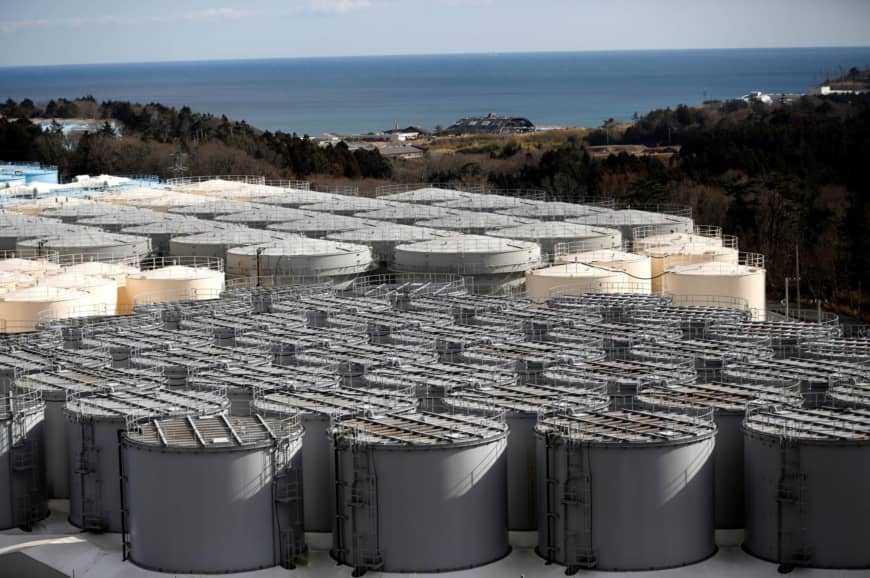
The danger of Japan dumping Fukushima wastewater into the ocean, https://thehill.com/opinion/energy-environment/548726-the-danger-of-japan-dumping-fukushima-wastewater-into-the-ocean
BY RICK STEINER,— 04/17/21 The Japanese government just announced that it intends to release over 1.2 million tons of radioactive wastewater from the Fukushima Nuclear Power Plant into the North Pacific. This would result in dangerous radionuclides flowing across the ocean to Russia, Alaska, Canada, Hawaii and the U.S. West Coast. The release of this material — which is strongly opposed by local scientists and residents in Japan — would begin in two years and continue for another 40 years.
The Biden administration must urge Japan to abandon this unnecessary and dangerous plan.
The 2011 Fukushima nuclear disaster was caused by the 9.1 magnitude Tohoku earthquake and a 14-meter-high tsunami. The tsunami flooded and disabled emergency generators needed to pump cooling water into the nuclear reactor cores, causing three reactor core meltdowns and hydrogen explosions. Radionuclides flowed eastward across the Pacific and were eventually found in waters off California, Hawaii, Oregon, Washington, British Columbia and Alaska. We all live downstream.
The storage tanks now hold seawater that has been used to continue cooling the reactor cores, and this water is contaminated with such radionuclides as Cesium-137, Carbon-14, tritium (including the more dangerous “Organically Bound Tritium”), Strontium-90, Cobalt-60, Iodine-129, Plutonium-239 — and over 50 other radionuclides. Some of this has reportedly been removed, but some has not (e.g. radioactive tritium and C-14).
The Tokyo Electric Power Company (TEPCO) that owns Fukushima, and is now responsible for the cleanup (that is likely to last the remainder of this century), didn’t admit until recently that the wastewater contains significant amounts of radioactive Carbon-14. As C-14 has a half-life of 5,730 years, and is known to bio-accumulate in marine ecosystems and cause cellular and genetic impairment. This is a very serious concern.
Fukushima C-14 will be added to the already elevated radioactive C-14 load in the oceans from nuclear weapons tests — or “bomb carbon” — last century. It’s now found in organisms even in the deepest part of the ocean, the Marianas Trench. It is easy to imagine the impact this new, intentional Fukushima release could have, rightly or not, on the public image of clean marine seafood and tourism along the Pacific coast.
TEPCO claims the water has been sufficiently treated and is OK to release, but the treatment system they are using is reported to be substandard and not up to the job. Communities across the Pacific deserve an independent scientific assessment of TEPCO’s claims, by an Independent Scientific and Technical Commission. Remember, TEPCO and the Japanese government approved locating the nuclear power plant’s emergency generators in a tsunami flood zone. Their assurances now that there is no risk in releasing this radioactive water are neither credible nor scientifically defensible.
China and South Korea have registered objections to the release plan with Japan, but other downstream nations — the U.S., Russia and Canada — have stayed quiet. It isn’t often that China expresses more concern for the environment than the U.S., but this is one such time.
And even if the ecological and public health risk from the planned release is indeed low, as claimed (this is highly doubtful), the risk is entirely unnecessary and avoidable.
Beyond marine discharge, several other disposal options have been considered, including evaporating the water, or injecting it into deep geologic formations.
But by far the best solution is for TEPCO to build more storage tanks and continue holding all contaminated water for another 15 years or so, during which time the radioactive tritium level will decay by half, and simultaneously treat it with best available technology (such as ion exchange systems and modular “detritiation” systems in the U.S.) to remove all radionuclides possible.
Japan and TEPCO considered this long-term storage option, but opted instead for the cheapest choice — simply dumping the wastewater into the Pacific.
The era of intentionally dumping toxic waste in our one global ocean is, or should be, over.
Fukushima was, and continues to be, a nuclear nightmare, and all nations should join together in a collaborative effort to resolve this mess. This effort will take hundreds of billions of dollars, over many decades, and the U.S. and other G20 nations must step up and help both financially and technically.
Unless and until this wastewater is independently certified as effectively free of radionuclides and safe, not one drop should be released into the beautiful deep blue Pacific.
Finally, Fukushima should be the last nail in the coffin for the notion that nuclear fission power could be a realistic solution to our climate crisis.
Rick Steiner is a marine conservation biologist in Anchorage and former professor of marine conservation with the University of Alaska from 1980-2010. He now consults for the U.N., governments and NGOs on marine environmental issues. He is author of “Oasis Earth: Planet in Peril.”
French Prime Minister visiting Algeria. The question of radioactive dust from nuclear tests will be on the agenda.
*Algeria – French Nuclear Testing**
French atomic tests in Algeria: so much brings the wind. The wind regularly
blows radioactive particles from the Sahara over Europe, a memory of the
atomic tests carried out in Algeria in the 1960s. Will the responsibility
of Paris be on the menu of Jean Castex’s visit to Algiers this weekend.
end?
Liberation 7th April 2021
On April 10 and 11, French Prime Minister Jean Castex will travel to
Algiers, accompanied by eight ministers – including the ministers of
foreign affairs and the armed forces to participate in the 5th session of
the France-Algeria High Level Intergovernmental Committee (CIHN). The
question of the health and environmental consequences of the 17 nuclear
tests carried out by France in the Sahara between 1960 and 1966, as well as
that of nuclear and non-nuclear waste left by France, will be on the menu
of discussions.
ICAN France 7th April 2021
http://icanfrance.org/alerte-presse-les-consequences-des-essais-nucleaires-francais-en-algerie/
Space radiation – harmful to astronauts, not only with cancers, but also with heart and blood vessel effects
From Vitamin C to Spinach: Researching Ways to Protect Astronaut Cardiovascular Health From Space Radiation. Review explores ways that space radiation can damage cardiovascular health, and discusses how we can protect astronauts, from vitamin C to spinach. SciTech Daily 14 Mar 21, Space: the final frontier. What’s stopping us from exploring it? Well, lots of things, but one of the major issues is space radiation, and the effects it can have on astronaut health during long voyages. A new review in the open-access journal Frontiers in Cardiovascular Medicine explores what we know about the ways that space radiation can negatively affect cardiovascular health, and discusses methods to protect astronauts. These include radioprotective drugs, and antioxidant treatments, some of which are more common than you might think.
Space is incredibly inhospitable. Outside of low earth orbit, astronauts are bombarded with radiation, including galactic cosmic rays, and ‘proton storms’ released by the sun. This radiation is harmful for the human body, damaging proteins and DNA, and is one of the major reasons that we haven’t yet been able to send anyone to Mars, or beyond.
These issues inspired Dr Jesper Hjortnaes of the Leiden University Medical Center in the Netherlands to investigate what we know about the harmful effects of space radiation. “If we want to see human long distance space travel, we need to understand the impact of space-induced disease and how to protect our bodies from it,” said Hjortnaes. However, Hjortnaes has an interest in a specific aspect of space radiation: its cardiovascular effects.
You may be surprised to learn that aside from the illnesses we typically associate with radiation, such as cancer, it can also have serious effects on the cardiovascular system. Suffering from cardiovascular illness would be catastrophic for crew members on long-haul space missions, and so it’s important to identify what the risks are, and how to reduce them.
Hjortnaes and colleagues reviewed the evidence to establish what we know about the cardiovascular risks of space radiation. Much of what we know comes from studying people who have received radiation therapy for cancer, where cardiovascular disease is a common side-effect, or from mouse studies of radiation exposure.
So, what are the effects? Radiation can cause myocardial remodeling, where the structure of the heart begins to change, and tough, fibrous tissue grows to replace healthy muscle, potentially leading to heart failure. Other effects include atherosclerosis in blood vessels, which can cause stroke or heart attack. Radiation exerts its effects by causing inflammation, oxidative stress, cell death and DNA damage.
Researchers have also investigated potential ways to protect astronauts. These include drugs that an astronaut could take to protect themselves from space radiation, and antioxidants. Interestingly, an antioxidant diet, including dairy products, green vegetables such as spinach, and antioxidant supplements such as vitamin C, has potential in protecting astronauts from the damaging reactive oxygen molecules produced during radiation exposure.
Overall, the review revealed that so far, research has only scratched the surface of space radiation and the best methods to protect astronauts from it. There is little conclusive evidence of radiation-induced cardiovascular disease in astronauts themselves, as so few of them have ever gone further than low earth orbit, and mouse studies aren’t an exact match for humans……..https://scitechdaily.com/from-vitamin-c-to-spinach-researching-ways-to-protect-astronaut-cardiovascular-health-from-space-radiation/
Low doses of radiation used in medical imaging lead to mutations in cell cultures

|
Low doses of radiation used in medical imaging lead to mutations in cell cultures Discovery that radiation creates breaks that allow in foreign DNA must be confirmed in animal studies Science Daily, January 16, 2020 Source: PLOS
|
|
Harm done to people by the Fukushima evacuation, but radiation was still the root cause of all this
 The Lancet 6th March 2021, “The evacuation was the biggest risk factor in impacting health”, said Masaharu Tsubokura, an expert in radiation health management at Fukushima Medical University. “But [the evacuation] was inevitable, so I’m not saying that it was the wrong choice”, he added. He describes the tsunami-hit region of northeast Japan as a case study in the myriad health issues arising from natural disasters—an interplay between non-communicable diseases, the effect on mental and physical health of sudden upheaval, family separation, and the struggle to provide nursing care in ageing communities that hold little appeal for younger people, including health-care staff, who are worried about radiation and lack of job opportunities.concludes “the radiation contamination due to the Fukushima nuclear power plant accidents is positively associated with the thyroidcancer detection rate in children and adolescents. This corroborates previous studies providing evidence for a causal relation between nuclear
accidents and the subsequent occurrence of thyroid cancer”. Burnie said, “The extent to which the current thyroid rates are due to radiation exposure is not proven. However, given the uncertainties, including dose data, it is not credible to dismiss an association between iodine exposure and the higher incidence of thyroid cancer. The authorities need to continue screening and prioritise other physical and mental health issuesarising from displacement and evacuation, as well as monitor people who have returned”.
https://www.thelancet.com/journals/lancet/article/PIIS0140-6736(21)00560-2/fulltext
1 This Month


4 August – WEBINAR – Hiroshima & Nagasaki: Nuclear Bombs Never Again
Tuesday, Aug. 4 at 5 pm PT / 8 pm ET.
Aug 5, 2026 10:00 AM in Australia/Melbourne
Join the Nuclear Bombs Never Again webinar on August 4th at 5pm Pacific Time / 8pm Eastern Time / 9am Japan Standard Time.
Cross generational voices at the intersection of Japan-Korea-US policy and militarization will share their lived experiences, nuclear impacts in these contexts, anti-war strategies, and actions you can take to advocate for a world with Nuclear Bombs Never Again. This 75-minute event is co-hosted by WILPF US and Korea Peace Now.

22,000+ miles voyaging for nuclear disarmament
and a radiation-free environment https://vfpgoldenruleproject.org/
To see nuclear-related stories in greater depth and intensity – go to https://nuclearinformation.wordpress.com
-
Archives
- July 2026 (251)
- June 2026 (287)
- May 2026 (306)
- April 2026 (356)
- March 2026 (251)
- February 2026 (267)
- January 2026 (308)
- December 2025 (358)
- November 2025 (359)
- October 2025 (375)
- September 2025 (257)
- August 2025 (319)
-
Categories
- 1
- 1 NUCLEAR ISSUES
- business and costs
- climate change
- culture and arts
- ENERGY
- environment
- health
- history
- indigenous issues
- Legal
- marketing of nuclear
- media
- opposition to nuclear
- PERSONAL STORIES
- politics
- politics international
- Religion and ethics
- safety
- secrets,lies and civil liberties
- spinbuster
- technology
- Uranium
- wastes
- weapons and war
- Women
- 2 WORLD
- ACTION
- AFRICA
- Atrocities
- AUSTRALIA
- Christina's notes
- Christina's themes
- culture and arts
- Events
- Fuk 2022
- Fuk 2023
- Fukushima 2017
- Fukushima 2018
- fukushima 2019
- Fukushima 2020
- Fukushima 2021
- general
- global warming
- Humour (God we need it)
- Nuclear
- RARE EARTHS
- Reference
- resources – print
- Resources -audiovicual
- Weekly Newsletter
- World
- World Nuclear
- YouTube
-
RSS
Entries RSS
Comments RSS
 nuclear-news