Tim Fernholz When the US entered the nuclear age, it did so recklessly. New research suggests that the hidden cost of developing nuclear weapons were far larger than previous estimates, with radioactive fallout responsible for 340,000 to 690,000 American deaths from 1951 to 1973.
From 1951 to 1963, the US tested nuclear weapons above ground in Nevada. Weapons researchers, not understanding the risks—or simply ignoring them—exposed thousands of workers to radioactive fallout. The emissions from nuclear reactions are deadly to humans in high doses, and can cause cancer even in low doses. At one point, researchers had volunteers stand underneath an airburst nuclear weapon to prove how safe it was:
The emissions, however, did not just stay at the test site, and drifted in the atmosphere. Cancer rates spiked in nearby communities, and the US government could no longer pretend that fallout was anything but a silent killer.
The cost in dollars and lives
Congress eventually paid more than $2 billion to residents of nearby areas that were particularly exposed to radiation, as well as uranium miners. But attempts to measure the full extent of the test fallout were very uncertain, since they relied on extrapolating effects from the hardest-hit communities to the national level. One national estimate found the testing caused 49,000 cancer deaths.
Those measurements, however, did not capture the full range of effects over time and geography. Meyers created a broader picture by way of a macabre insight: When cows consumed radioactive fallout spread by atmospheric winds, their milk became a key channel to transmit radiation sickness to humans. Most milk production during this time was local, with cows eating at pasture and their milk being delivered to nearby communities, giving Meyers a way to trace radioactivity across the country.
The National Cancer Institute has records of the amount of Iodine 131—a dangerous isotope released in the Nevada tests—in milk, as well as broader data about radiation exposure. By comparing this data with county-level mortality records, Meyers came across a significant finding: “Exposure to fallout through milk leads to immediate and sustained increases in the crude death rate.” What’s more, these results were sustained over time. US nuclear testing likely killed seven to 14 times more people than we had thought, mostly in the midwest and northeast.
A weapon against its own people
When the US used nuclear weapons during World War II, bombing the Japanese cities of Hiroshima and Nagasaki, conservative estimates suggest 250,000 people died in immediate aftermath. Even those horrified by the bombing didn’t realize that the US would deploy similar weapons against its own people, accidentally, and on a comparable scale.
And the cessation of nuclear testing helped save US lives—”the Partial Nuclear Test Ban Treaty might have saved between 11.7 and 24.0 million American lives,” Meyers estimates. There was also some blind luck involved in reducing the number of poisoned people: The Nevada Test Site, compared to other potential testing facilities the US government considered at the time, produced the lowest atmospheric dispersal.
The lingering affects of these tests remain, as silent and as troublesome as the isotopes themselves. Millions of Americans who were exposed to fallout likely suffer illnesses related to these tests even today, as they retire and rely on the US government to fund their health care.
“This paper reveals that there are more casualties of the Cold War than previously thought, but the extent to which society still bears the costs of the Cold War remains an open question,” Meyers concludes.
The legacy of the Radium Girls lives on through the ripples that their deaths created in labor law and our scientific understanding of the effects of radioactivity.
“Almost everything we know about radiation inside the human body, we owe to them,”
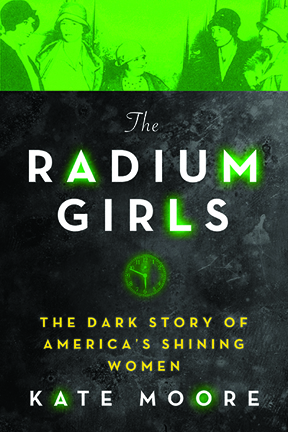
Radium Girls: The dark times of luminous watches
Jacopo Prisco, CNN 20th December 2017 A century ago, glow-in-the-dark watches were an irresistible novelty. The dials, covered in a special luminous paint, shone all the time and didn’t require charging in sunlight. It looked like magic.
One of the first factories to produce these watches opened in New Jersey in 1916. It hired about 70 women, the first of thousands to be employed in many such factories in the United States. It was a well-paid, glamorous job.
For the delicate task of applying the paint to the tiny dials, the women were instructed to point the brushes with their lips. But the paint made the watches glow because it contained radium, a radioactive element discovered less than 20 years earlier, its properties not yet fully understood. The women were ingesting it with nearly every brushstroke.
They became known as the “Radium Girls.”.
A miracle cure
Radium was discovered by Nobel laureate Marie Curie and her husband Pierre in 1898. It was quickly put to use as a cancer treatment.
“Because it was successful, it somehow became an all-powerful health tonic, taken in the same way as we take vitamins today — people were fascinated with its power,” said Kate Moore, author of “The Radium Girls,” in a phone interview………
A slow killer
When ingested, radium is particularly dangerous: “Chemically, it behaves very much like calcium,” said Jorgensen. “Since the body uses calcium to make bone, ingested radium is mistaken for calcium and gets incorporated into bone. So the major health risk of ingesting radium is radiation-induced bone necrosis and bone cancers. How soon they develop depends upon the dose, but at the very high doses that the Radium Girls were exposed to, just a few years.”
The luminous paint, which worked by converting the radiation into light through a fluorescent chemical, was one of the most successful radium-based products. By putting the brushes in their mouths, the Radium Girls were especially at risk — so why did they do it? “Because it was the easiest way to get a fine point on the brush, to paint on numbers as small as a single millimeter in width,” said Moore.
But the girls didn’t embrace this technique blindly. “The first thing they asked was (whether) the paint was harmful, but the managers said it was safe, which was the obvious answer for a manager of a company whose very existence depended on radium paint.”
Not all that glitters
When the luminous watches grew fashionable in the early 1920s, the world was already becoming aware of the risks of radioactivity. But radiation poisoning isn’t immediate, so years went by before any of the workers developed symptoms…….
Radium jaw
In the early 1920s, some of the Radium Girls started developing symptoms like fatigue and toothaches. The first death occurred in 1922, when 22-year-old Mollie Maggia died after reportedly enduring a year of pain. Although her death certificate erroneously stated that she died of syphilis, she was actually suffering from a condition called “radium jaw.” Her entire lower jawbone had become so brittle that her doctor removed it by simply lifting it out. “The radium was destroying the bone and literally drilling holes in the women’s jaws while they were still alive,” said Moore.
Yet it would take another two years before the company that owned the factory, the United States Radium Corporation, took any action at all, through an independent investigation commissioned mostly to investigate the declining business rather than the health of the workers.
In 1925 Grace Fryer, one of the workers from the original New Jersey plant, decided to sue, but she would spend two years searching for a lawyer willing to help her. She finally filed her case in 1927 along with four fellow workers, and made front-page news around the world.
The case, settled in the women’s favor in 1928, became a milestone of occupational hazard law. By this time, the dangers of radium were in full view, the lip-pointing technique was discontinued and the workers were being given protective gear. More women sued, and the radium companies appealed several times, but in 1939 the Supreme Court rejected the last appeal.
The survivors received compensation, and death certificates would start reporting the correct cause of death. The year before, the Food and Drug Administration banned the deceptive packaging of radium-based products. Radium paint itself was eventually phased out and has not been used in watches since 1968.
It’s hard to calculate how many women suffered health problems due to the ingestion of radium, but the certainly number in the thousands, according to Moore. Some of the effects would only be felt much later in life through various forms of cancer. With a half-life of 1,600 years, once the radium was inside the women’s bodies, it was there for good.
The legacy of the Radium Girls lives on through the ripples that their deaths created in labor law and our scientific understanding of the effects of radioactivity. “In the 1950s, during the Cold War, many agreed voluntarily to be studied by scientists, even with intrusive examinations because they had been exposed for prolonged periods of time,” said Moore.
Significant Growth Foreseen by Medical Cyclotron Market During 2017-2027, BY PERSISTENCE MARKET RESEARCH, SATPRNEWS
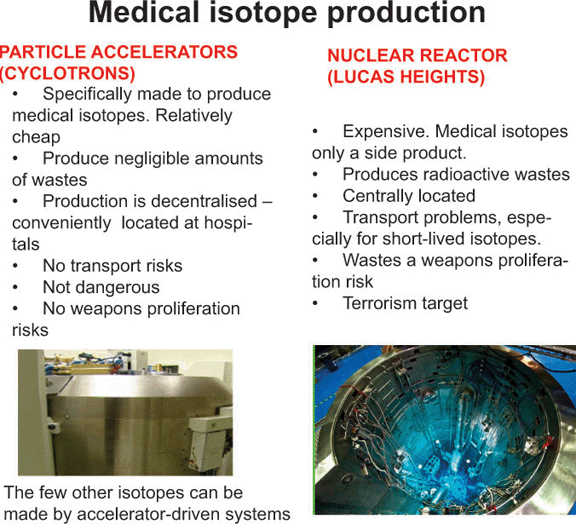
Medical cyclotron is a machine used in the medical imaging and research field to make relatively short lived radioisotopes. Cyclotron is a particle accelerator. It is an electrically powered machine that produces a beam of charged that is then further used in medical, industrial and research processes. A cyclotron machine takes the hybrid atom (these are hydrogen that make up water except they have a negative charge) and accelerate it to very high speed. When this procedure has enough energy, the energy is spent into a target where the reaction is taken.
The new element that is produced with the strike of positive ion and neutron is radioactive element that is used for the treatment in medical research. The major isotope that is used for the cyclotron is fluorine-18. Its ability to decay itself to produce positrons, which is used around the world for Positron Emission Tomography and PET scans.
PET scans are used for the diagnosis and treatment of cancer. With the product obtained from a cyclotron, we can produce a wide variety of isotopes of our interest for medical imaging such as iodine-123, Technetium-99m and Gallium-67.
The advantage of using cyclotron rather than buying isotopes for medical application is that as the isotopes have short half-life period. By the time an isotope reaches its destination it covers its half-life.
However, by having a cyclotron in the medical facility it not only reduces the cost but also, increase the number of scans to the patients in a given day. The medical facility that used cyclotron is required to be built with extensive safety such as multiple levels of shielding, monitoring and protection to ensure safe operations…….http://www.satprnews.com/2017/12/13/significant-growth-foreseen-by-medical-cyclotron-market-during-2017-2027/
While women are leading the resistance, the halls of power in D.C. and states across the country lag pathetically behind. We saw this perhaps most vividly when Trump gathered an all-male group of politicians at the White House to discuss his efforts to gut women’s health care. In a single photograph, the gross underrepresentation of women’s voices in government and on issues directly impacting their lives was crystal clear.
And it was exactly that photograph — and the utterly out-of-sync gender dynamics it laid bare — that stuck in our minds this month as we sat in a hearing of the Senate Foreign Relations Committee on Trump’s unrestrained power to wage nuclear war. A committee with a 20:1 male-to-female ratio heard testimony from three men on whether one man should have total, unchecked power to start a nuclear war and blow up the planet. This is a system that, as Senator Ed Markey (D-MA) said, “boggles the rational mind.”
Apparently, the Senate has a one-woman limit when it comes to foreign policy.
To read the full article at Teen Vogue, https://www.teenvogue.com/story/women-leaders-arent-making-enough-foreign-policy-decisions-and-its-a-problem
In the late 1970s, the rate of new thyroid cancer cases in four counties just north of New York City—Westchester, Rockland, Orange and Putnam counties—was 22 percent below the U.S. rate. Today, it has soared to 53 percent above the national rate. New cases jumped from 51 to 412 per year. Large increases in thyroid cancer occurred for both males and females in each county.
That’s according to a new study I co-authored which was published in the Journal of Environmental Protection and presented at Columbia University.
This change may be a result of airborne emissions of radioactive iodine from the Indian Point nuclear power plant, which is located at the crossroads of those four counties and has been operating since the mid-’70s.Exposure to radioactivity is the only known cause of thyroid cancer. Indian Point routinely releases more than 100 radioactive chemicals into the environment. These chemicals enter human bodies through breathing and the food chain, harming and killing healthy cells. One of these chemicals is radioactive iodine, which attacks and kills cells in the thyroid gland, raising the risk of cancer.
The new study calls for much more research on thyroid cancer patterns. According to the New York State cancer registry, the 1976-81 four-county thyroid cancer rate was 22 percent below the U.S. rate. Since then, thyroid cancer has increased across the U.S., but the local increase was much greater—rising to 53 percent above the U.S. rate from 2000-2014. That’s statistically significant.
“The statistical aberration of increased cancer rates should be a concern to us all,” said Peter Schwartz, a Rockland County businessman diagnosed with thyroid cancer in 1986. “After Fukushima, it finally occurred to me that my thyroid cancer was connected to Indian Point.”
“I am concerned that radiation may have contributed to thyroid cancer in my family,” says Joanne DeVito, who spoke at the Columbia University event. She was diagnosed with the condition, as were each of her three daughters. “Our family has no history of thyroid disease, and doctors are at a loss to explain why this happened,” said DeVito. She now lives in Connecticut, but for many years lived close to Indian Point.
Little is known about thyroid cancer causes. Risk factors according to the Mayo Clinic include being female, genetic syndromes and exposure to ionizing radiation. Earlier studies found high rates of thyroid cancer in those treated with head and neck irradiation (which ceased in the 1950s), survivors of the 1945 Hiroshima/Nagasaki atomic bombs, and the 1986 Chernobyl and 2011 Fukushima reactor meltdowns.
A 1999 National Cancer Institute study concluded that as many as 212,000 Americans developed thyroid cancer from the above-ground nuclear weapons tests in Nevada. Radiation exposures from those test were considered low-dose. Above-ground testing was banned in a 1963 treaty.
From 1980 to 2014, the U.S. thyroid cancer incidence rate more than tripled for all ages, races and genders. Most scientific articles in the professional literature concluded that improved diagnosis cannot be the sole reason.
In a recent study in the journal Laryngoscope, researchers at Hershey Medical Center found local residents near the Three Mile Island plant diagnosed with thyroid cancer after the 1979 partial meltdown had a significantly lower proportion of the BRAFV600 mutation, which is not associated with radiation-induced thyroid cancer, compared to cases diagnosed before the accident and many years afterwards. The authors suggested the meltdown could have contributed to the disease.
Indian Point is located in Buchanan, New York, in northwest Westchester County. Its two functioning reactors began operating in 1973 and 1976. An agreement to close the plant by 2021 between Entergy (which owns and operates the plant) and New York State was reached in January of this year.
The 82-year-old is a retired geochemist who used to work in a uranium mine in Gabon owned by French nuclear giant Areva.
He and hundreds of other former workers say they fell ill from their work to extract the uranium — a source of nuclear power and warheads, but toxic and potentially carcinogenic.
The miners worked for an Areva subsidiary — the Compagnie des mines d’uranium de Franceville, better known by its abbreviation of COMUF.
Over 38 years, the mine extracted some 26,000 tonnes of uranium near Mounana, southeastern Gabon, before closing in 1999 after the global price of uranium fell and the seam of ore began to thin.
By the end of 2016, 367 former workers had died from “pulmonary respiratory infections” linked to working in the mine, according to MATRAC, a campaign group gathering 1,618 former employees.
The surviving miners, many of them old and sick, have unsuccessfully demanded compensation for 12 years in the belief they were exposed to dangerous levels of uranium contamination.
Areva, a multi-billion-dollar business majority-owned by the French state, has repeatedly denied that it has any case to answer. “No occupational disease related to exposure to ionising radiation” has ever been detected, it says.
‘Many serious diseases’ An internal company mail dating from 2015, seen by AFP and independently verified, acknowledges that the company was aware many of its former employees had developed serious ailments.
In the mail, Areva’s health director, Pierre Laroche, wrote that “many serious diseases have been detected among former employees, for example contagious tuberculosis”.
For former workers, this proves the company’s liability and justifies their claims for compensation, even if it does not legally prove all their illnesses are directly linked to excessive levels of uranium exposure.
The firm has refused to give payouts to the vast majority of its employees, apart from compensation payments in 2011 to the families in France of two French former mine workers who died of lung cancer.
The company has repeatedly argued it was difficult to establish if the rate of cancer cases among former miners was greater than those occurring in the wider population.
“That there was radioactivity in Mounana is a reality. (But) to what degree and to what extent the workers were affected, it will be very difficult to establish,” a former senior executive of the mine told AFP, on condition of anonymity.
In similar disputes elsewhere in the world, experts acknowledge the difficulty of pinning cancer and respiratory diseases on nuclear exposure at work.
Smoking and other “lifestyle” habits could, for instance, be a cause.
‘We are sick’
Areva has been under pressure to compensate its employees for more than a decade.
In 2007, French NGOs Sherpa and Medecins du Monde (Doctors of the World) carried out field surveys in Mounana and in Niger, another Areva uranium mining site.
They published a report denouncing what they described as high rates of cancer among former employees.
Areva agreed to investigate the situation and launched a health initiative in 2009 — the Mounana Health Observatory (OSM) — promising to pay compensation and treat former miners who fell ill, provided scientific and medical panels confirmed their disease was attributable to industrial causes.
Seven years on, not one former employee has been compensated.
“I’ve had difficulty breathing for 10 years,” says 77-year-old Roland Mayombo, who spent 27 years in the mine.
“I went to the OSM four times a year, but I have never had a result,” he complained.
“We decided to stop going (to the OSM) because no one has ever given us our analysis results,” said Estime Beno Ngodi, president of MATRAC, who says he is suffering from lung cancer.
COMUF accuses MATRAC of spreading “misinformation” and defends its handling of the health initiative.
It looked at more than 650 former workers but suspended the project in 2015 because of a boycott by MATRAC, says Gilles Recoche, COMUF’s director of the board.
“We’re proud of having set up a unique tripartite structure, which enabled former COMUF workers to benefit from a free medical visit,” he adds.
For the surviving miners, their long battle to prove a direct link between their illness and uranium contamination goes on. But, for many, age and sickness are wearing them down.
It was supposed to be a trip to paradise, instead it sealed their fatehttp://www.abc.net.au/news/2017-11-28/the-toxic-legacy-of-a-deadly-paradise/9168422 These soldiers were ordered to clean up the toxic legacy of America’s nuclear program, now they’re dying, and their Government has abandoned them.Foreign Correspondent, By Mark Willacy When Jim Androl landed on a remote central Pacific atoll to take part in the biggest nuclear clean-up in United States history, the only extra items his military superiors gave him were some flea powder and a pamphlet on how to avoid heat stroke.
The army did have special radiation suits and respirators for handling the left-over atomic waste on the atoll, but the young soldiers were only allowed to wear them on special occasions.
“The [protective suits] were for photo ops,” the former communications specialist with the US Army’s 84th Engineer Battalion recalls.
“I know once when I believe 60 Minutes was there, they did [let us wear them]. We were just issued our normal warm weather gear … shorts, tee-shirts, hats and jungle boots and that’s it.”
Androl was one of about 4,000 US troops sent to Enewetak Atoll in the Marshall Islands between 1977 and 1979 to scrape up the contaminated remnants of the United States’ atomic testing program.
The US government decided to use soldiers for the clean-up, because employing specialist nuclear workers would have doubled the cost.
“I’d never even heard of Enewetak. I never knew that there were 43 nuclear tests out there,” Androl, who was 22-years old when he was deployed to the atoll, says.
Some of those bombs were the among the most powerful ever detonated, and they left behind a toxic legacy that will live on for thousands of years.
“One of the attempted nuclear weapons explosions didn’t work,” Michael Gerrard, the director of the Earth Institute at New York’s Columbia University, says. “So the plutonium was just broken apart by the conventional explosion, leading to about 400 little chunks of plutonium that were spread around the atoll.”
The plutonium on Enewetak has a radioactive half-life of more than 24,000 years, and the US clean-up troops were ordered to place the shattered pieces into plastic bags and dump them into a crater left behind by an old atomic bomb test.
One-millionth of a gram of plutonium is potentially harmful, and can cause cancer decades after first exposure.
“They’d have us walk around and pick up loose pieces, and just gather up whatever we could, throw it in a pile,” Androl says.
It’s estimated that 85,000 cubic metres of radioactive material was collected and dumped, including contaminated soil, concrete, and military equipment.
“It was a very dirty operation,” Ken Kasik, another of the men sent to Enewetak as part of the clean-up, says. “[The veterans are] all sick, they’re all dying, and it’s because of the radiation.”
Kasik can barely rise from his chair to greet me when I arrive to see him.
We were supposed to meet at his home in Hawaii.
But by the time I land, he is seriously ill in the intensive care unit in Honolulu’s Straub Medical Centre, and is tethered to drips and monitoring machines.
“About three-and-a-half years ago I had so many cancers on me, I couldn’t work anymore. They ripped me apart,” he says.
This time it’s not cancer that has forced Ken Kasik to be rushed to the ICU, but a brain aneurism he says is directly linked to his time on Enewetak and the atomic fall-out there.
“When those bombs go off, in Enewetak, that’s coral sand,” Kasik says. “That just gets pulverised and comes back down as baby powder, and it was on everything, everywhere. The guys would come home, take off their sunglasses, [and their faces] would be white.”
“I never had any clue that dust could literally get into your lungs,” Jim Androl says from his home in the suburbs of Las Vegas. “You breathe it, you drink it, you eat it, you swim in it. Every day for six months, 24/7.”
The problem for Enewetak clean-up veterans like Androl and Kasik, is that successive United States governments have refused to recognise them and their comrades as atomic veterans. This means they cannot access health benefits or radiation exposure compensation.
Other atomic veterans, like those involved in the original atomic testing program in the Pacific in the 1940s and 1950s that left behind the waste on Enewetak and Bikini atolls, were covered for more than 20 specific types of cancers.
“Our boys worked six-month tours on a dirty island, and the government says, ‘You were never there’,” Kasik says. “We were never acknowledged…we don’t exist.”
Like Kasik, Androl has suffered serious health problems over the years that he blames on his six-month tour at Enewetak.
“He had his gall bladder out … two weeks [later] they found a seven-and-a-half-pound tumour, cancerous tumour in his abdomen,” Androl’s wife Bev says.
“I suffer from roughly 40 to 45 residuals from the cancer,” Androl says. “I’ve got pancreatitis, I’ve got a spot on my liver that they’re watching.”
As well as cancers, veterans complain of brittle bones and even of birth defects in their children.
The US military insists there is no connection between veterans’ illnesses and the clean-up on Enewetak, saying their radiation exposure was well within safe limits.
A two-year campaign by Enewetak veterans to get Congress to give them medical benefits has been unsuccessful.
“I think mostly they’re trying to get health coverage, medical care because they’ve got terrible bills. Really high bills from hospitals, because of their treatment,” Giff Johnson, the publisher of the Marshall Islands Journal, the country’s only newspaper, says.
There has never been a formal study of the health of these men, many of whom are now in their late 50s and early 60s.
But an unofficial social media survey of more than 400 Enewetak clean-up veterans found that 20 percent had reported cancers of some type.
The life they live is a far cry from the photos Ken Kasik took at the time, of young men in their prime.
“It just breaks our heart, You know, they’re dying before they’re 60. It’s ridiculous,” Bev Androl says.
The Marshall Islands is once again grappling with its nuclear legacy, as the threat of climate change threatens to break open the dome.
“God, there’s been so many [who have died],” Androl says of his former comrades. “We just lost one two weeks ago. We lost one about six months before that. They told me I’d be dead by now. We’re nobody, we don’t matter, our family’s lives don’t matter.”
The people of the Marshall Islands also suffered terrible heath impacts from 12 years of atomic testing in their homeland, including increased rates of thyroid and other cancers, as well as birth defects.
Whole islands were evacuated, and many people are still not allowed to return to live in their home villages decades on.
Like the US clean-up veterans, the Marshallese who suffered were never properly compensated.
A nuclear claims tribunal set up by the Marshall Islands and the United States awarded more than $2 billion dollars to victims of the atomic testing program — less than $4 million was ever paid.
“America dumped all of their worst rubbish to the Marshallese, and abandoned them with it. And we don’t want to hear about it,” Kasik says.
Academic paper: “Increases in perinatal mortality in prefectures contaminated by the Fukushima nuclear power plant accident in Japan” Source Institute: 医療問題研究会
Authors and copyright: Hagen Heinrich Scherb, Dr rer nat Dipl-Matha,∗, Kuniyoshi Mori, MDb, Keiji Hayashi, MDcEditor: Roman Leischik.
Abstract:
Descriptive observational studies showed upward jumps in secular European perinatal mortality trends after Chernobyl.
The question arises whether the Fukushima nuclear power plant accident entailed similar phenomena in Japan. For 47 prefectures representing 15.2 million births from 2001 to 2014, the Japanese government provides monthly statistics on 69,171 cases of perinatal death of the fetus or the newborn after 22 weeks of pregnancy to 7 days after birth.
Employing change-point methodology for detecting alterations in longitudinal data, we analyzed time trends in perinatal mortality in the Japanese prefectures stratified by exposure to estimate and test potential increases in perinatal death proportions after Fukushima possibly associated with the earthquake, the tsunami, or the estimated radiation exposure.
Areas with moderate to high levels of radiation were compared with less exposed and unaffected areas, as were highly contaminated areas hit versus untroubled by the earthquake and the tsunami. Ten months after the earthquake and tsunami and the subsequent nuclear accident, perinatal mortality in 6 severely contaminated prefectures jumped up from January 2012 onward: jump odds ratio 1.156; 95% confidence interval (1.061, 1.259), P-value 0.0009.
There were slight increases in areas with moderate levels of contamination and no increases in the rest of Japan.
In severely contaminated areas, the increases of perinatal mortality 10 months after Fukushima were essentially independent of the numbers of dead and missing due to the earthquake and the tsunami. Perinatal mortality in areas contaminated with radioactive substances started to increase 10 months after the nuclear accident relative to the prevailing and stable secular downward trend. These results are consistent with findings in Europe after Chernobyl.
When Robert Fleming watched one of the world’s most powerful weapons detonate 60 years ago, little did he know of the lasting impact it would have on future generations. Aged just 24, the RAF serviceman was stationed on an island in the Pacific Ocean when Britain tested its first megaton-class thermonuclear bomb.
Now aged 83, he believes his prolonged exposure to radiation in the following weeks has led to deformities in three generations of his family.
He said his grandson and great grandson suffered problems with their genitals, while his youngest daughter was born with extra knuckles.
In total, he said eight members of his family – mostly grandchildren and great grandchildren – were born with severe health defects.
Mr Fleming is one of several veterans from Norfolk who claim their ill health is linked to the nuclear bomb tests they witnessed in the 1950s.
Many have now shared their stories to mark the 60th anniversary of the UK’s first true hydrogen bomb test on November 8, 1957, codenamed Grapple X.
Around 22,000 men, many on National Service, were ordered to Australia and Christmas Island in the South Pacific from 1952 to witness the explosion of dozens of atomic and hydrogen bombs.
In the following years, many reported increased cases of blood, thyroid and tongue cancers, as well as rare blood disorders. The Ministry of Defence (MoD) has always denied blame.
Mr Fleming, who lives in Downham Market, was on a beach on Christmas Island during the Grapple X test.
He was one of around 3,000 servicemen stationed within a 23-mile radius of the planned detonation point.
The men, who were from the RAF, Navy and Army, were given no protective clothing or individual dosimeters to measure radiation levels. Instead, they were told to sit with their backs to the blast and cover their eyes.
Mr Fleming, who also took part in the Grapple Y test months later, believed radioactive fallout contaminated water sources on the island.
He said: “We used to swim in the sea and in the lagoons, shower in sea water and eat fish that were caught there.
“It was all contaminated, but I didn’t think anything of it at the time.”
Mr Fleming said he avoided any major health issues until his later years.
Instead, it was his youngest daughter who was the first to show signs of ill-health. She was born with extra knuckles on both hands, and lost her teeth by the time she was 30.
His wife, Jean, 79, said: “It was frightening. When one of our children fell pregnant we would just think ‘please god let them be alright’.
“But they just started getting more and more wrong with them.”
Mrs Fleming said one grandson was born with his knee caps out of place, while another suffered from a condition affecting his genitals.
Their great grandchildren, meanwhile, suffer from a wide range of health defects, including having no enamel on their teeth, hypermobility, eyesight problems, and genital issues.
Fellow Grapple X veteran Derek Chappell, who lives in Swaffham, said he developed a rare blood disorder decades after the tests.
Known as polycythaemia vera, the condition causes too many red blood cells to be produced in the bone marrow. Cancer Research UK said exposure to radiation can increase the risk of developing the disorder.
Mr Chappell, who was 20 when he witnessed the explosion, had been tasked with recording the blast from the back of an old signals truck.
The 81-year-old said: “There has to be justice for what has happened, but of course everyone who was involved is now getting on a bit.”
Earlier this year, London’s Brunel University announced it was launching a study looking at possible genetic damage caused to nuclear test veterans.
Blood samples were taken from 50 men present at explosions in Christmas Island and South Australia in the 1950s and 1960s.
Samples will also be taken from the men’s wives and children to see if any genetic damage has been passed on.
The UK remains the only nuclear power to deny recognition to its bomb test veterans. France, Russia, the USA, China, Australia, New Zealand, Fiji and even the Isle of Man all admit their citizens were harmed by radiation and pay some form of compensation.
My gums started to bleed and my teeth fell out
Veteran David Freeman said his gums started to bleed in the weeks after the Grapple X test.
And within a year, the 78-year-old, from Thorpe St Andrew, said his teeth started to fall out.
But, much like fellow test veteran Robert Fleming, Mr Freeman said it was not just himself who has suffered.
He claimed his daughter also started to lose her teeth, while one grandchild was born deaf, and another only had one kidney.
Mr Freeman, meanwhile, has suffered bowel and bladder cancer.
“When you are exposed to something in the megaton range, you are bound to be affected by radiation of some sort,” he said.
“We must have had the lot, because when it rained on the island, we were walking through six to seven inches of water.”
He also claimed there was an instance on Christmas Island where discoloured rain fell from the sky – a claim backed up by other veterans.
MoD response
The MoD said it was “grateful” to those who participated in the British nuclear testing programme.
But it added: “Other than what we have paid out for, we have seen no valid evidence to link these tests to ill health.”
The MoD said there was no published peer-reviewed evidence of excess illness or mortality among nuclear test veterans as a group, which could be linked to their participation in the tests, and claimed there were “state-of-the-art” procedures in place to ensure the health and safety of those taking part.
The MoD said a possible increase in leukaemia in the first 25 years had been identified. As a result, awards were made under the War Pensions Scheme.
Nuclear test veterans took their case to the Supreme Court but in March 2012 seven justices handed down a majority decision in favour of the MoD.
It said: “All seven justices recognised the veterans would face great difficulty proving a causal link between illnesses suffered and attendance at the tests.”
The nuclear tests
Operation Grapple was the code-name given to a series of nuclear weapon tests carried out by the British in the late 1950s.
Between 1957 and 1958, nine hydrogen bombs were detonated at Malden Island and Christmas Island.
The first series of Grapple tests at Malden Island failed to reach the predicted destructive yield.
But months later on November 8, the Grapple X thermonuclear bomb was dropped by a Valiant bomber five miles off the south east point of Christmas Island.
It detonated after 52 seconds of freefall and created Britain’s first megaton-class explosion, with a yield of 1.8 megatons, 100 times more powerful than the bomb dropped on Hiroshima.
The following test, Grapple Y, was in April 1958 and became the most powerful nuclear weapon ever tested by the UK, with a yield of around three megatons.
In 1958, a moratorium came into effect and Britain never resumed atmospheric testing.
DDT spray over Christmas Island
Radioactive fallout was not the only potential health risk to those stationed on Christmas Island.
Test veteran Gordon Wilcox, 80, from Attleborough, said aircraft would regularly spray the island with the insecticide DDT.
The substance was banned by most developed countries in the 1970s and 1980s.
Mr Wilcox, who is chairman of the Anglia branch of the British Nuclear Test Veterans Association (BNTVA), said: “There is credible anecdotal evidence to the effect that many individuals would eat their meals in the open air to escape the heat in the mess tents.
“Consequently, they and their food would be invariably exposed to the spray.”
Tests veteran Ron Neal, who attended the anniversary event in Norwich on Wednesday, managed to photograph an aircraft spraying the chemical.
The BNTVA said tests found that DDT is of low hazard and low toxicity to man
it is not surprising that the overwhelming emphasis in scientific studies and public reports has been placed on psychological impacts rather than disease and deaths
Informal Labour, Local Citizens and the Tokyo Electric Fukushima Daiichi Nuclear Crisis: Responses to Neoliberal Disaster Management, Adam Broinowski , ANU 7 Nov 17
“….Official Medicine: The (Il)logic of Radiation Dosimetry
On what basis have these policies on radiation from Fukushima Daiichi been made? Instead of containing contamination, the authorities have mounted a concerted campaign to convince the public that it is safe to live with radiation in areas that should be considered uninhabitable and unusable according to internationally accepted standards. To do so, they have concealed from public knowledge the material conditions of radiation contamination so as to facilitate the return of the evacuee population to ‘normalcy’, or life as it was before 3.11. This position has been further supported by the International Atomic Energy Agency (IAEA), which stated annual doses of up to 20 mSv/y are safe for the total population including women and children.43 The World Health Organisation (WHO) and United Nations Scientific Commission on the Effects of Atomic Radiation (UNSCEAR) also asserted that there were no ‘immediate’ radiation related illnesses or deaths (genpatsu kanren shi 原発関連死) and declared the major health impact to be psychological.
While the central and prefectural governments have repeatedly reassured the public since the beginning of the disaster that there is no immediate health risk, in May 2011 access to official statistics for cancer-related illnesses (including leukaemia) in Fukushima and southern Miyagi prefectures was shut down. On 6 December 2013, the Special Secrets Protection Law (Tokutei Himitsu Hogo Hō 特定秘密保護法) aimed at restricting government employees and experts from giving journalists access to information deemed sensitive to national security was passed (effective December 2014). Passed at the same time was the Cancer Registration Law (Gan Tōroku Hō 癌登録法), which made it illegal to share medical data or information on radiation-related issues including evaluation of medical data obtained through screenings, and denied public access to certain medical records, with violations punishable with a 2 million yen fine or 5–10 years’ imprisonment. In January 2014, the IAEA, UNSCEAR and Fukushima Prefecture and Fukushima Medical University (FMU) signed a confidentiality agreement to control medical data on radiation. All medical personnel (hospitals) must submit data (mortality, morbidity, general illnesses from radiation exposures) to a central repository run by the FMU and IAEA.44 It is likely this data has been collected in the large Fukushima Centre for Environmental Creation, which opened in Minami-Sōma in late 2015 to communicate ‘accurate information on radiation to the public and dispel anxiety’.
This official position contrasts with the results of the first round of the Fukushima Health Management Survey (October 2011 – April 2015) of 370,000 young people (under 18 at the time of the disaster) in Fukushima prefecture since 3.11, as mandated in the Children and Disaster Victims Support Act (June 2012).45 The survey report admitted that paediatric thyroid cancers were ‘several tens of times larger’ (suitei sareruyūbyōsū ni kurabete sūjūbai no ōdā de ōi 推定される有病数に比べて数十倍のオーダーで多い) than the amount estimated.46 By 30 September 2015, as part of the second-round screening (April 2014–March 2016) to be conducted once every two years until the age of 20 and once every five years after 20, there were 15 additional confirmed thyroid cancers coming to a total of 152 malignant or suspected paediatric thyroid cancer cases with 115 surgically confirmed and 37 awaiting surgical confirmation. Almost all have been papillary thyroid cancer with only three as poorly differentiated thyroid cancer (these are no less dangerous). By June 2016, this had increased to 173 confirmed (131) or suspected (42) paediatric thyroid cancer cases.47
The National Cancer Research Center also estimated an increase of childhood thyroid cancer by 61 times, from the 2010 national average of 1–3 per million to 1 in 3,000 children. Other estimates of exposure to radiation, obtained from direct thyroid measurements in Namie town in April 2011, although discontinued under government pressure, also returned much higher results than official estimates (i.e. 80 per cent positive, 1 at 89 mSv, 5 over 50 mSv, 10 at 10mSv or under).48 In April 2014, Dr Tsuda Toshihide, an epidemiologist at Okayama University, declared this a ‘thyroid cancer epidemic’ (kōjōsendensenbyō 甲状腺伝染病), and predicted multiple illnesses from long-term internal radiation below 100 mSv/y and advocated for a program of outbreak (emergency or rapid) epidemiology in and outside Fukushima.49Similarly, a Tokyo-based physician, Dr Mita Shigeru, circulated a public statement notifying his colleagues of his intention to relocate his practice to Okayama due to overwhelming evidence of unusual symptoms in his patients (roughly 2,000). Given that soil in Tokyo post-Fukushima returned between 1,000 and 4,000 Bq/kg, as compared to an average of 500 Bq/kg (Cs 137 only) in Kiev soil, Mita pointed to a correlation between these symptoms and the significant radiation contamination in Tōhoku and metropolitan Tokyo.50
While results from the Fukushima Health Survey demonstrate flaws in the official dosimetry model and public safety campaign, the survey itself also has clear limitations. It is limited to subjects in a specific age bracket in one prefecture and one non-fatal illness (thyroid cancer, which can be treated with surgery but has lifelong side effects) from the ingestion of one radionuclide (Iodine 131) with a relatively short half-life (eight days) that comprised only 9.1 per cent of the total releases. Its dosimetry is based on the National Institute of Radiological Sciences (NIRS) model,51 which is for external exposure only, does not account for exposures in the initial days of the disaster and uses Japanese Government data that has been criticised for underestimating releases and exposures.52 Further, the survey ignores the damage from the bulk of the total inventory including longer-lived radionuclides (such as Plutonium 239, Caesium 137, Strontium 90, Americium 241, among others), some of which are more difficult to measure on ordinary and less sensitive Geiger counters and which have been distributed and continue to circulate across a wide area. It also ignores other organ diseases, unusual chronic illnesses and premature births and stillbirths, voluntary terminations and birth deformities occurring in and beyond Fukushima prefecture.
In addition to the control of relevant data, the government has used other methods to encourage residents to stay in radiation-contaminated areas. In May 2011, Dr Yamashita Shunichi, then co-director of Fukushima Medical University and the Fukushima Health Management Survey and a specialist from Nagasaki on radiation illness in Chernobyl, declared there was a 1 in 1 million chance of children getting any kind of cancer from radiation and there would be negligible health damage from radiation below 100 microSv/h, and prescribed smiling as an aid to living with radiation to a public audience in Fukushima.53
Dr Yamashita is only one among a host of politicians, bureaucrats, experts and advertising and media consultants who support the post-3.11 safety mantra of anshin (secure 安心), anzen (safe 安全), fukkō (recovery 復興). Through public meetings, media channels, education manuals and workshops,54 local citizens in Fukushima Prefecture were inundated with optimistic and reassuring messages, also known as ‘risk communication discourse’, and central and prefectural government-sponsored ‘health seminars’ encouraging a ‘practical radiation protection culture’ in which they have been urged to take responsibility (jiko sekinin 自己責任) for their own health (e.g. wearing glass badges, self-monitoring, avoiding hotspots), form bonds of solidarity (kizuna 絆) with their community and participate in the great reconstruction (fukkatsu 復活) for the revitalisation of a resilient nation (kyōjinka kokka 強靭化国家) as a whole. To counteract baseless rumours (ryūgen higo 流言蜚語) and the negative impact of gossip (fūhyō higai 風評被害) of radiation in contaminated Fukushima produce, citizens in and beyond Fukushima Prefecture, and even non-citizens, have been encouraged to buy and consume Fukushima produce as an expression of moral and economic support (through slogans such as ‘Ganbare Fukushima!’ がんばれ福島!). At the same time, to reduce ‘radiophobia’ and anxiety, while focusing on the psychological impact from stress, health risks from radiation exposures have been trivialised and/or normalised for the general public.55
This approach is backed up by international nuclear-related agencies. As stipulated on 28 May 1959 in the ‘WHA12-40’ agreement, the WHO is mandated to report all data on health effects from radiation exposures to the IAEA, which controls publication. On no other medical health issue is the WHO required to defer publication responsibilities to another institution. Scientific expertise at the IAEA primarily lies in nuclear physics (radiology and dosimetry) as opposed to epidemiology and medical expertise on radiation effects to living tissue. The IAEA and its related UN bodies are informed by the International Commission of Radiation Protection (ICRP) recommendations on radiation dose assessments derived from the Atomic Bomb Casualty Commission/Radiation Exposure Research Foundation (ABCC/RERF) lifetime studies of hibakusha (被爆者) in Hiroshima and Nagasaki. This dosimetry is primarily based on an average exposure of a 20–30-year-old ‘reference man’ (originally modelled on a US Army soldier) mainly to short-term one-off acute gamma radiation exposure. While it recommends caution, the ICRP continues to maintain that anything below 100 mSv/y is a ‘low dose’ and that the risk of ‘stochastic effects’ are yet to be scientifically proven beyond doubt. Within this framework, it would seem reasonable to raise the level from 1 to 20 mSv/y.
The ABCC/RERF studies ignored, however, biological contingencies of sex, age, constitution, other health conditions and the variegated effects (including complicating chemical and metabolic dynamics) from both internal and external exposures to different radionuclides of all types (‘low level’ internal radiation is at least 20 times greater). After Chernobyl, the WHO and IAEA used the ICRP dose model to conclude that there were up to 56 deaths of ‘liquidators’ (clean-up workers) from acute radiation sickness and 4,000 additional cancers;56 and that environmental effects such as lifestyle (i.e. parental alcoholism, smoking) and ‘radiophobia’ (stress and depression) contributed to excess illnesses in 80 per cent of adult cases. It also concluded that no harm would be received by the 2 million farmers and more than 500,000 children who continued living in radioactive areas in Belarus.
Nevertheless, it is no longer possible to ignore a significant body of research, including 20 years of scientific studies compiled in Belarus and Ukraine that show serious depopulation, ongoing illnesses and state decline.57 These studies have found genetic effects within a radius of 250–300 km from Chernobyl, while children’s health in Belarus has declined from a situation where 80 per cent of the child population was healthy prior to the Chernobyl disaster to a situation post-Chernobyl where only 20 per cent are healthy.58 In 1995, Professor Nechaev from the Ministry of Health and Medical Industry (Moscow) stated that 2.5 million people were irradiated from Chernobyl in the Russian Federation, the Ukrainian Prime Minister Marchuk stated that 3.1 million had been exposed to Chernobyl radiation and Professor Okeanov from Belarus observed a spike in leukaemia and cancers among liquidators in Gomel relative to duration of exposure.59 By 2001, of 800,000 healthy Russian and Ukrainian liquidators (with an average age of 33 years) sent to decontaminate, isolate and stabilise the reactor, 10 per cent had died and 30 per cent were disabled. By 2009, 120,000 liquidators had died, and an epidemic of chronic illness and genetic and perigenetic damage in nuclear workers’ descendants appeared (this is predicted to increase over subsequent generations).60 The full extent of the damage will not be understood until the fifth generation of descendants. By the mid-2000s, 985,000 additional deaths between 1986 and 2004 across Europe were estimated as a direct result from radiation exposure from Chernobyl.61
Given this background of regulatory capture and radical discrepancies in methods and estimates prior to the Fukushima disaster, it is less surprising that there may be a process of regulatory capture and cover up underway in response to Fukushima Daiichi. In December 2011, a Cabinet Office Working Group chaired by RERF chairman Nagataki Shigenobu consisted of 18 Japanese ICRP members (including Niwa Otsura and Yamashita Shunichi). The experts invited Mr Jacques Lochard to provide external expertise. Lochard is an economist, ICRP member, Director of the Center of Studies on the Evaluation of Protection in the Nuclear Field (CEPN) (funded by Electricité de France EDF), and co-director of the CORE-ETHOS Programme in Chernobyl (1996–1998).
The CORE (Cooperation and Rehabilitation in the Belarusian territories contaminated by Chernobyl) Programme organised a takeover of radioprotection health centres in Ukraine and Belarus, and delayed a health audit beyond five years while it produced the ETHOS report outlining a ‘sustainable system of post-radiological accident management for France and the European Union’.62 While local scientists (led by Yuri Bandazhevsky and Vassili Nesterenko) recommended whole body counts (WBC) for each child (in which 50,000 children would be tested with spectrometers), food measurement, dietary radioprotection (prophylaxis through adsorbents) and resettlement of those exposed to radiation over 1 mSv/y,63 the ETHOS manual concluded that in a similar radiological event in western Europe, resettlement would be restricted to those exposed to more than 100 mSv/y. By factoring in ‘social, economic and political’ costs, ETHOS proposed ways for populations to live with radiation, and identified psychosomatic illnesses derived from ‘stress’ based on unfounded fears (i.e. ‘radiophobia’) of radiation as the greatest health risk. After a prolonged delay, in 1996 the IAEA and WHO finally settled on 5 mSv/y as the mandatory evacuation limit in a compromise between the Soviet (1 mSv/y) and western European (100 mSv/y) recommendations after Chernobyl.64These agencies targeted ‘alarmist’ reports (including social protests) as encouraging ‘radiophobia’, stressing the psychological impacts of radiological events.
In post-3.11 Japan, the Japanese Cabinet Office Working Group65 reinforced the IAEA dosimetry regime by reiterating that cancers only emerge four to five years after exposure, that increases in cancers within this period could not be attributable to the accident,66 and that illnesses in people exposed to radiation below 100 mSv/y could be concealed by other carcinogenic effects and other factors (rendering them statistically negligible), and thus could not be proven to be radiation related. In fact, in July 2014, Nagataki Shigenobu declared that it would be ‘disastrous to conclude [from the survey findings] an increase in thyroid cancer’ was due to radiation exposure.67 Consequently, privileging a government study of the thyroid glands of 1,080 children in late March 2011 (a very small sample), Nagataki claimed that almost none had exceeded 50 mSv for internal exposure and that 99.8 per cent of the population in Fukushima Prefecture could be estimated to have received an external dose below 5 mSv. Nagataki dismissed the need for further medical screenings, regular check-ups or internal radiation tests (whole body counter, urine and blood tests) at hospitals and clinics in Fukushima Prefecture or elsewhere.
Instead, the government appears to have adopted the ETHOS model: ‘improving’ community life in radiation-contaminated areas through local education and support groups; encouraging proactive self-responsibility (i.e. self-monitoring with government monitors) for children and parents (including pregnant women); stamping out ‘stigma’ attached to ‘Fukushima’ residents, the area and its produce while stigmatising ‘radiophobia’; and encouraging evacuees’ return after and even prior to ‘decontamination’.68
By September 2015, an officially estimated 3,407 people (up from 3,194 the previous year) had died from ‘effects related to the great east Japan earthquake’ (Daishinsai kanren shi 大震災関連死).69 In March 2015, about 1,870 deaths of those who had evacuated due to the overall disaster were deemed to have been from ill-health and suicide. By March 2016, this had increased to 2,208 deaths, while 1,386 deaths were estimated to have been caused by effects related specifically to the nuclear disaster (genpatsu kanren shi).70 Further, a statistically significant 15 per cent drop in live births in Fukushima Prefecture in December 2011, and a 20 per cent spike in infant mortality were found to have been caused mainly by internal radiation from the consumption of contaminated food.71 Nor do statistics on abortions seem to have been factored into official accounts. As the statistics are so temporally specific, anxiety (disruption, evacuation) is unlikely to have been the major factor as the spikes would be more prolonged. It has also been extrapolated from the conservative UNSCEAR 2013 estimate of a 48,000 person Sv collective dose, that another 5,000 are expected to die from future cancers in Japan (and larger numbers to become ill).72 Using the Tondel model, however, the European Commission on Radiation Risk (ECRR), in contrast to the ICRP dose model, which estimates 2,838 excess cancers within 100 km radius over 50 years excluding internal radiation, estimated that 103,000 excess cancers within 100 km would be diagnosed within 10 years and 200,000 in the next 50 years.73
As with informal and formal nuclear workers, if these deaths were officially recognised as being tied to radiation from Fukushima Daiichi, then the family of the deceased as main income earner would be eligible for a 5 million yen ‘consolation’ payment (half for others). Further, it would also imply the need for stricter radiological protection standards and a greater number of permanent evacuations and official health treatment program that would effectively limit the so-called ‘benefits’ associated with nuclear power generation.74 In short, it is not surprising that the overwhelming emphasis in scientific studies and public reports has been placed on psychological impacts rather than disease and deaths (particularly but not limited to nuclear workers and children) and the argumentation over the significance of thyroid cancers. The same pattern occurred after Chernobyl and Three Mile Island……http://press-files.anu.edu.au/downloads/press/n2335/html/ch06.xhtml?referer=2335&page=11
Chris Busby published an answering to this paper. As soon as I am getting it, I will add it here below this paper.
By Bertrand R. Jordan – Unité Mixte de Recherche 7268 ADÉS, Aix-Marseille Université/Etablissement Français du Sang/Centre National de la Recherche Scientifique, Espace éthique méditerranéen, Hôpital d’Adultes la Timone, 13385 Marseille Cedex 05, France
ABSTRACT The explosion of atom bombs over the cities of Hiroshima and Nagasaki in August 1945 resulted in very high casualties, both immediate and delayed but also left a large number of survivors who had been exposed to radiation, at levels that could be fairly precisely ascertained. Extensive follow-up of a large cohort of survivors (120,000) and of their offspring (77,000) was initiated in 1947 and continues to this day. In essence, survivors having received 1 Gy irradiation ( 1000 mSV) have a significantly elevated rate of cancer (42% increase) but a limited decrease of longevity ( 1 year), while their offspring show no increased frequency of abnormalities and, so far, no detectable elevation of the mutation rate. Current acceptable exposure levels for the general population and for workers in the nuclear industry have largely been derived from these studies, which have been reported in more than 100 publications. Yet the general public, and indeed most scientists, are unaware of these data: it is widely believed that irradiated survivors suffered a very high cancer burden and dramatically shortened life span, and that their progeny were affected by elevated mutation rates and frequent abnormalities. In this article, I summarize the results and discuss possible reasons for this very striking discrepancy between the facts and general beliefs about this situation.
THEfirst (and only) two A-bombs used in war were deto-nated over Hiroshima and Nagasaki on August 6 and 9, 1945. Casualties were horrendous, approximately 100,000 in each city including deaths in the following days from severe burns and radiation. Although massive bombing of cities had already taken place with similar death tolls (e.g., Dresden, Hamburg, and Tokyo, the latter with 100,000 casualties on March 9, 1945), the devastation caused by a single bomb was unheard of and remains one of the most horrifying events in the past century. The people who had survived the explosions were soon designated as Hibakusha and were severely discrim-inated against in Japanese society, as (supposedly) carriers of (contagious?) radiation diseases and potential begetters of malformed offspring. While not reaching such extremes, the dominant present-day image of the aftermath of the Hiroshima/ Nagasaki bombings, in line with the general perception of radiation risk (Ropeik 2013; Perko 2014), is that it left the sites heavily contaminated, that the survivors suffered very serious health consequences, notably a very high rate of cancer and other debilitating diseases, and that offspring from these sur-vivors had a highly increased rate of genetic defects. In fact, the survivors have been the object of massive and careful long-term studies whose results to date do not support these conceptions and indicate, instead, measurable but limited det-rimental health effects in survivors, and no detectable genetic effects in their offspring. This Perspectives article does not provide any new data; rather, its aim is to summarize the results of the studies undertaken to date, which have been published in more than 100 papers (most of them in interna-tional journals), and to discuss why they seem to have had so little impact beyond specialized circles.
Bombings and Implementation of Cohort Studies
Characteristics of the bombs and the explosions
Figure 1 Number of solid cancers ob-served up to 1998 in the exposed group; the white portion indicates the excess cases associated with radiation (compar-ison with the unexposed group). Data are from Preston et al. (2007).
The device used at Hiroshima was based on enriched uranium and exploded at an altitude of 600 m with an estimated yield equivalent to 16 kilotons of high explosive. The bomb at Nagasaki was based on plutonium and exploded at 500 m with a yield of 21 kilotons. The major effect of both bombs was an extreme heat and pressure blast accompanied by a strong burst of gamma radiation and a more limited burst of neutrons. The heat blast set the (mostly wooden) buildings on fire in a radius of several kilometers and resulted in an extensive fire-storm centered on the explosion site (also called the hypocen-ter). People were exposed to the combined heat and radiation blasts, with little shielding from the buildings; most of those located within 1.5 km of the hypocenter were killed. The contribution of fallout from these explosions, which occurred mostly as “black rain” in the following days, is not precisely known: few measurements were taken due to scarcity of equipment, and investigations in the first months were per-formed by the US army and subsequently classified. It was probably limited: the bombs exploded at a significant altitude, the resulting firestorm carried the fission products into the high atmosphere, and the eventual fallout was spread over a large area. In addition, a strong typhoon occurred 2 weeks after the bombings and may have washed out much of the materiel. The major health effects (other than the heat blast and accompanying destruction) were almost certainly due to the gamma and neutron radiation from the blasts themselves, and these doses can be quite reliably estimated from the dis-tance to the hypocenter. Thus studies on the survivors can ascertain the health effects of a single, fairly well-defined dose of gamma radiation with a small component from neutrons.
The Atomic Bomb Casualty Commission and the Radiation Effects Research Foundation
Forbes 30th Oct 2017, Fukushima City is 50 miles northeast of the Fukushima-Daiichi Power Plant, so the radiation levels have been lower there than in the restricted areas, now reopening, that are closer to the plant. Hayama was unable to test monkeys in the most-contaminated areas, but even 50 miles from the plant,he has documented effects in monkeys that are associated with radiation.
He compared his findings to monkeys in the same area before 2011 and to a control population of monkeys in Shimokita Peninsula, 500 miles to the north. Hayama’s findings have been published in the peer-reviewed journal Scientific Reports, published by Nature.
Among his findings: Smaller Bodies — Japanese monkeys born in the path of fallout from the Fukushima meltdown weigh less for their height than monkeys born in the same area before the March, 2011 disaster, Hayama said. “We can see that the monkeys born from mothers who were exposed are showing low body weight in relation to their height, so they are smaller,” he said.
Smaller Heads And Brains — The exposed monkeys have smaller bodies overall, and their heads and
brains are smaller still. “We know from the example of Hiroshima and Nagasaki that embryos and fetuses exposed in utero resulted in low birth weight and also in microcephaly, where the brain failed to develop adequately and head size was small, so we are trying to confirm whether this also is happening with the monkeys in Fukushima,” Hayama said.
Report: North Korea runs hospital to treat nuclear radiation patients, By Elizabeth Shim | Nov. 1, 2017 (UPI)—North Korea operates a hospital that treats soldiers exposed to radiation at its nuclear test site in Punggye-ri, according to a Japanese press report.
The Asahi Shimbun reported Wednesday the hospital is located near Pyongyang, in North Hwanghae Province. Patients include soldiers who work at Punggye-ri and their families. The North Korea source who spoke to the Asahi on the condition of anonymity did not disclose the number of North Korea radiation patients at the hospital.
But according to the report, the Kim Jong Un regime retains “hundreds of thousands” of North Korean soldiers who are responsible for digging underground tunnels at Punggye-ri or guarding the site.
North Korea has conducted nuclear tests at the site for more than a decade, starting in October 2006, and most recently in September, when it announced its sixth nuclear test.
The test and recent missile launches earned North Korea universal condemnation and heavy economic sanctions.
The Asahi previously reported rumors were circulating among North Koreans residing near the site a “phantom disease” could be spreading “because of the nuclear tests.”
The WHOI research team also compared the radioactive contamination at the Marshall Islands to the contamination found today near Fukushima in Japan in the aftermath of the Dai-ichi Nuclear Power Plant disaster. “In contrast to Fukushima, where cesium is the most abundant radionuclide of concern, in these atolls, the focus should be on plutonium, given its significantly high levels,” said WHOI radiochemist Ken Buesseler.
Scientists have found lingering radioactivity in the lagoons of remote Marshall Island atolls in the Pacific Ocean where the United States conducted 66 nuclear weapons tests in the 1940s and 1950s.
Radioactivity levels at Bikini and Enewetak Atolls were extensively studied in the decades after the testing ended, but there has been relatively little work conducted there recently. A team of scientists from Woods Hole Oceanographic Institution (WHOI) reported that levels of radioactive cesium and plutonium have decreased since the 1970s, but these elements continue to be released into the Pacific Ocean from seafloor sediments and lagoon waters.
The levels of plutonium are 100 or more times higher in lagoon waters compared to the surrounding Pacific Ocean and about two times higher for a radioactive form of cesium. Despite these enrichments, they do not exceed U.S. and international water quality standards set to protect human health, the scientists reported Oct. 30, 2017, in the journal Science of the Total Environment.
To determine the source of these radionuclides in lagoon waters, the WHOI scientists measured the amounts and flow of radioactive material entering the ocean from groundwater seeping from the islands. They found that groundwater was a relatively low source of radioactivity.
In particular, they found that radioactive groundwater was not leaking much from beneath one suspected potential source: the Runit Dome on the island of Runit—a massive 350-foot-wide concrete lid that covers 111,000 cubic yards of radioactive soil and debris that were bulldozed into a bomb crater and sealed over. It was constructed in the late 1970s by the U.S. government to contain contaminated waste from the nuclear tests. The bottom of the Runit Dome is not lined and below sea level, so scientists and others have been concerned that tidal action could move water through the buried radioactive material and bring it out to sea.
“The foundations of these island atolls are ancient coral reefs that have the porosity of Swiss cheese, so groundwater and any mobilized radioactive elements can percolate through them quite easily,” said WHOI geochemist Matt Charette. Though that does not seem to be happening now, the scientists advise that the Runit Dome area should be continuously monitored as sea level rises and the dome deteriorates.
Using isotopes of plutonium that act like a fingerprint to pinpoint sources, the WHOI scientists found that the seafloor sediments around Runit Island seem to be contributing about half of the plutonium to the lagoon. “Additional studies examining how radioactive plutonium moves through the environment would help elucidate why this small area is such a large source of radioactivity,” Buesseler said.
The WHOI scientists who conducted the study and wrote the report included Ken Buesseler, Matthew Charette, Steven Pike, Paul Henderson, and Lauren Kipp. They sailed to the islands aboard the research vessel Alucia on an expedition funded by the Dalio Explore Fund.
The team collected sediments from the lagoon with poster tube-sized collectors that were inserted by divers into the seafloor’s sediments, filled with mud, capped. Back in WHOI laboratories, the cores were sliced into layers and analyzed to reveal a buried record of local fallout from the nuclear tests. The scientists also collected and analyzed samples of lagoon waters .
On the islands, they collected groundwater samples from cisterns, wells, beaches, and other sites. They analyzed these samples for the levels of radioactive cesium and plutonium from weapons tests. For the first time on these islands, the scientists also measured isotopes of radium, a naturally occurring radioactive “tracer” that give scientists key information to determine how much and how fast groundwater flows from land into the ocean.
The WHOI research team also compared the radioactive contamination at the Marshall Islands to the contamination found today near Fukushima in Japan in the aftermath of the Dai-ichi Nuclear Power Plant disaster. “In contrast to Fukushima, where cesium is the most abundant radionuclide of concern, in these atolls, the focus should be on plutonium, given its significantly high levels,” said WHOI radiochemist Ken Buesseler.
The U.S. conducted 66 nuclear weapons tests between 1946 and 1958 at Bikini and Enewetak Atolls, each a ring of low-lying reef islands that surrounds a larger lagoon. Bikini has 26 islands; Enewetak had 42 islands, but three were bombed out of existence. They became known as the western part of the “U.S. Pacific Proving Grounds.”
Bikini and Enewetak are among 29 atolls that make up the Republic of the Marshall Islands, located in the equatorial Pacific, about 2,500 miles west of Hawaii. The collective land area of the thousands of small islands is equivalent to the area of Washington, D.C. but they are spread across an ocean area that exceeds the size of Alaska.
The work holds particular significance to the atolls’ indigenous populations which were evacuated before the tests and thus far have only been allowed to return to one small island in the Enewtak Atoll.
This research was funded by the Dalio Foundation and the Dalio Explore Fund.
The Woods Hole Oceanographic Institution is a private, non-profit organization on Cape Cod, Mass., dedicated to marine research, engineering, and higher education. Established in 1930 on a recommendation from the National Academy of Sciences, its primary mission is to understand the ocean and its interaction with the Earth as a whole, and to communicate a basic understanding of the ocean’s role in the changing global environment. For more information, please visit www.whoi.edu.
EPA Says Higher Radiation Levels Pose ‘No Harmful Health Effect’, Bloomberg, By Ari Natter,
Trump administration guidelines may be prelude to easier rules
In the event of a dirty bomb or a nuclear meltdown, emergency responders can safely tolerate radiation levels equivalent to thousands of chest X-rays, the Environmental Protection Agency said in new guidelines that ease off on established safety levels. The EPA’s determination sets a level ten times the drinking water standard for radiation recommended under President Barack Obama.
It could lead to the administration of President Donald Trump weakening radiation safety levels, watchdog groups critical of the move say. “It’s really a huge amount of radiation they are saying is safe,” said Daniel Hirsch, the retired director of the University of California, Santa Cruz’s program on environmental and nuclear policy.
“The position taken could readily unravel all radiation protection rules.” https://www.bloomberg.com/news/articles/2017-10-16/epa-says-higher-radiation-levels-pose-no-harmful-health-effect






 nuclear-news