The repeal of the proposed safety regulation is a key element of President Trump’s initiative to make the country’s mining sector more profitable. https://www.mining-technology.com/mining-safety/us-epa-withdraws-obama-administration-uranium-safety-regulation
One veteran’s story of radiation effects of participating in nuclear bomb testing
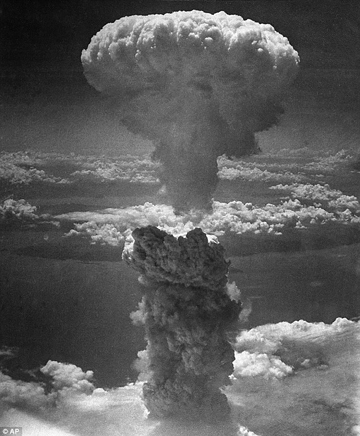 Wigan veteran reveals radiation exposure horror, https://www.wigantoday.net/news/wigan-veteran-reveals-radiation-exposure-horror-1-9425139 ANDREW NOWELL 02 November 2018
 A Wigan veteran has spoken of being a “guinea pig” in nuclear tests on a remote Pacific island and the shocking chapter of British military history being forgotten. Alan Evans was one of thousands of British troops exposed to high levels of radiation while atomic weapons were being tested on Christmas Island.
He spent a year at the desolate spot half the world away when he was just 20 years old and described how the lethal work was carried out with no proper safety equipment and no information about what was happening to them. His experiences left him with life-changing health issues, as half his stomach had to be removed shortly after being demobbed and his teeth were also taken out.
Mr Evans, who is now 80, also spoke of being one of the “forgotten veterans” who went to Christmas Island and says he just wants their experiences to be recognised. Mr Evans, of Lime Street, said: “They just told us we were going to Christmas Island. At 19 years old I thought that was alright. I hadn’t a clue what was going on. “They billeted us in tents all the time we were there and we were allocated these jobs. “I think they detonated five bombs while I was there. When they did everybody had to go down to what they called the port side and sit down with our backs towards the sea. We were only wearing shirts and shorts and a pair of sunglasses.
“When the explosion happened you could feel the heat and you could more or less see through your hands, right to the bones. “We would then be told to stand up and turn around to look out to sea. We could see the mushroom cloud forming. “I was given the job of monitoring people as they came back out of what they called the dirty area. I had a geiger counter if it the reading went up so far they had to have a shower. “We also monitored the pilots because their gear was full of radiation and had to scrub the planes down with brushes.
“We even had to do our laundry in the dirty area. We would clean the clothes there, hang them up to dry and then wear them again. We also buried these lead boxes of samples in a big pit we dug for them.
“We were guines pigs, purely and simply. That’s why we were put there.” Alan had joined the RAF in 1956 and ended up serving for four years, with his year-long stint on Christmas Island coming in 1958. Almost immediately after returning, though, he started to feel unwell but now suspects he encountered a wall of silence from the forces keen to keep the details of the nuclear testing quiet. His condition went downhill dramatically once he returned to civilian life.
He said: “When I got back I had about six months to do so I went to Catterick but I was unwell, I was being sick. I kept going to the medical officer but he kept fobbing me off and saying there was nothing wrong with me. “I was told while I was on home leave that I should demand an X-ray but they told me there was nothing there. “When I got demobbed I went for an X-ray and they found an ulcer in my stomach straight away. “I was in the operating theatre for several hours while they took half my stomach away. When I came round the nurse told me that if I had left it longer before seeking treatment I wouldn’t still be here because it would have burst when they opened me up. “When I came out of the forces I lost four and a half stone. The weight just fell off me. I was always a fit young man playing sport but I couldn’t do anything after I came home. “For the first 12 years of my working life after being demobbed if I did three days a week I was lucky. It takes me five or six hours to digest my food and I can’t eat a lot.” Mr Evans says he was recently heartened to see the issue of the Christmas Island veterans raised in the Wigan Observer by Makerfield MP Yvonne Fovargue.
He feels the story is nowhere near as well known as it should be and points out that Britain has treated those who were exposed to nuclear tests uniquely poorly. He says he has asked his family to continue battling in the future to ensure this particular episode in military history is not forgotten. However, despite his ordeal and the lifelong consequences he suffered as a result he says he feels absolutely no bitterness or anger towards the military. Mr Evans said: “We are the forgotten veterans and we are also the living proof of what happened out there. I spoke to people at the new armed forces hub and even they didn’t know about it. “It wasn’t exactly a war and we didn’t fight with guns so it is forgotten about, although it was almost as bad as being in a war. “I just think there should be recognition of what we have done, those of us left and the many lads who are dead and buried. “I know there’s a push again for us to get a medal but what’s happening with that we don’t know. “Every country in the world has recognised what we went through except Britain. The Isle of Man gave people compensation, but it’s not about the money.
“I’ve nothing against the forces. I would have stayed in but I couldn’t because I was medically unfit. “I enjoyed every minute I was in the military. The only bad thing was Christmas Island.”
“I’ve nothing against the forces. I would have stayed in but I couldn’t because I was medically unfit. “I enjoyed every minute I was in the military. The only bad thing was Christmas Island.”
Electromagnetic radiation from cell-phones is a cancer causer to rats
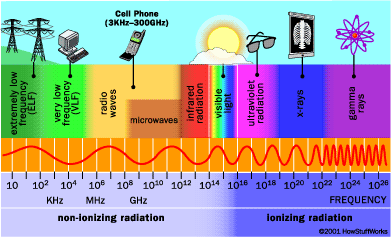
‘Clear evidence’ of mobile phone radiation link to cancers in rats, US health agency concludes
Uncertainty remains about risk to humans who experience much lower radio wave doses, Independent, Alex Matthews-King, Health Correspondent 2 Nov 18, A long-running US study on the effects of radio wave radiation, the sort emitted by mobile phones, has found “clear evidence” of high levels of exposure and heart cancers in male rats.
Some evidence of links to brain and adrenal gland tumours was also found in male rats, but in female rodents and male mice signs of cancer weren’t clear, the National Toxicology Programme (NTP) concluded in its final report on Thursday.
The programme is run by the US Department of Health and Human Services and was tasked with reviewing the toxicity of mobile phone radiation in response to the devices’ near ubiquity in modern life.
Radiation exposure in the trial was well above the levels most humans would experience, but researchers said the findings show the link between radio frequencies and tumours – at least for rats – “is real”.
“In our studies, rats and mice received radio frequency radiation across their whole bodies. By contrast, people are mostly exposed in specific local tissues close to where they hold the phone.
“In addition, the exposure levels and durations in our studies were greater than what people experience.”………..
Study of 120,000 hibakusha atomic bomb survivors shows raised risk of breast cancer
 Study: Atomic bomb radiation raised teens’ risk of breast cancer http://www.asahi.com/ajw/articles/AJ201810270001.html, By SONOKO MIYAZAKI/ Staff Writer October 27, 2018 Women from Hiroshima and Nagasaki who had their first periods around the time of the atomic bombs are at an increased risk of developing breast cancer, a study has found.The findings by researchers from Japan and the United States were released by the Radiation Effects Research Foundation (RERF) on Oct. 15, and published in the U.S. academic journal Radiation Research in the same month. Study: Atomic bomb radiation raised teens’ risk of breast cancer http://www.asahi.com/ajw/articles/AJ201810270001.html, By SONOKO MIYAZAKI/ Staff Writer October 27, 2018 Women from Hiroshima and Nagasaki who had their first periods around the time of the atomic bombs are at an increased risk of developing breast cancer, a study has found.The findings by researchers from Japan and the United States were released by the Radiation Effects Research Foundation (RERF) on Oct. 15, and published in the U.S. academic journal Radiation Research in the same month.
Past studies have revealed patients have a higher risk of breast cancer when they start menstruating earlier or receive doses of radiation in their early years. Alina V. Brenner, a senior scientist at RERF, said the correlation between onset of menstruation and radiation exposure ages and the radiation-derived risk suggests breast tissue is more sensitive to radiation around the emergence of secondary sexual characteristics. In the latest study, RERF tracked 120,000 hibakusha atomic bomb survivors and non-hibakusha, and analyzed radiation doses received and the ages of women suffering from breast cancer when they had their first period. The results showed a 70-year-old woman who first menstruated at the age of 15 and was affected by radiation at 30 has twice as high risk of breast cancer as radiation-free individuals, while the risk for a 70-year-old female survivor who had both a radiation dose and her first period at 15 is 2.4 times higher than non-hibakusha. |
|
Stop the return of women and child evacuees to radioactive parts of Fukushima – UN’s call to Japan
 U.N. rights expert urges Japan to halt women and child evacuee returns to radioactive parts of Fukushima https://www.japantimes.co.jp/news/2018/10/26/national/science-health/u-n-rights-expert-urges-japan-halt-women-child-evacuee-returns-radioactive-parts-fukushima/#.W9PVHmgzbIU
KYODO GENEVA – The Japanese government must halt the return of women and children displaced by the March 2011 nuclear disaster back to areas of Fukushima where radiation levels remain high, a U.N. human rights expert said Thursday.
The special rapporteur on hazardous substances, Baskut Tuncak, also criticized in his statement the government’s gradual removal of evacuation orders for most of the radioactive areas as well as its plan to lift all orders within the next five years, even for the most contaminated areas.
“The gradual lifting of evacuation orders has created enormous strains on people whose lives have already been affected by the worst nuclear disaster of this century. Many feel they are being forced to return to areas that are unsafe,” he said.
An official of Japan’s permanent mission to the international organizations in Geneva rebuffed the statement, saying it is based on extremely one-sided information and could fan unnecessary fears about Fukushima.
Tuncak expressed concerns about people returning to areas with radiation above 1 millisievert per year, a level previously observed by Japan as an annual limit so as to prevent risks to the health of vulnerable people, especially children and women of reproductive age.
“It is disappointing to see Japan appear to all but ignore the 2017 recommendation of the U.N. human rights monitoring mechanism to return back to what it considered an acceptable dose of radiation before the nuclear disaster,” he said.
In the wake of the Fukushima reactor meltdowns, the Japanese government heightened the annually acceptable level of radiation to 20 millisieverts, raising concerns for the health of residents.
In August, Tuncak and two other U.N. human rights experts jointly criticized the Japanese government for allegedly exploiting and putting at risk the lives of “tens of thousands” of people engaged in cleanup operations at and around the crippled Fukushima No. 1 nuclear plant, a claim Tokyo dismissed.
The personal struggle – a rare brain cancer – nothing to do with his radiation exposure at Los Alamos National Laboratory?
 Half Life Chad Walde believed in his work at Los Alamos National Laboratory. Then he got a rare brain cancer, and the government denied that it had any responsibility , Pro Publica, by Rebecca Moss, The Santa Fe New Mexican, 26 Oct 18,“………A Gap Between Records and Recollection
CHAD WAS CLEARED TO RETURN TO HIS JOB at the lab in late January 2015, four months after his diagnosis. He’d undergone radiation and two chemotherapy treatments, and Los Alamos’ occupational medicine staff said he was fit to continue working with classified material, his medical records show. At risk for seizures, he couldn’t drive or climb stairs or ladders. Chad carpooled and had Angela drive him to the laboratory several times a week. His supervisor offered him a desk job, a step down from his managerial role — but one that kept his health insurance running. He accepted. The only real alternative was termination.
Roark says the lab’s goal is to treat all employees with debilitating conditions with “utmost respect” and says when employees are unable to perform the functions of their jobs, Los Alamos “makes reasonable efforts to accommodate them,” which can result in job reassignment.
Separately, to process his claim for cancer benefits, the Department of Labor also told Chad it would need all of his medical and radiation exposure records from the lab. The Department of Labor sends these to the National Institute for Occupational Safety and Health, another federal agency that uses a probability equation to determine if a worker had a high enough dose of radiation to cause cancer. If the computer found a 50 percent or higher correlation, Chad would get benefits.
When the records arrived from Los Alamos, containing a single CD and a brief letter, it was the first time Chad realized that his own experience differed from what the lab had noted in its records.
The lab had found “no records” of Chad having been exposed to anything or other environmental occupational hazards, the letter said. And his dosimetry report, a spreadsheet that showed his total dose of radiation annually, was scant.
The lab had not tracked Chad’s radiation exposure in 1999, his first year on the job, the report indicated, or in 2000, when the Cerro Grande fire burned. External monitoring began in 2001 but showed a clean zero for 11 out of the next 14 years. (Only in 2008, 2013 and 2014 were there any hits on the report.)
The report said his total dose was 0.254 rems over his career, well below safety limits and slightly less than an average person gets from background radiation from the sun and environment in a single year. A rem is a unit used to measure the absorbed dose of radiation, with 1 rem equivalent to a CT scan, according to the Nuclear Regulatory Commission.
Chad marveled at the document. It didn’t track with his memory — or hold any record of the time he’d been called in for going over his limit and accused of taking his badge to the airport, or when he was sent home wearing disposable clothes.
“They aren’t on here,” Chad said when he looked at the document.
It also seemed impossible there were so many years that were completely blank.
Asked about the discrepancy between Walde’s memory and the reports, Los Alamos spokesman Roark said, in general, that the lab “maintains a comprehensive archive of worker radiation dosimetry data” and that it “provides any and all records in response to requests as quickly as possible.”
When NIOSH reviewed the records, it had a simple way to fill in the gaps. For the two years when Chad was not monitored, NIOSH assumed the maximum dose he could have been exposed to was the maximum background radiation at the lab (which was 0.4 rem), adding in the possibility of a couple missed readings.
NIOSH said Chad’s records showed he had been exposed to “various sources of radiation during his employment,” but the maximum dose he could have received at the lab, based on its calculations and assumptions, was a 3.744 rem dose to the brain. The agency modeled his probability for cancer based on how this amount of radiation would affect and mutate cells of the thyroid. It does not have a model for how external radiation might impact brain tissue.
On a phone call with a NIOSH claims representative in September 2015, Chad asked why the agency used general air monitoring data to fill in his missed readings. Chad, who made a recording of the call, said this would fail to account for the radiation present at the more dangerous nuclear areas he had been assigned to.
He told the representative how his badge often took hits. Like he’d told his father-in-law, and his friends, Chad said his boss kept asking him why his readings were “above the reporting levels.”
I “wonder if we are not missing something,” Chad said on the recording. “I also worry about the Los Alamos reporting,” relaying instances in which the lab certified an area free of radiation only to discover contamination later while he was working on a maintenance job. Chad began to talk about something he witnessed at the liquid radioactive waste plant but trailed off, saying, “I don’t know if I am allowed to say any of this stuff — never mind.”
Chad Walde’s radiation shells hang in the garage of his family’s home. The shells help keep the head still while a patient receives radiotherapy. (Adria Malcolm, special to ProPublica)
Stu Hinnefeld, director of the divis Stu Hinnefeld, director of the division of compensation analysis and support for NIOSH, said in an interview that those exposed to radiation have a “relatively low” likelihood of developing brain cancer compared with lung and thyroid cancers. He said the institute’s risk models, as a result, require a worker to have a much higher documented exposure to radiation than many of the other cancers in order to get compensation.
The Department of Labor concluded there was just a 2.67 percent chance his cancer was related to his radiation exposure history. His claim was denied on Jan. 14, 2016.
Chad’s dates of employment made him more likely to be rejected than if he had worked at the lab in a prior era. Overall, the Department of Labor has approved nearly 60 percent of claims filed by Los Alamos workers for cancer and beryllium disease. But for workers who started working at the lab after 1996, that figure falls to 45 percent, according to data requested under the Freedom of Information Act.
A spokesperson for the Department of Labor said, “While gaps in past records have existed at some sites, workers in the modern era have more extensive monitoring records. There are no unexplained gaps or readings in this employee’s radiation dose records.”
Still, Chad wanted to appeal. Over the next year, he would undergo another surgery and start experiencing frequent seizures, at one point spending two days in a coma in Texas, where the family had traveled for the twins’ volleyball tournament, when the spasms refused to subside. The family held “Gray Be Gone” fundraisers, referring to the color of the tumor tissue, to raise money to send Chad to MD Anderson for treatment. He also started clinical trials with a doctor in New Mexico.
During that time, Chad learned that he was not the only person at Los Alamos who thought missing records had led the Department of Labor to deny a claim.
For more than a decade, workers at Los Alamos have been telling federal officials that similar data and records problems have prevented them from getting compensation. In June 2005, at a NIOSH forum for the lab’s technical workers’ union, one worker said the lab “had lied and falsified documents right and left … the monitors were turned off, people weren’t qualified to be doing the monitoring, the equipment was never calibrated,” according to meeting minutes.
Another man, an X-ray technician, said his personal radiation badge always showed up with zero contamination.
Falsified radiation data or medical records have been documented at other labs, including in 2003 at Savannah River Site in South Carolina and Hanford Site in Washington state. Radiation records also were falsified at an Ohio nuclear facility in 2013. The Department of Energy fined lab managers in South Carolina and Ohio more than $200,000 each for “willful falsification.”
Los Alamos has not been fined for willful falsification of health records, but it has been cited within the past year for serious safety violations and for failing to check laboratory rooms for toxic chemicals before allowing workers to enter. Internal incident reports from the early 2000s, obtained by NIOSH, described how records had been removed from radiation log books, “deliberate tampering” with nasal swipe samples (used to test if a worker inhaled radioactive particles) and problems with workers not wearing their radiation badges.
Soon after Chad’s diagnosis, another electrician on his crew, Cesario Lopez, told Chad he’d recently had part of his kidney taken out after being diagnosed with cancer. Both Lopez’s mother and uncle, who worked at the lab before him, had been diagnosed with cancer, too. Lopez applied for and was denied compensation by the Department of Labor but has appealed.
Then Chad learned about his friend Gilbert Mondragon. Mondragon started working as an electrician on the fire protection crew in August 1999, three months before Chad. Mondragon was just 19 and from the beginning saw Chad as a mentor. Chad, he said, taught him how to have a good attitude at work and find value in it. That became harder after Mondragon was diagnosed with kidney cancer in the spring of 2014 at the age of 34.
Like Chad, Mondragon’s radiation report showed 14 straight years of zeroes, and only two years, 2006 and 2007, in which his badge took any hits, totaling 67 millirems of radiation over 16 years.
“It’s not like people think it is,” Mondragon said about lab safety. He, like Chad, recalled several times he’d been decontaminated and given new work clothes or boots.
Mondragon believes some of the zeroes are also the result of being told, by his supervisors, to take his badge off when he was doing work in contaminated places. “Now I know better,” he said, “but it’s too late.”
Roark, the lab spokesman, denies workers were ever told to remove their badges, saying its “Radiation Protection Program would never allow, endorse or recommend removing dosimeters to avoid contamination.”
Ken Silver, who sits on a Department of Labor advisory board and is a professor of environmental health at East Tennessee State University, testified before Congressin 2007 that instructing workers to remove their radiation badges was a common practice for “cleanup crews” at Los Alamos in the past. Silver said this practice was based on the belief that if a badge was contaminated, workers would go on to spread radiation throughout the laboratory, which he called a “flimsy assumption.”
Los Alamos officials did not testify at the hearing. But the lab says its rate of injuries has dropped significantly since 2006 and is well below the industry average. The laboratory says it does not track the cause of death for its employees.
Hinnefeld said NIOSH has looked into allegations that workers were told to remove their badges and, “We hear that on occasion.” But he said, in the past, officials have concluded that this wouldn’t affect how the agency reconstructs a worker’s radiation exposure because a single missed reading is unlikely to hold much weight in the overall career of a worker.
Diagnosed with chronic obstructive pulmonary disease and asthma, which his physician has linked to chemical exposure, Mondragon resigned from the lab this winter. The doctors’ visits have consumed his life. His cancer claim, like Chad’s, also was rejected by the Department of Labor, but he was told he would likely be accepted if he were to develop another cancer.
For the last six months, he has relied on the help of an oxygen tank to breathe, trailing a long, green plastic tube wherever he goes…..more https://features.propublica.org/los-alamos/chad-walde-nuclear-facility-radiation-cancer/
Medical staff need to be more aware of cancer risks in nuclear medicine
 Strategies needed to address radiation exposure risks during venous procedures, Venous News,
Black indicated that there has been an increase in treatment options for deep vein thrombosis (DVT) in particular and for chronic venous patients over the last few years. While the advances are exciting, it is easy to forget that they come with potentially harmful side effects. Black compared modern venous procedures with endovascular aneurysm repair (EVAR), drawing particular attention to the young age at which venous patients typically require treatment, corresponding with a much longer lifetime of follow-up and potential reintervention procedures.
“It is important to highlight the potential for harm in this patient group who are an average age of 30–40 years, as opposed to the older patients who typically undergo EVAR, for example. The EVAR 1 trial reported an increased incidence of malignancy in patients treated endovascularly after 15 years follow-up. Patients who need thrombolysis or inferior vena cava (IVC) reconstruction are often younger than those with arterial problems and may also require long-term surveillance and secondary interventions, exposing them to further radiation,” Black pointed out.
To investigate the radiation exposure associated with venous procedures, Black and colleagues conducted a retrospective cohort study of patients with symptomatic ilio-femoral deep vein thrombosis and chronic IVC reconstruction, followed for a minimum of one year in order to capture reintervention data. Estimated radiation exposure from the related preoperative, index and postoperative interventions were measured in dose-area product and fluoroscopy time. ………
He concluded, adding that more needs to be done to raise awareness about the importance of reducing radiation dose wherever possible, and maintained that more strategies, such as the use of IVUS, need to be identified and put into practice. https://venousnews.com/radiation-exposure-risks-during-venous-procedures/
Chad Walde believed in his work at Los Alamos National Laboratory. Then he got a rare brain cancer
Half Life Chad Walde believed in his work at Los Alamos National Laboratory. Then he got a rare brain cancer, and the government denied that it had any responsibility. Pro Publica, by Rebecca Moss, The Santa Fe New Mexican, 26 Oct 18, “……..That unanswered question — what killed Chad Walde? — nagged at Angela.There had been other funerals, even that month, for other people who had worked at Los Alamos, one of the nation’s most important nuclear weapons laboratories. Several, like Chad, had died of cancer. Others had thyroid diseases and breathing problems, and they suspected that some of the maladies might stem from contaminated work environments or from the large fire that burned through the vast lab property in 2000. Nobody knew for sure if the illnesses were connected to work at the lab, but they wondered.
For decades, Los Alamos had been criticized for sacrificing workers’ health and safety in the name of atomic progress. In 1999, Bill Richardson, the energy secretary, acknowledged that nuclear sites had concealed information and “sent many of our workers into harm’s way.” He said the government intended to “right the wrongs of the past.” Then, in 2000, Congress passed a compensation act, offering medical benefits and payouts for workers with radiation-related cancers and other occupational ailments. But the government, and Los Alamos in particular, has said that those lapses were in the past, and that they have put in place rules and practices to protect safety. The lab says radiation exposures have been “consistently recorded” over many decades.
Despite these pledges, Chad and his co-workers said safety problems continued. They witnessed accidents and heard the sudden, unexpected blare of radiation alarms. They watched crews come in to decontaminate buildings and run radiation detectors over their hands and feet. They had their limbs scrubbed and clothing replaced. Sometimes days would pass before anyone realized contamination had spread. Many workers say their memories of poor work conditions and high personal radiation readings don’t match the government’s scant records .
Angela Walde poses for a portrait inside her home in Albuquerque, New Mexico. (Adria Malcolm, special to ProPublica)
In addition to Chad, at least four others on his maintenance crew had been diagnosed with cancer in the past five years.
Before his death, Chad filed a claim for federal benefits, joining more than 1,400 people who said they became sick from radiation exposure for work done within the last 20 years at the lab, according to data obtained by the Santa Fe New Mexican under the Freedom of Information Act. An additional 335 dead workers also had claims filed on their behalf.
Angela would later discover that Chad’s personnel file contained little mention of the radiation exposures and no record of the safety scares her husband had told her about over the years.
Now, in the church, she listened to the country music playing softly and to the minister in prayer. After his treatments, Chad would laugh and tell his friends, “I get more radiation sitting in my office at Los Alamos.” Even when he was suffering and in pain, he would smile and say he was living the dream.
Looking at his closed coffin, Angela wished she could go back 18 years and tell him to find a different job, far from laboratories and nuclear weapons.b
A New Career, and the Risk of Radiation
ON HIS FIRST DAY OF WORK AT LOS ALAMOS, Chad Walde got dressed in the dark. It was the fall of 1999 and a week before his 27th birthday. The drive from Albuquerque to Los Alamos took nearly two hours, and as he got on the highway in a small, white Ford Escort, just after 5 a.m., the hulking peaks of the Sandia Mountains would have been cast in silhouette.
The town of Los Alamos was just beginning to stir around the time he arrived. Log cabins preserved from the government’s military takeover during World War II mingled with modern buildings. The roads had been named after famous scientists and atomic testing grounds. Trinity Drive. Bikini Atoll Road. Oppenheimer Drive. Gamma Ray. When he reached the white laboratory gates, lines of cars had already begun to form, each stopping at booths to present armed guards with ID.
Inside, Chad was issued a special Z number, unique to each employee at Los Alamos, which would become a proxy for his identity there. In the days to come, he underwent several medical exams and was asked to detail any prior exposure to 81 hazardous radionuclides, explosives, chemicals, gases or lab animals. He circled no to each. He wasn’t perfect: He smoked, drank intermittently and, for a man over 6 feet tall, was overweight. A doctor found no abnormalities on his head, eyes, heart, lungs, thyroid, limbs or spine. His bloodwork came back normal.
Chad was still adjusting to life as a civilian. He had left the Navy four months earlier and moved his family back to Albuquerque, where he’d been working odd jobs as an electrician. After four years on the USS Lake Champlain, sailing to ports in the Middle East and Asia, Chad still missed the sea, the way the sun turned red as it set in the middle of the ocean. Now, he’d be working at a hallowed place. And, making $22 per hour, he’d earn more than he ever had in his life.
Chad knew about the lab’s historic role in creating the first atomic bombs, but little else. He didn’t know that its nuclear mission had come with a human toll.
Employees of the complex had long complained of health problems, but quietly, often only to friends and families. Speaking ill of the lab was considered by some as anti-American, and some whistleblowers said they were often ostracized by colleagues and pushed out or fired for reporting problems. Most who’ve sought state workers’ compensation over the years for illnesses they attributed to their work at the lab have had their claims aggressively challenged in court.
Out of a fear of liability, the famed nuclear scientist J. Robert Oppenheimer, who served as the lab’s first director, mandated that health records be labeled top secret, according to a memo written by his colleague in 1946 and declassified in the 1990s………more https://features.propublica.org/los-alamos/chad-walde-nuclear-facility-radiation-cancer/
U.S. EPA removes a uranium safety regulation, in interests of mining profits
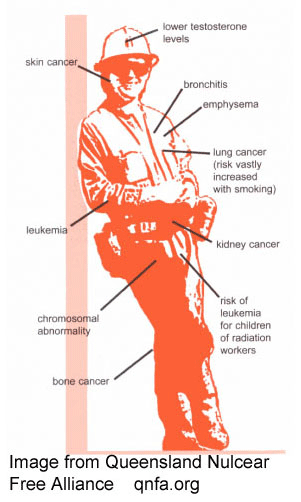 US EPA withdraws Obama administration uranium safety regulation Mining Technology, By
 The US Environmental Protection Agency (EPA) has withdrawn a uranium safety proposal introduced in the last days of the Obama administration that would have introduced tighter regulation for uranium mill tailings to minimise the dangers of uranium extraction.
Uranium mill tailings are sandy materials produced as a by-product of uranium mining, which contain radioactive elements. The US Nuclear Regulatory Commission (NRC) states that only waste products produced by surface operations, such as in-situ recovery and ion exchanges, can be considered mill tailings, unlike waste materials left behind underground when ore bodies are depleted.
As a result, mill tailings can pose a threat to people, animals and the environment in the vicinity of a uranium mine, with water sources particularly vulnerable to surface waste.
Uranium operations in the US are governed by the Uranium Mill Tailings Radiation Control Act, which places responsibility for the regulation and disposal of mining waste with individual states, rather than the NRC.
The Obama-era proposition sought to give the NRC greater authority over tailings regulation and removal, and would have addressed an imbalance in the number of states that regulate their own waste and those which rely on the NRC for guidance.
Currently, just 13 states defer to the NRC for tailing regulation……
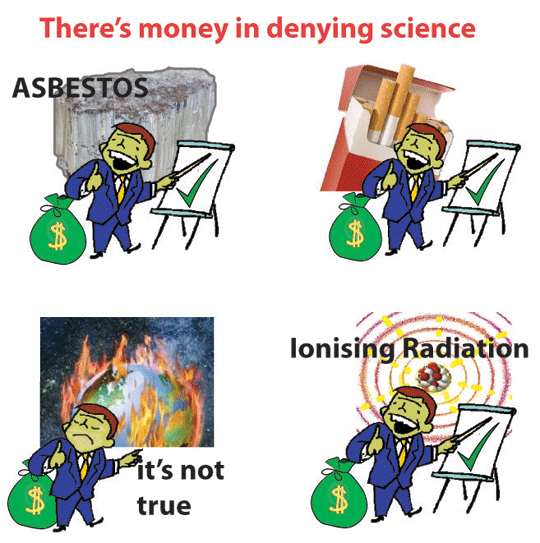
There’s money in denying the science about ionising radiation – it’s useful nuclear lobby spin
Recently, the National Council on Radiation Protection and Measurements (NCRP) – scientists who provide guidance and recommendations on radiation protection under a mandate from Congress – supported the LNT model. NCRP analyzed 29 epidemiological studies and found that the data was “broadly supportive” of the LNT model and that “no alternative dose-response relationship appears more pragmatic or prudent for radiation protection purposes.”
In fact, the National Academies’ Nuclear and Radiation Studies Board, the International Council on Radiation Protection, and other international bodies and regulators all use the LNT model for guidance and radiation protection.
Why radiation protection experts are concerned over EPA proposal https://theconversation.com/why- radiation-protection-experts-are-concerned-over-epa-proposal-104895
 radiation-protection-experts-are-concerned-over-epa-proposal-104895
 Scientist-in-Residence and Adjunct Professor, Middlebury Institute of International Studies at Monterey, October 19, 2018 The Takata Corporation sold defective air bag inflators that resulted in the death of 16 people in the United States and a massive recall of cars. While it was rare for the air bags to fail, the brutal consequences of this defective device in even minor collisions was easy to recognize. But the effects of low-dose ionizing radiation – high energy waves or particles that can strip electrons from atoms and physically damage cells and the DNA within – on people’s health is much harder to see, and prove.
When the Associated Press reported that the Trump administration’s Environmental Protection Agency solicited the advice of a controversial toxicologist, Edward Calabrese, to consider changes to how it regulates radiation, it sent shock waves through the radiation protection community. Calabrese is well known for his unconventional and outlying view that low-dose radiation is not dangerous.It is important to note that the health effects of high doses of radiation are well established. We all know about the horrific effects based on studies of the populations of Hiroshima and Nagasaki after the atomic bombs were dropped. Then there was also the recent case of Russian defector Alexander Litvenenko who quickly sickened and died 23 days after being poisoned with the radioactive isotope polonium-210 in 2006.However, the effects of low doses of radiation are not well understood. Part of the reason is that these low doses are difficult to measure.
When the Associated Press reported that the Trump administration’s Environmental Protection Agency solicited the advice of a controversial toxicologist, Edward Calabrese, to consider changes to how it regulates radiation, it sent shock waves through the radiation protection community. Calabrese is well known for his unconventional and outlying view that low-dose radiation is not dangerous.It is important to note that the health effects of high doses of radiation are well established. We all know about the horrific effects based on studies of the populations of Hiroshima and Nagasaki after the atomic bombs were dropped. Then there was also the recent case of Russian defector Alexander Litvenenko who quickly sickened and died 23 days after being poisoned with the radioactive isotope polonium-210 in 2006.However, the effects of low doses of radiation are not well understood. Part of the reason is that these low doses are difficult to measure.
Current understanding of the health effect of radiation relies primarily on a decades-long study of the survivors of the Hiroshima and Nagasaki atomic bomb attacks. That population was exposed to a one-time large dose of radiation, with individual exposure dependent on where they were at the time of the explosion.
In those high-dose radiation studies, researchers found that there is a proportionate relationship between dose and effect. The way the EPA gauges the effect of low doses of radiation draws from these studies as well as studies following other incidents. The current guidelines for the EPA adhere to what is called the linear no-threshold (LNT) model, which implies that even low doses of radiation have an effect across a population. Some scientists dubbed it to be a “reverse lottery,” where an unlucky few within a given population will get cancer during their lifetime due to their exposure to radiation.
There have been questions as to whether the LNT model is appropriate for measuring cancer risk from low doses of radiation. That’s because when the radiation-induced cancer rate is low, and the sample size is small, there is more statistical uncertainty in the measurement. This allows more wiggle room in putting forward alternative dose- response models such as Calabrese’s, which have little scientific backing but that promise financial benefits for regulated industries.
Overall, the general feeling in the radiation protection community is that for now until new research proves otherwise, the LNT model, because of the lack of understanding of the effect of low doses, is the prudent model to use to set protective limits.
Also, not being able to determine the effect of a low dose of radiation is a problem in measurement, not in the underlying linear threshold model. As doses of radiation decrease, fewer cases of radiation-induced cancers occur, making it more difficult to identify those specific cases.
This is especially true given that cancer is already a common occurrence, making it nearly impossible to disentangle radiation exposure from many other potential cancer risk factors. This is where the analogy with Takata air bags fails, because it is not possible to prove that a specific cancer death is due to ionizing radiation, but this does not make it any less real or significant.
Who profits if radiation guidelines change
The EPA issues guidance and sets regulations to “limit discharges of radioactive material affecting members of the public” associated with the nuclear energy industry. The EPA defines what radiation levels are acceptable for a protective cleanup of radioactive contamination at Superfund sites. It also provides guidance on the levels of radiation exposure that would trigger a mass evacuation. It is not surprising that certain stakeholders would welcome modifications in EPA assessment of low-dose radiation exposure given the high costs involved in preventing or cleaning up sites and in compensating victims of such exposure.
Recently, the National Council on Radiation Protection and Measurements (NCRP) – scientists who provide guidance and recommendations on radiation protection under a mandate from Congress – supported the LNT model. NCRP analyzed 29 epidemiological studies and found that the data was “broadly supportive” of the LNT model and that “no alternative dose-response relationship appears more pragmatic or prudent for radiation protection purposes.”
In fact, the National Academies’ Nuclear and Radiation Studies Board, the International Council on Radiation Protection, and other international bodies and regulators all use the LNT model for guidance and radiation protection.
From my perspective, as someone who has worked with radioactive sources, the EPA should be cognizant of the warning by the late Harvard sociologist Daniel Yankelovich that just because an effect can’t be easily quantified does not mean it is not important or does not exist.
Genetic effects on UK soldiers – ‘guinea pigs’ at nuclear bomb tests in Australia in 1950s
 UK to probe poisonous genetic legacy of nuclear test ‘guinea pigs’ SMH, By Nick Miller, 19 October 2018 London: The UK government is considering a new study into the health of the children of British veterans used as guinea pigs in its Australian and Pacific nuclear weapons tests, to test fears of a poisonous genetic legacy.
If a link can be found it may form the basis of a claim for compensation from the UK government, despite courts previously turning down such claims from the veterans themselves.
Defence Secretary Gavin Williamson has told officials in the Ministry of Defence to look at the feasibility of a study into the health and well-being of the children of nuclear test veterans, an MOD spokesman said.
Decades ago, around 22,000 British military personnel witnessed nuclear weapons tests in South Australia, on the Montebello Islands off Western Australia, and on Kiribati’s Christmas Island in the Pacific.
Some felt the heat of the explosion on their backs and were ordered to turn around and observe the mushroom cloud. One veteran told the BBC in February the tests “bowled people over” and left them on the ground screaming. He had watched “another sun hanging in the sky”, dressed only in a t-shirt, shorts and thongs.
“We were guinea pigs,” Bob Fleming, 83, said. He said 16 of his 21 children, grandchildren and great-grandchildren had birth defects or health problems: his youngest daughter has thyroid problems and severe breathing difficulties.
The family believe it is a result of the radiation Mr Fleming was exposed to during the test.
Another veteran, RAF sergeant Roy Kirkland, slept a half a mile from Ground Zero and was ordered to collect dead seabirds from the Christmas Island test site.
His grandson, Wayne, was diagnosed with cancer of the nervous system at age three and died before he was 10. Wayne’s aunt told the Daily Mirror “the biggest health issue for these veterans now is their descendants”.
The new feasibility study follows a campaign by the Mirrorand Labour deputy leader Tom Watson, who have been pushing for recognition and compensation for the veterans who were exposed to radiation during the tests in the region between 1952 and 1967 – and their families.
In 2007 a study of New Zealand nuclear test veteransfound they had more than double the expected amount of genetic damage for men of the same age – even higher than that detected in workers close to the Chernobyl nuclear accident or involved in the clean-up.
The study by researchers from Massey University found the genetic damage was most likely attributable to the veterans having been on board NZ navy frigates observing nuclear tests at Christmas Island.
Britain’s Health Protection Agency reviewed the Massey research and agreed with their conclusions. Earlier this year the UK’s Centre for Health Effects of Radiological and Chemical Agents at Brunel University in London announced a three-year genetic study looking for any possible damage to the veterans’ DNA caused by the tests.
In 2014 a study by European researchers found a “significant excess” of infant mortality and congenital illnesses in nuclear test veterans’ children. The veterans’ wives had five times as many stillbirths, and 57 children of veterans had congenital conditions – ten times the rate in the control group and eight times the national average. There were also significantly higher congenital illnesses – and cancer – among the veterans’ grandchildren. The researchers said their results were “highly statistically significant”. …….. https://www.smh.com.au/world/europe/uk-to-probe-poisonous-genetic-legacy-of-nuclear-test-guinea-pigs-20181019-p50alz.html
Gender and radiation impact project
“For too long, girls and women have been invisible in the construction of radiation standards to protect heath. We are ready to expand the research base and collective will to change this – starting right now.”
— Mary Olson, Founder
THE BASICS
It is widely known that ionizing radiation – radioactivity powerful enough to strip electrons from atoms, break chemical bonds of molecules, and even break chromosomes – can be extremely harmful to humans. Even at low levels, ionizing radiation has the potential to cause DNA damage resulting in an uncontrolled division of abnormal cells, or what is commonly known as cancer.
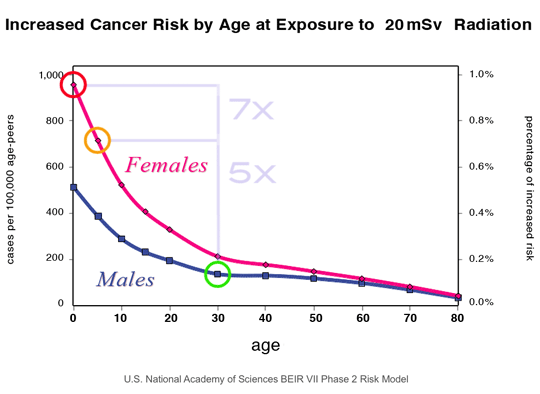
While this public health threat impacts us all, the risk is dramatically greater for women and girls.
For every two men who develop cancer through exposure to ionizing radiation, three women will get the disease.Further, while children as a whole are more harmed by radiation than adults, infant and young girls, when exposed, run the highest risk of cancer across their lifetime, and teenage girls will suffer almost double rates of cancer compared to boys in the same juvenile group and the same level of exposure.
The information above, derived from data contained in the 2006 National Academy of Sciences Report Biological Effects of Ionizing Radiation VII, or BEIR VII, clearly shows that gender is a major factor in determining who suffers harm from exposure to ionizing radiation, yet this fact has not been widely reported and is not reflected in regulations or practice.
Yet, there is reason to hope. With the participation of 135 nations, the preamble of the 2017 UN Treaty on the Prohibition of Nuclear Weapons was written to include the following stanza:
Cognizant that the catastrophic consequences of nuclear weapons cannot be adequately addressed, transcend national borders, pose grave implications for human survival, the environment, socioeconomic development, the global economy, food security and the health of current and future generations, and have a disproportionate impact on women and girls, including as a result of ionizing radiation… (emphasis added)
The fact this treaty was crafted to include language referring to impact on girls and women demonstrates we have a window to examine why this is the case, which will lead to better and healthier solutions for everyone.
It is time to ask the right questions and educate the public about the policy and lifestyle choices related to ionizing radiation.
A false reference: “acceptable” radiation risks set as they affect adult men, not women, not children
 It’s Time to Retire Reference Man https://www.genderandradiation.org/blog/2018/9/4/its-time-to-retire-reference-man– Mary Olson, 17 Oct 18 Our species split atoms on purpose in 1942. Since then, few have looked back.
Weapons of Mass Destruction, energy that was supposed to be too cheap to meter which has produced more than 100,000 metric tons of waste with the potential to poison all the waters on the Blue Planet Earth, and may, in the end cost more than the electricity it made. We did all that before anyone noticed that radiation is more harmful to women, compared to men, and way more harmful to little girls than boys, and compared to men there is a whole order of magnitude greater harm to girls than to the men that regulators chose as the baseline for all regulations and risk-assessments.
Now analysts have noticed that gender, or more specifically, biological sex is a factor in harm from radiation. This discovery was made when examining the data-set used by the world to establish radiation standards—the Life Span Study data from people who survived the US nuclear attacks on Japan in 1945.
It is unconscionable that the first nuclear weapons were used, on cities full of people. And the fact that happened, and the aggressors decided to study the radiation impact, resulted in the creation of a data-set of more than 100,000 people, that includes people of both sexes and who were all ages (birth to 80) at the time of the bomb.
I sometimes say, in the atomic ashes of Hiroshima and of Nagasaki was hidden a very important message for us all…that a mistake was made: someone thought that only military males would be exposed to fission products. No one ever stopped to evaluate that assumption when hundreds of nuclear power reactors, nuclear fuel factories, nuclear weapons factories, uranium processing factories and hundreds of thousands of uranium mines were opened, and the standards made for the adult man were extended to the general population.
The mistake was not only that regulations based on men were used for the entire human lifecycle—it is that the very decisions to make nuclear weapons and generate nuclear electricity were made without the decision-makers understanding that the risk-assessments are off by a factor of ten, or more.So, we looked at the data from Hiroshima and Nagasaki and we found a pattern that has been ignored:
- Boys exposed in childhood cancers over lifetime
- Girls exposed in childhood 2x more cancers over lifetime than boys
- Men exposed in young adulthood à cancer / fatal cancer
- Women exposed in young adulthood à 1.5x more fatal cancer than men
- AND when women who were exposed as girls are compared to men: 10 times more cancers over their lifetime
Regulators say that girls are a “sub-population” – but that is a false construct that comes from not being trained in life-science. Girls are a part of the human lifecycle!
But all of the regulations governing nuclear operations, medical and dental exposures, assumptions about high-altitude air travel and levels of radon in homes are based on the “Reference Man.” How do we change that?
Today, there are three papers, and several presentations that tell this story about gender and radiation.
That is not enough. In order to change medical practices, policy recommendations and decisions, the first thing that is needed is a body of published literature telling the story. In order for top researchers working on radiation today to add questions on gender and radiation, they need additional capacity. Funding for post-docs and graduate and medical students will enable them to tackle these new questions.
Gender and Radiation Impact Project is dedicated to functioning as a catalyst, or a fairy god-mother, to fund initial study of why and how biological sex and life-cycle stage impact outcome of radiation exposure.
We believe that by providing a spark, the fire will build, and that mainstream funders will see the merit in this work, and that the work will grow to provide a solid basis for a policy review.
In addition, we will be raising a much-needed new generation of experts.
I hope you are as ready as I am.
“Transparency”- the Trump administration’s dirty trick to strangle access to reputable science on nuclear radiation
Yes, radiation is bad for you. The EPA’s ‘transparency rule’ would be even worse. The Trump administration wants to strangle access to reputable science. https://www.washingtonpost.com/outlook/2018/10/08/yes-radiation-is-bad-you-epas-transparency-rule-would-be-even-worse/?noredirect=on&utm_term=.b7e530a79729 By Audra J. Wolfe, 8 Oct 18 Audra J. Wolfe is a Philadelphia-based writer, editor, and historian. She is the author of Freedom’s Laboratory: The Cold War Struggle for the Soul of Science.
Last Tuesday, a headline from the Associated Press sparked outrage in the ordinarily quiet world of science policy. The Environmental Protection Agency, the story suggested, was considering relaxing guidelines for low-dose ionizing radiation, on the theory that “a bit of radiation may be good for you.” Within hours, the AP had issued a correction. As it turned out, the EPA was not, after all, endorsing hormesis, the theory that small doses of toxic chemicals might help the body, much like sunlight triggers the production of vitamin D.
Instead, the EPA was doing something much scarier: It was holding hearings on the “Transparency Rule,” which would restrict the agency to using studies that make a complete set of their underlying data and models publicly available. The rule is similar to an “Open Science” order issued by the Interior Department last month, and incorporates language from the HONEST Act, a bill that passed in the House in 2017 but later stalled in the Senate. The HONEST Act originally required that scientific studies provide enough data that an independent party could replicate the experiment — which is simply not realistic for large-scale longitudinal studies.
Although these rules cite the need to base regulatory policy on the “best available science,” make no mistake: They aim to strangle access to reputable studies.
The Transparency Rule continues the Trump administration’s pattern of anti-science policies. The White House’s Office of Science and Technology Policy is a ghost town, with most of the major positions, including the director’s post, vacant since January 2017. Agencies and departments across the board, including the State Department and the Agriculture Department, are dropping their science advisers and bleeding scientific staff. It’s getting harder and harder for federal rulemakers to access expertise.
Understanding what’s wrong with “transparency,” at least as defined by these policies, requires a closer look at how scientists work. Let’s say you’re trying to understand the health effects of a one-time, accidental release of a toxic chemical. This incident might be epidemiologists’ only chance to investigate how this particular chemical interacts with both the air and the humans who breathe it, at varying doses, over a period of time. No matter how careful your approach, your study would fall short of the replicability standard.
You wouldn’t have baseline health information for the specific people who happened to be in the area. You might not have information on which residents had air filtration systems installed in their homes, or which residents were working outside when the incident took place. Your early results would, by definition, reflect only short-term health outcomes, rather than long-term effects. And you couldn’t replicate the study (with better controls) without endangering the health of thousands of people. In such cases, scientists have to extrapolate from existing, sometimes imperfect, data to protect the public.
Epidemiologists have community standards, including peer review, to evaluate these kinds of studies. A careful, peer-reviewed study of this hypothetical incident might well represent the “best available science” on this particular chemical. Regulators might rely on this study to establish the permissible levels of this chemical in the air we breathe. But now, let’s also say that this study took place 30 years ago. The leading scientists involved are dead, and no one kept their files. The raw data are, effectively, lost. Should scientists at the EPA be blocked from using the study?
Despite what made last week’s headlines, the EPA’s Oct. 3 hearing went beyond radiation. In fact, its lead witness, University of Massachusetts toxicologist Edward Calabrese, barely mentioned his theory of radiation hormesis. Instead, his testimony argued that the EPA should no longer rely on linear no-threshold (LNT) models for any number of hazards, including toxic chemicals and soil pollutants. In toxicology, LNT models assume that the biological effects of a given substance are directly connected to the amount of the exposure, with no minimum dose required. Radiation protections standards are based on LNT models; so are basic regulations involving ozone, particulate pollution, and chemical exposure.
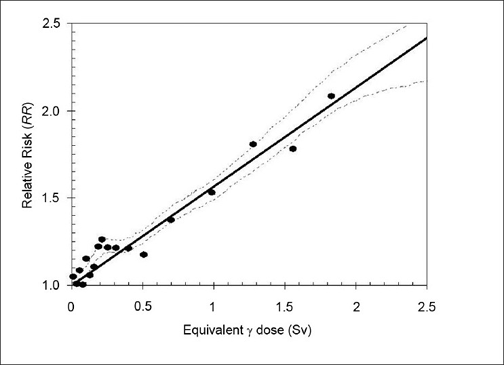
The original studies asserting a LNT model for low-dose ionizing radiation were conducted in the 1950s. Like our hypothetical epidemiologist investigating a toxic chemical release, the geneticists who tried to understand the biological effects of atomic radiation were working with imperfect data, much of which is no longer available. The concept of a “comprehensive data management policy” simply did not exist in 1955. These particular studies were primarily based on survivors of the atomic bombing of Hiroshima and Japan. The scientists also extrapolated from high-dose exposure data in fruit flies and mice and from unethical high-dose experiments conducted on humans.
These studies are imperfect, but focusing on their limitations misses the broader scandal. These studies took place during the heyday of atmospheric nuclear weapons testing, an era when both the United States and the Soviet Union were pumping the atmosphere full of radioactive nucleotides. Some of the areas near the testing zones received so much radiation that they are still uninhabitable today. The tests coated the entire planet with a scrim of radiation. The Atomic Energy Commission, the agency in charge of the United States’ nuclear weapons program, didn’t even attempt to investigate the potential health effects of this constant, low-dose exposure to ionizing radiation on the world’s population. Studies of low-dose radiation were expensive, inconvenient, and politically risky, potentially jeopardizing the weapons testing program and therefore the United States’ ability to fight the Soviet Union. From the government’s perspective, it was better not to know.
This week, a sensational headline distracted us from a broader crisis. Without government support for research of environmental hazards, the public’s health is left to either the whims of industry researchers, who have a strong incentive to play down their dangers, or to public advocacy groups, which are too easily smeared with charges of anti-industry bias. The “transparency” movement supposedly resolves this crisis of authority by giving the public access to the underlying data on which science is based, but it ignores the power dynamics that determine which research questions get asked, and why and how they’re answered.
In the past, Americans looked to their federal science agencies and science advisers to resolve these sorts of disputes. But a few weeks ago, the EPA announced that it, too, would be eliminating its Office of the Science Adviser. With the science offices empty, who will decide?
There is one bright spot in all of this: On Sept. 28, bipartisan legislation authorized the Energy Department to restart its low-dose radiation research program. But what about the other pollutants that the EPA supposedly regulates? Who will produce the kinds of science deemed acceptable under the “transparency” rule?
“Transparency” has become another way to cultivate institutional ignorance. Americans deserve better from the agencies that are supposed to protect them. In the case of environmental hazards, what you don’t know can hurt you.
Genetic changes in children of soldiers who were exposed to ionising radiation

|
Typical mutations in children of radar soldiers https://www.sciencedaily.com/releases/2018/10/181005111447.htm, October 5, 2018
|
|
|
1 This Month



4 August – WEBINAR – Hiroshima & Nagasaki: Nuclear Bombs Never Again
Tuesday, Aug. 4 at 5 pm PT / 8 pm ET.
Aug 5, 2026 10:00 AM in Australia/Melbourne
Join the Nuclear Bombs Never Again webinar on August 4th at 5pm Pacific Time / 8pm Eastern Time / 9am Japan Standard Time.
Cross generational voices at the intersection of Japan-Korea-US policy and militarization will share their lived experiences, nuclear impacts in these contexts, anti-war strategies, and actions you can take to advocate for a world with Nuclear Bombs Never Again. This 75-minute event is co-hosted by WILPF US and Korea Peace Now.

22,000+ miles voyaging for nuclear disarmament
and a radiation-free environment https://vfpgoldenruleproject.org/
To see nuclear-related stories in greater depth and intensity – go to https://nuclearinformation.wordpress.com
-
Archives
- July 2026 (294)
- June 2026 (287)
- May 2026 (306)
- April 2026 (356)
- March 2026 (251)
- February 2026 (267)
- January 2026 (308)
- December 2025 (358)
- November 2025 (359)
- October 2025 (375)
- September 2025 (257)
- August 2025 (319)
-
Categories
- 1
- 1 NUCLEAR ISSUES
- business and costs
- climate change
- culture and arts
- ENERGY
- environment
- health
- history
- indigenous issues
- Legal
- marketing of nuclear
- media
- opposition to nuclear
- PERSONAL STORIES
- politics
- politics international
- Religion and ethics
- safety
- secrets,lies and civil liberties
- spinbuster
- technology
- Uranium
- wastes
- weapons and war
- Women
- 2 WORLD
- ACTION
- AFRICA
- Atrocities
- AUSTRALIA
- Christina's notes
- Christina's themes
- culture and arts
- Events
- Fuk 2022
- Fuk 2023
- Fukushima 2017
- Fukushima 2018
- fukushima 2019
- Fukushima 2020
- Fukushima 2021
- general
- global warming
- Humour (God we need it)
- Nuclear
- RARE EARTHS
- Reference
- resources – print
- Resources -audiovicual
- Weekly Newsletter
- World
- World Nuclear
- YouTube
-
RSS
Entries RSS
Comments RSS
 nuclear-news