On this warming planet, mosquito-borne diseases are increasing
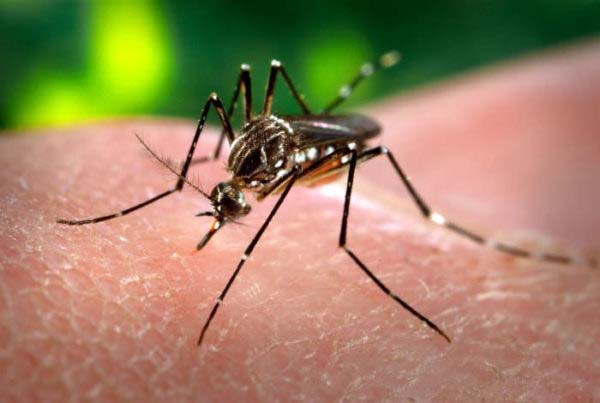 Climate Change Will Expose Half of World’s Population to Disease-Spreading Mosquitoes By 2050 https://e360.yale.edu/digest/climate-change-will-expose-half-of-worlds-population-to-disease-spreading-mosquitoes-by-2050 MARCH 5, 2019 Scientists and public health officials have documented an increasing number of outbreaks of mosquito-borne illnesses across the globe in recent years, including yellow fever, dengue, chikungunya, and Zika. Now, an international team of researchers has found that by 2050, two key disease-spreading mosquitoes — Aedes aegypti and Aedes albopictus — will significantly expand their range, posing a threat to 49 percent of the world’s population.
“If no action is taken to reduce the current rate at which the climate is warming, pockets of habitat will open up across many urban areas with vast amounts of individuals susceptible to infection,” said Moritz Kraemer, an infectious disease scientist at Boston Children’s Hospital and the University of Oxford and a co-author of the new research, published in the journal Nature Microbiology,.
The researchers analyzed historical distribution data from more than 3,000 locations in Europe and the United States, dating back to the 1970s. They then modelled future distribution using projections for climate change, urbanization, and human migration and travel. Kraemer and his colleagues found that in the last five years, Aedes aegypti has spread northward in the U.S. at about 150 miles per year. In Europe, Aedes albopictus has spread at a rate of 93 miles per year.
The scientists also found that within the next 5 to 15 years, human travel and migration will be the largest factors driving the spread of mosquitoes. After that, however, climate change and accelerating urbanization will create new mosquito habitats. Aedes aegypti could reach as far north as Chicago and Shanghai by 2050. However, the species will likely decline in parts of the southern U.S. and Eastern Europe, which are expected to become more arid as global temperatures rise. Aedes albopictus, on the other hand, is forecast to spread widely throughout Europe over the next 30 years, as well as establish small populations in parts of the northern U.S. and the highland regions of South America and East Africa.
Along the 2020 Olympics torch route in Japan – higher radiation levels
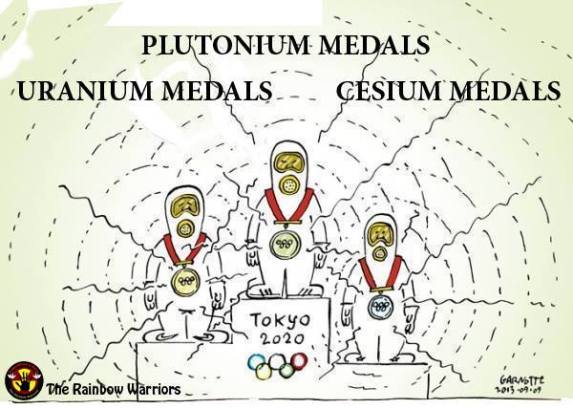
Atomic Balm Part 1: Prime Minister Abe Uses The Tokyo Olympics As Snake Oil Cure For The Fukushima Daiichi Nuclear Meltdowns March 01, 2019, Fairewinds Energy Education, By Arnie Gundersen “……….To determine whether or not Olympic athletes might be affected by fallout emanating from the disaster site, Dr. Marco Kaltofen and I were sponsored by Fairewinds Energy Education to look at Olympic venues during the fall of 2017.We took simple dirt and dust samples along the Olympic torch route as well as inside Fukushima’s Olympic stadium and as far away as Tokyo. When the Olympic torch route and Olympic stadium samples were tested, we found samples of dirt in Fukushima’s Olympic Baseball Stadium that were highly radioactive, registering 6,000 Bq/kg of Cesium, which is 3,000 times more radioactive than dirt in the US. We also found that simple parking lot radiation levels were 50-times higher there than here in the US.
Thirty of the dirt and fine dust samples that I took on my last two trips to Japan in February and March 2016 and September 2017 were analyzed at WPI (Worchester Polytechnic Institute. The WPI laboratory analysis are detailed in the report entitled: Measuring Radioactivity in Soil and Dust Samples from Japan, T. Pham, S. Franca and S. Nguyen, Worchester Polytechnic Institute, which found that:
With the upcoming XXXII Olympiad in 2020 hosted by Japan, it is necessary to look into the radioactivity of Olympic venues as well as tourist attractions in the host cities… Since thousands of athletes and millions of visitors are travelling to Japan for the Olympics, there has been widespread concern from the international community about radiation exposure. Therefore, it is important to investigate the extent of radioactive fallout from the Fukushima Dai-ichi incident.
The measured results showed a much higher activity of Cesium-137 in the proposed torch route compared to other areas. Overall, the further away from the Fukushima Dai-ichi Nuclear Power Plant, the lower the radioactivity. The activity of Cesium-137 in Tokyo, the furthest site from the plant, was the lowest when compared to the other sites. Therefore, the activity of Cesium-137 in Tokyo sample was used as the baseline to qualitatively estimate the human exposure to radiation.
At the Azuma Sports Park, the soil and dust samples yielded a range of 78.1 Bq/kg to 6176.0 Bq/kg. This particular Olympic venue is around 90 km from the Nuclear Power Plant. The other sites that are closer to the Nuclear Power Plant like the tourist route, proposed torch route, and non-Olympic samples have higher amounts due to the close proximity to ground zero of the disaster.
… the proposed torch route samples had the highest mean radioactivity due to their close proximity to the plant. Based on the measurement, we estimated qualitatively that the radiation exposure of people living near the Azuma Sports Park area was 20.7 times higher than that of people living in Tokyo. The main tourist and proposed torch routes had radiation exposure of 24.6 and 60.6 times higher, respectively, than in Tokyo…. Olympic officials should consider using the results of this project to decide whether the radioactivity level at the proposed torch route and the Olympic venues are within acceptable level…… https://www.fairewinds.org/demystify/atomic-balm-part-1-prime-minister-abe-uses-the-tokyo-olympics-as-snake-oil-cure-for-the-fukushima-daiichi-nuclear-meltdowns
Radiation in a crematorium traced back to a human body
It wasn’t enough radiation to be alarming, but it could be a sign of an ongoing problem The Verge By A crematorium in Arizona became contaminated with radiation when workers cremated a man who had received radiation treatments for cancer right before he died, a new study reports. The findings highlight a potential safety gap for crematory workers, who might not know what’s in the body they’re cremating.
In this case, the radiation in the crematorium wasn’t significant enough to be worrying for the crematory worker’s health, according to a study published today in the Journal of the American Medical Association. But the study also found clues that exposure to radioactive compounds from medical treatments may be an ongoing safety risk for crematory workers……..
It’s not an easy problem to fix. Manufacturers provide detailed instructions for handling the drug with patients who are alive, but not for ones that have died, Yu says. “It presents a unique safety challenge.” Detecting radioactive materials is more complicated than running a Geiger counter over the body. And there aren’t any federal regulations for what to do with a radiation-treated body, Yu says, so the laws change from state to state. ……https://www.theverge.com/2019/2/26/18241402/radiation-crematorium-arizona-radiopharmaceuticals-cancer-body-lutetium
Trump administration accepting the greedy “radiation is good for you” group

These assertions stand scientific consensus on its head. Most experts say to the contrary that even low doses of radiation cause cell damage that years later can promote uncontrolled cell growth and replication, and that children and fetuses are particularly susceptible to harm. That seven-decade-old view was reaffirmed as recently as last April in a study by a congressionally chartered nonprofit organization, the National Council on Radiation Protection and Measurement.
The study, overseen by a dozen experts from the government, academia, and industry, and funded by the NRC, considered 29 contemporary scientific studies of the effects of low-dose radiation in reaffirming that even low-level radiation should be avoided to the extent possible.
 RADIATION IS GOOD FOR YOU? THE FRINGE VIEWPOINT GAINS GROUND IN THE TRUMP ADMINISTRATION, https://publicintegrity.org/national-security/radiation-is-good-for-you-the-heretical-view-gains-ground-under-trump/The Nuclear Regulatory Commission is actively considering claims that low-dose radiation protections should be lifted because exposures make you healthier, a potential boon to radiation-related industries.
Since World War II, virtually every American business where radiation is present – hospital emergency rooms and cancer wards, uranium mines, nuclear power plants, and others – has operated under rules generally requiring that exposures be kept as low as possible. The rules are based on a widely-accepted scientific dicta that even small amounts of extra radiation can be harmful to human health.
Following those rules, though, is costly and often cumbersome, and so the requirement for low-dose radiation protections – known as the ALARA standard for “as low as reasonably achievable” – has long been annoying to a large swath of American industry. Estimates of the costs associated with these protections run into the billions of dollars.
Until the Trump era, opponents of the rules have gotten little traction in trying to upend low-dose radiation protections – such as isolation units, elaborate shielding, specialized air cleaners, and elaborate worker training — in federal regulations. But proposed relaxations have been percolating in recent months, courtesy of a little-known advocacy group called Scientists for Accurate Radiation Information, or SARI.
 Members of the group, which claims its ideas have been wrongly dismissed and belittled by mainstream scientists, subscribe to a minority theory known as “hormesis.” It defies conventional wisdom by holding that damaging things that are dangerous in high doses might actually be beneficial to human health in small doses.
Despite swimming against the tide in the past, one of the group’s members has just been appointed to head a Radiation Advisory Panel at the Environmental Protection Agency, which helps set federal standards for radiation doses received by the public and by workers. And several of its recommendations to ease radiation protections are presently under active consideration by the Nuclear Regulatory Commission.
SARI’s members typically have more day-to-day connections to radiation than others, and potentially more influence: They have held jobs connected to radiation protection at the EPA, the Department of Labor, the Energy Department and its sub-agency responsible for building nuclear weapons at nine factories across the country. Practitioners of nuclear medicine, people employed in the nuclear industry, and professors who teach nuclear medicine or industrial hygiene also populate SARI.
The NRC’s consideration of the SARI views got started when three members of the group petitioned it in 2015 to abandon its current approach and accept that radiation in low doses is not only benign, but improves health. That was two years after SARI’s founding by industry officials trying to tamp down public concerns about the radiation that spilled from the 2011 Fukushima nuclear disaster.
The NRC took the petitions seriously. Its staff created a working group to study the issue, and insiders now say that work is done. According to Scott Burnell, an NRC spokesman, the five members of the commission as a result will take up the issue this spring. Continue reading
How quickly we ‘normalise’ rising temperatures

Just by the way- Scientists found that frogs DO jump out of the water as it gets hot. They are smarter than we are. 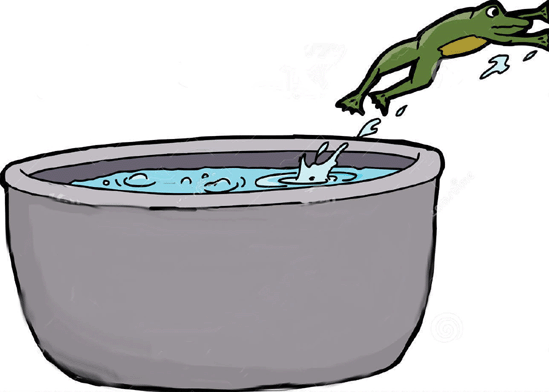 https://tinyurl.com/y3wgyqc7
Waste Isolation Pilot Plant under federal investigation for worker exposure to radiation and chemical hazards
The DOE’s Office of Enterprise Assessments filed a notice on Jan. 29 of its intent to investigate to Nuclear Waste Partnership (NWP), the DOE-hired contractor responsible for WIPP’s daily operations.
Between July and October 2018, employees in the underground nuclear waste repository were potentially “overexposed” to carbon tetrachloride, nitrogen dioxide and sulfur dioxide, read the notice, including a “series” of heat-stress incidents.
The DOE intends to investigate the circumstances leading up to the alleged “hygiene-related events,” and could fine NWP, based on what is uncovered. ……
A pattern of bad management?
Don Hancock, director of the Nuclear Waste Program at the Southwest Research and Information Center – an Albuquerque-based environmental watchdog group – said the alleged incident was just the most recent example of evidence that NWP is improperly managing WIPP.
“This is a constant problem where workers are exposed to dangers, radioactive or otherwise, that shouldn’t have happened,” Hancock said. “These are not just paperwork problems.”
Hancock also pointed to an accident radiological release in 2014, which led to a three-year closure of the WIPP facility, as part of what he called a pattern of mismanagement and undue hazards. He said NWP’s recent contract renewal shouldn’t have happened because of numerous safety issues throughout its operations at WIPP……. https://www.currentargus.com/story/news/local/2019/02/21/wipp-federal-investigation-department-energy-hazardous-chemicals/2905747002/?fbclid=IwAR21RsaxA4oeB8aZSoXOcCiBzEHDPqQFOyHhE6aF50S3F6bJzgsGxIGusfo
Coastal populations dosed with radiation from nearby nuclear facilities
Radioactive sea spray is dosing communities, February 17, 2019Governments want to cover it up By Tim Deere-Jones.
It is clear from the available empirical data that coastal populations impacted by prevailing onshore winds and living next to sea areas contaminated with liquid radioactive effluents from nuclear sites, are annually exposed to dietary and inhalation doses of man-made marine radioactivity.
Effluents discharged to the sea by nuclear power stations, fuel fabrication sites and reprocessing facilities are transferred from sea to land in airborne sea spray and marine aerosols (micro-droplets). They come in also during episodes of coastal flooding. This problem has been particularly pronounced around the UK Sellafield reprocessing and plutonium production site in Cumbria. In 1988, independent empirical research commissioned by a west Wales local authority reported that
Sellafield-derived, sea-discharged cesium had been found in pasture grass up to 10 miles inland of the Ceredigion coast.
Clearly, this contributes to human dietary doses via the dairy and beef food chain. The research also implies the inevitability of further dietary doses via arable and horticultural crops. Given that airborne radioactivity is driven at least 10 miles inland, it should be assumed that coastal populations are exposed, on a repeated annual basis, to inhalation doses.
https://beyondnuclearinternational.org/2019/02/17/radioactive-sea-spray-is-dosing-communities/
Mental health issues in Kimba, a small Australian agricultural town, because government plans a nuclear waste dump there

Nuclear waste site selection process triggers mental health concerns, business boycotts and division, FOI documents reveal, ABC North and West By Gary-Jon Lysaght 13 Feb 19, (FOI documents are attached on the original) Freedom of Information (FOI) documents reveal the Federal Government has been aware of potential mental health issues, from as early as 2017, caused by the search for a site to store the nation’s nuclear waste.The Federal Government is currently considering two sites at Kimba and one near Hawker for a facility that would permanently store low-level waste and temporarily store medium-level waste.
Kimba, a small town on South Australia’s Eyre Peninsula, has been divided on whether to support or oppose the facility. Some residents believe the facility could help bring much-needed business to the rural town, while others suggest it could damage the region’s agricultural reputation.
“Many of the opposed group have raised the issue of mental health in submissions and direct discussions,” the FOI documents, written in 2017, said.
They believe mental health issues are arising in Kimba due to the stress of being in this process.
“These issues have been raised with the Kimba doctor and counsellor.”
Centre Alliance Senator Rex Patrick obtained the Freedom of Information documents and hoped the concerns were a catalyst for change.
“In my view, that creates a very strong obligation for the Government to act,” he said.
“They’ve clearly known about this issue since 2017 and it is now time to ask the minister exactly what he is doing in relation to that.”……. https://www.abc.net.au/news/2019-02-13/foi-documents-show-kimba-divided-over-nuclear-waste-site/10807462
Ireland’s Radiation scrutiny now transfers to HIQA
13 Feb 19, Last month’s transposition of European Council Directive 2013/59/EURATOM into Irish law means that HIQA is now responsible for regulating medical exposure to ionising radiation.
The new law covers dental x-rays, hospital CT scans, mammograms and radiotherapy received as part of cancer treatment.
Treatment
A medical exposure to ionising radiation is when a patient receives ionising radiation as part of their diagnosis or treatment.
The transposition into Irish law confers new statutory functions on HIQA under the EU’s (Basic Safety Standards for Protection against Dangers Arising from Medical Exposure to Ionising Radiation) Regulations 2018 SI No. 256.
HIQA’s John Tuffy said: “Generally the risks associated with receiving medical exposure to ionising radiation can be considered very low.
“However, as procedures that involve ionising radiation carry varying levels of risk dependent on the dose given, it is important that all radiation doses are kept as low as practically possible.
Vital
“It is vital that patients are only exposed when the benefits of receiving the exposure outweigh the risks.”
“The new legislation has given HIQA regulatory powers to ensure that appropriate processes are in place to protect patients in public and private healthcare facilities for the first time.”
Last month’s transposition of European Council Directive 2013/59/EURATOM into Irish law means that HIQA is now responsible for regulating medical exposure to ionising radiation.
The new law covers dental x-rays, hospital CT scans, mammograms and radiotherapy received as part of cancer treatment.
Treatment
A medical exposure to ionising radiation is when a patient receives ionising radiation as part of their diagnosis or treatment.
The transposition into Irish law confers new statutory functions on HIQA under the EU’s (Basic Safety Standards for Protection against Dangers Arising from Medical Exposure to Ionising Radiation) Regulations 2018 SI No. 256.
HIQA’s John Tuffy said: “Generally the risks associated with receiving medical exposure to ionising radiation can be considered very low.
“However, as procedures that involve ionising radiation carry varying levels of risk dependent on the dose given, it is important that all radiation doses are kept as low as practically possible.
Vital
“It is vital that patients are only exposed when the benefits of receiving the exposure outweigh the risks.”
“The new legislation has given HIQA regulatory powers to ensure that appropriate processes are in place to protect patients in public and private healthcare facilities for the first time.”
Last month’s transposition of European Council Directive 2013/59/EURATOM into Irish law means that HIQA is now responsible for regulating medical exposure to ionising radiation.
The new law covers dental x-rays, hospital CT scans, mammograms and radiotherapy received as part of cancer treatment.
Treatment
A medical exposure to ionising radiation is when a patient receives ionising radiation as part of their diagnosis or treatment.
The transposition into Irish law confers new statutory functions on HIQA under the EU’s (Basic Safety Standards for Protection against Dangers Arising from Medical Exposure to Ionising Radiation) Regulations 2018 SI No. 256.
HIQA’s John Tuffy said: “Generally the risks associated with receiving medical exposure to ionising radiation can be considered very low.
“However, as procedures that involve ionising radiation carry varying levels of risk dependent on the dose given, it is important that all radiation doses are kept as low as practically possible.
Vital
“It is vital that patients are only exposed when the benefits of receiving the exposure outweigh the risks.”
“The new legislation has given HIQA regulatory powers to ensure that appropriate processes are in place to protect patients in public and private healthcare facilities for the first time.”
 |
ReplyForward
|
What prevents us from thinking ‘meaningfully’ about climate change.
 The climate crisis has arrived – so stop feeling guilty and start imagining your future The Conversation, Principal Lecturer in Psychology, University of Brighton February 7, 2019
Evidence of the devastating impacts of anthropogenic climate change are stacking up, and it is becoming horrifyingly real. There can be no doubt that the climate crisis has arrived. Yet another “shocking new study” led The Guardian and various other news media this week. One-third of Himalayan ice cap, they report, is doomed.
Meanwhile in Australia, record summer temperatures have wrought unprecedented devastation of biblical proportions – mass deaths of horses, bats and fish are reported across the country, while the island state of Tasmania burns. In some places this version of summer is a terrifying new normal.
The climate disaster future is increasingly becoming the present – and, as the evidence piles up, it is tempting to ask questions about its likely public reception. Numerous psychological perspectives suggest that if we have already invested energy in denying the reality of a situation we experience as profoundly troubling, the closer it gets, the more effort we put into denying it.
When it comes to the climate crisis, the personal is political. I am talking about a politics that grows from opposition and critique of our current systems. This is evident in young people organising school strikes and protesters willing to get arrested for their direct action. But we also need to pay more attention to what is lost, to who and what we care for, to other possible ways of being.
Some conservation scientists, at least, see recent cultural change as a hopeful sign of a growing sense of care and responsibility. So stop feeling guilty, it’s not your fault. Be attentive to what’s going on, so that you might notice what you care about and why. What are you capable of, and what might we be capable of together, when we aren’t caught between knowing and not knowing, denial and distress?
Increasing danger of the radioactive by-products from the nuclear industry
From mining the uranium rich ore, to nuclear abandonment – a dozen by-products more radio toxic than the ore mined to fuel the reactor are discarded. These products are the raffinates culminating in 85% of the total radioactivity that goes directly into the tailings only to migrate throughout the environment.
Products like Radon gas, Polonium-210 with a 140 day half life, Radium-226, with a 1600 year half life, Thorium-230 with a 76,000 year half life are released , and yet only 1kg of Uranium oxide is recovered in every 4,000 kilos mined.
Uranium-238 subjected to neutron bombardment in the reactor becomes Uranium-239 with a 23 minute half life, then that becomes Neptunium-239 with a 2.3 day half life, and that goes on to become Plutonium-239 with a 244,000 year half life, then this spent fuel finally decays to become Uranium- 235 with a half life of 700 million years.
Moreover, x that by no less than 10 to get the life of the radioactive hazard, which equates to no less than 7 billion years, and here we have only just crossed the nuclear industries threshold within the last 76 years with many thousands of nuclear events, and accidents recorded, and yet this is not the only wastes these machines produce with one Canadian CANDU reactor that recorded 100 trillion becquerels of radiation from the Tritium released in just one year.
The nuclear embracing coterie tell us they can safely manage these radioactive wastes, yet there containment vessels are only guaranteed for 25 years not 7 billion years, and a director of Holtec has stated there is no way to remedy a breach of containment. Moreover these nuclear wastes are a gamble and risk that only grows exponentially with every generation.
Growing cancer rates: the focus must be on prevention, on researching environmental causes
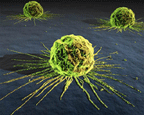
 Laura N. Vandenberg: It’s time to talk about cancer prevention — and the role of the environment https://www.ehn.org/laura-n-vandenberg-its-time-to-talk-about-cancer-prevention-2628192178.html
An inadequate focus on researching and understanding the role of the environment in cancer prevention is a failure for public health. Laura N. Vandenberg 8 Feb 19,
Such funding is crucial to continue tackling the devastating disease. However, missing from the State of the Union—and most other conversations about tackling cancer—is a focus on prevention, specifically the need to research, understand and communicate the role environmental exposures play in cancer risk.
The numbers on cancer incidence and deaths are complex. Although childhood cancer mortality rates have dropped considerably from the 1960s, data from the American Cancer Society shows that incidence rates have increased 0.6 percent per year since 1975.
In this way, childhood cancers are like several others. Between 2005 and 2014, yearly cancer incidence rates rose for several types: thyroid cancer by 4 percent; invasive breast cancer by 0.3 percent in black women; leukemia by 1.6 percent; liver cancer by 3 percent; oral and pharynx cancers by 1 percent in Caucasians; pancreatic cancer by 1 percent in Caucasians; colon cancer by 1.4 percent in individuals younger than 55 years of age; rectal cancer by 2.4 percent in individuals younger than 55; and melanoma by 3 percent in individuals aged 50 and older.
While these cancer rates have increased, overall rates of cancer deaths have started to fall. In fact, since the 1990s, improved detection and treatment, as well as decreased smoking rates, have contributed to significant reductions in cancer mortality.
Reduced deaths from cancer are a great public health victory. These statistics prove that public health interventions like educational programs designed to curb smoking can have dramatic effects.
They also suggest that investments in improved detection and diagnosis are money well spent. A focus on treatments has also improved quality of life for cancer patients and their likelihood of remission.
But where is the call for better cancer prevention? As rates of numerous cancers continue to rise, the failure to identify the causes of cancer remains a disappointment for public health officials and researchers alike.
We know that environmental factors can contribute to cancer risk. Some, like smoking, are avoidable. Others are lifestyle factors that people can change like drinking less alcohol, decreasing consumption of processed meats, using protection from the sun, and increasing exercise.
Yet, other environmental factors like exposures to chemicals in the environment, including endocrine disruptors, have received little attention. While some NIH-funded programs like the Breast Cancer and Environment Research Program have worked to identify chemicals in the environment that promote cancer, funding for cancer prevention initiatives has stagnated.
Despite the limited resources invested in studies of environmental risk factors for cancer, we know enough to take action on some chemicals of concern.
For example, communities contaminated with perfluorinated chemicals, several of which are known to cause cancer, have demanded attention from government officials in addition to asking for more research.
Individuals living in these communities have the right to know how they are being exposed, and what their risks might be – for cancer and other diseases.
It is great that cancer research was raised in the President’s State of the Union speech, and that the difficulties associated with caring for a family member with cancer was mentioned in Stacey Abrams’ rebuttal.
But a failure to focus on prevention, a failure to acknowledge the role of the environment in causing cancer, and a failure to allocate funds to prevention research, are all failures for public health.
Dr. Vandenberg is an Associate Professor of Environmental Health Sciences at the University of Massachusetts Amherst School of Public Health and Health Sciences. Her work on endocrine disrupting chemicals has been funded by the National Institutes of Health including the BCERP program, which focuses on the environmental causes of breast cancer
A claim that 5G networks are a dangerous experiment
‘A global catastrophe’: Radiation activist warns that 5G networks are ‘massive health experiment’ https://www.rt.com/news/450775-massive-health-experiment-5g-cancer/ 6 Feb, 2019 A leading activist on the issue of electromagnetic radiation and its negative impacts on public health has described the rollout of 5G as a “massive health experiment” which could “become a global catastrophe.”
Arthur Robert Firstenberg is a well-known advocate for curtailing the development of 5G networks both in the US and internationally, claiming that super fast broadband could cause cancer in humans and wildlife, as well as exacerbating the symptoms of electromagnetic hypersensitivity.
In a bid to stall the rollout of the networks Firstenberg is petitioning the World Health Organization, the UN and the EU to “urgently halt the development of 5G.” The petition had garnered over 40,000 signatures at time of writing.
The deployment of 5G constitutes an experiment on humanity and the environment that is defined as a crime under international law,” the petition states. The US rollout of the new network has already begun in cities like Houston, Indianapolis, Los Angeles, and Sacramento.
“This could become a global catastrophe. When the first satellites were launched in the late 1990s for mobile phones, on the day they were launched people sensitive to these things got very sick. The mortality rate rose in the US by 5-10% too and there were reports that birds were not flying,” Firstenberg told the Daily Star.
Firstenberg also claims that, in areas of the world where rollout of 5G antennas has already begun, the local population, including insects and other wildlife, are already getting sick. He claims to have a condition known as electromagnetic hypersensitivity, which induces symptoms like dizziness, nausea, amnesia, insomnia, tremors, heart arrhythmia, acute and chronic pain, among others though it is not scientifically or medically recognized.
n addition, Firstenberg filed a lawsuit seeking $1.43 million in damages from his neighbor for damaging his health by using her iPhone and WiFi connection.
Much like cell phones before it in the 1980s and 90s, 5G has encountered strong pushback from the general public since it was first announced. In September 2018, Mill Valley city council, in California, voted to block development of 5G towers and small cells in residential areas citing “serious adverse health and environmental impacts caused by the microwave radiation emitted from these 4G and 5G Small Cell Towers,” Motherboard reports.
However, according to the Centers for Disease Control and Prevention (CDC), “There is no scientific evidence that provides a definite answer to that question… More research is needed before we know if using cell phones causes health effects.”
Despite a number of broad-ranging studies into the potential effects of cell phone radiation showing no solid evidence of any significant health risks to humans (let alone insects), many within the scientific community remain skeptical that the benefits of 5G technology outweigh the potential harm to humans.
Tworecent studies also showed elevated risk of cancerous tumors developing in male rats (though not female) who were exposed to electromagnetic fields (EMFs) for nine hours a day over two years. However, the claims didn’t stand up in follow-up double-blind tests.
215 scientists from 40 different countries have allegedly signed an appeal calling for international protection from non-ionizing electromagnetic field exposure, the effects of which include, but are not limited to, “increased cancer risk, cellular stress, increase in harmful free radicals, genetic damages, structural and functional changes of the reproductive system, learning and memory deficits, neurological disorders, and negative impacts on general well-being.”
In a letter, Dr Martin Pall, a biochemistry professor at the Washington State University, claimed there were severe biological and health effects, including increased risk of cancer via DNA mutations, due to exposure to 5G networks, while also claiming that the FCC is a “captured agency”that is subject to the will of the very industry it is supposed to regulate.
5G would provide broadband speeds over 100 times faster than current data speeds. But to facilitate its rollout 300,000 new antennas would be required in the US alone. That’s roughly equal to three decades-worth of cell phone tower development.
The networks require a more dense array of “small cell” sites because their high frequency waves provide faster speeds but don’t travel as far
Radioactive poisoning by the world’s military – the scandalous case of Sardinia
How paradise island Sardinia was poisoned by the world’s military | Foreign Correspondent
Italian military officials’ trial ignites suspicions of links between weapon testing and birth defects in Sardinia https://www.abc.net.au/news/2019-01-29/sardinia-military-weapons-testing-birth-defects/10759614
Key points:
- Eight former commanders of a bombing range are before Italian courts
- Locals living near Quirra firing range describe multiple cases of deformities and cancer as “Quirra syndrome”
- Italy’s army has dismissed a report linking exposure to Depleted Uranium to disease suffered by the military
- Watch the full episode on ABC iview
“She died in my arms. My whole world collapsed. I knew she was sick, but I wasn’t ready.”
Her daughter, Maria Grazia, was born on the Italian island of Sardinia with part of her brain exposed and a spine so disfigured her mother has never allowed her photo to be published.
This was only one of many mysterious cases of deformity, cancer and environmental destruction that have come to be called the “Quirra syndrome”.
Eight Italian military officers — all former commanders of the bombing range at Quirra in Sardinia — have been hauled before the courts.
It’s unprecedented to see Italian military brass held to account for what many Sardinians say is a scandalous coverup of a major public health disaster with international consequences.
Bombs and birth defects — is there a link?
In the year baby Maria Grazia was born, one in four of the children born in the same town, on the edge of the Quirra firing range, also suffered disabilities.
Some mothers chose to abort rather than give birth to a deformed child.
In her first television interview, Maria Teresa told Foreign Correspondent of hearing bombs exploding at the Quirra firing range when she was pregnant.
Enormous clouds of red dust enveloped her village.
Later, health authorities were called in to study an alarming number of sheep and goats being born with deformities.
Shepherds in the area had routinely grazed their animals on the firing range.
“Lambs were born with eyes in the back of their heads,” said veterinary scientist Giorgio Mellis, one of the research team.
“I had never seen anything like it.”
One farmer told him of his horror: “I was too scared to enter the barn in the mornings … they were monstrosities you didn’t want to see.”
Researchers also found an alarming 65 per cent of the shepherds of Quirra had cancer.
The news hit Sardinia hard. It reinforced their worst fears while also challenging their proud international reputation as a place of unrivalled natural beauty.
The military hit back, with one former commander of the Quirra base saying on Swiss TV that birth defects in animals and children came from inbreeding.
“They marry between cousins, brothers, one another,” General Fabio Molteni claimed, without evidence.
“But you cannot say it or you will offend the Sardinians.”
General Molteni is one of the former commanders now on trial.
Years of investigation and legal inquiry led to the six generals and two colonels being charged with breaching their duty of care for the health and safety of soldiers and civilians.
After repeated attempts, Foreign Correspondent was refused interviews with senior Italian military officials and the Defence Minister.
Governments earning money by renting out ranges
Sardinia has hosted the war games of armed forces from the west and other countries since sizable areas of its territory were sectioned off after World War II.
Rome is reported to make around $64,000 an hour from renting out the ranges to NATO countries and others including Israel.
Getting precise information about what has been blown up, tested or fired at the military sites and by which countries is almost impossible, according to Gianpiero Scanu, the head of a parliamentary inquiry that reported last year.
Many, including current Defence Minister Elisabetta Trenta, have previously accused the Italian military of maintaining a “veil of silence”.
Speaking exclusively to the ABC, chief prosecutor for the region, Biagio Mazzeo, said he is “convinced” of a direct link between the cancer clusters at Quirra and the toxicity of the elements being blown up at the defence base.
But prosecuting the case against the military comes up against a major hurdle.
“Unfortunately, proving what we call a causality link — that is, a link between a specific incident and specific consequences — is extremely difficult,” Mr Mazzeo said.
What is being used on the bases?
A recent parliamentary inquiry revealed that 1,187 French-made MILAN missiles had been fired at Quirra.
This has focussed attention on radioactive thorium as a suspect in the health crisis.
It’s used in the anti-tank missiles’ guidance systems. Inhaling thorium dust is known to increase the risk of lung and pancreatic cancer.
Another suspect is depleted uranium. The Italian military has denied using this controversial material, which increases the armour-piercing capability of weapons.
But that’s a fudge, according to Osservatorio Militare, which campaigns for the wellbeing of Italian soldiers.
“The firing ranges of Sardinia are international,” said Domenico Leggiero, the research centre’s head and former air force pilot.
Whatever is blown up on the island’s firing ranges, it’s the fine particles a thousand times smaller than a red blood cell that are being blamed for making people sick.
These so-called “nanoparticles” are a new frontier in scientific research.
They’ve been shown to penetrate through the lung and into a human body with ease.
Italian biomedical engineer Dr Antonietta Gatti gave evidence to four parliamentary inquiries.
She has suggested a possible link between disease and industrial exposure to nanoparticles of certain heavy metals.
The World Health Organisation says a causal link is yet to be conclusively established and more scientific research needs to be done.
Dr Gatti said armaments had the potential to generate dangerous nanoparticles in fine dust because they are routinely exploded or fired at more than 3,000 degrees Celsius.
Inquiry confirms causal links
In what was labelled a “milestone”, a two-year parliamentary investigation into the health of the armed forces overseas and at the firing ranges made a breakthrough finding.
“We have confirmed the causal link between the unequivocal exposure to depleted uranium and diseases suffered by the military,” the inquiry’s head, then centre-left government MP Gianpiero Scanu, announced.
The Italian military brass dismissed the report but are now fighting for their international reputation in the court at Quirra where the eight senior officers are now on trial.
The ABC understands commanders responsible for another firing range in Sardinia’s south at Teulada could soon also face charges of negligence as police conclude a two-year investigation.
Until now the military has been accused of acting with impunity.
Perhaps their reckoning has come.
Sending dummies into space, to test effects of radiation on women
Radiation for dummies, Space Daily, by Staff Writers, Paris (ESA) Jan 28, 2019 Meet Helga and Zohar, the dummies destined for a pioneering lunar flyby to help protect space travelers from cosmic rays and energetic solar storms.
These two female phantoms will occupy the passenger seats during Orion’s first mission around the Moon, going further than any human has flown before.
Fitted with more than 5600 sensors, the pair will measure the amount of radiation astronauts could be exposed to in future missions with unprecedented precision.
The flight test will take place during NASA’s Exploration Mission-1, an uncrewed trip to the vicinity of the Moon and back to Earth.
Radiation poses a major health risk to people in space. Astronauts on the International Space Station receive doses 250 higher than on Earth. Away from Earth’s magnetic field and into interplanetary space, the impact on the human body could be much higher – up to 700 times more.
Two sources of radiation are of concern: galactic cosmic radiation and virulent solar particle events. This radiation could increase the crew’s risk of cancer and become a limiting factor in missions to the Moon and Mars.
Helga and Zohar
The two phantoms simulate adult female torsos. Both Helga and Zohar are made up of 38 slices of tissue-equivalent plastics that mimic the varying density of bones, soft tissue and lungs. Similar dummies are used in hospitals to quantify the right dose of radiation for cancer therapies.
“We chose female phantoms because the number of women astronauts is increasing, and also because the female body is typically more vulnerable to radiation,” explains Thomas Berger, lead scientist of the Matroshka AstroRad Radiation Experiment (MARE) at the German Aerospace Center, DLR.
Sensors have been fitted in the most radiation-sensitive areas of the body – lungs, stomach, uterus and bone marrow. While thousands of passive dosimeters will record the radiation dose from launch until return to Earth, a set of 16 active detectors will map the radiation dose both on the phantoms’ skin and internal organs during flight.
An astronaut’s shield
The only difference between the twin dummies is that Zohar will be wearing a radiation protection vest, while Helga will travel unprotected from spaceborne radiation…….. http://www.spacedaily.com/reports/Radiation_for_dummies_999.html
1 This Month




Shut down the radiation-damaged Heysham nuclear reactors now
To see nuclear-related stories in greater depth and intensity – go to https://nuclearinformation.wordpress.com

Say No to NASA’s Reckless Nuclear Reactor on the Moon
Say No to NASA’s Reckless Nuclear Reactor on the Moon
-
Archives
- October 2026 (302)
- September 2026 (339)
- August 2026 (330)
- July 2026 (355)
- June 2026 (287)
- May 2026 (306)
- April 2026 (356)
- March 2026 (251)
- February 2026 (267)
- January 2026 (308)
- December 2025 (358)
- November 2025 (359)
-
Categories
- 1
- 1 NUCLEAR ISSUES
- business and costs
- climate change
- culture and arts
- ENERGY
- environment
- health
- history
- indigenous issues
- Legal
- marketing of nuclear
- media
- opposition to nuclear
- PERSONAL STORIES
- politics
- politics international
- Religion and ethics
- safety
- secrets,lies and civil liberties
- spinbuster
- technology
- Uranium
- wastes
- weapons and war
- Women
- 2 WORLD
- ACTION
- AFRICA
- Atrocities
- AUSTRALIA
- Christina's notes
- Christina's themes
- culture and arts
- Events
- Fuk 2022
- Fuk 2023
- Fukushima 2017
- Fukushima 2018
- fukushima 2019
- Fukushima 2020
- Fukushima 2021
- general
- global warming
- Humour (God we need it)
- Nuclear
- RARE EARTHS
- Reference
- resources – print
- Resources -audiovicual
- Weekly Newsletter
- World
- World Nuclear
- YouTube
-
RSS
Entries RSS
Comments RSS

