A long-term study of Russian nuclear plant workers suggests that prolonged low-dose radiation exposure increases the risk of hypertension. This study is the first to associate an increased risk of hypertension to low doses of ionizing radiation among a large group of workers who were chronically exposed over many years. The higher the cumulative dose of radiation, the greater the risk, the study showed.
Prolonged exposure to low doses of ionizing radiation increased the risk of hypertension, according to a study of workers at a nuclear plant in Russia published in the American Heart Association’s journal Hypertension.
Uncontrolled hypertension, also known as high blood pressure, can to lead to heart attack, stroke, heart failure and other serious health problems.
Earlier studies linked exposure to high doses of radiation to increased risk of cardiovascular diseases and death from those diseases. This study is the first to find an increased risk of hypertension to low doses of ionizing radiation among a large group of workers who were chronically exposed over many years.
The study included more than 22,000 workers at the first large-scale nuclear enterprise in Russia known as the Mayak Production Association. The workers were hired between 1948 and 1982, with an average length of time on the job of 18 years. Half had worked there for more than 10 years. All of the workers had comprehensive health check-ups and screening tests at least once a year with advanced evaluations every five years.
The researchers evaluated the workers’ health records up to 2013. More than 8,400 workers (38 percent of the group) were diagnosed with hypertension, as defined in this study as a systolic blood pressure reading of ?140 mm Hg, and a diastolic reading ? 90 mm Hg. Hypertension incidence was found to be significantly associated with the cumulative dose.
To put it in perspective, the hypertension incidence among the workers in the study was higher than that among Japanese survivors of the atomic bomb at the end of World War II, but lower than the risk estimated for clean-up workers following the Chernobyl nuclear accident.
The differences may be explained by variations in exposure among the three groups, according to the researchers. Following the atomic bombing, the Japanese experienced a single, high-dose exposure of radiation, the Chernobyl workers were exposed to radiation for a short time period (days and months), while the Mayak workers were chronically exposed to low doses of radiation over many years.
While the development of cancer is commonly associated with radiation exposure, “we believe that an estimate of the detrimental health consequences of radiation exposure should also include non-cancer health outcomes. We now have evidence suggesting that radiation exposure may also lead to increased risks of hypertension, cardiovascular disease and cerebrovascular disease, as well,” said Tamara Azizova, M.D., lead author of the study at the Southern Urals Biophysics Institute in Russia.
Azizova pointed out that in recent years, the number of people exposed to radiation in everyday life, such as during diagnostic procedures, has increased. “It is necessary to inform the public that not only high doses of radiation, but low to moderate doses also increase the risk of hypertension and other circulatory system diseases, which today contribute significantly to death and disability. As a result, all radiological protection principles and dose limits should be strictly followed for workers and the general public.”
How radiation exposure may increase the risk of hypertension is still a question, according to Azizova. “So far, the mechanisms remain unclear, not only for certain cohorts but also for the general population. One of the main tasks for the coming decade is to study the mechanisms of hypertension and heart and brain atherosclerosis occurring in people who are — and who were exposed — to radiation.”
The authors note that their study is a retrospective one, and while many health conditions and behaviors were documented in the medical records of the workers (such as age, smoking, alcohol consumption and body mass index), other factors, such as stress and nutrition, were unavailable for researchers to be taken into account in this study.
Tamara Azizova, Ksenia Briks, Maria Bannikova, Evgeniya Grigoryeva. Hypertension Incidence Risk in a Cohort of Russian Workers Exposed to Radiation at the Mayak Production Association Over Prolonged Periods. Hypertension, 2019; DOI: 10.1161/HYPERTENSIONAHA.118.11719
Atomic veteran wonders at radiation’s effects, PostStar, Will Doolittle will@poststar.comMay 2, 2019, GLENS FALLS— Bill Jones went to paradise for 13 months in the mid-1950s, and it wasn’t until many years later, when he and others were finally released from their vows of secrecy, that he found out what a hell it really had been…….
Two of his children have suffered from skin cancer, as he has, and one of his grandchildren had multiple birth defects, and he worries that his military service more than 60 years ago could have something to do with all that.
But he doesn’t know for sure, and the government isn’t telling, which is what really bothers him.
“This stuff accumulates in your body. It can cause birth defects. That’s what frosts me. They never told us about this,” he said.
Bill and Charlotte were sitting at the dining room table in their cozy house and talking about the atomic bomb testing the U.S. government performed in the 1950s on the Marshall Islands, a collection of atolls far out in the Pacific Ocean.
Jones had enlisted with three buddies from Glens Falls, going through basic training with them before he was sent to Technical Intelligence School in Aberdeen, Maryland. It was the depth of the Cold War and a search for soldiers with security clearances swept him up for an unexplained assignment. In the fall of 1956, he disembarked on Enewetak Atoll………
The U.S. had dropped 12 bombs already that year on Enewetak, each one named after an American Indian tribe (Seminole was dropped on June 6, for example, and Mohawk on July 3). The testing wouldn’t resume until after Jones left, in April 1958, but over time (even as he kept his secrets), he would learn the radiation lingered in the air and water, planting seeds in many of the soldiers that would bloom into cancers and kill them……..
He has scars on his scalp from having growths removed, but at 84 considers himself fortunate.
Benefits are available for atomic veterans, and Jones called the Department of Justice about qualifying for them.
He was told, “As soon as I get a terminal illness, call back.”
Others, after years of keeping quiet, never seek out help they might qualify for.
“There’s not an awful lot of these atomic veterans left. There’s a lot that don’t know about the program, so they waste away, shall we say,” he said.
Fred Schafer, an officer with the National Association of Atomic and Nuclear Veterans, says the soldiers were guinea pigs.
“They wanted to see what happened,” he said, referring to the U.S. military establishment, which was monitoring the soldiers’ reactions to nuclear radiation. “They wanted to see how fast they could get in after using these bombs.”
The organization has the names of about 1,500 veterans in its database who were part of the nuclear testing program, but Schafer estimates at least 40,000 are still alive who don’t know about the organization. Hundreds of thousands of soldiers participated, but many have died.
Jones wasn’t allowed to tell Charlotte what he was doing on Enewetak. He couldn’t take photos, he could make only one phone call every two or three months, and his letters were reviewed. Anything he sent home, like a sea shell scooped up from the sand, had to be checked with a Geiger counter first.
“They were aware,” he said. “I can’t prove it, but they knew the radiation caused birth defects.”…….It wasn’t until 1996 that the Defense Department allowed atomic veterans to talk about taking part in the testing of the most destructive weapons in history. Bill and the others sent to the Marshall Islands considered it a tropical vacation at the time, but they didn’t know — and no one told them — the exposure could be deadly…….. https://poststar.com/news/local/column-atomic-veteran-wonders-at-radiation-s-effects/article_178156a0-052d-5306-9100-49cf686d954a.html
Hard duty in the Chernobyl zone, Life as a liquidator after the 1986 nuclear disaster
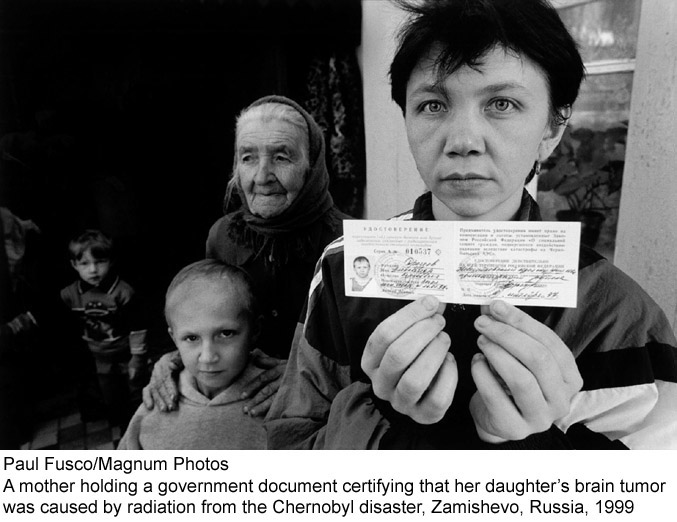
Cathie Sullivan, a New Mexico activist, worked with Chernobyl liquidator, Natalia Manzurova, during three trips to the former Soviet Union in the early 2000s. Natalia was one of 750,000 Soviet citizens sent to deal with the Chernobyl catastrophe.Natalia is now in her early 60s and has long struggled with multiple health issues. She was treated last year for a brain tumor that was found to be cancerous. A second tumor has since been found and funds were recently raised among activists around the world to help with the costs of this latest treatment. Natalia and Cathie together authored a short book, “Hard Duty, A woman’s experience at Chernobyl” describing Natalia’s harrowing four and a half years as a Chernobyl liquidator. What follows is an excerpt from that book with some minor edits.
By Natalia Manzurova
When I tell people that I was at Chernobyl they often ask if I had to go. My training is in radiation biology and I was born in a city that was part of the secret Soviet nuclear weapons complex, much like Los Alamos, New Mexico, where the first A-bomb was built. People from my city considered it a duty to go to Chernobyl, just as New York City firefighters went to the World Trade Center on 9/11.
Because of the radiation danger to women of child-bearing age, those under 30 did not go, but being 35 in 1987, I began my 4.5 years of work at Chernobyl. ………..
Sad experiences
In 1987, when I first arrived at Chernobyl, my group of about 20 scientists from the Ozyersk radio-ecology lab started a Department of Environmental Decontamination and Re-Cultivation. We used a 10-acre greenhouse complex for our plant studies, built before the accident, and for office space we used an empty, nearby kindergarten……..
Like many liquidators I ‘wear’ a ‘Chernobyl necklace’, the scar on the lower throat from thyroid-gland surgery.* While working in the exclusion zone I experienced slurred speech, memory loss and poor balance. One of my bosses and I realized that we were forgetting appointments and obligations and agreed to help each other remember who, what, where and when. I had severe amnesia for a time and read letters I wrote my mother to help fill in forgotten years.
The Chernobyl accident is not over, in fact its damaging effects on people and the land will only taper off slowly for generations—lingering harm that is almost certainly unique to nuclear accidents.
Natalia Manzurova, with fellow Russian activist, Nadezhda Kutepova, was awarded the 2011 Nuclear-Free Future Award in the category of Resistance.
The legacy of nuclear power is checkered at best, Delware State News, Apr 18th, 2019 · by Alan Muller
Forty years ago, on March 28, 1979, the Three Mile Island (TMI) Unit 2 nuclear power reactor in central Pennsylvania — about 95 miles northwest of Dover — partially melted down and experienced at least one explosion.
Many of us living in Delaware at the time were very concerned about being downwind and somewhat downstream of a nuclear accident of unknown magnitude.
The causes were a combination of equipment failures, design defects and operator errors. The operators did not have accurate indications of what was going on in the reactor, so they couldn’t make the right decisions. Reportedly, more than half of the radiation monitors in the area were broken, so there was not adequate indication of how much radioactivity was released and where it went.
Days afterwards: “[Pa.] Governor Thornburgh advised pregnant women and pre-school age children to leave the area within a five-mile radius of the Three Mile Island facility until further notice. This led to the panic the governor had hoped to avoid; within days, more than 100,000 people had fled surrounding towns.”
Ever since the TMI meltdown, nuke industry sources and public health authorities have claimed that too little radioactivity was released to harm people’s health…….
Failure to investigate TMI health effects was published in the Bulletin of the Atomic Scientists in 2004. This included failure to investigate, media blackouts and the firing of Pennsylvania Health Commissioner Gordon MacLeod by Gov. Thornburgh after he pointed out increases in infant mortality and other health problems near TMI.
Jane Lee, a local farmer, with others, went door-to-door and said they had found and documented many acute health problems. I knew Jane towards the end of her life. She’d been unable to arrange publication of her work, and wasn’t online A deposit of Jane Lee Papers at Dickenson College (Carlisle, Pa.) may hold some of this information.
More recently in 2017:
“A new Penn State College of Medicine study has found a link between the 1979 Three Mile Island accident and thyroid cancer cases in south central Pennsylvania. The study marks the first time the partial meltdown can be connected to specific cancer cases, the researchers have said. The findings may pose a dramatic challenge to the nuclear energy industry’s position that radiation released had no impact on human health.” …….
All nuclear plants release radiation to air and water during normal operation, as do other parts of the nuclear fuel cycle such as uranium mining. Many nuclear plants have tall stacks intended to disperse “noncondensible” radioactive emissions. See one in pictures of the Peach Bottom nuclear plant — three of this same General Electric design melted down in Japan in 2011. Evidence is accumulating that these releases from normal operations may have health impacts.
Some reports claim the only health effects from TMI were mental health impacts from stress, as if “mental health impacts” were unimportant.
The TMI meltdown ended expansion of the U.S. nuclear power industry — after TMI, no new reactors were ordered in the U.S. and many projects were stopped.
Now, 40 years later, the remaining industry is collapsing, largely because wind and solar have become cheaper. The remaining TMI unit is to shut down this year. But the nuke industry isn’t going down without a fight, trying to rebrand itself as a climate change solution. In fact, the nuclear fuel cycle releases less climate-changing carbon dioxide than fossil-fuel burning but much more than wind or solar (per unit of electricity generated).
It is timely to think about TMI as Delaware is surrounded by nuclear power reactors. About 10 percent of all those in the U.S. are within 50 miles of Delaware. The Salem/Hope Creek reactors, the nearest, have recently received an enormous subsidy from the state of New Jersey to stay open. On the other hand, the Oyster Creek, N.J., reactor has closed.
This contraction of the nuclear power industry won’t be easy for people working in it, or for some of the nuclear host communities. But it will happen regardless and ultimately we will be safer and healthier for it.
To ignore the human impacts of the nuclear industry is a moral failure.
Atomic bombs, Chernobyl,Fukushima—radiation has traveled and frozen all over the world. Global warming is changing that.
Melting could be one of the most important phenomena of the 21st century. Thanks to man-made climate change, Arctic ice levels have hit a record low this year. Among the many profound changes that could stem from ice melting across the world, according to a new study from an international group of scientists, is the release of deeply buried radiation.
The international team studied 17 icy locations across the globe, including the Arctic, the Antarctic, Iceland, the Alps, the Caucasus mountains, and British Columbia. While radiation exists naturally, the scientists were looking for example of human-made radiation. It was common to find concentrations at least 10 times higher than levels elsewhere.
“They are some of the highest levels you see in the environment outside nuclear exclusion zones,” says Caroline Clason, a lecturer in Physical Geography at the University of Plymouth, speaking in a press statement.
After Chernobyl, clouds of cesium traveled across Europe. Radiation spread without regard for borders, reaching as far as England through rains. But when rain freezes, it takes the form of ice. And within ice, it can lay trapped.
“Radioactive particles are very light so when they are taken up into the atmosphere they can be transported a very long way,” Clason tells the AFP. “When it falls as rain, like after Chernobyl, it washes away and it’s sort of a one-off event. But as snow, it stays in the ice for decades and as it melts in response to the climate it’s then washed downstream.”
What does that response look like? Humanity is starting to find out, Clason says. She points to wild boar in Sweden, who in 2017 were found to have 10 times the levels of normal radiation.
Traces of human-made radiation last a famously long time. Ice around the globe contains nuclear material not just from accidents involving nuclear power plants, but also man’s use of nuclear weapons.
“We’re talking about weapons testing from the 1950s and 1960s onwards, going right back in the development of the bomb,” Clason says. “If we take a sediment core you can see a clear spike where Chernobyl was, but you can also see quite a defined spike in around 1963 when there was a period of quite heavy weapons testing.”
Elements within radiation have different life spans. Perhaps the most notorious of these, Plutonium-241 has a 14 year half-life. [ed. most plutonium isotopes have half-lives of many thousands of years] But Americium-241, a synthetic chemical element, has a half life of 432 years. It can stay in ice a long time, and when that ice melts will spread. There isn’t much data yet on its ability to spread into the human food chain, but Clason called the threat of Americum “particularly dangerous”.
A term popular in science these days is the Anthropocene, which refers to the idea that humans have permanently altered the very core of how the Earth functions as a living ecosystem. Looking for radiation buried within icy soil and sediment could offer stronger proof of those changes.
“These materials are a product of what we have put into the atmosphere. This is just showing that our nuclear legacy hasn’t disappeared yet, it’s still there,” she says.
“And it’s important to study that because ultimately it’s a mark of what we have left in the environment.”
Brittany Crocker, Knoxville News Sentine April 12, 2019 Sick and injured Cold War nuclear workers are likely to see delays in their health care claims because the Department of Labor has added dozens of steps to the process, according to a home care provider that helps the workers.
The program provides medical care to former nuclear and uranium mine workers who were exposed to radiation and other toxic substances without their knowledge was established by Congress in 2000.
New rule changes to the program — called the Energy Employees Occupational Illness Compensation Program — will increase the nine-step home health care preauthorization process to 36 steps, said Emily Baker, a spokeswoman for Professional Case Management, a home care provider for nuclear and uranium workers. Those additional steps could add two months to the process, she said.
Baker said the changes also prevent health care providers from helping patients submit the paperwork.
The Department of Labor has not responded to requests made Thursday and Friday for information regarding the purpose of the changes.
Professional Case Management sued the Department of Labor last month to try to stop the changes from going into effect, and more than 2,000 wrote and called the Department to protest the changes, according to the provider.
“These sick people can’t navigate all this red tape,” said Harry Williams, a 73-year-old former Oak Ridge nuclear security officer who helped lobby for the program’s creation.
“We’re old and dying and sick and they expect us to accurately fill out and navigate all these forms and send them to the right places by ourselves. It’s wrong to put these workers through that after all we sacrificed.”
Williams, a military veteran, went to work in 1976 at the K-25 Gaseous Diffusion Plant in Oak Ridge because it offered good pay and benefits.
He stayed there until 1994, when he moved to the Y-12 National Security Complex. Two years later he had to go on disability.
“I never realized I was being poisoned all the time I was working in Oak Ridge,” he said. “If someone had told me how hazardous it was I never would have worked there.
Harris has chronic beryllium disease, an incurable illness common among nuclear workers who inhaled dust or fumes of beryllium, a material that was commonly used at Y-12 and less often at K-25.
Harris said he developed heart disease, asthma, sinusitis and hypothyroidism because of the disease.
He has diabetes, has had six heart attacks, and has brain lesions he believes are also related to his work at the Oak Ridge nuclear sites. “I’m fortunate because I’ve never smoked or drank and have stayed fairly active with this illness, but I’ve been sick for a long time,” Harris said.
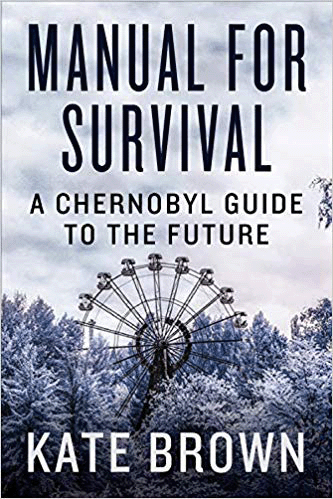
With bountiful, devastating detail, Brown describes how scientists, doctors, and journalists—mainly in Ukraine and Belarus—went to great lengths and took substantial risks to collect information on the long-term effects of the Chernobyl explosion, which they believed to be extensive.
Other researchers have issued a much sunnier picture of post-Chernobyl ecology, but Brown argues persuasively that they are grossly underestimating the scale of the damage, in part because they rely too heavily on simplistic measurements of radioactivity levels.
Radiation has a special hold on our imagination: an invisible force out of science fiction, it can alter the very essence of our bodies, dissolve us from the inside out. But Manual for Survival asks a larger question about how humans will coexist with the ever-increasing quantities of toxins and pollutants that we introduce into our air, water, and soil. Brown’s careful mapping of the path isotopes take is highly relevant to other industrial toxins, and to plastic waste. When we put a substance into our environment, we have to understand that it will likely remain with us for a very long time, and that it may behave in ways we never anticipated. Chernobyl should not be seen as an isolated accident or as a unique disaster, Brown argues, but as an “exclamation point” that draws our attention to the new world we are creating.
“………As her book’s title, Manual for Survival, suggests, Kate Brown is interested in the aftermath of Chernobyl, not the disaster itself. Her heroes are not first responders but brave citizen-scientists, independent-minded doctors and health officials, journalists, and activists who fought doggedly to uncover the truth about the long-term damage caused by Chernobyl. Her villains include not only the lying, negligent Soviet authorities, but also the Western governments and international agencies that, in her account, have worked for decades to downplay or actually conceal the human and ecological cost of nuclear war, nuclear tests, and nuclear accidents. Rather than attributing Chernobyl to authoritarianism, she points to similarities in the willingness of Soviets and capitalists to sacrifice the health of workers, the public, and the environment to production goals and geopolitical rivalries. Continue reading →
Siren sounds on nuclear fallout embedded in melting glaciers https://phys.org/news/2019-04-siren-nuclear-fallout-embedded-glaciers.html, by Patrick Galey, 10 Apr 19, Radioactive fallout from nuclear meltdowns and weapons testing is nestled in glaciers across the world, scientists said Wednesday, warning of a potentially hazardous time bomb as rising temperatures melt the icy residue.
For the first time, an international team of scientists has studied the presence of nuclear fallout in ice surface sediments on glaciers across the Arctic, Iceland the Alps, Caucasus mountains, British Columbia and Antarctica.
It found manmade radioactive material at all 17 survey sites, often at concentrations at least 10 times higher than levels elsewhere.
“They are some of the highest levels you see in the environment outside nuclear exclusion zones,” said Caroline Clason, a lecturer in Physical Geography at the University of Plymouth.
When radioactive material is released into the atmosphere, it falls to earth as acid rain, some of which is absorbed by plants and soil.
But when it falls as snow and settles in the ice, it forms heavier sediment which collects in glaciers, concentrating the levels of nuclear residue.
The Chernobyl disaster of 1986—by far the most devastating nuclear accident to date—released vast clouds of radioactive material including Caesium into the atmosphere, causing widespread contamination and acid rain across northern Europe for weeks afterwards.
“Radioactive particles are very light so when they are taken up into the atmosphere they can be transported a very long way,” she told AFP.
“When it falls as rain, like after Chernobyl, it washes away and it’s sort of a one-off event. But as snow, it stays in the ice for decades and as it melts in response to the climate it’s then washed downstream.”
The environmental impact of this has been shown in recent years, as wild boar meat in Sweden was found to contain more than 10 times the safe levels of Caesium.
Clason said her team had detected some fallout from the Fukushima meltdown in 2011, but stressed that much of the particles from that particular disaster had yet to collect on the ice sediment.
As well as disasters, radioactive material produced from weapons testing was also detected at several research sites.
“We’re talking about weapons testing from the 1950s and 1960s onwards, going right back in the development of the bomb,” she said. “If we take a sediment core you can see a clear spike where Chernobyl was, but you can also see quite a defined spike in around 1963 when there was a period of quite heavy weapons testing.”
One of the most potentially hazardous residues of human nuclear activity is Americium, which is produced when Plutonium decays.
Whereas Plutonium has a half-life of 14 years, Americium lasts 400. [Ed note: Most plutonium isotopes have very long half-lives, plutonium-239 being one of the shortest at over 24,000 years]
“Americium is more soluble in the environment and it is a stronger alpha (radiation) emitter. Both of those things are bad in terms of uptake into the food chain,” said Clason.
While there is little data available on how these materials can be passed down the food chain—even potentially to humans—Clason said there was no doubt that Americium is “particularly dangerous”.
As geologists look for markers of the epoch when mankind directly impacted the health of the planet—known as the Anthropocene—Clason and her team believe that radioactive particles in ice, soil and sediment could be an important indicator.
“These materials are a product of what we have put into the atmosphere. This is just showing that our nuclear legacy hasn’t disappeared yet, it’s still there,” Clason said.
“And it’s important to study that because ultimately it’s a mark of what we have left in the environment.”
Mesothelioma Compensation Center Now Offers to Make Certain That a Nuclear Power Worker with Mesothelioma or Asbestos Exposure Lung Cancer Gets Accelerated Compensation with The Help of Attorney Erik Karst and His Colleagues at Karst von Oiste, Mesothelioma Compensation Center
PR NewswireApr 10, 2019, NEW YORK, The Mesothelioma Compensation Center is incredibly passionate about making certain that a person who was exposed to asbestos at any type of nuclear power plant and now has mesothelioma or asbestos exposure lung cancer receives the very best possible financial compensation. The group recommends the law firm of Karst von Oiste to assist people like this because they so much experience with power plants and asbestos exposure that would have occurred at these types of facilities as they would like to discuss at 800-714-0303. www.karstvonoiste.com
Rather than offering a free book about mesothelioma or asbestos exposure lung cancer the Mesothelioma Compensation Center offers direct access to attorney Erik Karst the founding partner of the law firm Karst von Oiste. The law firm of Karst von Oiste is one of the nation’s leading legal experts on mesothelioma or asbestos exposure lung cancer.
If the family of a nuclear power worker or a Navy Veteran who was exposed to asbestos on a nuclear submarine or aircraft carrier is concerned about compensation, they are urged to call the Mesothelioma Compensation Center anytime at 800-714-0303 for direct access to attorney Erik Karst for answers to questions about compensation and or how the compensation process works. http://MesotheliomaCompensationCenter.Com……
Rather than offering a free book about mesothelioma or asbestos exposure lung cancer the Mesothelioma Compensation Center offers direct access to attorney Erik Karst the founding partner of the law firm Karst von Oiste. The law firm of Karst von Oiste is one of the nation’s leading legal experts on mesothelioma or asbestos exposure lung cancer.
NY Radiation Specialists Unveils State-of-the-Art Linear Accelerator at NYCBS benzinga, 8 Apr 19, Port Jefferson Station, NY, April 08, 2019 –(PR.com)– On Tuesday, March 25, New York Radiation Specialists unveiled its brand new Varian Halcyon Linear Accelerator, at New York Cancer & Blood Specialists’ Eastchester Center for Cancer Care. The “NYCBS” Eastchester location is a multi-lingual facility located at 2330 Eastchester Road in the Bronx, just minutes from the Pelham Parkway. The Halcyon makes the NYCBS Eastchester Center for Cancer Care the most state-of-the-art radiation site in the region.
This cutting edge machine boasts features and benefits previously considered impossible. The Halcyon uses optimized guided radiotherapy technology to shape radiation beams to precisely match a patient’s tumor. These “beam shapers” deliver pinpoint accuracy of radiation to the areas that need it, protecting surrounding tissue and reducing the risk of side effects. In addition, the sophisticated design drastically reduces a patient’s table time. Since the accelerator is a self-contained unit, it is free to rotate up to four times faster than traditional models. The Halcyon can deliver effective radiation therapy in as little as five minutes. “Having the ability to deliver more effective treatment in less time is a win for the patient and aligns perfectly with New York Cancer & Blood Specialist’s mission to provide the highest quality of care,” said Dr. Reuven Grossman, an NYCBS Radiation Oncologist. “This new technology provides the most targeted and effective radiation treatment available anywhere.” Patients even have the option of checking themselves into the unit using a touchscreen and their I.D.
Fortunately, Chernobyl health records are now available to the public. They show that people living in the radioactive traces fell ill from cancers, respiratory illness, anaemia, auto-immune disorders, birth defects, and fertility problems two to three times more frequently in the years after the accident than before. In a highly contaminated Belarusian town of Veprin, just six of 70 children in 1990 were characterised as “healthy”. The rest had one chronic disease or another. On average, the Veprin children had in their bodies 8,498 bq/kg of radioactive caesium (20 bq/kg is considered safe).
Currently, policymakers are advocating a massive expansion of nuclear power as a way to combat climate change. Before we enter a new nuclear age, the declassified Chernobyl health records raise questions that have been left unanswered about the impact of chronic low doses of radioactivity on human health.
As researchers monitored Chernobyl radioactivity, they made a troubling discovery. Only half of the caesium-137 they detected came from Chernobyl. The rest had already been in the Cumbrian soils; deposited there during the years of nuclear testing and after the 1957 fire at the Windscale plutonium plant. The same winds and rains that brought down Chernobyl fallout had been at work quietly distributing radioactive contaminants across northern England and Scotland for decades. Fallout from bomb tests carried out during the cold war scattered a volume of radioactive gases that dwarfed Chernobyl.
The Chernobyl explosions issued 45m curies of radioactive iodine into the atmosphere. Emissions from Soviet and US bomb tests amounted to 20bn curies of radioactive iodine, 500 times more. Radioactive iodine, a short lived, powerful isotope can cause thyroid disease, thyroid cancer, hormonal imbalances, problems with the GI tract and autoimmune disorders.
As engineers detonated over 2,000 nuclear bombs into the atmosphere, scientists lost track of where radioactive isotopes fell and where they came from, but they caught glimpses of how readily radioactivity travelled the globe.
Chernobyl’s disastrous cover-up is a warning for the next nuclear age
https://www.theguardian.com/commentisfree/2019/apr/04/chernobyl-nuclear-power-climate-change-health-radioactivity, Kate Brown , 5 Apr 19, Before expanding nuclear power to combat climate change, we need answers to the global health effects of radioactivity In 1986, the Soviet minister of hydrometeorology, Yuri Izrael, had a regrettable decision to make. It was his job to track radioactivity blowing from the smoking Chernobyl reactor in the hours after the 26 April explosion and deal with it. Forty-eight hours after the accident, an assistant handed him a roughly drawn map. On it, an arrow shot north-east from the nuclear power plant, and broadened to become a river of air 10 miles wide that was surging across Belarus toward Russia. If the slow-moving mass of radioactive clouds reached Moscow, where a spring storm front was piling up, millions could be harmed. Izrael’s decision was easy. Make it rain.So that day, in a Moscow airport, technicians loaded artillery shells with silver iodide. Soviet air force pilots climbed into the cockpits of TU-16 bombers and made the easy one-hour flight to Chernobyl, where the reactor burned. The pilots circled, following the weather. They flew 30, 70, 100, 200km – chasing the inky black billows of radioactive waste. When they caught up with a cloud, they shot jets of silver iodide into it to emancipate the rain.In the sleepy towns of southern Belarus, villagers looked up to see planes with strange yellow and grey contrails snaking across the sky. Next day, 27 April, powerful winds kicked up, cumulus clouds billowed on the horizon, and rain poured down in a deluge. The raindrops scavenged radioactive dust floating 200 metres in the air and sent it to the ground. The pilots trailed the slow-moving gaseous bulk of nuclear waste north-east beyond Gomel, into Mogilev province. Wherever pilots shot silver iodide, rain fell, along with a toxic brew of a dozen radioactive elements.
If Operation Cyclone had not been top secret, the headline would have been spectacular: “Scientists using advanced technology save Russian cities from technological disaster!” Yet, as the old saying goes, what goes up must come down. No one told the Belarusians that the southern half of the republic had been sacrificed to protect Russian cities. In the path of the artificially induced rain lived several hundred thousand Belarusians ignorant of the contaminants around them.
The public is often led to believe that the Chernobyl exclusion zone, a depopulated 20-mile circle around the blown plant, safely contains Chernobyl radioactivity. Tourists and journalists exploring the zone rarely realise there is a second Chernobyl zone in southern Belarus. In it, people lived for 15 years in levels of contamination as high as areas within the official zone until the area was finally abandoned, in 1999.
In believing that the Chernobyl zone safely contained the accident, we fall for the proximity trap, which holds that the closer a person is to a nuclear explosion, the more radioactivity they are exposed to. But radioactive gases follow weather patterns, moving around the globe to leave shadows of contamination in shapes that resemble tongues, kidneys, or the sharp tips of arrows.
Over the years, those who sought care from Dispensary No. 4 or the IRME were logged in the state’s medical registry, which tracks the health of people exposed to the Polygon tests. People are grouped by generation and by how much radiation they received, on the basis of where they lived. Although the registry does not include every person who was affected, at one point it listed more than 351,000 individuals across 3 generations. More than one-third of these have died, and many others have migrated or lost contact. But according to Muldagaliev, about 10,000 people have been continually observed since 1962. Researchers consider the registry an important and relatively unexplored resource for understanding the effects of long-term and low-dose radiation2.
Geneticists have been able to use these remaining records to investigate the generational effects of radiation…….
In 2002, Dubrova and his colleagues reported that the mutation rate in the germ lines of those who had been directly exposed was nearly twice that found in controls3. The effects continued in subsequent generations that had not been directly exposed to the blasts. Their children had a 50% higher rate of germline mutation than controls had. Dubrova thinks that if researchers can establish the pattern of mutation in the offspring of irradiated parents, then there could be a way to predict the long-term, intergenerational health risks.
The nuclear sins of the Soviet Union live on in Kazakhstan https://www.nature.com/articles/d41586-019-01034-8Wudan Yan– 3 Apr 19, Decades after weapons testing stopped, researchers are still struggling to decipher the health impacts of radiation exposure around Semipalatinsk. The statues of Lenin are weathered and some are tagged with graffiti, but they still stand tall in the parks of Semey, a small industrial city tucked in the northeast steppe of Kazakhstan. All around the city, boxy Soviet-era cars and buses lurch past tall brick apartment buildings and cracked walkways, relics of a previous regime.Other traces of the past are harder to see. Folded into the city’s history — into the very DNA of its people — is the legacy of the cold war. The Semipalatinsk Test Site, about 150 kilometres west of Semey, was the anvil on which the Soviet Union forged its nuclear arsenal. Between 1949 and 1963, the Soviets pounded an 18,500-square-kilometre patch of land known as the Polygon with more than 110 above-ground nuclear tests. Kazakh health authorities estimate that up to 1.5 million people were exposed to fallout in the process. Underground tests continued until 1989.
Much of what’s known about the health impacts of radiation comes from studies of acute exposure — for example, the atomic blasts that levelled Hiroshima and Nagasaki in Japan or the nuclear disaster at Chernobyl in Ukraine. Studies of those events provided grim lessons on the effects of high-level exposure, as well as the lingering impacts on the environment and people who were exposed. Such work, however, has found little evidence that the health effects are passed on across generations.
People living near the Polygon were exposed not only to acute bursts, but also to low doses of radiation over the course of decades (see ‘Danger on the wind’). Kazakh researchers have been collecting data on those who lived through the detonations, as well as their children and their children’s children. Continue reading →
Lawsuit filed on behalf of nuclear workers https://www.abqjournal.com/1299172/lawsuit-filed-on-behalf-of-nuclear-workers.html, BY SCOTT TURNER / JOURNAL STAFF WRITER April 2nd, 2019 ALBUQUERQUE, N.M. — James Jaramillo and Harold Archuleta are used to having to navigate through government bureaucracy to receive compensation for illnesses they said were caused by radiation exposure during their days as employees at Sandia National Laboratories and Los Alamos National Laboratory.
Both men had to wait years after filing claims for compensation through the Energy Employees Occupational Illness Compensation Program.
Jaramillo, 65, worked at Sandia for 24 years. He found out he had cancer of the small intestine in 1998. He filed for compensation in 2003 but was originally denied. Through changes in the program, he was finally awarded compensation in 2012 for medical care and lost wages since he was forced to retire.
Archuleta, 80, worked 38 years, 35 full time, at Los Alamos, where, he said, he ended up with skin cancer after years of exposure to plutonium. He’s also received compensation, but his wife, Angie, said it wasn’t an easy process.
“Congress put forth this act to help them, but then when it comes to actually paying, they put up all of these barriers,” Angie Archuleta said. “It’s just been very frustrating.”
According to a release by the Department of Labor’s Office of Workers’ Compensation Programs, changes are being made next week to update some of the regulations, with the goal of increasing efficiency and transparency and reducing administrative costs. The rules would align the regulations regarding processing and paying medical bills with the current system Office of Workers’ Compensation Programs uses to pay medical bills, and set out a new process that the office will use for authorizing in-home health care that will enable the office to better provide its beneficiaries with appropriate care, according to the release.
However, a company that provides health care to workers such as Jaramillo and Archuleta says rule changes involving the program could make it harder for nuclear workers to receive compensation and could delay the medical treatment they need.
The company, Professional Case Management, has filed suit in the District Court of Colorado against the Labor Department to keep the changes to the Energy Employees Occupational Illness Compensation Program from taking effect. Professional Case Management Vice President Tim Lerew said the new changes could cause delays of 60 days or more in treatment.
“It’s hard to know how long those delays will be,” Lerew said at a town hall meeting in Albuquerque last week. “We estimate it will be about an additional 60 days. For some people, coming out of the hospital with particular illnesses where doctors want them to have additional care … they don’t have that time to wait.”
Lerew said the new rule changes will also add 36 steps to the process between the patient, the doctor and the Labor Department to get pre-authorization for treatment and services, such as home health care.
“If they have you jump through 36 more hoops, how is a guy supposed to do that?” Jaramillo asked.
The rule changes would require patients to fill out most of the paperwork. In the past, health care providers would fill out the majority of it, Lerew and Jaramillo said.
“If you don’t dot every ‘i’ and cross every ‘t,’ they deny you,” said Jaramillo’s wife, Terry.
“Nurses take all your vitals and with the doctor come up with your plan, and send to the Department of Labor for approval,” James Jaramillo said. “Now, they want the patients to fill out a lot of the paperwork and submit it themselves, and not let medical people get involved with that.”
Lerew said he wondered how a cancer-stricken person in his or her 80s “is successfully going to navigate that process.”
LeRoy Moore: Low-dose radiation can be more dangerous,http://www.dailycamera.com/letters/ci_32543151/leroy-moore-low-dose-radiation-can-be-more31 Mar 19 Though Maddie Nagle’s beautifully written column of March 8 criticizes me, more important is that she downplays the significance of low-dose exposure to the alpha radiation of plutonium at Rocky Flats. This could harm people unaware of the danger. Carl Morgan, the “Father of Health Physics,” studied the effects of radiation for those building Manhattan Project nuclear weapons. He knew that the alpha particles released by plutonium cannot be harmful unless inhaled or taken into the body through an open wound.
Toward the end of his life he spoke to Robert Del Tredici. He said “down at the low doses you actually get more cancers per person rem than you do at the high doses … because the high levels will often kill cells outright, whereas the low levels of exposure tend to injure cells rather than kill them and it is the surviving injured cells that are the cause for concern.” The effects of a small exposure “will be much more severe than had been anticipated.”(Del Tredici, “At Work in the Fields of the Bomb,” 1987, p. 133)
Nagle also makes misleading remarks about Tom K. Hei of Columbia University. Hei and colleagues demonstrated that a single plutonium alpha particle induces mutations in mammal cells. Cells receiving very low doses are more likely to be damaged than destroyed. Replication of these damaged cells constitutes genetic harm, and more such harm per unit dose occurs at very low doses than would occur with higher dose exposures. “These data provide direct evidence that a single alpha particle traversing a nucleus will have a high probability of resulting in a mutation and highlight the need for radiation protection at low doses.” (Hei et al., Proceedings of the National Academy of Sciences, vol. 94, April 1997, pp. 3765-3770.)
“I see doctors two, three times a week, most the time. That’s my job now, going to the doctor,” Cook said. “There’s like 62 diseases that I have. It’s unreal.”
She lost her hearing, part of her vision, had multiple surgeries and strokes, and is now worried about how she is going to pay for it all.
In 2001, the Energy Employees Occupational Illness Compensation Program Act went into effect, allowing compensation for nuclear workers facing certain health issues. Cook has been filing claims through a division of the Department of Labor since that time, but says the process was long, stressful and lacked communication.
Cook reached out to Denver-based Professional Case Management to help with in-home health care. They provide services for nuclear workers and founded the Cold War Patriots, which advocates for workers.
Oftentimes, they didn’t know that the work they were doing was so dangerous and [so] harmful to their health,” said PCM president Greg Austin.
PCM is now suing the federal government over rule changes set to take effect April 9, saying they violate constitutional rights, among other legal issues.
“Under the new rules, there’s a lengthy, roughly 36-step process that involves filling out forms, mailing them back and forth, before that care can start,” Austin said.
“Program that takes years to get compensation, they want us to die before they pay us?” Cook said.
The Problem Solvers reached out to the Department of Labor for comment about why the rule changes were necessary and was referred to OSHA, but have yet to hear back.
Austin says the process could take former workers more than 60 days just to file a claim.
A judge will hear arguments in federal court in Denver on April 4 to determine whether the rule changes should stay or go.
Join the Nuclear Bombs Never Again webinar on August 4th at 5pm Pacific Time / 8pm Eastern Time / 9am Japan Standard Time.
Cross generational voices at the intersection of Japan-Korea-US policy and militarization will share their lived experiences, nuclear impacts in these contexts, anti-war strategies, and actions you can take to advocate for a world with Nuclear Bombs Never Again. This 75-minute event is co-hosted by WILPF US and Korea Peace Now.


 e
e








 nuclear-news