
Climate change could unlock new microbes and increase heat-related deaths
Climate change could unlock new microbes and increase heat-related deaths, Science Daily, January 22, 2020, Source: Johns Hopkins Medicine
- Summary:
- Scientists warn that global climate change is likely to unlock dangerous new microbes, as well as threaten humans’ ability to regulate body temperature…..
- Ahima, director of Johns Hopkins’ Division of Endocrinology, Diabetes and Metabolism, wrote in the journal that “global warming threatens human thermoregulation and survival.” ……
- Casadevall’s article explores “the specter of new infectious diseases” as a result of the changing climate.
“Given that microbes can adapt to higher temperatures,” writes the professor of molecular microbiology and immunology, and infectious diseases, at Johns Hopkins’ schools of medicine and public health, “there is concern that global warming will select for microbes with higher heat tolerance that can defeat our endothermy defenses and bring new infectious diseases.”
Endothermy allows humans and other warm-blooded mammals to maintain high temperatures that can protect against infectious diseases by inhibiting many types of microbes.
Casadevall cites a particular climate threat from the fungal kingdom.
“We have proposed that global warming will lead many fungal species to adapt to higher temperatures,” he writes, “and some with pathogenic potential for humans will break through the defensive barrier provided by endothermy.”….
- In all four JCI “Viewpoint” articles, long-term strategies are urged to reduce greenhouse gas emissions and slow the trend of rising temperatures. ….https://www.sciencedaily.com/releases/2020/01/200122122105.htm
Climate change afflicting the health of the world’s children
Warning: Climate change will bring major new health risks for kids https://thebulletin.org/2020/01/warning-climate-change-will-bring-major-new-health-risks-for-kids/?utm_source=Newsletter&utm_medium=Email&utm_campaign=MondayNewsletter01202020&utm_content=ClimateChange_HealthRisks_01172020#
By Kathleen E. Bachynski, January 17, 2020 As we enter a new decade, headlines from across the world make all too clear that the effects of climate change are not just looming. They’re here, they’re now, and they’re devastating communities on every continent. For example, in Australia, unprecedented fires have emitted roughly 400 million tons of carbon, killed at least 25 people, and destroyed 2,000 homes. In Indonesia, terrible flooding has killed at least 67 people and caused 400,000 to abandon their homes. The loss of sea ice in the Arctic is shrinking access to food resources that numerous indigenous communities have depended on for generations.
But the health effects of climate change go beyond even the most immediate and obvious consequences of fires, floods, and melting ice. In November 2019, the medical journal The Lancet published a detailed report examining the effects that climate change will have on human health under two scenarios: one in which the world reins in emissions according to commitments laid out in the Paris agreement, and one in which the world does not. In both cases, children will be most vulnerable to the numerous health harms resulting from decisions made by their parents and grandparents. Children are particularly likely to suffer the effects of climate change for numerous reasons: Their immune and organ systems are still developing, they drink relatively more water and breathe in more air than do adults relative to their body weight, and they tend to spend more time outdoors. Understanding the full scope of the public health consequences of a changing climate, then, involves examining how the risks will affect the bodies of the youngest people.
According to the Lancet report, air pollution—specifically, exposure to fine particulate matter known as PM 2.5—represents the largest environmental risk factor for premature deaths across the globe. When people think of the public health effects of air pollution, they often imagine the worst-case scenarios. For example, the smoke from the fires in Australia is currently so severe that a day spent inhaling the air in east Sydney represents the equivalent of smoking 19 cigarettes.
But air pollution need not reach such extreme levels to cause serious harm. Far more commonly, people are unaware of the daily pollution that they are breathing in due to the burning of fossil fuels, such as coal and gas. In fact, more than 90 percent of children are exposed to concentrations of PM 2.5 higher than the World Health Organization’s guidelines on outdoor air pollution. Over a lifetime, unhealthy air damages lungs and increases risks for a host of diseases, from asthma to pneumonia. And due to their small body size and the factors cited above, children absorb more of this pollution than do adults.
Similarly, The Lancet report notes that children are particularly vulnerable to the effects of heat. Specifically, young children are at greater risk for experiencing electrolyte imbalance, fever, respiratory disease, and kidney disease during periods of extreme heat. Rates of heat-related deaths are four times higher among children younger than one year old as compared to people aged 1-to-44. Changing temperature and precipitation patterns are also influencing the transmission of disease from insects to humans. In particular, malaria and dengue are spread by mosquitoes, and climate suitability for transmission of these diseases is increasing in numerous parts of the world. Because children tend to spend more time outdoors, they are more likely to contract these diseases. In 2017, children accounted for 61 percent of all malaria deaths worldwide, and climate change is putting more children at even greater risk.
Changing climate patterns, droughts, and fires also threaten to reduce crop yields and increase food insecurity. Moreover, rising carbon dioxide appears to diminish the nutrient quality of crucial staple foods such as wheat and rice. Combined, these trends are likely to exacerbate the already serious global health problem of malnutrition, which currently accounts for nearly one-fifth of premature deaths and poor health globally. The consequences of malnutrition are particularly severe among children. In 2018, 22 percent of children under five years of age were stunted, meaning they experienced impaired growth and development. Stunting is largely irreversible and includes serious consequences, from poorer cognition to increased risk of nutrition-related chronic diseases later in life.
Finally, The Lancet report observes that climate change has other health implications that are more challenging to quantify but crucial to address, such as mental health effects. Researchers have found that children are at high risk of mental health problems following the types of natural disasters that are likely to increase due to climate change. For example, one study found that 31 percent of a group of children who were evacuated during Hurricane Katrina reported clinically significant symptoms associated with depression and Post Traumatic Stress Disorder. According to the Centers for Disease Control, children are at particular risk for stress after a disaster because they often understand less about what is occurring, feel less able to control events, and have less experience coping with difficult situations.
Protecting children from air pollution, heat-related deaths, infectious diseases, malnutrition, and mental health effects associated with climate change will involve the mobilization of all sectors of society to drastically reduce emissions and invest in health systems and infrastructure. The Lancet report notes a few promising signs, such as increased public and political engagement, and increasing health adaptation spending to improve communities’ resilience to a changing climate. Unfortunately, however, current efforts are falling far short of what is needed to meaningfully reduce carbon emissions on the scale needed to address the threat posed to human health. According to a 2019 United Nations report, greenhouse gas emissions must begin falling by 7.6 percent this year in order to meet the most ambitious goals laid out in the 2015 Paris climate accord. But the world is nowhere near this goal, and many countries are heading in the opposite direction. Notably, in 2018, energy-related carbon dioxide emissions rose by 2.7 percent in the United States. The United Nations has warned that every year of delay “brings a need for faster cuts, which become increasingly expensive, unlikely, and impractical.”
Waiting until action becomes more difficult, or perhaps even impossible, has appalling moral consequences. The longer we fail to act to address the risks of climate change, the more human lives we place on the line. And the majority of those lives will belong to the most vulnerable among us. It is no wonder, then, that children across the world have taken the lead in advocating for urgent, necessary action. The public health stakes for them—and for all people—grow higher with each passing year. Our health is fundamentally tied to our planet’s health. We must all consider, then, what actions we need to take to protect our planet—and thereby our communities, our children, and our selves.
Report shows that most young adults fear a nuclear attack this decade
More than half the world’s millennials fear a nuclear attack this decadeThe International Committee of the Red Cross released an astounding report. Vox, By Alex Ward@AlexWardVoxalex.ward@vox.com Jan 20, 2020 A majority of millennials around the world believe it’s more likely than not that a nuclear attack will happen sometime in the next 10 years — a sign that younger adults’ views on global affairs is exceedingly bleak. The International Committee of the Red Cross, a worldwide humanitarian organization, surveyed 16,000 millennials — adults between the ages of 20 and 35 — in 16 countries and territories last year: Afghanistan, Colombia, France, Indonesia, Israel, Malaysia, Mexico, Nigeria, Palestinian Territories, Russia, South Africa, Syria, Switzerland, the United Kingdom, Ukraine, and the United States. Half of those nations are experiencing conflict right now, while the other half are fortunately in peace. Based on the results released last week, this demographic is worried about what the future holds. “More than half of millennials — 54 percent — believe it is likely that a nuclear attack will occur in the next decade,” reads the report. Those questioned in Malaysia are the most likely to fear a nuclear device going off soon, while Syrians are the least likely to worry about that. However, respondents said that nuclear weapons were the least concerning of the 12 different issues they were asked to rank, with corruption topping the list followed by unemployment and increasing poverty. Still, the fear of a nuclear attack seems to be a trend. A January 2018 World Economic Forum survey of 1,000 leaders from government, business, and other industries, for example, identified nuclear war as a top threat. The worldwide shudder is understandable. The chance of a nuclear conflict between the US and North Korea isn’t entirely gone. India and Pakistan, two nuclear-armed enemies, could rekindle their decades-long squabble at any time. And the US and Russia — the world’s foremost nuclear powers — have had warheads pointed at each other since the earliest days of the Cold War……… https://www.vox.com/2020/1/20/21070621/millennials-survey-nuclear-world-war-3-red-cross |
|
UK’s nuclear region, Cumbria, has unusually high rates of certain cancers
NW Evening Mail 16th Jan 2020, A WORRYING new report has found that Cumbria has the highest incidence rates of certain kinds of cancer in the North West. According to data collated by charity North West Cancer Research, the county ranks 11 per cent higher on key cancers than the national average. As part of the study, analysts assessed the impact of 25 key cancers across the North West and 37 cancers across Wales.Low dose radiation causes cell mutations – new research
Low doses of radiation used in medical imaging lead to mutations in cell cultures, https://www.sciencedaily.com/releases/2020/01/200116141731.htm–
Discovery that radiation creates breaks that allow in foreign DNA must be confirmed in animal studies January 16, 2020 Source: PLOS
- Summary:
- Common medical imaging procedures use low doses of radiation that are believed to be safe. A new study, however, finds that in human cell cultures, these doses create breaks that allow extra bits of DNA to integrate into the chromosome.
-
Common medical imaging procedures use low doses of radiation that are believed to be safe. A new study, however, finds that in human cell cultures, these doses create breaks that allow extra bits of DNA to integrate into the chromosome. Roland Kanaar and Alex Zelensky of Erasmus University Medical Center and Oncode Institute and colleagues report these new findings in a study published 16th January in PLOS Genetics.
Scientists have long known that exposing cells to high doses of ionizing radiation generates mutations by creating double-strand breaks that let in external segments of DNA. These extraneous fragments of DNA can occur in the nucleus, left over from natural processes, such as genomic DNA repair and viral infections. In the new study, researchers investigated whether low doses of ionizing radiation have damaging side effects by irradiating human and mouse cells grown in the lab. When they counted the cells that had taken up foreign DNA, they found that low doses of radiation, in the upper range of common diagnostic procedures, create mutations through inserted DNA even more efficiently than the much larger doses studied previously.
- While the new results in cell cultures are potentially concerning, the study’s authors stress that translating radiation’s effects on lab-grown cell cultures to effects in the body is premature. Future experiments using animal models will be necessary to determine the full effects of low-dose radiation, and whether its use in medical imaging has an impact on patient health. If the same phenomenon does occur inside the body, then doctors may need to take into account levels of extraneous DNA, such those resulting from a long-term viral infection, when assessing a patient’s risk from a procedure that requires radiation.
“Most molecular radiobiological research is focused on high doses of ionizing radiation relevant to cancer treatment, while effects of physiologically relevant doses of radiation on the cell are notoriously difficult to study at the molecular level,” said author Roland Kanaar. “Our discovery that mutagenic insertion of foreign DNA into cell’s genome is remarkably responsive to doses encountered during diagnostic, rather than therapeutic, procedures provides a new simple and sensitive tool to study their consequences and revealed surprising molecular genetic details of how cells cope with natural amounts of DNA damage.”
Need to improve Hanford radiation exposure records
|
Some Hanford radiation exposure records could harm workers and taxpayers, report says, https://www.bellinghamherald.com/news/state/washington/article239240843.htm
BY ANNETTE CARY, JANUARY 13, 2020 RICHLAND, WA Recordkeeping at Hanford could be improved to track worker radiation exposure, including to ensure fair compensation for workers who develop cancer, according to an inspection report of the Department of Energy Office of Inspector General. Issues in recordkeeping can be a problem for both individual workers and the federal government under a compensation program for ill workers, said the report released Monday. If a group of workers’ radiation exposure cannot be determined because of lack of records, the compensation program conservatively assumes that working at Hanford caused any of a wide range of cancers and the federal government must offer compensation. Recordkeeping issues also could prevent a worker from having complete records to make an individual case that cancer was caused by radiation exposure. The Energy Employee Occupational Illness Compensation Program Act (EEOICPA) pays each worker $150,000 in compensation for cancer plus medical coverage. An additional payment of up to $250,000 compensation may be made related to wage loss and impairment The program has paid out $1.7 billion to Hanford workers, former workers and their survivors in compensation and reimbursement of medical costs.
Brian Vance, the Department of Energy Hanford manager, disputed that inconsistencies in recordkeeping posed a liability to DOE under the compensation program, but did not explain why in his response to the Office of Inspector General. PAST RADIATION RECORDKEEPING INCOMPLETEThe review of the radiation exposure, or dosimetry program, at Hanford generally found that DOE Hanford contractor Mission Support Alliance was doing a good job of managing radiation exposure records for all Hanford workers. But it raised concerns that about 111 tank farm workers hired in 2014 and 2015 were not given radiation history forms to fill out by their employer, Washington River Protection Solutions. Some may have had previous exposures at the Hanford nuclear reservation or other DOE sites. Although the problem has since been resolved, some workers went without a historical exposure record in the Radiation Exposure Database for up to 3.5 years, according to the IG report. Radiation exposure records “provide key and sensitive information to management and workers, who make decisions based on this information, the IG report said. Although Mission Support Alliance has forms that other Hanford contractors can use to complete records in the site’s Radiation Exposure Database, contractors may instead use their own forms. Those forms do not require all the information that needs to be input into the database, which increases the risks that the database will not be complete and accurate, according to the IG report. DOE responded that it would consider working with Hanford contractors on standardized radiation exposure forms where appropriate. Mission Support Alliance provides sitewide services at Hanford, while contractors Washington River Protection Solutions and CH2M Hill Central Plateau Remediation Co. hires workers for cleanup of environmental contamination at Hanford, including radioactive waste and contamination. The Hanford nuclear reservation is contaminated from the past production of plutonium for the nation’s nuclear weapons program from World War II through the Cold War. REVIEW OF DOSIMETRY REPORTING POLICIESDOE also agreed to review contracts and procedure manuals for consistency in radiation exposure reporting requirements, after the IG report said there were inconsistencies. The report concluded that some of the issues with radiation-exposure records might be because of unclear oversight responsibilities at Hanford. Mission Support Alliance reports to the DOE Hanford Richland Operations Office, while one of the cleanup contractors, the tank farm contractor, reports to the DOE Hanford Office of River Protection. Vance, who oversees both DOE offices, said that was not a problem, but that the two offices will reinforce expectations that existing processes are used to resolve any conflict between contractors on dosimetry service issues. Hanford workers or the survivors of ill workers can learn more about compensation programs and how to apply for them at the Hanford Workforce Engagement Center at 309 Bradley Blvd., Suite 120, in Richland. The center can be reached at 509-376-4932. |
|
New Zealand veterans await nuclear radiation genetic testing study
|
New Zealand veterans await nuclear radiation genetic testing study, https://www.rnz.co.nz/news/national/406922/new-zealand-veterans-await-nuclear-radiation-genetic-testing-study 8 Jan 2029Veterans deployed to the Mururoa Atoll will wait another two months to find out whether their children and grandchildren may be genetically impacted by nuclear radiation.
A Mururoa Nuclear Veterans Group teamed up with Otago University last year to produce a study about whether the families of veterans deployed to Mururoa Atoll in 1973, may have been affected by their parents’ exposure to radiation. University of Otago researcher David McBride is leading the study and said “the public need to know” what veterans had been facing and he hoped this study could help them in their quest for more support for their families. About 145 people participated in the study which took six weeks. It is now being peer reviewed for the New Zealand Medical Journal. “When and if our study is peer reviewed favourably then published, I’m hoping that’s not going to take too long,” he said. He said he suspected the veterans group would have to wait until March or April at the latest. “One of the most out-of-the-ordinary things you can have is exposure to nuclear radiation,” he said. “It certainly was a traumatising experience and they are right inthe fact that they may have passed defect onto their children and grandchildren.” |
|
Radiation-free medical imaging
Medical City Frisco Launches Radiation-Free Imaging System, Healthcare 01/3/2020| by Will Maddox, Medical City Frisco is working to replace intraoperative radiation devices by using a radiation-free tool to aid spine and cranial procedures. The device will allow surgeon to safely place spinal implants or remove cranial tumors while improving patient safety.The system is called the Machine-Vision Image Guided Surgery platform, which uses camera technology to identify anatomy and guide tools during procedures. The technology uses only visible light and not radiation to create the image, and is similar to what is used in self-driving vehicles……https://healthcare.dmagazine.com/2020/01/03/medical-city-frisco-launches-radiation-free-imaging-system/
Depleted uranium causing cancer epidemic in Serbia
The number of cancer patients will dramatically increase 20 years after NATO aggression, because that is when uranium has strongest effect, said oncologist Vladimir Cikaric. Now we have 35000 people that suffer from cancer, and in three years that number could climb to 70.000
According to him, there are 35.000 people suffering from cancer, and after 2019 that number could double to 70.000 because the effect of the depleted uranium from Kosovo and from Pcinjski area is spreading over the entire country.
– Serbia is number one in the mortality rate from tumors in Europe, and we have almost three times higher mortality than carcinoma in comparison to the world. The reason is that the dust from the depleted uranium in Pcinski area and Kosovo spread across the entire country. We all breathed it. Because of that we now have drastic increase of leukemia and lymphoma, but also all other types of carcinoma. However, the worst is yet to come. Depleted uranium has the strongest effect after 20 years and it turns healthy cells into cancer cells. That means that from 2019 the number of people who will get sick with cancer will increase, according to some assessments, there will be 70.000 people, which is twice the number we have now. Real health disaster is in front of us, which we can not prevent – warns Cikaric.
Ionising radiation damages brain connections
|
How Radiation Can Affect Brain Connections https://www.technologynetworks.com/neuroscience/news/how-radiation-can-affect-brain-connections-328547 Dec 17,| 2019 Original story from University of Rochester Medical Center, One of the potentially life-altering side effects that patients experience after cranial radiotherapy for brain cancer is cognitive impairment. Researchers now believe that they have pinpointed why this occurs and these findings could point the way for new therapies to protect the brain from the damage caused by radiation.
The new study – which appears in the journal Scientific Reports – shows that radiation exposure triggers an immune response in the brain that severs connections between nerve cells. While the immune system’s role in remodeling the complex network of links between neurons is normal in the healthy brain, radiation appears to send the process into overdrive, resulting in damage that could be responsible for the cognitive and memory problems that patients often face after radiotherapy. Continue reading |
Radiation- high levels near start of Japan’s 2020 Olympic Torch Relay
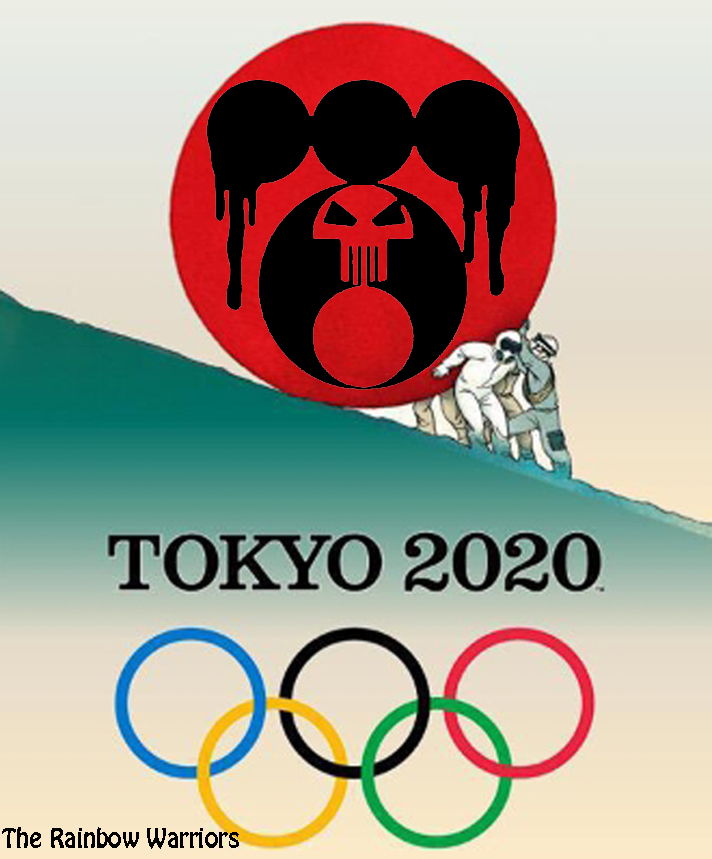
Nuclear Radiation Hot Spots Found At Starting Point Of Japan’s 2020 Olympic Torch Relay https://www.gizmodo.com.au/2019/12/nuclear-radiation-hot-spots-found-at-starting-point-of-japans-2020-olympic-torch-relay/, George Dvorsky, Dec 5, 2019, High levels of radiation have been detected near Japan’s J-Village, a sports facility and the starting point of the upcoming Olympic torch relay, according to Greenpeace. The discovery was made by surveyors with Greenpeace Japan, which warns that monitoring and decontamination efforts in Fukushima are inadequate.
Radiation levels as high as 71 microsieverts per hour were found on the surface near J-Village in northeastern Japan, according to a Greenpeace press release issued Wednesday. This level of radiation is hundreds of times greater than what’s stipulated in Japan’s decontamination guidelines, prompting Greenpeace Japan to demand that the Japanese government conduct regular radiation monitoring and decontamination of regions affected by the 2011 Fukushima nuclear disaster.
J-Village National Training Centre is in Fukushima prefecture, which is located 20 kilometres from the damaged nuclear power plant. This sports facility will be the starting point of the Tokyo 2020 Olympic Torch Relay, which is scheduled to begin on March 26, 2020. That J-Village was chosen as the starting point for the relay is by design, as the Japanese government is promoting the games as the “reconstruction Olympics.” The Olympics will begin on July 24, 2020 in Tokyo, some 239 kilometres from the damaged reactors.
|
J-Village recently underwent renovations, and the facility was used to host the Argentina team during the Rugby World Cup held just a few weeks ago, according to Reuters. And as the Guardian reports, the facility served as a “logistics hub” for crews working to manage and decommission the damaged reactors. The readings were made over a two-hour period on October 26 by Greenpeace’s Nuclear Monitoring & Radiation Protection Advisors. High levels of radiation were detected along the boundary of the parking lot and a forest next to J-Village, reports Sankei Shimbun. Readings at ground level were as high as 71 microsieverts, which is 308.7 times more than the nationally accepted 0.23 microsieverts per hour—the standard for decontamination—and 1,775 times the level prior to the Fukushima disaster, according to Greenpeace. Continue reading |
Thorny topic of Fukushima food at the 2020 Olympics
It’s a thorny subject for the authorities. They pitched the Olympics in part as a chance to showcase the recovery of areas affected by the 2011 earthquake, tsunami and nuclear disaster.
Government officials tout strict checks on food from the prefecture as evidence the produce is completely safe, but it remains unclear whether athletes and sports teams from around the world will be convinced.
In Fukushima, producers are keen to see their products served in the Olympic Village and have submitted a bid to the organizers………
It’s a thorny subject for the authorities. They pitched the Olympics in part as a chance to showcase the recovery of areas affected by the 2011 earthquake, tsunami and nuclear disaster.
Government officials tout strict checks on food from the prefecture as evidence the produce is completely safe, but it remains unclear whether athletes and sports teams from around the world will be convinced.
In Fukushima, producers are keen to see their products served in the Olympic Village and have submitted a bid to the organizers.
But the figures have only gone some way to reassuring foreign officials: Numerous countries including China, South Korea and the U.S. maintain restrictions on the import of some or all produce from Fukushima.
South Korea, currently locked in a dispute with Japan over wartime issues, has been vocal about its concerns ahead of the Olympics, even raising the possibility of bringing in its own kitchen and food.
“We have requested the Olympic organizers to provide objective data verified by an independent third body,” the South Korean Sports and Olympic Committee said in a statement earlier this year.
“Since Japan repeatedly said its food from Fukushima is safe, we have demanded they provide statistics and data to back up their claims,” an official with the committee said.
The position underlines a long-running problem for Japan: While it points to its extensive, government-mandated checks as proof of safety, many abroad feel the government is not an objective arbiter…….
The International Olympic Committee has said it is still weighing how to handle the matter……. https://www.japantimes.co.jp/news/2019/11/26/national/fukushima-food-olympics-tokyo-2020/#.Xd7rfugzbIU
-
Archives
- January 2026 (271)
- December 2025 (358)
- November 2025 (359)
- October 2025 (376)
- September 2025 (258)
- August 2025 (319)
- July 2025 (230)
- June 2025 (348)
- May 2025 (261)
- April 2025 (305)
- March 2025 (319)
- February 2025 (234)
-
Categories
- 1
- 1 NUCLEAR ISSUES
- business and costs
- climate change
- culture and arts
- ENERGY
- environment
- health
- history
- indigenous issues
- Legal
- marketing of nuclear
- media
- opposition to nuclear
- PERSONAL STORIES
- politics
- politics international
- Religion and ethics
- safety
- secrets,lies and civil liberties
- spinbuster
- technology
- Uranium
- wastes
- weapons and war
- Women
- 2 WORLD
- ACTION
- AFRICA
- Atrocities
- AUSTRALIA
- Christina's notes
- Christina's themes
- culture and arts
- Events
- Fuk 2022
- Fuk 2023
- Fukushima 2017
- Fukushima 2018
- fukushima 2019
- Fukushima 2020
- Fukushima 2021
- general
- global warming
- Humour (God we need it)
- Nuclear
- RARE EARTHS
- Reference
- resources – print
- Resources -audiovicual
- Weekly Newsletter
- World
- World Nuclear
- YouTube
-
RSS
Entries RSS
Comments RSS