Fukushima Daiichi nuclear power plant’s deadly hazard – highly radioactive sandbags
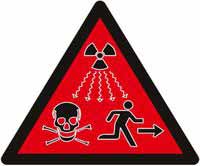 Nuclear sandbags too hot to handle, https://www.theaustralian.com.au/world/the-times/nuclear-sandbags-too-hot-to-handle/news-story/87b811443cb8e2881f55e17108872880 By RICHARD LLOYD PARRY, THE TIMES. APRIL 1, 2020
- Japanese engineers trying to dismantle the melted reactors at the Fukushima Daiichi nuclear power plant face a new hazard — radioactive sandbags so deadly that standing next to them for a few minutes could be fatal.
The sandbags were intended to make life easier for the teams dealing with the aftermath of the nuclear disaster in 2011 when three reactors melted after a tsunami destroyed their cooling systems. Twenty-six tonnes of the bags were placed in basements beneath two of the reactors to absorb radioactivity from waste water.
They were stuffed with zeolite, minerals that can absorb caesium. Nine years after the disaster, the submerged sandbags have sucked up so much radiation that they now represent a deadly danger themselves.
Samples of zeolite removed from the bags contain caesium, producing huge amounts of radiation, while the sandbags are giving off up to four sieverts of radiation an hour. Fifteen minutes of exposure to this could cause haemorrhaging. After an hour, half of those exposed would eventually die as a result. The maximum lifetime recommended dose of radiation for humans is less than half a sievert.
Tokyo Electric Power Co (Tepco), which operates the plant, had intended to remove the contaminated water by the end of 2020. The complication caused by the sand means it will take three years longer, the latest delay to the decommissioning.
Tepco managers have admitted that the technology needed to finish the job does not exist and they do not have a full idea of how it will be achieved. Their stated goal of decommissioning by 2051 may be impossible, they said.
One of the biggest problems is the 170 tonnes of irradiated water coming out of the plant every day, much of it natural ground water that flows through the earth towards the sea, picking up radiation on the way. Tepco pumps it out and stores it in huge storage tanks, filtered of some, but not all, of its contaminants — 1.17 million tonnes so far. In two years, the storage space will run out.
The government wants to pour the water away, insisting that the diluting effect of the Pacific will render the radiation harmless, but it is opposed by North and South Korea and the local fishing industry, whose reputation has been ruined by the disaster.
Russia concerned about coronavirus and nuclear safety, as four nuclear workers test positive4
 Four nuclear workers test positive for coronavirus as Rosatom steps up pandemic response Bellona, April 1, 2020 by Charles Digges The staff of at least one nuclear power plant in Russia has been put into isolation due to concerns over the spread of Covid-19, as Rosatom, Russia’s state nuclear corporation, announced a raft of measures to protect the employees of its sprawling domestic and international apparatus.
Four Russian nuclear workers have tested positive for the coronavirus and the staff of a nuclear power plant has been put into isolation while state nuclear corporation Rosatom implements a raft of measures to protect employees of its sprawling domestic and international apparatus.
As Moscow – and the rest of the world – institutes lockdowns for its citizens, Rostom says it is erring on the side of caution to protect its highly skilled workers against an international pandemic that has infected some 877,000 people around the planet. As of March 31, Russia claims 2,337 of those cases………
On Monday, Alexei Likhachev, Rosatom’s CEO said in a video address on the company’s website that he had instituted corporation-wide health checks and sanitation practices at nuclear facilities in Russia, and had sent home all employees who could feasibly work remotely.
But he left broader decisions about staff quarantines up to local authorities, both in the Russian regions where Rosatom operates facilities as well as in foreign countries.
To that end, he said that Rosatom is continuing the construction of nuclear stations abroad despite the global coronavirus outbreak. But he added that the majority of business trips scheduled for Rosatom employees had been cancelled. …….
Throughout the world, nuclear operators are grappling with the advance of the coronavirus, which causes the Covid-19 illness. Some countries, like the United States, are suggesting that nuclear power plant operators should be isolated on site to prevent their specialized staff from falling ill.
The United Kingdom has already shut down one of its nuclear fuel reprocessing sites after a portion of its technicians were forced to self-isolate after being exposed to the virus.
In France, the Le Hague reprocessing facility has likewise been stalled. And while France’s national operator EDF has refused to comment about the level of absenteeism or the number of confirmed coronavirus infections among its staff, it says its nuclear power plants could operate for three months with a 25 percent reduction in staffing levels and for two to three weeks with 40 percent fewer staff.
Rosatom’s 250,000 employees operate 38 nuclear reactors throughout Russia and staff numerous mining, technological and sales concerns throughout Europe, Asia and the Middle East. The corporation also has 36 power units at different stages of implementation in 12 countries around the world. It is currently constructing seven reactors overseas: two each in Bangladesh, Belarus and India, plus one unit in Turkey.
38 sailors on nuclear-powered aircraft carrier positive for COVID-19, U.S. military secretive on impact of virus
APR 1, 2020
Relying on a high-state of readiness, the nuclear triad is under threat from the coronavirus……….in a War of the Worlds-style twist, humanity’s most lethal weapons could be nullified by an organism that can’t even be seen. ……
U.S. Nuclear Regulatory Commission weakens some regulations in view of COVID-19
Nuclear regulators ease some power reactor regs in response to COVID-19, By Matthew Bandyk Utility Dive, March 31, 2020,
- In response to the COVID-19 pandemic and its strain on available nuclear plant personnel, the U.S. Nuclear Regulatory Commission is allowing power reactor operators to apply for temporary exemptions from regulations limiting the amount of hours workers can stay on the job, according to a letter released by the agency on Monday.
- In addition, the NRC staff is also working on a separate memorandum that will guide nuclear plants as to which labor and time-intensive tasks they can temporarily waive, such as many of the inspections during refueling outages………
The nuclear industry and the impact of coronavirus
|
Nuclear industry’s response to Covid-19 outbreak, Power Technology, 1 Apr,20 “……..Impact of coronavirus on the nuclear industry’s operations The nuclear industry is assessing measures to safeguard their workforce and implementing business continuity plans to ensure continuous functioning of key aspects of their businesses. The nuclear industry already has a robust safety culture in place worldwide. Based on the guidance and directives put into practice across various countries and regions, actions have been taken. Since the time that coronavirus was first detected in China’s Wuhan region, before becoming a global pandemic, companies worldwide had time to execute business continuity plans and take the necessary steps for the dealing with the impact of the virus. Measures have been taken to screen workers and isolate those who show virus symptoms through temperature checks to detect fever, which is among the common Covid-19 symptom. Few countries have advised their staff to work remotely and not on-site, hence aiding with social distancing measures. For example, in the US, officials have recommended they may isolate or quarantine crucial nuclear power plant (NPP) technicians and allow them to live onsite to decrease their proximity with others in case this is needed. Many operators are getting hold of supplies of food, beds along with other essentials items required to support their staff for this purpose. Key NPP staff could be required to stay in assigned accommodation and commute to and from the nuclear facility in separate transportation. To safeguard the health of workers in regions where the occurrence of coronavirus may rise considerably, actions such as changing shift patterns are being assessed. Companies are also limiting or dropping their non-essential business travel plans and making use of conference video and audio calls for carrying out business meetings. France’s regulator, Nuclear Safety Authority (ASN), is avoiding direct physical contact to stop the spread of the coronavirus and is prioritizing control of operating facilities. A number of inspectors from the UK’s regulator, Office for Nuclear Regulation (ONR), will go ahead with travel plans to sites where needed but will restrict most of its business operations via phone, email and Skype. Currently, NPP operations are continuing in many countries. The US Nuclear Regulatory Commission (US NRC) has stated that it may close down any of the country’s 60 NPP if they cannot be aptly staffed. Few nuclear facilities have temporarily shut down their operations to avoid the spread of the coronavirus and secure their workforce. In the UK, authorities have idled a nuclear fuel reprocessing site located at Sellafield after 8% of its 11,500 workforce were asked to self-isolate or quarantine to avoid the spread of the coronavirus infection. This step came after a staff member was tested Covid-19 positive a few weeks earlier, and will eventually lead to a controlled shutdown of the site’s Magnox facility, expected to close down permanently this year. The EDF-owned Hinkley Point C (HPC) NPP in the UK, has also reduced its workforce by more than half and will further decrease its staff members as work in progress is finished. Rosatom’s overseas NPP construction projects have also progressed under the recommendations and guidelines of the disease control services as well as governments of the corresponding countries where construction work is going on. Work was suspended on few nuclear reactors which are under construction in China following the coronavirus outbreak. Now as work is slowly restarting in the country, countermeasures have been taken for all staff members returning to nuclear site. France, the most nuclear dependent country in the world, announced scaling down of staff at its Flameville NPP, operated by EDF, the country’s major nuclear operator. EDF stated that it is decreasing staff at the NPP from 800 to 100, because of the high regional Covid-19 infection rates. Three workers at the EDF’s Fessenheim NPP, Belleville NPP, and Cattenom NPP have already been tested positive for the coronavirus. French grid operator Réseau de Transport d’Électricité (RTE) presumes that nuclear availability will stay 3.6 Gigawatt (GW) below 2015 to 2019 average, in addition to a national fall in nuclear power demand. EDF has withdrawn its 2020 nuclear power generation target amidst an expected drop in its output this year due to the coronavirus outbreak. Orano, an integrated nuclear energy company, has also withdrawn its financial year (FY) outlook for 2020. When it comes to nuclear reactor operations, the Ascó I NPP in Tarragona and Almaraz I NPP in Cáceres, Spain, have notified about rescheduling or delaying of their outages for nuclear fuel loading. In Germany, NPP operators are stepping up precautionary measures to stop the spread of coronavirus. For instance, RWE, is involved in disinfecting radiation meters which are normally used by staffs quite often. The company has also shut down visitor centres and called off its scheduled group visits to decrease the risk of Covid-19 infections. The Finnish state-owned energy company Fortum Oyj’s Loviisa NPP is also undertaking precautionary measures to help stop the spread of the coronavirus. The company is adhering to the Covid-19 recommendations and guidelines put forward by the World Health Organization (WHO) and national authorities. External visitors are also prohibited at the NPP until further notice. MiningKazatomprom, Kazakhstan’s state-owned uranium production company, with a total uranium production volume (100% basis) of 22,808t of elemental uranium (tU) in 2019 has made announcement of drawing on its current uranium inventory if its mining activities are affected. The company’s uranium mining sites are located in remote areas of the country and so far the coronavirus outbreak has not yet affected its operations. However, considering the remoteness of these mining sites, the company needs to take precautionary measures if in case any outbreak occurs. The Canadian uranium company, Cameco, has also temporarily idled production of its Cigar Lake uranium mine located in northern Saskatchewan, Canada, as a response to the Covid-19 pandemic. This will reduce the staff members working on-site from around 300 to 35, hence leading to physical distancing and heightened safety precautionary measures. In addition, Cameco’s joint venture (JV) partner, Orano Canada, has also shut down operations at its McClean Lake uranium mill, which processes ore from the Cigar lake mine…… https://www.power-technology.com/comment/nuclear-industry-covid-19/ |
|
|
Montgomery County officials not happy with Exelon’s Limerick Nuclear Power Plant plans for addressing Covid19
A parking lot has been designated for the new contractors that have been hired as the annual refuel of the reactor maintenance project is underway.
Dr. Valerie A. Arkoosh, chair of the Montgomery County Board of Commissioners, says back on March 16, Exelon, the company that runs the Limerick nuclear plant, gave them a lackluster social distancing plan.
She said, “We learned of plans to bring approximately 1,800 workers into our region from around the United States. We asked Exelon to postpone this refuel until a time when the disease burden from COVID-19 was lower.” …….. https://6abc.com/limerick-plant-exelon-corporation-covid19-cases/6067085/
Our war against the environment is bringing pandemics upon us
 Coronavirus is a wake-up call: our war with the environment is leading to pandemics, The Conversation, Fiona Armstrong Executive Director, Climate and Health Alliance, Occasional Lecturer, School of Public Health and Human Biosciences, La Trobe University, Anthony Capon, Director, Monash Sustainable Development Institute, Monash University, Ro McFarlane, Assistant Professor in Ecological Public Health, University of Canberra, March 31, 202 The COVID-19 pandemic sweeping across the world is a crisis of our own making.
That’s the message from infectious disease and environmental health experts, and from those in planetary health – an emerging field connecting human health, civilisation and the natural systems on which they depend.
They might sound unrelated, but the COVID-19 crisis and the climate and biodiversity crises are deeply connected.
Each arises from our seeming unwillingness to respect the interdependence between ourselves, other animal species and the natural world more generally.
To put this into perspective, the vast majority (three out of every four) of new infectious diseases in people come from animals – from wildlife and from the livestock we keep in ever-larger numbers.
To understand and effectively respond to COVID-19, and other novel infectious diseases we’ll likely encounter in the future, policymakers need to acknowledge and respond with “planetary consciousness”. This means taking a holistic view of public health that includes the health of the natural environment.
Risking animal-borne diseases
Biodiversity (all biological diversity from genes, to species, to ecosystems) is declining faster than at any time in human history.
We clear forests and remove habitat, bringing wild animals closer to human settlements. And we hunt and sell wildlife, often endangered, increasing the risk of disease transmission from animals to humans.
The list of diseases that have jumped from animals to humans (“zoonotic diseases”) includes HIV, Ebola, Zika, Hendra, SARS, MERS and bird flu.
Like its precursor SARS, COVID-19 is thought to have originated in bats and subsequently transmitted to humans via another animal host, possibly at a wet market trading live animals.
Ebola virus emerged in central Africa when land use changes and altered climatic conditions forced bats and chimpanzees together around concentrated areas of food resources. And Hendra virus is associated with urbanisation of fruit bats following habitat loss. Such changes are occurring worldwide.
What’s more, human-caused climate change is making this worse. Along with habitat loss, shifting climate zones are causing wildlife to migrate to new places, where they interact with other species they haven’t previously encountered. This increases the risk of new diseases emerging.
COVID-19 is just the latest new infectious disease arising from our collision with nature……. https://theconversation.com/coronavirus-is-a-wake-up-call-our-war-with-the-environment-is-leading-to-pandemics-135023
Coronavirus: USA Nuclear Sites Could Run Out of Critical Supplies
 Coronavirus and the states: Plastic bag bans on hold; nuclear plants run low on gloves, masks, wipes. Missoula, BY MATT VASILOGAMBROS, 30 Mar 20
“…… Nuclear Sites Could Run Out of Critical Supplies. Nuclear sites across the country might soon run out of gloves, masks and wipes. The U.S. Energy Department said the priority was to supply those items to health care workers and others on the frontline of the coronavirus epidemic.
That means thousands of nuclear power plant workers across the country may not have the protection needed to do their jobs. Nuclear Energy Institute CEO Maria Korsnick anticipated the shortage as early as last week, when she asked U.S. Energy Secretary Dan Brouillette for supplies and testing kits.
To be sure, not every plant expects to run out of masks. The Tennessee Valley Authority this week donated more than 50,000 masks to state emergency responders, according to spokeswoman Melinda Hunter.
Still, the TVA has worked to adapt to the crisis, including reducing power at some plants. One of its plants, Sequoyah, downsized its refueling crew from 1,000 to 800. No TVA worker had tested positive for COVID-19 as of Thursday.
Regulators also have been scrambling to adapt. The U.S. Nuclear Regulatory Commission will allow plants to operate with fewer workers on duty for longer hours, said Scott Burnell, a spokesman for the agency, in an email.
Environmental activists say now is not the time to cut corners and risk a nuclear accident. “An accident with a major release of radiation or the threat of it during this time of pandemic and social isolation would be a double whammy,” said Don Safer, a member of the board of the Tennessee Environmental Council, which advocates for renewable energy. “A major evacuation now would be chaos.”….. https://missoulacurrent.com/government/2020/03/states-coronavirus/
EDF workers at Hinkley Point C nuclear site are a major health risk to local residents

 accommodation around Hinkley Point are a major health risk to residents and should be moved out to purpose-built campuses which have strict health precautions, local councillors urged this week.
workforce by half to around 2,000 in the coming days in an attempt to limit
the spread of the coronavirus, it was claimed that while residents were in
lockdown, HPC construction workers could “come and go as they wish”.
“People are very scared and concerned,” said Cllr Chris Morgan,
chairman of Stogursey Parish Council and the area’s councillor on
Somerset West and Taunton Council. “What is happening is a recipe for
disaster.”
Hinkley workforce, “you have still got a very large group of people doing
what everyone else has been told not to do. “We have a large multiple
occupation building (HMO) in the middle of the village, another in Castle
Street, one in Burton and many rented rooms, all full of people going to
work, coming back, using the shops, all mixing together.
particularly in Stogursey parish, is that we still have contractors who
quite rightly go home at the weekends, some to the Covid 19 hotspots of
South Wales and the West Midlands, and then return to the middle of our
local community, totally untested, before they return to the site.
measures can be taken, but at the moment it seems that the only real
control over the situation would be to shut the site down, which I don’t
think will happen because it is a critical national infrastructure
project.” https://www.wsfp.co.uk/article.cfm?id=123896&headline=Health%20fears%20over%20Hinkley%20workers
Coronavirus Shows Us What Our Future Could Look Like During Climate Crisis
Coronavirus Shows Us What Our Future Could Look Like During Climate  Crisis, BY Sharon Zhang, Truthout, March 29, 2020 The COVID-19 pandemic has rapidly been absorbed into our collective consciousness, remaking the fabric of our lives. Suddenly, millions are sheltering in place, strangers have started wishing each other well when exiting grocery stores, people have stopped touching their faces and shelves that are normally stocked with bleach and hand sanitizer are barren.
For many, the looming sense of dread is a new sensation….
But for those of us who have lived in acute awareness of the reality of the climate crisis, the current state of pandemic dread feels awfully familiar — just a more imminent version of the dread about the climate that we have been feeling for years.
It’s a psychological phenomenon known informally in the climate community as climate anxiety, climate grief or eco-anxiety…….
Though the pandemic-panic that Mull and others have written on has been ongoing for the past few weeks, climate writers started opening up about their climate grief years ago. …….
But it’s not just psychological trauma that these two crises share — if you take the time to look, the similarities run wide and deep. These are twin worldwide crises that require global cooperation to defeat; they will ravage the way of life as we know it; they will affect, in one way or another, nearly every single person on Earth.
The economy as we know it — rather, as we knew it three months ago — will be a thing of the past if we let the climate crisis continue unmitigated…….
Economists are currently struggling to model all of the short-term effects of the pandemic, so many of those remain unknown. Climate researchers, however, have had much more time to model the future economic impacts of the climate crisis. By 2090, in the U.S. alone and under the same high emissions scenario, NCA researchers predict that costs from mortality due to extreme temperatures will total $141 billion a year, losses of coastal property will total $118 billion a year, and labor losses will cost $155 billion a year. That’s equivalent to a Hurricane Katrina every single year, just from lost labor.
The health care system, too, will be overwhelmed by the climate crisis, just as hospital beds are rapidly being filled by COVID-19 patients. In some places, the climate crisis has already given a preview of this: In 2018, record heat waves caused U.K. hospitals to utilize emergency procedures, when people were being sent to the hospital in such an overwhelming volume that ambulances had to line up outside.
Though COVID-19 is causing hospitals to fill up simultaneously nationwide, “climate-related events will be more limited in their spatial scale, but will be increasingly frequent over time,” says Kristina Dahl, a senior climate scientist at the Union of Concerned Scientists. A heat wave in San Francisco won’t set the whole country ablaze, but it could overwhelm the local health care system.
The key difference between illness caused by a pandemic and the climate crisis, Dahl points out, is that it’s much easier to trace the illness caused by the former. “Things like hurricanes and heat waves and wildfires have always occurred,” she says, but, “to some extent, we know that we are amping them up by adding greenhouse gases to the atmosphere.”
This is likely, in part, why the federal government has quickly pivoted to action on COVID-19, while greenhouse gases have remained largely untouched by Congress for decades. While right-wing media and politicians denied the consequences of inaction on the virus just weeks ago, they have quickly had to change their tune as the spread of the virus has become undeniable. Whereas with long-term, gradual change, it’s easy for deniers to blame such things as the severity of the bushfires in Australia on anything but increasingly hot and arid conditions caused by climate change.
The ruling class has also had less motivation to address the climate crisis because the people suffering the most are, disproportionately, already marginalized. Poor, Black and health-compromised people are and will be the hardest hit by both crises — and some are already being affected by both at once. Air pollution is continually one of the most pronounced issues of environmental justice, and physicians have said those with continual exposure to air pollution are likely to be more vulnerable to the effects of coronavirus……..
“Coronavirus has made so clear that global issues can’t be easily categorized as just a health issue or just an environmental issue,” says says Kristina Dahl, a senior climate scientist at the Union of Concerned Scientists. “They really encompass our broader economy and encompass or entire social systems and ways of life.” ….. https://truthout.org/articles/coronavirus-shows-us-what-our-future-could-look-like-during-climate-crisis/?eType=EmailBlastContent&eId=5e383daa-77a3-48e3-a6f5-f82b689f50fc
Nuclear stations having difficulties with staffing; one station has workers positive for Covid19
 Coronavirus could disrupt normal refueling practices for nuclear facilities as staffing concerns grow, Utility Dive, By Iulia Gheorghiu March 26, 2020, The nuclear sector has sprung into action to screen employees for signs of the novel coronavirus and prepare for potential disruptions to their typical refueling practices in light of pandemic-related travel restrictions……..
Entire crew of nuclear submarine in coronavirus quarantine
“Orel” (K-266) is an Oscar-II class nuclear-powered submarine sailing for the Northern Fleet. Normally, the submarine has a crew of about 110 sailors.
The civilian that had met with a man infected with the coronavirus was on board “Orel” in a “business matter”, Murmansk-based news-online B-port reports.
Also, the crew of a nearby submarine and the personnel on a floating workshop are placed in quarantine.
The submarine is based in Zapadnaya Litsa, the westernmost bases of the Northern Fleet on the Kola Peninsula.
No reports have been published about any coronavirus cases in Zaozersk, the navy town where the crew and their families live.
By March 28th, Russia’s official number of coronavirus infections raised to 1,264.
The “Murmansk group” on social media channel Vkontakte says there are 12 people who have given pre-positive tests of coronavirus in the Murmansk region.
Nuclear-powered U.S. Aircraft Carrier Roosevelt now carrying Coronavirus
 Coronavirus Diverts U.S. Aircraft Carrier From Mission In Western Pacific https://getaka.co.in/usa-news/coronavirus-diverts-u-s-aircraft-carrier-from-mission-in-western-pacific/ March 26, 2020 npr.org First it was commercial cruise ships that became floating petri dishes for the coronavirus.
Now the U.S. Navy’s nuclear powered aircraft carrier USS Theodore Roosevelt has been diverted to the U.S. “There were three [crew members who] initial[ly tested positive], there were five more that were flown off the ship or in the process of being flown off the ship, and then there are several others that are in isolation right now,” Acting Secretary of the Navy Thomas Modly said Thursday at the Pentagon. “But the ship is going to be pulling into Guam, and they’re going to figure out from there who needs to come off, who can stay on, looking at the level of symptoms and things like that. “
Other U.S. officials have said there are now dozens aboard the Roosevelt who have been found to be infected with the coronavirus.
“We are already starting the process of testing 100 percent of the crew to ensure that we’ve got that contained,” said Modly.
There are 5,000 sailors aboard the carrier, and Modly says some are being tested with approximately 800 test kits available and a limited laboratory capacity to process them on board.
With 133 confirmed cases of COVID-19 as of Thursday morning, the Navy accounts for nearly half of the U.S. military’s 280 reported cases.
“Our forces are all over the world all the time, that may have something to do with it,” Modly said, “and we also have big fleet concentration in areas such as San Diego, Norfolk and other areas where we have a lot of people that are together.”
The acting Navy secretary spoke shortly after Defense Secretary Mark Esper told Reuters that the Pentagon would no longer be disclosing in granular detail where cases of COVID-19 in the U.S. military have been detected.
“What we want to do is give you aggregated numbers,” the wire service quotes Esper as saying. “But we’re not going to disaggregate numbers because it could reveal information about where we may be affected at a higher rate than maybe some other places.”
Modly acknowledged that the Navy had not been disclosing which of its ships had been impacted by the outbreak.
“But obviously the information about the [Roosevelt] came out and we felt it was responsible for us to come out and give you all the straight story about what’s happening there,” he told reporters in the Pentagon briefing room. “We’ll follow the direction of the secretary of defense in terms of this, but from my perspective, being as transparent as possible is probably the best path.”
Call to suspend all contractor work at Hinkley new nuclear site, because of Covid19
 NFLA 26th March 2020, The Nuclear Free Local Authorities (NFLA) calls today for the suspension of all work by contractors of EDF Energy at the Hinkley Point C proposed new nuclear reactor site, due to the concerns of an infection spread from the public health emergency sparked by the covid-19 outbreak.
sadly considerable amounts of people losing their employment – though the
government is seeking to provide most of them with 80% of their current
income.
Coronavirus brings a big problem for nuclear reactors’ scheduled outages: the industry demands special exemptions
 Covid 19 threatens outages scheduled at 97% of U.S. nuclear plants in 2020
by Sonal Patel, powermag.com, 27 Mar 20
Challenged by the COVID-19 pandemic, the U.S. nuclear industry has asked the Trump administration to ensure nuclear workers, suppliers, and vendors will have access to nuclear plants and personal protective equipment (PPE) during the 2020 spring and fall refueling outage seasons and beyond. All but two of the nation’s nuclear plants had scheduled planned outages this year, work that the generators consider crucial to keep the lights on.
In a March 20 letter to Energy Secretary Dan Brouillette, Nuclear Energy Institute (NEI) President and CEO Maria Korsnick noted nuclear reactors have a “unique requirement” to load a fresh batch of fuel once every 18 to 24 months. The event necessitates a shut down for two to four weeks during which intense work occurs, including critical maintenance.
Each plant typically brings in several hundred specialized workers for this work over a typical period of 30-60 days, which includes activities in advance of and following the outage. These workers typically stay in hotels or board with local families, and eat in restaurants,” Korsnick wrote. In the course of performing outages and in routine operations, nuclear plant workers also use PPE and supplies for radiological protection. As the COVID-19 pandemic intensifies, the industry will also require medical PPE and supplies to minimize its spread, she said. Continue reading
1 This Month



4 August – WEBINAR – Hiroshima & Nagasaki: Nuclear Bombs Never Again
Tuesday, Aug. 4 at 5 pm PT / 8 pm ET.
Aug 5, 2026 10:00 AM in Australia/Melbourne
Join the Nuclear Bombs Never Again webinar on August 4th at 5pm Pacific Time / 8pm Eastern Time / 9am Japan Standard Time.
Cross generational voices at the intersection of Japan-Korea-US policy and militarization will share their lived experiences, nuclear impacts in these contexts, anti-war strategies, and actions you can take to advocate for a world with Nuclear Bombs Never Again. This 75-minute event is co-hosted by WILPF US and Korea Peace Now.

22,000+ miles voyaging for nuclear disarmament
and a radiation-free environment https://vfpgoldenruleproject.org/
To see nuclear-related stories in greater depth and intensity – go to https://nuclearinformation.wordpress.com
-
Archives
- July 2026 (294)
- June 2026 (287)
- May 2026 (306)
- April 2026 (356)
- March 2026 (251)
- February 2026 (267)
- January 2026 (308)
- December 2025 (358)
- November 2025 (359)
- October 2025 (375)
- September 2025 (257)
- August 2025 (319)
-
Categories
- 1
- 1 NUCLEAR ISSUES
- business and costs
- climate change
- culture and arts
- ENERGY
- environment
- health
- history
- indigenous issues
- Legal
- marketing of nuclear
- media
- opposition to nuclear
- PERSONAL STORIES
- politics
- politics international
- Religion and ethics
- safety
- secrets,lies and civil liberties
- spinbuster
- technology
- Uranium
- wastes
- weapons and war
- Women
- 2 WORLD
- ACTION
- AFRICA
- Atrocities
- AUSTRALIA
- Christina's notes
- Christina's themes
- culture and arts
- Events
- Fuk 2022
- Fuk 2023
- Fukushima 2017
- Fukushima 2018
- fukushima 2019
- Fukushima 2020
- Fukushima 2021
- general
- global warming
- Humour (God we need it)
- Nuclear
- RARE EARTHS
- Reference
- resources – print
- Resources -audiovicual
- Weekly Newsletter
- World
- World Nuclear
- YouTube
-
RSS
Entries RSS
Comments RSS
 nuclear-news