Research is needed into health effects of 4G and 5G radiation
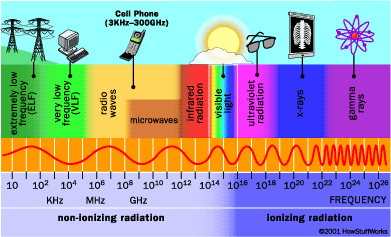
Professor Kromhout: ‘Research into future exposure to 4G and 5G radiation is warranted’ https://innovationorigins.com/professor-kromhout-research-into-future-exposure-to-4g-and-5g-radiation-is-warranted/ This week and next week, Innovation Origins is looking at the growing influence of wireless communication within today’s society and in particular at data transmission via electromagnetic with ever-higher frequencies, such as 5G.
Research is needed to map out exactly what the exposure to electromagnetic fields is as soon as the new frequencies come into effect for communicating data wirelessly with 5G. In the interim, 4G will coexist with 5G. This means that levels of electromagnetic fields might experience an overall increase. So says Professor Hans Kromhout, who is chair of the Exposure Assessment and Occupational Hygiene group at the University of Utrecht in the Netherlands. Kromhout is also chair of the Committee Electromagnetic Fields (EMF) Health Council of the Netherlands. This committee is investigating the possible health risks associated with 5G at the request of the Dutch House of Representatives. The advisory report is due by the end of July, as stipulated by the Health Council of the Netherlands.
“The level of expected exposure to radiofrequency fields can be easily mapped out. The people who devised the technology for 5G are very smart physicists. They should be able to do this.”
Resistance to 5G
Several individuals and groups in The Netherlands are actively opposing the introduction of 5G because they are convinced that radiofrequency waves are harmful. Some claim that there is a conspiracy to harm the population. Over the past few months, it has frequently been reported in the news that activists had set fire to telecom companies’ masts. Some of these new 5G antennas will have to be placed on the same masts that are currently used for 4G.
Another group has filed a preliminary injunction against the government which is to auction off the new frequencies starting this summer.
Several documents circulate among activists, such as a pamphlet written by Martin Pallan, an American emeritus professor of biochemistry at the University of Washington. The pamphlet claims that electromagnetic fields used for 5G can lead to, among other things, damage to DNA, increased risk of infertility, cancer, ADHD, and Alzheimer’s disease.
No scientific evidence linked to cancer
According to Kromhout, there isn’t any substantiated evidence-based scientific research that proves that such diseases are caused by the use of mobile phones and exposure to radiofrequency fields from transmission masts. Kromhout himself participated in research into the effect that mobile phone usage might have on the onset of headaches, tinnitus (a hearing disorder whereby you constantly hear peeping sounds in your ear when in reality there’s no sound), hearing impairment and insomnia. This study did not show a connection between the radiofrequency fields and the health complaints that were studied. Although it did show a connection with the (excessive) use of a mobile phone.
Kromhout also took part in a study into the effect of electromagnetic fields on people who consider themselves to be ‘electrohypersensitive.’ This experimental double-blind study showed that the test subjects were unable to perceive whether or not they were exposed to electromagnetic fields. This made the claim that their complaints were related to these fields far more improbable.
Research into the effect of static magnetic fields from MRI scanners on nurses and workers in the production of MRI scanners showed that after prolonged exposure, they are more likely to suffer from dizziness, abnormal bleeding in the uterus, and an increased risk of developing high blood pressure. “The levels of radiation to which these people are exposed are significantly higher than those of people using a mobile phone,” Kromhout adds. “You cannot use those tests to determine any potential effects of 4G or 5G on health.”
Absence of test procedures for determining health effects stemming from 5G
In spite of this, Kromhout thinks it is appropriate to carry out research into any eventual effects. “When a company introduces a new medicine, it has to go through all kinds of test procedures to be certain that they are safe to public health. This hasn’t taken place at all here.”
It is difficult to establish with 100% certainty that there is no damage to health without scientific research because you just don’t know exactly what the influence of 4G and 5G is. “But I don’t think it’s likely that the damage could be more severe as a result of the use of these higher frequencies. Electromagnetic fields with lower frequencies are able to penetrate deeper into your head. These seem to me to be more dangerous than high frequencies like 5G. Research should, therefore, focus more on the skin. Skin is what is most likely to come into contact with electromagnetic fields at higher frequencies.”
The fact that there will be more transmission masts as a result of 5G does not necessarily lead to more exposure, Kromhout believes that as the increasingly higher frequencies that will come into use have a shorter range than existing lower frequencies. “Exposure to radiation in the times of 1G and 2G was many times higher than it is now.”
Yet as 5G will become active alongside 4G, and in light of the fact that there will be a greater number of applications, the total amount of exposure to radiation is still likely to increase for today’s user.
Read other IO articles about 5G via this link.
Nuclear deregulation threatens workers at Pennsylvania plants and nationwide
|
Nuclear deregulation threatens workers at Pennsylvania plants and nationwide https://www.inquirer.com/opinion/commentary/nuclear-plants-coronavirus-regulatory-commission-pennsylvania-20200526.html May 26, 2020 ,Paul Gunter and Linda Pentz Gunter, For the Inquirer Workers at nuclear power plants, just like everywhere else, are falling ill with the highly contagious Covid-19. Pennsylvania’s Susquehanna and Limerick power plants are among those that have so far identified infections among their staff, with incidences soaring at some plants.
One might hope that, at a time of such crisis, the nuclear power industry and its regulator would take every possible step to ensure the health and safety of nuclear workers and their families, as well as the surrounding communities where they live. Unfortunately, the opposite is happening. Instead, the U.S. Nuclear Regulatory Commission (NRC) is relaxing nuclear power plant safety inspections and maintenance while allowing essential staff, including control room operators, security forces and fire brigades, to work longer and exhausting shifts. The extended permitted hours — up to 86-hour work weeks for two weeks straight — are justified, the NRC says, due to absenteeism, workers in quarantine, and Centers for Disease Control (CDC) guidelines for the Covid-19 pandemic, which recommend social distancing, necessitating fewer staff on site. Yet at the same time, the NRC is allowing nuclear power plants to proceed with refueling operations, which can bring in as many as 1,800 workers from across the country. While the nuclear industry was among those in the energy sector demanding priority testing for Covid-19, it is not clear whether testing for the coronavirus was conducted on workers before they arrived at the plants, given the scale of the outbreaks. More recent positive cases have been discovered through testing, with some tests conducted by workers’ personal physicians. The Limerick nuclear power plant in Pennsylvania, which has now completed refueling, saw a level of overcrowding during refueling that alarmed workers. They described sitting “elbow to elbow” in canteens and computer labs, terrified that the coronavirus would rapidly spread among them. One told the Pottsdown Mercury he was “in a constant state of paranoia.” Such a “wildfire” spread of Infection became a reality at the Fermi 2 reactor in Michigan, which was forced to halt refueling. Close to 200 workers tested positive for Covid-19 at the Vogtle nuclear power plant in Georgia, where work has not been stopped, although the workforce has been cut back. Asking workers to put in exhausting shifts not only weakens their immune systems, making them more susceptible to the coronavirus, but could also lead to fatigue-driven errors. Investigators found that sleep deprivation played a part in the March 1979 nuclear accident at the Three Mile Island reactor near Harrisburg. Compounding these risks is the request by reactor operators to postpone inspections of critical safety components, such as steam generators and reactor emergency core cooling systems, for an additional 18 months. The NRC is now allowing for these delays. But skipping over essential safety checks could come at a high price. Steam generators are critical to power operations and reactor safety. The reactors’ harsh operational environment places extreme stresses on the heat transfer component, causing tube degradation from vibration, heat, radiation, corrosion, and cracking that must be guarded against through routine inspection and maintenance. Arguing for a reduction in nuclear power plant staff to avoid unnecessary contact might sound reasonable if it were not contradicted by the overcrowding brought on by the influx of large refueling crews. This suggests that the shared priority of the nuclear industry and its captured regulator is production, putting financial interests ahead of the wellbeing and safety of workers and surrounding communities. Mandatory testing of refueling crews and maintenance crews could prioritize both production and safety agendas. Overextending exhausted workers could be also avoided by allowing reactors closed for refueling to delay restart and remain shuttered, especially given that electricity demand has fallen with most of the country in lockdown. Instead, those stay-at-home workers could supplement the crews at operating plants, ensuring worker safety and site security and reducing the likelihood of an accident due to exhaustion or human error. The prospect of a serious nuclear power accident under the current pandemic conditions would set up an impossible choice for entire communities surrounding the affected reactor, already sheltering in place from the viral threat: whether to evacuate with potentially tens of thousands of others, or stay, instead risking radiation exposure. The disastrous flooding last week in Michigan, necessitating mass evacuations, has now given us a preview of this conundrum, without the added danger of radiation exposure. Japan faced such a confluence of crises in March 2011, when the country was struck with an earthquake and tsunami, followed by widespread radiation contamination from the Fukushima nuclear meltdowns. This resulted in rescue attempts of some survivors of the tsunami and earthquake being abandoned due to the high levels of radioactivity in areas too contaminated for first responders to enter. Now is not a time to increase the likelihood of a serious nuclear accident here at home. Instead, the NRC should be taking this opportunity to fulfill its stated mandate of “protecting the people and environment,” rather than bowing to the craven financial interests of the nuclear power industry.
Paul Gunter is Director of the Reactor Oversight Project at Beyond Nuclear, a national non-profit anti-nuclear watchdog organization based in Takoma Park, Maryland. Linda Pentz Gunter is Beyond Nuclear’s international specialist and edits and writes for its online magazine, Beyond Nuclear International. |
|
During pandemic, U.S. military runs the largest maritime war games in the world
COVID-19: US Military Pursues War Games Amid Contagion, Consortium News, May 26, 2020 A robust schedule of military maneuvers and exercises is either underway or planned for Europe and the Pacific this year, with more in store for 2021, Ann Wright reports. During the pandemic the U.S. military is running the largest maritime military maneuvers in the world, with Rim of the Pacific (RIMPAC) coming to the waters off Hawaii Aug. 17-31, bringing 26 nations, 25,000 military personnel, up to 50 ships and submarines and hundreds of aircraft.Hawaii hasstringent measures to combat the spread of Covid-19, with a mandatory 14-day quarantine for all persons arriving in the state; returning residents as well as visitors. This quarantine is required until at least June 30, 2020.
The U.S. Army is also pursuing a 6,000-person war game in Poland, June 5-19, with a Polish airborne operation and a U.S.-Polish division-size river crossing.
If these weren’t too many military operations during an epidemic in which personnel on 40 U.S. Navy ships have come down with the hyper-contagious virus and during which military personnel and their families have been told not to travel, plans are also underway for a U.S. Army division-sized exercise in the Indo-Pacific region in less than a year. Known as Defender 2021, the U.S. Army has requested $364 million to conduct the war exercises throughout Asian and Pacific countries.
The pivot to the Pacific, begun under the Obama administration, and maintained by the Trump administration, is reflected in a U.S. National Defense Strategy (NDS) that sees the world as “a great power competition rather than counterterrorism and has formulated its strategy to confront China as a long-term, strategic competitor.”
Earlier in May, the U.S. Navy sent at least seven submarines, including all four Guam-based attack submarines, several Hawaii-based ships and the San Diego-based USS Alexandria to the western Pacific in what the Pacific Fleet Submarine Force announced as simultaneous “contingency response operations” for all of its forward-deployed subs. This was all in support of the Pentagon’s “free and open Indo-Pacific ” policy — aimed at countering China’s expansionism in the South China Sea — and as a show of force to counter ideas that the capabilities of U.S. Navy forces have been reduced by Covid-19…….
In May, 2020, the Australian government announced that a delayed six-month rotation of 2,500 U.S. Marines to a military base in Australia’s northern city of Darwin will go ahead based on strict adherence to Covid-19 measures including a 14-day quarantine. The Marines had been scheduled to arrive in April but their arrival was postponed in March because of the pandemic.
The remote Northern Territory, which had recorded just 30 Covid-19 cases, closed its borders to international and interstate visitors in March, and any arrivals must now undergo mandatory quarantine for 14 days. U.S. Marine deployments to Australia began in 2012 with 250 personnel and have grown to 2,500. The Joint U.S. Defense facility Pine Gap— the U.S. Department of Defense, Five Eyes and CIA surveillance facility that pinpoints airstrikes around the world and targets nuclear weapons, among other military and intelligence tasks — was also adapting its policy and procedures to comply with Australian government COVID restrictions.
As the U.S. military expands its presence in Asia and the Pacific, one place it will NOT be returning to is Wuhan, China. In October 2019, the Pentagon sent 17 teams with more than 280 athletes and other staff members to the Military World Games in Wuhan. Over 100 nations sent a total of 10,000 military personnel to the games in Wuhan last October.
The presence of a large U.S. military contingent in Wuhan just months before the outbreak of the Covid-19 in Wuhan in December 2019, fueled a theory by some Chinese officials that the U.S. military was somehow involved in the outbreak, which now has been used by the Trump administration and its allies in Congress and the media that the Chinese deliberately used the virus to infect the world and adding justification for the U.S. military build-up in the Pacific region.
Ann Wright served 29 years in the U.S. Army/Army Reserves and retired as a colonel. She was a U.S. diplomat for 16 years and served in U.S. Embassies in Nicaragua, Grenada, Somalia, Uzbekistan, Kyrgyzstan, Micronesia, Afghanistan and Mongolia. She resigned from the U.S. government in March 2003 in opposition to President George W. Bush’s war on Iraq. She is co-author of “Dissent: Voices of Conscience.” https://consortiumnews.com/2020/05/26/covid-19-military-pursues-war-exercises-amid-contagion/
The danger to children of low level nuclear radiation has been underestimated

|
How dangerous is low-level radiation to children? https://climatenewsnetwork.net/how-dangerous-is-low-level-radiation-to-children/#.Xsn914VYtCg.twitter May 22nd, 2020, by Paul Brown
A rethink on the risks of low-level radiation would imperil the nuclear industry’s future − perhaps why there’s never been one. The threat that low-level radiation poses to human life, particularly to unborn children, and its link with childhood leukaemia, demands an urgent scientific reassessment. This is the conclusion of a carefully-detailed report produced for the charity Children With Cancer UK by the Low-Level Radiation Campaign. It is compiled from evidence contained in dozens of scientific reports from numerous countries over many decades, which show that tiny doses of radiation, some of it inhaled, can have devastating effects on the human body, particularly by causing cancer and birth defects. The original reports were completed for a range of academic institutions, governments and medical organisations, and their results were compared by the newest report’s authors, Richard Bramhall and Pete Wilkinson. They believe they have provided overwhelming evidence for a basic rethink on so-called “safe” radiation doses. They write: “The fundamental conclusion of this report is that when the evidence is rationally assessed it appears that the health impacts, especially in the more radio-sensitive young, have been consistently and routinely underestimated.” Ceaseless controversy The pair concede this is not the first time such a call has been made, but it has never been acted upon. Now they say it must be. What constitutes safety for nuclear workers and for civilians living near nuclear power stations, or affected by fall-out from accidents like the ones at Sellafield in Cumbria in north-west England in 1957, Chernobyl in 1986 and Fukushima in 2011, has always been highly controversial. Bramhall and Wilkinson detail how the debate began in earnest in the 1980s, when a cluster of childhood leukaemia cases, ten times higher than would be expected, was identified around Sellafield. Government inquiries followed but reached no settled conclusion, and low-level radiation safety has been a scientific battleground ever since. The official agencies appointed by governments are still using dose estimates based on calculations made in 1943, when Western governments were trying to develop an atomic bomb.
The new report highlights that this was when very little was known about how tiny doses of ingested radiation could affect the body − and when DNA was yet to be discovered. Despite the fact that international standards are based on these scientifically ancient, out-of-date assumptions, they have not been revised. If they were, the results could be catastrophic for the nuclear industry and for the manufacturers of nuclear weapons. The report makes clear that if the worst estimates of the damage that low-level radiation causes to children proved anywhere close to correct, then no-one would want to live anywhere near a nuclear power station. Most would be appalled if they knew even small numbers of children living within 50 kilometres of a station would contract leukaemia from being so close. It acknowledges that the stakes are high. If the authors’ findings are accepted, then it will be the end of public tolerance of nuclear power. Revolution needed Despite this long-lived institutional pushback from governments and the industry, the report says what is needed is a scientific revolution in the way that low-level radiation is considered. It compares the situation with the treatment of asbestos. It was in the 1890s that the first evidence of disease related to asbestos exposure was laid before the UK Parliament. But it was not until 1972, when the causal link between the always fatal lung cancer, mesothelioma, and human fatality rates was established beyond reasonable doubt, that the use of asbestos was banned. This delay is why on average 2,700 people still die annually in the UK: they were at some point exposed to and inhalers of asbestos. Another example, which the report does not quote but is perhaps as relevant today, is air pollution. It has taken decades for the scientific community to realise that in many cities it is the tiniest particles of air pollution, invisible to the naked eye, that are taken deepest into the lungs and that cause the most damage, killing thousands of people a year. So far governments across the world have not yet outlawed the vehicles and industrial processes that are wiping out their own citizens in vast numbers. Anxiety not irrational The report cites many studies, with perhaps the most telling those that compare the actual numbers of cancers and malformations in babies which occurred in the aftermath of the Chernobyl accident with the numbers to have been expected if the currently accepted and out-of-date risk calculations had been used. Despite the difficulties of getting information from reluctant governments close to Chernobyl, the report says: “The discrepancy between the number of congenital malformations in babies expected after Chernobyl and the number actually observed was between 15,000 and 50,000.” The authors say their object “is to dispel the repeated assertion that public anxiety about the health impact of radioactivity in the environment is irrational.” Both Wilkinson and Bramhall have considerable experience of dealing with governments, both inside official bodies as members, and as external lobbyists. They detail how they believe the concerns of both ordinary people and scientists have been swept aside in order to preserve the status quo. Clearly, in sponsoring the report, Children with Cancer UK agrees. − Climate News Network |
|
Michigan flooding: a warning on potential triple disaster – climate, pandemic, and nuclear radiation


Michigan authorities were forced to face a “no-win compromise” between protecting the public from exposure to Covid-19 while at the same time moving people out of harm’s way after heavy rains caused failures at the Edenville and Sanford dams, leading to devastating floods.
The Dow plant insists there have been no chemical or radiological releases, but the situation will be evaluated once floodwaters recede. Fortunately, no full-scale commercial nuclear power plant was in the path of the Michigan floods.
Operating nuclear power stations are required by federal and state laws to maintain radiological emergency preparedness to protect populations within a ten-mile radius from the release of radioactivity following a serious nuclear accident. These measures include mass evacuations.
However, many communities around the nation’s 95 commercial reactors are presently sheltering-in-place at home as a protective action during the Covid-19 pandemic.
The Michigan flooding has forced the relocation of thousands of citizens from their stay-at-home lockdown into the social distancing challenges of mass shelters. Evacuating tens of thousands from a likely more far-reaching radioactive cloud to mass shelters, as is presently planned during a nuclear emergency, raises difficult if not impossible choices under pandemic conditions.
In fact, a Memorandum of Understanding (MOU) (Sect.03.02 p.2) between the U.S. Nuclear Regulatory Commission (NRC) and the Federal Emergency Management Agency (FEMA) already obligates the federal government to re-exam radiological emergency plans around nuclear facilities specifically in response to a pandemic, and to identify any shortcomings, deficiencies and enhancements that might be needed under such conditions.
But to date, neither agency has taken the initiative to do so. In fact, the NRC actions are focused on relaxing safety measures required by operating licenses, resulting in extended work hours for reactor operators and security guards, and deferred safety inspections and repairs for as much as another 18 months. This makes an accident more likely.
Given what we are now seeing in Michigan, the NRC and FEMA should lose no time in reviewing their MOU and the viability of their radiological emergency plans, and take action to make any necessary enhancements or shut these nuclear facilities down.
Beyond Nuclear has identified two such actions under the MOU as vital to public health:
- The NRC and FEMA must conduct a “Disaster Initiated Report”, as mandated by the MOU, on the adequacy of offsite radiological emergency response plans during the pandemic, and;
- Federal and state response plans need to be bolstered by the immediate pre-distribution of potassium iodide (KI) tablets by direct delivery to every resident within the ten-mile radius of U.S. nuclear power stations, now, before any accident occurs. This is in accordance with disaster medicine expert recommendations including from the American Thyroid Association (ATA).
- KI, if taken promptly in advance or shortly after exposure to radioactive iodine, is recognized by the US Food and Drug administration as a safe, inexpensive and effective prophylactic prevention for thyroid cancer and other developmental disorders caused by exposure to highly mobile iodine-131. Radioactive iodine is a gas released early in a serious nuclear accident.
- KI is particularly important for the protection of infants, young children and pregnant women and should be readily on hand, according to the ATA and the American Academy of Pediatrics.
The ATA further recommends stockpiling KI tablets in schools, hospitals, police and fire stations from 10 miles out to 50 miles from every nuclear power plant. These institutions could then serve to pre-distribute KI free through the mail upon request to every home and business within 50 miles of an operating nuclear plant.
KI is commonly used to iodize table salt in concentrations. When taken in tablet form, it saturates the thyroid with stable iodine and blocks the absorption of radioactive iodine into the thyroid gland.
- KI only protects the thyroid. It does not protect other parts of the body, or prevent damage from other radioactive isotopes released during a nuclear power plant accident, such as cesium-137 or krypton or xenon gases. Ideally, it is used to provide protection to the thyroid — because iodine-131 can be the large and early radioactive exposure first to arrive — while people are still evacuating out of the oncoming radioactive fallout pathway.
KI is a critical adjunct to evacuation, but it should not replace evacuation from a nuclear accident, even during a viral pandemic. If faced with an immediate threat to life, perhaps even a triple threat such as an extreme flood, a nuclear accident and Covid-19 exposure, evacuation must be the immediate decision.
However, at least having KI tablets on hand provides for a reasonable protection from the radioactive iodine, a fundamental human right while seeking to shelter farther away from a nuclear accident.
The prospect of a nuclear disaster prompting a mass evacuation during a viral pandemic reinforces the need for an energy policy focused on safe, clean and affordable renewable energy. It’s time to remove the added and unnecessary danger presented by the 95 nuclear reactors still operating in the US today and transition to a rapid phaseout before a nuclear emergency during a pandemic becomes a nightmarish reality.
U.S. Unprepared for Nuclear Accident During Pandemic
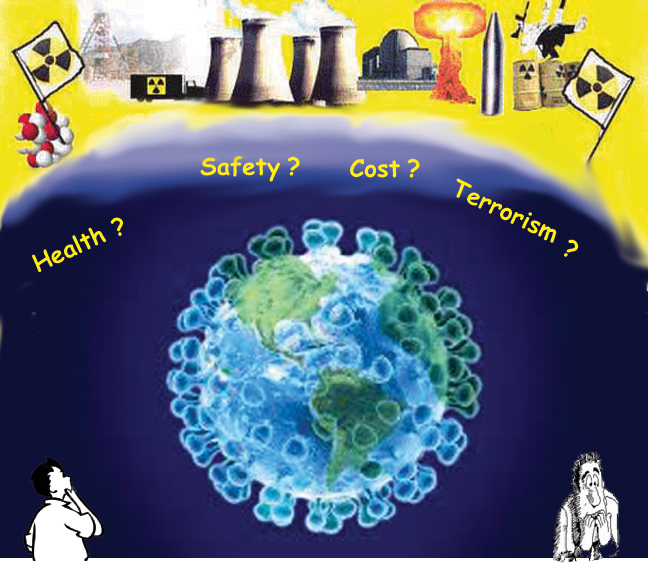
U.S. Unprepared for Nuclear Accident During Pandemic Common Dreams, 22 May 20
Michigan floods expose impossible challenges of mass evacuation during Covid-19
Emergency preparedness must include direct delivery of potassium iodide to all residents around nuclear plants
TAKOMA PARK, MD – Two dam failures and catastrophic flooding in central Michigan, which also prompted a low-level emergency notification (NRC event #54719) at a nearby nuclear research reactor in Midland, have exposed the almost impossible challenge of evacuating people to safety during simultaneous catastrophic events.
The sudden need to evacuate large numbers of people from severe flooding — also threatening to compromise a Dow chemical facility that uses a research reactor — during a time of national lockdown due to the Covid-19 pandemic, raises “serious questions and concerns about the emergency response readiness and the viability of evacuation that might simultaneously include a radiological accident,” said Paul Gunter, director of the Reactor Oversight Project at Beyond Nuclear, a national anti-nuclear advocacy organization.
Michigan authorities were forced to face a “no-win compromise” between protecting the public from exposure to Covid-19 while at the same time moving people out of harm’s way, after heavy rains caused failures at the Edenville and Sanford dams, leading to devastating floods. The Dow plant insists there have been no chemical or radiological releases, but the situation will be evaluated once floodwaters recede. Fortunately, no full-scale commercial nuclear power plant was in the path of the Michigan floods.
Operating nuclear power stations are required by federal and state laws to maintain radiological emergency preparedness to protect populations within a ten-mile radius from the release of radioactivity following a serious nuclear accident. These measures include mass evacuations.
However, many communities around the nation’s 95 commercial reactors are presently sheltering-in-place at home as a protective action during the Covid-19 pandemic.
“The Michigan flooding has forced the relocation of thousands of citizens from their stay-at-home shelters into the social distancing challenges of mass shelters,” Gunter said. “Evacuating tens of thousands from a radioactive cloud to mass shelters, as is presently planned during a nuclear emergency, raises difficult if not impossible choices under pandemic conditions.”
In fact, a Memorandum of Understanding (MOU), Sect.03.02, p.2, between the U.S. Nuclear Regulatory Commission (NRC) and the Federal Emergency Management Agency (FEMA) already obligates the federal government to re-exam radiological emergency plans around nuclear facilities specifically in response to a pandemic, and to identify any shortcomings, deficiencies and enhancements that might be needed under such conditions.
But to date, neither agency has publicly taken the initiative to do so. In fact, the NRC actions are focused on relaxing safety measures required by operating licenses, resulting in extended work hours for reactor operators and security guards, and deferred safety inspections and repairs for as much as another 18 months. This makes an accident more likely.
“Given what we see in Michigan, the NRC and FEMA should lose no time in reviewing the viability of their radiological emergency plans, and publicly take action to make any necessary enhancements or shut these nuclear facilities down,” Gunter said.
Beyond Nuclear has identified two such actions under the MOU as vital to public health:
- NRC and FEMA must conduct a “Disaster Initiated Report”, as mandated by the MOU, on the adequacy of offsite radiological emergency response plans during the pandemic, and;
- Federal and state response plans need to be bolstered by the immediate pre-distribution of potassium iodide (KI) tablets by direct delivery to every resident within the ten-mile radius of U.S. nuclear power stations, now, before any accident occurs. This is in accordance with disaster medicine expert recommendations including from the American Thyroid Association (ATA)……..“The prospect of a nuclear disaster prompting a mass evacuation during a viral pandemic reinforces the need for an energy policy focused on safe, clean and affordable renewable energy,” said Gunter. “It’s time to remove the added and unnecessary danger presented by the 95 nuclear reactors still operating in the US today, and transition to a rapid phaseout before a nuclear emergency during a pandemic becomes a nightmarish reality.” https://www.commondreams.org/newswire/2020/05/22/us-unprepared-nuclear-accident-during-pandemic
COVID-19 in worker at Sequoyah Nuclear Plant
 TVA confirms Sequoyah Nuclear Plant employee tests positive for
  COVID-19, by WTVC
has tested positive for the coronavirus.
TVA spokeswoman Malinda Hunter said in a statement that the case was reported Wednesday, May 20, and the employee’s last day on site had been May 10, as they were staying home to care for a family member who was sick. Hunter says the employee had not been in close contact with anyone on site for two weeks before that point.
Hunter says the employee told the plant’s leadership on May 13 that a family member was showing symptoms associated with COVID-19………
Hamilton County has seen a recent spike in COVID-19 cases, with 43 reported Wednesday, and another 40 reported today. There have been 111 new cases in the past three days. That makes up 23% of the county’s total positive cases. ……https://newschannel9.com/news/local/tva-confirms-sequoyah-nuclear-plant-employee-tests-positive-for-covid-19
Brazil’s nuclear reactor build delayed, completion now due in 2027, Covid-19 effect
|
COVID-19 to delay Brazil nuclear plant -Eletronuclear
Anthony Boadle, BRASILIA, May 22 (Reuters) – Lower demand for electricity and a currency slide during the coronavirus crisis will push completion of Brazil’s third nuclear reactor into 2027, the head of state-run nuclear power company Eletronuclear told Reuters.
Eletronuclear president Leonam Guimaraes said Brazil still plans to find a partner by 2023 to help finish and operate the long-delayed 1,400 megawatt Angra 3 nuclear reactor, with companies in China, Russia, France and South Korea among possible candidates. Construction, which began in 2010, is set to restart this year after a long delay caused by financial difficulties and corruption investigations. So far, 9 billion reais ($1.6 billion) have been spent on the project. Guimaraes said the “brutal” 15-20% drop in power consumption caused by the coronavirus pandemic means future demand is uncertain. …… https://af.reuters.com/article/commoditiesNews/idAFL1N2D319L |
|
Sellafield’s safety dilemma- risk of coronavirus versus risk of nuclear accident

|
Sellafield work must resume despite coronavirus lockdown in case of ‘nuclear incident’, says boss LancsLive By Steve Robson, Ian Molyneaux, 12 MAY 2020The boss of Sellafield has said decommissioning work needs to resume despite the coronavirus lockdown in case there is a ‘nuclear incident’.
The site near Seascale has been running at less than a fifth of normal operations for several weeks due to the Covid-19 pandemic, with around 1,500 key staff in work. Normally, Sellafield would have up to 8,000 people on site every day. At the beginning of May, a further 120 people came back to work, mainly attending off-site offices in Warrington to access specialist equipment and software. The company says it is making its way through a “cautious, limited, phased restart of work over the coming weeks”. Now Chief executive Martin Chown admitted he is faced with a difficult decision, but said it is vital Sellafield restarts some work. It is understood this refers to the decommissioning of old facilities that have the potential to cause a nuclear hazard if left to mothball…….. It is understood that a broad set of principles for restarting work at Sellafield have been agreed including a maximum of 3,500 people working on any one site at any given time, a maximum of 25per cent of staff working at off-site facilities, and work on construction sites only approved on the basis staff do not interact with the rest of the site. …. https://www.lancs.live/news/local-news/sellafield-work-must-resume-despite-18234403 |
Over 120 local and national organizations urge U.S. Congress to help nuclear frontline communities.
|
Groups Demand Relief for Nuclear Frontline Communities http://www.riograndesun.com/news/groups-demand-relief-for-nuclear-frontline-communities/article_e9562b26-96e1-11ea-8d76-17ac3338d2e6.html By Molly Montgomery SUN Staff , May 15, 2020
Over 120 local and national organizations are urging the U.S. Congress to provide assistance to nuclear frontline communities. The organizations sent a letter May 5 asking members of Congress to include provisions in the next federal COVID-19 economic relief bill for communities that have been exposed to radiation due to the federal government’s nuclear weapons activities. Those communities are more vulnerable to the effects of COVID-19 because of their exposure to radiation from activities including uranium mining, weapons production and atmospheric nuclear testing, the letter states. Members of the exposed populations often also face significant barriers to accessing health care–they are disproportionately indigenous, people of color, low-income, veterans and/or from rural areas, the letter states. “Those who sacrificed for our country’s national security, in some cases unknowingly, should not have to doubly fear this crisis,” it states. Local organizations that signed the letter include Concerned Citizens for Nuclear Safety, Tewa Women United and La Jicarita. Joni Arends, executive director of Concerned Citizens for Nuclear Safety, said the provisions would include people who live downwind and downstream of Los Alamos National Laboratory. “It’s time,” she said. “It’s past time.” The letter asks that members of Congress extend the Radiation Exposure Compensation Act (RECA) of 1990 past 2022, when it is set to expire. RECA aimed to offset the burden of health care costs to nuclear frontline communities. Currently, however, RECA does not include people impacted by nuclear weapon development, such as uranium workers, civilians downwind of the Trinity test site, the Nevada test site and nuclear production sites, veterans who cleaned up radioactive waste on the Marshall Islands and residents of Guam, the letter states. The letter asks members of Congress to provide compensation to these people as well. “RECA is crucial for the health and financial well-being of these communities, especially during the COVID-19 crisis,” it states. Recent studies show that people with cancer are three times as likely to die of COVID-19 than those without cancer, it states. Uranium miners–including members of the Navajo Nation and numerous residents of the Valley–are especially susceptible to cancer. Kathy Sanchez, a member of San Ildefonso Pueblo and Tewa Women United, said the letter is extremely important for elders in the Valley who participated in the country’s war efforts. She described the Laboratory as “a monster on a hill” that is destroying what is of value to local land-based people and that has made them feel ashamed about their ways of life. “This is just a blatant social injustice,” she said. “You have to live with a system that is always putting you down, always shaming you, guilting you, and making you fearful. They strip you of your humanity. And we need to say, ‘No.’” |
|
3600 working in Nuclear power plants in Japan – concerns raised over coronavirus
| N-reactor inspection cannot abide by physical distancing rules, causing coronavirus fear in locals |
 http://www.japan-press.co.jp/modules/news/index.php?id=12907, April 29 & May 3, 2020
Seven civil organizations in Fukui on April 28 jointly demanded that KEPCO suspend operations of reactors at all NPPs in the prefecture and cancel all work to bring offline reactors back online or decommission them in order to prevent the coronavirus from spreading further.
According to KEPCO, the number of workers will increase by about 1,800 to check on the No.3 reactor at the Oi NPP. Of them, about 900 will come from outside Fukui. At the Oi NPP, the Nos.1 and 2 reactors are currently under the process of decommissioning with about 1,800 workers working daily. Thus, the number of workers in three reactors combined will reach 3,600.
Japanese Communist Party member of the Oi Town Assembly, Saruhashi Takumi pointed out, “The reactor buildings are hermetically closed. Many workers work close together in a confined space. So, the ‘three Cs are unavoidable, but our town has a limited number of hospital beds to treat patients with coronavirus infection. If a mass infection occurs, medical facilities in the town will soon be overwhelmed.”
JCP member of the Fukui Prefectural Assembly Sato Masao criticized KEPCO by saying, “The utility places priority on the resumption of operations of reactors at its NPPs over preventive measures against the coronavirus.”
Apart from the Oi NPP, KEPCO has the Takahama NPP and the Mihama NPP in Fukui Prefecture, and about 4,500 workers and 3,000 workers work at those plants every day, respectively.
* * *
KEPCO postpones regular inspection of No.3 reactor
KEOCO on May 2 announced that it will postpone a regular inspection of the No.3 reactor at its Oi NPP for a few months.
Fermi 2 nuclear station struggles with large COVID-19 outbreak among workers.
Beyond Nuclear 14th May 2020, Fermi 2 struggles with large COVID-19 outbreak among workers. The large numbers of coronavirus test positives at Fermi nuclear power plant (the article reports more than 200 cases, but May 13 Facebook postings by Fermi employees have put the number as already grown worse, now at more than 300) is likely among the worst known (yet unreported, in the Michigan or U.S. national news media) at any single institution or workplace in Michigan.Pacific nuclear bomb tests interfered with rain patterns in UK
Pacific nuclear bomb tests made it rain 1,000s of miles away in UK, Reading University scientists find, Berkshire Live
During the Cold War, detonations in locations as remote as the Nevada Desert or Pacific islands had unforeseen consequences elsewhere in the world By Ian Hughes 17 MAY 2020
Nuclear bomb tests during the Cold War changed rainfall patterns thousands of miles from the detonation sites, according to scientists at the University of Reading.
They found electric charge released by radiation from detonations – carried out predominantly by the US and Soviet Union in the 1950s and 1960s – affected rain clouds at the time.
It means tests in remote locations such as the Nevada Desert or Pacific islands, had an effect on precipitation as far away as the Shetlands – 300 miles off the coast of Scotland.
A study used historic records between 1962-64 from a research station on the Scottish island.
Scientists compared days with high and low radioactively-generated charge, finding that clouds were visibly thicker, and there was 24 per cent more rain on average on the days with more radioactivity…………
It is thought researchers will now have a better understanding of important weather processes.
Although detonations were carried out in remote parts of the world during the Cold War, radioactive pollution spread widely throughout the atmosphere.
Radioactivity ionises the air, releasing electric charge.
The researchers, from the Universities of Reading, Bath and Bristol, studied records from well-equipped Met Office research weather stations at Kew near London and Lerwick in the Shetland Isles.
Shetland, in particular, was relatively unaffected by other sources of anthropogenic pollution. This made it well suited as a test site to observe rainfall effects which, although likely to have occurred elsewhere too, would be much more difficult to detect.
The Shetland rainfall on more than 150 days showed differences which vanished after the major radioactivity episodes were over.
The study was published in Physical Review Letters. https://www.getreading.co.uk/news/reading-berkshire-news/pacific-nuclear-bomb-tests-made-18248407
Covid-19 highlights risks of doing nothing on global heating
‘Green Swan’ Virus Shock Proves Need for Joint Climate Action, Bloomberg Law
- Covid-19 highlights risks of doing nothing on global warming
- BIS urges global cooperation in rethinking old routines
The coronavirus pandemic that’s sent the global economy into a tailspin highlights the need for international collaboration to tackle crises posing severe threats to human lives, chief among them climate change, according to the Bank for International Settlements.
Much like global warming, the disease outbreak meets the criteria for being a “Green Swan,” according to the Basel, Switzerland-based institution, which adapted Nassim Nicholas Taleb’s “Black Swan” concept for high-impact adverse events outside the scope of regular expectations to describe risks that are highly likely to materialize but too complex to fully understand…….
Central banks have already begun to consider climate change as a factor in their assessment of financial and economic risks, and the BIS highlighted the possibility of further multidisciplinary efforts to absorb large shocks. …..
With the global economy in the throes of its deepest dive since the 1930s, the pandemic may jolt decision makers into action to address global warming, according to the BIS.
“Covid-19 might have presented a vivid image of what the future might look like if nothing is done to reduce greenhouse gases, inflicting similar stoppages worldwide after some tipping-point is reached,” it said. “It may also have raised awareness of the fragility of some of our systems and therefore of the need for improved efficiency and greater resilience.”
To contact the reporter on this story:
Catherine Bosley in Zurich at cbosley1@bloomberg.net
To contact the editors responsible for this story:
Fergal O’Brien at fobrien@bloomberg.net https://news.bloomberglaw.com/banking-law/green-swan-virus-shock-proves-need-for-joint-climate-action
Worker infection halts anti-terror project at Genkai nuclear plant
All civil engineering work at the nuclear plant was halted on the night of April 14, and the company said it does not know when it can restart the project……. http://www.asahi.com/ajw/articles/13302790
1 This Month



4 August – WEBINAR – Hiroshima & Nagasaki: Nuclear Bombs Never Again
Tuesday, Aug. 4 at 5 pm PT / 8 pm ET.
Aug 5, 2026 10:00 AM in Australia/Melbourne
Join the Nuclear Bombs Never Again webinar on August 4th at 5pm Pacific Time / 8pm Eastern Time / 9am Japan Standard Time.
Cross generational voices at the intersection of Japan-Korea-US policy and militarization will share their lived experiences, nuclear impacts in these contexts, anti-war strategies, and actions you can take to advocate for a world with Nuclear Bombs Never Again. This 75-minute event is co-hosted by WILPF US and Korea Peace Now.

22,000+ miles voyaging for nuclear disarmament
and a radiation-free environment https://vfpgoldenruleproject.org/
To see nuclear-related stories in greater depth and intensity – go to https://nuclearinformation.wordpress.com
-
Archives
- July 2026 (277)
- June 2026 (287)
- May 2026 (306)
- April 2026 (356)
- March 2026 (251)
- February 2026 (267)
- January 2026 (308)
- December 2025 (358)
- November 2025 (359)
- October 2025 (375)
- September 2025 (257)
- August 2025 (319)
-
Categories
- 1
- 1 NUCLEAR ISSUES
- business and costs
- climate change
- culture and arts
- ENERGY
- environment
- health
- history
- indigenous issues
- Legal
- marketing of nuclear
- media
- opposition to nuclear
- PERSONAL STORIES
- politics
- politics international
- Religion and ethics
- safety
- secrets,lies and civil liberties
- spinbuster
- technology
- Uranium
- wastes
- weapons and war
- Women
- 2 WORLD
- ACTION
- AFRICA
- Atrocities
- AUSTRALIA
- Christina's notes
- Christina's themes
- culture and arts
- Events
- Fuk 2022
- Fuk 2023
- Fukushima 2017
- Fukushima 2018
- fukushima 2019
- Fukushima 2020
- Fukushima 2021
- general
- global warming
- Humour (God we need it)
- Nuclear
- RARE EARTHS
- Reference
- resources – print
- Resources -audiovicual
- Weekly Newsletter
- World
- World Nuclear
- YouTube
-
RSS
Entries RSS
Comments RSS
 nuclear-news