The world must learn to live with Covid-19

The shifting strategies are an acknowledgment that even the most successful countries cannot declare victory until a vaccine is found.
They also show the challenge presented by countries like the United States, Brazil and India, where the authorities never fully contained initial outbreaks and from where the coronavirus will continue to threaten to spread.
How the world is learning to live with a deadly pandemic, https://thenewdaily.com.au/news/world/2020/06/26/coronavirus-pandemic-2/, Sui-Lee Wee, Benjamin Mueller and Emma Bubola China is testing restaurant workers and delivery drivers block by block.
South Korea tells people to carry two types of masks for differing risky social situations.
Germany requires communities to crack down when the number of infections hits certain thresholds.
Britain will target local outbreaks in a strategy that Prime Minister Boris Johnson calls “whack-a-mole”.
Around the world, governments that had appeared to tame the coronavirus are adjusting to the reality that the disease is here to stay.
But in a shift away from damaging nationwide lockdowns, they are looking for targeted ways to find and stop outbreaks before they become third or fourth waves.
While the details differ, the strategies call for giving governments flexibility to tighten or ease as needed.
They require some mix of intensive testing and monitoring, lightning-fast response times by authorities, tight border management and constant reminders to their citizens of the dangers of frequent human contact.
They require some mix of intensive testing and monitoring, lightning-fast response times by authorities, tight border management and constant reminders to their citizens of the dangers of frequent human contact.
The strategies often force central governments and local officials to share data and work closely together, overcoming incompatible computer systems, turf battles and other long-standing bureaucratic rivalries Continue reading
Scientists just now realising how bad this Coronavirus is

CHICAGO (Reuters) 26 June 20, – Scientists are only starting to grasp the vast array of health problems caused by the novel coronavirus, some of which may have lingering effects on patients and health systems for years to come, according to doctors and infectious disease experts.
Besides the respiratory issues that leave patients gasping for breath, the virus that causes COVID-19 attacks many organ systems, in some cases causing catastrophic damage.
“We thought this was only a respiratory virus. Turns out, it goes after the pancreas. It goes after the heart. It goes after the liver, the brain, the kidney and other organs. We didn’t appreciate that in the beginning,” said Dr. Eric Topol, a cardiologist and director of the Scripps Research Translational Institute in La Jolla, California.
In addition to respiratory distress, patients with COVID-19 can experience blood clotting disorders that can lead to strokes, and extreme inflammation that attacks multiple organ systems. The virus can also cause neurological complications that range from headache, dizziness and loss of taste or smell to seizures and confusion.
And recovery can be slow, incomplete and costly, with a huge impact on quality of life.
The broad and diverse manifestations of COVID-19 are somewhat unique, said Dr. Sadiya Khan, a cardiologist at Northwestern Medicine in Chicago.
With influenza, people with underlying heart conditions are also at higher risk of complications, Khan said. What is surprising about this virus is the extent of the complications occurring outside the lungs.
Khan believes there will be a huge healthcare expenditure and burden for individuals who have survived COVID-19.
LENGTHY REHAB FOR MANY
Patients who were in the intensive care unit or on a ventilator for weeks will need to spend extensive time in rehab to regain mobility and strength.
“It can take up to seven days for every one day that you’re hospitalized to recover that type of strength,” Khan said. “It’s harder the older you are, and you may never get back to the same level of function.”
While much of the focus has been on the minority of patients who experience severe disease, doctors increasingly are looking to the needs of patients who were not sick enough to require hospitalization, but are still suffering months after first becoming infected. …….. https://www.reuters.com/article/us-health-coronavirus-effects/scientists-just-beginning-to-understand-the-many-health-problems-caused-by-covid-19-idUSKBN23X1BZ
2,000 Covid-19 Cases in Severodvinsk, city that builds Russia’s nuclear submarines
 The City That Builds Russia’s Nuclear Submarines Now Has Over 2,000 Covid-19 Cases, By The Barents Observer, 24 June 20,
Two naval construction yards in a northern Russian city near the site of last year’s mysterious nuclear testing accident have become new hotbeds for the coronavirus.
Severodvinsk is near the Nyonoksa testing site where an August 2019 explosion during a rocket engine test killed five nuclear workers and led to a radiation spike. The building of nuclear subs and other naval vessels continues despite the increasingly serious virus situation.
Approximately 43% of all infections in the Arkhangelsk region are in Severodvinsk, regional authorities recently announced.
That indicates that there now are more than 2,000 cases in the city.
The lion’s share of the people infected are affiliated with Sevmash and Zvezdochka, the two naval yards.
Despite the introduction of protective measures, the virus has continued to spread among the local population of about 180,000.
In the past week alone, more than 320 new cases have been registered in town, most of them among the shipbuilders, a statistics overview said.
Temperature testing is conducted at entry points to the yards as well as on the construction premises, and workers are required to wear masks.
But the mask requirement is not observed, a local employee told the Sever.Realii newspaper in early June. Every worker is given 10 masks every five days along with a liter of antiseptic.
But most workers still do not wear the masks and ignore social distancing rules, the worker said.
There are about 30,000 employees at the Sevmash and about 11,000 workers at the Zvezdochka.
While the Zvezdochka engages primarily in vessel repair and upgrades, the Sevmash builds nuclear submarines. At the moment, there are at least eight new vessels under construction onsite, among them four Borey-class and four Yasen-class subs. AT TOP https://www.themoscowtimes.com/2020/06/24/the-city-that-builds-russias-nuclear-submarines-now-has-over-2000-covid-19-cases-a70681
Testing for radiation in Fukushima – the continued anxiety
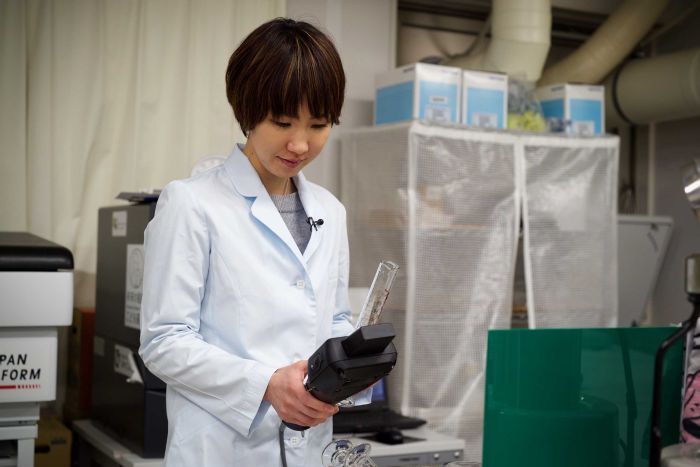
Nine years on, Fukushima’s mental health fallout lingers
As radiation from the Fukushima nuclear accident subsides, a damaging social and psychological legacy continues, Wired
Iida, who is 35, forbids her children from entering the sea or into forests. She agonises over which foods to buy. But no matter what she does, she can’t completely protect her children from radiation. It even lurks in their urine.
“Maybe he’s being exposed through the school lunch,” she says, puzzling over why her nine-year-old son’s urine showed two-and-a-half times the concentration of caesium that hers did, when she takes such care shopping. “Or maybe it’s from the soil outside where he plays. Or is it because children have a faster metabolism, so he flushes more out? We don’t know.”
Iida is a public relations officer at Tarachine, a citizens’ lab in Fukushima, Japan, that tests for radioactive contamination released from the 2011 accident at the Fukushima Daiichi nuclear plant. Agricultural produce grown in the area is subject to government and supermarket testing, but Tarachine wants to provide people with an option to test anything, from foraged mushrooms to dust from their home. Iida tests anything unknown before feeding it to her four children. Recently, she threw out some rice she received as a present after finding its level of contamination – although 80 times lower than the government limit – unacceptably high. “My husband considered eating it ourselves, but it’s too much to cook two batches of rice for every meal. In the end we fed it to some seagulls.”
Tarachine is one of several citizen labs founded in the wake of the Tōhoku earthquake and tsunami on March 11, 2011, which obliterated a swathe of the country’s northwest coast and killed more than 18,000 people. The wave knocked out cooling systems at the Fukushima Daiichi nuclear plant, triggering a meltdown in three of the reactor cores and hydrogen explosions that sprayed radionuclides across the Fukushima prefecture. More than 160,000 people were forced to evacuate. A government decontamination programme has allowed evacuation orders to be lifted in many municipalities, but one zone is still off limits, with only short visits permitted.
Driven by a desire to find out precisely how much radiation there was in the environment and where, a group of volunteers launched Tarachine in Iwaki, a coastal city that escaped the worst of the radioactive plume and was not evacuated, through a crowdfunding campaign in November 2011. It is now registered as a non-profit organisation, and runs on donations.
In a windowless room controlled for temperature and humidity and dotted with screens showing graphs, two women sort and label samples, either collected by staff or sent in by the public: soil from back gardens, candied grasshoppers, seawater. In the beginning, mothers sent in litres of breastmilk. Tarachine initially charged a tenth of what a university lab would charge to make the testing accessible to as many people as possible; last year, they made it free.
To test for caesium-137, the main long-term contaminant released from the plant, staff finely chop samples and put them inside a gamma counter, a cylindrical grey machine that looks like a centrifuge. Tarachine’s machines are more accurate than the more commonly accessible measuring tools: at some public monitoring posts, shoppers can simply place their produce on top of a device to get a reading, but this can be heavily skewed by background radiation (waving a Geiger counter over food won’t give an accurate reading for the same reason). Tarachine tries to get as precise readings as possible; the lab’s machines give results to one decimal place, and they try to block out excess background radiation by placing bottles of water around the machines.
Measuring for strontium, a type of less penetrative beta radiation, is even more complicated: the food has to first be roasted to ash before being mixed with an acid and sifted. The whole process takes two to three days. Tarachine received training and advice from university radiation labs around the country, but the volunteers had to experiment with everyday food items that scientists had never tested. “There was no recipe like ‘Roast the leaf for two hours at so-and-so Celsius’, you know?” says Iida. “If it’s too burnt it’s no good. We also had to experiment with types of acid and how much of the acid to add.”
Japanese government standards for radiation are some of the most stringent in the world: the upper limit of radioactive caesium in food such as meat and vegetables is 100 becquerels per kilogram, compared with 1,250 in the European Union and 1,200 in the US (the becquerel unit measures how much ionizing radiation is released due to radioactive decay). Many supermarkets adhere to a tighter limit, proudly advertising that their produce contains less than 40 becquerels, or as few as 10. Tarachine aims for just 1 becquerel.
“How I think about it is, how much radiation was there in local rice before the accident? It was about 0.01 becquerel. So that’s what I want the standard to be,” says Iida. Continue reading
Explaining ionising radiation -a film about nuclear fallout
Invisible Fallout https://beyondnuclearinternational.org/2020/06/21/invisible-fallout/,June 21, 2020
There are many ways to teach people about radiation. But if you want to make that lesson accessible, compelling and even moving, then this film is the way to do it.
Let’s go on a journey. A journey to learn about radiation exposure from fallout after a nuclear power plant accident. We have the perfect guide. It is the independent French radiation research laboratory known as CRIIRAD, and its director, Dr. Bruno Chareyron.
The organization’s full name in French is Commission de Recherche et d’Information Indépendantes sur la RADioactivité, hence the acronym. In English it is translated as Commission for Independent Research and Information about RADiation.
For those not familiar with CRIIRAD, our journey begins with a little history, and so does CRIIRAD’s brilliant new 45-minute film — Invisible Fallout (Invisibles retombées is the French title), which can be viewed in its entirety on YouTube and above. The film, written and produced by CRIIRAD staff and directed by Cris Ubermann, is in French and Japanese with English subtitles.
When the Chernobyl nuclear disaster hit in April 1986, the French government engaged in a notorious cover-up, claiming that France “has totally escaped any radioactive fallout.” The whole thing was a lie. Five days before the government denial, Chernobyl’s radioactive cloud had covered all of France.
As Invisible Fallout recounts, after Chernobyl, it took 15 years until the French government published fallout maps of France. But the CRIIRAD laboratory, formed right after Chernobyl precisely to establish that France’s immunity was a myth, had already done the work that debunked the official line that the disaster was just a Soviet problem. French citizens not only got dosed by Chernobyl fallout, but would live in perpetual danger of a similar catastrophe at home, with a country almost 80% reliant on nuclear-generated electricity from its 58 reactors.
But Invisible Fallout does not linger long in the past. It segues quickly to the next nuclear catastrophe — the 2011 Fukushima-Daiichi meltdowns in Japan — and it is there that the CRIIRAD team, led by Chareyron, take us to learn about the effects of radiation exposure from nuclear power plants.
Just sixteen days after the Fukushima disaster, Japanese citizens began to detect fallout. They desperately needed to do independent monitoring but found it hard to get their hands on Geiger counters. The downplays and cover-ups by Japanese authorities, attempting to minimize the dangers and avoid mass evacuations, meant official figures could not be trusted.
An unlikely leader stepped forward in the person of composer and artist, Wataru Iwata, who, one month after the disaster, asked CRIIRAD for Geiger counters. They sent them, along with email tutorials on radioactivity, its health risks and how to protect against them. The laboratory also prepared a series of simple, clear, instructional “emergency” videos in English, designed for non-specialists, which they put online for everyone to access. This included an instructional segment on how to use a Scintillometer, one of the dozen devices CRIIRAD had sent to the Japanese activists.
We then get a short instructional video of our own on exactly how the Scintillometer is able to rapidly detect Gamma radiation in counts per second, and what those measurements mean. It glides into clarity for us, abetted by the smooth tones of the film’s excellent French narrator, Nicolas Planchais. We forget completely we are in class. Everything is, indeed, illuminated.
And we see Iwata taking his device into Fukushima Prefecture where he helps others measure the radiation levels. At a restaurant 55km away from the destroyed reactors, where people were going about their daily lives, he is shocked to record radiation levels that are 50 times higher than normal. In other areas, levels are 1,000 times higher.
Two months after the accident, CRIIRAD decided to show up in person, and Japan’s Citizens Radioactivity Monitoring Stations (CRMS), were born. CRIIRAD set up nine CRMS in Fukushima Prefecture and one in Tokyo.
Quickly realizing that ingestion of radioactively contaminated foodstuffs was as much of a threat as external exposure, Iwata asked for ways to measure radiation in food. This would help the people who had stayed — or who had been forced to remain — in contaminated areas to make informed choices about the food they consumed. CRIIRAD brought over a device sensitive enough to detect radiation in food, then conducted a seminar for residents of Fukushima City on on how to use it. We too, as viewers, get the tutorial.
Indeed, all of these lessons in science are subtly woven into the film, but cleverly attached to the lived experiences of real people in Japan, making it relevant and relatable.
And then, as we learn how to measure radiation levels and what they mean, we start to meet the people to whom it matters the most. We encounter a farmer who abided by the rules not to sell contaminated crops but whose family ate the food themselves so it would not go to waste. And we watch his palpable emotion as he recounts his attachment to the land and the known risks he and his family took.
CRIIRAD and its Japanese partners begin to find radioactive particles everywhere— on rooftops, in soil and vegetation, at the foot of trees, in the cracks of tarmac, even inside greenhouses.
At a school which, in denial, refused to have radiation measurements taken, Iwata is shown taking readings in the school grounds. They start at 6,000 to 7,000 counts per second, but rise to 27,000 counts per second at ground level.
The CRIIRAD team encounter what they describe as their most difficult moment when an elderly peasant farmer asks them to conduct measurements on her land just 30km away from the nuclear site. She herself was forced to evacuate, but her farm was not in the zone designated for permanent evacuation. So she came back with CRIIRAD to assess the situation.
We watch them take measurements, then gently show the results to her. She begins to sob. Then she tells them, “Thank you for coming all this way. I was in darkness and you have brought me light.” But, she knows she must now abandon the farm forever.
After an interlude for another lesson, this time on gamma rays, we are back to some chilling truths about their effects. In Fukushima City, we learn that at an elementary school there, children are asked to frequently change places in class so that the same children are not always sitting by the window where the radiation levels are higher.
This prompts CRIIRAD to remind us that, “when it comes to radiation protection, there is no threshold below which it is harmless.” And they point out that the Japanese decision to raise the annual allowable radiation dose from 1mSv to 20mSv, “means accepting a risk of cancer 20 times higher, and this applies equally to children and pregnant women” for whom such doses present a far higher risk.
CRIIRAD warns that people living in the contaminated region will be exposed for decades and across vast areas. They will be exposed to external radiation from powerful gamma rays emitted by the soil and contaminated surfaces. They will be exposed through inhalation of radioactive dust suspended every time the wind blows, and by activities such as sowing crops, ploughing and construction work. And they will be exposed through eating foodstuffs cultivated on contaminated land in contaminated soil.
But thanks to CRIIRAD, many of them will now know how to measure these levels, what they mean and how to protect themselves. It’s a lesson that’s well worth learning for all of us.
For more information, please see the CRIIRAD website, in its original French, and in English.
COVID-19 sheds doubts on Tokyo Olympics 2021
 When a year is not long enough to ensure Tokyo Olympics’ hustle-and-bustle, Indian Express, by Shivani Naik | Mumbai June 19, 2020 The prevalent situation in the world with a Covid-vaccine still not firmed up and the virus erupting like a rash, puts an almighty question mark on the deferred dates of the Olympic Games. When a year is not long enough to ensure Tokyo Olympics’ hustle-and-bustle, Indian Express, by Shivani Naik | Mumbai June 19, 2020 The prevalent situation in the world with a Covid-vaccine still not firmed up and the virus erupting like a rash, puts an almighty question mark on the deferred dates of the Olympic Games.
The Olympics is scheduled to open on July 23, 2021. The Paralympics follow on August 24. …….
Sport’s most joyous party – the Olympics, now tiptoes towards its scheduled Tokyo date. For, imagine an Olympic athletes’ village with 10,500 residents and at least the same number of officials and support staff. With the world trooping in from every distant part of the globe, the enormity of troubleshooting needed to pull off the gigantic Olympics amidst this pandemic becomes ominously clear. More than a year from a postponed Tokyo Games scheduled for July-August 2021, murmurs have started about another deferral…….. While IOC chief Thomas Bach has categorically said no Plan B exists and Japanese premier Shinzo Abe has stated that 2021 is the only option, the prevalent situation in the world with a vaccine still not firmed up and the virus erupting like a rash, puts an almighty question mark on even the deferred dates of the Games. While athletes have been urged to carry on their preparations keeping July 23, 2021 as the target, a realistic assessment throws up doubts, which puts the spotlight on the March 2021 deadline to determine if the Games can take off as promised……. “It is hard to imagine the Olympics proceeding without the virus under control throughout the world, or that some countries do not participate based on some criteria that suggests COVID-19 is not under control in a country. Ultimately, the assessment would have to be based on whether a healthy athletes’ village can be maintained… an athletes’ village is akin to the cruise ship difficulties seen during COVID-19,” ……… https://indianexpress.com/article/sports/sport-others/tokyo-olympics-2021-year-not-long-enough-covid-19-6463952/ |
|
Covid-19 pandemic – ‘fire drill’ for effects of climate crisis

|
Covid-19 pandemic is ‘fire drill’ for effects of climate crisis, says UN official, Tue 16 Jun 2020 “The overall problem is that we are not sustainable in the ways we are living and producing on the planet today,” said Lise Kingo, the executive director of the UN Global Compact, under which businesses sign up to principles of environmental protection and social justice. “The only way forward is to create a world that leaves no one behind.”She said there were “very, very clear connections” between the Covid-19 and climate crises, and the Black Lives Matter protests around the world, which she said had helped to reveal deep-seated inequalities and “endemic and structural racism”.
“We have seen illustrated to everyone that social inequality issues are part of the sustainable development agenda,” Kingo said. ….. The UN secretary general, António Guterres, said building a fairer society would be essential to the world’s health, as well as to saving the planet from climate breakdown and ecological destruction. “Today, the fabric of society and the wellbeing of people hinge on our ability to build a fair globalisation,” he told the two-day UN Global Compact virtual conference of business leaders, which started on Monday……. https://www.theguardian.com/environment/2020/jun/15/covid-19-pandemic-is-fire-drill-for-effects-of-climate-crisis-says-un-official
|
|
Radioactive cloud over Europe in 2017 came from a civilian nuclear reactor

|
Radioactive cloud over Europe had civilian background https://www.eurekalert.org/pub_releases/2020-06/uom-rco061220.phpIsotope measurements on air filters: researchers investigated undeclared nuclear release / Study in “Nature Communications” 14 June 20
UNIVERSITY OF MÜNSTER A mysterious cloud containing radioactive ruthenium-106, which moved across Europe in autumn 2017, is still bothering Europe’s radiation protection entities. Although the activity concentrations were innocuous, they reached up to 100 times the levels of what had been detected over Europe in the aftermath of the Fukushima accident. Since no government has assumed responsibility so far, a military background could not be ruled out. Researchers at the Leibniz University Hannover and the University of Münster (both Germany) now found out that the cloud did not originate from military sources – but rather from civilian nuclear activities. Hence, the release of ruthenium from a reprocessing plant for nuclear fuels is the most conclusive scenario for explaining the incident in autumn 2017. The study has been published in the journal Nature Communications.
Background: It is impossible to make a clear distinction between civilian and military sources solely based on measurements of radioactive isotopes of ruthenium. For the first time, researchers from the Institute of Radioecology and Radiation Protection at Leibniz University of Hannover and the Institute of Planetology at Münster University succeeded in quantifying stable ruthenium isotopes in air filters that were released with the radioactive ruthenium. Within the scope of the study, the team left conventional scientific paths: “We usually measure ruthenium isotopes to study the formation history of Earth”, says Prof. Thorsten Kleine from the University of Münster, adding that the methods originally developed to address research questions in planetology were instrumental in solving this mystery. The fact that the airborne ruthenium stemming from nuclear activities occurred in minuscule amounts and were diluted with natural stable ruthenium presented a significant challenge. Through the clean chemical separation of ruthenium fractions from air filters and subsequent high-precision measurements via mass spectrometry, the researchers determined the ratio of stable ruthenium from the nuclear source. The ruthenium isotopic ratios found in the filter are consistent with the signature of a civilian source, in particular the signature of spent nuclear fuel from a nuclear power plant. A military background (such as the production of weapons-grade plutonium) can be ruled out. Furthermore, high-precision measurements enabled the researchers to draw further conclusions. “The isotope signature discovered in the air filter exhibits no similarities with nuclear fuels of conventional Western pressurised or boiling water reactors. Instead, it is consistent with the isotope signature of a specific type of Russian pressurised water reactors – the VVER series. Worldwide, approximately 20 reactors of this type of VVER are currently operational”, specifies Professor Georg Steinhauser from Leibniz University Hannover. Original publication: T. Hopp et al. (2020): Non-natural ruthenium isotope ratios of the undeclared 2017 atmospheric release consistent with civilian nuclear activities. Nature Communications; DOI: 10.1038/s41467-020-16316-3 |
|
Russian city Severodvinsk, (near site of nuclear accident) sealed off due to Covid-19
 Coronavirus seals off city near secret Russian nuclear accident site, https://thebarentsobserver.com/en/2020/06/coronavirus-seals-city-near-secret-russian-nuclear-accident-site The Moscow Times 05, 2020, Authorities have blocked access to Severodvinsk, the north Russian city located near the site of last year’s mysterious nuclear testing accident as the coronavirus outbreak there intensified.The governor of the Arkhangelsk region signed an order to close public access to Severodvinsk this Saturday, the city’s press service said Thursday. Severodvinsk is near the Nyonoksa testing site where an August 2019 explosion during a rocket engine test killed five Russian nuclear workers and led to a radiation spike.
Severodvinsk will set up checkpoints Friday and restrict entry and exit starting midnight Saturday to everyone except workers and people attending funerals, going to country houses or transiting through the city.
“The measure remains in effect until special orders,” the city’s press service said in a statement.
Around 700 people have been infected with Covid-19 at two of the city’s major shipyards since April, an unnamed shipbuilding industry source told the Vedomosti business daily. The Sevmash and Zvezdochka shipyards reportedly saw more than 200 new cases in the past week alone.
The outbreak has prompted federal health officials last week to order enterprises in Severodvinsk to limit their activities.
The Arkhangelsk region has confirmed 2,496 coronavirus infections since the start of the outbreak. Severodvinsk accounts for roughly half of the region’s overall cases.
Last August, a missile exploded during what is believed to have been a recovery operation. The secrecy surrounding the accident has led outside observers to speculate that the explosion involved the Burevestnik nuclear-powered intercontinental cruise missile, dubbed the SSC-X-9 Skyfall by NATO.
President Vladimir Putin later said the accident occurred during testing of what he called promising new weapons systems.
High rate of cancers among Mururoa nuclear veterans’ families
|
Research confirms high rate of cancers among Mururoa nuclear veterans’ families https://www.stuff.co.nz/national/121726358/research-confirms-high-rate-of-cancers-among-mururoa-nuclear-veterans-families 5 June 20, A navy veteran who saw his own finger bones in the flash of a nuclear blast says families should be compensated for suffering health problems linked to the military service of their relatives.And he now has evidence to prove the link.
Gavin Smith, 69, served in the navy in 1973 when Prime Minister Norman Kirk sent two frigates and 500 men on a sea-borne protest to nuclear testing at a French Polynesian atoll. It was at Mururoa that he and his colleagues were exposed to harmful radiation while observing two nuclear explosions by the French on board HMNZS Canterbury. Smith, also president of the Mururoa Veterans Group, was one of 83 sailors and 65 children included in a University of Otago study, which was published in the New Zealand Medical Journal in May. The research proves they have a higher risk of transferring genetic illnesses. It shows 30 per cent of veterans suffer a cocktail of cancers, including prostate, non-Hodgkin lymphoma, leukaemia and skin conditions. Thirty-one per cent also suffer joint problems. Forty per cent of veterans’ children reported fertility problems, including endometriosis, miscarriages and polycystic ovarian syndrome. Some had taken more than 12 months to conceive children, while others chose not to have kids because of their fathers’ exposure to radiation. Smith said the next step was to create a registry for veterans and their families. He had contacted Minister of Defence Ron Mark about the study and hoped to gain funding for further genetic studies. This would detect heritable change, where scientists could look at specific changes in genetic code. Smith said the cost of veterans’ health problems were covered by Veterans Affairs, however the plight of their descendents were not. “We’re pleased to have the cold facts, because we’ve been fighting for this for 40 years,” he said. “It proves what we’ve been saying all along – that there is a problem and it needs addressing. “We now know [the rate of cancer] is higher among veterans and their descendents than the average rate, but further genetic studies will confirm the link.” The university’s director of veterans’ health research David McBride conducted the study, alongside a team of trainee doctors. McBride said only 21 veterans in the study were receiving Government support. “Ionising radiation can cause changes in the chromosomes carrying the genetic code, but we know neither if these changes result in disease nor whether they can be passed on by fathers to offspring.” McBride said more genetic testing was required to show the way genes express themselves through decoding. This would involve establishing a registry of veterans and their families, and storing tissue samples for analysis. |
|
Now with the pandemic, it is a free-for-all for the nuclear operators
COVID Infects World Nuclear Plants, May 27, 2020, by Alex Smith, Radio Ecoshock, “……….During this pandemic, the nuclear industry is another disaster not just waiting to happen, but already dancing with it. Some reactors have been shut down due to the pandemic. But most atomic companies demanded to stay open.
They call themselves essential services, despite a glut of electricity priced well below what the nuclear industry can match. In many countries, taxpayers are paying billions for mal-investments in nuclear power. In America, the private operators and their investors demanded the federal government top up user bills in order to compete with electricity from cheap wind and natural gas. They want safety regulations cut back, inspections and rules developed after major nuclear accidents to be relaxed.
In America, the Trump Administration is ready to help. Three of the 5 commissioners of the Nuclear Regulatory Commission were nominated by President Trump. Along with other environmental protection rules, the Trump Administration has been dropping safety requirements at nuclear plants. Now with the pandemic, it is a free-for-all for the nuclear operators – as they struggle to avoid painful bankruptcies across the nation.
In just one small example, the former on-site nuclear plant inspectors, found in all nuclear power plants by law, are now making their “inspections” over the phone. There is fear of massive absenteeism of nuclear employees as the pandemic infects workers and their families or contacts. In Georgia, 120 nuclear plant workers had to quarantine. American companies admit they have plans to keep emergency staff, thousands of them, at the reactors in a 24/7 lock down, sleeping on cots. But they won’t say if that is already happening or where. During this pandemic, a nuclear reactor in the United States is sunk down in ground flooded in Michigan. You probably did not hear about that. We will ask big questions about nuclear safety during the pandemic with our guest Grant Smith, Senior Energy Policy Advisor with EWG, the Environmental Working Group.
But it is not just America. The international scene is just as scary. Many companies said they had pandemic plans, but few did, or no plan on this scale. A few reactors in the UK and France were closed down because they could not be operated safely during a pandemic. Almost all the rest stay on, full power, despite workers getting infected, and essential supply chains in doubt. The Russian state atomic company Rosatom brags “Nuclear Is Not Afraid of COVID-19”. Construction on the first nuclear power plant in impoverished Bangladesh is continuing, they say, even though a few hundred Russian nuclear construction experts were called home during the pandemic. I guess it is up to the Bangladeshis to build it completely safely. Rosatom reports construction of new reactors in Egypt and Turkey continues through the pandemic.
Russian nuclear operators have been infected with this virus. Probably every country with a reactor or nuclear weapon has these infections and risks, without reporting it. What could go wrong? I summarize carefully worded reports that explain so much. A nuclear accident during a pandemic would be a dire twist in history. Maybe with a bit of sunlight and public voice, we can avoid that?
The industry reports terrorists threatened to attack nuclear facilities during this plague. Experts point to spikes in attempts to hack nuclear control systems, even while some reactor employees work from home computers. I hope they are not using Windows 10 with botched and hackable updates.. In all countries, from Finland to Canada to Australia, the problems or policies meant to cope with nuclear-sized risks during this pandemic are shrouded in secrecy.
A watchdog group reports major decisions approved by the U.S. Nuclear Regulatory Commission require, by law, public consultation and information. The pandemic has excused all that, the brakes are off, the deregulators are not regulating. The NRC claims it rules the operation of nuclear plants, but not worker health. The NRC has not provided a public plan for nuclear plants during COVID-19. Other national governments are distracted. They are already politically and financially enmeshed in the nuclear game. That leaves safety up to nuclear plant owners and investors, the unseen wealthy and their CEOs, the ones already facing oblivion as dangerous aging reactors shut down one after another, and wind power blows them away.
I’m Alex Smith. This is Radio Ecoshock. Before I cover the convergence of a pandemic, climate change, and grave nuclear risks in many countries, let’s start out with our guest in America. …… https://www.ecoshock.org/2020/05/covid-infects-world-nuclear-plants.html
RUSSIAN NUCLEAR INDUSTRY STRUGGLES WITH PANDEMIC, also threatened by climate change
|
COVID Infects World Nuclear Plants, May 27, 2020, by Alex Smith, Radio Ecoshock, “……….RUSSIAN NUCLEAR INDUSTRY STRUGGLES WITH PANDEMICNow it the time to talk about the awful virus out of control in Russia, the last bastion of nuclear ambition with an infamous track record. I have to report it, because it seems no one from there feels safe to talk about it. One environment group reported safety questions about secret nuclear cities – after a government minister mentioned it. They declined an interview. I contacted reporters usually willing to do radio, including two from the English language Moscow Times, but got no reply. Radio silence as they say. These are dangerous times in Moscow, as ambulances line up outside hospitals, mortuaries go into overdrive, and the Putin government, like many governments, covers up early mistakes.
o I patch together what little we can find out. The Russian nuclear story, as I said in the beginning, spreads out to governments all over the world, from the Middle East to North Korea. Really their nuclear technology is not much more dangerous than in Japan or America. It is all dangerous when built and run by flawed humans. Every nuclear country has a secret history of near-misses and hidden atomic poisons. Britain, Canada, France, you name it. There is a long list of atomic leaks, break-downs, hair-raising risks all over the world. Like the Trump Administration, the Putin government downplayed the threat of COVID-19 for precious months after it broke out in China. For a while in February, it looked like the pandemic would barely graze Russia. It was business-as-usual. Then the first wave arrived. Now Russia has the third most serious infection in the world, with way over 300,000 cases confirmed, and who knows how many really. The government is reporting low death rates, under 4,000 mortalities. As in China, these numbers are not credible. The real number of deaths has to be many times that. In late May, the Moscow Times ran an article explaining why the Russian government did not count 60% of suspected Covid-19 deaths. Only cases where autopsies showed the disease were counted. But who has time or staff to do thousands of autopsies during a wave of the pandemic? The Moscow health department attributed the obvious spike in deaths to things like “heart failure, stage four malignant diseases, leukemia … and other incurable deadly diseases”. In many ways, Russia is still a secret state. Certainly it has secret atomic cities. These are closed cities. You needed special permits to go there even before the pandemic, in fact, since the 1950’s. Nuclear bombs, missiles, and torpedoes are made there. Factories make reactors that can float in the sea, hide in the ground, or blast out into space. During Soviet times, these cities also specialized in chemical and biological weapons. Some say they still do, though the Russians publicly denounced those weapons. So if was surprising when “The head of Russia’s state nuclear corporation has expressed concerns about the spread of the novel coronavirus to three of its so-called “nuclear cities.” At the beginning of May, Charles Digges from the Russian environment group Bellona wrote about it, after the public announcement by Rosatom chief Alexei Likhachev. Likhachev said: “The situation in Sarov, Elektrostal, Desnogorsk is today particularly alarming.” People in the West do not understand why it is alarming that anything was admitted at all. When he said it, Russia was just the seventh most infected country. Less than a month later, their cases have doubled, and Russia is number two worst. The archipelago of nuclear labs and businesses controlled by Russia’s Rosatom employ around 250,000 people. The company admits they have stashed some workers permanently on nuclear sites, but like the U.S. industry, won’t say how many or where. This is what you do when you have an emergency. During the pandemic, they need to try to isolate enough workers to keep nuclear reactors operating and cool, to keep vast lakes and mountains of nuclear waste cool and secure, literally, to keep the lights on. The record shows safety at many Russian nuclear complexes has been poor at the best of times. There is a long and painful history not just of nuclear accidents – those are legendary – but of atomic neglect. Barrels of highly radioactive materials were just buried all over, or sunk at sea. Nobody is totally sure where all of it went. The Soviet Union left the world a legacy of abandoned hot spots no-go zones. Putin inherited that, and doubled down on Russian nuclear ambitions. The Russians will sell, and have sold, nuclear technology to anyone. Iran? Sure. North Korea, well that transfer of Russian nuclear technology may or may not have been authorized. Now they are building a nuclear reactor in Bangladesh. But why not? Canada gave India nuclear tech that led to their atomic bomb, and trained the Pakistani father of the bomb. Canadian engineers watched as prison slave labor built a Candu nuclear plant in Romania. The Romanians couldn’t really pay, so Canada agreed to take it out in coal and jam. It’s a dirty corrupt business no matter who does it. The on-again off-again felon Mike Flynn was busy trying to selling nuclear reactors to dictators in the Middle East. China wants to make money selling reactors. Nobody makes money selling reactors. Nuclear power is the biggest money pit in the history of money pits. And the cost never ends. Deconstruction usually falls on future taxpayers. The dangerous radioactive waste needs to be secured and guarded for tens of thousands of years. It’s never over. Thank goodness nuclear weapons are no longer a threat. Except both Russia and the United States have announced new supersonic atomic delivery missiles in just the last couple of years. Trump is pushing to build new nuclear weapons – the best anybody has ever seen! Britain is always embarking on a new nuclear plan that sinks into hundreds of billions of wasted pounds. Don’t get me started on nuclear waste dump schemes that never work or mini-reactors to save the climate. But the Russians have to be champions of nuclear secrecy. I don’t know of any other whole cities entirely closed off, so secret they did not even appear on maps. Now they say that despite official worries, everything nuclear is under control in Russia. The Rosatom chief reported 47 employees infected with COVID-19. 23 of them are in the secret city of Sarov, he said, in late April. How many are there now? MORE NUCLEAR WORRIES IN RUSSIA AS COVID-19 RUNS RAMPANTEleven hundred miles East of Moscow, the Russian nuclear power plant at Beloyarsk was the first to keep it’s staff on site. Nobody goes home. That was reported in Russian-only by the state news agency Interfax. At least one staff member was sick for days with a high fever. That was in April. The old reactors from the 1960’s are temporarily shut down, but now they run two large fast-neutron reactors there. The Russian group Bellona reports “270 workers isolated at the Rostov nuclear plant took to social media to complain they were being treated like ’cattle’.” That is in Southwest corner of Russia, along the Don River. The workers reported lack of protection against the virus and terrible working conditions. Rosatom says those concerns have since been addressed. URANIUM MINING SHUT DOWN AROUND THE WORLDRosatom also reports the large Russian uranium mining industry has been shut down due to coronavirus concerns. Many mines of all kinds have been closed around the world. We will start to feel the shortages some time in the fall, even though demand has fallen off. The Russians are also concerned about their electric utilities, because as they say “Falling incomes of both retail and corporate consumers might result in a tidal wave of unpaid electricity bills.” The American and European electric utilities fear that too. Uranium mining has been closed down for the pandemic pretty well everywhere from Canada to Kazakhstan to Namibia. Nuclear reprocessing plants are also closed. There is currently a glut of nuclear fuel, but I suppose if the pandemic is not solved in a year or so, nuclear power plants could run low on fuel. Perhaps experts can advise us on that. On April 14, a Russia language news outlet reported three employees of Kursk Nuclear Power Plant were infected by COVID-19. That is in the city of Kurchatov, in the direction of the border with Ukraine. You need a special permit to go there too. How many are infected there now? The Russian nuclear industry, both weapons and power, is not immune to this novel virus. So far they have not been overwhelmed by it. Not that we know of. Now that the pandemic is full blown and still growing in Russia, there is practically nothing coming out about the nuclear danger there. I suppose we will find out 30 years from now when the archives are released. Or maybe any day now, when radioactivity monitors in Sweden or Washington State go off. Of course, that could be coming from Japan, China, Canada, the U.S., or any of the dozens of nuclear operations run by humans with no immunity to a new disease, and economies shaking down. THERE IS ANOTHER HOT SPOT – SIBERIABefore we leave Russia, let me tell you about another hot spot there: Siberia. In last week’s Radio Ecoshock program, two top scientists told us about the coming heat as we load up the atmosphere with carbon. Dr. Radley Horton from Columbia was part of a team that discovered heat beyond human endurance is already popping up in various countries. It’s not that hot in Siberia. I’m sure the locals are enjoying the early summer warmth, although they must be nervous. Forest fires, and they have massive planet-changing forest fires, are already burning in Siberia, when it should be time for the snow to melt. For European and Canadian listeners, that’s 31 degrees C in Siberia, instead of -12 C, over a massive, massive area. Will we see a repeat of the 2010 heat wave over Russia, that killed tens of thousands of people and closed down the country’s wheat export trade? How much carbon will be released this year from forest fires in the far north? It has begun. ‘…… https://www.ecoshock.org/2020/05/covid-infects-world-nuclear-plants.html |
|
PANDEMIC STRIKES NUCLEAR WORKERS IN AMERICA
|
COVID Infects World Nuclear Plants, May 27, 2020, by Alex Smith, Radio Ecoshock,”………..PANDEMIC STRIKES NUCLEAR WORKERS IN AMERICA – GRANT SMITHAmerican nuclear plant workers are being overworked, some crowded in conditions ripe for spread of the Coronavirus. By late April, multiple reactors reported employees infected with COVID-19. The Trump version of the Nuclear Regulatory Commission reacted to the crisis by dropping key safety rules and inspections. Grant Smith is Senior Energy Policy Advisor for EWG, the Environmental Working Group, headquartered in Washington D.C…….
With offices and factories closed down, there is a glut of electricity in the United States. Reactors have shut down during other emergencies. These old units down should at least power down during this pandemic, when workers are showing up sick with a dangerous communicable disease. The industry claims they are under a sustained cyber-attack during the pandemic. Some of their computer systems use decades old technology that cannot be accessed from the Internet, so I suppose that is a safety feature. But what happens when hundreds or thousands of workers are asked to work from home computers? We are also concerned about communities near reactors. Workers are going back to their families and communities. The industry admits they have backup plans to keep workers on site 24/7 – providing them with cots and pre-packaged food. Now that America has over a million and a half cases, over 100,000 confirmed COVID-19 deaths, has that emergency plan been implemented anywhere? The nuclear industry has announced they will not say what plants have staff quarantined inside. There are American-designed nuclear reactors all over the world. Four General Electric Mark I reactors blew up at Fukushima Japan following the tsunami in 2011. But now most Americans were flown home during the pandemic. This disease raise worries about other U.S.-type reactors in other countries. If America experiences a second or third wave of disease, worse than this first one, and this pandemic drags on for months or even a couple of years, can the nuclear power industry hold out? Can they just keep training replacements for their sick and dying workers? I know the American public doesn’t really want to hear about anything nuclear. It’s complex and scary to think about. We feel there is nothing we can do about it. The nuclear industry is happy with that, content to run reactors in the shadows, or even in secret. We aren’t handling the pandemic well, we are failing to stop horrible climate change. Can we revive a movement to shut nuclear down and using safe green energy instead?….. https://www.ecoshock.org/2020/05/covid-infects-world-nuclear-plants.html |
|
Coronavirus pandemic hampers Japan’s nuclear regulators’ probe into Fukushima disaster

 Nuclear regulators’ Fukushima crisis probe hit by coronavirus, https://mainichi.jp/english/articles/20200530/p2g/00m/0na/054000c May 30, 2020 (Mainichi Japan) TOKYO (Kyodo) — A probe by nuclear regulators into the causes of the March 2011 Fukushima crisis has been hampered by the coronavirus pandemic, with the dispatch of staff from Tokyo postponed for fear of spreading infection among the some 4,000 on-site decommissioning workers.
The Nuclear Regulation Authority had resumed its investigation last October, deeming radiation levels in some areas of the crippled Fukushima Daiichi nuclear plant had lowered sufficiently enough, nearly a decade since the disaster.
NRA officials had repeatedly traveled to the site from Tokyo and succeeded last December in filming scattered debris and a damaged ceiling on the third floor of the No. 3 reactor building, where a hydrogen explosion occurred during the crisis triggered by the quake-tsunami disaster.
In late March, the watchdog set seven priorities in conducting the probe for the time being, including checking the radiation levels on the fourth floor of the No. 3 reactor building, and radiation contamination levels at the No. 2 reactor facility.
The NRA originally intended to send its staff to the plant every one or two weeks in April and May, but the plan came to a halt following the government’s declaration of a state of emergency over the coronavirus on April 7 for Tokyo and six other prefectures, which was expanded nationwide on April 16.
“It would be impermissible should the virus be brought from Tokyo in any case” to the Fukushima complex, NRA Chairman Toyoshi Fuketa said.
The nuclear watchdog was compelled to cancel the planned dispatch of its staff for the probe because any coronavirus infection among the employees at the plant could stop their decommissioning work.
The state of emergency declaration was lifted on Monday for the entire nation, but the NRA fears it may take even more time before staff can enter the site again.
Further delays in the resumption of the probe could affect the NRA’s goal of compiling a report by the end of the year.
“We can’t do it during the summer period,” a senior NRA official said, as it will be impossible to carry out an investigation under the summer heat wearing heavy radiation protection gear.
The NRA is looking to restart sending the staff from the fall, according to sources close to the matter.
Nuclear emissions cause cancer
Irvine Community News 30th May 2020, While we agonize over the COVID-19 pandemic, perhaps it is also appropriate to consider another medical enigma which kills far more. Cancer is the number one killer in California. This year, cancer deaths are expected to
exceed 60,000 in California and 600,000 nationwide.
Radioactive discharges from nuclear power plants are viewed by many as a contributing factor. Over 100 million Americans live within 50 miles of a nuclear power plant. Our
very own San Onofre has been regularly releasing low-level radiation into
the ocean and atmosphere for more than a half-century.
Although it is listed as “low-level,” the destructive biological effects of radiation
are cumulative. According to the Nuclear Regulatory Commission, even small
doses of ionizing radiation increase risks to humans.
Air ejectors blast dozens of radionuclides into the prevailing winds which generally blow over
the populated cities of Orange County. Giant pipes that are 18 feet in
diameter discharge liquid releases into the ocean, up to a million gallons
per minute. Radionuclides are mixed with sea water in discharges that can
go on for more than a day. The theory is simple: The solution to pollution
is dilution.
Do these emissions increase cancer risk? The shocking answer
is that no one knows for sure, mainly because of lack of research. The
public would like to know more but nuclear industry wants to know less. The
Nuclear Regulatory Commission likes to cite a heavily flawed study from 30
years ago which failed to find an answer. It studied only where people
died, not where they lived or worked. It also failed to study cancer in
children, the most vulnerable group.
More recently, scientific studies in Europe have reported an increase in cancer risks, especially in children.
1 This Month



4 August – WEBINAR – Hiroshima & Nagasaki: Nuclear Bombs Never Again
Tuesday, Aug. 4 at 5 pm PT / 8 pm ET.
Aug 5, 2026 10:00 AM in Australia/Melbourne
Join the Nuclear Bombs Never Again webinar on August 4th at 5pm Pacific Time / 8pm Eastern Time / 9am Japan Standard Time.
Cross generational voices at the intersection of Japan-Korea-US policy and militarization will share their lived experiences, nuclear impacts in these contexts, anti-war strategies, and actions you can take to advocate for a world with Nuclear Bombs Never Again. This 75-minute event is co-hosted by WILPF US and Korea Peace Now.
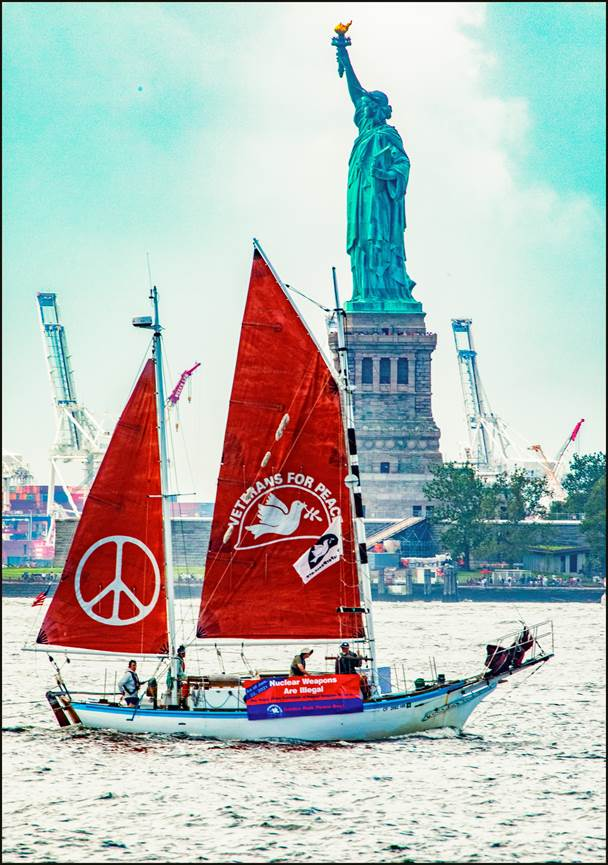
22,000+ miles voyaging for nuclear disarmament
and a radiation-free environment https://vfpgoldenruleproject.org/
To see nuclear-related stories in greater depth and intensity – go to https://nuclearinformation.wordpress.com
-
Archives
- July 2026 (277)
- June 2026 (287)
- May 2026 (306)
- April 2026 (356)
- March 2026 (251)
- February 2026 (267)
- January 2026 (308)
- December 2025 (358)
- November 2025 (359)
- October 2025 (375)
- September 2025 (257)
- August 2025 (319)
-
Categories
- 1
- 1 NUCLEAR ISSUES
- business and costs
- climate change
- culture and arts
- ENERGY
- environment
- health
- history
- indigenous issues
- Legal
- marketing of nuclear
- media
- opposition to nuclear
- PERSONAL STORIES
- politics
- politics international
- Religion and ethics
- safety
- secrets,lies and civil liberties
- spinbuster
- technology
- Uranium
- wastes
- weapons and war
- Women
- 2 WORLD
- ACTION
- AFRICA
- Atrocities
- AUSTRALIA
- Christina's notes
- Christina's themes
- culture and arts
- Events
- Fuk 2022
- Fuk 2023
- Fukushima 2017
- Fukushima 2018
- fukushima 2019
- Fukushima 2020
- Fukushima 2021
- general
- global warming
- Humour (God we need it)
- Nuclear
- RARE EARTHS
- Reference
- resources – print
- Resources -audiovicual
- Weekly Newsletter
- World
- World Nuclear
- YouTube
-
RSS
Entries RSS
Comments RSS
 nuclear-news