Book: Doom With A View: Historical and Cultural Contexts of the Rocky Flats Nuclear Weapons Plant.
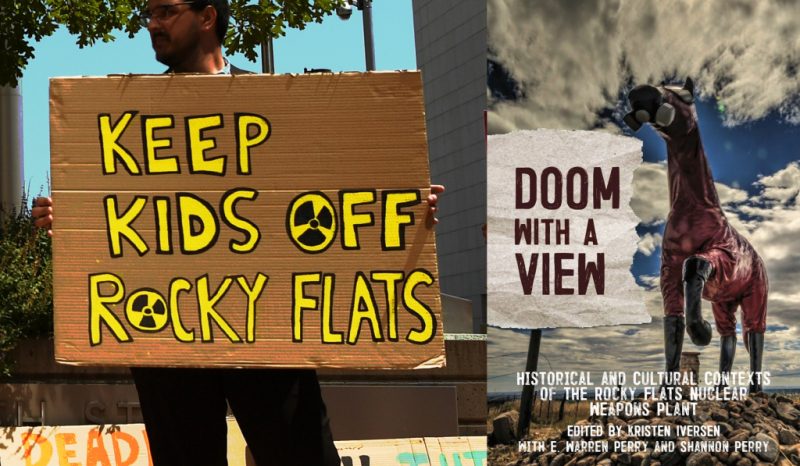
The Grieving Landscape, LONGREADS, Heidi Hutner | Fulcrum Publishing | June 2020 | 16 minutes (4,305 words)
We’re delighted to bring you an excerpt by Heidi Hutner from the anthology Doom With A View: Historical and Cultural Contexts of the Rocky Flats Nuclear Weapons Plant. Edited by Kristen Iverson, with E. Warren Perry and Shannon Perry, the anthology arrives from Fulcrum Publishing in August, 2020.
At thirty-five, I was diagnosed with Hodgkin’s lymphoma. One year before my diagnosis, my mother died from complications after heart surgery. At the time of her death, my mother had cancer — lymphoma. Five years prior to Mom’s death, my father passed away from a brain tumor, a metastasis from the cancer melanoma.
Two years after I had completed my chemotherapy treatment for cancer, I gave birth to Olivia. My miracle baby.
At first, I was ecstatic about the pregnancy. I had always wanted children, and with my cancer, I feared this would never happen. My doctors said I was lucky to give birth to a biological child after chemotherapy (my treatment left me with a 50 percent chance of remaining fertile afterward). But now, a mother-to-be, I was also afraid. How could I protect my child from our family cancer blight?
My desire to protect my daughter from a future cancer diagnosis drove me into a rabbit hole of reading and learning about the reasons for my family’s affliction. I began with Rachel Carson’s Silent Spring and moved forward to more recent literature by Sandra Steingraber, Theo Colburn, and numerous others, including the President’s Cancer Panel Report. I learned that the cancer rates today are off the charts: one in two men and one in three women will get cancer in their lifetimes. Carson predicted this plague in 1963. She warned us of humankind’s “hubris” in carelessly polluting our earth with toxic chemicals and ionizing radiation. The epidemiologist Alice Stewart’s study on the grave danger of X-rays on babies in the womb in the 1950s, sounded the alarm about ionizing radiation as well. Today, our world swirls with pollutants — these carcinogens penetrate mothers’ wombs and breasts. Mother’s milk is a toxic cocktail. Newborns today are born with hundreds of synthetic chemicals in their umbilical cord blood. Synthetic chemicals and ionizing radiation change our makeup, harm our genes, and cause mutagenetic damage. More than 80,000 unregulated pollutants fill our environment.
We are guinea pigs.
Fast forward about eleven years: one summer day, in 2009, on the Upper West Side of Manhattan, at lunch with a close friend (and cousin) of my deceased mother, Phyllis Resnick, I stumbled upon a story about my mom that I had never heard before. The tale Phyllis told would radically change my life. My then-preteen daughter, Olivia, was by my side. She listened rapt with me as we learned of our maternal nuclear legacy.
Phyllis described how in the early 1960s, my mother and she, along with their good friend Thalia Stern Broudy, had been a members of Women Strike for Peace (WSP), an antinuclear group led by Dagmar Wilson and the future congresswoman, Bella Abzug. During the Cold War 1950s and early 60s, the U.S. had detonated one hundred above-ground nuclear test bombs in the Nevada desert and one hundred and six atmospheric test bombs in the South Pacific. The government claimed these test bombs posed no harm and the fallout had not spread, but scientists and medical professionals were concerned. A team of experts in St. Louis, MO, directed by Dr. Louise Reiss, initiated a survey to determine the extent of the impact of the bomb testing. With a chemical makeup similar to calcium, strontium-90, a radioisotope found in fallout, is easily absorbed in teeth and bones. Thousands of baby teeth from across the U.S. were collected between 1958 and 1971 for the St. Louis Baby Tooth Survey. In 1961, preliminary results showed high levels of strontium-90 in baby teeth of children born after 1945 and these levels increased over the time period, as the test-bombing continued. When the mothers of Women Strike for Peace learned the results of the survey, they banded together to stop atmospheric bomb testing. 50,000 WSP members from across the U.S. wrote letters, gathered petitions, lobbied congressional representatives, initiated lawsuits, and protested through marches and street demonstrations. My mother and her cohort of 15,000 WSP members traveled to D.C. to protest, lobby, and meet with their legislators November, 1961. In 1963, the United States, the U.K., and the Soviet Union signed the Partial Nuclear Test Ban Treaty, an agreement to halt atmospheric, under water, and outer space bomb testing. The signing of this treaty has been attributed to the efforts of WSP.
The government claimed these test bombs posed no harm and the fallout had not spread, but scientists and medical professionals were concerned.
After discovering this remarkable story about WSP, I became obsessed with feminist nuclear history. I wondered: Why had I never been told this tale when my mother was alive? What other vital nuclear histories involving women had been buried? So began my journey of exploring women’s antinuclear tales, traveling to nuclear disaster sites, and meeting with members of impacted communities. On this path, I met Kristen Iversen, the author of Full Body Burden, an investigative memoir about growing up next door to Rocky Flats, the former nuclear weapons facility in Arvada, Colorado. Kristen invited me to visit her in Colorado. She would introduce me to experts, scientists, and community members there. I brought my then eighteen-year-old daughter, Olivia, with me. She was about to leave for college. I wanted to share our maternal antinuclear and activist legacy with her before she left home. ………….
Operating from 1952 to 1992, the Rocky Flats nuclear weapons facility was located approximately 15 miles northwest of Denver, a city built by an influx of miners during the gold rush in the nineteenth century. During the years of its operation, the plant constructed more than 70,000 triggers for nuclear bombs. Rocky Flats would be the site of two major secret plutonium fires, blowing radioactive poison into sections of Arvada and Denver in 1957 and 1969. Hundreds of smaller fires also took place, as well as regular leaks, spills, and atmospheric plutonium releases. Plutonium clouds blew over houses, swimming pools, schools, churches, farms, fields, and streams. Rocky Flats is known for powerful Chinook winds — winds that would blow plutonium dust into local neighborhoods. Locals did not know that Rocky Flats was a weapons factory for most of its years of operation. Workers employed there were forbidden to speak of their work and often didn’t comprehend the full extent of the factory’s activities.
By 1989, The FBI and EPA suspected criminal negligence at Rocky Flats, which led to a raid, led by FBI agent Jon Lipsky.
A federal grand jury began an investigation, a settlement was negotiated, the court documents were sealed, and the plant closed. The story of this federal grand jury is fraught and complex, and cover-ups are suspected in the sealing of the documents and lack of full prosecution. The Rocky Flats cleanup was officially completed in 2004; however, numerous scientists, nuclear experts, local citizens, and antinuclear activists argue the cleanup is far from finished. Unknown but large amounts of plutonium and other contaminants remain on the land in what has been turned into a Superfund site, a designation made under the Comprehensive Environmental Response, Compensation, and Liability Act of 1980. The primary industrial site (the Superfund area — 485 acres) was never completely remediated. There is a buffer zone, also heavily contaminated, although the EPA claims this area is fully remediated. The surrounding area, now called a National Wildlife Refuge, was not remediated. Significant contamination has been detected there in the soil and groundwater. Many other toxic and radioactive contaminants have also been found at Rocky Flats in addition to plutonium: americium, uranium, cadmium, PCBs, beryllium, and more. A 2019 study found plutonium “hot particles” in the soil frighteningly close to the homes abutting the Flats………
Rocky Flats is “a national sacrifice zone,” says Robert Alvarez, associate fellow at the Institute for Policy Studies and former senior policy advisor to the secretary at the US Department of Energy. “That’s what it is, although no one will say so officially. How much remains buried there? A tremendous amount — plutonium doesn’t go away. No one has done this yet — it’s costly and complex — but someone needs to go into those houses nearby in Arvada and take samples. We don’t know how much plutonium is in them.”…….. https://longreads.com/2020/06/30/the-grieving-landscape/amp/
90 Coronavirus cases among India’s nuclear workers, most at Rooppur Nuclear Power Plant
Rooppur Nuclear Power Plant: Rising infections among workers, Daily Star, Ahmed Humayun Kabir Topu, 10 July 20, More and more workers of different sub-contracting firms at Rooppur Nuclear Power Plant in Ishwardi upazila are getting infected with the novel coronavirus.
Upazila Health Officer Dr AFM Asma Khatun said 103 people in the upazila have been diagnosed with the virus till July 6. Of them, around 90 workers were infected with Covid-19 in the last three days. The majority of the workers who tested positive for coronavirus work at Paharpur Cooling Tower Ltd, a sub-contracting firm of the Rooppur project.
The number of Covid-19 patients has increased as over 800 employees of the sub-contracting firms at the plant gave samples to the labs of different government and private institutions for Covid-19 testing in the last few days, said the doctor, adding that the number of infected workers is increasing every day.
Most of the Covid-19 patients are the workers of Paharpur Cooling Tower Ltd, a sub-contracting firm of the plant, said Dr Asma Khatun, adding that the authorities of different sub-contracting firms at Rooppur Nuclear Power Plant have collected samples of several hundred workers and sent those to the lab of a private institution in Dhaka for coronavirus testing but they are yet to get copy of the test reports from the private institution. …… https://www.thedailystar.net/city/news/rooppur-nuclear-power-plant-rising-infections-among-workers-1927965
Warning of serious brain disorders in people with mild coronavirus symptoms
 Warning of serious brain disorders in people with mild coronavirus symptoms
UK neurologists publish details of mildly affected or recovering Covid-19 patients with serious or potentially fatal brain conditions, Guardian, Ian Sample Science editor, @iansample, Wed 8 Jul 2020 Doctors may be missing signs of serious and potentially fatal brain disorders triggered by coronavirus, as they emerge in mildly affected or recovering patients, scientists have warned.
Neurologists are on Wednesday publishing details of more than 40 UK Covid-19 patients whose complications ranged from brain inflammation and delirium to nerve damage and stroke. In some cases, the neurological problem was the patient’s first and main symptom.
A dozen patients had inflammation of the central nervous system, 10 had brain disease with delirium or psychosis, eight had strokes and a further eight had peripheral nerve problems, mostly diagnosed as Guillain-Barré syndrome, an immune reaction that attacks the nerves and causes paralysis. It is fatal in 5% of cases.
“We’re seeing things in the way Covid-19 affects the brain that we haven’t seen before with other viruses,” said Michael Zandi, a senior author on the study and a consultant at the institute and University College London Hospitals NHS foundation trust.
“What we’ve seen with some of these Adem patients, and in other patients, is you can have severe neurology, you can be quite sick, but actually have trivial lung disease,” he added. …….
The cases add to concerns over the long-term health effects of Covid-19, which have left some patients breathless and fatigued long after they have cleared the virus, and others with numbness, weakness and memory problems……..
The cases, published in the journal Brain, revealed a rise in a life-threatening condition called acute disseminated encephalomyelitis (Adem), as the first wave of infections swept through Britain. At UCL’s Institute of Neurology, Adem cases rose from one a month before the pandemic to two or three per week in April and May. One woman, who was 59, died of the complication……… https://www.theguardian.com/world/2020/jul/08/warning-of-serious-brain-disorders-in-people-with-mild-covid-symptoms?CMP=share_btn_tw
South Carolina nuclear worker dies of Covid-19
Nuclear worker with COVID-19 dies, SC plant officials say, The State, BY NOAH FEIT, JULY 07, 2020 An employee at a nuclear plant in South Carolina has died after testing positive for the coronavirus, according to Savannah River Nuclear Solutions.
The employee, who was not publicly identified, got sick last week and died soon after, SRNS President and CEO Stuart MacVean said in a news release.
“I regret to inform you that we have lost a member of the SRNS team to a COVID-related death,” ” MacVean said in the statement. “Our hearts and prayers go out to the individual’s family and friends during this time.”
Grief counseling is being provided to employees in the wake of their colleague’s death at the Savannah River Site atomic weapons and nuclear waste complex near Aiken……..
Through Monday, Savannah River Site officials confirmed 70 staff members tested positive for COVID-19. Of those, 45 have recovered from the virus and been cleared to return to work, it said in the release.
Approximately 11,000 people work at Savannah River Site, the Aiken Standard reported.
On Tuesday, Savannah River Site announced plans to safely resume operations that were reduced as part of the federal government’s response to the coronavirus pandemic…….
As of Tuesday, there are 47,214 confirmed cases of COVID-19 in South Carolina, and 838 coronavirus-related deaths, according to the Department of Health and Environmental Control. https://www.thestate.com/news/local/article244058147.html
Radiation-related health hazards to uranium miners
|
Radiation-related health hazards to uranium miners https://www.docwirenews.com/abstracts/radiation-related-health-hazards-to-uranium-miners/
July 8, 2020 This article was originally published here
Semenova Y, et al. Environ Sci Pollut Res Int 2020 – Review. ABSTRACT Concerns on health effects from uranium (U) mining still represent a major issue of debate. Any typology of active job in U mines is associated with exposure to U and its decay products, such as radon (Rn), thorium (Th), and radium (Ra) and its decay products with alpha-emission and gamma radiation. Health effects in U miners have been investigated in several cohort studies in the USA, Canada, Germany, the Czech Republic, and France. While public opinion is particularly addressed to pay attention to the safety of nuclear facilities, health hazard associated with mining is poorly debated. According to the many findings from cohort studies, the most significant positive dose-response relationship was found between occupational U exposure and lung cancer. Other types of tumors associated with occupational U exposure are leukemia and lymphoid cancers. Furthermore, it was found increased but not statistically significant death risk in U miners due to cancers in the liver, stomach, and kidneys. So far, there has not been found a significant association between U exposure and increased cardiovascular mortality in U miners. This review tries to address the current state of the art of these studies. PMID:32638305 | DOI:10.1007/s11356-020-09590-7 |
|
Covid-19, climate change – what are we to do?
|
Both also interact – shutting down swathes of the economy and causing life as we know it to a virtual standstill. But it led to huge cuts in worldwide GHG daily emissions estimated at 17% below what they were in the same first week of April, last year. Global industrial GHG emissions are now expected to be about 8% lower in 2020, the largest annual drop since WWII. Still, the world will have more than 90% of the necessary decarbonisation left to do in the face of a pandemic, in order to be on track to meet the Paris Agreement’s ambitious goal: of a climate only 1.5 degree Celcius warmer than it was before the Industrial Revolution. Carbon pricing The challenges ahead create a unique chance to enact government policies that steer the economy away from carbon at a lower financial, social and political cost than might otherwise have been the case. Today’s low energy prices will make it easier to cut subsidies for fossil fuels; and more importantly, to introduce a tax on carbon. Revenues from the tax over the next decade can help repair battered government finances. Getting economies back on their feet through investment in friendly infrastructure will boost growth and create new jobs. Low interest rates today make it much cheaper. Carbon pricing can ensure that the shift happens in the most efficient way possible. The timing is particularly propitious because the costs of wind and solar power have tumbled. A relatively small push from a carbon price can give renewables a decisive advantage – one which can become permanent as wider deployment made them cheaper still. True, carbon prices are not popular with politicians. Even so, Europe is planning an expansion of its carbon-pricing scheme; and China is instituting a brand new one. Proceeds from a carbon tax can be over 1% of gross domestic product (GDP); and this money can either be paid as a dividend to the public or, help lower government debts (which will reach 122% of GDP in advanced nations, and will rise even further if green investments are debt-financed). Negative emissions To be sure, carbon pricing by itself is unlikely to create a network of electric-vehicle charging-points; more nuclear power plants and programmes to retrofit inefficient buildings; and to develop technologies aimed at reducing emissions that cannot simply be electrified away (such as those from large aircrafts and farms). They could be counterbalanced by “negative emissions” that take carbon dioxide (CO2) out of the atmosphere at a similar rate, i.e. through developing negative emission technologies; more gentle emissions cut in the near future to be made up by negative emissions later on; farming in ways that make the soil richer in organic carbon; restoring degraded forests and planting new ones; growing plantation crops, burning them to generate electricity and sequestering the carbon dioxide given off underground; and bioenergy with carbon capture and storage. In these areas, subsidies and direct government investment are needed. Some governments have already put efforts into greening their Covid-19 bailouts. In other countries, the risk is of climate damaging policies: US has been relaxing its environment rules; whereas China continues to build new coal plants. The International Energy Agency (IEA) estimated that emissions of CO2 in 2019 had remained the same (33.3 billion tonnes) as the previous years. Energy-related emissions (which include those produced by electricity generation, heating and transport) account for more than 70% of the world’s industrial CO2 pollution. The stall seems to have been caused by a fall in coal and oil use, combined with a rise in the use of renewable power. Some governments have already put efforts into greening their Covid-19 bailouts. In other countries, the risk is of climate damaging policies: US has been relaxing its environment rules; whereas China continues to build new coal plants. The International Energy Agency (IEA) estimated that emissions of CO2 in 2019 had remained the same (33.3 billion tonnes) as the previous years. Energy-related emissions (which include those produced by electricity generation, heating and transport) account for more than 70% of the world’s industrial CO2 pollution. The stall seems to have been caused by a fall in coal and oil use, combined with a rise in the use of renewable power. Historically, it acted as an absorbing sponge for CO2 by removing it from the atmosphere through photosynthesis. Researchers at Brazil’s National Institute for Space Research indicated that about one-fifth of south-east Amazon has lost its ability to soak up the gas, and is now a net source of emissions instead. Most disappointing. Carpe Covid I should say the Covid-19 pause is not inherently climate-friendly. Nations need to make it so, the aim being to show that by 2021, they will have made sufficient progress to meet the Paris target commitments. The pandemic demonstrated that the foundations of prosperity are precarious. Disasters come without warning, shaking all that seemed stable. Indeed, the harm from climate change will be slower than the pandemic, but more massive and longer lasting. There is a lesson to be learnt. What then are we to do? Warming depends on the cumulative emissions to date; a fraction of one year’s toll makes no appreciable difference. But returning the world to the emission levels of 2010 – for a 7% drop – raises the tantalising prospect of crossing a psychologically significant boundary. I think the peak in CO2 emissions from fossil fuels may be a lot closer than many assume. That such emissions have to peak, and soon, is a central tenet of climate policy. Precisely when they might do so, though, is policy dependent. We know the idea of stripping carbon dioxide out of the atmosphere is fraught with problems. One is the scale to make a difference. Imagine that in 2060 the world manages to renounce 90% of its fossil fuel use. To offset the remaining recalcitrant 10% will still mean soaking up about one billion tonnes of carbon a year. Industrial systems currently operate at barely a thousandth of that scale. Creating such a flow through photosynthesis will require, I think, a plantation the size of Mexico. The second problem: imaginary backstops are dangerous. They deter nations in undertaking the huge efforts required to make the needed negative emissions a reality. And a third: the known unknowns – high likelihood of drought and crop failures; changes to regional climate that upset whole economies; storms more destructive in both their winds and their rains; seawater submerging beaches and infiltrating aquifers – all add to more anxiety. And in the spaces in between, are the unknown unknowns – as surprising, and deadly, as a thunderstorm that kills and the great ice-sheets that are doomed slowly to collapse. Above all, only the pathway embodying the strongest climate action (much stronger than what is promised so far) can allow the world to keep the temperature rise since the 18th century well below two degree Celcius in the 21st. This had led a new generation of climate activists to demand greater commitments at the next UN Framework Convention on Climate Change. There remain serious problems: how to get people and nations who do not share their passion and commitment, to do more – much more. If governments really want to limit climate change, they must do more. They do not have to do everything; but need to send out clear signals. Around the world, they currently provide US$400bil a year in direct support for fossil fuel consumption; more than twice what they spend subsidising renewable production. A price on carbon, which hastens the day when new renewables are sustainably cheaper than old fossil fuel plants, is a crucial step. So is research spending aimed at those emissions which are hard to electrify away. Governments have played a vital role in the development of solar panels, wind turbines and fracking. There is a lot more to do. However much they do, though, and however well they do it, they will not stop what’s on-going. On today’s policies, I think the rise by the end of the century looks closer to three degree Celcius. Besides trying to limit climate change, I am afraid the world also needs to learn how to adapt to it. |
|
Jane Goodall on conservation, climate change and COVID-19
Jane Goodall on conservation, climate change and COVID-19: “If we carry on with business as usual, we’re going to destroy ourselves” BY JEFF BERARDELLI JULY 2, 2020 CBS NEWS While COVID-19 and protests for racial justice command the world’s collective attention, ecological destruction, species extinction and climate change continue unabated. While the world’s been focused on other crises, an alarming study was released warning that species extinction is now progressing so fast that the consequences of “biological annihilation” may soon be “unimaginable.”Dr. Jane Goodall, the world-renowned conservationist, desperately wants the world to pay attention to what she sees as the greatest threat to humanity’s existence.
CBS News recently spoke to Goodall over a video conference call and asked her questions about the state of our planet. Her soft-spoken grace somehow helped cushion what was otherwise extremely sobering news: “I just know that if we carry on with business as usual, we’re going to destroy ourselves. It would be the end of us, as well as life on Earth as we know it,” warned Goodall.
What follows is a lightly edited transcript of our conversation.
Jeff Berardelli: Destruction of nature is causing some really big concerns around the world. One that comes to the forefront right now is emergent diseases like COVID-19. Can you describe how destruction of the environment contributes to this?
Dr. Jane Goodall: Well, the thing is, we brought this on ourselves because the scientists that have been studying these so-called zoonotic diseases that jump from an animal to a human have been predicting something like this for so long. As we chop down at stake tropical rainforest, with its rich biodiversity, we are eating away the habitats of millions of animals, and many of them are being pushed into greater contact with humans. We’re driving deeper and deeper, making roads throughout the habitat, which again brings people and animals in contact with each other. People are hunting the animals and selling the meat, or trafficking the infants, and all of this is creating environments which are perfect for a virus or a bacteria to cross that species barrier and sometimes, like COVID-19, it becomes very contagious and we’re suffering from it.
But we know if we don’t stop destroying the environment and disrespecting animals — we’re hunting them, killing them, eating them; killing and eating chimpanzees in Central Africa led to HIV/AIDS — there will be another one. It’s inevitable.
Do you fear that the next [pandemic] will be a lot worse than this one?
Well, we’ve been lucky with this one because, although it’s incredibly infectious, the percentage of people who die is relatively low. Mostly they recover and hopefully then build up some immunity. But supposing the next one is just as contagious and has a percentage of deaths like Ebola, for example, this would have an even more devastating effect on humanity than this one.
I think people have a hard time connecting these, what may look like chance events, with our interactions and relationship with nature. Can you describe to people why the way that we treat the natural world is so important?
Well, first of all, it’s not just leading to zoonotic diseases, and there are many of them. The destruction of the environment is also contributing to the climate crisis, which tends to be put in second place because of our panic about the pandemic. We will get through the pandemic like we got through World War II, World War I, and the horrors following the World Trade towers being destroyed. But climate change is a very real existential threat to humankind and we don’t have that long to slow it down.
Intensive farming, where we’re destroying the land slowly with the chemical poisons, and the monocultures — which can be wiped out by a disease because there is no variation of crops being grown — is leading to habitat destruction. It’s leading to the creation of more CO2 through fossil fuels, methane gas and other greenhouse gas [released] by digestion from the billions of domestic animals.
It’s pretty grim. We need to realize we’re part of the environment, that we need the natural world. We depend on it. We can’t go on destroying. We’ve got to somehow understand that we’re not separated from it, we are all intertwined. Harm nature, harm ourselves.
If we continue on with business as usual, what do you fear the outcome will be?
Well, if we continue with business as usual, we’re going to come to the point of no return. At a certain point the ecosystems of the world will just give up and collapse and that’s the end of us eventually too.
What about our children? We’re still bringing children into the world — what a grim future is theirs to look forward to. It’s pretty shocking but my hope is, during this pandemic, with people trapped inside, factories closed down temporarily, and people not driving, it has cleared up the atmosphere amazingly. The people in the big cities can look up at the night sky and sea stars are bright, not looking through a layer of pollution. So when people emerge [from the pandemic] they’re not going to want to go back to the old polluted days.
Now, in some countries there’s not much they can do about it. But if enough of them, a groundswell becomes bigger and bigger and bigger [and] people say: “No I don’t want to go down this road. We want to find a different, green economy. We don’t want to always put economic development ahead of protecting the environment. We care about the future. We care about the health of the planet. We need nature,” maybe in the end the big guys will have to listen……….https://www.cbsnews.com/news/jane-goodall-climate-change-coronavirus-environment-interview/?ftag=CNM-00-10aab7e&linkId=92720503
Ruthenium and Caesium radioactive isotopes over Europe due to mismanagement at a nuclear reactor – says IAEA
 Low Levels of Radioisotopes Detected in Europe Likely Linked to a Nuclear Reactor – IAEA, 27/2020 The recent detection of slightly elevated levels of radioisotopes in northern Europe is likely related to a nuclear reactor that is either operating or undergoing maintenance, when very low radioactive releases can occur, the International Atomic Energy Agency (IAEA) said today. The geographical origin of the release has not yet been determined.
Basing its technical assessment on data reported by its Member States, the IAEA reiterated that the observed air concentrations of the particles were very low and posed no risk to human health and the environment.
Estonia, Finland and Sweden last week measured levels of Ruthenium and Caesium isotopes which were higher than usual. They also reported the detection of some other artificial radionuclides. The three countries said there had been no events on their territories that could explain the presence of the radionuclides, as did more than 40 other countries that voluntarily provided information to the IAEA.
Seeking to help identify their possible origin, the IAEA on Saturday contacted its counterparts in the European region and requested information on whether the particles were detected in their countries, and if any event there may have been associated with the atmospheric release.
By Thursday afternoon, 37 Member States in the European region (Albania, Austria, Belgium, Bosnia and Herzegovina, Bulgaria, Republic of Croatia, Cyprus, Czech Republic, Denmark, Estonia, Finland, France, Germany, Greece, Hungary, Iceland, Ireland, Italy, Latvia, Lithuania, Luxembourg, Netherlands, North Macedonia, Norway, Poland, Portugal, Romania, Russian Federation, Republic of Serbia, Slovak Republic, Slovenia, Spain, Sweden, Switzerland, Turkey, Ukraine and United Kingdom) had voluntarily reported to the IAEA that there were no events on their territories that explained the release. They also provided information about their own measurements and results……
Based on the IAEA’s technical analysis of the mix of artificial radionuclides that were reported to it, the release was likely related to a nuclear reactor, either in operation or in maintenance. The IAEA ruled out that the release was related to the improper handling of a radioactive source. It was also unlikely to be linked to a nuclear fuel processing plant, a spent fuel pool or to the use of radiation in industry or medicine.
Based on the data and information reported to the IAEA, no specific event or location for the dispersal of radionuclides into the atmosphere has yet been determined. To do this, the IAEA depends on receiving such information from a country where the release occurred. https://www.iaea.org/newscenter/pressreleases/low-levels-of-radioisotopes-detected-in-europe-likely-linked-to-a-nuclear-reactor-iaea
Fukushima radioactive reference layer found in Northern glaciers as they thaw

 Terrawatch: unearthing snow’s ‘Fukushima layer’ https://www.theguardian.com/science/2020/jun/30/terrawatch-unearthing-snows-fukushima-layer
Chinese glaciologists have found the freeze-thaw process has concentrated discharge from the disaster Kate Ravilious, @katerav Wed 1 Jul 2020 The Fukushima nuclear accident has added a distinctive signature to snow and ice across the northern hemisphere, new research published in Environmental Research Letters shows. Triggered by the Tōhoku earthquake and tsunami off the coast of Japan on 11 March 2011, the disaster resulted in a month-long discharge of radioactive material into the atmosphere, ocean and soil.Feiteng Wang from the Tian Shan glaciological station in Lanzhou, China, and colleagues collected snow samples in 2011 and 2018 from a number of glaciers (spanning a distance of more than 1,200 miles (2,000km) in north-western China. They expected the Fukushima signature to have faded away by 2018, but to their surprise the freeze-thaw processing had made it more concentrated, creating a strong and lasting reference layer in the ice.
Many reference layers from the last 50 years (such as the Chernobyl nuclear disaster) have melted away in recent warming events, making it difficult to date the upper layers of ice cores. “Reference layers are crucial and a prerequisite for telling the story of the ice core,” says co-author Jing Ming. “The Fukushima layer will be useful for dating ice in one or two decades when the snow transforms to ice,” he adds.
Radiation particles leak may have come from Russia’s super nuclear weapons, rather than from commercial reactor
Russia’s nuclear energy body has denied that the radiation originated from its two nuclear power stations in the region. However, it is not only civilian power stations that use nuclear reactors. Tom Moore, a nuclear policy expert and former senior professional staff member of the U.S. Senate Foreign Relations Committee, believes that these military reactors cannot be ruled out:
“CTBTO radionuclide monitoring is intended to discriminate explosive events and to complement seismic monitoring. Not to effectively rule in or rule out a source of radionuclides as being civil or military reactors.”
Possible Cause: Burevestnik Cruise Missile
The first military system under development which comes to mind is the Burevestnik cruise missile. Its name means ‘Storm Bringer’ in Russian, after the Petral sea bird. It is more formally known by the designation 9M730 and NATO code name Skyfall. This is a nuclear-armed cruise missile that is designed to use a nuclear engine to give it virtually unlimited range. Burevestnik is the natural candidate because it is airborne, so any accident would likely release radioactive material into the sky.
This may have previously happened on August 9, 2019. There was a fatal radiation incident at the State Central Navy Testing Range at Nyonoksa. This is near to Severodvinsk in Russia’s arctic north, the same area that the CTBTO has pointed towards this time. Then it was caused by an explosion in a rocket engine. Many analysts believe that this was most likely related to the Burevestnik missile.
Possible Cause: Poseidon Drone-Torpedo
The other weapon in the frame is Poseidon. This is a massive nuclear-powered torpedo that is intended to be launched from specially built submarines. At 60-78 feet long it is about twice the size of a Trident missile. Its designation is believed to be 2m39 and it is known in NATO as Kanyon. Its virtually unlimited range and high autonomy would make it hard to classify. The U.S. government has described it as an intercontinental, nuclear armed, undersea autonomous torpedo. It is a weapon worthy of a Bond villain that would literally go underneath missile defenses. Its threat is slow but inevitable doom to coastal cities such as New York and Los Angeles.
While Poseidon probably doesn’t have very much shielding on its reactor, it is normally underwater, so any radiation leak may not reach the atmosphere. But it would be lifted out of the water after a test launch, so there is room for an incident that could get detected hundreds of miles away in Scandinavia.
Open Source Intelligence On The Suspects
Open source intelligence analysts have been following these weapons. Evgeniy Maksimov noted that flight tests of Burevestnik were probably being conducted. He noted two no-fly zones closed for June 22-27 at a missile test range. But the launch site was far south of where the radiation is believed to originate.
A better candidate may therefore be Poseidon. Vessels believed to be associated with its tests were active in the region at the time. The special support vessel Akademik Aleksandrov was at sea around June 18 to 23, in the area of interest. This ship is suspected of being involved in retrieving Poseidon weapons. Twitter user Frank Bottema found a matching vessel using radar satellite imagery.
We may never know for sure the cause of the heightened radiation levels. But Russia’s denials that it was from a civilian power plant, combined with the ongoing tests, point a finger at the nuclear-powered weapons. This reignites the debate about how safe these projects are, even in peacetime.
Radioactive particles in atmosphere: Russia tells IAEA it has had no nuclear incidents
Russia Tells IAEA It Is Incident-Free After Nuclear Particle Increase, https://www.nytimes.com/reuters/2020/06/30/world/europe/30reuters-nuclear-particles-baltic-russia.html By Reuters
June 30, 2020 VIENNA — Russia has told the U.N. atomic watchdog there have been no nuclear incidents on its territory that could explain elevated but still harmless levels of radioactive particles detected on the Baltic Sea last week, the U.N. agency said on Tuesday.
A separate body, the Comprehensive Nuclear-Test-Ban Treaty Organization (CTBTO), which watches for nuclear weapon tests, said on Friday a monitoring station in Sweden had found higher-than-usual levels of caesium-134, caesium-137 and ruthenium-103. The CTBTO said they were produced by nuclear fission.
CTBTO chief Lassina Zerbo posted a borderless map https://twitter.com/SinaZerbo/status/1276559857731153921?s=20 online showing where the particles might have come from in the 72 hours before they were detected – an area covering the tips of Denmark and Norway as well as southern Sweden, much of Finland, Baltic countries and part of western Russia including St. Petersburg.
All those countries except Denmark, which has no nuclear power plants http://www.ensreg.eu/country-profile/Denmark, and Russia, which has a history of not fully explaining incidents that emitted radioactive particles, told the International Atomic Energy Agency by Monday that there were no events on their territory that could explain the increase.
On Tuesday evening, however, the IAEA issued a statement https://www.iaea.org/newscenter/pressreleases/more-countries-provide-radioisotope-information-to-iaea-reported-levels-very-low saying the list of countries that had declared themselves incident-free had grown to around 40 and now included Denmark and Russia.
“Apart from Estonia, Finland and Sweden, none of the other countries which have so far provided information and data to the IAEA said they had detected elevated radioisotope levels,” said the IAEA, which asked member states for information over the weekend after the CTBTO announcement.
Asked on Monday if Russia was the origin of the elevated particle levels, Kremlin spokesman Dmitry Peskov said Moscow had detected no sign of a radiation emergency.
(Reporting by Francois Murphy; editing by Jonathan Oatis)
It’s time to get emotional about climate change

Rebecca Huntley on why it’s time to get emotional about climate change, SMH, By Caitlin Fitzsimmons, June 28, 2020 —Rebecca Huntley had to submit her manuscript for her new book on climate change just as the country was entering lockdown for coronavirus.
The book, How to Talk about Climate Change in a Way that Makes a Difference, to be published this Thursday July 2, is based on social science rather than science. What scientists know about climate change is the jumping off point for Huntley’s exploration of the psychology behind activism, disengagement and denial.
“I nearly called it How to Talk about Climate Change with Your Drunk Uncle,” says Huntley, a social researcher and author. “It’s a bit derogatory but it’s about the idea that everybody who is concerned about climate change has somebody in their life who wants to pick a fight with them about it. Do we fight them or not?”
If the book is about the human factor in the climate change equation and society has just been through major disruption in the form of the pandemic and lockdown, it begs the question whether anything has changed since April, when she submitted her final edits.
The short answer is yes. Huntley says the way the pandemic has played out, at least in Australia, has given her unexpected hope.
She knew greenhouse emissions would go down if people stayed at home, industry was closed and flights were grounded and she knew there would be stories, some of them apocryphal, about wildlife reclaiming human spaces.
stories about low emissions and environmental rejuvenation would mean that people associated climate action with personal deprivation, that we’ve all got to be locked in our homes, losing our jobs, not being able to hug our aunt and uncle and not being able to go on holidays … or out to dinner and the movies,” Huntley says. “I thought if people thought that was the sacrifice we have to make in order to do something about climate change, it would be hugely detrimental.”
The book’s thesis is that the climate change argument won’t be won by reason alone: it’s time to get emotional. Huntley writes about her own emotional transformation from a citizen who believed in the science of climate change and tried to act accordingly to a citizen who believed in the science of climate change and organised her entire personal and professional life accordingly. Her belief in the scientific consensus did not shift, her world-view did……. https://www.smh.com.au/environment/climate-change/rebecca-huntley-on-why-it-s-time-to-get-emotional-about-climate-change-20200625-p5561z.html
Cloud with tiny levels of radioactivity detected over Scandinavia and European Arctic.
 Radioactivity is blowing in the air https://thebarentsobserver.com/en/ecology/2020/06/various-reactor-related-isotopes-measured-over-scandinavia-and-svalbard?fbclid=IwAR2UsXspMQZSLInvisible for humans, but detectable for radiation-filters. A cloud with tiny levels of radioactivity, believed to originate from western Russia, has been detected over Scandinavia and European Arctic. By Thomas Nilsen, June 26, 2020
First, in week 23 (June 2-8), iodine-131 was measured at the two air filter stations Svanhovd and Viksjøfjell near Kirkenes in short distance from Norway’s border to Russia’s Kola Peninsula. The same days, on June 7 and 8, the CTBTO-station at Svalbard measured tiny levels of the same isotope.
CTBTO is the global network of radiological and seismic monitoring under the Comprehensive Nuclear-Test-Ban Treaty Organization.
Norway’s nuclear watchdog, the DSA, underlines that the levels are very small.
“We are currently keeping an extra good eye on our air-monitoring system,” says Bredo Møller with DSA’s Emergency Preparedness unit at Svanhovd.
While iodine-131 is only measured in the north, in the Kirkenes area and at Svalbard, Swedish and Finnish radiation authorities inform about other isotopes blowing in the skies over southern Scandinavia.
Bredo Møller says to the Barents Observer that his agency can’t conclude there is a connection between what is measured up north and what his Scandinavian colleagues measured in week 24.
“As part of our good Nordic cooperation we are currently exchanging data,” he says.
Møller tells about radiation just above detectable levels. “We found 0,9 microBq/m3 at Svanhovd and 1,3 microBq/m3 at Viksjøfjell.”
Finland’s Radiation and Nuclear Safety Authority (STUK) detected on June 16 and 17 small amounts of the radioactive isotopes cobalt, ruthenium and cesium (Co-60, Ru-103, Cs-134 and Cs-137).
STUK says the measurements were made in Helsinki where analysis is available on the same day. “At other stations, samples are collected during the week, so results from last week will be ready later.”
Likely from a reactor
All these isotopes indicate that the release comes from a nuclear-reactor. Iodine-131 has a half-life of 8 days, and given the small amount measured in the north, this isotope could be gone before the radioactive cloud reached the southern parts of Finland and Sweden a week after the first measurements in the north. That be, if the release was somewhere in the Arctic or northwestern Russia and winds were blowing south or southwest.
Neither of the Scandinavian radiation agencies will speculate about the origin.
“It is not possible now to say what could be the source of the increased levels,” writes the Swedish Radiation Safety Authority in a statement. Also the Swedes underline that the levels are low and do not pose any danger to people or the environment.
In the Netherlands, though, the National Institute for Public Health and the Environment (RIVM) has analyzed the data from Scandinavia and made calculations to find out what may have been the origin of the detected radionuclides.
“These calculations show that the radionuclides came from the direction of Western Russia,” RIVM concludes.
Calls for info-exchange
Senior Nuclear Campaigner with Greenpeace Russia, Rashid Alimov, says to the Barents Observer that the composition of the isotopes strongly indicates that the source is a nuclear reactor or a spent fuel element from a reactor.
“The Russian monitoring systems have not reported any unusual levels of radioactivity in June,” Alimov says, emphasizing that could be due to delayed publication of data.
Greenpeace calls for rapid international cooperation that includes Russia.
“We think information exchange is crucial,” Rashid Alimov says.
Russia denies its nuclear plants are source of radiation leak
https://www.bbc.com/news/world-europe-53214259, 28 June, 20
Russia has said a leak of nuclear material detected over Scandinavia did not come from one of its power plants.
Nuclear safety watchdogs in Finland, Norway and Sweden said last week they had found higher-than-usual amounts of radioactive isotopes in the atmosphere.
A Dutch public health body said that, after analysing the data, it believed the material came “from the direction of western Russia”.
It said the material could indicate “damage to a fuel element”.
But in a statement, Russia’s nuclear energy body said its two power stations in the north-west – the Leningrad NPP and the Kola NPP – were working normally and that no leaks had been reported.
“There have been no complaints about the equipment’s work,” a spokesperson for the state controlled nuclear power operator Rosenergoatom told Tass news agency.
“Aggregated emissions of all specified isotopes in the above-mentioned period did not exceed the reference numbers.”
Radiation levels around the two powers stations “have remained unchanged in June”, the spokesperson added.
Lassina Zerbo, executive Secretary of the Comprehensive Nuclear-Test-Ban Treaty Organization (CTBTO) tweeted on Friday that its Stockholm monitoring station had detected three isotopes – Cs-134, Cs-137 and Ru-103 – at higher than usual levels but not harmful to human health.
The particles were detected on 22-23 June, he said.
The Dutch National Institute for Public Health and the Environment in the Netherlands said on Friday that the composition of the nuclear material “may indicate damage to a fuel element in a nuclear power plant”.
The International Atomic Energy Agency – the UN’s nuclear watchdog – said on Saturday it was aware of the reports and was seeking more information from member states.
1 This Month



4 August – WEBINAR – Hiroshima & Nagasaki: Nuclear Bombs Never Again
Tuesday, Aug. 4 at 5 pm PT / 8 pm ET.
Aug 5, 2026 10:00 AM in Australia/Melbourne
Join the Nuclear Bombs Never Again webinar on August 4th at 5pm Pacific Time / 8pm Eastern Time / 9am Japan Standard Time.
Cross generational voices at the intersection of Japan-Korea-US policy and militarization will share their lived experiences, nuclear impacts in these contexts, anti-war strategies, and actions you can take to advocate for a world with Nuclear Bombs Never Again. This 75-minute event is co-hosted by WILPF US and Korea Peace Now.

22,000+ miles voyaging for nuclear disarmament
and a radiation-free environment https://vfpgoldenruleproject.org/
To see nuclear-related stories in greater depth and intensity – go to https://nuclearinformation.wordpress.com
-
Archives
- July 2026 (277)
- June 2026 (287)
- May 2026 (306)
- April 2026 (356)
- March 2026 (251)
- February 2026 (267)
- January 2026 (308)
- December 2025 (358)
- November 2025 (359)
- October 2025 (375)
- September 2025 (257)
- August 2025 (319)
-
Categories
- 1
- 1 NUCLEAR ISSUES
- business and costs
- climate change
- culture and arts
- ENERGY
- environment
- health
- history
- indigenous issues
- Legal
- marketing of nuclear
- media
- opposition to nuclear
- PERSONAL STORIES
- politics
- politics international
- Religion and ethics
- safety
- secrets,lies and civil liberties
- spinbuster
- technology
- Uranium
- wastes
- weapons and war
- Women
- 2 WORLD
- ACTION
- AFRICA
- Atrocities
- AUSTRALIA
- Christina's notes
- Christina's themes
- culture and arts
- Events
- Fuk 2022
- Fuk 2023
- Fukushima 2017
- Fukushima 2018
- fukushima 2019
- Fukushima 2020
- Fukushima 2021
- general
- global warming
- Humour (God we need it)
- Nuclear
- RARE EARTHS
- Reference
- resources – print
- Resources -audiovicual
- Weekly Newsletter
- World
- World Nuclear
- YouTube
-
RSS
Entries RSS
Comments RSS
 nuclear-news