COVID-19 in worker at Sequoyah Nuclear Plant
 TVA confirms Sequoyah Nuclear Plant employee tests positive for
  COVID-19, by WTVC
has tested positive for the coronavirus.
TVA spokeswoman Malinda Hunter said in a statement that the case was reported Wednesday, May 20, and the employee’s last day on site had been May 10, as they were staying home to care for a family member who was sick. Hunter says the employee had not been in close contact with anyone on site for two weeks before that point.
Hunter says the employee told the plant’s leadership on May 13 that a family member was showing symptoms associated with COVID-19………
Hamilton County has seen a recent spike in COVID-19 cases, with 43 reported Wednesday, and another 40 reported today. There have been 111 new cases in the past three days. That makes up 23% of the county’s total positive cases. ……https://newschannel9.com/news/local/tva-confirms-sequoyah-nuclear-plant-employee-tests-positive-for-covid-19
Brazil’s nuclear reactor build delayed, completion now due in 2027, Covid-19 effect
|
COVID-19 to delay Brazil nuclear plant -Eletronuclear
Anthony Boadle, BRASILIA, May 22 (Reuters) – Lower demand for electricity and a currency slide during the coronavirus crisis will push completion of Brazil’s third nuclear reactor into 2027, the head of state-run nuclear power company Eletronuclear told Reuters.
Eletronuclear president Leonam Guimaraes said Brazil still plans to find a partner by 2023 to help finish and operate the long-delayed 1,400 megawatt Angra 3 nuclear reactor, with companies in China, Russia, France and South Korea among possible candidates. Construction, which began in 2010, is set to restart this year after a long delay caused by financial difficulties and corruption investigations. So far, 9 billion reais ($1.6 billion) have been spent on the project. Guimaraes said the “brutal” 15-20% drop in power consumption caused by the coronavirus pandemic means future demand is uncertain. …… https://af.reuters.com/article/commoditiesNews/idAFL1N2D319L |
|
Sellafield’s safety dilemma- risk of coronavirus versus risk of nuclear accident

|
Sellafield work must resume despite coronavirus lockdown in case of ‘nuclear incident’, says boss LancsLive By Steve Robson, Ian Molyneaux, 12 MAY 2020The boss of Sellafield has said decommissioning work needs to resume despite the coronavirus lockdown in case there is a ‘nuclear incident’.
The site near Seascale has been running at less than a fifth of normal operations for several weeks due to the Covid-19 pandemic, with around 1,500 key staff in work. Normally, Sellafield would have up to 8,000 people on site every day. At the beginning of May, a further 120 people came back to work, mainly attending off-site offices in Warrington to access specialist equipment and software. The company says it is making its way through a “cautious, limited, phased restart of work over the coming weeks”. Now Chief executive Martin Chown admitted he is faced with a difficult decision, but said it is vital Sellafield restarts some work. It is understood this refers to the decommissioning of old facilities that have the potential to cause a nuclear hazard if left to mothball…….. It is understood that a broad set of principles for restarting work at Sellafield have been agreed including a maximum of 3,500 people working on any one site at any given time, a maximum of 25per cent of staff working at off-site facilities, and work on construction sites only approved on the basis staff do not interact with the rest of the site. …. https://www.lancs.live/news/local-news/sellafield-work-must-resume-despite-18234403 |
Over 120 local and national organizations urge U.S. Congress to help nuclear frontline communities.
|
Groups Demand Relief for Nuclear Frontline Communities http://www.riograndesun.com/news/groups-demand-relief-for-nuclear-frontline-communities/article_e9562b26-96e1-11ea-8d76-17ac3338d2e6.html By Molly Montgomery SUN Staff , May 15, 2020
Over 120 local and national organizations are urging the U.S. Congress to provide assistance to nuclear frontline communities. The organizations sent a letter May 5 asking members of Congress to include provisions in the next federal COVID-19 economic relief bill for communities that have been exposed to radiation due to the federal government’s nuclear weapons activities. Those communities are more vulnerable to the effects of COVID-19 because of their exposure to radiation from activities including uranium mining, weapons production and atmospheric nuclear testing, the letter states. Members of the exposed populations often also face significant barriers to accessing health care–they are disproportionately indigenous, people of color, low-income, veterans and/or from rural areas, the letter states. “Those who sacrificed for our country’s national security, in some cases unknowingly, should not have to doubly fear this crisis,” it states. Local organizations that signed the letter include Concerned Citizens for Nuclear Safety, Tewa Women United and La Jicarita. Joni Arends, executive director of Concerned Citizens for Nuclear Safety, said the provisions would include people who live downwind and downstream of Los Alamos National Laboratory. “It’s time,” she said. “It’s past time.” The letter asks that members of Congress extend the Radiation Exposure Compensation Act (RECA) of 1990 past 2022, when it is set to expire. RECA aimed to offset the burden of health care costs to nuclear frontline communities. Currently, however, RECA does not include people impacted by nuclear weapon development, such as uranium workers, civilians downwind of the Trinity test site, the Nevada test site and nuclear production sites, veterans who cleaned up radioactive waste on the Marshall Islands and residents of Guam, the letter states. The letter asks members of Congress to provide compensation to these people as well. “RECA is crucial for the health and financial well-being of these communities, especially during the COVID-19 crisis,” it states. Recent studies show that people with cancer are three times as likely to die of COVID-19 than those without cancer, it states. Uranium miners–including members of the Navajo Nation and numerous residents of the Valley–are especially susceptible to cancer. Kathy Sanchez, a member of San Ildefonso Pueblo and Tewa Women United, said the letter is extremely important for elders in the Valley who participated in the country’s war efforts. She described the Laboratory as “a monster on a hill” that is destroying what is of value to local land-based people and that has made them feel ashamed about their ways of life. “This is just a blatant social injustice,” she said. “You have to live with a system that is always putting you down, always shaming you, guilting you, and making you fearful. They strip you of your humanity. And we need to say, ‘No.’” |
|
3600 working in Nuclear power plants in Japan – concerns raised over coronavirus
| N-reactor inspection cannot abide by physical distancing rules, causing coronavirus fear in locals |
 http://www.japan-press.co.jp/modules/news/index.php?id=12907, April 29 & May 3, 2020
Seven civil organizations in Fukui on April 28 jointly demanded that KEPCO suspend operations of reactors at all NPPs in the prefecture and cancel all work to bring offline reactors back online or decommission them in order to prevent the coronavirus from spreading further.
According to KEPCO, the number of workers will increase by about 1,800 to check on the No.3 reactor at the Oi NPP. Of them, about 900 will come from outside Fukui. At the Oi NPP, the Nos.1 and 2 reactors are currently under the process of decommissioning with about 1,800 workers working daily. Thus, the number of workers in three reactors combined will reach 3,600.
Japanese Communist Party member of the Oi Town Assembly, Saruhashi Takumi pointed out, “The reactor buildings are hermetically closed. Many workers work close together in a confined space. So, the ‘three Cs are unavoidable, but our town has a limited number of hospital beds to treat patients with coronavirus infection. If a mass infection occurs, medical facilities in the town will soon be overwhelmed.”
JCP member of the Fukui Prefectural Assembly Sato Masao criticized KEPCO by saying, “The utility places priority on the resumption of operations of reactors at its NPPs over preventive measures against the coronavirus.”
Apart from the Oi NPP, KEPCO has the Takahama NPP and the Mihama NPP in Fukui Prefecture, and about 4,500 workers and 3,000 workers work at those plants every day, respectively.
* * *
KEPCO postpones regular inspection of No.3 reactor
KEOCO on May 2 announced that it will postpone a regular inspection of the No.3 reactor at its Oi NPP for a few months.
Fermi 2 nuclear station struggles with large COVID-19 outbreak among workers.
Beyond Nuclear 14th May 2020, Fermi 2 struggles with large COVID-19 outbreak among workers. The large numbers of coronavirus test positives at Fermi nuclear power plant (the article reports more than 200 cases, but May 13 Facebook postings by Fermi employees have put the number as already grown worse, now at more than 300) is likely among the worst known (yet unreported, in the Michigan or U.S. national news media) at any single institution or workplace in Michigan.Pacific nuclear bomb tests interfered with rain patterns in UK
Pacific nuclear bomb tests made it rain 1,000s of miles away in UK, Reading University scientists find, Berkshire Live
During the Cold War, detonations in locations as remote as the Nevada Desert or Pacific islands had unforeseen consequences elsewhere in the world By Ian Hughes 17 MAY 2020
Nuclear bomb tests during the Cold War changed rainfall patterns thousands of miles from the detonation sites, according to scientists at the University of Reading.
They found electric charge released by radiation from detonations – carried out predominantly by the US and Soviet Union in the 1950s and 1960s – affected rain clouds at the time.
It means tests in remote locations such as the Nevada Desert or Pacific islands, had an effect on precipitation as far away as the Shetlands – 300 miles off the coast of Scotland.
A study used historic records between 1962-64 from a research station on the Scottish island.
Scientists compared days with high and low radioactively-generated charge, finding that clouds were visibly thicker, and there was 24 per cent more rain on average on the days with more radioactivity…………
It is thought researchers will now have a better understanding of important weather processes.
Although detonations were carried out in remote parts of the world during the Cold War, radioactive pollution spread widely throughout the atmosphere.
Radioactivity ionises the air, releasing electric charge.
The researchers, from the Universities of Reading, Bath and Bristol, studied records from well-equipped Met Office research weather stations at Kew near London and Lerwick in the Shetland Isles.
Shetland, in particular, was relatively unaffected by other sources of anthropogenic pollution. This made it well suited as a test site to observe rainfall effects which, although likely to have occurred elsewhere too, would be much more difficult to detect.
The Shetland rainfall on more than 150 days showed differences which vanished after the major radioactivity episodes were over.
The study was published in Physical Review Letters. https://www.getreading.co.uk/news/reading-berkshire-news/pacific-nuclear-bomb-tests-made-18248407
Covid-19 highlights risks of doing nothing on global heating
 ‘Green Swan’ Virus Shock Proves Need for Joint Climate Action, Bloomberg Law
- Covid-19 highlights risks of doing nothing on global warming
- BIS urges global cooperation in rethinking old routines
The coronavirus pandemic that’s sent the global economy into a tailspin highlights the need for international collaboration to tackle crises posing severe threats to human lives, chief among them climate change, according to the Bank for International Settlements.
Much like global warming, the disease outbreak meets the criteria for being a “Green Swan,” according to the Basel, Switzerland-based institution, which adapted Nassim Nicholas Taleb’s “Black Swan” concept for high-impact adverse events outside the scope of regular expectations to describe risks that are highly likely to materialize but too complex to fully understand…….
Central banks have already begun to consider climate change as a factor in their assessment of financial and economic risks, and the BIS highlighted the possibility of further multidisciplinary efforts to absorb large shocks. …..
With the global economy in the throes of its deepest dive since the 1930s, the pandemic may jolt decision makers into action to address global warming, according to the BIS.
“Covid-19 might have presented a vivid image of what the future might look like if nothing is done to reduce greenhouse gases, inflicting similar stoppages worldwide after some tipping-point is reached,” it said. “It may also have raised awareness of the fragility of some of our systems and therefore of the need for improved efficiency and greater resilience.”
To contact the reporter on this story:
Catherine Bosley in Zurich at cbosley1@bloomberg.net
To contact the editors responsible for this story:
Fergal O’Brien at fobrien@bloomberg.net https://news.bloomberglaw.com/banking-law/green-swan-virus-shock-proves-need-for-joint-climate-action
Worker infection halts anti-terror project at Genkai nuclear plant
All civil engineering work at the nuclear plant was halted on the night of April 14, and the company said it does not know when it can restart the project……. http://www.asahi.com/ajw/articles/13302790
Corona and nuclear power
|
Ann Darling: Corona and nuclear power, https://www.gazettenet.com/Darling-letter-34192441 13 May 20, Here’s a new twist on the pandemic. It has to do with nuclear power.That may seem an unlikely pairing, but nuclear reactors have workers, and they can get sick just like everyone else. Every day these essential workers are in facilities that, by their radioactive nature, can create great environmental and economic harm if they are not managed very carefully.
What is happening at nuclear reactors in the midst of the pandemic? Right now there are 30 nuclear power stations in a refueling phase in which the reactor is shut down, maintenance and safety inspections are completed, and new fuel is placed in the reactor. This requires bringing in hundreds of contract workers, who then travel on to the next refueling reactor. Yet, the Nuclear Regulatory Commission (NRC) is not requiring coronavirus screening or quarantining of workers prior to beginning work. Conditions in nuclear power plants make social distancing difficult, with large work crews, confined spaces, and frequent contact with equipment surfaces. At some sites, workers have complained about lack of social distancing, sanitation, PPE, and testing. Further, since March, the NRC has granted exemptions to nuclear power generating stations to increase limits on the number of hours employees can be required to work, and to postpone scheduled safety inspections and maintenance. Eighty-six organizations, organized by the Nuclear Information and Resource Service (NIRS, nirs.org), have sent a letter to Vice President Mike Pence, chair of the Coronavirus Task Force, and six federal agencies outlining the failure of the NRC to act responsibly in the fact of this pandemic. The groups call for an immediate, multi-agency, industrywide response to protect workers and reactor host communities, and to ensure nuclear safety is not compromised. We at the Citizens Awareness Network feel a responsibility to let you know what’s happening and what’s being done by active citizens to try to protect us here in the Pioneer Valley, where the Indian Point and Seabrook reactors are just 120 miles away, and Millstone only 75. Your federal tax dollars subsidize nuclear power, and we thought you’d want to know. |
|
“Stand-down” of activities at Michigan nuclear reactor, due to certain number of COVID-19 workers
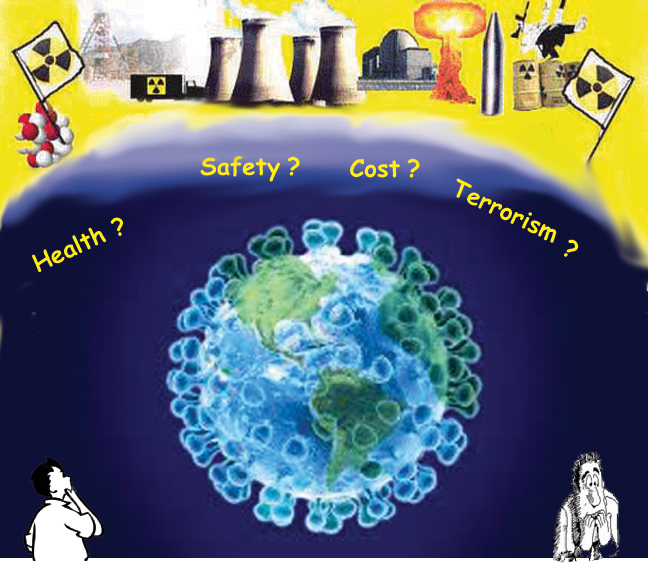 Pandemic concerns interrupt Michigan nuclear plant outage, S and P Global Platts, Author Michael McAuliffe EditorKeiron Greenhalgh CommodityElectric Power 8 May 20 Washington — Some work has resumed after a coronavirus pandemic-caused “stand-down” of activities at DTE Energy’s Fermi-2 nuclear reactor in Newport, Michigan, that interrupted a refueling and maintenance outage, company spokesman Stephen Tait said Thursday. The “stand-down,” in which contractor work was suspended, would add to the duration to the outage, which began March 21, but the company does “not provide estimates of outage or individual project durations,” Tait said.
DTE previously confirmed it had employees test positive for the novel coronavirus, but Tait said: “As a company, we are not releasing numbers of positive cases.”
The 1,205-MW plant is located in Monroe County, Michigan, and Kim Comerzan, health officer/director of the Monroe County Health Department, said in an interview Thursday the department is working with DTE Energy to determine the number of regular employees and contractors who have tested positive for the virus.
The stand-down began May 1, with some work resuming Monday. Normal crews that maintain the plant remained on the job over the weekend to ensure plant safety, according to Tait.
During refueling outages, hundreds of contract workers are brought in to supplement permanent staff and complete fuel replacement as well as a variety of maintenance tasks and inspections that can only been done with the reactor shut……..
Many nuclear units in the US and overseas have reduced the scope of outages to limit the number of on-site workers and are employing distancing measures to reduce the chance of spreading the novel coronavirus.
While some outages have been completed in shorter-than-normal times as a result, some have been extended both for health reasons and, in some European countries that are heavily reliant on nuclear power, because of a sharp drop in demand for power due to lockdowns related to the pandemic. https://www.spglobal.com/platts/en/market-insights/podcasts/focus/050620-lng-market-disruption-new-projects
The pandemic is a direct threat to Russia’s secret nuclear cities – says Rosatom chief
Rosatom fears for its nuclear cities amid coronavirus pandemic, The head of 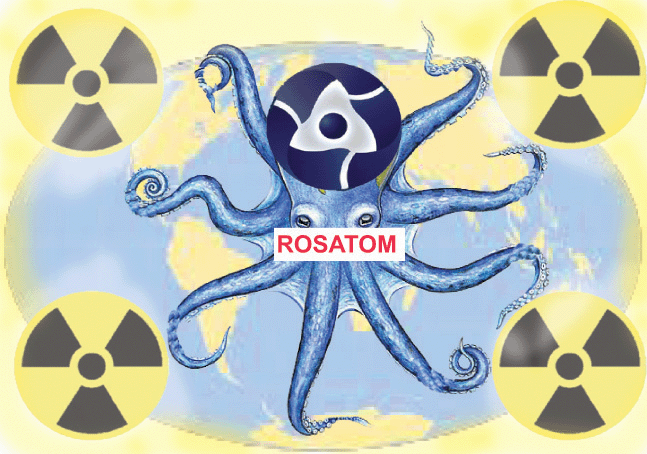 Russia’s state nuclear corporation has expressed concerns about the spread of the novel coronavirus to three of its so-called “nuclear cities,” including one that houses a top-secret research institute that helped develop the Soviet nuclear bomb. May 5, 2020 by Charles Digges charles@bellona.noThe head of Russia’s state nuclear corporation has expressed concerns about the spread of the novel coronavirus to three of its so-called “nuclear cities,” including one that houses a top-secret research institute that helped develop the Soviet nuclear bomb.
The cities hold a fabled place in Russia’s nuclear industry, which is managed by the state-controled Rosatom corporation. Most of them are closed to foreigners and even most Russians require special permission to enter them because of the top-secret facilities that many of them house.
In his most recent video appearance, Rosatom chief Alexei Likhachev said a special delivery of ventilators and personal protective equipment for medical workers has been sent to the city of Sarov and other closed towns where dozens of cases have been reported.
“This (pandemic) creates a direct threat to our nuclear towns,” Likhachev said in the video address on the Rosatom website – a communication method he has embraced since the beginning of the pandemic. “The situation in Sarov, Elektrostal, Desnogorsk is today particularly alarming.”
His remarks come as Russia reports a total of 155,370 cases of coronavirus infection and 1,451 deaths, making Russian the seventh most infected country, having surpassed China, Turkey and Iran last week.
The spread of the coronavirus has posed special challenges to the worldwide nuclear industry, where small groups of highly trained specialists are required to safely run reactors and manage nuclear fuel and radioactive waste services in close quarters.
In Russia, Rosatom has moved to sequester its nuclear technicians onsite at the plants and facilities where they work to minimize their exposure to carriers of the coronavirus.
Rosenergoatom, which is the utility subsidiary of Rosatom, hasn’t made clear precisely how many Russian nuclear workers have been put in isolation or ordered to shelter at their plants. But Rosatom controls a sprawling network of reactors, laboratories, commercial structures and fuel fabrication facilities that employ some 250,000 people.
Russia’s 11 commercial nuclear power plants operate a total of 38 nuclear reactors. Rosatom also has 36 power units at different stages of implementation in 12 countries around the world. It is currently constructing seven reactors overseas: two each in Bangladesh, Belarus and India, plus one unit in Turkey.
In a sense, Russian nuclear power and scientific facilities are uniquely designed to handle outbreaks of the virus. The 10 so-called “closed administrative territorial formations,” which were formed as part of the Soviet nuclear weapons program, are nearly entirely off limits for foreigners as well as most Russians.
The cities hosting Russia’s commercial nuclear plants, while less strictly separated from the rest of the country, are nonetheless surrounded by checkpoints and often require foreign visitors to get special permission to enter them.
As of last week, said Likhachev in his address, there were 47 infected personnel among the corporation’s ranks.
In the city of Sarov alone, there have been 23 cases of Covid-19, Likhachev said – 7 of them Rosatom employees.
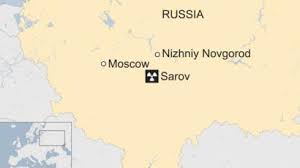
Known formerly as Arzamas-16, Sarov didn’t even appear on maps until the breakup of the Soviet Union in 1991. It remains home to the All-Russian Scientific Research Institute of Experimental Physics, which made headlines last year when five of its scientists died in a mysterious radiological explosion at a weapons testing site in the Russian Arctic.
The institute, which is now run by Rosatom, is an important part of Russia’s nuclear military complex. Likhachev indicated in his address that the workers who tested positive are affiliated with the institute.
In the city of Sarov alone, there have been 23 cases of Covid-19, Likhachev said – 7 of them Rosatom employees.
Known formerly as Arzamas-16, Sarov didn’t even appear on maps until the breakup of the Soviet Union in 1991. It remains home to the All-Russian Scientific Research Institute of Experimental Physics, which made headlines last year when five of its scientists died in a mysterious radiological explosion at a weapons testing site in the Russian Arctic.
The institute, which is now run by Rosatom, is an important part of Russia’s nuclear military complex. Likhachev indicated in his address that the workers who tested positive are affiliated with the institute.
As U.S. military is plagued by COVID-19, Trump could end America’s endless losing wars, but will he?
 Trump Must Choose Between a Global Ceasefire and America’s Long Lost Wars
Like his predecessors from Truman to Obama, Trump has been caught in the trap of America’s blind, deluded militarism. Portside, May 5, 2020 Medea Benjamin and Nicolas J. S. Davies
As President Trump nears the end of his first term, he knows that at least some Americans hold him responsible for his broken promises to bring U.S. troops home and wind down Bush’s and Obama’s wars. Trump’s own day-in-day-out war-making has gone largely unreported by the subservient, tweet-baited U.S. corporate media, but Trump has dropped at least 69,000 bombs and missiles on Afghanistan, Iraq and Syria, more than either Bush or Obama did in their first terms, including in Bush’s invasions of Afghanistan and Iraq.
Undercover of highly publicized redeployments of small numbers of troops from a few isolated bases in Syria and Iraq, Trump has actually expanded U.S. bases and deployed at least 14,000 more U.S. troops to the greater Middle East, even after the U.S. bombing and artillery campaigns that destroyed Mosul in Iraq and Raqqa in Syria ended in 2017. Under the U.S. agreement with the Taliban, Trump has finally agreed to withdraw 4,400 troops from Afghanistan by July, still leaving at least 8,600 behind to conduct airstrikes, “kill or capture” raids and an even more isolated and beleaguered military occupation.
Now a compelling call by U.N. Secretary General Antonio Guterres for a global ceasefire during the Covid-19 pandemic has given Trump a chance to gracefully deescalate his unwinnable wars – if indeed he really wants to. Over 70 nations have expressed their support for the ceasefire. President Macron of France claimed on April 15th that he had persuaded Trump to join other world leaders supporting a U.N. Security Council resolution backing the Secretary General’s call. But within days it became clear that the U.S. was opposing the resolution, insisting that its own “counterterrorism” wars must go on, and that any resolution must condemn China as the source of the pandemic, a poison pill calculated to draw a swift Chinese veto.
So Trump has so far spurned this chance to make good on his promise to bring U.S. troops home, even as his lost wars and ill-defined global military occupation expose thousands of troops to the Covid-19 virus. The U.S. Navy has been plagued by the virus: as of mid-April 40 ships had confirmed cases, affecting 1,298 sailors. Training exercises, troop movements and travel have been canceled for U.S.-based troops and their families. The military reported 7,145 cases as of May 1, with more falling sick every day.
Survivors of nuclear radiation exposure are at greater risk from COVID-19.

Nuclear Frontline Communities
Our race for nuclear dominance during WWII and the Cold War left many casualties in its wake: workers in the uranium industry, workers and those downwind of nuclear production sites, soldiers and civilians exposed to above-ground nuclear testing, those who attempt to clean-up and dispose of nuclear waste, and those unlucky enough to live near that waste. These people were exposed to radiation and other toxic chemicals, in many cases causing severe health problems, while never being told by their government or their employers about the risks. To add insult to injury, these exposed populations are disproportionately from Indigenous communities, communities of color, low-income, or rural communities, and often face significant barriers to receiving adequate health care even in the best of times.
Today, the injustice of their exposure stings a little sharper because they have an added fear of contracting COVID-19. Many factors may increase their risk: age, radioactive and toxic chemical exposures, air, soil, and water pollution, existing health conditions such as cancer, poverty, institutionalized racism, etc. These factors can also all contribute to a suppressed immune system.
The Radiation Exposure Compensation Act
Some of the individuals in these communities are able to apply for compensation from the US government through a program called the Radiation Exposure Compensation Act (RECA). RECA is meant to offset what are often debilitating health care costs, though the funds can be hugely insufficient. The program is set to expire in 2022, and many exposed communities are still not covered by RECA. This includes those downwind of the 1945 Trinity Test in New Mexico, downwinders of the Nevada Test Site in states and counties originally excluded from RECA, residents of Guam, veterans who cleaned up radioactive waste in the Marshall Islands, uranium workers past 1971, and civilians downwind of nuclear production sites.
The deficiencies of RECA, and the threat of it disappearing entirely, are already a huge disservice to these communities. But in the face of an international pandemic, those already struggling to manage extreme health consequences from radiation exposure must now also face the spectre of COVID-19.
One of the most common illnesses suffered by those exposed to radiation is cancer. Recent studies show that those with cancers are up to three times as likely to die of COVID-19 than those without cancer – especially blood and lung malignancies, two common cancers that are eligible for RECA compensation.
Tina Cordova, a downwinder of the Trinity Test and co-founder of Tularosa Basin Downwinders Consortium adds: “Many of us live in fear of the virus now not only because it is highly infectious and deadly to most but because we also know we are highly susceptible to getting the virus and dying from it due to our underlying health issues as a result of being exposed to radiation. Once you’ve been diagnosed with cancer and been through the radiation and chemotherapy necessary to save your life you know your immune system has been compromised.”
While flawed, RECA is a crucial program. It can mean the difference between care and no care, financial stability or bankruptcy, losing or keeping your house, and even life or death.
These communities must not be left without health care. The good news is that there is a solution. The Radiation Exposure Compensation Act Amendments Act of 2019 – HR 3783 and S. 947 – would extend RECA to 2045 and expand access to many of the communities currently excluded. Many members of Congress have already been championing the effort to pass this bipartisan legislation, including Congressman Lujan (D-NM), Senator Crapo (R-ID), and Senator Udall (D-NM).
Given the urgency of health care access for these communities today, UCS is calling on Congress to include the provisions of the RECA Amendments Act in upcoming stimulus packages……….. https://allthingsnuclear.org/guest-commentary/covid-19-nuclear-weapons
Workers at ‘most toxic place in America’ – Hanford nuclear site – in fear of coronavirus
|
A nuclear waste site where the biggest fear isn’t radiation, but coronavirus
Workers at ‘most toxic place in America’ are terrified to return to a site where there has been very little protection from the outbreak, Guardian, Hallie Golden in Seattle, 4 May, 20 For more than a month, coronavirus has brought cleanup of a 586-square-mile decommissioned nuclear production complex in south-eastern Washington state to a near standstill. Most of the more than 11,000 employees at the Hanford site were sent home in late March, with only essential workers remaining to make sure the “most toxic place in America” stays safe and secure. Now with signs that Washington has turned a corner with the virus and the state’s governor slowly starting to relax some safety measures, Hanford workers are looking at the very real possibility of returning to work. But after facing those initial few weeks of Washington’s coronavirus crisis on-site at Hanford, workers say they received little information and even fewer safety measures from leadership, and some employees are terrified by the prospect. “When you come back to work, what’s the expectation [for protections]?” asked a maintenance and operations worker at Hanford, who asked not to be identified by the Guardian to protect his job. “There are none.”…….. After Washington health officials reported the first US death associated with coronavirus in late February and then, with each passing week, were documenting the most cases in the country, employees say it remained business as usual at Hanford, where the cleanup project is run by the federal Department of Energy, with work completed through contractors. During those first few weeks, workers recall receiving little guidance on site-specific coronavirus safety measures. They say information from Hanford officials tended to be overly broad, focusing on the nationwide situation rather than the unique needs of workers in a state that was at that time at the center of the US coronavirus crisis. A radiological control technician, who has worked at Hanford for more than 15 years, said trailers continued to be shared by as many as 50 people and each Monday morning 200 employees would come together for a meeting in a single room. When workers finished at one of the many contaminated areas of Hanford, they needed to be checked for radiation before leaving. Technicians would stand next to them, without a mask on, running a handheld device over their body – being sure to stay within a quarter of an inch of their skin to ensure accurate readings. In a single hour, one of these radiological control technicians, may have surveyed as many as 30 people. “There’s no way to keep that social distancing. You’re right up in somebody’s face, they’re breathing on you, they’re sweaty,” said the technician, who asked to remain anonymous for fear of retaliation at work. Tom Carpenter, executive director of the Hanford Challenge, a not-for-profit watchdog organization in Seattle, said he received at least 10 emails and phone calls in two weeks in March from employees worried about Hanford not providing face masks or gloves or requiring social distancing to protect them from coronavirus. “Workers were highly distressed about their own health and safety, and felt that management was not taking this issue seriously,” he said. “Stop works”, a protocol at Hanford in which an employee notices something is unsafe or hazardous and work is halted until officials can fix the problem, became so frequent on issues related to coronavirus, said the radiological control technician, that little work was actually getting done. …….. It wasn’t until 25 March – after Governor Jay Inslee’s stay-at-home mandate, which involved the closure of all non-essential companies (Hanford is considered essential) – that the site switched to a state of essential mission-critical operations. The site will remain functioning in this capacity through at least Friday. It’s unclear whether this will be renewed beyond then. Carpenter said the concern over the lack of protection is about more than keeping workers safe from coronavirus. He said if the virus were to get passed throughout Hanford, it could put the highly sensitive work being done there in jeopardy. …… Carpenter said Hanford officials have reported that two workers have been diagnosed with coronavirus, but he said, “there’s almost assuredly more”….. https://www.theguardian.com/us-news/2020/may/04/hanford-nuclear-waste-site-coronavirus-washington Mon 4 May 2020 20.00 AESTLast modified on Tue 5 May 2020 02.36 AEST |
|
1 This Month

of the week – Shut Down Drone Warfare!


Tell the Ukrainian Government to Drop Prosecution of Peace Activist Yurii Sheliazhenko

Petition to revoke the licensing of the Near Surface Nuclear Disposal Facility (NSDF) at Chalk River. https://www.ourcommons.ca/petitions/en/Petition/Details?Petition=e-7247
To see nuclear-related stories in greater depth and intensity – go to https://nuclearinformation.wordpress.com
-
Archives
- April 2026 (114)
- March 2026 (251)
- February 2026 (268)
- January 2026 (308)
- December 2025 (358)
- November 2025 (359)
- October 2025 (376)
- September 2025 (257)
- August 2025 (319)
- July 2025 (230)
- June 2025 (348)
- May 2025 (261)
-
Categories
- 1
- 1 NUCLEAR ISSUES
- business and costs
- climate change
- culture and arts
- ENERGY
- environment
- health
- history
- indigenous issues
- Legal
- marketing of nuclear
- media
- opposition to nuclear
- PERSONAL STORIES
- politics
- politics international
- Religion and ethics
- safety
- secrets,lies and civil liberties
- spinbuster
- technology
- Uranium
- wastes
- weapons and war
- Women
- 2 WORLD
- ACTION
- AFRICA
- Atrocities
- AUSTRALIA
- Christina's notes
- Christina's themes
- culture and arts
- Events
- Fuk 2022
- Fuk 2023
- Fukushima 2017
- Fukushima 2018
- fukushima 2019
- Fukushima 2020
- Fukushima 2021
- general
- global warming
- Humour (God we need it)
- Nuclear
- RARE EARTHS
- Reference
- resources – print
- Resources -audiovicual
- Weekly Newsletter
- World
- World Nuclear
- YouTube
-
RSS
Entries RSS
Comments RSS
 nuclear-news