Nuclear nations have handled COVID-19 the worst

The most useless of arsenals – Nuclear nations have handled COVID-19 the worst https://beyondnuclearinternational.org/2020/08/30/the-most-useless-of-arsenals/, By Tilman Ruff, August 30, 2020 by beyondnuclearinternational
The Covid-19 pandemic has demonstrated that massive arsenals are useless in a pandemic. The countries that have spent obscene sums on nuclear weapons have failed to provide the most basic of protective equipment against the coronavirus, putting their citizens in danger every day.
New pathogens will continue to evolve, spread and disrupt our world. Indeed as we deplete habitats for other species, wreak climate havoc, and grow food industrially, we can expect new infectious diseases more often.
COVID-19 is just the latest; it will certainly not be the last. Bad enough it is, but far from the worst we could expect.
Exposing vulnerability
COVID-19 has caught even the wealthiest nations unprepared; their massive armaments useless against a small, mindless aggregation of single stranded RNA, a few proteins and a thin lipid envelope about 120 nm across.
Nations investing obscene sums in nuclear weapons that must never be used have been unable to provide the most basic of protective equipment – gowns, gloves, and facemasks for their frontline health professionals putting themselves in danger every day.
The best funded public health organization in the world, the Centers for Disease Control and Prevention of the United States, went from recommending N95 respirators for doctors and nurses at risk to recommending improvised bandanas in the face of severe shortages of the most basic protection costing a fraction of a dollar.
The US government rejected international assistance with test kits and was then left with woefully inadequate numbers of its own faulty kits.
Learning from the pandemic
This coronavirus can teach us a lot if we are willing to learn.
It shows where the real threats to our security lie, for which massive military arsenals and the most powerful WMD are not only useless, but get in the way.
It shows our interconnected vulnerabilities and capacities, that globalized problems respect no borders, are shared and demand cooperative solutions.
It has shown how quickly the exceptional hubris of arrogant leaders serving their own and narrow vested interests can enable great harm to occur; evil measured in monumental failures of leadership, causing tens of thousands of deaths that could readily have been prevented.
It has shown the uselessness of ideological baggage in confronting big challenges.
It has laid bare that respect for truth, evidence and science; and listening to the expert custodians of that evidence, are crucial.
It has demonstrated that changes once deemed unthinkable can be made, and made fast.
It has shown that female leaders are often more sensible and reliable in a crisis, and that we need more of them.
It has shown the great ingenuity, resourcefulness and kindness that people everywhere are capable of.
It has shown that what the science and experts tell us – that new pandemics will occur and that we are woefully prepared to deal with them – will occur if warnings are not heeded.
Choosing to listen
We can prevent some new pandemics from occurring. We can always respond better if we listen to the evidence and prepare well for what can be expected.
If we do not listen to or choose to see the overwhelming evidence of accelerating climate disruption, and quickly and drastically reduce greenhouse gas emissions, catastrophe will bear down on us in our lifetimes and the world our children and grandchildren live in will be much more violent, difficult and impoverished.
If we ignore the reality of what nuclear weapons do, and the growing dangers of their use, then what may be a small risk on any given day, over time will become inevitable.
A final epidemic
This COVID pandemic will abate. However after a nuclear war there will be no re-building, no coming back. It would be the final epidemic. There will not be a health care system in overloaded crisis; there will be no health system and no one able to staff it. We can prepare for a pandemic; for nuclear war there is only prevention.
That is why we have to act now to protect our Earth from rampant heating and the abrupt ice age that would follow the radioactive incineration of nuclear war; as if our lives depended on it, because they do.
We can’t stop all new epidemics. And we don’t yet know if we can eradicate the COVID-19 virus.
But we can and must end nuclear weapons before they end us. The Treaty on the Prohibition of Nuclear Weapons provides the best available path forward. We should heed the lessons of COVID and take that path while we still can.
Tilman Ruff is Associate professor at the Nossal Institute for Global Health, School of Population and Global Health, University of Melbourne, Co-President, International Physicians for the Prevention of Nuclear War (Nobel Peace Prize 1985) and Co-founder of the International Campaign to Abolish Nuclear Weapons (ICAN, Nobel Peace Prize 2017)
This article first appeared on Croakey and is republished with kind permission of the author.
Global coronavirus update – India’s huge jump in infections, but USA still leads in cases
|
Meanwhile, far-right protesters and others have stormed the German parliament building following a protest against the country’s pandemic restrictions. This story will be regularly updated throughout Monday. India records world’s biggest single-day jump in virus casesThe Health Ministry on Sunday local time also reported 948 deaths in the past 24 hours, taking total fatalities to 63,498. India has now reported more than 75,000 infections for four straight days. The surge has raised the country’s total virus tally to over 3.5 million and comes at a time when India is reopening its subway networks and allowing sports and religious events in a limited manner from next month as part of efforts to revive the economy. Even as eight Indian states remain among the worst-hit regions and contribute nearly 73 per cent of the total infections, the virus is now spreading fast in the vast hinterlands, with experts warning that the month of September could be the most challenging. Global cases reach 25 millionThe number of confirmed coronavirus cases globally has topped 25 million, according to a tally kept by Johns Hopkins University. The United States leads the count with 5.9 million cases, followed by Brazil with 3.8 million and India with 3.5 million. The real number of people infected by the virus around the world is believed to be much higher — perhaps 10 times higher in the US, according to the Centres for Disease Control and Prevention — given testing limitations and the many mild cases that have gone unreported or unrecognised. Global deaths from COVID-19 stand at over 842,000, with the US having the highest number with 182,779, followed by Brazil with 120,262 and Mexico with 63,819. Far-right pandemic restriction protesters attempt to storm German parliament Senior German officials have condemned attempts by far-right protesters and others to storm the parliament building following a protest against the country’s pandemic restrictions. Hundreds of people, some waving the flag of the German Reich of 1871-1918 and other far-right banners, breached a security barrier outside the Reichstag late on Saturday local time but were intercepted by police and forcibly removed……… https://www.abc.net.au/news/2020-08-31/coronavirus-update-covid19/12610940 |
|
|
24 million have now been infected with coronavirus, but WHO says pandemic is slowing
 WHO says pandemic is slowing – but 24 million have now been infected https://inqld.com.au/news/2020/08/26/who-says-pandemic-is-slowing-but-24-million-have-been-infected/The COVID-19 pandemic is still expanding, but the rise in cases and deaths has slowed globally, except for southeast Asia and the eastern Mediterranean regions the World Health Organisation (WHO) says. WHO says pandemic is slowing – but 24 million have now been infected https://inqld.com.au/news/2020/08/26/who-says-pandemic-is-slowing-but-24-million-have-been-infected/The COVID-19 pandemic is still expanding, but the rise in cases and deaths has slowed globally, except for southeast Asia and the eastern Mediterranean regions the World Health Organisation (WHO) says.
In its latest epidemiological update, issued on Monday night, it said that the Americas remains the hardest-hit region, accounting for half of newly reported cases and 62 per cent of the 39,240 deaths worldwide in the past week. More than 23.65 million people have been reported to be infected by the coronavirus globally and 811,895 have died, according to a Reuters tally on Tuesday. Over 1.7 million new COVID-19 cases and 39,000 new deaths were reported to WHO for the week ending 23 August, a 4 per cent decrease in the number of cases and a 12 per cent decrease in the number of deaths compared to the previous week, the WHO said. Over 1.7 million new COVID-19 cases and 39,000 new deaths were reported to WHO for the week ending 23 August, a 4 per cent decrease in the number of cases and a 12 per cent decrease in the number of deaths compared to the previous week, the WHO said. In WHO’s eastern Mediterranean region, the number of reported cases rose by 4 per cent, but the number of reported deaths has consistently dropped over the last six weeks, the WHO said. Lebanon, Tunisia and Jordan reported the highest increase in cases compared to the previous week. The number of cases and deaths reported across Africa decreased by 8 per cent and 11 per cent respectively in the past week, “primarily due to a decrease in cases reported in Algeria, Kenya, Ghana, Senegal and South Africa”, it said. “In the European region, the number of cases reported has consistently increased over the last three weeks,” it said. “However, only a slight decrease (1 per cent) was reported in the most recent week, and the number of deaths have continued to decrease across the region.” In WHO’s western Pacific region, the number of new cases dropped by 5 per cent, driven by less spread in Japan, Australia, Singapore, China and Vietnam. South Korea reported an 180 per cent jump in cases, “mainly due to an increase in cases associated with religious gatherings”. |
|
Radiation hazard at Dead Horse Bay, Brooklyn
 Scavengers Unearth Buried History — and Maybe Radiation — at Dead Horse Bay“It’s the closest you can come to time travel.” Cured, New York, By Caroline Spivack Aug 25, 2020, “It’s pretty devastating,” said Vanessa Dudley of the radiation recently discovered at Dead Horse Bay, a cove in southeastern Brooklyn that was once, many years ago, home to a landfill. For decades, the bay and its surrounding area have been burping up intriguing early-20th-century detritus onto the beach. Dudley, an administrator at Weill Cornell Medicine, is one of many treasure hunters and artists who regularly visited the beach to pick through mud-flecked glass bottles, ceramic shards, and rusted bits of metal. “You can see the lives of people through these objects. It’s like their memory lives on through them.” Scavengers Unearth Buried History — and Maybe Radiation — at Dead Horse Bay“It’s the closest you can come to time travel.” Cured, New York, By Caroline Spivack Aug 25, 2020, “It’s pretty devastating,” said Vanessa Dudley of the radiation recently discovered at Dead Horse Bay, a cove in southeastern Brooklyn that was once, many years ago, home to a landfill. For decades, the bay and its surrounding area have been burping up intriguing early-20th-century detritus onto the beach. Dudley, an administrator at Weill Cornell Medicine, is one of many treasure hunters and artists who regularly visited the beach to pick through mud-flecked glass bottles, ceramic shards, and rusted bits of metal. “You can see the lives of people through these objects. It’s like their memory lives on through them.”
But earlier this month, the three footpaths that snake from Flatbush Avenue through thick brush to the beach were marked with canary-yellow signs warning: “Danger Area Closed. Potential Hazardous Material.” Authorities had closed the southern half of the bay (near Floyd Bennett Field) following the discovery of radioactive material on the beach and near one of the paths. The radiation was first noticed during an environmental survey in 2019, when the National Park Service (which manages the bay as part of the Gateway National Recreation Area) discovered 31 locations along the shore and nearby trails with excessive levels of gamma radiation. At two of those sites, the culprits turned out to be old deck markers — small, glowing disks that were once used on Navy ships — that were leaking radium-226. These were recently removed, and the possibility of a more extensive cleanup is now being considered…….. In 1926, after many of the factories had moved elsewhere, Barren Island was connected via landfill to the mainland. In the 1950s, Robert Moses further expanded the area’s land mass by building landfills. Moses flooded the area with the city’s garbage — much of which was likely the rubble of other neighborhoods Moses himself destroyed as he reshaped New York — and then covered it with a layer of topsoil. Erosion has since released much of that debris, which collects at the bay’s eastern shore, providing New Yorkers with an eclectic compendium of 20th-century trash. But in light of new knowledge about the radiation there, exploring that garbage — and discovering the clues it holds about the city’s history — comes at a risk. ……… https://ny.curbed.com/2020/8/25/21398976/dead-horse-bay-beach-brooklyn-radiation-scavengers |
|
Analysing the evidence on effects of ionising radiation on wildlife
Nature 21st Aug 2020, Tim Mousseau et al: We re-analyzed field data concerning potential effects
of ionizing radiation on the abundance of mammals collected in the
Chernobyl Exclusion Zone (CEZ) to interpret these findings from current
knowledge of radiological dose–response relationships, here mammal
response in terms of abundance.
In line with recent work at Fukushima, and
exploiting a census conducted in February 2009 in the CEZ, we reconstructed
the radiological dose for 12 species of mammals observed at 161 sites. We
used this new information rather than the measured ambient dose rate (from
0.0146 to 225 µGy h−1) to statistically analyze the variation in
abundance for all observed species as established from tracks in the snow
in previous field studies.
All available knowledge related to relevant
confounding factors was considered in this re-analysis. This more realistic
approach led us to establish a correlation between changes in mammal
abundance with both the time elapsed since the last snowfall and the dose
rate to which they were exposed. This relationship was also observed when
distinguishing prey from predators.
The dose rates resulting from our
re-analysis are in agreement with exposure levels reported in the
literature as likely to induce physiological disorders in mammals that
could explain the decrease in their abundance in the CEZ. Our results
contribute to informing the Weight of Evidence approach to demonstrate
effects on wildlife resulting from its field exposure to ionizing
radiation.
World battles new cases, but coronavirus could be over, in two years

World Health Organisation hopes coronavirus crisis can be over in two years, https://www.sbs.com.au/news/world-health-organisation-hopes-coronavirus-crisis-can-be-over-in-two-years [Good graphs] 22 Aug 20 The head of the World Health Organisation hopes the coronavirus pandemic will be shorter than the 1918 Spanish flu and last less than two years.
The world should be able to rein in the coronavirus pandemic in less than two years, the World Health Organisation (WHO) said, as European nations battled rising numbers of new cases.
Western Europe has been enduring the kind of infection levels not seen in many months, particularly in Germany, France, Spain and Italy – sparking fears of a full-fledged second wave.
In the Spanish capital Madrid, officials recommended people in the most affected areas stay at home to help curb the spread as the country registered more than 8,000 new cases in 24 hours.
France also reported a second consecutive day of more than 4,000 new cases – numbers not seen since May – with metropolitan areas accounting for most of those infections.
But WHO chief Tedros Adhanom Ghebreyesus sought to draw favourable comparisons with the notorious flu pandemic of 1918.
“We have a disadvantage of globalisation, closeness, connectedness, but an advantage of better technology, so we hope to finish this pandemic before less than two years,” he told reporters.
By “utilising the available tools to the maximum and hoping that we can have additional tools like vaccines, I think we can finish it in a shorter time than the 1918 flu”, he said.
The WHO also recommended children over 12 years old now use masks in the same situations as adults as the use of face coverings increases to stop the virus spread.
With no usable vaccine yet available, the most prominent tool governments have at their disposal is to confine their populations or enforce social distancing.
Lebanon is the latest country to reintroduce severe restrictions, beginning two weeks of measures on Friday including night time curfews to tamp down a rise in infections, which comes as the country is still dealing with the shock from a huge explosion in the capital Beirut that killed dozens earlier this month.
“What now? On top of this disaster, a coronavirus catastrophe?” said 55-year-old Roxane Moukarzel in Beirut.
Officials fear Lebanon’s fragile health system would struggle to cope with a further spike in COVID-19 cases, especially after some hospitals near the port were damaged in the explosion.
‘We lead the world in deaths’
The Americas have borne the brunt of the virus in health terms, accounting for more than half of the world’s fatalities.
“We lead the world in deaths,” said Joe Biden while accepting the Democratic nomination for the US presidential election late on Thursday.
He said he would implement a national plan to fight the pandemic on his first day in office if elected in November.
“We’ll take the muzzle off our experts so the public gets the information they need and deserve – honest, unvarnished truth,” he said.
Still, new daily cases of the coronavirus have been dropping sharply in the United States for weeks – but experts are unsure if Americans will have the discipline to bring the epidemic under control.
After exceeding 70,000 confirmed infections per day in July, the country recorded 43,000 cases on Thursday.
Further south, Latin American countries were counting the wider costs of the pandemic — the region not only suffering the most deaths, but also an expansion of criminal activity and rising poverty.
Without an effective political reaction, “at a regional level we can talk about a regression of up to 10 years in the levels of multidimensional poverty”, Luis Felipe Lopez-Calva of the UN Development Programme told AFP.
But the WHO said the coronavirus pandemic appeared to be stabilising in Brazil – one of the world’s worst hit countries – and any reversal of its rampant spread in the vast country would be “a success for the world”.
Economic fallout
Economies around the globe have been ravaged by the pandemic, which has infected more than 22 million and killed nearly 800,000 since it emerged in China late last year.
New financial figures laid bear the huge cost of the pandemic in Britain, where government debt soared past AUD $3.7 million for the first time in the UK after a massive programme of state borrowing for furlough schemes and other measures designed to prop up the economy.
“Without that support things would have been far worse,” Finance Minister Rishi Sunak said.
Even Germany, famed for its financial prudence, was waking up to a new reality with Finance Minister Olaf Scholz conceding his country would need to continue borrowing at a high level next year to deal with the virus fallout.
Western European politicians are also beginning to ramp up restrictions to tackle infections that are rising to levels not seen for months.
While Spain has responded with confinement measures and Germany with updated travel guidelines, putting Brussels on its list of risk zones, the UK is now watching clusters in northern England and suggesting some towns could soon face lockdown.
“To prevent a second peak and keep Covid-19 under control, we need robust, targeted intervention where we see a spike in cases,” health secretary Matt Hancock said.
Ohio school all too close to Portsmouth Gaseous Diffusion Plant – nuclear radiation dangers

Ohio school still shuttered among radiation fears, Akron Beacon Journal, By Beth Burger
The Columbus Dispatch, Aug 22, 2020 PIKETON — Monday would have been Layton Cuckler’s first day at Zahn’s Corner Middle School.
Instead, Layton, 11, and about 300 of his peers will be divided between Jasper Elementary School and Piketon High School in the midst of the COVID-19 pandemic. As a fourth grader, he’ll have to stay at the elementary school another year.
He might not be happy about missing out on the rite of passage that his older brother, Gavin, 13, and others have experienced, but his parents, Mike and Teresa Cuckler, are relieved.
The change means Layton won’t risk being exposed to radioactive isotopes downwind from the former U.S. Department of Energy Portsmouth Gaseous Diffusion Plant. The isotopes have been found in the air, soil, water, vegetation and wildlife in the area, according to federal environmental reports……….
A nuclear waste-disposal cell is being built to bury radioactive debris as the 3,000-acre complex is dismantled.
Concerned neighbors Residents have asked for those efforts to be paused because they’re concerned about exposure to radioactive materials. Contamination has been detected there since the work began in 2017, according to the Scioto Valley Local School District.
The DOE waited two years before informing the school district that the air monitor across from the middle school had picked up radioactive elements: americium in 2018 and neptunium-237 in 2019.
The district closed the school last year after traces of uranium were detected in ceiling tiles and air ducts. The district has asked the state to build a new middle school.
History of school
Zahn’s Corner Middle School was built in 1955. One year earlier, before the school was opened, the enrichment plant came online for defense purposes and operated until 2001. The facility then transitioned to enriching uranium for nuclear power plants.
“Why is there a school on the downwind side of a site like this? That doesn’t make a lot of sense to me,” said David C. Ingram, chairman of the physics and astronomy department at Ohio University.
It’s unclear why the DOE chose that site, less than 2 miles from the school, and did not warn the district……..
When Gavin Cuckler was at the middle school, he would sometimes come home with dirt on his clothes from playing outside, Teresa Cuckler said. ……..
The Cucklers and others worry about cancer and other health risks tied to the plant.
“You think about the size of the air monitor [across from the school]. It wasn’t just one or two more elements floating through the air landing in that air monitor. How much was actually released? What’s the data on site show of where they were sampling at different release points?” said Jennifer Chandler, a former DOE employee who worked as an environmental scientist and who is now a Piketon village council member……..
Residents say the emissions are worrisome.
“They know it’s going to Zahn’s Corner because they put an air monitor there. It makes it to our school property. Our kids are out there,” Chandler said. “The danger comes in the toxicity of the inhalation or ingestion of that molecule, which is there. It’s there. So they want to pivot and talk only about radioactivity, which we are concerned about, obviously, but we’re more concerned with the toxicity of having these things in and on our school property.”
Neptunium, plutonium and americium are considered “bone seekers,″ according to the National Library of Medicine. That means that, if ingested, they will lodge in the body, possibly in bones, lungs, muscles and the liver, according to the Centers for Disease Control and Prevention.
“It’s going to irradiate from you for the rest of your life. It’s the toxicity of that. And what is the safe level of neptunium? … Zero. There is no such thing. There is no safe level of these elements,” Chandler said. …….. https://www.beaconjournal.com/news/20200822/ohio-school-still-shuttered-among-radiation-fears
Cumulative exposure to ionising radiation from diagnostic imaging tests
|
Cumulative exposure to ionising radiation from diagnostic imaging tests: a 12-year follow-up population-based analysis in Spain. https://www.docwirenews.com/abstracts/cumulative-exposure-to-ionising-radiation-from-diagnostic-imaging-tests-a-12-year-follow-up-population-based-analysis-in-spain/ August 22, 2020 Cumulative exposure to ionising radiation from diagnostic imaging tests: a 12-year follow-up population-based analysis in Spain.BMJ Open. 2019 09 18;9(9):e030905
Authors: Lumbreras B, Salinas JM, Gonzalez-Alvarez I Abstract |
|
Northern Europe: detecting radiation and where it comes from
|
Radiation detections in northern Europe: what we do and don’t know https://thebulletin.org/2020/08/radiation-detections-in-northern-europe-what-we-do-and-dont-know/# By Cheryl Rofer, August 21, 2020 Alarming events may not be what they initially seem. When an enormous explosion created a mushroom cloud over Beirut on August 4, some people immediately jumped to the wrong conclusion, spreading rumors on social media that a nuclear bomb had gone off. It hadn’t.
Eventually it became clear that the explosion was caused by chemicals stored improperly in warehouses at Beirut’s port. But weapons experts knew from the start that the powerful explosion was not nuclear, because it did not produce a blinding flash of light, or a blast of heat intense enough to set a city on fire. In the hours that followed the explosion, the Comprehensive Test Ban Treaty Organization (CTBTO), which operates a network of monitoring stations around the world, did not detect a telltale spike in atmospheric radiation. That last clue is how experts are able to narrow down the location of nuclear events, from the smallest accidents to major disasters like Chernobyl, and to make educated guesses about what happened. A release of nuclear material spreads its signature on the wind. But that signature is often incomplete or garbled. Nuclear experts are still puzzling over a mysterious event that happened in June, when several monitoring stations in northern Europe detected extremely small quantities of radionuclides in the atmosphere. That event was not a nuclear weapons test, because the CTBTO stations did not detect any seismic activity. So what was it? Experts have scrutinized the radiation signature and narrowed down the possibilities. The finger points to Russia. Radiation alerts. Radioisotope monitoring stations cover most of the globe. The CTBTO runs the biggest network. National radiation safety agencies—for example, in Finland and Sweden—operate other stations. Universities also operate monitoring stations, often in cooperation with the CTBTO or national agencies. Independent monitoring organizations, like the volunteer-driven Safecast, also report radiation measurements. In early June, Norwegian monitoring stations and a CTBTO station detected iodine 131 in far northern Norway. On June 16 and 17, Finland’s Radiation and Nuclear Safety Authority (STUK) detected cobalt 60, ruthenium 103, cesium 134, and cesium 137 in Helsinki. On June 22 and 23, a CTBTO station in Sweden detected ruthenium 103, cesium 134, and cesium 137. Radiation is easy to detect at low levels. The iodine 131 readings were around 1 microbecquerel per cubic meter of air. (A microbecquerel is one atomic disintegration per second in one million cubic meters of air.) But our knowledge of the Chernobyl explosion began with measuring small amounts of radionuclides, so any detection raises an alert. Interpreting the detections. The types of radionuclides detected also provide information. The radionuclides detected in June, except cobalt 60, are produced by nuclear fission. The half-lives of iodine 131 and ruthenium 103 are 8 days and 39 days, respectively, so they must be from recent fission events. These are common fission products from a nuclear reactor. A wider suite of radionuclides would help to pin down what kind of reactor. The iodine 131 detection is ambiguous, though. It is produced by fission, but it is also used fairly commonly to treat hyperthyroidism, in pet cats as well as people. It is easily sent into the air. So it may come from sewage plants or other sources. The fact that it showed up without the other fission products means that its source may be something other than a nuclear accident. Cobalt 60 is not a fission product, but rather an activation product of steel that has been in or very close to a nuclear reactor. It doesn’t usually show up with fission products. It could mean that something was broken in the reactor that released the fission products, or it could be that the Finnish reading was in error. Narrowing down the location. Airborne radionuclides by themselves cannot tell us how or precisely where they were released. The CTBTO tweeted a map indicating the region in northern Europe where the June release may have occurred. This map was probably constructed by tracing the winds during the period just before the radionuclides were detected. A couple of Russian nuclear power plants are located in the area identified, which also covers the location where the United States believes a Russian experimental reactor exploded last summer while it was being raised from the seabed. Last month’s release was probably a minor incident, like a breach in a filter at a nuclear power plant. But Russia has said that there were no incidents at its nuclear power plants. The presence of cobalt 60 and the location have led some to suggest that the release may have been from a new attempt to raise that experimental reactor. It’s not possible, with the limited additional data available so far, to do more than guess the origin of the June radionuclides. The source of a similarly ambiguous release of ruthenium 106 in 2017 took two years to identify. In that case, the release of a single fission product suggested a processing facility, and the wind patterns suggested the Mayak facility in Russia. A detailed study of the stable ruthenium isotopes collected with the ruthenium 106 confirmed those early provisional conclusions. Pinning down the source. Last year’s deadly accident seems to have occurred when a reactor for an experimental nuclear-powered cruise missile was being lifted from the seabed. Again, radionuclide readings from monitoring stations some distance from the source gave early warning to the rest of the world. The amounts and numbers of radionuclides were larger than in the recent release, and reporting on the accident, as people were brought to hospitals, provided more information, including radioisotope detection closer to the site, along with satellite photos and, later, photos of the damaged barge. The radioisotopes indicated that a fission source was involved, although early reports from Russia described an “isotopic source,” a phrase usually reserved for single-isotope heat sources, which would be unsuitable for propulsion. In all three of these cases over the past three years, the radionuclides initially detected by air sampling were ambiguous. Additional information was needed to pin down a source. The best information would come from the country responsible for the release – in all three cases, Russia, which is a signatory to the Convention on Early Notification of a Nuclear Accident. Somebody knows what happened in these cases. We need to hear from them. |
|
Bikini Atoll – food grown there is radioactive – but, it’s “technically habitable”!

Technically Habitable The background radiation of the island has been found to be at normal levels, and even lower than that of some major US cities. While you could walk around on the island and suffer no real ill effects, living there is an entirely different story because of the aforementioned soil and subsequent food contamination.
Ironically for the islanders of Bikini Atoll, the word ‘bikini’ likely comes from ‘pikinni’ which, in the Marshallese language means ‘coconut place
The Radioactive Coconuts of Bikini Atoll, Beginning in 1946, a series of Atomic bombs were tested on and around the Marshall islands, of which Bikini Atoll is one, as both a means of testing and refining the incredibly destructive power demonstrated at Hiroshima and Nagasaki just a year earlier, as well as making a clear statement of US atomic superiority over the Russians. Medium 21 Aug 20, Danny Kane
For those that don’t know, Bikini Atoll was the US’ test site during the 1940s and 1950s for 23 separate Nuclear bombs.
Beginning in 1946, a series of Atomic bombs were tested on and around the Marshall islands, of which Bikini Atoll is one, as both a means of testing and refining the incredibly destructive power demonstrated at Hiroshima and Nagasaki just a year earlier, as well as making a clear statement of US atomic superiority over the Soviet Union.
The Micronesian inhabitants of Bikini Atoll were approached in 1946 by the US government and asked to re-locate while the tests were being carried out. They would be transported to Rongerik Atoll, which is about 6 times smaller than Bikini Atoll — it also has insufficient food and water supplies and was uninhabited at the time………..
The islanders on Rongerik Atoll were starving, the land their being far less fertile than their native Bikini. They were then moved to Kili Island. It was little improvement for the islanders. Relying on fishing for a large part of their diet, they found Kili, which has no lagoons and rough seas most of the year particularly difficult to survive on.
But on March 1st, 1954, the fate of Bikini Atoll was about to take a destructive turn. Ironically, the bomb that was detonated was one of the few not detonated on the Atoll, instead it was detonated on an artificial island 900m from Namu island. This was the infamous Castle Bravo hydrogen bomb. It exploded that day with the force of 15mt , far more than the 6mt that was expected. It was 750 times more powerful that the Fat Man bomb that levelled Nagasaki. It denoted with 2.5 times the expected yield and remains the largest nuclear bomb ever detonated by the US, equivalent to 15 million tonnes of TNT.
Appropriate precautions hadn’t been taken for such a large detonation, and so nuclear fallout rained down on Bikini Atoll, Rongelap Atoll and Rongerik Atoll. 20,000 people were affected by the Castle Bravo detonation and 15 islands and atolls were contaminated. People showed signs of acute radiation sickness, and, on Rongelap, 2 cm of nuclear ash blanketed the entire island. Children, unaware of the fallouts affects, began playing with the falling ash like snow.
Returning Home
Another 19 atomic bombs would be detonated on and around Bikini Atoll, the last one Juniper on July 22nd, 1954, almost 12 years to the day since the Baker detonation. Now, the fight to return to Bikini Atoll really began. Struggling to survive on Kili Island, the islanders were eager to return home.
In spite of all we’d put it through Bikini Atoll had recovered from its years of abuse at the hands of the US. Having been bounced between various islands and atolls since the testing began, Kili had become their permeant home since 1948, but the islands desperately wanted to return home. It wouldn’t be until 1968 until they got the chance. President Lyndon B Johnson promised that the islanders could return, but an investigation by the Atomic Energy Commission found that the radiation levels in the coconut crab, an essential food source for the islanders, were far above normal and acceptable limits. As such, the islanders were forced to remain on Kili island.
Three families did move back in 1972, followed by others in 1987 despite later advice. Issues continued to plague the islanders though, with a boy who’d been born on Bikini Atoll dying from cancer caused by the radiation. In 1982, those that had returned would be evacuated for a second time when it was found that the top 15 inches of soil contained high concentrations of Caesium 137, which would then make its way into the various plants and fruits the islanders ate — and yes, even the coconuts were affected. This resulted in a high number of stillbirths, miscarriages and genetic abnormalities in the children born from those affected by the atomic tests conducted in and around Bikini Atoll. What’s more men were four times as likely to develop lung cancer on the island, women 60 times more likely develop cervical cancer
Over $150 million has been paid to the Bikini islanders as compensation and to reconstruct homes, facilities and institutions for the islanders, many of whom now live on Kili Island. The call to return to Bikini Atoll is still strong though and many point to the fact that the island is still technically habitable.
Technically Habitable
The background radiation of the island has been found to be at normal levels, and even lower than that of some major US cities. While you could walk around on the island and suffer no real ill effects, living there is an entirely different story because of the aforementioned soil and subsequent food contamination.
One proposed solution, and the one favoured by the islanders themselves, is to scrap the topsoil. The top 15 inches of Caesium 137 contaminated soil would be removed and replaced with potassium rich soil. The plants, preferring the potassium over the caesium, would quickly switch to that. While Caesium 137 would still be present in the earth, it would be absent from the food.
There are unfortunately a number of issues with this. Removing the topsoil would have a devasting effect on the ecology of the island and scientists have argued that it would effectively turn Bikini Atoll into a wasteland. This is to say nothing of the expense and the fact that the scraping of the topsoil would likely have to be repeated on occasion to ensure that Caesium 137 didn’t return to the food supply.
Right now, the islanders live on a majority imported food supply and it’s likely that they could continue to do this on Bikini Atoll. It is hardly a return to normal life on the home island though and if the islanders are forced into the same food import practices they’ve had since the 40s, many argue why return to the island at all. Many islanders seem willing to take the risk of destroying the island if it means that they can return their a potentially grow food once more like their ancestors of old.
And so, it remains to this day. The Bikini islanders have never returned home, instead being forced into limbo. Most live on Kili Island today and there are as many as 2,400 Bikini islanders, with fewer than 40 of them having been alive to witness the fires of nuclear fission all those years ago. A great many of them have never even visited their home island, which in recent years has become a tourist attraction. A great many diving tours are offered, especially of the sunken USS Arkansas and the USS Saratoga aircraft carrier, two of the many ships sunk in the testing, as well as the colossal crater left by Castle Bravo…………..
Ironically for the islanders of Bikini Atoll, the word ‘bikini’ likely comes from ‘pikinni’ which, in the Marshallese language means ‘coconut place’………https://medium.com/@dannykane97/the-radioactive-coconuts-of-bikini-atoll-9bfb568b8b07
Climate stabilization: Lessons from the corona crisis
|
Climate stabilization: Lessons from the corona crisis https://www.eurekalert.org/pub_releases/2020-08/pifc-csl081420.php 16 Aug 20, The dynamics of the current COVID-19 pandemic could offer valuable insights for the efforts to mitigate climate change POTSDAM INSTITUTE FOR CLIMATE IMPACT RESEARCH (PIK) The dynamics of the current COVID-19 pandemic could offer valuable insights for the efforts to mitigate climate change. Highlighting the parallels between the global health and the climate emergency, a team of researchers from the Potsdam Institute for Climate Impact Research (PIK) has analyzed what policy makers and citizens can learn from the corona outbreak and how to apply it to the global effort of reducing CO2 emissions. Their proposal: A Climate Corona Contract that unites the younger and the older generations.”The corona crisis is a test case for global emergency prevention and management in general,” says lead author Kira Vinke. “The pandemic has shown that when reaction time is kept to a minimum, a larger public health crisis can be averted. In fact, we should take this very lesson to heart and apply it to managing the climate emergency.” Assessing risks and predicting outcomes Vinke and the team of authors have looked at four dimensions of risk management: diagnosis, prognosis, therapy, and rehabilitation. They deduced which lessons of the COVID-19 pandemic could be used to stabilize global mean temperature. “The risks and causes of both the coronavirus and the climate crisis have to be scientifically assessed and quantified,” explains PIK director and co-author Johan Rockström. But just as important as diagnostics are prognostic approaches: “Countries like New Zealand and Germany were able to predict the outbreak’s possible effects and moreover had the ability of immediate action. In the same vein, the global community must integrate climate risks assessments into decision making and act accordingly.” The authors argue that insights from the Corona crisis can help to identify pathways for treating the causes and symptoms of climate change. “Both the Corona and the climate crisis are the result of increasing human pressure on the planet,” says co-author Sabine Gabrysch, “But the good news is that the pandemic has demonstrated that with a combination of government action and individual lifestyle changes, it is possible to prevent damages. If there is a will, there is a way.” Compassion and solidarity as guiding principles The researchers conclude by proposing an intergenerational Climate Corona Contract informed by reason and the principle of social justice. . Former PIK director and co-author Hans Joachim Schellnhuber explains: “Younger generations would agree to protect the elderly from COVID-19 by adhering to social distancing measures, while the older generations would push for measures to keep global warming in line with the Paris Agreement.” Thus, the researchers’ outlook is cautiously optimistic: The outpouring of generosity and new forms of social interactions in the wake of the pandemic show great potentials for cooperation towards the much needed stabilization of the global climate. ### Article: Kira Vinke, Sabine Gabrysch, Emanuela Paoletti, Johan Rockström, Hans Joachim Schellnhuber (2020): Corona and the Climate: A Comparison of Two Emergencies. Global Sustainability. DOI: [10.1017/sus.2020.20] Link to the article: https://dx.doi.org/10.1017/sus.2020.20 |
|
Work ongoing at US nuclear repository despite virus cases
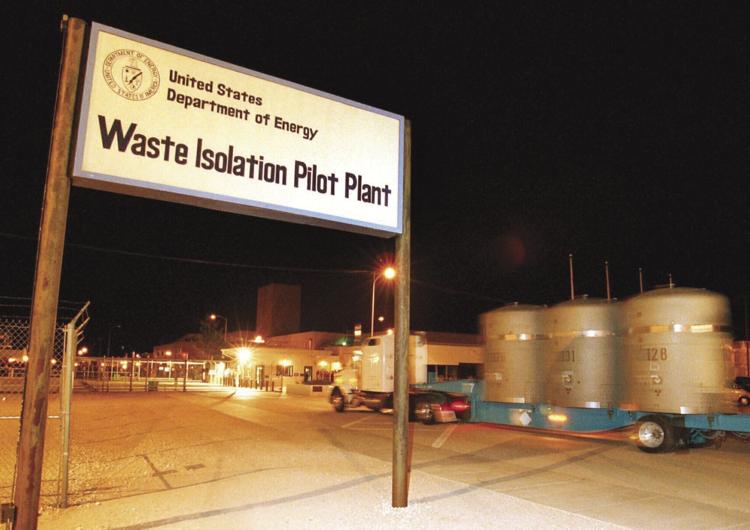
Work ongoing at US nuclear repository despite virus cases, AntelopeValley Press, 16 Aug 20, CARLSBAD, N.M. (AP) — Managers of the federal government’s underground nuclear waste repository in southern New Mexico say operations are ongoing despite a recent increase in COVID-19 cases among workers.
The Waste Isolation Pilot Plant has seen cases among workers more than double in the last week, the Carlsbad Current-Argus reported.
The plant last Monday announced four new cases among employees of Nuclear Waste Partnership, the contractor that oversees daily operations at the facility. In all, the plant has reported at least 14 positive cases among employees and subcontractors.
The plant is in the second phase of resuming normal operations after having slowed the emplacement of waste this spring when the pandemic began, said spokesperson Bobby St. John. ……….
|
The Waste Isolation Pilot Plant is the nation’s only location for disposing of tons of Cold War-era waste generated over years of bomb-making and nuclear weapons research. That includes gloves, clothing, tools and other debris contaminated by plutonium and other radioactive elements. The waste is placed into vaults carved out of an ancient salt formation about a half-mile below the surface. In January, two dozen shipments were accepted by the facility. Records show that was followed by 10 shipments in February, six in March and seven in April. May saw an increase to 20 shipments when the state of New Mexico began easing some restrictions related to the statewide public health order that had been enacted to slow the spread of the Coronavirus…….. The facility also marked a milestone in July, when it received the first shipments of waste from Sandia National Laboratories in Albuquerque since 2012. The shipments included waste that has to be handled remotely due to higher levels of radiation. The shipments were packaged in lead-lined shielded containers that weigh about 1,700 pounds when empty. https://www.avpress.com/business/work-ongoing-at-us-nuclear-repository-despite-virus-cases/article_7821a9e6-df69-11ea-9eea-5f2008c15c73.html |
|
Hiroshima survivor explains why 75 years of radiation research is so important
Watch: Hiroshima survivor explains why 75 years of radiation research is so important https://www.sciencemag.org/news/2020/08/watch-hiroshima-survivor-explains-why-75-years-radiation-research-so-important By Joel GoldbergAug. 3, 2020 ,
Seventy-five years ago on 6 August, the United States dropped a nuclear bomb on Hiroshima, Japan. Up to 120,000 people died in the bombing and its aftermath. Some of the survivors, known as hibakusha, would eventually enroll in the Radiation Effects Research Foundation’s Life Span Study, which continues to examine the effects of atomic radiation on the human body. The study’s findings have been the basis for radiation safety standards around the world, ranging from power plants to hospitals. Decades of archival footage and images, survivor drawings, and the testimony of research participant Kunihiko Iida convey the kind of misery that results from an atomic bombing—as well as the message of peace and humanity that can result from scientific research.
Racism in nuclear bomb testing, bombing of Japanese people, and nuclear waste dumping

Langston Hughes voiced the opinion that until racial injustice on home ground in the United States ceases, “it is going to be very hard for some Americans not to think the easiest way to settle the problems of Asia is simply dropping an atom bomb on colored heads there.”[25] While his statement was made in 1953, near the eighth anniversary of the Hiroshima and Nagasaki bombings, it remains equally relevant today, as we approach the 75th anniversary
Memorial Days: the racial underpinnings of the Hiroshima and Nagasaki bombings , Bulletin of the Atomic Scientists, Elaine Scarry, Elaine Scarry is the author of Thermonuclear Monarchy: Choosing between Democracy and Doom and The Body in Pain: the Making and Unmaking of the World. She is Cabot Profess… By Elaine Scarry, August 3, 2020
This past Memorial Day, a Minneapolis police officer knelt on the throat of an African-American, George Floyd, for 8 minutes and 46 seconds. Seventy-five years ago, an American pilot dropped an atomic bomb on the civilian population of Hiroshima. Worlds apart in time, space, and scale, the two events share three key features. Each was an act of state violence. Each was an act carried out against a defenseless opponent. Each was an act of naked racism. ……….
Self-defense was not an option for any one of the 300,000 civilian inhabitants of the city of Hiroshima, nor for any one of the 250,000 civilians in Nagasaki three days later. We know from John Hersey’s classic Hiroshima that as day dawned on that August morning, the city was full of courageous undertakings meant to increase the town’s collective capacity for self-defense against conventional warfare, such as the clearing of fire lanes by hundreds of young school girls, many of whom would instantly vanish in the 6,000° C temperature of the initial flash, and others of whom, more distant from the center, would retain their lives but lose their faces.[2] The bombing of Hiroshima and Nagasaki initiated an era in which—for the first time on Earth and now continuing for seven and a half decades—humankind collectively and summarily lost the right self-defense. No one on Earth—or almost no one on Earth[3]—has the means to outlive a blast that is four times the heat of the sun or withstand the hurricane winds and raging fires that follow………
Centuries of political philosophers have asked, “What kind of political arrangements will create a noble and generous people?” Surely such arrangements cannot be ones where a handful of men control the means for destroying at will everyone on Earth from whom the means of self-defense have been eliminated……..
When Americans first learned that the people of Hiroshima and Nagasaki had been collectively vaporized in less time than it takes for the heart to beat, many cheered. But not all. Black poet Langston Hughes at once recognized the moral depravity of executing 100,000 people and discerned racism as the phenomenon that had licensed the depravity: “How come we did not try them [atomic bombs] on Germany… . They just did not want to use them on white folks.”[4] Although the building of the weapon was completed only after Germany surrendered on May 7, 1945, Japan had been designated the target on September 18, 1944, and training for the mission had already been initiated in that same month.[5] Black journalist George Schuyler wrote: “The atom bomb puts the Anglo-Saxons definitely on top where they will remain for decades”; the country, in its “racial arrogance,” has “achieved the supreme triumph of being able to slaughter whole cities at a time.”[6]
Still within the first year (and still before John Hersey had begun to awaken Americans to the horrible aversiveness of the injuries), novelist and anthropologist Zora Neale Hurston denounced the US president as a “butcher” and scorned the public’s silent compliance, asking, “Is it that we are so devoted to a ‘good Massa’ that we feel we ought not to even protest such crimes?”[7] Silence—whether practiced by whites or people of color—was, she saw, a cowardly act of moral enslavement to a white supremacist. Continue reading
World is in coronavirus for the long haul
The World Health Organization has warned the coronavirus pandemic is likely to be “lengthy” after its emergency committee met to evaluate the crisis six months after sounding the international alarm.
The committee “highlighted the anticipated lengthy duration of this COVID-19 pandemic”, the WHO said in a statement, and warned of the risk of “response fatigue” given the socio-economic pressures on countries.
The panel gathered Friday for the fourth time over the coronavirus crisis, half a year on from its January 30 declaration of a public health emergency of international concern (PHEIC) – the WHO’s highest level of alarm………
Warning over crisis fatigue
Several countries around the world have imposed strict lockdowns in a bid to control the spread of the respiratory disease, plunging economies into sharp contraction.
The committee urged the WHO to provide nuanced, pragmatic guidance on COVID-19 management “to reduce the risk of response fatigue in the context of socio-economic pressures”.
The panel urged the WHO to support countries in preparing for the rollout of proven therapeutics and vaccines.
Warning over crisis fatigue
Several countries around the world have imposed strict lockdowns in a bid to control the spread of the respiratory disease, plunging economies into sharp contraction.
The committee urged the WHO to provide nuanced, pragmatic guidance on COVID-19 management “to reduce the risk of response fatigue in the context of socio-economic pressures”.
The panel urged the WHO to support countries in preparing for the rollout of proven therapeutics and vaccines.
It called for improved understanding of the epidemiology and severity of COVID-19, including its long-term health effects.
And the committee wanted more light shed on the dynamics of the virus, such as “modes of transmission, shedding, potential mutations; immunity and correlates of protection”.
The near six-hour gathering was hosted at the WHO’s headquarters in Geneva, with some participants joining via video-link.
The committee will reconvene within the next three months……..https://www.sbs.com.au/news/the-who-says-coronavirus-is-a-once-in-a-century-crisis-that-will-impact-lives-for-decades
1 This Month

of the week – Shut Down Drone Warfare!


Tell the Ukrainian Government to Drop Prosecution of Peace Activist Yurii Sheliazhenko

Petition to revoke the licensing of the Near Surface Nuclear Disposal Facility (NSDF) at Chalk River. https://www.ourcommons.ca/petitions/en/Petition/Details?Petition=e-7247
To see nuclear-related stories in greater depth and intensity – go to https://nuclearinformation.wordpress.com
-
Archives
- April 2026 (91)
- March 2026 (251)
- February 2026 (268)
- January 2026 (308)
- December 2025 (358)
- November 2025 (359)
- October 2025 (376)
- September 2025 (257)
- August 2025 (319)
- July 2025 (230)
- June 2025 (348)
- May 2025 (261)
-
Categories
- 1
- 1 NUCLEAR ISSUES
- business and costs
- climate change
- culture and arts
- ENERGY
- environment
- health
- history
- indigenous issues
- Legal
- marketing of nuclear
- media
- opposition to nuclear
- PERSONAL STORIES
- politics
- politics international
- Religion and ethics
- safety
- secrets,lies and civil liberties
- spinbuster
- technology
- Uranium
- wastes
- weapons and war
- Women
- 2 WORLD
- ACTION
- AFRICA
- Atrocities
- AUSTRALIA
- Christina's notes
- Christina's themes
- culture and arts
- Events
- Fuk 2022
- Fuk 2023
- Fukushima 2017
- Fukushima 2018
- fukushima 2019
- Fukushima 2020
- Fukushima 2021
- general
- global warming
- Humour (God we need it)
- Nuclear
- RARE EARTHS
- Reference
- resources – print
- Resources -audiovicual
- Weekly Newsletter
- World
- World Nuclear
- YouTube
-
RSS
Entries RSS
Comments RSS
 nuclear-news