The human impact of ”Trinity” and a thousand other nuuclear bomb tests on American soil

|
75 Years Later, Victims of Nuclear Bomb Tests on U.S. Soil Still Seek Justice, https://truthout.org/articles/75-years-later-victims-of-nuclear-bomb-tests-on-u-s-soil-still-seek-justice/, BY Satya Vatti, Globetrotter / Independent Media Institute, November 15, 2020 They thought the world was coming to an end,” Genoveva Peralta Purcella explains.
On July 16, 1945, the first-ever nuclear bomb was tested in New Mexico, in the Southwestern United States. The detonation was code-named “Trinity.” It is the day that would seal the fate of many Americans living in the surrounding areas for generations to come. Seventy miles from what became known as ground zero—the Trinity test site—Genoveva’s family lived on a ranch just outside the village of Capitan in New Mexico. Genoveva was born the year after the blast. Now 74 years old, she solemnly recalls how her family remembers the day that would change their lives forever. Genoveva’s sisters had come to visit their father and pregnant mother at the ranch. At precisely 5:30 a.m., as dawn broke, the sky suddenly went pitch dark. Having no other point of reference, they mistook the abnormally loud roaring and rumbling in the sky for thunder. The entire house began to shake. Fear-stricken, the family huddled together in a corner. When the sky cleared, her father stepped outside the house and found himself being showered with a white powder. The powder was everywhere and covered everything around them. Nothing escaped it, not the cows the family had raised, or the vegetables in the garden, or the rainwater they stored in the absence of running water. Like other families who went through this experience, Genoveva’s family also dusted off the powder and consumed their vegetables and the stored water. The blast produced so much energy that it incinerated everything it touched and formed a fireball that rose to more than 12 kilometers into the atmosphere. The fireball created ash that snowed over the communities surrounding the blast site. The people did not know it then, but this ash that covered thousands of square miles was the radioactive fallout from the explosion. Dread gripped the communities in Tularosa Basin who either witnessed or experienced the phenomenon they could not make sense of. Meanwhile, the immediate reaction of the staff of the Manhattan Project, which created the bomb, was of “surprise, joy, and relief.” Paul Pino, Genoveva’s cousin, who was born nine years after the Trinity blast, says that his family, which lived 33 miles from the blast site, was one of many who were unaware of what had transpired on that day. In the days and months leading up to the blast, U.S. government officials did not notify anyone who lived in the region about the imminent nuclear bomb test. Nobody in the Tularosa Basin was evacuated to safety. In the aftermath of the nuclear test, officials began to cement a false narrative into the consciousness of the nation; the region was remote and uninhabited. Tens of thousands of people, in fact, lived in the Tularosa Basin in 1945. For a long time, the people of the basin believed that the blast was an ammunition explosion. “We were lied to by the government,” said Pino. It takes 24,000 years for half of the radioactive plutonium used in the Trinity bomb to decay. The people of the region have inhaled and ingested radioactive particles for 75 years because of environmental contamination. Those in power refuse to accept responsibility and take any corrective action. To this day, there have been no cleanup efforts. Radiation exposure has caused high rates of aggressive cancers, thyroid disease, infant mortality, and other health abnormalities in generations of families in the Tularosa Basin region. The scale of the health impact cannot be determined accurately as long-term epidemiological studies have only been undertaken recently. The findings of the latest research studies by the National Cancer Institute were published in September 2020 in the journal Health Physics. “There were 10 of us; now only one is surviving,” Genoveva says, speaking of herself. She has lost everyone in her family to cancer. In a country without universal health care, debt from medical expenses has brought economic ruin to the communities near the Trinity site. “All the pain and suffering we have had to endure, and not a speck of help from the government,” Pino says. “Meanwhile, it has spent trillions on thousands of nuclear weapons.” Genoveva’s story is not an exceptional one. It is the story of tens of thousands of families in the United States. More than 1,000 nuclear bomb tests have been conducted in the U.S. between 1945 and 1992. A total of 100 above-ground tests were conducted at the Nevada test site from 1951 to 1962. The winds carried radioactive fallout for thousands of kilometers. Hundreds of millions of people living in the U.S. have been exposed to varying levels of radiation over the years, unknown to them. New Mexico was downwind of the Nevada test site, and the people living there continued to be exposed to radioactivity for decades after the initial exposure during the Trinity nuclear test. People from the impacted communities founded the Tularosa Basin Downwinders Consortium in 2005 to fight for justice for the survivors and their descendants. Tina Cordova, one of the group’s cofounders, was shocked to find out that a few of the impacted states neighboring New Mexico were receiving financial compensation under the Radiation Exposure Compensation Act since 1990. The communities in New Mexico, however, were left out of the act. When asked why, Cordova responds with, “It is the billion-dollar question. I think we are being left out because we are mainly Mexican Hispanics, Natives, and Latinos. We are minorities and we are poor.” Cordova herself is the fourth generation in her family to have cancer. She has joined with others like her to educate and organize the affected communities, to fight to establish the truth. “In their [the government’s] rush to bomb Japan, we were sacrificed in the process. We were enlisted in the service of our country, unknowing, unwilling, and remain uncompensated.” |
|
Dismantling of Trawsfynydd nuclear power plant held back due to coronavirus outbreak
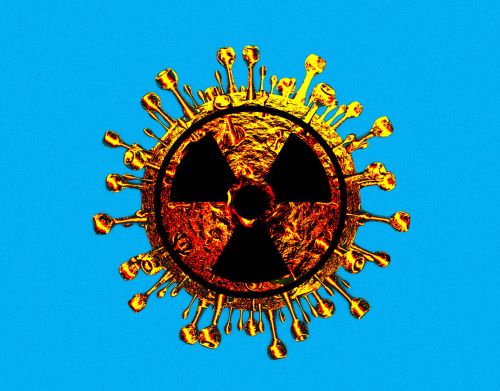 Covid outbreak at former Trawsfynydd nuclear power plant, BBC 11 Nov 20, Covid outbreak at former Trawsfynydd nuclear power plant, BBC 11 Nov 20,
Work has been scaled back on the site of former nuclear power station following an outbreak of Covid. Magnox said a “small number” of employees tested positive at the Trawsfynydd site in Gwynedd, where they are working to remove nuclear reactors and towers. Those affected and others found through track and trace are self-isolating. It said some key work will continue on site but other staff can work from home. ………. T https://www.bbc.com/news/uk-wales-54904337rawsfynydd was shut down in 1991 after operating for a quarter of a century.
The twin reactors will become the first in the UK to be fully decommissioned. Over 20 years the remaining reactor buildings will be demolished, while a new low-level radioactive waste store is built on the site to hold the material. https://www.bbc.com/news/uk-wales-54904337 |
|
Welsh families in the shadow of Wylfa nuclear station are slowly being pushed out
Wales Online 8th Nov 2020 There used to be a tight-knit community of mostly Welsh speakers living in
the shadow of a nuclear power station — until it was decided they were in
the way. One by one, the families and farmers living and working the land
around the Wylfa nuclear power station on the island of Anglesey have been
slowly bought off and forced to move, leaving just a handful of stubborn people
https://www.walesonline.co.uk/news/wales-news/people-forced-leave-homes-factory-19224272
Fears of local community about drugs and sexual exploitation in the 10 year Sizewell C nuclear build
East Anglian Daily Times 8th Nov 2020, Fears have been voiced that the 10-year construction of Sizewell C could
bring drug gangs and prostitution – including the sexual exploitation of women and teenage girls and “pop-up brothels” – to the area.
https://www.eadt.co.uk/news/sizewell-c-pop-up-brothels-and-county-lines-1-6920469
Covid-19 divides and weakens the nuclear sector in South Africa
|
Covid-19 divides and weakens the nuclear sector in South Africa, Daily Maverick, By Chris Yelland• 5 November 2020
The coronavirus crisis is undermining the business plan and turnaround strategy at the Nuclear Energy Corporation of South Africa. The resulting losses are creating debilitating divisions between labour, middle and senior management, executives and boards of Necsa and its subsidiaries – as well as wage increases Following a tumultuous operational and management period for several years, with massive financial losses, new Nuclear Energy Corporation of South Africa (Necsa) chairperson David Nicholls and acting CEO Ayanda Myoli presented a restructuring and turnaround plan to Parliament on 20 May 2020……… While many considered the turnaround plan to be hopelessly optimistic even before the Covid-19 crisis in South Africa from March 2020, the impact of the national and international lockdowns are estimated to have resulted in the Necsa group taking a massive hit, which would increase the expected loss for 2020/21 to more than R300-million. …… While many considered the turnaround plan to be hopelessly optimistic even before the Covid-19 crisis in South Africa from March 2020, the impact of the national and international lockdowns are estimated to have resulted in the Necsa group taking a massive hit, which would increase the expected loss for 2020/21 to more than R300-million. https://www.dailymaverick.co.za/article/2020-11-05-covid-19-divides-and-weakens-the-nuclear-sector-in-south-africa/ |
|
Chernobyl’s bumblebees still affected by radiation
This new data shows effects on bumblebees are happening at dose rates previously thought safe for insects, and the current international recommendations will need to be re-evaluated.
|
Chernobyl: bumblebees still at risk from radiation nearly 35 years on, https://theconversation.com/chernobyl-bumblebees-still-at-risk-from-radiation-nearly-35-years-on-149055, Katherine Raines, Fellow and Lecturer, University of Stirling, November 5, 2020 In the early hours of April 26 1986, reactor four of the Chernobyl nuclear power plant in Ukraine exploded, causing the largest nuclear disaster in history. More than 350,000 people were evacuated, and a 4,700km² exclusion zone was formed in Ukraine and Belarus. Despite the intervening 34 years, there is still uncertainty about the effects of the radiation exposure on wildlife living in the Chernobyl exclusion zone (CEZ).
|
315 nuclear bombs and ongoing suffering: the shameful history of nuclear testing in Australia and the Pacific
315 nuclear bombs and ongoing suffering: the shameful history of nuclear testing in Australia and the Pacific, https://theconversation.com/315-nuclear-bombs-and-ongoing-suffering-the-shameful-history-of-nuclear-testing-in-australia-and-the-pacific-148909, Tilman Ruff, Associate Professor, Education and Learning Unit, Nossal Institute for Global Health, School of Population and Global Health, University of Melbourne, Dimity Hawkins, PhD Candidate, Swinburne University of Technology
November 3, 2020 The Treaty on the Prohibition of Nuclear Weapons received its 50th ratification on October 24, and will therefore come into force in January 2021. A historic development, this new international law will ban the possession, development, testing, use and threat of use of nuclear weapons.Unfortunately the nuclear powers — the United Kingdom, France, the United States, Russia, China, Israel, India, Pakistan and North Korea — haven’t signed on to the treaty. As such, they are not immediately obliged to help victims and remediate contaminated environments, but others party to the treaty do have these obligations. The shifting norms around this will hopefully put ongoing pressure on nuclear testing countries to open records and to cooperate with accountability measures.
For the people of the Pacific region, particularly those who bore the brunt of nuclear weapons testing during the 20th century, it will bring a new opportunity for their voices to be heard on the long-term costs of nuclear violence. The treaty is the first to enshrine enduring commitments to addressing their needs.
From 1946, around 315 nuclear tests were carried out in the Pacific by the US, Britain and France. These nations’ largest ever nuclear tests took place on colonised lands and oceans, from Australia to the Marshall Islands, Kiribati to French Polynesia.
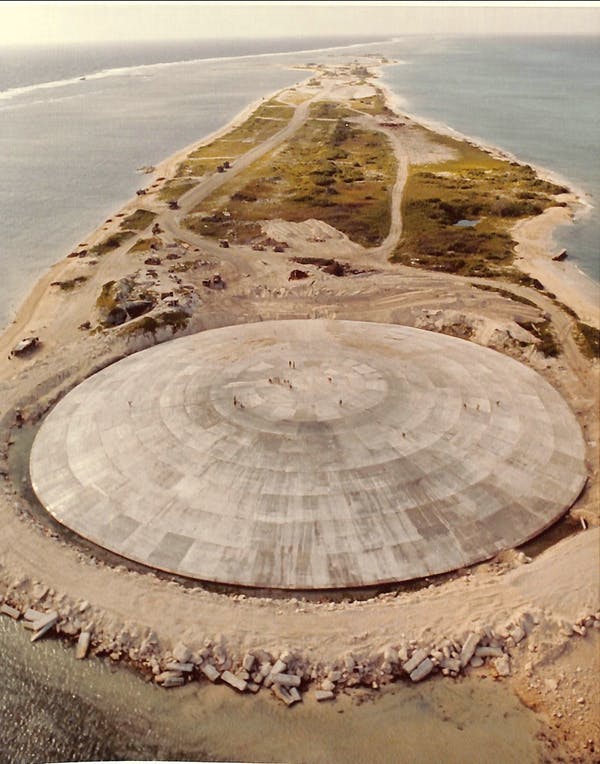
The impacts of these tests are still being felt today.
All nuclear tests cause harm
Studies of nuclear test workers and exposed nearby communities around the world consistently show adverse health effects, especially increased risks of cancer.
The total number of global cancer deaths as a result of atmospheric nuclear test explosions has been estimated at between 2 million and 2.4 million, even though these studies used radiation risk estimates that are now dated and likely underestimated the risk.
The number of additional non-fatal cancer cases caused by test explosions is similar. As confirmed in a large recent study of nuclear industry workers in France, the UK and US, the numbers of radiation-related deaths due to other diseases, such as heart attacks and strokes, is also likely to be similar.
Britain conducted 12 nuclear test explosions in Australia between 1952 and 1957, and hundreds of minor trials of radioactive and toxic materials for bomb development up to 1963. These caused untold health problems for local Aboriginal people who were at the highest risk of radiation. Many of them were not properly evacuated, and some were not informed at all.
We may never know the full impact of these explosions because in many cases, as the Royal Commission report on British Nuclear Tests in Australia found in 1985: “the resources allocated for Aboriginal welfare and safety were ludicrous, amounting to nothing more than a token gesture”. But we can listen to the survivors.
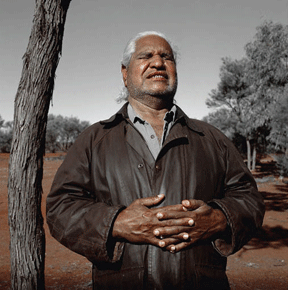 The late Yami Lester directly experienced the impacts of nuclear weapons. A Yankunytjatjara elder from South Australia, Yami was a child when the British tested at Emu Field in October 1953. He recalled the “Black Mist” after the bomb blast:
It wasn’t long after that a black smoke came through. A strange black smoke, it was shiny and oily. A few hours later we all got crook, every one of us. We were all vomiting; we had diarrhoea, skin rashes and sore eyes. I had really sore eyes. They were so sore I couldn’t open them for two or three weeks. Some of the older people, they died. They were too weak to survive all the sickness. The closest clinic was 400 miles away.
His daughter, Karina Lester, is an ambassador for the International Campaign to Abolish Nuclear Weapons in Australia, and continues to be driven by her family’s experience. She writes:
For decades now my family have campaigned and spoken up against the harms of nuclear weapons because of their firsthand experience of the British nuclear tests […] Many Aboriginal people suffered from the British nuclear tests that took place in the 1950s and 1960s and many are still suffering from the impacts today.
More than 16,000 Australian workers were also exposed. A key government-funded study belatedly followed these veterans over an 18-year period from 1982. Despite the difficulties of conducting a study decades later with incomplete data, it found they had 23% higher rates of cancer and 18% more deaths from cancers than the general population.
An additional health impact in Pacific island countries is the toxic disease “ciguatera”, caused by certain microscopic plankton at the base of the marine food chain, which thrive on damaged coral. Their toxins concentrate up the food chain, especially in fish, and cause illness and occasional deaths in people who eat them. In the Marshall Islands, Kiritimati and French Polynesia, outbreaks of the disease among locals have been associated with coral damage caused by nuclear test explosions and the extensive military and shipping infrastructure supporting them.
Pacific survivors of nuclear testing haven’t been focused solely on addressing their own considerable needs for justice and care; they’ve been powerful advocates that no one should suffer as they have ever again, and have worked tirelessly for the eradication of nuclear weapons. It’s no surprise independent Pacific island nations are strong supporters of the new treaty, accounting for ten of the first 50 ratifications.
Negligence and little accountability
Some nations that have undertaken nuclear tests have provided some care and compensation for their nuclear test workers; only the US has made some provisions for people exposed, though only for mainland US residents downwind of the Nevada Test Site. No testing nation has extended any such arrangement beyond its own shores to the colonised and minority peoples it put in harm’s way. Nor has any testing nation made fully publicly available its records of the history, conduct and effects of its nuclear tests on exposed populations and the environment.
These nations have also been negligent by quickly abandoning former test sites. There has been inadequate clean-up and little or none of the long-term environmental monitoring needed to detect radioactive leakage from underground test sites into groundwater, soil and air. One example among many is the Runit concrete dome in the Marshall Islands, which holds nuclear waste from US testing in the 1940s and 50s. It’s increasingly inundated by rising sea levels, and is leaking radioactive material.
The treaty provides a light in a dark time. It contains the only internationally agreed framework for all nations to verifiably eliminate nuclear weapons.
It’s our fervent hope the treaty will mark the increasingly urgent beginning of the end of nuclear weapons. It is our determined expectation that our country will step up. Australia has not yet ratified the treaty, but the bitter legacy of nuclear testing across our country and region should spur us to join this new global effort.
Coronavirus cases rise in grim march to America’s Election Day


Coronavirus cases rise in grim march to Election Day, SMH, By Doina Chiacu and Susan Cornwell
Nearly 87,000 cases were reported on Saturday, with 909 deaths and record hospitalisations for the sixth straight day in the Midwest, according to a Reuters tally. In October, 31 states set records for increases in new cases, 21 for hospitalised COVID-19 patients and 14 for record increases in deaths.
President Donald Trump, the Republican seeking re-election against Democratic challenger Joe Biden on Tuesday, downplays the virus and has accused Democrats of overblowing the pandemic that has killed more 230,000 Americans, more than any other country.
Biden and fellow Democrats have hammered Trump as a poor leader who failed to contain COVID-19 in the United States, which also leads the world in the daily average number of new cases.
Trump’s false accusation Friday that doctors were profiting from COVID-19 deaths drew harsh criticism from the governor of the election battleground state of Wisconsin.
“We have a president that believes that the doctors are at fault, they’re messing with the numbers and he believes that it’s over. It ain’t over,” Democratic Governor Tony Evers told CNN’s State of the Union on Sunday.
“We have hospitalisations going through the roof,” he said. “We absolutely need somebody that understands that this is an issue, it’s a thing. People are dying.”……..
Stanford University economists estimated that Trump’s campaign rallies have resulted in 30,000 additional confirmed cases of COVID-19, and likely led to more than 700 deaths overall, according to a paper posted this weekend.
Infectious disease experts have long suspected that the president’s rallies might be so-called superspreader events. But scientists have not been able to get a good read on their impact, in part because of a lack of robust contact tracing.
Trump has repeatedly disdained masks, even after outbreaks affected his own family and multiple White House staffers.
In contrast, Biden has stuck to federal health guidelines that discourage large, crowded gatherings during his campaign events. He has called Trump’s handling of the virus negligent and irresponsible.
Amid the acrimony, DeWine urged Americans to come together and fight what he called a war against a common enemy.
“This virus doesn’t care whether we vote for Joe Biden or whether we vote for Donald Trump. It’s coming after us.” https://www.smh.com.au/world/north-america/coronavirus-cases-rise-in-grim-march-to-election-day-20201102-p56ali.html
U.S. Senate unanimously passes resolution supporting nuclear weapons workers made ill by radiation
 Senate Unanimously Passes Udall, Heinrich Resolution Honoring Nation’s Nuclear Weapons Workers, Declares National Day of Remembrance Daily Post by Carol A. Clark November 1, 2020, WASHINGTON D.C. – U.S. Senators Tom Udall (D-N.M.) and Martin Heinrich (D-N.M.) announced Thursday that the Senate unanimously passed a bipartisan resolution to designate Oct. 30, 2020, as National Day of Remembrance for workers who helped develop and support the nation’s nuclear weapons program…….. Senate Unanimously Passes Udall, Heinrich Resolution Honoring Nation’s Nuclear Weapons Workers, Declares National Day of Remembrance Daily Post by Carol A. Clark November 1, 2020, WASHINGTON D.C. – U.S. Senators Tom Udall (D-N.M.) and Martin Heinrich (D-N.M.) announced Thursday that the Senate unanimously passed a bipartisan resolution to designate Oct. 30, 2020, as National Day of Remembrance for workers who helped develop and support the nation’s nuclear weapons program……..“Today, we honor the thousands of miners, millers, maintenance workers, scientists, support staff, and families in New Mexico and across the country whose sacrifice has too often gone unrecognized,” Udall said. “During the Cold War, thousands of New Mexicans made tremendous sacrifices to build the country’s first nuclear weapons and mine the uranium to protect our national defense. Many of these brave Americans have been left out of programs Congress has designated to care for and compensate nuclear workers including the Radiation Exposure Compensation Act program and the Energy Employees Occupational Illness Compensation Program. While we can never take away the years of pain and suffering these families have endured as a result of their service, we can take action to make them whole. We will never stop fighting to expand these laws until those affected by this nation’s nuclear weapons activities are fairly compensated.”
……… I also recognize the many atomic workers who are coping with serious health problems due to their exposure to hazardous and radioactive material. I will never stop fighting for the justice and compensation that these atomic workers deserve for their service to our nation.”
Tens of thousands of Americans have worked in the nuclear weapons programs since World War II at the Department of Energy’s (DOE) Los Alamos and Sandia National Labs in New Mexico. Many of these workers became sick due to exposure from toxic or radioactive materials before proper workplace protections and scientific understanding were established. Congress has since enacted the Energy Employees Occupational Illness Compensation Program Act (EEOICPA) in October 2000. This resolution additionally provides compensation to those who were exposed in uranium mines and mills during the Cold War, some of whom are covered separately by the Radiation Exposure Compensation Act (RECA). Udall and Heinrich have long pushed to expand the RECA law to compensate not only the workers affected, but those suffering from the effects of radiation during the Cold War by these nuclear weapons facilities. https://ladailypost.com/senate-unanimously-passes-udall-heinrich-resolution-honoring-nations-nuclear-weapons-workers-declares-national-day-of-remembrance/
|
|
Compensation claims recognised – workers made ill by working at Fukushima’s wrecked nuclear plant
 Compensation claims related to Fukushima nuclear plant work total 269, https://japantoday.com/category/national/compensation-claims-related-to-fukushima-plant-work-total-269
The workers’ compensation claims that have been recognized by labor authorities include six cases of workers who developed cancer or leukemia due to radiation exposure, and four others who suffered from overwork-related illnesses, according to the Ministry of Health, Labor and Welfare officials.
Decommissioning of the Fukushima plant is still under way nearly 10 years after the massive earthquake and tsunami that devastated northeastern Japan triggered meltdowns at the Fukushima Daiichi nuclear plant. To this day, about 4,000 people still work on site every day, with many at risk of radiation exposure.
The compensation claims that have been approved refer to the period since the March 2011 nuclear accident through Oct 1 this year.
According to the plant operator, Tokyo Electric Power Company Holdings Inc, three people died between fiscal 2011 and 2019.
One worker, who wished to remain anonymous, told Kyodo News the pressure of working at a nuclear power plant as opposed to a normal working site is “incomparable.”
“I have to deal with so much anxiety and stress as I could never know what may happen inside a nuclear power plant,” said the man from Iwaki, Fukushima Prefecture.
According to the worker, he wears two protective layers of clothing and tapes them together so there is no space between them, and also puts on a raincoat.
“I sweat a lot even in winter and I drink a lot of water,” he said, adding that several of his colleagues suffered from heat stroke or heat exhaustion while working at the plant.
TEPCO said a total of 98 people suffered from heat-related illnesses between fiscal 2011 and 2019, having had to wear masks and protective gear made of less permeable materials under the sweltering summer heat.
At the site of the Fukushima Daiichi plant, 313 accidents have occurred in the same period of time, including several fatal cases between 2014 and 2015 in which workers fell into a tank, TEPCO said.
Acknowledging that many accidents had occurred, a TEPCO official said, “We will continue to work with our contractors to prevent such incidents from happening.”
Urgency to protect nature, or up to 850,000 animal viruses could be caught by humans

UN report says up to 850,000 animal viruses could be caught by humans, unless we protect nature, The Conversation Katie Woolaston, Lawyer, Queensland University of Technology, Judith Lorraine Fisher, Adjunct Professor University of Western Australia, Institute of Agriculture
October 30, 2020 Human damage to biodiversity is leading us into a pandemic era. The virus that causes COVID-19, for example, is linked to similar viruses in bats, which may have been passed to humans via pangolins or another species.Environmental destruction such as land clearing, deforestation, climate change, intense agriculture and the wildlife trade is putting humans into closer contact with wildlife. Animals carry microbes that can be transferred to people during these encounters.
A major report released today says up to 850,000 undiscovered viruses which could be transferred to humans are thought to exist in mammal and avian hosts.
The report, by The United Nations’ Intergovernmental Science-Policy Platform on Biodiversity and Ecosystem Services (IPBES), says to avoid future pandemics, humans must urgently transform our relationship with the environment.
Humans costs are mounting
The report is the result of a week-long virtual workshop in July this year, attended by leading experts. It says a review of scientific evidence shows:
The report says, on average, five new diseases are transferred from animals to humans every year – all with pandemic potential. In the past century, these have included:
- the Ebola virus (from fruit bats),
- AIDS (from chimpazees)
- Lyme disease (from ticks)
- the Hendra virus (which first erupted at a Brisbane racing stable in 1994).
Finally, Australia is one of few countries without a national centre for disease control and pandemics.
But there are good reasons for hope. It’s within Australia’s means to build an organisation focused on a OneHealth approach. Australia is one of the most biologically diverse countries on the planet and Australians are willing to protect it. Further, many investors believe proper environmental policy will aid Australia’s economic recovery.
Finally, we have countless passionate experts and traditional owners willing to do the hard work around policy design and implementation.
As this new report demonstrates, we know the origins of pandemics, and this gives us the power to prevent them…… https://theconversation.com/un-report-says-up-to-850-000-animal-viruses-could-be-caught-by-humans-unless-we-protect-nature-148911
The tangled web – well-being of communities has become dependent on the nuclear weapons industry

Nuclear disarmers can’t forget the communities that rely on military spending https://thebulletin.org/2020/10/nuclear-disarmers-cant-forget-the-communities-that-rely-on-military-spending/By Tricia White, Matt Korda | October 28, 2020 If Russia  were to launch a nuclear attack against the United States, what would the targets be? You might guess the most likely targets would be major cities like Washington D.C. or New York City, and you wouldn’t be wrong. But would you have also guessed Great Falls, Montana (population: 58,505) and Cheyenne, Wyoming (population: 65,165)? These small communities are part of the United States’ “nuclear sponge”—areas in Colorado, Montana, Nebraska, North Dakota, and Wyoming that house the US arsenal of intercontinental ballistic missiles (ICBMs) and that are supposed to “soak up” hundreds of incoming nuclear warheads. Should an attack on the United States ever occur, these Midwestern states would be the first to go. And, somewhat counterintuitively, the majority of residents in these communities want to keep it that way.
It is difficult to overstate the degree to which ICBM-hosting communities rely on retaining their missiles. Missile bases like Minot in North Dakota, F. E. Warren in Wyoming, and Malmstrom in Montana are directly responsible for between eight and thirteen percent of their respective local labor forces. Additionally, the indirect economic benefits—a by-product of everyday activities like grocery shopping or school registration—certainly boost those numbers even further.
Recognizing that ICBMs could function as an economic insurance policy for local communities, politicians jockeyed to bring nuclear missiles to their states during the early stages of deployment in the 1960s.
In one particularly infamous case, Missouri Sen. Stuart Symington wrote to General Thomas Power, head of Strategic Air Command to ask, “Dear Tommy, why can’t we have one of the missile bases in Missouri?” Symington, previously the first Secretary of the Air Force, was heavily tied to weapons contractors, and his then-unique position at the intersection of business, politics, and the military prompted President Eisenhower to issue his prescient warning about the dangers of the “military-industrial complex.”
Today, this type of politicking has organized itself into the Congressional ICBM Coalition—a bipartisan collective of lawmakers from the three ICBM host states plus Utah, where ICBM sustainment and replacement activities are headquartered at Hill Air Force Base. The coalition’s members are extremely well-funded by contractors like Northrop Grumman, which spent more than $162 million on lobbying from 2008 to 2018. In a fantastic return on investment, Northrop Grumman was recently awarded a $13.3 billion contract to manufacture a replacement for the aging Minuteman III, the only land-based, nuclear-armed missile in the US arsenal.
These weapons contractors are not just funding politicians, however. They also work in concert with local community leaders to sustain and modernize the ICBM force ad infinitum. In response to potential base closures throughout the 1990s, many ICBM communities formed coalitions via their Chambers of Commerce to advocate for their neighboring bases to stay open. Today, community-led organizations like Task Force 21 (Minot), the Montana Defense Alliance (Malmstrom), and the Wyoming Wranglers Committee (F. E. Warren) meet with Pentagon officials, weapons contractors, and their Congressional representatives to advocate on behalf of their respective bases.
It’s especially notable just how integrated these groups are with their local communities: they offer career opportunities in schools, allow weapons contractors to host community events when new project bids are occurring, and guide local businesses through the ins-and-outs of subcontracting for Northrop Grumman, Boeing, or Lockheed Martin. Since many of the organizations’ activities are in turn sponsored by these corporations, it’s effectively a win-win for everyone involved.
However, these intimate relationships between local communities, corporations, and politicians come with serious ramifications. In a cruel twist of irony, it means that in order to protect their livelihoods, community leaders are encouraged to ensure that their respective cities remain—now and forever—ground zero for a future nuclear attack.
These communities are also expected to lobby on behalf of an ICBM replacement program that is dangerous, unnecessary, and very expensive. Not only do ICBMs serve little strategic purpose in a post-Cold War environment, but they are also the only weapons in the US nuclear arsenal that force the president to make potentially catastrophic decisions within mere minutes. For these reasons, as well as their astounding $264 billion estimated life-cycle costs, several nuclear experts—and a majority of both Democrats and Republicans—agree that the Pentagon should hit pause on the ICBM replacement program while officials examine cheaper life-extension options for the current arsenal. Many even argue the United States should eliminate the ICBM leg of the nuclear triad altogether.
Additionally, as Gretchen Heefner, a professor at Northeastern University, articulates in her book The Missile Next Door, “By insisting that new missions be found for old bases, that more money be spent to upgrade facilities and fortify defenses, Americans [have] long stopped resisting militarism and instead embraced it as an economic necessity.” And who could blame them? If the Minuteman ICBMs were to be phased out, the futures of Minot, Malmstrom, and F. E. Warren Air Force Bases—and the communities that serve them—would be thrown into jeopardy. Heefner quotes one ICBM community’s Chamber of Commerce president on the indirect impacts of such closures: “A lot of people probably won’t realize the impact until their soccer coach is gone and their Bible teacher is not here or their teacher’s aide is gone.” “Nothing so aptly demonstrates the dependency of American municipalities on the military,” Heefner concludes, “as the threat of its abandonment.” To that end, organizing to keep their nuclear ICBMs is a form of community self-defense, albeit one with far-reaching consequences.
This presents a challenging conundrum for the nuclear expert community. It is easy to advocate for the phaseout of the ICBM force by only examining the costs and benefits on paper. In fact, such a phaseout is a realistic and worthwhile security goal, but it may come at the cost of American jobs and rural towns.
If disarmament advocates really want to push for the retirement of the US ICBM force, we need to come prepared with answers to the economic problems it would have on these “nuclear sponge” communities. Is Congress willing to offer a guaranteed income to the constituents who will lose their jobs? Will there be an equivalent of the Paycheck Protection Program? How does a community that loses its predominant industry rebuild its economy, especially in the aftermath of a devastating pandemic? Without answers to these questions, disarmament could be the very thing that destroys them—long before a nuclear missile ever strikes American soil.
Tritium is what makes nuclear reactors so dangerous, not only in Fukushima but also in S. Korea

 http://english.hani.co.kr/arti/english_edition/e_editorial/967441.html By Kim Eun-hyoung, editorial writer, Oct.27,2020
Tritium exists in the natural world, but only in negligible amounts. It’s typically produced during the fission process inside nuclear reactors. Tritium is part of the coolant that lowers the temperature in the reactor core, which is heated by fission.
The contaminated water at the Fukushima reactor that the Japanese government seeks to release into the ocean contains tritium at levels that are 10 times higher than levels permitted by the South Korean government. That has terrified people not only in Japan but also in Korea.
The Japanese government says that the contaminated water doesn’t present a problem because it will be decontaminated through Tokyo Electric Power Company’s advanced liquid processing system (ALPS), before release. But the tricky part about releasing the contaminated water is tritium, which can’t be removed by ALPS because of the strong chemical bond it forms with water.
But Fukushima isn’t the only place affected by the risk of tritium. Heavy-water reactors are cooled with heavy water (deuterium oxide, 2H2O) instead of ordinary drinking water, producing a greater amount of tritium. There are four heavy-water reactors at Korea’s Wolsong plant, including Wolsong-1, which has been in the news recently after government auditors questioned a report about its economic viability, the justification given for shutting the reactor down earlier than planned.
Tritium is regarded as a low-risk radioactive substance, causing less harm than other types of radiation. For one thing, the radiation emitted by tritium is so weak that it can’t penetrate the outer layer of the skin. And even when it is absorbed by the body, its biological half-life — the time required for half the substance to leave the body — is only 12 days.
Even now, Wolsong-2, Wolsong-3, and Wolsong-4 account for 40% of the tritium released by all of Korea’s nuclear stations. Rates of thyroid cancer among women who live near the Wolsong nuclear plant are 2.5 times higher than in other areas, which some think is linked to tritium contamination. The question of nuclear power safety affects Korea in the same way as it affects Japan. It would be foolish and contradictory to view Japanese nuclear plants through the lens of safety and Korean nuclear plants through the lens of economic viability.
But such safety observations only apply to a single dose of radiation, such as an X-ray, and the actual risk depends on the intensity of exposure. That has led various countries to develop strict safety standards for the substance. The European Committee on Radiation Risk warns that internal radiation exposure can cause mutations that could lead to cancer.
Suspected COVID-19 outbreak declared at Canadian Nuclear Laboratories in Chalk River, Ontario.
The Renfrew County and District Health Unit (RCDHU) said it’s working closely with CNL to identify close contacts of the employees, who have been told to self-isolate at home and to get tested.
It also reminded those deemed high-risk contacts must self-isolate and monitor for symptoms for 14 days even if they’ve had a negative test, as it says COVID-19 could be incubating at the time of testing and that residents should not return to work, school or any public places during this time. …..
Three buildings at the Chalk River campus have been closed down for a thorough cleaning and 80 employees were sent home as a precaution. McGirl said, of those 80, two people have been told to self-isolate in addition to the two employees who tested positive. The names of all employees have been given to the RCDHU for contact tracing. …. https://ottawa.ctvnews.ca/suspected-covid-19-outbreak-declared-at-canadian-nuclear-laboratories-in-chalk-river-ont-1.5164185
1 This Month
To see nuclear-related stories in greater depth and intensity – go to https://nuclearinformation.wordpress.com/

29 Jan. Thursday 7-8 p.m. Webinar – World’s Largest Nuclear Station in Port Hope, ON?


31st January – Challenging the War Machine – a DECLASSIFIED UK SUMMIT


Website of the Week
Now until to February 10, 2026 Radioactive waste storage in France: the debate is finally open! How to participate?
-
Archives
- January 2026 (259)
- December 2025 (358)
- November 2025 (359)
- October 2025 (376)
- September 2025 (258)
- August 2025 (319)
- July 2025 (230)
- June 2025 (348)
- May 2025 (261)
- April 2025 (305)
- March 2025 (319)
- February 2025 (234)
-
Categories
- 1
- 1 NUCLEAR ISSUES
- business and costs
- climate change
- culture and arts
- ENERGY
- environment
- health
- history
- indigenous issues
- Legal
- marketing of nuclear
- media
- opposition to nuclear
- PERSONAL STORIES
- politics
- politics international
- Religion and ethics
- safety
- secrets,lies and civil liberties
- spinbuster
- technology
- Uranium
- wastes
- weapons and war
- Women
- 2 WORLD
- ACTION
- AFRICA
- Atrocities
- AUSTRALIA
- Christina's notes
- Christina's themes
- culture and arts
- Events
- Fuk 2022
- Fuk 2023
- Fukushima 2017
- Fukushima 2018
- fukushima 2019
- Fukushima 2020
- Fukushima 2021
- general
- global warming
- Humour (God we need it)
- Nuclear
- RARE EARTHS
- Reference
- resources – print
- Resources -audiovicual
- Weekly Newsletter
- World
- World Nuclear
- YouTube
-
RSS
Entries RSS
Comments RSS
 nuclear-news