Interaction of Nuclear Waste With the Environment More Complicated Than Previously Thought

Interaction of Nuclear Waste With the Environment May Be More Complicated Than Previously Thought, https://www.technologynetworks.com/applied-sciences/news/interaction-of-nuclear-waste-with-the-environment-may-be-more-complicated-than-previously-thought-353879, September 22 2021
| Original story from the Lawrence Livermore National Laboratory Lawrence Livermore National Laboratory (LLNL) scientists and collaborators have proposed a new mechanism by which nuclear waste could spread in the environment.
The new findings, which involve researchers at Penn State and Harvard Medical School, have implications for nuclear waste management and environmental chemistry. The research is published in the Journal of the American Chemical Society.
“This study relates to the fate of nuclear materials in nature, and we stumbled upon a previously unknown mechanism by which certain radioactive elements could spread in the environment,” said LLNL scientist and lead author Gauthier Deblonde. “We show that there are molecules in nature that were not considered before, notably proteins like ‘lanmodulin’ that could have a strong impact on radioelements that are problematic for nuclear waste management, such as americium, curium, etc.”
Past and present nuclear activities (e.g., for energy, research or weapon tests) have increased the urgency to understand the behavior of radioactive materials in the environment. Nuclear wastes containing actinides (e.g. plutonium, americium, curium and neptunium) are particularly problematic, as they remain radioactive and toxic for thousands of years.
However, very little is known about the chemical form of these elements in the environment, forcing scientists and engineers to use models to predict their long-term behavior and migration patterns. Thus far, these models have only considered interactions with small natural compounds, mineral phases and colloids, and the impact of more complex compounds like proteins has been largely ignored. The new study demonstrates that a type of protein that is abundant in nature vastly outcompetes molecules that scientists previously considered as the most problematic in terms of actinide migration in the environment.
“The recent discovery that some bacteria specifically use rare-earth elements has opened new areas of biochemistry with important technological applications and potential implications for actinide geochemistry, because of chemical similarities between the rare-earths and actinides,” said Joseph Cotruvo Jr., Penn State assistant professor and co-corresponding author on the paper.
The protein called lanmodulin is a small and abundant protein in many rare-earth-utilizing bacteria. It was discovered by the Penn State members of the team in 2018. While the Penn State and LLNL team has studied in detail how this remarkable protein works and how it can be applied to extract rare-earths, the protein’s relevance to radioactive contaminants in the environment was previously unexplored.
“Our results suggest that lanmodulin, and similar compounds, play a more important role in the chemistry of actinides in the environment than we could have imagined,” said LLNL scientist Annie Kersting. “Our study also points to the important role that selective biological molecules can play in the differential migration patterns of synthetic radioisotopes in the environment.”
“The study also shows for the first time that lanmodulin prefers the actinide elements over any other metals, including the rare-earth elements, an interesting property than could be used for novel separation processes,” said LLNL scientist Mavrik Zavarin.
Rare-earth element biochemistry is a very recent field that Penn State and LLNL have helped to pioneer, and the new work is the first to explore how the environmental chemistry of actinides may be linked to nature’s use of rare-earth elements. Lanmodulin’s higher affinity for actinides might even mean that rare-earth-utilizing organisms that are ubiquitous in nature may preferentially incorporate certain actinides into their biochemistry, according to Deblonde.
Reference
Deblonde GJ-P, Mattocks JA, Wang H, et al. Characterization of Americium and Curium Complexes with the Protein Lanmodulin: A Potential Macromolecular Mechanism for Actinide Mobility in the Environment. J Am Chem Soc. Published online September 20, 2021. doi:10.1021/jacs.1c07103
Chernobyl nuclear zone is becoming more radioactive: they don’t know why.
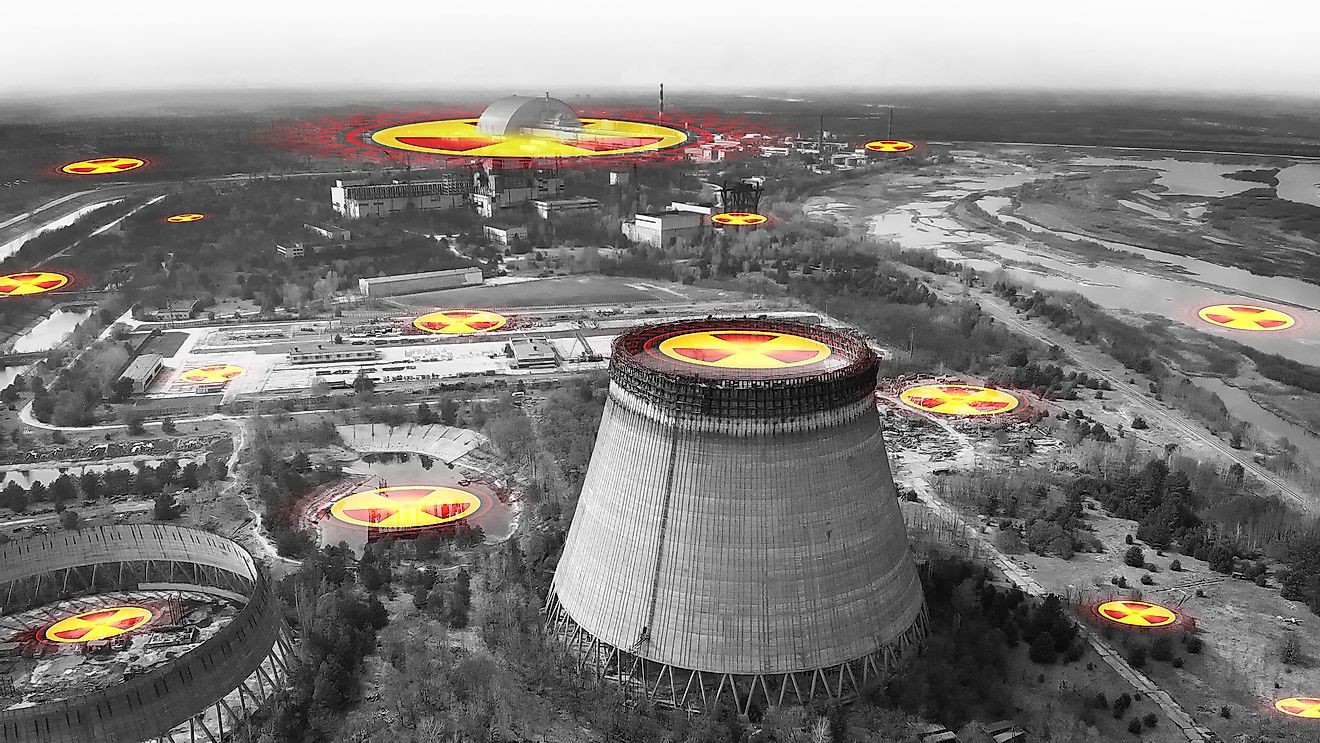
Chernobyl’s Blown Up Reactor 4 Just Woke Up. Scientists don’t understand why. https://historyofyesterday.com/chernobyls-blown-up-reactor-4-just-woke-up-74bedd5fc92d—
Andrei Tapalaga
The nuclear disaster that occurred in 1986 will forever be remembered, but the world will soon have a reminder of the event as the zone for some reason (yet unexplained by scientists)is becoming more radioactive. For those who may not be aware of the incident here is an article to get you up to speed.
“Chernobyl will never be a problem”
Underneath reactor 4 there is still nuclear fuel that is active and which will take around 20,000 years for it to deplete. The uranium is too radioactive for anyone to live in the city and since the incident, the European Union had created a shield around the reactor which should not allow for the radioactive rays to come out.Chernobyl officials presumed any criticality risk would fade when the massive New Safe Confinement (NSC) was slid over the Shelter in November 2016.”
“The €1.5 billion structure was meant to seal off the Shelter so it could be stabilized and eventually dismantled.”
However, many other parts around Chernobyl have also been affected due to prolonged exposure, some more than others, and many of them have not been contained as they were not presenting any major radioactive activity until now. Neil Hyatt, a nuclear chemist from the University of Sheffield had mentioned that there is a possibility for the uranium fuel to reignite on its own.
Hyatt also offered a simple explanation on how this is possible, just like charcoal can reignite in a barbeque, so can nuclear materials that have once been ignited. He as well as a handful of nuclear chemists have mentioned previously the possibility of the uranium from Chernobyl to reignite, but the scientists from Ukraine that are responsible for managing the nuclear activity within the vicinity never really listened, until now.
Scientists from Ukraine have placed many sensors around reactor 4 that constantly monitor the level of radioactivity. Recently those sensors have detected a constant increase in the level of radioactivity. It seems that this radioactivity is coming from an unreachable chamber from underneath reactor 4 that has been blocked since the night of the explosion on the 26th of April, 1986.
What could be causing this?
The experts from Ukraine don’t really understand why this is happening although they do have a hypothesis. Water is used to start the fission process within nuclear materials, this makes the nuclear material release energy that within a nuclear reactor can be maintained under control, but in this instance, the experts are afraid they will not be able to control it.
Another hypothesis is that since reactor 4 has been completely shielded, no water from the rain was able to reach the nuclear fuel. The water from rain may have been what kept the nuclear material under control. With no water, the nuclear fuel may be at risk of overheating, leading to another nuclear disaster.
There may be another reason for this constant increase in radioactivity, what has been mentioned above are only hypotheses, maybe something totally different is occurring under reactor 4 or within the nuclear material left inside. This is something that definitely should ring some alarm bells in order to prepare for the worst sort of situation and hopefully the world’s smartest in the field of nuclear chemistry can come together to identify the problem and come up with a potential solution.
Sources:…………
Nuclear reactor worker wins NIS one million cancer compensation.
Nuclear reactor worker wins NIS one million cancer compensation
‘G,’ a 78-year-old pensioner from Beersheba, claimed to have been continually exposed to hazardous materials and radioactive radiation at the Dimona nuclear reactor.By JERUSALEM POST STAFF SEPTEMBER 19, 2021 A Dimona nuclear reactor technician, who twice contracted cancer since his retirement, will be compensated in the sum of over NIS one
million, N12 reported on Sunday.’G,’ a 78-year-old pensioner from Beersheba, worked as a chemistry technician at the Dimona nuclear reactor for 32 years before retiring in 2003.
The retired technician claimed to have been continually exposed to hazardous materials and radioactive radiation, which caused him to develop five cancerous tumors which were surgically removed, as well as battling bladder and prostate cancer.He also claimed that there was no proper supervision and no means of radiation protection given to him during his time working in the reactor.”I went through a troubling period in my life. I couldn’t believe my job would bring me to this situation,” he reportedly noted in a claim filed to social security…….. https://www.jpost.com/israel-news/nuclear-reactor-worker-wins-nis-one-million-cancer-compensation-679783
North Korea, nuclear proliferation and why the ‘madman theory’ is wrong about Kim Jong-unç
North Korea, nuclear proliferation and why the ‘madman theory’ is wrong about Kim Jong-unç https://theconversation.com/north-korea-nuclear-proliferation-and-why-the-madman-theory-is-wrong-about-kim-jong-un-167939, Colin Alexander, Lecturer in Political Communications, Nottingham Trent University 15 Sep 21, The two missile tests conducted by North Korea in recent days have reopened discussions about the country, its leadership, its foreign policy, its perception around the world and the use (and usefulness) of nuclear weapons as an option within global politics.
North Korea’s official Korean Central News Agency announced on September 12 that it had test-fired a new long-range cruise missile, believed by analysts to be the country’s first missile with the capacity to carry a nuclear warhead.
Three days later the South Korean military said the North had launched “two unidentified ballistic missiles” into the Sea of Japan, prompting Japan’s outgoing prime minister, Yoshihide Suga, to order his country’s defence agencies to investigate.
North Korea usually makes grand nuclear statements like the ones we have seen in recent days during early September to mark the founding of the DPRK on September 9 1948. As such, these tests are as much about domestic propaganda and internal regime prestige as they are about threat to the outside world.
More broadly though, North Korea’s advance of its nuclear weapons technology – off and on since the 1950s – has made its integration with the rest of the international community much less likely. This is primarily on account of its development coming at considerable cost and sacrifice to the small nation.
No moral high ground
It can be argued that, given the indiscriminate barbarity of the destruction that a nuclear attack would cause, no state has a moral right to nuclear weapons over that of another state. But countries which already have a nuclear arsenal will often push the line that while it’s OK for them to have a nuclear stockpile, other countries do not necessarily have that right. These communications often rely on a manufactured sense of who is responsible and stable-minded and who is irresponsible and unstable. In short, it is an attempt to create a polarised world of good and evil.
This simplistic polarisation is encouraged through government communications regarding foreign policy. But they also depend on wider more implicit perception management strategies. These include harnessing the agendas of global mainstream news media and exporting popular culture products, films, television programmes and the like, that seek to encourage certain worldviews and to marginalise ones that are undesirable to the world’s most powerful nations.
It should always be remembered that the United States is the only state to have used nuclear weapons as an act of war (twice during 1945). Yet it declares North Korea to be a nuclear threat based on its “madness” (Donald Trump repeatedly called Kim Jong-un “mad”). But if we are to believe revelations from the upcoming book Peril by journalists Bob Woodward and Robert Costa, America’s top military personnel had to take action in the final months of the Trump administration to limit any risks of a nuclear showdown with China.
It’s probably true to say that few aspiring candidates for high office are going to say that they would never use their country’s nuclear capability in any circumstance. But it could also be said that any head of government who boasts of their readiness to use nuclear weapons is demonstrating their lack of fitness to govern. But, as the first part of this paragraph suggests, no candidate is likely to make this assertion.
Madman’ theory wrong
There is no evidence that the previous leaders of North Korea, Kim Il-sung or Kim Jong-il, were assessed by psychologists and found to be suffering from mental ill health. This is also true of Kim Jong-un, the country’s current leader – in fact before Kim’s summit with Trump in 2018, a former State Department psychiatrist, Kenneth Dekleva, who creates psychological profiles of foreign leaders, told America’s National Public Radio that: “I think the madman theory was wrong.”
I would say he’s smart, that he’s a very, very savvy diplomat, a leader with a sense of gravitas. He wants to be a player on the world stage.
For Simon Cross, a colleague of mine at Nottingham Trent University, “madness” is an imprecise term and a cultural construct that does not require a trained medical professional to identify it, but it resonates with ease with audiences when uttered by someone they trust. Stephen Harper at the University of Portsmouth, says our perception of what represents “madness” is based on uncritical interpretations of the past and fantasies and inclinations within the human mind towards what he calls “self-haunting”. These tropes are perpetuated, confirmed and even encouraged at the persuasion of powerful individuals reinforced by mainstream media content.
So, for example, the Hollywood films Team America: World Police (2004) and The Interview (2014), despite being satires of North Korea’s leaders, promote this idea of the North Korean leader and his senior advisers as mad. And Trump kept hammering at this with his regular references to Kim as a “madman”, as “crazy” and as a “little rocket man”.
North Korea’s prevailing international image of being mad is thus predominantly the creation of hostile external parties. But Pyongyang has also played up to it at times when it has been deemed useful – as the psychologist Dekleva said earlier in this article, it could be a useful tool of diplomacy. This is a theme explored by Niccolo Machiavelli in his book The Prince in 1517.
That said, what is perhaps most interesting is the extent to which recent US administrations and their allies appear to have come to believe the madness story – despite the fact that they are largely responsible for it. This has been the case with successive US administrations – but whether they genuinely believe it, or perpetuate it because it is convenient to their wider foreign policy ambitions to do so, remains to be seen.
Vested interests — controlling the news about nuclear safety

Who controls the truth about a nuclear disaster?
The end of the monopoly of these experts would allow a proper debate on the risks of nuclear energy. At a time when many voices are speaking out in favor of the development of atomic energy as the lesser evil in the face of climate change, such a debate is urgent.
How monolithic institutions decide what is safe for the rest of us, Beyond Nuclear, By Christine Fassert and Tatiana Kasperski, 12 Sept 21,
In December 2020, twenty years after the final closure of the Chernobyl nuclear power plant, the Ministry of Culture of Ukraine announced its intention to prepare an application to include certain objects in the exclusion zone around Chernobyl in the UNESCO World Heritage List….
The Chernobyl site would symbolize the long history of accidents that have marked the atomic age, from Kychtym and Windscale (1957), to Three Mile Island (1979) and Fukushima (2011), whose tenth anniversary we commemorated this year.
Moreover, the Chernobyl accident constitutes a particular moment in this history, namely the beginning of the institutionalization of the international management of the consequences of nuclear accidents, whose impact became fully apparent at the time of the Fukushima accident.
A small group of organizations
If the origins of accidents are most often explained by factors related to the development of the nuclear industry and its regulatory bodies at the national level, the “management” of their consequences gradually extends beyond national borders
In this respect, Chernobyl established the monopolization of the authoritative knowledge of ionizing radiation by a small group of organizations — the International Atomic Energy Agency (IAEA), the International Commission on Radiological Protection (ICRP) and the United Nations Scientific Committee on the Effects of Atomic Radiation (UNSCEAR).
Through a series of alliances and co-options, these organizations formed a monolithic bloc on the issue of radiological risk.
Relegated to a militant marginality
From that moment on, divergent points of view were de-legitimized and relegated to a form of militant marginality. These included the positions of such individuals as “dissident” scientist Keith Baverstock who directed the radiation protection program at the World Health Organization’s Regional Office for Europe, and those of such organizations as the International Association of Physicians for the Prevention of Nuclear War (IPPNW).
This monopoly translates into an internationalization of accident management that relies on a series of tools designed to establish a “normalization” of the post accident situation through the depoliticization of the management of risks related to radioactive fallout. They enshrine the power of experts close to international nuclear organizations to determine what sacrifices in terms of health and the environment are acceptable.
As physicists Bella and Roger Belbéoch point out:
“Far from calling into question the power they have secured for themselves in society, the nuclear disaster allows them to constitute themselves into a unified international body with even greater powers. It is at the moment when the scientific experts can no longer promise anything other than disaster management that their power inevitably takes hold.”
Fukushima
This monopoly over knowledge and management of an accident was very much present in Japan in 2011, when the Japanese authorities put in place measures, which, by largely referring to international standards, warded off objections: the accident was dealt with by the experts.
However, a shift occurred in this monopoly when a UN rapporteur, Anand Grover, severely criticized Tokyo’s management of the disaster.
At the same time, new conceptual tools proposed by the social sciences, such as the “production of ignorance”, offer a framework for analysis that makes it possible to extend the criticisms beyond the domain of a purely expert debate, opening the way to a re-politicization of the accident and its consequences.
Making nuclear accidents manageable
But, first of all, how can you make a nuclear accident manageable when, as was the case at Chernobyl and Fukushima, it causes very large releases of radioactive particles, spreading around the globe and causing long-term contamination of tens of thousands of square kilometers?
Hundreds of thousands of people have been evacuated or relocated from these territories, and hundreds of thousands of others continue to live in an environment affected by radioactivity.
Zoning, that is, the division of these territories into several “zones” according to the density of contamination and the necessary protective measures, was the first instrument that made it possible, in Japan and in the former Soviet Union, to make the accident manageable……
This zoning mechanism set up by the Japanese government is part of a regulatory framework established by the two major international nuclear institutions, the IAEA and the ICRP. The ICRP sets the dose limit for the public at 1 millisievert (mSv)/year. Since 2007, the ICRP has authorized government authorities to raise this threshold (from 1 to 20 mSv/year) in the case of a nuclear accident.
When the Japanese authorities, like the Soviet authorities in 1986, chose to raise the threshold following the accident, they justified it in terms of the virtual absence of any health risks.
The radiological threshold
The mechanism is based in particular on the choice of a radiological threshold from which the population will be evacuated.
In Japan, government officials consider that the risk of developing cancer from exposure to a dose of 100mSv or less is so low according to “the international (scientific) consensus, (that) it is made undetectable by the carcinogenic effects of other factors.”
Limiting evacuations and compensations
The sociologist and historian of science Sezin Topçu shows how this zoning mechanism, which has become an indispensable element of nuclear accident management, is above all a way of limiting evacuation and compensation for damage caused by an accident, since its costs (economic, political or social) would be prohibitive for the nuclear industry and the State.
This optimization approach is also enshrined at the international level in the recommendations issued by the IAEA and the ICRP.
For example, in the case of Japan, the threshold of 20 mSv/year appears to have been chosen in part to avoid evacuating the Naka Dori region and its major cities: the established zone borders made it possible to exclude such cities in the center of the prefecture, including Fukushima, from evacuation orders…………………………..
Mechanisms of ignorance production
More recently, however, various social scientists have proposed an analysis of the promotion of a reassuring stance on these dangers as part of the mechanisms of ignorance production.
The production of ignorance, which can be both involuntary and intentional, was initially studied for a number of risks, such as tobacco.
Approaching radiological risks in terms of the production of ignorance makes it possible to break with the “exceptionalism” with which the nuclear issue has long been associated, and to consider the dangers of ionizing radiation within the broader field of health risks and its banal issues of power.
Minimizing gravity
The internationalized management of nuclear disasters is in fact based on various mechanisms of ignorance production. For instance, the sociologist of science, Olga Kuchinskaya,- describes the “politics of invisibility” that were adopted after the Chernobyl disaster.
She points out that the public visibility of the effects of ionizing radiation depends on the existence of material infrastructures – such as measuring devices, information systems and equipment — but also institutional infrastructures (for example, following a cohort of people in order to make health effects visible depends on this articulation between material and institutional elements).
This infrastructure is very costly and, in the case of Chernobyl, has not been maintained over time. Moreover, the assessment of the effects of radiation was essentially taken care of by international institutions, while local doctors and researchers, for their part, revealed a completely different and much more alarming picture of the health situation.
Kate Brown describes how various international bodies, primarily the IAEA and WHO, worked to redefine the health effects of Chernobyl, to minimize their severity, and thus actively to produce “ignorance” about the impact of the disaster.
This non-knowledge was in fact a crucial instrument that made the disaster “manageable” and allowed, as Adriana Petryna points out, “the deployment of authoritative knowledge, especially when applied to the management of the exposed population”.
The monopoly of international experts, until when?
By addressing the “exceptional” character of nuclear energy and ionizing radiation, these criticisms, whether they are made within UN bodies or by social science researchers, open the way to questioning the monopoly of international nuclear institutions in assessing radiological risk and framing so-called “post-accident” policies.
A re-politicization of the management of accident consequences that brings the “management” of a nuclear accident into the broader framework of human rights therefore becomes possible.
When the next nuclear accident occurs, it is not a given that citizens will accept the “inevitability” of the power of international experts to decide, on their behalf, what constitutes an acceptable risk.
The end of the monopoly of these experts would allow a proper debate on the risks of nuclear energy. At a time when many voices are speaking out in favor of the development of atomic energy as the lesser evil in the face of climate change, such a debate is urgent.
This article was first published in The Conversation in French on April 26, 2021, as well as on Beyond Nuclear International. English translation provided by the authors.
Christine Fassert is a social anthropologist at Université Paris 1 Panthéon-Sorbonne. Tatiana Kasperski is a research associate– Department of Humanities at Universitat Pompeu Fabra https://beyondnuclearinternational.org/2021/09/12/vested-interests/
Radiation, nuclear wastes, transportation, uncertainties – extract from Expert response to pro nuclear JRC Report

The DNSH-related TSCs state, among other things, that the repository facility must guarantee that the waste is contained and isolated from the biosphere. This also applies if extreme natural phenomena occur such as earthquakes, tornadoes, floods or the loss of technical barriers.
…… nuclear energy has been used for several decades, but there is still no repositoryfor high-level radioactive waste operating anywhere in the world. Responsibilities are therefore passed on to following generations and they are restricted in their freedom of choice. Section 6 of this expert response will deal with this matter in greater detail.
General results of the reviewThe JRC Report contains unfounded generalisations at many points. Conclusions are drawn from individual, selected examples and their global validity is assumed. Readers without any detailed specialist expertise will find it hard or impossible to recognise this.
.………. The JRC presents the disposal of high-level radioactive waste as a completely resolved problem by citing the example of the disposal projects in Finland and France. This largely ignores the fact that the Finnish repository is still under construction and the licence application from the operational company has already been delayed on several occasions. Both countries are still years away from starting to operate the facilities.
The JRC Report does not mention the aspect of transportation in its presentation of the life cycle analysis. This would have been necessary for a conclusive overall presentation of all the aspects of nuclear power.
the JRC Report states that a closed fuel cycle provides the advantage of significantly reducing the space required for a deep geological repository for HLW. It is necessary to add here that not only the volume, but also the decay heat at the time of disposing of the waste is relevant for the size of the disposal facility (KOM, 2016, p. 227). Additional low- and intermediate-level waste would also be produced and this would increase the disposal volume.
Expert response to the report by the Joint Research Centre entitled “Technical assessment of nuclear energy with respect to the ‛Do No Significant Harm’ criteria in Regulation (EU) 2020/852, the ‛Taxonomy Regulation’” 2021
“”………… 4.6 Ionising radiation and its impacts on people’s health and the environment during all the life cycle phases (apart from disposal and transportation)The JRC Report largely restricts itself in Part A 3.4 to the “impact of ionizing radiation on human health” (JRC Report, Part A 3.4.1, p. 167ff) and the environment (JRC Report, Part A 3.4.2, p. 173ff). The impact of emissions of non-radioactive substances is only considered at one point (publication [3.4-1]). ……..
The figures quoted for the radiation exposure of human beings in Part A 3.4.1 of the JRC Report are plausible. It is correct that human exposure to radiation as a result of the civil use of radioactive materials and ionising radiation is low in comparison with radiation exposure from natural sources and its range of variation. However, the report does not match the latest findings in radiation protection when specifying average effective doses per head of the population for nuclear facilities and installations. According to the latest recommendations of the International Commission on Radiological Protection (ICRP), the so-called “representative person” in the sense of the ICRP has to be considered an individual in the population, who is exposed to higher levels of radiation because of his or her lifestyle habits.
5 Criterion 2 in the Taxonomy Regulation – the DNSH criteria: disposal of radioactive waste, transportation, research and development The subject of disposing of radioactive waste is considered in this section. It professionally examines the scientific statements in the JRC Report about the topics of storage (section 5.1 of this expert response), disposing of low- and intermediate-level radioactive waste (section 5.2), disposing of high-level radioactive waste (section 5.3), transportation (section 5.4) and research and development (section 5.5). Sub-headlines have been used to interconnect the subsections
……….. The JRC Report does not adequately consider the fact that no successful, deep geological disposal of high-level radioactive waste, including the permanent seal, has yet been introduced anywhere in the world.
5.1 Interim storage of radioactive waste The JRC Report generally fails to provide any basis for the findings that are listed in the Executive Summary of the report related to storing radioactive waste. As a result, questions must be raised about the transparency of the conclusions that are drawn.
………….. the assessment of interim storage consistently takes place according to the standard adopted by the JRC, which, however, is inadequate from an expert point of view. For beyond design basis events it is impossible to exclude that uncontrolled discharges of radioactive substances and therefore considerable effects on the environment may occur through incidents and accidents or by some other intrusion involving third parties (e.g. terrorist attacks) when operating storage facilities; a risk therefore remains. A holistic assessment of using nuclear energy must therefore include a risk assessment related to these events too (cf. section 2.1 and 2.2.1 of this expert response).
Continue readingIrradiated man kept alive for nuclear research
Paul Richards, Nuclear Fuel Cycle Watch Australia, 10 Sept 21, TOTAL DESTRUCTION
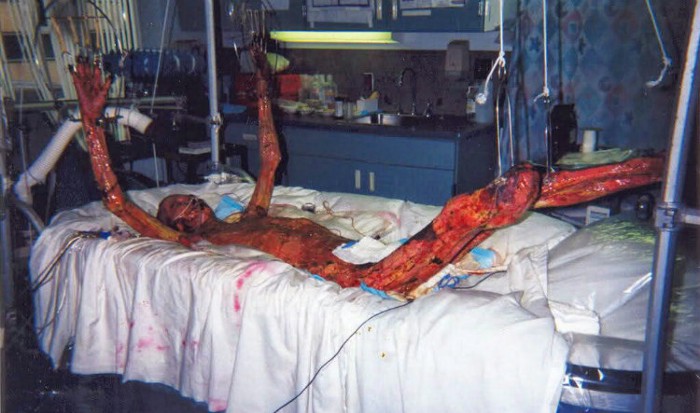
Although most of Hisashi Ouchi’s body had been completely destroyed, including his DNA and immune system, the doctors kept him alive as a human experiment.They kept him alive for a total of 83 days until he died of multiple organ failures.
During those 83 days, Hisashi Ouchi underwent the first transfusion of peripheral stem cells, as well as several blood transfusions and skin transplants.However, neither the transfusions or transplants could keep his bodily fluids from leaking out of his pores.
During the first week of experiments, Hisashi Ouchi had enough consciousness to tell the doctors“I can’t take it anymore… I am not a guinea pig…”but they continued to treat him for 11 more weeks. The nurses caring for him also recorded the narcotic load to abate pain was not enough to give him relief. At the time of recording his death, his heart had stopped for 70 minutes and the doctors chose this time not to resurrect him.
UNBREAKABLE RECORD To this day, Hisashi Ouchi holds the record for the most radiation experienced by a surviving person, however, this is not an accomplishment that his family likely celebrates.
The case of malpractice by these doctors is extremely horrific and one of the greatest examples of human torture of the 20th century.Thankfully, medical professionals values, would not be superseded by the nuclear state, so this record in all probability will never be broken._____________More on why the accident happened:https://sci-hub.se/…/abs/10.1080/00963402.2000.11456942 from https://www.facebook.com/groups/1021186047913052
Mururoa nuclear test veterans fight for their children and grandchildren
Mururoa nuclear test veterans fight for their children and grandchildren, Stuff Jimmy Ellingham, Sep 11 2021 Forty-eight years after 500 Kiwi sailors were sent to French Polynesia to protest French nuclear testing in the Pacific the effects on their health and families continue to reverberate.
Those aboard the HMNZS Otago and HMNZS Canterbury were several dozen kilometres away from the atmospheric tests they witnessed at Mururoa Atoll.
The sailors drank, washed in and cleaned their clothes in desalinated water from the fallout zone, and the ships’ decks were washed down with it.
In 2020, an Otago University study of 83 sailors and 65 children published in the New Zealand Medical Journal found they were at higher risk of transferring genetic illnesses across generations.
The research found 30 per cent of veterans had cancer and 31 per cent joint problems. Among their children, 40 per cent reported fertility problems, while many chose not to have offspring of their own because their fathers were exposed to radiation.
The veterans can get help or certain health conditions. Their descendants can’t get anything.
The Mururoa Nuclear Veterans Group, an incorporated society representing the men from the two frigates and HMAS Supply, is working to change this.
Retired Rear Admiral Jack Steer, who didn’t serve at Mururoa but works with the group to advocate for veterans, said children and grandchildren were affected by their fathers and grandfathers being exposed to radiation on the protest mission.
The group wants to see as many veterans and descendants as possible tested to see if there is a link.
“A number of the veterans have died of various forms of cancer and some of them are very unwell. They believe they were eradiated. This test will prove beyond reasonable doubt whether they were.”
The group wanted to collect blood samples, so they’re available for scrutiny as science advances. It’s a costly process. Each sample costed $117, although the group had secured a place to store them, Steer said.
The group was hoping to secure government funding for testing, as had happened for Operation Grapple veterans, who witnesses British nuclear testing in the Pacific in the 1950s.
Steer said the Mururoa veterans weren’t after compensation.
“What they want is that testing proves that their children and grandchildren were exposed to radiation or affected by their dads’ exposure to radiation.”
The group had recently secured $50,000 funding from the Returned and Services’ Association to start the testing project……. https://www.stuff.co.nz/national/300404527/mururoa-nuclear-test-veterans-fight-for-their-children-and-grandchildren
NEW -British Scientist discovers the cause of cancer in the Hiroshima Black Rain survivors -2021
British Scientist discovers the cause of cancer in the Hiroshima Black Rain survivors
Massive errors in the basis of legal controls on radiation exposures
In a peer-reviewed paper published by the respectable journal Cancer Investigations ,British Scientist Dr Christopher Busby reveals the results of his investigative research into the Hiroshima A-Bomb Black Rain, torrential rain that fell on Hiroshima after the detonation of the US atomic bomb.
The issue of cancer risks in people who lived in the area of the back rain was headlined recently when the Japanese government lost a court case taken by Hibakusha groups who believed that their cancers were a result of the A-Bomb, but who lived in the black rain areas too far from the detonation to have received any external radiation dose. One problem for these people is that there has been no scientific explanation. The black rain was believed to be insufficiently radioactive to cause cancer.
The report: “The Hiroshima A-Bomb black rain—a resolution of the enigma” provides evidence from an obscure US restricted report from 1976, declassified in 2014, that the 55kg of unfissioned material of the bomb, Enriched Uranium, contained vary large amounts of the Uranium isotope U234 which formed the condensation nuclei for the black rain and contaminated Hiroshima’s water and air for many years.
The calculated exposures from the long-lived Uranium particles due to inhalation and ingestion by those living in Hiroshima after the bomb were 10,000 times greater than exposures to the isotope Caesium-137. U-234, which is lighter than U235 (the fissile component) is extracted into the Enriched Uranium during the separation process.
Dr Busby said: “It is astonishing that no one has drawn attention to the presence of large amounts of this dangerous long lived alpha emitter on the test sites. All the calculations that have been made of exposures, from Hiroshima to the Marshall Islands tests, to Christmas Island, will have to be re-assessed.”
He added: “Of course, this also means that the Life Span Study basis of the current radiation risk models is worthless. The true risks from internal exposures to Uranium, as in Depleted Uranium weapons, are more than a hundred times or more than current legal limits are based on. The implications of this discovery are clearly massive and far-reaching for all things involving nuclear.”
Dr Busby (aged 76) is an international expert on radiation and health and served on two British Government committees. He represented Nuclear Test Veterans in the Royal Courts of Justice in 2016. He relocated to Latvia in 2020 after Brexit where he continues to carry out research on internal radiation and health.
The paper can be found at: https://www.tandfonline.com/doi/abs/10.1080/07357907.2021.1977818?src=&journalCode=icnv20
Dr Busby’s CV can be found at: www.greenaudit.org
Contact:
Richard Bramhall; lowradcampaign@gmail.com +44 7887 942043
Christopher Busby christo@greenaudit.org +371 29419511; +447989428833
Other recent reports and findings on how science is challenging industry beliefs on health risks after nuclear accidents and nuclear testing;
Nuclear ”ethics” – fatally ill man kept alive against his will, in the cause of nuclear research
In 1999 an accident at a Japanese Nuclear Power Plant caused one of its technicians, Hisashi Ouchi, to be exposed to high levels of radiation. He was kept alive for 83 days, against his will, by doctors so they could use his body to study the effects of radiation on humans.Hisashi Ouchi was one of three employees of the Tokaimura nuclear plant to be heavily impacted by the accident on 30 September 1999.
The Man Kept Alive Against His Will
How modern medicine kept a ‘husk’ of a man alive for 83 days against his will
https://historyofyesterday.com/the-man-kept-alive-againsthttps://historyofyesterday.com/the-man-kept-alive-against-his-will-647c7a24784 Colin Aneculaese 27 July 2020, Radiation has always been a subject of great interest for many scientists. Since its discovery and weaponisation, many have looked into its impact on living organisms, especially humans. As a result, many living being suffered at the hands of those who sought to find the real impact of radiation on living beings. Throughout the years this experimentation was mainly focused on animals as it would be unethical to test such a thing on humans.
Outside of major nuclear events such as the bombing of Hiroshima and Nagasaki and the meltdowns of nuclear facilities such as nuclear power plants, the effect of radiation on humans could not be tested. As such after the 1999 Tokaimura nuclear accident, many scientists jumped at the opportunity to study the victims of such a high amount of explosion to radiation. Out of all the victims of the disaster, the case of Hisashi Ouchi stands out.
Tokaimura nuclear plant
Hisashi Ouchi was one of three employees of the Tokaimura nuclear plant to be heavily impacted by the accident on 30 September 1999. Leading up to the 30th of the month the staff at the Tokaimura nuclear plant were in charge of looking after the process of dissolving and mixing enriched uranium oxide with nitric acid to produce uranyl nitrate, a product which the bosses of the nuclear plant wanted to have ready by the 28th.
Due to the tight time constraints, the uranyl nitrate wasn’t prepared properly by the staff with many shortcuts being used to achieve the tight deadline. One of these shortcuts was to handle the highly radioactive produce by hand. During their handling of the radioactive produce while trying to convert it into nuclear fuel (uranyl nitrate is used as nuclear fuel) for transportation the inexperienced three-man crew handling the operation made a mistake.
During the mixing process, a specific compound had to be added to the mixture, the inexperienced technicians added seven times the recommended amount of the compound to the mixture leading to an uncontrollable chain reaction being started in the solution. As soon as the Gamma radiation alarms sounded the three technicians knew they made a mistake. All three were exposed to deadly levels of radiation, more specifically Ouchi receiving 17 Sv of radiation due to his proximity to the reaction, Shinohara 10 Sv and Yokokawa 3 Sv due to his placement at a desk several meters away from the accidents. When being exposed to radiation it is said that anything over 10 Sv is deadly, this would prove to be true in this instance.
The fallout of radiation
Shinohara, the least affected out of the two who received a deadly dose of radiation, lasted 7 months in hospital until 27 April 2000. The technician died of lung and liver failure after a long battle against the effects of the radiation he endured. During his, 7-month stay at the University of Tokyo Hospital several skin grafts, blood transfusions and cancer treatments were performed on him with minimal success. Shinohara’s time at the University of Tokyo Hospital would be much less painful than Ouchi’s.
Iodide tablets offered as precaution to residents living near nuclear plants

Iodide tablets offered as precaution to residents living near nuclear plants 69 News NCPA Staff, Sep 8, 2021
Harrisburg, Pa. — The Department of Health will offer free potassium iodide, or KI, tablets on Thursday, Sept. 9 and 16, to Pennsylvanians who are within 10 miles of the state’s four active nuclear power plants.
“Emergency preparedness is an important aspect of public health and having potassium iodide tablets for residents who live or work within 10 miles of a nuclear facility is an essential preparedness action in the case of a radiological emergency,” Acting Secretary of Health Alison Beam said.
“It’s important to remember potassium iodide should only be taken when instructed to do so by state health officials or the governor, and it is not a substitute for evacuation in the case of a radiological emergency at one of Pennsylvania’s nuclear facilities.” ………
The tablets are available to all Pennsylvanians who live or work within 10 miles of the state’s four active nuclear power plants by visiting a distribution center listed below, calling the Department of Health at 1-877-PA-HEALTH or visiting a county and municipal health department or state health center. KI tablets are not required for people living and working within 10 miles of the Three Mile Island Generating Station, which closed in Sept. 2019. ……. https://www.wfmz.com/news/state/iodide-tablets-offered-as-precaution-to-residents-living-near-nuclear-plants/article_cdf107cc-5b25-5959-adc1-08805c43f0e4.html
Study: Mars Missions Should Be Limited to 4 Years to Protect from Radiation
Study: Mars Missions Should Be Limited to 4 Years to Protect from Radiation, VOA Learning English, 5 Sep 21, A new study has found that future missions to Mars should be limited to four years to protect astronauts from harmful radiation.
The study also says that missions should be carried out during specific times to reduce the level of exposure to dangerous particles.
The U.S. space agency NASA currently has plans to send astronauts back to the moon. It also plans to one day send astronauts to Mars. Those plans include missions that would keep astronauts in space for long periods.
China has also announced plans to send astronauts to Mars by 2033. Such missions present great risks to humans because of the high level of radiation in space.
Radiation exposure can cause a series of health issues, including skin burns, heart problems and cancer. NASA has spent many years studying ways to protect human space travelers from radiation.
On Earth, we also experience exposure to radiation from the sun. But our planet’s magnetic field protects us from dangerously high levels.
Two main kinds of radiation can affect humans and equipment in space. One is produced by particles released from the sun. The other comes from high energy particles created by cosmic rays from outside our solar system. NASA says the second kind can be more dangerous to humans and more destructive to equipment.
In the new study, researchers used modeling methods to predict levels of radiation exposure during future space missions. They combined geophysical models of particle radiation with models for how radiation would affect human passengers and spacecraft……………………. https://learningenglish.voanews.com/a/study-mars-missions-should-be-limited-to-four-years-to-protect-from-radiation/6202556.html
Downwinders Look to Renew and Expand Radiation Exposure Compensation Act
Downwinders Look to Renew and Expand Radiation Exposure Compensation Act, Sierra Nevada Ally, By Brian Bahouth -September 4, 2021
Audio: a conversation with downwinder Mary Dickson Between 1951 and 1992, U.S. scientists and engineers conducted 928 nuclear blasts at the Nevada Test Site (NTS), a roughly 1,400 square-mile federal reservation located 65 miles north of Las Vegas. Eight hundred and twenty eight were underground tests and 100 atmospheric tests in which the atomic weapons were exploded at or above ground level, which releases highly radioactive material high into the atmosphere.
In total, at various locations around the globe, the Atomic Energy Commission and later the Department of Energy, conducted 1,054 atomic weapons tests.
Fallout from these many bombs circled the planet. If a person is in close proximity to a nuclear blast, the symptoms of acute radiation sickness are obvious, but outside the blast area, human senses do not apprehend radioactivity that can lodge in the fat of milk or meat and can linger for decades in the environment.
The health effects of nuclear testing on those directly downwind of the events in eastern Nevada, Utah and Arizona became evident with cancer clusters and and other related illnesses. Many ranchers lost livestock.
After years of lawsuits and wrangling, the Radiation Exposure Compensation Act (RECA) became law in 1990 and provides one-time benefit payments to “persons who may have developed cancer or other specified diseases after being exposed to radiation from atomic weapons testing or uranium mining, milling, or transporting.”
The U.S. Department of Justice administers RECA and has distributed over $2.4 billion in benefits to more than 37,000 claimants since its inception in 1990, but the RECA program is scheduled to sunset in 2022.
Geographically, RECA covers people living in a total of 22 counties with some in eastern Nevada, Utah, and Arizona. But research shows that parts of Idaho and Montana saw radioactivity impacts on par with Nevada, Utah and Arizona. Many places in North America realized toxic levels of radiation. Fallout from the tests travelled around the globe.
U.S. Senator from Idaho, Mike Crapo has been a long-time advocate for downwinders. In a recent newsletter to constituents, he said he’s working on bi-partisan legislation that would renew and expand the dimensions of RECA to include many more states.
Work is in progress with stakeholders to determine the best path forward to reintroduce the Radiation Exposure Compensation Act Amendments, which expands coverage of the Radiation Exposure Compensation Act (RECA) to include victims in Idaho among states impacted by exposure to fallout from nuclear weapons testing.”………….
“The more I started researching and the more I started following that story, the more I thought, ‘my government did this to me,’” Mary Dickson said. “I’m a casualty of the Cold War.
“My sister, at the time, was ill with an autoimmune disease, and she and I started making a list of all the people in our childhood neighborhood who had cancer or tumors. It didn’t take long before, in a four or five block area, we had about 54 people on that list …
“And we just thought, ‘OK, yeah, something happened to us. Something happened to us, something happened …”……… https://www.sierranevadaally.org/2021/09/04/downwinders-look-to-renew-and-expand-radiation-exposure-compensation-act/
Cover-up? Unreported event of Hanford nuclear workers’sickness
Unreported event at Hanford nuclear site that sickened workers ‘smells like a cover-up,’ advocates say, Workers reported smelling odors, resulting in symptoms such as dizziness and shortness of breath. The contractor denied a chronic problem, toxic vapors, is to blame. https://www.king5.com/article/news/investigations/hanford-nuclear-site-washington-state-tank-farms-workers-sickened-investigation/281-48a540ea-1fa5-4de9-8ab7-b1dc9db6e5c8 Susannah Frame August 27, 2021
RICHLAND, Wash. — On June 18 of this year, 10 workers at the Hanford nuclear site in eastern Washington digging in what are known as the “tank farms,” were overcome by strange odors. Nine of the workers sought medical treatment, including three who were transported to the hospital for an overnight stay and were given oxygen.
The KING 5 Investigators have found the event went unreported by the contractor involved – Washington River Protection Solutions (WRPS).
According to WRPS documents obtained by KING 5, symptoms reported by workers included dizziness, shortness of breath, chest pain, headache, nausea, a metallic taste in the mouth, stomach issues, light headedness and cough.
Smelling unusual odors, followed by adverse medical conditions are hallmark signs of a chronic problem at the nuclear reservation: exposure to toxic vapors that vent from underground nuclear waste holding tanks.
WRPS is under a legal obligation to report vapor events on a publicly available website.
“I’m still amazed that not one piece of paper has been put out about this exposure, there’s been no announcement,” said Tom Carpenter, executive director of the advocacy group Hanford Challenge. “It’s getting to the point where this silence is very suspicious. It’s like: ‘What are you hiding?’”
The contractor said they did not post the event on their website because they’ve determined the worker’s symptoms were not caused by vapors, but “most likely” by a malfunctioning gas-powered wheelbarrow.
“WRPS collected air samples from the small pieces of fuel-powered equipment used in the soil work. One piece of equipment, a small gasoline-powered wheelbarrow that was difficult to start and used during the June 18 event, was smoking when it started and high levels of volatile organic compound emissions were noted,” a WRPS spokesperson said.
Toxic vapor exposures have been a significant problem at Hanford since the 1980s when the operational mission went from producing plutonium, to clean up only.
Several government reports have identified that poisonous vapors, without warning, will vent from underground tanks. Hanford has 177 underground holding tanks that store the deadliest waste at the site.
Tanks in the tank farm near where the workers got ill in June contain contents including plutonium, the radioactive isotopes of americium and strontium 90, mercury, nickel, lead and cyanide.
In 2014 the KING 5 Investigators revealed a record number of vapor exposures in the tank farms. Approximately 56 workers fell ill with symptoms in the rash of exposures. After each incident, WRPS said their testing didn’t show chemicals of concern over regulatory limits. WRPS officials denied chemical vapors were to blame for the events.
That pattern wasn’t new. Expert reports detailed the same cycle happened at Hanford in the 80s and in the 90s: a slew of exposures, followed by denials by the tank farm contractor, and workers left sick and unable to work.
Many workers said they felt betrayed by the contractors over the years for not being honest about the dangers of vapors.
“Until they are in the field and until they smell what we smell and until they feel like we feel and until they get injured like we get injured, they don’t care,” said Mike Cain, a 47-year current Hanford employee who spent 25 of those years in the tank farms. “Everything that we described 30 years ago, 40 years ago, is still there. Yet they keep doing the same thing over and over and over again.”
After the string of exposures in 2014, Washington State Attorney General Bob Ferguson, Hanford Challenge and Local 598 all filed lawsuits against WRPS and Hanford’s owner, the U.S. Department of Energy. The complaint accused the contractor and federal government of failing to protect workers from vapor exposures, that can cause adverse health effects including lung disease, nervous system damage and cancers of the liver, lung, blood and other organs. The lawsuit also alleged the Department of Energy had been well aware of the dangers for 25 years, yet “Energy did not fix the problem.”
A settlement agreement was reached in September 2018. Hanford officials agreed to improve health and safety conditions, install engineering to keep vapors out of the breathing space of workers. They also agreed to provide respiratory protections including supplied (fresh) air that is worn in tanks on the backs of workers, if needed.
In the June event, workers were not using supplied air. According to workers, the contractor had downgraded respiratory protection to respirators with cartridges. Respirators are lighter and more cost effective than supplied air.
“(That) never should have happened if they were wearing fresh air. Never should have happened,” Cain said.
“They’re not protecting workers. They have a long history of not doing so, of putting money and profits before workers health and safety which is ironic because they’re all about saying they want to protect health and safety. They’re not doing it,” Carpenter said.
A WRPS spokesperson said the company did not skimp on safety protocols in the June event.
“Respiratory controls at the TX Farm during the June 18, 2021 event complied with the tank farms vapors settlement agreement requirements… workers were wearing air-purifying respirators consistent with interim mandatory respiratory protections consistent with cartridge testing results,” the spokesperson said.
What is Hanford?
Hanford is the most contaminated worksite in America. Located near Richland in eastern, Wash., workers at the site produced plutonium for the country’s nuclear weapons program for approximately four decades. Plutonium produced at Hanford fueled the bomb dropped on Nagasaki, Japan, that led to the end of WWII. Since the late 80s, Hanford has been a clean up site only.
The settlement agreement also makes it mandatory for WRPS to report events on its website that fall into the category of an “AOP-15.” On the WRPS website, an AOP 15 is described as an unidentified odor event: “When a worker reports an unexpected and unidentified odor in the tank farms, and reports medical symptoms potentially related to that smell.”
In the June event, WRPS did not characterize it as an AOP-15, therefore, company executives said they had no obligation to report it.
“Smells like a cover-up”
“This lack of information sharing and reporting smells like a cover-up. We do not want to see a return to downgraded worker protections that result in routine vapor exposures. The cycle of exposures must end at Hanford, and meaningful and long-lasting regulations should be enacted to assure that Hanford tank farm workers can conduct a cleanup without risking their own health and safety,” said Carpenter of Hanford Challenge in a press statement sent on Friday.
On Thursday, a WRPS executive told KING 5 that the company’s definition of an AOP-15 had changed in 2020. In an email to employees on Dec. 1, 2020, WRPS Executive Jeremy Hartley said that moving forward, an AOP-15 will occur when personal ammonia monitors worn by workers set off an alarm.
“Ammonia has been verified as a sentinel indicator of changing levels of other chemicals of potential concern. The procedure changes clarify and reinforce a disciplined conduct of operations by recognizing the administrative and engineering controls in place, relying on the ammonia monitors and verifying the conditions when an alarm set point is reached,” Hartley wrote.
Given this change, the WRPS spokesperson said they followed protocol by not reporting the event on the website.
As this event did not involve an ammonia alarm, it is not classified as an AOP-15,” the spokesperson said.
Government scientists have concluded that ammonia does not have to be present for other chemicals of concern to release in concentrations that could harm human health. In 2004 the Department of Energy released a Hanford report concluding the potentially harmful gas, nitrous oxide, can be present without the presence of ammonia.
“Based on…characterization data (the contractor) CH2M HILL has incorrectly assumed that nitrous oxides are present only when ammonia is present,” report authors wrote. “…nitrous oxide vapors in tank headspaces can be present in (dangerous) concentrations, even in the absence of ammonia.”
Stakeholders such as Hanford Challenge and union safety representatives said they were unaware that WRPS had changed its AOP-15 definition.
A WRPS communications specialist said they are committed to the safety of workers.
“The health and safety of the workforce is always paramount,” the company official said.8
Exposure to radiation can affect DNA: Astronauts on long-duration missions in space at risk
Exposure to radiation can affect DNA: Astronauts on long-duration missions in space at risk https://www.indiatoday.in/science/story/space-radiation-dna-change-chromosomes-nasa-mars-moon-mission-1844172-2021-08-23
Scientists have measured the levels of chromosome alterations from radiation and other factors before and after a space mission. s countries rush to the Moon, with plans afoot for future manned exploration of Mars and beyond, one of the biggest threats to astronauts is being exposed to radiation in space. Researchers at the International Space Station (ISS) have now detected and measured the radiation exposure damage to astronauts during spaceflight.
Astronauts on board the flying outpost have continuously been studying ways to reduce the risks of the hazards of spaceflight and develop capabilities to predict space radiation exposure for future exploration missions.
In a study published in the journal Nature-Scientific Reports, scientists demonstrate how the sensitivity of an individual astronaut’s DNA to radiation exposure on Earth can predict their DNA’s response during spaceflight as measured by changes to their chromosomes.
Radiation exposure for astronauts
As part of the research, scientists studied blood samples of 43 crew missions taken pre-flight and post-flight. While pre-flight blood samples were exposed to varying doses of gamma rays, post-flight blood samples were collected shortly and several months after landing.
“We wanted to know if it is possible to detect and measure radiation exposure damage in the bodies of astronauts, and if there were differences based on age, sex, and other factors that could be measured before they go into space,” said senior scientist Honglu Wu from Nasa’s Johnson Space Center. Researchers studied the impact of these radiations on the chromosomes of astronauts. Chromosomes contain our bodies’ DNA building blocks, and altering them can increase the risk of developing cancer and other diseases.
During the experiment, scientists measured the levels of chromosome alterations from radiation and other factors before and after a mission. These alterations to chromosomes are observed in a very small percentage of individual cells within a person’s blood.
Here’s what they found
As part of the study, scientists conducted three measurements, first, they analysed blood samples of astronauts before they flew to the ISS, to assess their baseline chromosomal status, then these blood samples were intentionally exposed to gamma-ray radiation on Earth to measure how easily the cells accumulate changes, and third, after the astronauts returned from their missions, the study team again took blood samples from the individuals to assess their level of chromosomal alterations.
Following the deep analysis of samples scientists found:
- Older crew members had higher levels of baseline chromosomal irregularities
- Blood cells of older astronauts were more sensitive to developing chromosomal alterations
- Crew members with higher inherent sensitivity, as determined by gamma radiation on the ground, were more likely to see higher levels of changes to their chromosomes in their post-flight blood samples compared to those with lower sensitivity
- Individuals who showed higher baseline chromosomal alterations in their pre-flight blood samples tended to also be more sensitive to developing additional chromosomal changes
- “The findings suggest that if older astronauts indeed have higher sensitivities to radiation, they might be at higher risk of chromosome alterations,” said Wu.
What is space radiation?
The ISS is permanently exposed to several radiations emerging from the vastness of the cosmos including continuous bombardment of particles from the Sun. Space radiation originates from Earth’s magnetic field, particles shot into space during solar flares, and galactic cosmic rays, which originate outside our solar system.
Continuous exposure to these radiations can lead to cancer alterations to the central nervous system, cardiovascular disease, and other adverse health effects. While astronauts are protected from major radiation in low-earth orbit, due to Earth’s magnetic field, spacecraft shielding and a limited time in space, these factors would dramatically change for long-duration missions.
Therefore, studying these changes is critical so that new ways and medical treatments can be devised.
1 This Month


4 August – WEBINAR – Hiroshima & Nagasaki: Nuclear Bombs Never Again
Tuesday, Aug. 4 at 5 pm PT / 8 pm ET.
Aug 5, 2026 10:00 AM in Australia/Melbourne
Join the Nuclear Bombs Never Again webinar on August 4th at 5pm Pacific Time / 8pm Eastern Time / 9am Japan Standard Time.
Cross generational voices at the intersection of Japan-Korea-US policy and militarization will share their lived experiences, nuclear impacts in these contexts, anti-war strategies, and actions you can take to advocate for a world with Nuclear Bombs Never Again. This 75-minute event is co-hosted by WILPF US and Korea Peace Now.

22,000+ miles voyaging for nuclear disarmament
and a radiation-free environment https://vfpgoldenruleproject.org/
To see nuclear-related stories in greater depth and intensity – go to https://nuclearinformation.wordpress.com
-
Archives
- July 2026 (266)
- June 2026 (287)
- May 2026 (306)
- April 2026 (356)
- March 2026 (251)
- February 2026 (267)
- January 2026 (308)
- December 2025 (358)
- November 2025 (359)
- October 2025 (375)
- September 2025 (257)
- August 2025 (319)
-
Categories
- 1
- 1 NUCLEAR ISSUES
- business and costs
- climate change
- culture and arts
- ENERGY
- environment
- health
- history
- indigenous issues
- Legal
- marketing of nuclear
- media
- opposition to nuclear
- PERSONAL STORIES
- politics
- politics international
- Religion and ethics
- safety
- secrets,lies and civil liberties
- spinbuster
- technology
- Uranium
- wastes
- weapons and war
- Women
- 2 WORLD
- ACTION
- AFRICA
- Atrocities
- AUSTRALIA
- Christina's notes
- Christina's themes
- culture and arts
- Events
- Fuk 2022
- Fuk 2023
- Fukushima 2017
- Fukushima 2018
- fukushima 2019
- Fukushima 2020
- Fukushima 2021
- general
- global warming
- Humour (God we need it)
- Nuclear
- RARE EARTHS
- Reference
- resources – print
- Resources -audiovicual
- Weekly Newsletter
- World
- World Nuclear
- YouTube
-
RSS
Entries RSS
Comments RSS
 nuclear-news