Nuclear power station at Bradwell would damage the marine environment

 MP warning over new nuclear power station in Essex East Anglian Daily Times 25 September 2015 Matt Stott An Essex MP has claimed a new nuclear power station at Bradwell would cause “significant damage” to the marine environment. Harwich and North Essex MP Bernard Jenkin expressed concern over the impact the site would have on the region’s fishing industries and ecology.
His intervention comes days after Chancellor George Osborne indicated a £2 billion Government guarantee for Chinese investment in the proposed Hinkley Point C nuclear power plant in Somerset could pave the way for further deals, including a majority Chinese-owned nuclear generation facility at Bradwell.
It is thought the site, next to the former nuclear power station, could be shared with between owners EDF and Chinese firms to build and run a new nuclear plant.
Mr Jenkin said: “There should be no new nuclear at Bradwell, unless the concerns about damage to the estuary and storage of nuclear waste on site can both be unequivocally resolved. “There seems no way that a new nuclear power station would avoid significant damage to the marine environment in the estuary.
“When the Magnox station was decommissioned, there was explosive recovery in the marine environment. I have been informed that a new power station would take six times more flow of water than its predecessor.
“The estuary cannot supply the volume of cooling water without severely damaging the natural life-cycle of organisms in it. This jeopardises the ecology, our local fishing industries and goes against the aim of the Marine Conservation Zone.”
He added: “It is also a significant concern… that high level nuclear waste would have to be secured and stored on the site for some decades after a new facility has reached the end of its operating life, before it can be safely transported.
“This raises questions about how could it be stored safely over such a long period.”………http://www.eadt.co.uk/news/mp_warning_over_new_nuclear_power_station_in_essex_1_4246963
San Onofre High radiation levels endangered employees
 Explosive report on radioactive waste handling at San Onofre High radiation levels endangered employees San Diego’s NBC affiliate is unleashing a story on nuclear waste deposited by Southern California Edison Corporation that may explain why the pristine State Beach is referred to in internal memos as
“Jap Mesa.”
Apparently the Geiger counter readings at some locations are so high that the site is reminiscent of Ground Zero at Hiroshima andNagasaki.
Key findings include…
– Attempts to keep documents on toxic radiation a secret.
According to the NBC report, SCE is attempting to keep radioactive
pollution a secret by forcing parties who are involved in negotiations
about the future of the property to sign non-disclosure agreements.
– Radioactive debris left on Beach and “Jap Mesa.”
“Hundreds of pieces” of contaminated radioactive equipment was
stored on both sides of the I-5, the heavily traveled freeway that
bisects the San Onofre Nuclear Waste Dump that is currently
under construction,
– Radiation levels at the beach-front property so alarming,
that in places inspectors from the Nuclear Regulatory Commission
refused to to perform routine radiation surveys.
– Southern California Edison controlled NRC radiation inspections
According to a former SCE Safety Officer, Edison’s cozy relationship
with inspectors from the Nuclear Regulatory Commission prevented
proper inspections. The former employee revealed that NRC inspectors
rarely conducted inspections outside areas that were identified by SEC.
– Trailers housing SCE employees had elevated readings
In an apparently rare incident where an NRC inspector conducted
radioactive testing without SCE’s supervision, a trailer housing
security guards had elevated readings.
– Calls for Third-Party Investigations
Former San Onofre employee and Safety Officer Vinod Arora is
calling on an independent third-party to thoroughly inspect the
tainted 25-acre parcel at San Onofre.
Get the full report and the confidential documents here.
Pacific Ocean radioactive isotopes from Atomic Testing compared with from Fukushima nuclear disaster
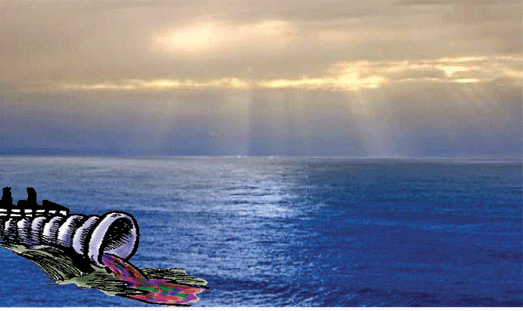 History of Bomb Strontium and Cesium Isotopes in Pacific Compared to Fukushima Sources http://www.dailykos.com/story/2014/01/16/1269942/-History-of-Bomb-Strontium-and-Cesium-Isotopes-in-Pacific-Compared-to-Fukushima-Sources# (EXCELLENT GRAPHS) by MarineChemist
The purpose of this diary is to compare the concentrations of Sr-90 and Cs-137 in the North Pacific Ocean over the last 50 years to the concentrations predicted to arrive on the west coast associated with waters affected by release of radionculides from the Fukushima-Daiichi Nuclear Power Plant. Given present levels that are being measured in the eastern Pacific and barring release rates that significantly exceed past rates in March-April 2011 the impact on marine organisms and the marine environment is going to be very minimal. What follows below the fold is a comparison of the concentrations measured and predicted over much of the Pacific owing to Fukushima to the concentrations that were present in the mid-1960s from the fallout of atmospheric weapons testing that is free from any discussion of safe doses or models of radiation exposure to organisms. Continue reading
Salem nuclear plant cooling-water affecting the Delaware River

 New round of debate over Salem nuke’s water intake http://enviropoliticsblog.blogspot.com.au/2015/09/new-round-of-debate-over-salem-nukes.html#.Vf9Nq9KqpHw A regional environmental group set the stage Friday for a new round in the decades long battle over Salem nuclear plant cooling-water demands, submitting the most-detailed critique yet of the site’s 3-billion-gallon-per-day draw from the Delaware River. Jeff Montgomery reports for the The News Journal:
Delaware Riverkeeper, a multi-state environmental and conservation group, said New Jersey’s renewal of a federally required permit for the twin reactors’ intakes would be “irresponsible,” based on newly submitted and past economic and ecological studies.
Timothy Mousseau dismisses radiation as cause of giant wolffish
 NO, THIS WOLFFISH IS NOT A FUKUSHIMA RADIATION MUTANT,
As for the idea of giant, mutant Fukushima fish … there is no scientific evidence to support claims that fallout from the Fukushima disaster has, or will, cause this to happen. Even right after the disaster, a swim in nearby waters would have dosed you with just 0.03% of the daily radiation an average Japanese resident receives. And much of that fallout has disappeared because of natural decomposition and decay.
Besides, even in the extremely unlikely event that radiation was the culprit here, we would actually expect to see smaller, not larger, fish. “Very, very few mutations lead to extra-large size,” explains University of South Carolina radiation specialist Dr Timothy Mousseau. “[Instead], they grow less efficiently, they’re less capable of catching food and they tend to not live as long.
All that said, this catch is still an impressive one. Wolffish (family Anarhichadidae) average about three feet in length (110 cm), but can get bigger. What Hirasaka has landed is a very old and very healthy specimen. “If you look hard and long enough there’s always a few that manage to survive long enough to achieve these large sizes,” says Mousseau. http://www.earthtouchnews.com/wtf/mutants-and-freaks/no-this-wolffish-is-not-a-fukushima-radiation-mutant
Nuclear radiation depletes the ozone layer, will eventually destroy planet’s oxygen
HAZARDS OF LOW LEVEL RADIOACTIVITY, Nuclear Reader, ………OZONE BREAKDOWN The protective layer of ozone around the Earth filters out solar and cosmic rays and prevents them from reaching our planet. Ozone surrounds the Earth in a layer between six and thirty miles above sea level. It is formed when light rays strike molecules of oxygen, which is 02, and causes them to break into two separate oxygen atoms, or an 0 and 0. An atom of oxygen then combines with a molecule of oxygen and forms ozone which is 03. It breaks down again and then recombines again. And so on; unless it is interfered with. Radiation interrupts the process of ozone formation.

1957 – Walter Russell published his book Atomic Suicide, whose principle message was that the development of the nuclear weaponry and nuclear industry, if it continued, would eventually destroy the planet’s oxygen.
“The element of surprise which could delay the discovery of the great danger, and thus allow more plutonium piles to come into existence, is the fact that scientists are looking near the ground for fallout dangers. The greatest radioactive dangers are accumulating from eight to twelve miles up in the stratosphere. The upper atmosphere is already charged with death-dealing radioactivity, for which it has not yet sent us the bill. It is slowly coming and we will have to pay for it in another century, even if atomic energy plants ceased today.”
(Russell, Walter and Lao. Atomic Suicide? University of Science and Philosophy. Virginia 1957 p. 18)
1982 and 1984 – Two German reports conclude that radioactive krypton, which is released in the daily operation of nuclear plants and through the reprocessing of used reactor fuel elements, is affecting the distribution of the electric fields in the atmosphere.
1987 – The ozone hole is twice as large as the U.S. It is discovered that ozone is not only diminishing over the south pole but globally.
1987 – 1988 – Consensus has it that various man-made chemicals are the sole cause of ozone breakdown; especially compounds of chlorine (CFC’s) and bromine (from halon fire extinguishers) and there was an attempt to implicate hair spray and refrigerators. A leading authority on the ozone problem, NASA’s Dr. Robert Watson, admitted many scientists were “baffled” by findings of ozone depletion even in areas where CFC’s action was negligible. He called the extent of the hole’s growth “absolutely unexpected”.
April 6, 1989 – “Scientists reported yesterday that for the first time they have detected an increase in “biologically relevant” levels of ultraviolet radiation reaching the ground as a result of the ozone hole over the Antarctica.” This is the first indication that the depletion of ozone is beginning to cause the potentially harmful effect that has long been predicted.” (The Washington Post 4/6/89)
Late 1990 – University of California researchers publish their findings that phytoplankton are reproducing less profusely than before. Observing the plankton in the Belingshausen Sea (in the Antarctic) they found that increased UV appears to be suppressing the phytoplankton’s productivity by 6 to 12%.
1992 – Both NASA and The World Meteorological Society reported 10 to 25% ozone depletion measured over the northern United States, Canada, Europe and the Antarctic; and the ozone hole is now three times the size of the United States.
1994 – An article in a German journal Strahlentelex (March 3, 1994) argues that the nuclear industry is responsible for the hole in the ozone. The authors, Giebel and Sternglass explain that radioactive gases like krypton-85 from nuclear plants and from the recycling of spent fuel go up to the stratosphere where they create water droplets from the moisture which in turn form ice crystals which enhance the destruction of the ozone by the fluorohydrocarbons.
(Krypton-85 has a half-life of 10.7 years and a whole life of 217 years.)
March 1996 – The World Meteorological Agency reports “the extremely worrying” development of an unprecedented 45 percent ozone thinning over Greenland, Scandinavia and Western Siberia.
Summer 1997 – Research from the Antarctic Marine Living Resources Program find “krill abundance in the Antarctic Peninsula region is down 60 to 90 percent since the early 1980’s”…….http://www.nuclearreader.info/chapter1.html
Kazakhstan’s disaster of dead animals near Semipalatinsk Nuclear Test Site
“Rapid, stunning and complete” die-off of animals near nuclear site — 150,000+ antelopes bleeding from internal organs, pits brimming with corpses — Experts completely baffled: “It’s really unheard of… 100% mortality, I know of no example in history like it… Doesn’t make any sense” (PHOTOS)http://enenews.com/rapid-stunning-complete-crash-animal-population-nuclear-site-150000-antelopes-dead-after-bleeding-internal-organs-experts-100-mortality-example-history-like-really-unheard-doesnt-make-sense-infe?utm_source=feedburner&utm_medium=email&utm_campaign=Feed%3A+ENENews+%28Energy+News%29
NBC News, Sep 3, 2015 (emphasis added): Now, the researchers have found clues as to how more than half of the [Kazakhstan saiga antelope] herd, counted at 257,000 as of 2014, died so rapidly. Bacteria clearly played a role in the saigas’ demise. But exactly how these normally harmless microbes could take such a toll is still a mystery, [Steffen Zuther, with the Altyn Dala Conservation Initiative] said. “The extent of this die-off, and the speed it had, by spreading throughout the whole calving herd and killing all the animals, this has not been observed for any other species,” Zuther said. “It’s really unheard of.”… Tissue samples revealed that toxins, produced by Pasteurella and possibly Clostridia bacteria, caused extensive bleeding in most of the animals’ organs. But Pasteurella is found normally [and] usually doesn’t cause harm unless the animals have weakened immune systems. (Below: Semipalatinsk nuclear test wasteland, Kazakhstan)

Live Science, Sep 2, 2015: [In] four days, the entire herd — about 60,000 saigas — had died off. Workers struggled to keep up with the mass dying, quickly burying the animals that died in heaps. Scientists were completely baffled… necropsies revealed that bacterial toxins from a few species of pathogen had caused bleeding in all of the animals’ internal organs… [Pasteurella] rarely causes harm unless their immune system has already been weakened by something else. And genetic analysis suggested this was a garden-variety pathogenic form of the microbe, which has never caused such a rapid, stunning and complete crash in a population before. All told, more than 150,000 saiga have died [which]may be an underestimate, as that number only counts saiga who have been buried…
New York Times, May 29, 2015: The numbers and images that describe a mass dying of the critically endangered saiga… in the Betpak-dala region of Kazakhstan are stunning. Hastily bulldozed pits brim with corpses… The enormous new saiga die-off is particularly devastating… there had been previous die-offs… in 1955, 1956, 1958, 1967, 1969, 1974, 1981 and 1988.
Richard Kock, Royal Veterinary College: “It’s very dramatic and traumatic, with 100-percent mortality…. I know of no example in history with this level of mortality.”
BBC, Jun 1, 2015: An unknown environmental trigger is thought to have caused two types of normally benign bacteria found in the antelopes’ gut to turn deadly… “Over two days (in the herd I was studying) 80% of the calving population died,” [Zuther] told the BBC. The whole herd then died within two weeks… Two different bacteria, pasteurelosis and clostridia, have been found in every dead animal studied. These bacteria are naturally found in the animals… so something must have reduced the immunity of the animals… “There’s no infectious disease that can work like this,” said Prof Kock… losing 100% percent of some populations within two weeks “doesn’t make any sense” from a biological or evolutionary perspective, Prof Kock said… all individuals affected by the sudden die-off are from the largest remaining Betpak-dala population…
U.S. National Research Council, 2001:Radionuclide Contamination at Kazakhstan’s Semipalatinsk Test Site — 498 nuclear tests were conducted [and] vented underground detonations occurred through 1989… some Kazakh scientists opine that residual radioactivity is responsible for ongoing health impacts… Pathologies in cohorts born after the atmospheric tests appeared to be significantly higher… [Prof. Saim Balmukhanov, the prominent director of the Institute of Oncology] made a particular case that various pathways of exposure to plutonium particles from the soil may be a causative agent… There is little doubt that people living in the STS region suffer from a range of adverse health effects, includinghigh rates of infectious and noninfectious diseases, cancer, and hematological disorders… The STS is located in the plains of the dry Eurasian steppe… Steppe fauna includes… the migratory saiga antelope… [I]nformation exists suggesting that plants at the test site can hyperaccumlate radionuclides… During meetings with ecologists from Kazakhstan State National University a claim was made that in the past, there were 100 species of higher plants at the STS, now there are fewer than 40. Many animal species have disappeared
How ionising radiation gets into water
 by Gordon Edwards, Ph.D.
(1) When nuclear fuel is used in a nuclear reactor or an atomic bomb, the atoms in the fuel are “split” (or “fissioned”) to produce energy. The fission process is triggered by subatomic particles called neutrons. In a nuclear reactor, when the neutrons are stopped, the fission process also stops. This is called “shutting down the reactor.”
(2) But during the nuclear fission process, hundreds of new varieties of radioactive atoms are created that did not exist before. These unwanted radioactive byproducts accumulate in the irradiated nuclear fuel — and they are, collectively, millions of times more radioactive than the original nuclear fuel.
(3) These newly created radioactive materials are classified as fission products, activation products, and transuranic elements. Fission products — like iodine-131, cesium-137 and strontium-90 — are the broken pieces of atoms that have been split. Activation products— like hydrogen-3 (“tritium”), carbon-14 and cobalt-60 — are the result of non-radioactive atoms being transformed into radioactive atoms after absorbing one or more stray neutrons. Transuranic elements — like plutonium, neptunium, curium and americium — are created by transmutation after a massive uranium atom absorbs one or more neutrons to become an even more massive atom (hence “transuranic,” meaning “beyond uranium”).
(4) Because of these intensely radioactive byproducts, irradiated nuclear fuel continues to generate heat for years after the fission process has stopped. This heat (“decay heat”) is caused by the ongoing atomic disintegration of the nuclear waste materials. No one knows how to slow down or shut off the radioactive disintegration of these atoms, so the decay heat is literally unstoppable. But decay heat does gradually diminish over time, becoming much less intense after about 10 years.
(5) However, in the early years following a reactor shutdown, unless decay heat is continually removed as quickly as it is being produced, the temperature of the irradiated fuel can rise to dangerous levels — and radioactive gases, vapors and particles will be given off into the atmosphere at an unacceptable rate.
(6) The most common way to remove decay heat from irradiated fuel is to continually pour water on it. Tepco is doing this at the rate of about 400 tons a day. That water becomes contaminated with fission products, activation products and transuranic elements. Since these waste materials are radiotoxic and harmful to all living things, the water cannot be released to the environment as long as it is contaminated.
(7) Besides the 400 tons of water used daily by Tepco to cool the melted cores of the three crippled reactors, another 400 tons of ground water is pouring into the damaged reactor buildings every day. This water is also becoming radioactively contaminated, so it too must be stored pending decontamination.
(8) Tepco is using an “Advanced Liquid Processing System” (ALPS) that is able to remove 62 different varieties of radioactive materials from the contaminated water — but the process is slow, removal is seldom 100 percent effective, and some varieties of radioactive materials are not removed at all.
(9) Tritium, for example, cannot be removed. Tritium is radioactive hydrogen, and when tritium atoms combine with oxygen atoms we get radioactive water molecules. No filtration system can remove the tritium from the water, because you can’t filter water from water. Released into the environment, tritium enters freely into all living things.
(10) Nuclear power is the ultimate example of the throwaway society. The irradiated fuel has to be sequestered from the environment of living things forever. The high-quality materials used to construct the core area of a nuclear reactor can never be recycled or reused but must be perpetually stored as radioactive waste. Malfunctioning reactors cannot be completely shut off because the decay heat continues long after shutdown. And efforts to cool a badly crippled reactor that has melted down result in enormous volumes of radioactively contaminated water that must be stored or dumped into the environment. No wonder some have called nuclear power “the unforgiving technology.”…….http://akiomatsumura.com/2013/06/experts-explain-effects-of-radioactive-water-at-fukushima.html
USA’s secret plans with Japan to dump radioactive trash into oceans
US tried to conspire with Japan to dump nuclear waste into world’s oceans, reveal documents http://www.naturalnews.com/033768_nuclear_waste_oceans.html# (NaturalNews) When nuclear energy production technology first began to emerge in the US in the 1950s, neither scientists nor the US government considered what would be done with nuclear reactors once it was time for them to be put out of commission. And recently-released documents reveal that, in an effort to hastily deal with this problem after the fact, the US government actually tried to conspire with Japan to gain secret approval for dumping decommissioned nuclear reactors into the world’s oceans.
In 1972, the United Nations (UN) had proposed the Convention on the Prevention of Marine Pollution by Dumping of Wastes and Other Matter, also known as the London Convention, to deal with the growing, global pollution problem. The agreement’s provisions sought to specifically regulate the environmental pollution that signing nations could and could not dump into the oceans, which of course included nuclear production materials.
But since a finalized version of the agreement had not yet been fully established, the US government took advantage of the situation by seeking to insert an exemption cause permitting the dumping of decommissioned nuclear reactors into the ocean. And since Japan had also been involved in developing its own nuclear energy program, the US thought it could gain additional support for the exemption clause from its Asian ally.
Though the US made no mention of any long-term plans to utilize the ocean as its nuclear dumping ground during the proposal, it now appears as though the country had every intention of using the ocean as a nuclear disposal facility. And since the London Convention clause still exists to this day, all other signing countries are free to dump their nuclear waste in the ocean as well.
Russia, a signing member of the London Convention, openly admitted back in 1993, for instance, that it dumps nuclear reactors and fuel into the ocean because it allegedly has no other safe way to dispose of such materials (http://www.independent.co.uk/news/world/russ…).
The International Atomic Energy Agency (IAEA), however, claims the US stopped dumping nuclear reactors into the ocean a long time ago. And US officials claim that decommissioned nuclear reactors are today buried in the ground rather than dumped into the ocean: http://www.naturalnews.com/033768_nuclear_waste_oceans.html#ixzz3kvbRF6Bi
St Louis suburb anger about radioactive landfill
 Anger builds at EPA over radioactive landfill, The HIll, By Timothy Cama – 08/29/15 Leaders in a St. Louis suburb are urgently calling on top Obama administration officials to quickly clean up a landfill with radioactive waste that they believe could catch fire.
The Environmental Protection Agency (EPA) has been working for 25 years on the West Lake Landfill in Bridgeton, Mo., which has housed barium sulfate waste from the Manhattan Project since the 1970s.
The EPA is still studying the site and considering a wide range of actions to contain the radioactive material under its Superfund program for cleaning severe environmental contamination.
“What we have is an emergency,” said Ed Smith, energy program director with the Missouri Coalition for the Environment. “It’s a slow-moving emergency.”
Dawn Chapman, an organize of local activist group Just Moms STL, along with Byron DeLear of Energy Equity Funding, called directly on President Obama to act in a recent St. Louis Post-Dispatch opinion piece.
Matt LaVanchy, a local fire department official, told radio station KTRS that he believes the fire could be less than 1,000 feet from the radioactive material, and is trying to train firefighters for possible outcomes.
“There’s a possibility, the potential, of radioactive material being carried away by the result of the smoldering or the combustion event,” he said.
Residents have been working closely with Sens. Claire McCaskill (D) and Roy Blunt (R) and Reps. Lacy Clay (D) and Ann Wagner (R), who have written multiple letters and taken other action to put pressure on the Obama administration to take care of the problem.
Beyond the fire risk, locals argue that the radioactive material could also be compromised by floods, tornadoes, earthquakes or other disasters.
Angered with what they see as EPA’s slow movement on the matter, local leaders want the Army Corps of Engineers to take over as the lead agency overseeing the radioactive waste……..
The Department of Energy and Exelon Corp., which used to own the company that processed the uranium thought to have produced the waste, are also potentially responsible for the cleanup. http://thehill.com/policy/energy-environment/252231-anger-builds-at-epa-over-radioactive-landfill
Ken Buesseler, Jay Cullen, lead independent research into radiation in the Pacific Ocean

Christina Macpherson’s websites & blogs
Great article. As an anti nuclear activist myself, I think that it is most important that we keep our concerns in proportion. The nuclear industry has so many bad effects, that we don’t ned to exaggerate ones that are not clear. Thankfully, despite government inertia, Buesseler and co are working to establish the facts on the effect if the Fukuhsima disaster on the ocean.
 Radiation in the Ocean http://www.huffingtonpost.com/peter-neill/radiation-in-the-ocean_b_8072914.html?ir=Australia Peter Neill Director, World Ocean Observatory The West Coast of the United States seems under siege by negative environmental news: earthquake predictions, oil spills, drought, critically diminished water supply, wildfires, and numerous accounts of unusual coastal events: algae blooms, whale strandings, cancer in seals, collapse of fish stocks, and more.
How to explain? Well, much of this can be attributed to climate factors where rising temperatures have resulted in multiple inter-related consequences: limited glacial melt, increased evaporation, no water, dry land, and the inevitable fire darkening that pristine Pacific air with smoke and ash the length of the coast.
The ocean phenomena may be different. The warming of the ocean surely has an impact on changing growth patterns of marine plants and animals, just as the changing pH or acidity of the ocean has been shown to modify habitat and migrations. But what else?
One argument has been the effect of radiation leaking from the three nuclear power plant reactors shut down by the earthquake and resultant tsunami tidal wave that inundated Fukushima, Japan in 2011, and has been thereafter distributed by ocean currents; indeed there is evidence of a plume of increased concentration of Cesium-134, and other radioactive elements that have been observed at unprecedented levels, spreading out some 5,000 miles into the Pacific toward North and South America. In April of this year, there were headlines declaring that “Fukushima radiation has reached the North American Shore” and concerns were raised, spread through the Internet and press, that this was surely the cause of these otherwise inexplicable anomalous natural events.
There is no Federal agency that funds monitoring of radiation in coastal water, and the present effort, conducted since 2004 by Ken Buesseler, a marine chemist at theWoods Hole Oceanographic Institution, has been underwritten by crowd-funding and the efforts of volunteers taking samples to provide data on cesium isotopes along the west coast of Alaska, the U.S. mainland coast, and Hawaii, the information that has been used to model potential distribution and concentration of any contamination. A comparable effort has been launched in Canada, led by Jay Cullen of the University of Victoria in collaboration with government, academic, and NGO partners.
The radioactivity has been decreased by time, the natural half-life of the isotopes, and by dilution in a very large and deep body of water. In their samples, Buesseler and his “citizen scientists” did detect cesium-137 already in the waters as a result of atmospheric nuclear weapons testing in the 1950s and 60s, and cesium-134 which does not otherwise occur naturally in the ocean and can only be attributed to Fukushima, to serve as a first baseline for subsequent collection, analysis, modeling, and conclusion.
Buesseler channels his research through the Center for Marine and Environmental Radioactivity at the Woods Hole Institute, where he offers a preliminary conclusion that “the amount of cesium-134 reported in these new offshore data is less that 2 Becquerels (a radioactive measure) per cubic meter (the number of decay events per second per 260 gallons of water.) This Fukushima-derived cesium is far below where one might expect any measurable risk to human health or marine life, according to international health agencies. And it is more than 1,000 times lower than acceptable limits in drinking water set by the U.S. Environmental Protection Agency.”
Buesseler continues, “We emphasize that cesium-134 has not been detected YET as it has been detected offshore of North America by Canadian oceanographers… The uncertainty in the predictions by these ocean models only emphasizes the importance of collecting samples from along the shores. Remember too that those models predict interacting levels of both cesium isotopes for the next 2 or 3 years, the highest published prediction is for 20 to 30 Becquerels per cubic meter, or well below what is thought to be of human health and fisheries concerns.”
So, yes, and no. No definitive conclusion, no clear argument that radiation is the cause of those coastal events which distress us so. There is no solace in uncertainty, just as there is no certainty without evidence. The question is immensely important and thanks to Ken Buesseler and all those volunteers alongshore and in research vessels who are working to provide the substance for a real answer.
#Nuclear submarines bring increasing danger to Indo-Pacific region
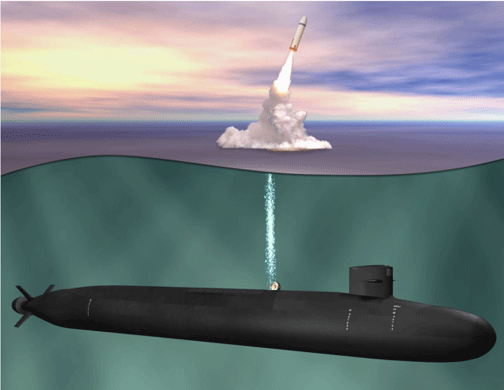 the more submarines you put in the same body of water, the higher the probability they might collide’.
Indo-Pacific nuclear sub threat to rival Cold WarAFR, by John Kerin, 3 Sept 15 The Indian and Pacific Oceans are becoming increasingly crowded with nuclear armed and conventional submarines increasing the risk of collision and nuclear conflict.
The warning is contained in a new Lowy Institute of International Affairs paper to be released on Friday which argues the region faces the greatest threat of a miscalculation involving nuclear armed submarines since the Cold War era.
“The regional contests for influence between the United States and China and China and India do not yet have the existential or ideological ‘life or death character’ of the Cold War,” the paper by Professor Rory Medcalf of the ANU based National Security College and Brendan-Thomas Noone from the Lowy International Security Program says.
“But quite literally below the surface a new and dangerous competition is emerging as China and India in particular start deploying nuclear weapons at sea……….
The paper says during the Cold War there were estimated to have been between 20 and 40 submarine collisions at sea.
“Dangerous submarine incidents can occur even among allies in the post Cold War world, as shown by a potentially disastrous clash between British and French nuclear armed boats in 2009,” the paper says.
“With the number of submarines operating in the Indo Pacific growing, particularly around choke points, the chances are such encounters will increase.
The paper says the risk of triggering a nuclear conflict remains low but could occur as countries such as China and India field long range nuclear weapons aboard their submarines for the first time – but crews lack sufficient experience with training and nuclear doctrine.
“There will likely be a long phase of initial instability as China and India start deploying nuclear submarines without the full command and communications systems and the training and doctrine so vital to a credible and secure deterrent,” the paper says.
“Unless these systems are in place nuclear submarines could be a strategic liability, rather than a stabilising presence, particularly during conflict or crisis situations,” it says……….
The first Australia-India naval exercise will be held later this month and the countries are also expected their first joint airforce exercises.: http://www.afr.com/news/policy/indopacific-nuclear-sub-threat-to-rival-cold-war-20150903-gjerpm#ixzz3kiBWLtw1
Barents Sea – the Arctic’s radioactive legacy of Soviet nuclear weapons testing
“The Barents Sea and the coast of Novaya Zemlya were turned into a dump for solid and liquid radioactive waste. A catastrophic situation has been created. A real threat has emerged, not only to sea mammals but everything in the ocean. The ecological and genetic consequences are unpredictable.”
Novaya Zemlya, an Arctic island twice as big as Switzerland, was cleared of its inhabitants in the 1950s to make way for nuclear weapons testing.
The frigid waters of the White and Barents seas were used as a dump for spent reactors from nuclear submarines and icebreakers.
 At top of the world, the Soviet legacy is pollution, Baltimore Sun April 19, 1992|By Kathy Lally | Kathy Lally,Moscow Bureau ARCHANGEL, Russia — Soviet power has disappeared here, but it has left a fatal legacy.
The march toward communism cost the people of Archangel their pure air, clean water and even the health of their children. This snowy expanse near the Arctic Circle seems fouled beyond all understanding.
The damage was thorough, unrelenting and so insidious that scientists have yet to determine its extent.
The latest victims are thousands of harp seals dying of cancer from the harm the former Soviet Union inflicted upon itself and its unsuspecting people as it moved to industrialization and superpower status. Scientists suspect that these beautiful animals with the large imploring eyes are being killed by years of irresponsible Soviet nuclear testing and dumping.
Once the seals were threatened only by hunters who club the pups to death for their luxurious, snow-white pelts. Now those that survive migrate through water so contaminated that environmentalists imagine it fairly crackles with radioactivity.
Scientists began taking blood and tissue samples from the seals two years ago, after more than a million dead starfish washed up along the White Sea coast.
They are still unsure of what killed the starfish, but the study of the seals has revealed blood pathologies consistent with long-term toxic or radioactive exposure.
“This is a problem so big and serious it goes beyond us,” says Yuri K. Timoshenko, director of the marine mammal laboratory at the Polar Scientific Research Institute here. Continue reading
Uranium mining’s threat to Grand Canyon’s groundwater
Claims that uranium mining near the Grand Canyon is safe don’t hold water, Guardian, David Kreamer, 25 Aug 15 Science shows we can’t assume that uranium deposits, when disturbed by mining, can’t leak into groundwater. We should be wary of claims to the contrary It only takes a few Grand Canyon hikes to realize the importance of its springs and other water sources. When refilling a water bottle in the cool depths below multi-colored rock walls, listening to a summer frog symphony at sunset or maybe snapping an icicle from a weeping ledge in winter, it’s clear that the living desert depends on its pockets of water.
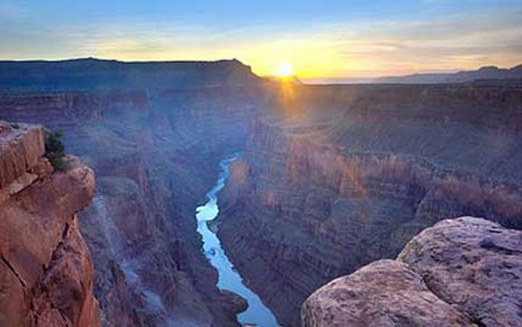
That’s why, as a hydrologist and longtime Grand Canyon hiker, boatman and scientist, I am profoundly concerned about continued uranium mining in or near it. It has great potential to irreparably harm Grand Canyon springs and the plants and animals that depend on them.
I am concerned because industry and agency officials are relying on a justification that isn’t supported by past investigations, research or data to promote uranium mining in the Grand Canyon region. Specifically, they claim that mining will have minimal impact on springs, people and ecosystems there.
Instead, the science shows that it is unreasonable to assume that uranium deposits, when disturbed by mining, can’t leak into groundwater. The deposits in the Grand Canyon are typically found in geologic features known as breccia pipes, formed millennia ago when caves in the main groundwater system collapsed, leaving shattered, rock-filled chimneys that extend upwards thousands of feet to the canyon’s rim. These chimneys act as conduits that have allowed groundwater to move vertically through the rock layers over thousands of years. The vertical movement of groundwater combined with low oxygen levels caused the uranium deposits to form over millennia. Inserting a mine shaft into these features disrupts geologic formations, increases the permeability and oxygenation of these vertical pipes and increases the ability of ore deposits to be suddenly dissolved, mobilized and carried with groundwater.
It is unreasonable to assume that elevated concentrations of dissolved uranium cannot be mobilized and will not reach the Grand Canyon’s springs. It is also risky for industry to assume that mining activities, such as the sinking of mining shafts and pumping of groundwater, have no potential to redirect groundwater movement and negatively impact spring flow and associated wildlife habitats……..
Some mining representatives have implied that the cosmetic fix of cleaning up the surface of old mining sites is evidence of zero subsurface pollution. But because groundwater flow can be very slow, the effects of groundwater contamination may take years, decades or even centuries to fully manifest. The lack of clear and consistent groundwater monitoring undercuts industry claims that mining near the Grand Canyon has caused and will cause no harm……….http://www.theguardian.com/commentisfree/2015/aug/25/uranium-mining-grand-canyon-groundwater-contamination
St Louis suburb contaminated by radioactive thorium
 Nuclear Waste Taints St. Louis Suburb, Radioactive thorium found at residential properties is linked to nuclear-weapons work done decades ago ,WSJ, By JOHN R. EMSHWILLER Aug. 23, 2015
Radioactive contamination has been discovered at three residential properties in the St. Louis area, adding fuel to a long-running controversy about how much damage was done to the environment and possibly people’s health by nuclear-weapons work performed there decades ago.
The U.S. Army Corps of Engineers, which disclosed the finding last week, said it was the first time it found such contamination on residential properties while cleaning up waste related to weapons programs in the St. Louis area……….
For years, the Corps has been cleaning up largely industrial and commercial sections in the St. Louis area that were contaminated as part of the weapons-program work that began during World War II. The national legacy of radioactive and chemical contamination from the atomic-weapons program, including its impact on St. Louis, was examined in a 2013 Wall Street Journal series.
The contaminated residential properties are near Coldwater Creek, which, which has been at the center of ongoing tensions over the past few years runs through suburban areas northwest of downtown St. Louis and passes an area formerly used to store weapons-program waste.
Federal officials have long acknowledged contamination got into the creek, which feeds into the Missouri River, and included it in their cleanup work. How far the taint was carried has remained a question.
Current and former residents of nearby areas have argued that contamination from the creek had spread into their neighborhoods during periods of flooding and they have pushed for extensive sampling of houses and yards. They also contend residents have suffered from an unusually large number of cancer cases and other maladies possibly linked to radioactive contamination………
Last September, the Missouri Department of Health & Senior Services wrote a letter to federal authorities saying it had found a significantly higher incidence of leukemia in areas around Coldwater Creek though it hadn’t determined whether there was a link to weapons-program contaminants. It asked them to join in a health study.
Last week, a spokesman for the state health department said it is still in discussions about what steps to take next. The St. Louis County Department of Public Health is putting together its own health-study effort, said its director, Faisal Khan.
“The community around Coldwater Creek continues to have severe concerns about their own health and how much their health problems might be related to where they lived,” he said.
A spokeswoman for the federal Agency for Toxic Substances and Disease Registry, which was invited to participate in the study, didn’t have an immediate comment. In the past, the agency has said it was working with state officials and referred questions to them.
Write to John R. Emshwiller at john.emshwiller@wsj.com http://www.wsj.com/articles/nuclear-waste-taints-st-louis-suburb-1440361689
1 This Month


No Nuclear in Cwm Llynfi! Stop the nuclear power station near Maesteg.


4 August – WEBINAR – Hiroshima & Nagasaki: Nuclear Bombs Never Again
Tuesday, Aug. 4 at 5 pm PT / 8 pm ET.
Aug 5, 2026 10:00 AM in Australia/Melbourne
Join the Nuclear Bombs Never Again webinar on August 4th at 5pm Pacific Time / 8pm Eastern Time / 9am Japan Standard Time.
Cross generational voices at the intersection of Japan-Korea-US policy and militarization will share their lived experiences, nuclear impacts in these contexts, anti-war strategies, and actions you can take to advocate for a world with Nuclear Bombs Never Again. This 75-minute event is co-hosted by WILPF US and Korea Peace Now.
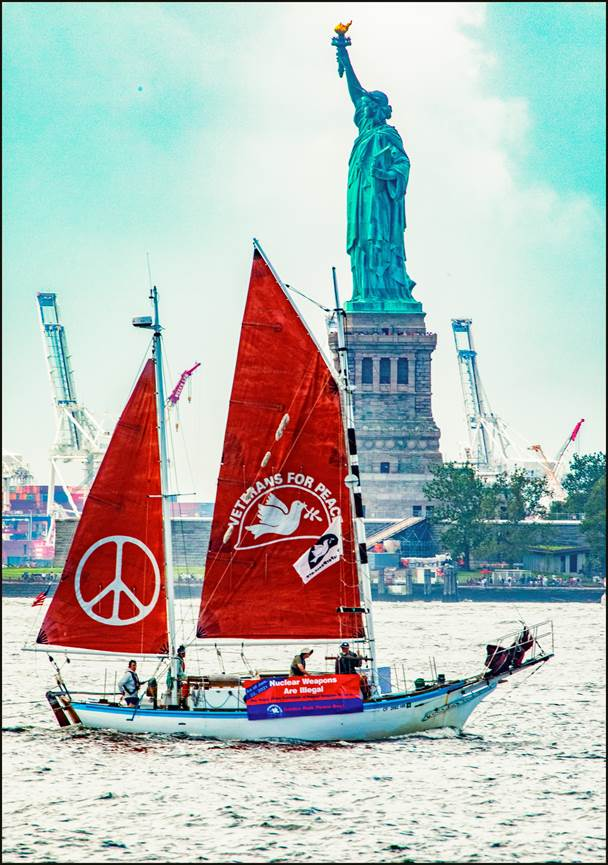
22,000+ miles voyaging for nuclear disarmament
and a radiation-free environment https://vfpgoldenruleproject.org/
To see nuclear-related stories in greater depth and intensity – go to https://nuclearinformation.wordpress.com
-
Archives
- July 2026 (332)
- June 2026 (287)
- May 2026 (306)
- April 2026 (356)
- March 2026 (251)
- February 2026 (267)
- January 2026 (308)
- December 2025 (358)
- November 2025 (359)
- October 2025 (375)
- September 2025 (257)
- August 2025 (319)
-
Categories
- 1
- 1 NUCLEAR ISSUES
- business and costs
- climate change
- culture and arts
- ENERGY
- environment
- health
- history
- indigenous issues
- Legal
- marketing of nuclear
- media
- opposition to nuclear
- PERSONAL STORIES
- politics
- politics international
- Religion and ethics
- safety
- secrets,lies and civil liberties
- spinbuster
- technology
- Uranium
- wastes
- weapons and war
- Women
- 2 WORLD
- ACTION
- AFRICA
- Atrocities
- AUSTRALIA
- Christina's notes
- Christina's themes
- culture and arts
- Events
- Fuk 2022
- Fuk 2023
- Fukushima 2017
- Fukushima 2018
- fukushima 2019
- Fukushima 2020
- Fukushima 2021
- general
- global warming
- Humour (God we need it)
- Nuclear
- RARE EARTHS
- Reference
- resources – print
- Resources -audiovicual
- Weekly Newsletter
- World
- World Nuclear
- YouTube
-
RSS
Entries RSS
Comments RSS
 nuclear-news