Greenland Ice Melt Could Push Atlantic Circulation to Collapse New research gives a glimpse of the potential long-term consequences of anthropogenic warming, Hakai Magazine, by Rebecca Boyle January 3, 2017
In the North Atlantic, east of North America and south of Greenland, the ocean’s upper layers are much warmer than one might presume given the extreme latitude. This unexpected warmth is a product of the Atlantic Meridional Overturning Circulation (AMOC), a vitally important system of ocean currents that moves warm salty water northward from the tropics and cold fresher water south. The AMOC looms large in the Earth’s climate: it is responsible for redistributing nutrients throughout the Atlantic Ocean and is a major driving force controlling the climate on both sides of the pond.
Ocean currents all experience fluctuations, which can dramatically change the distribution of nutrients, heat, and fish. The best known example is probably the El Niño-Southern Oscillation, in which unusually warm water occasionally disrupts the Pacific Ocean’s Humboldt Current that flows north from Chile toward Peru. El Niño events can shift the jet stream south, cause excessive rainfall and devastating floods, and temporarily collapse fish stocks.
To date, most climate research suggests that the AMOC is relatively stable and carries water throughout the ocean in a reliable, repeating cycle. But anthropogenic climate change seems to have made the current weaken slightly, raising the question of whether more dramatic shifts are in store. As of the most recent Intergovernmental Panel on Climate Change report, a shutdown of the circulation from further warming is considered unlikely. Yet a new study says that the unprecedented melting of Greenland’s massive ice sheets, previously overlooked in most climate modeling, will result in the AMOC weakening, and maybe even collapsing, within the next 300 years……..https://www.hakaimagazine.com/article-short/greenland-ice-melt-could-push-atlantic-circulation-collapse
January 6, 2017
Posted by Christina Macpherson |
2 WORLD, climate change, oceans |
Leave a comment
Scientists say the global ocean circulation may be more vulnerable to shutdown than we thought, WP, By Chelsea Harvey January 4 2017, Intense future climate change could have a far different impact on the world than current models predict, suggests a thought-provoking new study just out in the journal Science Advances. If atmospheric carbon dioxide concentrations were to double in the future, it finds, a major ocean current — one that helps regulate climate and weather patterns all over the world — could collapse. And that could paint a very different picture of the future than what we’ve assumed so far.
The Atlantic meridional overturning circulation, or AMOC, is often described as a large oceanic conveyor belt. It’s a system of water currents that transports warm water northward from the Atlantic toward the Arctic, contributing to the mild climate conditions found in places like Western Europe. In the Northern Atlantic, the northward flowing surface water eventually cools and sinks down toward the bottom of the ocean, and another current brings that cooler water back down south again. The whole process is part of a much larger system of overturning currents that circulates all over the world, from pole to pole.
But some scientists have begun to worry that the AMOC isn’t accurately represented in current climate models. They say that many models portray the current as being more stable than real-life observations suggest it actually is. Recent studies have suggested that the AMOC is weakening, although there’s some scientific debate about how much of this has been caused by human activities and how much by natural variations.
[In Greenland, a once doubtful scientist witnesses climate change’s troubling toll]
Nevertheless, the authors of the new study point out, many climate models assume a fairly stable AMOC — and that could be affecting the predictions they make for how the ocean will change under future climate change. And because overturning circulation patterns have such a significant effect on climate and weather all over the world, this could have big implications for all kinds of other climate-related projections as well.
“This is a very common and well-known issue in climate models,” said the new study’s lead author, Wei Liu, a postdoctoral associate at Yale University, who conducted the work while at the University of California at San Diego. “I wanted to see, if I use a corrected model, how this will affect the future climate change.”
Liu and colleagues from the UC-San Diego and the University of Wisconsin at Madison took a commonly used climate model and corrected for what they considered to be the AMOC stability bias. Then they ran an experiment to see how the correction would affect the model’s projections under future climate change. They instantaneously doubled the atmospheric carbon dioxide concentration from present-day levels in both the corrected and uncorrected models, and then they let both models run for hundreds of simulated years.
The differences were striking. In the uncorrected climate model, the AMOC weakens for a while, but eventually recovers. In the corrected model, however, the AMOC continues to weaken and after 300 years, it collapses altogether.
[Why scientists are so worried about sea-level rise in the second half of this century]
In a commentary also published today in RealClimate, Stefan Rahmstorf, an oceans physics expert at the Potsdam Institute for Climate Impact Research, explained how such a collapse could occur when the AMOC gets too weak.
“Freshwater continually flows into the northern Atlantic through precipitation, rivers and ice-melting,” he wrote. “But supply of salty waters from the south, through the Gulf Stream System, balances this. If however the current slows, there is less salt supply, and the surface ocean gets less salty.”
Because freshwater is less dense than salty water, this process can lead to a kind of stratification, in which the lighter freshwater gets stuck on the surface of the ocean and can’t sink to the bottom when it reaches the cooler north. When this happens, the overturning process that drives the current back down south again can’t occur.
“There is a critical point when this becomes an unstoppable vicious circle,” Rahmstorf wrote. “This is one of the classic tipping points in the climate system.”
The resulting climate consequences, compared to the uncorrected model, are also dramatic. Without the usual transport of warm water into the north, the corrected model predicts a marked cooling over the northern Atlantic, including in the United Kingdom, Iceland and northwestern Europe, as well as in the Arctic, where sea ice begins to expand.
Because the AMOC is part of a larger global conveyor system, which ferries warm and cold currents between the equator and both poles, the model predicts disruptions in other parts of the world as well. Without cold water moving back down south again, the corrected model indicates a stronger warming pattern south of the equator than what’s predicted by the uncorrected model, causing a polarization in precipitation patterns over the Americas — more rain for places like northeastern Brazil and less rain for Central America. The model also predicts a greater reduction in sea ice for the Antarctic.
All this doesn’t necessarily mean that everything we thought we knew about the future climate is wrong……..https://www.washingtonpost.com/news/energy-environment/wp/2017/01/04/scientists-say-the-global-ocean-circulation-may-be-more-vulnerable-to-shutdown-than-we-thought/?utm_term=.59c29620139f
January 6, 2017
Posted by Christina Macpherson |
2 WORLD, climate change, oceans |
Leave a comment
 the Prypiat River [Ukraine] flowing through the empty town and nuclear power plant was already a black, dead waterway. Not one bird flew or stray cat mewed….Reindeer [Norway] with ultra-high levels of radioactivity were killed that winter’s day. Many were calves.
Nuclear not for Tassie – The Mercury – The Voice of Tasmania, 26 March, 2011, Two of my own most memorable experiences as a journalist over the past three decades are linked to nuclear energy.
 The first was in late 1986 when, just a few months after the Chernobyl nuclear disaster in the Ukraine region of the then-Soviet Union, I visited the site as one of the first Australian journalists allowed into the area.The burnt and melted-down nuclear reactor had not then been encased in its final concrete sarcophagus; Geiger counters and special suits were mandatory, and the closest we could go was the nearby deserted town of Prypiat.
But it was Prypiat rather than glimpses of the Chernobyl power plant 4km away that left the most chilling impression.
A thriving town of 49,000 people think all of Hobart’s Eastern Shore suburbs combined prior to the April 25, 1986, nuclear catastrophe.
Its residents all had to abandon their homes the following day after radiation reached fatal levels.
Not that the Soviet authorities immediately told locals a disaster was unfolding on their doorsteps, despite the new “glasnost” era of openness and transparency just proclaimed by new-look president Mikhail Gorbachev.
It was only when elevated radiation levels were detected in clouds above Sweden that night that Soviet officials finally admitted an accident and a fire had occurred at Chernobyl’s number 4 nuclear reactor earlier in the afternoon.
Visiting Prypiat a few months later was a haunting experience. Mouldy lunches and mugs still sat on kitchen tables, dusty coats were thrown over armchairs and bedrooms with their crumpled blankets and family snaps looked as if their occupants might return at any moment.

Children’s toys and bikes were scattered around outside the concrete apartment blocks, as rampant weeds reclaimed the ghost town’s city square.
But the Prypiat River flowing through the empty town and nuclear power plant was already a black, dead waterway. Not one bird flew or stray cat mewed.
Just two months later, I was on assignment in the snowy wilds of northern Norway with a family of traditional reindeer herders, in the dark December days of early winter.
For these families, who have for generations grazed their herds up on the mountain tops and who eat reindeer meat for breakfast, lunch and dinner as part of their reindeer-centric tradition 1986 was a terrible watershed year.
Chernobyl’s radioactive cloud had drifted over Norway for several days in late April, dropping its deadly heavy caesium molecules in spring rain and mist.
The lichen that grow above the snowline absorbed the radioactive load; turning these hardy plants into deadly fodder for the deer, which rely on them as food.
For the first time, the semi-wild reindeer herds had to be removed from the mountains, possibly for decades, as the lichen would not be fit to eat for many years. Instead they were ordered into barns to be fed hay brought in from other areas of Norway.
Reindeer with ultra-high levels of radioactivity were killed that winter’s day. Many were calves.
And later that night Norwegian Government experts delivered another fatal blow. They told the same herders reindeer meat could not be safely eaten more than twice a week until years later, when their herds would be free of all radioactive contamination.
It has been impossible not to reflect on my own two sombre brushes with nuclear power gone wrong, as the world has held its breath over the past two weeks wondering how close Japan’s stricken Fukushima nuclear plant has been to the total core meltdown experienced at Chernobyl.
Already water and milk on parts of Japan has been declared unsafe for drinking, leafy vegetables and crops in surrounding farms banned from sale and seaweed from nearby waters found to be contaminated…….
Nuclear not for Tassie Editorial – The Mercury – The Voice of Tasmania
December 24, 2016
Posted by Christina Macpherson |
environment, history, Ukraine |
Leave a comment
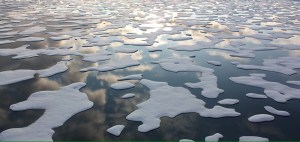 Sea ice hit record lows in November, EurekAlert, 6 Dec 16 UNIVERSITY OF COLORADO AT BOULDER Unusually high air temperatures and a warm ocean have led to a record low Arctic sea ice extent for November, according to scientists at the National Snow and Ice Data Center (NSIDC) at the University of Colorado Boulder. In the Southern Hemisphere, Antarctic sea ice extent also hit a record low for the month, caused by moderately warm temperatures and a rapid shift in circumpolar winds.
“It looks like a triple whammy–a warm ocean, a warm atmosphere, and a wind pattern all working against the ice in the Arctic,” said NSIDC director Mark Serreze.
Arctic sea ice extent averaged 9.08 million square kilometers (3.51 million square miles) for November, 1.95 million square kilometers (753,000 square miles) below the 1981 to 2010 long-term average for the month. Although the rate of Arctic ice growth was slightly faster than average, total extent actually decreased for a brief period in the middle of the month. The decrease in extent measured 50,000 square kilometers (19,300 square miles) and was observed mostly in the Barents Sea, an area of the Arctic Ocean north of Norway, Finland, and Eastern Russia.
NSIDC scientists said the decrease in extent is almost unprecedented for November in the satellite record; a less pronounced and brief retreat of 14,000 square kilometers (5,400 square miles) happened in 2013. November 2016 is now the seventh month this year to have hit a record low extent in the 38-year satellite monitoring period. The November extent was 3.2 standard deviations below the long-term average, a larger departure than observed in September 2012 when the Arctic summer minimum extent hit a record low………
In the Southern Hemisphere, sea ice surrounding the continent of Antarctica declined very quickly early in the month and set a record low. The average extent for November was 14.54 million square kilometers (5.61 million square miles), 1.81 million square kilometers (699,000 square miles) below the 1981 to 2010 average. This was more than twice the previous record departure from average set in November 1986 and was 5.7 standard deviations below the long-term average.
NSIDC scientists said that higher-than-average temperatures and a rapid shift in Antarctic circumpolar winds appear to have caused the rapid decline in Antarctic sea ice……..
NASA scientist and NSIDC affiliate scientist Walt Meier said, “The Arctic has typically been where the most interest lies, but this month, the Antarctic has flipped the script and it is southern sea ice that is surprising us.” https://www.eurekalert.org/pub_releases/2016-12/uoca-sih120616.php
December 7, 2016
Posted by Christina Macpherson |
ANTARCTICA, ARCTIC, climate change, oceans |
Leave a comment
 The Big Blue Elephant in the Room, A Medium Corporation Dr. Sylvia A. Earle & John Bridgelan, 26 Nov 16
Although the recent UN General Assembly meetings in New York City included the largest gathering of world leaders ever to address climate change, the largest factor in our climate cycle was missing from the discussions — the ocean.
Disregard for the ocean as the primary driver of climate and weather might be forgiven 50 years ago, but now we know: the living ocean governs planetary chemistry; regulates temperature; generates most of the oxygen in the sea and atmosphere; powers the water, carbon, and nitrogen cycles; and holds 97 percent of Earth’s water and 97 percent of the biosphere. Quite simply, no ocean, no life. No blue, no green. If not for the ocean, there would be no climate to discuss or anyone around to debate the issues……
Whatever the rationale, it is not rational that Earth’s dominant feature is not sufficiently addressed in important policy discussions about energy, the environment, economy, health, and security. It is especially perplexing that the ocean is getting short shrift in the current climate policy discussions.
Much attention is given to the impact of burning of fossil fuels on accelerated warming, inundated shorelines, and adaptation strategies for where and how people will live in the future. Far less note is being accorded to the changes in ocean chemistry as excess carbon dioxide absorbed by the ocean is increasing the acidity of the water. This is why it is so important to have Years of Living Dangerously helping to document the climate change impacts in our oceans and sharing it with the public. In Episode 5, Joshua Jackson travels to Australia’s Great Barrier Reef to look at the devastating impacts of ocean warming on the world’s largest reef system, and he explores the predicted impact of ocean acidification. In the Philippines, he looks at the impact of climate change in a place where hundreds of millions of people rely on healthy reefs for food, income and protection from storms……..https://medium.com/@yearsoflivingdangerously/the-big-blue-elephant-in-the-room-29d1a0c5f423#.p6e58alfv
November 28, 2016
Posted by Christina Macpherson |
2 WORLD, climate change, oceans |
Leave a comment
 Obama blocks new oil, gas drilling in Arctic Ocean, USA Today November 18, 2016 WASHINGTON (AP) — The Obama administrationis blocking new oil and gas drilling in the Arctic Ocean, handing a victory to environmentalists who say industrial activity in the icy waters will harm whales, walruses and other wildlife and exacerbate global warming.
A five-year offshore drilling plan announced on Friday blocks planned sale of new oil and gas drilling rights in the Chukchi and Beaufort seas north of Alaska. The plan allows drilling to go forward in Alaska’s Cook Inlet southwest of Anchorage.
The blueprint for drilling from 2017 to 2022 can be rewritten by President-elect Donald Trump, in a process that could take months or years.
Besides Cook Inlet, the plan also allows drilling in the Gulf of Mexico, , long the center of U.S. offshore oil production. Ten of the 11 lease sales proposed in the five-year plan are in the Gulf, mostly off the coasts of Mississippi, Louisiana, Texas and Alabama.
Confirming a decision announced this spring, the five-year plan also bars drilling in the Atlantic Ocean.
“The plan focuses lease sales in the best places – those with the highest resource potential, lowest conflict and established infrastructure – and removes regions that are simply not right to lease,” said Interior Secretary Sally Jewell. “Given the unique and challenging Arctic environment and industry’s declining interest in the area, forgoing lease sales in the Arctic is the right path forward,” Jewell said…….
Jacqueline Savitz, senior vice president of Oceana, an environmental group, hailed the announcement and praised Obama and Jewell for “protecting our coasts from dirty and dangerous offshore drilling.”
The announcement “demonstrates a commitment to prioritizing common sense, economics and science ahead of industry favoritism and politics as usual,” Savitz said.
Nearly 400 scientists signed a letter this summer urging Obama to eliminate the possibility of Arctic offshore drilling. http://www.usatoday.com/story/news/politics/2016/11/18/obama-blocks-new-arctic-drilling/94076986/
November 21, 2016
Posted by Christina Macpherson |
ARCTIC, environment, politics, USA |
Leave a comment
US Military Plans to Dump 20,000 Tons of Heavy Metals and Explosives Into the Oceans Tuesday, 15 November 2016 By Dahr Jamail, Truthout | Report The US Navy has been conducting war-game exercises in US waters for decades, and in the process, it has left behind tons of bombs, heavy metals, missiles, sonar buoys, high explosives and depleted uranium munitions that are extremely harmful to both humans and marine life.
Truthout recently reported that the Navy has admitted to releasing chemicals into the oceans that are known to injure infants’ brains, as well as having left large amounts of depleted uranium in US coastal waters. Now, the Navy’s own documents reveal that it also plans to use 20,000 tons of heavy metals, plastics and other highly toxic compounds over the next two decades in the oceans where it conducts its war games.
According to the Navy’s 2015 Northwest Training and Testing environmental impact statement (EIS), in the thousands of warfare “testing and training events” it conducts each year, 200,000 “stressors” from the use of missiles, torpedoes, guns and other explosive firings in US waters happen biennially. These “stressors,” along with drones, vessels, aircraft, shells, batteries, electronic components and anti-corrosion compounds that coat external metal surfaces are the vehicles by which the Navy will be introducing heavy metals and highly toxic compounds into the environment.
Just some of the dangerous compounds the Navy will be injecting into the environment during their exercises are: ammonium perchlorate, picric acid, nitrobenzene, lithium from sonobuoy batteries, lead, manganese, phosphorus, sulfur, copper, nickel, tungsten, chromium, molybdenum, vanadium, trinitrotoluene (TNT), RDX [Royal Demolition eXplosive] and HMX [High Melting eXplosive], among many others.
“None of these belong in the ocean’s food web, upon which we all depend,” Karen Sullivan, a retired endangered species biologist who cofounded West Coast Action Alliance, which acts as a watchdog of Naval activities in the Pacific Northwest, told Truthout. “Nor will the Navy be willing to clean it up, or even contribute to medical tests for people whose health may suffer.”……http://www.truth-out.org/news/item/38374-us-military-plans-to-dump-20-000-tons-of-heavy-metals-and-explosives-into-the-oceans
November 16, 2016
Posted by Christina Macpherson |
oceans, USA, weapons and war |
1 Comment
REVEALED: Putin’s top secret deadly nuclear city where spies observe ‘poisoned’ locals http://www.express.co.uk/news/world/727223/Putin-s-top-secret-deadly-nuclear-city-where-spies-observe-poisoned-locals
A CITY of almost 82,000 people are living on a nuclear time bomb in one of the most toxic places on earth. By SIOBHAN MCFADYEN, Oct 31, 2016 And the residents of the Russian walled city of Ozyorsk in Chelyabinsk Oblast code named City 40 are living in fear of their lives with their every move being watched by Kremlin spies.
Brave locals are living in an experiment zone, on a toxic lake where almost of all of Vladimir Putin’s nuclear arsenal is stockpiled.
And for the first time they have opened up about their experiences residing in the birthplace of the Soviet nuclear weapons programme. The city is officially closed to the outside world and for those who live there every day is a battle.
Around 15,000 people are employed by the Mayak plant, a plutonium handling facility which rose to prominence during the Cold War. The plant itself covers an area of approximately 50 miles and reprocesses spent fuel from the country’s nuclear submarines.
A new documentary called City 40 now available on Netflix shows for the first time the challenges being faced by the people who live there – many of whom are suffering from cancer. The narrator says: “Growing up as a kid I was aware of a strange place a closed place, a top secret place
“This is where almost all the reserve of Russia’s nuclear materials is stockpiled. “To get in there you would need a full-scale army operation. “Unauthorised access there cannot even be imagined.” The city itself is constantly under surveillance with very little information leaking out to the mainstream.
A narrator adds: “It’s cozy and a beautiful town but a closed one. “There are spies all over sneaking around gathering information. “My mother used to warn me ‘darling, never say where you are from. “‘Or a Black Maria will take us away and you’ll never see your parents again’.
“Once there was a spill of powder, the radioactive kind of powder. “An underground container of liquid radioactive waste exploded.”
According to reports around 10,000 people have disappeared off the census list in just eight years.
The last census was taken in 2010, it is unknown whether the people have died however many residents are extremely sick. A city dweller adds: “The local people will tell you that this lake is nicknamed the ‘lake of death’ because it has been so heavily contaminated with plutonium.
“Mostly people were dying of carcinogenic diseases. “Once can say this city was built on dead and ruined human bodies.”If someone refused to work they’d be taken to a prison camp and executed because they were introduced to state secrets.
“They created their own ideology. “We’re the saviours of the world, creators of the nuclear shield.” While the undercover film team have managed to gain access to the locals it is unknown whether they will go unpunished for revealing themselves to camera.
Tensions between the USA and Russia have peaked over recent weeks and it is believed the facility will no doubt be in full production mode. A narrator adds that most of the locals wouldn’t dream of leaving – not because they want to but because they can’t.
They added: “We are used to it and this is how we want to live. “It may be for the better, it may be for the worse, but for now just leave us alone please.”My mother told me ‘let state secrets stay secrets.”
November 2, 2016
Posted by Christina Macpherson |
environment, health, Russia, secrets,lies and civil liberties |
Leave a comment
 Groundwater 90 tons of contamination cleaner Tri City Herald BY ANNETTE CARY acary@tricityherald.com. 30 Oct 16 Hanford workers removed more than 90 tons of contaminants from groundwater beneath the nuclear reservation in the fiscal year that just ended, surpassing the amount removed the year before.
“There is an entire groundwater cleanup infrastructure our workers have been fine tuning to make sure we treat and remove the most amount of contamination practical,” said Michael Cline, director of the soil and groundwater division for the Department of Energy at Hanford.
In fiscal 2015 and 2016, a little more than 2.1 billion gallons of contaminated groundwater were pumped out of the ground for treatment at Hanford’s six “pump and treat” facilities.
But more contamination was removed in fiscal 2016 than the previous year, when the Department of Energy gave the total with fiscal 2015 not quite completed as exceeding 75 tons of contaminants removed……..
Extensive data about Hanford’s groundwater contamination and maps are posted at bit.ly/2eLTAR2. http://www.tri-cityherald.com/news/local/hanford/
October 31, 2016
Posted by Christina Macpherson |
USA, water |
Leave a comment
A Horrifying New Study Found that the Ocean is on its Way to Suffocating by 2030, The Inertia, Alexander Haro MAY 2, 2016 It seems that every week, a new study comes out showing just how much damage we’re doing to our planet. This last one’s a doozy, though: according to Matthew Long, an oceanographer at the National Center for Atmospheric Research, if we continue along the road we’re on, the ocean could begin to suffocate in about 15 years. Actually.
The study was published a few days ago in Global Biogeochemical Cycles, which is not The National Enquirer and is a publication entirely based on science. Long’s not some quack, either. He’s a dyed-in-the-wool scientist with a Ph.D. in Oceanography from Stanford University, an M.S. in Environmental Engineering (Hydrology) from Tufts University, and a B.S in Environmental Engineering. That is a man who likes facts.
According to Ocean Scientists for Informed Policy, “ocean deoxygenation refers to the loss of oxygen from the oceans due to climate change.” It’s not up for debate, either: it is a cold and hard fact that both climate change and ocean deoxygenation are happening, and no amount of climate change deniers stamping their feet will change it.
“Long-term ocean monitoring shows that oxygen concentrations in the ocean have declined during the 20th century, and the new IPCC 5th Assessment Report (AR5 WG1) predicts that they will decrease by 3-6% during the 21st century in response to surface warming,” the website explains. “While 3-6% doesn’t seem like much, this decrease will be felt acutely in hypoxic and suboxic areas, where oxygen is already limiting. […] To put this in context, a highly optimistic emissions scenario of atmospheric CO2 levels of 550 ppm by 2100 would lead to a 1.2°C warming of the upper ocean. Therefore, these declines in oxygen are changes we should be prepared to see.”
While it seems obvious that an ocean deprived of oxygen is a bad thing, let’s break it down real quick: Almost everything in the ocean depends on the oxygen in the water to survive. Of course, there are a few things that don’t–whales, dolphins, turtles, and other creatures that surface to breathe–but for the most part, everything takes oxygen from the water. If those things die, that’s a pretty massive big ball rolling towards everything else being dead.
So how does climate change affect the ocean? Well, the ocean is warming up, and a warm ocean doesn’t take in as much oxygen from the atmosphere, for starters. There’s the whole sea level rising issue, which is just way too big to go into here. But possibly the most concerning part of the whole thing has to do with phytoplankton, which are one of the smallest, most prolific, and really fucking important creatures on earth. If you believe National Geographic, “fish, whales, dolphins, crabs, seabirds, and just about everything else that makes a living in or off of the oceans owe their existence to phytoplankton, one-celled plants that live at the ocean surface. Phytoplankton are at the base of what scientists refer to as oceanic biological productivity, the ability of a water body to support life such as plants, fish, and wildlife.”
Warmer water doesn’t mix well with colder water. As the surface warms, the phytoplankton that float around up there most of the time don’t get down deep as often, and those little guys are responsible for about half of the oxygen in the ocean……….
According to the predictive study, vast portions of the Pacific–Hawaii and the western edge of the Americas included–will be seriously deprived of oxygen somewhere between 2030 and 2040, which would most likely mean massive die-offs of very important creatures.
Although Long’s study is far more telling than any other before it, it’s not really anything all that new. Back in 2010, Scripps Institution of Oceanography warned about the dangers of something called “oxygen minimum zones”, which are exactly what they sound like: large portions of the ocean, usually very deep, that don’t have enough oxygen to really sustain much life. “A major concern is that these so-called oxygen minimum zones (OMZs) will expand in the future as the upper ocean warms and becomes more stratified,” wrote Scripps scientist Ralph Keeling.
What does it all come down to? Well, more and more, it seems we’re already too far gone. Every day, we’re passing tipping points. Long, who seems a little frustrated that no one in charge is listening to him or anyone else that has been screaming about a host of environmental issues, made his point very clear. “This inexorable force of human-induced warming will clearly result in widespread ocean deoxygenation in the future,” he said.
And like it or not, our lust for carbon is causing it. “This latest study adds one more item to the list of insults we are inflicting on the oceans through our continued burning of fossil fuels,” said Michael Mann, a climate scientist at Penn State University. “Ocean life and marine ecosystems must now simultaneously contend with the triple threat of warming waters, increased acidity, and now, we’re learning, lower oxygen levels. Any one of these challenges alone would be daunting. “We have yet another reason to be gravely concerned about the health of our oceans, and yet another reason to prioritize the rapid decarbonization of our economy.” http://www.theinertia.com/environment/a-horrifying-new-study-found-that-the-ocean-is-on-its-way-to-suffocating-by-2030/
October 24, 2016
Posted by Christina Macpherson |
2 WORLD, climate change, oceans |
1 Comment
Five years ago, the largest single release of human-made radioactive discharge to the marine environment resulted from an accident at the Fukushima Daiichi Nuclear Power Plant in Japan. Approximately 80 percent of the fallout happened over the Pacific Ocean. A new study explores the environmental consequences in the marine environment of the accident. It outlines the status of current research about the impact of the fallout on plant and animal life and what remains to be done as the radioactivity continues to spread.
https://www.sciencedaily.com/releases/2016/10/161018141309.htm
October 22, 2016
Posted by Christina Macpherson |
Fukushima 2016, oceans |
Leave a comment
Already few weeks ago a Japanese friend mentioned to me that he noticed very few insects this summer in Tokyo. This article now corroborates it.
If the wild life around Tokyo is that affected, how about the health of the people living there?

Frog having one eye only (photo by Eiki Sato, from October 10, 2016)
Ravages in Tokyo from the nuclear accident at Fukushima Daiichi 250km away.
The documentary film “Paradise Phantom” just came out. This documentary is about the stationary observations on animals by Eiki Sato, a wildlife journalist. The screening of this film took place at a movie theater in Suginami-ku, Tokyo on September 25, 2016.
Sato filmed for 170 hours various animals in the wild places of Tokyo, for example the banks of the Arakawa river, the fields near sports stadiums and Tokyo plants. These are real paradises for many living creatures, such as kestrels, shrikes, bats, frogs, dragonflies, even the gray beetles, animals that are not on the global red list threatened species.
The documentary shows that since two years animals with abnormalities are being observed . The cause of these abnormalities would be the accumulated radioactivity in the soil of Tokyo, according to Eiki Sato.
During his observations Eiki Sato found many types of deformities, due to mutations: Various insects affected with malformed or missing wing, or with curled wings, or abnormal eyes, unabling them to fly. Mosquito with bent spine, dragonflies with mishaped eyes unable to fly high. Birds with affected eyes, or feathers, unable to fly. Many also cannot reproduce, their population sharply decreasing.
http://www.tokyo-sports.co.jp/entame/entertainment/602104/
October 14, 2016
Posted by dunrenard |
environment, Fukushima 2016 | Fukushima Daiichi, Mutations, radiation, Tokyo, Wildlife |
Leave a comment
Could China build the world’s smallest nuclear power plant and send it to the South China Sea?
Nuclear plant under development could fit into a shipping container and make a small island economically viable, CNBC, Stephen Chen, 11 Oct 16 SCMP A top mainland research institute is developing the world’s smallest nuclear power plant, which could fit inside a shipping container and might be installed on an island in the disputed South China Sea within five years.
Researchers are carrying out intensive work on the unit – dubbed the hedianbao, or “portable nuclear battery pack”.
Although the small, lead-cooled reactor could be placed inside a shipping container measuring about 6.1 metres long and 2.6 metres high, it would be able to generate 10 megawatts of heat, which, if converted into electricity, would be enough to power some 50,000 households……The research is partially funded by the People’s Liberation Army.

Researchers at the Chinese Academy of Sciences’ Institute of Nuclear Energy Safety Technology, a national research institute in Hefei, Anhui province, say they hope to be able to ship the first unit within five years.
“Part of our funding came from the military, but we hope – and it’s our ultimate goal – that the technology will eventually benefit civilian users,” Professor Huang Qunying,a nuclear scientist involved in the research, said.
The Chinese researchers admit their technology is similar to a compact lead-cooled thermal reactor that was used by the navy of the former Soviet Union in its nuclear submarines in the 1970s.
However, China would probably be the first nation to use such military technology on land.
While these “baby” reactors would able to generate large quantities of electricity and desalinate huge supplies of seawater for use as fresh water, they have also attracted serious environmental concerns.
If any one of them were to suffer a catastrophic problem, the radioactive waste would affect not only the countries nearby, but also spread around the world via the region’s strong sea currents…….
The lead-cooled reactor is part of China’s efforts to develop new-generation reactors for its rapidly expanding nuclear energy sector. Other technological approaches, such as molten salt reactors and high-temperature gas-cooled reactors, are also under rapid development thanks to generous government funding.
China also has been considering building small floating nuclear power plants using conventional technology to generate electricity for the South China Sea islands.
A marine environment researcher at the Ocean University of China, in Qingdao, Shandong province, has warned that the inevitable discharge of hot, radioactive water from a nuclear plant into the ocean might alter the ecological system of an entire region around an island.
“Many fish and marine creatures will not be able to deal with the dramatic change of environment caused by massive desalination and the rise of sea temperatures caused by a nuclear reactor,” said the researcher, who declined to be named.
“If a nuclear disaster happened in the South China Sea, it would not have an immediate effect on people living on the mainland owing to it being a great distance away,” the researcher said.
“But the radioactive waste would enter the bodies of fish and other marine creatures and likely end up on our dining tables. Sea currents could also carry the waste to distant shores,” she said.
Before putting any nuclear power plant on a remote South China Sea island, the Chinese government should consider not only its political, military or economic benefits, but also carry out comprehensive scientific evaluations on its potential environmental impact, the researcher said. http://www.cnbc.com/2016/10/11/could-china-build-the-worlds-smallest-nuclear-power-plant-and-send-it-to-the-south-china-sea.html
October 12, 2016
Posted by Christina Macpherson |
China, oceans, technology |
Leave a comment
Washington Should Stop Militarizing the Pacific By NICHOLAS
BORROZ and HUNTER MARSTON, NYT, OCT. 9, 2016 WASHINGTON — Americans often assume that Chinese  military aggression is increasing the likelihood of a clash between China and the United States. But many policy makers in Washington ignore that Beijing has good reason to be troubled by the United States’ military footprint in its neighborhood. President Obama’s “pivot” to Asia — which includes doubling down on Washington’s already-robust military presence in the region — further stokes the potential for conflict between China and the United States.
October 12, 2016
Posted by Christina Macpherson |
oceans, USA |
Leave a comment
Running out of Earth to live on, Korea Herald, [good pics and diagrams], 11 Oct 16
Ecological balance sheet reveals unsustainable lifestyle For more than 40 years, humanity’s demands have exceeded what our planet can regenerate. This year, people are using natural resources equivalent to 1.6 times that found on Earth. And for Koreans, the amount is 3.3 times that found on the planet.
This is according to the ecological balance sheet, known as the Global Ecological Footprint Report, released by the World Wild Fund for Nature, Korea (WWF-Korea) and the Global Footprint Network.
The report shows that there is a significant imbalance between the Earth’s biocapacity and our ecological footprint. The mismanagement of resources is also spreading, with more people in “ecological debt.”
By Aug. 8, the world had used up all the natural resources that can be replenished in the year. It marked a day which environmental advocacy groups call “Earth Overshoot Day.”
For nearly half a century, humanity has been in such an ecological “overshoot,” and the amount of natural resources that can be replenished in a year are being used up quicker every year.
In 1970, Earth Overshoot Day was Dec. 23 — which marks a level close to sustainable — but in 2000, the day was in early October.
In dealing with this over-taxation of the Earth’s resources, humankind is borrowing from future capacity that cannot be regenerated, liquidating stocks of ecological resources and accumulating waste, primarily carbon dioxide, in the atmosphere. ……http://www.koreaherald.com/view.php?ud=20161010000777
October 12, 2016
Posted by Christina Macpherson |
2 WORLD, environment |
Leave a comment