Paul R. Ehrlich: A pandemic, planetary reckoning, and a path  forward, Environmental Health News, Mar 20, 2020 Bolster basic medical care
“………..It is convenient for progressives to blame the COVID-19 disaster in the United States on the spectacular incompetence and corruption of the current Republican national leadership. Yes, it has turned away from science, and worked hard to speed the demise of civilization.
One of the Republicans’ many steps in that direction was to destroy the global health security and biodefense directorate that the Obama Administration created to help prepare for emergent diseases. Americans are now likely paying with their lives for Trump’s move there.
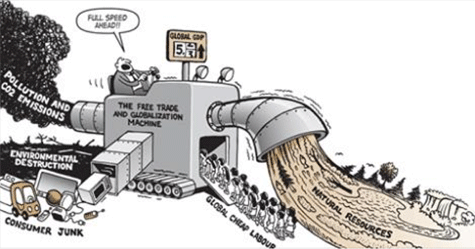
But the basic problem dates much further back and is bipartisan. After all both parties have been supportive and remain supportive of the growthmania that has been the basic driver of environmental destruction.
Rather than dwell on the past, however, let’s look at what the U.S. should be doing about the epidemiological environment starting right now. The U.S. has long stood alone in failing to supply all its citizens with health care, an error COVID-19 has highlighted. Changing that, however it is done, should be top priority.
Besides the obvious ethics and justice reasons, people without basic medical care exacerbate public health problems, especially pandemics, in ways that threaten even senators and presidents.
A comprehensive national health program should also remove incentives for infected people to go to work sick and for keeping businesses and other entities that provide essential services functioning.
Plans and equipment should be put in place to greatly increase the capacity of the medical system to deal with large surges of victims of epidemics.
Programs are needed to keep both the plans and essential supplies up to date. A provision for quickly establishing unified leadership in disasters is essential.
Climate change and biodiversity
U.S. security in a globalized world demands leadership in dealing with all aspects of the world’s epidemiological environment.
In addition to rejoining the Paris agreement, America should demand greatly increased ambition in replacing fossil fuels in energy systems so it will have a better chance of ameliorating the building climatic catastrophe and reduce the likely huge refugee flows that will transform the entire global epidemiological environment.
The U.S. should aid China to reduce that nation’s huge pig-duck-pond-wildlife market, which is a lethal virus manufacturing machine. Putting pigs and ducks together with ponds is bad in itself, but adding wildlife markets to the mix makes it worse – and it’s an important factor in the global epidemiological environment.
America and China could lead a civilization-wide program to halt the destruction of biodiversity – another factor which negatively impacts that environment.
What I’m basically saying is that the U.S. should fix the epidemiological environment by taking the obvious steps to solve the human predicament – to avoid the collapse of civilization now entrained…….. https://www.ehn.org/pandemic-population-covid-19-2645518249.html
March 21, 2020
Posted by Christina Macpherson |
2 WORLD, environment |
Leave a comment
Paul R. Ehrlich: A pandemic, planetary reckoning, and a path forward, Environmental Health News, Mar 20, 2020
The COVID-19 pandemic is bringing environmental destruction and the deterioration of social and cultural systems into sharp focus. But we can learn from this.
Paul R Ehrlich In addition to great concern over the COVID-19 pandemic, I’m also disappointed.
For more than half a century, scientists have been expressing concern over the deterioration of what I like to call the “epidemiological environment.” That environment consists of the constellation of circumstances that influence patterns of disease and factors related to health.
It includes such things as population sizes and densities, diets, speed and type of transportation systems, toxics, climate disruption, frequency of human-animal contacts, availability of medical isolation facilities, stockpiles of medicines, vaccines, and medical equipment.
The epidemiological environment also includes cultural norms: levels of education, equity in societies, competence of leadership. Few aspects of the human predicament do not impinge on our epidemiological environment.
My own interest in one part of that environment, transmissible diseases, started as a grad student working on the evolution of DDT resistance in fruit flies. The results of that research had obvious implications for the evolution of antibiotic resistance, a key element in the epidemiological environment.
It clearly influenced my wife Anne and my scenarios in our 1968 book, The Population Bomb and a section on the epidemiological environment in The Population Explosion, the 1990 sequel book. We were responding not just to our own fears, but the fears of colleagues much more knowledgeable in areas like virology and epidemiology.
Of course, the utter failure of global society to deal appropriately with high probability threats to civilization warned of by the scientific community is hardly limited to pandemics.
Climate disruption is the best recognized of contemporary health threats, but the decay of biodiversity, and “updating” the American nuclear triad as part of the Russian-United States’ “mutually assured imbecility” are among the most critical.
Those, at least, are not obvious to the average citizen or decision-maker, but what about others such as increased flows of plastics and toxics (especially synthetic hormone mimicking compounds) into the global environment?
Everyone knows about volumes of plastics in waste streams and oceans and has personal experience with the thermal paper receipts coated with bisphenol-A (BPA), yet little to no remedies have been undertaken.
Indeed, why are there so few effective responses to the epidemics and the maladies of industrial civilization?……….
|
Teaching planetary literacy
This seems wildly optimistic in a world that has not even recognized its problems of overpopulation and overconsumption or the impacts on health and well-being of socio-cultural regression: rising xenophobia, racism, religious prejudice, sexism, and, especially, economic inequity.
What explains this?
There are the causes usually noted, such as the power of money, not just in politics but in global culture as a whole. But a major element is widespread ignorance, partly due to broken educational systems – allowing, for example, mobs of innumerate economists, politicians, and decision-makers in general to believe in perpetual growth in population and consumption.
The widespread inability of “educated” people to think is frequently underlined by statements on how “we don’t have a population problem, just a problem of too much consumption.”
Can’t they grasp the not-so-difficult idea that a billion people are likely to consume more than a hundred? Case in point on the ignorant “educated”: Donald Trump got a B.S. in economics from the Wharton School of my alma mater, the University of Pennsylvania.
To overwhelm this vast ignorance demands resuscitation of our higher education system. Universities and colleges remain stalled in a 19th century Aristotelian state. They have given up any goal except turning out people who will be financially successful in a deteriorating culture — oiling parts of the engine with never a thought for where the train is heading.
And that “education” clearly doesn’t even give its products a grasp of such concepts as exponential growth, as the response of Trump and many others to the COVID-19 epidemic have shown.
Educational systems have given up any pretense of supplying leadership to society or informing people about what is coming down the track. Faculty members discuss “sustainability” in major universities that will not even divest from fossil fuel stocks.
Can the absence of a draft alone explain the difference between the ferment in universities during the Vietnam War and the quiet today with the situation a million times worse?
Once again, population size and growth are major factors in this human dilemma – maybe Homo sapiens shouldn’t have tried to organize itself into groups exceeding the Dunbar number, which anthropologist Robin Dunbar showed was about 150 people, the size of hunter-gatherer groups. He also showed that’s roughly the size of groups in which human beings are comfortable today.
Rethinking resources
Where could all the money come from to make the changes to preserve civilization? That’s one of the challenges for the economists who today are operating in a perpetual-growth fairyland.
Much depends on the course of events and whether the debt pyramid collapses. One obvious step, however, is repurposing the military. When Anne and I were working with them on nuclear winter issues, we were greatly impressed by the intelligence and ethics of some of the field-grade officers with whom we were involved.
The military is already way ahead of the present civilian government in addressing existential threats like climate disruption. Various military units have already been deployed to deal with emergencies ranging from pandemics to hurricanes, and there is no reason why they cannot be used to help in tasks ranging from building medical isolation facilities to small-scale affordable housing for the homeless.
Allocation of resources is part of the epidemiological environment. The gigantic amounts of money wasted on such nearly useless toys as nuclear weapons, aircraft carriers, main battle tanks, and air superiority jet fighters could be redirected toward rebuilding infrastructure such as sewage systems, modernized electric grids and water-handling networks, and on and on.
The same can be said for the other funds and activities used for decades to support (often clandestinely) U.S. state terrorism that has cumulatively killed millions since the second World War.
Is all this impractical, pie-in-the-sky, never-happen stuff? Sure.
But nothing is more impractical than civilization trying to continue business as usual as it circles the drain.
The current pandemic disaster may end up damping down consumerism and improving the environment – there are reports of the lethal smog usually blanketing some Chinese cities clearing during pandemic lockdowns.
Maybe there’s some chance that people are learning lessons.
We can always hope.
|
|
March 21, 2020
Posted by Christina Macpherson |
2 WORLD, environment, health |
Leave a comment

DESTRUCTION OF HABITAT AND LOSS OF BIODIVERSITY ARE CREATING THE PERFECT CONDITIONS FOR DISEASES LIKE COVID-19 TO EMERGE
As habitat and biodiversity loss increase globally, the novel coronavirus outbreak may be just the beginning of mass pandemics ENSIA, John Vidal 18 Mar 20, “……… Only a decade or two ago it was widely thought that tropical forests and intact natural environments teeming with exotic wildlife threatened humans by harboring the viruses and pathogens that lead to new diseases in humans like Ebola, HIV and dengue.
But a number of researchers today think that it is actually humanity’s destruction of biodiversity that creates the conditions for new viruses and diseases like COVID-19, the viral disease that emerged in China in December 2019, to arise — with profound health and economic impacts in rich and poor countries alike. In fact, a new discipline, planetary health, is emerging that focuses on the increasingly visible connections among the well-being of humans, other living things and entire ecosystems.
Is it possible, then, that it was human activity, such as road building, mining, hunting and logging, that triggered the Ebola epidemics in Mayibout 2 and elsewhere in the 1990s and that is unleashing new terrors today?
“We invade tropical forests and other wild landscapes, which harbor so many species of animals and plants — and within those creatures, so many unknown viruses,” David Quammen, author of Spillover: Animal Infections and the Next Pandemic, recently wrote in the New York Times. “We cut the trees; we kill the animals or cage them and send them to markets. We disrupt ecosystems, and we shake viruses loose from their natural hosts. When that happens, they need a new host. Often, we are it.” Increasing Threat
Research suggests that outbreaks of animal-borne and other infectious diseases like Ebola, SARS, bird flu and now COVID-19, caused by a novel coronavirus, are on the rise. Pathogens are crossing from animals to humans, and many are now able to spread quickly to new places. The U.S. Centers for Disease Control and Prevention (CDC) estimates that three-quarters of “new or emerging” diseases that infect humans originate in nonhuman animals.
Some, like rabies and plague, crossed from animals centuries ago. Others, like Marburg, which is thought to be transmitted by bats, are still rare. A few, like COVID-19, which emerged last year in Wuhan, China, and MERS, which is linked to camels in the Middle East, are new to humans and spreading globally.
Other diseases that have crossed into humans include Lassa fever, which was first identified in 1969 in Nigeria; Nipah from Malaysia; and SARS from China, which killed more than 700 people and traveled to 30 countries in 2002–03. Some, like Zika and West Nile virus, which emerged in Africa, have mutated and become established on other continents. Kate Jones, chair of ecology and biodiversity at UCL, calls emerging animal-borne infectious diseases an “increasing and very significant threat to global health, security and economies.”
Amplification Effect
In 2008, Jones and a team of researchers identified 335 diseases that emerged between 1960 and 2004, at least 60% of which came from non-human animals. Increasingly, says Jones, these zoonotic diseases are linked to environmental change and human behavior. The disruption of pristine forests driven by logging, mining, road building through remote places, rapid urbanization and population growth is bringing people into closer contact with animal species they may never have been near before, she says.
The resulting transmission of disease from wildlife to humans, she says, is now “a hidden cost of human economic development. There are just so many more of us, in every environment. We are going into largely undisturbed places and being exposed more and more. We are creating habitats where viruses are transmitted more easily, and then we are surprised that we have new ones.
Jones studies how land use change contributes to the risk. “We are researching how species in degraded habitats are likely to carry more viruses which can infect humans,” she says. “Simpler systems get an amplification effect. Destroy landscapes, and the species you are left with are the ones humans get the diseases from.”
“There are countless pathogens out there continuing to evolve which at some point could pose a threat to humans,” says Eric Fevre, chair of veterinary infectious diseases at the University of Liverpool’s Institute of Infection and Global Health. “The risk [of pathogens jumping from animals to humans] has always been there.” The difference between now and a few decades ago, Fevre says, is that diseases are likely to spring up in both urban and natural environments. “We have created densely packed populations where alongside us are bats and rodents and birds, pets and other living things. That creates intense interaction and opportunities for things to move from species to species,” he says.
Tip of the Iceberg
|
|
March 19, 2020
Posted by Christina Macpherson |
2 WORLD, environment, health |
1 Comment

 Protests as Moscow moves to build road on radioactive dump, https://www.france24.com/en/20200318-protests-as-moscow-moves-to-build-road-on-radioactive-dump Moscow (AFP)
Moscow authorities on Wednesday began work on building a highway over a Soviet-era dump of radioactive materials, despite months of public protests and warnings from environmental campaigners.
Greenpeace and other activists have long campaigned against the project to build an eight-lane motorway over the top of a tree-lined slope in southern Moscow that contains radioactive waste buried in the Soviet era.
“Works are beginning next to the Moscow Polymetals Plant,” Greenpeace Russia said in a statement, referring to the plant that originally dumped the waste.
The former top-secret facility produced the radioactive element thorium for nuclear reactors until the 1970s.
Greenpeace and other activists have long campaigned against the project to build an eight-lane motorway over the top of a tree-lined slope in southern Moscow that contains radioactive waste buried in the Soviet era.
“Works are beginning next to the Moscow Polymetals Plant,” Greenpeace Russia said in a statement, referring to the plant that originally dumped the waste.
The former top-secret facility produced the radioactive element thorium for nuclear reactors until the 1970s.
“We have registered 0.4 microsieverts,” while the permitted level in Moscow is 0.3,” Vlasov told AFP, adding that he expected those levels to increase in the future.
“When large-scale work begins, all this crap will be in the air,” he said.
Galina Rozvadovskaya, who lives near the site, said she came as soon as she learnt of the start of the construction work.
“Our task is to stop this lawlessness,” Rozvadovskaya told AFP. “What do we want? For them to conduct a proper survey of this burial site.”
Moscow Mayor Sergei Sobyanin is keen to redevelop post-industrial wasteland and insists there are only “insignificant traces of contamination” on the road’s route.
Activists say, however, dangerous radioactive particles could be spread around and end up in people’s lungs. Citing a state report, Greenpeace says the site contains at least 60,000 tonnes of radioactive waste.
ma-video-as/am/cdw
March 19, 2020
Posted by Christina Macpherson |
environment, Russia |
Leave a comment
How a small nuclear war would transform the entire planet
It all starts in 2025, as tensions between India and Pakistan escalate over the contested region of Kashmir. When a terrorist attacks a site in India, that country sends tanks rolling across the border with Pakistan. As a show of force against the invading army, Pakistan decides to detonate several small nuclear bombs.
The next day, India sets off its own atomic explosions and within days, the nations begin bombing dozens of military targets and then hundreds of cities. Tens of millions of people die in the blasts.
That horrifying scenario is just the beginning. Smoke from the incinerated cities rises high into the atmosphere, wrapping the planet in a blanket of soot that blocks the Sun’s rays. The planet plunges into a deep chill. For years, crops wither from California to China. Famine sets in around the globe.
This grim vision of a possible future comes from the latest studies about how nuclear war could alter world climate. They build on long-standing work about a ‘nuclear winter’ — severe global cooling that researchers predict would follow a major nuclear war, such as thousands of bombs flying between the United States and Russia. But much smaller nuclear conflicts, which are more likely to occur, could also have devastating effects around the world.
This week, researchers report that an India–Pakistan nuclear war could lead to crops failing in dozens of countries — devastating food supplies for more than one billion people1. Other research reveals that a nuclear winter would dramatically alter the chemistry of the oceans, and probably decimate coral reefs and other marine ecosystems2. These results spring from the most comprehensive effort yet to understand how a nuclear conflict would affect the entire Earth system, from the oceans to the atmosphere, to creatures on land and in the sea. ……….
Both India and Pakistan tested nuclear weapons in 1998, highlighting growing geopolitical tensions. By the mid-2000s, Toon was exploring a scenario in which the countries set off 100 Hiroshima-size atomic bombs, killing around 21 million people. He also connected with Alan Robock, an atmospheric scientist at Rutgers University in New Brunswick, New Jersey, who studies how volcanic eruptions cool the climate in much the same way that a nuclear winter would. Using an advanced NASA climate model, the scientists calculated how soot rising from the incinerated cities would circle the planet. All around the dark, cold globe, agricultural crops would dwindle.
But after a burst of publications on the topic, Robock, Toon and their colleagues struggled to find funding to continue their research. Finally, in 2017, they landed a grant worth nearly US$3-million from the Open Philanthropy Project, a privately funded group in San Francisco that supports research into global catastrophic risks.
The goal was to analyse every step of nuclear winter — from the initial firestorm and the spread of its smoke, to agricultural and economic impacts. “We put all those pieces together for the first time,” says Robock.
The group looked at several scenarios. Those range from a US–Russia war involving much of the world’s nuclear arsenal, which
would loft 150 million tonnes of soot into the atmosphere, down to the 100-warhead India–Pakistan conflict, which would generate 5 million tonnes of soot6. The soot turns out to be a key factor in how bad a nuclear winter would get; three years after the bombs explode, global temperatures would have plummeted by more than 10 °C in the first scenario — more than the cooling during the last ice age — but by a little more than 1 °C in the second.
Toon, Robock and their colleagues have used observations from major wildfires in British Columbia, Canada, in 2017 to estimate how high smoke from burning cities would rise into the atmosphere7. During the wildfires, sunlight heated the smoke and caused it to soar higher, and persist in the atmosphere longer, than scientists might otherwise expect. The same phenomenon might happen after a nuclear war, Robock says.Raymond Jeanloz, a geophysicist and nuclear-weapons policy expert at the University of California, Berkeley, says that incorporating such estimates is a crucial step to understanding what would happen during a nuclear winter. “This is a great way of cross-checking the models,” he says.
Comparisons with giant wildfires could also help in resolving a controversy about the scale of the potential impacts. A team at Los Alamos National Laboratory in New Mexico argues that Robock’s group has overestimated how much soot burning cities would produce and how high the smoke would go8.
The Los Alamos group used its own models to simulate the climate impact of India and Pakistan setting off 100 Hiroshima-sized bombs. The scientists found that much less smoke would get into the upper atmosphere than Toon and Robock reported. With less soot to darken the skies, the Los Alamos team calculated a much milder change to the climate — and no nuclear winter.
The difference between the groups boils down to how they simulate the amount of fuel a firestorm consumes and how that fuel is converted into smoke. “After a nuclear weapon goes off, things are extremely complex,” says Jon Reisner, a physicist who leads the Los Alamos team. “We have the ability to model the source and we also understand the combustion process. I think we have a better feel about how much soot can potentially get produced.” Reisner is now also studying the Canadian wildfires, to see how well his models reproduce how much smoke gets into the atmosphere from an incinerating forest.
Robock and his colleagues have fired back in tit-for-tat journal responses9. Among other things, they say the Los Alamos team simulated burning of greener spaces rather than a densely populated city.
Dark seas
While that debate rages, Robock’s group has published results showing a wide variety of impacts from nuclear blasts.
That includes looking at ocean impacts, the first time this has been done, says team member Nicole Lovenduski, an oceanographer at the University of Colorado Boulder. When Toon first approached her to work on the project, she says, “I thought, ‘this sure seems like a bleak topic’.” But she was intrigued by how the research might unfold. She usually studies how oceans change in a gradually warming world, not the rapid cooling in a nuclear winter.
Lovenduski and her colleagues used a leading climate model to test the US–Russia war scenario. “It’s the hammer case, in which you hammer the entire Earth system,” she says. In one to two years after the nuclear war, she found, global cooling would affect the oceans’ ability to absorb carbon, causing their pH to skyrocket. That’s the opposite to what is happening today, as the oceans soak up atmospheric carbon dioxide and waters become more acidic.
She also studied what would happen to aragonite, a mineral in seawater that marine organisms need to build shells around themselves. In two to five years after the nuclear conflict, the cold dark oceans would start to contain less aragonite, putting the organisms at risk, the team has reported2.
In the simulations, some of the biggest changes in aragonite happened in regions that are home to coral reefs, such as the southwestern Pacific Ocean and the Caribbean Sea. That suggests that coral-reef ecosystems, which are already under stress from warming and acidifying waters, could be particularly hard-hit during a nuclear winter. “These are changes in the ocean system that nobody really considered before,” says Lovenduski.
And those aren’t the only ocean effects. Within a few years of a nuclear war, a “Nuclear Niño” would roil the Pacific Ocean, says Joshua Coupe, a graduate student at Rutgers. This is a turbo-charged version of the phenomenon known as El Niño. In the case of a US–Russia nuclear war, the dark skies would cause the trade winds to reverse direction and water to pool in the eastern Pacific Ocean. As during an El Niño, droughts and heavy rains could plague many parts of the world for as long as seven years, Coupe reported last December at a meeting of the American Geophysical Union.
Beyond the oceans, the research team has found big impacts on land crops and food supplies. Jonas Jägermeyr, a food-security researcher at NASA’s Goddard Institute for Space Studies in New York City, used six leading crop models to assess how agriculture would respond to nuclear winter. Even the relatively small India–Pakistan war would have catastrophic effects on the rest of the world, he and his colleagues report this week in the Proceedings of the National Academy of Sciences1. Over the course of five years, maize (corn) production would drop by 13%, wheat production by 11% and soya-bean production by 17% .
The worst impact would come in the mid-latitudes, including breadbasket areas such as the US Midwest and Ukraine. Grain reserves would be gone in a year or two. Most countries would be unable to import food from other regions because they, too, would be experiencing crop failures, Jägermeyr says. It is the most detailed look ever at how the aftermath of a nuclear war would affect food supplies, he says. The researchers did not explicitly calculate how many people would starve, but say that the ensuing famine would be worse than any in documented history.
Farmers might respond by planting maize, wheat and soya beans in parts of the globe likely to be less affected by a nuclear winter, says Deepak Ray, a food-security researcher at the University of Minnesota in St Paul. Such changes might help to buffer the food shock — but only partly. The bottom line remains that a war involving less than 1% of the world’s nuclear arsenal could shatter the planet’s food supplies.
“The surprising finding”, says Jägermeyr, “is that even a small-war scenario has devastating global repercussions”.
Nature 579, 485-487 (2020)
doi: 10.1038/d41586-020-00794-y
March 19, 2020
Posted by Christina Macpherson |
2 WORLD, climate change, environment, weapons and war |
Leave a comment
 The planet’s largest ecosystems could collapse faster than we thought https://www.ehn.org/ecosystems-collapse-2645447028.html?rebelltitem=1#rebelltitem1
Massive, vital ecosystems that have existed for thousands of years could breakdown in just a few decades, according to a new study, Brian Bienkowski 11 Mar, 20
If put under the kind of environmental stress increasingly seen on our planet, large ecosystems —such as the Amazon rainforest or the Caribbean coral reefs—could collapse in just a few decades, according to a study released today in Nature Communications.
In the case of Amazon forests, stressors could cause collapse in just 49 years. In Caribbean coral reefs, it could take as little as 15 years.
“The messages here are stark,” said lead researcher John Dearing, a professor in physical geography at the University of Southampton, in a statement.
Those estimates come from Dearing and colleagues who examined data on how 42 natural environments—small and large, and on both land and water—have transformed. They found that larger ecosystems may take longer than small ones to collapse, but the rate of their decline is much more rapid.
Ecosystem stress can come in many forms such as climate change, deforestation, overfishing, pollution and ocean acidification.
Humanity now needs to prepare for changes in ecosystems that are faster than we previously envisaged through our traditional linear view of the world, including across Earth ‘s largest and most iconic ecosystems, and the social–ecological systems that they support,” the authors wrote.
Larger ecosystems are made up of smaller “sub-systems” of species and habitats, which provide some resilience against rapid change. However, once these smaller systems start to collapse, the new study finds the large ecosystems as a whole fall apart much faster than previously expected.
Researchers pointed to the destructive Australian and Amazon rainforest wildfires as recent examples of this dangerous fast rate of collapse.
“These findings are yet another call for halting the current damage being imposed on our natural environments that pushes ecosystems to their limits,” Dearing added.
See the full study in Nature Communications.
March 12, 2020
Posted by Christina Macpherson |
2 WORLD, environment |
Leave a comment
 Fukushima Fishing Industry Still Far from Recovery https://www.nippon.com/en/japan-data/h00664/fukushima-fishing-industry-still-far-from-recovery.html Mar 9, 2020 [excellent graphs] While fishing ports and other infrastructure in Fukushima Prefecture have made progress toward recovery, the area still suffers from a negative reputation.
The coastal area off Ibaraki and Fukushima Prefectures, where the Oyashio and Kuroshio Currents meet in the Pacific Ocean, is an excellent fishing ground. The seafood caught in this area became known as Jōban-mono and was prized by professional chefs and Tsukiji Market connoisseurs. However, the 2011 Great East Japan Earthquake had a profound effect on the local fishing industry, when it caused a tsunami that destroyed all the fishing ports and led to an accident at the Fukushima Daiichi Nuclear Power Plant that damaged the reputation of the waters.
According to Fukushima Prefecture sea-fishing industry statistics, the total catch in 2010 stood at 38,600 tons, before plummeting in 2011. While fishing ports and other infrastructure have steadily recovered since, catches remain low. In 2018, 5,900 tons of fish were caught, equivalent to only 15% of the volume prior to the earthquake. This was worth ¥796 million, or only 7.3% of the ¥11.0 billion generated in 2010. (Aggregated data for 2019 is due to be released later in March 2020.)
After the nuclear accident, the fishing industry in Fukushima came to a standstill for approximately one year. Then, in June 2012, trial fishing operations began. Currently, there are still no catches within a 10-kilometer radius of the Daiichi plant and any made outside that area are subject to prefectural inspections for radioactive materials, alongside inspections by the fishing cooperatives themselves, in order to ensure safety. Although there have been zero cases of results for prefectural inspections outside acceptable levels for more than four years, the area’s negative reputation remains, so full recovery in the fishing industry is yet to be seen .
March 9, 2020
Posted by Christina Macpherson |
Japan, oceans |
Leave a comment
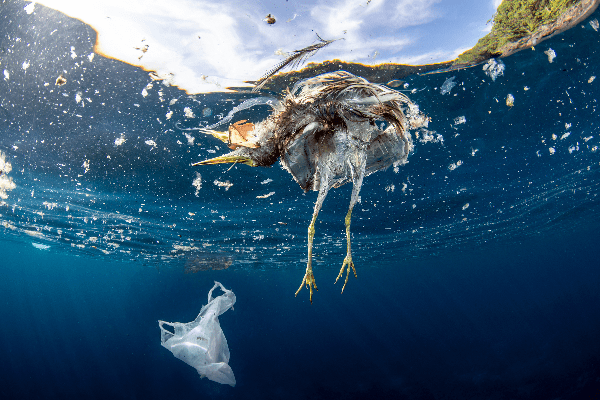
“They really sold people on the idea that plastics can be recycled because there’s a fraction of them that are,”..“It’s fraudulent. When you drill down into plastics recycling, you realize it’s a myth.” …… “Recycling delays, rather than avoids, final disposal,” the Science authors write. And most plastics persist for centuries. …….
We are all guinea pigs in this experiment, as plastics accumulate in the food web, appearing in seafood, table salt, and ironically even in bottled water. Many plastics are mixed with a toxic brew of colorants, flame retardants, and plasticizers.
 PLANET PLASTIC, How Big Oil and Big Soda kept a global environmental calamity a secret for decades, Rolling Stone, By TIM DICKINSON, MARCH 3, 2020
Every human on Earth is ingesting nearly 2,000 particles of plastic a week. These tiny pieces enter our unwitting bodies from tap water, food, and even the air, according to an alarming academic study sponsored by the World Wildlife Fund for Nature, dosing us with five grams of plastics, many cut with chemicals linked to cancers, hormone disruption, and developmental delays. Since the paper’s publication last year, Sen. Tom Udall, a plain-spoken New Mexico Democrat with a fondness for white cowboy hats and turquoise bolo ties, has been trumpeting the risk: “We are consuming a credit card’s worth of plastic each week,” Udall says. At events with constituents, he will brandish a Visa from his wallet and declare, “You’re eating this, folks!”
With new legislation, the Break Free From Plastic Pollution Act of 2020, Udall is attempting to marshal Washington into a confrontation with the plastics industry, and to force companies that profit from plastics to take accountability for the waste they create. …….
The battle pits Udall and his allies in Congress against some of the most powerful corporate interests on the planet, including the oil majors and chemical giants that produce the building blocks for our modern plastic world — think Exxon, Dow, and Shell — and consumer giants like Coca-Cola, Nestlé, and Unilever that package their products in the stuff. Big Plastic isn’t a single entity. It’s more like a corporate supergroup: Big Oil meets Big Soda — with a puff of Big Tobacco, responsible for trillions of plastic cigarette butts in the environment every year. And it combines the lobbying and public-relations might of all three………
Massive quantities of this forever material are spilling into the oceans — the equivalent of a dump-truck load every minute. Plastic is also fouling our mountains, our farmland, and spiraling into an unmitigatable environmental disaster. John Hocevar is a marine biologist who leads the Oceans Campaign for Greenpeace, and spearheaded the group’s response to the BP oil spill in the Gulf. Increasingly, his work has centered on plastics. “This is a much bigger problem than ‘just’ an ocean issue, or even a pollution issue,” he says. “We’ve found plastic everywhere we’ve ever looked. It’s in the Arctic and the Antarctic and in the middle of the Pacific. It’s in the Pyrenees and in the Rockies. It’s settling out of the air. It’s raining down on us.”
More than half the plastic now on Earth has been created since 2002, and plastic pollution is on pace to double by 2030. At its root, the global plastics crisis is a product of our addiction to fossil fuels. The private profit and public harm of the oil industry is well understood: Oil is refined and distributed to consumers, who benefit from gasoline’s short, useful lifespan in a combustion engine, leaving behind atmospheric pollution for generations. But this same pattern — and this same tragedy of the commons — is playing out with another gift of the oil-and-gas giants, whose drilling draws up the petroleum precursors for plastics. These are refined in industrial complexes and manufactured into bottles, bags, containers, textiles, and toys for consumers who benefit from their transient use — before throwing them away. Continue reading →
March 7, 2020
Posted by Christina Macpherson |
2 WORLD, environment, Reference, secrets,lies and civil liberties, spinbuster |
Leave a comment
When Linus Pauling accepted the 1962 Nobel Peace Prize for his campaigning against hydrogen bombs, he said that carbon 14 “deserves our special concern” because it “shows the extent to which the earth is being changed by the tests of nuclear weapons.”
If people’s teeth have a very low level of radiocarbon, it means that they were born well before Castle Bravo. [thermonuclear atom bomb test] People born in the early 1960s have high levels of radiocarbon in their molars, which develop early, and lower levels in their wisdom teeth, which grow years later. By matching each tooth in a jaw to the bomb curve, forensic scientists can estimate the age of a skeleton to within one or two years.
Even after childhood, bomb radiocarbon chronicles the history of our body.
 Your Inner H-Bomb Nuclear testing left a signature of radioactive carbon all around the world—in trees and sharks, in oceans and human bodies. Even as that signal disappears, it’s revealing new secrets to scientists. The Atlantic, Story by Carl Zimmer, 2 Mar 20,
 “…… Among the isotopes created by a thermonuclear blast is a rare, radioactive version of carbon, called carbon 14. Castle Bravo and the hydrogen-bomb tests that followed it created vast amounts of carbon 14, which have endured ever since. A little of this carbon 14 made its way into Clark’s body, into his blood, his fat, his gut, and his muscles. Clark carried a signature of the nuclear weapons he tested to his grave.
I can state this with confidence, even though I did not carry out an autopsy on Clark. I know this because the carbon 14 produced by hydrogen bombs spread over the entire world. It worked itself into the atmosphere, the oceans, and practically every living thing. As it spread, it exposed secrets. It can reveal when we were born. It tracks hidden changes to our hearts and brains. It lights up the cryptic channels that join the entire biosphere into a single network of chemical flux. This man-made burst of carbon 14 has been such a revelation that scientists refer to it as “the bomb spike.” Only now is the bomb spike close to disappearing, but as it vanishes, scientists have found a new use for it: to track global warming, the next self-inflicted threat to our survival. …….
Continue reading →
March 3, 2020
Posted by Christina Macpherson |
ANTARCTICA, environment, radiation, Reference, weapons and war |
Leave a comment
Jim Green, Online Opinion, 27 Feb 2020, https://onlineopinion.com.au/view.asp?article=20758&page=0
Nuclear power in Australia is prohibited under the Environmental Protection and Biodiversity Conservation (EPBC) Act 1999. A review of the EPBC Act is underway and there is a strong push from the nuclear industry to remove the bans. However, federal and state laws banning nuclear power have served Australia well and should be retained.
 Too cheap to meter or too expensive to matter? Laws banning nuclear power has saved Australia from the huge costs associated with failed and failing reactor projects in Europe and North America, such as the Westinghouse project in South Carolina that was abandoned after the expenditure of at least A$13.4 billion. The Westinghouse / South Carolina fiasco could so easily have been replicated in any of Australia’s states or territories if not for the legal bans.
There are many other examples of shocking nuclear costs and cost overruns, including:
* The cost of the two reactors under construction in the US state of Georgia has doubled and now stands at A$20.4‒22.6 billion per reactor.
* The cost of the only reactor under construction in France has nearly quadrupled and now stands at A$20.0 billion. It is 10 years behind schedule.
* The cost of the only reactor under construction in Finland has nearly quadrupled and now stands at A$17.7 billion. It is 10 years behind schedule.
* The cost of the four reactors under construction in the United Arab Emirates has increased from A$7.5 billion per reactor to A$10‒12 billion per reactor.
* In the UK, the estimated cost of the only two reactors under construction is A$25.9 billion per reactor. A decade ago, the estimated cost was almost seven times lower. The UK National Audit Office estimates that taxpayer subsidies for the project will amount to A$58 billion, despite earlier government promises that no taxpayer subsidies would be made available.
Nuclear power has clearly priced itself out of the market and will certainly decline over the coming decades. Indeed the nuclear industry is in crisis ‒ as industry insiders and lobbyists freely acknowledge. Westinghouse ‒ the most experienced reactor builder in the world ‒ filed for bankruptcy in 2017 as a result of catastrophic cost overruns on reactor projects. A growing number of countries are phasing out nuclear power, including Germany, Switzerland, Spain, Belgium, Taiwan and South Korea.
Rising power bills: Laws banning nuclear power should be retained because nuclear power could not possibly pass any reasonable economic test. Nuclear power clearly fails the two economic tests set by Prime Minister Scott Morrison. Firstly, nuclear power could not possibly be introduced or maintained without huge taxpayer subsidies. Secondly, nuclear power would undoubtedly result in higher electricity prices.
 Nuclear waste streams: Laws banning nuclear power should be retained because no solution exists to for the safe, long-term management of streams of low-, intermediate- and high-level nuclear wastes. No country has an operating repository for high-level nuclear waste. The United States has a deep underground repository for long-lived intermediate-level waste ‒ the only operating deep underground repository worldwide ‒ but it was closed from 2014‒17 following a chemical explosion in an underground waste barrel. Safety standards and regulatory oversight fell away sharply within the first decade of operation of the U.S. repository ‒ a sobering reminder of the challenge of safely managing dangerous nuclear wastes for tens of thousands of years.
 Too dangerous: The Fukushima and Chernobyl disasters results in the evacuation of over half a million people and economic costs in the hundreds of billions of dollars. In addition to the danger of nuclear reactor meltdowns and fires and chemical explosions, there are other dangers. Doubling nuclear output by the middle of the century would require the construction of 800−900 reactors. These reactors not only become military targets but they would produce over one million tonnes of high-level nuclear waste containing enough plutonium to build over one million nuclear weapons.
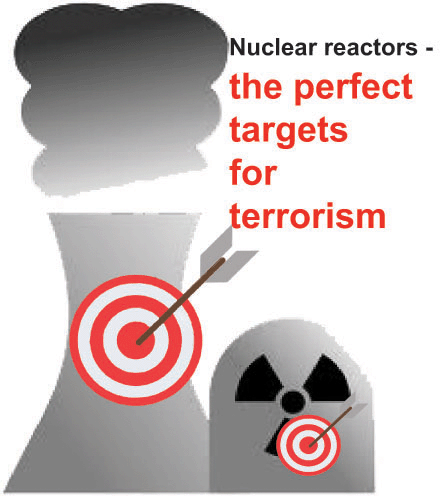
 Pre-deployed terrorist targets: Nuclear power plants have been described as pre-deployed terrorist targets and pose a major security threat. This in turn would likely see an increase in policing and security operations and costs and a commensurate impact on civil liberties and public access to information. Other nations in our region may view Australian nuclear aspirations with suspicion and concern given that many aspects of the technology and knowledge-base are the same as those required for nuclear weapons.
 Former US Vice President Al Gore summarised the proliferation problem: “For eight years in the White House, every weapons-proliferation problem we dealt with was connected to a civilian reactor program. And if we ever got to the point where we wanted to use nuclear reactors to back out a lot of coal … then we’d have to put them in so many places we’d run that proliferation risk right off the reasonability scale.”
Too slow: Expanding nuclear power is impractical as a short-term response to climate change. An analysis by Australian economist Prof. John Quiggin concludes that it would be “virtually impossible” to get a nuclear power reactor operating in Australia before 2040. More time would elapse before nuclear power has generated as much as energy as was expended in the construction of the reactor: a University of Sydney report concluded that the energy payback time for nuclear reactors is 6.5‒7 years. Taking into account planning and approvals, construction, and the energy payback time, it would be a quarter of a century or more before nuclear power could even begin to reduce greenhouse emissions in Australia (and then only assuming that nuclear power displaced fossil fuels).
 Too thirsty: Nuclear power is extraordinarily thirsty. A single nuclear power reactor consumes 35‒65 million litres of water per day for cooling.
Water consumption of different energy sources (litres / kWh):
* Nuclear 2.5
* Coal 1.9
* Combined Cycle Gas 0.95
* Solar PV 0.11
* Wind 0.004
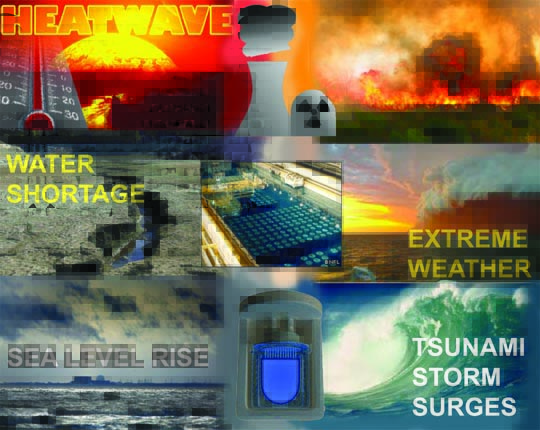
Climate change and nuclear hazards: Nuclear power plants are vulnerable to threats which are being exacerbated by climate change. These include dwindling and warming water sources, sea-level rise, storm damage, drought, and jelly-fish swarms. Nuclear engineer David Lochbaum states. “I’ve heard many nuclear proponents say that nuclear power is part of the solution to global warming. It needs to be reversed: You need to solve global warming for nuclear plants to survive.”
In January 2019, the Climate Council, comprising Australia’s leading climate scientists and other policy experts, issued a policy statement concluding that nuclear power plants “are not appropriate for Australia – and probably never will be”.
By contrast, the REN21 Renewables 2015: Global Status Report states that renewable energy systems “have unique qualities that make them suitable both for reinforcing the resilience of the wider energy infrastructure and for ensuring the provision of energy services under changing climatic conditions.”
 First Nations: Laws banning nuclear power should be retained because the pursuit of a nuclear power industry would almost certainly worsen patterns of disempowerment and dispossession that Australia’s First Nations have experienced ‒ and continue to experience ‒ as a result of nuclear and uranium projects.
To give one example (among many), the National Radioactive Waste Management Act dispossesses and disempowers Traditional Owners in many respects: the nomination of a site for a radioactive waste dump is valid even if Aboriginal owners were not consulted and did not give consent; the Act has sections which nullify State or Territory laws that protect archaeological or heritage values, including those which relate to Indigenous traditions; the Act curtails the application of Commonwealth laws including the Aboriginal and Torres Strait Islander Heritage Protection Act 1984 and the Native Title Act 1993 in the important site-selection stage; and the Native Title Act 1993 is expressly overridden in relation to land acquisition for a radioactive waste dump.
No social license: Laws banning nuclear power should be retained because there is no social license to introduce nuclear power to Australia. Opinion polls find that Australians are overwhelmingly opposed to a nuclear power reactor being built in their local vicinity (10‒28% support, 55‒73% opposition); and opinion polls find that support for renewable energy sources far exceeds support for nuclear power (for example a 2015 IPSOS poll found 72‒87% support for solar and wind power but just 26% support for nuclear power). As the Clean Energy Council noted in its submission to the 2019 federal nuclear inquiry, it would require “a minor miracle” to win community support for nuclear power in Australia.
The pursuit of nuclear power would also require bipartisan political consensus at state and federal levels for several decades. Good luck with that. Currently, there is a bipartisan consensus at the federal level to retain the legal ban. The noisy, ultra-conservative rump of the Coalition is lobbying for nuclear power but their push has been rejected by, amongst others, the federal Liberal Party leadership, the Queensland Liberal-National Party, the SA Liberal government, the Tasmanian Liberal government, the NSW Liberal Premier and environment minister, and even ultra-conservatives such as Nationals Senator Matt Canavan.
 The future is renewable, not radioactive: Laws banning nuclear power should be retained because the introduction of nuclear power would delay and undermine the development of effective, economic energy and climate policies based on renewable energy sources and energy efficiency. A December 2019 report by CSIRO and the Australian Energy Market Operator finds that construction costs for nuclear reactors are 2‒8 times higher than costs for wind or solar. Levelised costs for nuclear are 2‒3 times greater per unit of energy produced compared to wind or solar including either 2 hours of battery storage or 6 hours of pumped hydro energy storage.
Australia can do better than fuel higher carbon emissions and unnecessary radioactive risk. We need to embrace the fastest growing global energy sector and become a driver of clean energy thinking and technology and a world leader in renewable energy technology. We can grow the jobs of the future here today. This will provide a just transition for energy sector workers, their families and communities and the certainty to ensure vibrant regional economies and secure sustainable and skilled jobs into the future. Renewable energy is affordable, low risk, clean and popular. Nuclear is not. Our shared energy future is renewable, not radioactive.
More Information
* Don’t Nuke the Climate Australia, www.dont-nuke-the-climate.org.au
* Climate Council, 2019, ‘Nuclear Power Stations are Not Appropriate for Australia – and Probably Never Will Be’, https://www.climatecouncil.org.au/nuclear-power-stations-are-not-appropriate-for-australia-and-probably-never-will-be/
* WISE Nuclear Monitor, 25 June 2016, ‘Nuclear power: No solution to climate change’, https://www.wiseinternational.org/nuclear-monitor/806/nuclear-power-no-solution-climate-change
Dr. Jim Green is the national nuclear campaigner with Friends of the Earth Australia.
February 27, 2020
Posted by Christina Macpherson |
AUSTRALIA, business and costs, climate change, indigenous issues, water |
Leave a comment
Telegraph 23rd Feb 2020 Suffolk Wildlife Trust: We have serious concerns over the effect upon wildlife of Sizewell C and, despite years of working closely with EDF, we are far from convinced that the electricity giant is taking the impacts seriously.
We also believe that it will be impossible wholly to mitigate or
compensate for much of the negative impact on wildlife. The current plans
suggest that we will lose between 20 and 30 acres of nationally important
land that is supposedly protected by its Site of Special Scientific
Interest status. This equates to covering roughly 10 football pitches of
rare fen habitat in concrete. Invariably there will be devastating habitat
loss for birds such as kingfisher and for rare mammals such as water vole
and otters. EDF has made little attempt to minimise these losses.
Suffolk Preservation Society: The proposed nuclear power plant at
Sizewell C will cause environmental damage on an unprecedented scale in a
highly sensitive location, much of which is designated an Area of
Outstanding Natural Beauty. The construction phase will bring massive
disruption to communities in East Suffolk over many years and will
permanently change our landscapes. Suffolk’s environment is remarkably
undeveloped and is characterised by a sense of remote wildness. The
tranquillity provides a high quality of life for residents and is a major
draw for tourists. However, this isolation is fragile and could easily be
lost forever. The impact of a development such as Sizewell C upon heritage
sites – including an abbey, churches, farmhouses and other vernacular
buildings that contribute to the special qualities of Suffolk – will be
considerable. The intrusion of new roads to cope with a massive increase in
HGV traffic, spoil heaps, borrow pits, and accommodation for up to 3,000
workers will be felt across numerous locations. Development of the Sizewell
site cannot be at unlimited cost to the quality and character of our county
and its communities.
https://www.telegraph.co.uk/opinion/2020/02/23/letterstory-supporting-constituencies-wont-happy-see-hs2-completed/
February 25, 2020
Posted by Christina Macpherson |
environment, UK |
Leave a comment
  Fates of humans and insects intertwined, warn scientists Fates of humans and insects intertwined, warn scientists
Experts call for solutions to be enforced immediately to halt global population collapses, Guardian Damian Carrington Environment editor @dpcarrington, Thu 20 Feb 2020 .The “fates of humans and insects are intertwined”, scientists have said, with the huge declines reported in some places only the “tip of the iceberg”.The warning has been issued by 25 experts from around the world, who acknowledge that little is known about most of the estimated 5.5 million insect species. However, enough was understood to warrant immediate action, they said, because waiting for better data would risk irreversible damage.
The researchers said solutions were available and must be implemented immediately. These range from bigger nature reserves and a crackdown on harmful pesticides to individual action such as not mowing the lawn and leaving dead wood in gardens. They also said invertebrates must no longer be neglected by conservation efforts, which tend to focus on mammals and birds…….https://www.theguardian.com/environment/2020/feb/20/fates-humans-insects-intertwined-scientists-population-collapse
|
|
February 24, 2020
Posted by Christina Macpherson |
ANTARCTICA, environment |
Leave a comment
Times 23rd Feb 2020, Britain should be preparing for its seas and tidal rivers to rise by up to 6½ ft in the next 80 years, according to the scientist in charge of protecting Holland against flooding and sea level change. Peter Glas, head of Holland’s Delta Programme, which oversees long-term flood risk management, will tell a UK conference that the rise in the level of the
North Sea may accelerate sharply from 2050, potentially reaching 2 metres
(6½ ft) by 2100.
That is nearly double the Met Office’s worst-case
predictions. It follows research at Holland’s Deltares centre,
commissioned by the Delta Programme, into the impact of rising sea levels
on northern Europe. “The rise could potentially accelerate with effect
from 2050, entailing far-reaching consequences,” said Glas’s latest
report to the Dutch government, which he will cite at this week’s Floodex
conference in Peterborough. The Delta report added that effects of “the
more rapid melting of Antarctic ice sheets” had not yet been incorporated
into the programme’s predictions.
https://www.thetimes.co.uk/article/think-the-flooding-is-bad-now-britain-faces-6ft-rise-in-sea-level-warns-dutch-expert-gl6mlvvqq
|
|
|
February 24, 2020
Posted by Christina Macpherson |
climate change, oceans, UK |
Leave a comment
|
 What happened inside the Georgia Nuclear Aircraft Lab? Finding the facts in the forest with Dr. James Mahaffey Jessica Taylor Dawson News jtaylor@dawsonnews.com Feb. 19, 2020, What happened inside the Georgia Nuclear Aircraft Lab? Finding the facts in the forest with Dr. James Mahaffey Jessica Taylor Dawson News jtaylor@dawsonnews.com Feb. 19, 2020,
Over half a century later, rumors still swirl around Dawson Forest and the mysterious remnants of Dawson County’s past in the Cold War.
Though the Georgia Nuclear Aircraft Facility has been out of commission for nearly 50 years, local residents can still be heard whispering about two-headed deer and oak leaves the size of elephant ears spotted around the nuclear facility’s remains.
For nuclear engineer and author, Dr. James Mahaffey, the task of unraveling the history behind Dawson County’s top-secret nuclear test site and separating facts from the fiction has led to decades of research and hard work. ………
On paper, it seemed feasible as an incredible amount of power could be housed in a very small space, however the findings from the Dawsonville laboratory proved that nuclear aircraft would take more than what was originally thought.
“Any nuclear reactor on this earth has shielding,” Mahaffey explained. “It’s got lead, concrete, steel, you know, heavy things to keep it from killing everybody, but you put it in an airplane and you can’t have concrete and steel and lead. It’s got to be naked.”
Components for nuclear-powered engines were assembled in a facility in Idaho then brought to Dawsonville for testing inside the reactor. In Mahaffey’s research, he discovered that the facility found that rubber tires either melted or turned to rock when exposed to different radiation. Hydraulic fluids turned into a tacky substance akin to chewing gum. Transistors in the radio system were immediately killed by radiation.
The other aspect of the Dawsonville facility was testing the effects of radiation on the environment and living creatures.
“What does flying over a farm with a nuclear aircraft do to the farm? Well, it kills everything on the ground. It kills trees, grass, crops, insects, birds, anything. It might even kill the farmer if he’s out looking at it so what are you going to do about that? And also, what happens when one of these things crashes,” Mahaffey said. “If a jet plane crashes you clean it up and you pay the people for the house that it destroyed and all that, but what if it’s a nuclear aircraft? Nuclear aircraft – when it crashes – it makes a five mile radius area contaminated with long lasting radionuclides and you have to fence it off so nobody can go there. Are you really willing to have that as part of your Air Force operations?”
The effects of radiation were tested through controlled experimentation but also through observation of what Mahaffey describes as “instant taxidermy” of animals caught inside the kill zone around the outside of the operational reactor.
“Any animal like a toad frog that happened to be hopping around on the ground when the reactor was turned on, he died and interestingly it also killed all the bacteria in and around the frog,” Mahaffey said.
“When those [bacteria] die, it doesn’t deteriorate so you have this dead frog that you can put on your mantle and it’ll just stay there.”
According to Mahaffey, the scientists conducted many experiments with animals including releasing rats and studying the effects of radiation on them.
“I heard a rumor that the largest animal they ever irradiated was a mule and the mule died of course, and like a toad frog it would not deteriorate in a normal way,” Mahaffey said.
Billions of dollars were poured into the Nuclear Aircraft Project that GNAL was part of during the 1960s, but funding was cut in the John F. Kennedy administration. The GNAL was closed in pieces and shut its completely in 1971.
The GNAL buildings inside Dawson Forest were dismantled and hauled away. The hot cell building, the only remaining structure still standing, was boarded up with stainless steel to keep intruders from entering the radioactive building. To this day, the building remains radioactive with particulates of Cobalt 60. ……
What makes Dawsonville’s secret nuclear facility stand out from other nuclear facilities for Mahaffey is the very detailed extent to which they dug into the dangers of nuclear fission products.
“An enormous amount of work was done to find out how having this reactor affects the environment. I’ll give them that,” Mahaffey said. “They wanted to find out how groundwater would transport radiation and they dug wells all over the facility, and they would have monitors monitoring what type of radiation, how much radiation and knew how fast radiation could transport in the environment.”
Great care went into studying radiation in the Etowah River including the construction of rafts to track and map the flow of radiation as well as the atmospheric effects of radiation.
“This was all unknown,” Mahaffey said. “You have to build a facility that’ll test it in real ways, not just computer simulations and it has to be somewhere where you’re not potentially going to wipe out a city.” https://www.dawsonnews.com/local/what-happened-inside-georgia-nuclear-aircraft-lab-finding-facts-forest-dr-james-mahaffey/
|
|
February 20, 2020
Posted by Christina Macpherson |
environment, radiation, Reference, secrets,lies and civil liberties, USA |
Leave a comment
 Belsat 12th Feb 2020
, A sensor of the Russian state enterprise Radon, which specializes in handling radioactive waste, has recorded a 60-fold excess of the radiation background at the construction site of the South-East Chord (multi-lane expressway) in Moscow, the Russian service of Radio Liberty reports.
The sensor recorded 18 microsieverts per hour at a maximum permissible
radiation level of 0.3 microsieverts. Residents of the
Moskvorechye-Saburovo district report that this is the seventh time in
three days, but neither Radon nor the MES have taken any action, claiming
that the sensor works in test mode and there are no actual spikes in
radiation.
Earlier, Moscow Mayor Sergei Sobyanin acknowledged the presence
of radioactive waste on the South-Eastern Chord route. The mayor`s office
said that “in the case of the construction of the chord, the city faced a
unique and exceptional problem — radioactive waste, which the Moscow
Polymetal Plant stored in its backyard in the 1950s and 1960s”. At the
same time, the City Hall called the discovered traces of radioactive
contamination “insignificant”.
https://belsat.eu/en/news/excess-radiation-level-recorded-in-moscow/
February 17, 2020
Posted by Christina Macpherson |
environment, radiation, Russia |
Leave a comment











 nuclear-news