With loss of biodiversity will come new pandemics
|
To prevent the next deadly disease, we must stop harming nature
The coronavirus pandemic proves it: By damaging the planet, we have sapped nature’s power to protect humanity from diseases. National Geographic, BY ENRIC SALA 22 Jul 20, SINCE MY CHILDHOOD by the Mediterranean Sea, I’ve been enchanted by the diversity of life on our planet and eager to learn all I could about it. I’ve spent much of my career studying the ocean food web, where in the course of natural events the smallest of the small are consumed by larger and larger predators, often ending in us. But scientists know there is more to the story, and I’ve been humbled to see life on our planet brought to a standstill by a tiny virus. From a Wuhan, China, “wet market” where freshly butchered meat and live wild animals are sold for food and medicine, the virus likely was transmitted in late 2019 via wildlife to humans. And in a matter of months, COVID-19 has felled hundreds of thousands of Homo sapiens, Earth’s preeminent predator. Writing about this for my new book, I was deeply saddened: The virus has struck people I knew, in Europe and around the world. But this pandemic is a powerful argument for something I believe unequivocally: that biodiversity is necessary for human health, and ultimately, human survival. People have been acquiring harmful viruses and bacteria from contact with animals in the wild for millennia. As humans relentlessly encroach upon wild habitats and compete with animals for water, food, and territory, there’s bound to be more physical contact, yielding more conflict—and more contagion. A 2020 study explored the link between the abundance of species that carry such zoonotic viruses and the likelihood of spillover to humans. Researchers combed the scientific literature, obtained data on 142 zoonotic viruses, and found that rodents, primates, and bats carried more of these viruses than other species. The researchers also found that the risk of virus transmission to humans was highest from animals that are more abundant, because they have adapted to human-dominated environments. What about risks from the creatures in the ocean, which is more than 70 percent of the planet? Does our exploitation of ocean life also threaten human health? I discovered the answer during our exploration of some of the most remote islands in the central Pacific…………
We are all in this together, all species on the planet. So what can we do? While the world has stepped up to help those in need during the COVID-19 outbreaks, we might also start thinking about how to prevent the next zoonotic pandemic.
We have seen, again and again, that even though we don’t know what most of them do, all wild animals have important jobs that keep our biosphere running. If we’ve learned anything from our study of natural ecosystems as it applies to these recent diseases, it’s that instead of exterminating wild animals to stop the passage of disease to people, we should do the opposite: We should safeguard the natural ecosystems that are their homes and, if needed, help set them back on their path to maturity through rewilding.
If we degrade habitats, animals become stressed and shed more viruses. On the other hand, habitats with diverse microbial, plant, and animal species harbor less disease. Biodiversity dilutes any viruses that emerge and provides a natural shield that absorbs the fallout from pathogens. Clamping down on the illegal trade of wildlife, ending deforestation, protecting intact ecosystems, educating people about the risks of consuming wildlife, changing the way we produce food, phasing out fossil fuels, and transitioning to a circular economy: These are the things we can and must do. https://www.nationalgeographic.com/magazine/2020/09/pristine-seas-enric-sala-we-must-stop-harming-nature-to-prevent-deadly-disease-coronavirus/
|
|
Australia to retain its environmental laws prohibiting the nuclear industry

Mineral Policy Institute and Friends of the Earth Australia, 20 July 2020
National and state environment groups have given a cautious welcome to the continuation of long-standing protections against nuclear risks in the current statutory review of the Environmental Protection Biodiversity Conservation Act – Australia’s federal environmental laws. The interim report released today has stated that the Commonwealth should maintain the capacity to intervene in uranium mining and made no recommendation to change existing prohibitions on nuclear activities, including domestic nuclear power.
Civil society groups made a joint submission to the EPBC review calling for the retention of the long standing ban on nuclear power and continuing federal oversight of uranium mining. The EPBC review committee’s interim report has flagged an intention to continue both protections despite lobbying from the Mineral Council of Australia to weaken these.
However, environment groups are concerned about a possible weakening of uranium mining regulations flagged in the interim report. Associate Professor Gavin Mudd, Chair of the Mineral Policy Institute, said: “The interim report proposes the further devolution of uranium mining regulation to states and territories, coupled to the establishment of ‘National Environmental Standards’. An obvious risk is that the standards will be weak, enforcement will be deficient as is already the case, and devolution will weaken the already inadequate oversight of uranium mining.”
“Uranium mining is different to other types of mining. Australia’s uranium mining sector has been dominated by license breaches, accidents, spills and a persistent failure to rehabilitate as promised. The last thing we need is a weakening of regulations and oversight. Apart from SA and NT every state and territory have a ban or prohibition on uranium mining. It is unsafe and unpopular and needs greater scrutiny, not less,” Assoc. Prof. Mudd said.
The Review’s interim report makes no recommendation to repeal the long-standing prohibition on domestic nuclear power. “Nuclear power is expensive, dangerous and unpopular,” said Dr Jim Green, national nuclear campaigner with Friends of the Earth Australia. “The prohibition in the EPBC Act reflects this. Nuclear is thirsty, produces high level nuclear waste for which there are no safe storage options and produces materials that can be diverted into nuclear weapons. It is a profound security and safety risk. And nuclear power is absurdly expensive.”
“Recent comments from the current Environment Minister and Opposition Leader show a clear bipartisan rejection of nuclear power. There is broad opposition among civil society as shown through a joint statement by over 60 organisations representing millions of Australians. Given the lack of social license for nuclear power in Australia we welcome the continuation of this prudent prohibition,” Dr Green said.
Following the Australian uranium-fuelled Fukushima nuclear disaster the UN Secretary General called for all uranium producing countries to conduct a cost-benefit analysis of the industry. Groups have called on the Morrison government to now hold an independent review of the uranium sector.
Radioactive Contamination of Europe
Free News 17th July 2020, An international consortium of scientists has specified a map of
concentrations of cesium and plutonium radionuclides in soils in
Switzerland and several neighboring countries. Using an archive of European
soil samples, a team of researchers led by Catherine Meisburger from the
University of Basel was able to track down the sources of radioactive
fallout between 1960 and 2009.
This study was published in the journal
Scientific Reports. On the new map of radioactive contamination of the
soil, there are not only Switzerland but also several neighboring countries
– France, Italy, Germany and Belgium. The map is based on a new
calculation method, namely the use of the ratio of cesium to plutonium.
These two radionuclides were released during military nuclear tests in the
1960s. Additional cesium fell into some countries during the Chernobyl
accident in 1986.
https://freenews.live/a-new-map-of-radioactive-contamination-of-the-soil-with-cesium-and-plutonium/
Campaign group Geiger Bay press for full testing of Hinkley nuclear plant sediment
 Nation Cymru 18th July 2020, Campaigners press for full testing of nuclear plant sediment in effort to
halt dumping off Cardiff coast. Campaigners are calling for plans to dump
mud from the construction of the new Hinkley Point C nuclear power station
into the sea off Cardiff Bay to be halted.
Campaign group Geiger Bay are
pressing for extensive testing of the sediment following what they say is
evidence of plutonium contamination, a claim that Westminster’s
Environment Agency (EA) denies.
In February environment watchdog Natural
Resources Wales confirmed they had received an application from EDF Energy,
who want to dump 800,0000 tonnes of sediment dredged as part of building
work for the new plant at Hinkley Point, the site of the disused Hinkley
Point A facility.
Geiger Bay are a coalition of scientists, experts,
individuals and organisations formed to oppose the plans. Two years ago,
EDF were given the green light to dump 300,000 tonnes of mud off the
Cardiff coast. Despite protests and a petition signed by over 7,000 people,
and the support of Senedd Member Neil McEvoy, a full Senedd debate failed
to convince the Welsh Government to halt the dumping.
America’s nuclear attack on itself ? The fallout from nuclear testing
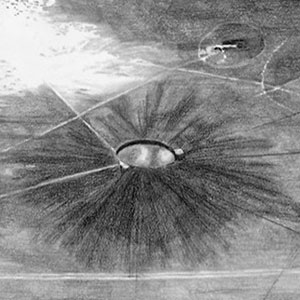
Above – Trinity nuclear test site crater 1945
It’s Been 75 Years, and America Still Won’t Admit a Nuclear Disaster. Remember when we blew radioactive ash over New Mexico? Now the Trump administration is talking about testing bombs again. https://www.nytimes.com/2020/07/15/opinion/75-anniversary-trinity-nuclear-testing.html, By Joshua Wheeler, Mr. Wheeler is the author of “Acid West.” July 15, 2020 When America detonated the world’s first atomic bomb at 0529 hours on July 16, 1945, it was an attack on American soil.
The blast melted the sand of southern New Mexico and infused it with the bomb’s plutonium core — 80 percent of which failed to fission — scattering radioactive material across the desert. The first atomic bomb was both a feat of engineering and, by today’s standards, a crude dirty bomb.
An Army doctor later wrote about Trinity: “A few people were probably overexposed, but they couldn’t prove it and we couldn’t prove it. So we just assumed we got away with it.”
Aboveground nuclear testing was halted in 1963. Underground testing, which is comparably safer but still terrifying, was stopped in 1992. But today the Trump administration is floating the idea of resuming such testing — despite the fact that America is, after more than 1,000 tests, already the most nuclear-bombed country in the world.
Any explosive nuclear test is an escalation toward global annihilation.
But the decision to resume explosive nuclear tests should never be made at all. We can and do perform successful tests in virtual-reality chambers using advanced supercomputers. Explosives tests of any kind carry magnitudes more risk, and the consequence of that risk has historically fallen on the most vulnerable Americans.
It should come as no surprise that the downwinders of Trinity were largely impoverished agricultural families, mostly Hispanic and Native. New Mexico, one of the poorest states in the nation, is the only one with a cradle-to-grave nuclear industry, where weapons are designed, uranium mined, and waste stored. After a recent study from the Nuclear Regulatory Commission raised no concerns, the federal government looks poised to finalize Holtec International’s bid to store nuclear waste between the New Mexico towns of Hobbs and Carlsbad, despite vehement objections from the governor and many residents of the area. And any resumed nuclear testing would add more radioactive waste to the controversial storage site already in existence near Carlsbad.
This is further evidence of what’s been called radioactive colonialism, where minority and impoverished communities are forced to suffer the costs of the nuclear industry.
Henry Herrera, whose family’s drying linens were stained by the fallout on that July morning in 1945, told me: “We were lab rats. That ought to make us hero patriots or something. Which we are. But nobody gives a damn.” Mr. Herrera, his brother and his two sisters all had cancer.
If Congress truly wants to awaken Americans to the dangers of nuclear testing, it should start by finally telling the truth about the disaster at Trinity. Bills to acknowledge and compensate Mr. Herrera and other Trinity downwinders have lingered in legislative purgatory for over a decade. Passing them would help establish what should be obvious: The shameful legacy of nuclear weapons testing is something we should never attempt to revive.
Joshua Wheeler is the author of the essay collection “Acid West.” He teaches in the creative writing program at Louisiana State University.
The Times is committed to publishing a diversity of letters to the editor. We’d like to hear what you think about this or any of our articles. Here are some tips. And here’s our email: letters@nytimes.com.
Follow The New York Times Opinion section on Facebook, Twitter (@NYTopinion) and Instagram.
More pandemics to come – bat research is critical for prevention

- Source:
- Washington State University
- Summary:
- The current SARS-CoV-2 pandemic has a likely connection to bats, and the next viral outbreak probably will too. A recent review calls for more research into bats’ molecular biology and their ecology, to help predict, and hopefully prevent, the next pandemic.
-
The current SARS-CoV-2 pandemic has a likely connection to bats, and the next viral outbreak probably will too, unless scientists can quickly learn more about the thousands of viruses carried by one of the most diverse mammals on the planet.
Evidence already links different bat species to human outbreaks of SARS, MERS, some Ebola viruses as well as the Marbug, Hendra, Sosuga and Nipah viruses. Beyond these connections, there is very little known, and a recent article in Nature Reviews Microbiology calls for more research into bats’ molecular biology and their ecology, to help predict, and hopefully prevent, the next pandemic.
“The more researchers have looked, the more we’ve found that a lot of these emerging pathogens, at one point or another, originated in bats,” said Michael Letko, the lead author and an assistant professor of molecular virology at Washing State University’s Paul G. Allen School of Global Animal Health. “Over time, we have accumulated a lot of information about some of the species of bats and some of the viruses they carry, but there are still these huge glaring holes in our knowledge.”
With more than 1,400 species, bats represent an extremely diverse mammalian order, second only to rodents, which are also known viral hosts. However, unlike rats and mice, bats are not great lab animals. Simply keeping flying animals in labs is difficult. Also, most of the mammalian cell lines developed for research came from other animals and cannot be used to study viruses found in bats.
This knowledge gap is dangerous as the current pandemic shows. Bats are found almost everywhere scientists have looked, and with expanding human encroachment on their habitat, viral infection is almost inevitable, Letko said.
“We are coming into more contact with animal species around us in general, and then we find out these species are loaded with viruses,” he said. “The COVID-19 pandemic is unfortunate, but it’s not surprising. We roll the dice for 20 years not doing anything to reduce contact with these animals. It was more or less a matter of time before something like this was going to happen.”………
Beyond the lab, Letko and his colleagues point to the need for better understanding of bat ecology which can lead to solutions that are relatively simple to implement. The researchers cite examples such as the effort to vaccinate horses in Australia to stop the Hendra virus which was spreading from fruit bats to horses and then potentially on to humans. Another intervention in Bangladesh involved simply putting lids on palm sap containers to keep bats out and prevent human outbreaks of Nipah virus.
“Sometimes, you don’t need vaccines or drugs. It’s just a behavioral change that helps mitigate and reduce the contact between people and the animals,” Letko said. “These are some of the kinds of interventions that we can take once we begin to understand what these viruses actually do.” https://www.sciencedaily.com/releases/2020/07/200713104354.htm
How to deal with the thousands of fish threatened by Hinkley Point C nuclear plants cooling turbines
Nuclear Plant And Sound Projector Developers Fight Over Acoustic Fish Deterrent In The Severn Estuary
Emanuela Barbiroglio Senior 11 Jul
As Hinkley Point C power plant is being built in South West England, hundreds of thousands of fish living in the Severn estuary, including protected Atlantic salmon, may be under threat from the plant’s cooling turbines.
An acoustic deterrent could help deflect fish away from the water intakes. Developed by Fish Guidance Systems Ltd, the Sound Projector Array would use underwater sound projectors to prevent fish being drawn.
Hinkley Point C’s owner, the energy company EDF, would prefer to proceed with a change to the Secretary of State’s Development Consent Order that requires the device. Although they originally proposed the installation as part of the environmental protection package, the company is now proposing to avoid it.
According to some scientists, however, removing this piece of environmental protection would threaten the biodiverse ecosystem of the UK’s largest estuary and designated Special Area of Conservation. It could also set a precedent for future projects like Sizewell nuclear power stations in Suffolk.
“I have lost sleep over the danger to the fish and the risk of devastating the ecosystem of the Severn estuary,” a researcher in coastal governance, Natasha Bradshaw, said. “There is little proof that fish will survive the journey through 3 km of tunnels or what impact returning them (dead or alive) into the estuary will have on the ecosystem.”
The Severn estuary supports up to 110 fish species, with fish nurseries serving the whole of the Bristol Channel and Celtic Sea, and an average of 74,000 wintering birds each year.
“In such a large and complex ecosystem, effects of individual projects are always difficult to pinpoint. The situation is complicated further by ongoing changes wrought by climate change,” says David Lambert, managing director of Fish Guidance Systems. “The provision of an acoustic fish deterrent as required under the existing Development Consent Order is to mitigate the uncertainty over these impacts which will perpetuate through the 60 year lifespan of the plant.”
EDF, on the other hand, wants to build fish protection measures like low velocity side entry water intakes designed to minimize the number of fish taken into the system and a fish return system………. https://www.forbes.com/sites/emanuelabarbiroglio/2020/07/11/nuclear-plant-and-scientists-fight-over-acoustic-fish-deterrent-in-the-severn-estuary/#6570da4e791c
Lower-latitude oceans drive complex changes in the Arctic Ocean,
The University of Alaska Fairbanks and Finnish Meteorological Institute led the international effort, which included researchers from six countries. The first of several related papers was published this month in Frontiers in Marine Science.
Climate change is most pronounced in the Arctic. The Arctic Ocean, which covers less than 3% of the Earth’s surface, appears to be quite sensitive to abnormal conditions in lower-latitude oceans.
“With this in mind, the goal of our research was to illustrate the part of Arctic climate change driven by anomalous [different from the norm] influxes of oceanic water from the Atlantic Ocean and the Pacific Ocean, a process which we refer to as borealization,” said lead author Igor Polyakov, an oceanographer at UAF’s International Arctic Research Center and FMI.
Although the Arctic is often viewed as a single system that is impacted by climate change uniformly, the research stressed that the Arctic’s Amerasian Basin (influenced by Pacific waters) and its Eurasian Basin (influenced by Atlantic waters) tend to differ in their responses to climate change.
Since the first temperature and salinity measurements taken in the late 1800s, scientists have known that cold and relatively fresh water, which is lighter than salty water, floats at the surface of the Arctic Ocean. This fresh layer blocks the warmth of the deeper water from melting sea ice.
In the Eurasian Basin, that is changing. Abnormal influx of warm, salty Atlantic water destabilizes the water column, making it more susceptible to mixing. The cool, fresh protective upper ocean layer is weakening and the ice is becoming vulnerable to heat from deeper in the ocean. As mixing and sea ice decay continues, the process accelerates. The ocean becomes more biologically productive as deeper, nutrient-rich water reaches the surface.
By contrast, increased influx of warm, relatively fresh Pacific water and local processes like sea ice melt and accumulation of river water make the separation between the surface and deep layers more pronounced on the Amerasian side of the Arctic. As the pool of fresh water grows, it limits mixing and the movement of nutrients to the surface, potentially making the region less biologically productive.
The study also explores how these physical changes impact other components of the Arctic system, including chemical composition and biological communities.
Retreating sea ice allows more light to penetrate into the ocean. Changes in circulation patterns and water column structure control availability of nutrients. In some regions, organisms at the base of the food web are becoming more productive. Many marine organisms from sub-Arctic latitudes are moving north, in some cases replacing the local Arctic species.
“In many respects, the Arctic Ocean now looks like a new ocean,” said Polyakov.
These differences change our ability to predict weather, currents and the behavior of sea ice. There are major implications for Arctic residents, fisheries, tourism and navigation.
This study focused on rather large-scale changes in the Arctic Ocean, and its findings do not necessarily represent conditions in nearshore waters where people live and hunt.
The study stressed the importance of future scientific monitoring to understand how this new realm affects links between the ocean, ice and atmosphere.
###
Co-authors of the paper include Matthew Alkire, Bodil Bluhm, Kristina Brown, Eddy Carmack, Melissa Chierici, Seth Danielson, Ingrid Ellingsen, Elizaveta Ershova, Katarina Gårdfeldt, Randi Ingvaldsen, Andrey V. Pnyushkov, Dag Slagstad and Paul Wassmann.
Book: Doom With A View: Historical and Cultural Contexts of the Rocky Flats Nuclear Weapons Plant.
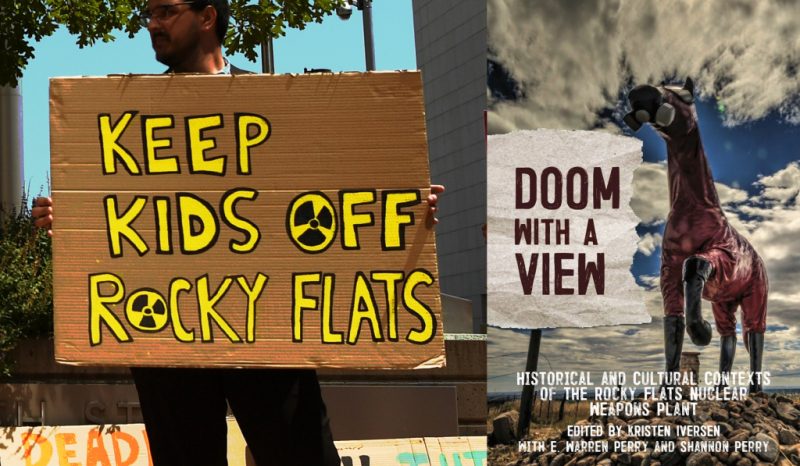
The Grieving Landscape, LONGREADS, Heidi Hutner | Fulcrum Publishing | June 2020 | 16 minutes (4,305 words)
We’re delighted to bring you an excerpt by Heidi Hutner from the anthology Doom With A View: Historical and Cultural Contexts of the Rocky Flats Nuclear Weapons Plant. Edited by Kristen Iverson, with E. Warren Perry and Shannon Perry, the anthology arrives from Fulcrum Publishing in August, 2020.
At thirty-five, I was diagnosed with Hodgkin’s lymphoma. One year before my diagnosis, my mother died from complications after heart surgery. At the time of her death, my mother had cancer — lymphoma. Five years prior to Mom’s death, my father passed away from a brain tumor, a metastasis from the cancer melanoma.
Two years after I had completed my chemotherapy treatment for cancer, I gave birth to Olivia. My miracle baby.
At first, I was ecstatic about the pregnancy. I had always wanted children, and with my cancer, I feared this would never happen. My doctors said I was lucky to give birth to a biological child after chemotherapy (my treatment left me with a 50 percent chance of remaining fertile afterward). But now, a mother-to-be, I was also afraid. How could I protect my child from our family cancer blight?
My desire to protect my daughter from a future cancer diagnosis drove me into a rabbit hole of reading and learning about the reasons for my family’s affliction. I began with Rachel Carson’s Silent Spring and moved forward to more recent literature by Sandra Steingraber, Theo Colburn, and numerous others, including the President’s Cancer Panel Report. I learned that the cancer rates today are off the charts: one in two men and one in three women will get cancer in their lifetimes. Carson predicted this plague in 1963. She warned us of humankind’s “hubris” in carelessly polluting our earth with toxic chemicals and ionizing radiation. The epidemiologist Alice Stewart’s study on the grave danger of X-rays on babies in the womb in the 1950s, sounded the alarm about ionizing radiation as well. Today, our world swirls with pollutants — these carcinogens penetrate mothers’ wombs and breasts. Mother’s milk is a toxic cocktail. Newborns today are born with hundreds of synthetic chemicals in their umbilical cord blood. Synthetic chemicals and ionizing radiation change our makeup, harm our genes, and cause mutagenetic damage. More than 80,000 unregulated pollutants fill our environment.
We are guinea pigs.
Fast forward about eleven years: one summer day, in 2009, on the Upper West Side of Manhattan, at lunch with a close friend (and cousin) of my deceased mother, Phyllis Resnick, I stumbled upon a story about my mom that I had never heard before. The tale Phyllis told would radically change my life. My then-preteen daughter, Olivia, was by my side. She listened rapt with me as we learned of our maternal nuclear legacy.
Phyllis described how in the early 1960s, my mother and she, along with their good friend Thalia Stern Broudy, had been a members of Women Strike for Peace (WSP), an antinuclear group led by Dagmar Wilson and the future congresswoman, Bella Abzug. During the Cold War 1950s and early 60s, the U.S. had detonated one hundred above-ground nuclear test bombs in the Nevada desert and one hundred and six atmospheric test bombs in the South Pacific. The government claimed these test bombs posed no harm and the fallout had not spread, but scientists and medical professionals were concerned. A team of experts in St. Louis, MO, directed by Dr. Louise Reiss, initiated a survey to determine the extent of the impact of the bomb testing. With a chemical makeup similar to calcium, strontium-90, a radioisotope found in fallout, is easily absorbed in teeth and bones. Thousands of baby teeth from across the U.S. were collected between 1958 and 1971 for the St. Louis Baby Tooth Survey. In 1961, preliminary results showed high levels of strontium-90 in baby teeth of children born after 1945 and these levels increased over the time period, as the test-bombing continued. When the mothers of Women Strike for Peace learned the results of the survey, they banded together to stop atmospheric bomb testing. 50,000 WSP members from across the U.S. wrote letters, gathered petitions, lobbied congressional representatives, initiated lawsuits, and protested through marches and street demonstrations. My mother and her cohort of 15,000 WSP members traveled to D.C. to protest, lobby, and meet with their legislators November, 1961. In 1963, the United States, the U.K., and the Soviet Union signed the Partial Nuclear Test Ban Treaty, an agreement to halt atmospheric, under water, and outer space bomb testing. The signing of this treaty has been attributed to the efforts of WSP.
The government claimed these test bombs posed no harm and the fallout had not spread, but scientists and medical professionals were concerned.
After discovering this remarkable story about WSP, I became obsessed with feminist nuclear history. I wondered: Why had I never been told this tale when my mother was alive? What other vital nuclear histories involving women had been buried? So began my journey of exploring women’s antinuclear tales, traveling to nuclear disaster sites, and meeting with members of impacted communities. On this path, I met Kristen Iversen, the author of Full Body Burden, an investigative memoir about growing up next door to Rocky Flats, the former nuclear weapons facility in Arvada, Colorado. Kristen invited me to visit her in Colorado. She would introduce me to experts, scientists, and community members there. I brought my then eighteen-year-old daughter, Olivia, with me. She was about to leave for college. I wanted to share our maternal antinuclear and activist legacy with her before she left home. ………….
Operating from 1952 to 1992, the Rocky Flats nuclear weapons facility was located approximately 15 miles northwest of Denver, a city built by an influx of miners during the gold rush in the nineteenth century. During the years of its operation, the plant constructed more than 70,000 triggers for nuclear bombs. Rocky Flats would be the site of two major secret plutonium fires, blowing radioactive poison into sections of Arvada and Denver in 1957 and 1969. Hundreds of smaller fires also took place, as well as regular leaks, spills, and atmospheric plutonium releases. Plutonium clouds blew over houses, swimming pools, schools, churches, farms, fields, and streams. Rocky Flats is known for powerful Chinook winds — winds that would blow plutonium dust into local neighborhoods. Locals did not know that Rocky Flats was a weapons factory for most of its years of operation. Workers employed there were forbidden to speak of their work and often didn’t comprehend the full extent of the factory’s activities.
By 1989, The FBI and EPA suspected criminal negligence at Rocky Flats, which led to a raid, led by FBI agent Jon Lipsky.
A federal grand jury began an investigation, a settlement was negotiated, the court documents were sealed, and the plant closed. The story of this federal grand jury is fraught and complex, and cover-ups are suspected in the sealing of the documents and lack of full prosecution. The Rocky Flats cleanup was officially completed in 2004; however, numerous scientists, nuclear experts, local citizens, and antinuclear activists argue the cleanup is far from finished. Unknown but large amounts of plutonium and other contaminants remain on the land in what has been turned into a Superfund site, a designation made under the Comprehensive Environmental Response, Compensation, and Liability Act of 1980. The primary industrial site (the Superfund area — 485 acres) was never completely remediated. There is a buffer zone, also heavily contaminated, although the EPA claims this area is fully remediated. The surrounding area, now called a National Wildlife Refuge, was not remediated. Significant contamination has been detected there in the soil and groundwater. Many other toxic and radioactive contaminants have also been found at Rocky Flats in addition to plutonium: americium, uranium, cadmium, PCBs, beryllium, and more. A 2019 study found plutonium “hot particles” in the soil frighteningly close to the homes abutting the Flats………
Rocky Flats is “a national sacrifice zone,” says Robert Alvarez, associate fellow at the Institute for Policy Studies and former senior policy advisor to the secretary at the US Department of Energy. “That’s what it is, although no one will say so officially. How much remains buried there? A tremendous amount — plutonium doesn’t go away. No one has done this yet — it’s costly and complex — but someone needs to go into those houses nearby in Arvada and take samples. We don’t know how much plutonium is in them.”…….. https://longreads.com/2020/06/30/the-grieving-landscape/amp/
Jane Goodall on conservation, climate change and COVID-19
Jane Goodall on conservation, climate change and COVID-19: “If we carry on with business as usual, we’re going to destroy ourselves” BY JEFF BERARDELLI JULY 2, 2020 CBS NEWS While COVID-19 and protests for racial justice command the world’s collective attention, ecological destruction, species extinction and climate change continue unabated. While the world’s been focused on other crises, an alarming study was released warning that species extinction is now progressing so fast that the consequences of “biological annihilation” may soon be “unimaginable.”Dr. Jane Goodall, the world-renowned conservationist, desperately wants the world to pay attention to what she sees as the greatest threat to humanity’s existence.
CBS News recently spoke to Goodall over a video conference call and asked her questions about the state of our planet. Her soft-spoken grace somehow helped cushion what was otherwise extremely sobering news: “I just know that if we carry on with business as usual, we’re going to destroy ourselves. It would be the end of us, as well as life on Earth as we know it,” warned Goodall.
What follows is a lightly edited transcript of our conversation.
Jeff Berardelli: Destruction of nature is causing some really big concerns around the world. One that comes to the forefront right now is emergent diseases like COVID-19. Can you describe how destruction of the environment contributes to this?
Dr. Jane Goodall: Well, the thing is, we brought this on ourselves because the scientists that have been studying these so-called zoonotic diseases that jump from an animal to a human have been predicting something like this for so long. As we chop down at stake tropical rainforest, with its rich biodiversity, we are eating away the habitats of millions of animals, and many of them are being pushed into greater contact with humans. We’re driving deeper and deeper, making roads throughout the habitat, which again brings people and animals in contact with each other. People are hunting the animals and selling the meat, or trafficking the infants, and all of this is creating environments which are perfect for a virus or a bacteria to cross that species barrier and sometimes, like COVID-19, it becomes very contagious and we’re suffering from it.
But we know if we don’t stop destroying the environment and disrespecting animals — we’re hunting them, killing them, eating them; killing and eating chimpanzees in Central Africa led to HIV/AIDS — there will be another one. It’s inevitable.
Do you fear that the next [pandemic] will be a lot worse than this one?
Well, we’ve been lucky with this one because, although it’s incredibly infectious, the percentage of people who die is relatively low. Mostly they recover and hopefully then build up some immunity. But supposing the next one is just as contagious and has a percentage of deaths like Ebola, for example, this would have an even more devastating effect on humanity than this one.
I think people have a hard time connecting these, what may look like chance events, with our interactions and relationship with nature. Can you describe to people why the way that we treat the natural world is so important?
Well, first of all, it’s not just leading to zoonotic diseases, and there are many of them. The destruction of the environment is also contributing to the climate crisis, which tends to be put in second place because of our panic about the pandemic. We will get through the pandemic like we got through World War II, World War I, and the horrors following the World Trade towers being destroyed. But climate change is a very real existential threat to humankind and we don’t have that long to slow it down.
Intensive farming, where we’re destroying the land slowly with the chemical poisons, and the monocultures — which can be wiped out by a disease because there is no variation of crops being grown — is leading to habitat destruction. It’s leading to the creation of more CO2 through fossil fuels, methane gas and other greenhouse gas [released] by digestion from the billions of domestic animals.
It’s pretty grim. We need to realize we’re part of the environment, that we need the natural world. We depend on it. We can’t go on destroying. We’ve got to somehow understand that we’re not separated from it, we are all intertwined. Harm nature, harm ourselves.
If we continue on with business as usual, what do you fear the outcome will be?
Well, if we continue with business as usual, we’re going to come to the point of no return. At a certain point the ecosystems of the world will just give up and collapse and that’s the end of us eventually too.
What about our children? We’re still bringing children into the world — what a grim future is theirs to look forward to. It’s pretty shocking but my hope is, during this pandemic, with people trapped inside, factories closed down temporarily, and people not driving, it has cleared up the atmosphere amazingly. The people in the big cities can look up at the night sky and sea stars are bright, not looking through a layer of pollution. So when people emerge [from the pandemic] they’re not going to want to go back to the old polluted days.
Now, in some countries there’s not much they can do about it. But if enough of them, a groundswell becomes bigger and bigger and bigger [and] people say: “No I don’t want to go down this road. We want to find a different, green economy. We don’t want to always put economic development ahead of protecting the environment. We care about the future. We care about the health of the planet. We need nature,” maybe in the end the big guys will have to listen……….https://www.cbsnews.com/news/jane-goodall-climate-change-coronavirus-environment-interview/?ftag=CNM-00-10aab7e&linkId=92720503
Ruthenium and Caesium radioactive isotopes over Europe due to mismanagement at a nuclear reactor – says IAEA
 Low Levels of Radioisotopes Detected in Europe Likely Linked to a Nuclear Reactor – IAEA, 27/2020 The recent detection of slightly elevated levels of radioisotopes in northern Europe is likely related to a nuclear reactor that is either operating or undergoing maintenance, when very low radioactive releases can occur, the International Atomic Energy Agency (IAEA) said today. The geographical origin of the release has not yet been determined.
Basing its technical assessment on data reported by its Member States, the IAEA reiterated that the observed air concentrations of the particles were very low and posed no risk to human health and the environment.
Estonia, Finland and Sweden last week measured levels of Ruthenium and Caesium isotopes which were higher than usual. They also reported the detection of some other artificial radionuclides. The three countries said there had been no events on their territories that could explain the presence of the radionuclides, as did more than 40 other countries that voluntarily provided information to the IAEA.
Seeking to help identify their possible origin, the IAEA on Saturday contacted its counterparts in the European region and requested information on whether the particles were detected in their countries, and if any event there may have been associated with the atmospheric release.
By Thursday afternoon, 37 Member States in the European region (Albania, Austria, Belgium, Bosnia and Herzegovina, Bulgaria, Republic of Croatia, Cyprus, Czech Republic, Denmark, Estonia, Finland, France, Germany, Greece, Hungary, Iceland, Ireland, Italy, Latvia, Lithuania, Luxembourg, Netherlands, North Macedonia, Norway, Poland, Portugal, Romania, Russian Federation, Republic of Serbia, Slovak Republic, Slovenia, Spain, Sweden, Switzerland, Turkey, Ukraine and United Kingdom) had voluntarily reported to the IAEA that there were no events on their territories that explained the release. They also provided information about their own measurements and results……
Based on the IAEA’s technical analysis of the mix of artificial radionuclides that were reported to it, the release was likely related to a nuclear reactor, either in operation or in maintenance. The IAEA ruled out that the release was related to the improper handling of a radioactive source. It was also unlikely to be linked to a nuclear fuel processing plant, a spent fuel pool or to the use of radiation in industry or medicine.
Based on the data and information reported to the IAEA, no specific event or location for the dispersal of radionuclides into the atmosphere has yet been determined. To do this, the IAEA depends on receiving such information from a country where the release occurred. https://www.iaea.org/newscenter/pressreleases/low-levels-of-radioisotopes-detected-in-europe-likely-linked-to-a-nuclear-reactor-iaea
A global push for racial justice in the climate movement
A global push for racial justice in the climate movement For years, mainstream environmental movements around the globe have excluded people of color, who are disproportionately impacted by climate change. Today’s global Black Lives Matter protests have amplified calls for institutions of all kinds — including environmental groups — to challenge and dismantle chronic systemic racism., The World, June 30, 2020 By Anna Kusmer
Environmental sociologist Dorceta Taylor remembers being the only Black person in her environmental science class at Northeastern Illinois University in the early 1980s. When she asked her white professor why there weren’t more Black students, he quickly told her that it was “because Blacks are not interested in the environment,” she said.
This assumption ran counter to everything she knew. She had grown up in Jamaica, where people from all backgrounds were passionate about the environment and loved nature.
Taylor, until recently a professor of environmental racism at the University of Michigan, found that underrepresentation exists at environmental organizations across the United States. In 2014, just under 16% of people of color were represented in a survey of hundreds of organizations, compared to about 35% of the population, she said. In the early 1990s, only about 2% of the staff of environmental nongovernmental organizations were people of color.
In the UK, the environmental sector is one of the least diverse sectors of the economy.
Yet, people of color are disproportionately impacted by environmental degradation and climate change, and environmental organizations are being called to focus more than ever before on environmental justice.
In the past few weeks, big international green groups including Greenpeace and 350.org have responded with statements, videos and op-eds supporting Black Lives Matter and calling for racial justice.
Related: Black Lives Matter UK says climate change is racist
But environmental activist Suzanne Dhaliwal is skeptical this will translate into real inclusion, particularly in the UK, where she lives and works. Dhaliwal, who identifies as British Indian Canadian Sikh, grew up partly in Canada and spent much of her 20s working alongside big environmental nonprofits in the UK. ………
So, Dhaliwal started her own environmental nonprofit, UK Tar Sands Network, which works alongside Indigenous communities and organizations to campaign against UK companies investing in oil extraction in Alberta, Canada.
“Now, what I call for is direct funding of Black and Brown and Indigenous organizations and leadership training,” said Dhaliwal. “We need research money so that we can research new strategies.”
Other environmentalists are trying to change environmental organizations from within.
Samia Dumbuya just started a job with the European branch of international nonprofit Friends of the Earth, working on climate justice and energy issues. She lives in the UK.
As a Black person whose parents are refugees from Sierre Leone, talking about racial justice issues within the environmental movement is personal for her. She says she sees how climate change is affecting her parents’ home country with increasingly bad flooding and landslides. ………
Across the globe, the urban spaces that are overpoliced and lack public investment also have the worst air quality and contaminated drinking water. The environmental movement will grow stronger with more diverse representation, but also by making these connections, Taylor said.
“Environmentalists all over the country are really taking note that they need to think of the environment now as not just the trees and the birds and the flowers, but the human relationships that are in them — and how these are really threatening some people way more than they’re threatening others.” https://www.pri.org/stories/2020-06-30/global-push-racial-justice-climate-movement
Fukushima radioactive reference layer found in Northern glaciers as they thaw

 Terrawatch: unearthing snow’s ‘Fukushima layer’ https://www.theguardian.com/science/2020/jun/30/terrawatch-unearthing-snows-fukushima-layer
Chinese glaciologists have found the freeze-thaw process has concentrated discharge from the disaster Kate Ravilious, @katerav Wed 1 Jul 2020 The Fukushima nuclear accident has added a distinctive signature to snow and ice across the northern hemisphere, new research published in Environmental Research Letters shows. Triggered by the Tōhoku earthquake and tsunami off the coast of Japan on 11 March 2011, the disaster resulted in a month-long discharge of radioactive material into the atmosphere, ocean and soil.Feiteng Wang from the Tian Shan glaciological station in Lanzhou, China, and colleagues collected snow samples in 2011 and 2018 from a number of glaciers (spanning a distance of more than 1,200 miles (2,000km) in north-western China. They expected the Fukushima signature to have faded away by 2018, but to their surprise the freeze-thaw processing had made it more concentrated, creating a strong and lasting reference layer in the ice.
Many reference layers from the last 50 years (such as the Chernobyl nuclear disaster) have melted away in recent warming events, making it difficult to date the upper layers of ice cores. “Reference layers are crucial and a prerequisite for telling the story of the ice core,” says co-author Jing Ming. “The Fukushima layer will be useful for dating ice in one or two decades when the snow transforms to ice,” he adds.
Sizewell nuclear plant – untried, costly, environmentally damaging, and no electricity for 10 years or more!

the government is exploring novel ways in which to lay the burden for financing a dangerous and costly nuclear venture on you, the consumer.
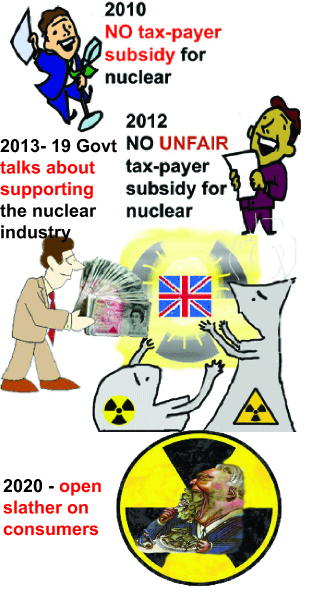 ‘The Sizewell C plans are an insult to the people of Suffolk’ https://www.eadt.co.uk/news/pete-wilkinson-together-against-sizewell-c-campaign-1-6718925 27 June 2020, Pete Wilkinson, Together Against Sizewell C
Chairman of Together Against Sizewell C, Pete Wilkinson, has described it is a “battle for the soul and integrity of East Suffolk”. Here he explains why he is opposing the nuclear project.
Anyone new to Suffolk, ignorant of EDF’s nuclear plans, would be forgiven for laughing out loud.
An untried reactor, labelled ‘technically complicated to construct’ by its own designers, a cost of £20billion-plus, taking at least 10 years to build, producing waste which is not only lethal to living tissue but which remains so for thousands of years and for which there is no agreed or proven disposal or management route, to be built in the middle of a community of 5,000, which will not produce electricity for at least 10 years by which time its output will be redundant to needs, built on an eroding coast? Yeah, sure: pull the other one.
You really couldn’t make it up.
Yet this is what residents up and down the East Suffolk are facing. They have been led to believe that the destruction of their environment on a massive scale, the compulsory purchases, the roads, the workers’ campuses, the borrow pits, the huge water demand in the driest county is inevitable – and to make the best of it.
When did anyone ask YOU, resident of East Suffolk, if you wanted your tranquil, culturally rich and peaceful rural environment urbanised and anonymised, requiring six new roundabouts on the A12 and up to 1,000 vehicle movements a day along our country roads to ferry the material required for our own white elephantine carbuncle on our heritage coast, light, noise and dust pollution 24 hours a day, seven days a week or a decade of accommodating 4,000 workers? Of course you were not asked. They knew the answer. The new nuclear policy has not been subjected to anything like forensic public or Parliamentary scrutiny.
Democratic deficit runs through all aspects of this programme like the letters in a stick of rock and is presented by its advocates as ‘inevitable’. The National Policy Statement process renders what government calls ‘national infrastructure projects of over-riding importance’ inviolate, untouchable and – yes – inevitable unless the planning authorities have the courage or unless the Secretary of State has the guts to do what they should – throw the EDF plans out as an insult to the people of Suffolk. Sizewell C is important to no-one other than EDF.
But just how ‘over-riding’ is the need for Sizewell C? The French-made film, ‘The Nuclear Trap’ makes it clear that Hinkley C in Somerset and Sizewell C are more critical to the survival of the French nuclear industry than they are to providing electricity to UK consumers.
There has been a huge reduction in electricity demand since 2013 – over 16% – making earlier predictions of an increase of 15% by 2020 an overestimation of more than 30%.
Renewables out-compete nuclear on every front – cost, waste, jobs, CO2 and time for deployment. If ever Sizewell was built, it would be at least a decade, probably more like 15 years given the history of cost and time over-runs of its flagship plant at Flamanville, before it turned one kilowatt hour of electricity.
In 15 years, we will – one can only hope – have grown out of our obsession with nuclear and invested at suitably high levels in realising the huge job potential in micro-technology, decentralisation, efficiency and conservation of energy, and look back on our nuclear infatuation with a shake of the head.
The current National Policy Statement which covers the nuclear component of the energy policy, EN6, is entirely unfit for purpose as it gives policy authority only to those nuclear plants which can be deployed before 2025 – i.e. not, Hinkley, not Sizewell and not Bradwell, none of which will be generating electricity by that date.
Therefore the EN6 policy document is null and void. Its replacement is still undergoing review and will depend heavily on the financing arrangements the government can agree to in order to remove the need for EDF to fork out for it.
Instead, the government is exploring novel ways in which to lay the burden for financing a dangerous and costly nuclear venture on you, the consumer.
So much for ‘no subsidy’ nuclear, but in policy terms, it is legally questionable for Hinkley C to continue to be built, for Sizewell C’s planning application to be submitted or for CGN/EDF to consult on plans to build Bradwell B when there is no policy architecture to justify and legitimise any of this work or progress.
EN6 has fallen as a legitimate policy statement for new nuclear build but that does not seem to have any effect on the way the French and Chinese backers of new nuclear in the UK are required to act nor the complacency and indifference with which the government seems to take these gaping legal inconsistencies.
The waste problem that nuclear generates is probably the most intractable. In the 15 years of the existence of the Nuclear Decommissioning Authority, it has failed to secure a site, a volunteer community or to satisfactorily solve many of the dozens of technical and engineering problems associated with burying 500,000 cubic metres of legacy waste while ensuring that the estimated 78,000,000 units of radioactivity remain underground.
While new build waste such as that from Sizewell C is likely to be less bulky, its high burn up in the reactor means that it will be far hotter than even Sizewell B’s waste and will generate much more radioactivity – up to five times that contained in the legacy waste. How can any government or industry knowingly embark on a development programme which will create such a mountain of waste when a repository for its safe disposal is still more a matter of hope over expectation?
The only legacy Sizewell C will leave for Suffolk is a degraded environment and a radioactive waste mountain which future generations will have to deal with. Please tell your councillor to vote to remove the support for Sizewell C at the full council meeting on July 7, please write to the planning inspector to voice your concerns and please urge your MP to tell the Secretary of State to put EDF’s planning application where it belongs – in the bin.
Cloud with tiny levels of radioactivity detected over Scandinavia and European Arctic.
 Radioactivity is blowing in the air https://thebarentsobserver.com/en/ecology/2020/06/various-reactor-related-isotopes-measured-over-scandinavia-and-svalbard?fbclid=IwAR2UsXspMQZSLInvisible for humans, but detectable for radiation-filters. A cloud with tiny levels of radioactivity, believed to originate from western Russia, has been detected over Scandinavia and European Arctic. By Thomas Nilsen, June 26, 2020
First, in week 23 (June 2-8), iodine-131 was measured at the two air filter stations Svanhovd and Viksjøfjell near Kirkenes in short distance from Norway’s border to Russia’s Kola Peninsula. The same days, on June 7 and 8, the CTBTO-station at Svalbard measured tiny levels of the same isotope.
CTBTO is the global network of radiological and seismic monitoring under the Comprehensive Nuclear-Test-Ban Treaty Organization.
Norway’s nuclear watchdog, the DSA, underlines that the levels are very small.
“We are currently keeping an extra good eye on our air-monitoring system,” says Bredo Møller with DSA’s Emergency Preparedness unit at Svanhovd.
While iodine-131 is only measured in the north, in the Kirkenes area and at Svalbard, Swedish and Finnish radiation authorities inform about other isotopes blowing in the skies over southern Scandinavia.
Bredo Møller says to the Barents Observer that his agency can’t conclude there is a connection between what is measured up north and what his Scandinavian colleagues measured in week 24.
“As part of our good Nordic cooperation we are currently exchanging data,” he says.
Møller tells about radiation just above detectable levels. “We found 0,9 microBq/m3 at Svanhovd and 1,3 microBq/m3 at Viksjøfjell.”
Finland’s Radiation and Nuclear Safety Authority (STUK) detected on June 16 and 17 small amounts of the radioactive isotopes cobalt, ruthenium and cesium (Co-60, Ru-103, Cs-134 and Cs-137).
STUK says the measurements were made in Helsinki where analysis is available on the same day. “At other stations, samples are collected during the week, so results from last week will be ready later.”
Likely from a reactor
All these isotopes indicate that the release comes from a nuclear-reactor. Iodine-131 has a half-life of 8 days, and given the small amount measured in the north, this isotope could be gone before the radioactive cloud reached the southern parts of Finland and Sweden a week after the first measurements in the north. That be, if the release was somewhere in the Arctic or northwestern Russia and winds were blowing south or southwest.
Neither of the Scandinavian radiation agencies will speculate about the origin.
“It is not possible now to say what could be the source of the increased levels,” writes the Swedish Radiation Safety Authority in a statement. Also the Swedes underline that the levels are low and do not pose any danger to people or the environment.
In the Netherlands, though, the National Institute for Public Health and the Environment (RIVM) has analyzed the data from Scandinavia and made calculations to find out what may have been the origin of the detected radionuclides.
“These calculations show that the radionuclides came from the direction of Western Russia,” RIVM concludes.
Calls for info-exchange
Senior Nuclear Campaigner with Greenpeace Russia, Rashid Alimov, says to the Barents Observer that the composition of the isotopes strongly indicates that the source is a nuclear reactor or a spent fuel element from a reactor.
“The Russian monitoring systems have not reported any unusual levels of radioactivity in June,” Alimov says, emphasizing that could be due to delayed publication of data.
Greenpeace calls for rapid international cooperation that includes Russia.
“We think information exchange is crucial,” Rashid Alimov says.
1 This Month
19 February – VIRTUAL EVENT-Decision Time: AI and Our Nuclear Arsenal
12:45 p.m. Central / 1:45 p.m. Eastern
To see nuclear-related stories in greater depth and intensity – go to https://nuclearinformation.wordpress.com
-
Archives
- February 2026 (170)
- January 2026 (308)
- December 2025 (358)
- November 2025 (359)
- October 2025 (376)
- September 2025 (258)
- August 2025 (319)
- July 2025 (230)
- June 2025 (348)
- May 2025 (261)
- April 2025 (305)
- March 2025 (319)
-
Categories
- 1
- 1 NUCLEAR ISSUES
- business and costs
- climate change
- culture and arts
- ENERGY
- environment
- health
- history
- indigenous issues
- Legal
- marketing of nuclear
- media
- opposition to nuclear
- PERSONAL STORIES
- politics
- politics international
- Religion and ethics
- safety
- secrets,lies and civil liberties
- spinbuster
- technology
- Uranium
- wastes
- weapons and war
- Women
- 2 WORLD
- ACTION
- AFRICA
- Atrocities
- AUSTRALIA
- Christina's notes
- Christina's themes
- culture and arts
- Events
- Fuk 2022
- Fuk 2023
- Fukushima 2017
- Fukushima 2018
- fukushima 2019
- Fukushima 2020
- Fukushima 2021
- general
- global warming
- Humour (God we need it)
- Nuclear
- RARE EARTHS
- Reference
- resources – print
- Resources -audiovicual
- Weekly Newsletter
- World
- World Nuclear
- YouTube
-
RSS
Entries RSS
Comments RSS
 nuclear-news