The safety of the world requires a nuclear-free planet
 power: A gargantuan threat, Independent Australia By Karl Grossman | 4 October 2020, At the start of 2020, Bulletin of the Atomic Scientists moved its Doomsday Clock to 100 seconds to midnight — the closest to midnight, doomsday, since the clock started in 1947.
There are two gargantuan threats — the climate crisis and nuclear weapons/nuclear power.
The only realistic way to secure a future for the world without nuclear war is for the entire planet to become a nuclear-free zone — no nuclear weapons, no nuclear power. A nuclear-free Earth.
How did India get an atomic bomb in 1974? Canada supplied a reactor and the U.S. Atomic Energy Commission provided heavy water for it under the U.S. so-called “Atoms for Peace” program. From the reactor, India got the plutonium for its first nuclear weapon.
Any nation with a nuclear facility can use plutonium produced in it to construct nuclear arms.
Nuclear technology continues to spread around the world — a recent headline: ‘Trump Administration Spearheads International Push for Nuclear Power.’ Russia, despite Chernobyl, is pushing hard at selling nuclear plants.
Can the atomic genie be put back in the bottle? Anything people have done other people can undo. And the prospect of massive loss of life from nuclear destruction is the best of reasons.
There is a precedent: the outlawing of poison gas after World War I when its terrible impacts were tragically demonstrated, killing 90,000. The Geneva Protocol of 1925 and the Chemicals Weapons Convention of 1933 outlawed chemical warfare and to a large degree the prohibition has held.
There are major regions of the Earth – all of Africa and South America, the South Pacific and others – that are Nuclear-Weapon-Free Zones based on the United Nations provision for such zones.
But if we are truly to have a world free of the horrific threat of nuclear arms, the goal needs to be more. A world free of the other side of the nuclear coin – nuclear power –is also necessary.
Radical? Yes, but consider the even more radical alternative: a world where many nations will be able to have nuclear weapons because they have nuclear technology. And the world continuing to try using carrots and sticks to try to stop nuclear proliferation — juggling on the road to nuclear catastrophe…………
It took decades of struggle to make the place where I live – Long Island, New York – nuclear-free. The Shoreham Nuclear Power Plant was stopped and the six to ten more the Long Island Lighting Company wanted to build, prevented. The two reactors at Brookhaven National Laboratory leaking radioactive tritium into its underground water table have been shut down.
On this 50th anniversary of Earth Day, let us strive for the goals of defeating global warming and having all the Earth nuclear-free. These are existential threats that must be overcome.
A version of this article was given as a presentation at the Long Island Earth Day 2020 Program on 21 September.
Karl Grossman is a full professor of journalism at the State University of New York. He is also an award-winning investigative reporter. Click here to go to Karl’s website. https://independentaustralia.net/environment/environment-display/nuclear-power-a-gargantuan-threat,14372
Debunking myths about saving the natural world
 An Explorer Debunks 5 Myths About Saving The Earth, An Explorer Debunks 5 Myths About Saving The Earth, National Geographic ecologist Enric Sala explains why protecting the planet is not a selfless act. Huffington Post , By Amanda Schupak 4 Oct 2o, ”…………. Sala picked apart five common misapprehensions about conservation for HuffPost. The following are his responses to each myth, edited for length and clarity. Myth No. 1: Conservation is an altruistic, bleeding-heart pursuit.Sala says: It’s a myth that conserving our life-support system is a luxury. Come on. Everybody’s so worried about the financial markets and the economy, but there is no economy without people. And there are no people without the natural world, because everything we need to survive — the oxygen we breathe, the food we eat, the clean water we drink — it’s produced by the work of other species. We cannot replicate any of the goods and services that nature gives us for free. Myth No. 2: Conservation costs too much money.Sala says: Actually, the lack of conservation costs more money. One example: the COVID-19 pandemic. Every single person on the planet has been affected by this. What is the cost of the pandemic? The International Monetary Fund estimated $9 trillion. Other estimates run as high as $15.8 trillion. How much would it have cost to prevent this pandemic? Well, let’s look at the source of the epidemic: wildlife trade. In previous pandemics, it was also wildlife trade — moving species around the world like commodities — but also the destruction of their natural habitat. HIV, Ebola, SARS and many other infectious diseases have come from animals. So, how much would it have cost to prevent the destruction of these places? We released an economic report this year that estimated that, on average, protecting what the science is telling us is the very minimum, which is 30% of the planet (land and sea), would cost $140 billion per year. Is this a lot of money? Well, let’s compare it with a couple of things. One is how much money governments spend today to subsidize activities that actually destroy nature, like burning fossil fuels and industrial agriculture: hundreds of billions to trillions of dollars per year. So what it would cost to protect a third of our life-support system is only a fraction of what the governments of the world spend now to destroy it. This $140 billion is less than what the world spends today on video games. So to people who say, “Well, can we afford it?” I would say that is the most disingenuous argument in the world. The question should be, “How can we afford not to?” Myth No. 3: Ending deforestation is at odds with meeting humanity’s needs.Sala says: We have let ourselves be hijacked by industries that monopolize the use of our land for just a single commodity, at the expense of all the other benefits that society gets if that land is not degraded. ……….. Myth No. 4: We cannot protect more of the ocean because we need to fish more.Sala says: Today only 7% of the ocean is protected, and science is telling us that we need at least 30%. So why don’t we have more of the ocean protected? Because there is a conflict with fishing. We hear from the industrial fishing lobby that we need to fish more because we need to feed more people, but now we’re going to do it sustainably. Well, we reached peak fishing in the mid-’90s ― that was the maximum catch of wild fish and it’s been declining since. Eighty-two percent of fish stocks are overfished, meaning we’re taking them out of water faster than they can reproduce. However, if we get at least 30% of the ocean protected [from fishing], the ocean actually would give us a net gain in fishing catch. In these areas where you don’t kill the fish, they take a longer time to die. They grow larger, they have more sex, they produce many more babies. So this helps to replenish the areas around these reserves. We protect the right 30% of the ocean, [then] actually fishing less, with less effort, we will catch more fish. So what’s not to like here? Myth No. 5: Humans are separate from nature.Sala says: We need to shift from our view of humans as masters of the universe and that everything is centered around us. We are one species living among millions of species of plants and animals and a trillion different types of microbes. And even though, ironically, the fate of all these species is in our hands, without them there will be no us, either. …… https://www.huffingtonpost.com.au/entry/explorer-debunks-myths-saving-earth_n_5f74de08c5b66377b27c92cc?ri18n=true |
|
Good living standards for the world can be attained with reduced energy use

Decent living for all does not have to cost the Earth https://www.sciencedaily.com/releases/2020/10/201001113557.htm
- October 1, 2020, University of Leeds
- Summary:
- A new study reveals that decent living standards could be provided to the entire global population of 10 billion that is expected to be reached by 2050, for less than 40% of today’s global energy. This is roughly 25% of that forecast by the International Energy Agency if current trends continue. This level of global energy consumption is roughly the same as that during the 1960s, when the population was only three billion.
-
Global energy consumption in 2050 could be reduced to the levels of the 1960s and still provide a decent standard of living for a population three times larger, according to a new study.
The study led by the University of Leeds has estimated the energy resource needed for everyone to be provided decent living standards in 2050 — meaning all their basic human needs such as shelter, mobility, food and hygiene are met, while also having access to modern, high quality healthcare, education and information technology.
The findings, published in in the journal Global Environmental Change, reveal that decent living standards could be provided to the entire global population of 10 billion that is expected to be reached by 2050, for less than 40% of today’s global energy. This is roughly 25% of that forecast by the International Energy Agency if current trends continue.
- This level of global energy consumption is roughly the same as that during the 1960s, when the population was only three billion.
The authors emphasise that achieving this would require sweeping changes in current consumption, widespread deployment of advanced technologies, and the elimination of mass global inequalities.
However, not only do the findings show that the energy required to provide a decent living could likely be met entirely by clean sources, but it also offers a firm rebuttal to reactive claims that reducing global consumption to sustainable levels requires an end to modern comforts and a ‘return to the dark ages’.
The authors’ tongue in cheek response to the critique that sweeping energy reform would require us all to become ‘cave dwellers’ was: “Yes, perhaps, but these are rather luxurious caves with highly-efficient facilities for cooking, storing food and washing clothes; comfortable temperatures maintained throughout the year, computer networks — among other things — not to mention the larger caves providing universal healthcare and education to all 5-19 year olds.”
- The study calculated minimum final energy requirements, both direct and indirect, to provide decent living standards. Final energy is that delivered to the consumer’s door, for example, heating, electricity or the petrol that goes into a car, rather than the energy embedded in fuels themselves — much of which is lost at power stations in the case of fossil fuels.
The team built a final energy-model, which builds upon a list of basic material needs that underpin human well-being previously developed by Narasimha Rao and Jihoon Min.
The study compared current final energy consumption across 119 countries to the estimates of final energy needed for decent living and found the vast majority of countries are living in significant surplus. In countries that are today’s highest per-capita consumers, energy cuts of nearly 95% are possible while still providing decent living standards to all.
- Study lead author Dr Joel Millward-Hopkins from the School of Earth and Environment at Leeds said: “Currently, only 17% of global final energy consumption is from non-fossil fuel sources. But that is nearly 50% of what we estimate is needed to provide a decent standard of living for all in 2050.”
“Overall, our study is consistent with the long-standing arguments that the technological solutions already exist to support reducing energy consumption to a sustainable level. What we add is that the material sacrifices needed to for these reductions are far smaller than many popular narratives imply.”
Study co-author Professor Julia Steinberger leader of the Living Well Within Limits project at the University Leeds and professor at the Université de Lausanne in Switzerland said: “While government official are levelling charges that environmental activists ‘threaten our way of life’ it is worth re-examining what that way of life should entail. There has been a tendency to simplify the idea of a good life into the notion that more is better.
“It is clearly within our grasp to provide a decent life for everyone while still protecting our climate and ecosystems.”
-
Study co-author Professor Narasimha Rao from Yale University said: “This study also confirms our earlier findings at a global scale that eradicating poverty is not an impediment to climate stabilization, rather it’s the pursuit of unmitigated affluence across the world.”
Study co-author Yannick Oswald, PhD researcher at the School of Earth and Environment at Leeds said: “To avoid ecological collapse, it is clear that drastic and challenging societal transformations must occur at all levels, from the individual to institutional, and from supply through to demand.”
‘We have a chance’: David Attenborough says $500 billion needed to save earth
‘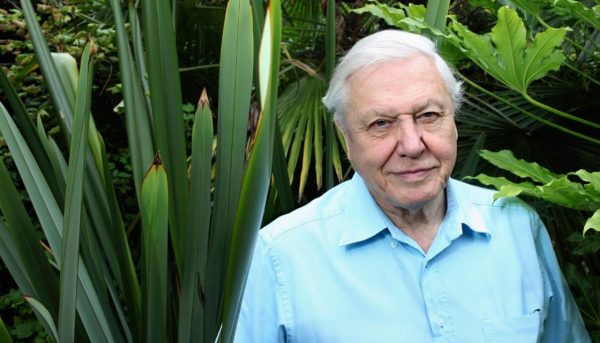 We have a chance’: David Attenborough says $500 billion needed to save earth, https://thenewdaily.com.au/news/world/2020/10/01/david-attenborough-un-summit-climate-change/ Attenborough: $500 billion a year for natureBritish broadcaster David Attenborough led a call from conservation groups on Wednesday for the world to invest $500 billion a year to halt the destruction of nature. Olivia Chan reports., Matthew Green
British broadcaster Sir David Attenborough is leading a call from conservation groups for the world to invest $US500 billion ($A700 billion) a year to halt the destruction of nature.
Sir David, whose latest film documents the dangers posed by climate change and the extinction of species, issued the call as the United Nations convened a one-day summit aimed at galvanising action to protect wildlife.
“Our natural world is under greater pressure now than at any time in human history, and the future of the entire planet – on which every single one of us depends – is in grave jeopardy,” Sir David, 94, said in a statement on Thursday (Australian time).
“We still have an opportunity to reverse catastrophic biodiversity loss, but time is running out.”
Opening the summit in New York, UN Secretary-General Antonio Guterres warned that a million species were at risk of extinction and that climate change and the loss of biodiversity were “destroying earth’s web of life”.
“We are part of that fragile web and we need it to be healthy so we and future generations may thrive,” Mr Guterres said.
The call to redirect financing away from fossil fuels and other polluting industries and into locally led conservation was launched by environmental group Fauna & Flora International and backed by more than 130 organisations.
The world spends an estimated $US80-90 billion ($A112-125 billion) on conservation each year, but studies show that hundreds of billions of dollars may be needed to save ecosystems from collapse.
Britain, Canada and others joined the European Union on Monday in pledging to protect 30 per cent of their land and seas by 2030.
UN officials hope to secure a global agreement on that target at a major round of negotiations on biodiversity due to take place in China in 2021.
Accelerating rate of ice sheet loss from Greenland
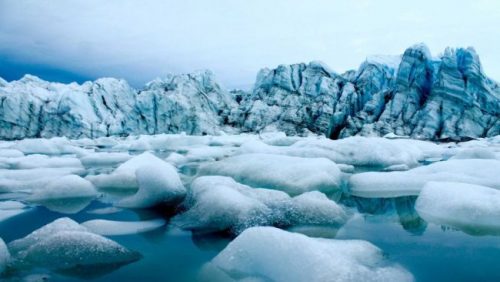 Greenland ice sheet loss already ‘unprecedented’ and set to accelerate Greenland ice sheet loss already ‘unprecedented’ and set to accelerate
Given our lag in getting emissions down since then, Professor Steffen said he doesn’t think 1.5C is still realistically achievable, but keeping warming below 2C is. ABC Science By environment reporter Nick Kilvert, 30 Sept, 20
Melting of the Greenland ice sheet has hit a rate unmatched in the last 12,000 years and is accelerating, scientists have confirmed. Key points:
Research published in Nature today predicts that the Greenland ice sheet will be melting by as much as six times its current rate by the end of the century if we don’t get emissions down. On the flipside, if we can achieve the best-case emissions reduction scenario forecast by the IPCC we can limit its increasing melt rate to around 40 per cent greater than its present rate. While he is cautiously optimistic, Professor Steffen said what is equally important is how they get there. Currently China are responsible for about a quarter of the world’s greenhouse gas production, and if they begin rapidly cutting emissions from today right through until 2060, then that is significant, he said. But if they continue burning fossil fuels and make rapid cuts at the last minute, the damage will already be done. “We use what’s called the carbon budget approach to estimate how much temperature is going to rise — that is the cumulative emissions between now and net-zero [emissions],” Professor Steffen said. “If [China] get their emissions down really quickly, say by 2040, that’s a big difference between whether they coast to 2050 and then cut them over a decade.” On the flipside, if we can achieve the best-case emissions reduction scenario forecast by the IPCC we can limit its increasing melt rate to around 40 per cent greater than its present rate…. As the earth emerged from the last Ice Age around 11,000 years ago, the Arctic experienced a warm period or thermal maximum between about 10,000 and 7,000 years before present. Researchers presumed that the rate of melting of the Greenland ice sheet in that period was higher than it is today. Instead, they found that over the last 20 years, the southwestern Greenland ice sheet where this research was focussed, has been losing ice at an rate of about 6,100 billion tonnes per century on average — around 100 billion tonnes more than at its previous historical peak, according to author Jason Briner from the University of Buffalo. “Our results suggest that yes, this century we will experience ice-loss rates not just similar to those in the past but exceeding those of the past, even under strict carbon emissions scenarios,” Professor Briner said. Worst-case scenario would see 600% increase in melting this centuryAs well as comparing present-day melting with the past, they looked at how different global greenhouse gas emissions trajectories would impact melting over the coming century. They modelled the IPCC’s best-case emissions scenario, called Representative Concentration Pathway (RCP) 2.6, and the worst-case emissions scenario called RCP 8.5. Under RCP 2.6, emissions are drastically reduced starting now and we achieve net-negative emissions this century. That is, we get our emissions to zero and also draw greenhouse gases from the atmosphere through technology or by boosting natural sinks like forests and blue carbon. Under RCP 2.6 we limit global average warming to within 2 degrees Celsius by 2100. On the other hand, under RCP 8.5 we continue burning fossil fuels as per usual, making no substantial efforts to reduce our greenhouse gas emissions through to 2100. Under the RCP 2.6 scenario, their models forecast that melting of the southwestern Greenland ice sheet would increase to around 8,800 billion tonnes per century on average by 2100 — about a forty per cent increase on today’s rate. But under the worst-case RCP 8.5 scenario, they forecast the southwestern Greenland ice sheet could be losing up to 35,900 billion tonnes per century — an increase of nearly 600 per cent on today’s melting rate. Although their study area didn’t encompass the entire ice sheet, Professor Briner said Greenland tends to melt fairly uniformly. “Based on reconstructions of ice sheet changes over the past several decades, it has been shown that when the ice sheet loses mass in our study area, it loses mass across its entire surface,” he said.
The study is an important demonstration of the difference that we can make by cutting emissions, according to David Etheridge from the CSIRO’s Climate Science Centre. “The range of predictions shows a high sensitivity to emissions scenarios with the possibility to limit ice loss with low emissions,” Dr Etheridge said. ‘We still have time’ to slow down sea level riseModelling sea level rise was outside the bounds of this study, but the researchers tentatively suggest that the worst-case scenario melting from the southwestern Greenland ice sheet would add around 10 centimetres to sea levels this century. If that was scaled to the entire ice sheet, that would likely be “doubled or tripled”, Professor Briner said. And that’s without accounting for any melting from the Antarctic ice sheet. Research published earlier this month in Nature found that the Antarctic ice sheet will add 1.3 metres to sea level for every degree of warming up to 2 degrees Celsius above pre-industrial levels. That research found that we have locked in at least two-and-a-half metres of sea level rise from Antarctica, regardless of what happens with our emissions from now on. But it’s the rate at which the melting happens that we have some control over and is the crucial issue, according to Will Steffen from the ANU’s Climate Change Institute. “We can still influence the rate at which Greenland melts and thus the rate that sea level rises. That’s the important message,” Professor Steffen said.
Rather than needing to adapt and shift coastal communities over decades, we can buy ourselves a century or more if we act to get emissions down immediately, Professor Steffen said. When countries signed up to the Paris Agreement in 2015, the aim was to keep warming to 1.5C. Given our lag in getting emissions down since then, Professor Steffen said he doesn’t think 1.5C is still realistically achievable, but keeping warming below 2C is. |
|
Nurdle alert – plastic pollution the next eco calamity for decades

|
Our plastic planet https://www.ehn.org/our-plastic-planet-2647824733.html?rebelltitem=1#rebelltitem1 While climate change remains environmental issue #1, the worries over plastic in our water, soil, food, and bodies continue to grow. Peter Dykstra 28 Sept 20, ”………
It’s hard to ignore the looming mountain of plastics problems. Plastic pollution has been hiding in plain sight as the next eco-calamity for decades. With climate change teed up as the major global environmental challenge, let’s take stock of another modern crisis. Nurdle alert! My first encounter with nurdles was on what should have been a pristine Costa Rican beach in 1986. The lentil-sized, grayish pellets spread the sands for miles, along with a stunning number of shoes. I never figured out the source of the shoe spill, but nurdles eventually became a headline-maker in the oceans world. Nurdles are the feedstock for much of the world’s production of plastics products. If plastic things were pancakes, nurdles would be the batter. They’re spilled from trucks, boxcars, and in the case of the Costa Rican beach, apparently a container ship. There are no firm statistics on how many spills there have been, or how many hundred of billions of virtually indestructible nurdles litter our beaches and seafloors. One example: in 2017, 600 volunteers scoured 279 U.K. beaches, reporting that two-thirds of them were “littered” with nurdles. We do know that nurdle pollution is the tip of the plastic pollution sh*tberg. Let’s talk recycling. For years, much of what we think of as recycled plastic was collected in communities and eventually shipped to Asia. In 2018, the People’s Republic of China formally announced that they’d officially had it. Imports of recyclable plastic had choked China’s landfills beyond reason. Early, rudimentary successes with recycled goods had run their course. But we reached Peak Flip-Flop, and China’s National Sword initiative slammed the door, barring plastic waste imports from the U.S. and about two dozen industrialized nations. Most of our plastic goes to the landfill. In 1960 the U.S. sent roughly 390 tons of plastic waste to landfills, according to the U.S. Environmental Protection Agency. In 2017, the most recent year there is data for, that number shot to 26,820 tons, which is about nine times more than was recycled. Yikes. Part of this is driven by the market to make plastics: the U.S. fracking boom caused an abundance of cheap natural gas and oil. By mid-2019, it was cheaper to make new plastic than it was to recycle the old stuff. Here are some other quick facts to put a damper on your day:
We know the problem has been building for years, and the paths to solutions are often blocked by the fossil fuel industry, which sees salvation in plastics production as its other marquee products fade. While we all rightly call for leaders to address, and in some cases just acknowledge, the climate crisis, let’s also remember to skip the straws and question those that keep |
|
Arctic pollution is worse than expected – tree rings studies reveal this
 Tree rings show scale of Arctic pollution is worse than previously thought, EUREKALERT, UNIVERSITY OF CAMBRIDGE, Research News 28 Sept 20, The largest-ever study of tree rings from Norilsk in the Russian Arctic has shown that the direct and indirect effects of industrial pollution in the region and beyond are far worse than previously thought.An international team of researchers, led by the University of Cambridge, has combined ring width and wood chemistry measurements from living and dead trees with soil characteristics and computer modelling to show that the damage done by decades of nickel and copper mining has not only devastated local environments, but also affected the global carbon cycle. Tree rings show scale of Arctic pollution is worse than previously thought, EUREKALERT, UNIVERSITY OF CAMBRIDGE, Research News 28 Sept 20, The largest-ever study of tree rings from Norilsk in the Russian Arctic has shown that the direct and indirect effects of industrial pollution in the region and beyond are far worse than previously thought.An international team of researchers, led by the University of Cambridge, has combined ring width and wood chemistry measurements from living and dead trees with soil characteristics and computer modelling to show that the damage done by decades of nickel and copper mining has not only devastated local environments, but also affected the global carbon cycle.
The extent of damage done to the boreal forest, the largest land biome on Earth, can be seen in the annual growth rings of trees near Norilsk where die off has spread up to 100 kilometres. The results are reported in the journal Ecology Letters. Norilsk, in northern Siberia, is the world’s northernmost city with more than 100,000 people, and one of the most polluted places on Earth. Since the 1930s, intensive mining of the area’s massive nickel, copper and palladium deposits, combined with few environmental regulations, has led to severe pollution levels. A massive oil spill in May 2020 has added to the extreme level of environmental damage in the area. Not only are the high level of airborne emissions from the Norilsk industrial complex responsible for the direct destruction of around 24,000 square kilometres of boreal forest since the 1960s, surviving trees across much of the high-northern latitudes are suffering as well. The high pollution levels cause declining tree growth, which in turn have an effect of the amount of carbon that can be sequestered in the boreal forest……. The researchers used a process-based forward model of boreal tree growth, with and without surface irradiance forcing as a proxy for pollutants, to show that Arctic dimming since the 1970s has substantially reduced tree growth. Arctic dimming is a phenomenon caused by increased particulates in the Earth’s atmosphere, whether from pollution, dust or volcanic eruptions. The phenomenon partially blocks out sunlight, slowing the process of evaporation and interfering with the hydrological cycle. Global warming should be expected to increase the rate of boreal tree growth, but the researchers found that as the pollution levels peaked, the rate of tree growth in northern Siberia slowed. They found that the pollution levels in the atmosphere diminished the trees’ ability to turn sunlight into energy through photosynthesis, and so they were not able to grow as quickly or as strong as they would in areas with lower pollution levels. “What surprised us is just how widespread the effects of industrial pollution are – the scale of the damage shows just how vulnerable and sensitive the boreal forest is,” said Büntgen. “Given the ecological importance of this biome, the pollution levels across the high-northern latitudes could have an enormous impact on the entire global carbon cycle.” https://www.eurekalert.org/pub_releases/2020-09/uoc-trs092420.php |
|
Amy Coney Barrett as judge on the USA Supreme Court is not likely to help the environment
 SUPREME COURT. Could Barrett ‘shut the courthouse doors’ on enviros? Pamela King, E&E News reporter, September 26, 2020 President Trump today selected Amy Coney Barrett to fill the seat of the late Justice Ruth Bader Ginsburg on the nation’s highest bench.
If confirmed, Barrett, 48, will become the Supreme Court’s sixth Republican-appointed justice, replacing one of the court’s most liberal members and deepening a conservative majority on the bench that could affect the outcome of environmental litigation for decades.
“The courts in general and the Supreme Court in particular are not going to be much help on confronting the major environmental challenges we face,” Vermont Law School professor Pat Parenteau wrote in an email.
Barrett accepted the nomination at the White House this afternoon, highlighting Ginsburg’s achievements on the high court.
“She not only broke glass ceilings,” Barrett said of Ginsburg. “She smashed them.”
Barrett’s record on environmental and energy issues is largely undeveloped, but several environmental groups voiced concern about Barrett’s narrow view of public interest groups’ power to sue in opinions she wrote as a judge for the 7th U.S. Circuit Court of Appeals, where she has served since 2017.
In a ruling this summer, Barrett blocked an effort by a park preservation group and Chicago residents to stop construction of the Obama Presidential Center in the city’s Jackson Park.
The challengers’ lack of standing “pulls the rug out from under their arguments,” Barrett wrote.
She also signed on to a 2018 decision that asked the Army Corps of Engineers to revisit its decision that placed 13 acres of Illinois wetlands off-limits to a housing developer.
“Her slim judicial record shows that she’s hostile to the environment and will slam shut the courthouse doors to public interest advocates, to the delight of corporate polluters,” Brett Hartl, government affairs director at the Center for Biological Diversity, said in a statement yesterday.
Ginsburg, on the other hand, penned the Supreme Court’s opinion in the oft-cited 2000 case Friends of the Earth v. Laidlaw Environmental Services, which took a broad view of environmentalists’ standing to bring lawsuits (Greenwire, Sept. 19).
If Barrett is confirmed, the bench’s three remaining liberal justices — Stephen Breyer, Elena Kagan and Sonia Sotomayor — will need the support of their conservative colleagues to grant any petition, potentially making it much more difficult for environmental groups to challenge Trump administration rules at the high court. The court requires that four justices agree to take up a case and accepts fewer than 1% of cases.
Chief Justice John Roberts has become known for siding with the liberal justices in decisions with impact for environmental rulemaking, but his power as a swing voter would be diluted if a sixth conservative justice were added to the bench. Observers have pointed to Trump’s two other appointees — Justices Neil Gorsuch and Brett Kavanaugh — as the court’s new potential center.
“I would expect that it will be tougher for EPA to act as aggressively with an Amy Coney Barrett on the Supreme Court than it was with a Ruth Bader Ginsburg,” said Tom Lorenzen, head of the environment and natural resources practice at Crowell & Moring LLP…….https://www.eenews.net/stories/1063714781
Russia’s nuclear-powered ice-breakers lead towards military domination of the Arctic
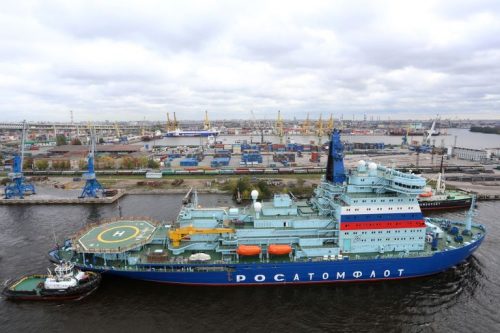
Russia’s Nuclear-Powered Icebreaker Is a Step Toward Military Domination
The country is fast becoming an icebreaking superpower. BY KYLE MIZOKAMI, SEP 24, 2020 Russia’s newest icebreaker, the nuclear-powered Arktika, is headed to its new homeport in St. Petersburg, Russia. The ship, painted in the colors of the Russian state flag, will operate north of the Arctic Circle in anticipation of a year-round shipping route across the icy far north. Arktika is part of Moscow’s emerging policy of exploiting a warming arctic region—and protecting its stake in the region from competitors.
- Russia’s first new nuclear-powered icebreaker in decades, Arktika, is joining the country’s large fleet of icebreaking ships.
- Arktika is capable of smashing through ice that’s nearly 10 feet thick.<
- Millions of Russians live above the Arctic Circle, and warming ocean temperatures could create ice-free shortcuts between Asia and Europe.Russia’s newest icebreaker, the nuclear-powered Arktika, is headed to its new homeport in St. Petersburg, Russia. The ship, painted in the colors of the Russian state flag, will operate north of the Arctic Circle in anticipation of a year-round shipping route across the icy far north. Arktika is part of Moscow’s emerging policy of exploiting a warming arctic region—and protecting its stake in the region from competitors.
<Arktika is the first of a new class of nuclear-powered icebreakers. Construction began at the Baltic Shipyards in St. Petersburg in 2012 with a scheduled launch in 2017, but delays pushed the completion back to 2020. This past February, a short circuit damaged one of the ship’s three 300-ton electric motors, disabling one of the three propellers. Russian authorities ordered the ship to continue, however, and the ship is currently moving on just two propellers.
In 2019, Russian President Vladimir Putin announced the country would ultimately have a fleet of 13 icebreakers, the majority of them nuclear-powered. …………..
Iceabreakers like Arktika could also allow Russia to militarily dominate the Northern Sea Route, smashing a route for Russian warships and transports full of Russian Marines. Warming temperatures will mean other countries, such as Canada and the U.S., will likely move to unlock natural resources previously trapped under sheets of sea ice, and Russia will be in a position to threaten oil, gas, and mineral exploration and exploitation…………. https://www.popularmechanics.com/military/navy-ships/a34128219/russia-nuclear-powered-icebreaker-arktika/
Marshall Islands in danger of being overcome by rising sea levels
Star of the day: David Kabua, President of the Marshall Islands, believes his territory will disappear under rising sea levels, https://pledgetimes.com/star-of-the-day-david-kabua-president-of-the-marshall-islands-believes-his-territory-will-disappear-under-rising-sea-levels/ by Bhavi Mandalia, September 22, 2020 The Marshall Islands facing rising waters. (HILARY HOSIA / AFP)
David Kabua, 71, president for nine months of the Marschall Islands is worried. This small confetti of land lost in the Pacific Ocean, 180 km², perched just two meters from sea level, is threatened by rising waters. There is not much on the 30 atolls that make up the archipelago, nothing to covet, nothing to export, no natural resources, only small farms, fishing boats and a huge radioactive waste storage site. , memory of the American nuclear tests of the 1960s.
This little piece of land, so coveted during the wars for its strategic location, no longer has any leverage to attract attention. And yet, it will soon no longer appear on the world maps. This is the warning cry launched by David Kabua on Monday September 21 at the UN, a simple cry: “My country will disappear if the world does not keep its promises, those made during the Paris agreement.” He recounted the impact of climate change, the increasingly devastating tides, population evacuations, the intense droughts which generate another plague: swarms of mosquitoes carrying various diseases. And then there is the money that is lacking to build the necessary infrastructure to protect its 75,000 inhabitants. Money promised five years ago, and which does not arrive. Finally, there is worse:“The fact, he said, that industrialized countries continue to finance fossil fuels, oil, gas and coal. We are doing our part, but alone we can do nothing. “
David Kabua addresses the United Nations. The UN that the Marschall Islands joined in 1991 but that they could well leave, in fact, not voluntarily, but by force of circumstances, because the atolls will end up submerged. So he concluded by asking: “Will we still be here for the UN’s 100th anniversary in 2045? How about you? Are you going to help us keep our islands in this world?” In the assembly, the question created a long silence. David Kabua, for his part, has nothing more to give than a warning, a prophecy for all. We know. But we look elsewhere. Hope does exist, however, it is in the motto of the Marschall Islands: “Achievement through joint effort“. And we have 25 years ahead of us.
David Attenborough now wants us to face up to the state of the planet
Don’t look away now: are viewers finally ready for the truth about nature?
For decades David Attenborough delighted millions with tales of life on Earth. But now the broadcaster wants us to face up to the state of the planet, PatrickGreenfield @pgreenfielduk
Fri 18 Sep 2020 Sir David Attenborough’s soothing, matter-of-fact narrations have brought the natural world to our living rooms for nearly seven decades and counting. From Australia’s Great Barrier Reef to the jungles of central Africa, the 94-year-old broadcaster has dazzled and delighted millions with tales of life on Earth – mostly pristine and untouched, according to the images on our screens. But this autumn Attenborough has returned with a different message: nature is collapsing around us.
“We are facing a crisis. One that has consequences for us all. It threatens our ability to feed ourselves, to control our climate. It even puts us at greater risk of pandemic diseases such as Covid-19,” he warned in Extinction: The Facts on BBC One primetime, receiving five-star reviews.
Clips and graphs showing the spiralling extinction rate were shared widely on social media. Some even pledged to change their diets and live their lives in a different way. “We have to listen to him. And act,” said broadcaster Matthew Stadlen.
53 million tons of plastic could end up in rivers, lakes and oceans every year by 2030
|
Annual plastic waste could reach 53m tons by 2030 https://www.dhakatribune.com/world/2020/09/20/annual-plastic-waste-could-reach-53m-tons-by-2030 In a new modelling study published in the journal Science, ecologists monitoring pollution in aquatic ecosystems have voiced their concern, saying more needs to be done to reduce emissions
As much as 53 million tons of plastic could end up in rivers, lakes and oceans every year by 2030, even if global commitments to reduce plastic pollution are met, experts have warned. In a new modelling study published in the journal Science, ecologists monitoring pollution in aquatic ecosystems have voiced their concern, saying more needs to be done to reduce emissions, reports Evening Express. Chelsea Rochman, an assistant professor in the department of ecology and evolutionary biology at the University of Toronto, and senior author on the study, said: “Unless growth in plastic production and use is halted, a fundamental transformation of the plastic economy to a framework based on recycling is essential, where end-of-life plastic products are valued rather than becoming waste.” According to the researchers, about 19 to 23 million tons, or 11%, of plastic waste generated globally in 2016 entered aquatic ecosystems. They say computer modelling shows between 24 and 34 million tons of emissions are currently entering waterbodies around the world every year. The researchers modelled future scenarios to include the strategies that are currently in place to reduce plastic pollution in waters, such as bans on certain plastic products, continuous clean-up of litter, and plastic waste management. They found these mitigation strategies are not enough to keep plastic pollution in check, adding that an “enormous” amount of effort would be required to keep emissions below eight million tonnes a year. This would include a 25%-40% reduction in plastic production across all economies, increasing the level of waste collection and management to at least 60% across all economies, and recovery of 40% of annual plastic emissions through clean-up efforts. Plastics are slow to degrade, and even when they do, bits of them, known as microplastics, make their way into the aquatic food chain, and eventually into humans. The “Great Pacific Garbage Patch” – an enormous raft of plastic waste floating in the sea is located between California and Hawaii and embodies the worsening crisis of global plastic pollution. The patch is said to cover 1.6 million square kilometres, an area about 8 times the size of Wales. |
|
BHP betrays international safety efforts

Above – uranium tailings dam – Olympic Dam, South Australia
|
BHP betrays international safety efforts https://theecologist.org/2020/sep/15/bhp-betrays-international-safety-efforts, Dr Jim Green, David Noonan 15th September 2020, Mining giant BHP was complicit in the Samarco mining disaster in Brazil but the company has not learned from the experience. The world’s largest mining company BHP has betrayed international efforts to reform the mining sectors’ ongoing potential to cause catastrophic impacts though the failure of tailings dams. Operations at the Olympic Dam copper-uranium mine in South Australia show BHP has failed to learn key lesson’s regarding transparency, accountability and corporate responsibility following its complicity in the November 2015 disaster at the BHP and Vale joint venture Samarco iron ore mine in Brazil. Samarco was a corporate mining disaster which caused the loss of 19 lives and catastrophic environmental impacts with permanent pollution of native people’s land and rivers. Brazilian prosecutors say the company failed to take actions that could have prevented the disaster. Mine BHP now faces a $6.3 billion (US dollars) law-suit in the UK on behalf of 200,000 Brazilian people. The case alleges the Anglo-Australian mining giant BHP was “woefully negligent” in the run-up to the 2015 dam failure that led to Brazil’s worst environmental disaster. Mayors of two towns wiped out by the Samarco disaster assert that BHP has been using delaying tactics to avoid paying compensation to thousands of people affected by the flood of tailings waste. There have long been calls from environmentalists and others for Australian mining companies to be required to apply Australian standards to their overseas mining operations. The logic is sound given the often inadequate practices of Australian mining companies overseas. But the logic is also a little shaky given that mining standards in Australia leave much room for improvement. Olympic Dam is a case in point. BHP orchestrated approval in 2019 for a massive new tailings dam at Olympic Dam ‒ Tailings Storage Facility 6 (TSF6). This tailings dam is to be built in the same risky ‘upstream’ design that featured in both the Samarco disaster and the January 2019 Vale Brumadinho tailings dam disaster that killed over 250 people – mainly mine workers ‒ in Brazil. Community An internal 2016 report reveals that TSF6 has the potential to cause the death of 100 or more BHP employees and to cause “irrecoverable” environmental impacts from release of tailings waste. Yet, contrary to the recommendations of NGOs in Australia, Federal Environment Minister Sussan Ley granted approval for TSF6 without a comprehensive safety impact assessment and without setting any conditions on BHP to protect workers and the environment. TSF6 is to cover an area of nearly three sq km in tailings waste up to a height of 30 metres at the centre of the tailings pile, equivalent to the height of a nine-story building. BHP will leave this toxic mine waste there forever. Australian Prime Minister Scott Morrison has announced a “fast track” taskforce to further prioritise and accelerate approvals to BHP mining interests in a major Olympic Dam mine expansion process. BHP has clearly failed to learn the lessons of the disasters in Brazil. TSF6 represents an untenable risk to the lives of BHP employees and is unfit for community safety expectations in the 2020’s. Such approaches are clearly inconsistent with modern environmental practice and community expectations. Secret Radioactive tailings waste at Olympic Dam poses a significant long-term risk to the environment and must be isolated for over 10,000 years ‒ effectively forever. Continue reading |
What Frogs Can Teach Us about the State of the World
We currently find ourselves on the other side of a stark but intangible line created by the climate tipping points we’ve blown past for and at our leisure, the virulent diseases we’ve helped spread, and the habitats we’ve destroyed in the name of peace and quiet. Being on this side of the line is a lot like grieving: we are in an “after” time.
And, as with other forms of grieving, in times defined by disease and mass extinction, we need to bear witness. We can be quiet and press record to capture what is still there. We can cup our hands around our ears and listen.
 What Frogs Can Teach Us about the State of the World, By tracking amphibian songs, citizen scientists are helping us understand what’s happening to our environment, The Walrus , BY CAITLIN STALL-PAQUET 18 Sept 20,
T’S AN HOUR after sunset, one night in early April, and I’m standing on the side of a dirt road in my hometown of Frelighsburg, Quebec, with my hands cupped around my ears. I’m listening for the calls of anurans—amphibians without a tail, so frogs and toads. I am here, more specifically, to hear the croaks of wood frogs, which are one of the first species to peek their little brown heads out after a long winter of hibernation.
This isn’t just recreational listening, mind you—this is also for science. I am a volunteer observer, one of several who are gathering data about dwindling amphibian populations in this region. Continue reading
Plutonium in Hinkley nuclear mud dumping, but National Resources Wales’ call for full testing is ignored

 Campaigners claim NRW has been ignored as mud sampling from nuclear plant gets underway, https://nation.cymru/news/campaigners-claim-nrw-has-been-ignored-as-mud-sampling-from-nuclear-plant-gets-underway/ Campaigners claim NRW has been ignored as mud sampling from nuclear plant gets underway, https://nation.cymru/news/campaigners-claim-nrw-has-been-ignored-as-mud-sampling-from-nuclear-plant-gets-underway/
17th September 2020 EDF Energy has commenced taking samples of mud from the construction of a new nuclear power plant without the agreement of National Resources Wales, according to the group opposing plans to dump the sediment in the sea off Cardiff Bay.In February NRW received an application from EDF, who want to dump 800,0000 tonnes of mud dredged as part of building work for the new plant at Hinkley Point, the site of the disused Hinkley Point A facility near Bridgwater in Somerset. Two years ago, EDF were given permission to dump 300,000 tonnes of mud from the site off the Cardiff coast, despite protests and following a Senedd debate. GeigerBay, a coalition of scientists, experts, individuals and organisations formed to oppose the plans, are pressing for extensive testing of the sediment following what they say is evidence of plutonium contamination, a claim that Westminster’s Environment Agency (EA) denies. A notice published last month confirmed sedimentation survey sampling is now underway despite the lack of an agreement on the scope and location of the testing. In a letter to the Expert Committee set up by the Welsh Government to examine the issues around the proposed dump, GeigerBay say: “EDF have proceeded with the sampling (core extraction) operations by the Jack up Barge Excalibur, disregarding the lack of approval. “They apparently think they can ignore NRW as the operations are in English waters and approved by the Marine Management Organisation (the government body that regulates and plans marine activities in the seas around England). “With uncertainties surrounding the planning, licensing and scoping we reiterate our point that testing must include at the very least toxicity testing, a full assessment of the nuclides present in the sediment, and a full exploration of the likelihood of transfer of nuclear pollutants onto land because of the risk to humans and wildlife. “Is the Expert Committee aware that sampling has commenced, and considered everything that that entails?” A petition against the dumping has secured over 10,000 signatures, triggering another debate in the Senedd. |
|
1 This Month



26 September – International Day for the Total Elimination of Nuclear Weapons


PLEASE OPPOSE HR 8255 AND S.3639 – bills would accelerate satellite deployment, with no environmental review or safeguards – https://ncstd5li.quorum.us/campaign/169331/
To see nuclear-related stories in greater depth and intensity – go to https://nuclearinformation.wordpress.com
-
Archives
- September 2026 (245)
- August 2026 (330)
- July 2026 (355)
- June 2026 (287)
- May 2026 (306)
- April 2026 (356)
- March 2026 (251)
- February 2026 (267)
- January 2026 (308)
- December 2025 (358)
- November 2025 (359)
- October 2025 (375)
-
Categories
- 1
- 1 NUCLEAR ISSUES
- business and costs
- climate change
- culture and arts
- ENERGY
- environment
- health
- history
- indigenous issues
- Legal
- marketing of nuclear
- media
- opposition to nuclear
- PERSONAL STORIES
- politics
- politics international
- Religion and ethics
- safety
- secrets,lies and civil liberties
- spinbuster
- technology
- Uranium
- wastes
- weapons and war
- Women
- 2 WORLD
- ACTION
- AFRICA
- Atrocities
- AUSTRALIA
- Christina's notes
- Christina's themes
- culture and arts
- Events
- Fuk 2022
- Fuk 2023
- Fukushima 2017
- Fukushima 2018
- fukushima 2019
- Fukushima 2020
- Fukushima 2021
- general
- global warming
- Humour (God we need it)
- Nuclear
- RARE EARTHS
- Reference
- resources – print
- Resources -audiovicual
- Weekly Newsletter
- World
- World Nuclear
- YouTube
-
RSS
Entries RSS
Comments RSS
 nuclear-news