USA – new plutonium pit production – but no new environmental assessment !

 US officials: No new environmental study for nuclear lab, Spectrum, BY ASSOCIATED PRESS AP, SEP. 02, 2020, ALBUQUERQUE, N.M. (AP) — The National Nuclear Security Administration says it doesn’t need to do an additional environmental review for Los Alamos National Laboratory before it begins producing key components for the nation’s nuclear arsenal because it has enough information.
The National Nuclear Security Administration on Tuesday released its final supplemental analysis of a site-wide environmental impact statement done for the lab more than a decade ago. The agency concluded that no further analysis is required.
Critics have pushed for a new environmental impact statement, saying the previous 2008 analysis didn’t consider a number of effects related to increased production, such as the pressure it puts on infrastructure, roads and the housing market.
“The notion that comprehensive environmental analysis is not needed for this gigantic program is a staggering insult to New Mexicans and an affront to any notion of environmental law and science,” Greg Mello of the Los Alamos Study Group said in a statement.
Lab officials last year detailed plans for $13 billion worth of construction projects over the next decade at the northern New Mexico complex as it prepares for plutonium pit production. About $3 billion of that would be spent on improvements to existing plutonium facilities for the pit work, the Albuquerque Journal reported…….https://spectrumlocalnews.com/nys/buffalo/ap-online/2020/09/02/us-officials-no-new-environmental-study-for-nuclear-lab
The Shoeshone people – theirs the most nuclear bombed territory on Earth
|
A message from the most bombed nation on earth More than 900 nuclear tests were conducted on Shoshone territory in the US. Residents still live with the consequences https://www.aljazeera.com/indepth/opinion/message-bombed-nation-earth-200809112854257.html by Ian Zabart 30 Aug 20, You never know what is killing you when it is done in secret. I watched my uncle suffer from horrible cancer that ate away at his throat and my grandfather die of an auto-immune disease that is known to be caused by exposure to radiation. They say he had a heart attack, but when your skin falls off, that puts stress on your heart. Many of my cousins have died. Last year, my cousin, who is about 50, had a defibrillator put in his chest. Now his daughter, who is a toddler, has heart problems as well. At around the same time, one of my cousins told me his mom has cancer. And then a week later, he found out he has it, too. A few months ago, an elder here died from a rare form of brain cancer. Every family is affected. We have seen mental and physical retardation, leukaemia, childhood leukaemia, all sorts of cancers. The US military industrial complexI am the Principal Man of the Western Bands of the Shoshone Nation of Indians – the most bombed nation on earth. Our country is approximately 40,000 square miles (25.6 million acres), from just west of Las Vegas, Nevada all the way to the Snake River in Idaho, including a 350-mile (563km) wide strip in the Great Basin. There are approximately 25,000 to 30,000 Shoshone lineal descendants but the United States places the number much lower based on blood quantum (a percentage of ancestry). We have been on this land for at least 10,000 years. Our relationship to the US is based upon the Treaty of Ruby Valley signed in 1863. In the treaty, the Shoshone continued to own the land but we agreed that in exchange for $5,000 a year for 20 years, paid in cattle and other goods, the US could establish military posts on the land, that US mail and telegraph companies could continue to operate telegraph and stage lines on it, that a railway could pass through it, that the US could mine for minerals on it. But shortly before the end of World War II, we started to be overrun by the US military industrial complex, in ways we are only now beginning to understand. Nuclear falloutIn 1951, in violation of the treaty, the US established the Nevada Proving Grounds (what would later become known as the Nevada Test Site and is now known as the Nevada National Security Site) on Shoshone territory and began testing nuclear weapons – without our consent or knowledge. We suspect that Nazi scientists brought to the US as part of Operation Paperclip – to help the US develop nuclear weapons – were involved. On January 27, 1951, the first nuclear test took place on our land, when a one-kilotonne bomb was dropped from a plane flying over the site. Over the next 40 years, it became the premier testing location for American nuclear weapons. Approximately 928 nuclear tests took place on the Shoshone territory – 100 in the atmosphere and more than 800 underground. When the US dropped an atomic bomb on Hiroshima in 1945, 13 kilotonnes of nuclear fallout rained down on the Japanese city. According to a 2009 study in the Nevada Law Journal, between 1951 and 1992, the tests conducted on our land caused 620 kilotonnes of nuclear fallout. I was born in 1964, a year after above-ground testing of nuclear weapons was banned. But the US continued to test weapons of mass destruction under our land almost every three weeks until 1992. The downwindersThe fallout from these tests covered a wide area, but it was Native American communities living downwind from the site who were most exposed – because we consumed contaminated wildlife, drank contaminated milk, lived off contaminated land. For Native American adults, the risk of exposure has been shown to be 15 times greater than for other Americans, for young people that increases to 30 times and for babies in utero to two years of age it can be as much as 50 times greater. When the fallout came down, it killed the delicate flora and fauna, creating these huge vulnerabilities across thousands of square miles of Shoshone territory. The pine trees we use for food and heating were exposed, the plants we use for food and medicine were exposed, the animals we use for food were exposed. We were exposed. As a result, we have watched our people die. Some of the strongest defenders of our land, of our people, just gone. But we have to protect our land and our people. Our identity is the land. Our identity is the pure pristine water coming out of the ground, flowing for millions, tens of millions, hundreds of millions of years. We see that pure water as a medicine. People need that pure water to heal. But what we find is that we have the US brokering for the nuclear industry, brokering for the mining industry, the destruction of our property for profit. We cannot endure any further risk, whether from nuclear weapons testing or coal ash or oil tracking, any radiation source at all. Hammers and nailsWe are beginning to understand what has happened to us. For more than 50 years, we have been suffering from this silent killer and the US government’s culture of secrecy keeps it silent. But we need relief. In every other part of the world where there have been nuclear catastrophes or nuclear testing – such as Kazakhstan, Japan, even Chernobyl – there are health registries to monitor those who have been exposed, even if the numbers are kept artificially low in some places. We do not have that here in the US. We do not have that for Native American downwinders. We need that kind of testing. We need health registries. We need monitoring. We cannot wait any longer for the health disparities we are experiencing to be identified. We are having to fight the US to get it to understand our basic health needs. We have managed to obtain documents that were declassified in the 1990s. But there are almost two million pages. Trying to understand all of that is daunting. We do not have any funding and we do not have the support of the US to get that work done. So we are having to do this ourselves as we suffer through this continuing health crisis. We have managed to obtain documents that were declassified in the 1990s. But there are almost two million pages. Trying to understand all of that is daunting. We do not have any funding and we do not have the support of the US to get that work done. So we are having to do this ourselves as we suffer through this continuing health crisis. |
|
Big oil looks to solve its problems by flooding Africa and Asia with plastic
Big Oil Is in Trouble. Its Plan: Flood Africa With Plastic. https://www.nytimes.com/2020/08/30/climate/oil-kenya-africa-plastics-trade.html
Faced with plunging profits and a climate crisis that threatens fossil fuels, the industry is demanding a trade deal that weakens Kenya’s rules on plastics and on imports of American trash. NYT, By Hiroko Tabuchi, Michael Corkery and Carlos Mureithi, Aug. 30, 2020
Confronting a climate crisis that threatens the fossil fuel industry, oil companies are racing to make more plastic. But they face two problems: Many markets are already awash with plastic, and few countries are willing to be dumping grounds for the world’s plastic waste……..
Last year, Kenya was one of many countries around the world that signed on to a global agreement to stop importing plastic waste — a pact strongly opposed by the chemical industry. Emails reviewed by The Times showed industry representatives, many of them former trade officials, working with U.S. negotiators last year to try to stall those rules.
The industry thinks it has found a solution to both problems in Africa.
According to documents reviewed by The New York Times, an industry group representing the world’s largest chemical makers and fossil fuel companies is lobbying to influence United States trade negotiations with Kenya, one of Africa’s biggest economies, to reverse its strict limits on plastics — including a tough plastic-bag ban. It is also pressing for Kenya to continue importing foreign plastic garbage, a practice it has pledged to limit.
Plastics makers are looking well beyond Kenya’s borders. “We anticipate that Kenya could serve in the future as a hub for supplying U.S.-made chemicals and plastics to other markets in Africa through this trade agreement,” Ed Brzytwa, the director of international trade for the American Chemistry Council, wrote in an April 28 letter to the Office of the United States Trade Representative.
The United States and Kenya are in the midst of trade negotiations and the Kenyan president, Uhuru Kenyatta, has made clear he is eager to strike a deal. But the behind-the-scenes lobbying by the petroleum companies has spread concern among environmental groups in Kenya and beyond that have been working to reduce both plastic use and waste.
Kenya, like many countries, has wrestled with the proliferation of plastic. It passed a stringent law against plastic bags in 2017, and last year was one of many nations around the world that signed on to a global agreement to stop importing plastic waste — a pact strongly opposed by the chemical industry.
The chemistry council’s plastics proposals would “inevitably mean more plastic and chemicals in the environment,” said Griffins Ochieng, executive director for the Centre for Environmental Justice and Development, a nonprofit group based in Nairobi that works on the problem of plastic waste in Kenya. “It’s shocking.”
The plastics proposal reflects an oil industry contemplating its inevitable decline as the world fights climate change. Profits are plunging amid the coronavirus pandemic, and the industry is fearful that climate change will force the world to retreat from burning fossil fuels. Producers are scrambling to find new uses for
an oversupply of oil and gas. Wind and solar power are becoming increasingly affordable, and governments are weighing new policies to fight climate change by reducing the burning of fossil fuels.
Pivoting to plastics, the industry has spent more than $200 billion on chemical and manufacturing plants in the United States over the past decade. But the United States already consumes as much as 16 times more plastic than many poor nations, and a backlash against single-use plastics has made it tougher to sell more at home……….
The Kenya proposal “really sets off alarm bells,” said Sharon Treat, a senior lawyer at the nonpartisan Institute for Agriculture and Trade Policy who has worked for more than a decade advising trade talks in both the Trump and Obama administrations. Corporate lobbyists “frequently offer up very specific proposals, which the government then takes up,” she said. ………..
The plastics industry’s proposals could also make it tougher for to regulate plastics in the United States, since a trade deal would apply to both sides.
The records, obtained through Freedom of Information Act requests by Unearthed, a London-based affiliate of the environmental group Greenpeace, paint a picture of close ties between the trade representatives, administration officials and industry representatives. …………..
Kenya isn’t the only country taking measures to curb plastics. A recent report by the United Nations counted 127 countries with policies on the books to regulate or limit use.
In response, the industry has tried to address the plastics issue. The Alliance to End Plastic Waste — formed by oil giants like Exxon Mobil and Chevron, as well as chemical companies like Dow — last year pledged $1.5 billion to fight plastic pollution. That figure, critics point out, is a small fraction of what the industry has invested in plastic infrastructure.
Manufacturers “say they will address plastic waste, but we say plastic itself is the problem,” Mr. Ochieng said. “An exponential growth in plastics production is just not something we can handle.”………….
Despite the industry opposition, last year more than 180 countries agreed to the restrictions. Starting next year, the new rules are expected to greatly reduce the ability of rich nations to send unwanted trash to poorer countries. The United States, which has not yet ratified the Basel Convention, won’t be able send waste to Basel member nations at all……
That setback has re-energized industry to seek deals with individual countries to boost the market for plastics, and find new destinations for plastic waste, analysts say.
In Nairobi, local groups are worried. “My concern is that Kenya will become a dumping ground for plastics,” said Dorothy Otieno of the Centre for Environmental Justice and Development. “And not just for Kenya, but all of Africa.” https://www.nytimes.com/2020/08/30/climate/oil-kenya-africa-plastics-trade.html
Radiation hazard at Dead Horse Bay, Brooklyn
 Scavengers Unearth Buried History — and Maybe Radiation — at Dead Horse Bay“It’s the closest you can come to time travel.” Cured, New York, By Caroline Spivack Aug 25, 2020, “It’s pretty devastating,” said Vanessa Dudley of the radiation recently discovered at Dead Horse Bay, a cove in southeastern Brooklyn that was once, many years ago, home to a landfill. For decades, the bay and its surrounding area have been burping up intriguing early-20th-century detritus onto the beach. Dudley, an administrator at Weill Cornell Medicine, is one of many treasure hunters and artists who regularly visited the beach to pick through mud-flecked glass bottles, ceramic shards, and rusted bits of metal. “You can see the lives of people through these objects. It’s like their memory lives on through them.” Scavengers Unearth Buried History — and Maybe Radiation — at Dead Horse Bay“It’s the closest you can come to time travel.” Cured, New York, By Caroline Spivack Aug 25, 2020, “It’s pretty devastating,” said Vanessa Dudley of the radiation recently discovered at Dead Horse Bay, a cove in southeastern Brooklyn that was once, many years ago, home to a landfill. For decades, the bay and its surrounding area have been burping up intriguing early-20th-century detritus onto the beach. Dudley, an administrator at Weill Cornell Medicine, is one of many treasure hunters and artists who regularly visited the beach to pick through mud-flecked glass bottles, ceramic shards, and rusted bits of metal. “You can see the lives of people through these objects. It’s like their memory lives on through them.”
But earlier this month, the three footpaths that snake from Flatbush Avenue through thick brush to the beach were marked with canary-yellow signs warning: “Danger Area Closed. Potential Hazardous Material.” Authorities had closed the southern half of the bay (near Floyd Bennett Field) following the discovery of radioactive material on the beach and near one of the paths. The radiation was first noticed during an environmental survey in 2019, when the National Park Service (which manages the bay as part of the Gateway National Recreation Area) discovered 31 locations along the shore and nearby trails with excessive levels of gamma radiation. At two of those sites, the culprits turned out to be old deck markers — small, glowing disks that were once used on Navy ships — that were leaking radium-226. These were recently removed, and the possibility of a more extensive cleanup is now being considered…….. In 1926, after many of the factories had moved elsewhere, Barren Island was connected via landfill to the mainland. In the 1950s, Robert Moses further expanded the area’s land mass by building landfills. Moses flooded the area with the city’s garbage — much of which was likely the rubble of other neighborhoods Moses himself destroyed as he reshaped New York — and then covered it with a layer of topsoil. Erosion has since released much of that debris, which collects at the bay’s eastern shore, providing New Yorkers with an eclectic compendium of 20th-century trash. But in light of new knowledge about the radiation there, exploring that garbage — and discovering the clues it holds about the city’s history — comes at a risk. ……… https://ny.curbed.com/2020/8/25/21398976/dead-horse-bay-beach-brooklyn-radiation-scavengers |
|
Analysing the evidence on effects of ionising radiation on wildlife
Nature 21st Aug 2020, Tim Mousseau et al: We re-analyzed field data concerning potential effects
of ionizing radiation on the abundance of mammals collected in the
Chernobyl Exclusion Zone (CEZ) to interpret these findings from current
knowledge of radiological dose–response relationships, here mammal
response in terms of abundance.
In line with recent work at Fukushima, and
exploiting a census conducted in February 2009 in the CEZ, we reconstructed
the radiological dose for 12 species of mammals observed at 161 sites. We
used this new information rather than the measured ambient dose rate (from
0.0146 to 225 µGy h−1) to statistically analyze the variation in
abundance for all observed species as established from tracks in the snow
in previous field studies.
All available knowledge related to relevant
confounding factors was considered in this re-analysis. This more realistic
approach led us to establish a correlation between changes in mammal
abundance with both the time elapsed since the last snowfall and the dose
rate to which they were exposed. This relationship was also observed when
distinguishing prey from predators.
The dose rates resulting from our
re-analysis are in agreement with exposure levels reported in the
literature as likely to induce physiological disorders in mammals that
could explain the decrease in their abundance in the CEZ. Our results
contribute to informing the Weight of Evidence approach to demonstrate
effects on wildlife resulting from its field exposure to ionizing
radiation.
Ohio school all too close to Portsmouth Gaseous Diffusion Plant – nuclear radiation dangers

Ohio school still shuttered among radiation fears, Akron Beacon Journal, By Beth Burger
The Columbus Dispatch, Aug 22, 2020 PIKETON — Monday would have been Layton Cuckler’s first day at Zahn’s Corner Middle School.
Instead, Layton, 11, and about 300 of his peers will be divided between Jasper Elementary School and Piketon High School in the midst of the COVID-19 pandemic. As a fourth grader, he’ll have to stay at the elementary school another year.
He might not be happy about missing out on the rite of passage that his older brother, Gavin, 13, and others have experienced, but his parents, Mike and Teresa Cuckler, are relieved.
The change means Layton won’t risk being exposed to radioactive isotopes downwind from the former U.S. Department of Energy Portsmouth Gaseous Diffusion Plant. The isotopes have been found in the air, soil, water, vegetation and wildlife in the area, according to federal environmental reports……….
A nuclear waste-disposal cell is being built to bury radioactive debris as the 3,000-acre complex is dismantled.
Concerned neighbors Residents have asked for those efforts to be paused because they’re concerned about exposure to radioactive materials. Contamination has been detected there since the work began in 2017, according to the Scioto Valley Local School District.
The DOE waited two years before informing the school district that the air monitor across from the middle school had picked up radioactive elements: americium in 2018 and neptunium-237 in 2019.
The district closed the school last year after traces of uranium were detected in ceiling tiles and air ducts. The district has asked the state to build a new middle school.
History of school
Zahn’s Corner Middle School was built in 1955. One year earlier, before the school was opened, the enrichment plant came online for defense purposes and operated until 2001. The facility then transitioned to enriching uranium for nuclear power plants.
“Why is there a school on the downwind side of a site like this? That doesn’t make a lot of sense to me,” said David C. Ingram, chairman of the physics and astronomy department at Ohio University.
It’s unclear why the DOE chose that site, less than 2 miles from the school, and did not warn the district……..
When Gavin Cuckler was at the middle school, he would sometimes come home with dirt on his clothes from playing outside, Teresa Cuckler said. ……..
The Cucklers and others worry about cancer and other health risks tied to the plant.
“You think about the size of the air monitor [across from the school]. It wasn’t just one or two more elements floating through the air landing in that air monitor. How much was actually released? What’s the data on site show of where they were sampling at different release points?” said Jennifer Chandler, a former DOE employee who worked as an environmental scientist and who is now a Piketon village council member……..
Residents say the emissions are worrisome.
“They know it’s going to Zahn’s Corner because they put an air monitor there. It makes it to our school property. Our kids are out there,” Chandler said. “The danger comes in the toxicity of the inhalation or ingestion of that molecule, which is there. It’s there. So they want to pivot and talk only about radioactivity, which we are concerned about, obviously, but we’re more concerned with the toxicity of having these things in and on our school property.”
Neptunium, plutonium and americium are considered “bone seekers,″ according to the National Library of Medicine. That means that, if ingested, they will lodge in the body, possibly in bones, lungs, muscles and the liver, according to the Centers for Disease Control and Prevention.
“It’s going to irradiate from you for the rest of your life. It’s the toxicity of that. And what is the safe level of neptunium? … Zero. There is no such thing. There is no safe level of these elements,” Chandler said. …….. https://www.beaconjournal.com/news/20200822/ohio-school-still-shuttered-among-radiation-fears
Northern Europe: detecting radiation and where it comes from
|
Radiation detections in northern Europe: what we do and don’t know https://thebulletin.org/2020/08/radiation-detections-in-northern-europe-what-we-do-and-dont-know/# By Cheryl Rofer, August 21, 2020 Alarming events may not be what they initially seem. When an enormous explosion created a mushroom cloud over Beirut on August 4, some people immediately jumped to the wrong conclusion, spreading rumors on social media that a nuclear bomb had gone off. It hadn’t.
Eventually it became clear that the explosion was caused by chemicals stored improperly in warehouses at Beirut’s port. But weapons experts knew from the start that the powerful explosion was not nuclear, because it did not produce a blinding flash of light, or a blast of heat intense enough to set a city on fire. In the hours that followed the explosion, the Comprehensive Test Ban Treaty Organization (CTBTO), which operates a network of monitoring stations around the world, did not detect a telltale spike in atmospheric radiation. That last clue is how experts are able to narrow down the location of nuclear events, from the smallest accidents to major disasters like Chernobyl, and to make educated guesses about what happened. A release of nuclear material spreads its signature on the wind. But that signature is often incomplete or garbled. Nuclear experts are still puzzling over a mysterious event that happened in June, when several monitoring stations in northern Europe detected extremely small quantities of radionuclides in the atmosphere. That event was not a nuclear weapons test, because the CTBTO stations did not detect any seismic activity. So what was it? Experts have scrutinized the radiation signature and narrowed down the possibilities. The finger points to Russia. Radiation alerts. Radioisotope monitoring stations cover most of the globe. The CTBTO runs the biggest network. National radiation safety agencies—for example, in Finland and Sweden—operate other stations. Universities also operate monitoring stations, often in cooperation with the CTBTO or national agencies. Independent monitoring organizations, like the volunteer-driven Safecast, also report radiation measurements. In early June, Norwegian monitoring stations and a CTBTO station detected iodine 131 in far northern Norway. On June 16 and 17, Finland’s Radiation and Nuclear Safety Authority (STUK) detected cobalt 60, ruthenium 103, cesium 134, and cesium 137 in Helsinki. On June 22 and 23, a CTBTO station in Sweden detected ruthenium 103, cesium 134, and cesium 137. Radiation is easy to detect at low levels. The iodine 131 readings were around 1 microbecquerel per cubic meter of air. (A microbecquerel is one atomic disintegration per second in one million cubic meters of air.) But our knowledge of the Chernobyl explosion began with measuring small amounts of radionuclides, so any detection raises an alert. Interpreting the detections. The types of radionuclides detected also provide information. The radionuclides detected in June, except cobalt 60, are produced by nuclear fission. The half-lives of iodine 131 and ruthenium 103 are 8 days and 39 days, respectively, so they must be from recent fission events. These are common fission products from a nuclear reactor. A wider suite of radionuclides would help to pin down what kind of reactor. The iodine 131 detection is ambiguous, though. It is produced by fission, but it is also used fairly commonly to treat hyperthyroidism, in pet cats as well as people. It is easily sent into the air. So it may come from sewage plants or other sources. The fact that it showed up without the other fission products means that its source may be something other than a nuclear accident. Cobalt 60 is not a fission product, but rather an activation product of steel that has been in or very close to a nuclear reactor. It doesn’t usually show up with fission products. It could mean that something was broken in the reactor that released the fission products, or it could be that the Finnish reading was in error. Narrowing down the location. Airborne radionuclides by themselves cannot tell us how or precisely where they were released. The CTBTO tweeted a map indicating the region in northern Europe where the June release may have occurred. This map was probably constructed by tracing the winds during the period just before the radionuclides were detected. A couple of Russian nuclear power plants are located in the area identified, which also covers the location where the United States believes a Russian experimental reactor exploded last summer while it was being raised from the seabed. Last month’s release was probably a minor incident, like a breach in a filter at a nuclear power plant. But Russia has said that there were no incidents at its nuclear power plants. The presence of cobalt 60 and the location have led some to suggest that the release may have been from a new attempt to raise that experimental reactor. It’s not possible, with the limited additional data available so far, to do more than guess the origin of the June radionuclides. The source of a similarly ambiguous release of ruthenium 106 in 2017 took two years to identify. In that case, the release of a single fission product suggested a processing facility, and the wind patterns suggested the Mayak facility in Russia. A detailed study of the stable ruthenium isotopes collected with the ruthenium 106 confirmed those early provisional conclusions. Pinning down the source. Last year’s deadly accident seems to have occurred when a reactor for an experimental nuclear-powered cruise missile was being lifted from the seabed. Again, radionuclide readings from monitoring stations some distance from the source gave early warning to the rest of the world. The amounts and numbers of radionuclides were larger than in the recent release, and reporting on the accident, as people were brought to hospitals, provided more information, including radioisotope detection closer to the site, along with satellite photos and, later, photos of the damaged barge. The radioisotopes indicated that a fission source was involved, although early reports from Russia described an “isotopic source,” a phrase usually reserved for single-isotope heat sources, which would be unsuitable for propulsion. In all three of these cases over the past three years, the radionuclides initially detected by air sampling were ambiguous. Additional information was needed to pin down a source. The best information would come from the country responsible for the release – in all three cases, Russia, which is a signatory to the Convention on Early Notification of a Nuclear Accident. Somebody knows what happened in these cases. We need to hear from them. |
|
Bikini Atoll – food grown there is radioactive – but, it’s “technically habitable”!

Technically Habitable The background radiation of the island has been found to be at normal levels, and even lower than that of some major US cities. While you could walk around on the island and suffer no real ill effects, living there is an entirely different story because of the aforementioned soil and subsequent food contamination.
Ironically for the islanders of Bikini Atoll, the word ‘bikini’ likely comes from ‘pikinni’ which, in the Marshallese language means ‘coconut place
The Radioactive Coconuts of Bikini Atoll, Beginning in 1946, a series of Atomic bombs were tested on and around the Marshall islands, of which Bikini Atoll is one, as both a means of testing and refining the incredibly destructive power demonstrated at Hiroshima and Nagasaki just a year earlier, as well as making a clear statement of US atomic superiority over the Russians. Medium 21 Aug 20, Danny Kane
For those that don’t know, Bikini Atoll was the US’ test site during the 1940s and 1950s for 23 separate Nuclear bombs.
Beginning in 1946, a series of Atomic bombs were tested on and around the Marshall islands, of which Bikini Atoll is one, as both a means of testing and refining the incredibly destructive power demonstrated at Hiroshima and Nagasaki just a year earlier, as well as making a clear statement of US atomic superiority over the Soviet Union.
The Micronesian inhabitants of Bikini Atoll were approached in 1946 by the US government and asked to re-locate while the tests were being carried out. They would be transported to Rongerik Atoll, which is about 6 times smaller than Bikini Atoll — it also has insufficient food and water supplies and was uninhabited at the time………..
The islanders on Rongerik Atoll were starving, the land their being far less fertile than their native Bikini. They were then moved to Kili Island. It was little improvement for the islanders. Relying on fishing for a large part of their diet, they found Kili, which has no lagoons and rough seas most of the year particularly difficult to survive on.
But on March 1st, 1954, the fate of Bikini Atoll was about to take a destructive turn. Ironically, the bomb that was detonated was one of the few not detonated on the Atoll, instead it was detonated on an artificial island 900m from Namu island. This was the infamous Castle Bravo hydrogen bomb. It exploded that day with the force of 15mt , far more than the 6mt that was expected. It was 750 times more powerful that the Fat Man bomb that levelled Nagasaki. It denoted with 2.5 times the expected yield and remains the largest nuclear bomb ever detonated by the US, equivalent to 15 million tonnes of TNT.
Appropriate precautions hadn’t been taken for such a large detonation, and so nuclear fallout rained down on Bikini Atoll, Rongelap Atoll and Rongerik Atoll. 20,000 people were affected by the Castle Bravo detonation and 15 islands and atolls were contaminated. People showed signs of acute radiation sickness, and, on Rongelap, 2 cm of nuclear ash blanketed the entire island. Children, unaware of the fallouts affects, began playing with the falling ash like snow.
Returning Home
Another 19 atomic bombs would be detonated on and around Bikini Atoll, the last one Juniper on July 22nd, 1954, almost 12 years to the day since the Baker detonation. Now, the fight to return to Bikini Atoll really began. Struggling to survive on Kili Island, the islanders were eager to return home.
In spite of all we’d put it through Bikini Atoll had recovered from its years of abuse at the hands of the US. Having been bounced between various islands and atolls since the testing began, Kili had become their permeant home since 1948, but the islands desperately wanted to return home. It wouldn’t be until 1968 until they got the chance. President Lyndon B Johnson promised that the islanders could return, but an investigation by the Atomic Energy Commission found that the radiation levels in the coconut crab, an essential food source for the islanders, were far above normal and acceptable limits. As such, the islanders were forced to remain on Kili island.
Three families did move back in 1972, followed by others in 1987 despite later advice. Issues continued to plague the islanders though, with a boy who’d been born on Bikini Atoll dying from cancer caused by the radiation. In 1982, those that had returned would be evacuated for a second time when it was found that the top 15 inches of soil contained high concentrations of Caesium 137, which would then make its way into the various plants and fruits the islanders ate — and yes, even the coconuts were affected. This resulted in a high number of stillbirths, miscarriages and genetic abnormalities in the children born from those affected by the atomic tests conducted in and around Bikini Atoll. What’s more men were four times as likely to develop lung cancer on the island, women 60 times more likely develop cervical cancer
Over $150 million has been paid to the Bikini islanders as compensation and to reconstruct homes, facilities and institutions for the islanders, many of whom now live on Kili Island. The call to return to Bikini Atoll is still strong though and many point to the fact that the island is still technically habitable.
Technically Habitable
The background radiation of the island has been found to be at normal levels, and even lower than that of some major US cities. While you could walk around on the island and suffer no real ill effects, living there is an entirely different story because of the aforementioned soil and subsequent food contamination.
One proposed solution, and the one favoured by the islanders themselves, is to scrap the topsoil. The top 15 inches of Caesium 137 contaminated soil would be removed and replaced with potassium rich soil. The plants, preferring the potassium over the caesium, would quickly switch to that. While Caesium 137 would still be present in the earth, it would be absent from the food.
There are unfortunately a number of issues with this. Removing the topsoil would have a devasting effect on the ecology of the island and scientists have argued that it would effectively turn Bikini Atoll into a wasteland. This is to say nothing of the expense and the fact that the scraping of the topsoil would likely have to be repeated on occasion to ensure that Caesium 137 didn’t return to the food supply.
Right now, the islanders live on a majority imported food supply and it’s likely that they could continue to do this on Bikini Atoll. It is hardly a return to normal life on the home island though and if the islanders are forced into the same food import practices they’ve had since the 40s, many argue why return to the island at all. Many islanders seem willing to take the risk of destroying the island if it means that they can return their a potentially grow food once more like their ancestors of old.
And so, it remains to this day. The Bikini islanders have never returned home, instead being forced into limbo. Most live on Kili Island today and there are as many as 2,400 Bikini islanders, with fewer than 40 of them having been alive to witness the fires of nuclear fission all those years ago. A great many of them have never even visited their home island, which in recent years has become a tourist attraction. A great many diving tours are offered, especially of the sunken USS Arkansas and the USS Saratoga aircraft carrier, two of the many ships sunk in the testing, as well as the colossal crater left by Castle Bravo…………..
Ironically for the islanders of Bikini Atoll, the word ‘bikini’ likely comes from ‘pikinni’ which, in the Marshallese language means ‘coconut place’………https://medium.com/@dannykane97/the-radioactive-coconuts-of-bikini-atoll-9bfb568b8b07
Nuclear waste should no longer be exempt from environmental laws
 How Bedrock Environmental Law Can Break the Nuclear Waste Logjam, https://news.bloomberglaw.com/environment-and-energy/insight-how-bedrock-environmental-law-can-break-the-nuclear-waste-logjam Geoffrey Fettus, NRDC 17 Aug 20
The 30-year battle over nuclear waste disposal at Yucca Mountain in Nevada shows it’s time for the Atomic Energy Act to be amended. Geoffrey Fettus, senior attorney for the Natural Resources Defense Council, says Congress should pass legislation to end the exemption of nuclear waste from hazardous waste and other bedrock environmental laws.
For more than 30 years, Congress and the federal government have tried again and again to shove our nation’s spent nuclear fuel down a hole at Yucca Mountain, Nev. It’s time to use our foundational environmental laws get out of this seemingly impenetrable maze.
Congress should amend the Atomic Energy Act to remove exemptions from environmental laws for radioactive waste, a proposal that got an important boost from the House Select Committee on Climate Crisis as it called for a task force of federal, state, local, and tribal officials to study the implications of this idea.
Earlier this year, President Trump bowed to reality and abandoned efforts to force the radioactive waste on Nevada, the Yucca mirage finally dissipated. What’s clear now is that trying to force Nevada, or Utah, or New Mexico, or Tennessee (or any other state) to take the entirety of the nation’s most toxic nuclear waste won’t work. Continuing down that path will get us nowhere.
Instead of seeing recalcitrant states as the problem, what if we acknowledge the reality that they must be a key part of the solution for nuclear waste?
Feds Have Exclusive Jurisdiction Over Radioactive Materials
Remarkably, our bedrock environmental laws don’t cover nuclear waste, and they should. The Atomic Energy Act started the nuclear industry and was enacted years before our key pollution safeguards were established.
Crucially, and mostly for nuclear weapons reasons, the AEA gave the federal government exclusive jurisdiction over all radioactive materials, including radioactive waste. When Congress enacted our foundational environmental laws decades later, each of them included an exemption that excludes radioactive waste except in limited or marginal ways.
This is the original sin that must be rectified.
To explain this pernicious problem, when Congress considered nuclear waste in its precedent setting 1982 Nuclear Waste Policy Act, it just accepted the AEA’s sole federal authority and nuclear waste’s exclusion from environmental law as the way of the world. Only a few years later, for the sake of political expedience, Congress cut short a well thought out siting process and required the Yucca Mountain repository as the only option.
This was supposed to expedite the process, but not surprisingly, it exploded in controversy and eventually ground to a halt. And now it has finally, truly, died. But nuclear waste remains just as toxic and problematic as ever.
If nuclear waste were covered by environmental laws, i.e., without the current exemptions that limit EPA and state authority, protective federal health and welfare standards can combine with state-level decision-making over where and how the waste could be stored within its borders.
Amending the AEA and removing the provisions that exempt nuclear waste from our hazardous waste and water laws would give us our best chance to garner public acceptance for a process to find safe, technically sound storage sites for toxic nuclear waste—waste that will remain dangerous to human health for hundreds of thousands of years.
Why This Can Work
Consider how things could change if environmental laws could operate as intended.
Under regular environmental law (that covers pollution of air, water, land), the EPA sets strong standards commensurate to the harm of the pollutant. States can then assume the management of that program (or leave it to the EPA) and set additional, stricter standards if they wish.
A state can have strong regulatory authority to set terms for how much waste it might dispose of, how the facility will operate, and the requisite power to enforce those protective standards and protect its citizens—all things it cannot do now for radioactive waste.
To be clear, the standards for high-level radioactive waste will need to be special and extraordinarily protective, and the rulemaking for those standards will be quite a technical ordeal. But, there’s no getting around doing that hard work; Congress tried to take a short cut and it failed.
Once those standards are in place, the EPA and the states can, as in other instances, share the necessary roles of guarding public safety and welfare from radioactive waste. This institutional framework allows for both scientific defensibility of potential sites and, importantly, public acceptance of the process.
The Task Falls to Congress
For far too long many members of Congress and officials in Washington fought any efforts like this as they sought the quick fix of Yucca. Now there’s evidence of change. The ambitious report from the House Select Committee on Climate Crisis included this key recommendation:
Congress should establish a task force comprised of federal, state, local, and tribal officials to study the implications of amending the Atomic Energy Act to remove exemptions from environmental laws for spent fuel and high-level waste, while maintaining federal minimum standards.
Lawmakers should pick up this recommendation, create just such a task force, and move forward with this plan. Will this work? Yes—but it will take both hard work and time.
One thing I can guarantee is that the current approach isn’t working and won’t ever work. No single state is going to willingly accept the entirety of the nation’s nuclear burden without any way to protect their citizens; we have decades of evidence for this proposition. No amount of stomping of feet in the halls of Congress can change that.
Author Information
Geoffrey Fettus is a senior attorney for the Natural Resources Defense Council’s climate and clean energy program in Washington, D.C. He litigates in federal courts and testifies before Congress on the beginning and end of the nuclear fuel cycle. Prior to joining the NRDC, he was a staff attorney at the New Mexico Environmental Law Center and an assistant attorney general in New Mexico’s Office of the Attorney General.
The Arctic – where global heating meets nuclear pollution – theme for September 20
Global heating is bringing massive changes to the Arctic, and at an accelerating pace. It is the warning system to the world, as sea ice melts, Greenland’s glaciers melt, swathes of frozen ground thaw, permafrost melts. The Arctic ocean will probably be ice-free in summer by 2040.
Crazily, Russians and Americans rejoice, seeing all this as the opportunity to exploit the region for oil and gas, the very things that are causing this unfolding climate nightmare. Apparently these governments are not concerned about the Arctic processes that bring changed global weather, with changed ocean currents, sudden extreme cold snaps. Global heating speeds up with feedback loops: as ice is lost , dark water absorbs more heat from the sun, melting permafrost releases methane and carbon dioxide into the atmosphere.
Arctic regions now experience repeated uncontrollable forest fires, bringing environmental and economic destruction.
Nuclear pollution. The Arctic is where the the two disastrous threats meet – climate change and nuclear radiation. This danger is happening with fires threatening Northern Russian radioactive sites, and with radiation released as buried nuclear items appear from under the ice. Russia’s dumping of nuclear submarines and other radioactive trash is now recognised as a danger to Arctic ecosystems.
There are 39 nuclear-powered vessels or installations in the Russian Arctic today with a total of 62 reactors. This includes 31 submarines, one surface warship, five icebreakers, two onshore and one floating nuclear power plant. These numbers are set to increase; . “By 2035, the Russian Arctic will be the most nuclearized waters on the planet.”
There were 2 fatal arctic accidents in 2019 – 14 sailors killed due to a fire on a nuclear-powered submarine, and an underwater nuclear-powered cruise missile exploded. Several serious submarine nuclear reactor accidents have occurred in Arctic waters, and a U.S. bomber with plutonium warheads crashed at Thule airbase on Greenland. In the Kara Sea, thousands of containers wit radioactive waste were dumped, together with 16 reactors.
Russia plans removal of its nuclear trash from Arctic waters
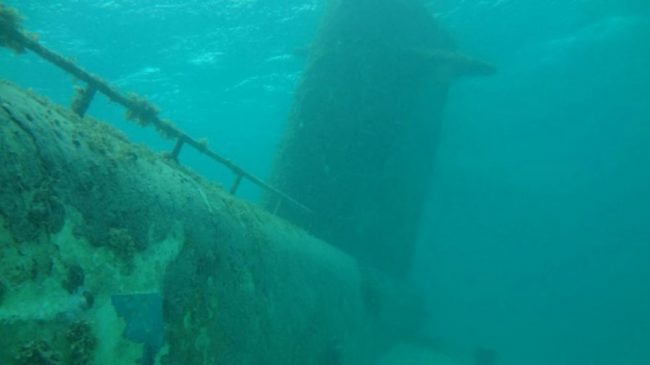
Russia to Remove Hazardous Nuclear Objects Dumped in Its Arctic Waters,
The country’s nuclear energy company will over the next eight years lift two submarines and four reactor compartments from the bottom of the Barents and Kara Seas. By The Barents Observer 5 Aug 20, Russia’s state nuclear agency plans to remove several nuclear objects from the depths of Russia’s Arctic waters in an effort to reduce environmental hazards, Rosatom said this week as it presented a clean-up plan for the region.
Russia’s state nuclear agency plans to remove several nuclear objects from the depths of Russia’s Arctic waters in an effort to reduce environmental hazards, Rosatom said this week as it presented a clean-up plan for the region.
From the late 1960s to the late 1980s, about 18,000 radioactive objects were dumped into Russia’s remote northern waters. Most of them present little environmental risk. But some are increasingly seen as a hazard to Arctic ecosystems.
“Rosatom over the next eight years intends to lift from the bottom of Russia’s Arctic waters six objects that are most dangerous in terms of radioactive pollution,” the company’s spokesperson told the state-run TASS news agency.
The company plans to lift the reactors from the K-11, K-19 and K-140 submarines as well as spent nuclear fuel from the reactor that served the Lenin icebreaker.
In addition, two entire submarines will be lifted: the K-27 from the Kara Sea and K-159 from the Barents Sea. While the former was deliberately dumped by Soviet authorities in 1982, the latter sank during a towing operation in 2003.
The K-27 is located in 33-meter depths east of the Novaya Zemlya archipelago. It has been described by experts as a potential radioactive “time bomb.” The K-159 is located in 200-meter depths off the coast of the Kola Peninsula.
These six objects represent more than 90% of radioactive sources dumped at sea, Rosatom said………
Lifting the six hazardous nuclear objects will not only be technically difficult, but also very expensive.
A recent report made for Rosatom and the European Commission estimated the costs of lifting these six objects at 278 million euros. That includes the cost of bringing them safely to a yard for decommissioning and long-term storage.
Lifting the K-159 alone is estimated to cost 57.5 million euros. Lifting the K-27 and transporting it to a shipyard for decommissioning and long-term storage in Saida Bay will carry a price tag of 47.7 million euros, the report said.
It’s unlikely that Russia’s increasingly cash-strapped treasury will have the 278 million euros needed for the cleanup.
Several countries have previously allocated billions to assist Russia’s post-Soviet efforts to cope with nuclear waste.
Norway has since the mid-90s granted about 1.5 billion kroner (140 million euros) to nuclear safety projects in the Russian part of the Barents region. https://www.themoscowtimes.com/2020/08/05/russia-to-remove-hazardous-nuclear-objects-dumped-in-its-arctic-waters-a71060
Nuclear radiation – potential danger in East Ukraine
Coal mines and the metallurgical plants associated with them are the backbone of the economy in the self-proclaimed republics of Donetsk and Luhansk in eastern Ukraine, where the conflict between the central government and the Russian-backed separatists rages on. Closing them deprives the local population of their livelihoods and threatens these and the neighboring regions in Ukraine with ecological disaster.
Pumps cut off
In 2017, the “Donetsk People’s Republic” (“DPR”) developed a plan, according to which only 17 of the profitable mines in the region were kept in operation.
But reality decided to throw a wrench in the works, primarily because Russia did not invest in the Donetsk industry.
The mines were closed by a simple method: the pumps that pump out the water were turned off. The equipment was cut and handed over for scrap.
And it will inevitably affect the situation on the territory controlled by Ukraine – the mines on Ukrainian territory and the Donbass mines form a single water pumping system.
No radioactive contamination…yet
Of particular concern is the Yunkom mine, which in 1979 carried out an experimental nuclear explosion with a yield of 0.3 kilotons.
After the explosion, a glassy capsule with liquid radioactive waste was formed at a depth of 903 meters. It was flooded just after the pumps were turned off in April 2018.
None of the experts really know how the radioactive capsule will react with water, when it will naturally collapse, or where its contents will end up. Neither the authorities of the self-proclaimed republics nor the government of Ukraine are monitoring the radioactive contamination. Nor are they in the Rostov region, where the waters of the Seversky Donets River flow……… https://jam-news.net/ukraine-conflict-miness-ecology/
Environmental injustice is rampant around the world
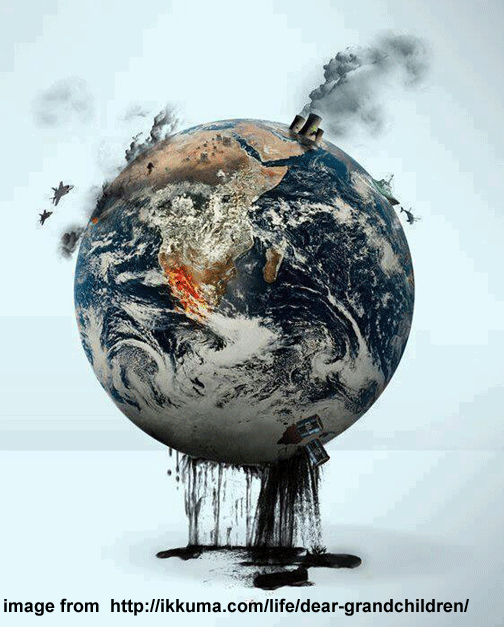 A STUDY OF NEARLY 700 STUDIES MAKES IT CLEAR: ENVIRONMENTAL INJUSTICE IS RAMPANT AROUND THE WORLD, ensia July 30, 2020 — The coronavirus pandemic and resurgence of the Black Lives Matter movement have many environmentalists paying attention to the inextricable links between marginalized peoples and environmental pollution.The history of disproportionate environmental impacts on Black, Indigenous, and people of color often goes back for centuries. A recent review of 141 Indigenous groups by University of Helsinki conservation researcher Álvaro Fernández-Llamazares and colleagues published in the journal Integrated Environmental Assessment and Management shows how colonialism directly led to the development of environment-polluting infrastructure built without the consent of — and differentially affecting — communities in their territories…… July 30, 2020 — The coronavirus pandemic and resurgence of the Black Lives Matter movement have many environmentalists paying attention to the inextricable links between marginalized peoples and environmental pollution….. https://ensia.com/notable/environmental-injustice-global-indigenous-pollution/
As sea levels rise globally, we need to start planning now

RISING GLOBAL FLOOD RISK DEMANDS ACTION, PURSUIT, 31 Jul 20,
By the end of the century tens of millions more people and trillions of dollars more of the world economy will be at risk of being flooded as sea levels rise We know climate change will cause rising sea levels and increase the frequency of storms and extreme waves, putting large stretches of land at greater risk of flooding. But just how bad will it be?
It is the sort of question that has long frustrated strong policy action on countering and mitigating climate change……
In what is the most comprehensive effort yet to assess the global risks of rising sea levels, researchers have now estimated that in the next 80 years the flood risk across the world will rise by around 50 per cent, putting millions more people and trillions of US dollars more of infrastructure at risk.
In addition, by 2100, extreme floods now thought of as being one-in-100-year events, will be occurring as frequently as every 10 years across much of the world – an increased risk of ten times.
According to the University of Melbourne-led study now published in Nature: Scientific Reports, the land area exposed to an extreme one-in-100-year flood event will increase by more than 250,000 square kilometres, an increase of 48 per cent to over 800,000 square kilometres.
In concrete terms the study’s estimates translate into about 77 million more people being at risk of experiencing flooding, a rise of 52 per cent to 225 million.
The economic risk in terms of the infrastructure exposed will rise by $US3.5 trillion, an increase of 46 per cent to $US11.3 trillion…….
According to the University of Melbourne-led study now published in Nature: Scientific Reports, the land area exposed to an extreme one-in-100-year flood event will increase by more than 250,000 square kilometres, an increase of 48 per cent to over 800,000 square kilometres.
In concrete terms the study’s estimates translate into about 77 million more people being at risk of experiencing flooding, a rise of 52 per cent to 225 million.
The economic risk in terms of the infrastructure exposed will rise by $US3.5 trillion, an increase of 46 per cent to $US11.3 trillion………..
It’s showing that whole coastal communities are at risk of being devastated so we need urgent action.
“Curbing rising greenhouse gases is critical, but much of the predicted sea level rise is already baked-in – it will happen irrespective of what happens with greenhouse gases. So we need to adapt.
“This may mean building coastal defences like those already undertaken in the Netherlands. In other locations it may involve retreating populations from coastal areas.”
And Ms Kireczi notes that like many of the consequences of climate change, some low and middle income countries (LMICs) are particularly exposed.
For example, major populations in South-east and South Asia are at risk. But major populations in wealthier regions are also at risk including parts of China, Northern Europe and the United States.
“We need to start planning now the long-term investments in coastal defences, like dykes and sea walls, that we are going to need to protect vulnerable populations and assets.” https://pursuit.unimelb.edu.au/articles/rising-global-flood-risk-demands-action
Need for Prediction of Marine Heatwaves
|
Need for Prediction of Marine Heatwaves, By Tasmanian Times July 29, 2020 There is need for the development of systems to predict marine heatwaves, say an international research team. The phenomena are a growing threat to marine ecosystems and industries as the climate changes.
Unlike terrestrial heatwaves and other extreme weather events such as cyclones, knowledge of marine heatwaves and their causes is relatively crude, so we don’t yet have tools to predict when they will occur and what their impact will be In a paper published in the journal Nature Reviews Earth and Environment, leading ocean and climate scientists from across Australia and around the world outline the need and potential for marine heatwave prediction. Lead author Institute of Marine and Antarctic Studies (IMAS) Professor Neil Holbrook said dedicated and coordinated research into marine heatwaves only really began following an extreme event off Western Australia in 2011. Subsequent studies have revealed the range of risks they pose. “Over the past century, the global average number of marine heatwave days per year has increased by more than 50 per cent – a trend expected to accelerate under future climate change,” Professor Holbrook said…….. https://tasmaniantimes.com/2020/07/need-predict-marine-heatwaves/ |
|
1 This Month



26 September – International Day for the Total Elimination of Nuclear Weapons


PLEASE OPPOSE HR 8255 AND S.3639 – bills would accelerate satellite deployment, with no environmental review or safeguards – https://ncstd5li.quorum.us/campaign/169331/
To see nuclear-related stories in greater depth and intensity – go to https://nuclearinformation.wordpress.com
-
Archives
- September 2026 (245)
- August 2026 (330)
- July 2026 (355)
- June 2026 (287)
- May 2026 (306)
- April 2026 (356)
- March 2026 (251)
- February 2026 (267)
- January 2026 (308)
- December 2025 (358)
- November 2025 (359)
- October 2025 (375)
-
Categories
- 1
- 1 NUCLEAR ISSUES
- business and costs
- climate change
- culture and arts
- ENERGY
- environment
- health
- history
- indigenous issues
- Legal
- marketing of nuclear
- media
- opposition to nuclear
- PERSONAL STORIES
- politics
- politics international
- Religion and ethics
- safety
- secrets,lies and civil liberties
- spinbuster
- technology
- Uranium
- wastes
- weapons and war
- Women
- 2 WORLD
- ACTION
- AFRICA
- Atrocities
- AUSTRALIA
- Christina's notes
- Christina's themes
- culture and arts
- Events
- Fuk 2022
- Fuk 2023
- Fukushima 2017
- Fukushima 2018
- fukushima 2019
- Fukushima 2020
- Fukushima 2021
- general
- global warming
- Humour (God we need it)
- Nuclear
- RARE EARTHS
- Reference
- resources – print
- Resources -audiovicual
- Weekly Newsletter
- World
- World Nuclear
- YouTube
-
RSS
Entries RSS
Comments RSS
 nuclear-news