Where’s the water coming from? In dry East Anglia, EDF has no solution for Sizewell nuclear power’s insatiable thirst.

EDF have announced yet another consultation, running for 3 weeks from 3rd to 27th August, this time it’s …Where’s the water coming from? One would think after nearly a decade of planning and many questions on ‘Where’s the Water coming from?’ EDF would have this sorted but NO.
Northumbrian Water/Essex & Suffolk Water have announced they cannot supply the ever increasing amounts of water needed to build SZC and will need several years to install over 20km of piping from the River Waveney to the site. We all know East Anglia is one of the driest areas in the country and members of TASC have been posing the question for years, see our response to Deadline 2.
As far back as Jan 2017 The Economist published an article on mains water at SZC, it makes for an interesting read, then as far back as 2010 TASC’s own Joan Girling was asking the very same question Where’s the water coming from?’
TASC (accessed) 17th Aug 2021
EDF launch yet another Consultation ~ Respond by 27th August
Will Sizewell C nuclear project finish off UK’s Avocet bird species?
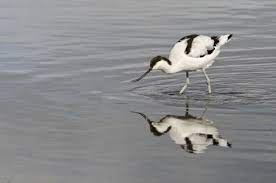
Will Sizewell C see off the avocet? There are many reasons why birds disappear — and why they return. The avocet, however, is probably the only one that owes its resurgence to the Nazis. After a 100-year hiatus in Britain, this elegant black and white wader reappeared after the second world war. Four pairs were found in Minsmere nature reserve and another four in Havergate Island, both along the Suffolk coast. These areas had been flooded to prevent a German invasion, making them ideal nesting grounds.
The avocet had taken flight from parts of Holland damaged by the Nazis, travelling 100 miles or so here across the North Sea. Today, visitors to Minsmere would be hard pressed not to see an avocet during the summer, and nationally they are no longer listed as endangered. But there are fears of a new danger to their continued success — the proposed Sizewell C nuclear power station. The ten-year construction of the plant will involve major disruption to water levels in the area, threatening a huge range of wildlife. So, despite avocets’ recent triumphs, the future
may not be so black and white for these beautiful monochrome birds.
Spectator 14th Aug 2021
https://www.spectator.co.uk/article/will-sizewell-c-see-off-the-avocet
Algeria: deep resentment of French colonialism and the effects of nuclear bombing -still very real today.

In Algeria, France’s 1960s nuclear tests still taint ties, https://www.france24.com/en/africa/20210729-in-algeria-france-s-1960s-nuclear-tests-still-taint-ties More than 60 years since France started its nuclear tests in Algeria, their legacy continues to poison relations between the North African nation and its former colonial ruler.The issue has come to the fore again after President Emmanuel Macron said in French Polynesia on Tuesday that Paris owed “a debt” to the South Pacific territory over atomic tests there between 1966 and 1996.
The damage the mega-blasts did to people and nature in the former colonies remains a source of deep resentment, seen as proof of discriminatory colonial attitudes and disregard for local lives.
Diseases related to radioactivity are passed on as an inheritance, generation after generation,” said Abderahmane Toumi, head of the Algerian victims’ support group El Gheith El Kadem.
“As long as the region is polluted, the danger will persist,” he said, citing severe health impacts from birth defects and cancers to miscarriages and sterility.
France carried out its first successful atomic bomb test deep in the Algerian Sahara in 1960, making it the world’s fourth nuclear power after the United States, the Soviet Union and Britain.
Today, as Algeria and France struggle to deal with their painful shared history, the identification and decontamination of radioactive sites remains one of the main disputes.
In his landmark report on French colonial rule and the 1954-62 Algerian War, historian Benjamin Stora recommended continued joint work that looks into “the locations of nuclear tests in Algeria and their consequences”.
France in the 1960s had a policy of burying all radioactive waste from the Algerian bomb tests in the desert sands, and for decades declined to reveal their locations.
‘Radioactive fallout’
Algeria’s former veterans affairs minister Tayeb Zitouni recently accused France of refusing to release topographical maps that would identify “burial sites of polluting, radioactive or chemical waste not discovered to date”.”The French side has not technically conducted any initiative to clean up the sites, and France has not undertaken any humanitarian act to compensate the victims,” said Zitouni. According to the Ministry of the Armed Forces in Paris, Algeria and France now “deal with the whole subject at the highest level of state”.
“France has provided the Algerian authorities with the maps it has,” said the ministry.
Between 1960 and 1966, France conducted 17 atmospheric or underground nuclear tests near the town of Reggane, 1,200 kilometres (750 miles) from the capital Algiers, and in mountain tunnels at a site then called In Ekker.
Eleven of them were conducted after the 1962 Evian Accords, which granted Algeria independence but included an article allowing France to use the sites until 1967.
A radioactive cloud from a 1962 test sickened at least 30,000 Algerians, the country’s official APS news agency estimated in 2012.
French documents declassified in 2013 revealed significant radioactive fallout from West Africa to southern Europe. Algeria last month set up a national agency for the rehabilitation of former French nuclear test sites.
In April, Algeria’s army chief of staff, General Said Chengriha, asked his then French counterpart, General Francois Lecointre, for his support, including access to all the maps.
We respect our dead’Receiving the maps is “a right that the Algerian state strongly demands, without forgetting the question of compensation for the Algerian victims of the tests,” stressed a senior army officer, General Bouzid Boufrioua, writing in the defence ministry magazine El Djeich.”France must assume its historical responsibilities,” he argued.President Abdelmadjid Tebboune, however, ruled out any demands for compensation, telling Le Point weekly that “we respect our dead so much that financial compensation would be a belittlement. We are not a begging people.”France passed a law in 2010 which provided for a compensation procedure for “people suffering from illnesses resulting from exposure to radiation from nuclear tests carried out in the Algerian Sahara and in Polynesia between 1960 and 1998”.
But out of 50 Algerians who have since launched claims, only one, a soldier from Algiers who was stationed at one of the sites, “has been able to obtain compensation”, says the International Campaign to Abolish Nuclear Weapons (ICAN).
No resident of the remote desert region has been compensated, it said.
In a study released a year ago, “Radioactivity Under the Sand”, ICAN France urged Paris to hand Algeria a complete list of the burial sites and to facilitate their clean-up.
The 2017 Treaty on the Prohibition of Nuclear Weapons obliges states to provide adequate assistance to individuals affected by the use or testing of nuclear weapons.
It was signed by 122 UN member states, but by none of the nuclear powers. France argued the treaty was”incompatible with a realistic and progressive approach to nuclear disarmament”.
ICAN France in its study argued that “people have been waiting for more than 50 years. There is a need to go faster.
“We are still facing an important health and environmental problem that must be addressed as soon as possible.”
Radioactive cesium found in honey produced near Fukushima Daiichi nuclear power plant

Cesium exceeding the standard in honey produced near the Fukushima Daiichi nuclear power plant in Japan https://www.newsdirectory3.com/cesium-exceeding-the-standard-in-honey-produced-near-the-fukushima-daiichi-nuclear-power-plant-in-japan/?fbclid=IwAR14svkp8cegftROdHB3KZDmQPYPNKW3UOmJK99m85ydVnwXG7ZqPlmjzqQ
written by News Dir July 24, 2021 The Yomiuri Shimbun reported on the 23rd that cesium, a radioactive substance exceeding the standard, was detected in honey produced in Namie-machi, Fukushima Prefecture, Japan.
According to the report, Fukushima Prefecture announced on the previous day that 130 to 160 becquerels of cesium were detected in honey produced by the beekeeping department of the Sawakami Management and Cultivation Association in Namie-machi, which exceeds the government standard of 100 becquerels per kilogram (㏃).
Namie-machi is an area near the Fukushima Daiichi Nuclear Power Plant, and there are still many ‘difficult-to-return areas’ where decontamination work of antiseptic materials has not been completed.
This is the first time that cesium exceeding the standard has been detected in honey in Fukushima Prefecture. The Sawakami Management and Cultivation Association is recovering honey that was sold at local stores and other stores, Yomiuri said.
By Kwon Jae-hee, staff reporter jayful@asiae.co.kr
Environmental degradation, illness, international tensions – small nuclear reactors had bad results in the Arctic
The U.S. military’s first attempts at land-based portable nuclear reactors didn’t work out well in terms of environmental contamination, cost, human health and international relations. That history is worth remembering as the military considers new mobile reactors
the U.S. still has no coherent national strategy for nuclear waste disposal, and critics are asking what happens if Pele falls into enemy hands.
The US Army tried portable nuclear power at remote bases 60 years ago – it didn’t go well https://theconversation.com/the-us-army-tried-portable-nuclear-power-at-remote-bases-60-years-ago-it-didnt-go-well-164138
Paul Bierman Fellow of the Gund Institute for Environment, Professor of Natural Resources, University of Vermont, 21 July 21
In a tunnel 40 feet beneath the surface of the Greenland ice sheet, a Geiger counter screamed. It was 1964, the height of the Cold War. U.S. soldiers in the tunnel, 800 miles from the North Pole, were dismantling the Army’s first portable nuclear reactor.
Commanding Officer Joseph Franklin grabbed the radiation detector, ordered his men out and did a quick survey before retreating from the reactor.
He had spent about two minutes exposed to a radiation field he estimated at 2,000 rads per hour, enough to make a person ill. When he came home from Greenland, the Army sent Franklin to the Bethesda Naval Hospital. There, he set off a whole body radiation counter designed to assess victims of nuclear accidents. Franklin was radioactive.
The Army called the reactor portable, even at 330 tons, because it was built from pieces that each fit in a C-130 cargo plane. It was powering Camp Century, one of the military’s most unusual bases.
Camp Century was a series of tunnels built into the Greenland ice sheet and used for both military research and scientific projects. The military boasted that the nuclear reactor there, known as the PM-2A, needed just 44 pounds of uranium to replace a million or more gallons of diesel fuel. Heat from the reactor ran lights and equipment and allowed the 200 or so men at the camp as many hot showers as they wanted in that brutally cold environment.
The PM-2A was the third child in a family of eight Army reactors, several of them experiments in portable nuclear power.
A few were misfits. PM-3A, nicknamed Nukey Poo, was installed at the Navy base at Antarctica’s McMurdo Sound. It made a nuclear mess in the Antarctic, with 438 malfunctions in 10 years including a cracked and leaking containment vessel. SL-1, a stationary low-power nuclear reactor in Idaho, blew up during refueling, killing three men. SM-1 still sits 12 miles from the White House at Fort Belvoir, Virginia. It cost US$2 million to build and is expected to cost $68 million to clean up. The only truly mobile reactor, the ML-1, never really worked.
The U.S. military’s first attempts at land-based portable nuclear reactors didn’t work out well in terms of environmental contamination, cost, human health and international relations. That history is worth remembering as the military considers new mobile reactors.
Nearly 60 years after the PM-2A was installed and the ML-1 project abandoned, the U.S. military is exploring portable land-based nuclear reactors again.
In May 2021, the Pentagon requested $60 million for Project Pele. Its goal: Design and build, within five years, a small, truck-mounted portable nuclear reactor that could be flown to remote locations and war zones. It would be able to be powered up and down for transport within a few days.
The Navy has a long and mostly successful history of mobile nuclear power. The first two nuclear submarines, the Nautilus and the Skate, visited the North Pole in 1958, just before Camp Century was built. Two other nuclear submarines sank in the 1960s – their reactors sit quietly on the Atlantic Ocean floor along with two plutonium-containing nuclear torpedos. Portable reactors on land pose different challenges – any problems are not under thousands of feet of ocean water.
Those in favor of mobile nuclear power for the battlefield claim it will provide nearly unlimited, low-carbon energy without the need for vulnerable supply convoys. Others argue that the costs and risks outweigh the benefits. There are also concerns about nuclear proliferation if mobile reactors are able to avoid international inspection.
A leaking reactor on the Greenland ice sheet
The PM-2A was built in 18 months. It arrived at Thule Air Force Base in Greenland in July 1960 and was dragged 138 miles across the ice sheet in pieces and then assembled at Camp Century.
When the reactor went critical for the first time in October, the engineers turned it off immediately because the PM-2A leaked neutrons, which can harm people. The Army fashioned lead shields and built walls of 55-gallon drums filled with ice and sawdust trying to protect the operators from radiation.
The PM-2A ran for two years, making fossil fuel-free power and heat and far more neutrons than was safe.
Those stray neutrons caused trouble. Steel pipes and the reactor vessel grew increasingly radioactive over time, as did traces of sodium in the snow. Cooling water leaking from the reactor contained dozens of radioactive isotopes potentially exposing personnel to radiation and leaving a legacy in the ice.
When the reactor was dismantled for shipping, its metal pipes shed radioactive dust. Bulldozed snow that was once bathed in neutrons from the reactor released radioactive flakes of ice.
Franklin must have ingested some of the radioactive isotopes that the leaking neutrons made. In 2002, he had a cancerous prostate and kidney removed. By 2015, the cancer spread to his lungs and bones. He died of kidney cancer on March 8, 2017, as a retired, revered and decorated major general.
Camp Century’s radioactive legacy
Camp Century was shut down in 1967. During its eight-year life, scientists had used the base to drill down through the ice sheet and extract an ice core that my colleagues and I are still using today to reveal secrets of the ice sheet’s ancient past. Camp Century, its ice core and climate change are the focus of a book I am now writing.
The PM-2A was found to be highly radioactive and was buried in an Idaho nuclear waste dump. Army “hot waste” dumping records indicate it left radioactive cooling water buried in a sump in the Greenland ice sheet.
When scientists studying Camp Century in 2016 suggested that the warming climate now melting Greenland’s ice could expose the camp and its waste, including lead, fuel oil, PCBs and possibly radiation, by 2100, relations between the U.S, Denmark and Greenland grew tense. Who would be responsible for the cleanup and any environmental damage?
Portable nuclear reactors today
There are major differences between nuclear power production in the 1960s and today.
The Pele reactor’s fuel will be sealed in pellets the size of poppy seeds, and it will be air-cooled so there’s no radioactive coolant to dispose of.
Being able to produce energy with fewer greenhouse emissions is a positive in a warming world. The U.S. military’s liquid fuel use is close to all of Portugal’s or Peru’s. Not having to supply remote bases with as much fuel can also help protect lives in dangerous locations.
But, the U.S. still has no coherent national strategy for nuclear waste disposal, and critics are asking what happens if Pele falls into enemy hands. Researchers at the Nuclear Regulatory Commission and the National Academy of Sciences have previously questioned the risks of nuclear reactors being attacked by terrorists. As proposals for portable reactors undergo review over the coming months, these and other concerns will be drawing attention.
The U.S. military’s first attempts at land-based portable nuclear reactors didn’t work out well in terms of environmental contamination, cost, human health and international relations. That history is worth remembering as the military considers new mobile reactors.
Using snakes to monitor Fukushima radiation,
Using snakes to monitor Fukushima radiation, EurekAlert, 21 July 21,
Researchers placed tiny GPS trackers on rat snakes to track their movements at Fukushima
UNIVERSITY OF GEORGIA Ten years after one of the largest nuclear accidents in history spewed radioactive contamination over the landscape in Fukushima, Japan, a University of Georgia study has shown that radioactive contamination in the Fukushima Exclusion Zone can be measured through its resident snakes.
The team’s findings, published in the recent journal of Ichthyology & Herpetology, report that rat snakes are an effective bioindicator of residual radioactivity. Like canaries in a coal mine, bioindicators are organisms that can signal an ecosystem’s health.
An abundant species in Japan, rat snakes travel short distances and can accumulate high levels of radionuclides. According to the researchers, the snakes’ limited movement and close contact with contaminated soil are key factors in their ability to reflect the varying levels of contamination in the zone.
Hanna Gerke, an alumna of UGA’s Savannah River Ecology Laboratory and the Warnell School of Forestry and Natural Resources, said tracked snakes moved an average of just 65 meters (approximately 213 feet) per day.
An abundant species in Japan, rat snakes travel short distances and can accumulate high levels of radionuclides. According to the researchers, the snakes’ limited movement and close contact with contaminated soil are key factors in their ability to reflect the varying levels of contamination in the zone.
Our results indicate that animal behavior has a large impact on radiation exposure and contaminant accumulation,” Gerke said. “Studying how specific animals use contaminated landscapes helps increase our understanding of the environmental impacts of huge nuclear accidents such as Fukushima and Chernobyl.” https://www.eurekalert.org/pub_releases/2021-07/uog-ust072021.php
Why Scientists Plant Sunflowers After Nuclear Disasters

Why Scientists Plant Sunflowers After Nuclear Disasters IFLS, 19 July21, ”………. The after-effects of what has become known locally as “3.11” are still being felt today, as Japan scrambles to find ways to deal with the million tonnes of radioactive wastewater and half that of solid waste. But in among all the controversies and high-tech solutions, there is one cleanup program you might have missed: sunflowers.
“We plant sunflowers, field mustard, amaranthus and cockscomb, which are all believed to absorb radiation,” Koyu Abe, chief monk at the nearby Buddhist Joenji temple, told Reuters a few months after the disaster. “So far we have grown at least 200,000 flowers … and distributed many more seeds. At least 8 million sunflowers blooming in Fukushima originated from here.”
But this is far from some Japanese folk wisdom: there is hard science backing it up. Sunflowers, it turns out, are fantastic at cleaning radioactive waste from the environment – which is why they were planted in their droves in the wake of the Chernobyl disaster of 1986.
“Sunflowers are really good at taking up certain radioactive isotopes,” explained soil scientist Michael Blaylock in a 2011 interview. “And that’s really the connection between the sunflowers and the nuclear power plants that we’ve discovered … some of the fallout from the Chernobyl accident we were able to address through planting sunflowers in the affected areas.”
So why sunflowers? The jubilant plants weren’t chosen for their looks – although that’s certainly a bonus. Sunflowers have a whole host of practical properties that make them ideal for the job of nuclear cleanup: they grow quickly, easily, and pretty much anywhere. Even better, they store most of their biomass in the leaves and stems, so the radioactive material absorbed by the plants can be disposed of without having to dig up roots.
Phytoremediation, or the use of plants to clear toxins from the environment, was a huge success at Chernobyl, where the nuclear disaster left nearby soil and water heavy with the radioactive elements cesium and strontium. The process works because the isotopes “mimic” nutrients that the sunflower would naturally absorb – cesium mimics potassium, which plants need for photosynthesis, and strontium passes for calcium, which provides structural support.
“It was very effective for the water,” Blaylock explained. “The soil was a little bit of a different story because cesium in soil is a little bit tricky.” “But under the right set of circumstances, they could be effective in removing those contaminants from the soil [in Fukushima].”
Unfortunately, despite the success in Chernobyl, phytoremediation efforts in Fukushima were eventually deemed a failure. Not much literature exists on the experiment, but the few analyses that were carried out failed to find any plant that could effectively reduce the levels of radioactive isotopes in the soil.
Phytoremediation, or the use of plants to clear toxins from the environment, was a huge success at Chernobyl, where the nuclear disaster left nearby soil and water heavy with the radioactive elements cesium and strontium. The process works because the isotopes “mimic” nutrients that the sunflower would naturally absorb – cesium mimics potassium, which plants need for photosynthesis, and strontium passes for calcium, which provides structural support.
“It was very effective for the water,” Blaylock explained. “The soil was a little bit of a different story because cesium in soil is a little bit tricky.” “But under the right set of circumstances, they could be effective in removing those contaminants from the soil [in Fukushima].”
Unfortunately, despite the success in Chernobyl, phytoremediation efforts in Fukushima were eventually deemed a failure. Not much literature exists on the experiment, but the few analyses that were carried out failed to find any plant that could effectively reduce the levels of radioactive isotopes in the soil…… https://www.iflscience.com/plants-and-animals/why-scientists-plant-sunflowers-after-nuclear-disasters/
Buried in the sand of Southern Algeria – the radioactive pollution from French nuclear tests

Algérie: sous le sable, les déchets nucléaires français, translation by
Hervé CourtoisC.A.N. Coalition Against Nukes, 2 July 21
This is one of the major issues in the reconciliation of memories between France and Algeria. A subject that has long remained buried in the sands of the Sahara: the pollution of southern Algeria by French nuclear tests.
More than fifty years after the last test in 1966, Algiers has just created an agency for the rehabilitation of former nuc;ea test sites.
The Propaganda
From 1960 to 1966, the French army conducted 17 nuclear tests in southern Algeria, on the sites of Reggane and In Ekker. At the time, Albdekrim Touhami, a native of Tamanrasset, was a teenager. In Ekker is 150 kilometers north. He remembers the installation of the French military base, seen then as a welcome source of employment.”For us, it was a godsend. Everyone came running to get a job as a laborer or simple worker on the site. We didn’t think that this bomb was going to be a disaster for the region. We were told, “Here it is, the bomb will go off at such and such a time. You may feel some shaking, like an earthquake. But don’t worry, there will be no problem.” “
Fifteen years after Hiroshima and Nagasaki, the danger of nuclear weapons is known. Southern Algeria is chosen to conduct these tests, because the area is considered quite deserted compared to the Southern Alps or Corsica, while being close to the French mainland.
France wanted to quickly demonstrate its capacity to use the bomb in the context of the Cold War and the race for nuclear deterrence.”France wanted to catch up with the other nuclear powers, the United States, Russia and the United Kingdom, to remain in what was called at the time “the big league”. This partly explains why the priority was the result, not the concern about the environmental impact or the collateral damage to the population. The priority was to explode the bomb,” recalls Patrice Bouveret, co-founder of the Observatoire de l’armement, an independent center of expertise.A highly polluted area .
In1962, Algeria became independent. The tests continued. Most of them, eleven, were carried out between 1962 and 1966 and therefore with the agreement of the new Algerian authorities. Systematically, the waste generated by these tests was buried, explains Jean-Marie Collin, spokesperson for Ican-France (International Campaign for the Abolition of Nuclear Weapons) who published a study with Patrice Bouveret, “Under the sand, the radioactivity! “.
Very clearly, France has a desire to bury,” emphasizes Jean-Marie Collin. It considers the desert as an ocean, an ocean of sand, and it buries everything that is likely to be contaminated. Algerian independence and the fact that France left Algeria under rather complicated conditions did not play in favor of depollution. On the contrary, even more waste was left behind. “Waste that goes from the simple screwdriver to the tank exposed to test the resistance of military equipment to the atomic bomb. Another pollution linked to nuclear tests, the accidental one during the Berryl underground test in 1962.
The reason for the tests was that the nuclear technology was not fully mastered and therefore there were accidents that released radioactive lava,” continues the Ican-France spokesman. The test concerned was in 1962. We were there in 2007. The scientists measured the radioactivity, which was extremely high, and they told us: “You should not stay more than twenty minutes on the spot, if you do not want to absorb radioactivity that is dangerous for your body. “
Only one victim compensated.
Contaminated rocks left in the open air, in areas of passage. Contaminated sand disseminated by the winds beyond the Algerian borders, particularly in neighboring Niger. For about fifteen years, in the area of Tamanrasset and with very few means, Abdelkrim Touhami and his association Taourirt tries to draw up a sanitary assessment.We learned that many people died of suspicious deaths,” he confides. People were dying little by little. Babies were being born with deformities. Cancers were occurring through this disaster. “
To date, no official census of the people exposed, whether French or Algerian. Only one Algerian victim has been compensated under the Morin Law (2010). The decree of May 31 creating an agency for the rehabilitation of test sites in Algeria is an important step for Jean-Marie Collin of Ican-France.
Until now,” he explains, “the Algerian state created a certain surveillance zone on these sites, but there had never been any action to protect these zones in order to avoid any real access. This decree opens up the possibility that international organizations such as States could come and help rehabilitate these nuclear test sites. What we have at the same time are discussions between France and Algeria, officially revealed in April, whereas until then, these discussions did not officially exist.
“These discussions took place within the framework of the Franco-Algerian working group on nuclear tests, created in 2008 under the presidency of Nicolas Sarkozy. This issue of rehabilitation was also included in the report by Benjamin Stora on the reconciliation of memories between France and Algeria. Algiers must ratify the Tian, the Treaty for the Prohibition of Nuclear Weapons, to which France is not a signatory, before mid-October.
.Supporters of the rehabilitation of former nuclear test sites want a joint Franco-Algerian mission to be sent to map the polluted sites in order to circumscribe them, and eventually treat them so that the inhabitants are no longer exposed to radioactivity. . https://www.rfi.fr/fr/afrique/20210629-alg%C3%A9rie-sous-le-sable-les-d%C3%A9chets-nucl%C3%A9aires-fran%C3%A7ais?fbclid=IwAR2Gn0qmn8xngwhyIaCBN1ut9lU9w_YwziHLSr9S2SkwmBGc9oaWL0f18As
The hybrid boars of Fukushima
“Once people were gone, the boar took over,” explains Donovan Anderson, a
researcher at Fukushima University in Japan. His genetic study of the wild
boar that roam in an area largely abandoned after Japan’s 2011 nuclear
disaster – has revealed how the animals have thrived. Using DNA samples, he
also discovered that boar have bred with domestic pigs that escaped from
farms. This has created wild pig-boar hybrids that now inhabit the zone.
“While the radiation hasn’t caused a genetic effect, the invasive domestic
pig species has,” Mr Anderson explained.
BBC 30th June 2021
The U.S. Nuclear Weapons Program Left ‘a Horrible Legacy’ of Environmental Destruction and Death Across the Navajo Nation
The U.S. Nuclear Weapons Program Left ‘a Horrible Legacy’ of Environmental Destruction and Death Across the Navajo Nation Inside Climate News, By Cheyanne M. Daniels, Amanda Rooker, June 27, 2021
Navajo uranium miners have died of lung cancer and other respiratory illnesses. They weren’t told of the risks, and they want compensation for radiation exposure continued.
”…………… Despite the stunning beauty of the 27,000-square-mile Navajo Nation, which encompasses parts of Arizona, New Mexico and Utah, the land is marred by a toxic history: a “horrible legacy” of uranium mining and processing that began in 1944, with the U.S. nuclear weapons program and has slowly killed Navajo miners and their families, littered the land with 523 abandoned mines and tainted pristine aquifers with radioactive ore and the dry air with radioactive dust.
Harrison, 70, and his father Phil Harrison Sr., were both uranium miners. Harrison worked in the mines for only three months, but his father worked there for 20 years and died at 44 from lung cancer. The 1990 Radiation Exposure Compensation Act presumes that an increased incidence of lung cancer and other respiratory illnesses among the miners was caused by large doses of radiation and other airborne hazards they were exposed to.
The Navajo fought for years to have this law enacted. To date, $2.5 billion in benefits have been paid out to 37,000 claimants—uranium miners and so-called “downwinders” affected by nuclear weapons testing in the 1950s and 1960s at the Nevada Test Site, 65 miles northwest of Las Vegas.
Now, with the law scheduled to “sunset” in July 2022, another reckoning is at hand, as Harrison and other Navajo activists, downwinders, Catholic leaders and peace and environmental organizations like the Union of Concerned Scientists lobby Congress to extend the act and add new beneficiaries. Those include all uranium miners who have come down with cancer or respiratory illnesses since 1972 and thousands of additional downwinders in Nevada and Arizona.
“The tragic legacy of uranium mining on the Navajo Nation continues to this day, perhaps to an extent that would not have occurred if it weren’t taking place in a rural American Indian community,” Navajo Nation President Jonathan Nez told a House Judiciary subcommittee in March. In prior testimony, he referred to the Navajo’s “horrible legacy,” and said that “past uranium activity has devastated Navajo families, traditions, and our Mother Earth.”
With the Biden administration making environmental racism a top priority, and pressure building to extend the radiation compensation act, an international campaign is gaining momentum to make “ecocide”—systematic and longlasting environmental devastation—a crime, like genocide, before the Internaitonal Criminal Court in the Hague.
The United States is not among the 123 member nations of the court and thus would not be subject to sanction for environmental destruction in America, should ecocide eventually become a crime, in a process that could take seven years or more. But ecocide’s champions say that making it an international crime would have a powerful moral impact by associating environmental destruction with genocide, crimes against humanity and war crimes that are an affront to humanity at large.
In their 1995 book “Ecocide of Native America: Environmental Destruction of Indian Lands and Peoples,” Donald A. Grinde Jr. and Bruce E. Johansen wrote that Kerr-McGee opened the first uranium mine on the Navajo Nation in 1948:
“There were no taxes at the time, no health, safety or pollution regulations, and few other jobs for the many Navajos recently home from service in World War II,” they wrote. “Labor was cheap. Thirty years after mining began, an increasing number of deaths from lung cancer made evident the fact Kerr-McGee had held miners’ lives as cheaply as their labor. As Navajo miners continued to die, children who played in water that had flowed over or through abandoned mines and tailing piles came home with burning sores.”
In their 1995 book “Ecocide of Native America: Environmental Destruction of Indian Lands and Peoples,” Donald A. Grinde Jr. and Bruce E. Johansen wrote that Kerr-McGee opened the first uranium mine on the Navajo Nation in 1948:
“There were no taxes at the time, no health, safety or pollution regulations, and few other jobs for the many Navajos recently home from service in World War II,” they wrote. “Labor was cheap. Thirty years after mining began, an increasing number of deaths from lung cancer made evident the fact Kerr-McGee had held miners’ lives as cheaply as their labor. As Navajo miners continued to die, children who played in water that had flowed over or through abandoned mines and tailing piles came home with burning sores.”
………Harrison points into the distance, where a few houses can be seen. “Probably around 300 miners from this area alone have passed on from lung disease or lung cancer,” Harrison said. “The fathers are gone from this area. … So it’s just the widows and the kids.”…………….. https://insideclimatenews.org/news/27062021/nuclear-weapons-navajo-nation-uranium-mining-environmental-destruction-health/
Radioactive Waste Contaminates the Land and Water
The U.S. Nuclear Weapons Program Left ‘a Horrible Legacy’ of Environmental Destruction and Death Across the Navajo Nation Inside Climate News, By Cheyanne M. Daniels, Amanda Rooker, June 27, 2021 ”……………Radioactive Waste Contaminates the Land and Water
Uranium is recovered from the earth in two ways. The first is conventional mining of the ore, in which miners dig the rock out of open pits that strip away the topsoil. The second, which is the most common extraction method in the United States, pumps chemicals into groundwater to dissolve uranium from the rock, known as “situ leaching.”
After the extraction, the ore is taken to mills, where it is crushed, ground up and dissolved to be solidified, dried and packaged.
Regardless of the extraction method, mining and milling uranium leaves behind radioactive waste that contaminates water and the land, according to the Environmental Protection Agency. Waste from open pit mines is often left in piles outside the mine, while tailings from the milling process remain radioactive and contain hazardous chemicals.
“Wind can blow radioactive dust from the wastes into populated areas and the wastes can contaminate surface water used for drinking. Some sites also have considerable groundwater contamination,” according to the EPA website.
The EPA is conducting water studies at three areas on the reservation that have been affected by historical mining to “inform future investigations and potential cleanups by EPA and private parties.”
The Journal of Contemporary Water Research & Education said in a June 2020 study that while high concentrations of uranium and arsenic may be found naturally in some areas, contamination is “especially troublesome on the Navajo Nation, where past (uranium) mining activity may have contaminated water supplies.”
Out of 82 unregulated wells sampled for the study, nine exceeded the maximum contaminant level for drinking water standards for uranium and 14 exceeded standards for arsenic. Because of these contaminants, a study published by the Journal of Vacuum Science & Technology in March 2020 found that nearly 30 percent of Navajo homes had to rely on hauling water to meet their needs.
The lack of drinking water affects not only the Navajo living on the reservation, but their livestock and land usability, as well.
The EPA began investigating the effects of the uranium mines in the Cove region in January 2015, after a settlement from Tronox, a company spun off from Kerr-McGee in 2006, provided almost $4.4 billion for cleanup of more than 50 abandoned uranium mines. Forty-two of the mines are on or near the Navajo Nation, which received $45 million in the settlement, and 32 are in the Cove area, where more than 7 million tons of ore were mined, according to the EPA.
The funds allowed for the assessment and cleanup of 230 of the 523 abandoned uranium mines across the reservation, which is ongoing. In the Northern Abandoned Uranium Mine Region, where the Cove Chapter is located, 121 of the 229 mines are targeted in the cleanup process.
Kerr-McGee was among the companies that extracted a total of 30 million tons of uranium ore from the Navajo land from 1944 until 1986. In his testimony in March before the House Judiciary Subcommittee on the Constitution, Civil Rights and Civil Liberties, Nez, the Navajo Nation president, said that “not a single one” of the 523 abandoned mines on Navajo lands “has been cleaned up properly.” https://insideclimatenews.org/news/27062021/nuclear-weapons-navajo-nation-uranium-mining-environmental-destruction-health/
California’s Pacific Gas and Electric Company (PG and E) settles over nuclear plant’s environmental violations.
California company agrees to 5.9-mln-dollar settlement over nuclear plant’s environmental damage http://www.xinhuanet.com/english/northamerica/2021-06/25/c_1310027301.htm, Xinhua| 2021-06-25 Editor: huaxia LOS ANGELES, — California’s Pacific Gas and Electric Company (PG&E) has agreed recently on a 5.9-million-U.S.-dollar settlement for once-through cooling water discharges from its Diablo Canyon nuclear power plant.
The settlement, reached with the Central Coast Regional Water Quality Control Board, was the result of a thorough Water Board investigation into alleged violations stemming from the plant’s use of water from the Pacific Ocean in its cooling system since 1985 and was officially filed on May 25 with the San Luis Obispo Superior Court.
According to Thursday’s report by Cal Coast News, the nuclear power plant takes in water from sea to condense steam after it passes through two electrical generators in a process called “once-through cooling” and the used water is then released back into the ocean.
Under the power plant’s local permit, public water was allowed to be piped from nearby sea area into the ocean, but environmentalists argued the discharge of water into the ocean harmed marine life.
Ailene Voisin, spokesperson for the Central Coast Regional Water Quality Control Board, estimated the thermal discharge to be about 20 degrees Fahrenheit (11.1 degrees centigrade) above the ambient ocean temperature in that area and that alterations to the nearby ecosystem “are well-documented and well-understood,” yet with “no feasible technological alternatives or modifications.”
Another problem was that the induction system that pumps water from Diablo Canyon into the power plant also sucked up an estimated 1.5 billion fish larvae per year, causing disruptions to the reproductive cycle of local fish.
The Water Board said in a press release on June 18 that the settlement funds received from PG&E would be used for water quality projects that benefit the region. In addition to the settlement, the release indicated that PG&E had also been making yearly payments to mitigate the issues from their overheated discharges.
Collaboration between Russia and Europe finally cleans up the most dangerous nuclear ship in the Arctic.
After 27 Years, Lepse No Longer Poses a Nuclear Threat to the Arctic, High North News, PETER B. DANILOV 17 June 21, Last week, the Russian service ship Serebryanka delivered the last spent-fuel bundles from the Lepse floating maintenance base to an Atomflot storage site in Murmansk, completing the final stage of securing the nuclear waste……. To ensure the dismantling of the Lepse floating maintenance base, it was necessary to specially develop new technologies and equipment and make innovative decisions,” said FSUE Atomflot Director General Mustafa Kashka.
In July 2020, the Lepse floating maintenance base’s main batch of spent nuclear fuel was unloaded at the Nerpa shipyard. A total of 620 spent-fuel bundles were extracted and unloaded.
Lepse was regarded as the most dangerous nuclear vessel in the north and the Norwegian environmental NGO Bellona began the work of securing the spent nuclear fuel onboard the vessel in 1994.
……….. The project to dismantle and dispose of the Lepse Floating Maintenance Base is multilaterally implemented.
In 1996, the project was included in the EU’s TACIS program (Technical Assistance to the Commonwealth of Independent States), which involved the allocation of funds for the inspection of the state of spent nuclear fuel.
Since 2008, the project has been carried out in the framework of a Grant Agreement between the European Bank for Reconstruction and Development (EBRD), Rosatom, and JSC NFC Logistics Centre (the project’s customer and coordinator).
The EBRD has provided 54 million euros from the Northern Dimension Environmental Partnership Fund (NDEP). https://www.highnorthnews.com/en/after-27-years-lepse-no-longer-poses-nuclear-threat-arctic
Shattered remains — the fallout from the Trinity nuclear bomb test

Tularosa Basin Downwinders continue their fight for recognition
Shattered remains — Beyond Nuclear International The fight to right the injustices of Trinity https://wordpress.com/read/feeds/72759838/posts/3391600721 By Tina Cordova, 14 June 21, In a world searching for sustainable energy infrastructures, the US has still not rectified the injustices that came about with the earliest moments of the nuclear era. On July 16, 1945, when the US government detonated the first atomic bomb at the Trinity Site in South Central New Mexico, officials had little to no concern for the people who lived in the adjacent area.
Most of them were people of color, Native Americans and also Hispanos who had emigrated north from Mexico (or their ancestors had likely done so). These people were warned neither before nor after the so-called “test” as to the dangers they were facing as a result of the bomb.
As we know, this “test” would be the first of many from both Western and Eastern superpowers. Within the US context, other communities considered marginal to the US would be devastated; the atomic explosions on the Marshall Islands and their impacts on Indigenous communities are one of the best-known of these horrific accounts. Debates around nuclear power continue to have great international resonance today.
As documented in written and oral histories recorded by the Tularosa Basin Downwinders Consortium (TBDC), ash fell from the sky for days after the bomb was detonated and settled on everything—the people, the land, and the animals. The TBDC was originally organized to bring attention to the negative health effects suffered by the people of New Mexico as a result of their overexposure to radiation as a result of the “test.” Ultimately, the TBDC’S goals include raising awareness and attaining justice for impacted local communities and families.
Fallout
The bomb detonated at Trinity produced massive fallout that blanketed the earth and became part of the water and food supply that the people of the area rely on for sustenance. The bomb was incredibly inefficient, inasmuch as it was overpacked with plutonium: it incorporated 13 pounds of plutonium when only three pounds were necessary for the fission process. The remaining 10 lbs. of plutonium—with a half-life of 24,000 years—was dispersed in the radioactive cloud that rose over eight miles above the atmosphere, penetrating the stratosphere.
The bomb was detonated on a platform at a height of 100 feet off the ground, the only time a device was ever detonated so close to the ground. At this height the blast did not produce massive destruction—but it did produce massive fallout. In fact, Trinity produced more fallout than any of the atomic bombs detonated at the Nevada Site. In Japan, the bombs were detonated at heights of 1600 (Nagasaki) and 1800 (Hiroshima) feet respectively, which produced massive destruction and the horrific images which we know too well. In contrast, the accounts of communities in southern New Mexico are best characterized by what Rob Nixon calls “slow violence.” Through this concept, Nixon wants us to focus on how environmental degradation that occurs at the hands of human actors can slowly accumulate and impact communities for years after an initial event.
To understand the exposure received by New Mexicans in the area, it is important to understand the lifestyles of the people living there in the 1940s and ’50s. In rural parts of New Mexico in 1945 there was no running water, so people collected rainwater for the purpose of drinking, cooking, and the like. There was no refrigeration, so there were no grocery stores to buy produce, meat, or dairy products. Mercantile stores sold things like sugar, flour, coffee, rice, cereal, and other nonperishables, but all the meat, dairy, and produce that was consumed was grown, raised, hunted locally. Most if not all the food sources were negatively affected by the radioactive fallout that became part of almost everything that was consumed.
The regional water infrastructures included cisterns, sometimes dug into the ground, to collect water directed off of rooftops. Once inside a cistern, radioactive debris would remain effectively forever (having no place else to go) so that water dipped out of a cistern for drinking or cooking would be replete with radioactive isotopes that were then consumed. Even one particle of plutonium inhaled or ingested would remain in the body giving off radiation and destroying cells, tissue, and organs.
Denial
People who have shared with the TBDC their stories of the blast that day have said that they thought it was the end of the world. Imagine: the bomb produced more heat and more light than the sun. It was detonated at about 5:30 a.m. and many reported that the explosion “knocked them out of bed.” They said first the sky lit up brighter than day, and then the blast followed. Many said that they were gathered up by their mothers and made to pray. The light is reported to have been seen all the way to California and the blast was felt as far north as Albuquerque. It was an unprecedented event that no one received warning about, and within days a lie was delivered and perpetuated by the US government: a munition dump at the Alamogordo Bombing Range had accidently exploded but no one was hurt, it claimed.
People who have shared with the TBDC their stories of the blast that day have said that they thought it was the end of the world. Imagine: the bomb produced more heat and more light than the sun. It was detonated at about 5:30 a.m. and many reported that the explosion “knocked them out of bed.” They said first the sky lit up brighter than day, and then the blast followed. Many said that they were gathered up by their mothers and made to pray. The light is reported to have been seen all the way to California and the blast was felt as far north as Albuquerque. It was an unprecedented event that no one received warning about, and within days a lie was delivered and perpetuated by the US government: a munition dump at the Alamogordo Bombing Range had accidently exploded but no one was hurt, it claimed.
The US government has never returned to conduct a full epidemiological study on the impacts of this exposure on the people of New Mexico. Yet in 1990, a bill was passed called the Radiation Exposure Compensation Act (RECA), which provided recognition, an apology, and reparations to the people living downwind of the Nevada Test Site and elsewhere in the Southwest not counting the region around the Trinity site. So while the people of New Mexico were the first to be exposed to this horrific form radiation anyplace in the world, while they lived much closer to the Trinity test site and were therefore exposed to much more higher doses of radiation, and while they were also documented as being downwind of the Nevada Test site, they have never been included in the RECA fund.
Documentation
There has been a recent challenge by the National Cancer Institute to what we know to be true about the people’s use of cisterns in rural parts of New Mexico. To dispel the idea that people in the 1940s and ’50s didn’t use cisterns, the TBDC is now undertaking a process for collecting notarized affidavits in which people recount what they remember about how they acquired water for drinking and cooking purposes. Many of the statements are clear about how rainwater was collected mainly in cisterns and that this water was considered a precious commodity.
This archival work provides the TBDC with the opportunity to document, for the first time, the memories of local and elderly community members about the region’s water infrastructures and support their efforts for environmental justice. This ongoing archival work was even useful for TBDC’s March, 2021, presentation to the US Congress on the importance of expanding RECA.
The collection of affidavits is made public so that there is a record of what has been shared with the TBDC through this process. People who wrote the statements in these affidavits are from varying communities across New Mexico, and it is interesting to note that most of them were typically not familiar with each other, yet their statements have many common themes.
The TBDC believes that there is an imperative to document the truth as told by those who experienced the Trinity bomb and know of their living conditions. It is hoped that the affidavits will inform the public as to the inaccuracies that are often told by the government and agencies that represent the government. All of this is especially crucial today as nuclear energy has continued to be of great importance globally. Numerous administrations have sought to expand US nuclear power abroad, yet as both the US and other governments around the world continue to look towards nuclear, its origins and those present during its origins must no longer be overlooked.
Tina Cordova is a seventh generation native New Mexican born and raised in the small town of Tularosa in south central New Mexico, and is past Vice President of the New Mexico Highlands University Foundation, her Alma Mater. A thyroid cancer survivor, in 2005 Tina co-founded the Tularosa Basin Downwinders Consortium.
‘Unsustainable, unmanageable, unacceptable and unsuitable’ – both Bradwelll and Sizewell nuclear projects
‘Unsustainable, unmanageable, unacceptable and unsuitable’. Nuclear waste expert urges Government to ditch both Bradwell B and Sizewell C projects now. 8 June 21,
An international expert on radioactive waste management and sustainable development has written to the Sizewell C Examining Authority declaring that both Bradwell B and Sizewell C should be abandoned as a whole now to avoid falling victims to catastrophic impacts of climate change later.
Andrew Blowers OBE, Chair of the Blackwater Against New Nuclear Group (BANNG), Professor of Social Sciences at the Open University and formerly a member of various Government scientific advisory bodies on nuclear waste, insists that far from being ‘potentially suitable’ sites, as the Government declared a decade ago, Bradwell and Sizewell are ‘totally unsuitable’ for the deployment of nuclear reactors and highly radioactive spent fuel stores which will remain on site until the latter half of the next century.
Professor Blowers states: ‘There is the possibility of calamitous risks being passed on to generations in the far future. This may be acceptable to the developers and Government, in which case they should say so. It is not acceptable to those, like me, who oppose this development’.
Both Bradwell and Sizewell are fragile, low-lying coastal sites vulnerable to inundation and will be increasingly exposed to the impacts of climate change in the form of sea-level rise, storm surges and coastal processes. Both are situated in areas of considerable environmental sensitivity, which will be severely compromised by nuclear development.
In terms of their sheer scale and location, the two power stations would be inappropriate, gross intrusions into the landscape with devastating impacts on habitats, wetlands and the marine environment. These impacts may be individually tackled by adaptation, mitigation or compensation. But, Professor Blowers goes on, ‘such a piecemeal approach is not acceptable in so far as it may lead to an outcome that is wholly unacceptable. That is why I would claim that both projects must be judged as a whole’.
It is the impact of climate change that provides the most compelling reason for abandoning these proposals now. Even in the unlikely event of global warming of 20C being achieved, there will still be global sea-level rise of around a metre by 2100. If present warming trends continue, a rise of 2m. and more is conceivable. It is questionable whether the proposed hard defences will be proof against inundation, storm surges and coastal processes in deteriorating circumstances. In any case, in conditions of increasing uncertainty, it must be questioned whether such colossal infrastructures should be developed on such inappropriate sites on the vulnerable East Anglian shores……
In conclusion, Professor Blowers writes: ‘the proposal for new nuclear power stations at Bradwell and Sizewell must be rejected as a whole on the grounds of their immense scale and environmental impact on sites that will become unsustainable, unmanageable, unacceptable and unsuitable’.
1 This Month
19 February – VIRTUAL EVENT-Decision Time: AI and Our Nuclear Arsenal
12:45 p.m. Central / 1:45 p.m. Eastern
To see nuclear-related stories in greater depth and intensity – go to https://nuclearinformation.wordpress.com
-
Archives
- February 2026 (161)
- January 2026 (308)
- December 2025 (358)
- November 2025 (359)
- October 2025 (376)
- September 2025 (258)
- August 2025 (319)
- July 2025 (230)
- June 2025 (348)
- May 2025 (261)
- April 2025 (305)
- March 2025 (319)
-
Categories
- 1
- 1 NUCLEAR ISSUES
- business and costs
- climate change
- culture and arts
- ENERGY
- environment
- health
- history
- indigenous issues
- Legal
- marketing of nuclear
- media
- opposition to nuclear
- PERSONAL STORIES
- politics
- politics international
- Religion and ethics
- safety
- secrets,lies and civil liberties
- spinbuster
- technology
- Uranium
- wastes
- weapons and war
- Women
- 2 WORLD
- ACTION
- AFRICA
- Atrocities
- AUSTRALIA
- Christina's notes
- Christina's themes
- culture and arts
- Events
- Fuk 2022
- Fuk 2023
- Fukushima 2017
- Fukushima 2018
- fukushima 2019
- Fukushima 2020
- Fukushima 2021
- general
- global warming
- Humour (God we need it)
- Nuclear
- RARE EARTHS
- Reference
- resources – print
- Resources -audiovicual
- Weekly Newsletter
- World
- World Nuclear
- YouTube
-
RSS
Entries RSS
Comments RSS
 nuclear-news