Hinkley Point C nuclear station could ‘wipe out’ 11 billion fish, Bristol Channel campaigners say
“The new post-Brexit Environment Act requires the Secretary of State to set a long-term legally binding target on biodiversity by late next year”
Hinkley Point C could ‘wipe out’ 11 billion fish, Bristol Channel
campaigners say Activist groups are campaigning against EDF’s decision to
remove Acoustic Fish Deterrents on the cooling water intakes at the nuclear
power station.
Bristol Channel campaigners have warned that EDF‘s
decision to remove the Acoustic Fish Deterrents (AFDs) on the cooling water
intakes at Hinkley Point C nuclear power station could put massive fish
stocks at risk. An AFD is a system that guides fish away from water
intakes.
A public inquiry was held into this issue by the Planning
Inspectorate from 8th to 24th June. Activist groups that had previously
launched a campaign named Stop Hinkley wrote a letter to the Secretary of
State for Environment, Food and Rural Affairs George Eustice on 7th October
asking him to refuse EDF’s appeal.
Since then, campaigners claim they
have not received a reply. A spokesperson from Stop Hinkley said: “The
new post-Brexit Environment Act requires the Secretary of State to set a
long-term legally binding target on biodiversity by late next year.“On paper,
George Eustice is committed to halting the decline in nature in England,
and beginning the restoration of our marine environment, but on current
evidence, he is failing to do so.
“He needs to set an example in tackling
the global biodiversity crisis by refusing EDF’s application to remove
the Acoustic Fish Deterrents, against Environment Agency advice,
threatening to wipe out 11 billion fish and decimate stocks in Severn
Estuary for 60 years.” Sources told ELN that the department is giving
careful consideration to all recovered appeals and the length of time taken
to decide a case depends on the complexity of each case. Chris Fayers, Head
of Environment at Hinkley Point C, said: “We are committed to reducing
environmental impact from a project which will play a key role in fighting
climate change. Hinkley Point C is the first power station in the Severn
Estuary to include fish protection measures in its design.
Energy Live News 17th Nov 2021
G and E’s Humboldt Nuclear Power Plant is officially all cleaned up. Environmental groups are not so sure.
PG&E Reactor Officially Decommissioned, Nuclear Waste Not https://www.northcoastjournal.com/NewsBlog/archives/2021/11/18/pgande-reactor-officially-decommissioned-nuclear-waste-not J.A. SAVAGE ON THU, NOV 18, 2021 G&E’s Humboldt Nuclear Power Plant reactor site was deemed fully cleaned up by the Nucle ar Regulatory Commission today. While the federal government no longer has oversight over that part of the site — “none at all,” said commission spokesperson David McIntyre — the spent fuel and other radioactive waste, however, remains under federal jurisdiction.
The former reactor site has no requirement to be monitored for radiation. “There’s no need for it. There’s no accident scenario” in which a radiation release to the environment from that part of PG&E’s plant could occur, according to McIntyre. It could, according to regulators, even be used for farming.
PG&E is required to maintain the area above Buhne Point where spent fuel is stored, “until fuel is removed,” McIntyre said. That means the utility is responsible for “physical security, mostly fences and guards,” he added.
Environmental security is another story, however. When asked about responsibility to keep the site secure from the threat of a radioactive release due to a tsunami, sea level rise or some other environmental event, McIntyre said he would check and then got back to the Journal with an update.
“PG&E, the licensee, is responsible for maintaining its safety and security until the fuel is removed from the site,” he said. “I am advised that the storage casks are below grade, as an additional protection against earthquakes, and they are located on high ground above the town, so sea level rise and tsunamis are not considered a threat to the safety of the facility.”
Environmental groups, however, remain concerned sea level rise will very much be an issue at the site. Read more about the nuclear plant’s history and legacy, which some fear could stretch thousands of years into the future, in previous Journal coverage here.
Use Less Stuff Day-Thursday November 18th

We really must understand that the lust for affluence in contemporary society is psychotic. It is psychotic because it has completely lost touch with reality. We crave things we neither need nor enjoy.Richard Foster
Use Less Stuff Day It seems like every day that passes results in us accumulating more and more useless detritus in our lives. The newest tech toys, the newest kitchen gadgets, the newest whatever, all got to be in our hands and there for us to use.
Worse, we tend to use a lot of disposable containers and paper towels and just…well… stuff. All of this adds up on the environment and the world we live in, and Use Less Stuff Day encourages us to take a critical look at these behaviors and do what we can to cut back.
History of Use Less Stuff Day
Use Less Stuff Day was established as part of a campaign working to save the environment, and to save the world. Of course, what really needs to be understood is that we’re not saving the world, we’re saving ourselves. The Earth as it sits will spin on its merry way no matter what we do to it, and life on it will just adapt to the new environment we created.
Every year we use literal tons of plastic bottles, we have microbeads from our shampoo and facial scrubs that find their way down to the ocean, we burn our way through massive amounts of resources as we continue to upgrade what we own and throw away last season’s model.
Organizations like Greenpeace have jumped on board to try to encourage us to work to save ourselves, from ourselves, and one of the best ways to handle it is by controlling our consumption of resources.
How to celebrate Use Less Stuff Day
Have you been using plastic bottled water? Get a filter for your tap and bottle it yourself in glass bottles instead. Do you usually stop and get a coffee in the mornings in a disposable cup? Brew yourself a pot at home instead and save some trees.
Check your shampoo and facial cleanser and make sure it doesn’t contain any plastic microbeads, as these wash down to the ocean and build up in massive volumes, and for Pete’s sake grab yourself a bag from home and use it at the grocery instead of using the ones they provide. That’s what Use Less Stuff Day is all about!
Global agreements against the dumping of nuclear waste into the world’s oceans

Did you know that there are global agreements against the dumping of
nuclear waste into the world’s oceans? They are called the London
Convention and London Protocol (LC/LP) and the latest meeting of the
government signatories and observers, including Greenpeace International,
has just finished under the auspices of the United Nations International
Maritime Organization (IMO).
It was an uncomfortable experience for
Japanese diplomats trying to defend the decision to dispose of nuclear
waste from Fukushima Daiichi into the Pacific Ocean. But it also triggered
memories of a different time and a different policy nearly three decades
ago when Japan at the IMO took on the role of protecting the marine
environment from radioactivity.
Greenpeace 17th Nov 2021
The environmental dimension of the use of nuclear weapons
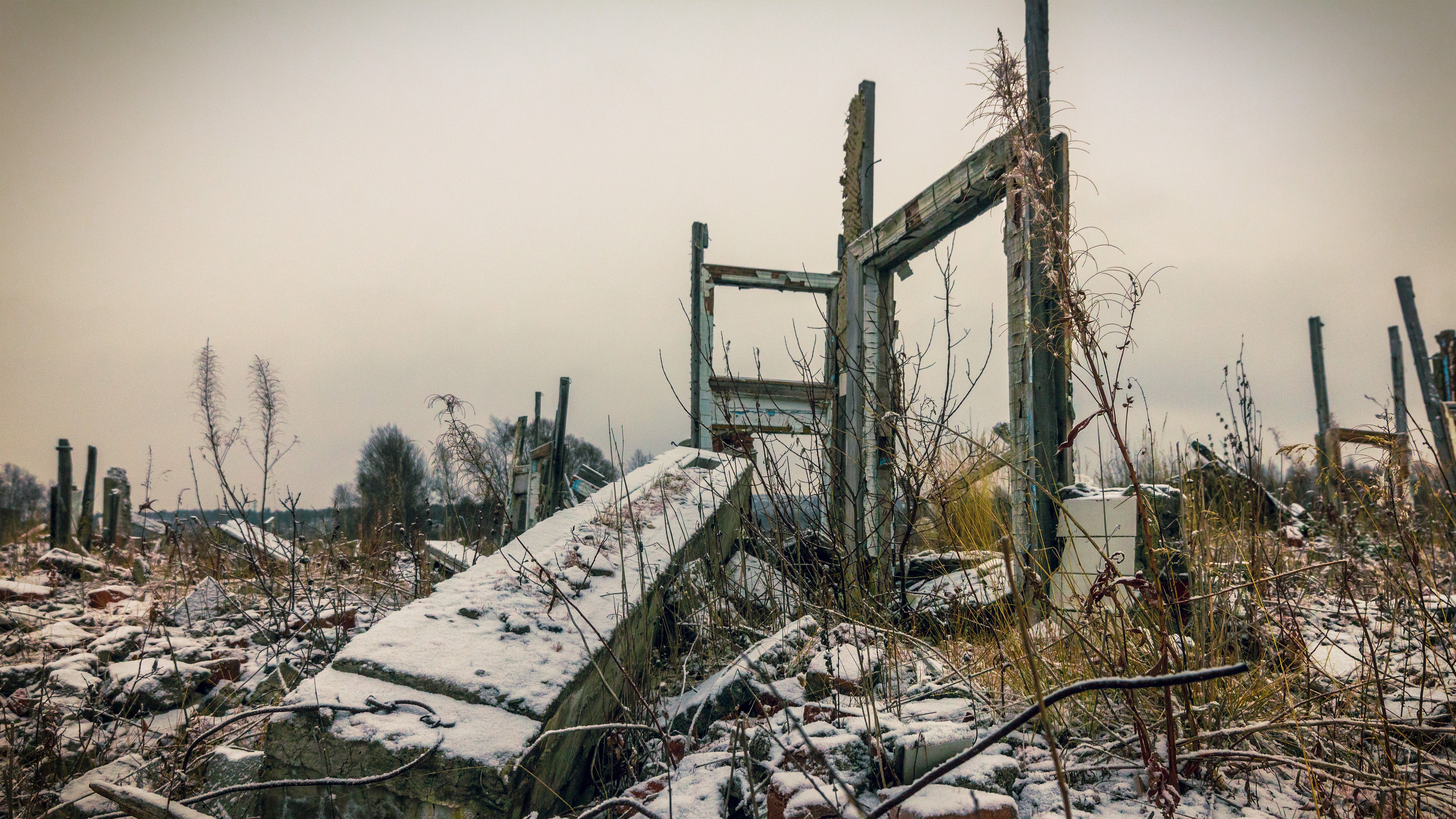
The environmental dimension of the use of nuclear weapons, AT TOP https://www.europeanleadershipnetwork.org/commentary/the-environmental-dimension-of-the-use-of-nuclear-weapons/ European Leadership Network, Carlo Trezza |Former Ambassador to the Conference on Disarmament, Former Chairman of the Missile Technology Control Regime, 12 Nov 21, In 2010, Jakob Kellenberger, the then President of the International Committee of the Red Cross, demonstrated extraordinary courage when he gathered all the accredited ambassadors in Geneva and made it clear that his organisation would not be able to ensure the required international standards of humanitarian assistance to civilian populations in the case of the use of nuclear weapons. In his words, “The mere assumption that atomic weapons may be used, for whatever reason, is enough to make illusory any attempt to protect non-combatants.”
That statement was made on the eve of the 2010 Nuclear Non-Proliferation Treaty (NPT) Review Conference in New York, and was instrumental to the adoption by that conference of the concept of the “catastrophic humanitarian consequences of any use of nuclear weapons”, which nuclear-armed states had traditionally been reluctant to accept. One year earlier, with his historic speech in Prague (in which he promised to “seek the peace and security of a world without nuclear weapons”), President Obama had already prepared the ground for the inclusion of the “catastrophic consequences” principle in the final document of the New York conference. During three international conferences subsequently convened by Norway, Mexico and Austria, the “humanitarian catastrophic” nature of any use of atomic weapons was further confirmed. This concept should be reiterated during the upcoming NPT Review Conference, scheduled for January 2022.
As the world’s leaders gather to discuss how to tackle climate change, it is also necessary to add that the use of nuclear weapons would have dangerous consequences for the environment. The environmental impact of nuclear weapons has been amply evidenced by the over 2000 nuclear tests carried out in deserted and uninhabited areas, while the dangers of radiation have also been demonstrated by the major accidents at the civilian nuclear power plants of Chernobyl and Fukushima.
Today the environmental impact of a nuclear attack on inhabited centres and industrial areas can only be calculated through simulations. The deadly environmental effects of the
two bombs that annihilated Hiroshima and Nagasaki can hardly be considered a precedent since they would pale in comparison to what would happen if only part of the 13,000 nuclear devices currently possessed by the nuclear powers were to be detonated today. Studies on the environmental side of the nuclear coin have intensified in parallel with the growing nightmare of climate change and the increase of nuclear risks. While there are debates over the precise modelling (such as a controversy between scientists over whether an India-Pakistan nuclear exchange would be enough to cause a global nuclear winter), multiple studies raise alarming prospects that in the event of a nuclear conflict, there would be shocks akin to climate change, but on a much faster timescale and with an exponential impact.
Nonetheless, the international community and the nuclear-armed states have not yet drawn political conclusions from the anticipated environmental impacts of the use of nuclear weapons. This concept has so far only been mentioned in some official texts (the Partial Test Ban Treaty, Comprehensive Test Ban Treaty and Treaty for the Prohibition of Nuclear Weapons), while the ENMOD (Environmental Modification Convention) Treaty adopted in 1978 is mostly focused on prohibiting the hostile use of environmental weather modification techniques but does not address the nuclear threat.
In his memorable statement on 11th November 2017 at the Vatican, Pope Francis expressed his “genuine concern” for the “catastrophic humanitarian and environmental effects of any employment of nuclear devices”. More recently, on 28th October of this year, an event chaired by World Future Council and Parliamentarians for Nuclear Nonproliferation and Disarmament was dedicated to the Climate /Nuclear Disarmament Nexus. Climate protection and nuclear risk reduction were the core subjects debated during the meeting which was called in preparation for the UN Climate Change Conference (COP 26) and the incoming NPT RevCon.
This is the first step. A process similar to the 2010 humanitarian initiative should be launched during next year’s NPT conference, leading to the recognition of the “catastrophic environmental consequences of any use of nuclear weapons”. Hopefully, on the occasion of that conference, one or more international leaders will have the vision to promote this topic as Jakob Kellenberger did in 2010. The tragic consequences of climate change will be dramatically amplified if the Damocles sword of a nuclear disaster continues hanging over humanity.
Developers will have an uphill battle to meet environmental protection requirements for Bradwell nuclear project.
Bradwell Action Network said “The planning inspectorate stated that
Maldon District Council had NOT behaved unreasonably in refusing permission
on ecological grounds. The inspector allowed these works to go ahead only
after the developer submitted further data and control measures, and due to
their temporary nature.
While we are disappointed that these destructive
works are set to proceed, we should take heart that this process (the
refusal and appeal) has shown that the developers will have an uphill
struggle meeting environmental protections as this project develops. The
Blackwater Estuary and our shoreline is a critical and sensitive area for
its flora and fauna. We will continue to do what we can to protect it from
the threat of the Bradwell B development.”
BAN 11th Nov 2021
Precious waters — Tribes file to stop pollution from uranium and other hard rock mines

“The Havasupai Tribe has fought for decades to protect our beautiful water and traditional cultural lands from the harmful effects of uranium mining,”
Tribes file to stop pollution from uranium and other hard rock mines
Precious waters — Beyond Nuclear International Tribes, Indigenous groups, conservation organizations file petition to strengthen federal mining rules, By Earthworks, 7 Nov 21, Tribes, Indigenous groups and conservation organizations filed a rulemaking petition on September 16 with the U.S. Department of the Interior to improve and modernize hardrock mining oversight on public lands. The proposed revisions aim to safeguard critically important lands across the West and Alaska, including sacred lands and their cultural resources, vital wildlife habitat, and invaluable water resources.
“It’s long past time to reform the nation’s hardrock mining rules, end generations of mining-inflicted injustice to Indigenous communities, and chart a new course for public lands stewardship toward a sustainable, clean energy economy,” the petition states. “For far too long, mining companies have had free rein to decimate lands of cultural importance to tribes and public lands at enormous cost to people, wildlife, and these beautiful wild places of historic and cultural significance. The harm is undeniable, severe, and irreparable. Reforming these rules will prevent more damage, help us transition to green infrastructure, and leave a livable planet to future generations.”
The petition seeks to significantly update hardrock mining regulations, a need the Biden administration has also identified, to avoid perpetuating the mining industry’s toxic legacy. Current regulations disproportionately burden Indigenous and other disenfranchised communities with pollution and threaten land, water, wildlife and climate. New mining rules would help protect these resources and minimize the damage from the mineral demands of transitioning to a cleaner energy economy……………
“It is unacceptable for mining companies to evade scrutiny and tribal consultation requirements using outdated regulatory loopholes,” said Tohono O’odham Nation Chairman Ned Norris, Jr. “At this very moment, mining projects in Arizona are threatening the permanent destruction of dozens of sacred sites for the Tohono O’odham Nation and other tribes. That is why the Tohono O’odham Legislative Council has unanimously taken a position in support of righting this historic wrong. The time has come for the federal government to uphold its responsibility in ensuring that sacred lands and waters are properly protected.”
“The Havasupai Tribe has fought for decades to protect our beautiful water and traditional cultural lands from the harmful effects of uranium mining,” said Vice Chairman Matthew Putesoy, Sr. of the Havasupai Tribe. “Each day uranium mining threatens contamination of Havasu Creek, which is the sole water source that provides life to Supai Village, our tribal homeland located at the bottom of the Grand Canyon. Without this precious resource, our Tribe and our homeland will be destroyed. We know that uranium poses a serious and irreversible threat to our survival as a people. This petition is necessary to hold the Department of Interior accountable for meeting its federal trust responsibility and helping to protect our sacred traditional cultural homelands and waters from the harmful and often irreversible effects of mining.”……………….
“We face an existential climate crisis, and must move quickly to convert our infrastructure to support low-carbon energy — but we must do so without replacing dirty oil with dirty mining,” said Lauren Pagel of Earthworks. “The Biden administration has an historic opportunity to confront the legacy of injustice to Indigenous communities and damage to the public lands and waters held in trust for all Americans. Seizing that opportunity requires policies that prioritize metals recycling and reuse over new mining. Where new mining is acceptable, the mining industry must undertake the most responsible methods.”
According to the U.S. Environmental Protection Agency, the metals mining industry is the single largest source of toxic waste in the United States, and hardrock mines have contaminated an estimated 40% of Western watersheds. Unlike the oil, gas, and coal industries, metal mining companies pay nothing to extract publicly owned minerals from public lands across the West and Alaska.
The Interior Department oversees the regulations governing compliance with federal mining law and other public lands laws. The petition proposes revisions to several mining regulations and includes legal and policy analysis for each proposed improvement.
Overhauling the rules is a critical step toward bringing mining regulations and policy into the 21st century to protect public health and Indigenous and public lands and resources in the West.
Proposed revisions include:
– Clarifying that the BLM must use its authority to protect tribal and cultural resources and values, wildlife, and water quality and quantity;
– Requiring the BLM to verify mining rights;
– Closing loopholes that allow the mining industry to escape public review and consultation with local tribes and governments
The Interior Department is required to respond to the petition within a reasonable amount of time and indicate whether it will revise the rules. https://beyondnuclearinternational.org/2021/11/07/precious-waters/
Fukushima farmers fear nuclear-tainted water’s impact on business

A decade on, Fukushima farmers fear nuclear-tainted water’s impact on business, Channel Newa Asia, 5 Nov 21, WAKI, Japan: Fukushima farmers fear the Japanese government’s planned release of water from the crippled power plant could revive concerns about contamination and again hit the price of their produce, undoing a decade of slow recovery from nuclear disaster.
Japan plans to release more than one million tonnes of contaminated water from the plant in the country’s northeast into the sea after treating it, as the site reaches storage limits for the water. Although international authorities support the plan, it has sparked concern from neighbours China and South Korea and worried local fisherman and farmers.
“We’re just about seeing our prices go back to normal after a big drop following the disaster, but now we will have to deal with the potential reputational damage all over again because of the release of the water,” said Hiroaki Kusano, a pear farmer and vice-leader of the local agricultural co-operative.
The water is to be processed to remove radioactive contamination other than from tritium, which cannot be removed. Water with the radioactive isotope diluted to one-seventh of the World Health Organization’s guidelines for drinking water will be released into the Pacific a kilometre out from the plant around spring 2023, under a government plan.
Nuclear plants worldwide routinely release water containing tritium, considered the least-toxic byproduct of atomic power…………….
DECOMMISSIONING
The Daiichi plant is being decomissioned as part of a clean-up by operator Tokyo Electric Power Company Holdings (Tepco) expected to take decades,
Some 1,000 tanks, each 12m tall, crowd the site and hold enough radioactive water to fill around 500 Olympic-sized swimming polls. The release of water that once passed through contaminated areas of the plant marks a milestone in decommissioning and will free up space for the clean-up.
……………… Tepco will compensate for damages related to the water release, said Junichi Matsumoto, a company official overseeing decommissioning work. Tepco says it has so far paid out some ¥10.1 trillion (US$89 billion) in damages from the crisis…
There are additional concerns because the Fukushima water has been sitting around for years, said Toru Watanabe, a radioactivity researcher at the Fukushima Fisheries and Marine Science Research Center.
“The water has been in those tanks for a long time. The quality of that water needs to be thoroughly understood before it’s released,” he said.
Farmers say there is not much they can do once the water is released. They worry about their tough customers – Japanese shoppers are famously picky about produce and pay close attention to freshness and place of origin… https://www.channelnewsasia.com/asia/decade-fukushima-farmers-fear-nuclear-tainted-waters-impact-business-2293361
Canada’s Environment Minister refuses to declare his support for nuclear energy
Guilbeault refuses to declare his support of nuclear energy iPolitics, By Aidan Chamandy. Nov 5, 2021 Environment Minister Steven Guilbeault says “it’s not up to the government to decide” which sources of energy will reduce the country’s greenhouse-gas emissions to net zero by 2050.
Nor would he say explicitly whether he supports nuclear energy, which he’d opposed in his work before entering politics in 2019……
Before running for the Liberals in 2019, Guilbeault worked for decades as an environmental activist for Greenpeace and Équiterre.
In 2018, he said the Pickering nuclear plant in Ontario should be shut down and replaced with other forms of renewable energy. https://ipolitics.ca/2021/11/05/guilbeault-refuses-to-declare-his-support-of-nuclear-energy/
Bradwell is not suitable for nuclear fusion, not suitable for nuclear fission either.
Bradwell has been dropped from the list of 15 sites for fusion. Andy
Blowers said Bradwell was always unlikely to be a non-starter for the
nuclear fantasy project. Voracious cooling water demands will damage the
vulnerable ecology of the Blackwater estuary. If Bradwell is not suitable
for fusion it is not suitable for Bradwell B. Maylands Mayl – November 5th Nov 2021
Jellyfish keep attacking nuclear power plants

 | |||
Jellyfish Keep Attacking Nuclear Power Plants. Jellyfish are continuing to clog the cooling pipes of nuclear power plants around the world. GG, By Gabriel Geiger 3 Nov 21, Jellyfish are continuing to clog the cooling intake pipes of a nuclear power plant in Scotland, which has previously prompted a temporary shutdowns of the plant.
The Torness nuclear power plant has reported concerns regarding jellyfish as far back as 2011, when it was forced to shut down for nearly a week—at an estimated cost of $1.5 million a day—because of the free-swimming marine animals………
Like many other seaside power plants, the Torness plant uses seawater to prevent overheating. While there are measures in place to prevent aquatic life from entering the intake pipes, according to the Bulletin of the Atomic Scientists, they are no match for the sheer number of jellyfish that come during so-called “jellyfish blooms.”
“Usually, screens prevent aquatic life and similar debris from being drawn into the power plants’ cooling system,” the Bulletin of the Atomic Scientists wrote in a 2015 blog post. “But when sufficiently large volumes of jellyfish or other aquatic life are pulled in, they block the screens, reducing the volume of water coming in and forcing the reactor to shut down.” ……
“Any industry on the coast which uses seawater can find its operations complicated when seaweed or jellyfish blooms impact protective systems,” Angus Bloomfield, a marine biologist, is quoted as saying in a press release from the University of Cranfield. “They can damage machinery and even stop power generation, which could threaten stability of the electricity grid. An early warning system involving drones could allow industries in marine environments to act early and avoid the most dramatic effects these events can bring.” https://www.vice.com/en/article/epx4mj/jellyfish-keep-attacking-nuclear-power-plants
Eastern Navajo Diné Against Uranium continue their fight, especially about the effect on their water supply
Rita Capitan has been worrying about her water since 1994. It was that autumn she read a local newspaper article about another uranium mine, the Crownpoint Uranium Project, getting under way near her home. Capitan has
spent her entire life in Crownpoint, New Mexico, a small town on the eastern Navajo Nation, and is no stranger to the uranium mining that has persisted in the region for decades.
But it was around the time the article was published that she began learning about the many risks associated with
uranium mining. “We as community members couldn’t just sit back and watch another company come in and just take what is very precious to us. And that is water – our water,” Capitan said.
To this effect, Capitan and her husband, Mitchell, founded Eastern Navajo Diné Against Uranium Mining (Endaum). The group’s fight against uranium mining on their homeland has continued for nearly three decades, despite the industry’s disastrous health and environmental impacts being public knowledge for years.
Guardian 27th Oct 2021
Problems and public opposition to the plan to store high level nuclear wastes under the Great Lakes
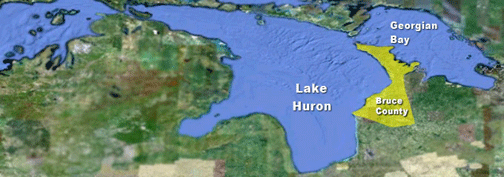
Nuclear Question: Debate continues over long-term storage of nuclear waste in the Great Lakes. Great Lakes Now, By Andrew Reeves, 25 Oct 21,
Canada’s plan to store spent nuclear fuel 1,600 feet below ground in the Great Lakes basin, some 30 miles from Lake Huron, is continuing to ruffle feathers throughout the Great Lake states.
Earlier this month, U.S. lawmakers called out the Canadian plan for failing to prioritize the health of the Great Lakes and the 40 million residents who depend on it for clean drinking water ahead of its own energy needs.
Michigan Democratic Rep. Dan Kildee is leading a 20-member bipartisan group calling on President Joe Biden to pressure Canadian Prime Minister Justin Trudeau to halt the plans for storing an anticipated 57,000 tons of high-level radioactive material within the basin.
Michigan Gov. Gretchen Whitmer, in a statement on the ongoing legal battle over the future of Enbridge’s Line 5 pipeline, accused the Canadian federal government of “adding even more risk to our waters” by allowing plans to store radioactive nuclear waste in a 1,400-acre underground warehouse to proceed.
Yet despite concerns within the basin from politicians and environmental groups, and unrest among local farmers worried about water contamination and potentially tanking property values, the project is moving ahead as planned. Geologic testing at one location in southern Ontario began this spring.
Even so, determining the long-term fate of Canada’s spent nuclear fuel remains far from settled as rifts develop within the host community, and between Canada and frustrated U.S. lawmakers.
“There’s a divide taking place,” Canadian Member of Parliament Brian Masse noted on a recent tour of the proposed South Bruce site with concerned residents. “I do believe there needs to be some responsibility taken on a federal level to make sure our communities aren’t broken in this process.”………
When spent nuclear fuel bundles are removed from a reactor they are currently interred in a water-filled pool for up to seven years until radioactivity decreases. From there the rods are relocated to dry storage containers made of 20-inch-thick, high-density concrete lined with steel half an inch thick. These storage facilities have a lifespan of roughly 50 years, and Canada has been generating nuclear power since the early 1960s. While the dry storage silos can be refurbished to extend their use, it does nothing to address the long-term need for safe storage solutions.
Experts at NWMO settled on a deep geological repository as the preferred storage option in 2007 after three years of discussion with European nuclear engineers.
The basic premise of the DGR is deceptively simple: bury the spent fuel. If NWMO could identify a willing host community that is situated in an area with suitable geology, the stage would be set to spend $23 billion over 40 years to construct a massive underground labyrinth of tunnels bored into rock that, in total, would be capable of storing the 57,000 tons of spent fuel that Canada currently has in cement-encased copper canisters. The aboveground footprint of buildings would be little more than a mile across.
But the question remains: Where should three million bundles of spent nuclear fuel be stored for what is, essentially, the rest of time?
Identifying a willing host community
The process for identifying a willing host community began in 2008.
From an initial pool of 22 potential locations across Canada, on-site investigations quickly whittled that list down to two, both of which are in Ontario: South Bruce, at a location some 30 miles from Lake Huron, and Ignace in northwestern Ontario. (The Ignace location, northwest of Lake Superior, is not within the Great Lakes basin; rather, it sits within the Winnipeg River basin. Borehole drilling to determine the suitability of the bedrock beneath the proposed site began in Ignace in 2017.)…………
U.S. lawmakers aren’t the only ones concerned about the proposed DGR. Public opposition to the proposal among South Bruce residents has been mounting steadily. …………. https://www.greatlakesnow.org/2021/10/storage-nuclear-waste-great-lakes/
Britain’s expensive problem of marine animals clogging up cooling systems on nuclear reactors – drones might monitor this
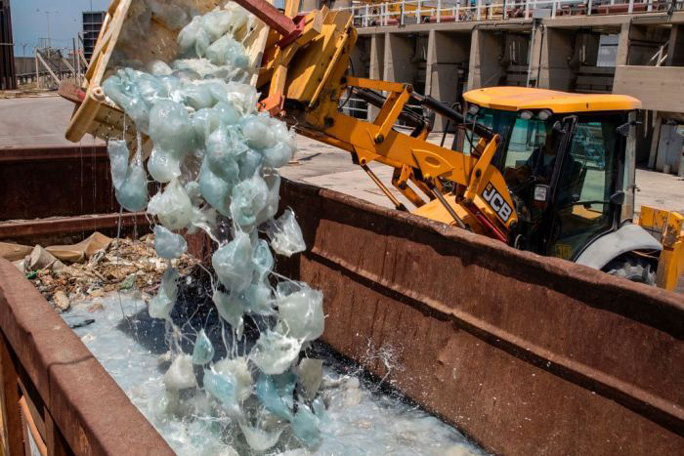
UK ponders drone monitoring of coastal nuclear plant cooling intake systems, Drone DJ, Bruce Crumley – Oct. 25th 2021 Authorities in the UK are examining a request to take a test UAV project live. It would involve extending experimental drone use monitoring coastal nuclear power plants for marine life that risks getting sucked into their cooling tubes to a real, increasingly troubling example of that in Scotland.
The problem centers on the Torness nuclear power facility to the east of Edinburgh. Its ocean-sucking intake vents have been getting clogged by recurring blossoms of marine life like jellyfish and kelp. In addition to that being fatal to the life forms involved, the incidents can cause the station’s temperature to increase to the point where temporary – but very expensive – closure is required. In response, drone industrial services company RUAS has requested authorities to allow it to fly regular drone missions around the nuclear plant to keep watch for amassing sea creatures so preventive measures can be taken to usher them away.
“The issue is, on a regular basis, they are affected by either jellyfish blooms or marine ingress including microalgae, that are blocking the intake of the nuclear power plant,” says the RUAS in a report by the Herald Scotland. “As a result, the reactor overheats due to the lack of water intake which cools the reactor, creating the need for the reactor to be shut down entirely as an emergency procedure. This has implications when they need to reactivate the reactor, which is costly and time consuming.”
It’s unclear thus far just how officials will respond to that obviously business-generating RUAS proposal. But it would certainly fall within the logic of an almost identical project the UK has been testing since July.
The nuclear plant-specific effort was launched as part of the UK’s broader Drone Pathfinder Programme promoting the use of UAV technologies. Under that, researchers have begun assessing “the feasibility of using unmanned aerial systems for the early detection of marine hazards near to coastal industries, such as nuclear power stations.”
That includes testing beyond visual line of sight (BVLOS) missions to permit near-constant monitoring – a mode RUAS is also hoping to employ at Torness. ……………… https://dronedj.com/2021/10/25/uk-ponders-drone-monitoring-of-coastal-nuclear-plant-cooling-intake-systems/
Jellyfish causing a Scottish nuclear power station to close down its reactors
Jellyfish causing a Scottish nuclear power station to close down its reactors? It’s no flight of fancy https://www.heraldscotland.com/politics/19669564.jellyfish-causing-scottish-nuclear-power-station-close-reactors-no-flight-fancy/
By Ron McKay You think that those darned jellyfish are just a holiday problem in the Med? It turns out they’ve been getting in and clogging up the water-cooling intake pipes at Scotland’s sole active nuclear power station at Torness, outside Dunbar, resulting in the reactor having to shut down in an emergency procedure.
A commercial drone company called RUAS has asked the Civil Aviation Authority for what’s called a Temporary Danger Area to be applied around the site so that its pilots can fly spotter drones out to sea to log the
invaders and sea kelp in an early warning system, so that the station’s water intake can by reduced and expensive total closure averted.
If this is granted it will apply from December until the end of February, and lots of drones will be buzzing about like hornets.
The application says:
“The issue is on a regular basis they are affected by either jellyfish blooms or marine ingress including microalgae, that are blocking the intake of the Nuclear Power Plant.
“As a result, the reactor overheats due to the lack of water intake which cools the reactor, creating the need for the reactor to be shut down entirely as an emergency procedure. This has implications when they need to reactivate the reactor which is costly and time consuming.”
This doesn’t sound at all healthy to me. The company also wants permission to fly the drones, or BVLOS, the acronym for beyond visual line of site, meaning that the pilots on the ground will be playing with their joysticks and watching they don’t hit seagulls or boats on a video screen.
Just the kind of task you could do from the pub.
1 This Month



26 September – International Day for the Total Elimination of Nuclear Weapons


PLEASE OPPOSE HR 8255 AND S.3639 – bills would accelerate satellite deployment, with no environmental review or safeguards – https://ncstd5li.quorum.us/campaign/169331/
To see nuclear-related stories in greater depth and intensity – go to https://nuclearinformation.wordpress.com
-
Archives
- September 2026 (233)
- August 2026 (330)
- July 2026 (355)
- June 2026 (287)
- May 2026 (306)
- April 2026 (356)
- March 2026 (251)
- February 2026 (267)
- January 2026 (308)
- December 2025 (358)
- November 2025 (359)
- October 2025 (375)
-
Categories
- 1
- 1 NUCLEAR ISSUES
- business and costs
- climate change
- culture and arts
- ENERGY
- environment
- health
- history
- indigenous issues
- Legal
- marketing of nuclear
- media
- opposition to nuclear
- PERSONAL STORIES
- politics
- politics international
- Religion and ethics
- safety
- secrets,lies and civil liberties
- spinbuster
- technology
- Uranium
- wastes
- weapons and war
- Women
- 2 WORLD
- ACTION
- AFRICA
- Atrocities
- AUSTRALIA
- Christina's notes
- Christina's themes
- culture and arts
- Events
- Fuk 2022
- Fuk 2023
- Fukushima 2017
- Fukushima 2018
- fukushima 2019
- Fukushima 2020
- Fukushima 2021
- general
- global warming
- Humour (God we need it)
- Nuclear
- RARE EARTHS
- Reference
- resources – print
- Resources -audiovicual
- Weekly Newsletter
- World
- World Nuclear
- YouTube
-
RSS
Entries RSS
Comments RSS
 nuclear-news