Radioactive contamination from the partially-burned former Santa Susanna nuclear research facility

Radioactive microparticles related to the Woolsey Fire in Simi Valley, CA SCience Direct, MarcoKaltofenaMaggieGundersenbArnieGundersenb Worcester Polytechnic Institute, Dept. of Physics, Fairewinds Energy Education, 8 October 2021.
Highlights
Wildfire in radiologically contaminated zones is a global concern; contaminated areas around Chernobyl, Fukushima, Los Alamos, and the Nevada Nuclear Test Site have all experienced wildfires.
Three hundred sixty samples of soil, dust and ash were collected in the immediate aftermath of the Los Angeles (CA, USA) Woolsey fire in 2018.
Radioactive contamination from the partially-burned former Santa Susanna nuclear research facility was found in the fire zone.
A limited number of widely scattered locations had evidence of radioactive microparticles originating at the research facility.
X-ray data showed that ashes from the fire could spread site contaminants to distant, but widely spaced, locations.
Abstract
In November 2018, the Woolsey Fire burned north of Los Angeles, CA, USA, potentially remobilizing radioactive contaminants at the former Santa Susana Field Laboratory, a shuttered nuclear research facility contaminated by chemical and radiochemical releases. Wildfire in radiologically contaminated zones is a global concern; contaminated areas around Chernobyl, Fukushima, Los Alamos, and the Nevada Nuclear Test Site have all experienced wildfires. Three weeks after the Woolsey Fire was controlled, sampling of dusts, ashes, and surface soils (n = 360) began and were analyzed by alpha- and beta-radiation counting. Samples were collected up to a 16 km radius from the perimeter of the laboratory. Controls and samples with activities 1σ greater than background were also examined by alpha and/or gamma spectroscopy or Scanning Electron Microscopy with Energy Dispersive X-ray analysis. Of the 360 samples collected, 97% showed activities at or close to site-specific background levels. However, offsite samples collected in publicly-accessible areas nearest to the SSFL site perimeter had the highest alpha-emitting radionuclides radium, thorium, and uranium activities, indicating site-related radioactive material has escaped the confines of the laboratory.
In two geographically-separated locations, one as far away as 15 km, radioactive microparticles containing percent-concentrations of thorium were detected in ashes and dusts that were likely related to deposition from the Woolsey fire. These offsite radioactive microparticles were colocated with alpha and beta activity maxima. Data did not support a finding of widespread deposition of radioactive particles. However, two radioactive deposition hotspots and significant offsite contamination were detected near the site perimeter……………………………

4. Conclusions
A significant majority of samples (97% of 360 samples) collected in the study zone registered radioactivity levels that matched existing area background levels. Nevertheless, some ashes and dusts collected from the Woolsey Fire zone in the fire’s immediate aftermath contained high activities of radioactive isotopes associated with the Santa Susana Field Laboratory (SSFL). The data show that Woolsey Fire ash did, in fact, spread SSFL-related radioactive microparticles, and the impacts were confined to areas closest to SSFL and at least three other scattered locations in the greater Simi Valley area. Alpha and beta counting, high-resolution alpha and gamma spectroscopy, and X-ray microanalysis using SEM/EDS confirmed the presence of radioactive microparticles in the Woolsey Fire-related ashes and dusts.
Most of the fire-impacted samples found near the SSFL site’s perimeter were on lands accessible to the public. There were, however, scattered localized areas of increased radioactivity due to the presence of radioactive microparticles in ash and recently-settled dusts collected just after the Woolsey fire. These radioactive outliers were found in Thousand Oaks, CA, and Simi Valley, CA, about 15 and 5 km distant from SSFL, respectively. The Thousand Oaks samples had alpha count rates up to 19 times background, and X-ray spectroscopy (SEM) identified alpha-emitting thorium as the source of this excess radioactivity. Excessive alpha radiation in small particles is of particular interest because of the relatively high risk of inhalation-related long-term biological damage from internal alpha emitters compared to external radiation.
The nuclides identified as the sources of excess radioactivity in impacted samples were predominately isotopes of radium, uranium, and thorium. These have naturally-occurring sources, but these isotopes are also contaminants of concern at SSFL and were detected at generally increasing activities as the distance from SSFL decreased. In addition, the number of radioactive microparticles per gram of particulate matter also increased strongly with decreasing distance from SSFL. These data demonstrate that fire and/or other processes have spread SSFL contamination beyond the facility boundary………..
……https://www.sciencedirect.com/science/article/pii/S0265931X21002277?dgcid=coauthor
US nuclear submarine accident sparks safety fears in South China Sea
US nuclear submarine accident sparks safety fears in South China Sea https://www.scmp.com/news/china/military/article/3152181/us-nuclear-submarine-accident-sparks-safety-fears-south-china?module=perpetual_scroll&pgtype=article&campaign=3152181Busy waterway’s complex underwater terrain and shipping litter make it a challenging environment for the giant vessels
Collision has also highlighted the difficulties in safely disposing of the reactors from decommissioned subs, with no agreed guidelines, experts say. Minnie Chan 16 Oct, 2021
The damage to a US nuclear attack submarine which collided with a mystery object in the South China Sea earlier this month has raised concerns about their operational safety, as well as what happens to damaged and decommissioned nuclear reactors.
Defence experts have warned that nuclear submarines – among the world’s deadliest weapons – are also vulnerable in the event of an underwater accident causing a nuclear leak, regardless of whether they are general-purpose attack subs (SSN) or platforms for the launch of ballistic missiles (SSBN).
The scale of global e-waste

The scale of global e-waste — The Earthbound Report
The scale of global e-waste https://earthbound.report/2021/10/14/the-scale-of-global-e-waste/byJEREMY WILLIAMSOctober 14, 2021
Today is International e-waste day, which aims to raise awareness of waste electronics. It’s a growing problem, as more people buy phones, laptops and other gadgets, and as they are replaced at a faster rate.
If you average the problem across the global population, 7.6kg of e-waste is created every year for every person on the planet – though of course there are inequalities within that. The UK is among the worst in the world, creating 23kg of e-waste per person per year – second only to Norway. That’s something we need to take some responsibility for, not least because e-waste so often becomes an environmental justice issue.
There are system-wide things we should be doing here to encourage a circular economy. Repair standards are one of those, as I wrote about last week with the ten year smartphone initiative. Rules to prevent planned obsolescence, as France has pioneered. At the personal level, we should try to make things last, repair where we can, and ensure that our gadgets are recycled properly.
MusicMagpie, which re-sells secondhand electronics, has created a series of visuals to help explore the scale of e-waste
A particular threat to health: Why it is vital to stop the dumping of mud from Hinkley Point C in the Severn Estuary.
Richard Bramhall: A particular threat to health: Why it is vital to stop
the dumping of mud from Hinkley Point C in the Severn Estuary. In 2018 the
French state-owned company Électricité de France (EDF) dug more than
100,000 tonnes of radioactively contaminated mud from the bed of the Severn
near Hinkley Point. Ignoring widespread protests they dumped it back into
the water less than two miles from Cardiff. This was to allow construction
of huge inlets and outlets for water to cool the reactors in the new
nuclear power station – Hinkley Point C – which EDF is building in
Somerset.
EDF held an old licence for the 2018 dump but it expired before
they could shift their target volume of nearly a million tonnes. They
applied to renew the dumping at Cardiff but, because of strong opposition
in Wales and more protective Welsh environment law, they switched to a site
at Portishead near Bristol.
This August the Marine Management Organisation
granted a licence for the Portishead operation and dumping immediately
began again. Campaigners on both sides of the estuary have now applied for
a Judicial Review. The legal challenge identifies many scientific and
regulatory issues.
This article concerns only one:- the health impact of
radioactive particles in the mud. Every nuclear power station in the world
vents dust particles. They are licensed to do this. Filters trap fragments
bigger than about 5 microns (thousandths of a millimetre) but thousands of
billions of smaller particles are released, as data published by the UN
show. Particles this size are inhalable and are biologically very mobile.
The greatest proportion are made of uranium.
Nation Cymru 10th Oct 2021
Questions over water supply for the new £20billion nuclear plant for Sizewell, UK
A regional water supplier is scrambling to work out how to provide enough
water if Sizewell C is approved, after the Environment Agency proposed a
large cut to the amount it can take from the River Waveney. EDF, the
company behind plans for the new £20billion nuclear plant, insisted today
it had a “clear and deliverable” strategy for its water supply.
Ipswich Star 7th Oct 2021
https://www.ipswichstar.co.uk/news/business/sizewell-c-questions-over-water-supply-8392154
Mushrooms in Germany are still contaminated by Chernobyl radiation
Mushrooms in Germany are still contaminated by Chernobyl radiation https://nypost.com/2021/10/08/german-mushrooms-still-contaminated-by-chernobyl-radiation/ By Reuters Around 95% of wild mushroom samples collected in Germany in the last six years still showed radioactive contamination from the 1986 Chernobyl nuclear disaster, albeit not above legal limits, the German food safety regulator said on Friday.
Elevated concentrations of caesium-137 and caesium-134 isotopes bearing the characteristic signature of the Chernobyl blast were found especially in southern Germany, the federal office for consumer protection and food safety (BVL) said.
However, none of the 74 samples tested exceeded the legal limit of 600 becquerels of radiation per kg.
The Chernobyl reactor, located in what is now Ukraine, spewed tonnes of nuclear waste into the atmosphere, spreading radioactivity across swathes of the continent and causing a spike in cancers in the more immediate region.
The BVL said the radioactive material lingered in forests because their ecosystems recycled nutrients so efficiently, meaning that wild mushrooms will show contamination for much longer than other agricultural products.
Concern at the long-term impact of nuclear disasters has fueled public opposition to nuclear power, and in Germany triggered a decision, shortly after the accident at Japan’s Fukushima plant in 2011, to abandon it altogether.
Russia’s perilous job in raising sunken nuclear submarines

In both cases, experts fear that a nuclear chain reaction could occur should water leak into the submarines’ reactor compartments. Russian scientists have kept a close eye on the K-159, launching regular expeditions to monitor for potential radiation leaks. According to their data, should the submarine depressurize, radionuclides could spread over hundreds of kilometers, heavily impacting the local fishing industry.
Yet the subs represent just a fraction of the radiation hazards that the Soviet Navy dumped at sea. Between 1959 and 1992, the Soviets carried out 80 missions to sink radioactive debris in Arctic water. In total, some 18,000 objects considered to be radioactive waste were plunged to Arctic depths. Aside from the K-159 and the K-27, the Soviet Navy scuttled reactor compartments, solid radioactive waste, a number of irradiated vessels, as well as old metal structures and radioactive equipment.
Rosatom official puts deadline on raising old nuclear submarines https://bellona.org/news/nuclear-issues/2021-10-rosatom-official-puts-deadline-on-raising-old-nuclear-submarines
An official with Rosatom, Russia’s state nuclear corporation, has announced a deadline for raising two Soviet-era nuclear submarines that have been lying for decades at the bottom of seas in the Arctic over fears their reactors could contaminate fertile international fishing grounds. October 6, 2021 by Charles Digges
An official with Rosatom, Russia’s state nuclear corporation, has announced a deadline for raising two Soviet-era nuclear submarines that have been lying for decades at the bottom of seas in the Arctic over fears their reactors could contaminate fertile international fishing grounds.
As indicated in the strategy for the development of the Arctic, 2030, not earlier,” Anatoly Grigoriev, head of Rosatom’s international technical assistance project, told Interfax late last month.
The announcement confirms what unnamed officials had earlier told Russian state media more than a year ago. Since then, Bellona has urged Russia, during its two-year chairmanship of the Arctic Council, to pursue retrieving the submarines to avoid the contamination risk their reactors, and the spent nuclear fuel they contain, pose to the ocean environment.
Grigoriev’s remarks concerned the K-27 and K-159, both of which went down still loaded with their uranium fuel. Both submarines, say experts, are in a precarious state. But the submarines sank under different circumstances.
Continue readingRussia aims to lift old dead nuclear submarines from the bottom of the Barents and Kara Seas by 2030
 | |||
Russia to Lift Radioactive Time Bombs From Ocean Floor in 2030, https://www.themoscowtimes.com/2021/10/04/russia-to-lift-radioactive-time-bombs-from-ocean-floor-in-2030-a75207 Two rusty nuclear submarines will be raised from the sea beds of the Barents and Kara Seas and brought to a shipyard for safe decommissioning. By The Barents Observer 4 Oct 21, The November-class K-159 submarine sank in late August 2003 while being towed in bad weather from the closed naval base of Gremikha on the eastern shores of the Kola Peninsula toward the Nerpa shipyard north of Murmansk.
Researchers have monitored the wreck ever since, fearing leakages of radioactivity from the two old nuclear reactors onboard could contaminate the important fishing grounds in the Barents Sea. A joint Norwegian-Russian expedition examined the site in 2014 and concluded that no leakage has so far occurred from the reactors to the surrounding marine environment.
However, the bad shape of the hull could eventually lead to radionuclide leakages. A modeling study by the Norwegian Institute of Marine Research said that a pulse discharge of the entire Caesium-137 inventory from the two reactors could increase concentrations in cod in the eastern part of the Barents Sea up to 100 times current levels for a two-year period after the discharge. While a Cs-137 increase of 100 times in cod sounds dramatic, the levels would still be below international guidelines, but tell that to the market buying the fish.
Now, Russia’s nuclear corporation Rosatom has announced the date for lifting the K-159 to 2030.
“As indicated in the strategy for the development of the Arctic, 2030, not earlier,” Anatoly Grigoriev, head of Rosatom’s international technical assistance project, told Interfax.
Grigoriev said Atomflot, the state operator of civilian nuclear-powered icebreakers whose technical base is just north of Murmansk, could become the contractor for the lifting.
The Rosatom official added that the K-27, a submarine dumped in the Kara Sea in 1982, is also included on the list of nuclear objects on the Arctic seabed to be salvaged by 2030.
The submarine was dumped at a depth of 33 meters in the Stepovogo fjord on the eastern shores of Novaya Zemlya.
Last month, divers from the Center for Underwater Research of the Russian Geographical Society conducted a survey of the submarine’s hull. Metal pieces were cut free and the thickness of the hull was measured, along with other inspections of the submarine that has been corroding on the seabed for nearly 40 years.
Based on the examination, a detailed plan will be worked out on how to conduct the salvage with destabilizing the uranium fuel in the reactors in such a way that a new chain reactor could be restarted with a worst-case scenario of triggering direct contact between the uranium fuel and seawater.
CNMI House slams Japan’s plan to dump nuclear waste into Pacific
CNMI House slams Japan’s plan to dump nuclear waste into Pacific, https://www.rnz.co.nz/international/pacific-news/452916/cnmi-house-slams-japan-s-plan-to-dump-nuclear-waste-into-pacificThe CNMI House of Representatives has a introduced a joint resolution that condemns Japan’s plan to dump treated nuclear waste from the destroyed Fukushima nuclear plant into the Pacific Ocean.
Introduced by Representaive Sheila Babauta, the joint resolution opposes any other government’s actions related to nuclear testing, storage, and waste disposal in the Pacific and reaffirm everyone’s fundamental right to a safe and healthy living environment.
The resolution states that the Pacific Ocean is a resource and home for many in the Commonwealth, broader Oceania, and many in Japan who rely on it to provide food, economic subsistence, a means of travel, and so many other aspects of life that can be easily threatened by human activities such as pollution and nuclear exercises.
Japan announced in April a plan to start dumping in two years into the Pacific more than a million tons of treated but still radioactive wastewater from the Fukushima nuclear plant, which was destroyed in the 2011 Tohoku earthquake and tsunami.
Babauta, who chairs the House’s Natural Resources Committee, said the people of Oceania have throughout history been disproportionately impacted by foreign powers’ nuclear activities within the Pacific region.
In 1979, Japan also proposed a plan to dump about 10,000 drums of nuclear waste in the Pacific.
Babauta said UN Special Rapporteurs released a statement expressing deep disappointment in Japan’s latest decision, saying “the release of one million tons of contaminated water into the marine environment imposes considerable risks to the full enjoyment of human rights of concerned populations in and beyond the borders of Japan.”
The sunken nuclear submarines: Russia’s ‘slow-motion Chernobyl’ at sea
One of them is the K-27, once known as the “golden fish” because of its high cost. The 360ft-long (118m) attack submarine (a submarine designed to hunt other submarines) was plagued with problems since its 1962 launch with its experimental liquid-metal-cooled reactors, one of which ruptured six years later and exposed nine sailors to fatal doses of radiation. In 1981 and 1982, the navy filled the reactor with asphalt and scuttled it east of Novaya Zemlya island in a mere 108ft (33m) of water. A tugboat had to ram the bow after a hole blown in the ballast tanks only sank the aft end.
The K-27 was sunk after some safety measures were installed that should keep the wreck safe until 2032. But another incident is more alarming. The K-159, a 350ft (107m) November-class attack submarine, was in service from 1963 to 1989. The K-159 sank with no warning, sending 800kg (1,760lb) of spent uranium fuel to the seafloor beneath busy fishing and shipping lanes just north of Murmansk. Thomas Nilsen, editor of The Barents Observer online newspaper, describes the submarines as a “Chernobyl in slow motion on the seabed”.

While the vast size of the oceans quickly dilutes radiation, even very small levels can become concentrated in animals at the top of the food chain through “bioaccumulation” – and then be ingested by humans. But economic consequences for the Barents Sea fishing industry, which provides the vast majority of cod and haddock at British fish and chip shops, “may perhaps be worse than the environmental consequences”, says Hilde Elise Heldal, a scientist at Norway’s Institute of Marine Research.
But an accident while raising the submarine, on the other hand, could suddenly jar the reactor, potentially mixing fuel elements and starting an uncontrolled chain reaction and explosion. That could boost radiation levels in fish 1,000 times normal or, if it occurred on the surface, irradiate terrestrial animals and humans, another Norwegian study found.
Russia’s ‘slow-motion Chernobyl’ at sea https://www.bbc.com/future/article/20200901-the-radioactive-risk-of-sunken-nuclear-soviet-submarines, By Alec Luhn, 2nd September 2020
Beneath some of the world’s busiest fisheries, radioactive submarines from the Soviet era lie disintegrating on the seafloor. Decades later, Russia is preparing to retrieve them.
By tradition, Russians always bring an odd number of flowers to a living person and an even number to a grave or memorial. But every other day, 83-year-old Raisa Lappa places three roses or gladiolas by the plaque to her son Sergei in their hometown Rubtsovsk, as if he hadn’t gone down with his submarine during an ill-fated towing operation in the Arctic Ocean in 2003.
Continue readingRussian and American nuclear wastes in the Arctic may release radiation as global heating melts the ice.
Climate change: Arctic’s unknown viruses’ and nuclear waste, A rapidly warming Arctic could cause the spread of nuclear waste, undiscovered viruses and antibiotic resistant bacteria, a report has found. BBC, 2 Oct 21,
It said potential radioactive waste from Cold War nuclear submarines and reactors and damage from mining could be released as the ice melts.
The nine million square miles of Artic dates to about a million years old.
Co-author Dr Arwyn Edwards from Aberystwyth University said much of the Arctic is still unknown.
Writing in Nature Climate Change, Dr Edwards co-authored report with academics from universities in the United States and NASA’s Jet Propulsion Laboratory in Southern California.
The Arctic houses a diverse range of chemical compounds whether through natural processes, accidents or deliberate storage.
Nuclear waste, viruses and chemicals
Thawing permafrost, or permanently frozen land, has widely been seen as a contributor to greenhouse gas emissions as massive stores of Arctic soil carbon are released to the atmosphere as carbon dioxide and methane, as well as causing abrupt change to the landscape.
However, the research found the implications are more widespread and less understood – with potential for the release of nuclear waste and radiation, unknown viruses and other chemicals of concern.
Between 1955 and 1990, the Soviet Union conducted 130 nuclear weapons tests in the atmosphere and near surface ocean of the Novaya Zemlya archipelago off the coast of north-west Russia.
The tests used 224 separate explosive devices, releasing about 265 megatons of nuclear energy and more than 100 decommissioned nuclear submarines were scuttled in the nearby Kara and Barents seas.
Despite a Russian government launching a strategic clean-up plan, the review notes the area has tested highly for the radioactive substances caesium and plutonium, between undersea sediment, vegetation and ice sheets.
The United States’ Camp Century nuclear-powered under-ice research facility in Greenland also produced considerable nuclear and diesel waste.
Decommissioned in 1967, waste was left in the accumulating ice, which faces a longer term threat from changes to the Greenland Ice Sheet.
The 1968 Thule bomber crash in the same country also dispersed huge amounts of plutonium on the Greenland ice sheet……………………..
The report said despite its findings, it is still poorly understood and largely unquantified and further in-depth research in the area is vital to gain further insight into the risks……….. https://www.bbc.com/news/uk-wales-58724710
With its reprocessing plant in La Hague, France has the highest radioactive discharges at sea in Europe.

With its reprocessing plant in La Hague, France has the highest radioactive discharges at sea in Europe. And these discharges are not decreasing, despite the commitments made in 1998, in Sintra, Portugal, by
the Member States of the OSPAR Convention for the protection of the North-East Atlantic.
But the results of the citizen surveillance ofradioactivity in the environment carried out by ACRO for more than 25years, show that the account is not there: the discharges from the Orano reprocessing plant in La Hague are visible. all along the Channel coast and, in the summer of 2021, they could still be detected as far as the Danish border.
The association therefore urges France to respect its international commitments by significantly reducing its radioactive discharges at sea. It will, for its part, maintain its vigilance.
ACRO 29th Sept 2021
Will Fukushima’s Water Dump Set a Risky Precedent?
Will Fukushima’s Water Dump Set a Risky Precedent? IEEE Spectrum
Questions raised over new norms the disaster’s radioactive wastewater cleanup efforts may foster, RAHUL RAO 24 SEP 2021 Since the Japanese earthquake and tsunami in March 2011, groundwater has been trickling through the damaged facilities at the Fukushima Daiichi nuclear power plant, filtering through the melted cores and fuel rods and becoming irradiated with a whole medley of radioisotopes. Japanese authorities have been pumping that water into a vast array of tanks on-site: currently over a thousand tanks, and adding around one new tank per week.
Now, Japanese authorities are preparing to release that water into the Pacific Ocean. Even though they’re treating and diluting the water first, the plan is meeting with vocal protests. From that opposition and from scientists’ critiques of the process, the ongoing events at Fukushima leave an unprecedented example that other nuclear power facilities can watch and learn from.
The release is slated to start in 2023, and potentially last for decades. This month, observers from the International Atomic Energy Agency have arrived in the country to inspect the process. And efforts are also underway to build an undersea tunnel that will discharge the water a kilometer away from the shore.
Before they do that, they’ll treat the water to cleanse it of radioactive contaminants. According to the authorities’ account of the situation, there’s one major contaminant that their system cannot cleanse: tritium.
It’s actually normal for nuclear power plants to release tritium into the air and water in their normal operations. In fact, pre-disaster, Fukushima Daiichi held boiling-water reactors, the lowest-tritium type of nuclear reactors. The Japanese government’s solution is to dilute the tritium-contaminated water down to comparable levels. That’s part of the reason the discharge will likely last several decades.
“While one can argue whether such release limits are appropriate in general for normally operating facilities, the planned release, if carried out correctly, does not appear to be outside of the norm,” says Edwin Lyman, director of nuclear power safety at the Union of Concerned Scientists.
Even so, the plan has—perhaps expectedly—encountered some rather vocal opposition. Some of the loudest cries have come from within Japan, particularly from the fishing industry. Radiation levels in seafood from that coast are well within safety limits, but fishing cooperatives are concerned the plan is (once again) putting their reputations at stake………….
can the events at Fukushima offer other energy facilities around the world any lessons at all?
For one, they’re a good show of the need for emergency planning. “Every nuclear plant should be required to analyze the potential for such long-term consequences,” says Lyman. “New nuclear plants, if built, should incorporate such evaluations into their siting decisions.”
But there’s other things experts say that facilities could learn. For example, something that hasn’t always been present in the Fukushima matter—working against it—has been transparency.
Authorities at the plant haven’t fully addressed the matter of non-tritium contaminants, according to Ken Buesseler, a marine radiochemist at Woods Hole Oceanographic Institution who has studied radioactivity in the ocean off Fukushima. Some contaminants—like caesium-137 and strontium-90—were present in the initial disaster in 2011. Others—like cobalt-60 and cerium-144—entered the water later.
It isn’t something the authorities have completely ignored. “Japan plans to run the water again through the decontamination process before release, and the dilution will further reduce the concentrations of the remaining isotopes,” says Lyman.
But Buesseler isn’t convinced that it will be enough. “Theoretically, it’s possible to improve the situation a lot,” he says. “In practice, they haven’t done that.” Japanese authorities insist they can do so, but their ability, he says, hasn’t been independently verified and peer-reviewed……….
“I’d hate to see every country that has radioactive waste start dumping waste into the ocean,” he says. “It’s a transboundary issue, in a way. It’s something bigger than Japan, and something different from regular operation. I think they need to be at least open about that, getting international approval.”
Here, Lyman agrees. “This situation is unique and the decision to release the water into the sea should not set a precedent for any other project.”
But even taking all of that into account, some believe that, if anything, this is an example of a time when there simply is no choice but to take drastic action.
“I believe that this action is necessary to avoid potentially worse consequences,” says Lyman. https://spectrum.ieee.org/fukushima-wastewater-cleanup-questions
Chernobyl’s legacy recorded in trees

Exposure to radiation from the 1986 Chernobyl accident had a lasting negative legacy on the area’s trees, a study has suggested. Researchers said the worst effects were recorded in the “first few years” but surviving trees were left vulnerable to environmental stress, such as drought.
They added that young trees appeared to be particularly affected. Writing in the journal Trees, the team said it was the first study to look at the impact at a landscape scale. “Our field results were consistent with previous findings that were based on much smaller sample sizes,” explained co-author Tim Mousseau from the University of South Carolina, US.
“They are also consistent with the many reports of genetic impacts to these trees,” he told BBC News. “Many of the trees show highly abnormal growth forms reflecting the effects of mutations and cell death resulting from radiation exposure.”
BBC 9th Aug 2021
Chernobyl nuclear zone is becoming more radioactive: they don’t know why.
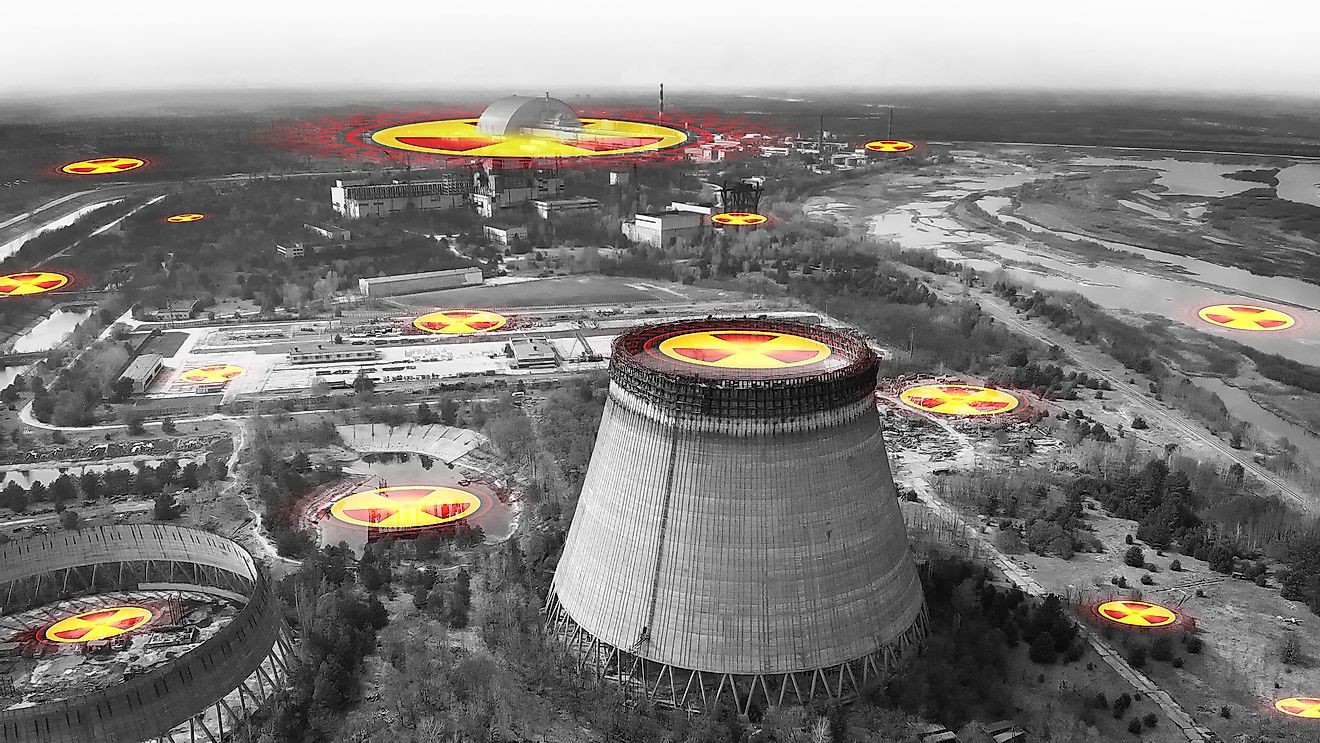
Chernobyl’s Blown Up Reactor 4 Just Woke Up. Scientists don’t understand why. https://historyofyesterday.com/chernobyls-blown-up-reactor-4-just-woke-up-74bedd5fc92d—
Andrei Tapalaga
The nuclear disaster that occurred in 1986 will forever be remembered, but the world will soon have a reminder of the event as the zone for some reason (yet unexplained by scientists)is becoming more radioactive. For those who may not be aware of the incident here is an article to get you up to speed.
“Chernobyl will never be a problem”
Underneath reactor 4 there is still nuclear fuel that is active and which will take around 20,000 years for it to deplete. The uranium is too radioactive for anyone to live in the city and since the incident, the European Union had created a shield around the reactor which should not allow for the radioactive rays to come out.Chernobyl officials presumed any criticality risk would fade when the massive New Safe Confinement (NSC) was slid over the Shelter in November 2016.”
“The €1.5 billion structure was meant to seal off the Shelter so it could be stabilized and eventually dismantled.”
However, many other parts around Chernobyl have also been affected due to prolonged exposure, some more than others, and many of them have not been contained as they were not presenting any major radioactive activity until now. Neil Hyatt, a nuclear chemist from the University of Sheffield had mentioned that there is a possibility for the uranium fuel to reignite on its own.
Hyatt also offered a simple explanation on how this is possible, just like charcoal can reignite in a barbeque, so can nuclear materials that have once been ignited. He as well as a handful of nuclear chemists have mentioned previously the possibility of the uranium from Chernobyl to reignite, but the scientists from Ukraine that are responsible for managing the nuclear activity within the vicinity never really listened, until now.
Scientists from Ukraine have placed many sensors around reactor 4 that constantly monitor the level of radioactivity. Recently those sensors have detected a constant increase in the level of radioactivity. It seems that this radioactivity is coming from an unreachable chamber from underneath reactor 4 that has been blocked since the night of the explosion on the 26th of April, 1986.
What could be causing this?
The experts from Ukraine don’t really understand why this is happening although they do have a hypothesis. Water is used to start the fission process within nuclear materials, this makes the nuclear material release energy that within a nuclear reactor can be maintained under control, but in this instance, the experts are afraid they will not be able to control it.
Another hypothesis is that since reactor 4 has been completely shielded, no water from the rain was able to reach the nuclear fuel. The water from rain may have been what kept the nuclear material under control. With no water, the nuclear fuel may be at risk of overheating, leading to another nuclear disaster.
There may be another reason for this constant increase in radioactivity, what has been mentioned above are only hypotheses, maybe something totally different is occurring under reactor 4 or within the nuclear material left inside. This is something that definitely should ring some alarm bells in order to prepare for the worst sort of situation and hopefully the world’s smartest in the field of nuclear chemistry can come together to identify the problem and come up with a potential solution.
Sources:…………
1 This Month
19 February – VIRTUAL EVENT-Decision Time: AI and Our Nuclear Arsenal
12:45 p.m. Central / 1:45 p.m. Eastern
To see nuclear-related stories in greater depth and intensity – go to https://nuclearinformation.wordpress.com
-
Archives
- February 2026 (145)
- January 2026 (308)
- December 2025 (358)
- November 2025 (359)
- October 2025 (376)
- September 2025 (258)
- August 2025 (319)
- July 2025 (230)
- June 2025 (348)
- May 2025 (261)
- April 2025 (305)
- March 2025 (319)
-
Categories
- 1
- 1 NUCLEAR ISSUES
- business and costs
- climate change
- culture and arts
- ENERGY
- environment
- health
- history
- indigenous issues
- Legal
- marketing of nuclear
- media
- opposition to nuclear
- PERSONAL STORIES
- politics
- politics international
- Religion and ethics
- safety
- secrets,lies and civil liberties
- spinbuster
- technology
- Uranium
- wastes
- weapons and war
- Women
- 2 WORLD
- ACTION
- AFRICA
- Atrocities
- AUSTRALIA
- Christina's notes
- Christina's themes
- culture and arts
- Events
- Fuk 2022
- Fuk 2023
- Fukushima 2017
- Fukushima 2018
- fukushima 2019
- Fukushima 2020
- Fukushima 2021
- general
- global warming
- Humour (God we need it)
- Nuclear
- RARE EARTHS
- Reference
- resources – print
- Resources -audiovicual
- Weekly Newsletter
- World
- World Nuclear
- YouTube
-
RSS
Entries RSS
Comments RSS
 nuclear-news