”Save the Severn Estuary” fights to stop EDF dumping Hinkley Point’s nuclear mud into this Marine Protected Area.

oinPlans by energy firm EDF to dump hundreds of thousands of tons of sediment
from the Hinkley Point nuclear power station in the Severn Estuary are
facing a backlash. A campaign group called Save the Severn Estuary,
supported by a Welsh pop star, has launched a crowdfunding site to finance
a legal challenge.
The estuary is a designated Marine Protected Area and
campaigners, including Cian Ciaran of rock band Super Furry Animals, fear
the dumped waste, including chemical and radioactive materials, will spread
on the strong tidal currents all around the Estuary, depositing on its mud
banks and beaches. EDF, with its UK base in Gloucester, is planning to
start its second phase of sediment dumping at Portishead, near Bristol.
Punchline Gloucester 8th March 2022
Plans by energy firm EDF to dump hundreds of thousands of tons of sediment
from the Hinkley Point nuclear power station in the Severn Estuary are
facing a backlash. A campaign group called Save the Severn Estuary,
supported by a Welsh pop star, has launched a crowdfunding site to finance
a legal challenge.
The estuary is a designated Marine Protected Area and
campaigners, including Cian Ciaran of rock band Super Furry Animals, fear
the dumped waste, including chemical and radioactive materials, will spread
on the strong tidal currents all around the Estuary, depositing on its mud
banks and beaches. EDF, with its UK base in Gloucester, is planning to
start its second phase of sediment dumping at Portishead, near Bristol.
Punchline Gloucester 8th March 2022
Increased radiation levels around Chernobyl probably due to military’s disturbance of soil around exclusion zone
Chernobyl radiation levels increase 20-fold after heavy fighting around the facility, Live Science, By Ben Turner 25 Feb 22,
Gamma radiation has increased to 20 times its usual levels in the area. The Chernobyl nuclear power plant and its surrounding area are showing increased radiation levels after heavy fighting between Ukrainian and Russian troops in the region, Ukrainian officials said Friday (Feb. 25).
Online data from the Chernobyl exclusion zone’s automated radiation-monitoring system shows that gamma radiation has increased twenty times above usual levels at multiple observation points, which officials from the Ukrainian nuclear agency attributed to radioactive dust thrown up by the movement of heavy military equipment in the area.
The defunct Chernobyl nuclear power plant has been under occupation by attacking Russian soldiers since Thursday (Feb. 24) after Russian president Vladimir Putin launched a full-scale invasion of Ukraine in the early hours of the morning. Workers at the facility, stationed there to monitor and maintain radiation levels within safe bounds, have been taken hostage by Russian troops, according to Anna Kovalenko, a Ukrainian military expert.
“The station staff is being held hostage. This threatens the security of not only Ukraine but also a significant part of Europe,” Kovalenko wrote on Facebook.
White House press secretary Jen Psaki said in a news briefing on Thursday (Feb. 24) that the Biden administration was “outraged” by reports of Russian troops holding Chernobyl plant staff against their will and demanded their release. She warned that the action “could upend the routine civil service efforts required to maintain and protect the nuclear waste facilities.”
As one of the most radioactive places in the world, large parts of the Chernobyl exclusion zone have been closed off since the disastrous meltdown of Ukraine’s Chernobyl nuclear power plant in 1986. In that year, two enormous explosions inside the plant’s reactor flipped its 2,000-ton (1,800 metric tons) lid like a coin, blanketing the surrounding 1,000-square-mile (2,600 square kilometers) with radioactive dust and reactor chunks. Following evacuation and the dousing of the nuclear fire — which cost many firefighters their lives — the reactor was sealed off and the area deemed uninhabitable by humans for the next 24,000 years.
Heavy fighting around the plant on Thursday (Feb. 24) led to concerns that stray munitions could accidentally pierce the exploded reactor’s two layers of protection — consisting of a new, outer safe-confinement structure and an inner concrete sarcophagus — and release the deadly radioactive fallout trapped inside.
In a contradictory statement, Igor Konashenkov, the spokesman for the Russian Defense Ministry, said that radiation around the plant was within normal levels and that Russian forces were working with the facilities’ staff to ensure the area’s safety……..
The site, which is just 60 miles (97 km) north of the Ukrainian capital Kyiv, lies on a direct invasion route between Kyiv and the Russian forces’ northern entry point to Ukraine at the Belarusian border.
Claire Corkhill, a professor of nuclear material degradation at the University of Sheffield in the U.K., wrote on Twitter that the gamma radiation around the Chernoybl plant “looks to have increased by around 20 times compared with a few days ago.” However, caution should be taken “not to over-interpret at this stage,” she said.
“This appears to be based on a single data point,” Corkhill added in a separate tweet. “What is intriguing is that the level of radiation has increased mostly around the main routes in and out of the Chernobyl exclusion zone, as well as the reactor. This would tend to suggest that increased movement of people or vehicles may have disturbed radioactive dust.”
The highly radioactive fuel inside the Chernobyl reactor is buried deep beneath the defunct plant and is unlikely to be released unless the reactor is directly targeted, Corkhill said……. https://www.livescience.com/chernobyl-radiation-levels-rise-after-fighting
Abandoned mines and old Yunkom nuclear test site in Donbas region of Ukraine pose ”singular threat” of radiation contamination
Abandoned mines in eastern Ukraine are filling up with water at
“alarming” rates, according to new research that has triggered fears of
a radioactive disaster. Satellite images show high levels of swelling in
the ground in the former coal mining region of Donbas, much of which is now
controlled by pro-Russian separatists.
The images have raised concerns
about water contaminated with heavy metals or radioactive material spilling
into rivers and the wider environment. Of particular concern is the high
swelling at the Yunkom mine, which was the site of a small Soviet
underground nuclear test in 1979.
The Organisation for Security and
Co-operation in Europe, the intergovernmental organisation, warned in 2017
that the mine posed a “singular threat”. “Any present destabilisation
of the mine via flooding could release up to 500 cubic metres of
radiation-contaminated mine waters into the ground-water table,” it said.
Telegraph 24th Feb 2022
New USA Federal Report Warns of Accelerating Impacts From Sea Level Rise.
New Federal Report Warns of Accelerating Impacts From Sea Level Rise. The
global average sea level is rising 2 inches per decade and speeding up, but
in some regions, the rate is more than twice that fast. Many residents of
coastal Southern Mexico don’t know that the sea around them is likely to
rise another 15 to 20 inches in just the next 30 years.
Those projections
were confirmed Tuesday by an updated report from the National Oceanic and
Atmospheric Administration and NASA using new satellite data and climate
models along with improved evaluations of historic data from tide gauges
dating back more than 100 years.
“What we’re reporting today is
historic,” said NOAA administrator Rick Spinrad, who told Americans that,
on average, sea level at their coasts will climb 10 to 12 inches in the
next 30 years and 2 feet by the end of the century.
Inside Climate News 16th Feb 2022
The case for Saving the Severn Estuary from the dumping of radioactive wastes
A grave threat to the oceans and the wellbeing of our communities could be
averted with your support for the Save The Severn Estuary Judicial Review
Case Fund – how? Just by quickly copying, pasting and sharing the
information below amongst your networks so that as many people are aware of
the impending danger as possible and have the opportunity to put their
opposition into practice.
Energy giants EDF dumped contaminated mud in the
Severn near Cardiff in 2018; now, rebuffed in Wales, they were given a
licence to dump at Portishead. The legal action is to stop them resuming
dumping in April. This should be stage-1 in the battle to end EDF’s licence
for mass slaughter of fish sucked in the river of seawater for cooling
purposes.
Save The Severn is a science-led independent coalition who have
assembled a case and engaged leading environmental lawyers to challenge
MMO’s licence. We obtained Court permission to proceed in December and have
a hearing scheduled for 8-10 March in the High Court. EDF are supporting
MMO while we have some assistance from the Conservation and Fisheries
authority.
The Severn Estuary has the highest conservation status, recently
becoming a Marine Protection Area where damaging operations are ended. The
Welsh Marine Plan accepts this but not England’s Marine Management
Organisation (MMO. Some of the Hinkley mud dumped at Cardiff and Portishead
smothered the seabed ecology, while most dispersed around the Estuary.
Increased radioactivity was detected up the coast and not only near Cardiff
following the 2018 dumping. EDF are choosing not to protect marine life for
their own profits, and they need to be stopped. We have three weeks to save
the Severn Estuary, with the Court Case hearing on 8 March 2022. Save The
Severn fundraising page here:
https://www.crowdjustice.com/case/save-the-severn-estuary/
Save the Severn (accessed) 18th Feb 2022
UN to review Japan’s plan to release Fukushima water into Pacific

UN to review Japan’s plan to release Fukushima water into Pacific
Taskforce will ‘listen to local people’s concerns’, as government plans to release more than 1m tonnes, Guardian, Justin McCurry in TokyoFri 18 Feb 2022
A UN nuclear taskforce has promised to prioritise safety as it launches a review of controversial plans by Japan to release more than 1m tonnes of contaminated water into the ocean from the wrecked Fukushima Daiichi nuclear plant.
Japan’s government announced last April that it had decided to release the water over several decades into the Pacific Ocean, despite strong opposition from local fishers and neighbouring China and South Korea……………
The Tokyo Electric Power company (Tepco) says its treatment technology can remove all radioactive materials from water except tritium, which is harmless in small amounts. It said the gradual release of the water, diluted with seawater, would not pose a threat to human health or the marine environment. In 2020, however, Greenpeace said the water still contained contaminants beside tritium and would have to be treated again.
The wastewater is being stored in about 1,000 tanks that officials say need to be removed so the plant can be decommissioned, an operation expected to take several decades. The tanks are expected to reach their capacity of 1.37m tonnes this summer.
The liquid includes water used to cool the damaged reactors, as well as rain and groundwater that seeps into the area.
Shaun Burnie, a senior nuclear specialist for Greenpeace East Asia, said he did not believe the IAEA would fully investigate and address safety and environmental concerns in its report.
Noting that the agency had welcomed the discharge option when it was announced last year, Burnie said: “The IAEA is not an independent agency in nuclear affairs – under statute its mission is to promote nuclear power. It has sought to justify radioactive marine pollution as having no impact and safe. But the IAEA is incapable of protecting the environment, human health or human rights from radiation risks – that’s not its job.
“The IAEA taskforce should be investigating the root cause of the contaminated water crisis and exploring the option of long-term storage and the best available processing technology as an alternative to the deliberate contamination of the Pacific.”
The IAEA team, which includes experts from South Korea and China, will report its findings at the end of April.
South Korea, which has yet to lift an import ban on Fukushima seafood introduced in 2013, has said that discharging the water would pose a “grave threat” to the marine environment. Pacific peoples have challenged Japan to prove the water is safe by dumping it in Tokyo.
Local fishers also oppose the water’s release, saying it would undo a decade’s work to rebuild their industry and reassure nervous consumers their seafood is safe………https://www.theguardian.com/environment/2022/feb/18/un-to-review-japans-plan-to-release-fukushima-water-into-pacific
Opposition to Holtec dumping nuclear waste into Cape Cod Bay
Preventing nuclear wastewater dumping, MV Times, By Eunki Seonwoo, February 16, 2022 The Aquinnah select board was in favor of Mara Duncan’s request for a non-binding ballot question. Duncan’s ballot question was for Holtec International, owner of the Pilgrim Nuclear Power Plant in Plymouth, decommissioned in 2019, not to discharge nuclear waste into Cape Cod Bay.
Federal leaders from Massachusetts — Senators Edward Markey and Elizabeth Warren, as well as U.S. Reps. Seth Moulton and Bill Keating — have expressed opposition to Holtec dumping nuclear wastewater into the bay in a letter they wrote in January.
When evaluating the proper method of disposal, Holtec must consider the public’s concerns surrounding and perception of the release of irradiated material into Cape Cod, especially when viable alternatives are available,” the letter reads.
Duncan told the board a number of groups, such as Physicians for Social Responsibility and the fishing industry, are against the dumping. Holtec has other disposal methods. “It is their cheapest option, obviously. It is very easy to open up just open the [lid] and let it spill,” Duncan said. …………….. https://www.mvtimes.com/2022/02/16/preventing-nuclear-wastewater-dumping/
Legal challenge to license for EDF to dump radioactive mud in the Bristol Channel and Severn Estuary
Campaigners are calling on the government to prohibit energy giant EDF
from dumping contaminated mud in the Bristol Channel and Severn Estuary.
They say mud from the new Hinkley power station development is ‘a risk to
human health, threatens protected marine habitats and damages a treasure of
Britain’s natural world’.
EDF says all waste from the site is controlled
and regulated to ‘ensure the environment and public are protected’.
But Save the Severn, organised by a collaborative group of scientists and
environmental activists, is urging people to get behind its campaign to
halt further waste – including chemical and radioactive contaminants –
getting dumped in an international marine protected area near Portishead.
Campaigners will also challenge the legality of a license granted by the
Marine Management Organisation (MMO) to EDF for dumping waste in March,
when they will present a legal challenge against the company at a judicial
review.
Weston Mercury 15th Feb 2022
https://www.thewestonmercury.co.uk/news/campaign-group-wants-to-save-the-severn-8692070
Severn Estuary – internationally significant fish nursery – threatened by Hinkley radioactive mud
Four Weeks to Save-the-Severn estuary!
Energy giant, EDF, has been dumping millions of tonnes of mud and sediment contaminated by the decades of discharges from the Hinkley nuclear power stations. Dumping is convenient and cheaper than using the sediments on their construction site. They are dredging these sediments to build a giant seawater extraction system for cooling water, which will be short-lived as its slaughter of millions of fish a year has to end. This Estuary is an internationally important fish nursery and Marine Protection Area.
Despite fierce opposition, dumping of Hinkley mud and sediment went ahead off Cardiff in 2018 and it’s too late to change what happened. Since that time, increased radioactivity has been detected in coastal mud. It could have been different. Now they have a licence to dump off Portishead, Bristol – but we have Court permission to challenge that licence and stop EDF resuming dumping in April.
Save The Severn, an independent, science-led campaign group, have won a day in court to challenge further dumping. Without the effort and expense of delaying EDF through legal means, the bosses of the company would be able to simply do as they please. Can you help to ensure the legal case is heard?
The court case is heard on Tue 8 March 2022. We have four weeks to save the Severn Estuary and many donations from £1 upwards will reach our target. It’s easy to do, please visit the Save The Severn fundraising page here:
The radioactive ‘Cumbrian mud patch’ would be shaken up by a coal mine at theSellafield site

A tsunami of radioactive wastes now largely inert (apart from tidal processes) would be resuspended in the water column – returning to the shores and to the rest of the world. It takes only 4 years for Sellafield’s seaborne waste to reach the Arctic. The coal mine would cause subsidence and resulting resuspension of nuclear wastes.
| *Sellafield** A great article by Paul Brown below – there is however a big elephant in the room regarding this story. The elephant in the room is the Cumbrian Mud Patch – the radioactive silts on the Irish Sea bed resulting from decades of reprocessing. The coal mine due to be decided upon soon by Government (after Planning Inspector Stephen Normington makes his recommendation) would churn up this nuclear crapola on the seabed. A tsunami of radioactive wastes now largely inert (apart from tidal processes) would be resuspended in the water column – returning to the shores and to the rest of the world. It takes only 4 years for Sellafield’s seaborne waste to reach the Arctic. The coal mine would cause subsidence and resulting resuspension of nuclear wastes. The coal mine would cause earthquakes. Both these outcomes are not “likely” they are certain. The coal mine CEO is also employed by government as advisor on the plans for a deep (and not so deep) nuclear dump for heat generating nuclear wastes – you couldn’t make it up. Keep Cumbrian Coal in the Hole 12th Feb 2022https://keepcumbriancoalinthehole.wordpress.com/2022/02/12/decades-of-sellafields-reprocessing-waste-on-irish-sea-bed-could-be-churned-up-by-coal-mine-subsidence/ |
Environmental Working Group (EWG) urges Biden to reject ‘outrageous’ call for more nuclear power subsidies in clean energy agenda

“Nuclear power is truly an example of privatizing profits and socializing risks.”
EWG urges Biden to reject electric utility executives’ call for more nuclear power subsidies in clean energy agenda. https://www.ewg.org/news-insights/news-release/2022/02/ewg-urges-biden-reject-electric-utility-executives-call-more WASHINGTON – President Joe Biden is meeting today with top executives from several investor-owned electric utilities who want Congress to approve vital clean energy tax credits as part of Biden’s Build Back Better agenda. But they are also seeking new federal subsidies for existing nuclear power plants that the Environmental Working Group is urging the president to oppose.“Nuclear power is truly an example of privatizing profits and socializing risks.”
The Build Back Better plan is a broad infrastructure proposal and includes some important tax credits that the utilities support. They would help expand utility-scale solar projects and boost sales of electric vehicles, crucial steps in fighting the climate emergency.
But the call for wasting more federal tax dollars propping up uneconomic and dangerous nuclear power plants too is an outrageous request, noted EWG.
“Nuclear power is a relic of the electricity sector, and a dangerous and extremely expensive one that has cost taxpayers billions of dollars,” said EWG President Ken Cook. “The federal government must stop throwing away money propping up the nuclear industry and instead make critical investments to expand safe, clean renewable energy.”
“President Biden and congressional leaders can and should unravel the federal government’s long history of pouring scarce resources into this failed industry and its legacy of radioactive waste and the enormous threat it poses to the public,” said Cook.
Nuclear power has never been financially viable and never will be, so new subsidies make no sense. It has the distinction of a permanent negative learning curve – costs always rise and never decline – despite 60 years of taxpayer-funded research and development, construction risks dumped onto ratepayers to lure private financing, a series of bailouts worth tens of billions to the industry, and billions wasted on upgrades to keep aging power plants running that could have been much more wisely spent replacing them.
“It is time to systematically replace nuclear power with modern clean energy technology and to stop burdening ratepayers and taxpayers with this financial albatross,” said Cook. “Nuclear power is truly an example of privatizing profits and socializing risks.”
In its 2021“None of the Above” series calling out dirty and dangerous power sources that should quickly be replaced by clean, safe and renewable energy, such as solar and wind, EWG likened nuclear power to “nothing more than a public works project with no prospects for the future that has failed financially while generating huge amounts of radioactive waste, with no viable method of disposal, that will linger for thousands of years.”
The Environmental Working Group is a nonprofit, non-partisan organization that empowers people to live healthier lives in a healthier environment. Through research, advocacy and unique education tools, EWG drives consumer choice and civic action. Visit www.ewg.org for more information.
Electromagnetic radiation, said by telecom companies to be harmless, could be hurting wildlife.
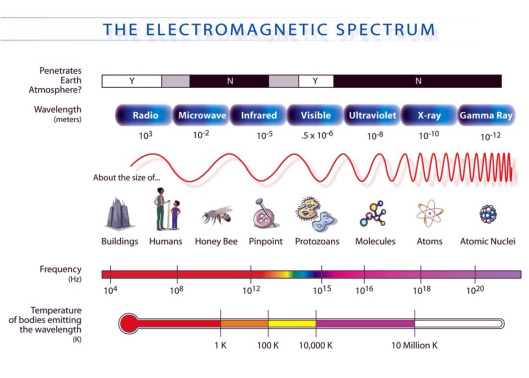
EMFs’ toxic effects on an animal’s cells, DNA and chromosomes have been observed in laboratory specimens — and thus would apply to wildlife, according to the report.
Many types of wildlife are exposed to EMFs from wireless sources, such as deer, seals, whales, birds, bats, insects, amphibians and reptiles, the report said. Many species have been found more sensitive to EMFs than humans in some ways.
Report says wireless radiation, said by telecom companies to be harmless, could be hurting wildlife Source: Environmental Health TrustSanta Fe New Mexican, By Scott Wyland swyland@sfnewmexican.com, Feb 5, 2022
Health researchers raised concerns in the 1990s about the possible harmful effects of wireless radiation from cellphones and towers, and their warnings met pushback from telecommunications companies on the verge of growing a mega-industry.
Industry-backed researchers assured federal agencies health concerns — especially those centered on the possibility of low-level microwaves causing cancer — lacked conclusive evidence.
Regulators accepted their assessments, and the alarm bells went silent.
Now a trio of researchers have compiled a report saying the widespread installation of cell towers and antennas is generating electromagnetic fields — EMFs for short — that could be physiologically harmful.
The report focuses on potential impacts on wildlife, trees, plants and insects, such as bees, because there are no regulations protecting them from EMFs emanating from wireless antennas. Wildlife protections are becoming more vital as this radiation — known more specifically as radiofrequency EMFs — escalates through 5G technologies, the researchers warn.
“There needs to be regulatory standards to address EMFs affecting wildlife,” said Albert Manville, a retired U.S. Fish and Wildlife Service biologist and one of the paper’s authors.
Manville also is an adjunct science professor at Johns Hopkins University.
He said he provided the Federal Communications Commission with some research on how the electromagnetic pollution can hurt wildlife and the steps that could be taken to lessen the impacts.
But the FCC has been unresponsive, Manville said, arguing the agency tends to accommodate the industry it’s supposed to regulate.
“That’s unfortunate, but that’s just the way it is,” he said.
The FCC did not respond to questions about whether it would consider making efforts to reduce animals’ EMF exposure.
The three authors drew from 1,200 peer-reviewed studies to compile a three-part, 210-page report titled “Effects of non-ionizing electromagnetic fields on flora and fauna.” It was published in the journal Reviews on Environmental Health.
Science journalist Blake Levitt, who also co-wrote the report, said they dug up overlooked studies that contained compelling research on how living organisms react to low-level EMFs. Their compilation invalidates any claims that the EMFs don’t cause biological effects, she said.
We just blew the whole thing out of the water and took it to the ecosystem level, which is really where it needed to go,” Levitt said. “Nobody had done that before. We need a whole lot more scrutiny put to the low-intensity stuff.”
Ambient EMFs have risen exponentially in the past quarter-century, as cellphones were widely adopted, to become a ubiquitous and continuous environmental pollutant, even in remote areas, the report said, adding studies indicate EMFs can affect animals’ orientation, migration, food finding, reproduction, nest building, territorial defense, vitality, longevity and survival.
EMFs’ toxic effects on an animal’s cells, DNA and chromosomes have been observed in laboratory specimens — and thus would apply to wildlife, according to the report.
Many types of wildlife are exposed to EMFs from wireless sources, such as deer, seals, whales, birds, bats, insects, amphibians and reptiles, the report said. Many species have been found more sensitive to EMFs than humans in some ways.
The report recommends new laws that include the redesign of wireless devices and infrastructure to reduce the rising ambient levels.
It comes several months after a federal court in Washington, D.C., ordered the FCC to review its guidelines for wireless radiation and justify why it should retain them, as the standards haven’t been updated since 1996. This radiation should not be confused with radioactivity, the court noted, adding microwaves used in transmitting signals are low enough to not heat tissues in what are known as “thermal effects.”
But medical studies suggest the lower-level radiation could cause cancer, reproductive problems, impaired learning and motor skills, disrupted sleep and decreased memory.
These studies and others were submitted to the FCC after it opened a notice of inquiry in 2013 under the administration of former President Barack Obama to probe the adequacy of the 1996 guidelines, which were geared toward avoiding thermal effects, the court said.
In 2019, the Trump administration’s FCC deemed the inquiry unnecessary, saying the 1996 rules were sufficient and required no revision.
Two judges called that FCC action “arbitrary and capricious,” saying the FCC made the decision out of hand, ignoring all the science presented and offering no reasonable, fact-based argument to back it up.
The agency also failed to look at the technological developments in the past 25 years and how they’ve changed the degree of exposure, the judges wrote. And they said it refused to examine possible health effects from EMFs that fall below the threshold set in 1996……………………………….. https://www.santafenewmexican.com/news/local_news/report-says-wireless-radiation-said-by-telecom-companies-to-be-harmless-could-be-hurting-wildlife/article_1ae80fc0-7d5d-11ec-8c13-4f3411ea8ea1.html
Lake animals near Chernobyl have mutations

Lake animals near Chernobyl have mutations https://beyondnuclear.org/lake-animals-near-chernobyl-have-mutations/ February 4, 2022
Animals in lakes close to the Chernobyl nuclear reactor have more genetic mutations than those from further away – giving new insight into the effect of radiation on wild species, researchers at the University of Stirling have found, writes Brendan Montague in The Ecologist.
DNA analysis of freshwater crustaceans, called Daphnia (pictured on original), revealed greater genetic diversity in lake populations that experienced the highest radiation dose rates following the accident in 1986.
Radiation is the primary cause of these genetic mutations, according to Dr Stuart Auld, who led the research.
Dr Auld, of Stirling’s faculty of natural sciences, said: “Chernobyl is a natural experiment in evolution, because the rate of genetic mutation is higher, and all evolutionary change is fuelled by mutations.
“Normally you have to wait for generations to see the effect of the environment on mutations, and most mutant animals are pretty damaged so don’t live long.
“By sequencing non-coding DNA – bits of genetic code that don’t actually affect the form or function of the organism – we were able to uncover these mutations.”
Dr Jessica Goodman collected the crustaceans using a kayak and net from lakes at varying distances from Chernobyl as part of her PhD. She flew the samples back to the lab at Stirling, where Dr Auld’s team isolated and analysed the DNA.
The research was assisted by June Brand at the University of Stirling and Gennady Laptev from the Ukrainian Hydrometeorological Institute in Kiev. It was funded by the Natural Environment Research Council.
The paper Radiation-mediated supply of genetic variation outweighs the effects of selection and drift in Chernobyl Daphnia populations is published in the Journal of Evolutionary Biology.
UK close to opening coal mine under Marine Conservation Zone just 5 miles from Sellafield nuclear facility!
The Coal Mine planning inspector Stephen Normington will, any day now, be
making his recommendation to government (the same government who have
appointed the coal boss as nuclear dump advisor). Then the final decision
will be with Secretary of State Michael Gove on whether or not to open a
new coal mine under the Marine Conservation Zone off St Bees and just five
miles from Sellafield. Concerns, aside from climate, raised by Keep
Cumbrian Coal in the Hole since 2017, regarding seismic, nuclear and marine
impacts have been well and truly ‘talked over’ despite our vehement
campaigning.
Keep Cumbrian Coal in the Hole 5th Feb 2022
US DOE announces clean-up progress at Savannah River Site
US DOE announces clean-up progress at Savannah River Site, NEI Magazine, 31 January 2022 The US Department of Energy’s (DOE’s) Office of Environmental Management (EM) and its clean-up contractor at the Savannah River Site (SRS) have reached an important record of decision (ROD) agreement with South Carolina and federal environmental regulators on the final clean-up of a 25-mile-long stream corridor at the site.
The corridor consists of Par Pond, nine miles of canals adjacent to the pond and a stream named Lower Three Runs. The stream begins near the centre of the site, just above Par Pond, and winds its way southward across SRS.
SRS, a 310-square-mile-site in Aiken, South Carolina, focused on the production of plutonium and tritium for use in the manufacture of nuclear weapons from its inception in the early 1950s until the end of the Cold War. In 1992, the focus turned to environmental clean-up, nuclear materials management, and research and development activities……………………
SRNS Engineer and Project Technical Lead Jim Kupar explained that much of the remaining work involves ensuring additional fencing and signage are in place to warn site workers and the public that potential hazards may be present. “Though it is illegal for the public to cross the fencing onto SRS, our first priority is always their safety,” he said.
He added that surveying 25 miles of waterways, especially Lower Three Runs, was often challenging and sometimes potentially hazardous within the forest………………….. https://www.neimagazine.com/news/newsus-doe-announces-clean-up-progress-at-savannah-river-site-9448456
1 This Month
19 February – VIRTUAL EVENT-Decision Time: AI and Our Nuclear Arsenal
12:45 p.m. Central / 1:45 p.m. Eastern
To see nuclear-related stories in greater depth and intensity – go to https://nuclearinformation.wordpress.com

-
Archives
- February 2026 (141)
- January 2026 (308)
- December 2025 (358)
- November 2025 (359)
- October 2025 (376)
- September 2025 (258)
- August 2025 (319)
- July 2025 (230)
- June 2025 (348)
- May 2025 (261)
- April 2025 (305)
- March 2025 (319)
-
Categories
- 1
- 1 NUCLEAR ISSUES
- business and costs
- climate change
- culture and arts
- ENERGY
- environment
- health
- history
- indigenous issues
- Legal
- marketing of nuclear
- media
- opposition to nuclear
- PERSONAL STORIES
- politics
- politics international
- Religion and ethics
- safety
- secrets,lies and civil liberties
- spinbuster
- technology
- Uranium
- wastes
- weapons and war
- Women
- 2 WORLD
- ACTION
- AFRICA
- Atrocities
- AUSTRALIA
- Christina's notes
- Christina's themes
- culture and arts
- Events
- Fuk 2022
- Fuk 2023
- Fukushima 2017
- Fukushima 2018
- fukushima 2019
- Fukushima 2020
- Fukushima 2021
- general
- global warming
- Humour (God we need it)
- Nuclear
- RARE EARTHS
- Reference
- resources – print
- Resources -audiovicual
- Weekly Newsletter
- World
- World Nuclear
- YouTube
-
RSS
Entries RSS
Comments RSS
 nuclear-news