Seismic blasting in Irish Sea for nuclear waste dump will be devastatingto marine life.
Seismic blasting in Irish Sea for nuclear waste dump will be devastating
to marine life. In a little-known project, the government’s Nuclear Waste
Services is to blast undersea seismic airguns off the Cumbria coast this
summer in the name of ‘scientific research’ – paid for at public
expense. LINDA PENTZ GUNTER reports. IMAGINE being subjected to
ear-shattering blasts every 10 seconds, 24 hours a day for four straight
weeks? By any metric, that would qualify as the most appalling form of
torture. But that is exactly what is about to be inflicted on whales,
dolphins, seals and other marine creatures in the Irish Sea if a new wave
of opposition cannot stop it. The Irish Sea is already the most radioactive
sea in the world, in large part a result of decades of radioactive
discharges from the Sellafield reprocessing facility on the Cumbrian
shoreline. Now, Nuclear Waste Services (NWS) has contracted a company
called Shearwater Geosciences to blast its undersea seismic airguns off the
Cumbria coast this summer, calling it “scientific research.”
Morning Star 12th June 2022
Nuclear Free Local Authorities oppose Nuclear Waste Authorities’ seismic testing in the Irish Sea
| On World Oceans Day (8 June), the Nuclear Free Local Authorities have joined environmental and anti-nuclear campaigners in opposing proposals to carry out seismic testing in the Irish Sea as part of plans to develop an offshore, undersea nuclear waste dump. A joint letter, whose signatories include renowned environmentalist Jonathan Porritt, has been sent to the head of the Marine Management Organisation opposing an exemption to the requirement to obtain a Marine Licence which has been claimed by Nuclear Waste Services to enable them to plough ahead with their summer plans to carry testing in the waters off West Cumbria. The NWS, an operating division of the Nuclear Decommissioning Authority, is responsible for finding a site for a so-called Geological Disposal Facility, either below ground or beneath the seabed. This nuclear waste dump will be filled with the toxic radioactive waste that is the legacy of Britain’s seven decades of the civil nuclear power production; much of it will remain radioactive for many tens of thousands of years. Three search areas in Cumbria, falling within the local authority areas of Allerdale and Copeland and offshore up to 22kms, are under consideration. Seismic testing will enable NWS to determine if the geology beneath the bed of the Irish Sea is suitable to host a repository for the nuclear waste. This involves firing blasts of sound from air guns below the waves every 10 seconds for four weeks or longer. This sound penetrates under the ocean floor to help scientists discover more about the suitability of the geology to store nuclear waste. Seismic testing can seriously impair the health of marine life, which in the Irish Sea includes whales, dolphins, porpoises, and seals, but some scientific reports also suggest that even tiny shellfish and plankton can be adversely impacted, hazarding the whole marine ecosystem. NFLA 8th June 2022, https://www.nuclearpolicy.info/news/nuclear-free-local-authorities-oppose-seismic-testing-on-world-oceans-day/ |
Nuclear Contaminated Water From Fukushima Should Never Be Out Of One’s Mind

Nuke Contaminated Water From Fukushima Should Never Be Out Of One’s Mind, https://nation.com.pk/2022/06/07/nuke-contaminated-water-from-fukushima-should-never-be-out-of-ones-mind/ By Zhou Dingxing. Jun 7, 2022, In 2011, the “3/11” earthquake in Japan caused the meltdown of the Fukushima Daiichi Nuclear Power Plant reactor core, unleashing enormous amounts of radioactive material. The operator of the plant, Tokyo Electric Power Company (TEPCO), decided to pour in seawater to cool the reactor and contain the leakage. And because the used seawater became highly contaminated with radioactive material, TEPCO had to put it in storage tanks. A decade on, the nuclear contaminated water generated by the Fukushima Daiichi Nuclear Power Plant are about 150 tons per day in 2021, and will reach the upper limit of the storage tank capacity of 1.37 million tons in the spring of 2023.
According to estimates by the Japan Centre for Economic Research, it will cost 50-70 trillion yen (about $400-550 billion) to scrap and decontaminate the reactor, the bulk of which goes to the treatment of contaminated water. So in April 2021, the Japanese government announced that the problem of increasing amounts of nuclear contaminated wastewater would be addressed by dumping it into the sea. On May 18, 2022, the Japan Atomic Energy Regulatory Commission granted initial approval for TEPCO’s ocean dumping plan.
After the Fukushima nuclear accident, the Japanese government set up the “Nuclear Damage Compensation and Decommissioning Facilitation Corporation” (NDF), which is an official agency with 50.1 percent of TEPCO’s voting rights, in order to prevent TEPCO from going bankrupt. In other words, TEPCO is now under direct jurisdiction and control of the Japanese government. It is not hard to see that both TEPCO and the Japanese government are the masterminds behind the nuclear contaminated water dumping plan, because for them, this is the most expedient, cost-effective and trouble-saving way. Japan would need to spend only 3.4 billion yen (about $27 million) according to this plan. But the threat to nature, the environment and human life as a result of such reckless actions was probably never on their minds.
NUCLEAR CONTAMINATED WATER IS NOT NUCLEAR TREATED WATER
Monitoring data collected in 2012 showed that the concentration of Cesium in the waters near Fukushima was 100,000 becquerels per cubic meter, which is 100 times higher than what was detected in the Black Sea after the Chernobyl nuclear leak. Ten years later in 2021, 500 becquerels of radioactive elements per kilogram of weight could still be detected in the flat scorpionfish caught by Japanese fishermen off the coast of Fukushima Prefecture, or five times higher than Japan’s own standards. In the 11 years since the nuclear disaster, one or two thyroid cancer cases have been reported for every 60,000 children in Fukushima Prefecture, much higher than the normal rate.
The Japanese government and TEPCO have repeatedly claimed that nuclear contaminated water is “safe” to be dumped into the ocean because it would go through the multi-nuclide removal system (Advanced Liquid Processing System, ALPS). But it is only the radioactive substance called “Tritium” that has reached this standard. And what Japan doesn’t say is that, even after treatment, the water still contains other radioactive substances such as Strontium 90 and Carbon 14 that cause genetic mutation in the ecosystem.
Since the release of the ALPS-related report, the Japanese government has not held any briefings or hearings for the public. And in order to justify the dumping plan, the Japanese government contacted citizen and groups to ask them to stop using the words “nuclear contaminated water”, and use “nuclear treated water” instead. Vigorous public relations (PR) efforts have also been carried out to whitewash the plan. In the 2021 budget of the Japanese Reconstruction Agency, PR expenses related to the Fukushima nuclear accident have increased to 2 billion yen (around $16 million), over four times than the previous year figure. The money has been used on professional teams to weaken and remove negative public opinion in Japan and abroad about the nuclear contaminated water through various propaganda programs.
Furthermore, TEPCO’s track records for handling the nuclear accident have been filled with deception and distortion. In 2007, TEPCO admitted that it had tampered with data and concealed potential safety hazards in a total of 199 regular inspections of 13 reactors in its nuclear power plants since 1977, including the cooling system failure in the Fukushima nuclear accident. One week after the 2011 nuclear accident when experts had already made the judgment that the cores of Units 1 to 3 of the Fukushima Daiichi Nuclear Power Plant had melted, the company still refused to announce the truth to the public, and instead chose to use “core damage,” a term that was significantly less alarming. With a past so bad it is hard to make one believe that TEPCO will dump “safe” nuclear contaminated water into the sea.
WAVES OF OPPOSITION AT HOME AND ABROAD
The Japanese government has so far failed to provide sufficient and credible explanations on the legitimacy of the nuclear contaminated water dumping plan, the reliability of nuclear contaminated water data, the effectiveness of the purification devices, and the uncertainty of the environmental impact. To promote the plan under such circumstances has only brought about wide criticism and questions by various communities in Japan and beyond.
Up to 70 percent of the people in Fukushima Prefecture have expressed opposition to the dumping plan. Konno Toshio, former president of Fukushima University, was opposed to advancing the ocean dumping plan without prior understanding at home and abroad, because this plan could affect future generations and must be treated with great caution. The fishery cooperatives and local councils in Miyagi Prefecture, which is adjacent to Fukushima Prefecture, believe that the dumping of nuclear contaminated water into the ocean may affect the safety of local aquatic products and cause significant economic losses to related industries. Already, 180,000 people in Japan have signed the petition to the Japanese government to adopt disposal options other than ocean dumping.
Vladimir Kuznetsov, academician at the Russian Academy of Natural Sciences, said that radioactive substances in the nuclear contaminated water can only be partially filtered, and the treated water still contains extremely dangerous radionuclides, which will pollute marine life and spread to the entire ocean through fish migration. This will gravely harm the global marine environment and cause serious harm to the health of people in the periphery. According to a research model established by GEOMAR Helmholtz Centre for Ocean Research Kiel, half of the Pacific Ocean will be polluted in less than 57 days if nuclear contaminated water is dumped at the speed announced by Japan.
Voices of justice
Japan’s ocean dumping plan of nuclear contaminated water is a serious threat to the marine environment, and it damages marine interests of the neighbors and other littoral countries. It also violates multiple international conventions such as the United Nations Convention on the Law of the Sea, the Convention on Assistance in Nuclear Accidents or Radiation Emergencies, and the Convention on Nuclear Safety as well as principles of the international law. Many countries, including China, have expressed concern over or opposition to it.
The Russian Foreign Ministry issued a statement criticizing the Japanese government for not consulting with or providing any related information to its neighbors when the decision was made, and expressing grave concern over Japan’s dumping of nuclear polluted water into the ocean. The South Korean Foreign Ministry summoned the Japanese ambassador to Seoul to make a serious protest against Japan’s unilateral decision while large crowds gathered in front of the Japanese embassy to protest. The International Atomic Energy Agency (IAEA) has launched an assessment of Japan’s plan.
The spokesperson of the Chinese Ministry of Foreign Affairs has repeatedly pointed out that Japan’s dumping of nuclear contaminated water into the ocean is extremely irresponsible, and demanded that Japan fully consult with neighbouring countries, other stakeholders, and relevant international institutions to find a proper way to dispose of the nuclear contaminated water, before which the dumping into the ocean shall not be initiated.
The ocean is a treasure for all mankind and our home for survival. It is essential for sustainable development and our future. To dump nuclear contaminated water from Fukushima into the ocean is a major issue that bears on the environment for human survival and health, it is not just Japan’s internal affairs. Although keenly aware of the grave harm to the global marine environment caused by the dumping of such water into the sea, Japan has attempted to push through the plan without exhausting all other safe methods. Such an opaque and irresponsible approach is unacceptable, let alone trusted by countries in the region and the larger international community.
–The author is a scholar on international studies
Rare Pediatric Cancers Persist 63 Years After Nuclear Accident

Melissa Bumstead is one of those residents. She and her family live 3.7 miles from the Santa Susana site. When her toddler Grace was diagnosed with a rare form of leukemia in 2014, doctors told Bumstead there were no known links between her daughter’s cancer and environmental contamination.
But during Grace’s treatment at Children’s Hospital Los Angeles, her mother began meeting other parents who lived near her and had children facing equally rare cancers.
They plotted their homes on Google Maps and found that they all lived within roughly 10 miles of one another. It would take another year for them to realize that the SSFL site was at the center of the circle.
WebMD Cancer news, By Neil Osterweil, March 11, 2022 –– Chernobyl. Fukushima. Three Mile Island.
The world knows these names all too well because of accidents there: complete or partial meltdowns of nuclear reactors that released massive amounts of cancer-causing radiation into the air, soil, and water.
The Santa Susana Field Lab (SSFL) is far less well-known, but no less infamous for what took place at this former rocket engine and nuclear energy test site just 28 miles northwest of downtown Los Angeles.
In July 1959, an accident involving one of 10 experimental nuclear reactors at the SSFL sitereleased a cloud of harmful radiation and toxic chemicals over the surrounding area, including Simi Valley, San Gabriel Valley, Chatsworth, and Canoga Park. The small reactor had no containment vessel.
This accident resulted in a release of radioactive iodine estimated to be as much as 250 times that of the partial meltdown that would occur 2 decades later at Three Mile Island, a much larger commercial reactor that had a containment vessel.
Six decades later, hundreds of potentially carcinogenic chemicals remain in the surrounding environment. And local children are being diagnosed with rare cancers at a rate that far outpaces what experts would predict.
Decades-Long Cover-Up
In 1959, the public knew nothing about what had happened at the site.
According to John Pace, then an employee at SSFL, the accident was covered up. Pace recounted the cover-up in the documentary In the Dark of the Valley, which first aired in November 2021 on MSNBC.
In fact, the accident at SSFL remained under wraps for 2 decades, according to Daniel Hirsch, former director of the Program on Environmental and Nuclear Policy at the University of California, Santa Cruz, and now president of Committee to Bridge the Gap, a nuclear policy nongovernmental organization.
“Students working with me while I was teaching at UCLA in 1979 uncovered these Atomic Energy Commission reports from Atomics International,” he said in an interview. “We had to order the documents from the annex to the UCLA Engineering Library. They were stored offsite, and it took a few days, and when we got them, we opened them up, and there were these fold-out photographs of the fuel [rods]. As we folded out the photographs further, we saw one photo with an arrow labeled ‘longitudinal cracks,’ and then other arrows showing other kinds of cracks, and then another arrow labeled ‘melted blob.’”
Hirsch and his students found that other accidents had occurred at SSFL, including a fuel fabrication system that leached plutonium, fires in a “hot” lab where irradiated nuclear fuel from around the United States was handled, and open-air burn pits where radioactive and toxic chemical wastes were illegally torched.
According to the Committee to Bridge the Gap, when the 2,800-acre SSFL site was being developed under the name Rocketdyne by aircraft maker North American Aviation, the area was sparsely populated, with nearly as many grazing animals as people in its hills and valleys.
North American Aviation later became part of Rockwell International, which in turn sold its aerospace and defense business units to the Boeing Company in 1996. Boeing, now in charge of the site and the cleanup efforts, is doing everything in its power to shirk or diminish its responsibility, Hirsch and other critics say.
Parents Against SSFL
Today, more than 150,000 people live within 5 miles of SSFL, and more than half a million live within 10 miles.
Continue readingCo-Founder of Green and Blacks Calls Out Small Modular Reactors: They Would Produce 30 Times As Much Nuclear Waste
While Nuclear Luvvies and Lords in Cumbria Big Up Small Modular Reactors being touted by Rolls Royce, science is stacked against them. IF science is genuinely allied to ethics and a living planet then Small Modular Reactors (or any nuclear fuelled plan ) should not even be on the table.
Co-Founder of Green and Blacks Calls Out Small Modular Reactors: They Would Produce 30 Times As Much Nuclear Waste — RADIATION FREE LAKELAND
ular Reactors
(or any nuclear fuelled plan) should not even be on the table. Craig Sams
the co-founder of Green and Blacks has written on social media: “This was
what I wrote 12 years ago. The New Scientist now reports that SMRs (Small
Modular Reactors) produce 30 times as much nuclear waste for the amount of
electricity produced and its more complex. I realise Boris upset everyone
by boozing when he should’ve been following his own rules, but condemning
future generations to even worse nuclear waste problems than we already
have is the real crime against humanity. No more nuclear. The French
nuclear power stations are corroding badly and nobody’s sure what to do.
The Irish Sea is still contaminating fish. We had to stop serving laver
bread in our restaurant Seed back in 1970 because of radioactive waste
contamination and things have only got worse since then. Wind, solar,
geothermal, oil,gas, anything but nuclear”
Radiation Free Lakeland 2nd June 2022
As Elon Musk’s SpaceX Grows, So Do Complaints From Environmentalists, Indigenous Groups and Brownsville Residents
Elon Musk’s private space company has evolved into a sprawling industrial complex. But concerns are increasing about beach closures, noise and potential harm to threatened species.
Inside Climate News, By Aman Azhar, May 23, 2022
“They told us that SpaceX was testing a rocket engine and access to the beach was restricted for safety reasons,” Mancias said.
“I asked them to let us go to the beach,” he said, “and even quoted the American Indian Religious Freedom Act to get access because it was a sacred day for us.” The officers, however, still wouldn’t let them through.
Tired of blocked access to the only public beach in the area, the Comecrudo Tribe, along with two local environmental groups, have filed suit against the county, the Texas General Land Office, and its Commissioner George P. Bush over the road closures during SpaceX operations. Restricting access to a public beach violates the Texas Constitution, the coalition of plaintiffs said, in announcing the legal action……………. https://insideclimatenews.org/news/23052022/spacex-elon-musk-brownsville-boca-chica/
—
Vulnerable island ecology threatened as developed countries dump waste, conduct nuclear test in Pacific
https://www.globaltimes.cn/page/202205/1266827.shtml, By Global Times. May 29, 2022 Pacific island countries are not only direct victims of climate change, but have become the dumping ground of various forms of waste or a testing ground for nuclear weapons by developed countries in past decades, leaving tragic and dangerous consequence for local ecology, and even to the survival of people.
Starting from the 1940s, the South Pacific region has been the worst- affected area by nuclear pollution. The US carried out 67 nuclear tests in the Marshall Islands between 1946 and 1958, which caused irreparable damage to inhabitants’ health and the ecological environment, according to Hua Chunying, China’s foreign ministry spokesperson.The US has dumped nuclear waste into the Pacific Ocean, causing a large increase in cancer rates, leukemia and birth defects in newborns, and other illnesses among those living in the Marshall Islands.
The plutonium-239 and -240 concentrations in soil samples taken at the Bikini Atolls islands are 1,000 times higher than samples from Chernobyl or Fukushima, said Hua.
Six decades have passed, and American warships and test personnel have left lasting trauma and pain on the vast stretch of the Pacific Ocean.
However, the harm is never-ending. The Japanese government officially decided to dump nuclear-contaminated water from the Fukushima nuclear plant into the sea in April 2021.
“The amount, duration, and scope of affected areas and the risk level are unprecedented. Here I would like to raise three questions for the Japanese side to answer,” said Zhao Lijian, China’s spokesperson for the foreign ministry on a press conference in April 2021. “The oceans are not Japan’s trash can; and the Pacific Ocean is not Japan’s sewer. Japan should not expect the world to pay the bill for its treatment of wastewater,” he said.
South Korea to keep import ban on Japan seafood due to Fukushima concern.

South Korea to keep import ban on Japan seafood due to Fukushima concern https://english.kyodonews.net/news/2022/05/d973d7db8578-s-korea-to-keep-import-ban-on-japan-seafood-due-to-fukushima-concern.html
KYODO NEWS 26 May 22, South Korea will maintain an import ban on Japanese seafood from areas affected by the 2011 Fukushima nuclear crisis, a minister said Wednesday, denying any plan to lift it in a bid to secure Tokyo’s support to join a regional free trade accord.
“We’ve taken a resolute stance on the issue. We aren’t considering allowing imports of Japan’s Fukushima seafood as a tactic to get backing for our bid to join” the Trans-Pacific Partnership accord, Oceans Minister Cho Seung Hwan said during a meeting with reporters, according to Yonhap News Agency.
Japan is one of the leading members of the 11-nation TPP, which also includes Australia, Singapore and Mexico. Consent of all members is required for new membership.
South Korea has been working on domestic procedures to submit an application, Yonhap said.
China and Taiwan are also seeking to join the TPP.
Taiwan in February lifted an import ban on food products from Fukushima and some other Japanese prefectures imposed in the wake of the Fukushima disaster.
Amid radiation concerns, South Korea has banned Japanese seafood imports from eight prefectures, including Fukushima.
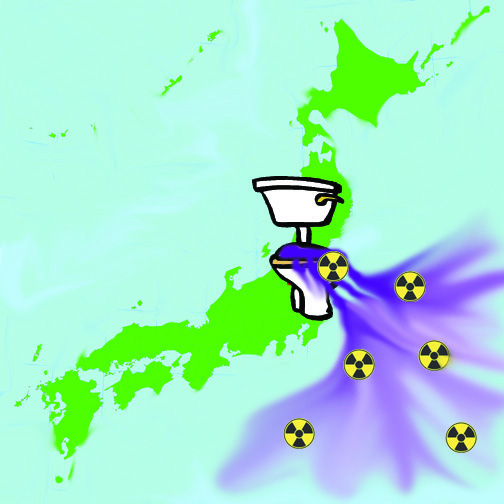
Nuclear expert reaffirms harm of dumping nuclear-contaminated water into ocean, calls on Japan to stop pressuring opposition voices
By Zhang Changyue, May 22, 2022
Nuclear expert reaffirms harm of dumping nuclear-contaminated water into ocean, calls on Japan to stop pressuring opposition voices https://www.globaltimes.cn/page/202205/1266269.shtml
Experts have reaffirmed the inevitable radioactive pollution to be caused by the dumping of nuclear-contaminated water from the Fukushima nuclear plant into the Pacific Ocean after Japan on Wednesday initially approved the discharge plan.
They demanded the Japanese government to stop pressuring those opposed to the plan and to truly listen to concerns from domestic public and international community, as a 30-day public comment period will finally determine the fate of the plan.
The Japanese government and Tokyo Electric Power Company (TEPCO) haven’t conducted a comprehensive environmental impact assessment as required by international law, Shaun Burnie, a senior nuclear specialist at Greenpeace, a global environmental protection organization, told the Global Times.
Their assessment made fundamental mistakes in radiation protection by ignoring the evidence that many different radionuclides would be discharged from the Fukushima nuclear power plant. For example, how much radioactivity in total is planned to be discharged has not been provided,” Burnie pointed out.
“The contaminated water contains radioactive cesium, strontium, tritium and other radioactive substances, which could be incorporated and concentrated in marine biota and end up in the bodies of humans. Some could cause damage to DNA, while others result in higher risks of diseases such as leukemia and blood cancer,” said Burnie.
“To assess the consequences of the tank releases, we need a full accounting of what isotopes are left in each tank after any secondary treatments. This is not just for the nine isotopes currently reported but for a larger suite of possible contaminants, such as plutonium,” explained Burnie. The expert added that since different radionuclides behave differently in the environment, models of tritium’s rapid dispersion and dilution in the ocean cannot be used to assess the fate of other potential contaminants.
Some isotopes are more readily incorporated into marine biota or seafloor sediment, said Burnie. For example, the biological concentration factor for fish for carbon-14 is up to 50,000 times higher than for tritium. Cobalt-60 is up to 300,000 times more likely to end up associated with seafloor sediment.
Also, the discharge could in reality continue for many decades longer than the period of 30 years claimed by the Japanese government – potentially for the rest of this century and beyond, Burnie noted.
Although the Japanese government and TEPCO agreed in 2015 that the consent of the Fukushima Fishermen’s Association would be a condition for any future discharges, they are trying to pressure those opposed to say yes, said Burnie, encouraging efforts in Japan and the international community to continue to stop the unlawful and unjustified dumping plan.
Beaches near Sellafield contaminated with radioactive particles.
Radiation Free Lakeland has written to Cumbria Wildlife Trust asking them
to cancel the “Sea-Coastal Foraging Evening” at St Bees on 18th May.
Who doesn’t love to forage for food on the beach? The problem with
beaches near Sellafield (and not so near) is that radioactive particles are
routinely washed onto the beaches and into the abundant wild food found on
our beaches. Sellafield has blighted our coasts and continues to do so with
impunity thanks to the criminal nonchalance promoted by events like the one
organised by Cumbria Wildlife Trust. The risk to health is very real,
especially to the young and the pregnant.
Radiation Free Lakeland 15th May 2022
The poisoned environmental legacy of France’s ”Nuclear Park”

The poisoned environmental legacy of the ‘Nuclear Park’ https://culturico.com/2022/05/07/the-poisoned-environmental-legacy-of-the-nuclear-park/ Culturico 7th May 2022, Linda Pentz Gunter, Linda Pentz Gunter is the international specialist at Beyond Nuclear and editor and contributor at Beyond Nuclear International.
France prides itself on its “Nuclear Park”, its fleet of once 58 and now 56 operational nuclear reactors that deliver 70% of the country’s electricity. However, the environmental effects of this considerable use of nuclear power – specifically from the need to mine uranium and the choice to reprocess irradiated nuclear fuel – have negatively impacted the health of the French people.
France is heavily reliant on nuclear energy. Its 56 commercial reactors dot almost every corner of the country, providing 70% of all electricity consumed. France also possesses a nuclear weapons arsenal, fueled by the nuclear power program that predated it.
The possession of nuclear weapons affords France permanent membership status in the UN Security Council — a sense of prestige France is intent on maintaining.
French president, Emmanuel Macron, has now announced that the country will build new nuclear power plants, despite the fact that its current flagship Evolutionary Power Reactor (EPR), is beset by technical mistakes, years behind schedule and billions of Euros over budget at construction sites in France, Finland and the UK. The first of two operational EPRs in China had to be shut down late last year due to vibrations that caused radioactive leakage.
Consequently, it is unpopular to question the use of nuclear power in France and oppositional voices are rarely heard. The French anti-nuclear movement — largely networked under the Réseau Sortir du nucléaire — is snubbed by the press, and its members have been arrested and even convicted of alleged crimes.
However, thanks to the pioneering work of activists, investigative journalists and independent scientists, some of the secrets buried beneath the ’Nuclear Park’, have started to be unearthed.
The damage from uranium mining
Nuclear power plants are fueled with uranium, a radioactive ore that is mined from the earth, typically in dry, desert areas far way, often by an Indigenous workforce offered little to no protection and none of the alleged benefits.
However, between 1948 and 2001, France operated its own uranium mines — more than 250 of them in 27 departments across the country. Those French mine workers, like their Native American, Australian Aboriginal and African Touareg counterparts, labored unprotected and in ignorance of the true health risks.
The mines and the factories that milled and processed the uranium, now lie abandoned, leaving a legacy of radioactive waste that is hidden beneath flowering meadows, forest paths and ornamental lakes. But these radioactive residues and rocks — known as tailings — have also dispersed beyond the old mine boundaries, transported into rivers and streams, absorbed into wild plants, scattered on roadsides, and even paved into children’s playgrounds, homes and parking lots.
There are radioactive hotspots everywhere. France may not yet have opened a high-level radioactive waste repository — still under dispute at Bure — but thanks to the contamination left behind by uranium mining, large swaths of the country are de facto nuclear waste dumps. The widespread dispersal of radioactive contamination across France has been studied extensively by the independent French radiological laboratory, Commission de Recherche et d’Information Indépendantes sur la RADioactivité, known simply as CRIIRAD. Its scientists have traveled all over the world, measuring radiation levels at such notorious nuclear accident sites as Mayak and Chernobyl in the former Soviet Union, and at Fukushima in Japan. But often, they are just as shocked and outraged at the radiation levels they measure at home, and the failure of those responsible to take effective remediation steps to protect the public.
In the 2009 investigative French television program by Pieces de Conviction — entitled Uranium, the scandal of contaminated France — CRIIRAD’s scientific director, physicist Bruno Chareyron, is seen scraping the gravely surface off a parking lot at a cross-country ski club. Under the dusty gray stones we suddenly see a gleam of yellow. It is the telltale sign of uranium and Chareyron’s Geiger counter is recording radiation levels at more than 23mSv an hour. The internationally accepted “safe” dose for the public is 1mSv a year. The public should not have access to this, he says, especially not children who are prone to pick up and pocket pebbles.
In all, there are an estimated 200-300 million tonnes of radioactive tailings dumped across France, exposing those who live, work or play nearby. The contamination comes not only from the uranium, but from its often far more radioactive decay products. And while the state-owned nuclear company Orano (formerly Areva and, before that, Cogema) insists that these sites have been “returned to nature”, it is a purely cosmetic exercise that has granted impunity to the polluter but endangered countless lives.
CRIIRAD subsequently released an urgent appeal to elected officials to take action. The laboratory recorded similar findings at numerous other abandoned uranium mine sites.
Now, with all the French uranium mines closed, the fuel for the Parc Nucléaire must be imported. It comes mainly from Niger, one of the poorest countries in the world, and predominantly from the giant French-owned uranium mine near the town of Arlit. There, CRIIRAD found that mine workers and inhabitants are routinely exposed to radioactivity in the environment as a result of uranium mining activities. A Greenpeace investigation concluded that French uranium mining activities in Niger had left behind a legacy of environmental contamination in that country, as it has in France, that would harm people for “centuries.”
The lethal legacy of uranium mining and processing that has contaminated so much of France is only the beginning of the story, however, just as uranium mining is only the beginning of the nuclear fuel chain.
Operating reactors and childhood leukemia
The electricity generation phase, on which the nuclear lobby bases its low-carbon argument to justify its continued use — while ignoring the front and back ends of the fuel chain, which have significant carbon footprints, (1) — is not without its damage to the environment either. Nuclear reactors release radiation into the environment as part of routine operation. At least 60 epidemiological studies have examined the possible health impacts of these releases, most of which found an increase in rates of leukemia among children living near operating nuclear power plants, compared to those living further away.
The most famous of these studies, conducted in Germany — Case-control study on childhood cancer in the vicinity of nuclear power plants in Germany 1980-2003 (2) — found a 60% increase in all cancers and a 120% increase in leukemias among children living within 5 km of all German nuclear power stations. This study was followed by others, largely supporting the data. But critics speculated that the amount of radioactivity in the releases was too low to have caused these epidemics.
For example, a 2008 study (3) by Laurier et al., of childhood leukemia around French reactors, concluded there was no “excess risk of leukaemia in young children living near French nuclear power plants”. However, the Laurier study was among those rebutted (4) and incorporated into a meta-analysis by Dr. Ian Fairlie and Dr. Alfred Körblein, which concluded that there were statistically significant increases in childhood leukemias near all the nuclear power plants studied and that “the matter is now beyond question, i.e., there’s a very clear association between increased child leukemias and proximity to nuclear power plants.”
The practice of averaging a month’s worth of releases into daily dose amounts ignores a sudden spike in radioactive releases, as happens when a reactor is refueling. Fairlie hypothesizes (5) that these spikes, delivering substantial radiation doses, could result in babies being born pre-leukemic due to exposure in utero, with the potential to progress to full leukemia additionally aggravated by subsequent post-natal exposure. (Nuclear power plants typically refuel every 18 months.)
Radioactive waste — the unsolved problem
At the end of nuclear power operations lies the huge and unsolved radioactive waste problem. Inevitably, the French reliance on nuclear power has generated an enormous amount of radioactive waste that must be managed and, ideally, isolated from the environment.
France is one of the few countries in the world to have chosen reprocessing as a way to try to manage irradiated reactor fuel. Reprocessing involves a chemical separation of plutonium from the uranium products in reactor fuel rods once they have ceased being used in the reactor. This operation is conducted at the giant La Hague reprocessing facility, on the Cherbourg peninsula, which began operation in 1976.
Reprocessing releases larger volumes of radioactivity — typically by a factor of several thousand— than nuclear power plants. Liquid radioactive discharges from La Hague are released through pipes into the English Channel (La Manche), while radioactive gases are emitted from chimney stacks. The liquid discharges from La Hague have been measured at 17 million times more radioactive than normal sea water. La Hague “legally discharges 33 million liters of radioactive liquid into the sea each year,” Yannick Rousselet of Greenpeace France told Deutsche Welle in a 2020 article. This has contributed, among other issues, to elevated concentrations of carcinogenic carbon-14 in sea life (6).
Concentrations of krypton-85 released at La Hague have been recorded at 90,000 times higher than natural background. La Hague is the largest single emitter of krypton-85 anywhere in the world. (7)
A November 1995 study — Incidence of leukemia in young people around La Hague nuclear waste reprocessing plant: a sensitivity analysis (8) — found elevated rates of leukemia. Yet its lead author, Jean-François Viel, was subsequently viciously attacked in attempts to discredit his findings and reputation, attacks that worsened after the publication of a second paper (9) in January 1997.
The cumulative negative health and environmental impacts of the French nuclear sector render the so-called benefits of the resulting low electricity rates a bitter delusion. For while France tries, wrongly, to attribute Germany’s higher electricity rates to that country’s rejection of nuclear power, typical German households use less electricity and actually pay lower monthly electric bills than French ones. Meanwhile, the French rely exclusively on electricity for heat in winter. Unable to meet this demand, France imports coal-fired electricity from Germany, perpetuating an industry that is fatal for the climate. At the same time, renewable energy development in France has been stifled by the decades-long prioritization of nuclear power.
However, a culture of denial in the French nuclear sector is nothing new. In 1986, when the Chernobyl nuclear reactor exploded and melted down in the Ukraine, the French government assured its people that the radioactive plume would not reach France. Unlike in other European countries, the French continued to eat local produce and allowed their children to play outside. This lie of immunity, quickly exposed, was attributed to “fear of jeopardizing the country’s nuclear program and of hurting sales of its agricultural products.”
It was that deception in 1986 that led to the creation of the CRIIRAD laboratory in the first place, as its scientists began to map the hotspots in France where fallout from Chernobyl had deposited high levels of radioactivity.
The insistence on expanding rather than phasing out nuclear power has also cost France progress in its carbon reduction goals. As Euractiv reported in August 2021, “France lagging behind in renewables can be explained in part by the fact that close to 70% of its electricity production is based on nuclear power.”
Many French reactors have been operating since the 1970s and are now well past their expected lifespans. With aging comes degradation of key safety parts and heightened risk of accident. In late December 2021 and in early January 2022, France saw a series of unanticipated reactor shutdowns due to safety issues, causing power shortages during a winter freeze and plunging French nuclear output to its lowest in 30 years. By early May, half of its entire reactor fleet was shut down due to technical problems or scheduled maintenance outages. The health and wellbeing of the French population would be better served both by cleanup of — and reparation for — the existing radioactive contamination so widespread in the country, and by a serious shift away from the continued use of nuclear power and toward true climate solutions such as renewable energy and energy efficiency measures.
Chernobyl radiation is not stable after Russian invasion
Russian troop activity at the Chernobyl Nuclear Power Plant since February
has led to an elevated risk of an accident or harmful radiation exposure.
Ukraine regained control of the site near Pripyat in March, but it still
presents a situation that is “not stable,” according to the
International Atomic Energy Agency (IAEA), the United Nations’ atomic
watchdog.
Speaking at an event last month marking the 36th anniversary of
the Chernobyl nuclear disaster, IAEA Director-General Rafael Mariano Grossi
said the Russian occupation presented an abnormal situation for workers,
plus heightened radiation levels, which are still higher than normal,
although not at a level that is dangerous for one-time exposure; the
radiation level is concerning for continuous exposure, though.
Popular Mechanics 3rd May 2022
Nuclear power is a HUGE water guzzler – so why are we guzzling the lie that nuclear is good for climate?
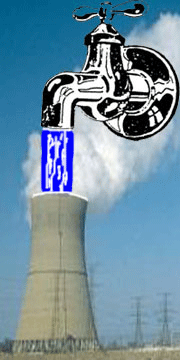
The video above is 2 years old – but so what? Nothing seems to have changed – this particular facility is especially water-dependent. But they all are. The current article below – is, unfortunately, behind a paywall. But it’s a rare mention in the media of this hugely significan factor in nuclear power problems.
Take France, for example. Right now, nearly half of their nuclear reactors are shut down anyway. But – come the summer – they’ll be shutting down again – due to water stress.
Huge nuclear plant in Arizona desert seeking new sources of water – it uses 23 b gallons of water per year The Arizona Republic 2 May 22, https://www.azcentral.com/restricted/?return=https%3A%2F%2Fwww.azcentral.com%2Fstory%2Fmoney%2Fbusiness%2Fenergy%2F2022%2F05%2F01%2Farizonas-nuclear-palo-verde-generating-station-wants-new-water-source%2F7306649001%2F
Scientists: Japan’s Plan To Dump Nuclear Waste Into The Pacific Ocean May Not Be Safe
CIVIL BEAT, By Thomas Heaton , 25 Apr 22,
A panel of scientists has identified critical gaps in the data supporting the safe discharge of wastewater into the Pacific.
Independent scientists are questioning Japan’s plans to dump just over 1 million tons of nuclear wastewater into the Pacific Ocean, following a review of the available evidence.
The panel of multi-disciplinary scientists, hired by the intergovernmental Pacific Islands Forum, has not found conclusive evidence that the discharge would be entirely safe, and one marine biologist fears contamination could affect the food system.
Last year Japan announced that wastewater from the Fukushima-Daiichi Nuclear Power Plant, destroyed in March 2011 following the Tohoku Earthquake and tsunami, would be dropped into the Pacific in 2023.
The announcement triggered immediate concern from nations and territories in the Asia-Pacific region and led the Pacific Islands Forum to hire a panel of five independent experts to review the plan.
Previously, it was broadly believed that dropping the wastewater into the ocean would be safe, given it had been treated with “advanced liquid processing system” technology, which removes radioactive materials from contaminated water.
But panel scientist Robert Richmond, director of the University of Hawaii Kewalo Marine Laboratory, says the panel unanimously believes that critical gaps in information remain.
Previous discussions over the safety of Japan’s plans emphasized the chemistry of the discharge, but not how it could interact with marine life, he said.
“If the ocean were a sterile glass vessel, that would be one thing,” Richmond said. “But it’s not, you know, there’s lots of biology involved.”
Richmond has been particularly concerned about the potential for tritium – a key compound of concern – being absorbed into the food system because the radioactive isotope can bind to phytoplankton.
Through phytoplankton, Richmond says, the radioactive element could then find its way into the greater food system as the microscopic plants are consumed by mollusks and small fish, which are later consumed by other fish and eventually humans.
“Things like mercury in fish are now of an international concern. Radionuclides will be the same,” Richmond said.
The situation is dynamic too, as climate change affects the temperature of waters and weather patterns change.
“As temperatures go up, many chemicals become more interactive, they become a little bit different in terms of break down,” he said. “So these are all the things we need to consider.”
……………………………………. the information seen by the panel showed less than 1% of the tanks of wastewater had been treated and less than 20% had been adequately sampled, Richmond says.
Based on those numbers alone, we’re uncomfortable in making predictions of where things are going to end up,” Richmond said.
The Pacific Perspective
Community groups and environmental organizations were quick to respond to the news last year, raising concerns about the longterm effects to their region, with its legacy of nuclear testing and the fallout. And coastal communities and fishermen in Japan have also raised concerns.
The U.S. expressed its support for the plan in April last year, which has since been criticized by U.S. territories and affiliated states.
Rep. Sheila Babauta of the Commonwealth of Northern Mariana Islands introduced a resolution to CNMI’s House of Representatives opposing any nuclear testing, storage or waste disposal in the Pacific.
It was passed in December, months after the U.S. stated its position and after other Pacific groups and governments condemned the move.
“I’m really disappointed in the lack of engagement, the lack of information and the lack of free, prior and informed consent,” Babauta, who chairs the Natural Resources Committee, said.
The mistrust that is harbored by many in the Pacific stems back to U.S nuclear testing in the Republic of Marshall Islands following World War II, British testing in Kiribati and the French in French Polynesia, which had flow-on effects to the environment and long term health of Pacific people. And in 1979, Japan provoked backlash when it revealed plans to dump 10,000 drums of nuclear waste in the Marianas Trench.
Babauta says she introduced the resolution as a show of solidarity for the rest of the Pacific.
“The ocean is our oldest ancestor. The ocean is our legacy,” Babauta said. “It’s what we’re going to leave for our children.” https://www.civilbeat.org/2022/04/scientists-japans-plan-to-dump-nuclear-waste-into-the-pacific-ocean-may-not-be-safe/
UK’s Nuclear Free Local Authorities join in Wales’call to Japan not to dump radiactive wastewater at sea
The Nuclear Free Local Authorities (NFLA) have joined with leading Welsh
anti-nuclear environmental campaign groups in writing to senior Japanese
Government ministers urging them not to dump radioactive waste from the
Fukushima disaster at sea.
Operated by the Tokyo Electric Power Company
(TEPCO), the Fukushima Daiichi Nuclear Power Plant was hit by an earthquake
and a tsunami on 11 March 2011. A disaster unfolded with three nuclear
meltdowns, three hydrogen explosions and a release of radiation from three
reactors, and Government authorities were forced to evacuate 154,000 people
from the surrounding area over a 20-mile radius. An average of 150 tons of
radioactive water was produced each day last year as rainwater and
groundwater flowed into the damaged reactor buildings mixing with seawater
which has been used to cool the melted nuclear fuel.
One million tons of this water is now stored in barrels on the site. Although the contaminated
water is treated it cannot remove deadly tritium, a beta-emitting
radioactive isotope of hydrogen, and other radioactive materials.
NFLA 21st April 2022
1 This Month



Shut down the radiation-damaged Heysham nuclear reactors now
To see nuclear-related stories in greater depth and intensity – go to https://nuclearinformation.wordpress.com

Say No to NASA’s Reckless Nuclear Reactor on the Moon
Say No to NASA’s Reckless Nuclear Reactor on the Moon
-
Archives
- October 2026 (256)
- September 2026 (339)
- August 2026 (330)
- July 2026 (355)
- June 2026 (287)
- May 2026 (306)
- April 2026 (356)
- March 2026 (251)
- February 2026 (267)
- January 2026 (308)
- December 2025 (358)
- November 2025 (359)
-
Categories
- 1
- 1 NUCLEAR ISSUES
- business and costs
- climate change
- culture and arts
- ENERGY
- environment
- health
- history
- indigenous issues
- Legal
- marketing of nuclear
- media
- opposition to nuclear
- PERSONAL STORIES
- politics
- politics international
- Religion and ethics
- safety
- secrets,lies and civil liberties
- spinbuster
- technology
- Uranium
- wastes
- weapons and war
- Women
- 2 WORLD
- ACTION
- AFRICA
- Atrocities
- AUSTRALIA
- Christina's notes
- Christina's themes
- culture and arts
- Events
- Fuk 2022
- Fuk 2023
- Fukushima 2017
- Fukushima 2018
- fukushima 2019
- Fukushima 2020
- Fukushima 2021
- general
- global warming
- Humour (God we need it)
- Nuclear
- RARE EARTHS
- Reference
- resources – print
- Resources -audiovicual
- Weekly Newsletter
- World
- World Nuclear
- YouTube
-
RSS
Entries RSS
Comments RSS

