South Korea to keep import ban on Japan seafood due to Fukushima concern.

South Korea to keep import ban on Japan seafood due to Fukushima concern https://english.kyodonews.net/news/2022/05/d973d7db8578-s-korea-to-keep-import-ban-on-japan-seafood-due-to-fukushima-concern.html
KYODO NEWS 26 May 22, South Korea will maintain an import ban on Japanese seafood from areas affected by the 2011 Fukushima nuclear crisis, a minister said Wednesday, denying any plan to lift it in a bid to secure Tokyo’s support to join a regional free trade accord.
“We’ve taken a resolute stance on the issue. We aren’t considering allowing imports of Japan’s Fukushima seafood as a tactic to get backing for our bid to join” the Trans-Pacific Partnership accord, Oceans Minister Cho Seung Hwan said during a meeting with reporters, according to Yonhap News Agency.
Japan is one of the leading members of the 11-nation TPP, which also includes Australia, Singapore and Mexico. Consent of all members is required for new membership.
South Korea has been working on domestic procedures to submit an application, Yonhap said.
China and Taiwan are also seeking to join the TPP.
Taiwan in February lifted an import ban on food products from Fukushima and some other Japanese prefectures imposed in the wake of the Fukushima disaster.
Amid radiation concerns, South Korea has banned Japanese seafood imports from eight prefectures, including Fukushima.
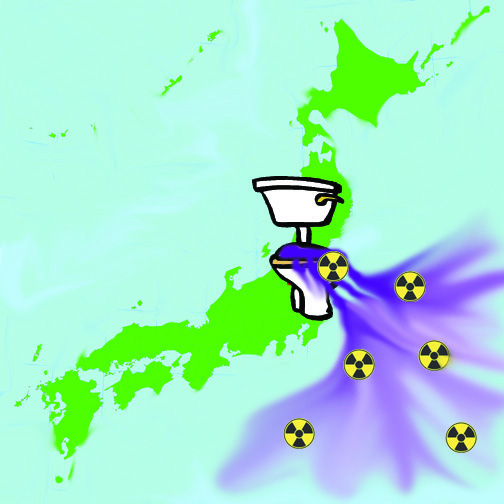
Nuclear expert reaffirms harm of dumping nuclear-contaminated water into ocean, calls on Japan to stop pressuring opposition voices
By Zhang Changyue, May 22, 2022
Nuclear expert reaffirms harm of dumping nuclear-contaminated water into ocean, calls on Japan to stop pressuring opposition voices https://www.globaltimes.cn/page/202205/1266269.shtml
Experts have reaffirmed the inevitable radioactive pollution to be caused by the dumping of nuclear-contaminated water from the Fukushima nuclear plant into the Pacific Ocean after Japan on Wednesday initially approved the discharge plan.
They demanded the Japanese government to stop pressuring those opposed to the plan and to truly listen to concerns from domestic public and international community, as a 30-day public comment period will finally determine the fate of the plan.
The Japanese government and Tokyo Electric Power Company (TEPCO) haven’t conducted a comprehensive environmental impact assessment as required by international law, Shaun Burnie, a senior nuclear specialist at Greenpeace, a global environmental protection organization, told the Global Times.
Their assessment made fundamental mistakes in radiation protection by ignoring the evidence that many different radionuclides would be discharged from the Fukushima nuclear power plant. For example, how much radioactivity in total is planned to be discharged has not been provided,” Burnie pointed out.
“The contaminated water contains radioactive cesium, strontium, tritium and other radioactive substances, which could be incorporated and concentrated in marine biota and end up in the bodies of humans. Some could cause damage to DNA, while others result in higher risks of diseases such as leukemia and blood cancer,” said Burnie.
“To assess the consequences of the tank releases, we need a full accounting of what isotopes are left in each tank after any secondary treatments. This is not just for the nine isotopes currently reported but for a larger suite of possible contaminants, such as plutonium,” explained Burnie. The expert added that since different radionuclides behave differently in the environment, models of tritium’s rapid dispersion and dilution in the ocean cannot be used to assess the fate of other potential contaminants.
Some isotopes are more readily incorporated into marine biota or seafloor sediment, said Burnie. For example, the biological concentration factor for fish for carbon-14 is up to 50,000 times higher than for tritium. Cobalt-60 is up to 300,000 times more likely to end up associated with seafloor sediment.
Also, the discharge could in reality continue for many decades longer than the period of 30 years claimed by the Japanese government – potentially for the rest of this century and beyond, Burnie noted.
Although the Japanese government and TEPCO agreed in 2015 that the consent of the Fukushima Fishermen’s Association would be a condition for any future discharges, they are trying to pressure those opposed to say yes, said Burnie, encouraging efforts in Japan and the international community to continue to stop the unlawful and unjustified dumping plan.
Beaches near Sellafield contaminated with radioactive particles.
Radiation Free Lakeland has written to Cumbria Wildlife Trust asking them
to cancel the “Sea-Coastal Foraging Evening” at St Bees on 18th May.
Who doesn’t love to forage for food on the beach? The problem with
beaches near Sellafield (and not so near) is that radioactive particles are
routinely washed onto the beaches and into the abundant wild food found on
our beaches. Sellafield has blighted our coasts and continues to do so with
impunity thanks to the criminal nonchalance promoted by events like the one
organised by Cumbria Wildlife Trust. The risk to health is very real,
especially to the young and the pregnant.
Radiation Free Lakeland 15th May 2022
The poisoned environmental legacy of France’s ”Nuclear Park”

The poisoned environmental legacy of the ‘Nuclear Park’ https://culturico.com/2022/05/07/the-poisoned-environmental-legacy-of-the-nuclear-park/ Culturico 7th May 2022, Linda Pentz Gunter, Linda Pentz Gunter is the international specialist at Beyond Nuclear and editor and contributor at Beyond Nuclear International.
France prides itself on its “Nuclear Park”, its fleet of once 58 and now 56 operational nuclear reactors that deliver 70% of the country’s electricity. However, the environmental effects of this considerable use of nuclear power – specifically from the need to mine uranium and the choice to reprocess irradiated nuclear fuel – have negatively impacted the health of the French people.
France is heavily reliant on nuclear energy. Its 56 commercial reactors dot almost every corner of the country, providing 70% of all electricity consumed. France also possesses a nuclear weapons arsenal, fueled by the nuclear power program that predated it.
The possession of nuclear weapons affords France permanent membership status in the UN Security Council — a sense of prestige France is intent on maintaining.
French president, Emmanuel Macron, has now announced that the country will build new nuclear power plants, despite the fact that its current flagship Evolutionary Power Reactor (EPR), is beset by technical mistakes, years behind schedule and billions of Euros over budget at construction sites in France, Finland and the UK. The first of two operational EPRs in China had to be shut down late last year due to vibrations that caused radioactive leakage.
Consequently, it is unpopular to question the use of nuclear power in France and oppositional voices are rarely heard. The French anti-nuclear movement — largely networked under the Réseau Sortir du nucléaire — is snubbed by the press, and its members have been arrested and even convicted of alleged crimes.
However, thanks to the pioneering work of activists, investigative journalists and independent scientists, some of the secrets buried beneath the ’Nuclear Park’, have started to be unearthed.
The damage from uranium mining
Nuclear power plants are fueled with uranium, a radioactive ore that is mined from the earth, typically in dry, desert areas far way, often by an Indigenous workforce offered little to no protection and none of the alleged benefits.
However, between 1948 and 2001, France operated its own uranium mines — more than 250 of them in 27 departments across the country. Those French mine workers, like their Native American, Australian Aboriginal and African Touareg counterparts, labored unprotected and in ignorance of the true health risks.
The mines and the factories that milled and processed the uranium, now lie abandoned, leaving a legacy of radioactive waste that is hidden beneath flowering meadows, forest paths and ornamental lakes. But these radioactive residues and rocks — known as tailings — have also dispersed beyond the old mine boundaries, transported into rivers and streams, absorbed into wild plants, scattered on roadsides, and even paved into children’s playgrounds, homes and parking lots.
There are radioactive hotspots everywhere. France may not yet have opened a high-level radioactive waste repository — still under dispute at Bure — but thanks to the contamination left behind by uranium mining, large swaths of the country are de facto nuclear waste dumps. The widespread dispersal of radioactive contamination across France has been studied extensively by the independent French radiological laboratory, Commission de Recherche et d’Information Indépendantes sur la RADioactivité, known simply as CRIIRAD. Its scientists have traveled all over the world, measuring radiation levels at such notorious nuclear accident sites as Mayak and Chernobyl in the former Soviet Union, and at Fukushima in Japan. But often, they are just as shocked and outraged at the radiation levels they measure at home, and the failure of those responsible to take effective remediation steps to protect the public.
In the 2009 investigative French television program by Pieces de Conviction — entitled Uranium, the scandal of contaminated France — CRIIRAD’s scientific director, physicist Bruno Chareyron, is seen scraping the gravely surface off a parking lot at a cross-country ski club. Under the dusty gray stones we suddenly see a gleam of yellow. It is the telltale sign of uranium and Chareyron’s Geiger counter is recording radiation levels at more than 23mSv an hour. The internationally accepted “safe” dose for the public is 1mSv a year. The public should not have access to this, he says, especially not children who are prone to pick up and pocket pebbles.
In all, there are an estimated 200-300 million tonnes of radioactive tailings dumped across France, exposing those who live, work or play nearby. The contamination comes not only from the uranium, but from its often far more radioactive decay products. And while the state-owned nuclear company Orano (formerly Areva and, before that, Cogema) insists that these sites have been “returned to nature”, it is a purely cosmetic exercise that has granted impunity to the polluter but endangered countless lives.
CRIIRAD subsequently released an urgent appeal to elected officials to take action. The laboratory recorded similar findings at numerous other abandoned uranium mine sites.
Now, with all the French uranium mines closed, the fuel for the Parc Nucléaire must be imported. It comes mainly from Niger, one of the poorest countries in the world, and predominantly from the giant French-owned uranium mine near the town of Arlit. There, CRIIRAD found that mine workers and inhabitants are routinely exposed to radioactivity in the environment as a result of uranium mining activities. A Greenpeace investigation concluded that French uranium mining activities in Niger had left behind a legacy of environmental contamination in that country, as it has in France, that would harm people for “centuries.”
The lethal legacy of uranium mining and processing that has contaminated so much of France is only the beginning of the story, however, just as uranium mining is only the beginning of the nuclear fuel chain.
Operating reactors and childhood leukemia
The electricity generation phase, on which the nuclear lobby bases its low-carbon argument to justify its continued use — while ignoring the front and back ends of the fuel chain, which have significant carbon footprints, (1) — is not without its damage to the environment either. Nuclear reactors release radiation into the environment as part of routine operation. At least 60 epidemiological studies have examined the possible health impacts of these releases, most of which found an increase in rates of leukemia among children living near operating nuclear power plants, compared to those living further away.
The most famous of these studies, conducted in Germany — Case-control study on childhood cancer in the vicinity of nuclear power plants in Germany 1980-2003 (2) — found a 60% increase in all cancers and a 120% increase in leukemias among children living within 5 km of all German nuclear power stations. This study was followed by others, largely supporting the data. But critics speculated that the amount of radioactivity in the releases was too low to have caused these epidemics.
For example, a 2008 study (3) by Laurier et al., of childhood leukemia around French reactors, concluded there was no “excess risk of leukaemia in young children living near French nuclear power plants”. However, the Laurier study was among those rebutted (4) and incorporated into a meta-analysis by Dr. Ian Fairlie and Dr. Alfred Körblein, which concluded that there were statistically significant increases in childhood leukemias near all the nuclear power plants studied and that “the matter is now beyond question, i.e., there’s a very clear association between increased child leukemias and proximity to nuclear power plants.”
The practice of averaging a month’s worth of releases into daily dose amounts ignores a sudden spike in radioactive releases, as happens when a reactor is refueling. Fairlie hypothesizes (5) that these spikes, delivering substantial radiation doses, could result in babies being born pre-leukemic due to exposure in utero, with the potential to progress to full leukemia additionally aggravated by subsequent post-natal exposure. (Nuclear power plants typically refuel every 18 months.)
Radioactive waste — the unsolved problem
At the end of nuclear power operations lies the huge and unsolved radioactive waste problem. Inevitably, the French reliance on nuclear power has generated an enormous amount of radioactive waste that must be managed and, ideally, isolated from the environment.
France is one of the few countries in the world to have chosen reprocessing as a way to try to manage irradiated reactor fuel. Reprocessing involves a chemical separation of plutonium from the uranium products in reactor fuel rods once they have ceased being used in the reactor. This operation is conducted at the giant La Hague reprocessing facility, on the Cherbourg peninsula, which began operation in 1976.
Reprocessing releases larger volumes of radioactivity — typically by a factor of several thousand— than nuclear power plants. Liquid radioactive discharges from La Hague are released through pipes into the English Channel (La Manche), while radioactive gases are emitted from chimney stacks. The liquid discharges from La Hague have been measured at 17 million times more radioactive than normal sea water. La Hague “legally discharges 33 million liters of radioactive liquid into the sea each year,” Yannick Rousselet of Greenpeace France told Deutsche Welle in a 2020 article. This has contributed, among other issues, to elevated concentrations of carcinogenic carbon-14 in sea life (6).
Concentrations of krypton-85 released at La Hague have been recorded at 90,000 times higher than natural background. La Hague is the largest single emitter of krypton-85 anywhere in the world. (7)
A November 1995 study — Incidence of leukemia in young people around La Hague nuclear waste reprocessing plant: a sensitivity analysis (8) — found elevated rates of leukemia. Yet its lead author, Jean-François Viel, was subsequently viciously attacked in attempts to discredit his findings and reputation, attacks that worsened after the publication of a second paper (9) in January 1997.
The cumulative negative health and environmental impacts of the French nuclear sector render the so-called benefits of the resulting low electricity rates a bitter delusion. For while France tries, wrongly, to attribute Germany’s higher electricity rates to that country’s rejection of nuclear power, typical German households use less electricity and actually pay lower monthly electric bills than French ones. Meanwhile, the French rely exclusively on electricity for heat in winter. Unable to meet this demand, France imports coal-fired electricity from Germany, perpetuating an industry that is fatal for the climate. At the same time, renewable energy development in France has been stifled by the decades-long prioritization of nuclear power.
However, a culture of denial in the French nuclear sector is nothing new. In 1986, when the Chernobyl nuclear reactor exploded and melted down in the Ukraine, the French government assured its people that the radioactive plume would not reach France. Unlike in other European countries, the French continued to eat local produce and allowed their children to play outside. This lie of immunity, quickly exposed, was attributed to “fear of jeopardizing the country’s nuclear program and of hurting sales of its agricultural products.”
It was that deception in 1986 that led to the creation of the CRIIRAD laboratory in the first place, as its scientists began to map the hotspots in France where fallout from Chernobyl had deposited high levels of radioactivity.
The insistence on expanding rather than phasing out nuclear power has also cost France progress in its carbon reduction goals. As Euractiv reported in August 2021, “France lagging behind in renewables can be explained in part by the fact that close to 70% of its electricity production is based on nuclear power.”
Many French reactors have been operating since the 1970s and are now well past their expected lifespans. With aging comes degradation of key safety parts and heightened risk of accident. In late December 2021 and in early January 2022, France saw a series of unanticipated reactor shutdowns due to safety issues, causing power shortages during a winter freeze and plunging French nuclear output to its lowest in 30 years. By early May, half of its entire reactor fleet was shut down due to technical problems or scheduled maintenance outages. The health and wellbeing of the French population would be better served both by cleanup of — and reparation for — the existing radioactive contamination so widespread in the country, and by a serious shift away from the continued use of nuclear power and toward true climate solutions such as renewable energy and energy efficiency measures.
Chernobyl radiation is not stable after Russian invasion
Russian troop activity at the Chernobyl Nuclear Power Plant since February
has led to an elevated risk of an accident or harmful radiation exposure.
Ukraine regained control of the site near Pripyat in March, but it still
presents a situation that is “not stable,” according to the
International Atomic Energy Agency (IAEA), the United Nations’ atomic
watchdog.
Speaking at an event last month marking the 36th anniversary of
the Chernobyl nuclear disaster, IAEA Director-General Rafael Mariano Grossi
said the Russian occupation presented an abnormal situation for workers,
plus heightened radiation levels, which are still higher than normal,
although not at a level that is dangerous for one-time exposure; the
radiation level is concerning for continuous exposure, though.
Popular Mechanics 3rd May 2022
Nuclear power is a HUGE water guzzler – so why are we guzzling the lie that nuclear is good for climate?
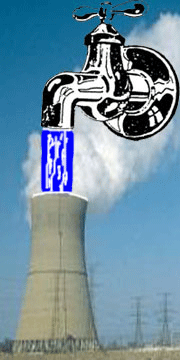
The video above is 2 years old – but so what? Nothing seems to have changed – this particular facility is especially water-dependent. But they all are. The current article below – is, unfortunately, behind a paywall. But it’s a rare mention in the media of this hugely significan factor in nuclear power problems.
Take France, for example. Right now, nearly half of their nuclear reactors are shut down anyway. But – come the summer – they’ll be shutting down again – due to water stress.
Huge nuclear plant in Arizona desert seeking new sources of water – it uses 23 b gallons of water per year The Arizona Republic 2 May 22, https://www.azcentral.com/restricted/?return=https%3A%2F%2Fwww.azcentral.com%2Fstory%2Fmoney%2Fbusiness%2Fenergy%2F2022%2F05%2F01%2Farizonas-nuclear-palo-verde-generating-station-wants-new-water-source%2F7306649001%2F
Scientists: Japan’s Plan To Dump Nuclear Waste Into The Pacific Ocean May Not Be Safe
CIVIL BEAT, By Thomas Heaton , 25 Apr 22,
A panel of scientists has identified critical gaps in the data supporting the safe discharge of wastewater into the Pacific.
Independent scientists are questioning Japan’s plans to dump just over 1 million tons of nuclear wastewater into the Pacific Ocean, following a review of the available evidence.
The panel of multi-disciplinary scientists, hired by the intergovernmental Pacific Islands Forum, has not found conclusive evidence that the discharge would be entirely safe, and one marine biologist fears contamination could affect the food system.
Last year Japan announced that wastewater from the Fukushima-Daiichi Nuclear Power Plant, destroyed in March 2011 following the Tohoku Earthquake and tsunami, would be dropped into the Pacific in 2023.
The announcement triggered immediate concern from nations and territories in the Asia-Pacific region and led the Pacific Islands Forum to hire a panel of five independent experts to review the plan.
Previously, it was broadly believed that dropping the wastewater into the ocean would be safe, given it had been treated with “advanced liquid processing system” technology, which removes radioactive materials from contaminated water.
But panel scientist Robert Richmond, director of the University of Hawaii Kewalo Marine Laboratory, says the panel unanimously believes that critical gaps in information remain.
Previous discussions over the safety of Japan’s plans emphasized the chemistry of the discharge, but not how it could interact with marine life, he said.
“If the ocean were a sterile glass vessel, that would be one thing,” Richmond said. “But it’s not, you know, there’s lots of biology involved.”
Richmond has been particularly concerned about the potential for tritium – a key compound of concern – being absorbed into the food system because the radioactive isotope can bind to phytoplankton.
Through phytoplankton, Richmond says, the radioactive element could then find its way into the greater food system as the microscopic plants are consumed by mollusks and small fish, which are later consumed by other fish and eventually humans.
“Things like mercury in fish are now of an international concern. Radionuclides will be the same,” Richmond said.
The situation is dynamic too, as climate change affects the temperature of waters and weather patterns change.
“As temperatures go up, many chemicals become more interactive, they become a little bit different in terms of break down,” he said. “So these are all the things we need to consider.”
……………………………………. the information seen by the panel showed less than 1% of the tanks of wastewater had been treated and less than 20% had been adequately sampled, Richmond says.
Based on those numbers alone, we’re uncomfortable in making predictions of where things are going to end up,” Richmond said.
The Pacific Perspective
Community groups and environmental organizations were quick to respond to the news last year, raising concerns about the longterm effects to their region, with its legacy of nuclear testing and the fallout. And coastal communities and fishermen in Japan have also raised concerns.
The U.S. expressed its support for the plan in April last year, which has since been criticized by U.S. territories and affiliated states.
Rep. Sheila Babauta of the Commonwealth of Northern Mariana Islands introduced a resolution to CNMI’s House of Representatives opposing any nuclear testing, storage or waste disposal in the Pacific.
It was passed in December, months after the U.S. stated its position and after other Pacific groups and governments condemned the move.
“I’m really disappointed in the lack of engagement, the lack of information and the lack of free, prior and informed consent,” Babauta, who chairs the Natural Resources Committee, said.
The mistrust that is harbored by many in the Pacific stems back to U.S nuclear testing in the Republic of Marshall Islands following World War II, British testing in Kiribati and the French in French Polynesia, which had flow-on effects to the environment and long term health of Pacific people. And in 1979, Japan provoked backlash when it revealed plans to dump 10,000 drums of nuclear waste in the Marianas Trench.
Babauta says she introduced the resolution as a show of solidarity for the rest of the Pacific.
“The ocean is our oldest ancestor. The ocean is our legacy,” Babauta said. “It’s what we’re going to leave for our children.” https://www.civilbeat.org/2022/04/scientists-japans-plan-to-dump-nuclear-waste-into-the-pacific-ocean-may-not-be-safe/
UK’s Nuclear Free Local Authorities join in Wales’call to Japan not to dump radiactive wastewater at sea
The Nuclear Free Local Authorities (NFLA) have joined with leading Welsh
anti-nuclear environmental campaign groups in writing to senior Japanese
Government ministers urging them not to dump radioactive waste from the
Fukushima disaster at sea.
Operated by the Tokyo Electric Power Company
(TEPCO), the Fukushima Daiichi Nuclear Power Plant was hit by an earthquake
and a tsunami on 11 March 2011. A disaster unfolded with three nuclear
meltdowns, three hydrogen explosions and a release of radiation from three
reactors, and Government authorities were forced to evacuate 154,000 people
from the surrounding area over a 20-mile radius. An average of 150 tons of
radioactive water was produced each day last year as rainwater and
groundwater flowed into the damaged reactor buildings mixing with seawater
which has been used to cool the melted nuclear fuel.
One million tons of this water is now stored in barrels on the site. Although the contaminated
water is treated it cannot remove deadly tritium, a beta-emitting
radioactive isotope of hydrogen, and other radioactive materials.
NFLA 21st April 2022
Future of Antarctica’s Larsen C ice-shelf will have consequences for sea level rise world-wide

| Scientists know the surface of the Larsen C ice shelf in Antarctica is melting, making it vulnerable to collapse. For the first time, we can rank the most important causes of melting over the recent past. In a new two-part paper in Journal of Geophysical Research: Atmospheres, we show how the amount of energy reaching the ice from the sun is the dominant factor, followed by warm winds, clouds and weather patterns. These drivers of melting can interact and overlap to reinforce or counteract each other, so it is a complex picture. Understanding what is causing melting over Larsen C is vital as it will help predict the future of the ice shelf, which will have knock-on consequences for sea levels worldwide. In 2002, Larsen C’s neighbouring ice shelf, Larsen B, experienced melting so severe that it eventually caused the shelf to collapse completely. Larsen C restrains glaciers that contain enough ice to raise global sea levels by around 22mm. Carbon Brief 14th April 2022 https://www.carbonbrief.org/guest-post-ranking-the-reasons-why-the-larsen-c-ice-shelf-is-melting |
What to do with closed Massachusetts nuclear plant’s wastewater?

Columbian, By Jennifer McDermott, Associated Press April 9, 2022,
1 million gallons of radioactive water could be discharged into bay, evaporated or trucked elsewhere
One million gallons of radioactive water is inside a former nuclear power plant along Cape Cod Bay, and it has got to go.
But where? And will the state intervene as the company dismantling the plant decides? These are the vexing questions.
Holtec International is considering treating the water and discharging it into the bay, drawing fierce resistance from local residents, shell fishermen and politicians. Holtec is also considering evaporating the contaminated water or trucking it to a facility in another state.
The fight in Massachusetts mirrors a current, heated debate in Japan over a plan to release more than 1 million tons of treated radioactive wastewater into the ocean from the wrecked Fukushima nuclear plant in spring 2023. A massive tsunami in 2011 crashed into the plant. Three reactors melted down.
Pilgrim Nuclear Power Station in Plymouth, Mass., closed in 2019 after nearly half a century providing electricity to the region. U.S. Rep. William Keating, a Democrat whose district includes the Cape, wrote to Holtec with other top Massachusetts lawmakers in January to oppose releasing water into Cape Cod Bay. He asked the U.S. Nuclear Regulatory Commission to examine its regulations.
Keating said in late March that Holtec’s handling of the radioactive water could set a precedent because the U.S. decommissioning industry is in its infancy. Most U.S. nuclear plants were built between 1970 and 1990.
Holtec has acquired closed nuclear plants across the country as part of its dismantling business, including the former Oyster Creek Generating Station in New Jersey and Indian Point Energy Center in New York. It’s taking ownership of the Palisades Nuclear Plant on Lake Michigan, which is closing this year.
Pilgrim was a boiling-water reactor. Water constantly circulated through the reactor vessel and nuclear fuel, converting it to steam to spin the turbine. The water was cooled and recirculated, picking up radioactive contamination.
Cape Cod is a tourist hotspot. Having radioactive water in the bay, even low levels, isn’t great for marketing, said Democratic state Rep. Josh Cutler, who represents a district there. Cutler is working to pass legislation to prohibit discharging radioactive material into coastal or inland waters……………….
Vermont Yankee Nuclear Power Station, another boiling-water reactor, was shut down in Vernon, Vt., in 2014. It’s sending wastewater to disposal specialists in Texas and other states. Entergy operated and sold both Vermont Yankee and Pilgrim. NorthStar, a separate and competing corporation in the decommissioning business, is dismantling Vermont Yankee……………………
Why are people worried?
In Duxbury, Kingston and Plymouth Bays, there are 50 oyster farms — the largest concentration in the state, worth $5.1 million last year, according to the Massachusetts Seafood Collaborative. The collaborative said dumping the water would devastate the industry, and the local economy along with it……………..
Towns on the Cape are trying to prohibit the dispersal of radioactive materials in their waters. Tribal leaders, fishermen, lobstermen and real estate agents have publicly stated their opposition as well…………….
Who gets the final say?
Holtec wouldn’t need a separate approval from the NRC to discharge the water into the bay. However, Holtec would need permission from the U.S. Environmental Protection Agency if the water contained pollutants regulated by the Clean Water Act, such as dissolved metals.
If the water contained only radioactive materials regulated by the NRC, Holtec wouldn’t need to ask the EPA for a permit modification, according to the EPA’s water division for New England. Holtec has never given the EPA a pollutant characterization of the water associated with decommissioning, the division’s director said.
Mary Lampert, of Duxbury, is on a panel created by the state to look at issues related to Pilgrim’s decommissioning. She believes the state could use its existing laws and regulations to stop the dumping and plans to press the Massachusetts attorney general to file a preliminary injunction to do so.
The attorney general’s office said it’s monitoring the issue and would take any Clean Water Act violations seriously.
Mary Lampert, of Duxbury, is on a panel created by the state to look at issues related to Pilgrim’s decommissioning. She believes the state could use its existing laws and regulations to stop the dumping and plans to press the Massachusetts attorney general to file a preliminary injunction to do so.
The attorney general’s office said it’s monitoring the issue and would take any Clean Water Act violations seriously. https://www.columbian.com/news/2022/apr/09/what-to-do-with-closed-massachusetts-nuclear-plants-wastewater/
The U.S. Must Take Responsibility for Nuclear Fallout in the Marshall Islands

One conclusion from our work is clear: absent a renewed effort to clean radiation from Bikini, it does not seem likely that people forced from their homes will be able to safely return until the radiation naturally diminishes. This is a process that could take decades if not thousands of years.
The U.S. Must Take Responsibility for Nuclear Fallout in the Marshall Islands, Congress needs to fund independent research on radioactive contamination and how to clean it up https://www.scientificamerican.com/article/the-u-s-must-take-responsibility-for-nuclear-fallout-in-the-marshall-islands/, By Hart Rapaport, Ivana Nikolić Hughes on April 4, 2022
In many ways, Russia’s aggression against Ukraine has resurfaced our global nuclear history. Fighting continues near nuclear power plants, including Chernobyl, the site of one of the largest nuclear energy accidents in history, invoking fear of their accidental or intentional weaponization. Russia’s placement of its nuclear weapon arsenal on high alert has unearthed anxieties and memories of the Cold War.
As governments across the world consider their own roles in lessening the risk of nuclear war, the United States cannot excuse itself. We can (and should) talk about stemming a future nuclear impact, but equally important is reckoning with our past. Not only is this reckoning a stark reminder of the dangers of nuclear weapons, but it is also a matter of justice.
Between 1946 and 1958, the U.S. nuclear testing program drenched the Marshall Islands with enough nuclear firepower to equal the energy yield of 7,000 Hiroshima bombs. Cancer rates have doubled in some places, displaced people have waited decades to return to their homes, and radiation still plagues the land and waters of this Pacific-island nation.
The U.S. must prioritize the restoration of these islands and the resettlement of its people as a matter of human rights and environmental justice. We are among the few independent researchers who have studied the radiological conditions on these islands. We call on our government to commit to the kind of research program that will help to uncover the full scope of the existing contamination and how best to mitigate it. What the U.S. has done so far is simply not enough, especially as the Marshall Islands are still a close American ally. We owe them that much.
The weapons tests most gravely affected four atolls in the north of the nation: Bikini, Enewetak, Rongelap and Utirik. Testing imposed substantial radiation on these islands, endangering human and other life. In the first two cases, members of the U.S. military resettled communities prior to testing that took place on those atolls, while people on Rongelap and Utirik left after fallout from tests conducted on Bikini, such as the infamous Bravo test, reached them. Today, only Enewetak and Utirik have substantial permanent populations (even while radioactivity remains close at hand for Enewetak residents), while refugees from Bikini and Rongelap, scattered across Majuro, Kili and other islands, in addition to the U.S., have waited for decades to return to their homes.

But the nuclear story of the Marshall Islands is not just one of bygone actions. If the U.S. doesn’t better manage this situation, we could have another radioactive incident on our hands. The structural integrity of the Runit Dome, a concrete shell covering over 100,000 cubic yards of nuclear waste on an island of Enewetak Atoll, is at risk because of rising sea levels. Leakage from the dome—already occurring—is likely to increase and higher tides threaten to break the structure open in the coming decades.
To better understand the effect of nuclear testing on the islands, scientists from the Department of Energy have conducted a wide range of studies, most often on environmental contamination. Members of the military have taken action based on these findings, most notably cleaning up parts of Enewetak Atoll. However, we believe that the DOE’s work has missed critical pieces of the puzzle. For example, its scientists have consistently relied upon simulations rather than direct values of background gamma radiation, the simplest of the measurements one can make. Such a failure has contributed to the mistrust by the Marshallese towards the DOE and its findings, which was borne out of the fact that it was the department’s predecessor, the Atomic Energy Commission, that harmed them in the first place.
We are a member (Rapaport) and the director (Nikolić Hughes) of Columbia University’s K=1 Project, Center for Nuclear Studies. For several years now, our group has gone to the Marshall Islands to research the fallout of this nuclear testing. We have published our findings to ensure that independent, reliable information exists to advise Marshallese communities and leaders so that they can help chart a path forward.
Considerable contamination remains. On islands such as Bikini, the average background gamma radiation is double the maximum value stipulated by an agreement between the governments of the Marshall Islands and United States. This is even without taking into account other pathways that could lead to radiation exposure for the Marshallese. Moreover, our findings, based on gathered data, run contrary to the DOE’s, which rely on simulations that predict far lower radiation levels.
One conclusion from our work is clear: absent a renewed effort to clean radiation from Bikini, it does not seem likely that people forced from their homes will be able to safely return until the radiation naturally diminishes. This is a process that could take decades if not thousands of years. For Rongelap, further research is needed to understand the large amount of background gamma radiation on one of the northern islands, called Naen, as well as the presence of plutonium isotopes in the soil. Although Rongelap was not used as a testing site, it may be that cleanup efforts will be needed there as well, given its proximity to the detonations.

But, beyond plutonium and uranium, what other radioisotopes are at play here? One is strontium-90, which can cause cancer in bones and bone marrow, as well as leukemia. It has long been a source of health concerns at other sites of nuclear disasters like Chernobyl and Fukushima. Despite international research interest, U.S. government scientists have largely ignored the effects of strontium-90 in the Marshall Islands. The DOE’s recent report to Congress, for example, mentioned strontium-90 only once. Their recently published data are similarly lacking in an examination of this dangerous nuclear isotope.
In a recent study, we tested sediment from two bomb craters in the northern Marshall Islands, and found consistently high values of strontium-90. Though the presence of this radioisotope in sediment does not neatly translate into contamination in soil or food, the finding does suggest the possibility of danger to ecosystems and people.
The scientific community needs to reexamine the general dismissal of strontium-90, given our findings. More than that, we need a full picture of the extant contamination on these islands, which will require categorical, regularly updated surveys beyond those that have been conducted by the U.S. government. A full understanding of potential dangers to humans, plants and animals would be a first step toward alleviating health impacts and resettling people following appropriate measures.
Unfortunately, a commitment from the United States to both ends of this equation—research and action—does not exist. We call on the federal government to do what it did in the 1970s in Enewetak Atoll. This atoll, home to hundreds of people, was where scientists first tested the hydrogen bomb in 1952. The U.S.-led cleanup was successful; contamination levels in parts of the atoll are now largely below international health guidelines.
Similar success is possible elsewhere in the Marshall Islands. Here’s a playbook for how this could happen. Congress should appropriate funds, and a research agency should initiate a call for proposals to fund independent research (through an agency like the NSF) with three aims:
(1) to further understand the current radiological conditions on Enewetak, Rongelap and elsewhere;
(2) to explore innovations for future cleanup activity on Bikini and possibly elsewhere; researchers and policy makers should look to other nuclear cleanups for methods and technologies that could be employed in the Marshall Islands;
(3) to train Marshallese scientists, such as those working with the nation’s National Nuclear Commission. This point is particularly critical in rebuilding the trust in science and scientists that the U.S. lost in conducting the testing in the first place.
On top of that, we need to modernize cleanup protocols first written in the 1970s to take into consideration the complexity of the radioactive waste involved and the enormous progress in technology developments that has been achieved some 50 years later.
Wherever nuclear weapons have been used, lives were irrevocably altered. By using the collective work of dozens of researchers, rather than a small group of scientists from the DOE, the world will benefit. Given that other countries engaged in nuclear testing—whether in other Pacific islands or elsewhere—what the U.S. learns about the Marshall Islands can inform remediation efforts the world over. The Marshallese people and other affected communities have been telling us for decades just how dangerous nuclear weapons are. Let’s acknowledge and address their sacrifices and heed their warning before it is too late.
Hart Rapaport is a researcher at Columbia University’s K=1 Project, Center for Nuclear Studies.
Ivana Nikolić Hughes is a senior lecturer in chemistry at Columbia University and the director of Frontiers of Science, a required course for Columbia College students. Ivana is also the director of the K=1 Project, Center for Nuclear Studies.
Hotter Antarctic summers posing increasing threat to stability of world’s largest ice sheet
Hotter Antarctic summers posing increasing threat to stability of
world’s largest ice sheet, satellite observations show. The East
Antarctic ice sheet is the biggest land-based piece of frozen water on the
planet. It holds about 80 per cent of all ice in the world, stretching up
to 4,800 metres in thickness in some places, and containing enough water to
raise global sea levels by 52 metres. Humans are generally keen for it to
stay in place. But new research shows that warmer summers due to the
worsening climate crisis are seriously threatening the floating ice shelves
which fringe the ice sheet, helping hold it in place.
Independent 31st March 2022
https://www.independent.co.uk/climate-change/news/antarctic-heat-ice-sheet-threat-b2048301.html
How would a nuclear winter impact food production?
How would a nuclear winter impact food production? Phys Org by Jeff Mulhollem, Pennsylvania State Univers 30 Mar 22, ” ………………………………………………………………. The research acknowledges what has been widely agreed upon for decades: In higher latitude countries—such as nuclear powers the U.S. and Russia—there would be no agricultural production and little food gathering possible in a nuclear winter after an all-out conflagration. If warring countries unleashed large portions of their nuclear arsenals, the resulting global, sun-blocking cloud would turn the ground to permafrost.
” ………………………………………………………………. The research acknowledges what has been widely agreed upon for decades: In higher latitude countries—such as nuclear powers the U.S. and Russia—there would be no agricultural production and little food gathering possible in a nuclear winter after an all-out conflagration. If warring countries unleashed large portions of their nuclear arsenals, the resulting global, sun-blocking cloud would turn the ground to permafrost.
A nuclear war would cause global blockage of the sun for several years due to injections of black carbon soot into the upper atmosphere, covering most of the planet with black clouds, the researchers said. Computer models predict that a large nuclear war, primarily between Russia and the U.S., could inject upwards of 165 million tons of soot into the upper atmosphere from more than 4,000 nuclear bomb explosions and ensuing wildfires.
Such a nuclear war could result in less than 40% of normal light levels near the equator and less than 5% normal light levels near the poles, with freezing temperatures in most temperate regions and severe precipitation reductions—just half of the worldwide average—according to the study. Post-catastrophe conditions, which could last 15 years in some wet tropical forests such as those in the Congo and Amazon basins, could cause a 90% reduction in precipitation for several years after such an event.
But tropical forests would offer an opportunity for limited food production and gathering by local inhabitants because, despite the dense soot clouds, the region would be warmer. In the study, researchers classified wild, edible plants into seven main categories, augmented by forest insects: fruits, leafy vegetables, seeds/nuts, roots, spices, sweets and protein.
In a nuclear winter, the study shows, the following foods would be available in varying degrees in tropical forests: konjac, cassava, wild oyster mushroom, safou, wild spinaches, vegetable amaranths, palms, mopane worm, dilo, tamarind, baobab, enset, acacias, yam and palm weevil.
The researchers chose 33 wild, edible plants from a list of 247 and considered their potential for cultivation in tropical forests in post-nuclear war conditions. Their selections were complicated by the fact that in the tropics there are relatively few food-bearing plants that are both drought tolerant and shade or low-light tolerant.
Post-catastrophe conditions would be unlivable for humans in many areas around the world, and agriculture may not be possible, the researchers concluded. This study shows how just a few of the many tropical wild, edible plants and insects could be used for short-term emergency food cultivation and foraging after an atmospheric soot injection from a catastrophic event such as a nuclear war……………… https://phys.org/news/2022-03-nuclear-winter-impact-food-production.html
Very low Arctic sea ice
Arctic sea ice has reached its maximum extent for the year, peaking at
14.88m square kilometres (km2) on 25 February. It is the 10th smallest
winter peak in the 44-year satellite record. The provisional data from the
National Snow and Ice Data Centre (NSIDC) shows that this year’s Arctic
maximum extent was recorded on 25 February – marking the third earliest
maximum in the satellite record. While the past six months have been fairly
uneventful in the Arctic in general, the Earth’s other pole has seen a
record-breaking melt season.
For the first time since the satellite record
began, the Antarctic extent fell below 2m km2 this year. Unusually, the
Arctic winter peak and the Antarctic summer minimum occurred on exactly the
same day.
Carbon Brief 22nd March 2022
Water supply problems for planned £20billion twin reactor on the Suffolk coast
Sizewell C developer EDF is being asked by government whether a temporary
desalination plant could last for the lifetime of the new nuclear power
plant if it is built. The public examination of the plans for the
£20billion twin reactor on the Suffolk coast was told a permanent water
supply for the proposed development had not yet been secured. However, a
temporary desalination plant would run during the construction of the
project.
Kwasi Kwarteng, secretary of state at the Department of Business,
Energy and Industrial Strategy, is now asking EDF what progress has been
made on securing a permanent water supply solution. But he also says: “The
applicant should confirm if it would be possible for the proposed temporary
desalination plant to permanently meet the full water supply demand for the
lifetime of the proposed development should no alternative water supply
solution be identified.”
East Anglian Daily Times 20th March 2022
https://www.eadt.co.uk/news/business/water-supply-sizewellc-questioned-by-government-8768432
1 This Month
19 February – VIRTUAL EVENT-Decision Time: AI and Our Nuclear Arsenal
12:45 p.m. Central / 1:45 p.m. Eastern
To see nuclear-related stories in greater depth and intensity – go to https://nuclearinformation.wordpress.com
-
Archives
- February 2026 (141)
- January 2026 (308)
- December 2025 (358)
- November 2025 (359)
- October 2025 (376)
- September 2025 (258)
- August 2025 (319)
- July 2025 (230)
- June 2025 (348)
- May 2025 (261)
- April 2025 (305)
- March 2025 (319)
-
Categories
- 1
- 1 NUCLEAR ISSUES
- business and costs
- climate change
- culture and arts
- ENERGY
- environment
- health
- history
- indigenous issues
- Legal
- marketing of nuclear
- media
- opposition to nuclear
- PERSONAL STORIES
- politics
- politics international
- Religion and ethics
- safety
- secrets,lies and civil liberties
- spinbuster
- technology
- Uranium
- wastes
- weapons and war
- Women
- 2 WORLD
- ACTION
- AFRICA
- Atrocities
- AUSTRALIA
- Christina's notes
- Christina's themes
- culture and arts
- Events
- Fuk 2022
- Fuk 2023
- Fukushima 2017
- Fukushima 2018
- fukushima 2019
- Fukushima 2020
- Fukushima 2021
- general
- global warming
- Humour (God we need it)
- Nuclear
- RARE EARTHS
- Reference
- resources – print
- Resources -audiovicual
- Weekly Newsletter
- World
- World Nuclear
- YouTube
-
RSS
Entries RSS
Comments RSS
 nuclear-news