A new nuclear power station needs a vast supply of water. But where will Sizewell C get it from?

As one of the driest parts of the country, Suffolk is described by the Environment Agency as “seriously water stressed”. By 2043, eight years into Sizewell C’s 60-year operating life, the agency anticipates a water deficit in the county of more than 7m litres a day.
https://www.theguardian.com/commentisfree/2022/jul/27/nuclear-power-station-sizewell-c-water-suffolk William Atkins 28 Jul 2022 Plans for the site have got the go-ahead. The knock-on effect for Suffolk’s rivers and seawater will soon be clear
Last week, the government gave the go-ahead for a new nuclear power station to be developed on the Suffolk coast. Providing low-carbon electricity for about 6m homes, Sizewell C will stand alongside two existing stations, Sizewell B and the decommissioned Sizewell A. I live close enough to see the 60-metre tall, white dome of Sizewell B almost every day. When I want to torture myself, I look at developer EDF’s “construction phase visualisations” of the 1,380-acre building site, with its towering spoil heaps and forest of cranes, and wonder if this is what it will take to save the planet.
What might not have been immediately obvious in the coverage of the government’s decision was that the Planning Inspectorate, tasked with assessing such projects, had recommended that permission be refused. The problem, the examiners explained, was fairly simple: EDF couldn’t say exactly where it would obtain one of the main substances needed to make a nuclear power station work, that substance being water.
As well as uranium, a reactor of the kind EDF plans to build needs water in very great volumes. Saltwater will do for part of the process, which is one reason why nuclear power stations are usually built beside the sea. But fresh or “potable” water will also be needed – first, to cool the two reactors, and then, just as importantly, to cool the irradiated fuel once it has been removed from the reactors. For this, absolutely pure water is essential. Sizewell B uses about 800,000 litres of potable water per day; Sizewell C, with its twin reactors, will need more than 2m litres per day, and as much as 3.5m litres per day during construction.
Last September, during the closing hearings of the six-month public planning examination, the question of just where the developer was going to get the water to run Sizewell C, let alone build it, was becoming urgent. Those who had raised concerns about precisely this issue more than 10 years earlier would have been forgiven for feeling frustrated. As one of the driest parts of the country, Suffolk is described by the Environment Agency as “seriously water stressed”. By 2043, eight years into Sizewell C’s 60-year operating life, the agency anticipates a water deficit in the county of more than 7m litres a day. Northumbrian Water, which operates locally as Essex and Suffolk Water, had made it clear to EDF that there was not enough local groundwater for either construction or operation. EDF’s plan, therefore, was to build a pipeline to bring water from the River Waveney, 18 miles away on the Norfolk border. During at least the first two years of construction, while the pipeline was being built, EDF planned to install a temporary desalination plant on the site to turn saltwater from the sea into fresh.
Then, in August, the water company broke the news that its abstraction licenses dictating how much water it could extract from the Waveney, granted by the Environment Agency, were likely to be reduced by up to 60% to safeguard downstream levels. It subsequently confirmed that the Waveney did not, after all, have the capacity to supply water for for any of the 10-year construction phase.
Desalination, opponents of the project noted, was a solution EDF itself had discounted in January 2021 “due to concerns with power consumption, sustainability, cost and wastewater discharge”. And yet, desalination, with all the problems it had set out (including discharging millions of litres a day of saline concentrate and phosphorus into the North Sea), remains EDF’s “fallback” solution for running the station, as well as building it, if another source can’t be found. Northumbrian Water has since confirmed that: “Existing water resources (including the River Waveney) will not be sufficient to meet forecast mains water demand, including the operational demand of Sizewell C.”
Then, in August, the water company broke the news that its abstraction licenses dictating how much water it could extract from the Waveney, granted by the Environment Agency, were likely to be reduced by up to 60% to safeguard downstream levels. It subsequently confirmed that the Waveney did not, after all, have the capacity to supply water for for any of the 10-year construction phase.
Desalination, opponents of the project noted, was a solution EDF itself had discounted in January 2021 “due to concerns with power consumption, sustainability, cost and wastewater discharge”. And yet, desalination, with all the problems it had set out (including discharging millions of litres a day of saline concentrate and phosphorus into the North Sea), remains EDF’s “fallback” solution for running the station, as well as building it, if another source can’t be found. Northumbrian Water has since confirmed that: “Existing water resources (including the River Waveney) will not be sufficient to meet forecast mains water demand, including the operational demand of Sizewell C.”
The more I look at those mock-ups of the building site, the more they seem like a metaphor for another kind of despoilment. Given the government’s stated intention to build a fleet of new nuclear power stations across the country, it’s not just people who live in Suffolk who have reason to wonder what the secretary of state’s decision to wash his hands of Sizewell C’s water problem says about the resilience of the systems we entrust with safeguarding our environment. Still, the foundations will be laid, I suppose, and the cranes will rise, and after 10 years and £20bn (by EDF’s reckoning), Sizewell C will be built. And when the time comes for its reactors to go critical, there will be water, because if there isn’t, Suffolk will have a new tourist attraction to rival Framlingham Castle: the most expensive white elephant in human history.
What this fait accompli means for Suffolk’s rivers and seawater, let alone for the county’s householders and farmers, are not questions that will be answered before building begins. It’s enlightening, in this context, to consider that the past six months have been the driest in Suffolk for more than a quarter of a century, and the driest in England since 1976.
“The secretary of state disagrees with the examining authority’s conclusions on this matter,” Wednesday’s decision letter states, “and considers that the uncertainty over the permanent water supply strategy is not a barrier to granting consent to the proposed development.” During last year’s planning hearings, two stories kept coming back to me: the biblical account of Moses in the desert, making water gush from a rock by striking it with his staff; and the Brothers Grimm tale in which a giant clasps a stone in his fist, and crushes it until, finally, water is forced out.
William Atkins is the author of The Immeasurable World: Journeys in Desert Places and The Moor
SC nuclear fuel plant gets 40-year operating license – a ”license to pollute”
“It has been clear from the start of the license renewal process that the NRC was going to do what Westinghouse requested in spite of a long list of incidents at the facility and even an admission by the NRC that release of contaminants in the future was reasonably foreseeable,”
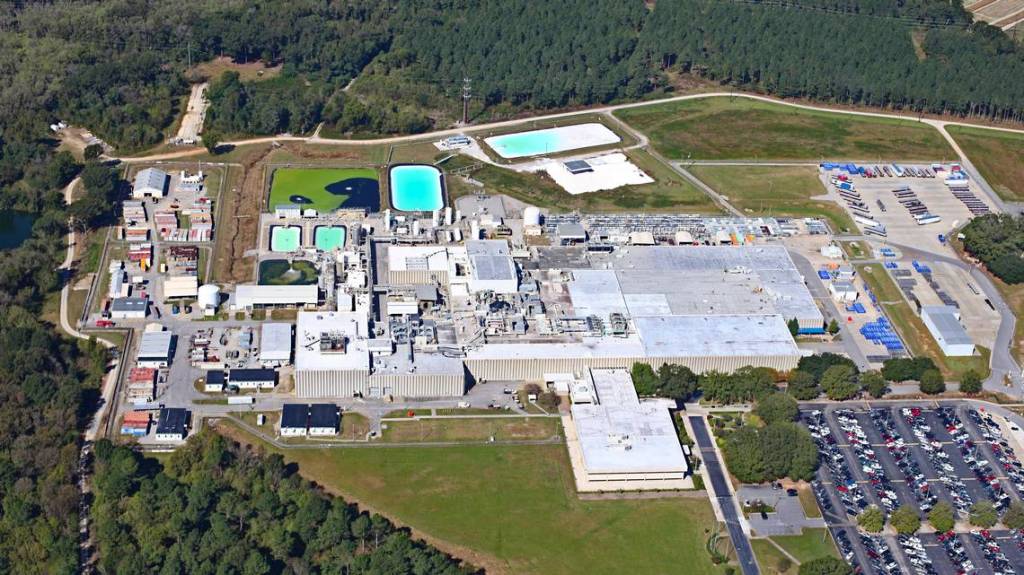
The State, BY SAMMY FRETWELL, JULY 29, 2022 ”…………………….. Federal regulators approved an environmental study that recommends the Westinghouse nuclear fuel factory southeast of Columbia receive a new 40-year license, virtually assuring that the license will be issued this fall. The U.S. Nuclear Regulatory Commission had considered issuing only a 20-year license because of the safety mishaps and pollution that have occurred at the Westinghouse plant on Bluff Road. But in a federal notice Friday, the NRC said its staff had reviewed a list of environmental issues associated with Westinghouse and determined the new license was warranted.
Westinghouse has tried for eight years to gain a new operating license for the plant, which sits on a 1,156-acre site in eastern Richland County about four miles from Congaree National Park. Groundwater contamination and spills of nuclear material are among the environmental problems Westinghouse has had, particularly in recent years — and neighbors have voiced displeasure with how the factory has operated in the predominantly Black community. Federal agencies, including the U.S. Department of the Interior and the U.S. Environmental Protection Agency, added weight to the chorus of concerns, saying last year the license should not be approved unless an array of environmental problems were resolved. The Interior Department even recommended a 20-year license, instead of 40, in part because of multiple leaks and spills that have polluted the ground and groundwater. The department oversees Congaree National Park.
Westinghouse’s troubles were pronounced enough that the NRC took the unusual step of conducting two major environmental studies to determine how the plant’s future operation might affect the environment. A first environmental study, which initially recommended continued operation, was deemed inadequate. The second study that was approved Friday, known as an Environmental Impact Statement, looked more deeply at the potential effect the plant would have on the surrounding environment if it continues to operate during the next 40 years.
The question has been whether the license should be for 40 years, as Westinghouse has said it should be, or for a lesser amount of time because of the environmental and safety concerns, many of which have surfaced in the past five years. Some environmentalists and people who live near the plant have said the license should be for 10 or 20 years —if issued at all. Westinghouse has said it is working to make improvements, and records indicate it has had fewer mishaps in the past two years. The company said it is happy with the NRC’s decision…………..
The NRC’s next step is to issue a safety review before the final licensing decision is made, the agency said. In a news release, the NRC said the final environmental study found that the plant would have only small to moderate impacts on the environment if the license is renewed. The department said the impacts in issuing a 20-year license would be similar to the impacts from issuing a 40-year license. The NRC last issued a license for Westinghouse in 2007. The biggest environmental impacts from continuing to operate the plant would be on groundwater and surface water, the final environmental impact statement said. Past operation of the plant has had a “noticeable effect’’ on groundwater quality, as well as the quality of surface water, such as creeks and ponds. Uranium, for instance, exceeds federal standards in the mud of Mill Creek, the report said. Even so, groundwater contamination is not forecast to spread offsite, the report said…………………………
Virginia Sanders, a Lower Richland environmental activist and Sierra Club official, said the plant’s continued existence threatens the environment, particularly as more intense rains related to the changing climate pound the Columbia area. The concern is pollution from the site could wash into the surrounding community. “That plant is over 50 years old. That plant should never have been put there in the first place,’’ Sanders said. “Anything in Lower Richland is on low land. And with the number of flooding events on the East Coast and other climate change events, that plant should not be operating there. I’m just waiting for the day when a catastrophe happens.’’
Tom Clements, a nuclear safety watchdog from Columbia, said he’s disappointed in Friday’s decision, but not surprised. He called on the NRC to reconsider its decision. “It has been clear from the start of the license renewal process that the NRC was going to do what Westinghouse requested in spite of a long list of incidents at the facility and even an admission by the NRC that release of contaminants in the future was reasonably foreseeable,” he said in an email to The State. “The 40-year license extension guarantees the risk of accidents and releases that will impact the environment and possibly human health over 40 years. Unfortunately, I now anticipate that careful behavior shown by Westinghouse during the period of the EIS preparation will be relaxed as Westinghouse is essentially now being given a license to pollute.’’
The Westinghouse plant’s environmental and safety challenges emerged within years of the plant opening in 1969. Many of the problems have centered on the company’s failure to handle materials so that they would not create small nuclear accidents that could endanger workers. Many of those concerns can be traced to the early 1980s. The problems continued until 2020. Since 1980, federal and state regulators have discovered more than 40 different environmental and safety problems at the plant, according to newspaper clippings and government records reviewed by The State.. In some cases, the NRC repeatedly told the company to make improvements, but Westinghouse did not move quickly enough to suit the agency. Two of the biggest incidents in the past 20 years involved the buildup of uranium, a nuclear material, in plant equipment — deficiencies that could have endangered workers. The NRC fined Westinghouse $24,000 in 2004 after learning uranium had accumulated in an incinerator to unsafe levels over eight years. The company had assumed the uranium levels were safe, but the problem was discovered in 2004 by an employee. The excess uranium could have caused a nuclear accident that could have injured or killed workers. In 2016, Westinghouse discovered that uranium had accumulated in an air pollution control device — known as a scrubber — to levels that were three times higher than a federal safety standard. Under pressure to explain why the buildup occurred, Westinghouse’s internal inspectors told the NRC that the company had not done enough to ensure employees knew enough about safety in the air scrubber. The company inspectors also said Westinghouse didn’t have strong enough procedures to keep uranium from building up and had a “less than questioning’’ attitude about procedures to prevent a nuclear accident. Two years later, a leak of uranium through a hole in the plant floor brought a barrage of complaints about Westinghouse, a major problem that led to the discovery that some groundwater pollution on the site had been known by the company for years but never reported to federal or state regulators. https://www.thestate.com/news/local/environment/article263833217.html
Undersea nuclear waste dump off Cumbria would imperil marine life, experts warn
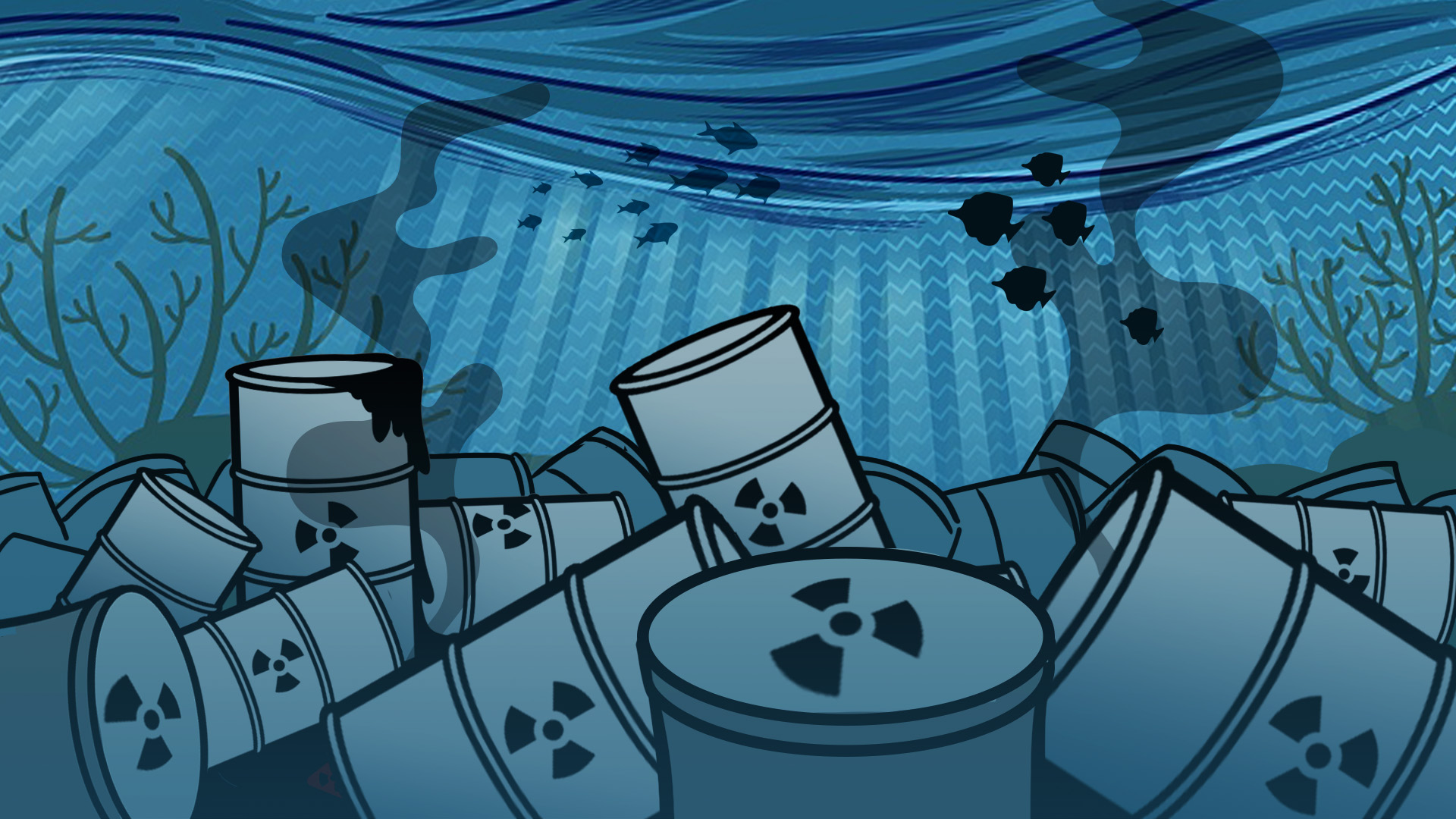
UK looking for storage site for world’s biggest stockpile of untreated waste, including 100 tonnes of plutonium
Guardian, Mattha Busby, Fri 29 Jul 2022
Plans to dispose of radioactive nuclear waste beneath the seabed off the north-west coast of England risk seriously harming marine life including mammals such as dolphins and whales, experts have warned.
Seismic surveys in the Irish Sea near Cumbria get under way on Saturday to explore whether the area is suitable for a proposed facility. The UK government is seeking a location for a deep underground repository to store the world’s largest stockpile of untreated nuclear waste.
Officials have said that a decades-long accumulation of materials including more than 100 tonnes of plutonium – which could create thousands of nuclear bombs – cannot sustainably be stored above ground for ever and they are therefore searching for a site to “keep it safe and secure over the hundreds of thousands of years it will take for the radioactivity to naturally decay”.
In 2019, radioactivity leaked into the soil beneath Sellafield, in Cumbria, which saw a serious leakage in the 1970s and was not built with decommissioning in mind. There are 20 surface facilities that store highly radioactive waste across the UK. About 750,000 cubic metres, equivalent to 70% of the volume of Wembley stadium, is earmarked for “geological disposal”.
But impacts related to noise exposure from seismic gun blasts have been linked to vastly reduced sightings of whales, whose primary sense is acoustic. There is also concern over storing nuclear waste underwater, with just a handful of such sites globally.
The Zoological Society of London’s cetacean strandings investigation programme manager, Rob Deaville, said that seismic blasts can cause habitat avoidance, risk excluding mammals from an area, and raise the risk of decompression sickness. “Potential impacts can also include direct physical effects ranging from temporary or permanent threshold shifts in hearing to direct blast trauma,” he told the Guardian.
There are also concerns that the blasts may drown out mating calls and even cause deaths, after more than 800 dolphins washed ashore in Peru in 2012 after seismic tests. On the Cumbria survey, Deaville added that the area is a known habitat for porpoises, dolphins and other species. “Our teams are very much on standby, in the event we receive increased reports of live/dead strandings over this period.”
In a letter to campaigners shared with the Guardian, an official from the Marine Management Organisation, a public body, acknowledged “the potential disturbance to certain cetacean species” but noted that the plans were largely exempt from regulations.
Critics also suggest it may be impossible to predict the consequences of storing heat-generating nuclear waste beneath the sea in perpetuity.
The chair of Nuclear Free Local Authorities (NFLA), David Blackburn, also leader of the Green party group at Leeds city council, told the Guardian: “The waste would be left in situ for millennia and, no matter how effective the barriers, some of the radioactivity will eventually reach the surface. The rate at which radioactivity would leak from a [geological disposal facility (GDF)] can be poorly predicted and is likely to remain so for an indefinite period.
“Rather than solving a problem for future generations, it could be leaving them a legacy of a nuclear waste dump gradually releasing radioactivity into the environment and cutting off their options for deciding how to deal with this waste.”
The NFLA prefers the idea of a “near surface, near site storage of waste” to allow for monitoring and management, and action in the event of a leakage. “Further scientific research may yield advancements that could mean that radioactive waste can be treated such as to make it less toxic in a shorter time period,” Blackburn added. “Chucking it in a hole in the ground or under the seabed precludes this possibility…………………………….. https://www.theguardian.com/environment/2022/jul/29/undersea-nuclear-waste-dump-off-cumbria-risks-harm-to-marine-life-experts-warn
High anxiety as Japan takes another step toward releasing wastewater from crippled Fukushima nuclear plant into sea.
China, South Korea, Taiwan, Hong Kong and Macau) still have import bans in place.
concern about whether the discharge of enormous amounts of wastewater could set a bad precedent for dealing with future nuclear accidents.
CBS News BY LUCY CRAFT, 25 July 22, Tokyo — The fishing industry around Japan’s Fukushima coast expressed disappointment and resignation over the weekend as long-expected plans to start releasing treated wastewater into the ocean from the crippled Fukushima Daiichi nuclear power plant moved one step closer to reality. The drastic measure has been adopted as the only practical way out of a dilemma that’s plagued the damaged plant for more than a decade……………………..
The unprecedented, controversial disposal operation is likely to take decades.
Since the massive 2011 earthquake and tsunami triggered meltdowns in three of the plant’s reactors, operator Tepco has struggled to manage the vast amount of contaminated water — a combination of reactor cooling water, rainwater and groundwater, all irradiated as it flows through the highly-radioactive melted reactor cores – accumulating at the facility.
As a stopgap, the grounds surrounding the damaged reactors have been converted into a giant tank farm, with more than 1,000 storage vessels holding 1,310,000 tons of wastewater.
Tepco has long warned that it will run out of storage space as soon as spring 2023, and that the structures are hampering the technologically challenging work of decommissioning the plant. The temporary storage solution is also highly vulnerable to any future natural disasters……………
Before construction of the undersea tunnel can even begin, however, Tepco’s proposal must win backing from the regional government in Fukushima Prefecture and the two affected towns of Okuma and Futaba. A Fukushima fish processing company representative told the Asahi newspaper, “to be honest, even if we oppose this, I don’t feel like we have any chance of overturning the decision.”
After years of painstaking efforts to convince the Japanese public and the rest of the world that their seafood is safe, the local fishing industry fears the ocean release will tarnish their brand anew. Tokyo has promised to buy catches if the industry suffers reputational damage.
Of the 55 countries and regions that imposed restrictions on imported Japanese food after the Fukushima Daiichi catastrophe — including the U.S. — five (China, South Korea, Taiwan, Hong Kong and Macau) still have import bans in place.
Regulators solicited public comment and said they had received more than 1,200 responses, including people voicing concern over whether the undersea tunnel would be earthquake-safe, and what was being done to protect workers.
Tokyo has said levels of tritium — the one isotope that can’t be filtered out — will be diluted to below 1/40th of the allowable level for discharge in Japan, and 1/7th the WHO ceiling for drinking water.
Still, some experts have called for greater transparency, fearing unintended consequences of the operation. There is also concern about whether the discharge of enormous amounts of wastewater could set a bad precedent for dealing with future nuclear accidents. https://www.cbsnews.com/news/japan-fukushima-daiichi-nuclear-plant-wastewater-release-into-sea-approved/
France should “rethink the temperature thresholds of rivers”,
Nuclear: with the heat wave, “we should rethink the temperature thresholds of rivers”, says the ASN chief inspector. The news sparked heated controversy: faced with heat records, the Nuclear Safety Authority (ASN) and the Ministry for Energy Transition granted an environmental waiver for four nuclear power plants: Saint-Alban, Golfech, Le Blayais and Le Blayais. Bugey.
Until July 24, these sites will be authorized to exceed the regulatory levels of water temperature discharged into the rivers and rivers in which they feed, in order to be able to operate if necessary for
the electricity network. For La Tribune, the ASN chief inspector, Christophe Quintin, discusses the reasons for this derogation, its implications and the lessons to be drawn from it.
La Tribune 21st July 2022
Guardians of the East Coast (Gotec) fight to stop nuclear waste dumping in the sea near holiday resorts UK

As Boris Johnson forged ahead with plans to triple Britain’s nuclear output in the shift away from a reliance on Russia and fossil fuels, he pledged to build a mini-nuclear reactor in almost every garden across the country.
The outgoing prime minister’s plan was typically bombastic, yet reflected the Government’s ambitious target to deliver up to a quarter of the country’s electricity from nuclear technologies by 2050.
What is less clear, however, is exactly where to put the hazardous waste produced from
reactors. Currently, Britain stores spent nuclear fuel at a number of nuclear sites including Sellafield, in Cumbria, and Sizewell B, in Suffolk.
But these on-land sites are not intended to be a permanent solution to the radioactive material building up as a by-product of Britain’s nuclear programme. The Government’s arms-length body Nuclear Waste Services (NWS) has been tasked with finding a permanent disposal site. Bruce Cairns, chief policy adviser at NWS, says: “We’re talking about a solution that should last hundreds of thousands of years. “What do you trust the most? Do you really want to leave this stuff at the surface, where it is vulnerable to
extreme weather events, climate change, sea level rise, terrorism, war or the breakdown in society?
“Everyone reaches the same conclusion. We just can’t give any guarantees that there will be people on the surface capable of looking after it over those timescales.” Countries worldwide with nuclear programmes are all trying to find ways to store the waste so that it will not endanger future civilisations, with policy makers discussing how to make it completely inaccessible to future populations likely to
speak different languages, hold different values and have access to new technologies. The best way forward, they have decided, is to store the waste in rocks deep underground.
But finding a local area happy to host the site has its challenges, and has come up against opposition. A number of locations in Cumbria are being vetted by the Government, with the communities near Sellafield considered more amenable because they are already better acquainted with nuclear technologies and aware of the economic benefits of the industry.
However, a new entrant has emerged on the east coast. A community group assessing plans for a GDF has been set up in Lincolnshire. The facility’s entrance would be located at a former gas terminal near the village of Theddlethorpe and the popular seaside town of Mablethorpe. Underground tunnels dug out of layers of deep rocks would lead to the underwater site around six miles from the coastline. NWS and other proponents of the site point out that granting a GDF in the area will unlock significant government funding for local projects.
Yet opponents fear it would wreck the local tourism industry. A group called the Guardians of the East Coast (Gotec) are fighting the plans through protests, petitions and coverage in local and national newspapers. Ken Smith, chairman of Gotec, says: “Mablethorpe is one of the east coast’s principle bucket-and-spade holiday resorts. “I imagine that having four square miles of nuclear waste just six miles off the coast is not exactly going to encourage people to send their children along to bathe in the sea.” Local Conservative MP Victoria Atkins has also expressed reservations and held meetings with site organisers.
Telegraph 23rd July 2022
Greenpeace experts find Chornobyl under Russian occupation – radiation levels much higher than the IAEA estimated

Russian military occupation at Chornobyl commits crime against the
environment and global science understanding of radiation risks.
This was stated by the Greenpeace experts during the press conference in the Ukraine
Crisis Media Center on July 20. The Greenpeace investigation team has found
radiation levels in areas where Russian military operations occurred that
classifies it as nuclear waste to be at least three times higher than the
estimation by the International Atomic Energy Agency (IAEA).
In April 2022, the IAEA provided very limited data with assurances that radiation levels
were ‘normal” and not a major environmental or public safety issue.
Ukraine Crisis 20th July 2022
The Royal Society for the Protection of Birds (RSPB) condemns ludicrous Sizewell C planning approval.

The Royal Society for the Protection of Birds (RSPB) has expressed its
disappointment that “ludicrous” plans for a nuclear power plant near the
internationally-important RSPB Minsmere reserve have been approved. RSPB
chief executive Beccy Speight said: “The RSPB is extremely disappointed to
learn that the government has approved plans for Sizewell C, the proposed
new nuclear power station that will affect our nature reserve at Minsmere
in Suffolk.
East Anglian Daily Times 20th July 2022
https://www.eadt.co.uk/news/business/rspb-condemns-ludicrous-sizewell-c-planning-approval-9157422
Japan approves nuclear-contaminated water discharge plan, may turn Japanese people into ‘sick men of Asia,’ seafood consumption and export nosedive
By Zhang Hui and Xing Xiaojing Jul 22, 2022 , Japan’s nuclear regulator on Friday approved the discharge plan of Fukushima nuclear-contaminated water, with Chinese observers voicing concerns that the release of the contaminated water into the ocean may start earlier than the previous schedule of next spring and warning that Japan will bear the brunt of damage, with people’s lives under serious threat and seafood consumption and export nosediving.
………………… Although the Foreign Ministry statement said this does not mean that TEPCO can immediately start the discharge of the contaminated water into the sea as there are remaining processes, such as the Japanese regulator’s inspections to check and confirm the installation status of the discharge facilities, Chinese observers believed that Japan may accelerate its scheduled plan, making the release start earlier than April 2023.
Chang Yen-chiang, director of the Yellow Sea and Bohai Sea Research Institute of Dalian Maritime University, who has been closely following the Japanese government’s decision on discharging Fukushima wastewater, told the Global Times on Friday that the administrative process for releasing the contaminated water was done in a really fast manner, as it only took Japan five days from announcing completion of construction for undersea tunnel outlet to approving the plan.
The TEPCO has basically completed the construction of an undersea tunnel outlet to dump the nuclear-contaminated water, the Kyodo News agency reported on Sunday.
Japan’s latest move apparently aroused lots of concern and opposition from neighboring countries.
Chinese Foreign Ministry spokesperson Wang Wenbin said at Friday’s media briefing that it is extremely irresponsible for Japan to attempt to create a fait accompli, regardless of various parties’ concerns and China firmly opposes it.
China once again urges Japan to earnestly fulfill its due international obligations, dispose of the nuclear-contaminated water in a scientific, open, transparent and safe manner, and stop pushing through the ocean discharge plan, Wang said.
……………. Meanwhile, Japan’s seafood exports will be greatly hindered, which would hurt the economy and local fishery groups, observers said.
Many countries, including the US and UK, banned imports of food products manufactured in and around Fukushima Prefecture following the 2011 nuclear disaster, and some countries and regions have not lifted the ban even now.
Fishery groups in Japan have repeatedly said they were firmly opposed to the plan due to concerns over a negative impact on the industry. ……………..
China and other stakeholders could through the UN request an advisory opinion from the International Court of Justice, to prove the release is illegal, Chang said.
Yu also advised countries to conduct maritime environment investigation, which could be evidence in seeking compensation from Japan in cases of biological resources damages and other damage.
https://www.globaltimes.cn/page/202207/1271183.shtml
All at Sea: Energy Security Bill reveals UK government preference to dump waste offshore

https://www.nuclearpolicy.info/news/all-at-sea-energy-security-bill-reveals-government-preference-to-dump-waste-offshore/ 20 July 22, The Government has published a factsheet in support of the new Energy Security Bill which has confirmed the long-held suspicion of Britain’s Nuclear Free Local Authorities that the nuclear industry intends to dump its deadly legacy of radioactive waste out at sea.
Tucked away in this page-turner is a reference that could be missed on page seven revealing that with refence to the government stated ambition to Prepare for our nuclear future and clean up the past’, that ‘The Bill will also facilitate the safe, and cost-effective clean-up of the UK’s nuclear sites, ensuring the UK is a responsible nuclear state by clarifying that a geological disposal facility located deep below the seabed will be licensed.’[1]
That the intention is to dump the waste at a location out at sea has helpfully been made plain in the latest infomercial published by the Theddlethorpe GDF Community Partnership
20th July 2022
All at Sea: Energy Security Bill reveals government preference to dump waste offshore
The Government has published a factsheet in support of the new Energy Security Bill which has confirmed the long-held suspicion of Britain’s Nuclear Free Local Authorities that the nuclear industry intends to dump its deadly legacy of radioactive waste out at sea.
Tucked away in this page-turner is a reference that could be missed on page seven revealing that with refence to the government stated ambition to Prepare for our nuclear future and clean up the past’, that ‘The Bill will also facilitate the safe, and cost-effective clean-up of the UK’s nuclear sites, ensuring the UK is a responsible nuclear state by clarifying that a geological disposal facility located deep below the seabed will be licensed.’[1]
That the intention is to dump the waste at a location out at sea has helpfully been made plain in the latest infomercial published by the Theddlethorpe GDF Community Partnership

This latest plan to jeopardise the marine environment is par for the course for successive British Governments which, without a care for the ecology of British waters, have previously chosen to recklessly dump deadly munitions and poison gas into our oceans.
In November 2020, the NFLA published a horrifying report commissioned from marine pollution expert, Tim Deere-Jones, which revealed that evidence was mounting that around two million tons of unused wartime munitions were dumped in, or around, the Beaufort’s Dyke in the Irish Sea in the interwar and post-war years, up until at least the mid-1970’s.[2]
Alongside conventional explosives, this deadly legacy included at least 14,000 tons of phosgene gas and a cocktail of other nasties such as ‘canisters of chemical warfare agents including sarin, tabun, mustard gas, cyanide, … and the biological warfare agent anthrax’.
The New Scientist has reported instances of munitions washing up on Scottish beaches and the British Geological Survey confirmed that explosions generated by degrading munitions are a relatively frequent occurrence and that at least one of those explosions was observed to have generated an explosive force equivalent to approximately 5.5 tonnes of TNT.
The report also revealed that radioactive waste has previously been dumped into the Irish Sea, in the Beaufort’s Dyke, in the Firth of Tay and off the island of Arran, including radium-coated aircraft dials, laboratory waste, luminous paint and waste encased in concrete within metal drums.
Responding to the latest revelation, Councillor David Blackburn, Chair of the NFLA Steering Committee, said:
“Clearly then the Energy Security Bill demonstrates that once again the British Government’s plan is to dump its deadly legacy of high-level radioactive waste offshore whatever the long-term detriment to the marine environment and regardless of local and international opposition, and the Theddlethorpe Community Partnership diagram makes this intention writ large.
“The NFLA has far from convinced that however well engineered a nuclear waste dump, or Geological Disposal Facility as the nuclear industry likes to call it, is that the structure of such a facility will not become compromised over the 100,000 years it is required to hold waste whilst it remains radioactive. We fear that in future centuries we shall see radioactive waste poisoning our oceans and beaches.
“This is an especial issue of concern in West Cumbria, where three of the possible four current sites for the dump are under consideration; for here for generations Sellafield has been leaking its toxics into the Irish Sea.
“The NFLA will continue to oppose a GDF, especially one at sea. Our policy is to see radioactive waste properly monitored and managed in a near surface facility, rather than dumped out of sight, out of mind and forgotten about!”
For more information, please contact NFLA Secretary Richard Outram by email on richard.outram@manchester.gov.uk or mobile 07583097793
The lingering horror of thorium radioactive poisoning in West Chicago

On the one hand, the story of West Chicago and thorium is one of triumph: a small town overcomes the odds and makes a big corporation clean up its radioactive waste. On the other hand, thorium still haunts some residents, especially those living with illness or deaths in the family that they suspect are related.
Are West Chicago’s Radiation Worries Over?, BELT Magazine, By Liuan Huska, 13 July 22,
Sandra Arzola was relaxing in her West Chicago home one weekend in 1995, when she heard a knock at the door. Recently married, she shared the gray duplex with her husband, mom and sister, and family members were constantly coming and going. But when Sandra answered the door that day, what she learned would change how she looked at her home and suburban community forever.
At the door was a woman representing Envirocon, an environmental cleanup company. There was thorium on the family’s property, the woman said, and if it was OK with them, workers were coming to remove it. It was the first time Sandra had heard of thorium “It took me by left field,” she said. “But [the representative] made it sound like everything was going to be fine.”
Unknowingly, the Arzolas had bought their way into what the Chicago Tribune in 1979 called “the radioactive capital of the Midwest.” Not long after they purchased the property, the U.S. Environmental Protection Agency designated it a Superfund site because of the hazardous waste in their yard.
The source of the danger was the old factory one block to the north of the Arzola home, which Jesse Arzola frequently went past while walking their dogs. From 1932 to 1973, the factory was the largest producer of rare earth and radioactive thorium compounds in the world. It started out producing lamps and later supplied thorium for the federal government’s atomic bomb development. But perhaps the factory’s most lasting legacy, at least in West Chicago, is the harmful radioactive waste that was dumped in ponds, piled at the factory and buried around homes and sidewalks across town.
Residents raised health concerns as early as the 1940s about the toxic material, but these were regularly dismissed by the factory, last owned by the Kerr-McGee Chemical Corporation. Comprehensive environmental protection rules weren’t put in place until the early 1970s, leaving the factory largely free to dispose of its nuclear waste for decades.
It has taken just as long for the company and government to clean up the radioactive waste. As of 2015, the radioactive sites under federal jurisdiction near the factory have been cleaned to EPA standards. There are no remaining health risks from the land, according to government officials.
But below the factory, the groundwater is still polluted with a range of toxins – particularly uranium – that exceed protection standards. The Illinois Emergency Management Agency, which has jurisdiction over the site, expects remediation to begin this fall. ……………………..
Prolonged or high levels of radiation exposure can damage genetic material in cells and cause cancer and other diseases later on, especially for children, who are more sensitive to radiation. Only two public health studies, published in the early 1990s, have been conducted in West Chicago. Both found elevated cancer rates in the 60185 zip code, which includes the neighborhood around the factory……………………………
The challenges facing West Chicago residents today began ninety years ago, when Charles R. Lindsay moved his lamp factory from Chicago to what was then an undeveloped little town with multiple rail connections. The factory, now officially known as the Rare Earths Facility, took monazite ore and used powerful acids to extract minerals to make gas lanterns, which burned thorium nitrate to emit an incandescent glow. During World War II, it also supplied thorium to the federal government to develop the atomic bombs that were later dropped on Nagasaki and Hiroshima, Japan.
During its four decades of operation, the Rare Earths Facility processed up to one hundred and forty-one thousand tons of monazite. The liquid waste from the extraction process was dumped into unlined ponds around the factory, seeping into the surrounding water table. Solid waste, a black, sand-like material known as thorium tailings, piled up on site. Old-timers share stories of sneaking into the factory grounds and playing on “Mount Thorium.” When the pile got too big, the waste was trucked down the road to a new pile in Reed Keppler Park.
Facing mounting piles of toxic waste, Lindsay came up with another solution: offer the waste to residents for landscaping. From the 1930s through the 1950s, radioactive thorium tailings were distributed across town, mixed with concrete to pour foundations, mixed with topsoil for gardens and spilled along roadways. The company continued to do this as the risks of radiation exposure became widely known starting in the late 1940s through its effects on Japanese atomic bomb survivors.
Soon after the factory moved to West Chicago, people started complaining. In 1941, nearby residents sued Lindsay Light for releasing airborne hydrofluoric acid that killed trees and shrubs nearby.
The federal government did not begin regulating nuclear materials until 1954. Starting in 1957 the company received repeated citations for safety violations, including failing to fence off radioactive storage areas, exposing workers to radiation levels above standards and improper waste disposal.
As the environmental movement gained steam through the 1960s, growing public pressure pushed Congress to create the Environmental Protection Agency and pass the Clean Air Act of 1970 and Clean Water Act of 1972. That resulted in sweeping new regulations – and obligations to the American public – for companies like Kerr-McGee, which had gotten used to operating with limited oversight…………………………….
The EPA denied the company’s request for an operating permit and the factory shuttered in 1973. It was cheaper to cease operations than follow the new rules. By 1980, Kerr-McGee had started the process of closing down the West Chicago facility for good. Pressure from residents and the city pushed the company to begin cleanup on 119 contaminated residential properties.
Still, Kerr-McGee had another plan that worried residents: to permanently store thirteen million cubic feet of radioactive waste at the factory site in a four-story, twenty-seven-acre, clay-covered cell. Concerned residents formed an organization, the Thorium Action Group, to fight the company’s proposal. This spawned more than a decade of legal battles between residents, the city of West Chicago, and state of Illinois — who wanted the thorium out of town — and the company and the federal Nuclear Regulatory Commission, who insisted the waste could safely be stored in this densely populated neighborhood of West Chicago…………………
Moving the thorium waste out of town would take over two decades to complete. In the meantime, there was still the problem of radioactive tailings embedded around the neighborhood…………………….
The Arzolas’ experience is far from rare. Realtors in West Chicago have operated with a “don’t ask, don’t tell” policy, said longtime realtor and former West Chicago resident Dan Czuba. Unlike for radon or lead, realtors never received directives from the state or any licensing board to disclose other harmful thorium byproducts. People have had to do their own homework and decide whether or not a home was a risk. “To this day,” Czuba said, “I still don’t know that there was an official statement of, ‘Thorium will hurt you.’”…………………………………..
Throughout the decades, various groups have tried to get the word out about thorium. The Thorium Action Group was active through the early 2000s. Once the EPA got involved and Kerr-McGee agreed to move the waste out, the group dissipated………
The lack of easily accessible information surrounding the contamination and cleanups has left some residents with the nagging worry that there may be other hidden pockets of radiation around town……….
One house to the west and across the railroad from the Arzolas, Erika Bartlett grew up playing along the tracks and under her yard’s sprawling old oak trees. When she was diagnosed with leukemia in 2012, at age thirty-four, a friend asked if there was anything she could have been exposed to.
“Wait a minute, I actually was,” Bartlett told her friend. She thought back to her high school years, when the oak trees, swingset and above-ground pool at her house were removed during the radiation remediation. Bartlett realized she had spent her childhood, starting from age four, in a neighborhood embedded with nuclear waste. She wondered how many others living near the factory had similar health problems. That started her on a yearslong personal investigation into the town’s thorium legacy.
Between 2012 and 2016, as Bartlett was undergoing cancer treatment, she knocked on doors in the neighborhoods around the factory, an area covering about one square mile. She found over 200 cases of cancers and other illnesses that could stem from radiation exposure, including birth defects, Hashimoto’s and aplastic anemia, the illness that killed the pioneering radioactivity researcher Marie Curie in 1934.
“When I first started, I didn’t think I’d find anything,” Bartlett said. “But block after block, it seemed like a bigger deal than I thought.”
The EPA estimated that, before the waste was removed, radiation levels in some residential neighborhoods in West Chicago increased lifetime cancer risks up to seventy times what is acceptable……
The only official health studies into the impacts on people living near the factory were conducted over three decades ago, by the Illinois Department of Public Health. Among residents in the 60185 zip code, studies in 1990 and 1991 found elevated rates of cancer, including melanomas and lung, colorectal and breast cancers. By grouping exposed and unexposed people together, however, researchers said more differences may have been masked……………………………………….
On the one hand, the story of West Chicago and thorium is one of triumph: a small town overcomes the odds and makes a big corporation clean up its radioactive waste. On the other hand, thorium still haunts some residents, especially those living with illness or deaths in the family that they suspect are related………………… https://beltmag.com/are-west-chicagos-radiation-worries-over/
Japan halts shipment of black rockfish caught off Fukushima over radiation
Reuters https://www.reuters.com/world/asia-pacific/japan-halts-shipment-black-rockfish-caught-off-fukushima-over-radiation-2022-02-08/
OKYO, Feb 8 (Reuters) – Japan’s health ministry said on Tuesday it had ordered the suspension of shipments of black rockfish caught off Fukushima prefecture after radiation exceeding an upper limit was detected in a catch late last month.
The development comes on the heels of an announcement by Taiwan that it would relax a ban on food imports from Japan put in place after the 2011 Fukushima nuclear disaster.
The suspension means the targetted fish would not be shipped, regardless of the destination, a ministry official said.
Millom and Haverigg being conned by nuclear industry over waste dump, claims former councillor.
A Millom resident, who recently resigned from her local council in disgust
at the shenanigans she witnessed, has claimed that the residents and
elected members of Millom and Haverigg and surrounding villages are
‘being conned’ with lies and false promises from Nuclear Waste Services
and some members of the local South Copeland GDF Community Partnership.
Only last month, Jan Bridget founded the Millom and District against the
Nuclear Dump campaign group as a voice for local people who are opposed to
the proposal to bring a nuclear waste dump to the South-West of Cumbria.
The waste dump or Geological Disposal Facility (as Nuclear Waste Services
prefers to call it) will be final resting place for the high-level
radioactive waste generated by Britain’s civil and military programmes
over the last seventy years.
One catalyst for local opposition has been
NWS’s plan to ‘sound blast’ the Irish Sea to determine if the geology
of the seabed could host the waste dump. Almost 50,000 individuals have
signed an online petition in opposition to the plan, whilst environmental
and conservation groups have registered their concerns that the health of
marine wildlife will be seriously compromised.
To date, the local and national authorities have been deaf to these objections. Over the last
month, the Millom and District group has become an effective local force
opposing plans for a dump. Nearly 400 local people have so far joined, and
members have been active with a protest by 19 local people outside an
NWS-organised community consultation event in Haverigg, and a door-to-door
delivery campaign completed with activists posting almost 5,000 leaflets
through letter boxes. As a member of Millom Town Council, Jan spoke up for
the objectors, but, from the hostile response she received from several
fellow Councillors involved with the Community Partnership, it soon became
clear that her lone voice was unwelcome in the council chamber, and the
atmosphere turned so toxic that Jan felt unable to stay.
NFLA 18th July 2022 https://www.nuclearpolicy.info/news/millom-and-haverigg-being-conned-by-nuclear-industry-over-waste-dump-claims-former-councillor/
Developer dismisses B-52 crash radiation fears at proposed site of Spanish resort
Two nuclear bombs exploded in 1966 after US aircraft involved in mid-air collision over Palomares in Almería
https://www.theguardian.com/world/2022/jul/14/developer-dismisses-b-52-crash-radiation-fears-at-proposed-site-of-spanish-resort Stephen Burgen in Barcelona, Thu 14 Jul 2022
A British company has defended its plans to develop a resort in south-east Spain after environmental groups claimed the area could be contaminated with radioactivity from nuclear bombs that fell after a plane crash in the 1960s.
On 17 January 1966 a US air force B-52 collided mid-air with a refuelling plane over Palomares in Almería, killing seven of the 11 crew.
Of the four 1.5 megatonne nuclear bombs the B-52 was carrying, three fell to Earth, of which two exploded as conventional bombs, spreading radioactive debris over a wide area, while the fourth landed in the sea. It was recovered 80 days later.
Shortly after the accident, the US shipped 1,700 tonnes of contaminated earth to South Carolina, after which it was largely forgotten.
British-based Bahía de Almanzora plans to build 1,600 homes, a hotel and a sports complex about a mile (1.5km) from the contaminated zone in Palomares, which has been fenced off for the past 56 years. The Almanzora proposal makes no mention of the 1966 incident or the contamination.
José Ignacio Domínguez, a lawyer who heads the local Ecologists in Action group, said: “The plutonium isn’t just in the fenced-off area because it’s carried on the wind and by animals such as birds and rabbits.” Domínguez said his group’s own tests have revealed dangerously high levels of radiation outside the closed zone.
Meritxell Bennasar from Greenpeace said: “A chain-link fence isn’t much of a barrier. Some of the contamination is only a few centimetres deep. There are places where the United States secretly buried contaminated soil and we’re only just finding out where they are.”
Fraser Prynne, development director for Bahía de Almanzora, said the contaminated land was “nowhere near the development” and that “this stuff about particles flying about is nonsense”.
“There’s no need to say it’s close to contaminated land,” he said. “There are probably 150 existing houses that are closer.”
The 1966 accident happened as Francoist Spain was opening up to tourism and shortly afterwards Manuel Fraga, the tourism minister, and Angier Biddle Duke, the US ambassador, staged a photo-op of them swimming in the sea at Palomares in an attempt to demonstrate that the waters were safe.
Fifty-six years later, 103 hectares (254,000 acres) remain fenced off and neither the Spanish nor US governments have complied with a mutual agreement signed in 2015 to clean up the zone.
“We’re as keen as anyone to see the area cleaned up,” Prynne said. “It’s American plutonium but there’s no nuclear cemetery in Spain and no one else wants it.”
Palomares was not mentioned during the recent visit to Madrid by the US president, Joe Biden, and when Julissa Reynoso Pantaleón, the US ambassador to Spain, was asked about the long-delayed clean-up in an interview this week in El País newspaper, she said only that “we are prepared to listen to any proposal from the Spanish government”.
Aside from the radiation issue, environmentalists say the proposed development will destroy what is virtually the last stretch of virgin coast in Almería.
“The only reason this part of the coast hasn’t been destroyed is because it’s radioactive,” said Domínguez.
The developers however say the mayor and the local population are in favour of the plan. “They’ve seen all the development along the coast and it’s been disappointing not to see it happening in their area,” Iain Anderson Moody said on behalf of the Almanzora
8 billion morons on an orbiting sewer – World population rises as quality of life crashes

https://www.digitaljournal.com/world/op-ed-8-billion-morons-on-an-orbiting-sewer-world-population-rises-as-quality-of-life-crashes/article#ixzz7YyLkFrGe ByPaul Wallis, July 12, 2022
The human race as usual is growing beyond its means. So are pollution, poverty, resources unreliability, environmental degradation, and arguably, insanity. Mismanagement is the norm, madness is the default policy for anything to do with human survival.
This idiotic, system-less approach to global management guarantees failure. 8 billion people will be living in this obscenity of a world by the end of this year. Assuming there’s not a nuclear war or some other fun option.
The current state of play is:
- Global poverty is euphemized by statistics. Poverty doesn’t have a dollar number. What you can’t afford is the definition. 22% of the world’s population lives in “multidimensional poverty”, a wonderful expression. That includes 644 million children, according to World Vision, see the link.
- Global pollution news is consistently bad and getting worse. All the talk has achieved precisely nothing. Air pollution is truly horrendous. That’s largely due to skank governments deregulating everything and corporate trash enabling endless breaches of laws with the full support of politicians. Filtering any sort of emission is cheap and easy; but it’s not done. Nor are effluents managed at all well, if at all.
- Education news by any global measure is truly repulsive. The failures are constant. The West is leading the charge to fatally-dumbed-down with decades of bad calls degrading education to a meaningless abstract. Obscenely overpriced colleges, “education poverty”, and backward-moving US education policies making teachers’ lives impossible in particular aren’t helping.
- The World Economic Forum asks the interesting if unnecessary question of whether 8 billion people can get equal opportunity. Short answer, the idea of equal opportunity is a luxury to a very large percentage of the world’s population. They’ve never had it, and an overstrained economy can’t give it to them.
- Cost of living has exactly one consistent characteristic throughout history – Most people can’t afford it. The rising population is a ticket to disaster in this regard. The theory of supply and demand is the problem. Create a demand which can’t possibly be supplied, make sure people can’t afford what they need, and this is what happens. Dumb as dumb can be.
- Health is truly insane, thanks to Big Pharma and a lot of parasitic things in health systems. Costs are simply inaccessible. That’s not news; it’s now an institutionalized reality in the US and getting worse. Add politicized pandemics, anti-vax lunatics, and waiting times of years, and everything’s just ducky. Even the idea of universal health care is now a “leftist” thing.
- Housing – The four-letter word of the 21st century so far. Nothing is being done right, if anything is done at all, and it usually isn’t.
- The environment – No good news at all on this front. At this rate, the environment which gave humanity a chance to exist won’t exist itself. Well done, morons. The sheer buildup of unregulated toxins is getting worse by the second, but hey, you like being sick and poisoned and poor, right? Bacteria are smarter than that. The difference is that they can prove it
The science of failure
To totally screw future generations, all you need are:
- Truly mediocre economic management.
- Totally unsystematic knee-jerk social management.
- Obsolete political “ideologies” which achieve nothing at all.
- Non-policies that do nothing for the future.
- Total economic instability, like the last 2 decades.
- Crashing societies and never fixing them.
- Total refusal to even recognize the needs of future generations.
- Inability to comprehend future tech and extremely high potential values.
These alone will guarantee the global population hits a truly hideous wall. You can’t survive without what you need to survive. This odd coincidence apparently hasn’t reached the exalted excremental intellects of whatever’s claiming to manage this dunghill of a world.
…But wait! There’s more!
1 This Month
19 February – VIRTUAL EVENT-Decision Time: AI and Our Nuclear Arsenal
12:45 p.m. Central / 1:45 p.m. Eastern
To see nuclear-related stories in greater depth and intensity – go to https://nuclearinformation.wordpress.com
-
Archives
- February 2026 (141)
- January 2026 (308)
- December 2025 (358)
- November 2025 (359)
- October 2025 (376)
- September 2025 (258)
- August 2025 (319)
- July 2025 (230)
- June 2025 (348)
- May 2025 (261)
- April 2025 (305)
- March 2025 (319)
-
Categories
- 1
- 1 NUCLEAR ISSUES
- business and costs
- climate change
- culture and arts
- ENERGY
- environment
- health
- history
- indigenous issues
- Legal
- marketing of nuclear
- media
- opposition to nuclear
- PERSONAL STORIES
- politics
- politics international
- Religion and ethics
- safety
- secrets,lies and civil liberties
- spinbuster
- technology
- Uranium
- wastes
- weapons and war
- Women
- 2 WORLD
- ACTION
- AFRICA
- Atrocities
- AUSTRALIA
- Christina's notes
- Christina's themes
- culture and arts
- Events
- Fuk 2022
- Fuk 2023
- Fukushima 2017
- Fukushima 2018
- fukushima 2019
- Fukushima 2020
- Fukushima 2021
- general
- global warming
- Humour (God we need it)
- Nuclear
- RARE EARTHS
- Reference
- resources – print
- Resources -audiovicual
- Weekly Newsletter
- World
- World Nuclear
- YouTube
-
RSS
Entries RSS
Comments RSS
 nuclear-news