Past time for action — France should clean up atomic mess in Algeria

Past time for action — Beyond Nuclear International Algerian victims of French atomic tests should be recognized and compensated
By Jean-Marie Collin, Patrice Bouveret and Merzak Remki
Editor’s note: This article (originally in French) was written before the October 9-10 meeting described below, but unfortunately there were no new developments made there. The article explores what needs to happen to deliver restitution and justice to the Algerian victims of French atomic tests.
Last August 27, Presidents Abdelmadjid Tebboune and Emmanuel Macron renewed the partnership between Algeria and France to “embark on a future in the spirit of appeasement and mutual respect.” With the holding of the High Level Intergovernmental Committee in Algiers on October 9 and 10, this intention should translate into new commitments which will reunite the governments of the two states.
Not having been discussed during the meeting of the two presidents, this new encounter must mark a decisive turning point for resolving the issue of the consequences of the nuclear tests that France carried out in Algeria and which still impact the local population today.
Between 1960 and 1966, France carried out a total of 17 atmospheric and underground nuclear tests in the south of Algeria, at Reggane and In Ekker.
Among the 13 underground tests conducted at In-Ekker, two of them (Béryl and Améthyste) resulted in a very large release of rocks and lava from the mountain, which has left the area highly contaminated. In addition to the nuclear tests, there were also approximately 40 explosions conducted at Reggane (Adrar) and at Tan Ataram (Tamanrasset), using small quantities of plutonium, but which did not release nuclear energy (these were subcritical tests).
It is clear that the health and environmental conditions in these areas remain a cause for great concern still today.
As the result of major mobilization, France has, with the law of January 5, 2010, accepted that, in recognizing and compensating the victims of the nuclear tests that these tests, both in Algeria and then in Polynesia, were not “clean”. It has even been admitted that the people present during these tests in South Algeria (civilians, workers, members of the military, scientists) have been affected by radiation-induced illnesses.
The French law requires the applicant seeking compensation to meet very difficult criteria in order to have their status as a victim recognized. Most notably, the person must demonstrate that they were in the geographical area of the test fallout, at the time the tests took place, and must suffer from one of the 23 diseases listed in the decree.
Unfortunately, since 2010, only one single Algerian national has been compensated out of 723 people recognized as victims by the Committee for Compensation of the Victims of Nuclear Tests. The situation points to a serious problem. Moreover, this law has never been translated into Arabic (even though it has been available since 2019 in Polynesian), thus restricting its access to a large population.
Furthermore, we know that present generations — and future ones if no remediation measures are put in place — continue to be impacted by the consequences of these tests. In effect, after numerous testimonials and much research (notably the study by ICAN France and l’Observatoire des armements — “Radioactivity under the sand! The French nuclear tests in Algeria: an analysis regarding the Treaty on the Prohibition of Nuclear Weapons”, published in 2020 by the Heinrich Böll Foundation), it is recognized that France knowingly buried various wastes contaminated with radioactivity at the test sites.
To these wastes must be added radioactive materials (vitrified sand, contaminated rocks and lava), resulting from the atmospheric nuclear explosions that took place on the site of the “Gerboise” shots and on a large area on the side of the Taourirt Tan Afella mountain at In Ekker.
Algeria, for its part, has taken another step in the process of taking charge of this issue at the national level, in creating, on May 31, 2021, the National Agency for the Remediation of former French Testing and Nuclear Explosion Sites in southern Algeria.
But if the two states have been well aware of the existence of this “radioactive heritage” for a number of years, we note, unfortunately, an absence of tangible progress in advancing this important case. The time has come to act quickly, in full cooperation and without taboo, just as Presidents Tebboune and Macron underlined.
Will the fifth session of the High-Level Intergovernmental Committee (HLIC), which is to take place October 9 and 10, be the occasion on which concrete announcements will be made?
In effect, this committee, launched in 2013, has, from the beginning, included a section related to nuclear tests, but the pace it notably slow. The first meeting of the mixed working group on compensation for the Algerian victims of French nuclear tests, on February 3, 2016, came up only with the prospect of “establishing a focused dialogue as soon as possible.”
During the HLIC, a plan of action should be drawn up, made public, and, most importantly for France, must include easy access to the Morin law* for Algerians, and the handing over to the Algerian authorities of all the archives on the consequences of the tests and on the wastes buried on site.
Algeria can realize its desire to act by establishing a cancer registry for the inhabitants of southern Algeria through its ministry of health and by launching an official study on cleanup of the radioactive zones via its remediation agency.
It is left to Algeria, one of the first countries to have signed the 2017 Treaty on the Prohibition of Nuclear Weapons, to begin the process of ratifying it. That would allow it to get international cooperation for environmental cleanup of the contaminated areas.
Algeria can realize its desire to act by establishing a cancer registry for the inhabitants of southern Algeria through its ministry of health and by launching an official study on cleanup of the radioactive zones via its remediation agency.
It is left to Algeria, one of the first countries to have signed the 2017 Treaty on the Prohibition of Nuclear Weapons, to begin the process of ratifying it. That would allow it to get international cooperation for environmental cleanup of the contaminated areas.
The parliamentarians of the two countries also have a role to play in establishing a mixed working group to monitor the timetable of work carried out as close as possible to the field and the populations. NGOs, academics, journalists and local actors must also be involved with this plan of global action, to ensure its implementation for the benefit of affected populations.
A compensation law for French nuclear test victims, or the Morin Law, was enacted on January 5, 2010. Hervé Morin, who was defense minister at the time, promised compensation for the people suffering health problems resulting from exposure to French nuclear tests conducted in Algeria and in French Polynesia. However, the law judges cases individually and places strict limits on how, when and for what health complications compensation is paid.
This article first appeared in Le Journal de Dimanche, just prior to the October meeting, and is republished in translation with permission of the authors. Translation by Linda Pentz Gunter.
US military atomic cleanup crews were sent out in the wake of American nuclear testing, and many paid a heavy price, veterans say
“We’re still fighting. We’re not gonna give up, and we’re just gonna keep going and keep fighting,” Brownell said. “The world needs to know. They need to know how dangerous the radiation is — how dangerous nuclear testing is.”
https://www.businessinsider.com/us-military-atomic-cleanup-crews-heavy-price-nuclear-testing-2022-12 Jake Epstein , Dec 11, 2022
- Over a period of more than a decade, the US military conducted dozens of nuclear tests in the Pacific.
- Years later, soldiers were sent to the Marshall Islands to try and clean up the fallout from the testing.
- But many were exposed to contaminated food and dust, leaving them with severe and lasting health issues.
For over a decade beginning not long after World War II, the US carried out dozens of nuclear weapons tests in the Marshall Islands — a chain of islands and atolls in the middle of the Pacific Ocean.
The largest of the 67 tests that were conducted between 1946 and 1958 was Castle Bravo. On March 1, 1954, the US military detonated a thermonuclear weapon at Bikini Atoll, producing an explosive yield 1,000 times greater than the atomic bomb that devastated Hiroshima, Japan.
Nuclear tests like Castle Bravo produced a substantial amount of nuclear fallout that negatively affected the people of the Marshall Islands, according to the Brookings Institution think tank. Radioactive material was even found in communities thousands of miles away.2
‘There’s no way possibly to clean that up’
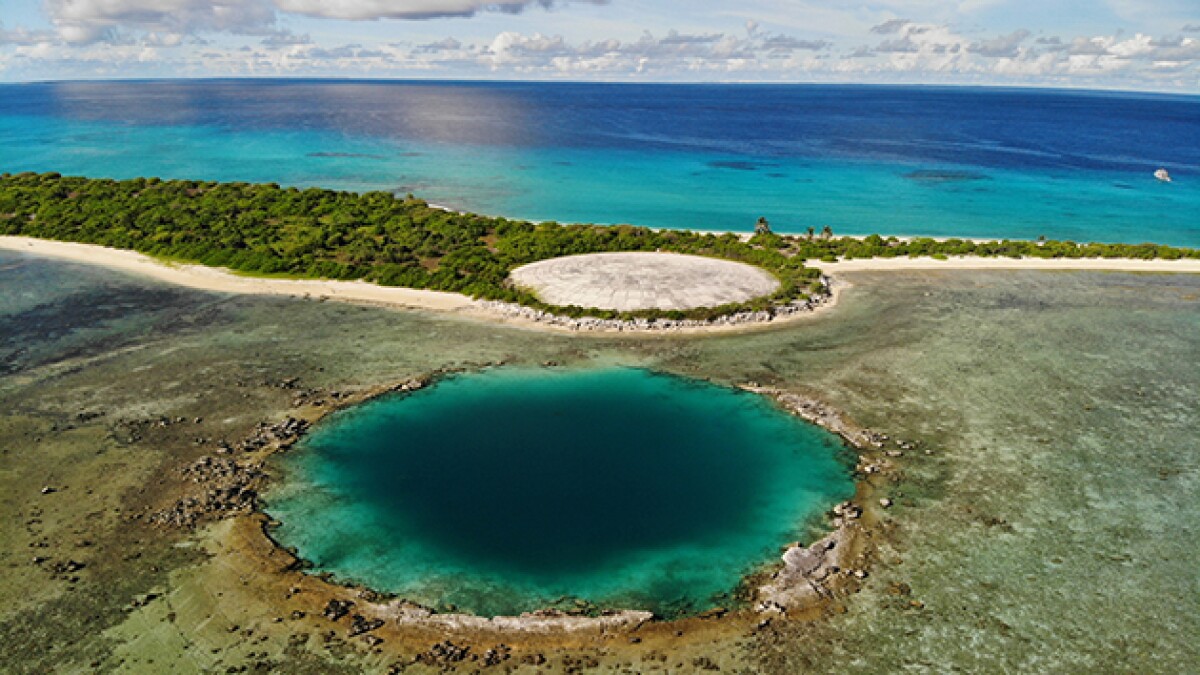
Ken Brownell, who was a carpenter when he served in the military in the late 1970s, was sent to the Marshall Islands in 1977 to build a base camp for hundreds of soldiers assigned to cleanup operations. These cleanup efforts involved a concrete dome that was built on Runit Island, one of 40 islands that make up Enewetak Atoll, which was used to deposit soil and debris contaminated by radiation.
The goal, Brownell said, was supposedly to make the area habitable again for the Marshallese people after all the nuclear testing that happened during the US occupation, which began during World War II (the Marshall Islands eventually became independent in 1979).
Brownell, 66, said he worked 12-hour work days, six days a week, while living on Lojwa — an island “deemed safe” at the time because it didn’t host any nuclear tests, even though it was located near islands that did. His job included excavations and pouring concrete.
But despite the US military’s efforts to clean up the islands, Brownell said there was one, massive problem — it just couldn’t be done.
“There’s no way possibly to clean that up. Once that soil was contaminated, the animals that lived on the islands, the birds, the rats, the coconut crabs, all the — whatever wildlife was there — they consumed all that,” Brownell said. “So all this — the radioactive material goes into the ocean, gets into the coral. Now you’ve got it into the fish life. You’ve got it into the lobsters.”
Brownell said exposure to radioactive material could come from “any place on those islands,” whether it was eating contaminated seafood, or just walking around in the dirt and breathing in contaminated dust.
“On our end of it, most of our guys are dead because of the cancers and all the ailments that come along with the radioactive materials that we ingested,” Brownell said, adding that he had nothing in the way of protective gear. On a typical day, he said he would wear an outfit consisting of just combat boots, shorts, and a hat.
Coming from a farming community in New York, Brownell said he had no knowledge of radioactive materials before getting sent to the Marshall Islands. He also said he didn’t receive any prior training in radiological cleanups and that the potential dangers of the mission were never properly addressed beforehand.
“There was no running water … you couldn’t actually wash up. So you’re eating a baloney sandwich with dirty, contaminated hands, sitting in contaminated soil,” Brownell said. “The government said, ‘Oh, don’t worry about it … be careful swimming because there’s sharks out there.'”
Atomic veteran Francis Lincoln Grahlfs echoed Brownell’s remarks about a lack of knowledge on the dangers of nuclear cleanups, writing in a Military Times op-ed last year that “little was known by the public about the long-term effects of radiation exposure.”
Impact of radiation contamination
Nuclear weapons testing in the Marshall Islands had “devastating effects” on the country’s environment that “remain unresolved,” according to a 2019 report by the Republic of the Marshall Islands’ National Nuclear Commission. Some individuals still “live with a daily fear of how their health might be affected by long-term exposure to radiation.”
Several of Brownell’s friends dealt with health complications that he believed to be related to their service in the Marshall Islands — and he was not immune. In 2001, he was diagnosed with stage-four non-Hodgkin’s lymphoma and given only six months to live. That wasn’t the end though.
That six months has turned into 20 years — 21 years,” Brownell said. “So I’m grateful every day that I’m still here.”
Like Brownell, Grahlfs — who was sent to the Marshal Islands in 1946 — wrote in his December 2021 op-ed that he has suffered from health complications, including cancer, believed to be a result of his service.
Brownell and other veterans have been fighting to be covered by government services that could provide compensation and other care. He is currently covered by the PACT Act, which is legislation aimed at improving funding and healthcare access for veterans who were exposed to toxins during their service that was signed by President Joe Biden in August.
However, he, like thousands of others, are excluded from the Radiation Exposure Compensation Act, which only covers veterans present for atmospheric nuclear tests. RECA has had faster response times for claims than those submitted through the VA.
“We’re still fighting. We’re not gonna give up, and we’re just gonna keep going and keep fighting,” Brownell said. “The world needs to know. They need to know how dangerous the radiation is — how dangerous nuclear testing is.”
UK govt goes ahead, seeks financial backing for Sizewell nuclear project, despite strong objections on environmental grounds, especially about water use.

It bears noting that EDF was refused planning consent from Suffolk County Council and the Planning
Inspectorate in 2020 on the grounds that insufficient information was provided about the project’s impacts on local communities and nature.
Particular concerns included procuring water and potential impacts on the local nature reserve.
The UK Government has confirmed approval for the Sizewell C nuclear power
plant after Chancellor Jeremy Hunt moved to back proceeding with the
development at this month’s Autumn Statement. The Department for Business,
Energy and Industrial Strategy (BEIS) has stated that the Government will
take a £679m stake in the 3.2GW project and will urge China General Nuclear
to end its involvement.
It will allocate a multi-million-pound package to
cover buy-out costs, commercial arrangements and tax. This is a significant
increase from the £100m option fee contribution for Sizewell C which the
Government confirmed back in January. It will see the Government becoming a
50% shareholder in the project’s development phase. BEIS has stated that
EDF, which is developing the power plant, will “provide additional
investment to match the Government’s stake”.
But with the total project
cost sitting around £20bn, it is clear that additional backers will need to
be found. Sizewell C will be the UK’s first project to use a new funding
model for nuclear, the Regulated Asset Base (RAB) model. This model
provides investors with regular returns before a plant begins generating
power. It has replaced the previous Contracts for Difference (CfD) approach
to nuclear funding due to the passage of the Nuclear Energy (Financing)
Bill earlier this year, when Kwasi Kwarteng was in the top job at BEIS.
Some local community groups and major environmental groups have argued that
BEIS rushed the decision on Sizewell C without accounting for key
information on impacts such as water extraction and disrupting wildlife.
On the former point, Sizewell B uses about 800,000 litres of potable water
each day. Friends of the Earth moved in August to launch a legal challenge
to BEIS over the Sizewell C approval decision. It bears noting that EDF was
refused planning consent from Suffolk County Council and the Planning
Inspectorate in 2020 on the grounds that insufficient information was
provided about the project’s impacts on local communities and nature.
Particular concerns included procuring water and potential impacts on the
local nature reserve.
The Planning Inspectorate stated that “unless the
outstanding water supply strategy can be resolved and sufficient
information provided to enable the secretary of state to carry out his
obligations under the Habitats Regulations, the case for an order granting
development consent for the application is not made out”.
Friends of the Earth argued that, when it launched its challenge, no more information had
been provided or considered about Sizewell C’s nature and water footprint.
Edie 29th Nov 2022
Fallout from a nuclear past: New book explores human toll of ‘nuclear colonization’ in New Mexico.

From Los Alamos to the Trinity Test site, the human toll of “nuclear colonization” looms large
Las Cruces Sun News, Alicia Inez Guzmán, Searchlight New Mexico, 20 Nov 22,
Of the three waves of colonization New Mexico has undergone — Spanish, American and nuclear — the latter is the least explored. And for author Myrriah Gómez, there were personal reasons to reveal the truth about how “nuclear colonization” has altered the state’s past and continues to shape its future.
Gómez, an assistant professor at the University of New Mexico, is the author of “Nuclear Nuevo México,” a book that explores the history of the Los Alamos National Laboratory and the fundamental tension of living in its shadow. Its publication this month by the University of Arizona Press couldn’t be timelier: Los Alamos is currently preparing to build plutonium “pits” that act as triggers in nuclear weapons, putting the lab front and center in an ongoing national debate about nuclear impacts.
“If Spanish colonialism brought Spanish colonizers and U.S. colonialism brought American colonizers,” as Gómez writes in her book, “then nuclear colonialism brought nuclear colonizers, scientists, military personnel, atomic bomb testing, and nuclear waste among them.”
For Gómez, the story is deeply felt. She grew up in El Rancho, just 20 miles from Los Alamos. And like so many in the Pojoaque Valley and its nearby villages, she was surrounded by relatives and others who worked at “the labs.” The profound, but not uncommon, loss of family members to radiation exposure shaped her writing.
The book describes in great detail how the Manhattan Project’s site was chosen; how the deaths of Nuevo Mexicanos in the 1950s were designated as “classified” and kept secret; and how atomic testing affected the health of people living in the Tularosa Basin, downwind of the world’s first nuclear detonation. She also touches on the plutonium pit production that is gearing up today.
I recently sat down with her to talk about her book, which started as a PhD dissertation and grew from there. We also shared some of our common experiences. As a Truchas native, I myself lost a relative to illness that was linked to his work at Los Alamos.
……………………………………………………………………………….So it’s not just the health, the illness, the disease and the deaths. It’s also the rifts created in the community. The big reduction in the labor forces that happened in the 1990s, the majority of whom were from the valley — that period of time was the biggest reflection of how dependent we are on the labs and why it’s problematic.
It’s not just the illness. It’s not just kicking people off their land. It’s not just the Radiation Exposure Compensation Act, or the ‘Let us give you this lump sum of money for how you’ve been sick.’ This is all treating the symptoms instead of getting to the root of the illness.
Which is to say that it’s systemic, which is why it’s colonialism.
DOE awards millions to restart nuclear operations in southern Ohio as contamination concerns continue
The United States Department of Energy has awarded $30 million to produce
nuclear fuel at the Portsmouth Gaseous Diffusion Plant in Piketon. The
award comes with accolades from some and grave concerns from others.
According to the DOE, the “$30 million cost share during the first year
to start up and operate 16 advanced centrifuges in a cascade” at the
Piketon facility. The announcement raises concerns over radiation
contamination in Pike, Ross, and Scioto counties.
Scioto Valley Guardian 15th Nov 2022
Concern over radioactive particles on Dounreay shoreline – poor monitoring of the nuclear clean-up
Letter Tor Justad: I refer to recent press reports referring to new high
numbers of “harmful” radioactive particles found on the Dounreay
shoreline and Sandside beach which suggested they were related to leaks
between 1958 and 1984, with 73% of the particles described as
“significant”, and 15 particles found between February and March 2022.
Dounreay Site Restoration Ltd (DSRL), responsible for decommissioning the
site, said it was closely monitoring the situation and Sepa (Scottish
Environment Protection Agency) stated “we are content that the monitoring
and retrieval programme in place continues to provide appropriate
protection for the public”. DSRL stated “the foreshore is not used by
the general public”
– this is not a reassurance as nuclear radiation
has no boundaries. Highlands Against Nuclear Transport (Hant) is
represented on the Dounreay Stakeholder Group (DSG) and has regularly asked
for information about the monitoring being carried out and the results –
and has been told that information will be made available when the
monitoring report is provided by an independent body.
Neither the DSG meeting on March 22 nor the Site Restoration Sub Group meeting on October
19 were informed of these findings of concern. Given that this information
has only been made available through press reports to date, Hant would want
the following to be implemented:
i) Regular up-to-date reports provided to
the DSG and by press releases to the local press on the monitoring results,
so that the DSG can provide this information to organisations represented
by members and the general public will be informed by the local press.
Assuming that the results of the monitoring can demonstrate that there is
no danger to the public this will provide reassurance to everyone living in
the area around Dounreay;
ii) That the Dounreay “clean up” reports
provided by DSRL to the Particles Retrieval Advisory Group Dounreay (Prag)
be provided to the DSG and local press – an online search resulted in the
latest information from the Prag online being from 2016 and this is totally
unacceptable;
iii) That a presentation be made to the DSG by the outside
body carrying out the monitoring to describe its methodology and how
regularly it is carried out – to provide local reassurance. Hant looks
forward to the immediate implementation of these proposals and will be
monitoring this issue closely over the next months.
Press & Journal 11th Nov 2022
Closed Dounreay nuclear site records its highest number of radioactive particles in nearly two decades
. Fifteen radioactive particles have been discovered at a
nuclear site in Scotland that is currently being decommissioned, marking
the highest reported number in nearly two decades.
The particles contained niobium 94, which has a half life of 20,300 years, Americium-241, which has
a half life of 432.2 years, caesium 137, which has a half life of 30 years,
and cobalt 60, which has a half life of around 5.3 years. Eleven of the
finds were categorised as “significant”, which is the highest hazard
level used.
ENDS 9th Nov 2022
Councillor wants to know why there has been an increase in radioactive particles found on Dounreay foreshore.
A Caithness councillor wants to know
why there has been an increase in the number of radioactive particles found
on the foreshore at Dounreay this year. Struan Mackie, a Thurso and
Northwest Caithness Highland councillor and chairman of the Dounreay
Stakeholder Group (DSG), made the call after 15 irradiated particles were
discovered on the foreshore area between February and March. It is
understood to be the highest number since 17 were found in 1996.
Mr Mackie
said: “We wish to ascertain why there has been an increase in particle
detections and whether this was preventable. “Regular public updates are
provided to the Dounreay Stakeholder Group through our Site Restoration
sub-group, and it is of the utmost importance that these matters are dealt
with in a robust but transparent manner.”
Dounreay confirmed there has been
an increase in the number of particles found on the foreshore. A
spokeswoman said: “We closely monitor the environment around the site and
have seen an increase in particles found on the Dounreay foreshore this
year. “The foreshore is not used by the general public. We are looking at
wind and wave data to see if we can pinpoint a trend, and will report our
findings when they are complete. Safety is our number one priority and we
continue to monitor the foreshore on a regular basis.
John O’Groat Journal 4th Nov 2022
This Abandoned Nuclear City Is Trapped Under Ice, What Happens If It Thaws?
https://twistedsifter.com/videos/what-happens-if-this-frozen-abandoned-nuclear-city-thaws 24 Oct 22, In an effort to stop the spread of Soviet influence during the height of the Cold War, the United States and Denmark signed the 1951 Defense of Greenland Act. Soon after, the U.S. Army constructed a state-of-the-art nuclear-powered Arctic research center, with multiple military bases built out on the ice sheet, one of them was Camp Century.
Watch the video on why Project Iceworm was aborted before it began, and the state of Camp Century today. In the midst of a warming climate, who is responsible for the abandoned base, and how do we protect the environment from the physical, biological, and radiological wastes at the site?
For more on this unfolding threat, read about Denmark’s Camp Century Climate Monitoring Programme and scientists’ warning of melting Artic releasing banned toxins.
The Nuclear Site That Can’t Be Cleaned Up
‘Atomic Days: The Untold Story of the Most Toxic Place in America’ exposes the story of a Washington state complex that poses dangers that—like the nuclear industry itself—cannot be contained.
https://portside.org/2022-10-23/nuclear-site-cant-be-cleaned October 23, 2022 Ron Jacobs , In what I consider to be something between coincidence and synchronicity, I began reading journalist Joshua Frank’s newest book on the dangers of the Hanford Nuclear Reservation, Atomic Days: The Untold Story of the Most Toxic Place in America, the day after the California state legislature extended the Diablo Canyon Nuclear Power Plant’s license to operate for another five years.
Back in 1981, I spent a few days in jail for protesting the opening of the Diablo plant as part of a direct action initiative called by the Abalone Alliance, an anti-nuclear advocacy group. We were reasonably concerned about the dangers it could pose: For starters, it was built on an earthquake fault. Then there’s the question of nuclear waste disposal, the impacts these sites have on the water sources, and the industry’s relationship to the building and stockpiling of nuclear weapons.
Frank’s in-depth reporting of the Hanford site illuminates similar threats to those posed by Diablo and other nuclear plants. Constructed beginning in the spring of 1943, the Washington state nuclear production complex was built to create and stockpile plutonium and purified uranium for weapons of war. The site was chosen for its remoteness and ease of access to one of North America’s great rivers, the Columbia. Empowered by the War Powers Act of 1941, the United States government took the land from residents who lived, fished, and farmed there—descendants of settlers and Indigenous people alike—and developed it to serve as a plutonium processing plant for the Manhattan Project.
Like so much of the nuclear bomb project in its early years, the construction of the Hanford site involved dangerous shortcuts. The rationale given had to do with the war engulfing the world and the United States’ rush to develop a nuclear weapon, the desire to cut costs in that development, as well as the lack of practical knowledge among the scientists and engineers involved. Naturally, like virtually every other industrial element of war-making in the United States, the bulk of the research, development, and construction of nuclear weapons, even at these early stages, was privatized.
In fact, as Frank describes in his book, the Army Corps of Engineers lieutenant general in charge of the Manhattan Project, Leslie Groves, contracted with the DuPont Corporation to find a suitable site for the processing plant that ended up in Hanford. As Frank explains, a consistent theme is the sacrificing of safety for the sake of profit. Even so, many if not most of the contracts exceeded the original contract costs by millions.
Atomic Days also discusses the cleanup of the Hanford Reservation; a process that officially began in 1989. As Frank carefully documents, not only has this cleanup been less than successful, it has often created a bigger mess than that which it was supposedly cleaning up. In addition, the way the process is being done almost guarantees cost overruns and a task that will never be complete. Much of this is traceable back to the original construction of the site, especially of the nuclear waste storage containers. Once they started leaking, the task became one of how to stop the leakage and prevent more from occurring. In response, plans were designed to create a waste treatment plant. Like so much else associated with the nuclear industry, and Hanford in particular, this led to more dangers. Once again, many of these risks could have been avoided if profit were not the primary motive.
Frank relates tales of scientists being ignored after warning management that the fixes it preferred were not workable in the long term. He writes about a culture of fear inside the project—a culture fed by the employees’ sense of allegiance to their nation and the importance of their role in defending that nation. It is this allegiance that is manipulated by corporate interests into something close to its opposite. It is also a part of the basis for employees ignoring safety protocols at their own risk and poisoning themselves and the environment surrounding Hanford. As is the case in many government and corporate cultures, whistleblowers are punished and silenced. This allegiance was not always limited to the workers inside, many residents of nearby towns refused to believe reports of radioactive material being released and accidentally leaking when the reports first came out.
As if to verify Frank’s assertions, I lived in western Washington for seven years (1985-1992) and knew very little of the dangers. With the exception of a couple friends who were scientists and antinuclear activists, most locals knew less than I did. A friend who grew up in Kennewick, Washington, a town just a few miles away from Hanford, would argue with me, convinced that the site was completely safe, even though people he knew who had worked there were diagnosed with cancer in their thirties.
The Hanford Nuclear Reservation is testament to the war machine’s inhumanity. The fact that its primary purpose was the production of an element that remains deadly poisonous to humans and other life forms for tens of thousands of years is a damning testament to the suicidal nature of too many human pursuits. In writing Atomic Days, author Joshua Frank has done a great public service. The fact that he has done so in a narrative style that is both accessible and instructive makes one hope his story will be read by many.
An Elementary School Near a Nuclear Dump Site Is Teeming With Radioactivity
A recent analysis found dangerous, radioactive compounds at levels as high as 22 times background rates on the Missouri school’s grounds.
Gizmodo By Lauren Leffer 17 Oct 22, [good map and aerial view]
Dangerous, radioactive particles are all over an elementary school in suburban St. Louis, according to a recently published analysis by Boston Chemical Data Corp.
The testing follows an earlier assessment by the Army Corps of Engineers that also found elevated levels of radiation near Jana Elementary School in Florissant, Missouri. However, the new report—which included indoor testing and more extensive samples from the school grounds—is even more startling, confirming fears of contamination.
Based on dust and soil samples collected in August, scientists found harmful, radioactive material in multiple locations inside the school, including the gymnasium, and kitchen—as well as on the grounds. In an outdoor, kindergarten play area the researchers determined levels of the isotope lead-210 were more than 22 times the expected background level. In addition to the radioactive lead isotope, the Boston Chemical scientists also found high levels of radium-266, polonium-210, multiple isotopes of thorium, and other compounds in and around the school.
Inhaling, ingesting, or even simply skin contact with these particles can cause “significant injury to humans,” said the report.
Jana Elementary is bordered by a small stream called Coldwater Creek. And though it may look picturesque, the waterway is polluted by the nuclear legacy of World War II.
A 21.7 acre area upstream from Jana Elementary, called the St. Louis Airport Site (SLAPS), served as a storage and dumping ground for radioactive material produced as part of the Manhattan Project for decades. There, nuclear waste leaked into the ground and headwaters of the Coldwater Creek, and flowed down the tributary of the Missouri River. The stream, which frequently floods, then spread that contamination even more broadly—into soil, buildings, home gardens and elsewhere.
In 2019, a federal report confirmed that people who lived along the creek and in its floodplain between the 1960s and 1990s likely faced an increased risk of leukemia, bone, and blood cancers. And the analysis of Jana Elementary brings renewed concern about ongoing exposure.
When she learned of the report, she “was heartbroken,” said Ashley Bernaugh, president of the Jana parent-teacher association whose son attends the school, to National Public Radio. “It sounds so cliché, but it takes your breath from you.” ………………. more https://gizmodo.com/nuclear-waste-radioactivity-missouri-1849667056
Marshall Islanders unwilling to sign economic agreement with USA – want redress first of their harmful nuclear legacy

Haunted By 67 Nuclear Tests, US Facing Severe Roadblocks To Renew COFA Pact With Marshall Islands
https://eurasiantimes.com/haunted-by-67-nuclear-tests-us-facing-severe-roadblocks-to-renew-cofa-pact-with-marshall-islands/ By Ashish Dangwal, October 18, 2022
The United States appears to be facing a severe roadblock in renewing a binding treaty with the Marshall Islands, which have long sought compensation for the dozens of US nuclear tests conducted there between the 1940s and 1950s.
The provisions of a Compact of Free Association (COFA), signed between the Pacific island group and the US in 1986, will be reviewed by the Marshall Islands and the United States later this year.
The COFA’s key components include US immigration benefits for Marshallese citizens, direct economic support, and exclusive American defense and security access to the islands and their territorial waters.
The Marshall Islands leaders have repeatedly highlighted that the long-term repercussions of the 67 US nuclear tests conducted between 1946 and 1958 on health, the environment, and the economy must be adequately addressed before they consent to a new economic agreement with the US.
How nuclear testing leaves lasting environmental scars
https://www.dw.com/en/nuclear-testing-north-korea-environment-biodiversity/a-6341. Edited by: Tamsin Walker 13 Oct 22,
With analysts predicting further nuclear tests in North Korea, the planet stands to lose. The ongoing environmental effects of nuclear testing are felt worldwide and for millions of years.
Since late September, North Korea has launched a flurry of ballistic missile tests as part of what experts believe is a program to develop so-called tactical nuclear weapons. If the reclusive state were to move beyond testing missiles to testing actual nuclear warheads, as some analysts are predicting, it would not only ramp up political tensions, but also pose a significant environmental threat.
In the past, countries such as the United States, the former Soviet Union and the United Kingdom tested their nuclear weapons in the open atmosphere and in the sea — and around Pacific Islands, the Australian desert, mainland US, remote parts of the USSR and other places. These tests left contaminated landscapes and spread their radioactive clouds far afield.
Thanks to global treaties, nuclear tests were largely moved underground after 1963, a slightly preferable scenario environmentally speaking. And since a 1996 test ban, only India, Pakistan and North Korea have tested weapons at all.
North Korea is the only country known to have conducted tests in the 21st century.
The impact of nuclear testing on mammals
“The legacy of nuclear weapons testing has been absolutely catastrophic for humans and for the environment,” said Alicia Sanders, the policy research coordinator at the International Campaign to Abolish Nuclear Weapons.
One of the unique consequences for the environment, she added, “is that it lasts essentially forever.”
Putting aside the development required to set up test sites, the first major effects are felt in the microseconds after the explosion.
A 2015 paper on the environmental impact of military actions found that nuclear blasts represent an extreme threat to local biodiversity.
The massive energy released in the thermal emission from the blast — comprising light and heat — kills any organisms unfortunate enough to be near the epicenter. Depending on the yield of the bomb, even organisms several kilometers away face lethal temperatures. What remains is a charred mess.
The effect from the thermal shock on animals is not well researched, but humans face serious, life-threatening burns even several kilometers away, depending on the power of the bomb. A similar effect is assumed for other mammals. They also suffer from the pressure of the blast, which causes lung damage and hemorrhaging.
And animals that aren’t killed immediately are more likely to die from infections in the days and weeks following the explosion, leading to a localized die-off event, the 2015 review found.
The impact on plants, birds and marine life
Plants are also not spared the effects of a nuclear blast. The sheer force strips trees of their foliage, tears down branches and uproots vegetation.
For fish, meanwhile, the impact is similar to that of a non-nuclear explosion, but on a much larger scale. The US tests in Alaska, and those of France in French Polynesia in the late 1960s and early 70s were associated with large-scale die-offs of fish, as their gas-filled swim bladders ruptured.
Marine mammals and diving birds suffered similarly, post-mortem analysis showed. However, marine non-vertebrates appeared to be more resistant to pressure waves as they do not have gas-containing organs, according to defense studies at the time.
Long-term environmental impacts
During the Cold War, the United States detonated scores of nuclear weapons in atmospheric tests in the Pacific. Entire islands were incinerated and many are still uninhabitable. Local residents were forced to leave. A 2019 study found that some of the affected areas had radiation levels 1,000-times that of those found in Chernobyl and Fukushima.
Significant long-term environmental consequences of nuclear testing are the contamination of surface soil and groundwater, land disturbances in the form of craters or partially collapsed mountains — as in the case of the North Korean testing site — and the addition of radionuclides to sediments in seabeds.
Atmospheric nuclear tests spread radionuclides — unstable particles that releases radiation as they break down — far and wide, contaminating topsoil.
But even in underground testing, high pressure conditions can propel radionuclides into the atmosphere — a phenomenom known as venting — where they can be carried by winds and deposited far away from the test sites and enter food-chains.
Ankit Panda, a senior fellow at the Carnegie Endowment for International Peace’s nuclear policy program, says Pyongyang has thus far avoided the pitfall of venting.
“The North Koreans have actually, with their last five nuclear tests at least, been very effective at preventing the venting of radionuclides,” he said. “Because some of these radionuclides can even offer hints about the specific materials that are being used in the nuclear device.”
At the very least, underground tests deposit huge quantities of radioactive material which will remain there for millions of years. The long-term ecological damage from such contamination is unknown.
The impact on drinking water
Underground testing also poses a threat of radionuclides leeching into drinking water.
Studies at the US nuclear testing site near Las Vegas, found that some contaminants released by underground nuclear tests can get into the surrounding water. Plants and animals are particularly liable to pick up radioactive strontium and caesium, which are easily spread in water.
With a half-life of 30 years, these two radionuclides can cause health issues in the food chain for decades. A common shrub in New Mexico, chamisa, has roots that extend deep into the ground, bringing strontium back up to the surface near the Los Alamos testing site in New Mexico, from where it can be widely distributed as the leaves fall, decay, and contaminate the soil understory.
“Animals will eat from contaminated land and that becomes very dangerous. These can be key sources of food for people,” ICAN’s Sanders said.
Organizations such as ICAN continue to push for complete denuclearization.
Until that happens, one factor that might help clean up the legacy of nuclear testing is a provision in the 2017 Treaty on the Prohibition of Nuclear Weapons, which requires signatories to provide assistance to victims of nuclear weapons and begin to remediate contaminated environments. States should next year begin initial assessments of environmental damage and use that as a basis for future remediation efforts.
Marshall Islands to receive U.N. support over nuclear legacy
https://english.kyodonews.net/news/2022/10/e2a640256da0-marshall-islands-to-receive-un-support-over-nuclear-legacy.html KYODO NEWS -8 Oct 22,
The U.N. Human Rights Council adopted a resolution Friday aimed at assisting the Marshall Islands in its efforts to secure justice for people suffering from the impact of the United States’ former nuclear testing program in its territory.
“We have suffered the cancer of the nuclear legacy for far too long and we need to find a way forward to a better future for our people,” Samuel Lanwi, deputy permanent representative of the Republic of the Marshall Islands in Geneva told the body in an emotional speech.
The United States conducted dozens of nuclear weapons tests in the islands of the Pacific state in the 1940s and ’50s, including the 1954 Castle Bravo test at Bikini Atoll, the biggest U.S. bomb ever detonated.
The text tabled by five Pacific Island states — the Marshall Islands, Fiji, Nauru, Samoa and Vanuatu — was backed by Australia and did not demand reparations.
It called on the U.N. rights chief to submit a report in September 2024 on the challenges to the enjoyment of human rights by the Marshallese people stemming from the nuclear legacy.
The United States as well as other nuclear weapons states such as Britain, India and Pakistan expressed concern about some aspects of the text but did not ask for a vote on the motion. Japan did not speak at the meeting.
The Marshallese people are still struggling with the health and environmental consequences of the nuclear tests, including higher cancer rates. Many people displaced due to the tests are still unable to return home.
A concrete dome on Runit Island containing radioactive waste is of particular concern, especially in relation to rising sea levels as a result of climate change, according to the countries that drafted the resolution.
The Marshall Islands says a settlement reached in 1986 with the United States fell short of addressing the extensive environmental and health damage that resulted from the tests.
The U.S. government asserts the bilateral agreement settled “all claims, past, present and future,” including nuclear compensation.
Observers say some nuclear states fear the initiative for the Marshall Islands could open the door to other countries bringing similar issues to the rights body.
Crops growing 30 miles outside of Chernobyl are still contaminated with dangerous levels of strontium .
https://www.washingtonpost.com/politics/2022/04/20/does-russia-sell-nearly-1-billion-uranium-us-year/ 7 Oct 22, Crops grown near Chernobyl are still contaminated, more than three decades after the worst nuclear disaster in history.
Almost half the grain analyzed by scientists in Ivankiv, about 30 miles from the power plant, showed levels of strontium 90 far above recommended levels.
It was also present at unsafe levels in firewood and wood ash used to fertilize crops.
The Ukrainian government stopped testing goods for strontium 90 in 2013.
A radioactive isotope, it collects in the teeth, bones and marrow like calcium, and can cause numerous kinds of cancer.
1 This Month
19 February – VIRTUAL EVENT-Decision Time: AI and Our Nuclear Arsenal
12:45 p.m. Central / 1:45 p.m. Eastern
To see nuclear-related stories in greater depth and intensity – go to https://nuclearinformation.wordpress.com
-
Archives
- February 2026 (141)
- January 2026 (308)
- December 2025 (358)
- November 2025 (359)
- October 2025 (376)
- September 2025 (258)
- August 2025 (319)
- July 2025 (230)
- June 2025 (348)
- May 2025 (261)
- April 2025 (305)
- March 2025 (319)
-
Categories
- 1
- 1 NUCLEAR ISSUES
- business and costs
- climate change
- culture and arts
- ENERGY
- environment
- health
- history
- indigenous issues
- Legal
- marketing of nuclear
- media
- opposition to nuclear
- PERSONAL STORIES
- politics
- politics international
- Religion and ethics
- safety
- secrets,lies and civil liberties
- spinbuster
- technology
- Uranium
- wastes
- weapons and war
- Women
- 2 WORLD
- ACTION
- AFRICA
- Atrocities
- AUSTRALIA
- Christina's notes
- Christina's themes
- culture and arts
- Events
- Fuk 2022
- Fuk 2023
- Fukushima 2017
- Fukushima 2018
- fukushima 2019
- Fukushima 2020
- Fukushima 2021
- general
- global warming
- Humour (God we need it)
- Nuclear
- RARE EARTHS
- Reference
- resources – print
- Resources -audiovicual
- Weekly Newsletter
- World
- World Nuclear
- YouTube
-
RSS
Entries RSS
Comments RSS
 nuclear-news