20 years on, radioactive debris still found on Scottish shore
 Radioactive lockdown on the shores of Fife, News Scotsman.com13 October 2011 A SECTION of Scottish coastline has been cordoned off after scientists found a radioactive object ten times more contaminated than any found there before.
Particles were first found on the shoreline of Dalgety Bay more than 20 years ago and the contamination has been linked to childhood cancer. Continue reading
Japan facing a massive radiation decontamination task, as radiation “hot spots” fopund
 Strontium 90 detected in region around Tokyo, Washington Post, By Chico Harlan, October 13 SEOUL — Tokyo residents carrying radiation-detection equipment have found small hot spots in several areas of the city, prompting Japanese officials to promise more detailed government monitoring of radiation levels in the country’s most populous region.
Tokyo is more than 125 miles from the Fukushima Daiichi nuclear facility that was heavily damaged by the March 11 earthquake and tsunami, but residents reported Thursday that they had found two small areas with radiation levels higher than some within the 12-mile evacuation zone……..
Apart from the latest radiation detections, Japan faces a massive decontamination job that will require years of work and billions of dollars. Officials say an area of 925 square miles must be decontaminated by a combination of scrubbing and topsoil removal.
The towns closest to the plant, located along the coast in Fukushima prefecture, will not be habitable for decades. Last week, health-care workers began conducting checkups on more than 300,000 children in Fukushima….. http://www.washingtonpost.com/world/asia_pacific/mini-hotspots-strontium-90-detected-in-region-around-tokyo/2011/10/13/gIQA6XqHhL_story.html
155 miles from Fukushima – radioactive sediment found
 With internal exposure at high concentrations, strontium-90 can accumulate in the bones and is “one of the more hazardous constituents of nuclear wastes,” according to the EPA.
The findings come after a travel alert issued by the U.S. government last week,
Radioactive sediment found miles from Japan nuclear crisis zone, CNN Oct 12 Officials in Yokohama, Japan’s second largest city, are investigating soil samples after a radioactive substance was found in sediment atop an apartment building about 155 miles (250 kilometers) from the Fukushima No. 1 nuclear plant, according to news reports. Continue reading
In water-scarce Australia, uranium miner BHP guzzles it for free
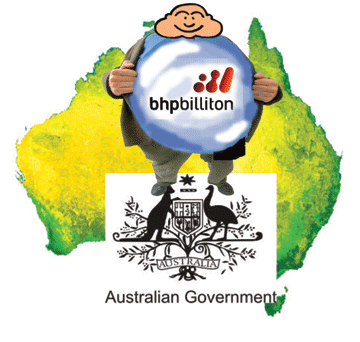
 Public resources for private profit: free water for the largest open-pit mine in the world Coober Pedy Regional Times, by: Nectaria Calan, 13 Oct 11 In August mining giant BHP Billiton announced record financial results for the 2011 financial year, recording a total net profit of US$23.95 billion, nearly double its 2010 figure of US$13.01 billion.
Real radioactive cleanup from Fukushima area is a long way off
With challenges such as the designation of temporary radioactive waste dumps and interim storage facilities yet unsolved, the road to true decontamination remains a long one.
 True radiation decontamination still a long way away, Mainichi Daily News,. Japan October 7, 2011 Though the government last month lifted the “emergency evacuation preparation zone” designation of some areas greatly affected by the ongoing crisis at the Fukushima No. 1 Nuclear Power Plant, radiation decontamination efforts are still taking place in areas with high levels of radiation.
The three main decontamination methods that have been highly publicized through media reports are: the stripping away of surface soil from school playgrounds and athletic fields, the removal of mud accumulated in gutters, and the washing of roofs using high-pressure water cleaners. While the first method is considered effective, the remaining two have been found to be effective only to a certain point, and some especially warn against overestimating the effects of high-pressure water cleaners. Continue reading
Radioactive danger on Scotland’s Fife beach
Revealed: the radiation risk on Fife beach, HERALD SCOTLAND, ROB EDWARDS , 9 Oct 2011 Young children exposed to radioactive pollution from old military planes at a popular Scottish coastal resort face a “significant” risk of getting cancer later in life, according to a new health study by the Scottish Environment Protection Agency (Sepa).
AREVA company convicted of radioactive water pollution
 AREVA-SOCATRI was finally convicted of the offense of water pollution, in addition to his conviction for delay in reporting an incident.

 Areva-Socatri convicted of water pollution: an unprecedented legal victory! , September 30, the Court of Appeal of Nîmes condemned AREVA-SOCATRI of water pollution, as a result of the appeal including the Network “Sortir du nucléaire”. This sentence follows the unprecedented radioactive leaks detected on the Tricastin nuclear site in July 2008.
Located between Valence and Avignon, the Tricastin nuclear site includes both treatment plants and four fuel nuclear power reactors in operation. SOCATRI society, located on this site, ensures the maintenance and dismantling of radioactive materials and nuclear waste treatment and industrial companies AREVA Tricastin. Continue reading
High levels of radiation in soil beyond Fukushima’s exclusion zone
Nuclear contamination found beyond Japan no-go zone, Google News, 6 Oct 11, TOKYO — High levels of radioactive contamination have been found in soil in the capital of Japan’s Fukushima prefecture, a study showed Wednesday, prompting calls to make the area a voluntary evacuation zone.Some 307,000 becquerels of caesium per kilogramme (2.2 pounds) of soil was detected in an independent survey conducted on September 14 by a radiological engineering expert and citizens’ groups……
On Friday the government said it would lift five “evacuation preparation” zones between 20 and 30 kilometres from the plant, where residents were not forced to evacuate but were told to be ready to do so in the event of further setbacks at the crippled plant.
Public confidence in the safety of Japan’s nuclear plants has plummeted in the wake of the disaster, with only 10 of the nation’s 54 reactors currently online….. http://www.google.com/hostednews/afp/article/ALeqM5gPTzBtCcJ2AYbeWbgXB84JLolAiA?docId=CNG.574799ca7aea7d5e54ed792d7efd7168.541
Irradiated area land in Japan larger than greater Tokyo
 Japan reveals huge size of Fukushima clean-up area, Irish Times, 29 Sept 11DAVID McNEILL in Tokyo JAPAN HAS revealed that the clean-up of land irradiated by the Fukushima nuclear disaster could stretch to an area larger than greater Tokyo. Continue reading
Top ten places in dangerous radioactivity
Just wait till the communist parties in China and North Korea finally fall, and the truth is out. You haven’t heard/seen real horror stories yet! Already, China’s known pollution is horrifying,
Fukushima Tops List of World’s 10 Most Radioactive Places Fellowship of the Minds – Conservatives who love America 24 Sept 11 Our media have the attention span of a child.
The damaged nuclear reactors of Fukushima Daiichi, Japan, have fallen off the radar of our media’s interest, but that doesn’t mean things are hunky dory.
On the contrary, according to the 2010 report by the non-profit Blacksmith Institute, the most radioactive places are listed, with Chernobyl the worst. But now, Fukushima can top the list of the world’s ten most radioactive places. Yes, Fukushima is more radioactive than Chernobyl!
10. Hanford, U.S.A. Continue reading
Plutonium in soil 40 Km from Fukushima nuclear plant

 Plutonium 40km from Fukushima plant, FT.com Asia Pacific By Mure Dickie in Tokyo, 3 Oct 11 Small amounts of plutonium believed to have escaped from Japan’s tsunami-crippled nuclear plant have been detected in soil more than 40km away, say government researchers, a finding that will fuel already widespread fears about radiation risk……
The plutonium was found at six sites – including one in Iitate around 40km from the plant – all of which are subject to evacuation orders. However, plutonium’s long half-life and the potential for even small amounts to pose a health hazard if ingested is likely to make it a focus of popular concern.
Japanese authorities, who significantly underestimated radiation releases from the plant in the early days of the crisis, have since struggled to convince the public that they are able effectively to guard against radiation health threats…. http://www.ft.com/intl/cms/s/0/7e3af460-ece6-11e0-be97-00144feab49a.html#axzz1Zkkm68Sy
Radioactive contamination of ocean continues from Fukushima
 the Fukushima disaster appeared to be by far the largest accidental release of radioactive material into the sea…..
The working hypothesis is that contaminated sediments and groundwater near the coast are continuing to contaminate the seas, …
fuller understanding of the effect on fish that are commercially harvested will probably take several years of data following several feeding cycles,
Fukushima’s Contamination Produces Some Surprises at Sea, NYT, By DAVID JOLLY, September 28, 2011, Six months after the accident at Fukushima Daiichi, the news flow from the stricken nuclear power plant has slowed, but scientific studies of radioactive material in the ocean are just beginning to bear fruit.
The word from the land is bad enough. ….
Off the coast, the early results indicate that very large amounts of radioactive materials were released, and may still be leaking, and that rather than being spread through the whole ocean, currents are keeping a lot of the material concentrated. Continue reading
Radiation lingering in sea near Fukushima
much of the radioactive material will still be sinking down to the seabed and being absorbed by marine life
Fukushima’s radioactive sea contamination lingers, New Scientist September 2011 by Andy Coghlan Levels of radiation in the sea off the Fukushima-Daiichi nuclear plant remain stubbornly high six months after the earthquake and tsunami struck Japan on 11 March.
After levels peaked at around 100,000 becquerels per cubic metre of seawater in early April, much of the radioactive iodine, caesium and plutonium from Fukushima was expected to rapidly disperse in the Pacific Ocean. Continue reading
Colorado uranium mine still leaking radioactivity – Cotter ordered to stop this
Colorado regulators order Cotter to do more to stop uranium contamination of water.By Karen E. Crummy, The Denver Post 29 sept 11 Uranium-laden water from a contaminated mine is still flowing into Ralston Creek, leading state regulators Wednesday to demand that the mine’s owner divert creek water away from its facility and find the source of the contamination…… Continue reading USA’s Koch brothers’ campaign against the environment
 Rand Paul Wants Koch Brothers Thrown in Jail! By Brad Friedman on 9/23/2011 ,”………. Koch Industries was indicted by the DoJ in 2000 for knowingly dumping “at least 91 metric tons of uncontrolled benzene in its liquid waste streams” at its Corpus Christi refinery, and for conspiring to cover it an attempt to deceive regulators.
After George W. Bush took office in 2001, however, “his Attorney General John Ashcroft dropped 88 counts against Koch for the benzene spill and cover-up” in exchange for a guilty plea to falsifying documents and a $20 million fine (a settlement from $350 million in potential fines.)
The Kochs made out pretty well in exchange for their $32,200 contribution to the 2000 Bush campaign. The job killing Koch brothers are making out even better under Barack Obama. But more on that later.
Suffice to say, neither the Kochs, nor anybody who works for them, went to jail for “dump[ing] benzene in the stream,” as Paul is calling for, even as he calls for doing away with even more environmental regulations in his remarks to The Street.
As we’ve been highlighting of late, the Republicans have been on a tear against clean air and water regulation by the EPA recently, and have shown themselves willing to partner with their various front groups in the media, at the U.S. Chamber of Commerce, and with folks like the Koch brothers to simply make stuff up about such regulations “killing jobs”, in their 2012 “mother of all wars” to regain the White House…. http://www.bradblog.com/?p=8778
1 This Month

Protect Sazan Island from the Trump family! https://secure.avaaz.org/campaign/en/protect_sazan_island_from_the_trump_family_loc/?bqFCVab&v=174511&cl=22707147157&_checksum=5e9dde668860e8231c33699735e16a1fbf22ab2cb01da50c999fe8732b9775ef&utm_source=email&utm_medium=blast_email&utm_campaign=174511
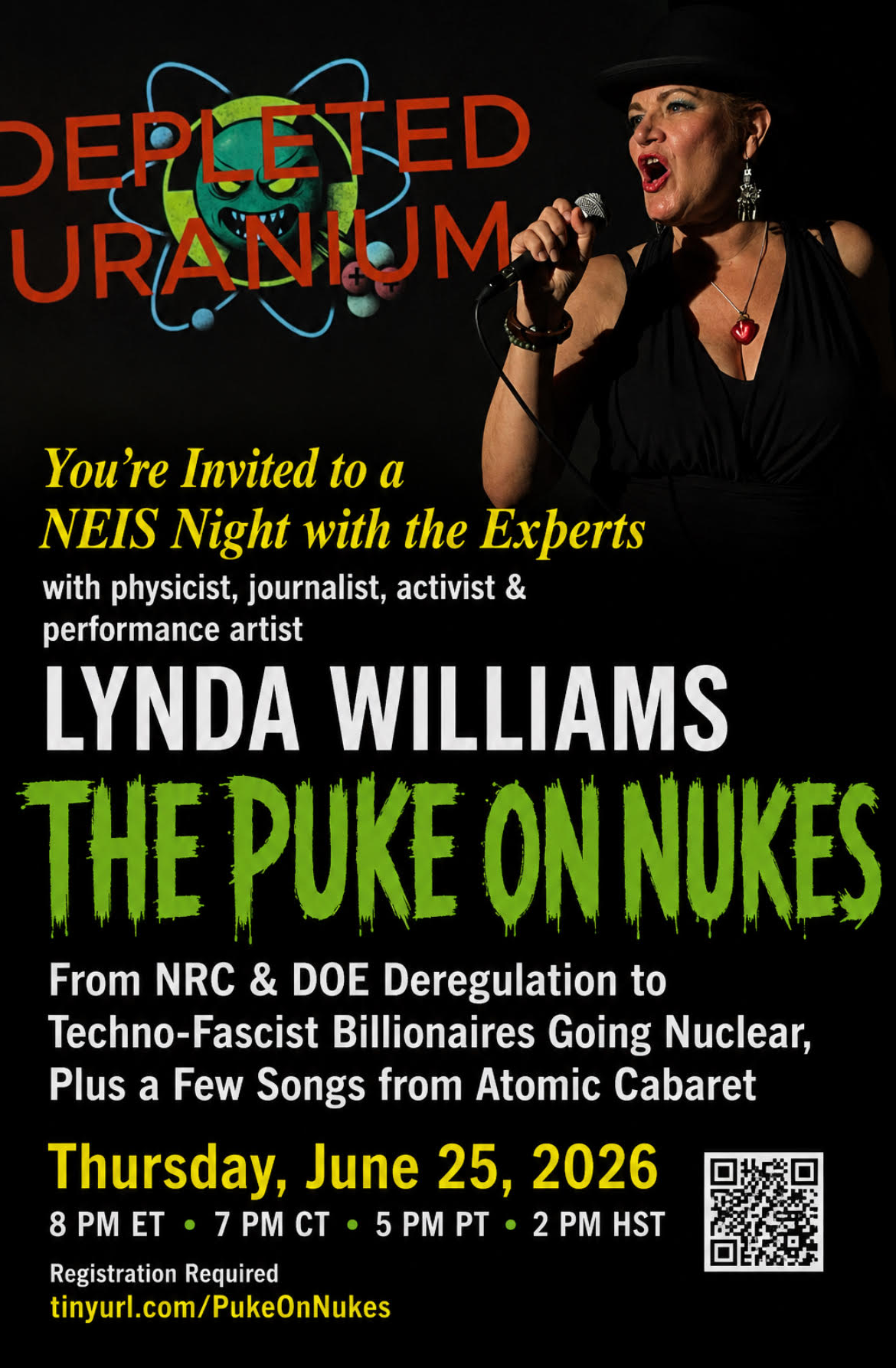
25 June- THE PUKE ON NUKES
Thursday, June 25, 2026
7pm Central Time (8pm ET, 6pm MT, 5pm PT) UTC – 5
From NRC & DOE Deregulation to Techno-Fascist Billionaires Going Nuclear, Plus a Few Songs from Atomic Cabaret REGISTER
26 June – Radiation Trainwreck at the NRC / Join the Protect Better Campaign – https://us02web.zoom.us/meeting/register/4ZlZ5_qLSHGiLSCg8FF6Bg#/registration


Cuba Is Not a Failed State – It Is a Besieged State
PETITION: “Global Appeal to Endorse Palestinian Right of Return of Refugees”
To see nuclear-related stories in greater depth and intensity – go to https://nuclearinformation.wordpress.com
-
Archives
- June 2026 (162)
- May 2026 (306)
- April 2026 (356)
- March 2026 (251)
- February 2026 (268)
- January 2026 (308)
- December 2025 (358)
- November 2025 (359)
- October 2025 (376)
- September 2025 (257)
- August 2025 (319)
- July 2025 (230)
-
Categories
- 1
- 1 NUCLEAR ISSUES
- business and costs
- climate change
- culture and arts
- ENERGY
- environment
- health
- history
- indigenous issues
- Legal
- marketing of nuclear
- media
- opposition to nuclear
- PERSONAL STORIES
- politics
- politics international
- Religion and ethics
- safety
- secrets,lies and civil liberties
- spinbuster
- technology
- Uranium
- wastes
- weapons and war
- Women
- 2 WORLD
- ACTION
- AFRICA
- Atrocities
- AUSTRALIA
- Christina's notes
- Christina's themes
- culture and arts
- Events
- Fuk 2022
- Fuk 2023
- Fukushima 2017
- Fukushima 2018
- fukushima 2019
- Fukushima 2020
- Fukushima 2021
- general
- global warming
- Humour (God we need it)
- Nuclear
- RARE EARTHS
- Reference
- resources – print
- Resources -audiovicual
- Weekly Newsletter
- World
- World Nuclear
- YouTube
-
RSS
Entries RSS
Comments RSS
 nuclear-news