High radioactive cesium levels in Abukumagawa river, Japan
 Cesium levels hit tens of billions of becquerels at river mouth, The Asahi Shimbun November 25, 2011, By EISUKE SASAKI Researchers have sounded the alarm over river water containing cesium levels at tens of billions of becquerels a day flowing into the sea near Fukushima Prefecture, site of the crippled nuclear power plant.
A joint study by Kyoto University and the University of Tsukuba, among other entities, estimated that water at the mouth of the Abukumagawa river running through the prefecture was contaminated with cesium levels of about 50 billion becquerels a day. Continue reading
Appeal to save Grand Canyon’s sacred lands, biodiversity, water – from uranium mining
Pollution from past uranium mining already plagues the Grand Canyon and surrounding region. Proposals for new mining have prompted protests, litigation and proposed legislation. Scientists, tribal and local governments and businesses have voiced opposition. Additional mining threatens to industrialize iconic and regionally sacred wildlands, destroy wildlife habitat and permanently pollute or deplete aquifers feeding Grand Canyon’s biologically rich springs and creeks.
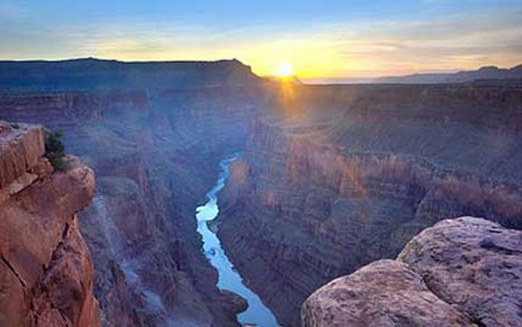
Appeal Challenges Uranium Mine Threatening Grand Canyon, 1 Dec 11, GRAND CANYON NATIONAL PARK, Ariz—Conservation groups and American Indian tribes today filed an appeal in the 9th Circuit Court challenging a lower court ruling that allowed a uranium mine near Grand Canyon National Park to re-open without updating decades-old environmental reviews. The Arizona 1 uranium mine is located near Kanab Creek immediately north of Grand Canyon National Park. Continue reading
Japanese government underestimates radiation risks
Fukushima Radiation Risks “Severely Underestimated“: Greenpeace, November 29, 2011 Tokyo- (PanOrient News) Greenpeace today renewed its demand for the Japanese government to keep its nuclear reactors offline as simulation maps of potential accidents at Japan’s nuclear plants – used in the development of nuclear emergency response efforts – “are completely inadequate, and have not been updated since the Fukushima disaster.” Continue reading
Radiation lingering in homes in Fukushima district
 Decontamination work at homes in Fukushima not going well as radiation lingers Mainichi Daily News, 25 Nov 11 FUKUSHIMA — Work to decontaminate homes and yards in a district here is not proceeding as hoped, as radiation levels persist and decontamination workers worried about their health stay away.
The city began decontamination work in the Onami district on Oct. 18. Located in the mountains in the eastern part of the city, it has been heavily affected by the Fukushima nuclear disaster, with radiation in rice over the nation’s provisional limit of 500 becquerels per kilogram detected, leading to a ban on rice shipments.
Although monitoring of six homes where decontamination was carried out found an average drop of 70 percent in radiation in front of entrances and on gravel parking spots, there was only a 30 percent drop for roofs and a 25 percent drop for asphalt in the yard. Furthermore, there was only a 22 percent drop for second floor interiors.
The city has suggested that the low effect on the roofs may be due to radiation from the surrounding forests, where decontamination has not been carried out. As for the asphalt, radioactive material tends to stick to it and remain even after being washed, so the city has decided to try removing the top layer of the asphalt.
Originally, there was a plan to complete decontamination work on all 367 households in the district by the end of the year, but decontamination work is now expected to take much longer. Thirty-three companies were originally planned to take part, but due to fears about worker safety, most canceled and only two companies joined the work when it started in October. Since then contracts have been planned for 19 new companies, but the number is still 12 short of the original figure….
“Estimated costs for the decontamination work per home by companies differ from 800,000 yen to 1.7 million yen, so it has taken time to sort out contracts. Some companies have also shifted to reconstruction work,” explained a city official. http://mdn.mainichi.jp/mdnnews/news/20111124p2a00m0na014000c.html
Independent report on water concerns in uranium mining and milling
 “The most powerful influences in any decision on uranium mining and processing are likely to be financial and political,”
“Thus, it is imperative that the public evaluate the long-term ‘big picture’ because the actual impacts will be paid for by numerous future generations.”..
Uranium mining, milling threatens water, report claims, By TIM DAVIS/Star-Tribune, November 22, 2011 A report funded by the Roanoke River Basin Association warns that a proposed uranium mining and milling project in Pittsylvania County could be a serious threat to water quality and may increase competition for water in the future.
The 39-page report, “Site-Specific Assessment of the Proposed Uranium Mining and Milling Project at Coles Hill, Pittsylvania County, Va.,” was released Thursday.
It was written by Colorado scientist Robert E. Moran, PhD., who has 40 years of experience and served as a hydrogeological and water quality consultant to Marline Uranium and Union Carbide on the Coles Hill project in the early 1980s. Continue reading
A site specific report on uranium mining, milling, in Pittsylvania County,

 Uranium mining, milling threatens water, report claims, By TIM DAVIS/Star-Tribune , November 22, 2011 “………Moran’s study is one of the few reports on the potential impact of uranium mining not funded by the mining industry,…
Moran’s site-specific findings include:
Virginia Uranium has failed to present any sort of detailed project proposal in writing.
The verbally described plans have changed constantly, depending on the audience.
Hence, the public has no way of reliably knowing the details of the proposed mining and mineral processing methods or the related impacts.
The project as proposed may generate at least 28 million tons of solid uranium mill tailings and roughly the same amount of liquid waste.
The solid wastes would remain on site forever, requiring maintenance forever.
Uranium mill tailings would contain radionuclides, heavy metals, and other toxic elements.
Undiluted tailings liquids may contain 1,160 to 1,460 times the existing Safe Drinking Water Act standard for uranium.
The confirmed presence of sulfides in the Coles Hill rock raises the possibility that long-term, active water treatment may be required, in perpetuity.
Numerous factors combine to provide long-term pathways for the migration of contaminants into local waters.
As proposed, the Coles Hill project would require over 5 billion gallons of water. During the start-up period, the project would use at least 525.6 million gallons per year.
It has been estimated that at least 136 million gallons of groundwater would flow into the open pit per year.
This water would become contaminated with numerous radioactive and non-radioactive contaminants.
To allow mining, this contaminated water must be pumped out of the open pit and discharged to some undefined location.
The Coles Hill project may use over 2,030 tons of explosives per year, releasing potentially toxic concentrations of nitrate, ammonia, and other organic compounds into the environment.
Such a project would cause long-term, chronic degradation of water quality and increase wate competition in the region.
Statistically adequate baseline data (water quality, quantity, etc.) have never been collected, compiled, and interpreted, or released to the public.
Thus, the public has no reliable “yardstick” against which to demonstrate that changes have occurred or not.
There is no credible evidence to indicate that either the federal or state regulatory agencies have sufficient staff, budgets, or political clout to adequately oversee and enforce the appropriate regulations…. http://www.wpcva.com/articles/2011/11/23/chatham/news/news43.txt
Radioactive caesium on nearly 10% of Japan’s land
 Nearly a tenth of Japan contaminated Almost eight per cent of Japan’s land area has been covered by radioactive caesium from the disaster at the Fukushima Daiichi nuclear plant. ABC Nes 22 Nov 2011 Mark Willacy, North Asia correspondent Japan’s Science Ministry says nearly 10 per cent of the country’s land has been contaminated by radiation from the crippled Fukushima nuclear plant.
It says more than 30,000km², or eight per cent of the country’s land area, has been blanketed by radioactive caesium.
The Ministry says most of the contamination was caused by four large plumes of radiation spewed out by the Fukushima nuclear plant in the first two weeks after meltdowns after the March earthquake and tsunami.
The Japanese Government says some of the radioactive material fell with rain and snow, leaving the affected areas with accumulations of more than 10,000 becquerels of caesium per square metre. http://abcasiapacificnews.com/stories/201111/3373127.htm
Continuing crisis of Fukushima, and of the global nuclear industry
In particular, scientists believe the accident resulted in the atmospheric release of over 35,000 terabecquerels’ worth of caesium-137 – or some 42 percent of what was released during the 1986 catastrophe at Chernobyl. Caesium-137 is a radioactive isotope that has a half-life decay period of around 30 years and is capable of causing gene damage after prolonged exposure…..Also contrary to government claims, researchers believe that a great amount of caesium-137 was discharged from the spent nuclear fuel storage ponds, which were in significant distress during the crisis as the cooling systems failed to supply water to the ponds, leading to heat accumulation and exposure of the fuel rods.
 A chronicle of nuclear decay: Over half a year later, what have we learnt from Fukushima? MOSCOW – Eight months since the fateful March of 2011, one of the world’s worst nuclear catastrophes that enflamed Japan’s Fukushima Daiichi Nuclear Power Plant has ceased to be the stuff of front-page frenzy. We will likely still see radioactive goods and food products popping up on the store shelves around the world, reminding us of the terrors of nuclear energy, but for many, the panic caused by the threat of contamination spreading silently in a far-off country has become yesterday’s news. But does it mean that the problems of Fukushima – and, indeed, of the global nuclear power industry – are soon to be over? Not by a long shot.
Bellona, Vladimir Slivyak, 22/11-2011 – Translated by Maria Kaminskaya
Clearly, even a cursory look at the latest developments will tell us it will be a very long time before the tragedy in Japan is safely forgotten. Continue reading
Fukushima radioactive fallout circling around the world’s oceans
 Fukushima nuclear fallout spread through oceans, researchers say, :Herald Sun, AFP, November 17, 2011 MOST of the radioactive fallout from the disaster at the Fukushima nuclear plant dropped into the ocean and began circling the planet, Japanese researchers say. Continue reading
For the first time, Japan bans radiation contaminated rice
Japan issues ban on Fukushima rice contaminated by radiation, Vancouver Sun, AFP November 17, 2011 TOKYO — Japan on Thursday announced its first ban on rice produced near the crippled Fukushima nuclear power plant after samples showed
radioactive contamination well above legal limits.
The findings will further worry nervous consumers, already fretting over the safety of domestic produce, despite its previous solid safety reputation. Authorities in Fukushima prefecture say rice produced near the stricken atomic power plant contained caesium they measured at 630 becquerels per kilogram (2.2 pounds). The government safety limit is
500 becquerels.
Chief Cabinet Secretary Osamu Fujimura ordered Fukushima Governor Yuhei Sato to restrict shipments of rice from Onami — from where the samples were sourced — according to an agricultural ministry
official…..
Environmental campaign group Greenpeace said Thursday it had detected radiation in fish sold at Japanese supermarkets, although radiation levels were still well below the government safety limit of 500 becquerels.
According to its own research carried out between October 12 and November 8 in eastern Japan, 47.3 becquerels of cesium per kilogramme were discovered in cod while traces of radiation were also found in other fish, including tuna. http://www.vancouversun.com/business/Japan+issues+Fukushima+rice+contaminated+radiation/5726394/story.html#ixzz1e6mhWM7x
Mounting pile of uranium not really secure in Denver uranium mine
Uranium sifted from groundwater piles up inside mine west of Denver, By Bruce Finley, The Denver Post, 13 Nov 11 Nearly three-quarters of a ton of concentrated uranium removed from groundwater to protect metro-area drinking water is piling up at Cotter Corp.’s defunct mine west of Denver.
Cotter workers are storing it in plastic tanks inside a building at the Schwartzwalder mine, which is staffed by day but unguarded at night. State environmental overseers were notified last month of the mounting uranium. On Thursday, state officials could not address disposal, whether the uranium could be sold or whether there are security concerns.
However, on Friday morning, state health department spokesman Mark Salley said Cotter has a “radioactive materials license for management of residuals from contaminated groundwater treatment. The license specifies disposal at a licensed facility off-site, but a licensee could take the material for reprocessing if their license allowed it.
“There are no such licensees in Colorado,” Salley said.
Concentrated uranium that later is enriched can be used as fuel for nuclear power plants or to make weapons…Uranium sifted from groundwater piles up inside mine west of Denver – The Denver Posthttp://www.denverpost.com/news/ci_19312125#ixzz1djT67722
Mystery of radioactive iodine particles in Europe
Low levels of radioactive particles in Europe: IAEA, By Sylvia Westall and Fredrik Dahl VIENNA Nov 11, 2011 (Reuters) – Very low levels of radioactive iodine-131 have been detected in Europe but the particles are not believed to pose a public health risk, the U.N. nuclear agency said Friday, saying it was seeking to find the source.
The International Atomic Energy Agency (IAEA), the Vienna-based U.N. watchdog, said it did not believe the radioactive particles were from Japan’s stricken Fukushima nuclear power plant after its emergency in March.
Experts said the origin of the radiation — which has been spreading for about two weeks — remained a mystery but could come from many possible sources ranging from medical laboratories or hospitals to nuclear submarines.
The Czech Republic’s nuclear security watchdog said it had tipped off the IAEA after detecting the radiation it thought was coming from abroad but not from a nuclear power plant. It suggested it may come from production of radiopharmaceuticals.
Germany’s Environment Ministry said slightly higher levels of radioactive iodine had been measured in the north of the country, ruling out that it came from a nuclear power plant…….
Iodine-131 is a short-lived radioisotope that has a radioactive decay half-life of about eight days, the IAEA said. Massimo Sepielli, head of the nuclear fission unit of Italy’s national alternative energy body ENEA said any number of sources could be to blame for the readings.
“It could be coming from the transporting of (nuclear) material, it could come from a hospital … it could even come from a nuclear submarine, even if it’s a more complicated possibility … but you can’t rule that out.”….http://www.reuters.com/article/2011/11/11/us-nuclear-iodine-iaea-idUSTRE7AA4U020111111
Significant radiation on beach at Fife, Scotland
Radiation sources found on beach, Google News (UKPA) – 8 Nov 11 “Significant” sources of radiation which could pose a risk to the public if exposed have been found on the same beach where around 200 radioactive particles were discovered previously.
The Scottish Environment Protection Agency (Sepa) said the material appeared to be buried on the beach at Dalgety Bay in Fife. Sepa said the sources of the radiation were a “significant hazard” and if they were exposed through erosion or movement, they would “pose a risk to the Dalgety Bay community”.
The Ministry of Defence (MoD) has been told about the find. Sepa has also warned that an area around the foreshore at Dalgety Bay could be designated Radioactive Contaminated Land for the public protection. The group called for a long-term plan to deal with the problem….. http://www.google.com/hostednews/ukpress/article/ALeqM5hGZIrNZGj_tzXF1m-WK6m4yCyClg?docId=N0526321320749067702A
Inadequacy of Japan’s radiation cleanup plan
Japanese fears on radioactive debris
Radiation fears behind debris refusals / Remaining refuse may cause secondary damage, hinder reconstruction efforts, The Yomiuri Shimbun, 4 Nov 11 The start Wednesday of shipments of debris from the Great East Japan Earthquake to Tokyo, the first destination for such refuse outside the Tohoku region, was a long-awaited first step toward wider disposal of the wreckage.
However, an Environment Ministry survey released Wednesday showed that only 54 local governments and garbage-disposal unions, less than 10 percent the figure in a previous survey, were considering accepting debris from disaster-hit areas. Continue reading
1 This Month

Protect Sazan Island from the Trump family! https://secure.avaaz.org/campaign/en/protect_sazan_island_from_the_trump_family_loc/?bqFCVab&v=174511&cl=22707147157&_checksum=5e9dde668860e8231c33699735e16a1fbf22ab2cb01da50c999fe8732b9775ef&utm_source=email&utm_medium=blast_email&utm_campaign=174511
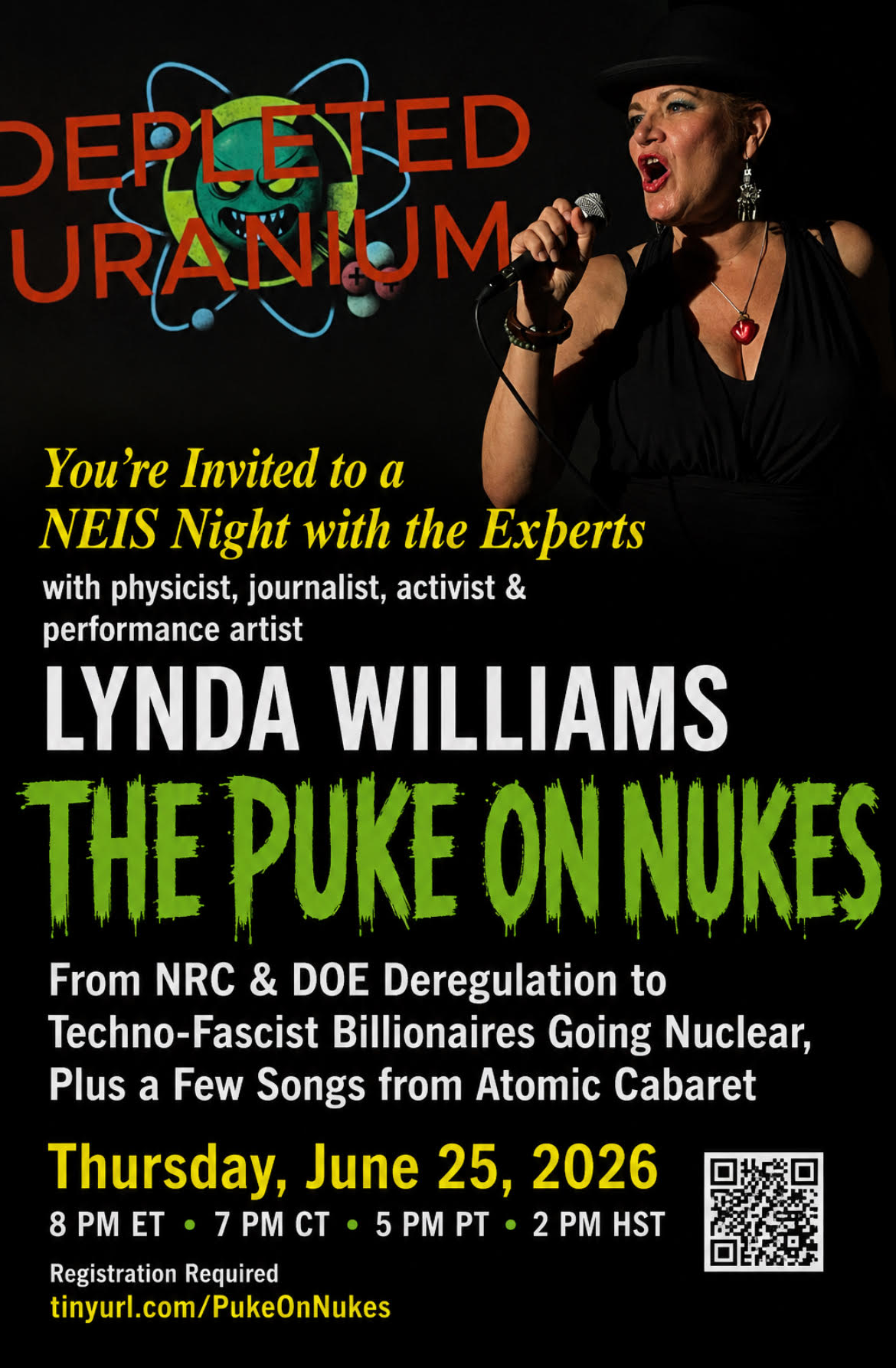
25 June- THE PUKE ON NUKES
Thursday, June 25, 2026
7pm Central Time (8pm ET, 6pm MT, 5pm PT) UTC – 5
From NRC & DOE Deregulation to Techno-Fascist Billionaires Going Nuclear, Plus a Few Songs from Atomic Cabaret REGISTER
26 June – Radiation Trainwreck at the NRC / Join the Protect Better Campaign – https://us02web.zoom.us/meeting/register/4ZlZ5_qLSHGiLSCg8FF6Bg#/registration
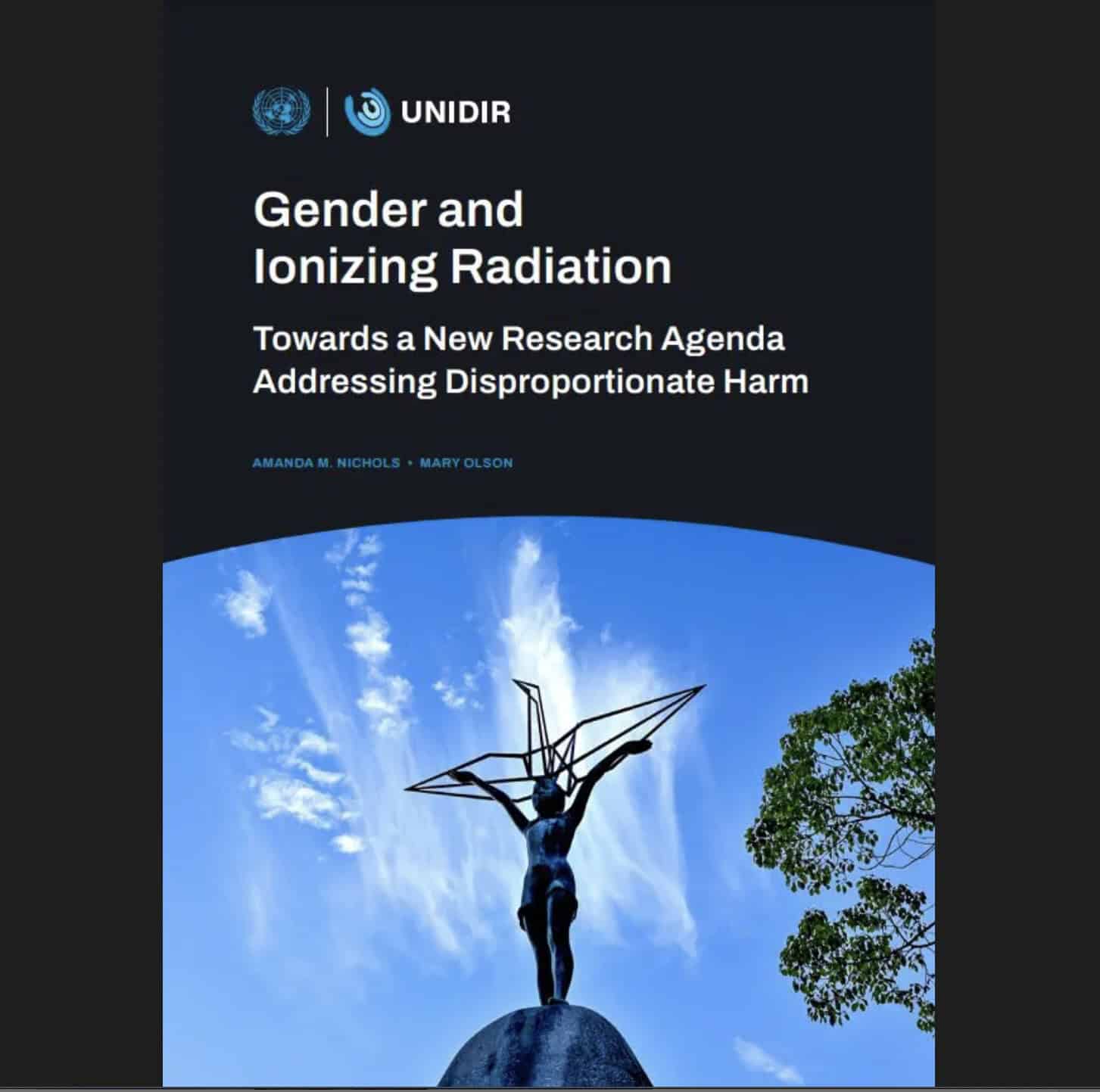

Cuba Is Not a Failed State – It Is a Besieged State
PETITION: “Global Appeal to Endorse Palestinian Right of Return of Refugees”
To see nuclear-related stories in greater depth and intensity – go to https://nuclearinformation.wordpress.com
-
Archives
- June 2026 (162)
- May 2026 (306)
- April 2026 (356)
- March 2026 (251)
- February 2026 (268)
- January 2026 (308)
- December 2025 (358)
- November 2025 (359)
- October 2025 (376)
- September 2025 (257)
- August 2025 (319)
- July 2025 (230)
-
Categories
- 1
- 1 NUCLEAR ISSUES
- business and costs
- climate change
- culture and arts
- ENERGY
- environment
- health
- history
- indigenous issues
- Legal
- marketing of nuclear
- media
- opposition to nuclear
- PERSONAL STORIES
- politics
- politics international
- Religion and ethics
- safety
- secrets,lies and civil liberties
- spinbuster
- technology
- Uranium
- wastes
- weapons and war
- Women
- 2 WORLD
- ACTION
- AFRICA
- Atrocities
- AUSTRALIA
- Christina's notes
- Christina's themes
- culture and arts
- Events
- Fuk 2022
- Fuk 2023
- Fukushima 2017
- Fukushima 2018
- fukushima 2019
- Fukushima 2020
- Fukushima 2021
- general
- global warming
- Humour (God we need it)
- Nuclear
- RARE EARTHS
- Reference
- resources – print
- Resources -audiovicual
- Weekly Newsletter
- World
- World Nuclear
- YouTube
-
RSS
Entries RSS
Comments RSS
 nuclear-news