Increasing risk to nuclear sites, of sea level rise and tsunamis
Nuclear sites, sea-level rise and tsunamis, guardian.co.uk, Dr Paul Dorfman Co-ordinator, Nuclear Consulting Group 11 March 2012 It seems clear that nuclear facilities will be vulnerable to the effects of global warming (Nuclear power sites face flood and erosion risks, 8 March). As the Institution of Mechanical Engineers stated in a 2009 report: “Nuclear sites, such as Sizewell, based on the coastline, may need considerable investment to protect them against rising sea levels, or even abandonment/relocation in the long term.”
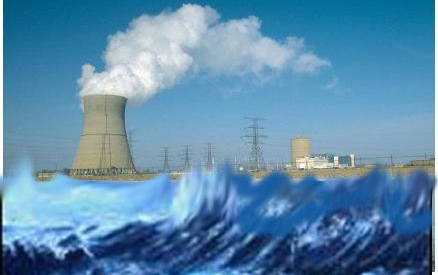
So, given that proposed new UK reactors, together with their radioactive waste stores including spent fuel, will be located on coasts – predicted sea-level rise, shoreline erosion, coastal storms, floods, tidal surges and the evolution of “nuclear islands” stand out as primary concerns. This means that adapting nuclear power to climate change will entail increased expense for construction, operation, waste storage and decommissioning, and the incurring of significant costs to the environment, public health and welfare.
 Robert Griffiths: Although the risk of floods to nuclear power stations must not be ignored, a much more dangerous threat is that of a tsunami. Oldbury, Berkeley and Hinkley Point are all in the area of England’s only known tsunami. This is reported to have occurred on 20 January in 1607. Plaques on local churches indicate the depth of the water may have been 7 to 8 metres, and it is said to have reached Glastonbury Tor, some 22km inland. Flood and erosion problems can be solved by building sea walls around the plants as we approach 2080. Why is no one worried about an unexpected tsunami on top of rising sea levels?
http://www.guardian.co.uk/environment/2012/mar/11/nuclear-sites-sea-rise-tsunamis?newsfeed=true
Northern Hemisphere got Fukushima radiation for 6 weeks after the nuclear disaster
 Fukushima Radiation detectable across northern hemisphere 15 days after disaster http://enformable.com/2012/03/fukushima-radiation-detectable-across-northern-hemisphere-15-days-after-disaster/ Enformable by Lucas W Hixson March 9, 2012 From March to June 2011, the global radionuclide network of the CTBTO, detected radionuclides emitted from the Fukushima nuclear power plant for a period of more than 6 weeks at all of the monitoring stations in the northern hemisphere. Very high concentrations were observed which in some cases even exceeded the functional capabilities of the high sensitivity monitoring systems Continue reading
Rising radioactivity findings in Japanese fish

 Radiation Findings in Japanese Fish Imports Rising The Fish Site, 9 Mar, 12 SOUTH KOREA – South Korea is more frequently finding radioactive materials in fishery products from Japan but has no immediate plans to ban imports as their levels are far below the
maximum intake limits, the quarantine office said Thursday.
In the first two months of the year, the country has detected traces of radioactive materials, such as cesium, in 32 separate shipments of fisheries products from Japan, according to the Animal, Plant and Fisheries Quarantine and Inspection Agency. ….
http://www.thefishsite.com/fishnews/16655/radiation-findings-in-japanese-fish-imports-rising
Fukushima radiation in Ireland shows the global reach of nuclear pollution
 Fukushima radiation measured in Ireland, The Irish Times – , March 9, 2012 DICK AHLSTROM, Science Editor RADIOACTIVITY FROM the Fukushima nuclear reactor accident in Japan reached Ireland in the weeks after the event. It arrived at such low levels, however, that it had no significance for either public health or food safety, according to a report on the incident from the Radiological Protection Institute of Ireland. “The levels that we have detected were very low,” Dr Ciara McMahon, the institute’s director of environmental surveillance and assessment, said yesterday….
“Fukushima couldn’t be much further away from Ireland, but we still must be able to monitor for accidents. We have to be ready to respond.”
The incident, triggered by the impact of an earthquake and tsunami, showed the need for nuclear authorities worldwide to re-evaluate their safety procedures, said the institute’s chief executive, Dr Ann McGarry.
 There was “no room for complacency within the international nuclear industry”. “A nuclear accident anywhere has potential to be a nuclear accident everywhere.” The radioactive particles that reached Ireland were similar to those arriving as nuclear fallout here after the Chernobyl nuclear power plant disaster in 1986, according to data from the institute. The
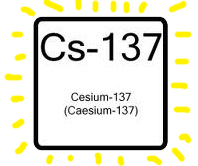
monitoring stations detected radioactive Iodine-131 and two forms of radioactive Caesium, Cs-137 and Cs-134. http://www.irishtimes.com/newspaper/ireland/2012/0309/1224313062967.html
A Pandora’s box of scientific changes, following Fukushima nuclear disaster
The World is Powerless Against Fukushima Fallout, Hyphen Submitted by New America Media, March 8, 2012 by Yoichi Shimatsu “………Previously unknown types of explosive nuclear reactions occurring midair or underground, which have been misrepresented as “hydrogen blasts”
Expansion of a vast ozone hole over the Arctic Circle, now equal in area to the damaged upper atmosphere over the Antarctic, caused by radioactive iodine and xenon gas caught in the jet stream, leaving the Earth’s air supply unprotected and heightening the threat of skin
carcinoma
High-energy interactions of xenon gas (which decays into cesium) with incoming solar flares and artificial electromagnetic belts created by US, NATO and Russian missile-defense shields (this synergy is visible in the northern lights that emit a deep green color due to the
excitation of xenon, and it is no coincidence that three American nuclear power plants were incapacitated during the recent solar flare)
The growing possibility of mass extinction of marine life in the Pacific Ocean due to the nuclear contamination of major spawning waters for plankton and fish, the bottom of the food chain for higher life-forms, including whales and humans A rising threat to human reproductive health from ingestion of radioactive isotopes through food, drinking water and respiration,
resulting in mass abortions and population decline for Japan, a trend that will extend worldwide
Mutations of contagious pathogens, such as bird flu, due to genetic disorders in both microorganism and host species, including domesticated animals and wildlife….. …. . http://www.hyphenmagazine.com/blog/archive/2012/03/world-powerless-against-fukushima-fallout
Santa Susanna’ s radiation pollution from 1959 nuclear accident
Santa Susanna pollution data raises more questions about long term radiation than it answers, 89.3 KPCC, March 6, 2012 | By Molly Peterson I did a short story today about the former Santa Susanna Field Laboratory site, where Rocketdyne and others once had operations, and where in 1959 a nuclear accident released far more radioactive material than Three Mile Island. I don’t just hang out on the EPA’s website, or at the gates of that property. Instead, I heard about the data release from State Senator Julia Brownley’s release yesterday :
“This confirms what we were worried about,” said Assemblywoman Julia Brownley, D-Oak Park, a long-time leader in the fight for a complete and thorough cleanup of this former Rocketdyne rocket engine testing laboratory. “This begins to answer critical questions about what’s still up there, where, how much, and how bad?”
Brownley’s release asserts that the new samples collected are up to 1000 times higher than the “radiation trigger levels” approved by state and federal officials in 2010, when state officials reached agreements deemed, at the time, “historic,” with NASA and the Department of Energy for cleanups. Continue reading
Doctors report on radiation and the nuclear danger
 Radiation is silent and invisible and the potential for long-term serious health effects are concepts that are difficult to grasp by the lay person. The need to educate the public could undermine the, until now, strongly projected assurance by both nuclear operators and government agencies, that nuclear power is safe…..
RECOMMENDATIONS: According to the new PSR report: “The past experience with catastrophic nuclear accidents and their frequency indicates that no country is prepared physically or financially to deal with the short and long term effects. As opposed to natural disasters, experience has shown us that nuclear catastrophes do not remain isolated but tend to become global problems affecting us all. Such preparations in the U.S. will likely be useless if a similar accident happens in countries such as North Korea, Pakistan, or other countries that have nuclear power reactors but no emergency plans. In reality, there is no cure once these events have happened; the only options are mitigation and palliation. In the absence of a cure, prevention is the only option.”
 Physicians for Social Responsibility PSR Report: U.S. First Responders, Medical Infrastructure not Prepared for Fukushima-Level Reactor Crisis in the United States Market Watch, WASHINGTON, March 6, 2012 – One Year After Japanese Disaster, Little or No Movement Seen in U.S. to Improve Response Capability; Complicating Factors: Growing Population Near Nuclear Sites, Aging Reactors & Lack of Gov’t Coordination.
One year after the Fukushima reactor crisis in Japan, no meaningful progress has been achieved in improving the ability of first responders and medical professionals to react to a disaster on a similar scale in the United States, according to a major new report from Physicians for Social Responsibility (PSR). Continue reading
Climate change leading to overuse of groundwater
 UN scientists warn of increased groundwater demands due to climate change, Eureka Alert, Philip Riley, SAN FRANCISCO, March 1, 2012 –– Climate change has been studied extensively, but a new body of research guided by a San Francisco State University hydrologist looks beneath the surface of the phenomenon and finds that climate change will put particular strain on one of our most important natural resources: groundwater.
SF State Assistant Professor of Geosciences Jason Gurdak says that as precipitation becomes less frequent due to climate change, lake and reservoir levels will drop and people will increasingly turn to groundwater for agricultural, industrial, and drinking water needs. The resource accounts for nearly half of all drinking water worldwide, but recharges at a much slower rate than aboveground water sources and in many cases is nonrenewable.
“It is clear that groundwater will play a critical role in society’s adaption to climate change,” said Gurdak, who co-led a United Nations-sponsored group of scientists who are now urging policymakers to increase regulations and conservation measures on nonrenewable groundwater.
The scientists recently released a book of their research, titled “Climate Change Effects on Groundwater Resources,” that is the result of a global groundwater initiative by the United Nations Educational, Scientific, and Cultural Organization (UNESCO). They will soon make their case to international policymakers at the March 12-17 World Water Forum in Marseille, France.
The high-profile forum will allow the scientists for the first time to put the comprehensive groundwater findings before decision makers who have the power to enact regulatory changes. Gurdak will recommend closely monitoring or limiting groundwater pumping as well as renewing cooperation from communities to consume less water.
“In many ways, California is leading the way in developing solutions,” he said. “Artificial recharge, managed storage and recovery projects and low impact development around the state will become more important for many local water systems to bank excess water in aquifers.”
The World Water Forum will be held from March 12 to 17 in Marseille, France. ”Climate Change Effects on Groundwater Resources: A Global Synthesis of Findings and Recommendations,” was published in December 2011 by CRC Press. Selections from the book can be read here:  http://userwww.sfsu.edu/~jgurdak/Publications/Treidel_etal_2011_ClimateChange-Groundwater_tableofcontents.pdf http://www.eurekalert.org/pub_releases/2012-03/sfsu-usw030512.php
Radioactive cesium contamination in Japan
Fukushima Nuclear Crisis Update for February 28th – March 1st, 2012, Greenpeace by Christine McCann – March 2, 2012 “……..Contamination (Includes Economic Impact and Human Exposure) A study by the Meteorological Research Institute estimates that 40,000 trillion (or 40 quadrillion) Becquerels of radioactive cesium were released as a result of the Fukushima Daiichi nuclear disaster last March. That amount is two times what scientists originally estimated.
Consumers are expressing concern about cesium contamination in rice, in light of a government decision to relax new rules about contamination levels of planting soil after local farmers exerted pressure on the government to do so. In December, the Ministry of Agriculture, Forestry, and Fisheries ruled that rice could not be planted in land where cesium exceeding 100 Bq/kg was discovered last year. However, it now says that rice may be planted in land where cesium measures between 100 Bq/kg and 500 Bq/kg, provided that the land is decontaminated and every bag of rice is tested. Many residents remain unconvinced that the rice will be safe for consumption. The chair of a national consumer advocacy association noted, “There have already been cases of rice with contamination over the government limit being shipped, even though it was promised that it wouldn’t happen. Won’t some sneak through this time as well?….” http://www.greenpeace.org/international/en/news/Blogs/nuclear-reaction/fukushima-nuclear-crisis-update-for-february-/blog/39340/
Radiation around Fukushima still at uinhabitable levels
Radiation still high around Fukushima No. 1 http://www.japantimes.co.jp/text/nn20120226a5.html Japan Times, , Feb. 26, 2012, Kyodo High levels of radiation, including a rate of 470 millisieverts per year at one location, have been detected in municipalities near the Fukushima No. 1 nuclear power plant, according to an interim Environment Ministry report. A survey conducted from Nov. 7 to Jan. 16 showed that the readings topped 50 millisieverts on an annual basis — a level deemed uninhabitable under a proposed new classification — in many spots north-northwest of the crippled power station. Continue reading
73,000 square metres of concrete to cover Fukushima seabed radiation
 Tepco to cement Fukushima seabed to stem
  radiation Times Live, Sapa-AFP | 22 February, 2012 The operator of Japan’s tsunami-crippled nuclear plant is to cover a large swathe of seabed near the battered reactors with cement in a bid to halt the spread of radiation, the company said Wednesday.
A clay-cement compound will be laid over 73,000 square metres (785,000 square feet) of the floor of the Pacific in front of the Fukushima Daiichi plant on the nation’s northeast coast, said Tokyo Electric Power Co. (TEPCO).
The area is equivalent to around 10 football pitches. “This is meant to prevent further contamination of the ocean… as sample tests have shown a relatively high concentration of radioactive substances in the sea soil in the bay,” a company spokeswoman said….
Contaminated water from the plant leaked into the sea and radioactive particles concentrated on the seabed. Scientists fear ocean currents could pollute areas further afield.
The cover will be 60 centimetres (24 inches) thick, with 10 centimetres expected to be eaten away by seawater every 50 years, the TEPCO official said. http://www.timeslive.co.za/world/2012/02/22/tepco-to-cement-fukushima-seabed-to-stem-radiation
Report on a tour of Fukushima
Into Fukushima’s no-man’s land Calgary Herald, Agence France-Presse February 21, 2012 FUKUSHIMA DAIICHI – Every two minutes on the bus ride through the ghost towns surrounding Japan’s Fukushima Daiichi nuclear plant, a company guide in a white protective suit holds up a display showing the radiation level. And it is rising. Continue reading
Radiation increasing in environment around Savannah River Nuclear Site
“Many things can cause infant death and low birth weight and so on,” “Radiation may not have caused all these deaths, but it certainly should be taken seriously.”
cesium levels in deer and wild hogs killed at the site have increased in recent years, rather than decreased.
 Environmental group contends SRS radiation hazards are increasing, Augusta Chronicle, By Rob Pavey, Staff Writer, Feb. 22, 2012 Environmental groups unveiled a new analysis Wednesday they contend warrants a re-examination of health impacts associated with Savannah River Site radiation. What we are saying is that you have a suspicious situation that certainly calls for a new inquiry,” said Louis Zeller, executive director of the Blue Ridge Environmental Defense League.
The 75-page report involved a year-long study of data from the U.S. Energy Department, state and federal environmental regulators and health departments in Georgia and South Carolina.
Among the findings were indicators that radiation levels are gradually increasing, rather than decreasing, as other studies have said; and that “radiosensitive” diseases and deaths – including infant and fetal deaths, thyroid and lung cancers and leukemia – exceeded the national average in the five-county area surrounding SRS, where about 2,000 “excess deaths” occurred since 2002. Continue reading
Uranium mining’s radiation dangers continue near Grand Canyon
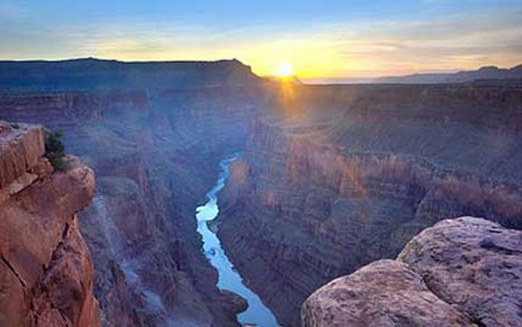
 Risks remain from uranium mining near the Grand Canyon Feb 22, 2012 High Country News By Heather Hansen, Red Lodge Clearing House. “….. There are over 5,000 active uranium claims within those one million acres. The withdrawal goes a long way toward protecting the watersheds, seeps and springs, sacred sites and critical wildlife habitat in the area because the only claims that can now be mined would have had to establish “valid existing rights,” before the 2009 moratorium. Yet even with these protections, the mines with existing rights — the ones allowed to operate despite the moratorium — may still have a significant negative impact on the Grand Canyon environment Continue reading
Continuing radioactive leakage to the ocean from Fukushima nuclear plant
“We’re not over the hump” yet in terms of radioactive contamination of the ocean because of continued leakage from the plant,
Radiation from tsunami disaster detected 400 miles off Japan’s coast, but levels below harmful Washinmgton Post, By Associated Press, February 21 SALT LAKE CITY — Radioactive contamination from the Fukushima power plant disaster has been detected as far as almost 400 miles off Japan in the Pacific Ocean, with water showing readings of up to 1,000 times more than prior levels, scientists reported Tuesday…. Continue reading
1 This Month



4 August – WEBINAR – Hiroshima & Nagasaki: Nuclear Bombs Never Again
Tuesday, Aug. 4 at 5 pm PT / 8 pm ET.
Aug 5, 2026 10:00 AM in Australia/Melbourne
Join the Nuclear Bombs Never Again webinar on August 4th at 5pm Pacific Time / 8pm Eastern Time / 9am Japan Standard Time.
Cross generational voices at the intersection of Japan-Korea-US policy and militarization will share their lived experiences, nuclear impacts in these contexts, anti-war strategies, and actions you can take to advocate for a world with Nuclear Bombs Never Again. This 75-minute event is co-hosted by WILPF US and Korea Peace Now.

22,000+ miles voyaging for nuclear disarmament
and a radiation-free environment https://vfpgoldenruleproject.org/
To see nuclear-related stories in greater depth and intensity – go to https://nuclearinformation.wordpress.com
-
Archives
- July 2026 (294)
- June 2026 (287)
- May 2026 (306)
- April 2026 (356)
- March 2026 (251)
- February 2026 (267)
- January 2026 (308)
- December 2025 (358)
- November 2025 (359)
- October 2025 (375)
- September 2025 (257)
- August 2025 (319)
-
Categories
- 1
- 1 NUCLEAR ISSUES
- business and costs
- climate change
- culture and arts
- ENERGY
- environment
- health
- history
- indigenous issues
- Legal
- marketing of nuclear
- media
- opposition to nuclear
- PERSONAL STORIES
- politics
- politics international
- Religion and ethics
- safety
- secrets,lies and civil liberties
- spinbuster
- technology
- Uranium
- wastes
- weapons and war
- Women
- 2 WORLD
- ACTION
- AFRICA
- Atrocities
- AUSTRALIA
- Christina's notes
- Christina's themes
- culture and arts
- Events
- Fuk 2022
- Fuk 2023
- Fukushima 2017
- Fukushima 2018
- fukushima 2019
- Fukushima 2020
- Fukushima 2021
- general
- global warming
- Humour (God we need it)
- Nuclear
- RARE EARTHS
- Reference
- resources – print
- Resources -audiovicual
- Weekly Newsletter
- World
- World Nuclear
- YouTube
-
RSS
Entries RSS
Comments RSS
 nuclear-news