Alarmingly high levels of radiation remain at Bikini Atoll
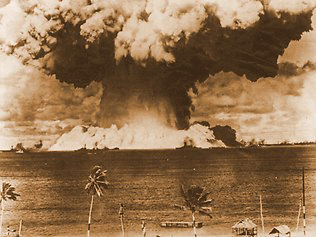 Bikini Atoll radiation levels remain alarmingly high https://www.sciencenews.org/article/bikini-atoll-radiation-levels-remain-alarmingly-high New measurements made decades after Pacific island used to test nuclear bombs BY THOMAS SUMNER , JUNE 6, 2016
Radioactive material such as cesium-137 currently produces, on average, 184 miLLIREMS OF RADIATION PER YEAR ON BIKINI ATOLL. AND SOME PARTS OF THE ISLAND HIT 639 MILLIREMS PER YEAR, RESEARCHERS REPORT ONLINE THE WEEK OF JUNE 6 IN THE PROCEEDINGS OF THE NATIONAL ACADEMY OF SCIENCES. THOSE MEASUREMENTS, MADE LAST YEAR, SURPASS THE 100 MILLIREMS PER YEAR SAFETY STANDARD SET BY THE UNITED STATES AND THE REPUBLIC OF THE MARSHALL ISLANDS, WHICH CONTROLS THE ISLAND.
Scientists had predicted that, by now, radiation levels would have dropped to 16 to 24 millirems per year. But those estimates came from extrapolating from measurements made in the 1970s. The mismatch probably stems from incorrect assumptions about how rapidly radioactive material washes off the island, proposes study coauthor Emlyn Hughes, a physicist at Columbia University.
Whether the higher radiation levels pose a serious health risk to caretakers who live on the island for part of the year depends on how long they stay on the island and whether the local fruit they eat is safe, Hughes says.
China readies nuclear armed submarines for the Pacific
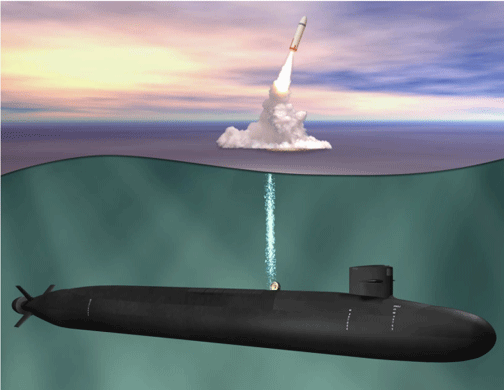
 China to send nuclear-armed submarines into Pacific amid tensions with US
Beijing risks stoking new arms race with move although military says expansion of the US missile defence has left it with no choice, Guardian, Julian Borger , 26 May 16 [ video, excellent graphics] The Chinese military is poised to send submarines armed with nuclear missiles into the Pacific Ocean for the first time, arguing that new US weapons systems have so undermined Beijing’s existing deterrent force that it has been left with no alternative.
Chinese military officials are not commenting on the timing of a maiden patrol, but insist the move is inevitable.
They point to plans unveiled in March to station the US Thaad anti-ballistic system in South Korea, and the development of hypersonic glide missiles potentially capable of hitting China less than an hour after launch, as huge threats to the effectiveness of its land-based deterrent force.
A recent Pentagon report to Congress predicted that “China will probably conduct its first nuclear deterrence patrol sometime in 2016”, though top US officers have made such predictions before…….
Last Tuesday, a US spy plane and two Chinese fighter jets came close to colliding 50 miles of Hainan island, where China’s four Jin-Class ballistic missile submarines are based. A fifth is under construction.
The two countries’ navies have also come uncomfortably close around disputed islands in the same region, and the chance of a clash will be heightened by cat-and-mouse submarine operations, according to Wu Riqiang, an associate professor at the School of International Studies at the Renmin University in Beijing.
“Because China’s SSBNs [nuclear missile submarines] are in the South China Sea, the US navy will try to send spy ships in there and get close to the SSBNs. China’s navy hates that and will try to push them away,” Wu said.
The primary reason Chinese military officials give for the move towards a sea-based deterrent is the expansion of US missile defence, which Moscow also claims is disturbing the global strategic balance and potentially stoking a new arms race.
The decision to deploy Thaad anti-ballistic interceptors in South Korea was taken after North Korea’s fourth nuclear test, and the stated mission of the truck-launched interceptors is to shield the south from missile attack.
But Beijing says the Thaad system’s range extends across much of China and contributes to the undermining of its nuclear deterrent. It has warned Seoul that relations between the two countries could be “destroyed in an instant” if the Thaad deployment goes ahead……
Under Xi’s assertive leadership, China seems determined that the Chinese nuclear deterrent will take finally to the ocean, and it has already taken thestep of putting multiple warheads on its missiles. Those steps are mostly in response to US measures, which in turn were triggered by unrelated actions by the North Koreans.
The law of unintended consequences is in danger of taking the upper hand. “The two sides may thus be stumbling blindly into severe crisis instability and growing competition by China with respect to strategic forces,” Lewis argues. “A competition between unevenly matched forces is inherently unstable.”http://www.theguardian.com/world/2016/may/26/china-send-nuclear-armed-submarines-into-pacific-us
Undersea nuclear deterrence in the Indian Ocean is here to stay
The Indian Ocean Won’t Be a ‘Nuclear Free Zone’ Anytime Soon Undersea nuclear deterrence in the Indian Ocean is here to stay., The Diplomat, By Ankit Panda May 20, 2016 Sartaj Aziz, adviser to Pakistan’s prime minister on foreign affairs, presented an interesting proposal to the Pakistani Senate on Thursday. He said that he would consider having Pakistan introduce a resolution at the United Nations that would urge the body to declare the Indian Ocean a “nuclear free zone.” Leaving aside the fact that the United Nations isn’t in the business of declaring nuclear weapon free zones, Aziz’s comments reflect increasing anxieties in Pakistan about India’s burgeoning sea-based nuclear deterrent.
With the first of Arihant-class of domestically designed ballistic missile submarines rolling out and testing underway of Delhi’s K-4 submarine-launched ballistic missiles ongoing, Delhi is coming closer to operationalizing its sea-based deterrent. (The K-4 has been test launched from the Arihant‘s on-board silos, as I discussed last month.)
Aziz is well aware of these developments. ”Apart from this air defence system, India has also recently conducted tests of nuclear capable, submarine based K4 ballistic missiles. Simultaneously large nuclear powered submarines are being built to carry these nuclear armed missile as a part of its second strike nuclear capability,” he told the Senate, according to a report in Dawn.
Unfortunately, for Pakistan, the United Nations won’t be able to solve this problem anytime soon. Moreover, India won’t be the only country looking to operate nuclear-armed ballistic missile submarines (SSBNs) in the waters of the Indian Ocean. China started operating Song– and Shang-class submarines in the Indian Ocean in 2014, according to the U.S. Department of Defense. Ostensibly, Beijing’s upcoming first overseas military facility—in Djibouti—will play a role in support submarine logistics.
According to the U.S. Defense Department’s most recent report on China’s military, four Chinese Jin-class SSBNs—China’s first sea-based deterrent as well—are operational. These submarines currently operate out off the People’s Liberation Army-Navy’s submarine base at Hainan Island, in the South China Sea, but Beijing may look to have its SSBNs patrolling the Indian Ocean soon enough……
Unsurprisingly, amid increased Chinese sub-surface activity in the Indian Ocean, we’ve seen the United States and India deepen their anti-submarine warfare cooperation. Moreover, Delhi has started extending its maritime patrol and surveillance capabilities further southward; it sent a P-8I Neptune aircraft to the Seychelles earlier this year.
With India’s Arihant-class on the verge of commissioning and Chinese SSBNs possibly on the way to supplement the PLAN’s existing hunter-killer and nuclear attack submarines, the Indian Ocean won’t become a “nuclear free zone” anytime soon. Islamabad could look to build up its own undersea nuclear capabilities, but, as I’ve discussed before, that’ll be limited by a range of factors. http://thediplomat.com/2016/05/the-indian-ocean-wont-be-a-nuclear-free-zone-anytime-soon/
Ocean’s small shelled animals suffering from acidification due to global warming
 Acidic oceans are dissolving shells of tiny sea snails, researchers find, ABC News, 2 May 16 By Kieran Jones Small organisms are struggling to survive as the ocean becomes more acidic, researchers say, including tiny sea snails whose shells are dissolving.
Key points:
- Acidification could severely affect the ocean’s food chain
- Small organisms are being damaged and scientists fear it could affect large animals
- A prominent researcher says reducing CO2 emissions would reduce acidification
Researchers fear an increase in acidification in the Southern Ocean could have a severe impact on the food chain off Australia’s south coast.
The concerns come as 350 scientists from more than 30 countries gather in Hobart for an international symposium on the impact of carbon dioxide on the world’s oceans.
Ocean acidification means the pH level of water has decreased, making it inhospitable for small organisms.
CSIRO research scientist Andrew Lenton was part of a team that developed a map of acidification around Australia.
He said the impact was already being felt.
“The changes in Australia are very close to the changes that are occurring everywhere else in the world, so this is really a global problem that Australia is part of,” he said.
“Already there are detectable changes in the Southern Ocean.”
Reducing carbon dioxide emissions would reduce acidification………The impact is also visible in tiny free-swimming sea snails call pteropods, which are a vital part of the diet of many large fish.
Researchers said the percentage of pteropods with dissolving shells observed had doubled since the pre-industrial era and was on track to triple by 2050.
Dr Richard Feely from the US National Oceanic and Atmospheric Administration (NOAA) said reducing carbon dioxide emissions was the best way to avoid acidification.
“In order for us to address ocean acidification on a global scale we would have to add two billion tonnes of calcium carbonate,” he said………http://www.abc.net.au/news/2016-05-02/acidic-oceans-are-dissolving-shells-on-tiny-sea-snails/7376696?section=environment
Nuclear shipwreck still highly radioactive over 60 years later
Details Emerge from Cold War-Era Nuclear Shipwreck, New Historian, David DeMar May 01, 2016 More details have emerged regarding the wreck of the USS Independence, a US Navy vessel deliberately sacrificed in 1946 at the Bikini Atoll nuclear weapons tests at the very inception of the Cold War…….
NOAA and Boeing used a combination of high-resolution sonar imaging and an unmanned submersible known as “Echo Ranger” to locate and safely survey the still-irradiated wreck of the Independence. The resultant case study, plus newly declassified files on the Navy ship straight from the US National Archives, concerning its time as a nuclear weapons testbed, have been published in theJournal of Maritime Archaeology (JNA)……
merging documentary evidence with a study of the physical remains of a maritime archaeological site is a goal that can and should be pursued…….
The infamous tests at Bikini Atoll, The Bikini tests, conceived and undertaken just one year after dropping not one but two nuclear weapons on Japan, at Hiroshima and Nagasaki, to end the Second World War, was one of the most visible and noteworthy events to signal a fundamental shift in postwar history.
 In one of the newly-declassified reports dating from the era, it was suggested that the awesome power of nuclear weaponry represented a new era where the utter destruction of man had become possible, scouring the Earth of nothing but vestigial traces of humanity. http://www.newhistorian.com/details-emerge-cold-war-era-nuclear-shipwreck/6397/
Climate Change threatens the already leaking Marshall Islands radioactive dome
This dome in the Pacific houses tons of radioactive waste – and it’s leaking
The Runit Dome in the Marshall Islands is a hulking legacy of years of US nuclear testing. Now locals and scientists are warning that rising sea levels caused by climate change could cause 111,000 cubic yards of debris to spill into the ocean , Guardian Coleen Jose, Kim Wall and Jan Hendrik Hinzel on Runit Island 3 July 2015
“……..Officially, this vast structure is known as the Runit Dome. Locals call it The Tomb.

Below the 18-inch concrete cap rests the United States’ cold war legacy to this remote corner of the Pacific Ocean: 111,000 cubic yards of radioactive debris left behind after 12 years of nuclear tests.
Brackish water pools around the edge of the dome, where sections of concrete have started to crack away. Underground, radioactive waste has already started to leach out of the crater: according to a 2013 report by the US Department of Energy, soil around the dome is already more contaminated than its contents.
Now locals, scientists and environmental activists fear that a storm surge, typhoon or other cataclysmic event brought on by climate change could tear the concrete mantel wide open, releasing its contents into the Pacific Ocean.
“Runit Dome represents a tragic confluence of nuclear testing and climate change,” said Michael Gerrard, director of the Sabin Center for Climate Change Law at Columbia University, who visited the dome in 2010.
“It resulted from US nuclear testing and the leaving behind of large quantities of plutonium,” he said. “Now it has been gradually submerged as result of sea level rise from greenhouse gas emissions by industrial countries led by the United States.”
Enewetak Atoll, and the much better-known Bikini Atoll, were the main sites of the United States Pacific Proving Grounds, the setting for dozens of atomic explosions during the early years of the cold war……..http://www.theguardian.com/world/2015/jul/03/runit-dome-pacific-radioactive-waste
Australia’s Great Barrier Reef in grave danger from global warming
Now the scientists have found that the coping mechanism barrier reef corals use to prepare themselves to face warm summer water is also under threat from global warming, and from human activities such as agriculture, shipping, and fishing.
“As temperature warms, the evidence is that this protective mechanism will no longer function
 How the Great Barrier Reef is going from bad to worse Christian Science
 Monitor, 14 Apr 16 Though the corals of Australia’s Great Barrier Reef historically have managed to adjust to gradually warming seawater of the summer months, they will likely lose their defenses when the ocean warms overall in the near future, say scientists. (at left – coral bleaching )
This was the latest finding from a team of American and Australian coral reef experts from James Cook University, the University of Queensland, and the US National Oceanic and Atmospheric Administration (NOAA).
These same scientists recently reported that their aerial surveys of some of the 3,000 coral reefs that make up this iconic natural wonder off Australia’s northeastern coast have showed that coral bleaching this year is the worst that has ever been observed. This is largely due to a recurring weather event known as El Niño, a storm system that is expected to become more frequent and more severe in the future.
I agree that El Niño is a natural variability; it’s a part of nature, but that variation in patterns and temperatures is superimposed upon a trend of warming,” Scott Heron, a NOAA coral reef scientist based in Australia, tells The Christian Science Monitor in an interview. “There are ups and downs, but now there are just higher ups than ever before, and the downs are not as low,” he says.
Coral bleaching happens when ocean temperatures rise to a point that zooxanthellae – tiny algae that live on corals and provide them with nutrients and their radiant colors – leave their coral homes, thereby rendering coral white or “bleached.” When corals go without zooxanthellae for too long, they die. This affects about a quarter of marine species that depend on coral reefs for shelter, and the humans who depend on those species for their livelihoods.
This year’s is the third major bleaching event in recent history for the 2,300-kilometer-long Great Barrier Reef, which is home to one of the most diverse ecosystems in the world. But this one is much worse than the bleaching events that occurred in 1998 and 2002, say scientists who recently found bleaching in almost 1,100 kilometers of northern barrier reef, from the island of New Guinea to the Australian coastal city of Cairns. The researchers estimate that 30 to 50 percent of the corals there are already be dead.
Now the scientists have found that the coping mechanism barrier reef corals use to prepare themselves to face warm summer water is also under threat from global warming, and from human activities such as agriculture, shipping, and fishing.
“As temperature warms, the evidence is that this protective mechanism will no longer function,” C. Mark Eakin, a scientist with NOAA Coral Reef Watch, tells the Monitor in an interview…….
The most viable immediate remedy, say paper authors, is to reduce the carbon emissions that cause warming and restrict other human activities near the reefs that add more stress, including runoff from agriculture, unsustainable fishing practices, and physical damage to the reef from ship groundings.
“These are all human stressors on reef that have to be minimized or eliminated for reefs to be able to bounce back from these bleaching events, even in a decade or two,” Eakin says.http://www.csmonitor.com/Science/2016/0414/How-the-Great-Barrier-Reef-is-going-from-bad-to-worse
Rapid collapse of ice shelves in Antarctica
 Scientists Are Watching in Horror as Ice Collapses Everything we learn about ice shows that it is disturbingly fragile, even in Antarctica. National Geographic, By Douglas Fox APRIL 12, 2016 “……..The catastrophic collapse of Larsen A and several other ice shelves along the Antarctic Peninsula has yielded important lessons about the vulnerability of Antarctica’s ice sheets to a warming climate. A new analysis of ice sheet instability, published March 31 in Nature, took the public by surprise when it projected that global sea level might rise six feet by 2100, and as much as 40 to 50 feet by the year 2500. (Read “Why the New Sea Level Alarm Can’t Be Ignored.”) That study seemed to double, overnight, the amount of sea level rise that can be expected. But many glacial scientists weren’t surprised. The new estimate is based on insights that have emerged slowly, over 20 years, in the aftermath of these ice shelf collapses.
The Aftermath of an Ice Shelf Collapse
Explore the fjords along the northeastern Antarctic Peninsula today, and it’s easy to find landscapes that look scarred even to the casual observer. …..
The glacier, now absent, had retreated several miles into its fjord. The fjord used to hold 2,000 feet (600 meters) of ice. Now it held 2,000 feet of seawater instead.
The aftermath of an ice shelf collapse is obvious in Sjögren’s fjord. When the ice shelf in front of Sjögren disintegrated in 1995, it removed the buttress that stabilized the glacier. The glacier started sliding into the sea at twice its original speed. Sjögren erupted in crevasses and thinned by several hundred feet as it stretched. After a few years, the glacier had retreated miles into its fjord as icebergs splintered off the glacier’s front faster than the ice could flow forward…….
Every ice shelf that disintegrated along the Antarctic Peninsula has shown the same pattern: summer melting of its top layers, winter refreezing of those top layers into icy crusts able to hold large melt ponds, and the re-exposure of long-buried crevasses.
For all of these ice shelves, the moment of death occurred suddenly. Each collapse began when water from the melt ponds drained into the crevasses. The weight of the water drove the cracks deeper—like a wedge, says Ted Scambos, a glaciologist with the National Snow and Ice Data Center at the University of Colorado in Boulder, who discovered the process. These fluid wedges eventually broke through the bottom of the ice shelf, calving off one iceberg, then another and another—a process called hydrofracturing that can devour an ice shelf nearly the size of Rhode Island in a matter of hours or days……..
Ice loss may have begun at a narrow beachhead in Antarctica, at the north end of the Antarctic Peninsula, but it has expanded on multiple fronts, as new regions of ice come into play every several years. As warm summer temperatures push farther south, so will the problems of melt ponding, ice shelf disintegration, and ice cliff collapse, which drive the rapid retreat of ice. (Read more about how calving causes mini-tsunamis daily in Antarctica.)
Scattered melt ponds already appear on some of the ice shelves that surround the Antarctic mainland, much farther south than any that have collapsed so far. The amount of ice lost each year from all of Antarctica’s ice shelves has increased 12-fold between 1994 and 2012.
Aside from warm air, the fringes of Antarctica’s ice are under assault from another source—warming ocean currents that melt the undersides of ice shelves. (Read more about research on what climate change will mean for whales.)……..http://news.nationalgeographic.com/2016/04/160412-ice-sheet-collapse-antarctica-sea-level-rise/
Radioactivity in the Ocean: Diluted, But Far from Harmless
Still, the world has never quite seen an event like the one unfolding now off the coast of eastern Japan, in which thousands of tons of radioactively contaminated water from the damaged Fukushima Daiichi nuclear power plant are pouring directly into the ocean. And though the vastness of the ocean has the capacity to dilute nuclear contamination, signs of spreading radioactive material are being found off Japan, including the discovery of elevated concentrations of radioactive cesium and iodine in small fish several dozen miles south of Fukushima, and high levels of radioactivity in seawater 25 miles offshore.
“Given that the Fukushima nuclear power plant is on the ocean, and with leaks and runoff directly to the ocean, the impacts on the ocean will exceed those of Chernobyl, which was hundreds of miles from any sea,” said Ken Buesseler, senior scientist in marine chemistry at the Woods Hole Oceanographic Institution in Massachusetts. “My biggest concern is the lack of information. We still don’t know the whole range of radioactive compounds that have been released into the ocean, nor do we know their distribution. We have a few data points from the Japanese — all close to the coast — but to understand the full impact, including for fisheries, we need broader surveys and scientific study of the area.”
Buessler and other experts say this much is clear: Both short-lived radioactive elements, such as iodine-131, and longer-lived elements — such as cesium-137, with a half-life of 30 years — can be absorbed by phytoplankton, zooplankton, kelp, and other marine life and then be transmitted up the food chain, to fish, marine mammals, and humans. Other radioactive elements — including plutonium, which has been detected outside the Fukushima plant — also pose a threat to marine life. A key question is how concentrated will the radioactive contamination be. Japanese officials hope that a temporary fishing ban off the northeastern Japanese coast will be enough to avert any danger to human health until the flow of radioactive water into the sea can be stopped…….
Studies from previous releases of nuclear material in the Irish, Kara and Barents Seas, as well as in the Pacific Ocean, show that such radioactive material does travel with ocean currents, is deposited in marine sediment, and does climb the marine food web. In the Irish Sea — where the British Nuclear Fuels plant at Sellafield in the northwestern United Kingdom released radioactive material over many decades, beginning in the 1950s — studies have found radioactive cesium and plutonium concentrating significantly in seals and porpoises that ate contaminated fish. Other studies have shown that radioactive material from Sellafield and from the nuclear reprocessing plant at Cap de la Hague in France have been transported to the North Atlantic and Arctic Oceans. A study published in 2003 found that a substantial part of the world’s radioactive contamination is in the marine environment.
How the radioactive materials released from the Fukushima plants will behave in the ocean will depend on their chemical properties and reactivity, explained Ted Poston, a ecotoxicologist with the Pacific Northwest National Laboratory, a U.S. government facility in Richland, Washington. If the radionuclides are in soluble form, they will behave differently than if they are absorbed into particles, said Poston. Soluble iodine, for example, will disperse rather rapidly. But if a radionuclide reacts with other molecules or gets deposited on existing particulates — bits of minerals, for example — they can be suspended in the water or, if larger, may drop to the sea floor.
“If particulates in the water column are very small they will move with the current,” he explained. “If bigger or denser, they can settle in sediment.”…….http://e360.yale.edu/feature/radioactivity_in_the_ocean_diluted_but_far_from_harmless/2391/
Radioactive contamination “in a variety of marine products” harvested off USA’s West Coast
New Gov’t Report: Fukushima radiation found in US marine life — Investigators detect radioactive contamination “in a variety of marine products” harvested off West Coast — Effects of exposure need to be studied and understood in coming yearshttp://enenews.com/new-govt-study-finds-fukushima-radiation-marine-life-investigators-detect-radioactive-contamination-variety-marine-products-harvested-west-coast-effects-exposure-marine-life-be-studied-understoo?utm_source=feedburner&utm_medium=email&utm_campaign=Feed%3A+ENENews+%28Energy+News%29
U.S. Department of Commerce – NOAA National Marine Fisheries Service (pdf), Dec 2015 (emphasis added): Results of testing for Fukushima Radiation in northern fur seals on St. Paul Island, AK – In summer 2014, NOAA Fisheries in partnership with Colorado State University collected tissue from northern fur seals harvested from St. Paul Island for lab testing.
We detected very small amounts of Fukushima-derived radioactive material in the seal tissue…
Journal of Environmental Radioactivity, Feb 2016: Fukushima-derived radiocesium was detected in migratory northern fur seal… In July 2014, our investigative team traveled to St. Paul Island, Alaska to measure concentrations of radiocesium in wild-caught food… [O]ther investigators have detected Fukushima-derived radionuclides in a variety of marine products harvested off the western coast of North America. We tested… 54 northern fur seal… when composited, northern fur seal tissues tested positive for trace quantities of [Cesium-134 adn Cesium-137]. Radiocesium was detected at an activity concentration of 37.2 mBq 134Cs kg [fresh weight, not dried] and 141.2 mBq 137Cs kg… indicating that this population of seals has been exposed to small quantities of Fukushima-derived radiocesium… [The] 2011 Tohoku earthquake… led to loss of containment [at the Fukushima nuclear power plant] and releases of radionuclides to the atmosphere and the marine environment… [M]arine releases may be ongoing due to groundwater seepage… The atmospheric plume from the Fukushima Daiichi reactors traveled east and passed over North America days after the initial release… The arrival of the Fukushima marine plume has aroused concern for some North American stakeholders, particularly those living near the coast and those who consume seafood from the Pacific Ocean. Additionally, the potential effects of exposure to Fukushima derived radionuclides on sensitive marine species will need to be studied and understood in the coming years… Radiocesium biomagnifies through marine foodwebs…Thus the northern fur seal, a predator, should be an excellent sentinel of marine radiocesium in the North Pacific… Northern fur seal exposure to Fukushima radionuclides likely occurred via the consumption of fish or other prey from areas of the Pacific Ocean contaminated by the Fukushima marine release… the population likely has not been exposed to the higher concentrations found within the main body of the Fukushima marine plume… Radiocesium is unlikely to cause health impacts in northern fur seal or the human populations consuming this species.
Scientific Investigation Into Fukushima Disaster’s Effect On Pacific Ocean,
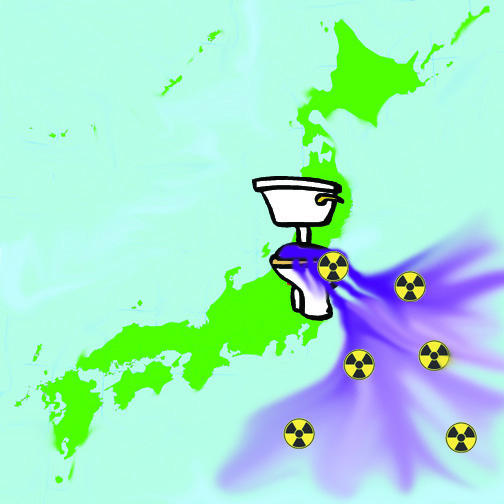 Clean Technica, February 26th, 2016 by Joshua S Hill Nearly five years after the Fukushima nuclear disaster, Greenpeace has launched a high-tech investigation into the radiation effects of the meltdowns on the Pacific Ocean. “…… Greenpeace Japan announced Thursday that it is conducting an underwater investigation into radiation contamination of the Pacific Ocean caused by the disaster. According to Greenpeace, the investigation will be conducted aboard a Japanese research vessel using a one of a kind Remotely Operated Vehicle fitted with a sensitive gamma radiation spectrometer and sediment sampler.
Mr Naoto Kan, the former Prime Minister of Japan and leader at the time of the nuclear accident, joined the crew of the Greenpeace Flagship, the Rainbow Warrior, on the opening day of the investigation, and called for a complete phase out of nuclear power.
“I once believed Japan’s advanced technology would prevent a nuclear accident like Chernobyl from happening in Japan,” said Mr. Kan. “But it did not, and I was faced with the very real crisis of having to evacuate about 50 million people at risk from the Fukushima Daiichi nuclear accident. I have since changed my mind. We do not need to take such a big risk. Instead we should shift to safer and cheaper renewable energy with potential business opportunities for our future generations.”
Since the disaster, the Tokyo Electric Power Company, which has maintained the plant, has produced over 1.4 million tonnes of radioactive contaminated water in an effort to cool down the three reactors that went critical. Furthermore, in addition to the initial release of liquid nuclear waste during the first weeks of the accident, and the daily releases ever since, contamination has also flowed from the land itself, particularly nearby forests and mountains of Fukushima, and are expected to continue to contaminate the Pacific Ocean for at least the next 300 years.
“The Fukushima disaster is the single largest release of radioactivity into the marine environment in history,” said Shaun Burnie, Senior Nuclear Specialist with Greenpeace Germany. “There is an urgent need to understand the impacts this contamination is having on the ocean, how radioactivity is both dispersing and concentrating and its implications.
“TEPCO failed to prevent a multiple reactor meltdown and five years later it’s still an ongoing disaster. It has no credible solution to the water crisis they created and is failing to prevent the further contamination of the Pacific Ocean.”
Greenpeace’s investigation will continue into March along the coast of the Fukushima prefecture, and will protrude into the 20 kilometer radius of the Fukushima Daiichi nuclear plant.
“There is still no end in sight for communities in Fukushima, many of whom can’t return home due to radiation contamination,” said Mamoru Sekiguchi, Energy Campaigner with Greenpeace Japan. “Rather than pushing for the restart of nuclear power, the Japanese government should put these people first and focus on managing the Fukushima Daiichi site. Many people in Japan have rejected nuclear power and are demanding the only safe and clean technology that can meet Japan’s needs – renewable energy.”
Shaun Burnie, Senior Nuclear Specialist with Greenpeace Germany, explained more about the crisis in a recent blog post, and the role that Greenpeace has played, and continues to play. http://cleantechnica.com/2016/02/26/greenpeace-launches-scientific-investigation-fukushima-disasters-effect-pacific-ocean/
Radioactive contamination still a very real crisis for Fukushima fishermen
Nuclear water: Fukushima still faces contamination crisis, Phys Org, February 25, 2016 by Harumi Ozawa, Quentin Tyberghien Fish market vendor Satoshi Nakano knows which fish caught in the radiation tainted sea off the Fukushima coast should be kept away from dinner tables.
“It was the single largest release of radioactivity to the marine environment in history,” Greenpeace nuclear expert Shaun Burnie told AFP on the deck of the campaign group’s flagship Rainbow Warrior, which has sailed in to support a three-week marine survey of the area the environmental watchdog is conducting.
Fukushima is facing an “enormous nuclear water crisis,” Burnie warned. He added: “The whole idea that this accident happened five years ago and that Fukushima and Japan have moved on is completely wrong.”
Safe to eat?
Existing contamination means fishermen are banned from operating within a 20-kilometre (12.4-mile) radius from the plant……..http://phys.org/news/2016-02-nuclear-fukushima-contamination-crisis.html
Global warming is happening fast in the world’s oceans
World’s oceans warming at increasingly faster rate, new study finds
Ocean water has absorbed more than 90% of the excess heat and nearly 30% of the carbon dioxide generated by human consumption of fossil fuels,Guardian, Oliver Milman, 19 Jan 16, The world’s oceans are warming at a quickening rate, with the past 20 years accounting for half of the increase in ocean heat content that has occurred since pre-industrial times, a new study has found.
US scientists discovered that much of the extra heat in the ocean is buried deep underwater, with 35% of the additional warmth found at depths below 700 meters. This means far more heat is present in the far reaches of the ocean than 20 years ago, when it contained just 20% of the extra heat produced from the release of greenhouse gases since the industrial revolution.
The paper, published in Nature Climate Change, sheds further light on the vast quantities of heat being absorbed by the world’s oceans.
Ocean water, which has a much higher heat capacity than air, has absorbed more than 90% of the excess heat and nearly 30% of the carbon dioxide generated by human consumption of fossil fuels. The vast Southern Ocean sucked up 1.2bn tonnes of carbon in 2011 alone – which is roughly equivalent to the European Union’s annual carbon output…….
As the oceans warm, storm intensity increases and aquatic species are forced from their traditional ranges. Absorption of carbon dioxide has also made the oceans 30% more acidic, which is when the pH of the water drops, making it harder for creatures such as coral, oysters and mussels to form the shells and structures that sustain them.
Scientists have already declared that a third global coral bleaching event is currently underway, where corals whiten and die off due to extreme heat. An analysis of more than 620 studies last year found that the food chains of the world’s oceans are at risk of collapse due to climate change, overfishing and localized pollution. http://www.theguardian.com/environment/2016/jan/18/world-oceans-warming-faster-rate-new-study-fossil-fuels
Radioactivity in seafoods, especially from Russia, found in South Korea
| Study finds 5.3% of domestic and Russian seafood contains radioactive material http://english.hani.co.kr/arti/english_edition/e_international/723574.html By Kim Young-dong, staff reporter Please direct questions or comments to [english@hani.co.kr |
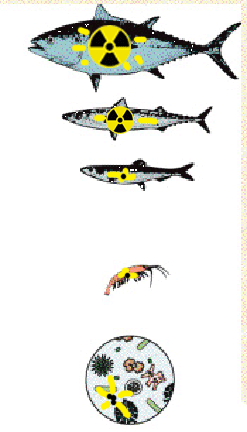
 Dec.26,2015 Highest rates of Ce-137 detected in Russian cod, though overall rate for domestic and imported seafood actually down 1.4% from last year
Radioactive material was discovered at detectable levels in domestic and Russian seafood products, a recent study confirms.
The news comes amid growing concerns about radiation contamination in seafood products entering the country since the 2011 disaster at Japan’s Fukushima I Nuclear Power Plant. In response, environmental groups are calling for more intensive inspections of seafood for radioactivity.
The findings were announced on Dec. 23 after a study by three groups: the Institute for Environment & Community Development Studies (IECDS), the Korea Radiation Watch Center, and the Gwangju chapter of the Korean Federation for Environmental Movement. Analysis of 150 samples of mackerel, pollock, cod, kelp, and sea mustard taken from discount stores and markets in Seoul, Busan, and Gwangju between March and November showed the presence of radioactive cesium-137 in eight of them, or 5.3%.
Cesium-137 is considered one of the chief examples of a radioactive isotope detected in the process of artificial nuclear fission, with an acceptable standard of 100 becquerels per kilogram.
The isotope was found in samples of pollock and cod from Russia and domestic mackerel and kelp at levels of 0.37 to 1.09 becquerels per kilogram. The highest rate of detection was for Russian cod at 13%, followed by Russian pollock at 11.5%, Korean kelp at 7.7%, and Korean mackerel at 3.3%.
By place of origin, Russian products showed the highest detection rate at 13.3% (six out of 45 samples), compared to a 3.2% rate for domestic products (two out of 63 samples). No radioactive material was found in other imported seafood.
The overall Ce-137 detection rate for domestic and imported seafood was down slightly from a similar survey conducted last year, falling from 6.7% to 5.3%. But the rate for Russian products showed a slight increase from 13% last year to 13.3% in 2015.
“The radioactive material detection rate for Russian products was quite high. We need greater monitoring and more stringent standards,” said IECDS researcher Min Eun-ju. “We also need to figure out the cause behind the radioactive material detected in Korean sea grasses and take appropriate steps,” Min added.
Min also weighed in on the South Korean government’s current plans to consider lifting import bans on seafood from eight Japanese prefectures. “If that happens, there will be no way to stop the import of seafood contaminated with radioactivity. We should be beefing up our standards, not loosening them, and we should be responding forcefully to the Japanese government’s complaint with the World Trade Organization,” she said.
Ce-137 has a half-life of over thirty years and is known to cause radiation exposure within the body as it accumulates in muscles and subcutaneous fat. The details of its effects on the human body from exposure through accumulation of small amounts remain unknown. By Kim Young-dong, staff reporter Please direct questions or comments to [english@hani.co.kr]
West Coast of Scotland shellfish polluted by radioactive trash from Sellafield
Scottish shellfish are contaminated by radioactive waste from Sellafield, Herald Scotland 20 Dec 15 Radioactive waste from the Sellafield nuclear plant in Cumbria is contaminating shellfish hundreds of kilometres away on the west coast of Scotland, according to a new scientific study.
Scottish researchers discovered traces of radioactive carbon discharged from Sellafield in the shells of mussels, cockles and winkles as far north as Port Appin in Argyll, 160 miles from the notorious nuclear plant.
The findings are a “wake-up call” for anyone who thinks pollution from Sellafield is yesterday’s problem, say campaigners. Sellafield, however, stresses that the contamination is well below safety limits.
The scientists found raised levels of radioactive carbon-14 in shellfish sampled at Port Appin, at Maidens in South Ayrshire and at Garlieston and Kippford on the Solway coast of Dumfries and Galloway. Mussels were most contaminated “due to the surface environment they inhabit and their feeding behaviour,” they said.
The contamination comes from Sellafield, which has poured huge amounts of radioactivity into the sea, researchers concluded. The plant, which reprocesses spent fuel from nuclear power plants in Scotland and across the UK, has discharged an average of more than eight million megabecquerels (measure of radioactivity) of carbon-14 a year from its pipelines between 1994 and 2013.
The levels peaked in 2003 but have remained “relatively high”, the scientists pointed out. Carbon-14 persists for tens of thousands of years in the environment and the amounts emitted from Sellafield make up the largest contribution to the long-term collective radiation dose across Europe from the entire nuclear industry.
“This is the first study to have shown that radiocarbon is accumulating in areas remote from Sellafield like Port Appin,” the lead researcher, Kieran Tierney, told the Sunday Herald.
Dr Ian Fairlie, an independent radiation consultant, described some of the carbon-14 contamination as “surprisingly high”. At Garlieston near Dumfries concentrations in mussels were almost three times the normal background level, while at Port Appin, north of Oban, they were 20 per cent higher…….
Pete Roche, an energy consultant and editor of ‘no2 nuclear power’ website, said: “This is a wake up call for anyone in Scotland who thinks contamination from Sellafield is yesterday’s problem.”
He pointed out that waste fuel from nuclear plants at Torness in East Lothian, Hunterston in North Ayrshire and Dounreay in Caithness will continue to be reprocessed at Sellafield until at least 2018. “Radioactive discharges will continue to flow back in the other direction long after that,” he argued……..http://www.heraldscotland.com/news/14157272.Scottish_shellfish_are_contaminated_by_radioactive_waste_from_Sellafield
1 This Month


Tell the Ukrainian Government to Drop Prosecution of Peace Activist Yurii Sheliazhenko

Petition to revoke the licensing of the Near Surface Nuclear Disposal Facility (NSDF) at Chalk River. https://www.ourcommons.ca/petitions/en/Petition/Details?Petition=e-7247


of the week – STOP SMALL MODULAR REACTORS IN CANADA
To see nuclear-related stories in greater depth and intensity – go to https://nuclearinformation.wordpress.com
-
Archives
- March 2026 (212)
- February 2026 (268)
- January 2026 (308)
- December 2025 (358)
- November 2025 (359)
- October 2025 (376)
- September 2025 (258)
- August 2025 (319)
- July 2025 (230)
- June 2025 (348)
- May 2025 (261)
- April 2025 (305)
-
Categories
- 1
- 1 NUCLEAR ISSUES
- business and costs
- climate change
- culture and arts
- ENERGY
- environment
- health
- history
- indigenous issues
- Legal
- marketing of nuclear
- media
- opposition to nuclear
- PERSONAL STORIES
- politics
- politics international
- Religion and ethics
- safety
- secrets,lies and civil liberties
- spinbuster
- technology
- Uranium
- wastes
- weapons and war
- Women
- 2 WORLD
- ACTION
- AFRICA
- Atrocities
- AUSTRALIA
- Christina's notes
- Christina's themes
- culture and arts
- Events
- Fuk 2022
- Fuk 2023
- Fukushima 2017
- Fukushima 2018
- fukushima 2019
- Fukushima 2020
- Fukushima 2021
- general
- global warming
- Humour (God we need it)
- Nuclear
- RARE EARTHS
- Reference
- resources – print
- Resources -audiovicual
- Weekly Newsletter
- World
- World Nuclear
- YouTube
-
RSS
Entries RSS
Comments RSS
 nuclear-news