UK’s Energy and Climate Intelligence Unit’s under-reported analysis – renewables cheaper than new nuclear
 Forbes 31st Jan 2019 , Under-reported analysis by the UK’s Energy and Climate Intelligence Unit
(ECIU) has shown that filling the gap left by the abandoned nuclear projects is not just feasible but better value. The government’s own National Infrastructure Commission (NIC) is minded to agree. Jonathan Marshall, head of analysis at the ECIU said: “In recent years Governmenthas quietly cut back its expectations for nuclear new-build, and that’s
looking more and more realistic as the price of renewable generation falls and the benefits of the flexible smart grid become more apparent.
Filling the nuclear gap with renewables would indeed require an increase in rollout, but one that is well within UK capabilities. “With enough focus on smart low-carbon energy, there’s no reason why Britain shouldn’t achieve all its energy objectives despite the cancellation of these nuclear stations,” added Marshall.
The ECIU analysis found that an additional 11.3GW of onshore wind, 5.7GW of offshore wind and 20.8GW of new solar capacity would be sufficient to fill the nuclear gap. Those figures are eminently achievable.
https://www.forbes.com/sites/johnparnell/2019/01/31/mind-the-gap-as-new-uk-nuclear-projects-fold-renewables-can-fill-the-void/
As a nuclear power project collapses, leading utility chief calls on UK government to increase targets for offshore wind energy
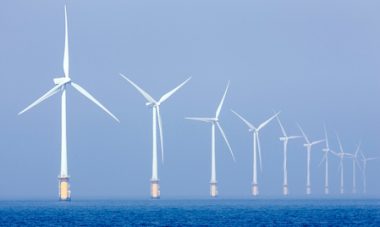 Forget nuclear woes and increase offshore wind targets, says boss of leading utility, Owjonline 25 Jan 2019 by David Foxwell The chief executive of one of the UK’s leading utility companies has called on the government to increase targets for offshore wind energy after plans for another nuclear power station were put on hold.SSE chief executive Alistair Phillips-Davies said the UK should be grateful that in offshore wind it has an ‘off the shelf’ answer to the problem of how the country can decarbonise energy cost-effectively while securing jobs and growth for the UK economy.
He is well-qualified to comment on energy policy in the country, having become chief executive of SSE in 2013 after working in the energy industry since 1997, when he joined Southern Electric.
“Later this year our Beatrice offshore windfarm, the largest project in Scotland, will be completed, and will begin exporting low carbon electricity to the grid,” he said. “It is one of many projects delivered to time and budget, which have helped bring the costs down substantially.
“Last year UK Energy Minister Claire Perry set out an ambition of an additional 1-2 GW of offshore wind per year during the 2020s taking the UK to a total of between 20 and 30 GW, meaning it could be the generation technology with the largest installed capacity in the UK.
“The sector has responded, and an Offshore Wind Sector Deal will be finalised later this year setting out the industry’s substantial commitments to the UK’s industrial strategy. The question now is whether 30 GW by 2030 is ambitious enough,” Mr Phillips-Davies said.
“In the coming months, the government will receive advice from the Committee on Climate Change on the implications of increasing its decarbonisation target from an 80% reduction in emissions by 2050 to net zero.
“In light of the IPCC report last year, SSE supports the adoption of a net zero target, and the implications will be a need to go faster and harder on decarbonising electricity as the driver for decarbonising heat and transport.”
Mr Phillips-Davies went on to say, “With the news that Hitachi has pulled out of the Wylfa project, the new nuclear programme looks in real trouble and was due to come in well above the costs of offshore wind anyway…….https://www.owjonline.com/news/view,forget-nuclear-woes-and-increase-offshore-wind-targets-says-boss-of-leading-utility_56566.htm
For UK it;s now time to double down on wind and solar energy
 Now that UK nuclear power plans are in tatters, it’s vital to double down on wind and solar, The Conversation, Reader in Energy Policy, University of Aberdeen January 23, 2019 Now that Japanese giants Toshiba and Hitachi have walked away from UK nuclear power projects that had previously been abandoned by others, it has forced the government to reassess the pro-nuclear bias of its energy policy. Greg Clark, the UK business secretary, has recognised that nuclear power is no longer cost competitive with renewable energy, but don’t expect any extra push into the cheaper technology. Now that UK nuclear power plans are in tatters, it’s vital to double down on wind and solar, The Conversation, Reader in Energy Policy, University of Aberdeen January 23, 2019 Now that Japanese giants Toshiba and Hitachi have walked away from UK nuclear power projects that had previously been abandoned by others, it has forced the government to reassess the pro-nuclear bias of its energy policy. Greg Clark, the UK business secretary, has recognised that nuclear power is no longer cost competitive with renewable energy, but don’t expect any extra push into the cheaper technology.There is easily enough solar and wind energy available to make up for the cancellation of the nuclear projects and to produce the low-carbon electricity required to make the UK’s 2030 carbon emissions targetsachievable. Instead, however, the country’s incentives and regulations favour developing more power plants driven by natural gas. Having hacked back emissions from power by over two-thirds since 1990, progress with decarbonising the grid risks coming to an end. According to the UK parliament’s Committee on Climate Change, the UK needs to cut power emissions from about 265g of carbon dioxide per kilowatt hour in 2017 to under 100g by 2030. The government had been substantially relying on nuclear power to do this, having originally identified eight sites as viable for new plants. Six projects were taken forward, including Hitachi and Toshiba plants in Wales and Cumbria respectively. Yet despite much larger government incentives than those available for renewables, most private nuclear builders are now steering clear, having seen the problems with new plants in the likes of the US and France. The only two projects still on the slate are a joint venture by EDF of France and CGN of China – both foreign state-owned companies. They are building the UK’s first new plant in over two decades, Hinkley C in south-west England; while also planning a second, Bradwell B, in the south east. Nuclear and renewablesEven before the latest announcement that Hitachi’s Wylfa plant in Wales was being suspended, the Committee on Climate Change was already saying the UK needed to build more renewable capacity to reach its carbon reduction targets. Now the problem is even worse. In 2018, 19% of the UK’s electricity was generated by nuclear plants. With most existing plants due to retire over the next few years, I calculate this may now fall to 10% by 2030 when you factor in the new-build cancellations. Solar and wind generation could easily more than make up for this. For years, renewables’ share of generation has been steadily rising. It reached 30% in 2018 and is due to reach 35% in 2020. But with no new incentives for onshore wind and solar and only limited incentives for offshore wind, it looks likely to fall far short of its potential……….. Power politicsThe reason why more renewables are not on the cards is because the Treasury is keen to limit energy incentives. It worries that the electricity price has been increasing – and hence the Treasury wants to strictly limit new incentives, the costs of which are added to electricity bills. This, however, ignores the fact that CFD prices will benefit from the falling cost of building offshore wind farms – the price has more than halved in three years. Nevertheless, the amount of money available to pay for the contracts is being limited to around half that being made available to owners of gas-fired power plants to supply capacity when the wind isn’t blowing. If all 27GW of offshore wind power schemes in various stages of planning got contracts, I calculate it would supply around one-third of the total electricity requirement. Coupled with the remaining nuclear power and the renewables that are already onstream, that would reach the 75% of power that the Committee on Climate Change reckons needs to be coming from these low-carbon sources by 2030 to achieve the emissions targets. This is not counting potential offshore wind resources which are not even being mobilised, plus large possibilities for onshore wind and solar. Instead, gas-fired power looks set to supply around half of UK electricity by 2030, compared to 40% at present. One government justification for being less generous to renewables is that unlike gas or nuclear, they do not represent “firm” power – in other words, they only generate when the wind is blowing or the sun is shining. Proponents of renewable energy counter that you can reduce the generating capacity required by increasing the use of batteries to store power on the grid and by incentivising consumers to, say, use more power overnight when demand is lower. Yet one other option that attracts less attention is that you also get spare “firm” capacity from small gas engines or open-cycle turbines. These can be built quickly and would only be sparingly needed in a system mostly supplied by renewables. Based on my calculations using Hinkley C and Wylfa, they cost around one-twentieth of the projected cost of new nuclear power. They are alsonearly half the price of large gas-fired “CCGT” plants. Instead, however, the government spends the lion’s share of its incentives pot on large conventional power plants, many of which would operate whether they were subsidised or not………. overnment policy is offering large incentives to new nuclear, gas-fired power and also shale gas extraction – but, paradoxically, not many are actually being developed. Meanwhile the cheapest options – onshore wind, solar and offshore wind – are being discriminated against. The collapse of the UK’s nuclear power plans should be an opportunity to think again. How frustrating that decarbonising power is instead falling off the agenda. https://theconversation.com/now-that-uk-nuclear-power-plans-are-in-tatters-its-vital-to-double-down-on-wind-and-solar-110253 |
|
France to replace Fessenheim nuclear plant with solar power project
EU approves France’s plan to replace nuclear plant with 300 MW of PV https://www.pv-magazine.com/2019/01/21/eu-approves-frances-plan-to-replace-nuclear-plant-with-300-mw-of-pv/
The commission said the project selected through the tender will receive a premium tariff under a 20-year contract, and the tender’s budget is approximately €250 million.
“The aid will be granted by the French state and will contribute to the French and European objectives of energy efficiency and energy production from renewable sources, in line with the EU’s environmental objectives, with possible distortions of competition state support being reduced to a minimum,” the commission stated.
The tender was announced by the French government in April. In July, France’s Directorate General for Energy and Climate – part of the Ministry for the Ecological and Inclusive Transition – revealed details of the tendering scheme. According to that announcement, 200 MW of the tendered capacity will be for ground-mounted PV ranging in size from 500 kW up to 30 MW, with the remaining 100 MW accounted for by rooftop projects larger than 8 MW in scale.
Potential tariffs estimated
The tender was to be implemented in three phases, starting late last year and continuing in the middle and latter stages of this year, and was set to comprise three groups of installations: the ground-mounted PV; rooftop systems on buildings, greenhouses, carports or agricultural buildings with an output of 500 kW to 8 MW; and rooftops with a capacity of 100-500 kW.
Projects selected among the first two categories will be entitled to a premium feed-in tariff while installations of the third and smallest category will have access to a regular FIT. The premium tariff for ground-mounted PV is expected to be €50-70/MWh, and that for larger rooftops €70-100/MWh. Smaller rooftop projects are expected to be granted €80-110/MWh.
The 40-year-old Fessenheim nuclear site, in the Haut-Rhin department of Alsace in northeastern France, is set to be decommissioned by next year. The plant has seen more than one temporary shutdown due to safety issues. One of the most high-profile issues occurred in April 2014, when Reactor 1 was shuttered. The French Nuclear Safety Authority reported at the time that internal flooding in the non-nuclear part of the reactor had damaged safety electrical systems. After being repaired, the reactor was reconnected to the grid in May the same year.
New York’s ‘Green New Deal’ for a zero carbon economy
Business Green 21st Jan 2019 New York has embraced the campaign for a ‘Green New Deal’, with Governor
Andrew Cuomo declaring last week he will launch a major programme to build
a zero carbon economy for the state.
New York’s Green New Deal was hailed
as a “nation-leading clean energy and jobs agenda” by the Governor’s
office, as it pledged to “aggressively put New York State on a path to
economy-wide carbon neutrality”. The plan includes doubling the state’s
solar capacity by 2025 and quadrupling its offshore wind capacity by 2035,
as part of a legally binding goal to deliver 100 per cent zero-carbon power
for the state by 2040.
https://www.businessgreen.com/bg/news/3069581/new-york-unveils-green-new-deal-with-plan-to-build-net-zero-economy
Solar power has had a “life-changing impact” for Malawi village communities
BBC 21st Jan 2019 The project has helped businesses in Malawi to generate electricity from
solar power. A solar power project to connect villages in Malawi has had a
“life-changing” impact for rural communities.
The initiative, led by Strathclyde University researchers, has seen affordable energy supply
businesses set up in four villages. The partnership, which has been backed
by a £600,000 grant from the Scottish government, ensures locals own and
operate the equipment. It includes battery chargers and power connections
for other small businesses. Only 12% of Malawi’s 18 million population is
connected to the main electricity grid, which dips to 2% in rural areas.
For the vast majority the main energy source is open fires, which puts
pressure on the country’s forests.
https://www.bbc.co.uk/news/uk- scotland-glasgow-west-46890999
Orkney islands produce more electricity from wind and waves than they can use
Observer 20th Jan 2019 A tech revolution – and an abundance of wind and waves – mean that the people of Orkney now produce more electricity than they can use. It seems the stuff of fantasy. Giant ships sail the seas burning fuel that has been extracted from water using energy provided by the winds, waves and tides. A dramatic but implausible notion, surely.
Yet this grand green vision could soon be realised thanks to a remarkable technological transformation that is now under way in Orkney. Perched 10 miles beyond the northern edge of
the British mainland, this archipelago of around 20 populated islands – as well as a smattering of uninhabited reefs and islets – has become the centre of a revolution in the way electricity is generated.
Orkney was once utterly dependent on power that was produced by burning coal and gas on the Scottish mainland and then transmitted through an undersea cable. Today the islands are so festooned with wind turbines, they cannot find enough uses for the emission-free power they create on their own. Community-owned wind turbines generate power for local villages; islanders drive non-polluting cars that run on electricity; devices that can turn the energy of the waves and the tides into electricity are being tested in the islands’ waters and seabed; and – in the near future – car and passenger ferries here will be fuelled not by diesel but by hydrogen, created from water that has been electrolysed using power from Orkney’s wind, wave and
tide generators.
https://www.theguardian.com/environment/2019/jan/20/orkney-northern-powerhouse-electricity-wind-waves-surplus-power-
Wind energy ready to supply UK electricity: time to remove the ban on onshore subsidies
 Windfarm industry urges UK to lift onshore subsidies ban, Guardian, Adam Vaughan, @adamvaughan_uk, 19 Jan 2019
Firms say 800 renewable projects ready to plug gap left after Wylfa nuclear plant scrapped Ministers have been urged to drop their block on subsidies for onshore windfarms, as industry figures showed that nearly 800 renewable projects are ready to plug much of the power gap left by the abandonment of the Wylfa nuclear project.
A dozen firms are behind the schemes, including small players and big names such as Scottish Power, Vattenfall, E.ON, EDF Energy and npower’s owner Innogy. But onshore windfarm installations have stalled since the government banned them from securing subsidies.
Emma Pinchbeck, the executive director of RenewableUK, which compiled the figures, said: “We have ready-to-go onshore wind that can help close the gap between the low carbon power we need and the amount government policy is actually delivering, and this week’s announcement on nuclear power has made this mammoth task even harder.”
The government’s figures show onshore windfarms are the cheapest source of new electricity generation. The Hinkley Point nuclear project in Somerset won a guaranteed price of £92.50 per megawatt hour, compared with £57.50 for offshore windfarms in the early 2020s. Experts think onshore windfarms could hit around £50 per MWh…….
The Scottish energy minister, Paul Wheelhouse, said that after the failure of Hitachi’s projects, it was time for the UK to prioritise onshore windfarms and other renewable technologies over nuclear.
The government’s infrastructure advisers, the National Infrastructure Commission, urged a rethink that would allow onshore windfarms to compete for support…….https://www.theguardian.com/environment/2019/jan/18/windfarm-industry-urges-uk-to-lift-onshore-subsidies-ban
Renewable energy can replace UK’s Moorside, Wylfa and Sizewell C nuclear power at a much cheaper cost
 ECIU (accessed) 17th Jan 2019 The future of the Government’s plans to roll out six new nuclear power
stations across Britain is looking increasingly parlous, as the Wylfa
project becomes the second power station to be scrapped in just two months.
Wylfa’s demise makes the Oldbury project extremely unlikely to proceed,
while Toshiba has already backed out of developing its Moorside station.
Their absence leaves space for new low-carbon capacity to fill the gap. Filling the ‘nuclear gap’ with
alternative low-carbon power sources would keep bills down, maintain secure
energy supply and allow the UK to maintain progress towards legally binding
climate targets.
A representative scenario, in which 80% of the energy
output of Moorside, Wylfa and Sizewell C was replaced in equal measure by
onshore and offshore wind, with the remaining 20% by solar PV would entail
an average price of £50-65/MWh, including the cost of system balancing.
This is 13-33% cheaper than the cost of energy from nuclear (not accounting
for nuclear system costs). This would see an additional 11.3 GW of onshore
wind and 5.7 GW of offshore wind capacity, as well as 20.8 GW of new solar
PV capacity. Renewable capacity is already set to increase on current
levels, as more – and cheaper – capacity continues to come online.
https://eciu.net/assets/Briefing-%E2%80%93-Filling-the-nuclear-gap-compressed.pdf
UK govt’s plan to let down solar householders has not gone down well
Physics World 16th Jan 2019 Dave Elliott: The UK government’s plan to abandon the feed-in tariff
(FIT) system for small renewable energy projects did not go down well,
especially since it meant the loss of the export tariff. Householders who
invested in a photovoltaic (PV) array on their roof have used that to
offset the cost of their investment by selling any extra power they
generated at a reasonable rate – 5.24 p/kWh – to their grid supplier.
However, with the FiT, along with the export tariff, to be closed to new
applicants from the end of March, they will get nothing for any exports. In
a parliamentary debate on the FiT in November last year, energy minister
Claire Perry said she aimed to avoid that situation. It certainly looked
unfair and counterproductive.
Claire Perry has now gone ahead with a
consultation on the Government’s proposals for a new market for
electricity export from small-scale PV solar, configured “so that people
are not providing it to the grid for free”. Under the proposed “Smart
Export Guarantee” (SEG), electricity suppliers would pay new small-scale
PV and other energy producers for excess electricity from homes and
businesses put back into the power grid.
https://physicsworld.com/a/after-the-fit/
Offshore wind leads, as UK’s renewable energy is on course to overtake fossil fuels
 Business Green 16th Jan 2019, Renewables are on course to overtake fossil fuels for the first time as the UK’s primary electricity source as early as 2020, according to the latest market forecast from EnAppSys. If current trends continue, the market analyst predicts growing renewable power sources such as wind and solar
will generate 121.3TWh of electricity over the calendar year of 2020, pushing ahead of declining coal and gas-fired power sources with a forecasted 105.6TWh of generation.
The forecast assumes current trends of declining fossil fuel generation and rising renewables generation continue at the same annual rate. In 2018, coal and gas fired power stations
produced a combined 130.9TWh, a 6.7 per cent fall from the previous year’s 140.3TWh, the report states.
Meanwhile, renewable sources delivered 95.9TWh last year, rising 15.2 per cent from 2017 – a strong performance bolstered by the UK’s increasing offshore wind capacity.
https://www.businessgreen.com/bg/news/3069376/report-renewables-to-overtake-fossil-fuels-in-uk-energy-mix-in-2020
‘A new world order’ – boom in renewables, decline of fossil fuels – brings change in world politics
 Rise of renewables creating a ‘new world‘: report, A new report by the International Renewable Energy Agency (IRENA) is predicting a new world order as a consequence of the renewables boom. SBS News, 13 Jan 19, The rapid growth of renewable energy sources and the demise of fossil fuels are causing major changes in global politics, a special commission has said in a report.The shift “will alter the global distribution of power, relations between states, the risk of conflict, and the social, economic and environmental drivers of geopolitical instability,” said the commission set up by the International Renewable Energy Agency (IRENA).
Solar, wind and other renewables, which currently make up around a fifth of global energy production, are growing faster than any other source, the report said.
Commission chairman and former president of Iceland, Olafur Ragnar, said the shift will likely cause China to eclipse the United States, place oil-dependent Gulf states at risk and help impoverished African nations achieve energy independence.
“It is difficult to predict when, but this change is happening comprehensively and fast,” Ragnar told AFP.
The report, entitled “A New World”, was launched at IRENA’s ninth general assembly in Abu Dhabi…….
Renewables will be a powerful vehicle of democratisation because they make it possible to decentralise the energy supply. https://www.sbs.com.au/news/rise-of-renewables-creating-a-new-world-report
 |
ReplyForward
|
Australia must face up to the problem of hazardous wastes from old discarded solar panels
 I have long been worried that environmentalists are seen to be enthusiastic about renewable energy, seeing it as the panacea for the world’s climate woes. Solar power is a great technology for replacing polluting fossil fuel power, but it’s only a part of what needs to be done – in the urgently needed transition from our wasteful CONSUMER SOCIETY to a CONSERVER SOCIETY. It must not become a contributor to the waste disaster.
 Waste crisis looms as thousands of solar panels reach end of life, https://www.theage.com.au/politics/federal/waste-crisis-looms-as-thousands-of-solar-panels-reach-end-of-life-20190112-p50qzd.html By Nicole Hasham, 13 Jan 19,Thousands of ageing rooftop solar panels represent a toxic time-bomb and major economic waste unless Australia acts swiftly to keep them out of landfill, conservationists and recyclers say.
Australia’s enthusiastic embrace of rooftop solar has brought clear environmental and economic benefits, but critics say governments have dragged their feet in addressing the looming waste crisis.
As of December more than 2 million Australian households had rooftop solar installed. The uptake continues to grow due to the technology’s falling cost and rising electricity bills.
Photovoltaic panels last about 30 years, and those installed at the turn of the millennium are nearing the end of their lives. Many have already been retired due to faults or damage during transport and installation.
The nation’s environment ministers in April last year agreed to fast-track the development of new product stewardship schemes for photovoltaic solar panels and associated batteries. Such schemes make producers and retailers take responsibility for an item across its life cycle.
However, Total Environment Centre director Jeff Angel, a former federal government adviser on product stewardship, said action was long overdue and the delay reveals a “fundamental weakness” in Australia’s waste policies.
“We’ve had a solar panel industry for years which is an important environmental initiative, and it should have been incumbent on government to act in concert with the growth of the industry so we have an environmentally responsible end-of-life strategy,” he said.
Mr Angel said photovoltaic panels contain hazardous substances and “when we are sending hundreds of thousands of e-waste items to landfill we are also creating a pollution problem”.
“It’s a systemic problem that [applies to] a whole range of products”, he said, saying schemes were badly needed for paint, batteries, floor coverings, commercial furniture and many types of electronic waste.
Photovoltaic panels are predominantly made from glass, polymer and aluminium, but may also contain potentially hazardous materials such as lead, copper and zinc.
 Australian Council of Recycling chief executive Peter Schmigel attributed delays in product stewardship schemes to both “bureaucratic malaise” and unfounded concern about cost.
The national television and computer recycling scheme, which since 2011 has required manufacturers and importers to participate in industry-funded collection and recycling, showed that regulatory measures can work, he said.
“Recovery rates have been out of sight since the beginning of the scheme, nobody has said anything at all about there being an inbuilt recycling cost. It generates jobs, it generates environmental outcomes and yet for some reason we have policymakers who are hesitant about [establishing similar schemes] for solar PVs and batteries,” he said.
Victoria will ban electronic waste in landfill from July 2019, including all parts of a photovoltaic system, mirroring schemes imposed in Europe.
Sustainability Victoria is also leading a project examining end-of-life management options for photovoltaic systems, which may progress to a national program. The issue is particularly pertinent in Victoria where a new $1.3 billion program is expected to install solar power on 700,000 homes.
Sustainability Victoria resource recovery director Matt Genever said there was strong support from industry, government and consumers for a national approach to photovoltaic product stewardship. Final options are due to be presented to environment ministers in mid-2019.
He rejected suggestions that plans were progressing too slowly.
“The analysis we’ve done in Victoria … shows that it’s in 2025 that we see a real ramp up in the waste being generated out of photovoltaic panels. I certainly don’t think we’ve missed the boat,” he said.
A report by the International Energy Agency and the International Renewable Energy Agency in 2016 found that recoverable materials from photovoltaic panel waste had a potential value of nearly $US15 billion by 2050.
Reclaim PV director Clive Fleming, whose business is believed to be the only dedicated photovoltaic recycler in Australia, said it recycles 90 per cent of materials in a panel. The company has been lobbying for state bans on solar panels entering landfill.
The NSW Environment Protection Authority said it has commissioned research to better understand how e-waste, including solar panels, was managed. The panels can be dumped in NSW landfill, however given their life span they were “not a common item in the waste stream”, it said.
The Queensland government is developing an end-of-life scheme for batteries used in solar systems and other appliances.
Mr Genever hoped the review would result in a broader range of products being subject to stewardship programs and take steps to ensure voluntary schemes were effective.
Both the Smart Energy Council and the Clean Energy Council, which represent solar industry operators, said a well-designed product stewardship scheme was important and should be developed through cooperation between industry, governments and recyclers.
As coal and nuclear power stations retire, 2019 U.S. renewable generation additions expected to far outpace gas
2019 US renewable generation additions expected to far outpace gas: EIA https://www.utilitydive.com/news/2019-us-renewable-generation-additions-expected-to-far-outpace-gas-eia/545836/ AUTHOR, Iulia Gheorghiu @IMGheorghiu
Dive Brief:
- 23.7 GW of new U.S. electric generating capacity, mostly from wind, natural gas and solar, are expected in 2019, according to the U.S. Energy Information Administration (EIA) inventory of electric generators.
- In addition, EIA data shows 8 GW of primarily coal, nuclear and natural gas generation are expected to retire this year, though that number could increase as utilities continue to evaluate their generating portfolios.
- The expected retirements include Arizona’s 2.3 GW Navajo coal-burning power plant, Exelon’s 819 MW Three Mile Island nuclear power plant in Pennsylvania and Entergy’s 677 MW Pilgrim nuclear power station in Massachusetts.
Dive Insight:
Cheaper prices of natural gas and renewable energy have impacted the competitiveness of more traditional generation fuels.
Renewable additions are projected to more than double gas in 2019. Last year, natural gas capacity additions outpaced renewable energy additions for the first time since 2013. 2018 was also a landmark year for new capacity additions, as EIA expected nearly 32 GW of new capacity — the most in a decade.
The estimates, based on EIA data, do not include additions in the residential and commercial solar sectors, which are expected to be an additional 3.9 GW by the end of 2019.
In 2019, EIA is tracking about 6.1 GW of combined-cycle gas plants and 1.4 GW of combustion-turbine gas plants, expected to be mostly online by June, in order to meet high energy demand during the summer peak. The rest of the expected additions include wind, solar and about 2% of other renewable and battery storage capacity.
Renewable capacity typically comes online at the end of the year, according to the EIA. This matches the upcoming changes in renewable energy tax credits. The wind production tax credit will phase out completely at the end of the year from its current status at 40% of 2015 levels. On the solar side, this is the last year for a full 30% investment tax credit for developing solar energy systems, which will begin to phase down in 2020.
Utility integrated resource plans (IRPs) are beginning to show that renewables can beat out older coal plants, as the Northern Indiana Public Service Company demonstrated through its 2018 IRP analysis last fall, assessing a scenario to eliminate the resource by 2028.
Half of the 4.5 GW of coal-fired capacity expected to retire in 2019 comes from the Navajo Generation Station (NGS), which has not found enough customers for its power generation despite support from a number of groups and the Trump administration to keep it open. Last September, private equity firm Middle River Power dropped its bid to purchase the plant.
In addition, the Pilgrim nuclear plant, set to retire in May, and Three Mile Island, scheduled to retire in September, follow announcements from the plant operators of “severe economic challenges.” Exelon’s Three Mile Island failed to clear the PJM Interconnection capacity market auction in 2017 and Entergy based the decision for Pilgrim on a range of financial factors, including low current and forecast wholesale energy prices.
While the Trump administration has worked to support existing coal and nuclear power plants and to create economic conditions to add new coal and nuclear capacity, trends are pointing away from nuclear and coal additions.
“I don’t think there are any trends in the current electricity market that favor the idea of building new coal or nuclear power plants,” Tim Fox, vice president of ClearView Energy Partners, told Utility Dive.
The natural gas plants set for retirement largely consist of steam turbine plants, mostly located in California. They are older units that came online more than 50 years ago. Other capacity retirements for the year include a hydroelectric plant in Washington state and smaller renewable and petroleum capacity.
Follow Iulia Gheorghiu on Twitter
Renewables beating coal energy in Germany
The shift marks progress as Europe’s biggest economy aims for renewables to provide 65 percent of its energy by 2030 in a costly transition as it abandons nuclear power by 2022 and is devising plans for an orderly long-term exit from coal.
The research from the Fraunhofer organisation of applied science showed that output of solar, wind, biomass and hydroelectric generation units rose 4.3 percent last year to produce 219 terawatt hours (TWh) of electricity. That was out of a total national power production of 542 TWh derived from both green and fossil fuels, of which coal burning accounted for 38 percent.
Green energy’s share of Germany’s power production has risen from 38.2 percent in 2017 and just 19.1 percent in 2010.
Bruno Burger, author of the Fraunhofer study, said it was set to stay above 40 percent this year.
“We will not fall below the 40 percent in 2019 because more renewable installations are being built and weather patterns will not change that dramatically,” he said……….https://www.weforum.org/agenda/2019/01/renewables-overtake-coal-as-germanys-main-energy-source?utm_source=Facebook%20Videos&utm_medium=Facebook%20Video
1 This Month
6 June – WEBINAR- Get Inspired by Protests Against Military Bases!


Cuba Is Not a Failed State – It Is a Besieged State
PETITION: “Global Appeal to Endorse Palestinian Right of Return of Refugees”


of the week– Nuclear Reactor Information Task Force
To see nuclear-related stories in greater depth and intensity – go to https://nuclearinformation.wordpress.com
-
Archives
- June 2026 (34)
- May 2026 (306)
- April 2026 (356)
- March 2026 (251)
- February 2026 (268)
- January 2026 (308)
- December 2025 (358)
- November 2025 (359)
- October 2025 (376)
- September 2025 (257)
- August 2025 (319)
- July 2025 (230)
-
Categories
- 1
- 1 NUCLEAR ISSUES
- business and costs
- climate change
- culture and arts
- ENERGY
- environment
- health
- history
- indigenous issues
- Legal
- marketing of nuclear
- media
- opposition to nuclear
- PERSONAL STORIES
- politics
- politics international
- Religion and ethics
- safety
- secrets,lies and civil liberties
- spinbuster
- technology
- Uranium
- wastes
- weapons and war
- Women
- 2 WORLD
- ACTION
- AFRICA
- Atrocities
- AUSTRALIA
- Christina's notes
- Christina's themes
- culture and arts
- Events
- Fuk 2022
- Fuk 2023
- Fukushima 2017
- Fukushima 2018
- fukushima 2019
- Fukushima 2020
- Fukushima 2021
- general
- global warming
- Humour (God we need it)
- Nuclear
- RARE EARTHS
- Reference
- resources – print
- Resources -audiovicual
- Weekly Newsletter
- World
- World Nuclear
- YouTube
-
RSS
Entries RSS
Comments RSS
 nuclear-news