Many thousands of jobs created by USA’s renewable energy grants program
DOE: Renewable grant program was a big jobs creator Politico, By ALEX GUILLEN | 4/6/12 A $9 billion Obama administration grant program for renewable energy projects has created tens of thousands of jobs, an Energy Department report out Friday concludes.

The report comes just one week after Speaker John Boehner slammed Energy Secretary Steven Chu over the claim and challenged him to provide proof of the jobs creation. The report — conducted by DOE’s National Renewable Energy Laboratory — concludes that the program supported 52,000 to 75,000 construction and installation jobs on average over the three years it was in effect. Continue reading
Decentralised energy: solar rooftop array provides electricity to 200 homes
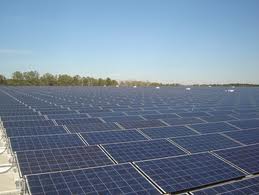 Local solar panel array lights up region, New Bern Sun Journal, April 05, 2012 Eddie Fitzgerald The largest solar energy collecting array in Eastern North Carolina, which is located in New Bern, is now online and producing electricity for Progress Energy. Continue reading
Greece gearing up for solar energy export industry
Greece Eyes Jobs, Growth Impulse From Solar Energy Export http://www.bloomberg.com/news/2012-04-06/greece-eyes-jobs-growth-impulse-from-solar-energy-export.html By Paul Tugwell – Apr 5, 2012 A group led by Germany’s Fichtner GmbH & Co. KG was chosen as technical adviser forGreece’s 20- billion euro ($26.1 billion) Helios solar power project, according to the country’s committee on privatizations.
The other members of the venture are all from Greece; Kantor Management Consultants SA, the Centre for Renewable Energy Sources and the National Technical University of Athens, according to a statement from the committee posted on the Greek government’s ministerial decision website.
The Helios project, named after the ancient god of the sun, would install as many as 10 gigawatts of solar panels by 2050, enabling Greece to export power from the natural energy to other European Union countries.
Environmental, security, location, incentives – all add up to a big future for renewable energy
 Alternative Energy Stock Outlook – April 2012, By: Zacks Equity Research April 03, 2012 “……A worldwide industry association for solar photovoltaic electricity market, the European Photovoltaic Industry Association (EPIA) forecasts that the power generated from solar modules in Europe could be competitive in relation to conventional forms of energy by the end of the current decade. The major solar markets under survey were Germany, Italy, France, Spain and Britain…..
A major growth area in this space is Solar Energy…… Continue reading
Windstalk – the answer to opponents of wind energy
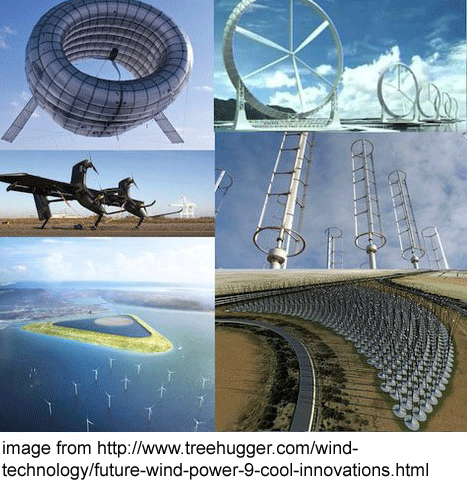 The symbolic power of bladeless wind turbines http://www.mnn.com/earth-matters/energy/blogs/the-symbolic-power-of-bladeless-wind-turbines Critics of renewable energy are obsessed with the costs and practicalities of cleantech right this instant. Visitors to Silicon Valley in the 1970s didn’t see the iPhone coming, either. There are countless innovative new ideas blowing in the wind. Mother Nature Network, Chris Turner 6 April 12,
…….3: “Bladeless Wind Power.” The wind energy plant in question is Windstalk, a wind turbine design without spinning blades that was created as part of a competition to help provide clean energy to Masdar, the sci-fi city being built in the desert outside Abu Dhabi……
Wind power’s future – exciting innovations
 The Future of Wind Power: 9 Cool Innovations http://www.treehugger.com/wind-technology/future-wind-power-9-cool-innovations.html Treehugger, 6 April 12, Derek Markham Wind power is a great way to
generate clean renewable energy, and the innovations in wind technology being pursued over the last year or so are a reminder that with the right tools, we can turn the movement of the air above us into fuel for our energy-hungry lifestyles.
1. Airborne Wind Turbines………
2. Power from Low Speed Winds:…..
3. Bladeless Wind Power:……
4. Wind Turbine Lenses:…….
5. Vertical Axis Turbines:…..
6. Quiet Wind Turbines:…..
7. Wind Power Storage:…..
8. Community-Owned Wind Power:….
9. Multipurpose Offshore Wind Turbines:….
Rooftop solar energy program for Los Angeles
CLEAN LA Solar program, which includes a 150-megawatt FiT, will create 4,500 jobs, generate $500 million in economic activity and offset 2.25 million tons of carbon dioxide emissions by 2016

 Rooftop Solar Energy Program Wins Critical Approval From Los Angeles, City Council, Market Watch Los Angeles Business Council applauds decision allowing LADWP to create new national model for rooftop solar energy LOS ANGELES, Apr 03, 2012 (BUSINESS WIRE) – The Los Angeles City Council cleared the way for the launch of an innovative rooftop solar-energy program today, approving a measure to allow the Department of Water and Power
(DWP) to move forward with the groundbreaking CLEAN LA Solar program.
The CLEAN LA Solar program will allow local property owners to sell solar power generated from rooftops and parking lots back to the DWP, using a mechanism called a feed-in tariff, or FiT. Los Angeles will be the largest city in the nation to adopt such a program, which will supply renewable energy at a reasonable cost while spurring private investment, creating high-quality jobs, reducing greenhouse gas emissions, and helping the state and city meet renewable power requirements. Continue reading
Solar photovoltaic energy going ahead in Asia and South America
 Solar week roundup: China, Latin America pushing ahead with solar, Clean Energy, Chris Meehan, APR 02, 2012 News in the world of solar is increasingly becoming worldwide. As the U.S. imposed preliminary duties on Chinese silicon photovoltaics, the top 10 solar producers are looking to increase the Asian PV market for more sales. At the same time interest in Latin and South America is picking up as costs for solar continue to come down and costs for other energy sources go up.
In the U.S., the news is more mixed with some places embracing solar while others are trying to reduce incentives to support renewables. But even Minnesota could go 100 percent renewable at a small cost. …. South America’s largest country, Brazil, is considering legislation that could grow the amount of solar in the country.
The country is considering a national net-metering program for home and small business owners, to credit PV owners for generation. And it’s considering legislation that would slash taxes on utilities by 80 percent on electricity sourced from distributed solar generation.
The Inter-American Development Bank (IDB) increased financing for solar, renewable projects in Latin America to $736 million in 2011. That’s more than it invested over the decade between 2000 and 2010, when it invested more $663 million in renewable energy projects in Latin American and Caribbean countries. The IDB also plans to invest more than $700 million in such projects in 2012. …. http://www.cleanenergyauthority.com/solar-energy-news/solar-energy-news-week-roundup-040212/
Bright employment and economic future for Denmark, as it moves to 100% renewable energy
 Denmark Passes Legislation: 100% Renewable Energy by 2050!, SustainableBusiness.com News , 30 March 12, Denmark’s Parliament has passed the most ambitious green economy plan in the world: it will generate 35% of its energy from renewable energy by 2020 and 100% by 2050. Continue reading
Scotland’s renewable energy winning success, and providing many jobs
 Energy Minister delighted as Scotland beats renewable energy target Daily Record co UK, Mar 29 2012 FIGURES revealed today that an extra 45 per cent of renewable energy was generated in Scotland last year compared with 2010. The statistics published by the Department of Energy and Climate Change statistics mean around 35% of Scotland’s electricity needs came from renewables in 2011, assuming that gross consumption in 2011 is similar to 2010.
This beats the Scottish Government’s target of 31% for last year. Energy Minister, Fergus Ewing was delighted with the news. He said: “It’s official: 2011 was a record breaker with enough green electricity being produced in Scotland to comfortably beat our interim target. ”And Scotland met almost 40% of the UK’s renewables output in 2011, demonstrating just how much the rest of the UK needs our energy.
“We are seeing great progress towards our goal of generating the equivalent of 100% of Scotland’s electricity needs from renewables by 2020.” The figures show that renewable electricity generation, wind energy generation and hydro generation were all at a record high in 2011…..
Liberal Democrat Energy spokesman Liam McArthur said the figures, taken together with the Scottish Renewables report showing that over 11,000 jobs are directly related to the development of the renewables sector, confirm that Scotland is capitalising on the rewards that the renewable energy industry can bring…
http://www.dailyrecord.co.uk/2012/03/29/scotland-beats-renewable-energy-target-reveals-new-statistics-86908-23806298/
Wind energy for Japan, as nuclear energy shuts down
Floating Windmills in Japan Help Wind Down Nuclear Power: Energy Bloomberg, By Chisaki Watanabe – Mar 29, 2012 Japan is preparing to bolt turbines onto barges and build the world’s largest commercial power plant using floating windmills, tackling the engineering challenges of an unproven technology to cut its reliance on atomic energy. Continue reading
Success of solar photovoltaic power is worrying utility companies
Why power generators are terrified of solar http://www.crikey.com.au/2012/03/27/why-generators-are-terrified-of-solar/ Crikey.com by Giles Parkinson, of RenewEconomy, 28 March 12, “….. the merit order effect and the impact that solar is having on electricity prices in Germany; and why utilities there and elsewhere are desperate to try to rein in the growth of solar PV in Europe. It may also explain why Australian generators are fighting so hard against the extension of feed-in tariffs in this country….. that solar PV is not just licking the cream off the profits of the fossil fuel generators — as happens in Australia with a more modest rollout of PV — it is in fact eating their entire cake…..
Deutsche Bank solar analyst Vishal Shah noted in a report last month that EPEX data was showing solar PV was cutting peak electricity prices by up to 40%, a situation that utilities in Germany and elsewhere in Europe were finding intolerable. “With Germany adopting a drastic cut, we expect major utilities in other European countries to push for similar cuts as well,” Shah noted.
Analysts elsewhere said one quarter of Germany’s gas-fired capacity may be closed, because of the impact of surging solar and wind capacity. Enel, the biggest utility in Italy, which had the most solar PV installed in 2011, highlighted its exposure to reduced peaking prices when it said that a €5/MWh fall in average wholesale prices would translate into a one-third slump in earnings from the generation division……
UK farmers welcome govt support for renewable energy projects on farms
Farm renewable energy boost, Farming News, (UK) , March 25, 2012 FARMERS’ leaders have welcomed Government plans to exempt small-scale renewable energy schemes on farms from planning regulations. Continue reading
Global competition for modern clean energy is under way
 The Great Renewable Energy Race (excellent interactive graphics) http://go.bloomberg.com/multimedia/the-great-renewable-energy-race/ BLOOMBERG MARCH 18, 2012 Global investment in renewable energy climbed to a record $260 billion last year, and the race for clean power is just getting started.
We reported last week how new solar and wind technologies are approaching price parity with traditionally cheaper coal- and gas-burning power plants. Today, the world’s regions go head-to-head….
 Where the Wind Blows
The wind energy market started in the U.S. in the 1980s, in a drive for greater energy independence. Investment shifted to Europe in the 1990s, drawn by grants, incentives and so-called feed-in tariffs, which encourage cost reductions by locking in long-term prices at favorable rates.
Turbine installations moved to Asia in 2009. By 2011, China, the world’s biggest wind investor, was installing 20 gigawatts of wind power a year, three times as much as the U.S., the second biggest investor. Asia will remain the most active region for wind investment until 2019, according to BNEF estimates.
Where the Sun Shines
Japan dominated solar installations in the 1990s, when the market remained small. In 2004, European feed-in tariffs abruptly shifted the solar focus to Europe, where it remains today.
The decline in crystalline solar silicon prices has been dramatic. As the cost of producing solar approaches parity with retail electricity purchased from the grid, installations are expected to shift from utility-scale solar fields to smaller-scale rooftop projects. The biggest share will move to Asia next year, according to BNEF: China’s total solar capacity is expected to climb to 272 gigawatts in 2030 from less than 1 gigawatt today. http://go.bloomberg.com/multimedia/the-great-renewable-energy-race/
Wind energy in full sail in China
Winds of change blow through China as spending on renewable energy soars World’s biggest polluter spends £4bn a year on wind and solar power generation in single region as it aims to cut fossil fuel use Jonathan Watts in Jiuquan Guardian UK, 19 March 2012 “….. the landscape has started to undergo a transformation as Gansu has moved to the frontline of government efforts to reinvent China’s economy with a massive investment in renewable energy. Continue reading
1 This Month
26 September – International Day for the Total Elimination of Nuclear Weapons





PLEASE OPPOSE HR 8255 AND S.3639 – bills would accelerate satellite deployment, with no environmental review or safeguards – https://ncstd5li.quorum.us/campaign/169331/
To see nuclear-related stories in greater depth and intensity – go to https://nuclearinformation.wordpress.com
-
Archives
- September 2026 (313)
- August 2026 (330)
- July 2026 (355)
- June 2026 (287)
- May 2026 (306)
- April 2026 (356)
- March 2026 (251)
- February 2026 (267)
- January 2026 (308)
- December 2025 (358)
- November 2025 (359)
- October 2025 (375)
-
Categories
- 1
- 1 NUCLEAR ISSUES
- business and costs
- climate change
- culture and arts
- ENERGY
- environment
- health
- history
- indigenous issues
- Legal
- marketing of nuclear
- media
- opposition to nuclear
- PERSONAL STORIES
- politics
- politics international
- Religion and ethics
- safety
- secrets,lies and civil liberties
- spinbuster
- technology
- Uranium
- wastes
- weapons and war
- Women
- 2 WORLD
- ACTION
- AFRICA
- Atrocities
- AUSTRALIA
- Christina's notes
- Christina's themes
- culture and arts
- Events
- Fuk 2022
- Fuk 2023
- Fukushima 2017
- Fukushima 2018
- fukushima 2019
- Fukushima 2020
- Fukushima 2021
- general
- global warming
- Humour (God we need it)
- Nuclear
- RARE EARTHS
- Reference
- resources – print
- Resources -audiovicual
- Weekly Newsletter
- World
- World Nuclear
- YouTube
-
RSS
Entries RSS
Comments RSS

