The week in nuclear news

Christina Macpherson's websites & blogs
Fukushima . In nuclear reactor No. 2 radiation has reached a lethal 73 sieverts per hour, too high for robots, endoscopes and other devices to function properly, and the water level is very low. Tepco has not been able to gauge the water depths and radiation levels of the containment vessels for reactors 1 and 3, as, unlike unit 2, there is no access.
Japan postpones decision on restarting its nuclear reactors, especially as climate predictions warn of 34 metre tsunamis in the future. 84% of Japanese do not believe government assessments that the reactors are safe. Credibility of stress tests in question, on revelations of big donations by nuclear corporations to Japan’s Atomic Energy Agency. Japan trying to sell nuclear technology to UK.
Nuclear powered drones. After huge expense in planning these, USA government halts development due to safety concerns, but military lobby still wants them.
South Korea deports 3 visiting Greenpeace members, due to their anti nuclear opinions.
India developing bigger nuclear arsenal, including nuclear submarine leased from Russia.
Nuclear costs UK in difficulties, with lack of investment for its new nuclear plans, as 2 firms pull out. Licenses obtained in USA for 2 new nuclear reactors in South Carolina, but spiralling costs cast doubt on their future anyway.
Ontario city of Peterborough concerned over nuclear radiation and health
 “The main health related concern is the potential direct and indirect effects on DNA and the damage that could result in cancer, teratogenic, reproductive and hereditary effects,”
 Peterborough raises radiation concerns Toronto Sun, SARAH DEETH, QMI AGENCY, APRIL 03, 2012 PETERBOROUGH, ONT. – The city of Peterborough, Ont., has raised concerns about human and environmental exposure to radiation levels at a local nuclear processing plant. Continue reading
Radiation in sea life 600 km beyond Fukushima
 the marine radiation levels are comparable to those seen after past accidents, such as Chernobyl accident in 1986.
Radioactive material from Fukushima nuclear reactor tracked 600 km away, THe Economic Times, 3 April 12 WASHINGTON: Scientists have found radioactive material from the crippled Fukushima nuclear reactor in tiny sea creatures and ocean water some 600 km off the coast of Japan, revealing the extent of the release and the direction pollutants might take in a future environmental disaster. Continue reading
Nuclear corporations’ funding to Japan’s nuclear agency damages its credibility

 Nuclear agency under fire for donations from industry body, Japan Times, 4 April 12, Kyodo Donations to the Japan Atomic Energy Agency from an electric utility industry federation and 11 companies in the industry have raised the possibility of a conflict of interest. The federation and 11 companies, including electric utilities and firms constructing and operating nuclear power plants, donated about ¥250 million over the past four years until Sunday, the last day of fiscal 2011, agency officials said.
Because the agency dispatches 10 staff members to a 62-strong examination committee at the government’s Nuclear Safety Commission, which oversees construction and modification of nuclear plants nationwide, the “donations could make the examinations a dead letter,” according to critics. Continue reading
Democracy losing out in South Korea, as govt stifles anti nuclear voices
nuclear energy is not considered a safe, clean or sustainable energy source by the UN’s Intergovernmental Panel on Climate Change. It is, therefore, not included in the UN’s Clean Development Mechanism.
the government declared it would spend an additional 10 billion won to promote nuclear energy
Greenpeace will continue to reach out to the people of Korea, despite the fovernment’s attempt to quash public debate and discontent over its nuclear plans

 Nuclear Power and Democracy Don’t Mix , HUFFINGTON POST, 3 April 12, Kumi NaidooExecutive Director, Greenpeace International,On Monday South Korea deported three senior Greenpeace staff, known for their role in our campaign
against that country’s nuclear expansion plans. This is just the latest proof that nuclear power and democracy do not mix. It’s the latest attack on freedom of speech from an industry forged in the furnace of military secrecy, which has over the last 60 years left in
it’s a wake a legacy of lies, cover-ups and broken promises.
What is it the industry and its government sponsors fear? What do they hope to achieve by excluding peaceful people from Greenpeace? What do they have to hide? What is it that they do not wish the people of Korea to hear?…. Continue reading
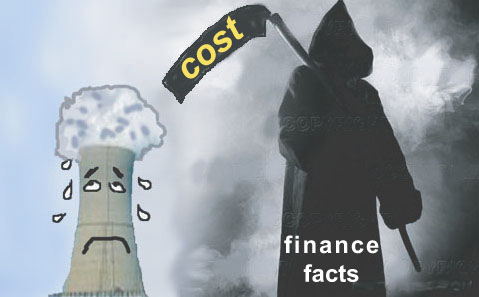
Cost, not just safety issues, send a toxic cloud over the nuclear industry’s future
Nowadays, a typical scheme involving multiple reactors on one site, puts you back $25bn! The money was not to be produced up-front, of course, but created by complex financial packages based on debt, not equity. The sums involved, the “paper” floating on the underlying asset – the nuclear complex – run into the trillions.

 Nuclear industry dreams dashed by current economic reality http://www.guardian.co.uk/business/economics-blog/2012/apr/02/nuclear-dreams-economic-reality-blog?newsfeed=true It was the financing model and rates of return that prompted German nuclear giants RWC and E.ON to pull out of UK energy plans Martin Cohen guardian.co.uk 2 April 2012 The news that nuclear giants RWE and E.ON are dropping plans to build any new UK reactors has sent a toxic cloud not only over Wales, but over the nuclear industry itself. Continue reading
Japan postponing decision on restarting nuclear reactors
 Japan holds off on decision to restart reactors
* PM wants Fukushima accident taken into account on safety standard
* Safety concerns run deep, local govts want new measures
By Risa Maeda, TOKYO, April 3 (Reuters) – Japan needs more time to decide whether to restart two offline nuclear reactors, the trade minister said on Tuesday, as concerns about a summer power crunch vie with safety worries in the wake of last year’s Fukushima crisis.
Prime Minister Yoshihiko Noda will not make any immediate decision on a restart date, Continue reading
South Korea deported anti nuclear Greenpeace staff
 Greenpeace deportation. Korea Herald, 3 April 12, It was unnecessary and excessive for the immigration authorities to bar the entry of three Greenpeace staff at Incheon International Airport on Monday and send them back to Hong Kong. An Immigration Service officer said the three members of a four-man group were detained at the airport at the request of a relevant government office which cited “national interest reasons.” Continue reading
84% of Japanese do not believe in safety of Japan’s nuclear reactors
84 percent say government stress tests for nuclear plant restarts inadequate: survey Mainichi Daily News 2 April 12, Despite the Nuclear Safety Commission (NSC) of Japan’s conclusion that the idled Oi Nuclear Power Plant clears safety standards required for resuming operations, 84 percent of the public do not believe that the government’s safety tests are sufficient, a Mainichi opinion poll has found… Continue reading
Rooftop solar energy program for Los Angeles
CLEAN LA Solar program, which includes a 150-megawatt FiT, will create 4,500 jobs, generate $500 million in economic activity and offset 2.25 million tons of carbon dioxide emissions by 2016

 Rooftop Solar Energy Program Wins Critical Approval From Los Angeles, City Council, Market Watch Los Angeles Business Council applauds decision allowing LADWP to create new national model for rooftop solar energy LOS ANGELES, Apr 03, 2012 (BUSINESS WIRE) – The Los Angeles City Council cleared the way for the launch of an innovative rooftop solar-energy program today, approving a measure to allow the Department of Water and Power
(DWP) to move forward with the groundbreaking CLEAN LA Solar program.
The CLEAN LA Solar program will allow local property owners to sell solar power generated from rooftops and parking lots back to the DWP, using a mechanism called a feed-in tariff, or FiT. Los Angeles will be the largest city in the nation to adopt such a program, which will supply renewable energy at a reasonable cost while spurring private investment, creating high-quality jobs, reducing greenhouse gas emissions, and helping the state and city meet renewable power requirements. Continue reading
Solar photovoltaic energy going ahead in Asia and South America
 Solar week roundup: China, Latin America pushing ahead with solar, Clean Energy, Chris Meehan, APR 02, 2012 News in the world of solar is increasingly becoming worldwide. As the U.S. imposed preliminary duties on Chinese silicon photovoltaics, the top 10 solar producers are looking to increase the Asian PV market for more sales. At the same time interest in Latin and South America is picking up as costs for solar continue to come down and costs for other energy sources go up.
In the U.S., the news is more mixed with some places embracing solar while others are trying to reduce incentives to support renewables. But even Minnesota could go 100 percent renewable at a small cost. …. South America’s largest country, Brazil, is considering legislation that could grow the amount of solar in the country.
The country is considering a national net-metering program for home and small business owners, to credit PV owners for generation. And it’s considering legislation that would slash taxes on utilities by 80 percent on electricity sourced from distributed solar generation.
The Inter-American Development Bank (IDB) increased financing for solar, renewable projects in Latin America to $736 million in 2011. That’s more than it invested over the decade between 2000 and 2010, when it invested more $663 million in renewable energy projects in Latin American and Caribbean countries. The IDB also plans to invest more than $700 million in such projects in 2012. …. http://www.cleanenergyauthority.com/solar-energy-news/solar-energy-news-week-roundup-040212/
USA military has had to stall plans for nuclear powered drones
Several drones are lost both in testing and in combat areas every year after the radio connection between controller and drone was broken. Most famously, a CIA-operated version of America’s most-advancedproduction UAV, the RQ-170 Sentinel crashed 140 miles inside Iran after the operators reportedly lost the radio signal that allowed them to control it….
 U.S. decides against making crash-prone drones run on nukes Look, up in the sky, it’s a bird, it’s a plane, it’s 1,000 pounds of fissionable nuclear material falling this way! IT World, By Kevin Fogarty April 02, 2012, — The U.S. military has apparently shelved the idea of developing a nuclear-powered drone aircraft that would be capable of staying in the air for months, but would pose so great a risk of those it might crash on that it was canceled due to “political conditions.”
 Continue reading
USA military industry wants dangerous nuclear powered drones
“It’s a pretty terrifying prospect. Drones are much less safe than other aircraft and tend to crash a lot. There is a major push by this industry to increase the use of drones and both the public and Government are struggling to keep up with the implications.”
Years of development work on nuclear powered drones, NZ Herald, Apr 4, 2012 Drones have become a key weapon of the Obama Administration and US intelligence services and the military uses them in several countries, including Pakistan and Yemen.
They are operated by “pilots” thousands of kilometres away and sometimes remain in the air for days. A new generation of nuclear-powered drones would be capable of flying for months on end without refuelling. Continue reading
Is Japanese government really committed to independent nuclear regulation?
Japan fails to revamp nuclear regulator, Aljazeera, Cabinet had endorsed bill to create a powerful and independent body by April 1 to unify safety and regulatory roles. 03 Apr 2012 Japan has failed to create a revamped nuclear regulatory agency by the promised date of April 1, raising questions about its commitment to bolster oversight in the wake of last year’s crisis.. Continue reading
South Carolina new nuclear reactors might have license, but costs are looking too great
 Summer Nuclear Unit Already Behind As It Gets Federal Green Light, AOL Energy, By Margaret Ryan April 3, 2012 The long-expected federal decision giving SCANA a license to build two new nuclear reactors in South Carolina came along with news that project has already encountered delays and cost overruns. …. Continue reading
1 This Month
15 October. Joint Appeal for Nuclear Abolition Day -presentation to the UN on October 15 will be live on UNWebTV
Endorse the Nuclear Abolition Day Appeal
23-25 October – on Zoom – World BEYOND War’s annual global conference

To see nuclear-related stories in greater depth and intensity – go to https://nuclearinformation.wordpress.com
-
Archives
- October 2026 (149)
- September 2026 (339)
- August 2026 (330)
- July 2026 (355)
- June 2026 (287)
- May 2026 (306)
- April 2026 (356)
- March 2026 (251)
- February 2026 (267)
- January 2026 (308)
- December 2025 (358)
- November 2025 (359)
-
Categories
- 1
- 1 NUCLEAR ISSUES
- business and costs
- climate change
- culture and arts
- ENERGY
- environment
- health
- history
- indigenous issues
- Legal
- marketing of nuclear
- media
- opposition to nuclear
- PERSONAL STORIES
- politics
- politics international
- Religion and ethics
- safety
- secrets,lies and civil liberties
- spinbuster
- technology
- Uranium
- wastes
- weapons and war
- Women
- 2 WORLD
- ACTION
- AFRICA
- Atrocities
- AUSTRALIA
- Christina's notes
- Christina's themes
- culture and arts
- Events
- Fuk 2022
- Fuk 2023
- Fukushima 2017
- Fukushima 2018
- fukushima 2019
- Fukushima 2020
- Fukushima 2021
- general
- global warming
- Humour (God we need it)
- Nuclear
- RARE EARTHS
- Reference
- resources – print
- Resources -audiovicual
- Weekly Newsletter
- World
- World Nuclear
- YouTube
-
RSS
Entries RSS
Comments RSS

