Wind & Solar In China Generating 2× Nuclear Today, Will Be 4× By 2030, Clean Technica, February 21st, 2019 by Michael Barnard, Close to five years ago I published an assessment of nuclear scaling vs wind and solar scaling using China as the proving ground in the CleanTechnica article “Wind Energy Beats Nuclear & Carbon Capture For Global Warming Mitigation.” Today, the China example is more clear proof that wind and solar are the better choice for global warming mitigation than nuclear generation.China’s example is meaningful because it disproves several arguments of those in favor of increased nuclear generation. It’s not suffering under regulatory burden. It’s mostly been using the same nuclear technologies over and over again, not innovating with every new plant. It doesn’t have the same issues with social license due to the nature of the governmental system. The government has a lot of money. The inhibitors to widespread deployment are much lower.
Yet China has significantly slowed its nuclear generation rollout while accelerating its wind and solar rollout. Even strong industry insiders accept this, ones such as former World Nuclear Association executive Steve Kidd, writing in Nuclear Engineering International in 2017.
Kidd estimates that China’s nuclear capacity will be around 100 gigawatts (GW) by 2030, well below previous expectations. Forecasts of 200 GW by 2030 were “not unusual only a few years ago,” he writes, but now seem “very wide of the mark.” And even the 100 GW estimate is stretching credulity ‒ nuclear capacity will be around 50 GW in 2020 and a doubling of that capacity by 2030 won’t happen if the current slow-down sets in.
Why is China slowing its nuclear rollout so drastically? Because nuclear is turning out to be more expensive than expected, new nuclear designs are proving to be uneconomical, and new wind and solar are dirt cheap and much easier to build.
Recently I published an assessment of the potential for wind and solar to massively exceed US CO2 reductions from nuclear in the CleanTechnica article US Could Achieve 3× As Much CO2 Savings With Renewables Instead Of Nuclear For Less Money. As usual, many of the comments from nuclear advocates related to the relative success of China, its speed of deployment compared to other jurisdictions and similar things.
In the discussion threads, I attempted to find apples-to-apples comparisons of China’s nuclear, solar, and wind generation compared, but none seemed to exist. As a result, I developed a model spanning 2010 to 2030, core years for all three programs. The charts are generated from the model

As I noted in 2014, the wind generation program had started much later than the nuclear program yet had been able to build much more capacity much more quickly, roughly six times more real wind energy capacity than nuclear per year over the years of 2010 through 2014. At the time, I used best of breed capacity factors for both wind and nuclear. One of the arguments against this at the time and on an ongoing basis is that China is curtailing wind and solar generation and achieving lower capacity factors. However, China is also experiencing less than best of breed capacity factors with its nuclear fleet, averaging 80% instead of 90%. This would have put the real world generation in the range of 3–4 times better for wind than for nuclear.
It doesn’t really matter as even with the diminished capacity factors for wind and solar currently experienced, they generated more than double the electricity generated by nuclear in 2018. Wind and solar each generated more electricity last year than nuclear did. By 2030, the ratio is very likely to be 4:1 in favor of wind and solar. And as Lazard has shown, wind and solar are much, much cheaper than nuclear, so China will be getting a lot more electricity at a lower cost point.
The chart above uses the capacity factors being experienced for wind, solar and nuclear to date in China and projects that all three will improve over the coming decade as operational efficiencies and grid connections improve………….

The quote from Kidd above suggests China might achieve only 100 GW of nuclear capacity by 2030. That’s an overestimation according to the actual data. Nuclear reactors in construction today only bring Chinese nuclear capacity to 55 GW by 2023. Reactors scheduled to start construction in the next three years only bring that number to 66 GW. Reactors planned but not scheduled at all are only likely to see 88 GW by 2030. There is no planned capacity that achieves even 100 GW, never mind the heady days when 200 GW was thought to be possible.
And to be clear, even if 200 GW of nuclear had been realized, it still would have been less actual generation than wind and solar.
As I indicated in the recent article on US ability to decrease carbon load, nuclear is much lower carbon per MWh than either coal or gas generation, as well as being free of chemical and particulate pollution. However, wind is still quite a bit lower than nuclear in CO2e per MWh and solar is around the same. Given the speed of deployment per GW of capacity and the much lower price per MWh of wind and solar, nuclear as part of the mix doesn’t make a lot of sense in most places…………https://cleantechnica.com/2019/02/21/wind-solar-in-china-generating-2x-nuclear-today-will-be-4x-by-2030/
February 23, 2019
Posted by Christina Macpherson |
China, renewable |
1 Comment
 Orsted’s Hornsea Project Spawns Talk of Offshore Wind Replacing Nuclear, Greentech Media, JASON DEIGN FEBRUARY 22, 2019
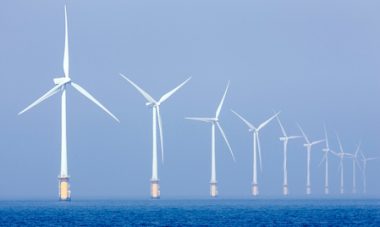
 Danish developer Ørsted said its Hornsea One plant, which started delivering power to the grid this month, could help make up for a lack of planned nuclear generation in the U.K., as plans for new reactors have fallen by the wayside.When complete, Hornsea One will cover more than 157 square miles, making it bigger than the city of Denver, and have a peak capacity of 1.2 gigawatts, thanks to 174 turbines of at least 7 megawatts each.
It will be the biggest offshore wind plant on the planet, dwarfing the current leader, Walney Extension, which Ørsted opened last September with a capacity of 659 megawatts. Ørsted has plans for an even bigger project, the 1.8-gigawatt Hornsea Two plant, in U.K. waters………
Not just a U.K. debate
Given that the U.K. is relying on a largely untested reactor design for upcoming nuclear capacity, it is perhaps legitimate to ask if the reliability of new reactors will be significantly greater than those of gigawatt-scale offshore wind farms built at the same time.
Tom Dixon, wholesale team leader at U.K. consultancy Cornwall Insight, said: “New offshore wind farms being developed are now much more reliable than older offshore sites or their onshore counterparts.”
As a result, he said, “it is credible to say that the shortfall in new nuclear could be made up by offshore wind, with improving operational performance and relatively low costs for the technology, but additional flexibility would be required at times when output is low.”
It is not just the U.K. where offshore wind could potentially take over new nuclear’s mantle.
This month, in the wake of a partnership between Ørsted and Tokyo Electric Power Company, the analyst firm Wood Mackenzie Power & Renewables questioned whether offshore wind could also be a cure for rising energy demand as new nuclear languishes in Japan.
“Rising costs and a lack of public confidence in Tepco’s ability as a nuclear operator have led the company to reconsider its future strategy,” said WoodMac senior analyst Robert Liew. “Tepco’s involvement in offshore wind is a crucial development.” https://www.greentechmedia.com/articles/read/hornsea-spawns-talk-of-offshore-wind-replacing-nuclear#gs.v9EFOjv7
February 23, 2019
Posted by Christina Macpherson |
renewable, UK |
Leave a comment
Can offshore energy replace a failing nuclear industry? The Manufacturer, 12 Feb 2019 by Maddy White
The world’s largest offshore windfarm off the Yorkshire coast is to supply its first power to the UK electricity grid this week. Could it fill the gap left by a failing nuclear industry? When fully operational next year, Hornsea One will be the largest windfarm in the world. Its 174 Siemens 7MW turbines will generate enough electricity (1.2GW) to reportedly power more than one million homes.
The electricity generated by the turbines 120km off of the Yorkshire coast will pass through one of three offshore substations, before being carried by three high voltage subsea cables (245kV).
Danish developer Ørsted’s project propels the offshore wind power sector to a new scale; Hornsea One will cover 407 sqkm – almost eight-times the size of Norwich
Rapid growth for renewables
A clean and sustainable energy supply, and reducing the impacts of climate change has become priority for countries across the globe as part of the Paris Agreement. Climate change was also found, in the World Economic Forum’s global risks report, to be the biggest concern for business in 2019.
The UK committed to reducing its greenhouse gas emissions by at least 80% by 2050, relative to 1990 levels, but the question remains just how can this be achieved?
Offshore windfarms could help fulfill this. Additionally it could aid the low carbon power gap created as a result of Hitachi and Toshiba recently scrapping nuclear plant projects in Wales and Cumbria. Hitachi followed Toshiba’s move and halted work on the Welsh site earlier this year due to rising costs………
A failing nuclear industry
Last year renewable energy supplied a record 33% of the UK’s electricity, opposed to 19% from nuclear. As technology advances, renewable energy has become cheaper and the logical energy source.
Hinkley C, the nuclear power plant in Somerset is years behind schedule, and billions over budget. Alongside Hinkley, there were five other plants with nuclear proposals: Moorside (Cumbria), Wylfa (Wales), Oldbury (West Midlands), Bradwell (Essex) and Sizewell (Suffolk).
Three have been scrapped and two are yet to be approved. Of the eight sites currently generating power, the Nuclear Industry Association (NIA) report that only one is due to be in use by 2030…….
The renewable sector is rapidly growing, its technology advancing and its costs decreasing, while nuclear remains an expensive and complex option that is becoming less appealing.
Can renewable energy be created on the same scale as nuclear? As nuclear power plants shut down and reach their operational expiry date, their contributions to the UK’s energy mix becomes increasingly irrelevant.
With projects like Hornsea One, Two and Three in the pipeline, it seems renewable energy has gained notable momentum and if executed well, could mean its perhaps only a matter of time until nuclear is phased out entirely. https://www.themanufacturer.com/articles/can-offshore-energy-replace-a-failing-nuclear-industry/?fbclid=IwAR0OyYm24TSFr2y2JD_ibaOuNnziFiN_mR23G_eH0n2k1smw9HxsRe36pHc
February 18, 2019
Posted by Christina Macpherson |
renewable, UK |
Leave a comment

|
The Windy – or maybe that should be nuclear – City will go 100% renewable https://www.pv-magazine.com/2019/02/15/the-windy-or-maybe-that-should-be-nuclear-city-will-go-100-renewable/
Chicago may be the largest city in the U.S. to commit to 100% renewable energy and has set a 2035 target date. The famous city’s long association with nuclear power says a lot about the future of clean energy Statesside.
FEBRUARY 15, 2019 CHRISTIAN ROSELUND From pv magazine USA.
Chase Tower is one of the tallest skyscrapers to dominate Chicago’s skyline. But it is not the building’s height, at 869 feet, which makes it prominent but rather what’s in it: the headquarters of Exelon, the largest owner and operator of nuclear power plants in the United States.
However, despite there being 11 nuclear reactors in operation in the state of Illinois, Chicago is moving to a different power source: renewable energy. Yesterday, Chicago Mayor Rahm Emanuel unveiled the Resilient Chicago plan, which with action number 38 commits to “transition to 100% clean, renewable energy in buildings community-wide by 2035”. The deadline for all city government buildings to be powered solely by renewables, first established in 2017, has been brought forward to 2025.
The policy has been introduced as part of environmental group the Sierra Club’s “Ready for 100” campaign, and Chicago is the largest city to join the effort to date. (Editor’s note: While Los Angeles Mayor Eric Garcetti has announced his city is on a path to 100% renewable energy, it is not clear if the formal goal is 100% renewable or 100% zero-carbon, and LA is not included in the Sierra Club’s Ready for 100 list.)
The language of the Resilient Chicago text says “clean, renewable energy”, and the Sierra Club does not include nuclear as part of its Ready to 100 campaign. The new policy is a particularly interesting move for Emanuel, once considered one of the more pro-nuclear politicians in the Democratic Party, and a man who brokered the deal that created Exelon.
Were Chicago to include nuclear in a 2035 target, it would require either buying power from existing plants instead of investing in new generation, or starting new nuclear plants within six years. Given the high cost of nuclear compared to wind and solar, few decision makers are contemplating that option.
The City of Chicago and stakeholders will have until December next year to come up with a plan to meet the city’s new mandate.
Community solar, electric buses
And there are a number of other clean energy commitments among the 50 action points in the wide-ranging Resilient Chicago report. Chicago plans to complete the electrification of its bus fleet by 2040, and the city is also making a push for community solar.
Action 37 states the city will “promote greater access to community solar”, by supporting the Illinois Power Agency’s community incentive programs and by incentivizing community solar through voluntary programs, with the Chicago Renewable Energy Challenge highlighted.
Since the passage of the Future Energy Jobs Act in the Illinois General Assembly, Chicago has seen a boom in community solar, with 1.8 GW of projects applying for block grants in just the last two weeks, more than ten times the amount the state had planned for in its block grant program.
|
|
February 16, 2019
Posted by Christina Macpherson |
renewable, USA |
Leave a comment
Consumers, businesses and utilities all win with this new distributed clean utility because renewables plus efficiency and batteries is available as a very resilient, near-zero carbon solution to providing power when and where it’s needed at the lowest cost. As these technologies continue to scale, they continue to experience steep cost declines, making the idea of a nuclear alternative vanishingly unrealistic.
Tens of billions of dollars have been spent developing different nuclear power plant designs, and even with enormous government subsidies and guarantees, corporations and utilities do not want to invest in nuclear power. Gates is a large investor in a nuclear firm, Terrapower, which hopes to build a prototype by 2030. If this target is achieved and a prototype is demonstrated by 2030, it could move toward commercial deployment in the 2030s. But we cannot afford to wait 15 or 20 years to scale very-low-carbon energy — and, fortunately, we don’t need to.
Renewable energy has more than doubled in the last decade to provide 20 percent of U.S. electricity, as much as nuclear.
Nuclear power is already a heavily subsidized 60-year-old industry with over half a trillion dollars invested in several hundred large operating nuclear plants, including 99 in the United States. The cost of nuclear power has soared while the cost for other low-carbon power options — including wind, solar, batteries and energy efficiency — have plunged. This is why no U.S. utilities want to build nuclear plants unless they can get large additional subsidies.
Gates’ rationale for nuclear power can be summarized as follows: Given the reality and gravity of climate change, nuclear provides the only large-scale, very-low-carbon electricity source that cost-effectively can provide power at scale when needed. Other very-low-carbon options, such as wind and solar power, batteries and energy efficiency, cannot reliably provide power when needed — especially on hot summer afternoons when air conditioning loads are large.
This same argument was made by nuclear advocates 30 years ago and is even less true today. Continue reading →
February 16, 2019
Posted by Christina Macpherson |
renewable, spinbuster |
Leave a comment
Dave Toke’s Blog 9th Feb 2019 Why Hunterston B Nuclear Powe Station should not be Restarted. Presentation made to Paul Wheelhouse,Minister for Energy Connectivity and the Islands by Dr Ian Fairlie and Dr David Toke.
In our view, Hunterston B nuclear power station needs to be
closed for safety reasons, but this should not be lamented because there is
presently a surplus of electricity generation in Scotland, and more is in
the pipeline.
Indeed there is so much renewable energy capacity being built
that Scottish electricity exports to England and Wales will continue to
increase, there will be no significant job losses in Scotland, and Scottish
energy security will be improved as Hunterston B’s operation results in
many Scottish wind farms being turned off at certain times and periods.
https://realfeed-intariffs.blogspot.com/2019/02/scottish-minister-pressed-to-back.html
Ian Fairlie 9th Feb 2019
https://www.ianfairlie.org/news/why-hunterston-b-nuclear-power-station-should-not-be-restarted/
February 11, 2019
Posted by Christina Macpherson |
renewable, UK |
Leave a comment
 Forbes 31st Jan 2019 , Under-reported analysis by the UK’s Energy and Climate Intelligence Unit
(ECIU) has shown that filling the gap left by the abandoned nuclear projects is not just feasible but better value. The government’s own National Infrastructure Commission (NIC) is minded to agree. Jonathan Marshall, head of analysis at the ECIU said: “In recent years Governmenthas quietly cut back its expectations for nuclear new-build, and that’s
looking more and more realistic as the price of renewable generation falls and the benefits of the flexible smart grid become more apparent.
Filling the nuclear gap with renewables would indeed require an increase in rollout, but one that is well within UK capabilities. “With enough focus on smart low-carbon energy, there’s no reason why Britain shouldn’t achieve all its energy objectives despite the cancellation of these nuclear stations,” added Marshall.
The ECIU analysis found that an additional 11.3GW of onshore wind, 5.7GW of offshore wind and 20.8GW of new solar capacity would be sufficient to fill the nuclear gap. Those figures are eminently achievable.
https://www.forbes.com/sites/johnparnell/2019/01/31/mind-the-gap-as-new-uk-nuclear-projects-fold-renewables-can-fill-the-void/
February 2, 2019
Posted by Christina Macpherson |
renewable, UK |
Leave a comment
 Forget nuclear woes and increase offshore wind targets, says boss of leading utility, Owjonline 25 Jan 2019 by David Foxwell
 The chief executive of one of the UK’s leading utility companies has called on the government to increase targets for offshore wind energy after plans for another nuclear power station were put on hold.SSE chief executive Alistair Phillips-Davies said the UK should be grateful that in offshore wind it has an ‘off the shelf’ answer to the problem of how the country can decarbonise energy cost-effectively while securing jobs and growth for the UK economy.
He is well-qualified to comment on energy policy in the country, having become chief executive of SSE in 2013 after working in the energy industry since 1997, when he joined Southern Electric.
“Later this year our Beatrice offshore windfarm, the largest project in Scotland, will be completed, and will begin exporting low carbon electricity to the grid,” he said. “It is one of many projects delivered to time and budget, which have helped bring the costs down substantially.
“Last year UK Energy Minister Claire Perry set out an ambition of an additional 1-2 GW of offshore wind per year during the 2020s taking the UK to a total of between 20 and 30 GW, meaning it could be the generation technology with the largest installed capacity in the UK.
“The sector has responded, and an Offshore Wind Sector Deal will be finalised later this year setting out the industry’s substantial commitments to the UK’s industrial strategy. The question now is whether 30 GW by 2030 is ambitious enough,” Mr Phillips-Davies said.
“In the coming months, the government will receive advice from the Committee on Climate Change on the implications of increasing its decarbonisation target from an 80% reduction in emissions by 2050 to net zero.
“In light of the IPCC report last year, SSE supports the adoption of a net zero target, and the implications will be a need to go faster and harder on decarbonising electricity as the driver for decarbonising heat and transport.”
Mr Phillips-Davies went on to say, “With the news that Hitachi has pulled out of the Wylfa project, the new nuclear programme looks in real trouble and was due to come in well above the costs of offshore wind anyway…….https://www.owjonline.com/news/view,forget-nuclear-woes-and-increase-offshore-wind-targets-says-boss-of-leading-utility_56566.htm
January 26, 2019
Posted by Christina Macpherson |
renewable, UK |
Leave a comment
|
 Now that UK nuclear power plans are in tatters, it’s vital to double down on wind and solar, The Conversation, David Toke, Reader in Energy Policy, University of Aberdeen January 23, 2019 Now that UK nuclear power plans are in tatters, it’s vital to double down on wind and solar, The Conversation, David Toke, Reader in Energy Policy, University of Aberdeen January 23, 2019 Now that Japanese giants Toshiba and Hitachi have walked away from UK nuclear power projects that had previously been abandoned by others, it has forced the government to reassess the pro-nuclear bias of its energy policy. Greg Clark, the UK business secretary, has recognised that nuclear power is no longer cost competitive with renewable energy, but don’t expect any extra push into the cheaper technology. There is easily enough solar and wind energy available to make up for the cancellation of the nuclear projects and to produce the low-carbon electricity required to make the UK’s 2030 carbon emissions targetsachievable. Instead, however, the country’s incentives and regulations favour developing more power plants driven by natural gas. Having hacked back emissions from power by over two-thirds since 1990, progress with decarbonising the grid risks coming to an end.
According to the UK parliament’s Committee on Climate Change, the UK needs to cut power emissions from about 265g of carbon dioxide per kilowatt hour in 2017 to under 100g by 2030. The government had been substantially relying on nuclear power to do this, having originally identified eight sites as viable for new plants. Six projects were taken forward, including Hitachi and Toshiba plants in Wales and Cumbria respectively.
Yet despite much larger government incentives than those available for renewables, most private nuclear builders are now steering clear, having seen the problems with new plants in the likes of the US and France. The only two projects still on the slate are a joint venture by EDF of France and CGN of China – both foreign state-owned companies. They are building the UK’s first new plant in over two decades, Hinkley C in south-west England; while also planning a second, Bradwell B, in the south east.
Nuclear and renewables
Even before the latest announcement that Hitachi’s Wylfa plant in Wales was being suspended, the Committee on Climate Change was already saying the UK needed to build more renewable capacity to reach its carbon reduction targets. Now the problem is even worse.
In 2018, 19% of the UK’s electricity was generated by nuclear plants. With most existing plants due to retire over the next few years, I calculate this may now fall to 10% by 2030 when you factor in the new-build cancellations. Solar and wind generation could easily more than make up for this. For years, renewables’ share of generation has been steadily rising. It reached 30% in 2018 and is due to reach 35% in 2020. But with no new incentives for onshore wind and solar and only limited incentives for offshore wind, it looks likely to fall far short of its potential………..
Power politics
The reason why more renewables are not on the cards is because the Treasury is keen to limit energy incentives. It worries that the electricity price has been increasing – and hence the Treasury wants to strictly limit new incentives, the costs of which are added to electricity bills. This, however, ignores the fact that CFD prices will benefit from the falling cost of building offshore wind farms – the price has more than halved in three years. Nevertheless, the amount of money available to pay for the contracts is being limited to around half that being made available to owners of gas-fired power plants to supply capacity when the wind isn’t blowing.
If all 27GW of offshore wind power schemes in various stages of planning got contracts, I calculate it would supply around one-third of the total electricity requirement. Coupled with the remaining nuclear power and the renewables that are already onstream, that would reach the 75% of power that the Committee on Climate Change reckons needs to be coming from these low-carbon sources by 2030 to achieve the emissions targets. This is not counting potential offshore wind resources which are not even being mobilised, plus large possibilities for onshore wind and solar. Instead, gas-fired power looks set to supply around half of UK electricity by 2030, compared to 40% at present.
One government justification for being less generous to renewables is that unlike gas or nuclear, they do not represent “firm” power – in other words, they only generate when the wind is blowing or the sun is shining. Proponents of renewable energy counter that you can reduce the generating capacity required by increasing the use of batteries to store power on the grid and by incentivising consumers to, say, use more power overnight when demand is lower.
Yet one other option that attracts less attention is that you also get spare “firm” capacity from small gas engines or open-cycle turbines. These can be built quickly and would only be sparingly needed in a system mostly supplied by renewables.
Based on my calculations using Hinkley C and Wylfa, they cost around one-twentieth of the projected cost of new nuclear power. They are alsonearly half the price of large gas-fired “CCGT” plants. Instead, however, the government spends the lion’s share of its incentives pot on large conventional power plants, many of which would operate whether they were subsidised or not……….
overnment policy is offering large incentives to new nuclear, gas-fired power and also shale gas extraction – but, paradoxically, not many are actually being developed. Meanwhile the cheapest options – onshore wind, solar and offshore wind – are being discriminated against. The collapse of the UK’s nuclear power plans should be an opportunity to think again. How frustrating that decarbonising power is instead falling off the agenda. https://theconversation.com/now-that-uk-nuclear-power-plans-are-in-tatters-its-vital-to-double-down-on-wind-and-solar-110253
|
|
January 24, 2019
Posted by Christina Macpherson |
renewable, UK |
Leave a comment
EU approves France’s plan to replace nuclear plant with 300 MW of PV https://www.pv-magazine.com/2019/01/21/eu-approves-frances-plan-to-replace-nuclear-plant-with-300-mw-of-pv/
The European Commission said the subsidy scheme to be adopted for the project is in line with the EU state aid rules. The 40-year old Fessenheim nuclear plant has faced several safety issues over the decades.
JANUARY 21, 2019 EMILIANO BELLINI The European Commission has given the green light to a tender mechanism the French government has conceived to enable the construction of solar plants with 300 MW of capacity at the Fessenheim nuclear power plant – the country’s oldest.
The commission said the project selected through the tender will receive a premium tariff under a 20-year contract, and the tender’s budget is approximately €250 million.
“The aid will be granted by the French state and will contribute to the French and European objectives of energy efficiency and energy production from renewable sources, in line with the EU’s environmental objectives, with possible distortions of competition state support being reduced to a minimum,” the commission stated.
The tender was announced by the French government in April. In July, France’s Directorate General for Energy and Climate – part of the Ministry for the Ecological and Inclusive Transition – revealed details of the tendering scheme. According to that announcement, 200 MW of the tendered capacity will be for ground-mounted PV ranging in size from 500 kW up to 30 MW, with the remaining 100 MW accounted for by rooftop projects larger than 8 MW in scale.
Potential tariffs estimated
The tender was to be implemented in three phases, starting late last year and continuing in the middle and latter stages of this year, and was set to comprise three groups of installations: the ground-mounted PV; rooftop systems on buildings, greenhouses, carports or agricultural buildings with an output of 500 kW to 8 MW; and rooftops with a capacity of 100-500 kW.
Projects selected among the first two categories will be entitled to a premium feed-in tariff while installations of the third and smallest category will have access to a regular FIT. The premium tariff for ground-mounted PV is expected to be €50-70/MWh, and that for larger rooftops €70-100/MWh. Smaller rooftop projects are expected to be granted €80-110/MWh.
The 40-year-old Fessenheim nuclear site, in the Haut-Rhin department of Alsace in northeastern France, is set to be decommissioned by next year. The plant has seen more than one temporary shutdown due to safety issues. One of the most high-profile issues occurred in April 2014, when Reactor 1 was shuttered. The French Nuclear Safety Authority reported at the time that internal flooding in the non-nuclear part of the reactor had damaged safety electrical systems. After being repaired, the reactor was reconnected to the grid in May the same year.
January 22, 2019
Posted by Christina Macpherson |
France, renewable |
Leave a comment
Green Alliance: UK must look to EU interconnection amid ‘crumbling’ nuclear plans, Business Green, Michael Holder, 21 January 2019
“……… New analysis by the environmental think tank highlights myriad benefits for the UK from trade in electricity with European countries, but warns leaving the EU – particularly under a ‘no-deal’ scenario – threatens to undermine opportunities to enhance cross-border interconnection.
Published on Friday, the analysis shows that a mix of increased electricity interconnection with the EU in addition to installing more renewable energy in the UK would help to keep consumer bills down, boost access to and trade in clean power, and also maintain energy security, in the face of on-going struggles to deliver planned new nuclear projects.
It follows Japanese firm Hitachi’s announcement last week that it has halted construction of the £16bn Wylfa nuclear project in Wales after failing to agree a funding support package with the government. Hitachi’s plans for another nuclear plant in Gloucestershire have also been shelved.
Green Alliance said trading power across borders with Europe could help reduce energy sector emissions in the short term without the need to build more capacity, and that interconnection could also help provide instant back up power when needed at peak times.
It also highlights the economic benefits of interconnection, with cross border trading delivering a combined value of £700m to UK markets in 2017, according to Friday’s analysis.
However, leaving the EU without a deal could cost the UK as much as £2.2bn per year at the current level of interconnection, the think tank warned.
Similar research by climate think tank E3G recently argued the merits of the UK maintaining membership of the EU internal energy market in order to fully realise the cost and carbon benefits of electricity interconnection with Europe.
At present, the UK is one of the least interconnected countries in Europe, and it therefore has the most to gain from improving its power connections with the rest of the continent, argued Chaitanya Kumar, senior policy adviser at Green Alliance……….
In the short term, Kumar suggested boosting interconnection could help strengthen the case for scaling up UK renewables capacity, and that negotiating continued participation in the EU’s internal energy market should therefore be a crucial part of the UK’s future relationship with the EU, particularly as the government’s nuclear energy plans “are crumbling”.
“Instead of doubling down on subsidised, expensive nuclear, the government should now be focusing on building cheaper alternatives in more renewables and electricity interconnection with Europe,” he said. “The UK’s climate ambitions are not under any immediate threat from the failed nuclear plans, but that can only be guaranteed if the existing alternatives are scaled up.”
The report follows news last week that plans for a new interconnector between Peterhead and the Norway took a step forward, after securing planning permission from Aberdeenshire Council.
The North Connect transmission link would see a 415-mile cable link Peterhead with the Norwegian Coast, providing up to 1.4GW of power between the two countries from 2023.
A number of similar projects are in the pipeline, but experts fear their prospects are largely dependent on the UK securing a Brexit agreement with the EU that allows for streamlined energy trading – something that is not guaranteed under a ‘no deal’ scenario. https://www.businessgreen.com/bg/news/3069586/green-alliance-uk-must-look-to-eu-interconnection-amid-crumbling-nuclear-plans
January 22, 2019
Posted by Christina Macpherson |
ENERGY, EUROPE, politics international |
Leave a comment
Business Green 21st Jan 2019 New York has embraced the campaign for a ‘Green New Deal’, with Governor
Andrew Cuomo declaring last week he will launch a major programme to build
a zero carbon economy for the state.
New York’s Green New Deal was hailed
as a “nation-leading clean energy and jobs agenda” by the Governor’s
office, as it pledged to “aggressively put New York State on a path to
economy-wide carbon neutrality”. The plan includes doubling the state’s
solar capacity by 2025 and quadrupling its offshore wind capacity by 2035,
as part of a legally binding goal to deliver 100 per cent zero-carbon power
for the state by 2040.
https://www.businessgreen.com/bg/news/3069581/new-york-unveils-green-new-deal-with-plan-to-build-net-zero-economy
January 22, 2019
Posted by Christina Macpherson |
politics, renewable, USA |
Leave a comment
BBC 21st Jan 2019 The project has helped businesses in Malawi to generate electricity from
solar power. A solar power project to connect villages in Malawi has had a
“life-changing” impact for rural communities.
The initiative, led by Strathclyde University researchers, has seen affordable energy supply
businesses set up in four villages. The partnership, which has been backed
by a £600,000 grant from the Scottish government, ensures locals own and
operate the equipment. It includes battery chargers and power connections
for other small businesses. Only 12% of Malawi’s 18 million population is
connected to the main electricity grid, which dips to 2% in rural areas.
For the vast majority the main energy source is open fires, which puts
pressure on the country’s forests.
https://www.bbc.co.uk/news/uk- scotland-glasgow-west-46890999
January 22, 2019
Posted by Christina Macpherson |
decentralised, Malawi |
Leave a comment
Observer 20th Jan 2019 A tech revolution – and an abundance of wind and waves – mean that the people of Orkney now produce more electricity than they can use. It seems the stuff of fantasy. Giant ships sail the seas burning fuel that has been extracted from water using energy provided by the winds, waves and tides. A dramatic but implausible notion, surely.
Yet this grand green vision could soon be realised thanks to a remarkable technological transformation that is now under way in Orkney. Perched 10 miles beyond the northern edge of
the British mainland, this archipelago of around 20 populated islands – as well as a smattering of uninhabited reefs and islets – has become the centre of a revolution in the way electricity is generated.
Orkney was once utterly dependent on power that was produced by burning coal and gas on the Scottish mainland and then transmitted through an undersea cable. Today the islands are so festooned with wind turbines, they cannot find enough uses for the emission-free power they create on their own. Community-owned wind turbines generate power for local villages; islanders drive non-polluting cars that run on electricity; devices that can turn the energy of the waves and the tides into electricity are being tested in the islands’ waters and seabed; and – in the near future – car and passenger ferries here will be fuelled not by diesel but by hydrogen, created from water that has been electrolysed using power from Orkney’s wind, wave and
tide generators.
https://www.theguardian.com/environment/2019/jan/20/orkney-northern-powerhouse-electricity-wind-waves-surplus-power-
January 22, 2019
Posted by Christina Macpherson |
renewable, UK |
Leave a comment
 Windfarm industry urges UK to lift onshore subsidies ban, Guardian, Adam Vaughan, @adamvaughan_uk, 19 Jan 2019
Firms say 800 renewable projects ready to plug gap left after Wylfa nuclear plant scrapped Ministers have been urged to drop their block on subsidies for onshore windfarms, as industry figures showed that nearly 800 renewable projects are ready to plug much of the power gap left by the abandonment of the Wylfa nuclear project.
Hitachi dropped plans for the
nuclear plant in Wales this week, raising questions over what would replace it and leading the business secretary, Greg Clark, to admit that renewable energy sources are more competitively priced than nuclear.
The wind industry said if a bar on onshore windfarm subsidies was lifted it would allow the construction of 794 projects which have won consent through the planning system and are ready to build. Together they would generate around 12 terawatt hours of energy a year; two thirds of what Wylfa would have produced.
A dozen firms are behind the schemes, including small players and big names such as Scottish Power, Vattenfall, E.ON, EDF Energy and npower’s owner Innogy. But onshore windfarm installations have stalled since the government banned them from securing subsidies.
Emma Pinchbeck, the executive director of RenewableUK, which compiled the figures, said: “We have ready-to-go onshore wind that can help close the gap between the low carbon power we need and the amount government policy is actually delivering, and this week’s announcement on nuclear power has made this mammoth task even harder.”
But she said the government had “stacked the odds” against building the onshore windfarms needed to hit the
UK’s carbon targets, by excluding developers from competing for subsidies in auctions. Only offshore windfarms can compete for state funds currently.
The government’s figures show onshore windfarms are the cheapest source of new electricity generation. The Hinkley Point nuclear project in Somerset won a guaranteed price of £92.50 per megawatt hour, compared with £57.50 for offshore windfarms in the early 2020s. Experts think onshore windfarms could hit around £50 per MWh…….
The Scottish energy minister, Paul Wheelhouse, said that after the failure of Hitachi’s projects, it was time for the UK to prioritise onshore windfarms and other renewable technologies over nuclear.
The government’s infrastructure advisers, the National Infrastructure Commission, urged a rethink that would allow onshore windfarms to compete for support…….https://www.theguardian.com/environment/2019/jan/18/windfarm-industry-urges-uk-to-lift-onshore-subsidies-ban
January 19, 2019
Posted by Christina Macpherson |
renewable, UK |
Leave a comment










 nuclear-news